
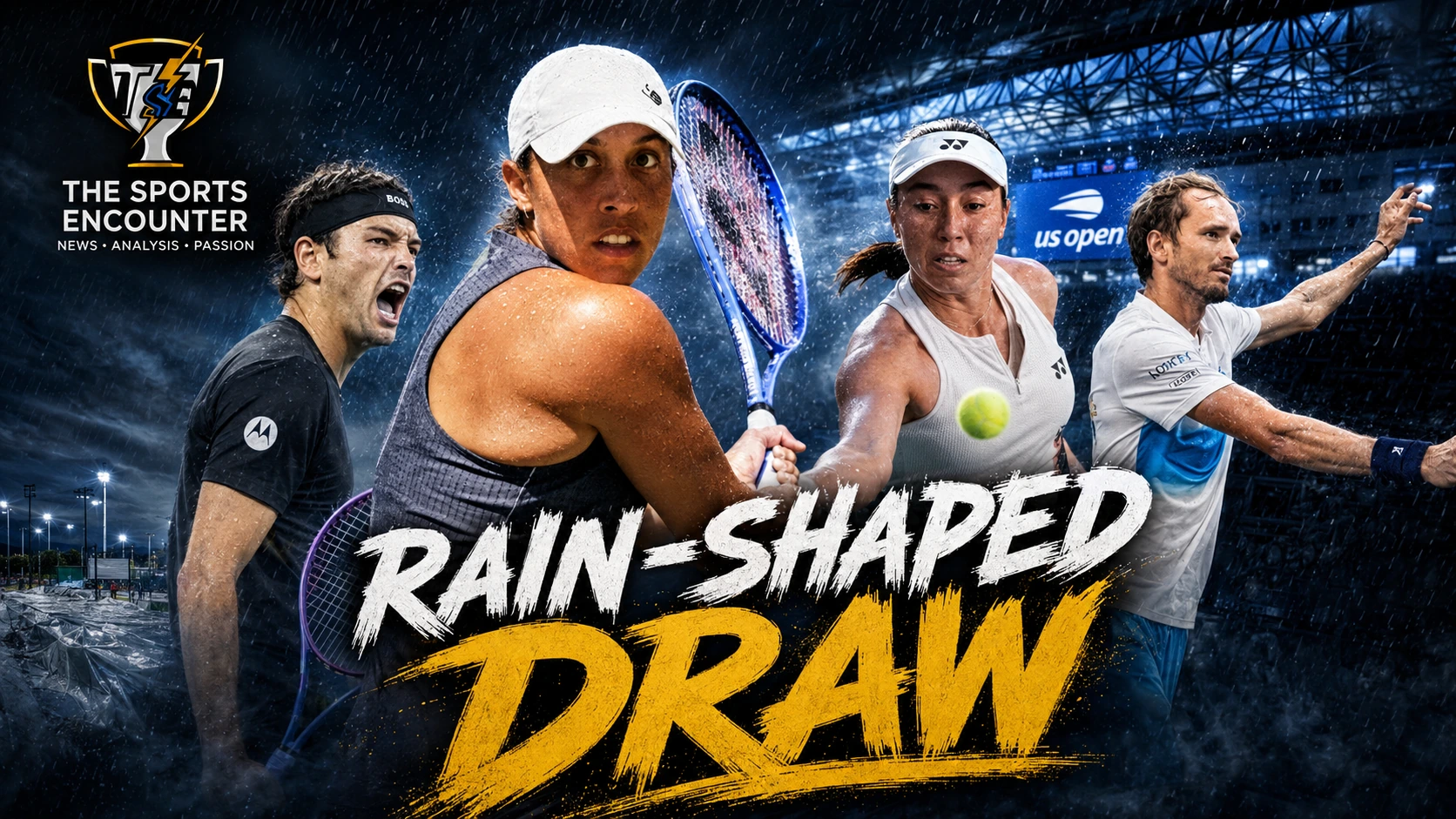
US Open 2026: Rain Creates Two-Speed Tournament as Keys, Fritz, Pegula, and Medvedev Advance
Rain delays are reshaping the US Open 2026 schedule as Jessica Pegula, Daniil Medvedev, Madison Keys and Taylor Fritz advance while other players face interrupted matches, compressed recovery and uneven preparation.

Rain has become one of the first significant competitive forces at the 2026 US Open, delaying outdoor matches across consecutive days while players fortunate enough to appear beneath the Arthur Ashe Stadium roof have continued almost untouched. Madison Keys, Taylor Fritz, Jessica Pegula and Daniil Medvedev have all taken advantage of that relative stability to move forward, but the wider draw is beginning to feel the effects of a schedule increasingly divided between protected stars and players waiting for New York’s weather to cooperate.
Keys and Fritz moved through the first round on Tuesday after rain delayed play on the outer courts by nearly four hours. Twenty-four hours later, more rain stretched unfinished first-round matches into a fourth day while Pegula and Medvedev were already securing places in Round 3.
The contrast is becoming difficult to ignore.
Inside the main stadiums, the tournament proceeds almost exactly as planned.
Elsewhere, players prepare, stop, restart, wait, warm up again and potentially return the following day.
That difference may eventually affect far more than scheduling.
Recovery time, practice routines, treatment, sleep and preparation for the next opponent can all change when one section of a Grand Slam draw remains on schedule and another falls behind.
By The Sports Encounter Editorial Desk
Published: September 2, 2026
Updated: September 2, 2026
US Open 2026: Key Results From the Rain-Affected Stretch
| Player | Opponent | Result | Round | Key Takeaway |
|---|---|---|---|---|
| Madison Keys | Alina Korneeva | 7-5, 6-4 | Round 1 | Composed return after first-round disappointment in 2025 |
| Taylor Fritz | Darwin Blanch | 6-3, 6-2, 6-4 | Round 1 | Controlled straight-sets opener with 14 aces |
| Elena Rybakina | Thea Frodin | 6-3, 6-2 | Round 1 | Strong return despite recent injury questions |
| Flavio Cobolli | Francisco Comesana | 3-6, 2-6, 6-3, 6-4, 6-4 | Round 1 | Recovered from two sets down |
| Jessica Pegula | Sofia Kenin | 6-3, 6-1 | Round 2 | Reached Round 3 in just 56 minutes |
| Daniil Medvedev | Sebastian Gorzny | 6-1, 6-3, 7-5 | Round 2 | Dominant despite unusual bird interruption |
| Taylor Townsend | Taylah Preston | 6-1, 6-1 | Round 2 | One of the first players through to Round 3 |
| Jasmine Paolini | Lucrezia Stefanini | 6-4, 6-1 | Round 2 | Controlled all-Italian contest |
| Diana Shnaider | Karolina Pliskova | 6-1, 7-6(4) | Round 2 | Withstood second-set resistance |
| Leylah Fernandez | Mananchaya Sawangkaew | 6-4, 6-1 | Round 2 | Earned a third-round meeting with Pegula |
The official US Open Day 3 results confirmed Keys, Fritz, Mirra Andreeva, Coco Gauff, Elena Rybakina and several other leading names among Tuesday’s winners.
Madison Keys Solved the First-Round Problem That Haunted Her a Year Ago
Keys’ 7-5, 6-4 victory over Russian teenager Alina Korneeva mattered because the score concealed the emotional history attached to the occasion.
A year earlier, Keys had suffered a first-round defeat in New York.
She openly acknowledged afterward how difficult opening rounds at Grand Slams can become when nerves, expectations and home-crowd pressure all arrive at once.
This time, she handled those tensions far better.
Korneeva made the opening set competitive, but Keys found enough control to avoid allowing the match to become chaotic.
She struck 21 winners compared with seven from her opponent and used her greater weight of shot to dictate the most important passages.
The closed roof also removed one variable from the afternoon.
Outside Arthur Ashe Stadium, players were waiting through a delay that approached four hours.
Keys could play.
That distinction may appear logistical, but at a Grand Slam it can become competitive.
The Sports Encounter had already followed Keys closely through the Cincinnati Open, where she reached the quarterfinals before falling to Sara Bejlek. Our Cincinnati Open final analysis identified Keys among the leading Americans entering New York with significant hard-court form.
Her US Open has now started with the kind of uncomplicated victory she needed.
Taylor Fritz Looked Like a Player Who Wanted to Finish Before the Weather Became Relevant
Fritz required only three sets to remove 18-year-old American wildcard Darwin Blanch.
The scoreline was clean: 6-3, 6-2, 6-4.
The No. 9 seed struck 14 aces and never allowed Blanch enough sustained pressure to make the contest uncomfortable.
That performance fits the broader trajectory of Fritz’s summer.
He arrived in New York having won the Mubadala DC Open, where he defeated Rafael Jodar in the final.
The Sports Encounter’s report on Fritz’s Washington title showed a player carrying confidence into the North American hard-court swing.
The weeks afterward were less smooth.
Fritz was eliminated early in Montreal and later lost to Brandon Nakashima in Cincinnati.
Our analysis of Nakashima’s Cincinnati quarterfinal victory over Fritz highlighted how vulnerable established contenders had become during the final stages of the US Open build-up.
Fritz looked far more settled against Blanch.
He reached the 2024 US Open final, still his deepest run at a major, so expectations at Flushing Meadows are no longer built around simply reaching the second week.
He is now judged as somebody capable of challenging for the title.
The Roof Has Quietly Become One of the Most Valuable Advantages in the Draw
Weather interruptions are part of outdoor tennis.
The difference at modern Grand Slams is that not everybody experiences them equally.
Arthur Ashe Stadium can continue under its roof.
Players assigned to exposed courts cannot.
That creates a two-speed tournament whenever persistent rain arrives.
Keys and Fritz completed their first-round matches while players elsewhere waited.
On Wednesday, the problem continued.
First-round matches were still being completed while players such as Pegula and Medvedev were already competing for places in Round 3.
The official US Open tournament schedule confirms that Wednesday was intended to mark the beginning of second-round play across the men’s and women’s draws.
Instead, unfinished first-round matches remained on the outer courts.
This creates several consequences.
Recovery windows become uneven
A player finishing a delayed first-round match Wednesday may need to return far sooner than somebody who completed the same round Tuesday afternoon.
Preparation becomes less predictable
Coaches cannot build the same routines when start times continually move.
Medical recovery can be compressed
Long five-set matches become more damaging when the next round arrives without the normal recovery interval.
Momentum becomes harder to manage
Some players may appreciate getting back on court quickly. Others lose the rhythm normally created by a predictable Grand Slam schedule.
None of this guarantees an outcome.
It creates another layer of inequality inside the draw.
Elena Rybakina Passed an Important Fitness Test
Rybakina’s 6-3, 6-2 victory over American teenager Thea Frodin also carried more significance than the score suggested.
Rybakina had entered the US Open with concerns surrounding her physical condition after an ankle issue disrupted the end of her Cincinnati campaign.
The Sports Encounter had highlighted that concern when Rybakina retired against Iga Swiatek in Cincinnati.
New York therefore needed to provide evidence that she could move and compete normally.
The delayed outer-court start was inconvenient.
Once the match began, the result was reassuring.
Rybakina controlled Frodin in straight sets and avoided the physical drain of a long opener.
For a player whose serve can carry her deep into a hard-court major, simply moving through the first round efficiently may prove important.
Flavio Cobolli Survived the Kind of Match Rain Can Make Even Harder
While several favorites progressed comfortably, Flavio Cobolli had to reconstruct his tournament from two sets down.
Francisco Comesana took the opening sets 6-3, 6-2.
Cobolli responded 6-3, 6-4, 6-4.
Five-set recoveries are physically demanding under normal circumstances.
A disrupted schedule adds another concern because recovery before the following round becomes more important.
Cobolli has already spent much of the American swing surviving difficult matches.
The Sports Encounter’s Cincinnati Round of 16 coverage documented his comeback against Rafael Jodar as the men’s draw continued producing unpredictable results.
New York has immediately demanded another recovery.
Jessica Pegula Needed Only 56 Minutes to Remove Sofia Kenin
If rain was making the tournament inefficient outside the show courts, Pegula was doing the opposite inside them.
The No. 3 seed defeated Sofia Kenin 6-3, 6-1 in only 56 minutes.
That is an extremely useful result at this stage of a major.
Grand Slam contenders rarely win titles because of one spectacular early-round performance.
They often help themselves by avoiding unnecessary physical and emotional expenditure in the first week.
Pegula did exactly that.
Kenin entered the match carrying confidence after defeating Venus Williams in the opening round, saving seven set points during the second set.
Pegula never allowed that momentum to develop into a contest.
She controlled the match quickly and earned a third-round meeting with Leylah Fernandez, who later defeated Mananchaya Sawangkaew 6-4, 6-1.
Pegula’s form should not surprise anyone who followed the final weeks before New York.
She reached the Cincinnati final after beating Amanda Anisimova and Iga Swiatek before losing to Coco Gauff.
The Sports Encounter’s Cincinnati championship analysis argued that Pegula’s wins on the way to the final mattered more than the defeat itself.
Her opening two rounds at Flushing Meadows have supported that view.
Pegula’s Route Is Becoming More Interesting Than Her Scores
The American has dropped relatively little energy through two rounds.
She beat Elena-Gabriela Ruse 6-3, 6-2 in her opener.
Then came the 56-minute demolition of Kenin.
The official US Open noted before Wednesday’s play that Pegula led the career series against Kenin 4-2 and had beaten her at the 2024 US Open during Pegula’s run to the final.
The matchup looked far less competitive this time.
Pegula now faces Fernandez.
That is where the draw begins asking a different question.
Fernandez has already experienced the pressure of a US Open final, reaching the championship match in 2021.
She is also comfortable feeding off New York crowds and using pace from opponents.
Pegula should enter as favorite.
She will probably encounter far more resistance than she received from Kenin.
Daniil Medvedev Turned a Potential Upset Story Into a Routine Victory
Sebastian Gorzny arrived in Round 2 with one of the best stories of the tournament.
The American wildcard, ranked far outside the established elite, had saved five match points during a marathon first-round victory over Raphael Collignon.
He had college-tennis pedigree, a loud American crowd and nothing obvious to lose against a former US Open champion.
Medvedev removed the romantic possibility quickly.
He won 6-1, 6-3, 7-5.
The first set lasted only 21 minutes.
Medvedev struck 14 aces and controlled the match from the baseline, forcing Gorzny to operate under pressure almost immediately.
This mattered because Medvedev had entered New York carrying recent evidence of vulnerability.
Brandon Nakashima had beaten him during the Cincinnati Open after Medvedev held match points.
The Sports Encounter covered that result in our Cincinnati analysis of Nakashima’s comeback against Medvedev.
Earlier in the summer, Medvedev had also been eliminated during a chaotic National Bank Open in Montreal, part of a day when several leading men’s contenders disappeared.
Our National Bank Open report examined how quickly the established hierarchy was being disrupted.
At the US Open, Medvedev has so far looked considerably more secure.
Then Two Birds Landed on the Net
New York always finds a way to make Medvedev matches feel slightly unusual.
Round 2 delivered its contribution when two birds landed on the net during a rally in the second set.
Play stopped for roughly 45 seconds before the point was replayed.
Medvedev, predictably, was not completely delighted.
The interruption briefly disturbed his rhythm and produced another interaction with the chair umpire later in the match.
The important part was what followed.
He did not allow the distraction to become the story of his tennis.
That has not always been guaranteed with Medvedev.
His relationship with the US Open crowd, officials and New York atmosphere has frequently produced emotional detours.
The official US Open preview of the Gorzny matchup revisited that complicated history before the match.
Medvedev responded to the birds, the crowd and Gorzny’s late resistance by returning to the scoreboard.
That was the more significant development.
The 33-Shot Rally Showed Why Gorzny Could Not Turn Resistance Into an Upset
Gorzny’s strongest period came during the third set.
He saved four break points in the ninth game and finally made Medvedev work through longer rallies.
One exchange stretched to 33 shots.
For a brief period, the match began to resemble the kind of emotional contest the American wildcard needed.
Medvedev refused to give him the opening.
He broke in the 11th game and then served out the match.
That sequence captured the difference between Gorzny’s first-round miracle and his second-round reality.
Against Collignon, survival created belief.
Against Medvedev, survival merely delayed the next problem.
That is what former Grand Slam champions do particularly well in early rounds.
They keep asking the opponent to produce another exceptional point.
Eventually, the level usually drops.
Brandon Nakashima’s Exit Adds Another Twist to the Men’s Draw
One of Wednesday’s notable results came when Alex Michelsen eliminated No. 16 seed Brandon Nakashima.
The timing is significant because Nakashima entered the US Open as one of the strongest American performers of the summer.
He had reached a final and two semifinals during the North American hard-court swing and beaten players including Medvedev and Fritz.
The Sports Encounter had tracked that ascent through his run to the Cincinnati semifinals.
New York immediately reminded everyone that summer form does not guarantee Grand Slam progression.
Michelsen’s win also strengthens the argument that the American men’s field is becoming deeper even while individual contenders remain vulnerable.
Taylor Townsend Is Quietly Moving Faster Than the Weather
Townsend defeated Taylah Preston 6-1, 6-1 to become one of Wednesday’s earliest players into Round 3.
Her result deserves attention because she has become increasingly dangerous in singles while remaining one of the world’s leading doubles players.
Townsend had already upset Roland Garros runner-up Maja Chwalinska in the opening round.
Two victories later, she has dropped very little energy.
That matters during a rain-affected major.
Players who finish quickly gain even more value from efficient matches because the surrounding schedule remains unstable.
Townsend has created exactly that advantage for herself.
The Rain Is Beginning to Distort Round Labels
Wednesday was officially a second-round day.
Yet some first-round matches were still unresolved.
Alex de Minaur’s match against qualifier Andrea Guerrieri was among the contests pushed around by the weather.
This creates a strange Grand Slam picture.
One player can already be preparing for Round 3 while another has yet to complete Round 1.
They may technically occupy the same tournament.
Their experience of it is completely different.
The Sports Encounter saw similar disruption during US Open qualifying, when rain prevented the full August 28 program from being completed as planned and forced a large number of qualifying places to be decided later.
Our final US Open qualifying wrap tracked how weather had already begun influencing the tournament before the main draw started.
The same problem has now followed the field into the championship proper.
The Protected Stars Are Beginning to Accumulate a Recovery Advantage
This is the factor worth monitoring over the next several days.
Keys finished under the roof.
Fritz finished under the roof.
Pegula moved through Round 2 in less than an hour.
Medvedev completed his match in straight sets.
None of those players can control the scheduling advantage.
They can benefit from it.
Consider the difference between two hypothetical third-round opponents.
One finishes a three-set match Tuesday afternoon and receives a predictable day of recovery.
The other completes a five-set first-round match Wednesday after repeated rain delays, then must play again with compressed preparation.
Those circumstances are not represented in rankings or seed numbers.
They still matter.
Grand Slam titles are frequently decided by cumulative physical expenditure.
Saving an hour on court in Round 2 can matter in a five-set quarterfinal six days later.
Pegula’s 56-minute victory therefore has value beyond qualification.
So does Medvedev’s straight-set efficiency.
Medvedev’s New York Relationship Is Becoming an Asset Again
Few active players have a stranger relationship with the US Open than Medvedev.
He has been booed.
He has antagonized crowds.
He has then used the same crowd energy to raise his level.
He won the tournament in 2021 by stopping Novak Djokovic’s attempt at a calendar Grand Slam.
He also reached the final in 2019 and 2023.
New York suits him because discomfort often seems to sharpen him.
Gorzny had the home support.
The birds interrupted play.
The umpire conversation created another potential distraction.
Medvedev still won in straight sets.
That is a healthier version of the chaos that often surrounds him.
The emotions were present.
The tennis remained in charge.
Pegula Is Building a More Conventional Contender’s Tournament
Pegula’s path looks completely different.
There is very little drama.
That may be exactly what she wants.
She reached the 2024 US Open final and enters this tournament with a legitimate chance to improve on that result.
Her Cincinnati run reinforced her ability to beat elite players across consecutive rounds.
The US Open has so far required something else: professional efficiency.
Ruse was dismissed in straight sets.
Kenin lasted 56 minutes.
Pegula has avoided extended physical battles while the wider tournament is becoming increasingly complicated by weather.
That is how championship runs often begin.
The spectacular tennis can come later.
Keys and Fritz Carry Different Types of American Pressure
Keys and Fritz both advanced comfortably enough.
The expectations attached to them are different.
Keys is trying to produce another deep run at a tournament where she reached the final in 2017.
Her challenge is emotional consistency.
She has enough power to beat almost anyone in the women’s draw when her timing settles.
Early-round tension can make that power harder to control.
Fritz carries a more immediate recent memory.
He was the men’s finalist in 2024.
He has already shown he can survive two weeks in New York and reach the final Sunday.
That changes the standard.
A second-round appearance no longer establishes progress.
He must stay deep in the tournament to satisfy the level he has already set for himself.
The Sports Encounter’s broader North American hard-court analysis showed how unstable the men’s hierarchy became throughout August.
Fritz now has an opportunity to turn that instability into a major run.
What Happens Next at the US Open?
The tournament’s immediate focus now shifts toward the remaining second-round matches and the attempt to clear the weather backlog.
Aryna Sabalenka continues her attempt to win a third consecutive US Open title.
Carlos Alcaraz continues his defense after returning from a four-month wrist layoff.
The Sports Encounter covered both stories in our US Open Day 2 analysis, while Alcaraz’s return received a separate examination in our feature on his New York comeback.
Pegula now faces Fernandez.
Medvedev will face the winner between Jaume Munar and Arthur Rinderknech.
Keys and Fritz must continue through the delayed lower half of the first-round schedule before the men’s and women’s draws finally reach something close to synchronization.
The forecast, scheduling and court assignments may continue to matter almost as much as the matchups.
The Sports Encounter Verdict: The Weather Is Creating Competitive Inequality Before the Second Week
Rain does not choose winners.
It changes conditions around them.
That distinction is important.
Keys did not beat Korneeva because Arthur Ashe had a roof.
Fritz did not defeat Blanch because other players were waiting outside.
Pegula did not need weather assistance to overpower Kenin.
Medvedev was significantly better than Gorzny.
Yet the tournament around those results is increasingly uneven.
Some players are finishing matches on schedule.
Others are losing hours to rain.
Some are entering Round 3.
Others are still finishing Round 1.
At the beginning of a Grand Slam, those differences usually feel temporary.
By the second week, they can become physical.
Recovery accumulates.
Fatigue accumulates too.
Pegula’s 56-minute victory and Medvedev’s three-set afternoon may look like routine early-round results now.
They could become important if either player reaches the second weekend with substantially fewer hours in the legs than opponents who endured rain delays, restarts and extended matches.
That is the developing story beneath the scores.
The 2026 US Open is already sorting players by results.
New York’s weather is beginning to sort them by circumstance as well.
Frequently Asked Questions About the US Open 2026 Rain Delays and Results
Did Madison Keys win her first-round match at the 2026 US Open?
Yes. Madison Keys defeated Alina Korneeva 7-5, 6-4 in the first round inside Arthur Ashe Stadium.
Who did Taylor Fritz beat at the 2026 US Open?
Taylor Fritz defeated American wildcard Darwin Blanch 6-3, 6-2, 6-4 in the first round.
How many aces did Taylor Fritz hit against Darwin Blanch?
Fritz struck 14 aces during his straight-sets victory.
What was the score in Jessica Pegula vs Sofia Kenin?
Pegula defeated Kenin 6-3, 6-1 in only 56 minutes to reach the third round.
Who will Jessica Pegula play next at the US Open?
Pegula is scheduled to face Leylah Fernandez, who defeated Mananchaya Sawangkaew 6-4, 6-1.
What was the Daniil Medvedev vs Sebastian Gorzny score?
Medvedev beat Gorzny 6-1, 6-3, 7-5 to advance to the third round.
Why were birds involved in the Medvedev match?
Two birds landed on the net during a rally in the second set, forcing a brief delay and replay of the point.
How many aces did Daniil Medvedev hit against Gorzny?
Medvedev struck 14 aces during his straight-sets victory.
Why has the US Open schedule been disrupted?
Repeated rain in New York delayed outdoor matches, while courts with retractable roofs were able to continue play.
Are some US Open players still finishing earlier rounds?
Yes. Persistent rain pushed some first-round matches into Wednesday even as other sections of the draw had already begun second-round play.


Breaking News
Emmitt Smith Faces $2.5 Million Solar Lawsuit: What the Allegations Actually Say
NFL legend Emmitt Smith has been named in a $2.5 million civil lawsuit tied to a Texas solar project. The complaint alleges investor funds were diverted, while no court has yet established liability.


Emmitt Smith spent his football career building one of the most durable reputations in American sports. A new $2.5 million civil lawsuit now places that reputation beside a very different kind of record: allegations involving a failed Texas solar investment, disputed use of investor funds and an unpaid loan.
The important word is allegations.
Smith, the Dallas Cowboys legend and NFL’s all-time leading rusher, has been named in a lawsuit filed in Delaware’s Court of Chancery involving Kituwah LLC, a tribally owned investment company of the Eastern Band of Cherokee Indians.
The complaint alleges that Kituwah provided $2.5 million for a Texas solar-energy project known as Project Exodus after representations were made about the project’s development prospects, financing and commercial future.
Kituwah claims the money was not ultimately used for the purpose it understood it was funding.
According to the lawsuit, Smith, business partner David Mosley and their company, 4 13 Solutions Inc., allegedly caused or permitted the funds to be redirected toward repayment of an earlier obligation involving another party rather than advancing the solar project.
The plaintiff has characterized the alleged movement of money as resembling a Ponzi-style arrangement.
That description comes from the civil complaint. It is not a criminal finding, judicial ruling or established fact.
The lawsuit accuses the defendants of conduct including fraudulent inducement, breach of fiduciary duty and breach of contract. Kituwah is seeking recovery of at least the original $2.5 million investment, along with additional interest, costs and other relief.
Smith and the other defendants had not publicly responded to the allegations at the time the lawsuit became public.
For The Sports Encounter, the story matters for a reason beyond the famous name attached to the complaint.
Smith’s case sits at the intersection of athlete reputation, post-career business ventures, investment credibility and the enormous commercial value attached to retired sports legends. It also provides an important reminder that the credibility an athlete earns on the field does not automatically validate every business venture carrying that athlete’s name.
By The Sports Encounter Editorial Desk
Published: September 3, 2026
Updated: September 3, 2026
Emmitt Smith Solar Lawsuit: Key Facts
| Issue | Current Information |
|---|---|
| Plaintiff | Kituwah LLC |
| Defendants identified in reports | Emmitt Smith, David Mosley and 4 13 Solutions Inc. |
| Amount originally advanced | $2.5 million |
| Project | Project Exodus |
| Industry | Solar energy |
| Project location | Texas |
| Court | Delaware Court of Chancery |
| Central allegation | Investor funds were allegedly diverted from the solar project to satisfy another financial obligation |
| Loan maturity | February 1, 2024 |
| Current legal status | Civil allegations have been filed; no finding of liability has been established |
The case is being pursued in the Delaware Court of Chancery, a court that specializes heavily in corporate, fiduciary and business disputes involving Delaware entities.
Who Is Kituwah LLC?
Kituwah LLC is not presented in the lawsuit as an individual retail investor making a speculative personal bet.
The company describes itself as the tribally owned economic-development entity of the Eastern Band of Cherokee Indians.
According to Kituwah’s official website, it invests in and develops businesses intended to generate sustainable economic opportunities and long-term returns for the tribe.
That background gives the dispute an additional layer of significance.
The money at issue was tied to an institutional investment organization whose stated purpose is to build economic value for a tribal community.
Kituwah alleges that it entered the transaction after receiving information about Project Exodus, a proposed Texas solar project, and believed its $2.5 million would be used in connection with that development.
The complaint now claims the investment did not unfold as represented.
What Was Project Exodus?
Project Exodus was described as a solar-energy development in Texas.
The lawsuit alleges that Kituwah was presented with forecasts and representations suggesting the project had substantial commercial potential.
Those representations reportedly included expectations surrounding development progress, financing and the project’s path toward becoming operational.
Kituwah alleges that those expectations were important to its decision to advance the $2.5 million.
The dispute centers on what happened after the money was transferred.
According to the complaint, the funds were not used in the manner Kituwah believed had been agreed.
Instead, the plaintiff alleges that money was directed toward another financial obligation connected with an earlier investor or creditor.
That is the allegation at the center of the case.
Why the “Ponzi” Language Requires Careful Reporting
The phrase surrounding the case that will naturally attract the most attention is the plaintiff’s comparison to a Ponzi arrangement.
It needs to be handled carefully.
Kituwah alleges that its money was used to repay an earlier financial obligation rather than being deployed toward Project Exodus as expected.
That alleged sequence prompted the plaintiff to characterize the arrangement in Ponzi-like terms.
That does not mean Smith has been convicted of operating a Ponzi scheme.
There is no criminal conviction reflected in the reports surrounding this lawsuit, and the civil allegations have not yet been established through a final court judgment.
A complaint represents one side’s claims at the beginning of litigation.
The defendants are entitled to answer those allegations, challenge the evidence, dispute the plaintiff’s interpretation and present their own account of the transaction.
That legal distinction is especially important when the defendant is a highly recognizable public figure.
The Lawsuit Is About More Than an Unpaid Loan
If the dispute were simply about a loan reaching maturity without repayment, the case would still be commercially significant.
Kituwah’s allegations go further.
The plaintiff claims it was induced into the investment through misleading information and representations concerning the project.
It also alleges breaches involving contractual and fiduciary obligations.
Those claims shift the dispute from a straightforward debt collection issue into questions about how the investment was obtained and how the money was subsequently handled.
The court will ultimately determine which claims survive, what evidence supports them and whether any defendant bears civil liability.
Until then, the allegations remain allegations.
Why Emmitt Smith’s Name Changes the Public Impact of the Case
If an unknown developer were named in the same complaint, the dispute would probably remain largely inside business and legal circles.
Smith changes that immediately.
He is one of the most recognizable players in NFL history.
The Pro Football Hall of Fame credits Smith with 18,355 career rushing yards, 164 rushing touchdowns and 11 consecutive 1,000-yard seasons.
He won three Super Bowls with Dallas and entered Canton in 2010.
Smith’s football identity is deeply connected with the Cowboys, a franchise whose enormous commercial reach The Sports Encounter recently examined when Dallas reached an estimated $15.5 billion valuation.
That kind of legacy creates commercial credibility long after retirement.
A retired superstar can enter rooms, attract investment conversations and build business partnerships partly because decades of sporting success created trust around the name.
That does not prove anything about the allegations in this lawsuit.
It explains why the case attracts attention far beyond the solar-energy industry.
Sports Reputation Has Become a Business Asset
Modern elite athletes rarely stop being commercial entities when their playing careers end.
They invest in companies.
They build real-estate portfolios.
They launch media businesses.
They buy stakes in teams and leagues.
They enter venture capital, consumer products, restaurants, technology and entertainment.
The Sports Encounter has tracked the rapidly increasing value of that ecosystem through stories such as the $9.612 billion Seattle Seahawks ownership transaction and the broader rise in NFL franchise valuations.
Retired athletes often enter this world with advantages ordinary entrepreneurs cannot replicate.
They have recognition.
They have networks.
They have access.
They have personal brands built over decades.
Those strengths can create opportunities, but they can also increase reputational exposure when a business relationship breaks down.
Smith’s Football Legacy Remains Historically Secure
Whatever happens in the lawsuit, Smith’s place in NFL statistical history is not in dispute.
Dallas selected him in the first round of the 1990 NFL Draft.
He became the central running back in a Cowboys dynasty that won three Super Bowls during the 1990s.
Smith eventually surpassed Walter Payton’s career rushing record and retired with 18,355 yards.
That number remains the NFL record.
The historical significance of records like Smith’s is why Hall of Fame discussions continue to carry such weight. The Sports Encounter’s recent 2026 Pro Football Hall of Fame analysis examined how careers are ultimately preserved through performance, longevity and influence.
Smith already belongs permanently inside that history.
The current lawsuit concerns what happened years after the football achievements that put him there.
Athletes Eventually Have to Build a Second Identity
One of the most difficult transitions in professional sports comes after retirement.
An athlete can spend 15 years being evaluated almost entirely through competition and then suddenly enter industries where touchdowns, championships and popularity no longer determine outcomes.
Business operates differently.
Contracts matter.
Disclosure matters.
Capital structure matters.
Governance matters.
Investor communication matters.
Cash flow matters.
Due diligence matters.
The Sports Encounter recently examined a very different version of that transition when Aaron Donald returned to the NFL after retirement.
Some stars remain connected to competition.
Others move toward business, broadcasting, ownership or advocacy.
Each route creates a different second chapter.
Legacy Is Broader Than the Hall of Fame
The NFL has become increasingly sophisticated about how it preserves and markets former players.
The league recently changed its own approach to player recognition by ending the traditional Pro Bowl game while protecting the value of Pro Bowl selection.
That decision reflects how much legacy matters within professional football.
Retired stars remain ambassadors, business partners, television personalities, investors and public figures long after their final snap.
Smith represents that reality at the highest level.
His playing career has been over for more than two decades, yet his name still carries immediate national recognition.
The lawsuit therefore creates reputational stakes that extend beyond a normal commercial disagreement.
The Case Also Highlights the Importance of Investment Due Diligence
Celebrity involvement can influence how an opportunity feels.
It should never replace independent investment analysis.
Any commercial project should ultimately be evaluated through documentation, ownership structure, contractual rights, financial projections, use-of-funds controls, collateral, governance and enforceability.
That principle applies whether the public face of a venture is a Hall of Fame athlete, celebrity entrepreneur or unknown developer.
The complaint involving Smith illustrates why those structures matter.
The plaintiff alleges that what happened to its money differed materially from the purpose for which it believed the money had been advanced.
Whether that allegation can be proved is now a legal question.
The broader investment lesson exists independently of the eventual verdict.
Reputation can open a conversation.
Documentation has to protect the capital.
The NFL’s Commercial Scale Makes Former Players Increasingly Valuable
Smith’s post-career visibility also needs to be understood against the extraordinary economics surrounding professional football.
The Cowboys now sit at the top of a league where franchise values have climbed rapidly, and the NFL’s business reach extends into television, sponsorship, merchandise, international expansion, gaming, real estate and entertainment.
Our 2026 NFL valuation analysis found Dallas leading the league at an estimated $15.5 billion while the average franchise had risen to approximately $9.34 billion.
Former stars become commercially valuable extensions of that ecosystem.
Their names carry decades of accumulated audience trust.
That makes responsible business governance around athlete-led ventures especially important.
Public Reputation Can Move Faster Than a Court Case
Civil litigation often takes months or years.
Online judgment can happen in minutes.
That mismatch is one of the most difficult aspects of legal stories involving famous athletes.
A headline containing “$2.5 million,” “lawsuit” and “Emmitt Smith” can travel before most readers understand what has actually been alleged.
The same dynamic has affected athletes whose influence continues long after they leave the field.
The Sports Encounter recently explored another type of post-career public identity when Colin Kaepernick received the Muhammad Ali Center’s Humanitarian of the Year honor.
Former players rarely control the context in which their names return to public attention.
Smith now faces one of the least comfortable versions of that reality.
What Happens Next in the Emmitt Smith Lawsuit?
The next important stage will be the defendants’ formal response.
Smith, Mosley and the other parties named in the litigation can challenge the factual allegations, legal theories, claimed damages and interpretation of the transaction.
The court may eventually address motions to dismiss, discovery disputes, evidentiary questions or settlement discussions before any trial becomes necessary.
Many commercial lawsuits never reach a final courtroom judgment.
Some are dismissed.
Some claims survive while others do not.
Some cases settle privately.
Others proceed through discovery and trial.
At this stage, none of those outcomes should be assumed.
The Sports Encounter Analysis: Separate the Football Legend From the Legal Evidence
Emmitt Smith’s football career makes this lawsuit newsworthy.
It should not decide how the lawsuit is understood.
His three Super Bowl titles cannot prove that the allegations are false.
His fame cannot prove that they are true.
The evidence has to do that work.
That is the proper way to approach a case involving one of the most recognizable players the NFL has produced.
Smith remains the league’s all-time rushing leader and a member of the Pro Football Hall of Fame.
He is also now a defendant in a civil commercial dispute involving serious allegations about investor money.
Both statements can exist simultaneously without one determining the other.
The case also arrives at a time when former NFL stars possess greater commercial influence than ever. The league’s economic growth has turned historic players into valuable media personalities, ambassadors, investors and business partners long after retirement.
That wider NFL evolution can be seen throughout The Sports Encounter’s coverage, from the record Seahawks ownership transition to the new generation attempting to establish itself during the 2026 preseason.
Smith belongs to the generation that helped make the modern NFL commercially enormous.
His business life after football deserves to be judged by a different standard.
The $2.5 million Project Exodus dispute will now move through the legal system, where contracts, records, communications and the actual movement of money will matter far more than rushing yards or Super Bowl rings.
Until that process produces clearer answers, the responsible conclusion is straightforward: serious allegations have been made, Smith has not been found liable, and the evidence still has to be tested.
Frequently Asked Questions About the Emmitt Smith Lawsuit
Why is Emmitt Smith being sued?
Kituwah LLC alleges that Smith and business associates were involved in a transaction in which $2.5 million intended for a Texas solar-energy project was diverted from its stated purpose.
How much money is involved in the Emmitt Smith lawsuit?
The original investment at the center of the lawsuit was $2.5 million. Kituwah is seeking recovery of that amount along with additional interest, costs and other relief.
What was Project Exodus?
Project Exodus was presented as a proposed solar-energy development in Texas. The lawsuit concerns representations made about the project and the alleged use of investor funds.
Who is suing Emmitt Smith?
Kituwah LLC, a company wholly owned by the Eastern Band of Cherokee Indians, brought the lawsuit.
Where was the lawsuit filed?
The case was filed in Delaware’s Court of Chancery, which handles many corporate, fiduciary and business disputes involving Delaware entities.
Has Emmitt Smith been found guilty of fraud?
No. This is a civil lawsuit containing allegations. No court finding establishing fraud or civil liability has been reported at this stage.
Is Emmitt Smith accused of running a Ponzi scheme?
The plaintiff has used Ponzi-style language to describe the alleged movement of funds. That characterization is part of the plaintiff’s allegations and is not a criminal conviction or judicial finding.
Has Emmitt Smith responded to the lawsuit?
No public response from Smith was reported when the allegations became public. His position may become clearer through a formal court response or subsequent statement.
How many rushing yards did Emmitt Smith record in the NFL?
Smith finished his career with 18,355 rushing yards, the most in NFL history.
How many Super Bowls did Emmitt Smith win?
Smith won three Super Bowl championships with the Dallas Cowboys during the 1990s.
Breaking News
Russell Westbrook Joins Project B: Why His First Post-NBA Move Matters
Russell Westbrook has joined Project B as co-founder and chief strategy officer, taking an ownership stake and board role in a new player-owned global basketball circuit built around elite 5-on-5 competition, athlete equity and international growth.

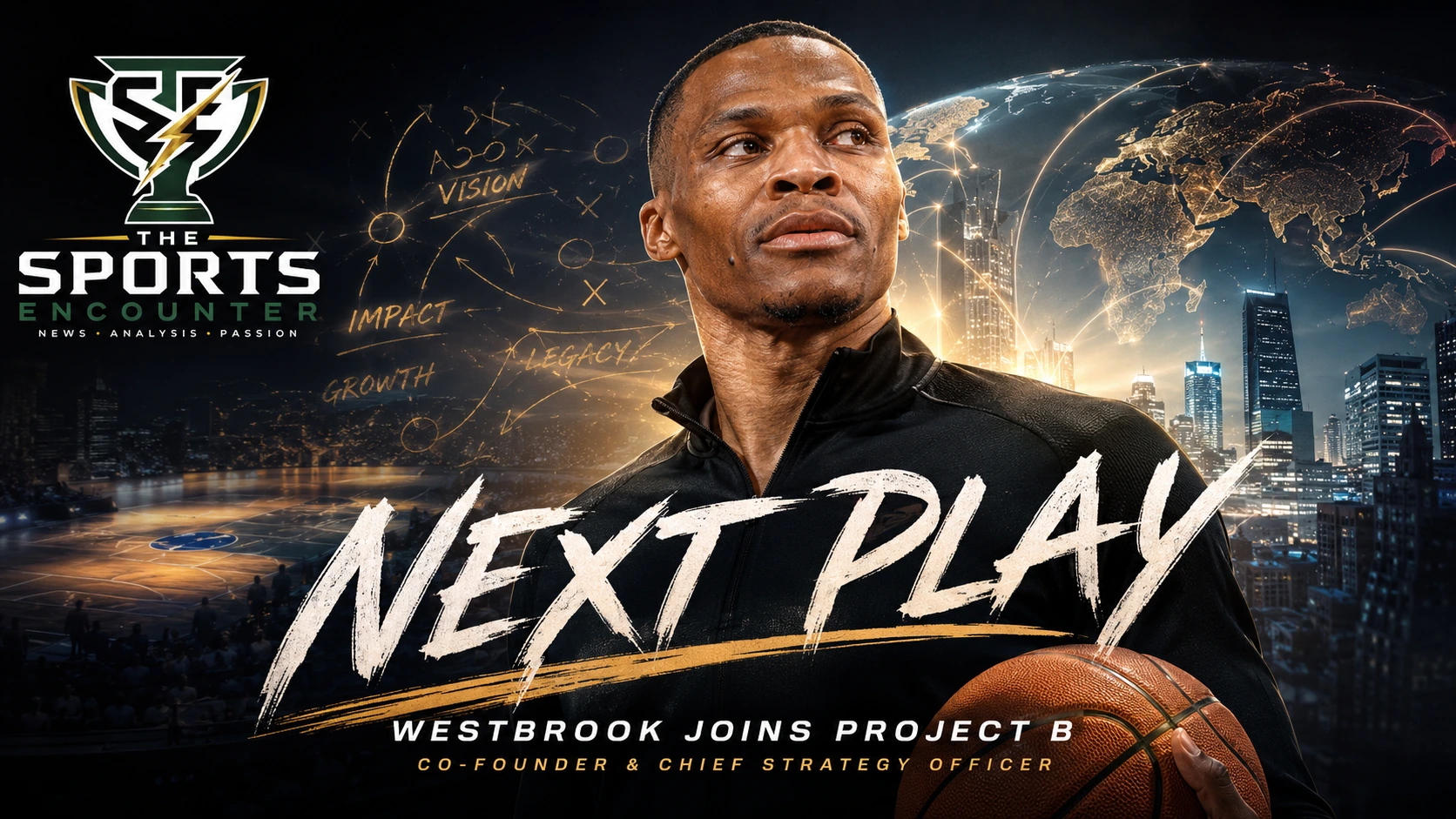
Russell Westbrook spent 18 NBA seasons attacking basketball as though every possession carried personal consequences. Less than a month after retiring, he has chosen a very different kind of challenge: helping build a new basketball property from the inside.
Project B has named Westbrook a co-founder and chief strategy officer, giving the former NBA MVP an ownership stake, a seat on the board of directors and direct influence over the league’s basketball strategy, partnerships and long-term direction.
The appointment is significant because Westbrook is not joining as a ceremonial ambassador.
He is entering the business structure.
Project B is building a global 5-on-5 basketball circuit for elite women and men, with players positioned as shareholders rather than simply employees. Its stated model combines basketball, culture, live entertainment, global host cities and digital-first distribution.
Westbrook’s arrival brings one of the most recognizable basketball names of the last two decades into that experiment.
For Project B, his value goes far beyond 209 career triple-doubles, nine All-Star selections or an MVP trophy.
He has spent nearly two decades experiencing professional basketball from the athlete side of contracts, trades, sponsorships, media expectations, team politics, global marketing and commercial value.
Now he gets to help decide how some of those systems should work.
That is where the story becomes more interesting than another retired superstar joining another investment group.
Westbrook’s first major post-playing move places him inside a wider change occurring across professional sports: athletes increasingly want ownership, equity and decision-making authority rather than compensation alone.
Project B is betting that players can become part of the product, the ownership structure and the long-term asset value at the same time.
Westbrook is now one of the people responsible for proving whether that model can work at scale.
By The Sports Encounter Editorial Desk
Published: September 3, 2026
Updated: September 3, 2026
Russell Westbrook and Project B: Key Facts
| Detail | Information |
|---|---|
| Russell Westbrook role | Co-founder and Chief Strategy Officer |
| Ownership | Equity stakeholder |
| Governance role | Board of Directors |
| Project B format | Elite 5-on-5 men’s and women’s basketball |
| League concept | Global Grand Prix-style circuit |
| Player model | Players receive ownership/equity |
| Number of planned host cities | Six |
| Confirmed 2027 hosts | Valencia and Tokyo |
| Westbrook age | 37 |
| NBA career | 18 seasons |
| NBA triple-doubles | 209, all-time record at retirement |
| NBA MVP | 2016-17 |
| NBA All-Star selections | 9 |
| Scoring titles | 2 |
Project B describes itself as a global Grand Prix-style basketball circuit built around elite men’s and women’s 5-on-5 competition.
Its official operating philosophy is unusually explicit about player ownership: every athlete is intended to participate as a shareholder in the long-term value created by the league.
Westbrook Retired From Basketball, Not From Basketball Business
Westbrook announced his retirement on August 12 after 18 NBA seasons.
His playing résumé gave him little left to prove individually.
He retired as the NBA’s all-time leader in triple-doubles with 209.
He won the 2016-17 MVP award.
He earned nine All-Star selections, two scoring titles and three assist titles.
He averaged a triple-double across four separate seasons, something no other NBA player had done.
The Sports Encounter’s full Russell Westbrook retirement retrospective examined why those numbers only partly explain his legacy.
His defining characteristic was control through force.
He wanted the rebound.
He wanted the ball.
He wanted responsibility.
That personality makes his first major post-NBA move particularly logical.
Westbrook has not moved toward a television desk or a passive advisory role.
He has moved into ownership and strategy.
That keeps him close to basketball while giving him a different form of control.
The Title Matters: Chief Strategy Officer Is Not an Ambassador Role
Sports startups often attach famous names to projects because fame creates credibility.
The celebrity appears at launch events.
The press release receives attention.
The actual business continues elsewhere.
Project B has given Westbrook a much deeper mandate.
As chief strategy officer, he is expected to help shape basketball strategy, long-term vision and strategic partnerships.
He also holds equity and sits on the board.
That means his interests are aligned with the value of the business itself.
If Project B grows, Westbrook participates in that growth as an owner.
If strategic decisions fail, he is connected to those decisions as well.
This is far more meaningful than licensing his name to someone else’s league.
Project B Is Trying to Solve a Problem Athletes Have Discussed for Decades
Professional athletes create enormous economic value.
Most traditional league structures still separate that value from ownership.
Players receive salaries.
Teams and investors own the appreciating assets.
Franchise values can rise by billions of dollars while athletes who helped create that growth eventually retire and move on.
Project B is attempting to change that relationship.
Its core principle is straightforward: players are owners.
Every athlete is intended to receive equity.
That means the player is not only compensated for appearing in the competition.
He or she participates in the long-term value of the platform.
This is increasingly attractive because modern sports valuations have become extraordinary.
The Sports Encounter recently examined that shift through the proposed $12.5 billion sale of the Los Angeles Lakers.
The lesson from transactions like that is impossible for players to ignore.
Sports assets can appreciate far more dramatically than individual salaries.
Ownership changes the equation.
Westbrook Understands the Difference Between Being Valuable and Owning Value
Few players have generated more basketball attention than Westbrook.
He became the emotional identity of Oklahoma City after Kevin Durant’s departure.
His MVP season generated nightly national attention.
His triple-double chase became a commercial and media storyline.
His moves to Houston, Washington, the Lakers, Clippers, Denver and Sacramento generated new fan interest every time he changed markets.
Westbrook understands how much attention elite players create.
Project B is asking a different question.
How much of the value created by that attention should belong to the athlete?
That is why Westbrook’s public emphasis on players having a seat at the table fits the league’s structure rather than functioning as empty branding.
He spent his career as one of basketball’s value creators.
He is now helping design a system where players can become value owners.
Women’s Basketball Is the Ideal Place to Test the Model
Project B’s early player recruitment has focused heavily on women’s basketball.
That makes commercial sense.
Women’s basketball is experiencing one of the strongest growth periods in its history.
WNBA audiences have expanded.
International stars are becoming more visible.
New markets are pursuing franchises.
Athletes have become stronger commercial brands.
The Sports Encounter’s coverage of the 2026 WNBA All-Star Game showed how stars such as Caitlin Clark, Paige Bueckers, A’ja Wilson, Breanna Stewart, Jonquel Jones, Nneka Ogwumike and Kelsey Mitchell now sit at the center of a rapidly expanding entertainment product.
Several of those established WNBA names or peers from the same generation have already committed to Project B.
The timing is deliberate.
Project B is entering women’s basketball at the moment when athlete value is rising quickly and players have greater leverage to question whether traditional structures are giving them enough of the upside.
Nneka Ogwumike and Jonquel Jones Give Project B More Than Star Power
The significance of Project B’s early roster is not simply recognition.
Nneka Ogwumike has been one of the most respected voices in women’s professional basketball.
Jonquel Jones has championship and MVP-level credibility.
Alyssa Thomas is one of the game’s most complete players.
Jewell Loyd brings scoring, championships and Olympic experience.
Kelsey Mitchell represents another generation of elite WNBA offense.
These players have spent enough time inside professional basketball to understand both its opportunities and its limitations.
Convincing them to participate gives the league a different type of validation than recruiting prospects who have never experienced established professional systems.
Project B is asking proven professionals to believe that a player-owned alternative is worth their time.
That is a much harder sell.
The WNBA Is Growing at the Same Time Alternatives Are Growing Around It
Project B does not need the WNBA to fail.
Its opportunity may actually depend on the opposite.
A stronger WNBA creates more recognizable stars.
More recognizable stars create more international basketball interest.
More interest creates space for additional properties.
The Sports Encounter’s analysis of the WNBA’s decision to bring major All-Star programming to the Obama Presidential Center showed how confidently the league is now connecting basketball with culture, community and major commercial partners.
That expanding ecosystem makes alternative competitions more viable.
Players can appear in different basketball products without requiring one league to replace another completely.
That is the model Project B appears to be pursuing.
Project B’s Biggest Difference May Be Geography
Traditional North American leagues are built around permanent home markets.
Project B is choosing a traveling circuit.
Its website describes a global structure across six iconic cities.
Valencia and Tokyo are already confirmed as host cities for 2027.
The official Project B circuit schedule currently lists Valencia from March 12-21 and Tokyo from March 26-April 4.
This model changes the relationship between team and place.
Fans do not need to live near a permanent franchise.
The league travels toward them.
That creates opportunities in markets with strong basketball interest but no NBA or WNBA team.
It also allows Project B to design each stop as a sports-and-entertainment festival rather than a conventional home game.
The Global Circuit Is an Audience Strategy
Project B is not merely choosing international cities for spectacle.
The circuit solves an audience problem.
Basketball is already global.
The NBA has fans throughout Asia, Europe, Africa and Latin America.
The WNBA has an increasingly international player pool.
Major FIBA tournaments attract strong audiences outside the United States.
Yet the highest-value professional basketball products remain overwhelmingly centered in North America.
Project B wants to move elite basketball closer to international fans.
That approach mirrors what The Sports Encounter has been following through the growing globalization of women’s basketball, including Caitlin Clark and Paige Bueckers entering the senior World Cup stage.
Berlin, Tokyo and Valencia are part of the same broader trend.
Elite basketball no longer assumes its most valuable audience sits in one country.
Westbrook Gives Project B Global Recognition Immediately
A startup sports league has to explain itself repeatedly.
Who owns it?
Who plays?
Why does it exist?
Why should fans care?
Westbrook cannot answer all of those questions.
He can make people listen long enough to hear the answers.
His name is recognizable in the United States.
His Oklahoma City years created international fandom.
His Olympic and FIBA experience strengthened his global profile.
His fashion and business interests extend beyond basketball.
For a league that wants to sit at the intersection of sport, culture and entertainment, that combination is unusually valuable.
This Is Also a Brand Decision for Westbrook
Retirement forces elite athletes to answer a difficult question.
What remains when the uniform disappears?
Westbrook has spent years building interests outside basketball through fashion, media, real estate, philanthropy and investment.
Project B gives those interests a single platform connected to the sport that made him famous.
He can influence partnerships.
He can help shape media.
He can connect basketball with consumer brands.
He can help recruit players.
He can advise on athlete experience.
He can use his existing business relationships to strengthen the project.
That makes the role far more coherent than attaching his name to an unrelated investment after retirement.
Social-Native Distribution Is Central to the Model
Project B describes itself as social-native.
That phrase can easily become marketing jargon.
The strategic idea behind it is real.
Traditional sports leagues were built around television first.
Younger audiences increasingly discover sport through clips, creators, short-form video, player accounts and social conversations before they watch a full broadcast.
Project B wants content to circulate across those environments from the beginning.
That may prove especially valuable internationally.
A fan in Indonesia, Spain or Brazil does not need a traditional local television relationship with the league before discovering a player or game.
The discovery pathway can begin through a phone.
Westbrook’s cultural profile gives Project B another advantage in that environment.
The Athlete-Ownership Model Could Change Recruitment
Traditional recruitment offers players salaries, competitive opportunity and exposure.
Project B adds another negotiating tool.
Equity.
For established stars, that can be meaningful.
A salary compensates the athlete for this season.
Ownership gives the athlete an interest in what the league may become five or ten years later.
That does not guarantee value.
Startup equity can become extremely valuable, remain modest or ultimately be worth nothing.
The risk is real.
The incentive is different.
If players believe they are building something they own, their relationship with promotion and audience growth may change.
Every new fan potentially strengthens an asset in which they participate.
Unrivaled Has Already Proved Players Will Respond to Equity
Project B is not operating in complete isolation.
Women’s basketball has already begun testing athlete-ownership models elsewhere.
Unrivaled has demonstrated that high salaries, player equity and a concentrated competition format can attract major stars and substantial investment.
The broader lesson is significant.
Players are increasingly willing to become business partners rather than simply contracted talent.
Project B extends that logic into 5-on-5 basketball and a traveling international model.
The difference in format means the two properties do not need to become direct copies.
They are evidence of the same structural movement.
The athlete wants more participation in the value chain.
Women’s Basketball Is Becoming a Marketplace for Competing Ideas
This may ultimately be healthy for the sport.
For years, women’s professional basketball had too few elite opportunities.
The conversation is beginning to reverse.
The WNBA is expanding.
International leagues remain important.
Unrivaled has created another high-level environment.
Project B is preparing a global circuit.
The Sports Encounter’s analysis of Team USA’s extraordinary depth even after losing A’ja Wilson and Kelsey Plum illustrated just how large the elite player pool has become.
More quality players create the possibility of more quality products.
The challenge becomes scheduling, workload and economic sustainability rather than simple scarcity.
Player Wellness Could Become a Competitive Advantage
Project B’s official principles include fewer back-to-back games, less travel and smarter scheduling.
That sounds unusual for a league built around international host cities.
It also reflects what modern players increasingly value.
Elite basketball calendars can become punishing.
WNBA players often move directly from domestic seasons into international competitions.
National-team commitments create another workload.
The Sports Encounter has seen the consequences of that overlap through the late roster changes affecting USA Basketball before Berlin.
If Project B can offer high-level competition without recreating the most exhausting parts of traditional schedules, that becomes another recruitment tool.
Westbrook’s Personality Fits a Challenger Brand
Project B is attempting to challenge convention.
Westbrook’s career was built around doing exactly that.
His game was never designed to satisfy consensus.
He became an MVP while playing basketball at a statistical scale many analysts initially considered unsustainable.
He averaged a triple-double when the achievement had gone untouched for more than half a century.
He then did it three more times.
His “Why Not?” identity was built around questioning assumed limits.
That makes him culturally compatible with a startup asking whether traditional professional basketball structures are the only way elite leagues should operate.
Brand fit does not guarantee business success.
It gives the partnership authenticity.
Project B Still Has to Prove the Basketball Product
The excitement around ownership and strategy can obscure a basic truth.
Fans ultimately need good games.
A league can have sophisticated ownership.
It can have international cities.
It can have major investors.
It can have recognizable executives.
If the competition does not feel important, audiences eventually leave.
Project B says every game will carry meaningful stakes.
That principle will need to survive contact with the actual schedule.
How teams are formed matters.
Competitive balance matters.
Rivalries matter.
Coaching matters.
Broadcast quality matters.
The best sports-business strategy still requires basketball worth watching.
The Six-City Format Could Help Create Scarcity
Traditional leagues produce enormous inventory.
An NBA season contains 1,230 regular-season games before the playoffs.
The WNBA schedule continues expanding as the league grows.
Project B is taking a different approach.
Its stated principle is impact over inventory.
A smaller number of concentrated events can create scarcity.
Scarcity can make each stop feel more meaningful.
The challenge is maintaining audience habits between stops.
That is where social content, player storytelling and digital distribution become essential.
Tokyo Is a Smart Test Market
Japan already has serious basketball infrastructure.
The domestic game has grown.
NBA stars have strong recognition.
Japanese players have increased international visibility.
The country also understands premium sporting events and global entertainment brands.
A Project B stop in Tokyo therefore tests something valuable.
Can a new league attract fans who already like basketball but have no historical attachment to Project B?
If the answer is yes, the global-circuit model gains credibility.
Valencia Tests a Different Basketball Culture
Spain provides another useful market because basketball is deeply established there.
Spanish fans understand the game at a high level.
Domestic clubs have long histories.
European basketball already has cultural authority.
Project B therefore cannot rely on novelty alone in Valencia.
The product has to feel elite.
That makes the March 2027 stop an important credibility test.
Tokyo measures global attraction.
Valencia can measure basketball credibility.
Could Project B Compete With Established Leagues?
The wrong question may be whether Project B will “beat” the WNBA or NBA.
The more realistic question is whether it can create a valuable place beside existing structures.
Professional sport increasingly supports multiple formats.
Basketball has traditional leagues, international competitions, 3×3, summer circuits and national-team events.
The Sports Encounter’s coverage of Australia’s Commonwealth 3×3 gold over Uganda showed how alternative basketball formats can create their own identities without replacing 5-on-5 competition.
Project B’s opportunity lies in being different enough to justify its existence while remaining familiar enough for basketball fans to care.
The Men’s Component Could Change the Scale Completely
Project B is designed for both women’s and men’s elite basketball.
The women’s side is further along publicly.
A credible men’s circuit could significantly change the size of the opportunity.
That is another reason Westbrook’s role matters.
He has immediate credibility with NBA players.
He understands the conditions veteran stars evaluate when considering new competitive opportunities.
He can speak the language of players deciding whether additional basketball is worth the physical and commercial commitment.
If Project B eventually wants established NBA or international men’s stars involved, Westbrook becomes one of its most useful recruiters.
His NBA Relationships May Be One of the League’s Most Valuable Assets
Eighteen NBA seasons create a network few startup executives possess.
Westbrook has played with and against multiple generations of stars.
He knows agents.
He knows coaches.
He knows brand executives.
He knows broadcasters.
He knows league personnel.
He has relationships throughout Los Angeles and across international basketball.
Those connections can shorten conversations that would otherwise take years for a new league to develop.
This is often what celebrity ownership is supposed to provide.
Westbrook’s advantage is that the network comes with direct basketball experience.
This Is Part of a Larger Shift in Sports Ownership
Professional sport is becoming one of the world’s most valuable asset classes.
NBA franchise prices continue rising.
NFL teams have reached valuations once associated with major corporations.
Soccer clubs are attracting institutional capital.
WNBA expansion has become increasingly competitive.
The Sports Encounter’s analysis of Bill Foley’s Las Vegas NBA expansion push showed how investors increasingly view basketball franchises as scarce long-term assets rather than simple sports teams.
Athletes see the same trend.
Many now want a place on the ownership side of that appreciation.
Project B is attempting to make that principle structural from day one.
The League’s Greatest Opportunity Is Also Its Greatest Risk
Project B is promising players something ambitious.
Ownership.
Voice.
Global exposure.
Premium competition.
Smarter scheduling.
Digital distribution.
Culture.
Long-term value.
Those promises create excitement.
They also create a high standard.
If the league ultimately operates like a conventional sports property with athlete ownership added mainly as marketing language, players will notice.
Westbrook’s presence raises expectations further.
He now shares responsibility for ensuring the philosophy survives once commercial pressures begin.
Westbrook’s Legacy Is Entering a Different Phase
His playing career will always be defined by basketball intensity.
That history is secure.
The next phase will be judged through influence.
Can he build something?
Can he help players gain leverage?
Can his basketball knowledge translate into business strategy?
Can a retired superstar become a credible sports operator?
Those questions cannot be answered by 209 triple-doubles.
Westbrook is beginning again from a different baseline.
The Sports Encounter’s NBA Hub has followed how former stars increasingly move from player identity into ownership, media and business influence.
Westbrook’s Project B role may eventually become one of the most interesting examples.
The Sports Encounter Verdict: Project B Has Added More Than a Famous Name
Russell Westbrook did not need Project B to remain relevant.
His basketball legacy was already secure when he retired.
Project B did not need another investor merely to say it had famous investors.
The importance of this partnership lies in the responsibilities attached to it.
Westbrook is now a co-founder.
He has equity.
He sits on the board.
He is chief strategy officer.
He is expected to influence basketball strategy, long-term planning and partnerships.
That turns the move into a test of something larger than his personal post-career ambitions.
Project B is betting that athletes can help own and govern the sports properties built around their talent.
Westbrook is one of the first major retired NBA stars to place himself this deeply inside that model from launch.
The timing also gives the idea credibility.
Women’s basketball is growing rapidly.
Athlete equity has become increasingly important.
International basketball audiences are expanding.
Streaming and social platforms have weakened the assumption that a new sports league requires a traditional television structure before it can find fans.
Project B is trying to combine all of those trends at once.
That combination creates enormous opportunity.
It also creates execution risk.
A player-owned structure still needs sustainable revenue.
A global circuit still needs manageable travel.
A social-native league still needs viewers willing to watch entire games.
Star names still need competitive basketball underneath them.
Those are difficult problems.
Westbrook spent his playing career building an identity around a simple question.
Why not?
Project B is effectively asking the same question about professional basketball itself.
Why should athletes only receive salary?
Why should elite leagues exist only inside traditional geography?
Why should basketball distribution begin with television rather than the platforms younger fans already use?
Why should players help create billions in sports value without participating directly in ownership?
The answers will not come from a launch announcement.
They will come when the teams take the floor, fans decide whether to care, players decide whether the model is worth supporting and the business has to prove it can sustain itself.
Westbrook is no longer trying to win those possessions with the ball in his hands.
For the first time in his professional basketball life, he is helping design the court on which the game will be played.
Frequently Asked Questions About Russell Westbrook and Project B
What is Russell Westbrook’s role with Project B?
Westbrook has joined Project B as a co-founder and chief strategy officer. He also holds an ownership stake and serves on the board of directors.
Will Russell Westbrook play in Project B?
There is currently no confirmed indication that Westbrook intends to play. His announced role is focused on ownership, strategy and business leadership.
What is Project B?
Project B is a new global basketball platform built around elite 5-on-5 men’s and women’s competition, player ownership and a traveling Grand Prix-style circuit.
When will Project B begin?
Project B is preparing to launch its first season in 2027.
Where will Project B games be played?
The league plans a six-city international circuit. Valencia, Spain, and Tokyo, Japan, are among the first confirmed 2027 host cities.
Do Project B players receive ownership?
Yes. Project B states that every athlete will be a shareholder and participate in the long-term value of the league.
Which WNBA players have joined Project B?
Announced players include major names such as Nneka Ogwumike, Jonquel Jones, Alyssa Thomas, Jewell Loyd, Kelsey Mitchell and Sophie Cunningham, among others.
How many teams will Project B have?
The initial structure has been reported as six teams with 11-player rosters.
Why did Russell Westbrook join Project B?
Westbrook has emphasized athlete ownership, inclusion and giving players a meaningful role in decision-making and value creation.
How many NBA triple-doubles did Russell Westbrook record?
Westbrook retired with 209 regular-season triple-doubles, the most in NBA history at the time of his retirement.
Breaking News
Caitlin Clark Takes Her Global Test: Why Berlin 2026 Is Bigger Than a World Cup Debut
Caitlin Clark enters the 2026 FIBA Women’s Basketball World Cup in Berlin with proven senior international form, greater offensive responsibility and a chance to turn domestic fame into genuine global basketball influence.
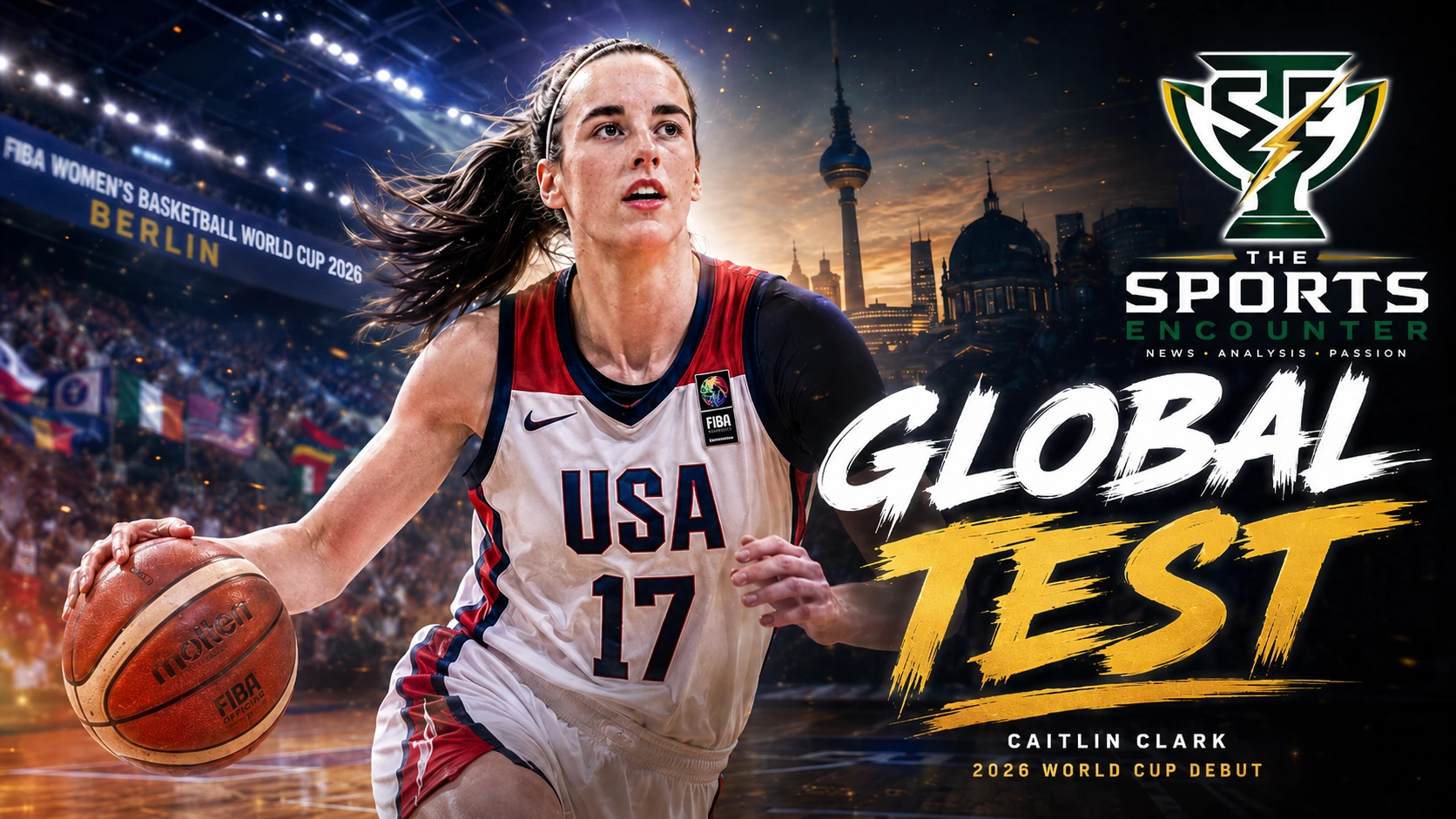
Caitlin Clark has already changed the commercial and cultural scale of women’s basketball in the United States. Berlin now asks a different question: can she carry that influence onto the international stage while helping the United States defend the most dominant dynasty in women’s basketball?
Clark will make her FIBA Women’s Basketball World Cup debut when Team USA opens its 2026 campaign against China in Berlin on September 4.
For most players, a first World Cup would already provide enough pressure.
Clark arrives with several additional layers.
She is one of the most recognizable athletes in American sports. She has helped drive extraordinary attention toward the WNBA. She has already experienced the scrutiny attached to every shot, foul, gesture and public comment. Her omission from the 2024 Olympic team became one of the most debated selection decisions in recent USA Basketball history.
Two years later, there is little ambiguity about whether she belongs.
Clark earned her place through senior international performance.
At the World Cup qualifying tournament in San Juan earlier this year, she averaged 11.6 points and a tournament-leading 6.4 assists, shot 52.9% from the field and 40% from three-point range, helped the United States finish 5-0 and was named TISSOT MVP.
That qualifying run changed the argument around her national-team role.
Berlin now changes the scale.
The World Cup is not simply another stage for Clark’s popularity. It is the first senior global championship where her basketball decisions will matter directly to the United States’ pursuit of another title.
Her responsibilities have also grown since the original roster was announced.
A’ja Wilson and Kelsey Plum are no longer part of the final team, with Sonia Citron and Kiki Iriafen added before the tournament. That removes one dominant interior scorer and one experienced secondary creator from Kara Lawson’s original structure.
The result is obvious.
More of the offense may now run through Clark, Paige Bueckers, Chelsea Gray and Jackie Young.
Clark is therefore entering Berlin with two kinds of spotlight at once.
One follows her because of who she is.
The other has been created by what Team USA now needs her to do.
By The Sports Encounter Editorial Desk
Published: September 3, 2026
Updated: September 3, 2026
Caitlin Clark at the 2026 FIBA Women’s World Cup: Key Facts
| Detail | Information |
|---|---|
| Player | Caitlin Clark |
| Age | 24 |
| Height | 6-foot |
| WNBA team | Indiana Fever |
| Position | Guard |
| World Cup status | Senior World Cup debut |
| Qualifying tournament | San Juan, Puerto Rico |
| Qualifying scoring | 11.6 points per game |
| Qualifying assists | 6.4 per game, tournament best |
| Qualifying field goal percentage | 52.9% |
| Qualifying three-point percentage | 40% |
| Qualifying record | USA finished 5-0 |
| Qualifying award | TISSOT MVP |
| World Cup dates | September 4-13, 2026 |
| Host city | Berlin, Germany |
| USA group | Group D: China, Czechia, Italy, USA |
| Opening opponent | China |
FIBA’s official Women’s Basketball World Cup page confirms that the tournament runs from September 4 through September 13 in Berlin with 16 nations competing.
The official FIBA qualifying review also confirms Clark’s MVP performance in San Juan, where she led the tournament in assists.
Clark Is Entering Berlin With Something She Did Not Have in 2024: Proof
The debate around Clark’s absence from the Paris Olympic roster was emotionally charged because the public discussion moved faster than her senior national-team résumé.
She had already become one of the most famous basketball players in America.
That did not automatically create a senior international body of work.
USA Basketball was choosing from one of the deepest player pools in world sport, and the 2024 roster was loaded with experienced Olympic and World Cup champions.
The decision still produced enormous public criticism.
Clark’s response afterward was notable because she did not spend the following two years trying to win that argument in public.
She kept playing.
Berlin is the result.
Her place in the 2026 team is supported by what happened in San Juan.
She did not simply participate in qualifying.
She controlled it.
That distinction is important.
FIBA named Clark the tournament’s most valuable player after she averaged 11.6 points, 6.4 assists and a team-best 14.6 efficiency rating while the United States swept all five games.
The Sports Encounter had already examined that transition in our analysis of Clark and Paige Bueckers joining the USA World Cup roster.
At the time, the central question was whether two of America’s most visible young guards could translate WNBA influence into senior international basketball.
Clark has already supplied part of the answer.
World Cup basketball will provide the harder part.
San Juan Showed Why Clark’s Game Can Translate Internationally
International basketball changes spacing, pace and defensive habits.
That does not reduce Clark’s strengths.
In some ways, it may sharpen them.
Her most transferable skill is not simply shooting.
It is how far away from the basket defenders have to acknowledge the possibility of a shot.
That alters geometry.
When Clark crosses half court, a defender cannot automatically wait near the three-point line.
If the defender steps higher, screening angles change.
Driving lanes become wider.
Roll players gain space behind the first line of defense.
Weak-side defenders have to make earlier decisions.
Clark can then use the space through passing rather than scoring herself.
That is exactly what appeared in San Juan.
Her 6.4 assists per game led the entire tournament.
Against Senegal, she scored 17 points and added 12 assists in only 19 minutes.
Against Spain, she scored only seven points but still recorded seven assists.
Those numbers matter because they show that Clark’s usefulness does not disappear when her shot volume falls.
International tournaments reward guards who can influence several possessions without requiring 20 attempts.
Clark’s qualifying performance suggested she can do that.
Her Biggest Berlin Test Will Be Decision-Making, Not Shooting Range
Everyone knows Clark can shoot from distance.
Opponents know it too.
The World Cup challenge will be how she responds once defenses design specific solutions.
China can put size around the lane.
European opponents can change pick-and-roll coverages repeatedly.
Australia and Belgium can punish careless turnovers with disciplined half-court offense.
France can pressure guards athletically.
Elite international teams will try to force Clark into uncomfortable decisions rather than simply hoping she misses long shots.
They may blitz ball screens.
They may switch.
They may top-lock her away from the ball.
They may force her right or left depending on personnel.
They may make her defend physically at the other end in an attempt to reduce her offensive energy.
This is why Berlin will tell us more about Clark than another 30-point WNBA night.
She will need to process different defensive pictures quickly while playing within a roster filled with players accustomed to being primary options themselves.
A’ja Wilson and Kelsey Plum’s Absences Change Clark’s Role
Clark’s original World Cup assignment already carried pressure.
The late roster changes increased it.
A’ja Wilson and Kelsey Plum were removed from the final team before Berlin, with Sonia Citron and Kiki Iriafen called into the roster.
The Sports Encounter examined the consequences in our analysis of Team USA losing Wilson and Plum before the World Cup.
Wilson’s absence changes the frontcourt.
She is one of the world’s most complete players and gives an offense a reliable solution when structure breaks down.
Plum’s absence changes the backcourt differently.
She can create on the ball, attack off movement, handle late-clock possessions and play alongside another primary guard.
Without her, Lawson has fewer experienced creators available.
That can push more responsibility toward Clark.
Paige Bueckers becomes more important too.
Chelsea Gray remains the most experienced organizing guard.
Jackie Young can handle creation responsibilities.
Clark now has a clearer pathway to significant on-ball minutes than she might have had under the original roster construction.
Clark and Paige Bueckers Represent the Next USA Backcourt
Clark and Bueckers have spent years being compared because they became stars at roughly the same moment in women’s basketball’s growth.
The comparison often becomes unnecessarily simplistic.
They do not play the same way.
That is precisely why the combination is interesting.
Clark creates pressure through range, pace and passing ambition.
Bueckers plays with more measured tempo, excellent footwork and a strong midrange game.
Clark can stretch the first layer of defense outward.
Bueckers can attack the space created inside that first rotation.
A lineup featuring both guards can also reduce the burden on either one to dominate every possession.
The Sports Encounter’s complete guide to the 2026 WNBA All-Star Game showed how Clark and Bueckers had already become the league’s two biggest fan-vote attractions, with Bueckers receiving 1,045,051 votes and Clark 1,023,321.
Berlin now removes the exhibition context.
Their decisions will affect a world championship.
The USA Roster Is Younger Than Originally Planned
The final American roster still contains championship experience.
Breanna Stewart, Chelsea Gray, Napheesa Collier, Kahleah Copper and Jackie Young understand the demands of major international tournaments.
The supporting structure around them now contains more players taking their first senior World Cup steps.
Clark, Bueckers, Angel Reese, Aliyah Boston, Rhyne Howard, Sonia Citron and Kiki Iriafen all represent different parts of a generational handover.
That makes Berlin important beyond one medal.
USA Basketball is beginning to learn which players can become structural pieces for LA28 and the championships that follow.
The World Cup gives Lawson a rare opportunity to evaluate that transition under genuine elimination pressure rather than during a training camp.
Clark is the most visible member of that group.
She is not the only one being tested.
China Is a Serious Opening Opponent, Not a Ceremonial First Game
Team USA opens against China at Max-Schmeling-Halle.
That immediately gives Clark a useful measuring stick.
China finished second at the 2022 World Cup and enters Berlin with size, international experience and one of the most imposing frontcourt structures in the tournament.
FIBA lists China as having made 12 World Cup appearances including 2026, with runner-up finishes in 1994 and 2022.
The Americans have dominated the historical matchup and hold a 15-0 FIBA head-to-head record entering the tournament.
History does not make the opener irrelevant.
China’s size can challenge American rebounding.
Its half-court execution can punish defensive lapses.
For Clark, the matchup may immediately test how well she handles taller defenders and how effectively she creates passing windows against a defense protecting the paint with length.
The official FIBA USA-China game page confirms the Group D opener in Berlin.
The World Cup Format Leaves Less Room for a Bad Group Game
The 2026 tournament has expanded to 16 teams.
That expansion comes with a new structure.
Four groups contain four teams each.
Group winners advance directly to the quarterfinals.
Second- and third-place teams must play an additional knockout qualification game to reach the quarterfinals.
Fourth-place teams are eliminated.
That makes finishing first disproportionately valuable.
An additional elimination game creates another opportunity for fatigue, injury or upset.
USA therefore has a practical reason to treat every group game seriously.
China comes first.
Italy and Czechia follow.
Clark’s ability to organize early offense could become particularly useful because dominant teams often waste group-stage possessions through impatience rather than lack of talent.
The United States has enough scorers.
It needs guards who can keep those scorers connected.
Clark’s Global Spotlight Is About More Than Social Media Numbers
Clark has become accustomed to public attention.
The scale around her is still unusual.
Every venue she enters attracts demand.
Her games create national discussion.
Her performances move beyond basketball media into mainstream culture.
That attention can become exhausting.
It can also become an extraordinary asset for women’s basketball.
Clark has framed the situation around opportunity rather than burden.
That perspective matters in Berlin because the World Cup gives FIBA access to an athlete whose domestic profile is already much larger than the typical American player entering a first senior global championship.
The question is whether some of that following stays with international basketball after Team USA leaves Germany.
If fans who primarily watch Indiana begin following China, Belgium, Australia, France or Spain because Clark pulled them into the tournament, the World Cup gains something more durable than one celebrity.
It gains new audience pathways.
The WNBA Has Already Shown What Clark’s Attention Can Do
The relationship between Clark and audience growth is visible inside the WNBA.
Her popularity has helped make Fever games national events.
Her presence changes ticket demand in opposing arenas.
She has also become one of the league’s defining television figures.
The Sports Encounter has followed that influence throughout 2026.
During the All-Star process, Clark received more than one million fan votes and became one of the central attractions of the event.
Our analysis of the WNBA’s decision to stage major All-Star events at the Obama Presidential Center examined how the league is increasingly connecting its commercial growth to culture, community and visibility beyond the court.
Clark fits naturally into that expansion.
She draws people toward basketball.
The league’s responsibility is converting that attention into interest in more players and teams.
FIBA now receives the same opportunity.
Clark Has Already Learned How Quickly Attention Can Change Direction
Global fame in sport is rarely comfortable.
The same audience that celebrates an athlete can turn one controversial moment into days of criticism.
Clark has experienced that repeatedly.
One of the clearest examples came in August when she appeared set to receive an automatic WNBA suspension after being assessed what would have been her eighth technical foul.
The league later rescinded the call.
The Sports Encounter’s report on Clark avoiding suspension after the WNBA review showed how quickly a routine in-game moment can become a national disciplinary storyline when she is involved.
That experience may actually help in Berlin.
World Cups are emotionally compressed.
A poor game can create immediate debate.
A turnover late in a knockout contest can dominate the following day.
Clark already understands what it feels like to operate inside that kind of scrutiny.
International Basketball Could Improve Clark’s Game Too
The conversation normally focuses on what Clark can bring to the World Cup.
The tournament can give something back.
International basketball will expose her to different defensive habits and teammates with different timing.
She will have to create without controlling every possession.
She will play beside multiple elite decision-makers.
She will face opponents with years of continuity in national-team systems.
She will also have to defend without the exact schemes Indiana uses to protect or position her.
Those experiences can sharpen a guard.
Learning when not to push the ball may be as valuable as learning when to accelerate.
Playing beside Stewart, Gray and Collier can help Clark see how championship veterans manage possessions where nothing obvious is available.
That education can return to Indiana after the World Cup.
The Aliyah Boston Connection Gives Team USA an Immediate Shortcut
One advantage Clark does not need to develop from scratch is chemistry with Aliyah Boston.
The Indiana teammates already understand each other’s screening angles and preferred passing windows.
That can help Lawson establish offense quickly.
Clark knows when Boston will slip a screen.
Boston knows when Clark wants to reject one.
They understand each other’s transition habits.
That familiarity becomes valuable in national-team basketball because practice time is limited compared with a club season.
The same principle applies across other WNBA relationships on the roster.
International teams often benefit from continuity.
USA traditionally has less collective training time than many opponents.
Existing club chemistry can reduce that disadvantage.
The World Cup Gives Women’s Basketball an Unusually Clean Spotlight
The WNBA has paused its season around the tournament.
That creates a valuable window.
American fans do not have to choose between a Fever game and a Team USA game.
Major WNBA storylines temporarily shift into Berlin.
Clark becomes a USA guard.
Bueckers becomes a USA guard.
Reese becomes a USA forward.
Stewart returns to the international role she has played for years.
This concentration of recognizable WNBA names gives FIBA a stronger entry point into the American audience than it normally receives during an overseas tournament.
The Sports Encounter’s basketball coverage hub has tracked how star power, league economics and changing fan behavior are increasingly connected across the sport.
Berlin is another example.
The product on the floor remains international basketball.
The audience arriving around it is increasingly global and personality-driven.
Women’s Basketball Is Growing Internationally Without Waiting for the USA
Clark’s presence should not turn the World Cup into a one-player marketing exercise.
The wider women’s game has become stronger.
FIBA expanded the tournament from 12 teams in 2022 to 16 in 2026 following the growth of the international game.
Belgium arrives with championship-level ambition.
Australia remains one of the sport’s deepest national programs.
France combines athleticism and development depth.
Spain remains tactically sophisticated.
China has size and recent World Cup pedigree.
Nigeria continues representing the growth of African women’s basketball.
The Sports Encounter has also followed that broader development outside five-on-five competition. Our report on Australia’s victory over Uganda in the Glasgow 2026 women’s 3×3 final showed how women’s basketball is producing important competitive stories across formats and regions.
Clark may draw additional viewers into Berlin.
The tournament’s job is giving them reasons to keep watching once they discover everybody else.
The United States’ Winning Streak Creates a Different Kind of Pressure
USA Basketball does not enter the World Cup trying to prove it belongs among the favorites.
It enters carrying one of the most dominant records in international sport.
The Americans are pursuing a fifth consecutive World Cup championship.
They have not lost a World Cup or Olympic game since the 2006 World Championship.
That history changes expectations.
A semifinal appearance would be an extraordinary achievement for most countries.
For the United States, it would be treated as failure.
Clark therefore enters an environment where development and results have to happen simultaneously.
USA can build for the future.
It is still expected to win now.
This Is Why Clark’s Passing May Matter More Than Her Scoring
Team USA does not lack people capable of scoring.
Stewart can create from multiple levels.
Collier can punish mismatches.
Copper can attack space.
Howard can score from the perimeter.
Bueckers can create in the midrange.
Young can attack off the dribble.
Boston and Reese give the team interior presence and rebounding.
What elite rosters sometimes lack is connective play.
Who moves the defense before the shot?
Who finds a roller instead of taking the first available jumper?
Who turns a defensive rebound into a layup before the opponent organizes?
Clark can provide that.
Her qualifying numbers suggest she already understands the role.
A tournament-best 6.4 assists per game matters more than whether she averaged 11.6 or 18 points.
USA has scorers.
Clark can make those scorers easier to use.
What Success Would Actually Look Like for Clark in Berlin
It would be easy to judge her World Cup by points per game.
That would be incomplete.
A successful tournament should include several things.
- Efficient playmaking without excessive turnover volume
- Defensive discipline against experienced international guards
- Effective chemistry with Boston and the other screeners
- Comfort playing both on and off the ball
- Useful late-clock decision-making
- Adaptation when teams take away her preferred pick-and-roll reads
- Consistent tempo control
- Contribution to a deep Team USA run
If Clark averages 13 points and eight assists while making the offense flow, that may be more valuable than averaging 22 points through high-volume shooting.
The World Cup is not asking her to recreate Indiana.
It is asking her to fit elite skills into an elite collective.
Berlin Is Also a Preview of LA28
The Los Angeles Olympics sit less than two years away.
That gives every 2026 national-team decision another layer.
Clark will be 26 during LA28.
Bueckers will be 26.
Boston will be 26.
Reese will be 26.
Howard will still be in her prime.
Several veteran stars may remain central too.
Berlin therefore offers USA Basketball a real-world laboratory for the next Olympic roster.
The players who prove they can handle major international games now make future selection decisions easier.
Clark’s 2024 Olympic absence made her national-team story unusually public.
A strong 2026 World Cup could make the LA28 conversation much simpler.
The Commercial Impact Could Extend Beyond the World Cup
If Clark performs well and Team USA reaches the final, FIBA receives several days of high-value attention from fans who may not normally follow international women’s basketball.
That audience can have downstream value.
More interest can help future sponsorship.
It can strengthen broadcast demand.
It can increase awareness of international stars.
It can make the Olympic women’s tournament even more valuable.
It can also help the WNBA because several international opponents are WNBA players themselves.
Fans following Clark may discover teammates, rivals and future league matchups through Berlin.
This is how modern sports growth often works.
One athlete creates an entry point.
The surrounding competition has to convert that attention into a wider relationship.
The Sports Encounter Verdict: Clark’s Biggest Contribution May Be Making the World Cup Feel Bigger
Caitlin Clark does not need Berlin to prove she is famous.
She does not need the World Cup to prove she can score.
She does not even need it to prove she belongs in a USA uniform anymore.
San Juan settled that part.
She averaged 11.6 points, led the qualifying tournament with 6.4 assists and left Puerto Rico with the MVP trophy.
Berlin asks a more interesting question.
Can she become one of the central decision-makers on a team expected to win every game it plays?
That challenge has become harder because Wilson and Plum are unavailable.
More creation now falls toward a younger backcourt.
Clark and Bueckers will have chances to influence games earlier than many expected.
The United States still has enough experience to protect them.
Stewart, Gray, Collier, Copper and Young provide championship knowledge.
What has changed is the balance.
The future of USA Basketball is no longer waiting politely behind the established generation.
It is beginning to share responsibility with it.
Clark sits at the center of that transition because everything around her becomes more visible.
If she struggles, the reaction will be louder than it would be for almost any other first-time World Cup player.
If she succeeds, the effect may stretch beyond Team USA.
Fans who followed her from Iowa to Indiana may follow her to Berlin.
Some of them may stay long enough to discover Emma Meesseman, Australia, France, China, Spain, Nigeria and the rest of the international women’s game.
That is where Clark’s global influence becomes genuinely interesting.
Her value to women’s basketball is not simply how many people watch Caitlin Clark.
It is how many of those people eventually start watching basketball because Caitlin Clark brought them through the door.
The World Cup now gets its opportunity to find out.
Frequently Asked Questions About Caitlin Clark and the 2026 Women’s Basketball World Cup
Is Caitlin Clark playing in the 2026 FIBA Women’s Basketball World Cup?
Yes. Clark is on the United States roster for the World Cup in Berlin and is preparing to make her senior World Cup debut.
When does Team USA play its first World Cup game?
The United States opens against China on September 4, 2026, at Max-Schmeling-Halle in Berlin.
Who is in Team USA’s World Cup group?
USA is in Group D alongside China, Czechia and Italy.
Has Caitlin Clark played for the senior USA team before?
Yes. Clark made her senior tournament debut at the 2026 World Cup qualifying tournament in San Juan, Puerto Rico.
How did Caitlin Clark perform in World Cup qualifying?
Clark averaged 11.6 points and a tournament-best 6.4 assists per game while shooting 52.9% from the field and 40% from three-point range.
Did Caitlin Clark win MVP in World Cup qualifying?
Yes. FIBA named Clark the TISSOT MVP of the San Juan qualifying tournament after she helped USA finish 5-0.
Why wasn’t Caitlin Clark on the 2024 Olympic team?
Clark was not selected for the Paris 2024 roster during her rookie WNBA season. The decision became one of the most discussed selection stories of those Games, but she has since built senior USA Basketball experience through qualifying.
Are A’ja Wilson and Kelsey Plum playing at the 2026 World Cup?
No. They are not part of the final roster. Sonia Citron and Kiki Iriafen were added to Team USA before the tournament.
How many consecutive World Cups has Team USA won?
The United States enters Berlin seeking a fifth consecutive FIBA Women’s Basketball World Cup title.
When is the 2026 FIBA Women’s Basketball World Cup final?
The tournament runs from September 4 through September 13, with the championship game scheduled for September 13 in Berlin.


FIFA Hits Argentina with Heavy World Cup Sanctions as Paredes Gets 10-Game Ban
FIFA has handed Argentina major disciplinary sanctions after the 2026 World Cup final brawl, including a 10-game suspension for Leandro...

Can FIFA Oust Gianni Infantino? Regional Powerhouses Now Weigh Historic No-Confidence Vote
Gianni Infantino is facing the most serious political challenge of his FIFA presidency as UEFA, the AFC and CONCACAF discuss...


AFC-Qatar Rift Deepens as Infantino Crisis Divides Asian Football
AFC President Sheikh Salman bin Ebrahim Al-Khalifa has hit back at Qatar after its football federation challenged the confederation’s stance...

Why FIFA COO Kevin Lamour Was Shown the Exit Way
FIFA COO Kevin Lamour has left the organization weeks after accusing staff of being deceived over the abandoned FIFA Forward...


Ireland Turns on Infantino as FIFA Election Revolt Spreads Beyond Europe’s Heavyweights
Ireland has withdrawn its support for Gianni Infantino’s re-election as FIFA president, adding another national association to a widening governance...


Donald Trump Comes to Gianni Infantino’s Rescue as FIFA Crisis Turns Political
Donald Trump has thrown his support behind Gianni Infantino as UEFA, AFC and CONCACAF deepen their challenge to the FIFA...


UEFA, AFC and CONCACAF Turn on Infantino as FIFA Crisis Becomes a Fight for His Presidency
UEFA, the AFC and CONCACAF have jointly accused FIFA President Gianni Infantino of breaking trust over the abandoned World Cup...


FIFA Says Infantino Is Being Undermined as Leadership Crisis Turns Into a Battle Over Legitimacy
FIFA has escalated its defense of Gianni Infantino, warning of a concerted effort to undermine its president as the fallout...


When Will Lionel Messi Retire? Argentina President Says Only Messi Has the Answer
Lionel Messi’s retirement remains an open question after his eight-goal 2026 World Cup. Argentina president Claudio Tapia says only Messi...


English FA Turns Its Back on Gianni Infantino, Withdraws Support for Re-Election
The English FA has formally withdrawn its support for Gianni Infantino’s bid for another term as FIFA president, adding major...


FIFA President Apologizes to Member Nations After FIFA World Cup Selloff Plan Fails to Inspire
FIFA has apologized to its member associations after abandoning a controversial plan to sell a 20% stake in a new...


Infantino in Survival Mode After World Cup Stake Sale Idea Results in Global Revolt
Gianni Infantino’s abandoned World Cup commercial rights proposal has triggered an internal FIFA revolt, lost European support, and drawn a...


Crisis Plagues FIFA as Wenger, Grafstrom and Federations Break Ranks
Gianni Infantino’s grip on FIFA is under growing pressure after senior officials, European federations and former allies distanced themselves from...

Infantino Looks to Smaller Nations After UEFA, CONCACAF Snub
Gianni Infantino’s FIFA future may depend on smaller and emerging nations after UEFA and CONCACAF lost confidence in his leadership....


FIFA’s World Cup Stake Plan Failed in Three Days. The Damage to Gianni Infantino May Last Much Longer
FIFA’s attempt to sell a 20% stake in a new World Cup commercial entity collapsed within days after a global...


Cristiano Ronaldo’s World Cup Career: Goals, Records and Final Farewell
Cristiano Ronaldo became the first man to score in six FIFA World Cups, but football’s greatest tournament never gave him...


The Golden Generation Saying Goodbye After the FIFA World Cup 2026
The 2026 World Cup did more than crown a champion. It marked the emotional farewell of a generation that shaped...


Neymar’s World Cup Career: Skill, Pain, and the Rainbow Flick Legacy
Neymar carried Brazil’s World Cup hopes across four tournaments, producing unforgettable goals while enduring injuries, criticism and elimination heartbreak. His...


Is the FIFA World Cup 2030 Not for Sale Anymore?
FIFA’s proposal to sell a minority stake in a $20 billion World Cup commercial company appears to have collapsed after...


FIFA Explores 64-Nation World Cup for 2030: Is Another Expansion Worth It?
FIFA is examining whether the 2030 World Cup should expand from 48 to 64 teams. The proposal could increase global...

Vietnam Survive Thailand’s Best Fightback to Retain ASEAN Championship 2026
Thailand pushed Vietnam into their most uncomfortable night of the tournament, but a missed penalty and two own goals helped...

Vietnam Hold the Lead, but Thailand Still Have 90 Minutes to Change the ASEAN Final
Vietnam carry a 2-0 lead into the ASEAN Championship final second leg, but Thailand still have attacking weapons capable of...

ASEAN Championship 2026 Top 10 Players: The Performers Who Shaped the Road to the Final
From Nguyễn Xuân Son’s semifinal goals to Ilhan Fandi’s decisive strikes and Ubaidullah Shamsul’s defensive work, these 10 players have...


Premier League’s £3.46 Billion Summer: Why Record Spending Is Reshaping English Football
Premier League clubs spent approximately £3.46 billion in the summer 2026 transfer window, with Manchester City alone committing around £458...

Man City Agree £125m Enzo Fernández Deal as Deadline Day Redraws Premier League’s Midfield Power
Manchester City have agreed a £125 million fee with Chelsea for Enzo Fernández in a deadline-day move that would equal...

Bukayo Saka Punishes Aston Villa as Arsenal Win 1-0 and Leave Emery Searching for Answers
Bukayo Saka’s 59th-minute goal gave Arsenal a 1-0 win at Aston Villa, keeping the defending champions perfect through two Premier...


Cherki Ends Crystal Palace Revival as Haaland Brace Sends Manchester City Top
Manchester City beat Crystal Palace 4-1 at Selhurst Park as Erling Haaland and Rayan Cherki struck twice each. Palace briefly...


Carabao Cup: Bradford Stun Burnley as Everton, Spurs and Brentford Light Up the Night
Bradford City knocked Burnley out on penalties, Thierno Barry hit a hat-trick for Everton, Tottenham scored five and Brentford struck...


Rangers Bet on Tolvanen, Devils Buy Evangelista: Two Metro Rivals Reveal Very Different NHL Plans
The New York Rangers added Eeli Tolvanen on a low-risk one-year deal while the New Jersey Devils paid premium draft...


Draisaitl and Peterka Are Going Home as NHL Expands Germany Push
The NHL is expanding its push into Germany with four regular-season games in 2027-28. The Edmonton Oilers will play in...


Ron Duguay Walks Without a Walker as Stage 4 Cancer Fight Enters a New Treatment Phase
Ron Duguay has reached an encouraging rehabilitation milestone after his recent hospitalization, walking without a walker as his Stage 4...


Anze Kopitar Becomes Immortal in Los Angeles as Kings Retire No. 11 and Build His Statue
The Los Angeles Kings will retire Anze Kopitar’s No. 11 and unveil a bronze statue outside Crypto.com Arena, cementing the...


Ville Koivunen’s Eight-Year, $32M Penguins Deal Is a Bet on Pittsburgh’s Next Era
The Pittsburgh Penguins have committed to their future by signing 23-year-old forward Ville Koivunen to an eight-year, $32 million contract...


Tim Seifert Sets the Stage Before Liam Dawson Seals The Hundred 2026 Final
Tim Seifert powered Manchester Super Giants toward the title before Mohammad Amir’s late burst created panic and Liam Dawson settled...


Crawley’s Costly Blunder Helps Super Giants Reach The Hundred Final
Paul Walter and Heinrich Klaasen powered Manchester Super Giants to 186 before Josh Tongue’s four wickets and Zak Crawley’s costly...


MI London Beat Birmingham Phoenix by Two Runs but Miss Hundred Eliminator on Net Run Rate
MI London survived a remarkable Birmingham Phoenix comeback to win by two runs at Edgbaston, but the victory was nowhere...


Tim Seifert Blows Sunrisers Leeds Away as Manchester Super Giants Surge Toward Hundred Eliminator
Tim Seifert hammered an unbeaten 80 from 40 balls as Manchester Super Giants chased 128 in just 67 legal deliveries,...

Stubbs Spoils Trent Rockets’ Lord’s Party as Southern Brave Win by Six Wickets
Tristan Stubbs hit an unbeaten 52 from 28 balls as Southern Brave chased 159 in 97 balls to beat Trent...


Wimbledon 2026 Withstands FIFA World Cup Clash, Breaks Attendance Record
Wimbledon attracted a record 550,151 spectators and generated 4.8 billion social media impressions in 2026. Dry weather, Arthur Fery’s semifinal...


Wimbledon Men’s Singles Champions: How Triumph on Grass Changed Their Careers
From Spencer Gore and William Renshaw to Roger Federer, Novak Djokovic, Carlos Alcaraz, and Jannik Sinner, discover how every Wimbledon...

Guo Hanyu and Kristina Mladenovic Turn Trust Into Wimbledon 2026 Glory
Guo Hanyu and Kristina Mladenovic turned a new partnership into Wimbledon glory, defeating Gabriela Dabrowski and Luisa Stefani in a...


Jannik Sinner’s Wimbledon Defense Against Novak Djokovic and Alexander Zverev
Jannik Sinner’s Wimbledon 2026 defense began with a five-set escape and ended with victories over Novak Djokovic and Alexander Zverev....

Muchova, Noskova Turn Wimbledon Women’s Singles Final Into an All-Czech Affair
Karolina Muchova saved match point to beat Coco Gauff in a Centre Court thriller, while Linda Noskova handled Marta Kostyuk...

Swiatek Sweeps Aside Rybakina to Claim Toronto Crown Ahead of US Open
Iga Swiatek swept aside Elena Rybakina 6-2, 6-3 to claim the 2026 National Bank Open title in Toronto, securing her...

Brandon Nakashima Beats Jodar to Reach First Masters 1000 Final
Brandon Nakashima held off Rafael Jodar 7-6(3), 6-4 to reach the first Masters 1000 final of his career at the...

National Bank Open: Iga Swiatek, Elina Svitolina Reach Semifinals as Montreal Enters QF Stage
Iga Swiatek and Elina Svitolina became the first confirmed National Bank Open 2026 semifinalists in Toronto, while Montreal’s men’s draw...


When Paris Welcomed Two New French Open Champions
Paris, France – June 9, 2026: There are days at Roland Garros when tennis feels like a sport. Then there...

French Open 2026: Mirra Andreeva Becomes a Grand Slam Reality
Mirra Andreeva relived the memories of Monica Seles on Super Sunday at Roland Garros to lift her maiden French Open...


Galle Gallants Are LPL 2026 Champions After 5-Wicket Revenge Win Over Jaffna Kings
Galle Gallants are the 2026 Lanka Premier League champions after defeating Jaffna Kings by five wickets, chasing 124 in 15.5...


LPL 2026 Final Preview: Galle Seek Revenge as Jaffna Chase a Fifth Crown
Galle Gallants and Jaffna Kings meet in the Lanka Premier League 2026 final after three dramatic clashes this season, with...


Harper and Asalanka Punish Colombo’s Chaos as Galle Reach LPL Final
Sam Harper’s commanding 77 and Charith Asalanka’s composed 59 carried Galle Gallants past Colombo Kaps and into the LPL 2026...


McDermott and Neesham Set the Trap Before Sahan Ends Kandy’s LPL Run
Colombo Kaps eliminated Kandy Royals by 68 runs after McDermott and Neesham powered them past 200 before Sahan and Dahani...


Mishara’s Unbeaten 108 Sends Jaffna Kings Into LPL Final After 470-Run Assault
Kamil Mishara’s unbeaten century carried Jaffna Kings into the LPL 2026 final after Galle Gallants fell 14 runs short in...


Guyana Amazon Warriors Defend 85 to Break San Francisco Hearts and Retain Global Super League Title
Guyana Amazon Warriors recovered from 29 for eight, defended a total of 85, and defeated San Francisco Unicorns by six...


Tim Robinson Explodes as Unicorns Thump Vipers to Enter the Global Super League Final
Tim Robinson struck an unbeaten 68 as San Francisco Unicorns defeated Desert Vipers by eight wickets in the Global Super...

Perth Find Their Missing Finish as Spin Silences Guyana
Brody Couch rescued Perth Scorchers XI with 43 before five spin options dismantled Guyana Amazon Warriors for 121 in a...


Akeal Hosein Nearly Steals It, but Desert Vipers Escape in Final Over
Rilee Rossouw mastered a difficult Providence pitch before Desert Vipers survived Akeal Hosein’s four-wicket fightback to beat Perth Scorchers XI...


Shadab Khan and Zachary Carter Rescue Desert Vipers’ GSL Campaign
Shadab Khan dismantled San Francisco’s middle order before 19-year-old Zachary Carter launched a fearless chase, helping Desert Vipers secure their...


LeBron James Partners With PGA Tour for Akron Golf Event as Firestone Gets New Life
LeBron James is bringing professional golf back to Akron through a new PGA Tour-backed Invitational at Firestone Country Club, combining...


Lakers’ $12.5B Sale Confirms a New Reality: This Is Luka Dončić’s Team Now
The Lakers are entering another major transition, with a reported $12.5 billion ownership deal arriving as LeBron James departs and...

NBA 2026-27 Schedule Is Here: Opening Night, Christmas Games and Biggest Dates to Watch
The NBA has released its full 2026-27 schedule, with LeBron James opening his 76ers career against the defending champion Knicks,...

LeBron James to Challenge NBA Champions Knicks to Kick Off His 76ers Era
LeBron James will begin his Philadelphia 76ers era against the defending champion New York Knicks at Madison Square Garden before...

LeBron James Says No to LA 2028, but Team USA Is Reportedly Saving Him a Seat
LeBron James says he plans to watch the 2028 Los Angeles Olympics, but USA Basketball is reportedly prepared to give...

Emmitt Smith Faces $2.5 Million Solar Lawsuit: What the Allegations Actually Say
NFL legend Emmitt Smith has been named in a $2.5 million civil lawsuit tied to a Texas solar project. The...

Nick Bosa and George Kittle Head to Australia as 49ers Take Their Biggest Week 1 Gamble Yet
Nick Bosa and George Kittle are expected to travel with the San Francisco 49ers to Melbourne, giving both stars a...


NFL Wants Its Next 50 Million Fans Abroad: Why 2026 Could Change American Football’s Global Future
The NFL is targeting roughly 50 million additional fans outside the United States, using a record international schedule, the Global...

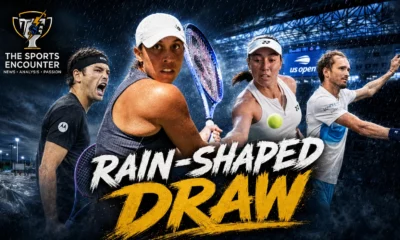

US Open 2026: Rain Creates Two-Speed Tournament as Keys, Fritz, Pegula, and Medvedev Advance
Rain delays are reshaping the US Open 2026 schedule as Jessica Pegula, Daniil Medvedev, Madison Keys and Taylor Fritz advance...


Carlos Alcaraz Returns with a Win as Travis Scott and Nike Turn His US Open Comeback Into a Cultural Event
Carlos Alcaraz returned to singles after four months out and beat Roman Safiullin in straight sets while debuting a Travis...
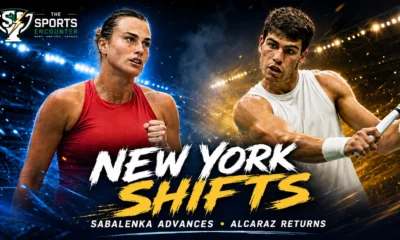

Sabalenka Restores Order at US Open as Alcaraz Begins Long-Awaited New York Comeback
Aryna Sabalenka began her bid for a third straight US Open title with a 6-4, 6-4 win over Camila Osorio,...
-

 Editor's Choice4 weeks ago
Premier League 2026–27 Curtain Raiser: Fixtures, Teams, Title Contenders, Transfers and Season Predictions
-
Editor's Choice4 weeks ago
When Will Lionel Messi Retire? Argentina President Says Only Messi Has the Answer
-

 Editor's Choice3 weeks ago
Which of Last Season’s Premier League Top 10 Can Actually Win the 2026-27 Title?