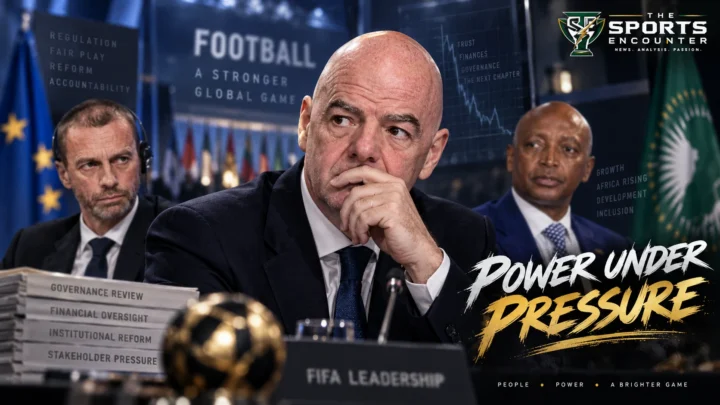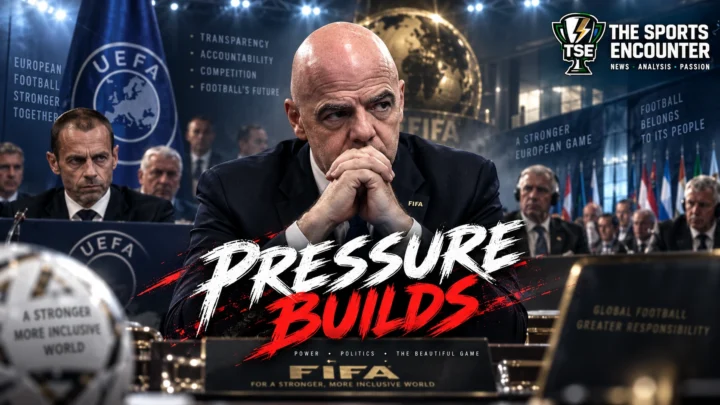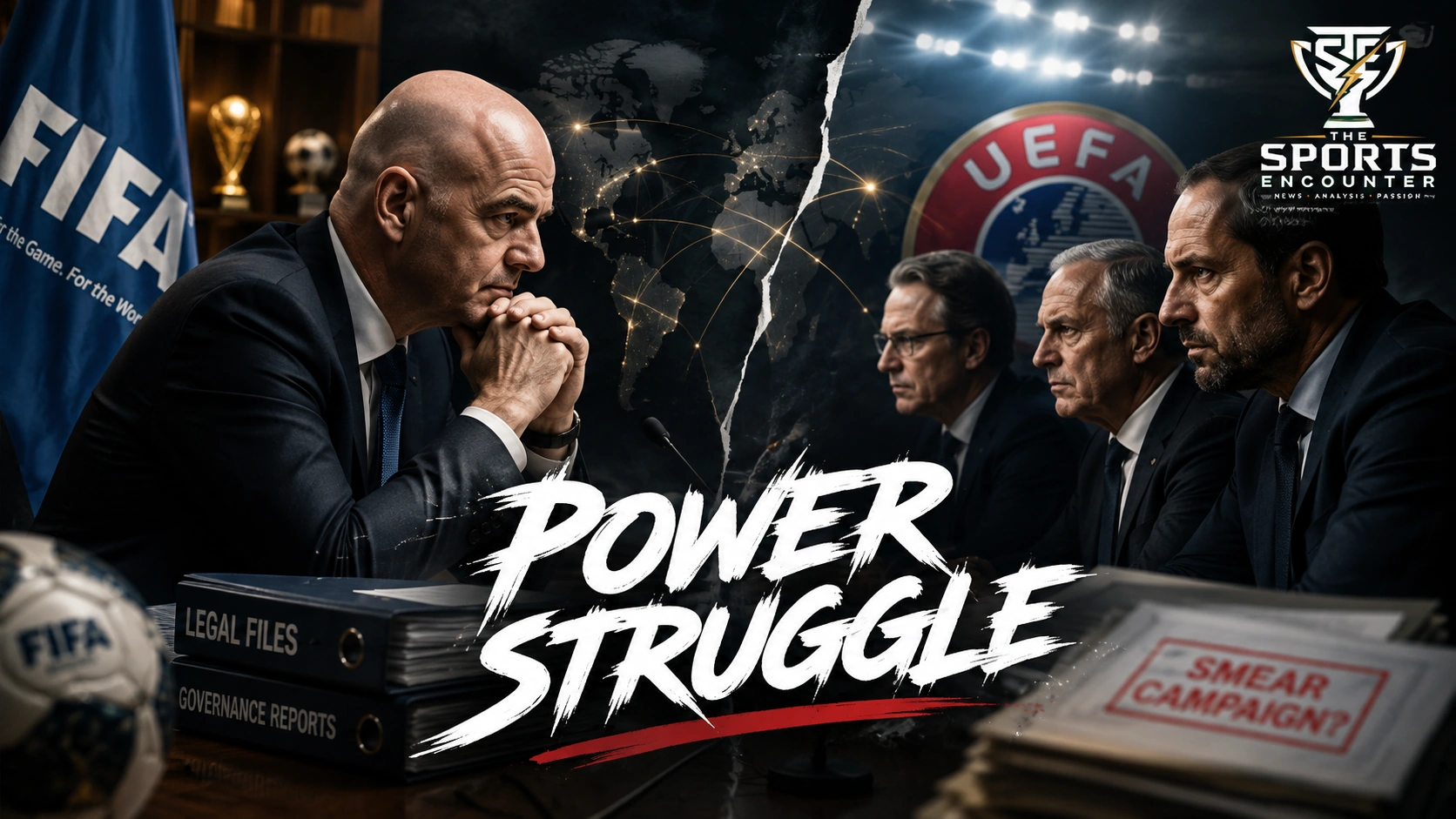
Ireland Turns on Infantino as FIFA Election Revolt Spreads Beyond Europe’s Heavyweights
Ireland has withdrawn its support for Gianni Infantino’s re-election as FIFA president, adding another national association to a widening governance revolt ahead of the March 2027 vote.
Ireland has withdrawn its support for Gianni Infantino’s re-election as FIFA president, adding another national association to a rebellion that has moved well beyond a dispute over one failed commercial deal.
The Football Association of Ireland confirmed the decision on August 13 following a board meeting. The FAI rescinded the letter of support it had supplied earlier this year and informed FIFA of its reasoning.
The significance lies in the language Ireland used to explain the reversal. The association acknowledged FIFA’s financial and developmental support for Irish football, then pointed directly to concerns over “governance, transparency and the lack of meaningful consultation.”
For an organization that has spent years rebuilding trust after its own governance failures, the FAI said it felt a particular responsibility to advocate for best practice.
That turns Ireland’s decision into something larger than another lost endorsement for Infantino. What began in late July as anger over an abandoned plan to bring private investors into FIFA’s commercial business is increasingly becoming a referendum on how world football should be governed, who holds authority inside FIFA, and whether the president still commands the trust needed to lead 211 national associations.
The latest development adds another chapter to The Sports Encounter’s continuing FIFA and World Cup governance coverage, which has followed the crisis from the collapse of the investment proposal to the growing battle over Infantino’s political future.
What Ireland Actually Announced
The FAI’s official statement left little room for ambiguity.
It confirmed that the board had decided to withdraw the association’s backing for Infantino’s re-election and that FIFA had been formally contacted after the decision.
Ireland had previously provided a letter supporting another Infantino term. That matters because withdrawing an existing endorsement carries more political weight than simply declining to support him in the first place.
The FAI also made clear that its decision was not an attack on everything FIFA has done for Irish football. It expressed gratitude for FIFA’s support while arguing that recent developments had created concerns serious enough to outweigh that relationship.
Its reference to Ireland’s own governance history gives the statement another layer of meaning. The association has undergone extensive reforms after years of financial and governance turmoil, and its board effectively argued that those lessons created an obligation to demand higher standards from international football as well.
That is why Ireland’s withdrawal deserves attention even if one vote alone cannot determine the outcome of next year’s election.
Why Ireland Matters More Symbolically Than Numerically
Every FIFA member association gets one presidential vote. Ireland therefore carries exactly the same formal voting power as Brazil, Germany, Argentina, Morocco, Japan or the United States.
One federation changing sides does not overturn an election. The political value comes from accumulation.
Wales, England and other European associations had already moved away from Infantino before Ireland acted. The English FA’s formal withdrawal of support represented a particularly visible blow because of England’s commercial and historical influence within the game.
Ireland extends the pattern in a different way. It demonstrates that the backlash is filtering through national boards rather than remaining limited to statements from powerful confederation presidents or Europe’s biggest federations.
That process matters because confederations do not cast presidential ballots on behalf of their members. National associations do.
UEFA can oppose Infantino. The Asian Football Confederation can criticize his conduct. CONCACAF can join them. CAF can endorse him. None of those confederations has a collective presidential vote that automatically binds its members.
When the ballot arrives, each eligible FIFA association makes its own decision.
The Crisis Began With a $4.2 Billion World Cup Proposal
The current revolt traces back to Infantino’s attempt to restructure part of FIFA’s commercial business through a private-investment model involving rights connected to major competitions, including the World Cup.
Under the proposal, FIFA would have created a commercial vehicle valued at roughly $20 billion and opened around 20 percent of it to private investors, potentially raising about $4.2 billion.
The concept collapsed rapidly after federations and confederations questioned how such a fundamental restructuring had advanced without wider consultation.
The Sports Encounter examined the initial fallout in FIFA’s World Cup Stake Plan Failed in Three Days. The Damage to Gianni Infantino May Last Much Longer.
The financial proposition itself quickly became secondary to the process behind it.
Critics wanted to know who authorized negotiations, which officials had been consulted, how private investors would influence football’s most valuable commercial properties, what governance protections would apply, and why associations that ultimately underpin FIFA’s authority learned so much about the concept only after it had advanced.
Those questions transformed a business dispute into a leadership crisis.
FIFA’s funding offer complicated the politics
The proposed structure also came with potentially enormous financial consequences for national associations.
Reuters reported that the plan included a $20 million grant for member associations during the next funding cycle, with the possibility of doubling that amount for associations participating in the proposed arrangement.
For smaller federations that depend heavily on FIFA development funding, amounts of that size can reshape infrastructure, youth programs, women’s football, coaching systems and national-team operations.
That financial reality helps explain why the political map remains complicated. The Sports Encounter explored this dynamic earlier in Infantino Looks to Smaller Nations After UEFA, CONCACAF Snub.
Opposition to Infantino cannot simply assume that dissatisfaction among major football nations will automatically produce the same response everywhere else.
UEFA, AFC and CONCACAF Turned a Dispute Into an Open Revolt
The pressure became far more serious when three of FIFA’s six continental confederations aligned publicly against Infantino’s handling of the proposal.
UEFA, the AFC and CONCACAF issued a joint letter accusing the FIFA president of breaking trust and acting without the collective consultation expected from the leader of world football.
Their intervention was covered in detail by The Sports Encounter in UEFA, AFC and CONCACAF Turn on Infantino as FIFA Crisis Becomes a Fight for His Presidency.
The three confederations collectively encompass 136 of FIFA’s 211 voting member associations. That sounds overwhelming on paper, but it does not translate into 136 automatic votes against Infantino.
The events of August 13 demonstrated exactly why.
Ireland Withdrew Support on the Same Day Six Arab Federations Backed Infantino
Hours around Ireland’s announcement also produced evidence that Infantino retains substantial political support.
The heads of the football associations of Qatar, Egypt, Lebanon, Morocco, Sudan and Mauritania issued a joint declaration backing the FIFA president and expressing confidence in his leadership.
Four of the six federation chiefs are also FIFA Council members, adding institutional weight to the endorsement.
The development is especially revealing because several of those associations sit within confederations that have criticized Infantino.
It provides an early warning against reading continental statements as guaranteed voting blocs.
| Latest FIFA Political Position | Current Situation |
|---|---|
| Ireland | Withdrew its previous letter supporting Infantino’s re-election |
| England and several European associations | Have withdrawn or withheld support |
| UEFA | Strongly critical of Infantino’s handling of the failed investment plan |
| AFC | Joined UEFA and CONCACAF in criticizing the FIFA president’s conduct |
| CONCACAF | Part of the joint challenge to Infantino’s leadership |
| CAF | Has publicly backed Infantino |
| Qatar, Egypt, Lebanon, Morocco, Sudan, Mauritania | Issued public support for Infantino on August 13 |
| FIFA presidential election | Scheduled for March 18, 2027 in Rabat, Morocco |
| Eligible FIFA member associations | 211, with one vote each |
Patrice Motsepe’s Response Goes to the Heart of the Election
CAF president Patrice Motsepe has pushed back against attempts to settle Infantino’s future through political pressure before the presidential ballot.
His position is straightforward: critics who want a different FIFA president should take that case to the election and allow the 211 member associations to decide.
That argument does not erase the governance questions surrounding Infantino. It does highlight the central problem facing his opponents.
Removing political support is easier than finding 106 votes for somebody else.
CAF has backed Infantino, but even Africa cannot be treated as a guaranteed bloc. African federations have repeatedly voted against their confederation’s preferred candidate in past FIFA elections.
When Infantino first won the presidency in 2016, CAF had formally endorsed Sheikh Salman bin Ibrahim Al Khalifa. A significant number of African associations broke ranks and helped Infantino win instead.
The same independence appeared during the vote for the 2026 World Cup host, when African associations supported the Canada-Mexico-United States bid despite CAF backing Morocco.
The lesson is useful in 2026: endorsements create momentum, but the secret ballot ultimately belongs to individual associations.
The Election Math Gives Both Sides Reason for Confidence
FIFA has 211 member associations, each holding one vote in a presidential election.
If Infantino faces only one challenger, a simple majority of 106 votes would be enough to win. If three or more candidates enter the election, a two-thirds majority of 141 votes would be required in the first round before the voting process potentially moves through further rounds.
Potential challengers must therefore solve two problems.
First, they need a candidate capable of holding together a coalition that stretches across continents. Second, they need national associations to convert public dissatisfaction into actual votes.
So far, the first challenge remains unresolved.
No single opposition candidate has consolidated the anti-Infantino movement. That leaves the incumbent weakened politically but still difficult to defeat electorally.
The 77th FIFA Congress is scheduled for March 18, 2027 in Rabat, Morocco, where Infantino intends to seek another term.
Reuters reports that prospective challengers have until November 18 to submit their candidacies.
Why CAF remains crucial
Africa could determine whether the revolt becomes an electoral threat or remains largely a political protest.
Infantino has cultivated strong relationships across the continent during his presidency, helped by increases in development funding and FIFA’s investment in smaller national associations.
Several African federations have already issued individual statements supporting him, while CAF itself remains publicly on his side.
At the same time, association leaders interviewed by Reuters have indicated that some are waiting to see whether a credible challenger emerges before committing publicly.
That means the election remains fluid.
FIFA Tried to Contain the Damage, but the Argument Changed
FIFA abandoned the investment proposal and later apologized to its member associations for mistakes in how the process had been handled.
The Sports Encounter covered that attempt to stabilize the organization in FIFA President Apologizes to Member Nations After FIFA World Cup Selloff Plan Fails to Inspire.
Senior FIFA officials also reaffirmed support for Infantino after a crisis meeting in Morocco.
The problem was that the dispute had already moved beyond whether the commercial proposal would survive.
By the time FIFA withdrew it, national associations and confederations were debating presidential authority, consultation, institutional checks and whether the episode represented a broader pattern of centralized decision-making.
FIFA later argued that a coordinated effort was underway to undermine its president, a defense examined in FIFA Says Infantino Is Being Undermined as Leadership Crisis Turns Into a Battle Over Legitimacy.
That response hardened both sides.
Donald Trump’s Support Added Another Political Layer
Infantino has also received high-profile political support outside football.
U.S. President Donald Trump publicly defended the FIFA president as the governance crisis intensified, bringing another dimension to an already unusual fight over football administration.
The Sports Encounter examined that intervention in Trump Backs Infantino as FIFA Power Struggle Deepens.
Trump’s involvement does not translate into FIFA votes. National football associations hold those ballots, not governments.
It does illustrate how far the controversy has moved beyond a technical debate over commercial rights.
How the Infantino Crisis Has Developed
| Period | Development |
|---|---|
| Late July 2026 | Infantino’s proposed private-investment structure for FIFA’s commercial rights becomes public and triggers immediate opposition. |
| Early August | The proposal is abandoned as UEFA and national associations demand greater transparency and accountability. |
| August 3 | Wales becomes an early association to withdraw backing as the crisis begins moving toward the 2027 election. |
| August 5 | More federations break ranks while pressure grows inside FIFA and across Europe. |
| August 6 | The English FA formally withdraws support. FIFA apologizes to member associations over mistakes in the handling of the plan. |
| August 9 | FIFA argues that Infantino is facing a coordinated effort to undermine his leadership. |
| August 10 | UEFA, AFC and CONCACAF jointly attack Infantino’s conduct and demand stronger accountability. |
| August 11 | Donald Trump publicly backs Infantino as the leadership fight becomes increasingly political. |
| August 13 | Ireland withdraws its support, while six Arab football federations publicly endorse Infantino. |
| March 18, 2027 | The FIFA presidential election is scheduled to take place at the 77th FIFA Congress in Rabat. |
The Sports Encounter Analysis: Ireland Shows Why This Crisis Is Getting Harder to Predict
Two weeks ago, FIFA’s problem looked easier to define.
Infantino proposed a radical commercial restructuring. Powerful stakeholders objected. The proposal collapsed.
That version of the story is finished.
The current dispute concerns authority and trust, and those are much harder to repair with a withdrawn proposal or an apology.
Ireland’s decision illustrates the shift particularly well because the FAI did not focus primarily on the economics of the failed deal. Its explanation centered on governance, transparency and consultation.
Those are institutional concerns. They survive even after the original commercial plan disappears.
Yet August 13 also demonstrated why declaring Infantino politically finished would be premature. As Ireland walked away, six Arab federations publicly moved toward him. CAF remains supportive. Individual African associations continue to back his record. Other federations have stayed quiet.
The crisis has therefore produced two parallel movements.
One coalition is demanding change in FIFA’s leadership culture. Another continues to value Infantino’s development record, financial support for smaller associations and expansion of football outside its traditional centers of power.
Neither side can simply impose its position through a continental confederation.
The battle is moving federation by federation.
That makes Ireland important.
Its single vote will never decide FIFA’s future by itself. Its reversal matters because the election will ultimately be decided through dozens of decisions exactly like it.
Infantino’s biggest advantage remains the absence of a unified rival
The opposition has energy, influential institutions and increasingly forceful language. What it still lacks is an agreed presidential candidate.
That gap may become the decisive issue between now and the November candidacy deadline.
A broad anti-Infantino coalition can agree that trust has been damaged while disagreeing completely about who should replace him, what reforms should follow, and how power should be distributed between FIFA and its confederations.
Until those questions are resolved, Infantino retains something every incumbent values: opponents who agree on the problem more easily than they agree on the alternative.
The Sports Encounter previously identified that contradiction as the crisis moved into a wider break between FIFA officials and national federations.
What Happens Next?
The next phase will reveal whether Ireland’s move becomes part of a steady stream of withdrawals or whether the rebellion begins to lose momentum.
Three developments now matter most.
1. More national associations must declare their positions
Statements from confederations have set the political tone, but presidential votes belong to associations. Every withdrawal, endorsement or refusal to commit provides a clearer picture of the actual election.
2. The opposition needs a candidate
A revolt without an alternative cannot win a presidential ballot. November 18 therefore becomes a critical date in the crisis.
3. FIFA must decide how far it wants to confront its critics
The governing body’s defense of Infantino has already framed parts of the opposition as an effort to undermine the president. Further escalation could deepen divisions just months after a World Cup that was supposed to showcase FIFA’s global unity.
The stakes are considerable. The argument now touches FIFA’s commercial model, development funding, the relationship between the president and member associations, future World Cups and the basic question of who ultimately controls the institution.
For additional context on how rapidly the confrontation developed, read The Sports Encounter’s earlier analysis, Infantino in Survival Mode After World Cup Stake Sale Idea Results in Global Revolt.
Frequently Asked Questions
Did Ireland withdraw support for Gianni Infantino?
Yes. The Football Association of Ireland confirmed on August 13, 2026 that its board had decided to rescind the letter supporting Infantino’s re-election that it supplied earlier in the year.
Why did Ireland withdraw its support?
The FAI cited concerns about governance, transparency and insufficient meaningful consultation following recent events at FIFA. It also referenced the governance challenges Irish football has faced in recent years and said those experiences created an obligation to advocate for best practice.
Is Ireland calling for Infantino to resign immediately?
The FAI’s statement confirmed withdrawal of support for his re-election. It did not, in that statement, explicitly demand his immediate resignation.
What caused the FIFA crisis?
The immediate trigger was Infantino’s failed proposal to create a commercial structure involving FIFA competition rights and sell roughly a 20 percent stake to private investors, potentially raising about $4.2 billion. Critics argued that the process lacked transparency and meaningful consultation.
Which confederations are opposing Infantino?
UEFA, the Asian Football Confederation and CONCACAF have jointly criticized his conduct over the failed investment proposal and challenged his leadership.
Does Infantino still have support?
Yes. CAF has publicly backed him, while individual associations including Qatar, Egypt, Lebanon, Morocco, Sudan and Mauritania issued a joint statement supporting him on August 13. Other national associations have also expressed support.
How many associations vote in a FIFA presidential election?
FIFA has 211 member associations, and each eligible association has one vote.
How many votes does Infantino need to win?
If only two candidates contest the election, 106 votes would represent the simple majority required to win. If three or more candidates contest the first ballot, a two-thirds majority of 141 is required initially.
When is the next FIFA presidential election?
The election is scheduled for March 18, 2027 at the 77th FIFA Congress in Rabat, Morocco.
When must challengers declare their candidacy?
Potential candidates are expected to submit their presidential candidacies by November 18, 2026.
Can UEFA remove Gianni Infantino by itself?
No. FIFA’s president is elected by member associations. UEFA can influence its members and take political positions, but European football alone cannot determine the presidential election.
Ireland’s Vote Is Small. The Pattern Is Not.
The easiest way to underestimate Ireland’s decision is to reduce it to election arithmetic.
One association withdrew one endorsement. Infantino still has powerful allies. The election remains seven months away, and no unified challenger has emerged.
All of that is true.
It also misses what has changed.
Every national association that withdraws support turns an institutional dispute into an electoral decision. Every federation that publicly backs Infantino demonstrates that confederation leaders cannot automatically deliver their members. Every undecided association becomes more valuable as March approaches.
Ireland has now made its choice.
Its board looked at FIFA’s recent conduct, considered its own experience with governance failures, and decided that the support it gave Infantino earlier this year could no longer stand.
The FIFA president’s future will ultimately be decided in Rabat, exactly as Patrice Motsepe argues.
Between now and then, however, 211 associations will be deciding what that vote should represent: continuity, development funding and Infantino’s global expansion of the game, or a demand for a different model of leadership after one of the most damaging governance disputes of his presidency.
Ireland’s withdrawal will not settle that argument.
It is another sign that the argument is spreading.

A Celebration of 5000 ODIs
A Celebration of 5000 ODIs Match 8: Australia Break Pakistan’s World Cup Dream in Lahore
Steve Waugh transformed the final over before Craig McDermott dismantled Pakistan’s chase, sending Australia into the 1987 World Cup final by the narrowest of margins.
Eighteen runs separated Pakistan from a home World Cup final. Australia had collected exactly 18 from the last over of its innings.
That symmetry still defines the 1987 semifinal in Lahore. Pakistan recovered from 38 for three through Javed Miandad and Imran Khan, giving a packed Gaddafi Stadium reason to believe. Yet the runs Steve Waugh extracted at the end of Australia’s innings became a burden Pakistan could never shed.
Craig McDermott then took five wickets, including four during the closing stages, as Australia dismissed Pakistan for 249 to win by 18 runs.
That combination of late-innings calculation, a courageous recovery and ruthless fast bowling earns the semifinal its place as Match 8 in A Celebration of 5000 ODIs, The Sports Encounter’s journey through the matches that shaped one-day international cricket.
TL;DR
- Australia defeated Pakistan by 18 runs in the 1987 World Cup semifinal.
- Steve Waugh’s unbeaten 32 helped Australia score 18 from the final over and reach 267 for eight.
- Pakistan fell to 38 for three before Javed Miandad and Imran Khan added 112.
- Craig McDermott claimed five for 44 and won the Player of the Match award.
- Pakistan conceded 34 extras, a costly loss of control in a tight knockout match.
- Australia advanced to the final and secured its first World Cup title by beating England.
Match Information
| Detail | Information |
|---|---|
| Match | Australia vs Pakistan, 1987 World Cup semifinal |
| Date | November 4, 1987 |
| Venue | Gaddafi Stadium, Lahore |
| Toss | Australia won the toss and batted |
| Australia | 267/8 in 50 overs |
| Pakistan | 249 all out in 49 overs |
| Result | Australia won by 18 runs |
| Player of the Match | Craig McDermott, 5/44 |
| Turning Point | Australia scored 18 runs from the final over |
| Tournament Impact | Australia advanced to the World Cup final |
Complete Match Scorecard
Australia Batting
| Batter | Dismissal | Runs | Balls | 4s | 6s |
|---|---|---|---|---|---|
| Geoff Marsh | Run out | 31 | 57 | 2 | 0 |
| David Boon | St Javed Miandad b Saleem Malik | 65 | 91 | 4 | 0 |
| Dean Jones | b Tauseef Ahmed | 38 | 45 | 3 | 0 |
| Allan Border | Run out | 18 | 22 | 2 | 0 |
| Mike Veletta | b Imran Khan | 48 | 50 | 2 | 0 |
| Steve Waugh | Not out | 32 | 28 | 4 | 1 |
| Simon O’Donnell | Run out | 0 | 2 | 0 | 0 |
| Greg Dyer | b Imran Khan | 0 | 1 | 0 | 0 |
| Craig McDermott | b Imran Khan | 1 | 3 | 0 | 0 |
| Tim May | Not out | 0 | 2 | 0 | 0 |
| Bruce Reid | Did not bat | ||||
| Extras | 34 (b 1, lb 19, nb 1, w 13) | ||||
| Total | 267/8 in 50 overs |
Fall of wickets: 73, 155, 155, 215, 236, 236, 241, 249.
Pakistan Bowling
| Bowler | Overs | Maidens | Runs | Wickets |
|---|---|---|---|---|
| Imran Khan | 10 | 1 | 36 | 3 |
| Saleem Jaffar | 6 | 0 | 57 | 0 |
| Wasim Akram | 10 | 0 | 54 | 0 |
| Abdul Qadir | 10 | 0 | 39 | 0 |
| Tauseef Ahmed | 10 | 1 | 39 | 1 |
| Saleem Malik | 4 | 0 | 22 | 1 |
Pakistan Batting
| Batter | Dismissal | Runs | Balls | 4s | 6s |
|---|---|---|---|---|---|
| Ramiz Raja | Run out | 1 | 1 | 0 | 0 |
| Mansoor Akhtar | b McDermott | 9 | 19 | 0 | 0 |
| Saleem Malik | c McDermott b Waugh | 25 | 31 | 3 | 0 |
| Javed Miandad | b Reid | 70 | 103 | 4 | 0 |
| Imran Khan | c Dyer b Border | 58 | 84 | 4 | 0 |
| Wasim Akram | b McDermott | 20 | 13 | 0 | 2 |
| Ijaz Ahmed | c Jones b Reid | 8 | 7 | 1 | 0 |
| Saleem Yousuf | c Dyer b McDermott | 21 | 15 | 2 | 0 |
| Abdul Qadir | Not out | 20 | 16 | 2 | 0 |
| Saleem Jaffar | c Dyer b McDermott | 0 | 2 | 0 | 0 |
| Tauseef Ahmed | c Dyer b McDermott | 1 | 3 | 0 | 0 |
| Extras | 16 (lb 6, w 10) | ||||
| Total | 249 all out in 49 overs |
Fall of wickets: 2, 37, 38, 150, 177, 192, 212, 236, 247, 249.
Australia Bowling
| Bowler | Overs | Maidens | Runs | Wickets |
|---|---|---|---|---|
| Craig McDermott | 10 | 0 | 44 | 5 |
| Bruce Reid | 10 | 2 | 41 | 2 |
| Steve Waugh | 9 | 1 | 51 | 1 |
| Simon O’Donnell | 10 | 1 | 45 | 0 |
| Tim May | 6 | 0 | 36 | 0 |
| Allan Border | 4 | 0 | 26 | 1 |
David Boon Gives Australia Its Platform
David Boon’s 65 provided the control Australia needed after choosing to bat. His partnership with Geoff Marsh settled the innings, while Dean Jones maintained the tempo with 38.
Pakistan fought back when Jones and Boon departed at 155. Mike Veletta responded with 48 from 50 balls, keeping Australia above a run-a-ball trajectory without taking reckless risks.
Imran Khan led Pakistan’s attack superbly, conceding only 36 runs and taking three wickets. However, the support bowling lacked the same discipline. Pakistan conceded 34 extras, including 13 wides and 19 leg byes. In a match decided by 18 runs, those concessions were damaging.
Steve Waugh Turns One Over Into the Winning Margin
Australia slipped from 215 for three to 249 for eight as Imran attacked the lower order. Pakistan appeared to have limited the damage, but Waugh changed the shape of the contest in the final six deliveries.
His unbeaten 32 from 28 balls drove Australia to 267. The last over, delivered by Saleem Jaffar, cost 18 runs. Waugh’s calm, clean striking gave Australia a total that demanded an exceptional chase under semifinal pressure.
It echoed the composure Australia had shown in its one-run victory over India in Chennai. Once again, a handful of late runs proved decisive.
Javed Miandad and Imran Khan Rescue Pakistan
Pakistan’s chase began disastrously. Ramiz Raja was run out before McDermott removed Mansoor Akhtar. Waugh then dismissed Saleem Malik, leaving the hosts 38 for three.
Miandad and Imran refused to let the occasion collapse around them. Their 112-run partnership restored order through controlled rotation, selective aggression and a clear understanding of the required rate.
Imran made 58 before Allan Border dismissed him at 150. Miandad continued to 70, but Bruce Reid bowled him with Pakistan still needing 56 runs. Wasim Akram, Saleem Yousuf and Abdul Qadir attacked bravely, though Australia retained just enough control.
Craig McDermott Owns the Semifinal
McDermott delivered the performance that separated the teams. After removing Mansoor early, he returned to stop Pakistan’s lower-order charge.
Wasim Akram had struck two sixes in a rapid 20 when McDermott bowled him. Saleem Yousuf followed after making 21 from 15 balls. McDermott then dismissed Saleem Jaffar and Tauseef Ahmed to complete figures of five for 44.
The spell earned him the Player of the Match award and carried Australia into the final. Pace mattered, but so did his ability to attack the stumps when Pakistan’s batters had no time to settle.
Why This Semifinal Belongs in the 5,000 ODIs Collection
The match captured the unforgiving mathematics of knockout cricket. Australia’s final-over acceleration, Pakistan’s 34 extras and McDermott’s closing spell all contributed directly to an 18-run result.
Pakistan had enjoyed a powerful home campaign, winning five of its six group matches. The semifinal offered Imran’s team the chance to reach a World Cup final on home soil. Instead, Australia absorbed the atmosphere and survived Pakistan’s strongest partnership.
The victory also prepared the way for Australia’s seven-run win over England in the 1987 final, which secured the country’s first men’s World Cup title.
Readers can explore more landmark matches through The Sports Encounter’s Celebration of 5000 ODIs collection, including India’s 1983 final triumph and Kapil Dev’s rescue against Zimbabwe.
Pakistan found courage after losing three early wickets, but Australia owned the smaller moments. Waugh won the final over, McDermott won the closing passage, and those two interventions ended a nation’s dream within sight of the final.
Breaking News
Vietnam Break Malaysia’s Resistance as Xuân Son Double Sets Up Thailand Final Rematch
Nguyễn Xuân Son came off the bench to score twice as defending champion Vietnam completed a 4-0 aggregate semifinal victory and booked another ASEAN final against Thailand.
Malaysia survived an hour in Hanoi with their comeback hopes technically alive. Within three minutes of Nguyễn Xuân Son entering the contest, those hopes had all but disappeared.
The striker scored twice after coming off the bench as Vietnam defeated Malaysia 2-0 at a packed Mỹ Đình National Stadium on Wednesday, August 19. Combined with their two-goal first-leg victory in Kuala Lumpur, the result carried the defending champions into the ASEAN Hyundai Cup 2026 final with a convincing 4-0 aggregate win.
Vietnam will now face Thailand in a repeat of the 2024 final. Kim Sang-sik’s team enters the decider with greater momentum, while the seven-time champion has an additional recovery day and will host Saturday’s opening leg in Bangkok.
TL;DR
- Vietnam defeated Malaysia 2-0 in the semifinal second leg and advanced 4-0 on aggregate.
- Substitute Nguyễn Xuân Son scored in the 62nd and 89th minutes.
- Xuân Son earned the official Hyundai Player of the Match award.
- Malaysia goalkeeper Azri Ghani made seven saves and delayed Vietnam’s breakthrough.
- No yellow or red cards appeared in the accessible official ASEAN and Google event feeds.
- Vietnam will visit Thailand on August 22 before hosting the return leg on August 26.
Vietnam vs Malaysia Match Information
| Detail | Information |
|---|---|
| Competition | ASEAN Hyundai Cup 2026 |
| Stage | Second semifinal, second leg |
| Result | Vietnam 2-0 Malaysia |
| Aggregate Result | Vietnam won 4-0 |
| Venue | Mỹ Đình National Stadium, Hanoi |
| Date | Wednesday, August 19, 2026 |
| Goalscorer | Nguyễn Xuân Son 62’, 89’ |
| Player of the Match | Nguyễn Xuân Son |
| Turning Point | Xuân Son scored three minutes after entering as a substitute |
| Yellow Cards | None |
| Red Cards | None |
| Final | Thailand vs Vietnam, August 22 and 26 |
The score, goalscorer and official match award were confirmed by the ASEAN Championship’s match report. Additional national-team updates are available through the Vietnam Football Federation and the Football Association of Malaysia.
Vietnam Control the Tie Before Xuân Son Finishes It
Vietnam began with the authority expected from a team protecting a 2-0 advantage. Nguyễn Đình Bắc attacked the right channel inside the opening minute, while Đoàn Văn Hậu forced Azri into an important intervention after 10 minutes.
Pressure continued through Đình Bắc, Nguyễn Quang Hải and Văn Hậu. Malaysia’s goalkeeper repeatedly prevented an early goal, including a flying save when Đình Bắc appeared ready to find the top corner.
Vietnam recorded 26 shots, with 10 reaching the target. Their 11 corners reflected the amount of time spent around Malaysia’s penalty area. The hosts had already shown this attacking depth while winning Group A against Cambodia and during their 3-0 victory over Indonesia.
Malaysia remained level at halftime because Azri performed superbly and Vietnam missed several presentable openings. Holding out was only part of the visitors’ task, however. They still needed two goals to force extra time.
Nguyễn Xuân Son Turns Pressure Into Goals
Kim introduced Xuân Son in the 59th minute after Vietnam’s starting attack had created chances without finding the finish.
The decision produced an almost immediate return. Azri saved Xuân Son’s first close-range header, but the striker remained alert when Trương Tiến Anh’s effort was blocked in the 62nd minute. He collected the loose ball and converted from close range.
Xuân Son added his second in the 89th minute, powering down the left, cutting inside and beating Azri to complete the semifinal.
His six shots and four attempts on target made him the match’s most dangerous player despite spending only half an hour on the field. The double took his tournament total to five goals, level with Đình Bắc at the top of Vietnam’s scoring chart.
Xuân Son’s influence also strengthens Vietnam’s final prospects. Their route to the semifinals had already demonstrated that goals could come from different areas. Now the forward who scored eight times during the 2024 title campaign has found his sharpest form at the ideal moment.
Patrik Lê Giang Preserves Another Clean Sheet
Malaysia enjoyed its best spell shortly after halftime. G. Pavithran forced Patrik Lê Giang into a reaction save before Paulo Josué’s follow-up was deflected over.
Those opportunities offered Malaysia a brief route back into the semifinal. A goal would have reduced the aggregate deficit and placed pressure on a home side growing frustrated by Azri’s saves.
Lê Giang ended the match with four stops and another clean sheet. His calm handling prevented Malaysia from building momentum and allowed Vietnam to continue attacking without panic.
The goalkeeper had also played an important role in Kuala Lumpur. His consistency across both legs helped Vietnam complete a semifinal without conceding.
Malaysia Compete, but Lack the Required Cutting Edge
Malaysia held 52 percent possession and completed 363 accurate passes, yet much of that control occurred away from Vietnam’s most vulnerable areas.
Tan Cheng Hoe’s team needed an early goal but struggled to place runners behind Vietnam’s back three. Paulo Josué lacked sustained service, while Malaysia’s wide attacks rarely created clear opportunities before the interval.
Azri was Malaysia’s outstanding performer. His seven saves kept the game scoreless for 61 minutes and prevented the aggregate margin from becoming heavier.
Reaching the semifinals still represented a respectable campaign. Malaysia secured qualification by defeating the Philippines in their final group game, but losses to Thailand and Vietnam exposed the gap between a competitive semifinalist and the tournament’s two strongest teams.
Vietnam vs Thailand: Who Has the Advantage in the Final?
The ASEAN Championship semifinal history pointed toward another meeting between the region’s dominant programs. Both have arrived, although their semifinal performances created different moods.
Vietnam enters as the slight favorite. The defending champion won both semifinal legs, kept two clean sheets and produced a 4-0 aggregate victory. Kim can also introduce Xuân Son from the bench or restore him to the starting lineup.
Thailand holds the logistical advantage before the opening leg. Anthony Hudson’s players have one additional recovery day and remain in Bangkok, where Saturday’s match will take place. Thailand also won all four group matches and scored 10 unanswered goals before the semifinals.
Concern emerged during their 2-1 home defeat to Singapore. After progressing 4-3 on aggregate, Hudson admitted he was “disappointed with the performance” and said there were “a lot of things we need to fix.”
Vietnam will host the second leg in Hanoi, which gives the defending champion the more valuable structural advantage. If Kim’s team remains level or close after Bangkok, the title will be decided before its own crowd at Mỹ Đình.
Thailand brings seven titles, a record 12th final appearance and the experience of surviving uncomfortable knockout situations. Vietnam carries stronger form, a deeper range of scorers and home advantage in the decisive leg.
The 2024 final ended with Vietnam defeating Thailand 5-3 on aggregate. Two years later, the War Elephants have a chance to settle that account, while Vietnam can confirm that Southeast Asian football’s balance of power has shifted.
Follow continuing tournament analysis through The Sports Encounter’s soccer coverage, its ASEAN Championship qualification archive and the broader FIFA World Cup 2026 hub.https://chatgpt.com/backend-api/sentinel/frame.html?sv=20260810913b
Breaking News
Harry Sawyer Breaks APIA Hearts as Melbourne Victory Reach Australia Cup Semifinals
Harry Sawyer came off the bench to score the decisive extra-time goal as Melbourne Victory edged APIA Leichhardt 1-0 at Leichhardt Oval and booked a Hahn Australia Cup 2026 semifinal against Sydney FC.
SYDNEY, August 19, 2026: Melbourne Victory needed 120 minutes to end APIA Leichhardt’s latest Australia Cup challenge, with substitute Harry Sawyer scoring the decisive extra-time goal in a tense 1-0 quarterfinal victory at Leichhardt Oval.
The result makes Victory the second team through to the Hahn Australia Cup 2026 semifinals and sets up a heavyweight meeting with Sydney FC for a place in the final.
According to the official Australia Cup match report, APIA frustrated the two-time Cup winners through 90 scoreless minutes before Sawyer finally found the breakthrough in the first half of extra time.
Victory had been warned repeatedly that this would not be a routine assignment. The Sports Encounter’s quarterfinal preview highlighted APIA’s home advantage, strong NPL NSW form and history of eliminating A-League opposition.
That warning proved accurate.
Melbourne had more of the ball for long periods, but APIA stayed organized, threatened after halftime and even had the ball in the net before an offside decision preserved the deadlock.
Sawyer eventually supplied the difference, continuing an impressive personal Australia Cup run and ensuring Giovanni Savarese’s side survived another difficult knockout night in New South Wales.
APIA Leichhardt 0-1 Melbourne Victory: Match Summary
| Competition | Hahn Australia Cup 2026 |
| Round | Quarterfinal |
| Result | APIA Leichhardt 0-1 Melbourne Victory after extra time |
| Scorer | Harry Sawyer |
| Venue | Leichhardt Oval |
| Melbourne Victory coach | Giovanni Savarese |
| Full-time score | 0-0 |
| Semifinal opponent | Sydney FC |
Melbourne Victory Control the Ball but Find No Easy Route Through APIA
Victory entered the quarterfinal as favorites, but the opening half quickly demonstrated why APIA had reached the last eight.
The NPL NSW side defended with discipline and refused to allow Melbourne’s possession to translate into clear chances.
Keegan Jelacic became increasingly involved as Victory tried to build through midfield, while Louis D’Arrigo sent a left-footed effort narrowly wide during one of the visitors’ better first-half moments.
APIA were without two important attacking options from the starting lineup, with Presley Ortiz and Michael Konestabo having dealt with illness during the week. Both were available from the bench.
The absences contributed to a cautious opening, although APIA gradually grew into the contest.
Jordan Segreto tested his range from a free kick late in the first half, while Frans Deli went down seeking a penalty after contact with Jordi Valadon. The appeal did not produce a spot kick.
At halftime, the game remained 0-0.
APIA Turn Up the Pressure After the Break
The balance changed after halftime.
APIA began pushing forward with greater confidence, forcing Melbourne to defend rather than simply dictate possession.
Jack Stewart created one of the first genuine moments of danger when he drove toward goal from a tight angle. Victory goalkeeper Jack Duncan stood firm, and Jason Davidson then blocked an effort from Deli during the same attacking sequence.
Moments later, Leichhardt Oval thought the underdogs had found their breakthrough.
Sean Symons converted at the back post following a well-delivered set piece, only for the assistant referee’s flag to rule the goal out for offside.
It was the type of moment that can completely change a knockout game.
APIA had gone from believing they were ahead to watching Victory immediately attack at the other end.
Matthew Grimaldi was given an excellent opportunity at the back post but sent his attempt over the crossbar.
APIA’s Defensive Resistance Pushes Victory Toward Extra Time
Melbourne continued to have more possession, yet APIA’s defensive structure held.
Victory manager Giovanni Savarese eventually turned to his bench.
Harry Shillington entered before Sawyer was introduced to give the visitors a stronger central presence in the penalty area.
The move nearly paid off quickly when a Jason Davidson cross reached Sawyer at the far post, forcing Oliver Kalac to remain alert.
The match then moved toward the type of finish APIA wanted.
Every scoreless minute increased the pressure on the A-League side while strengthening the belief inside the home ground.
Victory almost avoided extra time entirely.
Deep in second-half stoppage time, Jelacic and Grimaldi both found shooting opportunities in dangerous positions, only for APIA defenders to block the efforts and preserve the 0-0 score.
Ninety minutes had not been enough.
Harry Sawyer Changes Another Australia Cup Tie
Sawyer had already established himself as one of Melbourne Victory’s important Cup figures before arriving at Leichhardt Oval.
He scored in extra time against Western Sydney Wanderers in the previous round before Victory eventually advanced through a penalty shootout.
The striker delivered again when another knockout match required a decisive intervention.
Victory patiently moved possession through midfield before Valadon found Jelacic in space. Jelacic spotted Sawyer’s movement inside the penalty area and threaded the ball into his path.
Sawyer finished across goal into the bottom corner.
After more than 90 minutes of frustration, Melbourne finally had the lead.
The official Melbourne Victory match report credited the move to patient buildup through Valadon and Jelacic before Sawyer supplied the finishing touch.
Sawyer Is Building an Australia Cup Reputation Quickly
There is an interesting pattern developing around the striker.
Sawyer joined Victory during the offseason and has not needed long to become influential in knockout competition.
He scored his first competitive goal for the club during the Round of 16 against Western Sydney.
Now another extra-time goal has taken Victory into the semifinals.
Those are valuable contributions from a player who does not necessarily need to dominate entire matches to change them.
In cup competition, that quality can become decisive.
The difference between elimination and progression is frequently one movement, one pass or one composed finish after more than an hour of tactical stalemate.
Sawyer has now delivered those moments twice.
Jack Duncan Makes Sure Sawyer’s Goal Is Enough
The story could easily have changed again after Melbourne went ahead.
APIA had little choice but to commit more players forward.
Presley Ortiz, introduced from the bench, provided the home side with another attacking threat and eventually forced Duncan into an important save during the second period of extra time.
Duncan moved across his goal to keep out Ortiz’s low attempt and protect Melbourne’s advantage.
His contribution continues an excellent Cup campaign.
The goalkeeper was already Victory’s hero against Western Sydney, where he saved three penalties during the Round of 16 shootout.
This time he did not need penalties.
He still produced the intervention Melbourne required.
APIA Leave the Australia Cup With Their Reputation Enhanced
The result ends APIA Leichhardt’s tournament, but the manner of the defeat deserves context.
They took an established A-League club beyond 90 minutes and were separated by a single extra-time goal.
Their quarterfinal appearance was built on substance rather than novelty.
APIA entered the match as NPL NSW leaders and had already survived a dramatic penalty shootout against Sydney United 58 in the previous round.
The Sports Encounter’s pre-match analysis also noted the club’s previous Australia Cup victories over A-League opposition, including its memorable win against Melbourne Victory in 2018.
Another upset did not arrive in 2026.
The possibility remained alive until extra time.
Victory Avoid Another Australia Cup “Cupset”
The 2026 tournament has again demonstrated why professional status provides no guarantee in one-off knockout soccer.
NPL clubs have repeatedly tested A-League opponents, and several have already eliminated professional teams.
Melbourne understood that danger better than most.
APIA had beaten them in this competition before.
The location was the same.
The home crowd understood the history.
Victory therefore deserve credit for avoiding the emotional trap that can consume favorites in cup competition.
They did not panic when APIA stayed level.
They survived the disallowed goal.
They continued building attacks even as the game moved deeper into uncomfortable territory.
Eventually, their professional depth provided the answer.
Sydney FC vs Melbourne Victory Is Now Confirmed
Victory’s reward is one of the biggest fixtures available in Australian domestic soccer.
Sydney FC will face Melbourne Victory in the semifinals, renewing the Big Blue rivalry with a place in the Australia Cup final at stake.
Sydney became the first team through after beating SD Raiders 1-0, a match covered in full in The Sports Encounter’s Sydney FC vs SD Raiders quarterfinal report.
Takahiro Sekine scored the only goal at Fairfield Showground, although the Raiders pushed Sydney much harder than the final score might suggest.
The official Sydney FC quarterfinal report confirmed the Sky Blues’ progression after their 1-0 win.
The Big Blue Adds a Different Dimension to the Semifinal
Australia Cup knockout matches involving NPL clubs often draw attention because of the possibility of an upset.
Sydney against Victory brings a different type of pressure.
Both clubs will believe they should reach the final.
Both have major domestic histories.
Neither will carry the psychological freedom APIA or SD Raiders enjoyed in the quarterfinals.
The semifinal will therefore become a more traditional battle between two professional squads with expectations attached.
Sydney are chasing another Australia Cup trophy.
Melbourne Victory are two-time winners and are now one victory away from returning to the final.
Giovanni Savarese’s Victory Keep Finding Ways to Win
The result also continues Giovanni Savarese’s encouraging start at Melbourne Victory.
His side have experienced very different tests during this Cup run.
They comfortably handled Kingborough Lions United in the Round of 32.
Western Sydney Wanderers forced them through extra time and penalties.
APIA then turned the quarterfinal into another long, tactical contest.
Victory progressed from all three.
That adaptability matters at this stage of preseason.
Savarese is still developing combinations and assessing his squad ahead of the domestic campaign, yet the Australia Cup offers no room for experimental defeats.
Every match has consequences.
Australian Soccer’s Knockout Summer Keeps Delivering Tight Margins
There has been a familiar theme running through Australian soccer in 2026: knockout matches refusing to follow simple expectations.
The Socceroos experienced exactly that at the FIFA World Cup.
Australia opened the tournament with an impressive 2-0 victory over Türkiye, before tactical questions emerged following their defeat against the United States.
They then survived a demanding 0-0 draw with Paraguay to reach the knockout stage.
Australia’s run eventually ended when Egypt eliminated the Socceroos on penalties.
The circumstances are different, but the competitive lesson travels well.
Knockout soccer rewards teams that remain emotionally stable when the match does not follow the expected script.
Melbourne Victory did that at Leichhardt.
Australia Cup 2026 Quarterfinal Picture
| Quarterfinal | Result/Status |
|---|---|
| SD Raiders vs Sydney FC | Sydney FC won 1-0 |
| APIA Leichhardt vs Melbourne Victory | Melbourne Victory won 1-0 after extra time |
| Lions FC vs North Sunshine Eagles | Upcoming |
| Preston Lions vs South Melbourne | Upcoming |
The wider tournament can be followed through The Sports Encounter’s soccer coverage, while our FIFA World Cup 2026 hub provides additional coverage of Australia’s international campaign and the major soccer stories shaping 2026.
TSE Turning Points
APIA’s disallowed goal
Sean Symons putting the ball into the net early in the second half briefly changed the atmosphere inside Leichhardt Oval. The offside flag prevented APIA from gaining the kind of lead that could have transformed the final half-hour.
Grimaldi misses at the other end
Victory immediately generated a major opportunity after APIA’s disallowed goal, but Matthew Grimaldi could not keep his attempt down. Both teams had their chance to seize control during the same frantic period.
APIA’s stoppage-time blocks
Jelacic and Grimaldi both saw late attempts blocked as APIA forced the match beyond 90 minutes.
Sawyer changes the game
Melbourne’s substitutes ultimately mattered. Sawyer found the space and finish that had been missing throughout regulation time.
Duncan denies Ortiz
APIA still created one last major opportunity, but Duncan’s late extra-time save ensured Sawyer’s goal remained enough.
TSE Verdict: Victory Were Tested, and That May Help Them Against Sydney
Melbourne Victory did not dominate APIA Leichhardt into submission.
They had to solve them.
That distinction is important.
APIA defended intelligently, grew into the match and came close enough to an upset that Victory were forced into extra time before finally finding the decisive opening.
Sawyer deserves the headline because his finish separated the teams.
Duncan deserves considerable credit because APIA still had an opportunity to take the semifinal away from Melbourne after falling behind.
Jelacic’s involvement in the winning move also reflected his growing influence throughout the contest.
For Savarese, the most encouraging part may be the variety of ways Victory have progressed through this tournament.
They have won comfortably.
They have survived penalties.
Now they have survived a difficult away quarterfinal against an NPL club that had every reason to believe another upset was possible.
Sydney FC will present a very different challenge.
The Sky Blues have professional depth, Cup pedigree and their own warning from the quarterfinal after SD Raiders pushed them hard.
The semifinal therefore arrives with both teams already reminded that reputation does not win Australia Cup matches.
Victory escaped Leichhardt.
The Big Blue now decides which A-League heavyweight reaches the final.
Frequently Asked Questions
Who won APIA Leichhardt vs Melbourne Victory?
Melbourne Victory defeated APIA Leichhardt 1-0 after extra time in the Hahn Australia Cup 2026 quarterfinal.
Who scored the winning goal for Melbourne Victory?
Harry Sawyer scored the only goal of the match during the first half of extra time.
What was the score after 90 minutes?
The match was 0-0 at the end of regulation time.
Did APIA Leichhardt score against Melbourne Victory?
APIA put the ball in the net during the second half through Sean Symons, but the goal was ruled out for offside.
Who will Melbourne Victory play in the Australia Cup semifinal?
Melbourne Victory will face Sydney FC in the semifinals.
How did Sydney FC reach the semifinal?
Sydney FC defeated SD Raiders 1-0, with Takahiro Sekine scoring the decisive first-half goal.
Did Jack Duncan make an important save in extra time?
Yes. Duncan denied substitute Presley Ortiz as APIA pushed for an equalizer after Melbourne had taken the lead.
Has Harry Sawyer scored in consecutive Australia Cup rounds?
Yes. Sawyer also scored in extra time against Western Sydney Wanderers in the Round of 16 before scoring the quarterfinal winner against APIA.
How many Australia Cup titles have Melbourne Victory won?
Melbourne Victory are two-time winners of the competition and are now chasing a third title.
Where can fans follow official Australia Cup updates?
Fixtures, results, match reports and tournament information are available through the official Australia Cup website.
-
Cricket3 weeks agoIs The Hundred Losing Its Oomph Among English Cricket Fans?
-
Editor's Choice2 weeks agoPremier League 2026–27 Curtain Raiser: Fixtures, Teams, Title Contenders, Transfers and Season Predictions
-
Editor's Choice3 weeks agoUS Open 2026 Curtain-Raiser: Players, Schedule, Title Contenders, New York Storylines and Everything Fans Need to Know