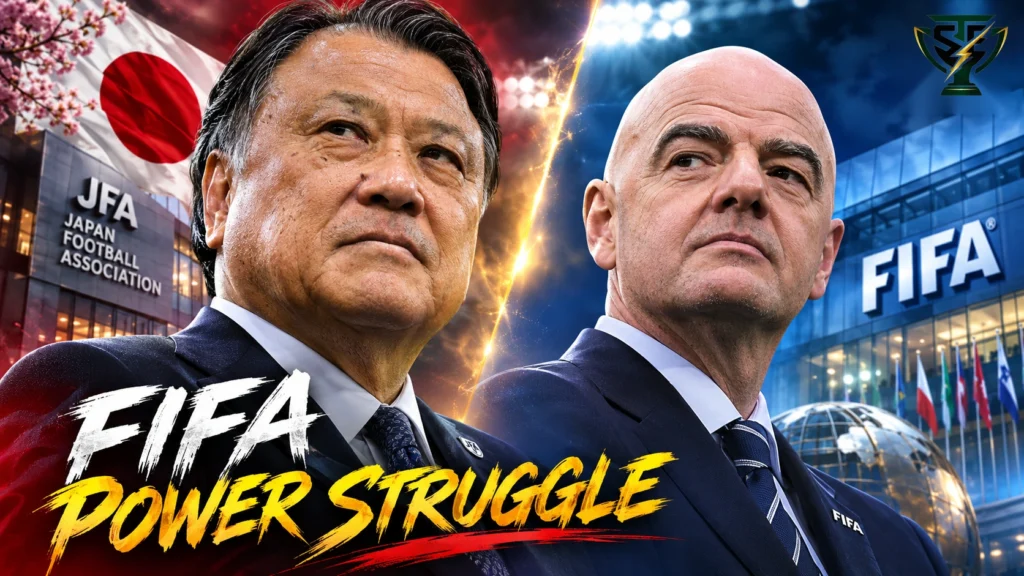
TOKYO, Japan, November 19, 2026: Japanese football administrator Kozo Tashima has formally entered the contest to unseat Gianni Infantino as FIFA president, securing the required backing of five national football associations and submitting his nomination ahead of Wednesday’s deadline. The 68-year-old former Japan Football Association president is now seeking to turn his experience inside Asian and international football administration into an electoral challenge that could disrupt Infantino’s established support across the continent.
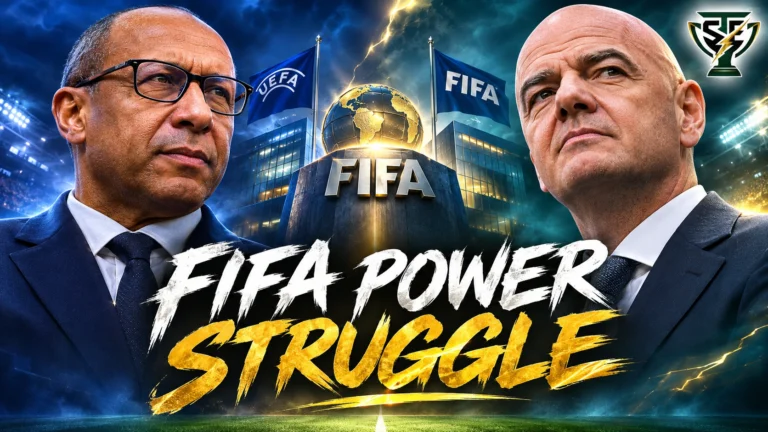
The Kozo Tashima FIFA presidency bid introduces a significant complication into the March 18, 2027 election in Rabat, Morocco. Japan’s nomination comes less than a month after the Asian Football Confederation’s leadership endorsed Infantino for another term, while French Football Federation president Philippe Diallo has emerged as a separate challenger with substantial European backing. Tashima’s candidacy does not yet establish a unified opposition capable of defeating the incumbent, but it demonstrates that the Asian football establishment is not politically unanimous behind FIFA’s current president.
TL;DR: Kozo Tashima’s FIFA Presidency Bid
- Formal nomination: The Japan Football Association submitted Tashima’s candidacy to FIFA on November 17, 2026.
- Public confirmation: The JFA announced the submission on November 18.
- Required endorsements: Tashima says five national member associations support his nomination.
- Election: March 18, 2027, at the 77th FIFA Congress in Rabat, Morocco.
- Incumbent: Gianni Infantino, who has led FIFA since 2016, is seeking another term.
- Other challengers: Philippe Diallo has declared his candidacy, while former Swiss international Ramon Vega has also been associated with the contest.
- Asian football divide: Tashima’s nomination comes despite the AFC leadership’s public endorsement of Infantino.
- Important distinction: Meeting the five-endorsement requirement does not guarantee approval of a candidacy or a winning electoral coalition.
- Next procedural step: FIFA’s electoral authorities must process submitted nominations and determine the final eligible candidate list.
Japan Formally Nominates Kozo Tashima for FIFA President
The Japan Football Association confirmed that it submitted a letter to FIFA on November 17 nominating its honorary president, Kozo Tashima, for the organization’s highest office.
The nomination followed a unanimous decision by the JFA board on November 5 to endorse Tashima’s candidacy.
Story at a glance
Japan Formally Nominates Kozo Tashima for FIFA President
The Japan Football Association confirmed that it submitted a letter to FIFA on November 17 nominating its honorary president, Kozo Tashima, for the organization’s highest office.
Who Is Kozo Tashima, the Japanese Administrator Challenging Infantino?
Kozo Tashima is an experienced Japanese football administrator and current FIFA Council member.
Why Tashima’s Nomination Creates a Political Problem for Asian Football
The timing of Tashima’s nomination is one of the most important elements of this story.
Gianni Infantino Faces Multiple Challengers Ahead of the March 2027 Election
Infantino has served as FIFA president since 2016, when he succeeded Sepp Blatter following the governance crisis that engulfed world football.
Philippe Diallo Complicates Tashima’s Path to the Presidency
One of Tashima’s greatest challenges may come from another opponent of Infantino rather than from the incumbent himself.
The JFA’s official November 18 announcement confirms both the submission and the earlier board decision.
Tashima also confirmed that he had received support from five national associations, fulfilling the endorsement threshold required to submit a FIFA presidential candidacy.
However, the former JFA president did not publicly identify all five associations supporting him.
That distinction matters because the number of formal endorsements provides little information about the actual size of a candidate’s electoral support.
Five associations can establish eligibility, but a successful presidential campaign requires the support of a much larger share of FIFA’s membership.
For Tashima, the immediate accomplishment is that his ambition has moved beyond a public declaration into a formal nomination process.
Who Is Kozo Tashima, the Japanese Administrator Challenging Infantino?
Kozo Tashima is an experienced Japanese football administrator and current FIFA Council member.
He served as president of the Japan Football Association from 2016 until 2024 before becoming the organization’s honorary president.
His career has also included significant responsibilities in Asian and international football administration.
Unlike candidates whose political profiles depend primarily on public criticism of FIFA, Tashima has extensive experience working within the governing structures he now wants to lead.
That experience could become an important part of his campaign.
FIFA’s president must balance the interests of 211 member associations across six continental confederations, including countries with vastly different sporting resources, commercial opportunities and development needs.
Tashima’s familiarity with football administration in Asia offers an identifiable platform from which to discuss international development and institutional relationships.
But experience alone is not an electoral advantage unless it translates into support among national associations.
Many of those associations maintain close political and financial relationships with FIFA’s existing leadership.
Kozo Tashima’s Leadership Profile
| Detail | Information | Electoral significance |
|---|---|---|
| Candidate | Kozo Tashima | Japanese football administrator |
| Age | 68 | Senior international leadership experience |
| Former position | JFA president, 2016-2024 | Eight years leading a major national association |
| Current JFA position | Honorary president | Maintains formal ties with Japanese football |
| International role | FIFA Council member | Familiar with FIFA’s governance structures |
| Nomination date | November 17, 2026 | Formal submission before the deadline |
| Endorsements reported | Five national associations | Meets the minimum endorsement threshold |
| Election sought | March 18, 2027 | Presidency for the next electoral term |
Why Tashima’s Nomination Creates a Political Problem for Asian Football
The timing of Tashima’s nomination is one of the most important elements of this story.
On October 23, the Asian Football Confederation’s leadership endorsed Infantino for another presidential term.
That endorsement followed months of disagreements involving FIFA’s governance, proposed commercial arrangements and the distribution of influence among football’s major institutions.
The AFC leadership’s support gave Infantino a significant political advantage.
Asia accounts for a substantial share of FIFA’s member associations, making the continent an important part of any winning presidential coalition.
Yet Japan’s decision to nominate Tashima demonstrates that the confederation leadership’s endorsement does not automatically determine how every national association will vote.
TSE examined that political reversal in its report on the AFC’s endorsement of Infantino, explaining how Asia shifted from governance criticism toward renewed support for the incumbent.
Tashima’s candidacy now raises a different question: how many associations are prepared to support a challenger from within Asia despite the regional leadership’s position?
The answer is not yet known.
The five endorsement letters provide evidence of a viable nomination, but the identities and broader electoral intentions of the supporting associations have not all been made public.
It would therefore be premature to describe Asia as having collectively abandoned Infantino.
The more accurate conclusion is that Japanese football has created a distinct electoral option despite the AFC leadership’s endorsement of the incumbent.
Gianni Infantino Faces Multiple Challengers Ahead of the March 2027 Election
Infantino has served as FIFA president since 2016, when he succeeded Sepp Blatter following the governance crisis that engulfed world football.
He confirmed during the 76th FIFA Congress in Vancouver in April 2026 that he intended to seek another term.
The official FIFA announcement confirms his intention to stand for re-election.
Infantino enters the contest with significant institutional advantages, including established relationships with confederation leaders and national associations.
However, his leadership has also faced criticism over governance, commercial proposals and the distribution of decision-making authority.
France’s Philippe Diallo has emerged as a prominent rival, benefiting from European support.
Former Switzerland international Ramon Vega has also been associated with the presidential contest, although expressions of interest and nomination eligibility must be distinguished from a confirmed final candidate list.
FIFA Presidency 2027: Principal Candidates and Their Positions
| Figure | Country | Position | Confirmed development |
|---|---|---|---|
| Gianni Infantino | Switzerland/Italy | Incumbent FIFA president | Announced intention to seek re-election |
| Kozo Tashima | Japan | JFA honorary president, FIFA Council member | Formal nomination submitted with five endorsements |
| Philippe Diallo | France | French Football Federation president | Declared challenger with significant European backing |
| Ramon Vega | Switzerland | Former international footballer | Publicly associated with the presidential race; final eligibility requires confirmation |
Candidate positions as reported around the November 18 nomination deadline. This is not an official FIFA-certified final ballot.
Philippe Diallo Complicates Tashima’s Path to the Presidency
One of Tashima’s greatest challenges may come from another opponent of Infantino rather than from the incumbent himself.
Philippe Diallo has emerged as a major European-backed candidate following growing criticism of FIFA’s recent governance decisions.
Germany’s football association confirmed its support for Diallo on November 18, reinforcing the French official’s position among important European federations.
Diallo has also indicated an interest in building alliances beyond Europe.
That raises the possibility of strategic cooperation between opponents of Infantino, but no unified candidacy had been confirmed when Tashima’s nomination was announced.
TSE examined Diallo’s emergence in its November 16 report on UEFA’s challenge to Infantino.
The problem for opposition candidates is straightforward.
Multiple challengers can demonstrate widespread dissatisfaction with an incumbent, but they can also divide support that might otherwise form a single electoral coalition.
Under FIFA’s voting system, that division may become particularly important during the first ballot.
It also creates an incentive for candidates to negotiate alliances once they understand their relative levels of support.
Such negotiations are politically plausible, but no agreement should be treated as concluded without an official announcement.
How the FIFA Presidential Election Works
The FIFA presidential election is conducted by member associations at the organization’s Congress.
Each eligible voting association has one vote.
FIFA currently has 211 member associations, although the number eligible to vote at Congress can differ depending on the applicable rules and circumstances.
Presidential candidates must be nominated by member associations and secure the required endorsements.
According to FIFA’s election provisions, a candidate requires declarations of support from at least five member associations.
The rules also distinguish between an election involving two candidates and one involving more than two.
With two candidates, a simple majority of valid votes is sufficient.
Where more than two candidates contest the election, a two-thirds majority of eligible votes is required in the first round. Subsequent rounds eliminate the lowest-ranked candidate until two remain.
FIFA Presidential Election Rules and Voting Thresholds
| Election requirement | Rule | Consequence for Tashima |
|---|---|---|
| Minimum nomination endorsements | Five member associations | Reportedly satisfied |
| Electorate | Eligible FIFA member associations | Must attract support across regions |
| One vote per association | Voting is conducted by national associations | Large and small football nations each hold an association vote |
| Two-candidate election | More than 50% of valid votes | Requires a broad electoral majority |
| More than two candidates | Two-thirds threshold in first round | Makes an immediate first-ballot victory more difficult |
| Later rounds | Lowest-ranked candidates eliminated under the rules | Alliance-building and vote transfers become important |
These rules mean that five nominations and a winning electoral coalition are fundamentally different achievements.
For example, if all 211 member associations cast valid votes in a two-candidate contest, the minimum winning majority would be 106 votes.
That illustrative threshold is more than 21 times the five endorsements needed to submit a nomination.
Actual voting thresholds must follow the number of valid votes and eligible associations under FIFA’s rules.
TSE Original Analysis: Five Endorsements Are Only the Beginning
Tashima’s announcement presents a useful opportunity to examine the difference between ballot access and electoral power.
The five national associations supporting his candidacy establish that his bid has moved beyond a personal declaration.
They do not establish how many countries would vote for him at Congress.
There are at least three reasons for this distinction.
First, an association may support a candidate’s right to enter an election without making an unconditional promise to vote for that candidate.
Second, political alliances can change after nomination deadlines, particularly where multiple challengers compete against a long-serving incumbent.
Third, the voting behavior of national associations may be influenced by considerations extending beyond the preferences of their confederation leadership.
Five Endorsements vs the Winning Majority
| Measure | Number | Interpretation |
|---|---|---|
| FIFA member associations | 211 | Overall membership base |
| Minimum nomination endorsements | 5 | Procedural entry requirement |
| Endorsements as share of full membership | 2.37% | Small initial proportion of the electorate |
| Illustrative simple-majority threshold | 106 votes | Applies if all 211 cast valid votes in a two-candidate contest |
| Difference between endorsement threshold and illustrative majority | 101 votes | Shows the scale of additional electoral support required |
TSE’s original statistical insight: The five-association nomination threshold represents just 2.37% of FIFA’s 211-member electorate. If all associations vote validly in a two-person contest, a candidate would need 106 votes to win, illustrating why meeting the nomination requirement is not evidence of an imminent presidential upset.
The calculation does not predict Tashima’s electoral performance. It measures the gap between the minimum entry requirement and the size of a potential winning coalition.
Why FIFA Governance Has Become the Central Election Issue
The 2027 presidential election has become closely connected to disagreements over FIFA’s commercial strategy and institutional governance.
During 2026, a proposed arrangement involving a commercial investment structure for World Cup-related business triggered criticism from several national associations and confederation leaders.
Critics questioned the transparency of the proposal and whether commercial arrangements could alter the distribution of control over important football assets.
FIFA’s leadership defended its broader development objectives, while subsequent developments led to calls for greater consultation and independent scrutiny.
The disagreement became a significant factor in the growing movement to challenge Infantino.
TSE investigated those concerns in its analysis of Infantino’s proposed independent governance review.
The issue matters because the FIFA president exercises influence over an organization responsible for international competitions, development funding and relationships with national associations around the world.
Different candidates may propose different approaches to transparency, accountability and commercial development.
But criticism of the current leadership does not establish that any one challenger has a majority.
The election will ultimately depend on how associations weigh governance reform against continuity, development funding and institutional relationships.
Can Tashima Win Support Beyond Asia?
For Tashima to mount a serious electoral challenge, he would need to develop support outside his Japanese and Asian networks.
Europe is an obvious potential source of opposition votes, but Diallo’s candidacy complicates that opportunity.
Africa, North and Central America, South America and Oceania could also become important in the final voting calculations.
However, no credible breakdown of Tashima’s support across the six confederations has been publicly established through the five endorsements announced so far.
It would therefore be misleading to assign him a projected vote total based on regional assumptions alone.
The more useful analytical questions concern whether he can establish a distinctive platform and whether national associations see him as a credible alternative to both Infantino and Diallo.
His experience within FIFA’s governing institutions could strengthen his credentials, but it also means voters may judge him on his previous role in those structures.
Why the AFC’s Support for Infantino Still Matters
The Asian Football Confederation’s endorsement remains an important political development despite Tashima’s nomination.
Confederation leaders maintain relationships that can influence how national associations assess candidates.
However, those relationships do not eliminate the independent voting role of member associations.
That is why Japan’s decision is significant without being conclusive.
It demonstrates that a prominent Asian national association is prepared to sponsor an alternative candidate.
It does not establish that the AFC leadership has reversed its earlier endorsement.
TSE also examined the wider pressure on Infantino in its report on the October FIFA Council confrontation, when disputes over governance intensified ahead of the nomination deadline.
The 2027 election will test whether institutional endorsements translate into actual votes when national associations make their final decisions.
The Election’s Next Major Test: From Nomination to Final Candidate List
With the nomination deadline reached on November 18, the presidential election enters its next procedural phase.
FIFA’s electoral authorities must establish which candidates satisfy the relevant nomination and eligibility requirements.
Only after that process can the final field of eligible candidates be treated as confirmed.
Political campaigning, negotiations and efforts to secure wider endorsements may continue during the months before the March Congress.
FIFA Presidential Election 2027: Important Dates
| Date | Development | Significance |
|---|---|---|
| April 2026 | Infantino announces re-election intention | Incumbent confirms plans for another term |
| October 23, 2026 | AFC leadership endorses Infantino | Provides important regional political backing |
| November 5, 2026 | JFA unanimously endorses Tashima | Japan formally supports its candidate |
| November 16-17, 2026 | Diallo’s challenge gains prominence | European alternative emerges |
| November 17, 2026 | Japan submits Tashima’s nomination | Formal presidential bid lodged |
| November 18, 2026 | Nomination deadline | Closes the formal submission window |
| March 18, 2027 | 77th FIFA Congress in Rabat | Presidential election scheduled |
The official FIFA Congress announcement confirms the date and location of the 2027 election.
What Tashima’s Bid Means for the Future of World Football
The significance of Tashima’s nomination extends beyond the prospect of a Japanese administrator becoming FIFA president.
It demonstrates that the 2027 election is developing into a contest over leadership, institutional influence and football’s commercial direction.
Infantino remains an established incumbent with substantial political advantages.
Diallo is attempting to consolidate support among European associations and build relationships elsewhere.
Tashima offers another potential route for voters who favor a change of leadership but may not automatically align with a European-backed candidate.
Those different political positions could create opportunities for broader debate.
They could also make it more difficult for the opposition to coordinate its electoral strategy.
The outcome will depend on the candidates’ approved status, the alliances they develop and the votes they ultimately receive.
Continue the Soccer Story


Frequently Asked Questions About Kozo Tashima’s FIFA Presidency Bid
Who is Kozo Tashima?
Kozo Tashima is a Japanese football administrator, former Japan Football Association president and current FIFA Council member. He is the honorary president of the JFA.
Has Kozo Tashima officially entered the FIFA presidential election?
The Japan Football Association submitted his formal nomination to FIFA on November 17, 2026, and confirmed it publicly on November 18. Final eligibility and candidate-list confirmation remain procedural matters for FIFA.
How many associations support Kozo Tashima?
Tashima says he has secured the support of five national football associations, meeting the minimum nomination endorsement requirement. The identities of all five supporters have not been publicly disclosed.
When is the next FIFA presidential election?
The election is scheduled for March 18, 2027, during the 77th FIFA Congress in Rabat, Morocco.
Who is challenging Gianni Infantino?
Kozo Tashima and Philippe Diallo have emerged as prominent challengers. Former Swiss footballer Ramon Vega has also been associated with the contest. The final eligible candidate list requires FIFA confirmation.
Does the Asian Football Confederation support Kozo Tashima?
The AFC leadership publicly endorsed Gianni Infantino in October 2026. Tashima’s candidacy has been formally supported by Japan and the required additional member associations, but it does not represent an announced AFC-wide endorsement.
How many votes are needed to become FIFA president?
With two candidates, more than 50% of valid votes is required. In a contest involving more than two candidates, a two-thirds threshold applies to the first ballot, followed by elimination procedures under FIFA’s election rules.
Who is Philippe Diallo?
Philippe Diallo is president of the French Football Federation and a challenger to Infantino who has secured substantial support within European football.
Can Kozo Tashima defeat Gianni Infantino?
He can contest the presidency if his candidacy is formally approved, but five nomination endorsements do not establish a winning electoral majority. His prospects depend on support across FIFA’s member associations and the final candidate field.
Final Verdict: Tashima’s FIFA Presidency Bid Exposes a Wider Electoral Divide
The Kozo Tashima FIFA presidency campaign has reached a significant milestone with the submission of his formal nomination.
Japan’s decision is particularly important because it challenges the assumption that the AFC leadership’s endorsement of Infantino means unanimous Asian support for the incumbent.
But Tashima still faces a demanding political task.
His five endorsements establish a route into the election process. They do not establish the wider international coalition needed to win.
With Diallo developing a separate challenge and Infantino retaining influential institutional relationships, the coming months will test whether FIFA’s opposition candidates can translate dissatisfaction into electoral support.
The March 18 vote may ultimately be decided less by the public criticism directed at Infantino than by the ability of rival candidates to persuade national associations that they offer a credible alternative.
Tashima has now entered that contest formally. His next challenge is to demonstrate that the support behind his nomination can grow into a serious bid for football’s most powerful office.