Connect with us

Published

on

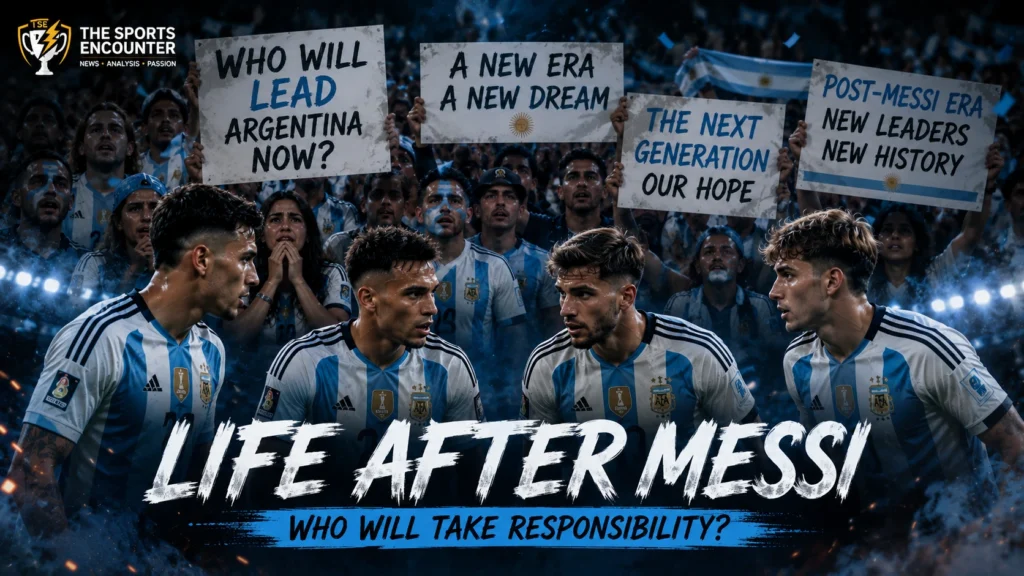
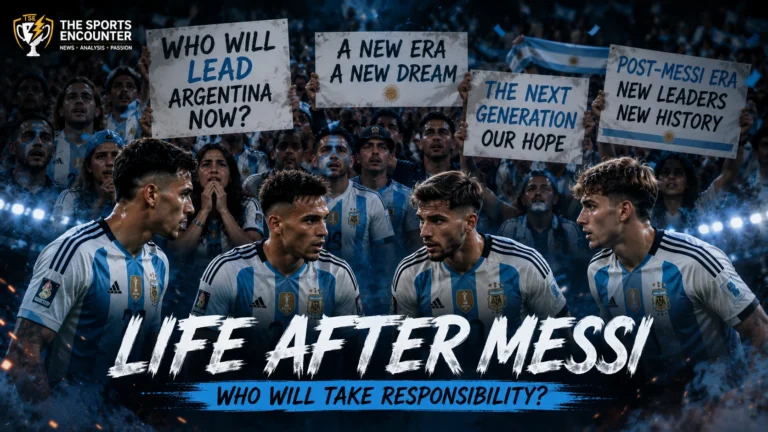
Lionel Messi has finally left Argentina’s national team, ending a 21-year international career that changed the country’s relationship with its greatest footballer and eventually delivered the World Cup glory generations had waited to see. Argentina now face a problem no tactical diagram can solve neatly: replacing a player who was simultaneously their scorer, creator, captain, emotional reference point and emergency answer when matches began slipping away.

The encouraging part for Argentina is that Lionel Scaloni has spent several years preparing for this moment, sometimes deliberately and sometimes because Messi’s age and physical problems forced him to.

Julián Álvarez and Lautaro Martínez have already played together. Nico Paz and Thiago Almada have been tested in creative positions. Enzo Fernández and Alexis Mac Allister are entering what should be the strongest years of their careers. Cristian Romero and Lisandro Martínez have enough international experience to become the defensive authority of the next cycle.

Argentina have also won matches without Messi.

What they have never had to do during the Scaloni era is build an entire future knowing he will never walk back through the dressing-room door.

That changes everything.

By The Sports Encounter Editorial Desk
Published: September 2, 2026
Updated: September 2, 2026

Argentina After Messi: What Changes Now?

Area Messi-Era Role Possible Post-Messi Solution
Primary creator Lionel Messi Nico Paz, Thiago Almada, Enzo Fernández
Central attacking threat Messi plus Julián Álvarez/Lautaro Martínez Álvarez and Lautaro together or rotating
Set pieces Messi Shared responsibility across several players
Midfield control Messi dropping deep with Mac Allister, Fernández and De Paul Greater responsibility for Fernández and Mac Allister
Captaincy Messi A senior core led by established World Cup winners
Emergency match-winner Messi No single replacement likely
Immediate major target Defend World Cup crown in 2026 Copa América 2028
Long-term target Extend the Scaloni-Messi era Build toward the 2030 World Cup
Major uncertainty When Messi would retire Whether Lionel Scaloni leads the transition

Messi confirmed his international retirement on August 31, six weeks after Argentina lost the 2026 World Cup final to Spain. The Argentine Football Association published his farewell letter, in which he said he had given everything he could and believed younger players deserved their opportunity.

FIFA also confirmed the end of his international career at 39 after six World Cups, with Argentina’s 2022 triumph standing at the center of a career that ultimately transformed his relationship with the national team.

The Sports Encounter documented the announcement in our full report on Lionel Messi’s retirement from Argentina.

The First Mistake Would Be Searching for the Next Messi

Argentina have been here before.

When Diego Maradona’s international career ended after the 1994 World Cup, the country spent years measuring gifted attacking players against an almost impossible standard.

Juan Román Riquelme carried the No. 10 differently. Pablo Aimar interpreted the role differently. Ariel Ortega, Juan Sebastián Verón and others passed through generations that repeatedly encountered the same question.

Then Messi arrived.

Expecting another player to reproduce what followed would create the wrong starting point for Argentina’s next cycle.

Messi leaves as Argentina’s record scorer and one of the most productive players in World Cup history. FIFA credits him with 21 World Cup goals across six tournaments after he scored eight during the 2026 edition. He was still producing at an extraordinary level at 39. FIFA’s retrospective on Messi’s Argentina career also emphasizes how the national team’s transformation under Scaloni eventually created a structure capable of supporting its captain instead of continually asking him to rescue it.

That lesson should guide what happens next.

Argentina need to distribute Messi’s responsibilities rather than hand all of them to whichever young attacking midfielder happens to wear No. 10.

Nico Paz and Thiago Almada Can Replace a Position, Not a Footballer

Nico Paz and Thiago Almada are the obvious names whenever the conversation turns toward Argentina’s next creative midfielder.

Both have already been integrated into senior international football, and both shared a squad with Messi at the 2026 World Cup.

The temptation will be to identify one of them as his heir.

That description asks too much.

Paz can receive between midfield and defense, carry possession into dangerous spaces and create from central areas. Almada offers mobility, technical security and experience operating around the attacking line.

Either could occupy areas Messi once occupied.

Neither should be expected to reproduce the total influence Messi exerted on a match.

That distinction becomes especially important because Messi’s role had evolved considerably by the end of his career. He no longer needed to dominate every sprint or every phase. Argentina could carry the physical workload around him while he chose where to intervene.

During the 2026 World Cup, that arrangement repeatedly allowed him to decide matches after long stretches in which opponents believed they had contained him.

Our report on Argentina’s extraordinary comeback against Egypt showed the clearest version of it. Argentina trailed 2-0 deep into the second half before Messi helped turn a near-elimination into a 3-2 victory.

No young player should enter the next camp carrying the expectation of doing that whenever Argentina encounter trouble.

Julián Álvarez and Lautaro Martínez May Become More Important Together

Scaloni has already experimented with one of the most logical post-Messi attacking solutions: playing Julián Álvarez and Lautaro Martínez together.

That gives Argentina two elite-level forwards with different movements.

Álvarez can press, move outside the center-backs, drop toward midfield and attack space aggressively. Lautaro is comfortable working closer to the penalty area, occupying defenders and attacking crosses.

With Messi involved, Argentina frequently had to decide which center forward best complemented him.

Without Messi, the question changes.

Scaloni can build around the relationship between Álvarez and Lautaro rather than requiring one of them to make room for a free-roaming No. 10.

The 2026 World Cup provided evidence of how important both can become during difficult knockout matches.

Álvarez produced the decisive extra-time breakthrough when Argentina survived Switzerland 3-1 in the quarterfinal.

Lautaro then scored the stoppage-time winner against England in Atlanta.

Those were already post-Messi clues hidden inside Messi’s final tournament.

Enzo Fernández Could Become the Center of Argentina’s Next Midfield

If one player appears positioned for a dramatic increase in responsibility, Enzo Fernández belongs near the top of the list.

He is 25.

He already owns World Cup-winning experience.

He has spent several years playing elite club football under enormous scrutiny and has developed into a midfielder capable of influencing possession from multiple zones.

Fernández also understands what Messi’s absence means emotionally.

His farewell message described how difficult it was to imagine the next Argentina camp without the familiar No. 10 ahead of him.

The football adjustment could be equally significant.

Messi frequently dropped toward midfield to provide Argentina with a passing solution when opponents closed central routes. That reduced the creative burden placed on conventional midfielders.

Without him, Fernández will likely have to dictate more attacks himself.

Alexis Mac Allister should carry more of that responsibility as well.

The pair are technically secure enough to control matches, but Argentina may need them to become more ambitious with progressive passes because the automatic option of finding Messi between the lines has disappeared.

Fernández already demonstrated his ability to decide major matches during Argentina’s 2-1 World Cup semifinal victory over England, scoring the late equalizer before Lautaro finished the comeback.

The England Semifinal Shows Exactly What Argentina Must Replace

Argentina’s World Cup semifinal against England may eventually become one of the most useful matches for understanding what life after Messi requires.

England led 1-0 until the 85th minute.

Argentina had possession and pressure, but the match was moving toward elimination.

Messi then created both goals.

His involvement helped open the sequence from which Fernández equalized before his delivery found Lautaro for the winner in stoppage time.

Our live account of Argentina’s late escape against England captured how quickly the semifinal changed once Messi began finding decisive spaces.

Argentina cannot solve that absence simply by asking Paz to stand where Messi stood.

Someone needs to create the chance.

Someone needs to deliver the final ball.

Someone needs to take responsibility when a knockout match reaches the 85th minute and conventional patterns have stopped producing openings.

Those jobs may now belong to three or four different players.

That could eventually make Argentina less predictable.

It will initially make them less certain.

Argentina Have Already Learned How to Win Matches Without Messi

The strongest argument against predicting a dramatic Argentine decline is simple: Scaloni has already had to prepare teams without his captain.

Physical management became increasingly important during Messi’s final years, and Argentina played numerous matches without him.

Scaloni adjusted formations, changed combinations and allowed other attackers to assume greater responsibility.

Shortly before the 2026 World Cup, Argentina beat Honduras 2-0 while Messi remained unused.

The Sports Encounter’s examination of the final preparations of the World Cup’s major contenders identified that performance as useful evidence that Argentina could function without leaning entirely on Messi.

During the World Cup itself, Scaloni rested his captain from the starting lineup against Jordan.

Argentina still established control and built a lead before Messi entered later and scored in the 3-1 group-stage victory.

Those games cannot replicate permanent retirement.

Players behave differently when Messi is sitting on the bench and available if needed. Opponents defend differently because they know he may enter. Teammates know the emergency option still exists.

That safety net has now disappeared.

The Captaincy Question Is Bigger Than Who Wears the Armband

Argentina will appoint another captain.

The harder task is replacing the authority that surrounded Messi.

His leadership evolved over time.

The younger Messi was frequently criticized in Argentina for appearing quieter than Maradona and for expressing leadership differently from what the national football culture expected.

By the Scaloni years, nobody seriously questioned who owned the dressing room.

That authority came from longevity, performance, shared disappointments and eventually shared trophies.

Argentina’s next captain cannot inherit two decades of emotional capital simply because somebody hands him an armband.

The useful part is that the squad already contains established leaders.

Cristian Romero brings aggression and defensive authority. Emiliano Martínez has become one of the team’s loudest personalities. Rodrigo De Paul has long operated as an emotional and physical engine. Lautaro has substantial senior experience. Fernández and Mac Allister represent the generation that should lead Argentina deeper into the decade.

A more collective leadership structure may suit the transition better than attempting to manufacture another unquestioned central figure immediately.

Argentina’s Defense May Become More Important Without Messi

There is another way to replace attacking certainty.

Need less of it.

If Argentina become harder to score against, they will require fewer moments of individual genius to survive difficult matches.

Romero and Lisandro Martínez are both 28. Facundo Medina is 27. Valentín Barco is only 22.

That leaves Argentina with defenders who can realistically remain important through the next World Cup cycle.

Scaloni could therefore shift some of the team’s identity.

The final years of Messi’s international career encouraged Argentina to preserve enough defensive and midfield structure to give their captain freedom. The next team may become more physically balanced because every outfield player can participate fully in the press.

That does not automatically make Argentina better.

It does create tactical possibilities that were harder to use while protecting a 39-year-old playmaker’s energy for decisive attacking phases.

The 2026 World Cup Proved Argentina Were Still Heavily Dependent on Messi

There is no value in pretending Argentina had already moved beyond him.

They had not.

Messi scored eight times during the 2026 World Cup and remained central to Argentina’s creativity throughout a difficult run to the final.

He scored against Algeria, Austria, Jordan, Cape Verde and Egypt, while his passing became decisive deeper into the knockout rounds.

The Sports Encounter ranked him among the best players of the 2026 World Cup because his influence extended far beyond the goals.

Our final tournament scoring analysis recorded his eight goals as the second-highest total at the tournament. Readers can revisit the complete World Cup 2026 goalscorers ranking.

Argentina eventually lost 1-0 after extra time to Spain in the final.

The defeat ended their attempt to become the first country since Brazil in 1962 to retain the World Cup, but reaching another final also demonstrated how durable the broader Scaloni structure had become.

The Sports Encounter’s Argentina vs Spain World Cup final analysis showed how much of Argentina’s knockout run depended on resilience rather than uninterrupted dominance.

That quality survives Messi.

The question is whether enough attacking quality survives with it.

Lionel Scaloni May Be the Most Important Person in Argentina’s Transition

Much of the discussion will naturally focus on players.

The coaching question could be more important.

Scaloni built the environment in which Messi finally became comfortable, successful and universally embraced by Argentina supporters.

He also built the team around him.

That gives Scaloni something no incoming coach could immediately possess: detailed knowledge of which parts of Argentina’s structure genuinely depend on Messi and which parts are strong enough to survive without him.

His future therefore matters enormously.

Scaloni has raised uncertainty around whether he will remain beyond 2026. His current cycle reaches a natural emotional endpoint after another World Cup final and Messi’s departure.

Argentina would prefer continuity while undertaking such a fundamental transition.

There is also a risk to staying too long.

A coach who built a historic team must be willing to dismantle parts of it when age, form and changing tactical requirements demand something different.

Scaloni has shown little fear of difficult selections during his tenure.

He would need that quality again.

The Scaloni Era Already Gave Argentina an Identity Beyond Messi

This is where Argentina’s position differs significantly from the national team Messi joined two decades ago.

The current side has a collective identity.

FIFA’s examination of Argentina’s transformation under Lionel Scaloni traced that change back to the 2021 Copa América triumph over Brazil at the Maracanã.

Argentina stopped playing as a national team waiting for Messi to solve every problem.

They became aggressive without the ball, emotionally resilient under pressure and increasingly comfortable winning ugly matches.

The trophies followed.

Copa América 2021 ended a 28-year senior international title drought.

Argentina then won the 2022 World Cup and retained the Copa América in 2024 before reaching another World Cup final in 2026.

Messi was central to that success.

The supporting system was real too.

That is the inheritance Argentina must protect.

Copa América 2028 Will Give the First Proper Answer

Friendlies can reveal formations and personnel.

They cannot reproduce the emotional conditions of knockout international football.

Copa América 2028 will therefore provide the first serious judgment on post-Messi Argentina.

By then Paz will be 24. Fernández will be 27. Álvarez will be 28. Mac Allister will be 29. Romero and Lisandro Martínez will be around 30.

That age profile should concern Argentina far less than losing Messi might suggest.

The next team will not be an inexperienced rebuild populated entirely by prospects.

Most of its central players will have already won major international tournaments or played deep into them.

The challenge involves reorganizing responsibility rather than teaching an entirely new generation how Argentina operate.

Then Comes 2030, and Argentina Will Be Playing Partly at Home

The 2030 World Cup gives this transition a natural destination.

Argentina will participate in the centenary tournament as one of its South American hosts, with the competition carrying unusual historical significance a century after the first World Cup was staged in neighboring Uruguay.

Messi will be 43.

There should be no lingering debate about whether he might return for one more tournament.

The team arriving in 2030 needs to belong completely to the players who follow him.

Many of today’s core can realistically still be involved.

Fernández would be 29. Álvarez 30. Mac Allister 31. Romero and Lisandro Martínez 32. Barco 26. Giuliano Simeone 27.

That is a viable championship-age core.

The missing component is the extraordinary footballer who previously elevated a good performance into victory when Argentina’s collective solutions stopped working.

Perhaps somebody emerges.

Perhaps Paz develops into an elite creator.

Perhaps Álvarez becomes the unquestioned attacking leader.

Perhaps Argentina evolve into a team that spreads goals and creativity so widely that nobody needs to replace Messi individually.

The third possibility may offer the healthiest future.

What Argentina Will Miss Most Is the Certainty

Statistics explain part of Messi’s absence.

Twenty-one World Cup goals explain part of it.

Two decades of international football explain another part.

The deeper loss is psychological.

For years, Argentina entered decisive moments believing the best footballer on the field was wearing their shirt.

Even when he was 39.

Even when he had been quiet for an hour.

Even when Egypt were two goals ahead.

Even when England were five minutes from the World Cup final.

Argentina always knew another pass, free kick, dribble or finish could arrive.

Opponents knew it too.

That changes the emotional mathematics of a match.

No formation replaces it.

The Sports Encounter Verdict: Argentina Are Better Prepared Than They Were After Maradona

Argentina will become a different football team.

They do not have to become a weaker football nation.

The player pool is strong. The midfield is approaching its prime. The center-forward options are elite. The defense contains experienced players with several years still ahead of them. Younger creative talent is already being introduced rather than waiting outside the senior setup.

Most importantly, Argentina possess an identity that no longer begins and ends with one player.

That was one of Scaloni’s greatest achievements.

It also became one of Messi’s greatest late-career gifts to Argentina.

He eventually played in a national team strong enough to help him rather than continuously asking him to carry it.

Now that team has to prove the structure can survive after he leaves.

There will probably be matches when Argentina miss the old solution terribly. A locked defense will refuse to open. A knockout game will reach its final minutes. Somebody will look toward the space where No. 10 once waited for the ball.

The next era will begin properly when Argentina stop looking.

Frequently Asked Questions About Argentina After Lionel Messi

Has Lionel Messi retired from Argentina?

Yes. Messi announced his retirement from international football on August 31, 2026, after more than two decades with the Argentina senior national team.

Who will replace Lionel Messi for Argentina?

Argentina are unlikely to replace Messi with one player. Nico Paz and Thiago Almada are among the creative options, while Julián Álvarez, Lautaro Martínez, Enzo Fernández and Alexis Mac Allister are expected to assume greater attacking responsibility.

Who could wear Argentina’s No. 10 shirt after Messi?

The Argentine Football Association has not established a permanent successor to Messi’s No. 10. Nico Paz and Thiago Almada are two players whose roles could place them in the conversation, but the shirt does not necessarily have to go to Messi’s tactical replacement.

Who will captain Argentina after Lionel Messi?

Argentina have not yet established the permanent post-Messi captaincy hierarchy. The squad contains several experienced leaders, including Cristian Romero, Emiliano Martínez, Rodrigo De Paul and Lautaro Martínez.

Can Argentina still win without Lionel Messi?

Yes. Argentina won multiple matches without Messi during the latter years of his international career. Permanent retirement creates a much larger tactical and psychological adjustment, but the squad contains several players with World Cup and Copa América championship experience.

Will Julián Álvarez and Lautaro Martínez play together for Argentina?

They could. Lionel Scaloni has previously used both forwards together, and Messi’s retirement creates more space for Argentina to build an attacking system around their complementary movement and finishing.

Is Nico Paz the next Lionel Messi?

That comparison would place an unrealistic burden on Paz. He is one of Argentina’s most promising creative players and could inherit greater responsibility, but replacing Messi’s complete influence is unlikely to fall on one footballer.

Will Lionel Scaloni remain Argentina coach after Messi’s retirement?

Scaloni’s future remains one of the major questions surrounding the next cycle. Keeping the coach who built Argentina’s championship structure would provide continuity, but his long-term position beyond 2026 has not been settled publicly.

What is Argentina’s next major tournament after Messi’s retirement?

Copa América 2028 is expected to be the first major senior international tournament of Argentina’s post-Messi era.

Could Argentina win the 2030 World Cup without Messi?

Argentina should possess a competitive core in 2030, with players such as Enzo Fernández, Julián Álvarez, Alexis Mac Allister, Cristian Romero and Valentín Barco potentially still within strong career-age ranges. Their chances will depend on how successfully Argentina develop new creators and reshape the team over the next four years.

Elma Victors is a London-based accounting professional and sports writer covering cricket, soccer, tennis, major international competitions, and the business and commercial side of sport. Her analytical background shapes a detail-oriented approach to sports journalism, with particular attention to statistics, performance trends, financial developments, sponsorships, contracts, and the wider context behind major sporting stories. At The Sports Encounter, Elma contributes match reports, breaking news, player-focused features, tournament analysis, and stories examining the commercial forces influencing modern sport. Her work combines clear reporting with statistical context and a practical understanding of how decisions made away from the field can affect teams, athletes, competitions, and supporters. Based in London, she brings both a global sports perspective and an analytical mindset to coverage across major leagues, tournaments, and international events.

Breaking News

Premier League’s £3.46 Billion Summer: Why Record Spending Is Reshaping English Football

Premier League clubs spent approximately £3.46 billion in the summer 2026 transfer window, with Manchester City alone committing around £458 million. The deeper story is how domestic transfer liquidity, record revenues, promoted-club spending and new financial rules are reshaping English soccer.

Published

on

Premier League clubs dominate the 2026 summer transfer market as record spending reaches approximately £3.46 billion across England’s top flight.

The Premier League has just completed the most expensive summer transfer window in its history, with its 20 clubs spending approximately £3.46 billion on players. The number is enormous. The forces behind it are more important.

Manchester City spent roughly £458 million. Four players costing more than £100 million arrived at Premier League clubs. Newly promoted Ipswich Town, Coventry City and Hull City collectively invested more than £400 million. Around 38% of transfer activity took place between Premier League clubs themselves, meaning an extraordinary amount of money circulated inside the same competition.

This was more than another demonstration of English soccer’s financial strength.

The summer of 2026 exposed how the Premier League transfer market is changing structurally.

Clubs are spending earlier in a player’s development curve. Premier League experience is carrying an increasingly expensive premium. Wealth is moving from the traditional elite toward ambitious middle-class clubs through domestic transfers. Promoted teams are investing at levels that would once have belonged to Champions League contenders. Meanwhile, new financial regulations are changing how clubs calculate risk rather than stopping them from taking it.

The question after a £3.46 billion summer is therefore larger than which club “won the window.”

What happens to a league when almost everybody can spend heavily, yet only four Champions League places, one title and three relegation positions still exist?

That tension may define the 2026/27 Premier League season.

By The Sports Encounter Editorial Desk
Published: September 2, 2026
Updated: September 2, 2026

Premier League Summer 2026 Transfer Spending at a Glance

Metric Summer 2026 Why It Matters
Total Premier League spending Approximately £3.46 billion New summer transfer record
Average spending across 20 clubs Approximately £173 million per club Shows how far spending strength now extends beyond the traditional elite
Manchester City spending Approximately £458 million Largest individual club outlay of the summer
City share of total league spending About 13% Huge, but still means most spending came from elsewhere
£100m-plus Premier League arrivals Four Elite transfer prices are becoming less exceptional
Premier League-to-Premier League transfer share Approximately 38% Up from roughly 30% a year earlier
Promoted clubs’ combined spending More than £400 million Illustrates survival economics and the league’s extraordinary financial depth
Latest reported Premier League aggregate revenue £6.8 billion in 2024/25 Provides the economic base behind transfer-market strength
Premier League Squad Cost Ratio limit 85% New domestic cost-control system from 2026/27
UEFA squad-cost limit 70% Creates a tighter constraint for clubs competing in UEFA competitions

The Premier League officially closed its summer window at 11:00 p.m. BST on September 1 after opening on June 15. The league’s official deadline-day review confirmed a final burst of major activity, including Enzo Fernández’s move from Chelsea to Manchester City.

The scale of the finished market places the 2026 window in a category of its own.

The Sports Encounter had already identified the inflationary direction of the market in our analysis of the Premier League’s most expensive signings. What looked extraordinary in July became part of a much larger pattern by September.

£3.46 Billion Is Bigger Than a Transfer Record

Transfer records are easy to treat as annual entertainment.

One summer breaks another. A £70 million midfielder becomes a £90 million midfielder. Then £100 million becomes familiar enough that a nine-figure fee no longer stops an entire news cycle.

The significance of £3.46 billion lies in the breadth of the spending.

Manchester City were responsible for approximately £458 million, an astonishing figure even by modern standards. Yet that still represented only around 13% of the league’s total expenditure.

In other words, almost £3 billion was spent by the other 19 clubs.

That is the real warning for Europe’s competing leagues.

The Premier League’s financial advantage is no longer explained adequately by pointing toward Manchester City, Manchester United, Liverpool, Chelsea or Arsenal.

The money extends deep into the table.

A club trying to finish 14th in England can now shop in markets where Champions League clubs from other countries are looking for talent. A newly promoted Premier League team can offer fees, wages and exposure that established clubs elsewhere struggle to match.

This is why English financial power has become so difficult to compete against.

The league does not merely possess several wealthy clubs.

It possesses a wealthy ecosystem.

The Premier League’s Revenue Engine Makes This Possible

Transfer spending cannot be understood without examining the revenue underneath it.

Deloitte’s 2026 Annual Review of Football Finance reported that Premier League clubs generated £6.8 billion in aggregate revenue during the 2024/25 season, up 8% from £6.3 billion a year earlier.

That included approximately £3.4 billion in broadcast revenue, £2.4 billion in commercial revenue and more than £1 billion in matchday income.

Those figures illustrate why English clubs can keep returning to the market.

The domestic and international television product remains extraordinarily valuable. Stadium income continues to rise. Commercial departments increasingly monetize global fan bases. European participation brings additional distributions to the clubs that qualify.

Perhaps most importantly, that financial strength extends beyond one or two internationally dominant brands.

Premier League revenue distribution creates a baseline that gives even lower-table clubs significant purchasing power.

The effect compounds.

Stronger squads improve the product. A stronger product protects broadcasting demand. International attention drives sponsorship. Sponsors strengthen commercial revenue. Clubs then reinvest into players.

That cycle has been developing for years.

The £3.46 billion summer suggests it has reached another level.

Yet Premier League Clubs Are Hardly Swimming in Profit

Record spending can create the impression that English clubs are financially comfortable.

The underlying accounts present a more complicated picture.

Deloitte reported that Premier League clubs posted aggregate pre-tax losses of £948 million in 2024/25, deteriorating sharply from £135 million the previous season.

Wage costs reached a record £4.4 billion.

Only eight clubs reported an operating profit.

This makes the transfer record more interesting because English clubs are not simply spending surplus cash accumulated after enormous profits.

Many are operating within aggressive financial models that depend on revenue growth, owner backing, asset trading, qualification income and careful management of accounting rules.

That distinction is essential.

A £100 million transfer does not usually appear as a £100 million expense in one year’s football accounts.

When a player signs a multi-year contract, the transfer fee is generally spread across the contractual life of the player for accounting purposes. A player bought for £100 million on a five-year contract can therefore create an annual amortization charge of around £20 million before wages and associated costs are considered.

Sales work differently.

If a club sells a player for significantly more than his remaining accounting value, the gain can be recognized much more quickly.

This is one reason player trading has become such a central part of modern club finance.

Transfers are sporting decisions.

They are also balance-sheet decisions.

The New Premier League Financial Rules Did Not Kill Spending

The timing of this record is particularly striking because 2026/27 is the first Premier League season under the league’s new financial system.

Profitability and Sustainability Rules have been replaced by Squad Cost Ratio and Sustainability and Systemic Resilience regulations.

Under the Premier League’s new Squad Cost Ratio framework, on-pitch spending is generally limited to 85% of football-related revenue plus net profit or loss from player sales, with additional mechanisms and allowances built into the system.

UEFA clubs face an even tighter standard.

UEFA’s financial sustainability regulations impose a 70% squad-cost ceiling covering relevant player and coach wages, transfer costs and agent fees.

The expectation in some quarters was that stronger cost regulation would cool transfer activity.

Instead, Premier League clubs spent £3.46 billion.

That tells us something important about modern financial regulation.

Rules affect the structure of spending more readily than the appetite to spend.

Clubs with rapidly growing revenue can still invest.

Clubs generating large transfer profits can create headroom.

Clubs can prioritize younger players with resale potential.

Long-term contracts can spread accounting cost across several seasons.

Squad turnover can generate both football solutions and financial flexibility.

Regulation therefore creates a new game around squad construction rather than ending the old one.

Manchester City’s £458 Million Rebuild Was the Window’s Biggest Statement

No club embodied the summer more dramatically than Manchester City.

Approximately £458 million was committed to new players during a major transition after Pep Guardiola’s departure.

The headline move came late.

City completed Enzo Fernández’s transfer from Chelsea for a reported £125 million, matching the British-record level and giving new manager Enzo Maresca one of the world’s most accomplished midfielders.

The Sports Encounter examined the deal in depth in our analysis of Manchester City’s £125 million move for Enzo Fernández.

City had already spent heavily before deadline day.

Elliot Anderson arrived from Nottingham Forest for £116 million. Iliman Ndiaye joined from Everton for a reported £65 million. Other additions formed part of a summer designed to rebuild the squad after the end of one of the most successful managerial eras English football has seen.

That context matters.

This was not a dominant champion adding luxury depth.

City had lost Rodri to Barcelona, a transfer The Sports Encounter analyzed through the consequences of Rodri ending his 14-trophy Manchester City career.

The club also changed coaches and needed to refresh an aging structure.

City’s response was acceleration.

Instead of allowing a gradual transition, the club attempted to compress several years of squad evolution into one summer.

Why Manchester City Could Justify Spending Nearly Half a Billion Pounds

£458 million sounds reckless when considered only as a headline number.

The football logic becomes easier to understand when the scale of City’s transition is considered.

For most of Guardiola’s reign, the club could make one or two major additions because the underlying structure was stable.

Rodri controlled midfield.

Kevin De Bruyne supplied creativity for most of the era.

The defensive line had established principles.

The positional game was understood throughout the squad.

A change of coach disrupted that continuity.

So did the departure of major players.

When several structural positions require renewal simultaneously, transfer costs can rise very quickly.

City effectively bought a new midfield spine while adding attacking flexibility and younger legs.

The early returns have provided some encouragement.

The Sports Encounter’s report on Manchester City’s 4-1 victory at Crystal Palace showed that the new structure already possesses attacking power even before every expensive piece is fully integrated.

The financial risk remains considerable.

If City win major trophies, £458 million becomes the cost of a successful generational rebuild.

If the squad fails to settle, every expensive signing will be judged individually and collectively.

Four £100 Million Transfers Tell Us the Elite Market Has Changed

Four players moved to Premier League clubs for fees exceeding or reaching the £100 million range during this window.

That would once have represented an astonishing multi-year concentration of record transfers.

Now it happened in one summer.

Enzo Fernández moved to Manchester City for £125 million.

Morgan Rogers joined Chelsea for £117 million.

Elliot Anderson moved to City for £116 million.

Bradley Barcola joined Liverpool from Paris Saint-Germain for an initial fee reported around £107 million, with the package capable of rising higher.

Tottenham also pushed toward the same territory by signing Sandro Tonali from Newcastle for a package worth up to £100 million.

The Sports Encounter’s earlier feature on the Premier League’s rapidly changing transfer record identified the emerging pattern before the window closed.

The important development is that £100 million is becoming less isolated from the normal elite market.

Clubs once paid those fees for players expected to become global superstars immediately.

Now they are increasingly paying them for players who combine elite production with age, Premier League readiness, tactical versatility and resale durability.

That is a different valuation model.

The Premier League Experience Premium Is Becoming Enormous

Consider several of the biggest transactions.

Fernández moved from Chelsea to Manchester City.

Rogers moved from Aston Villa to Chelsea.

Anderson moved from Nottingham Forest to Manchester City.

Tonali moved from Newcastle to Tottenham.

Ndiaye moved from Everton to Manchester City.

These are not speculative imports from leagues where adaptation remains uncertain.

They are players already proven inside English football.

That dramatically reduces one category of recruitment risk.

A Premier League club buying a proven Premier League player already knows how that player handles the league’s physical speed, schedule, travel, stadium environments and tactical intensity.

The selling club knows this too.

That knowledge appears in the price.

This is why the domestic transfer market increasingly resembles an economy of its own.

English clubs have enough revenue to charge one another enormous premiums.

The buyers are willing to pay because adaptation risk is lower.

The sellers can then recycle the money.

That creates liquidity throughout the league.

Thirty-Eight Percent of Deals Staying Inside the League May Be the Most Important Statistic

Around 38% of Premier League transfer transactions this summer reportedly involved two Premier League clubs, up from approximately 30% a year earlier.

That number deserves more attention than it has received.

When Manchester City pays Nottingham Forest £116 million for Elliot Anderson, the money does not leave English football.

Forest can reinvest.

When Chelsea pay Aston Villa £117 million for Morgan Rogers, Villa gain substantial financial power.

When Tottenham buy Sandro Tonali from Newcastle, Newcastle can redirect that money into their own recruitment.

The purchasing power moves around the league.

This creates a multiplier effect.

One major transaction can indirectly finance several others.

The same pound can effectively support multiple transfer decisions as selling clubs reinvest receipts.

That process helps explain why Premier League windows can gather momentum so quickly.

A high-value domestic sale does not merely strengthen the buyer.

It can unlock the seller.

Chelsea’s Summer Shows How Player Trading Has Become a Business Model

Chelsea offer perhaps the clearest example of modern transfer-market circulation.

The club spent £117 million to take Morgan Rogers from Aston Villa.

The Sports Encounter argued before the season that the deal left Xabi Alonso with fewer excuses after Chelsea’s investment in Rogers.

Rogers then scored on his league debut as Chelsea beat Fulham 3-2, giving immediate football evidence behind the investment.

At the same time, Chelsea continued selling valuable players.

Enzo Fernández generated a £125 million fee from Manchester City.

Andrey Santos moved to Manchester United in another significant transaction, a deal previously examined in The Sports Encounter’s analysis of United’s £50 million move for Andrey Santos.

Chelsea have spent several years accumulating young assets.

The strategy has often been criticized because large squads created uncertainty around pathways, minutes and managerial control.

Summer 2026 reveals the financial logic more clearly.

A deep portfolio of young players can eventually become a transfer-income engine.

Players who develop significantly in value create sale opportunities.

Those sales create room for further investment.

The football operation still has to make the team coherent.

Financially, however, player inventory has become a form of strategic capital.

The Morgan Rogers Deal Captures the New Economics Perfectly

Morgan Rogers is one of the clearest examples of how quickly player value can accelerate in this market.

Aston Villa originally acquired him for a fraction of the fee Chelsea eventually paid.

Premier League production, European success, England recognition and a strong World Cup elevated his status dramatically.

By the summer of 2026, Chelsea were willing to invest £117 million.

The Sports Encounter’s feature on Rogers and Chelsea’s expectations under Alonso explained why the fee carries pressure beyond the player himself.

For Villa, the transaction demonstrates another economic truth.

Developing a player can now be nearly as important financially as qualifying for Europe.

A club that identifies a young player at £15 million, develops him into a £100 million-plus asset and sells at the right moment can transform its financial flexibility.

The challenge is sporting replacement.

Money enters the account immediately.

Replacing a player who helped generate that value is far more difficult.

The Promoted Clubs Spending £400 Million Changes the Relegation Battle

Perhaps the most revealing spending figure belongs to Ipswich Town, Coventry City and Hull City.

The three promoted teams invested more than £400 million collectively.

There was a time when promotion to the Premier League encouraged a relatively conservative strategy.

Clubs tried to preserve much of the squad that earned promotion, added several experienced players and relied on the financial uplift from reaching the top flight.

The modern survival calculation has become more aggressive.

Promotion brings access to Premier League broadcast income, sponsorship exposure and the possibility of establishing a club in the richest domestic soccer competition in the world.

The value of staying up can justify heavy immediate investment.

The risk is obvious.

Three teams still have to be relegated.

If all three promoted clubs spend aggressively, spending alone cannot protect them because the clubs around them are spending too.

This creates something close to an arms race at the bottom of the table.

A £25 million signing that once looked transformative for a newly promoted side may now represent routine squad investment.

The financial entry price for Premier League survival is rising.

Promotion Has Become an Investment Decision About Future Premier League Status

Promoted clubs are effectively deciding how much of tomorrow’s Premier League income they are willing to risk securing today.

The logic is understandable.

Survive one season and the club receives another year of elite broadcast revenue.

Survive two or three years and the commercial profile can change permanently.

Stadium expansion becomes easier to justify.

International audiences grow.

Sponsorship contracts improve.

Player values often rise simply because those players now perform in the Premier League.

The upside is enormous.

The problem appears when relegation arrives after the investment has already been committed.

A squad constructed around Premier League wages and transfer amortization then has to operate against Championship revenue.

Parachute payments soften the landing.

They do not remove every risk.

This is why summer spending by promoted teams should be judged over several seasons rather than through one August league table.

The Premier League’s Middle Class Is Squeezing Europe’s Traditional Powers

European clubs have complained about Premier League purchasing power for years.

The 2026 window demonstrates why that frustration continues growing.

Premier League teams outside the traditional elite can offer combinations of fee, salary and sporting visibility that clubs from historically prestigious leagues increasingly struggle to match.

Deloitte reported that the five major European leagues collectively generated €21.6 billion in 2024/25.

The Premier League alone generated £6.8 billion.

The difference becomes especially significant once revenue is distributed through individual club budgets.

A player considering a move can join an English club expected to finish eighth or ninth and still receive elite-level facilities, wages, global television exposure and weekly games against some of the world’s most valuable teams.

That makes the Premier League’s middle tier extremely competitive in recruitment.

European giants can still win battles based on prestige, Champions League football, geography and history.

Many ordinary continental clubs cannot.

The result is a talent flow increasingly tilted toward England.

This Financial Power Does Not Guarantee European Dominance

Money increases possibilities.

Soccer still resists simple financial determinism.

The richest league does not automatically produce the Champions League winner every season.

A squad assembled at enormous cost can fail tactically.

A less expensive team with stability, coaching quality and complementary profiles can outperform it.

Players can struggle to adapt even after moving within the Premier League.

Injuries can destroy carefully designed squad planning.

Managers can fail to integrate expensive talent.

The Premier League itself provides constant evidence.

Chelsea’s previous spending cycles produced extraordinary squad depth without guaranteeing league consistency.

Manchester United have repeatedly spent heavily since Sir Alex Ferguson retired without converting aggregate investment into sustained Premier League dominance.

Tottenham have invested substantially across multiple coaching eras while still trying to establish a durable title-level identity.

This is why the £3.46 billion figure is a statement of economic power rather than proof of sporting efficiency.

Arsenal Offer the Counterargument to Constant Reconstruction

The defending champions entered this season from a different position.

Arsenal had already built a functioning championship system.

The club still invested, including a major move for Bruno Guimarães and defensive reinforcement following William Saliba’s injury, but the purpose was strengthening an established structure rather than rebuilding one.

The Sports Encounter explored that distinction in our analysis of whether Mikel Arteta can turn Arsenal’s title into a Premier League dynasty.

This difference may become important over the season.

Manchester City have spent more because they have more structural change to absorb.

Chelsea are still trying to convert talent into consistency.

Liverpool are adapting to another managerial identity.

Manchester United are strengthening a rebuild under Michael Carrick.

Arsenal’s primary task is refinement.

That can be a major competitive advantage.

A team does not receive extra points for winning the transfer window.

Continuity can be worth more than another £80 million player if the existing structure already works.

The Title Race Has Become a Competition Between Different Spending Philosophies

The Sports Encounter’s preseason ranking of the 2026/27 Premier League title contenders identified an unusually broad group of clubs with credible reasons for optimism.

The transfer window has sharpened those differences.

Manchester City bought reconstruction

City spent at unprecedented scale because the post-Guardiola squad needed new structural leaders.

Chelsea bought ceiling

Rogers and the surrounding squad give Alonso enough high-end talent to raise expectations considerably.

Arsenal bought reinforcement

The champions already possessed a proven league-winning model and could target specific upgrades.

Liverpool bought transformation

Bradley Barcola’s arrival and changes under Andoni Iraola suggest a new attacking identity is being constructed.

Manchester United bought progression

Players such as Andrey Santos give Carrick younger midfield options as United attempt to turn last season’s recovery into something more sustainable.

These are very different uses of capital.

May will reveal which philosophy produced the greatest return.

Transfer Fees Are Becoming a Measurement of Scarcity

Why does a midfielder cost £116 million?

Why does a winger cost £107 million?

Why does a 23-year-old attacker cost £117 million?

Inflation explains part of it.

Premier League wealth explains another part.

Scarcity explains more than many discussions acknowledge.

Elite clubs increasingly recruit for highly specific tactical jobs.

A midfielder may need to resist pressure, defend large spaces, progress possession, press intelligently, cover several positions and still produce goals or assists.

A winger may need to beat defenders one-on-one while understanding sophisticated pressing triggers and positional rotations.

A center back may need to defend the penalty area while functioning almost like a midfielder in possession.

The number of players who can perform these jobs at title-winning level is limited.

When several wealthy Premier League clubs want the same profile, prices rise quickly.

The transfer fee therefore represents more than talent.

It reflects scarcity inside a highly competitive tactical market.

The Age Curve Is Changing Transfer Valuations

Clubs are also becoming increasingly reluctant to spend the largest fees on players who offer little resale protection.

The ideal modern transfer sits near the intersection of proven performance and future value.

A 22-year-old Premier League starter can command an extraordinary fee because the buyer may receive six or seven prime seasons and retain the possibility of another major sale.

A 29-year-old with similar ability may cost significantly less because the financial exit is less attractive.

This explains why some transfer fees appear disconnected from current performance alone.

Clubs are purchasing projected years of control.

They are buying age profile.

They are buying optionality.

If the player becomes elite, he contributes to trophies.

If circumstances change, he may retain substantial market value.

The best recruitment departments therefore judge two careers simultaneously: the player’s football career and the asset’s financial life.

Long Contracts Give Clubs Control, but They Also Lock In Mistakes

Another feature of modern recruitment is contract length.

Long agreements offer obvious advantages.

They protect the buyer from losing a young player cheaply after rapid development.

They strengthen negotiating positions in future sales.

They spread transfer-cost accounting across multiple years.

They create roster certainty.

The downside arrives when recruitment goes wrong.

A player who does not fit remains under contract.

His wages continue.

His remaining book value can complicate a sale.

Potential buyers know the selling club wants an exit.

The accounting strategy that initially created flexibility can later create inertia.

This matters after a summer in which clubs committed billions of pounds to players whose contracts will shape several future windows.

Summer 2026 did not end when the window closed.

Its financial consequences will still be visible in 2028, 2029 and beyond.

Agent Fees and Wages Mean £3.46 Billion Understates the Real Commitment

Transfer-fee totals make excellent headlines because they are simple.

They are not the full cost of squad building.

A club buying a player must consider wages, bonuses, signing fees, agent costs and contractual incentives.

A £70 million player receiving an elite salary over five years may represent a far larger total commitment than the initial transfer figure suggests.

This is why both UEFA and Premier League financial systems focus on squad costs rather than transfer fees in isolation.

The relevant question for clubs is not simply, “Can we pay this fee?”

It is whether the complete annual cost fits within the revenue structure.

A player bought cheaply on enormous wages can be financially more burdensome than a higher-fee player on a moderate salary.

Modern recruitment teams therefore have to combine sporting judgment with financial forecasting.

A transfer department cannot operate independently from the finance department anymore.

The Premier League Is Becoming Its Own Transfer Supermarket

The rise in domestic transfers changes the competitive psychology of the league.

Historically, selling a star to a direct rival was something many clubs desperately tried to avoid.

Financial reality increasingly makes those deals acceptable.

If another Premier League club offers £100 million-plus, the selling club may decide the fee creates more value than refusing to strengthen a rival.

Aston Villa could use the Rogers money elsewhere.

Nottingham Forest could turn Anderson’s valuation into several additions.

Newcastle could reinvest after Tonali.

Everton could restructure after Ndiaye.

This means the Premier League increasingly supplies itself.

Successful players move upward or sideways inside the same competition.

Their selling clubs receive enormous liquidity.

That liquidity funds the next layer of recruitment.

The market becomes circular.

For clubs elsewhere in Europe hoping to buy from England, the effect is frustrating.

Why accept £35 million from an overseas buyer when a domestic rival may offer £50 million?

The Rest of Europe Could Become More Dependent on Developing Talent for England

There is a broader consequence.

If Premier League purchasing power continues growing, many European clubs may increasingly define part of their business strategy around selling into England.

That is already common.

It could become even more important.

A club in France, Portugal, Belgium, the Netherlands or South America can acquire and develop a young player knowing that Premier League demand may eventually generate a transformative transfer fee.

The economic relationship becomes asymmetrical.

One league functions as the world’s strongest buyer.

Other leagues increasingly function as development markets.

This does not eliminate sporting ambition elsewhere.

Real Madrid, Barcelona, Bayern Munich, Paris Saint-Germain, Inter, Juventus and other historic clubs still possess enormous gravitational pull.

The concern lies below that level.

Mid-ranking European clubs can struggle to retain players once English interest becomes serious.

The Premier League’s wealth therefore affects competitive balance far beyond England.

Can the Market Keep Growing From Here?

After £3.46 billion, it is reasonable to ask where the ceiling exists.

There are arguments for further growth.

Premier League revenue is expected to remain above £7 billion as the new broadcasting cycle and expanded commercial opportunities feed through.

International demand for English soccer remains strong.

Owners continue seeking competitive advantage.

Transfer inflation can become self-reinforcing because one expensive sale gives another club spending capacity.

There are also meaningful constraints.

The Premier League’s Squad Cost Ratio system creates more direct cost control.

UEFA’s 70% rule is tighter for European competitors.

Player wages continue rising.

Pre-tax losses across Premier League clubs remain substantial.

Independent regulatory scrutiny is increasing.

There is also a basic sporting limitation.

Clubs cannot keep adding players indefinitely.

Registration limits, playing time, dressing-room management and development pathways all impose practical constraints.

The transfer market may therefore continue increasing in value without maintaining the same rate of acceleration forever.

The Biggest Risk Is Mistaking Financial Capacity for Football Intelligence

The record spending creates a dangerous illusion.

Having the ability to spend is different from knowing where to spend.

The strongest clubs identify tactical problems before entering the market.

They know which characteristics the team lacks.

They understand how a player will interact with teammates.

They know whether the coach actually wants him.

They study personality, injury history, decision-making, positional versatility and development trajectory.

Weak recruitment reverses that sequence.

A famous player becomes available.

The club becomes interested.

The tactical role is invented afterward.

That approach is expensive in any market.

In a £3.46 billion market, the mistakes become enormous.

The most successful clubs of the next five years may therefore be those that resist spending simply because they can.

Managers Now Carry Greater Pressure Because Squads Have Fewer Excuses

Record investment changes managerial expectations.

A coach cannot reasonably demand every target and then argue indefinitely that the squad remains unfinished.

This is particularly relevant at Chelsea and Manchester City.

Xabi Alonso has inherited exceptional depth at Chelsea.

Enzo Maresca has received extraordinary backing at City.

Michael Carrick has been given reinforcements at Manchester United.

Andoni Iraola has new attacking tools at Liverpool.

The Sports Encounter’s complete 2026/27 Premier League preview examined these managerial pressure points before the season began.

The transfer window has increased the stakes further.

By spring, discussions will move away from recruitment promises and toward results.

Expensive squads require coherent football.

Record Spending Could Actually Make the Premier League More Unpredictable

Financial dominance is often associated with competitive inequality.

Inside the Premier League, the opposite effect may occur in certain areas of the table.

If 10 or 12 clubs possess enough money to build genuinely dangerous squads, the difference between fourth and ninth can shrink.

If promoted teams spend £400 million collectively, relegation favorites become harder to identify.

If clubs such as Newcastle, Aston Villa and Tottenham can sell a major player and immediately reinvest, traditional hierarchy becomes less stable.

The league can therefore become richer and more internally competitive at the same time.

The title may still concentrate among a smaller elite.

Qualification places, mid-table positions and relegation survival can become increasingly volatile.

This is one reason preseason forecasting has become so difficult.

Squad value alone no longer produces an obvious hierarchy when almost every club possesses players capable of deciding matches.

The £3.46 Billion Question: What Is a Successful Transfer Window?

September creates false certainty.

Supporters rank transfer windows before most new signings have completed five competitive appearances.

True evaluation takes much longer.

A transfer can be successful even if the fee initially appears excessive.

If a £100 million midfielder delivers five elite seasons, helps win championships and retains resale value, the original number may eventually look reasonable.

A £25 million player who never fits the system can be a worse transaction.

This is why spending rankings should never be confused with recruitment rankings.

Manchester City spent the most.

That does not automatically mean City recruited best.

A smaller club may have improved its starting XI more efficiently with £80 million than a giant did with £300 million.

The correct evaluation requires three questions.

Did the club solve its actual football problems?

Did the players fit the coach?

Did the club preserve enough financial flexibility for what comes next?

The 2026 Summer Could Become a Turning Point in Premier League History

There have been windows that changed how English clubs thought about transfers.

The arrival of billionaire ownership changed the early 2000s.

Rapidly increasing broadcasting revenue altered the scale of spending in the following decade.

Premier League globalization expanded commercial power.

Multi-club ownership models added another layer to player development and trading.

Summer 2026 may eventually be remembered as the point when the domestic market became powerful enough to sustain extraordinary spending almost independently.

The 38% share of intra-Premier League activity is crucial here.

English clubs are increasingly buying proven players from one another at valuations large enough to finance another wave of deals.

The Premier League has become buyer, seller and reinvestment market simultaneously.

No other domestic competition currently operates at the same scale.

What This Means for the 2026/27 Season

The transfer window has now closed.

The easiest stage is over.

Every club can explain what it intended to build.

The league table will reveal what it actually built.

Manchester City’s £458 million rebuild needs to compete immediately with Arsenal’s established championship structure.

Chelsea’s enormous talent pool needs to become a repeatable football system.

Liverpool need their expensive attacking additions to accelerate Iraola’s transition.

Manchester United need investment to move them closer to a genuine title challenge.

Tottenham need major spending to produce greater consistency.

Newcastle and Aston Villa must demonstrate that high-value sales can be absorbed without losing competitive identity.

The promoted clubs need to prove that aggressive investment can change the usual survival mathematics.

The Premier League season now becomes an experiment involving 20 different interpretations of the same question.

What is money actually worth once the whistle blows?

The Sports Encounter Verdict: The Premier League Is Building an Economy Other Leagues Cannot Easily Match

The £3.46 billion total is remarkable.

The deeper story is the system capable of producing it.

Premier League clubs generated £6.8 billion in revenue in 2024/25. Commercial income continues growing. Broadcast distributions remain exceptionally strong. Matchday revenue has crossed £1 billion. Player trading increasingly creates its own liquidity. The league’s middle class can compete for talent that once belonged almost exclusively to Europe’s Champions League elite.

That economic strength is now feeding itself.

Manchester City can pay Nottingham Forest £116 million for Elliot Anderson.

Forest can reinvest.

Chelsea can pay Aston Villa £117 million for Morgan Rogers.

Villa can reinvest.

Tottenham can buy from Newcastle.

City can buy from Everton and Chelsea.

Money circulates through the league instead of immediately leaving it.

That is why the increase in domestic transfer activity may ultimately matter more than the headline spending record.

The Premier League increasingly behaves like a self-sustaining transfer economy sitting inside the wider European market.

Its wealth creates opportunity.

It also creates pressure.

Twenty clubs can spend heavily.

Only one can win the title.

Only a limited number can qualify for the Champions League.

Three will still be relegated.

Some of the £3.46 billion will produce brilliant football, trophies and enormous future transfer values.

Some will disappear into unsuccessful contracts, managerial changes and players who never fit.

That is where this record-breaking window becomes interesting.

The Premier League has already proved that it can spend more money than ever before.

The next nine months will show which clubs actually understood what they were buying.

Frequently Asked Questions About Premier League Transfer Spending in 2026

How much did Premier League clubs spend in the summer 2026 transfer window?

Premier League clubs spent approximately £3.46 billion during the 2026 summer transfer window, establishing a new record for the competition.

Which Premier League club spent the most in summer 2026?

Manchester City were the largest spenders, committing approximately £458 million during a major squad rebuild under Enzo Maresca.

What was the biggest Premier League transfer of summer 2026?

Enzo Fernández’s reported £125 million transfer from Chelsea to Manchester City was one of the window’s largest moves and equaled the level of the British transfer record.

How much did Manchester City spend in the 2026 transfer window?

Manchester City’s summer spending was approximately £458 million, including major deals for Enzo Fernández, Elliot Anderson and Iliman Ndiaye.

How much did Chelsea pay for Morgan Rogers?

Chelsea paid a reported £117 million to sign Morgan Rogers from Aston Villa, making him one of the most expensive players in Premier League history.

Why did Premier League clubs spend so much in 2026?

Several factors contributed, including record league revenues, strong broadcast and commercial income, large domestic player sales, squad rebuilding at major clubs, promoted teams investing for survival and accounting structures that spread transfer costs across contracts.

How much did promoted Premier League clubs spend in summer 2026?

Ipswich Town, Coventry City and Hull City spent more than £400 million collectively after promotion to the Premier League.

What percentage of 2026 Premier League transfers were between English clubs?

Approximately 38% of transfer activity involved transactions between Premier League clubs, up from around 30% the previous summer.

What is the Premier League Squad Cost Ratio rule?

The Premier League’s Squad Cost Ratio system limits relevant on-pitch squad spending to 85% of football revenue plus net profit or loss from player sales, subject to the league’s detailed allowances and enforcement framework.

Does UEFA have different financial rules?

Yes. Clubs participating in UEFA competitions must also account for UEFA’s financial sustainability framework, which uses a 70% squad-cost ceiling covering relevant player and coach wages, transfer costs and agent fees.

Continue Reading

Breaking News

Russian and Belarusian Skiers Stay on Neutral Path as FIS Renews 2026/27 Rules

Russian and Belarusian skiers will remain eligible for FIS competition in 2026/27 under strict neutral-athlete rules covering flags, anthems, team events, military links and conduct.

Jovana Zlatova | The Sports Encounter

Published

on

Neutral Russian and Belarusian skiers compete under strict FIS rules without national flags or team symbols during the 2026/27 winter sports season.

Russian and Belarusian skiers and snowboarders will be allowed to continue competing in FIS events during the 2026/27 season under strict neutral status, extending a pathway that returned eligible athletes to international snow sports after years of exclusion.

The International Ski and Snowboard Federation has confirmed that athletes, coaches and essential support personnel from both countries may be admitted to FIS competitions if they satisfy eligibility requirements and sign a declaration of neutrality.

The conditions remain deliberately restrictive.

No Russian or Belarusian flags. No national anthems. No national-team uniforms. No participation in team events. No automatic right to compete simply because an athlete holds a FIS license.

The decision means the debate around Russian and Belarusian participation in international sport is entering another season without a universal answer.

Some federations now allow full national representation. Others use neutral status. World Athletics continues to maintain one of the strictest exclusions in international sport.

FIS has chosen the middle ground.

By The Sports Encounter Editorial Desk
Published: September 2, 2026
Updated: September 2, 2026

FIS Neutral Athlete Rules for 2026/27: Key Facts

Issue 2026/27 FIS Position
Russian athletes May compete if approved as Individual Neutral Athletes
Belarusian athletes May compete if approved as Individual Neutral Athletes
Flags Russian and Belarusian flags prohibited
Anthems National anthems prohibited
National uniforms Not permitted
Team events Neutral athletes may not participate in team-based competitions
Support personnel Limited to approved essential medical or technical personnel
Military links Voluntary links to Russian or Belarusian military or security agencies can make an applicant ineligible
War support Public support for the war can make an athlete ineligible
Anti-doping All normal FIS anti-doping obligations remain in force
Monitoring FIS says neutrality compliance will be monitored continuously
Sanctions Breaches can lead to disciplinary action or loss of eligibility

FIS announced the renewed framework following a Council meeting in Switzerland, stating that athletes and support personnel from Russia and Belarus may participate only after signing a declaration of neutrality and satisfying the governing body’s eligibility requirements.

The official FIS decision for the 2026/27 season confirms that participation remains restricted to individual events and that national symbols cannot appear during competition.

This Is Continuation, Not Full Reinstatement

The language around Russian and Belarusian participation matters because the new FIS decision does not restore either country as a normal national team inside international skiing and snowboarding.

Eligible athletes can compete.

Their countries cannot compete through them in the normal ceremonial or team sense.

Under the FIS Individual Neutral Athlete framework, athletes participate as individuals rather than as representatives of the Russian Federation or Belarus.

The FIS Individual Neutral Athlete Policy states that national teams from Russia and Belarus remain ineligible for FIS Calendar competitions.

That distinction is central to the model.

FIS is separating the athlete from the state.

The athlete may earn results and ranking points.

The state does not receive the normal visibility attached to flags, uniforms, anthem ceremonies and national-team classification.

The Sports Encounter examined the wider logic behind this approach in our analysis of why indefinite exclusion of Russian athletes has become increasingly difficult to justify.

The CAS Ruling Changed FIS Policy Last Winter

The current position cannot be understood without going back to late 2025.

FIS had originally decided not to provide a neutral-athlete pathway for Russian and Belarusian competitors seeking qualification for the Milano Cortina 2026 Winter Olympics.

That decision was challenged at the Court of Arbitration for Sport.

CAS partially upheld appeals filed by Russian and Belarusian skiing bodies and athletes, forcing FIS to reopen a pathway for eligible neutral competitors.

The legal clarification went further.

FIS later confirmed that the amended CAS ruling required eligible Russian athletes to be allowed to participate under the neutral framework across FIS events, rather than limiting access only to Olympic qualification competitions.

The governing body’s official explanation of the CAS clarification became the legal foundation for the system now continuing into 2026/27.

This matters because the present framework did not emerge solely from a voluntary change of heart inside FIS.

It developed partly through legal pressure.

That mirrors a wider pattern across international sport, where courts and governing bodies are increasingly being asked to define the limits of nationality-based exclusion.

The Sports Encounter has been following that legal pressure closely, including Russian Athletics’ ongoing CAS challenge against World Athletics sanctions.

What Russian and Belarusian Athletes Must Do to Compete

Neutral status is not automatic.

Athletes and support personnel must apply directly to FIS and undergo eligibility review.

The process includes background checks and assessment against neutrality criteria.

The FIS policy states that eligible athletes must have no voluntary link to the Russian or Belarusian military or national security structures.

They must not have publicly supported the war in Ukraine.

They must also satisfy anti-doping obligations.

Support personnel face additional restrictions.

Only individuals performing essential high-level medical or technical functions may be accredited under the neutral framework.

FIS has also said neutrality will be monitored after approval, meaning clearance is not necessarily permanent if an athlete later breaches the conditions.

This makes the system fundamentally different from a blanket reinstatement.

Eligibility follows the individual.

So does accountability.

No Flags, No Anthems, No Team Events

The visual rules will again be obvious when the winter season begins.

Neutral athletes cannot compete in clothing or equipment that displays national colors or symbols associated with Russia or Belarus.

Russian and Belarusian flags are excluded from the competition environment when connected to neutral participation.

National anthems cannot be played.

Neutral athletes are also excluded from events based on team classification.

That means the model allows an individual skier or snowboarder to race for a result while preventing the return of a conventional Russian or Belarusian national team.

The practical effect is similar to neutral-athlete systems already seen elsewhere in international sport.

The Sports Encounter recently covered the same broader tension when Angelina Melnikova won European gymnastics gold while competing without normal Russian national symbolism.

The medal remains attached to the athlete’s performance.

The state representation is restricted.

Winter Sport Is Now Moving Closer to Gymnastics Than Athletics

The FIS decision also sharpens the growing inconsistency between major international federations.

Gymnastics has moved toward reintegration.

Russian gymnasts returned to major championships in 2026, with the country eventually competing more openly in some events.

The Sports Encounter documented that shift when Russia won team gold on its return to the Rhythmic Gymnastics World Championships.

Swimming has also provided prominent examples of neutral athletes returning to championship-level competition.

At the European Aquatics Championships in Paris, neutral athletes won medals and set championship records, including Evgeniia Chikunova’s 2:19.32 in the women’s 200m breaststroke and a record performance by Neutral Athletes B in the mixed 4x100m freestyle relay.

Our Paris 2026 aquatics wrap showed what neutral participation looks like once the policy argument reaches an actual championship.

World Athletics remains on the other end of the spectrum.

Russian and Belarusian athletes remain excluded from its international competitions under sanctions connected to the war.

The result is a fragmented global system.

The same nationality can mean one set of rules in skiing, another in gymnastics, another in swimming and complete exclusion in athletics.

The Competitive Question Will Become More Important Once the Snow Season Starts

For most fans, policy becomes real only when an athlete enters a start gate.

Russian athletes historically held significant strength across several FIS disciplines, particularly cross-country skiing and selected freestyle and snowboard events.

Years of exclusion disrupted international competition, ranking access and qualification pathways.

The 2026/27 season will provide a clearer test of what those athletes can still produce after returning to regular FIS competition.

This is where the story changes from governance into sport.

Neutral status gives an athlete access.

It does not restore lost seasons.

It does not guarantee competitive form.

It does not restore the development opportunities that disappeared during years outside the main international circuit.

Some returning athletes may immediately challenge established leaders.

Others may discover that the international hierarchy has moved on.

The answer will come through race results rather than policy documents.

Visa Problems Could Still Keep Eligible Athletes Out

FIS approval does not guarantee an athlete can physically reach every event.

European visa and entry rules remain controlled by national governments.

An athlete may satisfy the FIS neutral criteria and still encounter problems entering a host country.

This creates another layer of uncertainty during a World Cup season spread across multiple jurisdictions.

FIS can control sporting eligibility.

It cannot force national authorities to issue visas.

That could produce an unusual situation in which a neutral athlete is technically eligible for the World Cup but unable to contest every race on the calendar.

Ranking consequences would then follow from immigration policy rather than skiing performance.

For a circuit built around accumulated points and season-long consistency, that matters.

The Policy Also Tests Whether Neutrality Can Actually Be Enforced

The theoretical case for neutral participation is relatively straightforward.

Separate individual athletes from state representation.

Allow competition under independent conditions.

Remove national symbols.

Exclude people with military links or documented support for the war.

Maintain anti-doping controls.

The difficult part is enforcement.

Neutrality cannot be judged only through the uniform worn during a race.

Governing bodies must evaluate public statements, institutional connections, military affiliations, sponsorship relationships and activity outside competition.

Borderline cases are inevitable.

So are appeals.

FIS says compliance will be monitored continuously and sanctions can be imposed if neutrality rules are breached.

The credibility of the 2026/27 system will therefore depend as much on transparent enforcement as on the initial decision to allow participation.

Ukraine Remains Central to the Argument

Any discussion about reintegration also has to acknowledge why these restrictions exist.

The war in Ukraine continues to affect Ukrainian athletes, coaches and sports infrastructure.

Supporters of continued exclusion argue that international sport cannot isolate competition from a conflict that has directly affected another sporting nation.

They also point to the risk that Russian sporting success may be used domestically for political messaging even when athletes compete without national symbols.

Those concerns are legitimate.

The neutral model attempts to address them without imposing automatic lifelong sporting exclusion based purely on nationality.

That is why military links, public support for the war and state symbolism are treated as eligibility issues.

The principle is narrower than unrestricted reinstatement.

An athlete must demonstrate that they meet the conditions imposed on the individual.

The Sports Encounter’s broader examination of Russia’s exclusion from global sport argued that this individual assessment model offers a more precise form of accountability than indefinite nationality-wide bans.

FIS Is Now Part of a Bigger Olympic Governance Shift

The consequences extend beyond skiing.

International sport is entering a period in which federation policies, CAS rulings, Olympic eligibility models and host-country laws increasingly overlap.

That makes athlete access more complicated than a simple yes-or-no decision by one governing body.

The Olympic movement itself is becoming more dependent on these layered systems as major events approach.

The Sports Encounter has also been following the administrative side of that ecosystem, including the IOC’s early preparation for the Los Angeles 2028 Olympic Games.

Eligibility disputes involving Russia and Belarus will almost certainly remain part of that wider Olympic conversation.

Federations now have precedents.

CAS has demonstrated that those precedents can be challenged.

Athletes increasingly have legal routes when governing-body policies deny access.

The era of blanket exclusion without legal scrutiny appears increasingly difficult to sustain.

What the 2026/27 Season Will Tell Us

The coming winter will test whether the neutral framework can function under ordinary World Cup pressure rather than Olympic qualification urgency.

Three questions will matter most.

Can returning athletes still compete at the highest level?

Time away from the international circuit affects racing experience, ranking position and exposure to evolving competitive standards.

Strong domestic results do not automatically translate into World Cup podiums.

Will FIS apply neutrality rules consistently?

Any perception that eligibility decisions are selective or politically inconsistent could damage trust in the framework.

Transparency around approvals, rejections and sanctions will be important.

Will visa restrictions distort the season?

If neutral athletes cannot enter specific host countries, World Cup rankings could be shaped by missed events outside FIS control.

That problem may become more visible once the calendar moves across Europe.

The Sports Encounter Verdict

FIS has chosen continuity over another complete reset.

Eligible Russian and Belarusian athletes will have a route into the 2026/27 season, but that route remains narrow, individual and heavily regulated.

The decision recognizes that nationality alone does not have to determine sporting eligibility.

It also preserves restrictions designed to prevent international competition from becoming normal national representation while the war continues.

The real measure of this policy will come when the season begins.

If FIS applies the rules consistently, independently vets athletes, maintains anti-doping oversight and removes competitors who breach neutrality requirements, the system can offer a workable compromise between unrestricted reinstatement and collective exclusion.

If enforcement becomes inconsistent or opaque, the neutral model will quickly lose credibility with both sides of the argument.

For the athletes, the immediate question is simpler.

They have a route back to the start gate.

What happens after that will be decided on the snow.

Frequently Asked Questions About Russian and Belarusian Skiers in FIS Events

Can Russian skiers compete in FIS events in 2026/27?

Yes. Russian athletes may compete in FIS events during the 2026/27 season if they are approved as Individual Neutral Athletes and comply with the governing body’s eligibility conditions.

Can Belarusian skiers compete in the 2026/27 FIS season?

Yes. Belarusian athletes can also apply for neutral status under the FIS framework and compete individually if approved.

Can Russian athletes compete under the Russian flag?

No. Approved neutral athletes cannot compete with Russian or Belarusian flags, national uniforms, anthems or other prohibited national symbols.

Can Russian and Belarusian athletes compete in FIS team events?

No. The FIS neutral-athlete policy restricts participation to competitions based on individual classification. Russian and Belarusian national teams remain ineligible for FIS Calendar competitions.

What is an Individual Neutral Athlete in skiing?

An Individual Neutral Athlete, commonly abbreviated AIN, is an eligible Russian or Belarusian athlete permitted to compete independently without representing their country or national federation.

Why did FIS start allowing Russian athletes back?

A 2025 Court of Arbitration for Sport ruling required FIS to provide a pathway for eligible Russian and Belarusian neutral athletes. FIS subsequently created and implemented an Individual Neutral Athlete policy.

What can make a Russian athlete ineligible for neutral status?

Factors can include voluntary links with military or national security organizations, public support for the war in Ukraine, failure to meet neutrality requirements or failure to satisfy applicable anti-doping rules.

Can neutral Russian athletes compete in every country?

Not necessarily. FIS eligibility does not override national immigration or visa policies. Athletes may still face entry restrictions in individual host countries.

Are Russian athletes allowed in all international sports?

No. International federations continue to use different policies. Some allow neutral participation or wider reintegration, while World Athletics continues to exclude Russian and Belarusian athletes from its international competitions.

Will FIS monitor neutral athletes after approval?

Yes. FIS says compliance with neutrality requirements will be monitored continuously and sanctions can be imposed when rules are breached.

Continue Reading

Editor's Choice

The Sports Encounter’s Organic Reach Grows Past 200K Google Search Impressions

The Sports Encounter has passed 200,000 Google Search impressions, reaching 204,000 impressions and more than 3,000 clicks as its organic visibility continues to expand across cricket, football, tennis, basketball, and other major sports.

Published

on

The Sports Encounter is represented as a muscular weightlifter raising a barbell marked 200K in a gold-medal-style arena, symbolizing the publication crossing 200,000 Google Search impressions.

DUBAI, United Arab Emirates, September 2, 2026 – The Sports Encounter has crossed 200,000 Google Search impressions, reaching 204,000 impressions as the independent sports publication continues to expand its organic visibility across a growing range of sports, athletes, competitions, and reader interests.

The latest Google Search Console snapshot reviewed by The Sports Encounter also shows 3,010 clicks from Google Search, an average click-through rate of 1.5%, and an average search position of 8.2.

The milestone extends a period of sustained search growth for the publication. On August 9, The Sports Encounter reported reaching 1.2K Google Search clicks within a 28-day period. Since then, both overall search visibility and the number of readers reaching the website through Google have continued to rise.

Google Search MetricLatest Snapshot
Total impressions204,000
Total clicks3,010
Average CTR1.5%
Average position8.2

According to Google Search Console documentation, an impression is recorded when a link to a website appears in Google Search under the applicable visibility rules. Clicks measure visits from those search results, while average position represents the average position occupied by a site’s topmost result across recorded impressions.

Organic Visibility Has Moved Into a New Phase

The significance of crossing 200,000 impressions lies in the wider pattern behind the number.

The Sports Encounter is now appearing across a substantially larger range of Google searches than it was earlier in the summer. Search visibility has grown alongside coverage of international cricket, football, tennis, basketball, hockey, American football, major tournaments, individual athletes, historic performances, records, rankings, and longer-form sports features.

This broader editorial footprint can be seen across the website’s expanding cricket coverage, football and soccer reporting, and tennis coverage, where breaking developments increasingly sit alongside match analysis, historical context, player profiles, tournament explainers, and post-event features.

The latest Search Console graph also shows that the increase has developed over time rather than appearing only through a single isolated day. Search impressions and clicks became more consistent through July before moving into a visibly higher range during August.

Daily performance naturally fluctuates around major sporting events and publishing cycles, but the overall direction has continued upward.

Search Growth Has Followed the Editorial Strategy

The Sports Encounter has deliberately avoided building its newsroom around publishing volume alone.

Its editorial model focuses on identifying stories when they become relevant, reporting them quickly, verifying the core information, and then adding enough context for readers to understand why the result, decision, injury, performance, record, or controversy matters.

The publication’s Editorial Policy states that articles should provide accuracy, clarity, context, originality, transparency, fairness, and reader value. It also says the publication does not produce content simply to fill space, chase keywords, or repeat information already available elsewhere.

That approach closely reflects Google’s own guidance for publishers. In its documentation on helpful, reliable, people-first content, Google encourages publishers to provide original reporting, research or analysis, substantial coverage of a subject, and information that offers value beyond what is already available elsewhere.

For The Sports Encounter, search optimization is therefore treated as part of the publishing structure rather than the reason a story exists.

Coverage Starts With the Story

A live match, tournament development, player milestone, injury, transfer, disciplinary ruling, record, or major sports debate can create the initial reporting opportunity.

From there, the editorial process looks for the part of the story that deserves deeper attention.

A match report may examine a tactical change that altered the contest. A tournament article may explain qualification scenarios or emerging patterns. A player feature may connect the latest performance with career history, records, statistics, or a larger question about the athlete’s future.

This approach has allowed individual stories to remain useful after the immediate news cycle ends while also strengthening the relationships between players, teams, tournaments, and sports categories across the site.

Major Events Are Built as Editorial Clusters

Another important part of the growth strategy has been treating major competitions as connected bodies of coverage rather than collections of unrelated match reports.

Tournament coverage can include previews, live developments, match reports, standings, qualification scenarios, tactical analysis, player stories, records, historical comparisons, finals coverage, and post-tournament reviews.

This creates a more useful experience for readers because someone arriving through one article can move naturally into related reporting and analysis.

It also gives search engines a clearer picture of the publication’s depth around a particular sport, competition, team, or athlete.

The Sports Encounter celebrates 200,000 Google Search impressions with a cinematic montage of cricket, soccer, basketball, tennis, and hockey athletes beside a rising search-performance graph.

From 1.2K Search Clicks to More Than 3K

The latest milestone continues a progression documented publicly through the TSE Newsroom.

On August 9, The Sports Encounter announced that it had generated 1,200 Google Search clicks during the previous 28 days. At the time, the figure had more than doubled from a 500-click milestone recorded only eight days earlier.

The latest Search Console snapshot now shows more than 3,000 total clicks and 204,000 impressions across the selected reporting period.

The 1.5% average CTR has remained stable while Google has continued exposing The Sports Encounter to a larger pool of searches. Average position stands at 8.2.

Google advises website owners to examine clicks and impressions as important indicators of changes in Search performance over time. Its Search Console Performance report documentation explains that the report is designed to show how search traffic changes, which queries generate visibility, and which pages attract clicks from Google Search.

Why the 8.2 Average Position Matters

Average position needs to be interpreted carefully because it combines results across many different searches, pages, devices, and ranking situations.

However, maintaining an average position of 8.2 while total impressions expand provides useful context for the latest growth.

The increase in visibility has not been accompanied by a major deterioration in the site’s overall average search position. Google is showing The Sports Encounter across more searches while the aggregate position remains within the first-page range numerically.

That does not mean every article ranks on the first page, nor does an average position guarantee a particular ranking for an individual query. It does show that increasing reach is occurring alongside a relatively stable aggregate search position.

A Wider Sports Footprint Is Reducing Dependence on One Topic

One of the central objectives behind The Sports Encounter has been to build a genuine multi-sport publication rather than depend on a single league, athlete, tournament, or seasonal event.

That development is becoming increasingly visible across the website.

Cricket coverage has included international series, franchise leagues, historic matches, Test cricket analysis, and tournament reporting. Football coverage spans club competitions, international tournaments, transfers, governance, and major global events. Tennis coverage combines tour news, Grand Slam reporting, athlete features, historical pieces, and tournament analysis.

The site has also expanded its basketball, NHL, NFL, hockey, and other international sports reporting, reflecting the wider scope described on the About The Sports Encounter page.

That diversity is important for long-term stability. Different sports peak at different points in the calendar, while individual athletes and competitions create their own search cycles. Building authority across several strong editorial areas gives the publication more opportunities to remain relevant throughout the year.

Audience Growth Is Beginning to Create Commercial Value

Search growth also matters beyond the editorial newsroom.

A larger organic footprint can increase the long-term visibility of suitable sports brands, agencies, organizations, events, technology companies, and commercial partners that want to reach sports audiences in an editorial environment.

The publication’s Media Kit tracks the development of its audience across search, direct readership, social platforms, and AI-assisted discovery, while the Advertise With Us section outlines selected commercial opportunities available to relevant partners.

The Sports Encounter maintains separation between editorial judgment and commercial relationships. Sponsored placements remain subject to editorial review, relevance requirements, appropriate disclosure, and the publication’s wider editorial standards.

Growth Without an SEO-Tool-Led Newsroom

An unusual part of The Sports Encounter’s development has been the way the site has approached search.

The newsroom has not built its publishing calendar around finding keyword opportunities through commercial SEO platforms and then producing articles simply because those keywords appear attractive.

Search considerations still matter. Headlines need to be understandable. Metadata needs to describe the story accurately. Internal links need to help readers discover relevant coverage. Article structures need to make important information easy to find.

The starting point, however, remains the sports story itself.

When several major events are taking place simultaneously, publication volume can increase substantially because the newsroom has more meaningful stories to cover. When the sporting calendar is quieter, publishing naturally slows.

This distinction remains central to the site’s editorial identity.

High output during a busy night of cricket, football, tennis, hockey, or another major event reflects the number of relevant developments taking place. It is not treated as a publishing target in itself.

The Next Stage Is About Depth as Much as Scale

Crossing 200,000 impressions provides another measurable sign that Google is increasingly discovering and displaying The Sports Encounter’s journalism.

The next phase will focus on strengthening the quality behind that visibility.

That includes deeper athlete profiles, more historical resources, stronger tournament hubs, better connected internal coverage, detailed match analysis, records and statistical features, expanded evergreen content, and continued reporting around major live sporting events.

The publication also intends to keep improving the trust infrastructure surrounding its journalism, including transparent authorship, sourcing, corrections, editorial policies, contributor standards, and clearly defined commercial relationships.

Writers and sports specialists interested in joining the publication’s growing contributor network can review the Write for Us guidelines.

200,000 Impressions Is a Milestone, Not a Finish Line

The Sports Encounter remains a young independent publication competing in a sports media environment dominated by organizations with decades of publishing history, enormous archives, established brands, large editorial teams, and significant distribution networks.

That makes the latest Search Console data encouraging, but the publication views it primarily as evidence that its editorial work is finding a larger audience.

More than 204,000 appearances in Google Search means more opportunities for readers to discover a match report, an athlete story, an explanation, a historical feature, a tournament guide, or an analysis piece produced by The Sports Encounter.

More than 3,000 clicks mean thousands of those search appearances have already turned into visits.

The objective now is to make those visits worthwhile.

The Sports Encounter will continue focusing on the principle that has guided its recent growth: cover important sports stories when they matter, verify the information, explain what others may have missed, connect the immediate development with the bigger picture, and give readers a reason to return.

About The Sports Encounter

The Sports Encounter is an independent international sports news and analysis publication covering football, cricket, tennis, basketball, hockey, NFL, major international competitions, athletes, sports culture, records, rankings, and the stories shaping global sport.

The publication combines timely reporting with analysis, statistics, historical context, athlete stories, comparisons, explainers, and original editorial perspectives designed to help fans understand both what happened and why it matters.

Media Contact

The Sports Encounter
Email: info@thesportsencounter.com
Website: https://thesportsencounter.com/

Continue Reading

FIFA World Cup 2026 Hub

Leandro Paredes and Argentina players during the fallout from the 2026 FIFA World Cup final as FIFA announces suspensions and disciplinary sanctions. Leandro Paredes and Argentina players during the fallout from the 2026 FIFA World Cup final as FIFA announces suspensions and disciplinary sanctions.
Breaking News2 weeks ago

FIFA Hits Argentina with Heavy World Cup Sanctions as Paredes Gets 10-Game Ban

FIFA has handed Argentina major disciplinary sanctions after the 2026 World Cup final brawl, including a 10-game suspension for Leandro...

Gianni Infantino at the center of a cinematic FIFA power struggle as UEFA, AFC and CONCACAF weigh a possible no-confidence move against the FIFA president. Gianni Infantino at the center of a cinematic FIFA power struggle as UEFA, AFC and CONCACAF weigh a possible no-confidence move against the FIFA president.
Breaking News2 weeks ago

Can FIFA Oust Gianni Infantino? Regional Powerhouses Now Weigh Historic No-Confidence Vote

Gianni Infantino is facing the most serious political challenge of his FIFA presidency as UEFA, the AFC and CONCACAF discuss...

AFC President Sheikh Salman and Qatar football officials depicted in a dramatic split-screen graphic as the Gianni Infantino crisis deepens divisions inside Asian football. AFC President Sheikh Salman and Qatar football officials depicted in a dramatic split-screen graphic as the Gianni Infantino crisis deepens divisions inside Asian football.
Editor's Choice2 weeks ago

AFC-Qatar Rift Deepens as Infantino Crisis Divides Asian Football

AFC President Sheikh Salman bin Ebrahim Al-Khalifa has hit back at Qatar after its football federation challenged the confederation’s stance...

Kevin Lamour and Gianni Infantino feature in a FIFA governance graphic highlighting Lamour’s departure after criticism of the abandoned World Cup investment plan. Kevin Lamour and Gianni Infantino feature in a FIFA governance graphic highlighting Lamour’s departure after criticism of the abandoned World Cup investment plan.
Breaking News2 weeks ago

Why FIFA COO Kevin Lamour Was Shown the Exit Way

FIFA COO Kevin Lamour has left the organization weeks after accusing staff of being deceived over the abandoned FIFA Forward...

Gianni Infantino pictured against an Ireland football backdrop as the FAI withdraws support for his FIFA re-election campaign. Gianni Infantino pictured against an Ireland football backdrop as the FAI withdraws support for his FIFA re-election campaign.
Breaking News3 weeks ago

Ireland Turns on Infantino as FIFA Election Revolt Spreads Beyond Europe’s Heavyweights

Ireland has withdrawn its support for Gianni Infantino’s re-election as FIFA president, adding another national association to a widening governance...

Donald Trump backs Gianni Infantino as UEFA, AFC and CONCACAF intensify pressure on the FIFA president ahead of the 2027 election. Donald Trump backs Gianni Infantino as UEFA, AFC and CONCACAF intensify pressure on the FIFA president ahead of the 2027 election.
Breaking News3 weeks ago

Donald Trump Comes to Gianni Infantino’s Rescue as FIFA Crisis Turns Political

Donald Trump has thrown his support behind Gianni Infantino as UEFA, AFC and CONCACAF deepen their challenge to the FIFA...

Gianni Infantino appears under intense scrutiny as UEFA, AFC and CONCACAF challenge his FIFA leadership over the abandoned World Cup commercial rights stake-sale plan. Gianni Infantino appears under intense scrutiny as UEFA, AFC and CONCACAF challenge his FIFA leadership over the abandoned World Cup commercial rights stake-sale plan.
Editor's Choice3 weeks ago

UEFA, AFC and CONCACAF Turn on Infantino as FIFA Crisis Becomes a Fight for His Presidency

UEFA, the AFC and CONCACAF have jointly accused FIFA President Gianni Infantino of breaking trust over the abandoned World Cup...

Gianni Infantino stands under intense scrutiny in a cinematic FIFA leadership crisis scene, surrounded by press cameras, officials, global football imagery, and the headline “Infantino Under Pressure.” Gianni Infantino stands under intense scrutiny in a cinematic FIFA leadership crisis scene, surrounded by press cameras, officials, global football imagery, and the headline “Infantino Under Pressure.”
Editor's Choice4 weeks ago

FIFA Says Infantino Is Being Undermined as Leadership Crisis Turns Into a Battle Over Legitimacy

FIFA has escalated its defense of Gianni Infantino, warning of a concerted effort to undermine its president as the fallout...

Lionel Messi raises both index fingers toward the sky in Argentina’s No. 10 jersey during a match, illustrating the uncertainty around when the 39-year-old legend will retire from international football. Lionel Messi raises both index fingers toward the sky in Argentina’s No. 10 jersey during a match, illustrating the uncertainty around when the 39-year-old legend will retire from international football.
Editor's Choice4 weeks ago

When Will Lionel Messi Retire? Argentina President Says Only Messi Has the Answer

Lionel Messi’s retirement remains an open question after his eight-goal 2026 World Cup. Argentina president Claudio Tapia says only Messi...

Cinematic FIFA governance graphic showing a somber football executive at a FIFA Congress podium, a glowing FA letter stamped “Support Withdrawn,” the headline “FA Turns Against Infantino,” international flags, a connected globe, and The Sports Encounter logo. Cinematic FIFA governance graphic showing a somber football executive at a FIFA Congress podium, a glowing FA letter stamped “Support Withdrawn,” the headline “FA Turns Against Infantino,” international flags, a connected globe, and The Sports Encounter logo.
Breaking News4 weeks ago

English FA Turns Its Back on Gianni Infantino, Withdraws Support for Re-Election

The English FA has formally withdrawn its support for Gianni Infantino’s bid for another term as FIFA president, adding major...

A suited FIFA official bows at a crisis meeting beneath a fractured world football graphic, surrounded by delegates, torn $4.2 billion deal papers and the headline “World Cup Not for Sale.” A suited FIFA official bows at a crisis meeting beneath a fractured world football graphic, surrounded by delegates, torn $4.2 billion deal papers and the headline “World Cup Not for Sale.”
Editor's Choice4 weeks ago

FIFA President Apologizes to Member Nations After FIFA World Cup Selloff Plan Fails to Inspire

FIFA has apologized to its member associations after abandoning a controversial plan to sell a 20% stake in a new...

Gianni Infantino stands under pressure as FIFA officials hold crisis talks in Morocco following the rejected World Cup commercial stake sale proposal. Gianni Infantino stands under pressure as FIFA officials hold crisis talks in Morocco following the rejected World Cup commercial stake sale proposal.
Breaking News4 weeks ago

Infantino in Survival Mode After World Cup Stake Sale Idea Results in Global Revolt

Gianni Infantino’s abandoned World Cup commercial rights proposal has triggered an internal FIFA revolt, lost European support, and drawn a...

Gianni Infantino stands isolated at a FIFA podium as Arsène Wenger, Mattias Grafstrom, Prince Ali and divided football officials surround him, with fractured blue-and-red VFX imagery, The Sports Encounter logo, and the headline “Allies Break Ranks.” Gianni Infantino stands isolated at a FIFA podium as Arsène Wenger, Mattias Grafstrom, Prince Ali and divided football officials surround him, with fractured blue-and-red VFX imagery, The Sports Encounter logo, and the headline “Allies Break Ranks.”
Editor's Choice4 weeks ago

Crisis Plagues FIFA as Wenger, Grafstrom and Federations Break Ranks

Gianni Infantino’s grip on FIFA is under growing pressure after senior officials, European federations and former allies distanced themselves from...

Gianni Infantino stands between representatives of smaller football nations and the rejected UEFA and CONCACAF blocs, with a glowing world map, voting imagery, and the headline “Small Nations, Big Power” beneath The Sports Encounter logo. Gianni Infantino stands between representatives of smaller football nations and the rejected UEFA and CONCACAF blocs, with a glowing world map, voting imagery, and the headline “Small Nations, Big Power” beneath The Sports Encounter logo.
Editor's Choice1 month ago

Infantino Looks to Smaller Nations After UEFA, CONCACAF Snub

Gianni Infantino’s FIFA future may depend on smaller and emerging nations after UEFA and CONCACAF lost confidence in his leadership....

Gianni Infantino appears under a fractured World Cup trophy as UEFA, AFC, and other football stakeholders reject FIFA’s failed private investment stake plan. Gianni Infantino appears under a fractured World Cup trophy as UEFA, AFC, and other football stakeholders reject FIFA’s failed private investment stake plan.
Editor's Choice1 month ago

FIFA’s World Cup Stake Plan Failed in Three Days. The Damage to Gianni Infantino May Last Much Longer

FIFA’s attempt to sell a 20% stake in a new World Cup commercial entity collapsed within days after a global...

Cinematic tribute to Cristiano Ronaldo’s World Cup career, showing his rise, record-breaking goals and six-tournament journey on one side, and his emotional final farewell with Portugal on the other, under the headline “Goals. Records. Farewell.” with The Sports Encounter logo. Cinematic tribute to Cristiano Ronaldo’s World Cup career, showing his rise, record-breaking goals and six-tournament journey on one side, and his emotional final farewell with Portugal on the other, under the headline “Goals. Records. Farewell.” with The Sports Encounter logo.
Editor's Choice1 month ago

Cristiano Ronaldo’s World Cup Career: Goals, Records and Final Farewell

Cristiano Ronaldo became the first man to score in six FIFA World Cups, but football’s greatest tournament never gave him...

Cinematic VFX featured image showing fictionalized World Cup legend silhouettes walking toward a glowing stadium tunnel, with farewell confetti, The Sports Encounter logo, and the headline “The Last Dance: World Cup Legends Say Goodbye.” Cinematic VFX featured image showing fictionalized World Cup legend silhouettes walking toward a glowing stadium tunnel, with farewell confetti, The Sports Encounter logo, and the headline “The Last Dance: World Cup Legends Say Goodbye.”
Editor's Choice1 month ago

The Golden Generation Saying Goodbye After the FIFA World Cup 2026

The 2026 World Cup did more than crown a champion. It marked the emotional farewell of a generation that shaped...

Cinematic tribute to Neymar Jr.’s World Cup journey, showing his Brazilian flair and rainbow-flick skill on one side and his pain, injuries and emotional heartbreak on the other, with the headline “Skill. Pain. Legacy.” and The Sports Encounter logo. Cinematic tribute to Neymar Jr.’s World Cup journey, showing his Brazilian flair and rainbow-flick skill on one side and his pain, injuries and emotional heartbreak on the other, with the headline “Skill. Pain. Legacy.” and The Sports Encounter logo.
Editor's Choice1 month ago

Neymar’s World Cup Career: Skill, Pain, and the Rainbow Flick Legacy

Neymar carried Brazil’s World Cup hopes across four tournaments, producing unforgettable goals while enduring injuries, criticism and elimination heartbreak. His...

Cinematic FIFA World Cup 2030 graphic showing the golden trophy at the center of a global football revolt, with protesting delegates, distressed executives, collapsing financial charts, torn investment documents, and the headline “World Cup 2030: Not for Sale?” alongside The Sports Encounter logo. Cinematic FIFA World Cup 2030 graphic showing the golden trophy at the center of a global football revolt, with protesting delegates, distressed executives, collapsing financial charts, torn investment documents, and the headline “World Cup 2030: Not for Sale?” alongside The Sports Encounter logo.
Editor's Choice1 month ago

Is the FIFA World Cup 2030 Not for Sale Anymore?

FIFA’s proposal to sell a minority stake in a $20 billion World Cup commercial company appears to have collapsed after...

A cinematic World Cup 2030 graphic compares a 48-team format with a proposed 64-team expansion, surrounded by national teams, global flags, the trophy, and contrasting calls to grow or protect the tournament. A cinematic World Cup 2030 graphic compares a 48-team format with a proposed 64-team expansion, surrounded by national teams, global flags, the trophy, and contrasting calls to grow or protect the tournament.
Editor's Choice1 month ago

FIFA Explores 64-Nation World Cup for 2030: Is Another Expansion Worth It?

FIFA is examining whether the 2030 World Cup should expand from 48 to 64 teams. The proposal could increase global...

ASEAN Championship 2026

English Premier League 2026

NHL 2026

The Hundred 2026

Wimbledon 2026

French Open 2026

Lanka Premier League 2026

Global Super League 2026

The World of LeBron James

NFL 2026-27

Boxing Gloves On

US Open 2026

Breaking News