Connect with us
Jovana Zlatova | The Sports Encounter

Published

on

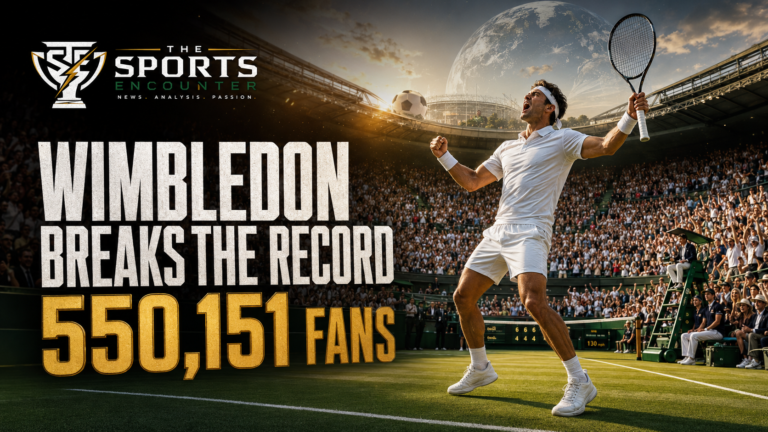
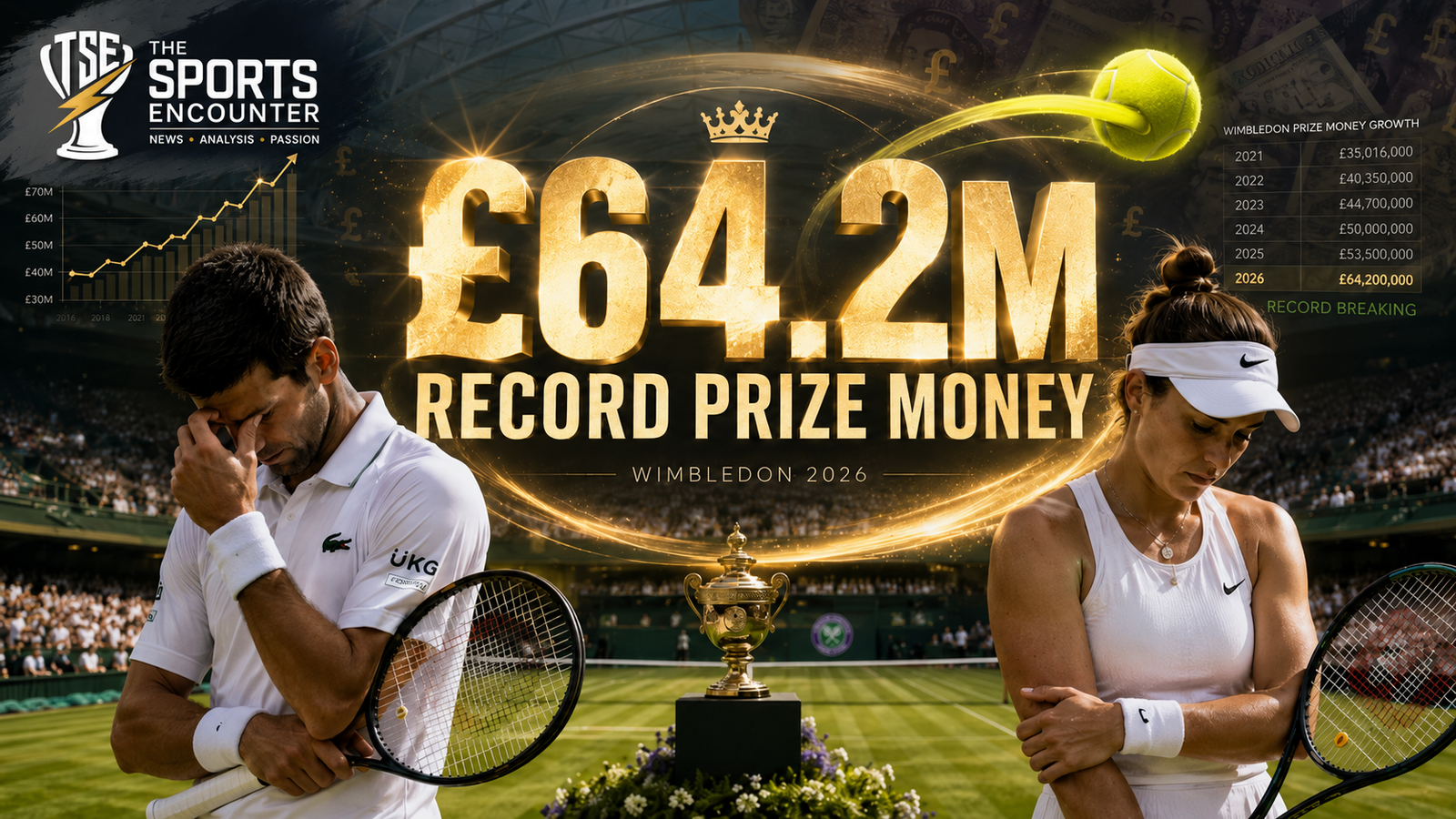
Wimbledon welcomed a record 550,151 spectators in 2026, proving that the grass-court Grand Slam could hold public attention even while competing with the FIFA World Cup. The tournament also generated 4.8 billion social media impressions, increased its social following by 11%, and delivered one of its strongest broadcasting performances.

The final attendance figure was 1,381 higher than the 548,770 spectators recorded in 2025. That represents growth of approximately 0.25%, a modest percentage that carries greater significance when viewed against the extraordinary competition for sporting attention during the fortnight.

Soccer’s biggest tournament was being played in North America, England made a deep run, and many of the World Cup’s most consequential matches overlapped with Wimbledon. The All England Club still filled its grounds, set three daily attendance records, sold merchandise in unprecedented quantities, and expanded its worldwide digital audience.

The numbers suggest Wimbledon has developed a commercial and cultural identity capable of surviving outside pressure. It remains a tennis tournament first, but its appeal now stretches into fashion, tourism, tradition, hospitality, digital culture, and the experience of spending a summer day at SW19.

Wimbledon 2026 Attendance And Audience Figures At A Glance

Category Wimbledon 2026 Result Why It Matters
Total attendance 550,151 A new Wimbledon record
Increase from 2025 1,381 spectators Growth despite the World Cup clash
Daily attendance records Days 7, 12 and 14 Demand remained strong throughout the fortnight
Social media impressions 4.8 billion Shows Wimbledon’s global digital reach
Digital unique users 138.5 million An 8% increase from 2025
Social following growth 11% Audience growth across Wimbledon platforms
Official hats sold 117,995 A tournament retail record
Official towels sold 59,687 Further evidence of merchandising demand
ESPN average audience 853,000 viewers An 18% year-over-year increase
Czech women’s final audience share 38.5% Shows the local impact of national representation

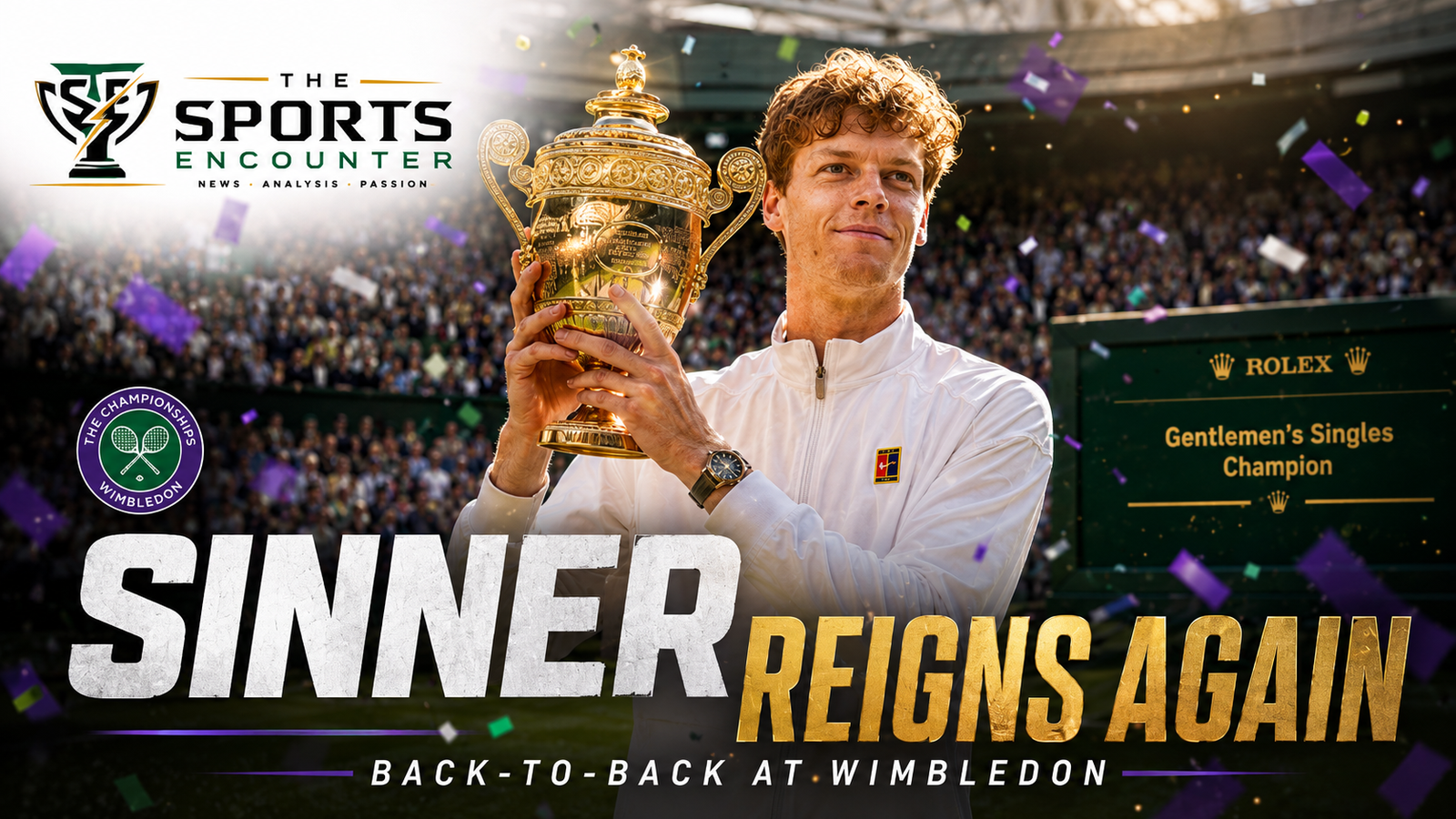
The official Wimbledon attendance and digital audience report confirmed that daily records were established on Days 7, 12, and 14. The last of those came when Jannik Sinner defeated Alexander Zverev in the gentlemen’s singles final.

Why Wimbledon’s Attendance Record Matters

Wimbledon is accustomed to demand exceeding available capacity. Its Centre Court seats, public ballot, debenture tickets, hospitality packages, and same-day Queue create several different routes into the grounds, yet entry remains limited by the physical size and character of the All England Club.

That makes year-to-year growth harder than it is for tournaments with larger sites, longer schedules, or qualifying events staged on the main grounds. Wimbledon takes place over 14 days, while the other Grand Slam tournaments can use additional days and greater site capacity to generate higher total attendance.

The 550,151 figure should therefore be judged within Wimbledon’s operating limits. The Championships did not suddenly add hundreds of thousands of seats. It extracted more attendance from an already crowded and highly controlled venue.

Wimbledon’s sustained demand also reflects the historical value of the tournament. Its champions are tied to almost 150 years of tennis history, from Spencer Gore in 1877 to the modern careers examined in The Sports Encounter’s guide to every Wimbledon men’s singles champion.

How Much Did Wimbledon Attendance Increase?

Attendance rose from 548,770 in 2025 to 550,151 in 2026. The increase of 1,381 spectators works out to approximately 0.25%.

That percentage might look small in isolation. However, Wimbledon was already operating near capacity and faced direct competition from the World Cup. Maintaining demand under those conditions would have represented a solid result. Setting a record made the achievement more meaningful.

How Wimbledon Survived The World Cup Clash

The 2026 FIFA World Cup created an unusual challenge. It commanded television schedules, news coverage, social media conversation, sponsorship campaigns, and public viewing spaces during the same period as Wimbledon.

Soccer and tennis do not always compete for identical audiences, but major global events inevitably fight for a limited supply of attention. Fans have only so much time to watch live sport, follow highlights, read coverage, and interact with social content.

Wimbledon protected its position through a combination of favorable conditions and strong sporting narratives.

Rain-Free Weather Kept The Schedule Moving

The 2026 Championships were the first rain-free Wimbledon since 2019. That reduced delays, limited scheduling disruption, and gave ticket holders more predictable access to live tennis.

Weather has always shaped the Wimbledon experience. Rain can suspend play on the outside courts, create congested schedules, and leave spectators waiting for action. Centre Court and No. 1 Court have retractable roofs, but most courts remain exposed.

Fourteen dry days allowed the tournament to maintain its rhythm. Fans who entered through the Queue had a better chance of seeing a full program, while broadcasters could carry matches without lengthy weather interruptions.

Why Dry Weather Helps Attendance

Wimbledon tickets are valuable even in poor conditions, but good weather improves the entire grounds experience. Spectators can move between outside courts, watch matches from Henman Hill, explore the retail areas, and remain on site longer.

The commercial effect reaches food, beverages, merchandise, and sponsor activations. A dry fortnight therefore supports far more than the match schedule.

Arthur Fery Gave British Fans A Home Story

British wildcard Arthur Fery became one of Wimbledon 2026’s most valuable sporting stories by reaching the men’s semifinals.

Fery’s run carried particular weight after several better-known British players were absent or eliminated early. His progress gave domestic fans a reason to remain emotionally invested deep into the second week.

The Wimbledon resident became the first British men’s wildcard to reach the semifinals in the Open Era. His campaign ended against Alexander Zverev, but the home interest he generated helped Wimbledon preserve momentum while England’s soccer team was also competing for the World Cup.

Fery entered the final stages alongside several established stars as the tournament asked whether Sinner, Zverev, or Fery could stop Novak Djokovic from pursuing an eighth Wimbledon championship.

Jannik Sinner And The Finals Sustained Global Interest

Jannik Sinner completed a successful title defense by beating Alexander Zverev in the men’s final. His complete campaign included an early five-set escape and victories over Djokovic and Zverev, adding competitive depth to a tournament already receiving exceptional crowd support.

The Italian’s path through the draw is examined in The Sports Encounter’s detailed account of Jannik Sinner’s road to Wimbledon 2026 glory.

Sinner’s victory on Day 14 coincided with one of the three daily attendance records. That was important because some sporting events experience softer demand once local contenders are eliminated. Wimbledon remained full through its final Sunday.

The doubles competitions also produced notable stories. Guo Hanyu and Kristina Mladenovic turned a new partnership into a championship run, defeating Gabriela Dabrowski and Luisa Stefani in the final. Their achievement is covered in our report on Guo and Mladenovic’s women’s doubles triumph.

Jelena Ostapenko and Marcelo Arevalo added another international storyline by recovering from a set down to claim the mixed doubles championship. Read the full account of how Ostapenko and Arevalo won the Wimbledon mixed doubles title.

All-Czech Women’s Final Delivered A Broadcast Breakthrough

The women’s singles final between Linda Noskova and Karolina Muchova became one of the clearest examples of how national representation can transform a tournament’s audience in a specific market.

Eurosport sub-licensed the match to Czech free-to-air broadcaster Prima. The final secured a 38.5% audience share in the Czech Republic and peaked at 900,000 viewers.

Those are substantial figures for a country with a population of roughly 11 million. They show why local access matters when players from the same country reach a Grand Slam final.

The matchup developed after Muchova saved match point against Coco Gauff and Noskova defeated Marta Kostyuk. Our semifinal analysis explains how Muchova and Noskova created the historic all-Czech final.

Their progress had already placed Czech women’s tennis at the center of Wimbledon’s second week. The Sports Encounter examined their respective styles, careers, and historical opportunity as Noskova and Muchova chased Czech Wimbledon history.

Why The Czech Audience Was So Large

Two Czech finalists guaranteed a national champion before the first ball was struck. Free-to-air coverage then removed the subscription barrier for viewers who might not ordinarily watch the full tournament.

The combination of national relevance, easy access, and Grand Slam stakes created an event larger than a normal tennis broadcast in the Czech Republic.

Wimbledon’s Digital Audience Reached Far Beyond Television

Wimbledon generated 4.8 billion social media impressions during the Championships. Its combined following grew by 11%, while 138.5 million unique users engaged with its digital platforms, an increase of 8% from 2025.

An impression does not mean 4.8 billion different people viewed Wimbledon content. It records the number of times content was displayed, meaning one user may account for several impressions across different posts and platforms.

The figure still demonstrates the frequency with which Wimbledon entered global digital feeds. Match clips, player reactions, fashion, celebrity appearances, archive footage, the Queue, and behind-the-scenes content allowed the tournament to remain visible between live matches.

This digital breadth helped Wimbledon compete with the World Cup. A fan could watch soccer on television while still encountering Wimbledon scores, highlights, photographs, and short videos on a phone.

ESPN Recorded Its Second-Most-Viewed Wimbledon

ESPN’s coverage across ABC, ESPN, and ESPN2 averaged approximately 853,000 viewers, an increase of 18% from 2025. It was the network’s second-most-viewed Wimbledon tournament.

The women’s championship match became ESPN’s most-watched Wimbledon ladies’ final, reinforcing the broader international success of the Noskova-Muchova matchup.

These results indicate that Wimbledon did not have to defeat the World Cup in overall reach. It needed to protect its position among tennis fans, casual sports audiences, and viewers drawn toward individual players or championship matches. The tournament achieved that objective.

Record Hat Sales Reveal Wimbledon’s Commercial Strength

Wimbledon sold 117,995 official hats during the fortnight, establishing another record. It also sold 59,687 towels, one of the tournament’s most recognizable merchandise items.

The hat figure works out to more than one for every five spectators who entered the grounds, although merchandise can also be purchased online and by international customers.

Wimbledon’s retail appeal is rooted in a visual identity that remains unusually consistent. The green and purple colors, white clothing, grass courts, strawberries and cream, towels, floral displays, and championship trophies are immediately recognizable.

That identity turns merchandise into a memory of the event. A hat or towel carries a connection to Wimbledon even when the buyer did not watch every match.

Commercial growth also supports the tournament’s ability to increase prize money, improve facilities, invest in digital products, and compete with other Grand Slam events. The challenge will be protecting accessibility as demand and premium experiences become more valuable.

What The Attendance Record Says About Wimbledon’s Future

Wimbledon’s 2026 performance offers evidence that heritage and modern audience development can work together.

The Queue remains one of the oldest and most distinctive ticketing traditions in global sport. At the same time, billions of social impressions and more than 138 million digital users show an event operating at a contemporary media scale.

That combination gives Wimbledon protection against changes in viewing behavior. Older fans may maintain lifelong television habits, while younger audiences can enter through short-form video, player personalities, fashion, or the social experience surrounding the grounds.

The attendance record also strengthens the All England Club’s argument that demand has exceeded the current site’s capacity. Expansion could create more public access, additional courts, and higher revenue, although it would need to preserve the atmosphere that makes Wimbledon distinctive.

The greatest lesson from 2026 is that Wimbledon did not depend on one champion or one market. Fery energized Britain, Noskova and Muchova delivered a major Czech audience, Sinner strengthened his international standing, and doubles champions extended interest across Asia, Europe, and the Americas.

Soccer owned much of the sporting conversation during the World Cup. Wimbledon still found 550,151 people willing to enter its gates and millions more willing to follow from elsewhere.

Frequently Asked Questions About Wimbledon 2026 Attendance

What Was The Wimbledon 2026 Attendance?

Wimbledon attracted a record 550,151 spectators across the 14 days of the 2026 Championships.

Did Wimbledon Break Its Attendance Record In 2026?

Yes. The 2026 attendance of 550,151 exceeded the 2025 total of 548,770 by 1,381 spectators.

Why Was Wimbledon Attendance So High In 2026?

The first rain-free Wimbledon since 2019 helped maintain the schedule and improve the grounds experience. Arthur Fery’s unexpected semifinal run also sustained British interest, while strong singles and doubles storylines kept audiences engaged through the second week.

Did The FIFA World Cup Affect Wimbledon 2026?

The World Cup competed with Wimbledon for television audiences, media coverage, and digital attention. Wimbledon nevertheless broke its attendance record, generated 4.8 billion social impressions, and delivered ESPN’s second-most-viewed Wimbledon coverage.

How Many Social Media Impressions Did Wimbledon 2026 Generate?

Wimbledon generated approximately 4.8 billion social media impressions during the 2026 Championships. Its social following increased by 11% across all platforms.

How Many People Watched Wimbledon 2026 On ESPN?

ESPN’s coverage across ABC, ESPN, and ESPN2 averaged approximately 853,000 viewers, an 18% increase from 2025. It became ESPN’s second-most-viewed Wimbledon tournament.

Who Won Wimbledon 2026?

Jannik Sinner defeated Alexander Zverev to win the 2026 men’s singles championship. Linda Noskova won the women’s singles title after defeating fellow Czech finalist Karolina Muchova.

Who Was Arthur Fery At Wimbledon 2026?

Arthur Fery was a British wildcard who reached the men’s singles semifinals. He became the first British men’s wildcard to reach that stage during the Open Era before losing to Alexander Zverev.

Was Wimbledon 2026 Affected By Rain?

No significant rain interruptions affected the tournament. Wimbledon 2026 was the first completely rain-free edition since 2019.

Which Days Set Wimbledon Attendance Records?

Wimbledon established new daily attendance records on Days 7, 12, and 14 of the 2026 Championships.

How Does Wimbledon Attendance Compare With Other Grand Slams?

Wimbledon’s total attendance is lower than some other Grand Slam tournaments because it has a smaller site, a 14-day main draw, and stages qualifying away from the main grounds. Its 550,151 attendance figure remains a tournament record.

How Many Hats Did Wimbledon Sell In 2026?

Wimbledon sold a record 117,995 official hats during the fortnight. The tournament also reported sales of 59,687 official towels.

Does Wimbledon Still Use The Queue For Tickets?

Yes. Wimbledon’s Queue continues to offer a limited number of same-day tickets. Tens of thousands of spectators used the system during the 2026 Championships.
Editorial Note: Attendance, broadcasting, retail, and digital figures were checked against Wimbledon’s official post-tournament report and information available on July 29, 2026.

The Sports Encounter’s Wimbledon coverage focuses on fixtures, results, player performance, match analysis, tournament history, fan stories, and the biggest developments from tennis’s most famous grass-court championship.

Sports Writer, Europe. Jovana Zlatova covers European sports for The Sports Encounter, with a focus on major events, match-day atmosphere, athlete stories, fan culture, and the human side of competition across the continent. Her coverage includes tennis, football, international tournaments, European sports culture, and feature-led reporting from the region. Coverage areas: European sports, tennis, football, major events, athlete stories, fan culture.

Breaking News

Duckett Returns to Cardiff and Leaves Welsh Fire Counting the Cost

Ben Duckett’s unbeaten 52 helped Trent Rockets chase 123 in only 72 balls after Mitchell Santner and Matt Henry dismantled Welsh Fire in Cardiff.

Published

on

Duckett Returns to Cardiff and Leaves Welsh Fire Counting the Cost

Welsh Fire had started The Hundred with two straight wins and the kind of confidence that made Cardiff feel like a difficult place for visiting teams. By the end of Wednesday afternoon, the home crowd had watched that early momentum disappear in only 72 balls.

Ben Duckett, once a Welsh Fire batter himself, returned to Sophia Gardens and guided Trent Rockets to a commanding nine-wicket victory on July 29. His unbeaten 52 provided the control, Finn Allen supplied the early force, and Tom Banton completed a chase that never developed into a contest.

Trent Rockets reached 126 for one with 28 balls remaining after restricting Fire to 122 for seven. The margin lifted the Rockets into second place in the early standings and pushed Welsh Fire down to fifth on net run rate, despite both teams holding eight points.

TL;DR

  • Trent Rockets defeated Welsh Fire by nine wickets with 28 balls remaining.
  • Welsh Fire scored 122 for seven from their 100 balls.
  • Ben Duckett won Player of the Match after making an unbeaten 52.
  • Finn Allen struck 33 from 19 balls and attacked during the decisive opening partnership.
  • Mitchell Santner took three wickets, while Matt Henry claimed two for 16.
  • Matthew Short top-scored for Welsh Fire with 36 from 26 balls.
  • Seven no-balls damaged Fire’s attempt to defend an already modest total.
  • Trent Rockets moved to second place, while Welsh Fire dropped to fifth on net run rate.

Welsh Fire vs Trent Rockets Match Scorecard

DetailInformation
CompetitionThe Hundred Men’s Competition 2026
MatchWelsh Fire vs Trent Rockets, Match 11
DateJuly 29, 2026
VenueSophia Gardens, Cardiff
TossTrent Rockets elected to bowl
Welsh Fire122/7 from 100 balls
Trent Rockets126/1 from 72 balls
ResultTrent Rockets won by nine wickets
Balls Remaining28
Player of the MatchBen Duckett, 52 not out
Welsh Fire Top ScorerMatthew Short, 36 from 26 balls
Trent Rockets Top BowlerMitchell Santner, 3/35
Turning PointWelsh Fire slipped from 62/2 to 72/5
Table ImpactRockets rose to second; Fire dropped to fifth

Matt Henry Breaks Welsh Fire’s Early Rhythm

Phil Salt had already shown his ability to manage difficult situations during Welsh Fire’s opening win over Southern Brave, when his unbeaten 47 completed a measured chase. That control never emerged against Trent Rockets.

Matt Henry removed Salt for five and then bowled Joe Root for the same score, leaving Fire at 26 for two after 24 balls.

The early wickets prevented Welsh Fire from using their powerful middle order on their own terms. Matthew Short responded with 36 from 26 deliveries, including one four and two sixes, but he spent much of his innings repairing damage rather than building toward a large total.

His 36 became the highest score of the innings. Once Lewis Gregory removed him with the score at 62, Welsh Fire lost the batter who had provided their clearest route toward 150.

The home side’s earlier victories had been built around stronger partnerships. Phil Salt had anchored the win over Southern Brave, while Rachin Ravindra’s 98 powered Fire past MI London. Trent Rockets denied them both elements by taking regular wickets and controlling the center of the innings.

Fans can revisit Salt’s disciplined opening performance in The Sports Encounter’s report on Welsh Fire’s win over Southern Brave.

Santner Turns Pressure Into a Collapse

The match shifted decisively after Short’s dismissal.

Mitchell Santner removed Rachin Ravindra for 16 and then struck again three balls later when Marco Jansen departed. Welsh Fire fell from 62 for two to 72 for five, losing three wickets for 10 runs during the most damaging phase of their innings.

Santner’s value came from his control as much as his wickets. He varied his pace, kept the ball away from the strongest hitting zones, and forced Welsh Fire’s batters to manufacture power.

Jordan Cox offered the only serious late response. He struck four sixes in a rapid 33 from 16 balls and briefly threatened to pull the total toward something defendable.

Santner ended that resistance as well. Cox drove another attacking shot toward deep extra cover, where Finn Allen completed the catch. The dismissal left Fire at 110 for six and removed their final realistic chance of producing a strong finish.

Santner completed his spell with three for 35. Henry’s two for 16 had created the early damage, while Santner controlled the phase where Fire needed to recover.

Welsh Fire eventually reached 122 for seven, a total that looked light even before Trent Rockets began their chase.

Finn Allen Removes the Pressure Immediately

Trent Rockets approached 123 as a target to attack rather than manage.

Duckett found an early boundary, but Allen supplied the acceleration. The New Zealand opener attacked Sam Cook for 17 runs during one five-ball set, hitting two sixes and a four.

That sequence carried Trent Rockets to 59 without loss after 30 balls and effectively removed the required rate from the match.

Allen scored 33 from 19 deliveries before Ravindra trapped him leg before. By then, the opening pair had added 75 runs and reduced the target to 48 from 75 balls.

The wicket offered Welsh Fire little encouragement. Tom Banton entered with complete freedom and struck an unbeaten 31 from only 15 deliveries.

Trent Rockets’ top order had already shown its scoring depth in a 418-run contest against Birmingham Phoenix, although Joe Clarke and Will Smeed’s efforts could not prevent a 10-run defeat. The Sports Encounter covered that remarkable match in its report on Birmingham Phoenix’s win over Trent Rockets.

This time, the Rockets’ batters had far less work to do.

Duckett Controls the Chase Against His Former Team

Duckett’s innings lacked the urgency of Allen’s opening assault, but it gave the chase structure.

The left-hander finished unbeaten on 52 from 45 balls, ensuring that Welsh Fire never found a second opening. He rotated the strike, punished width, and allowed Allen and Banton to attack around him.

His fifty carried added interest because Duckett previously represented Welsh Fire before joining Trent Rockets for the 2026 competition. Cardiff knew his range of scoring options. Welsh Fire’s bowlers still could not prevent him from controlling the chase.

Banton sealed the result with a boundary through long-off on ball 72.

The winning partnership reached 51 from 30 balls. Trent Rockets finished on 126 for one, with Duckett unbeaten and Banton scoring at more than two runs per delivery.

Welsh Fire’s Seven No-Balls Remove Any Hope of a Comeback

Defending 122 required accuracy, early wickets, and sustained scoreboard pressure.

Welsh Fire delivered none of the three consistently enough.

Their attack bowled seven no-balls during the innings, gifting Trent Rockets extra runs and extra deliveries. Lockie Ferguson overstepped twice during a costly set, while other bowlers also struggled with their front-foot discipline.

The errors mattered because they prevented Fire from building sequences of dot balls. Even when the bowlers found a good length, the additional deliveries allowed Allen and Duckett to reset the pressure.

The seven no-balls did not single-handedly decide the match. Welsh Fire had already posted too few runs. However, they removed whatever slim chance remained of forcing the Rockets into an uncomfortable chase.

Updated Men’s Hundred 2026 Points Table

PositionTeamPlayedWonLostPointsNet Run Rate
1Manchester Super Giants3218+1.194
2Trent Rockets3218+0.824
3MI London3218+0.183
4Sunrisers Leeds3218+0.032
5Welsh Fire3218-0.427
6Birmingham Phoenix2114-1.925
7Southern Brave3030-0.201
8London Spirit2020-0.275

The table shows how heavily the nine-wicket margin affected both teams.

Trent Rockets climbed to second because completing the chase in 72 balls significantly improved their net run rate. Welsh Fire remained level with four teams on eight points but fell to fifth after their NRR dropped below zero.

The early standings remain crowded. The format rewards only the top three teams, with the league leader moving directly into the final and the next two contesting the eliminator. Every major defeat can therefore carry consequences beyond the immediate loss.

Readers can track the wider competition through The Sports Encounter’s Cricket Hub and its report on Marsh and Brook’s record chase for Sunrisers Leeds.

What Comes Next for Welsh Fire and Trent Rockets?

Trent Rockets leave Cardiff with two consecutive victories after recovering from their opening loss against Birmingham Phoenix. Their bowling looks balanced, Duckett has found form, and Allen gives the top order immediate attacking power.

They next face Manchester Super Giants at Old Trafford on July 31, a match that could determine who controls the top of the table.

Welsh Fire travel to Edgbaston to face Birmingham Phoenix on August 1. Their first defeat does not undo an encouraging start, but the manner of it requires attention.

The batting unit lost too many wickets through the middle. The bowlers then compounded the problem with repeated no-balls.

Welsh Fire had looked like one of the competition’s most settled teams during victories over Southern Brave and MI London. Trent Rockets exposed how quickly that authority can disappear when early wickets, middle-order pressure, and poor discipline arrive together.

For more franchise-cricket reporting, readers can also explore The Sports Encounter’s coverage of Nicholas Pooran’s explosive Hundred opener and Will Jacks’ last-ball win over Southern Brave. Official fixtures and competition updates are available through The Hundred.

Final Takeaway

Trent Rockets won this match during two decisive periods.

Henry and Santner turned Welsh Fire’s innings into a struggle, reducing a promising 62 for two into 72 for five. Allen then attacked hard enough during the chase to ensure Duckett could manage the rest without risk.

Duckett earned the Player of the Match award and owned the finish. The deeper story belonged to the difference in discipline.

Trent Rockets bowled to a plan and chased with clarity. Welsh Fire lost wickets in clusters, posted 122, and then offered seven extra deliveries while trying to defend it.

In a league where five teams finished the day level on eight points, that combination carried a heavy price.

Continue Reading

Editor's Choice

10 Highest-Paid NHL Players in History After Macklin Celebrini Takes Top Spot?

Macklin Celebrini’s record $18.8 million annual cap hit has changed the NHL salary hierarchy. We rank the 10 highest-paid NHL players in history by AAV and examine the production, leverage, salary-cap growth, and risk behind hockey’s biggest contracts.

Miley Rumer | The Sports Encounter

Published

on

Macklin Celebrini stands at the top of a cinematic hockey podium as nine elite NHL stars acknowledge his record $18.8 million annual contract value.

Macklin Celebrini has become the highest-paid NHL player in history by average annual value after signing a five-year, $94 million extension with the San Jose Sharks. His record $18.8 million annual cap hit moves him ahead of Leo Carlsson, Kirill Kaprizov, Connor Bedard, Leon Draisaitl, and every established superstar who previously occupied hockey’s financial summit.

The contract provides a striking measure of Celebrini’s rise. San Jose selected him first overall in the 2024 NHL Draft. Two years later, before his 21st birthday, the Sharks valued him more highly per season than Connor McDavid, Auston Matthews, Nathan MacKinnon, and every other player signed during the NHL’s salary-cap era.

Celebrini earned that confidence with one of the greatest teenage seasons the league has seen. He produced 45 goals and 70 assists for 115 points in 82 games during 2025-26, setting a Sharks single-season scoring record. His 115 points ranked fourth in the NHL, while his 45 goals tied for fourth.

He became only the second player after Wayne Gretzky to record at least 40 goals and 70 assists in a season before turning 20. Celebrini also joined Gretzky and Sidney Crosby as the only teenagers to finish among the NHL’s top five scorers.

His five-year extension begins in 2027-28 and runs through 2031-32. Until then, he will complete the final season of his entry-level contract.

The record will immediately generate a familiar question among hockey fans: Who are the highest-paid NHL players in history?

The answer depends on the metric. This ranking uses average annual value, or AAV, because that is the amount assigned to a player’s contract against his team’s salary cap each season. Total contract value, yearly cash salary, signing bonuses, career earnings, and endorsements measure different forms of wealth.

For broader historical context, see The Sports Encounter’s evidence-based ranking of the 10 best NHL players ever and follow the latest news, analysis, trades, contracts, and postseason coverage through our NHL section.

Fast Answer: Who Is The Highest-Paid NHL Player Ever?

Macklin Celebrini is the highest-paid NHL player in history by average annual value. His five-year, $94 million extension with the San Jose Sharks carries an $18.8 million annual cap hit.

The deal surpassed the five-year, $90 million contract Leo Carlsson received after the Anaheim Ducks matched his offer sheet from the Philadelphia Flyers. Carlsson’s $18 million AAV had stood as the NHL record for only 20 days.

Kirill Kaprizov remains the owner of the richest NHL contract by total value. His eight-year, $136 million extension with the Minnesota Wild is worth $17 million per season.

Top 10 Highest-Paid NHL Players By AAV

Rank Player Team Contract AAV Contract Begins
1 Macklin Celebrini San Jose Sharks 5 years, $94 million $18.8 million 2027-28
2 Leo Carlsson Anaheim Ducks 5 years, $90 million $18 million 2026-27
3 Kirill Kaprizov Minnesota Wild 8 years, $136 million $17 million 2026-27
4 Connor Bedard Chicago Blackhawks 5 years, $75 million $15 million 2026-27
5 Leon Draisaitl Edmonton Oilers 8 years, $112 million $14 million 2025-26
6 Jack Eichel Vegas Golden Knights 8 years, $108 million $13.5 million 2026-27
7 Auston Matthews Toronto Maple Leafs 4 years, $53 million $13.25 million 2024-25
8 Nathan MacKinnon Colorado Avalanche 8 years, $100.8 million $12.6 million 2023-24
9 Connor McDavid Edmonton Oilers 8 years, $100 million $12.5 million 2018-19
10 Bowen Byram Chicago Blackhawks 6 years, $75 million $12.5 million 2027-28

Methodology: Players are ranked by the highest AAV attached to a signed NHL contract as of July 29, 2026. Future extensions are included once officially signed. Figures represent nominal US dollars and are not adjusted for inflation. Where two players share the same AAV, the earlier record-setting contract receives the higher position.

What Does AAV Mean In An NHL Contract?

Average annual value is the total value of an NHL contract divided by its length. Celebrini’s $94 million contract covers five seasons, producing an AAV of $18.8 million.

The AAV normally becomes the player’s annual salary-cap charge, even when the actual cash payments change from season to season. A player might receive a large signing bonus and a smaller base salary in one year, followed by a different payment structure in another. His cap hit generally remains constant.

This distinction explains why the “highest-paid NHL player” can have several technically correct answers:

  • Highest AAV: Macklin Celebrini at $18.8 million
  • Largest total contract: Kirill Kaprizov at $136 million
  • Highest salary in a particular season: Depends on base salary and bonuses due that year
  • Highest career earnings: Measures money earned across multiple completed contracts
  • Highest percentage of the cap: Compares a contract with the salary ceiling when it began

AAV offers the cleanest measurement of how much roster-building space a team has committed to one player. It does not reveal every detail of the financial arrangement, but it allows meaningful comparisons across active contracts.

Ranking The 10 Highest-Paid NHL Players In History

1. Macklin Celebrini, San Jose Sharks: $18.8 Million AAV

Celebrini’s extension represents a powerful combination of production, youth, positional value, and timing.

The Sharks are paying for the player he has already become and the seasons they believe are still ahead. Celebrini will be 21 when the extension starts and only 26 when it ends. San Jose therefore avoids carrying a record cap hit into the decline years that make many long-term superstar contracts dangerous.

His sophomore season gave the organization a compelling reason to move quickly. Celebrini scored 45 goals, recorded 70 assists, and reached 115 points in 82 games. No Sharks player had ever produced more points in one season.

He finished fourth in the NHL scoring race and fourth in Hart Trophy voting. Across his first 152 regular-season appearances, Celebrini accumulated 178 points. That output placed him on a historic development curve rather than a merely promising one.

The international evidence strengthened his case. Celebrini helped Canada win silver at the Milano Cortina 2026 Winter Olympics, led the tournament with five goals, and became the youngest Canadian NHL player to compete in the event.

The official NHL report on Celebrini’s contract confirmed the $94 million value, $18.8 million AAV, and his new position at the top of the league’s salary hierarchy.

Why San Jose Accepted The Record Price

Elite centers are the hardest foundational players to acquire. They drive play through the middle, influence both special teams, control possession, and give rebuilding organizations a player around whom every other decision can be organized.

Celebrini also gives San Jose a level of certainty that draft picks and free agents cannot offer. The Sharks know his game, character, preparation, and relationship with the market. Allowing negotiations to drift toward restricted free agency would have invited the risk of another aggressive offer sheet.

The five-year term provides Celebrini with another chance to negotiate while still in his prime. San Jose gains cost certainty through 2031-32, but it has not secured his entire peak. That is the price of avoiding an eight-year commitment at an even larger total cost.

2. Leo Carlsson, Anaheim Ducks: $18 Million AAV

For 20 days, Leo Carlsson owned the largest annual cap hit in NHL history.

The Philadelphia Flyers signed the Anaheim center to a five-year, $90 million offer sheet in July 2026. The Ducks faced a stark decision: match the $18 million AAV or accept four first-round draft picks as compensation.

Anaheim matched.

Carlsson was the second overall selection in the 2023 draft and had produced 141 points across his first 201 NHL games when the offer sheet arrived. During 2025-26, he established career highs with 29 goals, 38 assists, and 67 points in 70 games.

Those numbers did not resemble the traditional statistical profile of the highest-paid player in hockey. The price was shaped by leverage. Philadelphia had enough cap room and draft capital to force Anaheim into a decision, while the Ducks could not easily explain losing a 21-year-old franchise center during a rebuild.

Our earlier analysis of Anaheim’s decision to match the richest NHL offer sheet explains how Carlsson’s contract shifted bargaining power toward young restricted free agents.

Celebrini’s subsequent extension makes the Carlsson deal look less isolated. It may have been the first clear signal that the NHL’s new economic cycle would reward age, upside, and negotiating leverage as aggressively as established production.

3. Kirill Kaprizov, Minnesota Wild: $17 Million AAV

Kaprizov’s eight-year, $136 million extension remains the largest contract in NHL history by total value.

Minnesota signed him in September 2025, after he reportedly rejected an earlier offer worth $128 million. The final agreement added $8 million and established records for both total value and AAV at the time.

Kaprizov entered the NHL later than most North American superstars, debuting in 2020-21 after developing in Russia. He immediately won the Calder Trophy and became the most dangerous offensive player in Wild history.

He had 386 points in 319 regular-season games through 2024-25, including 56 points in 41 games during an injury-shortened campaign. His combination of goal scoring, puck protection, lateral movement, and creativity made replacing him almost impossible.

The contract also reflected Minnesota’s market reality. True franchise forwards rarely reach unrestricted free agency, and the Wild could not assume another player of Kaprizov’s caliber would choose Minnesota if he left.

Unlike Celebrini and Carlsson, Kaprizov received the maximum eight-year term available for a player re-signing with his existing club. The benefit is long-term control. The risk is that the contract runs deep into his 30s.

4. Connor Bedard, Chicago Blackhawks: $15 Million AAV

Connor Bedard signed a five-year, $75 million extension with Chicago in July 2026, securing a $15 million annual cap hit through 2030-31.

The first overall pick in the 2023 NHL Draft led the Blackhawks in scoring during each of his first three seasons. He produced personal bests of 30 goals, 45 assists, and 75 points in 69 games during 2025-26 despite playing for a club that remained near the bottom of the standings.

Bedard’s contract was negotiated while he recovered from shoulder surgery, adding a physical-risk component to Chicago’s decision. His importance to the franchise nevertheless extended beyond one injury or one season.

He remains the centerpiece of the Blackhawks’ rebuild, their most marketable player, and their best chance to create another championship era after the retirements and departures of the Patrick Kane and Jonathan Toews generation.

Chicago chose the same five-year structure later used by San Jose with Celebrini. It controls several prime seasons but gives Bedard an opportunity to return to the market before age 27.

The Blackhawks’ wider transition can be understood through our feature on Patrick Kane’s return to Chicago and our career tribute to Jonathan Toews.

5. Leon Draisaitl, Edmonton Oilers: $14 Million AAV

Leon Draisaitl’s eight-year, $112 million extension became the NHL’s highest-AAV contract when Edmonton announced it in September 2024. The deal began in 2025-26 and runs through 2032-33.

Draisaitl had already assembled a record worthy of an enormous commitment. He won the Hart Trophy, Art Ross Trophy, and Ted Lindsay Award in 2019-20, repeatedly crossed the 100-point mark, and became one of the most productive playoff performers of his generation.

His partnership with McDavid gives Edmonton the strongest one-two center combination in hockey. Draisaitl can play alongside McDavid, run his own line, score from difficult angles, control the power play, and punish opponents who build their entire defensive plan around Edmonton’s captain.

The contract carried more conventional risk than the deals given to Celebrini, Carlsson, and Bedard. Draisaitl was an established veteran signing through his 30s, meaning Edmonton accepted potential decline years to preserve a championship window that already existed.

For a team built to win now, losing Draisaitl would have damaged the roster more severely than paying a premium to keep him.

6. Jack Eichel, Vegas Golden Knights: $13.5 Million AAV

Jack Eichel’s eight-year, $108 million extension with Vegas begins in 2026-27.

His career offers one of the clearest examples of how playoff achievement can reshape contractual value. Eichel arrived in Vegas through a major trade with Buffalo in 2021. Less than two years later, he led the 2023 postseason with 26 points in 22 games as the Golden Knights won their first Stanley Cup.

He later posted a career-high 94 points in 2024-25 and became a Lady Byng Trophy finalist. Through that season, Eichel had 608 points in 616 regular-season games.

Vegas values stars who can survive the hardest playoff matchups. Eichel has already demonstrated that he can drive offense, defend against elite centers, and carry a top line through four postseason rounds.

The $13.5 million cap hit looked substantial when signed. Carlsson and Celebrini have since pushed it well down the ranking, illustrating how quickly a contract can move from record territory toward market value during a rising-cap period.

Eichel’s importance was visible throughout Vegas’ run to the 2026 Stanley Cup Final, which ended with the Carolina Hurricanes defeating the Golden Knights in Game 6.

7. Auston Matthews, Toronto Maple Leafs: $13.25 Million AAV

Auston Matthews signed a four-year, $53 million extension in August 2023, moving ahead of Nathan MacKinnon as the NHL’s highest-paid player by AAV at the time.

The shorter term was as important as the salary. Toronto secured Matthews through 2027-28 but could not obtain the eight years of control normally preferred for a franchise player.

Matthews possessed extraordinary leverage. He was a first overall pick, a Hart Trophy winner, and the greatest pure goal scorer in Maple Leafs history. His 69-goal season in 2023-24 produced the NHL’s highest single-season total since Mario Lemieux scored 69 in 1995-96.

Toronto’s decision reflected the difficulty of separating a player’s contractual value from his importance to the organization. Matthews drives ticket demand, national television interest, merchandise sales, sponsorship appeal, and the competitive credibility of hockey’s most scrutinized market.

The central question has always involved postseason conversion. Toronto has repeatedly entered the playoffs with elite offensive talent but struggled to turn regular-season quality into a sustained Stanley Cup run.

Matthews’ deal therefore sits at the intersection of individual excellence and team pressure. His annual value is supported by historic goal scoring. Its ultimate legacy will be influenced by what Toronto achieves while he occupies such a large share of the cap.

8. Nathan MacKinnon, Colorado Avalanche: $12.6 Million AAV

Nathan MacKinnon signed an eight-year, $100.8 million extension in September 2022. When it began in 2023-24, the $12.6 million AAV moved him slightly above McDavid.

The timing was perfect for MacKinnon. Colorado had just won the 2022 Stanley Cup, while its franchise center had spent years outperforming a previous contract carrying a $6.3 million cap hit.

MacKinnon’s next deal corrected that imbalance.

He followed with a 140-point season in 2023-24, setting an Avalanche record and winning the Hart Trophy. His speed through the neutral zone, shot generation, puck carrying, and playoff aggression made the contract appear reasonable almost immediately.

The Avalanche also secured the full eight-year term. That allowed the organization to plan around a fixed cap charge rather than reopen negotiations during MacKinnon’s remaining prime.

His deal demonstrates why contract value cannot be judged from rank alone. MacKinnon has fallen from first to eighth without becoming a less valuable player. The market and salary ceiling simply moved around him.

9. Connor McDavid, Edmonton Oilers: $12.5 Million AAV

Connor McDavid signed his eight-year, $100 million extension in July 2017. It began in 2018-19 and immediately became the NHL’s largest annual cap hit.

Years later, it may be remembered as one of the strongest superstar contracts of the salary-cap era.

McDavid continued to separate himself from the league after signing it. Through 2025-26, he had accumulated 409 goals, 811 assists, and 1,220 points in 794 regular-season games. His six Art Ross Trophies, three Hart Trophies, five Ted Lindsay Awards, and 2024 Conn Smythe Trophy place him among the greatest offensive players hockey has produced.

His $12.5 million AAV now sits below contracts awarded to younger players who have not approached his career accomplishments. That is partly a consequence of cap growth and partly evidence of the value Edmonton secured by signing him for eight seasons.

McDavid’s contract accounted for approximately 15.7% of the salary ceiling when it began. Celebrini’s extension will consume a larger dollar amount but a potentially similar share of a much higher cap.

This is why cross-era comparisons require more than nominal salary. McDavid’s deal was enormous for its economic environment, even if later cap growth has pushed him down the dollar ranking.

10. Bowen Byram, Chicago Blackhawks: $12.5 Million AAV

Bowen Byram’s six-year, $75 million extension gives this list its only defenseman.

The contract begins in 2027-28 and will run through 2032-33. Chicago acquired Byram from Buffalo before making him the highest-paid defenseman by AAV under the signed extension market at the time.

Byram recorded a career-high 42 points during 2025-26. His skating, transition play, age, and ability to handle important minutes made him particularly valuable to a Blackhawks team trying to build a competitive roster around Bedard.

The $12.5 million cap hit represents a significant projection. Byram has shown top-pair ability, but the contract pays him to become a durable, season-shaping defenseman rather than merely remain a productive puck mover.

Chicago will eventually carry $27.5 million in combined AAV for Bedard and Byram. That is a major investment in two players expected to define the franchise’s next competitive window.

The structure shows how rebuilding teams use cap space. Rather than waiting until every piece is established, Chicago is attempting to secure cornerstone talent before the salary ceiling climbs further.

How Celebrini Passed Carlsson, Kaprizov, And McDavid

Celebrini’s new record reflects more than one exceptional season. Three league-wide forces created the conditions for an $18.8 million AAV.

A Rapidly Rising NHL Salary Cap

The NHL salary ceiling increased from $88 million in 2024-25 to $95.5 million in 2025-26 and then to a record $104 million for 2026-27. The individual maximum salary for 2026-27 is $20.8 million.

Further growth was projected for 2027-28, the season in which Celebrini’s extension begins. Rising national media revenue, stronger attendance, increased sponsorship activity, and improving league-wide income have created more room for teams to pay elite players.

The commercial momentum is supported by audience growth. The 2026 Stanley Cup Final delivered the NHL’s strongest championship-round television audience in seven years.

Young Stars Are Choosing Five-Year Deals

Celebrini, Carlsson, and Bedard all signed five-year contracts. That pattern gives teams meaningful control while allowing the players to negotiate again in their mid-20s.

Players and agents understand that the cap could be substantially higher by 2030 or 2031. An eight-year agreement may provide security, but it can also trap a superstar below market value during the final seasons.

Teams accepting five-year contracts avoid paying for a player’s late 30s. The cost is another expensive negotiation arriving much sooner.

Offer-Sheet Pressure Changed The Market

Philadelphia’s $90 million offer sheet to Carlsson demonstrated that cap-rich clubs were prepared to attack another team’s restricted free agent.

San Jose could negotiate with Celebrini one year before his entry-level contract expired. Waiting would have exposed the Sharks to the same pressure Anaheim faced.

The $18.8 million AAV removed uncertainty, protected the franchise’s most valuable asset, and prevented another team from dictating the structure of the negotiation.

Are Today’s NHL Players Really The Highest-Paid Ever?

In nominal dollars, yes. Adjusting for inflation or salary-cap percentage produces a more complicated historical picture.

Joe Sakic received approximately $16.45 million during the 1997-98 season after Colorado matched a front-loaded offer sheet from the New York Rangers. Sergei Fedorov collected roughly $14.5 million in 1998-99 under another heavily structured offer sheet. Mario Lemieux earned approximately $11.35 million in 1996-97.

Those payments occurred before the modern salary cap was introduced in 2005. Teams operated under different rules, contract structures, and financial conditions.

Wayne Gretzky, Lemieux, Sakic, Fedorov, Jaromir Jagr, Paul Kariya, and other stars could lead a season’s cash-salary rankings without carrying a modern AAV-based cap charge.

The cap era introduced a harder strategic question: How much of a fixed payroll should one player occupy?

A $12.5 million McDavid cap hit in 2018-19 represented approximately 15.7% of the $79.5 million ceiling. Celebrini’s $18.8 million extension may represent a comparable or moderately larger proportion when it starts, depending on the confirmed 2027-28 cap.

Celebrini owns the nominal AAV record. Historical purchasing power and cap-share comparisons can produce different conclusions about which contract was most financially dominant for its era.

Largest NHL Contracts By Total Value

AAV determines this ranking, but total contract value tells another important story.

Player Contract Value Length AAV
Kirill Kaprizov $136 million 8 years $17 million
Alex Ovechkin $124 million 13 years Approximately $9.54 million
Shea Weber $110 million 14 years Approximately $7.86 million
Jack Eichel $108 million 8 years $13.5 million
Nathan MacKinnon $100.8 million 8 years $12.6 million
Connor McDavid $100 million 8 years $12.5 million
Macklin Celebrini $94 million 5 years $18.8 million
Leo Carlsson $90 million 5 years $18 million

Ovechkin and Weber signed before the league imposed its current limits on contract length. Those agreements used extended terms to distribute the cap charge over many seasons.

Modern rules generally limit a player re-signing with his current team to eight years and a player joining another team to seven. New collective bargaining rules will further shape future contract length and structure.

Which Highest-Paid NHL Contract Carries The Most Risk?

Carlsson’s $18 million AAV may carry the greatest performance-projection risk. His career high of 67 points was excellent for a 21-year-old center, but it remained far below the production normally associated with the league’s largest salary.

Anaheim paid partly because an external offer sheet removed its negotiating control.

Byram’s deal carries a similar projection element. Chicago is betting that his best seasons lie ahead and that he will grow into the responsibilities attached to a $12.5 million defenseman.

Kaprizov, Draisaitl, Eichel, and MacKinnon carry more age-related risk because their agreements extend into their 30s. These players have provided stronger performance evidence, but longer contracts can become difficult if health or production declines.

Celebrini’s contract balances those concerns unusually well. His AAV is the highest, but the five-year term covers only young prime seasons. The main danger is that one historic season may not become his permanent standard.

Which Contract Could Become The Best Value?

McDavid’s current deal has already delivered remarkable value. He remained the league’s defining player while newer contracts pushed his $12.5 million cap hit outside the top eight.

MacKinnon’s agreement could follow a similar path if the cap continues rising and he sustains elite production. Draisaitl’s $14 million AAV may also age well if his playoff dominance continues.

Celebrini has a path toward becoming an excellent value despite setting the salary record. If the cap reaches the levels anticipated later in the decade and he develops into a consistent Hart Trophy winner, $18.8 million may no longer look extraordinary by 2030.

That possibility explains why San Jose acted now. Record contracts rarely remain records for long during a period of sustained revenue growth.

What Celebrini’s Deal Means For The Next NHL Superstars

Every new record becomes evidence in the next negotiation.

Young centers approaching restricted free agency can point toward Carlsson and Celebrini. Established scorers can compare their production with Kaprizov’s $17 million AAV. Defensemen can use Byram’s $12.5 million extension as a new benchmark.

The most consequential future negotiation belongs to McDavid. His $100 million contract expires after the 2025-26 season under its original timetable, and any subsequent agreement has the potential to reset the market again depending on his contractual status and the final league calendar.

A player with McDavid’s production, awards, playoff record, and commercial importance could reasonably argue that the market’s top figure should return to him. The salary ceiling would determine how far Edmonton or another team could go.

Celebrini’s record therefore may be temporary. Its greater importance lies in establishing that an NHL team is now willing to devote nearly $19 million in annual cap space to one player.

Final Verdict: The NHL Has Entered Its $20 Million Era

Macklin Celebrini is the highest-paid NHL player in history by AAV because his career reached the right point at the right time.

He delivered 115 points as a teenager, became the face of the Sharks, excelled internationally, and approached restricted free agency while the league’s salary cap was rising at unprecedented speed. Carlsson’s offer sheet provided the immediate market comparison. San Jose then went $800,000 higher per season.

The contract is a considerable bet, but it is not a reckless one. Celebrini’s extension covers ages 21 through 26, the period in which elite forwards often produce their most dynamic hockey. The Sharks are paying for premium seasons without accepting the aging risk attached to a decade-long agreement.

His rise also captures the NHL’s changing economics. McDavid, MacKinnon, Matthews, and Draisaitl have not lost their standing because younger players passed them in salary. Their contracts were negotiated under lower ceilings and different market conditions.

Celebrini sits first today. Carlsson and Kaprizov follow. Bedard has joined the $15 million tier, while the next wave of extensions could carry hockey beyond $20 million per year.

The NHL’s financial ceiling is moving upward. Its best young players have noticed, and teams determined to keep them are beginning to pay accordingly.

For more reporting on the sport’s business growth and competitive landscape, read our analysis of the $1.75 billion Pittsburgh Penguins ownership deal.

Frequently Asked Questions About The Highest-Paid NHL Players

Who Is The Highest-Paid NHL Player In History?

Macklin Celebrini is the highest-paid NHL player in history by average annual value. His five-year, $94 million extension with the San Jose Sharks carries an $18.8 million annual cap hit beginning in 2027-28.

Who Has The Biggest Contract In NHL History?

Kirill Kaprizov has the largest NHL contract by total value. His eight-year extension with the Minnesota Wild is worth $136 million and carries a $17 million AAV.

How Much Does Macklin Celebrini Make Per Year?

Celebrini’s new contract has an average annual value of $18.8 million. The cap hit does not necessarily mean he will receive exactly $18.8 million in cash every season because base salary and signing bonuses can vary.

When Does Macklin Celebrini’s New Contract Begin?

Celebrini’s five-year extension begins with the 2027-28 NHL season. He remains on his entry-level contract for 2026-27 and is signed through 2031-32.

Is Macklin Celebrini Paid More Than Connor McDavid?

Yes, by AAV. Celebrini’s extension carries an $18.8 million cap hit, while McDavid’s current listed contract carries a $12.5 million cap hit. McDavid’s agreement was negotiated in 2017 when the NHL salary cap was much lower.

Who Are The Top Five Highest-Paid NHL Players?

By signed-contract AAV as of July 29, 2026, the top five are Macklin Celebrini at $18.8 million, Leo Carlsson at $18 million, Kirill Kaprizov at $17 million, Connor Bedard at $15 million, and Leon Draisaitl at $14 million.

What Does AAV Mean In The NHL?

AAV means average annual value. It is calculated by dividing the total value of a contract by its number of seasons. AAV generally determines how much the contract counts against a team’s salary cap each year.

Who Is The Highest-Paid NHL Defenseman?

Bowen Byram’s signed six-year, $75 million extension carries a $12.5 million AAV beginning in 2027-28, placing him first among defensemen under the future extension market reflected in this ranking.

Who Is The Highest-Paid NHL Goalie?

Igor Shesterkin’s eight-year, $92 million contract with the New York Rangers carries an $11.5 million AAV, the highest annual cap hit for a goaltender under the active contract market preceding the 2026-27 season.

Why Are NHL Salaries Increasing So Quickly?

NHL salaries are rising because the league’s salary cap has increased alongside revenue from broadcasting, streaming, sponsorships, attendance, and other commercial sources. The cap reached $104 million for 2026-27, giving teams more room to retain elite players.

Can An NHL Player Earn More Than $20 Million Per Year?

Yes. The maximum individual salary is tied to a percentage of the league’s salary cap. With the 2026-27 ceiling at $104 million, the maximum is $20.8 million. No player in this ranking has reached that limit, but future contracts could cross $20 million in AAV.

Do NHL Players Receive Their Entire Contracts If They Are Injured?

NHL contracts are generally guaranteed, although exact payments and cap treatment depend on the contract, insurance, long-term injured reserve rules, buyouts, termination provisions, and the collective bargaining agreement.

Are NHL Contract Figures Reported In US Or Canadian Dollars?

NHL contract values and salary-cap figures are reported in US dollars, including contracts signed by players with Canadian teams.

Who Was The Highest-Paid NHL Player Before Macklin Celebrini?

Leo Carlsson briefly held the record with an $18 million AAV after the Anaheim Ducks matched his five-year, $90 million offer sheet from Philadelphia. Celebrini surpassed him 20 days later.

Does The Highest-Paid NHL Player Always Have The Highest Salary In Cash?

No. AAV measures the annual cap charge. Actual yearly earnings can differ because contracts may contain uneven base salaries and signing bonuses. A player with a lower AAV can receive more cash during a particular season.

Editorial Note: Contract values, terms, cap hits, and player statistics were checked against official league and team announcements and current reports available on July 29, 2026. Future contract cap hits are included after the agreements have been officially signed.

The Sports Encounter’s NHL coverage focuses on match reports, player performance, trades, contracts, postseason analysis, hockey history, fan impact, and the biggest stories shaping the league.

Continue Reading

Editor's Choice

Why FIFA Selling Stakes in the World Cup Isn’t a Good Idea

FIFA plans to raise up to $4.2 billion by selling minority stakes in a new commercial company valued at $20 billion. The proposal could expand global football funding, but critics fear private investment may increase pressure for higher ticket prices, more matches and aggressive World Cup commercialization.

Ruben Santos | The Sports Encounter

Published

on

Cinematic illustration of a global football trophy caught between passionate fans and private investors, symbolizing FIFA’s proposed $20 billion World Cup commercial stake sale.

FIFA wants to raise up to $4.2 billion by allowing private investors to acquire minority stakes in a new commercial company valued at $20 billion. The money could transform football development across 211 member associations. It could also place the World Cup’s commercial future under pressures that football may struggle to reverse.

Former FIFA President Sepp Blatter has accused the organization he once led of risking the soul of football.

His warning followed FIFA’s proposal to establish FIFA Forward Enterprise, or FFE, as a new subsidiary combining the governing body’s commercial rights with the operational delivery of its tournaments.

Broadcasting, sponsorship, ticketing, licensing and other commercial activities connected to the World Cup and FIFA competitions would sit inside the new company. FIFA would retain majority ownership, but carefully selected investors could purchase non-controlling stakes totaling up to 20%.

At FIFA’s announced initial valuation of $20 billion, the proposed capital raise could produce as much as $4.2 billion.

FIFA says the money would help expand global football development funding beyond $10 billion over four years. Each member association could gain access to considerably greater support for infrastructure, coaching, national teams, grassroots soccer, domestic competitions and women’s football.

The development argument carries weight. Many national associations operate without the stadiums, academies, professional structures and reliable funding available in Europe’s wealthiest football economies.

The controversy lies in how FIFA intends to fund that development.

Selling part of a company built around the World Cup would introduce a new group of private shareholders whose financial returns depend on the value of FIFA’s commercial assets rising. Those investors may lack formal authority over tournament formats or football regulations, but their economic interests would become attached to the game’s most valuable global competition.

This is why the dispute extends beyond another political fight between FIFA and UEFA. It concerns who should own the commercial value of the World Cup, how that value should be used and whether private capital can remain separated from decisions affecting supporters, players, clubs and national teams.

Readers can follow the tournament’s wider sporting and commercial legacy through The Sports Encounter’s dedicated FIFA World Cup 2026 coverage hub.

What Is FIFA Forward Enterprise?

FIFA Forward Enterprise would be a FIFA-owned commercial subsidiary responsible for bringing together two sides of the organization’s business:

  • Commercial rights, including broadcasting, sponsorship, licensing, ticketing and hospitality
  • Operational delivery of FIFA tournaments and related events

The proposed structure would include the men’s and women’s World Cups, youth tournaments and other FIFA-controlled competitions.

According to the official FIFA announcement on expanded development funding, the governing body would retain sole control of FFE and exclusive authority over football governance, competition formats, the international calendar and all regulatory and sporting decisions.

FIFA Forward Enterprise At A Glance

Key Issue FIFA’s Proposal
New company FIFA Forward Enterprise
Initial equity valuation $20 billion
External ownership Up to 20% in minority, non-controlling interests
Potential capital raise Up to $4.2 billion
FIFA’s stated purpose Expand worldwide football development funding
Member associations 211
Proposed funding per association Increase from $8 million to $20 million for the 2027-30 cycle
Control of sporting decisions FIFA says it would retain exclusive authority
Approval requirement Majority support from member associations and approval from the FIFA Council

What The New Company Would Control

FFE would sit close to the most profitable layer of international soccer. Its value would come from the global demand for FIFA competitions and the rights surrounding them.

That could include television and streaming packages, sponsorship inventory, ticketing, premium hospitality, licensing, merchandise, gaming, archive footage, digital products and future commercial formats that do not yet exist.

FIFA would still write the rules. FFE would benefit financially from the competitions created under those rules.

Why FIFA Wants Private Investment

FIFA President Gianni Infantino argues that football’s global popularity has not produced equitable development.

European leagues, UEFA competitions, major clubs, broadcasters and commercial partners generate enormous annual revenues. Many associations outside Europe operate in a different financial environment.

Some lack modern stadiums, coaching facilities, professional leagues, youth academies, women’s competitions and reliable funding for national teams.

FIFA proposes increasing funding available to each member association from $8 million to $20 million during the 2027-30 cycle. This support could finance:

  • Training grounds and stadium infrastructure
  • National-team preparation
  • Coaching and referee education
  • Grassroots programs
  • Women’s and youth football
  • Domestic leagues and cup competitions
  • Administrative and technical development

For a wealthy federation, an additional $12 million represents helpful income. For a smaller association in Africa, Asia, the Caribbean or Oceania, it could reshape the national football system.

That explains why FIFA’s proposal may receive substantial support. Each of FIFA’s 211 associations has one vote, regardless of its population, sporting performance or commercial strength.

The development case deserves serious consideration. Football’s wealth remains unevenly distributed, and calls for global solidarity should not automatically be dismissed as an attack on Europe.

The weakness lies in the funding mechanism. FIFA appears ready to exchange part of the long-term value of its strongest commercial assets for immediate capital.

Why Investors Would Enter Without Traditional Dividends

Reports surrounding the proposal indicate that investors may not receive conventional dividends. That could appear to remove the fear that World Cup income will flow directly into private hands.

It does not remove the need for investors to earn a return.

Outside shareholders could profit by selling their holdings later at a higher valuation. Their success would therefore depend on FFE becoming substantially more valuable.

If the company’s valuation must rise sharply, its leadership will need to increase revenue, improve margins, secure more valuable contracts or persuade future buyers that FIFA’s commercial opportunities have expanded.

Where Could That Commercial Growth Come From?

  • Higher World Cup ticket prices
  • Expanded hospitality programs
  • More sponsorship categories
  • New streaming and subscription products
  • More valuable broadcast contracts
  • Increased digital licensing
  • Additional FIFA tournaments
  • Expanded competition formats
  • More matches in existing tournaments
  • Premium and dynamic ticket pricing
  • Greater control over highlights, statistics and match footage
  • New gaming, data and artificial-intelligence products

Some of these ideas could improve how supporters experience FIFA competitions. Others could make the World Cup more expensive, crowded and commercially intrusive.

A minority investor does not need the authority to change the tournament directly. The need to protect and increase the company’s valuation can gradually influence the priorities of its leadership.

Minority Ownership Can Still Produce Influence

FIFA has emphasized that any external stake would be non-controlling. Legally, that distinction matters. Shareholders owning 20% cannot outvote FIFA if the governing body retains the remaining 80%.

Commercial influence, however, does not depend entirely on voting control.

Major investors can negotiate board representation, access to financial information, consultation rights, contractual protections and consent requirements for certain corporate decisions.

The full shareholder agreement has not been published. Football’s stakeholders therefore do not know:

  • Whether investors would receive board seats
  • What information they could access
  • Whether they could block certain financial transactions
  • How future stakes would be valued
  • Whether FIFA could repurchase the shares
  • Whether investors could sell their holdings to other parties
  • Which decisions would require investor consultation
  • How conflicts between FIFA’s sporting mission and FFE’s commercial interests would be resolved
  • What would happen if a sporting decision reduced FFE’s commercial value

A public promise that investors will have no operational role cannot replace detailed governance documents. An investment group committing billions of dollars will seek legally enforceable protections.

Once those protections exist, the investor relationship becomes relevant to how FFE is governed, even if FIFA retains formal control.

Why The Consultation Process Has Caused Alarm

The proposal affects national associations, confederations, clubs, players, supporters, broadcasters and host countries. It could shape how FIFA competitions are managed and monetized for decades.

Several influential football organizations nevertheless said they learned about it through media reports.

Concacaf expressed concern about the lack of due process. The Asian Football Confederation accepted FIFA’s right to explore new funding models but said an initiative of this scale required meaningful consultation.

England’s Football Association said it had been unaware of the proposal. French Football Federation President Philippe Diallo also said the plan raised questions and that his organization had not been properly informed.

European Football Clubs, representing more than 850 clubs, said it learned about FFE through the media. FIFPRO Europe raised concerns from the player perspective, while several national federations expressed opposition or serious reservations.

Together, UEFA, the AFC and Concacaf represent 143 of FIFA’s 211 member associations. Their criticism does not mean every federation within those regions opposes FFE. It shows that a major commercial proposal reached an advanced stage without broad collective scrutiny.

The institutional struggle is examined in greater depth in The Sports Encounter’s report on whether the FIFA and UEFA conflict could trigger a global soccer revolt.

The Funding Deadline Creates A Governance Concern

International reports indicate that member associations have been asked to express support by September 19, 2026, if they want access to the proposed financial benefits from January 2027.

FIFA’s public statement says funding available to each association could rise from $8 million to $20 million for the 2027-30 cycle. It also refers to an opportunity for associations to participate in a program offering access to up to $20 million in one-off capital.

The final terms must distinguish recurring development support from any one-time financial distribution.

Many FIFA members depend heavily on governing-body funding. Asking those associations to evaluate a permanent structural transaction while presenting a substantial immediate benefit creates an obvious incentive.

Smaller federations have every right to prioritize facilities, coaching, player development and national-team funding. Their votes should not be treated as less legitimate because their financial needs are greater.

However, they need sufficient time and complete documentation to calculate what football may surrender over several decades in exchange for money available now.

Who Could Invest In FIFA Forward Enterprise?

FIFA says Thrive Eternal is expected to lead the proposed investor group.

Thrive Eternal is a permanent-capital investment initiative founded by Joshua Kushner. It focuses on long-term interests in franchises and cultural institutions and has acquired a minority position in Major League Baseball’s San Francisco Giants.

Joshua Kushner is the brother of Jared Kushner, the son-in-law of US President Donald Trump. FIFA and international reports have said Jared Kushner is not a proposed investor.

Greg Maffei, the former president and chief executive of Liberty Media, has served as a commercial adviser. His experience includes Liberty’s ownership and commercial development of Formula One.

J.P. Morgan is advising FIFA, while FIFA says it intends to build a geographically diverse group of long-term investors.

None of these relationships proves misconduct. FIFA is entitled to hire experienced financial advisers and engage credible investors.

The scale of the assets involved still demands transparency. Member associations should know how advisers were selected, what fees they will receive, how conflicts were reviewed and how the $20 billion valuation was established.

More World Cup Matches Could Become Financially Irresistible

The 2026 World Cup expanded from 32 to 48 teams and from 64 to 104 matches. That produced more broadcast windows, ticket sales, sponsorship exposure, hospitality inventory and digital content.

Debate has already emerged over whether the 2030 competition could expand to 64 teams. That proposal remains separate from FFE, but external investment could make future expansion commercially difficult to resist.

Every additional game offers:

  • Another television window
  • More tickets and hospitality packages
  • Additional sponsor exposure
  • More licensed products
  • New highlights and social-media inventory
  • Greater host-city activity

Players and clubs face a different calculation.

Elite footballers already move between domestic leagues, national cups, continental club competitions, international windows and expanded FIFA tournaments. Clubs carry their salaries and much of the injury risk. National teams need preparation time, while supporters absorb the cost of additional travel and tickets.

FFE could remain formally removed from sporting decisions while gaining financially whenever FIFA adds games. That creates an institutional tension between commercial expansion and sporting restraint.

The risk is not that an investor orders FIFA to create a larger World Cup. The risk is that expansion becomes the easiest path toward increasing FFE’s value.

World Cup Ticket Prices Could Rise Further

The World Cup’s commercial strength rests partly on enormous demand for a limited number of seats.

That demand creates a natural incentive to charge as much as the market can bear. FIFA argues that commercial income supports football development, but aggressive ticket pricing can exclude the supporters who give the tournament its identity.

The volatility surrounding World Cup 2026 ticket prices and resale revenues showed how star players, host-country performance and major matchups can transform demand.

FFE would be assessed partly on how effectively it monetized that demand. Premium seating, hospitality, dynamic pricing and commercial resale systems could become increasingly important to its valuation.

Fans experience the World Cup differently. Many save for years, cross continents, follow long qualification campaigns and build family memories around the tournament.

Pricing those supporters out could improve short-term revenue while weakening the World Cup’s cultural connection with its audience.

The record US television audience for the 2026 World Cup final demonstrated the competition’s extraordinary growth potential. That popularity should support greater accessibility alongside commercial growth.

Host Countries Carry Risks That Investors May Avoid

The World Cup’s value is created through contributions from governments, cities, clubs, players, volunteers, broadcasters, sponsors and supporters.

Host governments often finance security, transportation, public services and infrastructure. Cities absorb congestion and operational disruption. Clubs develop the players, pay their salaries and manage their physical recovery.

An FFE investor would gain exposure to the profitable commercial layer sitting above that collective effort.

This creates a basic fairness question: who carries the cost, and who captures the appreciation?

Host communities can be left with maintenance expenses, security bills and facilities that fail to produce their promised long-term value. FIFA retains the tournament’s commercial rights, while outside shareholders could benefit when those rights appreciate.

The major operational challenges faced by World Cup 2026 organizers illustrated how much work takes place beyond the organization selling media, sponsorship and ticketing rights.

Does FIFA Need To Sell Equity?

Private investment is usually justified when an organization needs capital it cannot obtain through existing revenue, reserves or conventional borrowing.

FIFA is not a struggling enterprise.

The organization earns billions of dollars from broadcasting, marketing, ticketing, hospitality and licensing. Its revenue remains concentrated around the men’s World Cup, but the expanded 2026 tournament strengthened an already unique commercial platform.

If FIFA needs additional capital for development, it should publish a clear comparison of all available funding routes:

  1. Retaining and distributing more World Cup income
  2. Using existing reserves
  3. Issuing conventional debt
  4. Creating tournament-linked bonds
  5. Borrowing against future broadcast income
  6. Establishing limited commercial partnerships without selling equity
  7. Expanding commercial operations internally
  8. Creating independently governed development funds
  9. Using fixed-term revenue-sharing instruments
  10. Selling a permanent or semi-permanent ownership interest in FFE

Equity appears attractive because it does not require scheduled repayment. It can become extremely expensive when the underlying asset grows.

If FFE’s valuation eventually rises from $20 billion to $40 billion, a 20% holding would be worth $8 billion. At $50 billion, the same stake would be worth $10 billion.

That appreciation would represent value no longer owned entirely by football.

The World Cup May Be Worth More Than $20 Billion

A $20 billion valuation sounds enormous until the uniqueness of the World Cup is considered.

Few sporting events can match its combination of global reach, national identity, cultural influence and commercial scarcity. A rival organizer cannot reproduce the World Cup by assembling another collection of clubs or athletes.

The long-term value of FIFA’s assets includes:

  • Future men’s and women’s World Cups
  • Youth and club competitions
  • Global broadcasting and streaming rights
  • Sponsorship inventory
  • Ticketing and hospitality
  • Gaming and digital licensing
  • Archive footage
  • Data and artificial-intelligence products
  • Merchandise and collectibles
  • Future products that have not yet been developed

The continuing popularity of players such as Lamine Yamal after his breakthrough World Cup campaign shows how FIFA competitions can create new global stars and commercial audiences within weeks.

Likewise, the response to the fan-voted World Cup 2026 Dream Team illustrates the value generated by players, national stories and supporter participation around the tournament.

If FIFA believes global soccer remains commercially underdeveloped, that could be the strongest argument for retaining full ownership. Future appreciation might fund more development than a stake sale completed today.

Private Ownership Could Be Difficult To Reverse

FIFA describes the proposal as a minority investment in a subsidiary rather than a sale of FIFA or the World Cup. Technically, that is correct.

The commercial consequences could last for decades.

Once shares are sold, future FIFA administrations will inherit contractual obligations negotiated by the current leadership. Reversing the arrangement could require buying investors out at a substantially higher valuation.

Investor exits create another complication. Even permanent-capital organizations can restructure, merge or sell assets.

Important unanswered questions include:

  • Would FIFA have the first right to repurchase shares?
  • Could holdings be sold to a sovereign wealth fund?
  • Could a private-equity company acquire the stake?
  • Could a broadcaster, technology platform or betting company become an indirect owner?
  • Would member associations approve every future transfer?
  • What restrictions would protect FIFA from unsuitable shareholders?

Football should assess the arrangement based on its future ownership possibilities, not only the identity of the first investors.

FIFA And UEFA Are Also Fighting Over Power

UEFA’s criticism is grounded in legitimate governance concerns, but Europe is not a neutral participant.

The dispute reflects a continuing struggle over who controls football’s money, calendar and political direction.

European leagues and clubs generate much of the sport’s commercial revenue. UEFA controls the Champions League and other profitable competitions. FIFA’s one-association, one-vote structure gives smaller federations political power that their commercial economies could never provide.

Infantino’s development argument appeals to associations that believe Europe has accumulated a disproportionate share of football’s wealth.

UEFA’s defense of football’s public character should therefore be examined alongside its own commercialization of European club competitions.

That does not make FIFA’s proposal safe.

Both institutions can pursue commercial growth and political influence. The correct test is whether FFE serves players, clubs, associations and supporters over the long term.

What Sepp Blatter Said About The Proposal

Blatter argued that football belongs to the people and that FIFA acts as the guardian of the World Cup rather than its conventional owner.

His criticism captured the public unease surrounding the proposal. It does not settle the financial or governance debate.

Football has been commercial for generations. FIFA already sells television rights, sponsorships, tickets, licenses and hospitality. Broadcasters influence match schedules, sponsors shape tournament presentation and host governments pursue political and economic objectives.

The important issue is not whether money belongs in football. It already does.

The real questions concern ownership, incentives and accountability.

Commercial income can support a sporting mission. Private ownership creates an additional economic interest whose success depends on the asset becoming more valuable. Those interests may align for years, but they can diverge when protecting supporters, player welfare or competitive integrity requires leaving potential revenue untouched.

What FIFA Should Publish Before Any Vote

No member association should approve FFE without access to the complete commercial and governance framework.

FIFA should disclose:

  • The independent report supporting the $20 billion valuation
  • The complete investor term sheet
  • Voting, veto, information and board rights
  • Investor exit and share-transfer provisions
  • Adviser identities, selection processes and fees
  • Conflict-of-interest declarations
  • FFE’s proposed board structure
  • Executive appointments and compensation
  • Restrictions on dividends and other payments
  • Financial projections under multiple scenarios
  • Expected investor-return assumptions
  • The projected effect of tournament expansion
  • Ticket-affordability protections
  • Player-welfare safeguards
  • The development-funding distribution formula
  • Audit requirements for member-association spending
  • A process for FIFA to repurchase the shares
  • Independent analysis of FIFA’s nonprofit obligations
  • The exact voting threshold and approval process

A financially attractive deadline is not an adequate substitute for informed consent.

A Safer Alternative To Selling World Cup Equity

FIFA can pursue greater development funding without permanently attaching outside shareholders to the World Cup.

A safer model would begin with a fully FIFA-owned commercial subsidiary operating under independent oversight.

Its governance could include:

  • An independent board representing confederations, clubs, players and supporters
  • Published annual financial statements
  • Transparent executive compensation
  • Fixed development allocations
  • Independent audits of association spending
  • Fan-access and ticket-affordability standards
  • Player-welfare reviews before tournament expansion
  • Public reporting of adviser contracts
  • A prohibition on external equity ownership
  • Scheduled governance reviews by the FIFA Congress

If external capital remains necessary, FIFA could explore fixed-term debt or revenue instruments that expire after repayment. This would provide immediate funding without surrendering long-term ownership.

Development spending could also rise gradually through retained tournament revenue, with independent evaluation determining which programs deserve further investment.

Why A Small World Cup Stake Could Become A Major Risk

FIFA’s defense contains three main assurances: it would sell only a minority stake, retain sporting control and reinvest the proceeds in football.

Several questions remain unresolved:

  • If investors receive no dividends and have no influence, why is the opportunity worth $4.2 billion?
  • If FFE must grow to reward investors through a future sale, what decisions will produce that growth?
  • If FIFA’s commercial assets have enormous untapped potential, why sell part of them now?
  • If the initiative democratizes football, why were major stakeholders left uninformed?
  • If the development funding is sustainable, why connect it to a short decision period?
  • If FIFA’s governance remains unchanged, why place its commercial operations inside a partly privatized company?

These questions do not establish corruption or prove that FFE will fail. They demonstrate that FIFA has not yet provided enough information to justify a profound change in how the commercial value of its tournaments is owned.

Final Verdict: FIFA Should Pause The World Cup Stake Sale

FIFA’s development objective deserves support. Global football needs stronger infrastructure, better women’s competitions, qualified coaches, sustainable domestic leagues and meaningful investment beyond the wealthiest markets.

The proposed method carries substantial long-term risk.

FFE would place the World Cup’s commercial engine inside a partly privatized structure whose value must grow if outside shareholders are to earn a return. That pressure could encourage more matches, larger competitions, higher ticket prices and increasingly aggressive monetization.

Non-controlling ownership would prevent investors from formally taking charge, but it would not erase their economic influence. The lack of early consultation has already damaged confidence, while limited public disclosure prevents associations from calculating the long-term cost.

The World Cup became commercially valuable because generations of players and supporters made it culturally indispensable. FIFA administers that inheritance on behalf of international football.

It should improve the commercial operation, distribute its income more fairly and protect the asset for future generations.

It should not sell part of it before football fully understands what private investors will eventually expect in return.

Frequently Asked Questions

Is FIFA Selling The World Cup?

FIFA is not proposing to sell the World Cup outright. It wants to create FIFA Forward Enterprise, a commercial subsidiary linked to FIFA’s tournament operations and commercial rights, and allow private investors to purchase minority interests totaling up to 20%.

What Is FIFA Forward Enterprise?

FIFA Forward Enterprise, or FFE, is a proposed FIFA-controlled company that would consolidate broadcasting, sponsorship, ticketing, licensing and other commercial rights with the operational delivery of FIFA tournaments.

How Much Is FIFA Forward Enterprise Worth?

FIFA has announced an initial equity valuation of $20 billion. The organization plans to raise up to $4.2 billion by selling minority, non-controlling interests to outside investors.

Why Does FIFA Want To Sell A Stake In Its Commercial Business?

FIFA says the capital would expand football development funding worldwide. Its plan includes increasing funding available to member associations for infrastructure, coaching, national teams, grassroots programs, domestic competitions and women’s football.

Would Private Investors Control The World Cup?

FIFA says it would retain sole control of FFE and exclusive authority over regulations, tournament formats, the international calendar and sporting decisions. However, the complete shareholder rights and governance agreements have not been publicly disclosed.

Who Could Invest In FIFA Forward Enterprise?

FIFA says Thrive Eternal, founded by Joshua Kushner, is expected to lead a geographically diverse group of long-term investors. J.P. Morgan is advising FIFA, and former Liberty Media chief executive Greg Maffei has served as a commercial adviser.

Why Is UEFA Opposing FIFA’s Investment Plan?

UEFA has raised concerns about privatization, governance, transparency and the lack of consultation. Other confederations, federations, clubs and player organizations have also questioned how the proposal reached an advanced stage without broader stakeholder involvement.

Could The FIFA Investment Plan Increase World Cup Ticket Prices?

FIFA has not announced that FFE would increase ticket prices. However, investors would benefit if the company’s value rose, and ticketing, hospitality and premium experiences represent important sources of commercial growth. This creates concern that maximizing revenue could place additional pressure on affordability.

Could Private Investment Lead To More World Cup Matches?

FIFA would retain formal control over tournament formats. Still, additional matches create more broadcast inventory, tickets, sponsorship exposure and digital content. A company focused on increasing commercial value could benefit financially from further expansion.

How Much Money Could Each FIFA Member Association Receive?

FIFA proposes increasing available funding from $8 million to $20 million per association for the 2027-30 cycle. It has also referred to an opportunity for each of its 211 members to access up to $20 million in one-off capital through the proposed funding structure.

What Approval Does FIFA Need For The Plan?

FIFA says the structure requires support from a majority of its 211 member associations and the relevant approvals of the FIFA Council.

What Did Sepp Blatter Say About FIFA’s Proposal?

Blatter argued that FIFA is the guardian of the World Cup rather than its conventional owner. He warned that placing its commercial value inside a profit-oriented structure could weaken football’s public and cultural purpose.

Could FIFA Buy The Shares Back Later?

FIFA has not publicly released complete repurchase and investor-exit provisions. Any future buyback would depend on the shareholder agreement, the rights negotiated with investors and FFE’s valuation at the time.

What Should FIFA Disclose Before Member Associations Vote?

FIFA should publish the independent valuation, investor rights, board structure, adviser fees, financial forecasts, conflict-of-interest declarations, ticketing protections, share-transfer rules and a clear process for repurchasing external holdings.

The Sports Encounter’s World Cup 2026 coverage focuses on fixtures, team news, match analysis, fan stories, tournament trends, and the biggest talking points from football’s global stage.

Continue Reading

FIFA World Cup 2026 Hub

Cinematic illustration of a global football trophy caught between passionate fans and private investors, symbolizing FIFA’s proposed $20 billion World Cup commercial stake sale. Cinematic illustration of a global football trophy caught between passionate fans and private investors, symbolizing FIFA’s proposed $20 billion World Cup commercial stake sale.
Editor's Choice1 hour ago

Why FIFA Selling Stakes in the World Cup Isn’t a Good Idea

FIFA plans to raise up to $4.2 billion by selling minority stakes in a new commercial company valued at $20...

Cinematic FIFA vs UEFA confrontation with rival soccer executives facing off across a fractured pitch as global federation delegates gather around the World Cup trophy. Cinematic FIFA vs UEFA confrontation with rival soccer executives facing off across a fractured pitch as global federation delegates gather around the World Cup trophy.
Breaking News21 hours ago

FIFA and UEFA at Loggerheads: Could the $20 Billion World Cup Plan Trigger a Global Soccer Revolt?

UEFA has opened a direct confrontation with FIFA over its proposed $20 billion World Cup company. The decisive battle will...

VFX cinematic featured image showing Cape Verde’s Sidny Lopes Cabral-inspired footballer celebrating a dramatic long-range goal against Argentina, with The Sports Encounter logo and the headline “Goal of a Nation.” VFX cinematic featured image showing Cape Verde’s Sidny Lopes Cabral-inspired footballer celebrating a dramatic long-range goal against Argentina, with The Sports Encounter logo and the headline “Goal of a Nation.”
Breaking News2 days ago

Sidny Lopes Cabral’s World Cup Wonder Goal Gave Cape Verde a Moment No One Can Take Away

Sidny Lopes Cabral’s stunning 25-yard strike against Argentina gave Cape Verde its defining World Cup 2026 moment. The 23-year-old left-back...

Gianni Infantino angrily addresses reporters at a tense press conference as cameras flash, alongside The Sports Encounter logo and the headline “FIFA Fires Back.” Gianni Infantino angrily addresses reporters at a tense press conference as cameras flash, alongside The Sports Encounter logo and the headline “FIFA Fires Back.”
Editor's Choice2 days ago

Gianni Infantino Defends FIFA World Cup 2026 Decisions in an Open Letter

Gianni Infantino says critics allowed hate to obscure the joy of FIFA World Cup 2026. Fans, players, officials, and national...

FIFA World Cup 2026 Final Viewership Confirms Soccer’s Rise in the US FIFA World Cup 2026 Final Viewership Confirms Soccer’s Rise in the US
Editor's Choice7 days ago

FIFA World Cup 2026 Final Viewership Confirms Soccer’s Rise in the US

The FIFA World Cup 2026 final drew nearly 63 million U.S. viewers across Fox, Telemundo, and Peacock. The record audience,...

Back view of the 11 players selected in the fan-voted FIFA World Cup 2026 Dream Team walking toward the trophy under stadium lights. Back view of the 11 players selected in the fan-voted FIFA World Cup 2026 Dream Team walking toward the trophy under stadium lights.
Editor's Choice7 days ago

Who Made It to the Fan-Voted Dream Team of the FIFA World Cup 2026?

The fan-voted FIFA World Cup 2026 Dream Team features standout performers from Spain, France, Argentina, England, Norway, and Cape Verde,...

Lamine Yamal kisses the FIFA World Cup trophy as his Spain teammates celebrate behind him under gold confetti and bright stadium lights. Lamine Yamal kisses the FIFA World Cup trophy as his Spain teammates celebrate behind him under gold confetti and bright stadium lights.
Editor's Choice1 week ago

How Youngster Lamine Yamal Came of Age in the FIFA World Cup 2026

Lamine Yamal arrived at the FIFA World Cup 2026 as football’s most celebrated teenager. He left as a world champion...

Kylian Mbappé celebrates a FIFA World Cup 2026 goal in his signature crossed-arms pose as France teammates and fans react inside a packed stadium. Kylian Mbappé celebrates a FIFA World Cup 2026 goal in his signature crossed-arms pose as France teammates and fans react inside a packed stadium.
Editor's Choice1 week ago

Meet the Top 10 Goal Scorers of the FIFA World Cup 2026

Kylian Mbappé’s speed, movement, and ruthless finishing produced 10 goals and another Golden Boot, but the FIFA World Cup 2026...

Rodri lifts the FIFA World Cup 2026 trophy as Spain’s players celebrate on the winners’ podium beneath gold confetti and stadium lights. Rodri lifts the FIFA World Cup 2026 trophy as Spain’s players celebrate on the winners’ podium beneath gold confetti and stadium lights.
Editor's Choice1 week ago

Why FIFA Picked Rodri as the Best Player of the FIFA World Cup 2026

Rodri did not lead the FIFA World Cup 2026 scoring charts, but Spain’s captain controlled the spaces, passing lanes, defensive...

Breaking News1 week ago

From Johannesburg to New Jersey: Spain’s Two World Cup Heroes

Separated by sixteen years and two different generations, Andrés Iniesta and Ferran Torres delivered the goals that defined Spain's two...

Ferran Torres Ends Argentina’s Resistance as Spain Rule the World Again Ferran Torres Ends Argentina’s Resistance as Spain Rule the World Again
Breaking News1 week ago

Ferran Torres Ends Argentina’s Resistance as Spain Rule the World Again

Ferran Torres struck in extra time as Spain’s relentless control overwhelmed Argentina, ended Lionel Messi’s title defense, and delivered La...

Saka Hat-Trick Outshines Mbappé Record in World Cup Bronze Match Saka Hat-Trick Outshines Mbappé Record in World Cup Bronze Match
Breaking News1 week ago

Saka Hat-Trick Outshines Mbappé Record in World Cup Bronze Match

Bukayo Saka scored a hat-trick as England survived a fierce French comeback to win a record-breaking 6-4 World Cup third-place...

Wall mural of an iconic Argentina No. 10 footballer raising his arms as fans wave national flags beneath the slogan “Greatest Athlete of All Time,” with The Sports Encounter logo in the lower-left corner. Wall mural of an iconic Argentina No. 10 footballer raising his arms as fans wave national flags beneath the slogan “Greatest Athlete of All Time,” with The Sports Encounter logo in the lower-left corner.
Editor's Choice2 weeks ago

Is Lionel Messi the Greatest Athlete Ever? The Case, By the Numbers

Lionel Messi’s case reaches far beyond football. From a World Cup title and eight Ballon d’Or awards to 900 career...

Lionel Messi and Lamine Yamal during a 2007 UNICEF charity photoshoot. Photo Credit: Joan Monfort Lionel Messi and Lamine Yamal during a 2007 UNICEF charity photoshoot. Photo Credit: Joan Monfort
Editor's Choice2 weeks ago

From Messi to Yamal, 19 years ago

From Lionel Messi’s rise as Barcelona’s young prodigy to Lamine Yamal’s emergence as football’s next sensation, this story explores the...

Kylian Mbappé faces Harry Kane and Jude Bellingham in a dramatic France vs. England World Cup 2026 third-place playoff poster with national flags and the tagline “Pride on the Line.” Kylian Mbappé faces Harry Kane and Jude Bellingham in a dramatic France vs. England World Cup 2026 third-place playoff poster with national flags and the tagline “Pride on the Line.”
Editor's Choice2 weeks ago

France vs England: The 2026 World Cup Game Nobody Wanted, But Won’t Want to Miss

France and England meet in the 2026 World Cup third-place playoff in Miami after painful semifinal defeats. The bronze final...

Lionel Messi and Lamine Yamal headline the Argentina vs. Spain 2026 World Cup final preview, with MetLife Stadium, the trophy, ticket prices, travel demand, injury updates, and The Sports Encounter logo. Lionel Messi and Lamine Yamal headline the Argentina vs. Spain 2026 World Cup final preview, with MetLife Stadium, the trophy, ticket prices, travel demand, injury updates, and The Sports Encounter logo.
Editor's Choice2 weeks ago

Argentina vs. Spain World Cup 2026 Final: Messi, Yamal, Team News and Full Build-Up

Argentina and Spain meet in the 2026 FIFA World Cup final at MetLife Stadium, with Lionel Messi chasing a historic...

Thomas Tuchel and dejected England players react after a 2-1 World Cup 2026 semi-final defeat as Lionel Messi and Argentina celebrate in the background. Thomas Tuchel and dejected England players react after a 2-1 World Cup 2026 semi-final defeat as Lionel Messi and Argentina celebrate in the background.
Editor's Choice2 weeks ago

What Went Wrong for England in the World Cup 2026 Semi-Final Defeat to Argentina

England led Argentina through Anthony Gordon’s second-half goal but surrendered control as Enzo Fernández and Lautaro Martínez completed a dramatic...

Pelé’s blue No. 10 shirt from Brazil’s 1958 World Cup final is displayed at auction after selling for $4.9 million, with a young Pelé, the trophy celebration, and The Sports Encounter logo. Pelé’s blue No. 10 shirt from Brazil’s 1958 World Cup final is displayed at auction after selling for $4.9 million, with a young Pelé, the trophy celebration, and The Sports Encounter logo.
Breaking News2 weeks ago

Pelé’s 1958 World Cup Final Shirt Sells for $4.9 Million in Historic Sotheby’s Auction

Pelé’s blue No. 10 shirt from Brazil’s historic 1958 World Cup final victory over Sweden has sold for $4.9 million...

Messi Engineers Argentina’s Late Escape as England Falter in Atlanta Messi Engineers Argentina’s Late Escape as England Falter in Atlanta
Breaking News2 weeks ago

Messi Engineers Argentina’s Late Escape as England Falter in Atlanta

Lionel Messi created two late goals as Argentina punished England’s retreat, completed a dramatic 2-1 comeback in Atlanta, and reached...

VFX-style featured image showing ten FIFA World Cup 2026 footballers from behind with shirt names including Mbappe, Messi, Haaland, and Bellingham, standing in a dramatic stadium under The Sports Encounter logo. VFX-style featured image showing ten FIFA World Cup 2026 footballers from behind with shirt names including Mbappe, Messi, Haaland, and Bellingham, standing in a dramatic stadium under The Sports Encounter logo.
Editor's Choice2 weeks ago

Top 10 Players of the FIFA World Cup 2026

Mbappé leads the tournament in goal contributions, Messi keeps rewriting World Cup history, and Haaland transformed Norway. We rank the...

ASEAN Championship 2026

English Premier League 2026

NHL 2026

The Hundred 2026

Wimbledon 2026

French Open 2026

Lanka Premier League 2026

Global Super League 2026

The World of LeBron James

NFL 2026-27

Boxing Gloves On

US Open 2026

Breaking News