Connect with us

Editor's Choice

Can Sinner, Zverev, or Fery Stop Novak Djokovic from 8th Wimbledon Title?

Novak Djokovic is chasing an eighth Wimbledon title, but Jannik Sinner, Alexander Zverev and Arthur Fery now stand between him and another historic Centre Court triumph.

Luke Edelman The Sports Encounter

Published

on

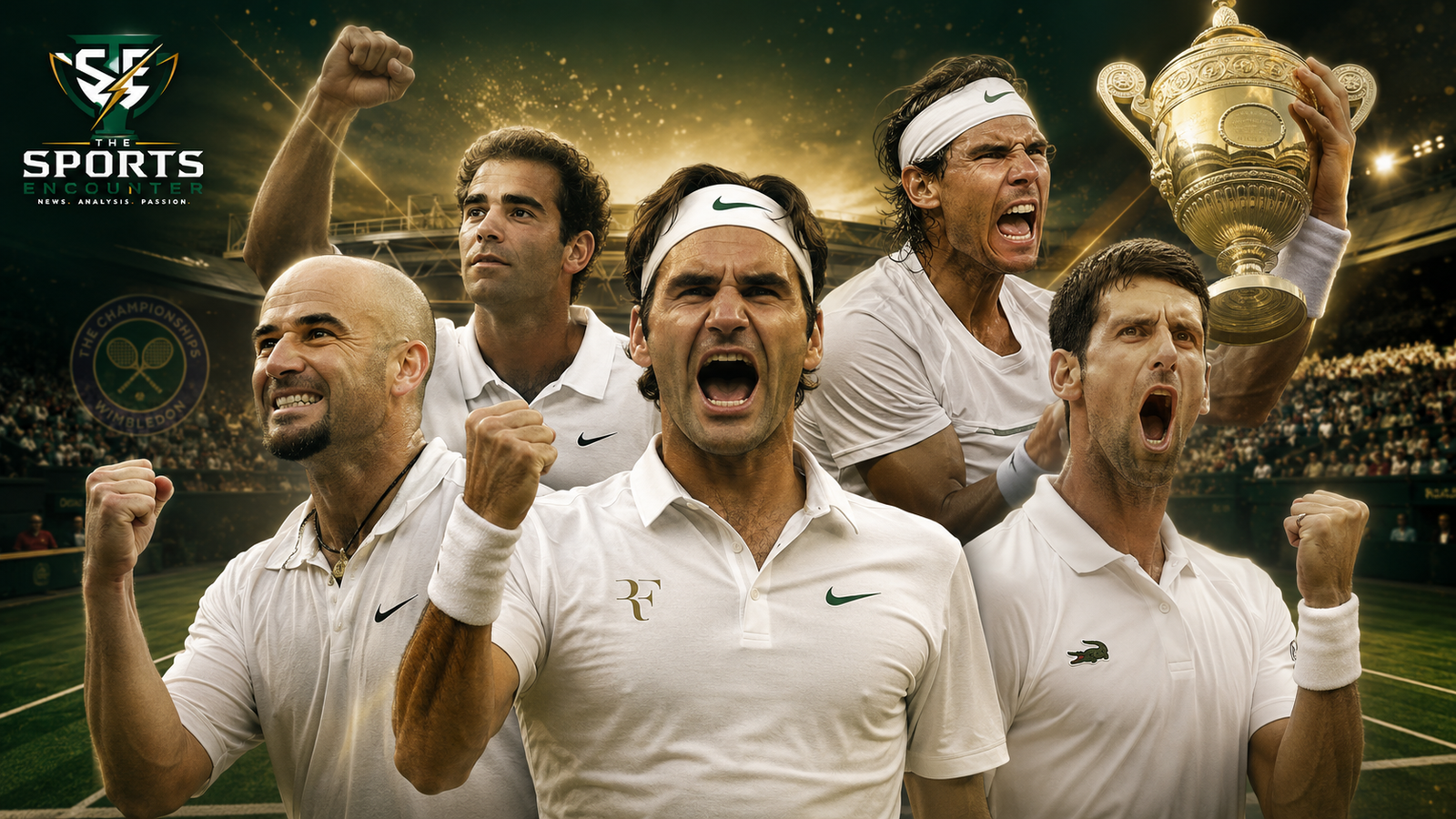
Novak Djokovic reaches toward a glowing Wimbledon-style trophy as Jannik Sinner, Alexander Zverev and Arthur Fery surround him in a dramatic grass-court VFX poster for his 8th Wimbledon title chase.

World number 8 Novak Djokovic of Serbia, local wild card entry Arthur Fery, French Open 2026 champion Alexander Zverev, and defending champion Jannik Sinner completed the last-four line-up in the Wimbledon 2026 at All England Club in London on Wednesday.

Novak Djokovic is chasing an eighth Wimbledon title and a 25th Grand Slam crown, but his road is now stacked with danger. He must first face defending champion Jannik Sinner after surviving Felix Auger-Aliassime in the longest Wimbledon quarter-final in history. On the other side of the draw, Alexander Zverev is chasing back-to-back Grand Slam titles after winning the French Open, while British wildcard Arthur Fery is trying to turn a fairytale run into one of Wimbledon’s greatest title stories.

Key Facts: Wimbledon 2026 Men’s Semi-Final Picture

PlayerRoute to Semi-FinalWimbledon 2026 StorylineBiggest Threat
Novak DjokovicBeat Felix Auger-Aliassime 7-6(10), 3-6, 6-3, 6-7(4), 7-6(10-4)Chasing eighth Wimbledon title and 25th Grand SlamRecovery after five-hour quarter-final
Jannik SinnerDefending champion into last fourTrying to protect his Wimbledon crownPace, timing and baseline control
Alexander ZverevBeat Taylor Fritz 6-4, 6-4, 6-2Chasing back-to-back Grand Slam titles after French Open winServe, reach and major-winning confidence
Arthur FeryBeat Flavio Cobolli 6-4, 7-6(4), 6-0British wildcard chasing historyCrowd energy and fearless tennis

Wimbledon Has Put Djokovic Back in Familiar Territory, but This Time It Feels Different

Novak Djokovic has spent so much of his career standing near the end of Grand Slam tournaments that his presence in another Wimbledon semi-final can almost look routine.

It is not routine anymore.

This is a 39-year-old champion trying to pull one more historic title from a draw that is no longer bending around his reputation. Djokovic is still here, still alive, still two wins away from an eighth Wimbledon title, but the tournament has changed shape around him.

Jannik Sinner is waiting as the defending champion. Alexander Zverev is carrying the confidence of a French Open winner. Arthur Fery has turned a wildcard entry into the emotional story of British tennis this summer.

That is what makes this Wimbledon different.

Djokovic is no longer only chasing records. He is trying to prove that the old Centre Court authority still works when the next generation, the form player and the fairytale all arrive at once.

The Sports Encounter’s Wimbledon 2026 curtain raiser framed this tournament as a stage where tennis power could shift again. That warning now feels real. The men’s semi-final lineup is no longer a simple contest of rankings. It is a test of eras, bodies and belief.

Djokovic’s Quarter-Final Was Historic, but It Also Raised a Bigger Question

Djokovic reached the semi-final after beating Felix Auger-Aliassime 7-6(10), 3-6, 6-3, 6-7(4), 7-6(10-4) in a five-hour, 15-minute battle. Reuters reported it as the longest Wimbledon quarter-final in history, and Djokovic later said he won it with “a racket and a lot of heart” in its Djokovic vs Auger-Aliassime match report.

The line sounded emotional. It also sounded honest.

Djokovic had to survive more than a strong opponent. He had to survive the kind of match that follows a player into the next round. Five sets on grass can drain the calves, hips, shoulders and concentration. Five hours and 15 minutes at 39 is not background detail. It is part of the semi-final story.

Auger-Aliassime pushed him through two extended tiebreaks, took the second set, forced a fourth-set tiebreak and made the final set feel like a test of nerve rather than form. Djokovic still found the answer in the deciding match tiebreak, winning it 10-4.

That was classic Djokovic.

The concern is what comes next.

The Serbian has already made history at this tournament. The Sports Encounter covered how Djokovic broke Roger Federer’s Wimbledon match-wins record earlier in the tournament, reaching 106 victories at the All England Club. Now he has added another milestone by reaching an eighth straight Wimbledon semi-final.

But records do not reduce fatigue.

Djokovic must now recover quickly enough to face the one opponent least likely to give him recovery time inside the match.

Why Sinner Is the Most Direct Threat to Djokovic’s Title Chase

Sinner is not simply another semi-final opponent. He is the defending Wimbledon champion and the player most capable of making Djokovic’s body pay for every long exchange.

His game is clean, fast and suffocating. He takes the ball early, protects the baseline and rarely lets opponents settle into slow tactical patterns. Against Djokovic, that matters because the semi-final may turn less on experience and more on who controls the first shot after the serve.

Djokovic cannot afford to spend too much of this match defending from the corners. If Sinner locks into rhythm, the rallies will become physical early. That would test Djokovic’s recovery after the Auger-Aliassime marathon and force him to win points the hard way.

The official Wimbledon website lists the path through the last four in its gentlemen’s singles draw, and the Djokovic-Sinner semi-final is the heavyweight question in the top half. One man is trying to protect the present. The other is trying to stretch the past into one more title run.

The Sports Encounter’s Wimbledon 2026 title preview identified Djokovic’s durability and Sinner’s title defense as two of the tournament’s defining themes. They now meet directly.

Djokovic still has tools that Sinner cannot copy. His return remains one of the best pressure weapons tennis has ever seen, his tiebreak nerve is still elite, and his ability to read momentum and change pace can unsettle even the cleanest ball-strikers.

Still, Sinner can make this match uncomfortable if he does three things: serve efficiently, attack Djokovic’s second serve and stretch rallies long enough to turn recovery into a live issue.

That is why this semi-final may decide more than a finalist.

It may decide whether Djokovic still has enough physical margin to win two more matches at Wimbledon.

Zverev Has Finally Brought Major-Winning Confidence to Grass

Alexander Zverev’s Wimbledon quarter-final was not just a win. It was a message.

He beat Taylor Fritz 6-4, 6-4, 6-2 to reach the semi-finals, ending a seven-match losing run against the American. Fritz had troubled him repeatedly, including at Wimbledon in 2024, but this time Zverev played with control from the opening set and never allowed the old pattern to take over.

Reuters’ Wimbledon coverage noted that Zverev snapped that losing streak while reaching his first Wimbledon semi-final. The performance also mattered because he arrived in London as the French Open champion, trying to prove that his major-winning momentum could travel from clay to grass.

That is a huge shift in Zverev’s career story.

For years, the question around him at Grand Slams was whether he could finish. In 2026, after winning the French Open, the question has changed. Now it is whether he can stack titles and become a genuine multi-surface major force.

Against Fritz, Zverev looked like a player carrying new authority. He broke early, protected his serve and grew more aggressive after Fritz received treatment for a right knee issue early in the second set. By the third set, the German was controlling the rhythm and stepping into the court with purpose.

His backhand winner to seal a double break at 4-1 in the third set captured the performance. It was clean, direct and final.

The Sports Encounter’s analysis of Wimbledon 2026 top seeds and title favorites asked whether Zverev could carry his 2026 breakthrough into the grass season. The answer is now stronger than it was a week ago.

If he beats Fery, Zverev could enter the final with something Djokovic knows well: the calm that comes from already having won the biggest matches.

That makes him dangerous.

Fery Is No Longer Just a Fairytale

Arthur Fery entered Wimbledon ranked 114th in the world and holding a wildcard. At the start of the tournament, that made him a local interest story. Now it makes him one of the most compelling players left in the draw.

Fery beat ninth seed Flavio Cobolli 6-4, 7-6(4), 6-0 to reach the semi-finals. Reuters reported in its Fery vs Cobolli quarter-final report that he became one of the rare men’s wildcards to reach the last four at a Grand Slam.

That fact gives the run historical weight. The emotional weight comes from how he did it.

Fery did not stumble into the semi-finals. He played with clarity. Cobolli had early chances, including a break point at 3-3 in the first set, but Fery held firm. When Cobolli served at 4-5, the Italian double-faulted and then missed a forehand wide. Fery took the opening set and with it a measure of control.

The second set should have been the danger zone. Fery dropped serve early, recovered and then played a composed tiebreak to move two sets ahead. The third set became a statement. He broke early, fought off break points in the following game and then watched Cobolli’s resistance disappear.

He closed the match with an ace.

That finishing detail matters because it shows how far his mindset had travelled. A wildcard trying to survive may tighten at the end. Fery attacked the finish.

Arthur Fery vs Goran Inavisevic

His run has naturally drawn comparisons with Goran Ivanisevic, who won Wimbledon as a wildcard in 2001. Fery is still two wins away from matching that miracle, but the comparison has become unavoidable because Wimbledon loves stories that feel too strange to script.

The Sports Encounter’s Wimbledon 2026 Day 6 report showed how quickly this tournament could turn volatile. Fery has now taken that volatility and placed it in the men’s semi-finals.

The Four Men Left Have Turned Wimbledon Into Four Competing Stories

This is why the final weekend feels unusually rich.

Djokovic is chasing history.
Sinner is defending his crown.
Zverev is chasing back-to-back Grand Slam titles.
Fery is trying to turn a wildcard into a Wimbledon legend.

Each player carries a different pressure.

What Each Semi-Finalist Brings to Wimbledon 2026

PlayerBiggest StrengthBiggest PressureWhat It Means for Djokovic
DjokovicExperience, return game and tiebreak nerveRecovery after a five-hour quarter-finalMust manage energy better than emotion
SinnerBaseline timing and defending champion confidenceProtecting his Wimbledon titleCan turn the semi-final into a physical test
ZverevServe, reach and French Open momentumProving he can win majors on different surfacesCould be a dangerous final opponent
FeryFreedom, crowd energy and fearless shot-makingFirst Grand Slam semi-final pressureWould bring chaos and home support into a possible final

That table explains the real shape of the tournament.

Djokovic has the richest history, but he may not have the easiest path. Sinner can test his legs. Zverev can test his serving patterns and baseline tolerance. Fery can test the emotional temperature of Centre Court if the British crowd turns the final into a national event.

What Djokovic Must Get Right Against Sinner

Novak Djokovic’s semi-final plan must be disciplined.

The Serb needs a high first-serve percentage because too many second serves will allow Sinner to step in early. He needs short points whenever possible, especially in the opening set, because he cannot afford another match that becomes physically expensive before the final. He also needs to control the middle of the court with depth rather than chase Sinner’s pace from behind the baseline.

The first set may be decisive emotionally.

If Djokovic wins it, Sinner has to carry the pressure of defending his title against the sport’s greatest problem-solver. If Sinner wins it, Djokovic may have to decide how much physical debt he is willing to create for a possible final.

That is the hidden tension of this match.

Djokovic can win a five-set war against Sinner. The question is whether he can win the tournament after doing it.

Can Zverev or Fery Change the Final Before It Even Starts?

The bottom-half semi-final between Zverev and Fery carries a different kind of intrigue.

Zverev will be expected to win. He is the second seed, the French Open champion and the more experienced player at this stage. He also has a serve and backhand built to control grass-court points when he is confident.

Fery has a different weapon: freedom.

Novak Djokovic celebrates with a golden Wimbledon-style trophy in his hands inside a dramatic grass-court stadium scene, with The Sports Encounter logo and 8th crown theme.

He has already gone further than expected. The pressure that normally traps underdogs may not feel the same for him. If he starts well, the Centre Court crowd could become part of the match. That can make even experienced opponents play tighter.

Zverev must treat Fery as a semi-finalist, not a story.

If he does, his game should give him enough structure to reach the final. If he lets the occasion breathe too much, Fery’s confidence could grow into something harder to stop.

That is the danger of fairytales. They often look harmless until they start changing scoreboards.

Verdict: Djokovic Can Still Win His 8th Wimbledon Title, but the Field Finally Has Real Answers

Djokovic can still win Wimbledon 2026, but this is no longer a title chase built only around his name, memory and Centre Court authority.

That is what makes the final stretch so compelling.

For years, Djokovic has made Wimbledon pressure look like a private language only he fully understood. He has won long matches, broken younger opponents, solved different generations and turned impossible scorelines into another chapter of his own control.

This time, the draw has given him three very different problems.

Sinner is the most immediate threat because he can make the semi-final physical from the first game. He is the defending champion, plays with clean baseline authority and has the kind of timing that can force Djokovic into one extra defensive step again and again. After a five-hour, 15-minute quarter-final against Felix Auger-Aliassime, that matters.

Zverev is dangerous because he is no longer chasing proof in the same way. His French Open 2026 title changed the emotional weight around him. After beating Taylor Fritz in straight sets and ending a seven-match losing run against the American, he looks like a player who has carried major-winning confidence onto grass.

Fery is the wild card in every sense. He entered Wimbledon ranked 114th, received a wildcard and has now reached the semi-finals with the British crowd behind him. If he beats Zverev, the final would become something very different: Djokovic or Sinner against a home story with nothing to lose and a crowd ready to believe.

Can Djokovic Win his 8th Wimbledin Title in 2026?

That is why Novak Djokovic’s eighth Wimbledon title bid feels so heavy.

The Serb still has the return game. He still has the tiebreak nerve. He still has the experience no one else in this draw can match. But Sinner has the crown, Zverev has the momentum and Fery has the story.

If Djokovic lifts the trophy again, it will not feel like another familiar triumph.

It will feel like one of the hardest Wimbledon titles of his career, won against youth, recovery, form and emotion all at once.

The next two matches will decide whether the tournament belongs to the present, the future, the fairytale, or the man who has spent two decades refusing to let anyone else write the ending.

FAQs

Can Novak Djokovic win his eighth Wimbledon title in 2026?

Yes, Novak Djokovic can still win his eighth Wimbledon title in 2026. He is two wins away from the trophy, but he must first beat defending champion Jannik Sinner in the semi-final. If he reaches the final, he will face either Alexander Zverev or Arthur Fery.

Who will Novak Djokovic face in the Wimbledon 2026 semi-final?

Novak Djokovic will face Jannik Sinner in the Wimbledon 2026 men’s semi-final. Sinner is the defending champion and one of the toughest possible opponents for Djokovic after his five-set quarter-final win over Felix Auger-Aliassime.

Why is Djokovic’s Wimbledon 2026 campaign historic?

Djokovic’s Wimbledon 2026 campaign is historic because he is chasing an eighth Wimbledon title, which would equal Roger Federer’s men’s singles record at the All England Club. He is also trying to win a 25th Grand Slam singles title.

How long was Djokovic’s quarter-final against Felix Auger-Aliassime?

Djokovic’s quarter-final against Felix Auger-Aliassime lasted five hours and 15 minutes. Reuters reported it as the longest Wimbledon quarter-final in history.

Can Jannik Sinner stop Djokovic at Wimbledon 2026?

Yes, Sinner can stop Djokovic. He is the defending champion, plays fast from the baseline and can make the semi-final physically demanding. That matters because Djokovic is coming off a five-set quarter-final.

Can Alexander Zverev win back-to-back Grand Slam titles?

Yes, Zverev can still win back-to-back Grand Slam titles. He won the French Open in 2026 and reached the Wimbledon semi-finals by beating Taylor Fritz in straight sets.

Why is Arthur Fery’s Wimbledon run special?

Arthur Fery’s Wimbledon run is special because he entered the tournament as a wildcard ranked 114th in the world. By reaching the semi-finals, he placed himself among the rare men’s wildcards to go this deep at a Grand Slam.

Has a wildcard ever won Wimbledon?

Yes. Goran Ivanisevic won Wimbledon as a wildcard in 2001. Arthur Fery’s run has drawn comparisons because he is trying to turn a wildcard entry into a historic Wimbledon title campaign.

Who are the Wimbledon 2026 men’s semi-finalists?

The Wimbledon 2026 men’s semi-finalists are Novak Djokovic, Jannik Sinner, Alexander Zverev and Arthur Fery.

What is the biggest storyline in the Wimbledon 2026 men’s draw?

The biggest storyline is whether Djokovic can still win an eighth Wimbledon title while Sinner defends his crown, Zverev chases back-to-back Grand Slam titles and Fery tries to complete a wildcard miracle.


Luke Edelman is a London-based sports psychologist covering cricket and tennis across Europe for The Sports Encounter. His work focuses on athlete mindset, pressure management, performance routines, confidence, recovery from setbacks, and the mental side of elite competition. Coverage areas: sports psychology, cricket, tennis, athlete performance, mental resilience, European sports, tournament pressure.

Breaking News

Leeds United Sign Harry Wilson on Four-Year Deal After Fulham Exit

Leeds United have confirmed the signing of Wales forward Harry Wilson on a four-year contract after his Fulham deal expired, making him the club’s first summer signing.

Luke Edelman The Sports Encounter

Published

on

Harry Wilson signs a Leeds United contract in a dramatic blue-and-white transfer announcement graphic, with Elland Road in the background and The Sports Encounter logo at the top-left.

Leeds United have confirmed the signing of Wales forward Harry Wilson on a four-year contract, making him their first signing of the summer transfer window after his departure from Fulham.

The 29-year-old joins the Whites following the expiry of his contract at Craven Cottage, with Leeds stating that Wilson chose Elland Road “over several offers from elsewhere.” The club announced the deal on Wednesday, ending weeks of speculation around one of the more attractive free-agent options in the Premier League market. Leeds confirmed the four-year agreement in their official Harry Wilson announcement.

For Leeds, this is a smart early-market move. Wilson brings Premier League experience, international pedigree, set-piece quality and the kind of final-third versatility that can help Daniel Farke’s side add more control and creativity in attacking areas.

The Sports Encounter has been tracking how Premier League clubs are moving early in the summer market, including Arsenal’s decision to permanently sign Piero Hincapie after his loan from Bayer Leverkusen. Leeds’ move for Wilson fits the same pattern: clubs are trying to solve squad needs before the market becomes more expensive and chaotic.

Why Leeds Wanted Harry Wilson

Wilson is not a gamble in the normal sense of a free transfer. He arrives with a deep top-flight CV and a clear profile.

Leeds described him as an experienced top-flight and international attacker who can operate across the forward line. That versatility matters because Wilson can play wide, drift inside, link midfield with attack and threaten from dead-ball situations. He is not only a touchline winger. He gives Leeds a player who can create, finish and add variety to the right side or central attacking zones.

Sky Sports had reported in June that Leeds had agreed a deal to sign Wilson once his Fulham contract expired, with Aston Villa and Everton also among the interested clubs. Sky also noted that Fulham tried to keep Wilson after a career-best Premier League campaign, but he chose Leeds on a long-term deal.

That makes the deal more meaningful. Leeds have not simply picked up a player nobody wanted. They have beaten competition for a proven Premier League forward without paying a transfer fee.

For more football transfer context and wider market movement, readers can follow The Sports Encounter’s Soccer coverage.

Wilson Leaves Fulham After Productive Final Season

Wilson spent five years at Fulham after joining from Liverpool in 2021. Leeds’ official statement credited him with helping Fulham earn promotion to the Premier League during his first season at Craven Cottage, scoring 12 goals in that campaign. The club also noted that he leaves West London after making just shy of 200 appearances.

His final season strengthened his market position. Leeds said Wilson produced 11 goals and eight assists last term, was named Fulham’s Player of the Season, and won the BBC Goal of the Season award for his strike against Crystal Palace.

Those numbers explain why Fulham wanted him to stay and why Leeds moved with urgency.

Wilson’s exit also leaves Fulham with an attacking gap to address. The Guardian recently reported that Fulham were looking at Crysencio Summerville as part of their search for wide options after losing Wilson, showing how his departure has already shaped Fulham’s recruitment planning.

A Career Built Through Loans, Set Pieces and Wales Duty

Wilson’s career has rarely followed a straight line, but it has produced steady experience.

He began at Liverpool and made two senior appearances for the first team before building his reputation on loan. Leeds highlighted his impact at Hull City, where he scored seven goals in 13 appearances, and his later spell at Derby County, where he produced a memorable 30-yard free kick against Manchester United in the League Cup and finished the season with 15 goals.

A Premier League loan at Bournemouth followed, then a spell with Cardiff City, before Wilson settled at Fulham and became a key figure across their promotion and Premier League years.

Internationally, Wilson also brings major-tournament experience. Leeds said he became Wales’ youngest-ever player when he debuted in October 2013, taking the record from Gareth Bale, and has earned 69 caps. He has represented Wales at Euro 2020 and the 2022 World Cup, and scored an international hat-trick in a 7-1 win over North Macedonia.

That matters for a Leeds side trying to build more maturity around its Premier League core.

What This Means for Leeds

Wilson gives Leeds an immediate attacking option who does not need a long adaptation period. He knows the league, understands the physical demands, and arrives after one of the strongest seasons of his career.

For Farke, the key question will be role. Wilson can start wide, operate as an inverted creator, or serve as a flexible attacking piece depending on the opponent. His set-piece quality also adds value in tight Premier League matches where one delivery can change the result.

This is not a headline-grabbing superstar signing. It is a practical, experienced, low-fee-market move that strengthens Leeds without draining transfer funds.

The wider Premier League picture remains active, and The Sports Encounter will continue tracking how clubs reshape squads before the new season through our latest football news and transfer coverage.

FAQs

Has Harry Wilson joined Leeds United?

Yes. Leeds United have officially signed Harry Wilson on a four-year contract after his Fulham deal expired.

How long is Harry Wilson’s Leeds contract?

Harry Wilson has signed a four-year contract with Leeds United.

Why did Harry Wilson leave Fulham?

Wilson left Fulham after his contract expired. Fulham tried to keep him, according to Sky Sports, but he chose Leeds on a long-term deal.

What position does Harry Wilson play?

Wilson is a forward who can play across the attacking line, especially as a winger or inside forward.

How did Harry Wilson perform last season?

Leeds said Wilson scored 11 goals and provided eight assists last season, while also winning Fulham’s Player of the Season award.

Continue Reading

Editor's Choice

Linda Noskova, Karolina Muchova Give Czechs Two Shots at Wimbledon Glory

Linda Noskova reached her first Grand Slam semi-final as Karolina Muchova joined her in the Wimbledon 2026 last four, putting Czech women’s tennis one win away from a possible all-Czech final at the All England Club.

Jovana Zlatova | The Sports Encounter

Published

on

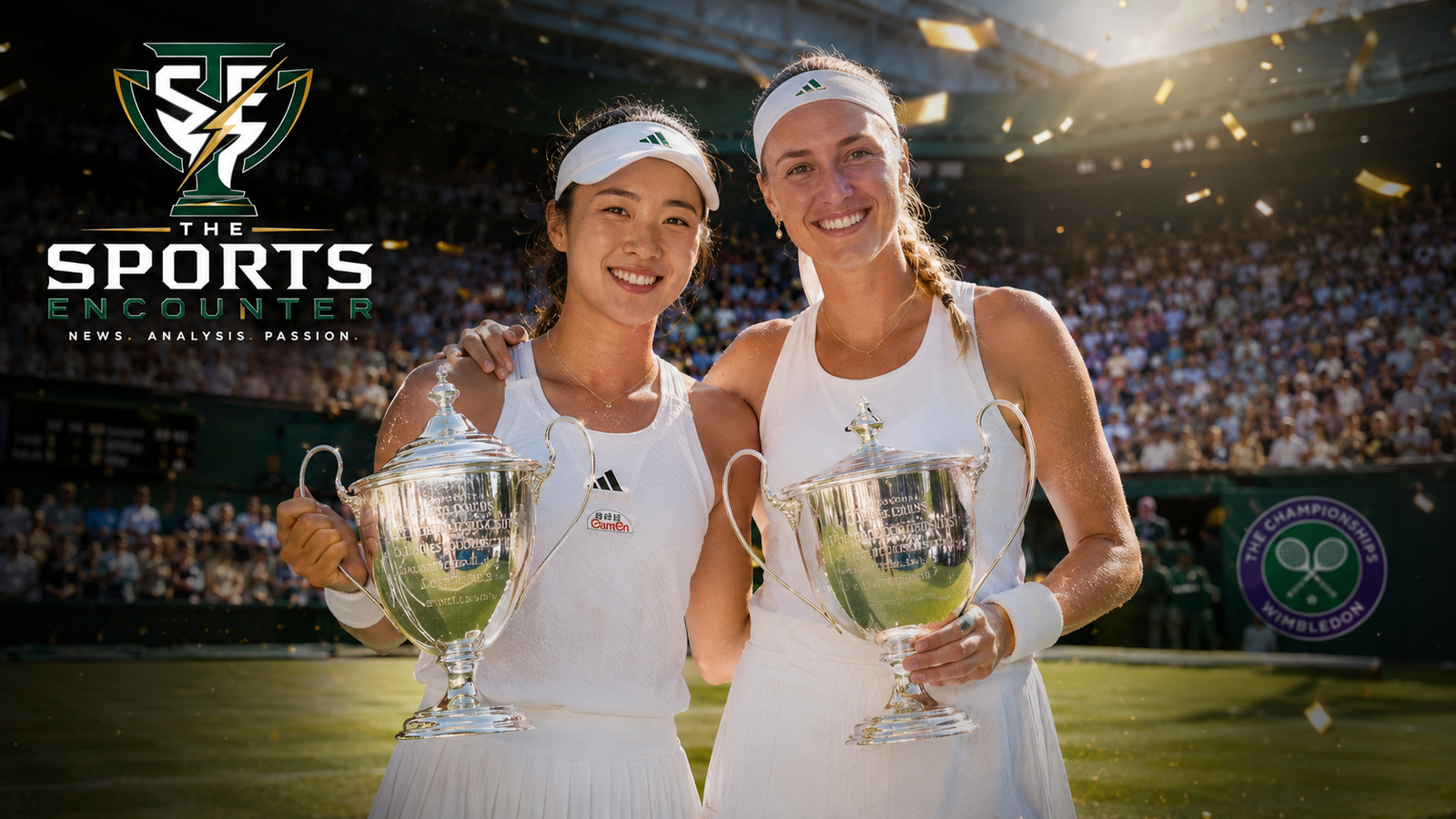
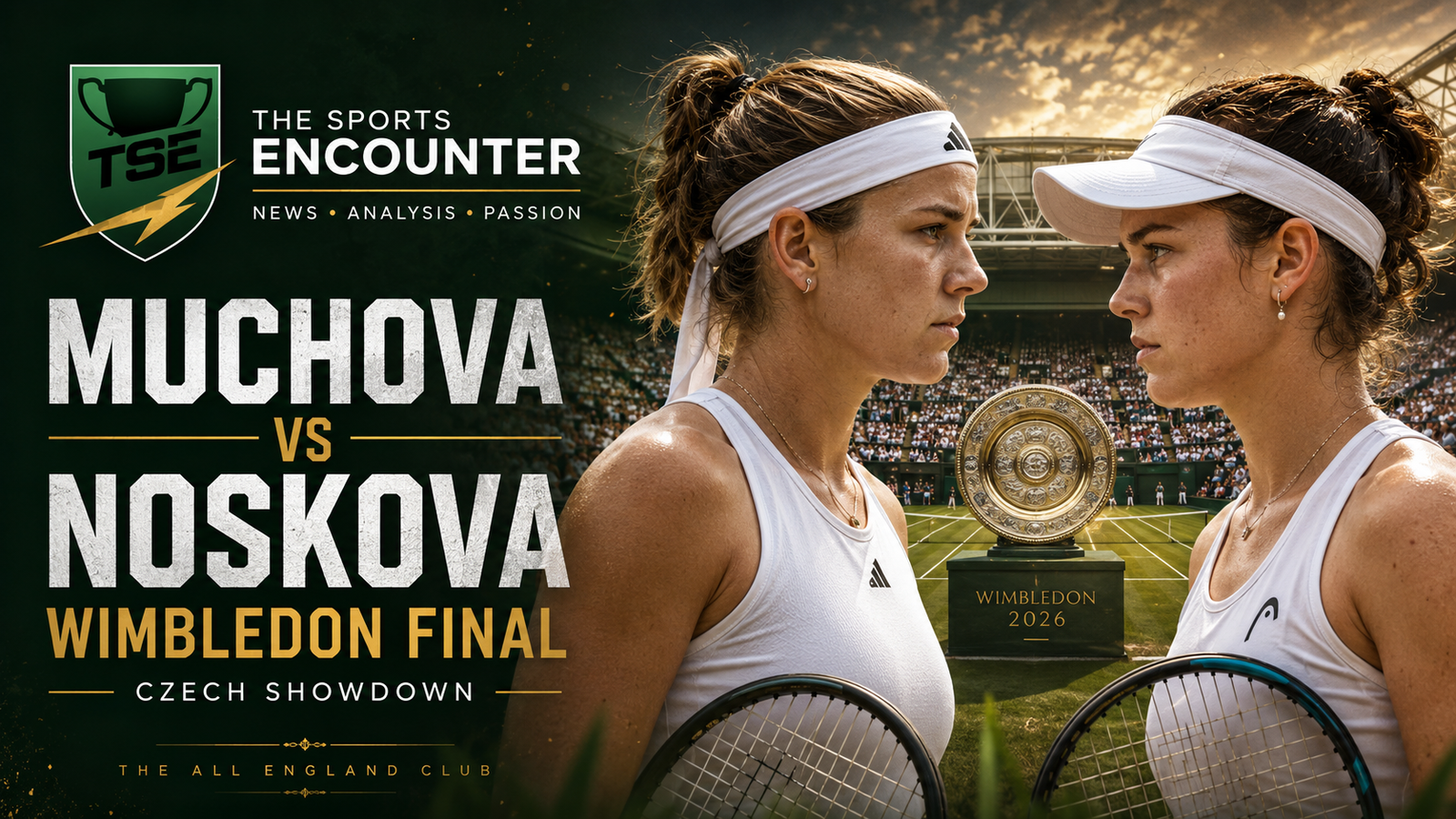
Linda Noskova and Karolina Muchova stand beside a glowing Wimbledon-style trophy in a cinematic grass-court stadium scene, highlighting the Czech players’ chase for Wimbledon 2026 history.

Linda Noskova beat Elise Mertens 6-3, 7-5 to reach her first Grand Slam semi-final. Karolina Muchova defeated Naomi Osaka 7-6(4), 6-4 to complete her set of Grand Slam semi-final appearances and reach the Wimbledon last four for the first time.

However, they are not going to face each other in the semi-finals.

Noskova plays Marta Kostyuk, while Muchova faces Coco Gauff. If both Czech players win, Wimbledon 2026 will have a historic all-Czech women’s final.

Key Facts: Wimbledon 2026 Women’s Semi-Finals

PlayerQuarter-Final ResultSemi-Final OpponentMain Storyline
Linda NoskovaBeat Elise Mertens 6-3, 7-5Marta KostyukFirst Grand Slam semi-final
Karolina MuchovaBeat Naomi Osaka 7-6(4), 6-4Coco GauffFirst Wimbledon semi-final
Marta KostyukBeat Jasmine Paolini 6-3, 6-2Linda NoskovaFirst Wimbledon semi-final
Coco GauffBeat Jessica Pegula 4-6, 6-3, 6-3Karolina MuchovaFirst Wimbledon semi-final

Czech Tennis Has Returned to Wimbledon’s Deepest Stage

Wimbledon has seen Czech women write this kind of story before.

That is why Linda Noskova and Karolina Muchova reaching the 2026 semi-finals feels bigger than two strong individual runs. It feels like another chapter in a national tennis tradition that keeps finding new voices on grass.

Noskova is 21, direct, powerful and now a Grand Slam semi-finalist for the first time. Muchova is 29, elegant, tactically mature and into her first Wimbledon semi-final after years of injury interruptions and near-breakthroughs. They are not the same player. They do not win points in the same rhythm. Their careers have not moved at the same speed.

Yet they now carry the same possibility.

One more win each, and Wimbledon will have an all-Czech women’s singles final.

That is the emotional hook of the women’s draw now. The wider tournament chaos that The Sports Encounter captured in its Wimbledon 2026 curtain raiser has produced something with deeper roots. The women’s field has changed quickly, but Czech tennis has not appeared from nowhere. It has been building, surviving and renewing itself for decades.

Noskova Did Not Need Noise to Announce Herself

Linda Noskova’s 6-3, 7-5 win over Elise Mertens on Court One was not loud in the way some Wimbledon moments are loud.

It was controlled.

Reuters reported that Noskova became the second Czech woman into this year’s Wimbledon semi-finals after beating Mertens with powerful returns, pinpoint groundstrokes and smart variation in the lunchtime heat. The ninth seed also became the youngest Czech women’s Wimbledon semi-finalist since Petra Kvitova.

That detail matters.

Kvitova won Wimbledon in 2011 and 2014. Barbora Krejcikova won the title in 2024. Marketa Vondrousova won it in 2023. Jana Novotna lifted the trophy in 1998. Martina Navratilova, born in what was then Czechoslovakia before representing the United States, won nine Wimbledon singles titles between 1978 and 1990.

Noskova has grown up with that history around her. After beating Mertens, she spoke about how a small country can still do big things when players look up to those who did it before. That was more than a polite tribute. It explained why Czech women’s tennis keeps regenerating.

For more context on how the women’s draw opened up earlier in the tournament, The Sports Encounter’s Wimbledon 2026 Day 6 report showed how quickly major names began falling and how opportunity moved toward the players brave enough to take it.

Noskova took hers.

How Noskova Broke Mertens’ Resistance

Mertens was never going to hand Noskova the match.

The Belgian came in as a six-time Grand Slam doubles champion and had already knocked out former Wimbledon champion Elena Rybakina earlier in the tournament. She knew how to absorb pressure, reset points and force younger players to prove themselves again and again.

Noskova kept asking the same question with her return game.

Mertens saved nine break points, but the Czech pressure eventually became too much. Noskova broke in the eighth game of the first set and again in the 11th game of the second. She then served out the match with a big delivery that Mertens could only send wide.

That was the most important part of the win. Noskova did not drift when the finishing line appeared. She stayed clear.

Her next opponent, Marta Kostyuk, will test that clarity in a different way. Kostyuk beat 2024 Wimbledon runner-up Jasmine Paolini 6-3, 6-2 in just 69 minutes on Centre Court. Reuters reported that Kostyuk did not face a break point, won 90% of her first-serve points and used her forehand to control the match from the start.

That creates a semi-final between two players who have both broken new ground at Wimbledon.

Noskova’s advantage is weight of shot and return pressure. Kostyuk’s advantage is speed, forehand aggression and confidence from a near-perfect quarter-final. If Noskova allows Kostyuk to turn the match into a first-strike sprint, the Ukrainian can take time away. If Noskova gets enough depth on return, she can make Kostyuk play through heavier resistance than Paolini managed.

Muchova’s Win Over Osaka Was a Different Kind of Statement

If Noskova’s breakthrough was built on clean power, Karolina Muchova’s win over Naomi Osaka was built on variation, patience and decision-making.

Muchova beat Osaka 7-6(4), 6-4 to reach her first Wimbledon semi-final. Reuters reported that both players hit 24 winners, but the difference came in control: Muchova made 21 unforced errors compared with Osaka’s 42.

That number tells the story.

Osaka had arrived with momentum after knocking out top seed Aryna Sabalenka. She brought power, confidence and the sense that her Wimbledon run was turning into one of the tournament’s big comeback stories.

Muchova refused to give her one steady rhythm to attack.

She not only used slice but also moved forward and changed pace. She served and volleyed at smart moments. When Osaka tried to hit through her, Muchova made the match more complicated.

That is the beauty of Muchova’s tennis. It can look light, but it is demanding. Her variety forces opponents to keep solving points from different positions. Against a power player like Osaka, that can become mentally expensive.

The win also completed Muchova’s set of Grand Slam semi-finals. She had already reached major semi-finals before, including her run to the French Open final in 2023. Wimbledon had been the missing piece. Now she has solved that too.

The Sports Encounter’s Wimbledon 2026 title preview looked at how the women’s draw could become unpredictable if the biggest names failed to settle. Muchova has turned that uncertainty into a tactical statement.

Muchova vs Gauff May Be the Semi-Final of Fine Margins

Muchova’s semi-final against Coco Gauff is loaded with contrast.

Gauff reached her first Wimbledon semi-final by beating Jessica Pegula 4-6, 6-3, 6-3. Reuters reported that Gauff called her run a “bit of a breakthrough on grass,” an important admission from a player who had already won the US Open in 2023 and French Open in 2025 but had never previously gone beyond the fourth round at Wimbledon.

Gauff is now the only Grand Slam champion left in the women’s singles draw. She also carries a strong head-to-head record against Muchova, leading their tour meetings 6-1. Reuters noted an important detail, though: none of those meetings came on grass.

That gives Muchova a real opening.

Grass rewards her variety and helps her slice stay low. It gives her net play more value besides allowing her to disrupt a rhythm player before longer baseline exchanges become too physical.

Gauff will try to turn the match into a movement and pressure test. Muchova will try to turn it into a thinking test.

That is why this semi-final feels so compelling. Gauff may have the bigger recent major title profile, but Muchova has the surface tools to make this uncomfortable.

The official Wimbledon website lists the last-four route through its ladies’ singles draw, with Muchova facing Gauff and Noskova facing Kostyuk for places in Saturday’s final.

The Czech Legacy Is No Accident

Czech women’s tennis has become one of the most reliable production lines in the sport.

That is not because every player looks the same. It is because the system keeps producing different ways to win.

Coco Gauff, Karolina Muchova, Linda Noskova and Marta Kostyuk appear in a dramatic Wimbledon 2026 VFX poster with a glowing trophy, grass-court stadium backdrop and The Sports Encounter logo.

Navratilova gave Wimbledon its greatest women’s grass-court dynasty. Novotna gave it one of the most emotional title stories. Kvitova brought left-handed force and fearless first-strike tennis. Vondrousova showed how creativity and touch could win on grass. Krejcikova brought structure, doubles intelligence and quiet resilience.

Noskova and Muchova now fit into that history without copying it.

Noskova is the new force. Her game is built on timing, return pressure and clean hitting. Muchova is the problem-solver. She wins by making opponents uncomfortable, then choosing the right moment to accelerate.

That contrast is exactly why a possible all-Czech final would be fascinating.

It would not be a mirror match. It would be a debate inside Czech tennis itself: power against craft, youth against experience, rising force against refined variation.

What an All-Czech Wimbledon Final Would Mean

An all-Czech Wimbledon final would be one of the strongest women’s tennis stories of 2026.

It would confirm Noskova’s arrival at the top table of the sport. It would reward Muchova’s persistence after the injuries and missed chances that have shaped her career. More important than everything else, it would extend a Czech Wimbledon legacy that has already produced champions across multiple eras.

For The Sports Encounter’s growing tennis coverage, this is exactly the kind of tournament story that matters beyond the scoreline. It is about national depth, player identity and how a Grand Slam draw can suddenly reveal which tennis cultures are still producing answers.

There is also a broader women’s tennis angle.

With Sabalenka out, Osaka gone, Paolini beaten and Pegula eliminated, Wimbledon 2026 has created space for a new champion. WTA’s official tournament coverage noted that a new Wimbledon women’s singles champion is guaranteed from this last-four lineup, with Gauff, Muchova, Noskova and Kostyuk all chasing their first title at the All England Club.

That makes the final weekend feel open, but not random.

Each semi-finalist has earned her place with a clear tennis identity.

What Noskova and Muchova Must Do Next

Noskova Must Make Kostyuk Play Under Pressure

Noskova cannot allow Kostyuk to dictate early with the forehand. The Ukrainian’s quarter-final win over Paolini showed how dangerous she becomes when she controls first-strike patterns. Noskova must return deep, protect her second serve and use her heavier ball to push Kostyuk behind the baseline.

If she does that, the semi-final can tilt toward her.

Muchova Must Keep Gauff Out of Rhythm

Muchova cannot let Gauff settle into a physical baseline match. She must vary height, pace and direction. Her slice, net approaches and serve placement will be central. If Gauff starts reading patterns early, Muchova’s head-to-head disadvantage can become relevant again.

If Muchova keeps changing the match, she has a real chance.

Verdict: Czech Tennis Is One Match Away From a Wimbledon Moment That Would Travel Far Beyond Prague

Linda Noskova and Karolina Muchova have already made Wimbledon 2026 a Czech tennis story.

Now they have a chance to make it a Czech tennis final.

Noskova’s run carries the emotion of arrival. She is young, fearless and into her first Grand Slam semi-final. Muchova’s run carries the emotion of persistence. She is experienced, creative and finally into the Wimbledon last four after years of building a game that always looked made for grass.

Neither semi-final will be easy.

Kostyuk is playing fast, clean and with the belief of someone who just dismissed last year’s runner-up in 69 minutes. Gauff is the only major champion left in the draw and has finally found her grass-court breakthrough.

Still, the Czech possibility is real.

If Noskova and Muchova both win, Saturday’s final will become more than a title match. It will become a showcase of how one small country keeps producing women who understand Wimbledon in different ways.

Noskova has the firepower to announce a new era.

Muchova has the craft to complete a long-awaited grass-court story.

Czech tennis has the history to make either ending feel earned.

FAQs

Who are the Wimbledon 2026 women’s semi-finalists?

The Wimbledon 2026 women’s semi-finalists are Linda Noskova, Karolina Muchova, Marta Kostyuk and Coco Gauff.

Are Linda Noskova and Karolina Muchova playing each other in the Wimbledon semi-finals?

No. Linda Noskova will face Marta Kostyuk in one semi-final, while Karolina Muchova will face Coco Gauff in the other. If both Czech players win, they will meet in the Wimbledon final.

Did Linda Noskova reach her first Grand Slam semi-final at Wimbledon 2026?

Yes. Linda Noskova reached her first Grand Slam semi-final by beating Elise Mertens 6-3, 7-5 in the Wimbledon quarter-finals.

How did Karolina Muchova reach the Wimbledon 2026 semi-finals?

Karolina Muchova reached the Wimbledon 2026 semi-finals by beating Naomi Osaka 7-6(4), 6-4. She used variety, net play and better control, finishing with fewer unforced errors than Osaka.

What would an all-Czech Wimbledon final mean?

An all-Czech Wimbledon final would be a major moment for Czech women’s tennis. It would continue a strong Wimbledon tradition that includes Martina Navratilova, Jana Novotna, Petra Kvitova, Marketa Vondrousova and Barbora Krejcikova.

Who will Linda Noskova play next at Wimbledon 2026?

Linda Noskova will play Marta Kostyuk in the Wimbledon 2026 semi-finals. Kostyuk reached the last four by beating Jasmine Paolini 6-3, 6-2.

Who will Karolina Muchova play next at Wimbledon 2026?

Karolina Muchova will play Coco Gauff in the Wimbledon 2026 semi-finals. Gauff reached her first Wimbledon semi-final by beating Jessica Pegula in three sets.

Can Linda Noskova win Wimbledon 2026?

Yes, Linda Noskova can win Wimbledon 2026. She has the power, return game and confidence to beat Marta Kostyuk, but she must handle the pressure of her first Grand Slam semi-final.

Can Karolina Muchova win Wimbledon 2026?

Yes, Karolina Muchova can win Wimbledon 2026. Her variety and grass-court instincts make her dangerous, especially if she can disrupt Coco Gauff’s rhythm in the semi-final.

Is a new Wimbledon women’s champion guaranteed in 2026?

Yes. A new Wimbledon women’s singles champion is guaranteed because none of the four semi-finalists has previously won the Wimbledon singles title.

Continue Reading

Breaking News

Kobel Breaks Colombia Hearts as Switzerland Reach World Cup Quarterfinals

Switzerland beat Colombia 4-3 on penalties after 120 goalless minutes at BC Place Vancouver, with Gregor Kobel’s shootout save sending the Swiss into an Argentina quarterfinal.

Miley Rumer | The Sports Encounter

Published

on

Kobel Breaks Colombia Hearts as Switzerland Reach World Cup Quarterfinals

The last Round of 16 match had no goal to separate Colombia from Switzerland, but it still found a way to leave one team frozen on the pitch and the other running toward history.

After 120 minutes of pressure, missed chances, brave goalkeeping, tired legs, and rising tension at BC Place Vancouver, Switzerland beat Colombia 4-3 on penalties following a 0-0 draw. Gregor Kobel became the central figure of the night, saving Cucho Hernández’s penalty after Davinson Sánchez had already hit the bar, before Ruben Vargas sent the decisive kick past Camilo Vargas.

It was Switzerland’s first FIFA World Cup quarterfinal appearance since 1954, and it came through the kind of match that tests far more than attacking rhythm. Colombia had possession, energy, and the larger attacking volume. Switzerland had shape, patience, Kobel, and enough composure from the spot to survive one of the tensest nights of the tournament.

For readers following the wider knockout story, this match completed the path first mapped in The Sports Encounter’s FIFA World Cup 2026 Round of 16 preview, where Colombia’s clash with Switzerland already looked like one of the round’s most physically demanding matchups.

TL;DR

  • Switzerland beat Colombia 4-3 on penalties after a 0-0 draw through extra time.
  • Gregor Kobel made the decisive shootout save from Cucho Hernández and delivered a huge all-round goalkeeping performance.
  • Camilo Vargas also kept Colombia alive with important saves across regular and extra time.
  • Colombia created more shots and pushed hard, but could not turn pressure into a goal.
  • Switzerland will face Argentina in the quarterfinal at Kansas City Stadium on Saturday, July 11 local time.
  • Switzerland received three yellow cards, Colombia received two, and no red cards were reported.

Key Match Information

DetailInformation
MatchSwitzerland vs Colombia
CompetitionFIFA World Cup 2026, Round of 16
ResultSwitzerland 0-0 Colombia, Switzerland won 4-3 on penalties
VenueBC Place Vancouver, Vancouver
DateJuly 7, 2026 local time, July 8 IST
Top PerformerGregor Kobel, decisive penalty save and key saves across the match
Turning PointKobel saved Cucho Hernández’s penalty after Davinson Sánchez hit the bar
What It MeansSwitzerland reached their first World Cup quarterfinal since 1954 and will face Argentina

Colombia Had the Ball, Switzerland Had the Nerve

Colombia looked more comfortable with the ball for long stretches. Their midfield tried to move Switzerland sideways, Luis Díaz kept asking questions from wide areas, and the second-half changes brought fresh running into the final third.

The numbers reflected that pressure. Colombia had more possession, more shots, and more corners. Their problem was the final touch. The attacks kept reaching dangerous zones without producing the one clean finish that could break Switzerland’s defensive block.

That has been one of Colombia’s strengths in this tournament: they rarely panic when matches become difficult. Their 1-0 win over Ghana in the previous round showed a mature knockout temperament, and that same discipline appeared again in Vancouver. The difference this time was that Switzerland refused to open up. You can revisit that build-up in our report on Colombia’s Round of 32 win over Ghana.

Switzerland did not dominate the ball, but Murat Yakin’s side managed the match with patience. They defended the box well, slowed Colombia’s rhythm when needed, and kept the game close enough to make penalties feel like a realistic route rather than a desperate escape.

Gregor Kobel Gives Switzerland the Match They Needed

Kobel’s night will be remembered for the penalty save, but his influence started much earlier.

Colombia forced Switzerland into uncomfortable defensive phases, especially when they moved the ball quickly into wide channels and attacked second balls near the box. Kobel gave the Swiss back line confidence by staying sharp on crosses, reading danger early, and making the saves that kept the match scoreless.

His biggest moment arrived in the shootout. After Sánchez struck the bar, Switzerland had an opening. Akanji then missed, and the pressure returned. That was when Kobel stepped forward.

Hernández went low. Kobel read it, got across, and made the save that changed the shootout. Moments later, Ruben Vargas finished the job.

Switzerland have played enough major-tournament knockout matches where small margins went against them. This time, their goalkeeper owned the margin.

Camilo Vargas Deserved Better Than Defeat

Colombia’s pain will be sharper because Camilo Vargas also played an exceptional match.

Switzerland did not create as many chances as Colombia, but Vargas still had to stay alert through long periods where the match rhythm kept shifting. He handled deliveries, protected his area, and kept Colombia alive when Swiss attacks threatened to open space around the box.

His penalty-shootout night ended cruelly. He went the wrong way for the decisive Ruben Vargas kick, then sat on the goal line as Switzerland celebrated. That image told the story of Colombian heartbreak, but it should not erase his work across the match.

Goalkeepers often become visible only when they make the final save or miss the final moment. This match had two goalkeepers who shaped the entire contest. Kobel got the winning image. Vargas still gave Colombia every chance to take the game deeper.

Switzerland’s Bench Helped Drag the Match Toward Penalties

Yakin’s substitutions mattered because Switzerland needed fresh legs more than attacking poetry.

Zeki Amdouni, Cedric Itten, Ruben Vargas, Miro Muheim, Silvan Widmer, and Djibril Sow all entered at different stages, giving Switzerland energy in a match that became more stretched after 90 minutes. Amdouni, Itten, Xhaka, and Ruben Vargas converted their penalties, which also showed how much trust Switzerland placed in players who had to enter a match already loaded with pressure.

That is often where knockout football becomes a squad test. Starting elevens build the platform. Substitutes decide whether a tired team still has enough calm left for the final act.

Colombia’s Exit Hurts Because the Performance Had Belief

Colombia will leave this World Cup with frustration, but not embarrassment.

They finished the match with 15 shots to Switzerland’s seven, forced Kobel into work, and carried the stronger attacking intent through several phases. James Rodríguez started and helped Colombia control some early rhythm before Juan Fernando Quintero replaced him and later scored the first penalty of the shootout.

Luis Díaz also converted his penalty under huge pressure, but Colombia’s two misses proved decisive. Sánchez hit the bar. Hernández was stopped by Kobel. In a match without goals, those two moments became the difference between a quarterfinal place and a painful flight home.

This result also connects with the wider pattern of a knockout round shaped by tension, late drama, and emotional exits. Switzerland’s survival now sits beside Argentina’s rescue act against Egypt, covered in our report on Messi saving Argentina after Egypt pushed the champions to the brink.

Penalties Decide the Final Round of 16 Match

Penalty OrderTeamPlayerOutcome
1ColombiaJuan Fernando QuinteroScored
2SwitzerlandGranit XhakaScored
3ColombiaDavinson SánchezMissed, hit bar
4SwitzerlandZeki AmdouniScored
5ColombiaJaminton CampazScored
6SwitzerlandManuel AkanjiMissed
7ColombiaCucho HernándezSaved by Gregor Kobel
8SwitzerlandCedric IttenScored
9ColombiaLuis DíazScored
10SwitzerlandRuben VargasScored

The shootout had everything: an early Colombian lead, a Swiss response, a defender’s miss from each side, a goalkeeper’s defining save, and Ruben Vargas turning a difficult night into one of Switzerland’s biggest World Cup moments.

This was also a reminder of why penalty technique has become one of the tournament’s most discussed themes. For more context on modern spot-kick debates, read our explainer on why stutter-step penalties are dividing World Cup 2026 fans.

Cards and Discipline

TeamYellow CardsPlayers BookedRed Cards
Switzerland3Granit Xhaka 51’, Denis Zakaria 59’, Miro Muheim 105’0
Colombia2Luis Suárez 60’, Davinson Sánchez 95’0

The match carried plenty of physical pressure, but it never fully lost control. The five yellow cards reflected the edge of the contest, especially after halftime and during extra time, but no player was sent off.

That disciplinary control mattered in a Round of 16 already shaped by refereeing conversations. The wider tournament debate around officials has grown louder, especially after fan scrutiny in other knockout matches. The Sports Encounter covered that trend in our feature on why FIFA World Cup 2026 fans are suddenly obsessed with referees.

Switzerland vs Argentina Quarterfinal: Where and When?

Switzerland will now face Argentina in the FIFA World Cup 2026 quarterfinal.

DetailInformation
MatchArgentina vs Switzerland
RoundQuarterfinal
VenueKansas City Stadium, Kansas City
Local DateSaturday, July 11, 2026
Local Time8:00 PM CDT
Pakistan TimeSunday, July 12, 2026, 6:00 AM PKT
India TimeSunday, July 12, 2026, 6:30 AM IST

Argentina arrive after surviving Egypt in one of the most emotional matches of the tournament. Switzerland arrive with belief, a clean sheet, and a goalkeeper who has already won one knockout match with his hands and his nerve.

The winner of Argentina vs Switzerland will face Norway or England in the semifinal, which gives the Swiss a clear but brutal path. Beat Colombia on penalties. Face Messi’s Argentina. Then possibly deal with England’s tournament muscle or Erling Haaland’s Norway.

For readers tracking the full quarterfinal picture, Switzerland’s next match now belongs beside Belgium’s 4-1 win over the USA and Spain’s late win over Portugal as part of a final eight loaded with storylines.

What This Win Says About Switzerland

Switzerland did not produce a dazzling attacking performance. They produced something more useful in a knockout match: survival with structure.

They absorbed pressure without collapsing. They managed fatigue without losing shape. They trusted their goalkeeper. They recovered after Akanji’s missed penalty. They found a final taker in Ruben Vargas who could walk into the most important kick of the night and finish it cleanly.

That is why this win matters. It was not built on one brilliant attacking spell. It was built on a team understanding exactly what the match had become and staying alive long enough for Kobel to decide it.

The official FIFA World Cup 2026 stage now moves toward the quarterfinals with Switzerland still standing. Colombia leave with regret, but Switzerland leave Vancouver with history, a clean sheet, and the belief that Argentina will have to break them the hard way.

Continue Reading

Breaking News