Brock Lesnar Retires: The Triumphs, Failures and Unrepeatable Legacy of WWE’s Beast
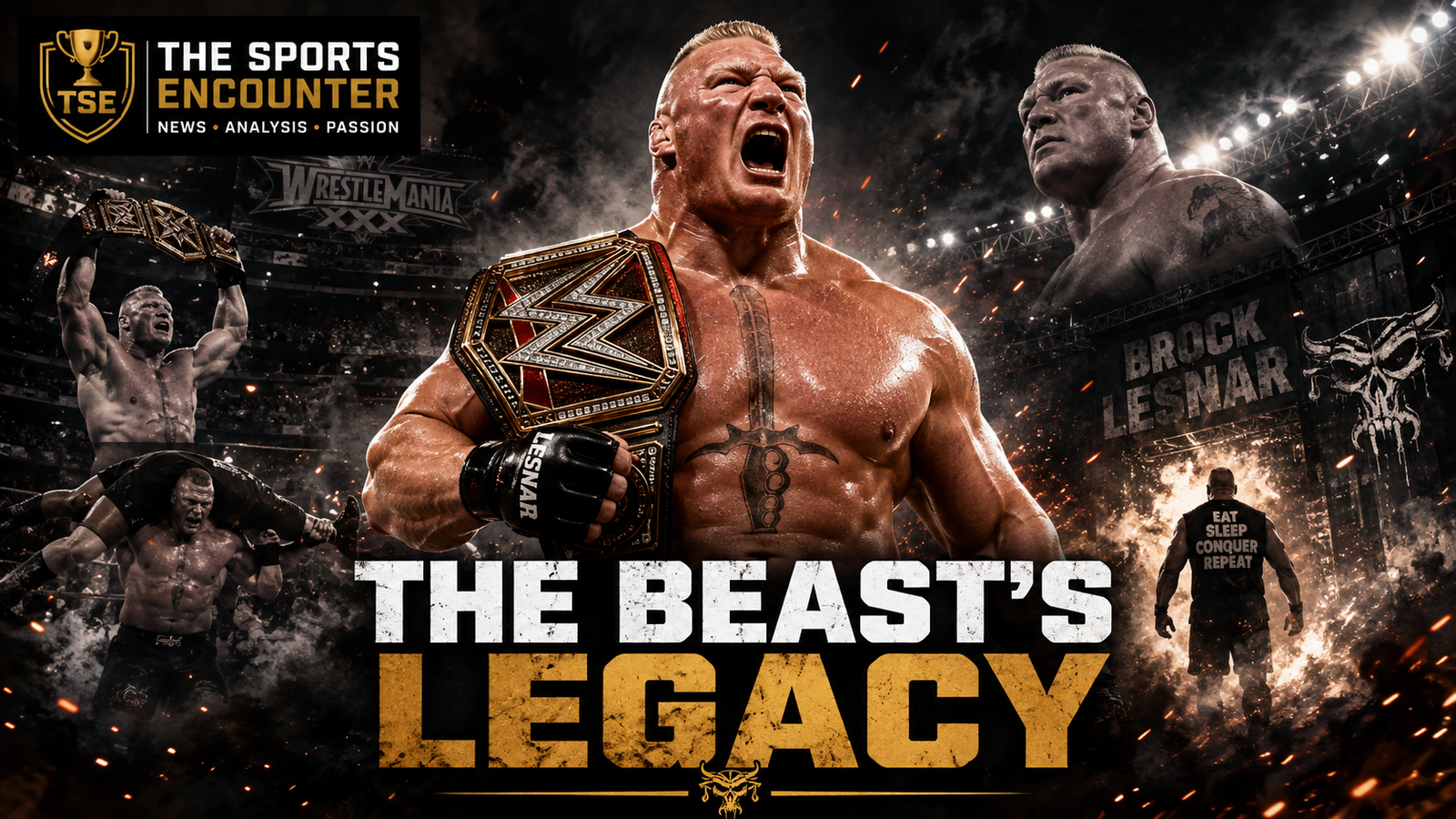
Brock Lesnar retires after one of WWE’s most dominant and divisive careers. From becoming the youngest WWE Champion and ending The Undertaker’s WrestleMania streak to controversial title reigns and unforgettable rivalries, this tribute examines the triumphs, failures and legacy of The Beast.

Brock Lesnar has officially retired from professional wrestling, closing one of the most extraordinary, controversial and physically dominant careers WWE has ever witnessed.
He was never the most polished talker, the most dependable full-time performer or the wrestler most interested in tradition. He did not need to be. Lesnar possessed something far rarer: the ability to make professional wrestling feel dangerous again.
From becoming WWE’s youngest world champion to ending The Undertaker’s WrestleMania streak, demolishing John Cena, ruling as Universal Champion for 504 days and eventually helping launch Oba Femi into a new era, Lesnar spent more than two decades operating somewhere between athlete, attraction and natural disaster.
His career contained historic victories, unforgettable destruction and commercial success few wrestlers could match. It also carried abrupt departures, disappointing matches, divisive title reigns and long absences that regularly tested the patience of WWE audiences.
The result was not a perfect career. It was something more compelling: a wrestling career that remained impossible to ignore.
TL;DR: Brock Lesnar’s WWE Career and Legacy
- Brock Lesnar made his explosive main-roster WWE debut in 2002.
- He became the youngest WWE Champion in history at 25 by defeating The Rock at SummerSlam 2002.
- Lesnar won 10 recognized WWE world championships: seven WWE Championships and three Universal Championships.
- He won the King of the Ring tournament in 2002.
- He won the Royal Rumble in 2003 and 2022.
- He defeated The Undertaker at WrestleMania 30, ending the legendary 21-0 WrestleMania streak.
- He held the Universal Championship for 504 days, one of the defining title reigns of WWE’s modern era.
- Lesnar’s greatest rivalries included The Undertaker, John Cena, Roman Reigns, Kurt Angle, Goldberg, Seth Rollins and Cody Rhodes.
- His career was weakened by his sudden 2004 departure, unpopular part-time championship reigns and several underwhelming marquee matches.
- His final phase helped establish Oba Femi as a major new WWE force.
- Lesnar retires as one of wrestling’s most legitimate, intimidating and commercially valuable attractions.
Brock Lesnar’s WWE Career at a Glance
| Category | Brock Lesnar’s Record |
|---|---|
| WWE main-roster debut | 2002 |
| Recognized world championships | 10 |
| WWE Championship reigns | Seven |
| Universal Championship reigns | Three |
| Longest Universal Championship reign | 504 days |
| Royal Rumble victories | 2003 and 2022 |
| King of the Ring victory | 2002 |
| Money in the Bank victory | 2019 |
| Youngest WWE Champion | 25 years old |
| Most historic victory | Defeating The Undertaker at WrestleMania 30 |
| Most dominant performance | Defeating John Cena at SummerSlam 2014 |
| Final major rivalry | Oba Femi |
Before WWE: The Athlete Behind The Beast
Professional wrestling has always required audiences to suspend disbelief. Brock Lesnar complicated that arrangement because very little about him required imagination.
Before entering WWE, Lesnar had already established himself as an elite amateur wrestler. His physical profile appeared almost unreal: heavyweight strength, explosive speed, balance, athletic coordination and the ability to move with the urgency of a much smaller competitor.
WWE did not need to convince fans that Lesnar was dangerous. It simply needed to place him inside a ring and allow viewers to see it.
That legitimacy became the foundation of his entire professional wrestling identity. Even when Lesnar was performing scripted entertainment, audiences understood that the man behind the character possessed genuine competitive credentials.
His later success as a UFC Heavyweight Champion strengthened that aura even further. When Lesnar returned to WWE in 2012, he was no longer merely a wrestler being presented as a fighter. He had become a proven combat-sports champion entering a wrestling company.
2002: WWE Unleashes a Once-in-a-Generation Rookie
Lesnar’s arrival on WWE television in 2002 felt less like a debut and more like an invasion.
Accompanied by Paul Heyman, Lesnar attacked wrestlers with frightening speed and minimal hesitation. WWE presented him as “The Next Big Thing,” but the phrase quickly felt conservative. Lesnar was not being positioned as a future possibility. He was being accelerated toward the top immediately.
His early victories established the formula that would define much of his career. Opponents were not merely defeated. They were thrown, folded, launched and overwhelmed.
Heyman handled the language. Lesnar supplied the evidence.
Winning the 2002 King of the Ring
Lesnar won the King of the Ring tournament only months after reaching the main roster. That victory gave him a WWE Championship opportunity at SummerSlam and confirmed that WWE had no intention of developing him slowly.
The company was searching for a new generation of main-event stars after the heights of the Attitude Era. Lesnar offered something different from The Rock, “Stone Cold” Steve Austin or Triple H.
He was colder, more physical and less theatrical. His character did not need long speeches. The threat came from what happened after the bell.
Defeating The Rock and Becoming the Youngest WWE Champion
At SummerSlam 2002, Lesnar defeated The Rock to capture the Undisputed WWE Championship.
At 25, he became the youngest WWE Champion in company history, a distinction that remains central to his legacy. WWE’s own historical records continue to recognize Lesnar as the youngest performer to win its premier championship.
The significance extended beyond age.
The Rock was already one of wrestling’s biggest stars. Defeating him cleanly at one of WWE’s largest annual events immediately established Lesnar as a credible centerpiece rather than a temporary experiment.
Few wrestlers in WWE history have moved from debut to world championship with comparable speed. Even fewer appeared so convincing while doing it.
Kurt Angle and the Rivalry That Proved Lesnar Could Wrestle
Power made Lesnar spectacular. His rivalry with Kurt Angle proved he could do far more than overpower opponents.
Angle was an Olympic gold medalist, an elite technical wrestler and one of WWE’s most complete performers. Against him, Lesnar could not rely entirely on intimidation. Their matches demanded timing, athleticism, mat wrestling and sustained storytelling.
The rivalry helped establish Lesnar as a genuine all-round performer.
The 2003 Royal Rumble Victory
Lesnar won the 2003 Royal Rumble, earning a WWE Championship match against Angle at WrestleMania XIX.
That victory made his ascent feel complete. Less than a year after his debut, Lesnar had won King of the Ring, captured the WWE Championship and secured a WrestleMania main event.
WrestleMania XIX and the Shooting Star Press That Nearly Went Wrong
Lesnar defeated Angle at WrestleMania XIX to regain the WWE Championship, but the match is remembered partly for one of the most frightening mistakes of his career.
Late in the contest, Lesnar attempted a Shooting Star Press from the top rope. The move was extraordinary for a wrestler of his size, but he under-rotated and landed dangerously on his head and upper body.
He completed the match and won the championship, but the moment became a lasting reminder that his athletic confidence sometimes pushed him beyond reasonable safety.
It was both a triumph and a warning.
The WrestleMania victory showed his toughness and composure. The failed move exposed the potential cost of trying to make an already extraordinary athlete appear even more superhuman.
The First Major Disappointment: Lesnar Walks Away in 2004
Lesnar’s first WWE run ended almost as quickly as it had begun.
By 2004, he had already won multiple world championships, headlined major events and worked with many of WWE’s biggest names. Yet the demands of the travel schedule and the repetitive nature of life on the road reportedly left him dissatisfied.
He left WWE after WrestleMania XX.
The Goldberg Match That Fans Rejected
Lesnar’s final match of that first run came against Goldberg at WrestleMania XX.
On paper, it appeared to be a confrontation between two of wrestling’s most destructive heavyweights. In practice, the crowd knew both men were leaving WWE and reacted with open hostility.
The match became uncomfortable rather than epic. Fans booed the competitors, rejected the pacing and directed much of their energy toward special referee “Stone Cold” Steve Austin.
Goldberg won, Austin stunned both men and Lesnar left WWE with one of the weakest major matches of his career.
For a performer who had been pushed as the company’s future, the departure felt like a broken promise.
WWE had invested enormous creative capital in Lesnar. He had defeated established stars and reached the championship almost immediately. Walking away after two years made that investment appear vulnerable.
It would take eight years for the relationship to resume.
The UFC Years Changed Brock Lesnar’s Wrestling Value
Lesnar’s time away from WWE ultimately made him more valuable.
He explored professional football before entering mixed martial arts, where he became UFC Heavyweight Champion. His success added a level of sporting credibility no WWE storyline could manufacture.
His combat-sports career also brought serious physical hardship. Lesnar battled diverticulitis, a condition that disrupted his UFC run and contributed to questions about how long he could remain an elite fighter.
When he returned to WWE in 2012, he arrived with a transformed identity.
He was no longer “The Next Big Thing.”
He was “The Beast Incarnate.”
2012 Return: WWE Finally Learns How to Use Brock Lesnar
Lesnar returned on the Raw after WrestleMania 28 and delivered an F-5 to John Cena.
The reaction demonstrated how much his absence had increased his mystique. WWE audiences had watched him succeed in a legitimate combat sport. Every suplex now carried additional credibility.
His new role was clear.
Lesnar would not operate like a normal roster member. He would appear selectively, target the company’s biggest stars and make each match feel like an event.
The Surprising Loss to John Cena
Lesnar faced Cena in an Extreme Rules match in his first contest after returning.
The match was violent, physical and unlike the polished WWE main-event style of the period. Lesnar bloodied Cena and dominated long stretches, only to lose near the finish.
The decision remains one of the most debated booking choices of Lesnar’s career.
Cena was WWE’s established franchise player, but Lesnar had just returned after eight years with an aura the company could have protected more carefully. A defeat in his first match weakened some of the momentum surrounding his comeback.
Lesnar recovered, but WWE had missed an opportunity to present him as immediately unstoppable.
Triple H, The Undertaker and the Reconstruction of The Beast
Lesnar’s subsequent feud with Triple H produced major-event attention but mixed creative results.
The rivalry was built around personal hostility, corporate power and physical violence. Lesnar broke Triple H’s arm in storyline, attacked Shawn Michaels and carried himself like a mercenary hired to dismantle WWE’s leadership.
Their matches were intense, but the rivalry lasted longer than its strongest ideas.
Triple H defeated Lesnar at WrestleMania 29 before Lesnar won their steel cage rematch. The series gave Lesnar victories and visibility, yet it did not fully restore the frightening momentum he would soon achieve.
That transformation came against The Undertaker.
Ending The Undertaker’s Streak: Lesnar’s Most Historic Victory
At WrestleMania 30, Brock Lesnar defeated The Undertaker.
The result ended The Undertaker’s legendary 21-0 WrestleMania winning streak and produced one of the most stunned crowd reactions in wrestling history.
For years, the streak had become part of WrestleMania mythology. Fans understood that The Undertaker would eventually retire, but many believed the undefeated record would remain untouched.
Lesnar shattered that assumption.
The three-count was followed by silence, disbelief and the sight of a graphic confirming that the streak had ended. The moment instantly became bigger than the match itself.
Why WWE Chose Brock Lesnar
There were arguments that a younger, emerging wrestler should have received the victory. Ending the streak could have created a new star overnight.
WWE chose certainty instead.
Lesnar had elite amateur credentials, UFC championship legitimacy and an established reputation as an unstoppable athlete. Fans might reject the decision, but they could not dismiss him as an unbelievable conqueror.
The victory permanently changed his WWE character.
Before WrestleMania 30, Lesnar was dangerous.
After WrestleMania 30, he became the man who had defeated something wrestling audiences thought could never be defeated.
SummerSlam 2014: The Night John Cena Was Destroyed
If ending The Undertaker’s streak created Lesnar’s mythology, SummerSlam 2014 established the full language of his dominance.
Lesnar challenged John Cena for the WWE World Heavyweight Championship and delivered one of the most one-sided defeats ever suffered by a top WWE champion.
He repeatedly suplexed Cena, controlled almost the entire match and reduced WWE’s leading hero to survival mode.
The performance introduced “Suplex City” before the phrase became a formal part of Lesnar’s presentation.
The match was shocking because WWE rarely allowed Cena to appear so powerless. Even in defeat, he normally produced long comebacks and multiple dramatic near-falls.
Against Lesnar, he looked overwhelmed.
That was the point.
Lesnar was no longer simply another champion. He had become WWE’s final boss.
Suplex City: A Brilliant Identity That Eventually Became Repetitive
The phrase “Suplex City” emerged during Lesnar’s WrestleMania 31 match with Roman Reigns and quickly became central to his brand.
It worked because it described the visual experience of a Lesnar match. Opponents were repeatedly launched across the ring, forced to absorb German suplexes and left waiting for the F-5.
For a period, the formula felt revolutionary. WWE’s main events had become increasingly elaborate, with numerous finishing moves and long sequences. Lesnar simplified the structure.
His matches became about impact, panic and survival.
Over time, however, the same formula became one of his limitations.
Some matches began to feel interchangeable. Repeated German suplexes replaced the wider move set Lesnar had displayed during his first WWE run. Fans who remembered his agility, mat wrestling and versatility occasionally saw Suplex City as a reduction of his talent.
The character had become stronger. The wrestler sometimes appeared narrower.
Roman Reigns and WWE’s Long Search for Lesnar’s Successor
No wrestler became more closely connected to Lesnar’s later career than Roman Reigns.
Their rivalry stretched across several years and multiple WrestleManias. WWE repeatedly used Lesnar as the ultimate obstacle Reigns needed to overcome before fully inheriting the company.
WrestleMania 31 and Seth Rollins’ Heist
Lesnar defended the WWE Championship against Reigns at WrestleMania 31 in a brutal main event.
Reigns absorbed enormous punishment and gradually fought back, but the match ended without either man securing the decisive victory. Seth Rollins cashed in his Money in the Bank contract during the contest and escaped as champion.
The finish protected both heavyweights and produced one of WrestleMania’s most memorable endings.
It also delayed the decisive Lesnar-Reigns conclusion.
Too Many Rematches
WWE returned to the rivalry repeatedly, including WrestleMania 34, Crown Jewel, SummerSlam and WrestleMania 38.
Some matches generated enormous interest. Others suffered from familiarity.
WWE frequently described their encounters as the biggest possible match, but the repeated pairings gradually reduced the sense of discovery. By the time their later contests arrived, audiences understood the structure and major story beats.
The rivalry remained commercially powerful, but it also represented WWE’s dependence on a small group of established main-event stars.
The 504-Day Universal Championship Reign
Lesnar defeated Goldberg at WrestleMania 33 to win the Universal Championship.
He held the title for 504 days, establishing the longest world championship reign of WWE’s modern era at that time and giving Raw a champion presented as a rare attraction.
The reign produced important matches against Samoa Joe, Braun Strowman, AJ Styles and Roman Reigns.
It also became one of the most divisive periods of Lesnar’s career.
Why the Reign Worked
Lesnar made the championship feel difficult to reach.
His limited appearances created anticipation, and challengers had to prove they belonged in the same physical environment. Samoa Joe’s confrontation with Lesnar gave Joe instant credibility. Braun Strowman looked like one of the few wrestlers capable of matching The Beast’s power. AJ Styles demonstrated how an elite smaller wrestler could create drama through movement and precision.
Why the Reign Frustrated Fans
Raw regularly operated without its world champion.
Lesnar’s contract and part-time schedule meant the title sometimes disappeared from weekly television for extended periods. Other wrestlers competed every week while the champion occupied a separate category.
That scarcity made Lesnar special, but it weakened the championship’s everyday presence.
Fans also grew frustrated when full-time wrestlers appeared to build momentum only to lose to Lesnar or wait months for another opportunity.
His reign therefore created a lasting debate about wrestling’s purpose.
Should a world champion be a weekly leader of the program, or can absence create greater value?
Lesnar proved both answers could be true, depending on how long the absence continued.
Goldberg: Redemption, Shock and a 90-Second Defeat
Goldberg returned to WWE in 2016 and immediately reopened the rivalry that had disappointed fans at WrestleMania XX.
This time, WWE used simplicity as a strength.
At Survivor Series 2016, Goldberg defeated Lesnar in approximately 90 seconds. The result stunned audiences because Lesnar had spent years being presented as nearly unbeatable.
The defeat worked as a shock, but it also temporarily disrupted the hierarchy WWE had built around Lesnar.
The rivalry concluded at WrestleMania 33 in a short, explosive match. Lesnar survived Goldberg’s early offense, won the Universal Championship and finally defeated the opponent who had repeatedly haunted his career.
It was an example of WWE understanding how to present two limited but spectacular heavyweight attractions.
No lengthy technical sequences were required. The appeal came from collisions.
Seth Rollins: The Opponent Who Exposed Lesnar’s Vulnerability
Seth Rollins became one of the few wrestlers capable of repeatedly disrupting Lesnar’s control.
Rollins had already stolen the WWE Championship from Lesnar at WrestleMania 31. In 2019, their rivalry developed into a battle over whether Raw could escape a champion who appeared only selectively.
Rollins defeated Lesnar at WrestleMania 35 and again at SummerSlam 2019.
The SummerSlam match was particularly important because it allowed Rollins to defeat Lesnar in a sustained main event rather than through a surprise cash-in.
Lesnar made Rollins’ victory feel significant by first establishing overwhelming danger.
This was one of Lesnar’s greatest contributions to younger or smaller opponents. When WWE committed to a clean and meaningful payoff, beating him could transform a performer’s standing.
Money in the Bank and the Unexpected Comedy of Brock Lesnar
Lesnar won the Money in the Bank contract in 2019 after entering the ladder match late.
The decision angered fans who wanted the contract to elevate a full-time wrestler, but it also produced an unexpectedly entertaining phase of Lesnar’s character.
He treated the briefcase like a portable music player, danced to its imagined rhythm and frustrated Paul Heyman by appearing unaware of the contract’s rules.
The segments revealed an underused part of Lesnar’s personality.
For years, WWE had relied on his silence, intimidation and physical presence. His comedic timing showed that he could be entertaining without sacrificing danger.
The Kofi Kingston Defeat and One of Lesnar’s Most Criticized Victories
Lesnar defeated Kofi Kingston for the WWE Championship on the first episode of SmackDown on Fox in October 2019.
The match lasted only seconds.
From a promotional perspective, WWE wanted a major title change and a dominant champion for a new television era. From the audience’s perspective, the result abruptly ended one of the company’s most emotional championship stories.
Kingston’s rise at WrestleMania 35 had represented persistence, fan support and a long-delayed opportunity. His title reign ended without a meaningful struggle or substantial follow-up.
Lesnar did what the booking required, but the moment became attached to his legacy because it reflected a recurring criticism.
WWE sometimes protected Lesnar’s dominance at the expense of stories audiences had spent months emotionally investing in.
Drew McIntyre Ends Lesnar’s Reign at an Empty WrestleMania
Drew McIntyre eliminated Lesnar from the 2020 Royal Rumble and defeated him for the WWE Championship at WrestleMania 36.
The story was designed to create a defining coronation for McIntyre.
Unfortunately, the COVID-19 pandemic forced WrestleMania to take place without a live audience.
McIntyre still received the victory, but the moment lost the crowd reaction that should have completed it.
For Lesnar, the defeat demonstrated his value as the obstacle WWE used to authenticate a new champion. For McIntyre, it was a triumph forever accompanied by unfortunate timing.
The match itself was short and heavily dependent on finishing moves. It accomplished the result but lacked the emotional scale the rivalry deserved.
The Cowboy Brock Era Revealed a Different Personality
When Lesnar returned in 2021, he looked and behaved differently.
He wore denim, grew his hair and beard, smiled more often and spoke for himself rather than relying entirely on Paul Heyman.
The “Cowboy Brock” presentation became one of the most popular phases of his later career.
Fans saw more personality without losing the physical credibility that defined him. Lesnar appeared to be enjoying professional wrestling in a way audiences had rarely witnessed.
The transformation also refreshed his rivalry with Roman Reigns, now operating as the dominant Tribal Chief alongside Heyman.
For the first time, Lesnar was not simply the cold final boss. He became a charismatic avenger pursuing a champion who had taken his advocate and position.
The 2022 Royal Rumble and Another Controversial Victory
Lesnar won the 2022 Royal Rumble after losing the WWE Championship earlier in the evening.
The victory gave him another path to Roman Reigns and helped build their WrestleMania 38 title unification match.
It also produced criticism.
Royal Rumble victories are often used to elevate wrestlers who need a career-defining opportunity. Lesnar was already one of WWE’s biggest stars and did not require the win to justify challenging Reigns.
His victory reinforced the perception that WWE’s main-event plans regularly returned to the same established names, even when the roster contained performers who could have benefited more from the opportunity.
SummerSlam 2022: The Tractor Match That Restored Spectacle
Lesnar and Reigns produced one of their most entertaining matches at SummerSlam 2022.
Lesnar used a tractor to lift part of the ring, creating a visual unlike anything seen in a conventional WWE main event. The Last Man Standing stipulation allowed both wrestlers to embrace chaos rather than repeat the structure of their previous encounters.
The match succeeded because it understood the rivalry’s problem.
Fans had already seen Lesnar and Reigns wrestle numerous times. WWE needed to create an image audiences had never witnessed.
A tilted ring, a tractor and two exhausted heavyweights delivered that image.
Cody Rhodes and Lesnar’s Final Great Rivalry
Lesnar’s 2023 rivalry with Cody Rhodes became one of the strongest closing chapters of his career.
The story initially appeared unusual. Lesnar attacked Rhodes without a detailed explanation, creating a personal conflict driven more by violence than conventional motivation.
The two wrestlers three times, trading victories before Rhodes won the decisive match at SummerSlam.
Afterward, Lesnar acknowledged Rhodes in the ring.
The gesture mattered because Lesnar rarely offered visible approval. By raising Rhodes’ hand and embracing him, he communicated that Rhodes had survived and earned respect.
It was professional wrestling’s version of a transfer of credibility.
Oba Femi and the Final Passing of the Torch
Lesnar’s final major story placed him opposite Oba Femi, one of WWE’s most physically imposing new-generation stars.
The pairing made immediate sense. Femi represented the kind of presence Lesnar himself had introduced in 2002: young, explosive, intimidating and capable of making established wrestlers look physically vulnerable.
Femi defeated Lesnar at WrestleMania 42, giving the emerging star the most important victory of his career. Lesnar left his boots and gloves in the ring afterward, creating the appearance of a farewell.
He later returned to continue the rivalry, but the underlying story remained unchanged.
The Beast had finally encountered someone WWE could present as the beginning of what came next.
Lesnar’s career had started with The Rock giving him a career-making victory at SummerSlam 2002. Its final phase allowed Lesnar to offer similar credibility to Femi.
The symmetry was appropriate.
Brock Lesnar’s 10 WWE World Championships
According to WWE’s official career record, Lesnar retires as a 10-time world champion.
- Seven-time WWE Champion
- Three-time Universal Champion
The number places him among the most decorated world champions in company history, but the importance of his reigns cannot be judged only by totals.
Lesnar’s championships often shaped entire eras.
His 2002 victory over The Rock accelerated WWE’s transition toward a younger generation. His 2014 championship win over John Cena established a new level of dominance. His 504-day Universal Championship reign tested the value and limitations of a part-time champion. His later title runs repeatedly intersected with WWE’s attempt to establish Roman Reigns as the company’s defining modern star.
Few championship careers created as much debate about access, scarcity and star power.
Fans interested in the official record can explore Brock Lesnar’s profile and career archive on WWE’s official website.
Brock Lesnar’s Greatest WWE Achievements
1. Becoming WWE Champion at 25
Winning WWE’s top championship only months after debuting remains one of the fastest and most convincing rises in company history.
2. Ending The Undertaker’s WrestleMania Streak
No victory had greater historical impact. Lesnar became permanently connected to one of wrestling’s most shocking results.
3. Winning 10 World Championships
His seven WWE Championship reigns and three Universal Championship reigns confirmed that Lesnar was not merely a temporary attraction.
4. Holding the Universal Championship for 504 Days
The reign made Lesnar the defining champion of Raw’s post-2016 era, even while producing criticism about his limited schedule.
5. Winning Two Royal Rumbles
His victories in 2003 and 2022 came 19 years apart, demonstrating remarkable longevity at WWE’s highest level.
6. Winning King of the Ring
The 2002 tournament victory accelerated his rise toward the WWE Championship.
7. Winning Money in the Bank
His 2019 victory added another major WWE accomplishment and produced one of the more playful periods of his character.
8. Becoming a Cross-Sport Attraction
Lesnar’s success in amateur wrestling, WWE and UFC gave him a level of legitimate athletic credibility that few professional wrestlers have matched.
9. Elevating Major Opponents
Victories over Lesnar helped validate Seth Rollins, Drew McIntyre, Cody Rhodes and Oba Femi at critical points in their careers.
10. Remaining a Major Attraction Across Three Decades
Lesnar competed at the top of WWE during the 2000s, 2010s and 2020s. Very few performers remained believable as the company’s most dangerous wrestler for so long.
Brock Lesnar’s Biggest Wrestling Disappointments
His Sudden Departure in 2004
Leaving after only two years interrupted what could have become one of WWE’s greatest uninterrupted careers.
The WrestleMania XX Match With Goldberg
The hostile crowd, slow pacing and knowledge that both wrestlers were leaving turned a dream match into a major disappointment.
Losing His First Match After Returning
The defeat to John Cena at Extreme Rules 2012 reduced some of the momentum surrounding Lesnar’s return.
Overreliance on Suplexes and Finishing Moves
Some of his later matches became repetitive and failed to display the athletic variety of his early career.
Part-Time Championship Reigns
Lesnar’s absences occasionally left WWE’s weekly programs without their leading champion and frustrated fans who wanted the title defended more regularly.
The Treatment of Kofi Kingston
The brief defeat that ended Kingston’s WWE Championship reign remains one of the most criticized booking decisions associated with Lesnar.
Too Many Matches Against Roman Reigns
The rivalry produced memorable moments but was repeated so often that some encounters lost their sense of importance.
Missed Opportunities With Other Opponents
Lesnar’s selective schedule meant fans never received sustained rivalries with several wrestlers who could have offered compelling contrasts.
Potential programs with performers such as Bobby Lashley, Bray Wyatt, Daniel Bryan and other elite stars either remained incomplete, arrived briefly or never reached their full creative potential.
Was Brock Lesnar a Great Professional Wrestler?
Yes, although his greatness did not resemble the traditional model.
Lesnar was not a full-time workhorse who produced lengthy television matches every week. He did not build his reputation through hundreds of closely matched contests or extended promotional speeches.
His value came from presence, credibility and controlled scarcity.
When Lesnar entered an arena, the atmosphere changed. Wrestlers who appeared dominant against everyone else suddenly looked vulnerable. Championship matches felt less like athletic exhibitions and more like emergency situations.
He could also wrestle at a much higher technical level than his later move set sometimes suggested. His matches with Kurt Angle, Eddie Guerrero, AJ Styles, Daniel Bryan, Finn Bálor and Seth Rollins showed his ability to adapt to opponents with very different bodies and styles.
Lesnar understood how to sell danger because he looked dangerous even while standing still.
How Brock Lesnar Changed WWE’s Main-Event Style
Lesnar helped move WWE away from the assumption that every major match needed escalating near-falls, long finishing sequences and evenly divided offense.
His matches often followed a different logic.
The opponent entered with a strategy. Lesnar disrupted it through overwhelming force. The central question became whether the challenger could survive long enough to discover one opening.
This structure influenced how WWE presented other dominant performers, including Roman Reigns, Gunther and Oba Femi.
Lesnar also demonstrated the value of asymmetry.
A wrestling match did not always need to look competitive from the opening bell. Sometimes the emotional appeal came from watching one wrestler endure a frightening imbalance.
Paul Heyman’s Role in Building The Beast
Brock Lesnar’s career cannot be fully discussed without Paul Heyman.
Heyman gave language to Lesnar’s threat. His introductions, predictions and declarations helped transform physical dominance into mythology.
He did not merely call Lesnar a champion. He described him as a conqueror, an anomaly and an athlete operating outside normal WWE limitations.
The partnership also protected Lesnar from one of his weaknesses.
Lesnar was never required to carry long verbal segments during his most intimidating years. Heyman created the anticipation, framed the stakes and sold the danger. Lesnar then appeared and fulfilled the promise physically.
It became one of wrestling’s most effective performer-manager partnerships.
The Business Impact of Brock Lesnar
Lesnar remained valuable because he attracted attention beyond the regular wrestling audience.
His UFC history gave WWE access to combat-sports viewers. His limited schedule made appearances feel important. His rivalries could be promoted around recognizable ideas without complicated explanation.
Lesnar versus Cena was dominance against resilience.
Lesnar versus The Undertaker was mortality against mythology.
Lesnar versus Goldberg was collision.
Lesnar versus Reigns was a battle over who owned WWE’s main-event era.
His commercial role resembled that of a prizefighter. WWE did not need him on every show. It needed audiences to believe that his presence made certain shows bigger.
Why Fans Both Admired and Resented Brock Lesnar
Lesnar inspired two powerful and sometimes conflicting reactions.
Fans admired his authenticity. He looked, moved and competed differently from almost everyone around him. His matches could create tension through a single lift, takedown or stare.
They also resented the privileges attached to his position.
He worked fewer dates, received immediate championship opportunities and frequently defeated wrestlers who carried WWE’s weekly programming. His title reigns sometimes appeared designed around his availability rather than the needs of the broader roster.
Both reactions were understandable.
Lesnar’s special treatment could be frustrating precisely because his special qualities were undeniable.
Where Brock Lesnar Ranks Among WWE’s Greatest Stars
Lesnar’s place depends on the criteria being used.
He does not have the week-to-week longevity of Bruno Sammartino, Hulk Hogan, John Cena or The Undertaker. He did not define WWE’s mainstream cultural identity in the manner of The Rock or “Stone Cold” Steve Austin.
As a legitimate physical attraction, however, he belongs near the top of the list.
Few wrestlers have ever combined amateur credentials, combat-sports success, championship history, commercial value and visual intimidation so effectively.
His career resembles those of other elite athletes whose greatness contains both extraordinary achievements and unresolved disappointments. Cristiano Ronaldo’s pursuit of the World Cup, explored in The Sports Encounter’s account of Ronaldo’s records and final World Cup farewell, demonstrates how a career can remain monumental even when the perfect ending never arrives.
Likewise, Neymar’s World Cup legacy shows how talent, physical setbacks and unfinished ambitions can coexist inside one sporting story.
Lesnar’s career belongs to that same complicated category.
It was historically successful without ever becoming emotionally tidy.
Brock Lesnar’s Legacy Scorecard
| Legacy Category | Score | Assessment |
|---|---|---|
| Physical presence | 10/10 | One of the most intimidating athletes in professional wrestling history. |
| Championship success | 10/10 | Ten recognized world championships and a historic 504-day reign. |
| Match quality | 8/10 | Capable of outstanding matches, though some later contests became repetitive. |
| Historical moments | 10/10 | Ending The Undertaker’s streak alone guarantees permanent historical importance. |
| Week-to-week contribution | 6/10 | His part-time schedule protected his aura but limited his weekly involvement. |
| Promotional ability | 7/10 | Improved significantly, especially during the Cowboy Brock phase, but Heyman carried much of the verbal storytelling. |
| Cross-sport credibility | 10/10 | His amateur wrestling and UFC success made his WWE persona uniquely believable. |
| Ability to elevate opponents | 8/10 | Defeating Lesnar created enormous value when WWE committed to the right opponent and payoff. |
| Career consistency | 7/10 | Historic peaks were balanced by absences, abrupt departures and uneven creative periods. |
| Overall legacy | 9/10 | A unique, era-spanning attraction whose credibility may never be reproduced. |
The Final Verdict on Brock Lesnar’s Career
Brock Lesnar did not give professional wrestling a conventional career.
He arrived too quickly, left too early, returned more valuable, disappeared frequently and dominated more aggressively than audiences were accustomed to seeing.
His achievements are undeniable.
He became WWE Champion at 25. He won 10 world titles. He conquered The Undertaker’s WrestleMania streak. He destroyed John Cena at SummerSlam. He ruled as Universal Champion for 504 days. He won two Royal Rumbles, King of the Ring and Money in the Bank.
His disappointments are equally important to the full story.
He walked away in 2004. His first Goldberg match failed. His part-time reigns frustrated audiences. Some later matches became predictable. WWE occasionally used his dominance to end other wrestlers’ stories too abruptly.
Yet even those failures reflected the unusual power Lesnar held.
Fans cared when he appeared, when he won, when he lost and when he stayed away. Indifference never became part of his presentation.
That may be the clearest measurement of his legacy.
The wider sporting world regularly says goodbye to generations that once seemed permanent. The Sports Encounter recently examined the great football generation that reached its final World Cup chapter in 2026. Lesnar’s retirement creates a similar emotional break for wrestling.
An era built around impossible physicality, UFC legitimacy, Paul Heyman’s proclamations and the opening notes of Lesnar’s entrance music has reached its conclusion.
There may be stronger technical wrestlers.
There may be more beloved champions.
There may be performers with longer schedules and cleaner careers.
There will probably never be another Brock Lesnar.
Frequently Asked Questions About Brock Lesnar
Has Brock Lesnar retired from professional wrestling?
Yes. WWE officially announced Brock Lesnar’s retirement from professional wrestling in August 2026.
How many world championships did Brock Lesnar win in WWE?
Lesnar won 10 recognized WWE world championships, consisting of seven WWE Championships and three Universal Championships.
What was Brock Lesnar’s greatest WWE achievement?
His most historic achievement was defeating The Undertaker at WrestleMania 30 and ending the legendary 21-0 WrestleMania streak.
Who did Brock Lesnar defeat to become the youngest WWE Champion?
Lesnar defeated The Rock at SummerSlam 2002 to become WWE Champion at the age of 25.
How long was Brock Lesnar Universal Champion?
His longest Universal Championship reign lasted 504 days.
How many times did Brock Lesnar win the Royal Rumble?
He won the men’s Royal Rumble match twice, first in 2003 and again in 2022.
Who were Brock Lesnar’s greatest rivals?
His most important rivals included Kurt Angle, The Undertaker, John Cena, Roman Reigns, Goldberg, Seth Rollins, Triple H, Cody Rhodes and Oba Femi.
Why was Brock Lesnar’s career controversial among WWE fans?
Fans often criticized his part-time schedule, lengthy absences as champion, repeated matches with Roman Reigns and several booking decisions that placed his dominance above full-time performers.
Was Brock Lesnar a good technical wrestler?
Yes. Although his later matches emphasized suplexes and power, his early work and matches against Kurt Angle, Eddie Guerrero, AJ Styles and Daniel Bryan demonstrated excellent wrestling ability, balance and athletic versatility.
Is Brock Lesnar one of the greatest WWE wrestlers ever?
Lesnar belongs among WWE’s greatest attractions and most dominant world champions. His limited schedule prevents a simple comparison with full-time icons, but his physical credibility, championship history and historic moments give him a unique place in wrestling history.

Cricket
Is Babar Azam the Solution The Hundred Needs? His BBL|15 Impact Makes the Case
Babar Azam’s BBL|15 numbers were modest, but his wider impact was huge. Sydney Sixers gained followers, stronger crowds, sold-out fan zones and millions of social views. That makes his Big Bash season a compelling blueprint for what The Hundred needs next.

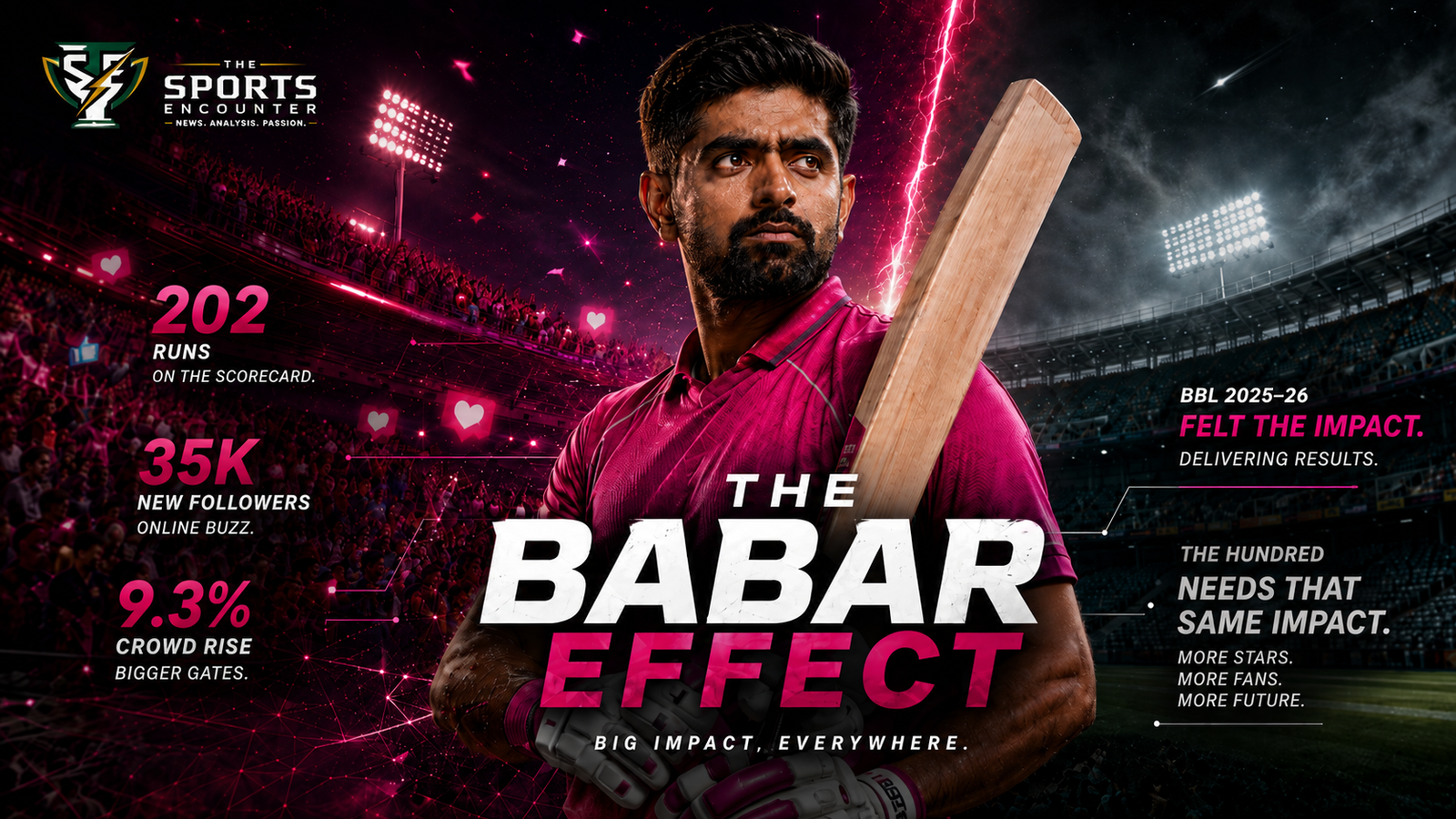
Babar Azam scored only 202 runs during his first Big Bash League season. He averaged 22.44. His strike rate was 103.06. By modern T20 standards, BBL|15 should have been an forgettable tournament for one of Pakistan cricket’s biggest names.
It was anything but forgettable.
Sydney Sixers gained around 35,000 followers around the announcement of his signing.
A dedicated Babar-themed supporter section at the Sydney Cricket Ground sold out.
The Sixers’ average home attendance increased by 9.3% from the previous season.
Ordinary league fixtures began clearing 25,000 spectators more frequently.
Babar-related social media clips generated millions of views.
Pakistani and South Asian supporters who previously had little reason to feel emotionally connected to an Australian domestic franchise suddenly had one.
Babar Azam did something that franchise cricket occasionally values even more than runs.
He made people care.
That is why his BBL|15 experience deserves another look now.
Thousands of miles away, The Hundred is experiencing an uncomfortable 2026 season in England. The cricket has improved, higher-profile players have arrived and broadcast engagement has remained encouraging, yet early men’s attendance fell 18.4% compared with equivalent opening fixtures in 2025.
The Sports Encounter has already examined whether The Hundred is losing its oomph among English cricket fans and why empty seats at Trent Bridge have become part of the 2026 conversation.
The BBL may already have demonstrated one possible solution.
The Hundred needs the Babar Azam effect.
The Babar Azam BBL|15 Paradox
| Measure | Babar Azam in BBL|15 |
|---|---|
| Runs | 202 |
| Average | 22.44 |
| Strike rate | 103.06 |
| Half-centuries | 2 |
| Highest score | 58* |
| Sixers follower increase around signing | Approximately 35,000 |
| Increase in Sixers average home attendance | 9.3% |
| First Sixers home attendance | 20,110 |
| Melbourne Stars home attendance | 25,589 |
| Hobart Hurricanes home attendance | 30,090 |
| Major Babar-related Instagram clip | 15.5 million views |
| Related X clip | 1.9 million views |
The contradiction is the entire story.
If Babar had scored 600 runs at a strike rate of 160, increased attendance could easily have been dismissed as the natural response to a player dominating the tournament.
He did not dominate it.
His statistical season was disappointing.
Yet the audience continued to follow him.
That means Babar’s commercial and cultural impact cannot be explained simply by batting performance.
The product people were buying was Babar himself.
Thirty-Five Thousand Followers Before the Experiment Had Even Begun
Cricket Australia understood Babar’s potential before he faced his first delivery.
When Sydney Sixers announced his signing in June 2025, Cricket Australia highlighted the extraordinary response to a teaser video released by the franchise.
The Sixers had gained around 35,000 new followers.
That happened around the signing announcement.
No innings was required.
No six was required.
No BBL century was required.
Cricket Australia also noted the size of Babar’s existing global social following and his enormous popularity among Australia’s Pakistani diaspora.
The official announcement described him as an addition whose value extended beyond Sydney Sixers to the Big Bash League itself.
That proved remarkably accurate.
For a franchise league, 35,000 new followers are not simply a vanity metric.
They represent 35,000 new opportunities to sell tickets, merchandise, subscriptions, sponsor exposure and future interest.
More importantly, they represent people who have made an active decision to connect with a franchise.
That is difficult to manufacture through advertising alone.
Babaristan Turned a Player Into a Match-Day Culture
Sydney Sixers then made one of the smartest decisions of the entire BBL season.
They did not simply put Babar in a Sixers shirt and hope people arrived.
They created Babaristan.
The dedicated supporter area at the SCG was built around Babar and the South Asian audience accompanying him into the competition.
The concept included culturally relevant entertainment, food, merchandise, fan experiences and a visible place inside the ground where supporters could identify themselves with Babar.
The first Babaristan allocation sold out before the Sixers’ opening home fixture.
Think about what Sydney achieved.
They converted:
- a player into an identity;
- an identity into a community;
- a community into ticket demand;
- ticket demand into atmosphere;
- and atmosphere into a stronger franchise product.
That chain is exactly what The Hundred needs to study.
The Sixers’ Crowd Numbers Make the Case Harder to Ignore
Wisden’s analysis of the season found Sydney Sixers’ average home attendance increased by 9.3% after Babar’s arrival.
The opening home match against Adelaide Strikers attracted 20,110 spectators, the Sixers’ best crowd for their first home game in four years.
Then the numbers grew.
A home fixture against Melbourne Stars drew 25,589.
The Hobart Hurricanes game attracted 30,090 despite the threat of rain.
Those numbers deserve context.
During the previous three seasons, only one Sixers league fixture outside playoffs and the Sydney derby against the Thunder had exceeded 25,000 spectators. That exception involved Steve Smith returning and scoring a century.
With Babar, exceeding 25,000 became less exceptional.
Again, we cannot mathematically assign every additional spectator to one player.
Winning form, scheduling, opponents, weather, other stars and wider BBL momentum all influence attendance.
But the combination of increased crowds, Babaristan demand and the immediate follower surge provides unusually strong circumstantial evidence of his pull.
BBL|15 Was Booming, and Babar Was One of Its Audience Engines
Babar’s arrival also coincided with an excellent season for the wider competition.
Cricket Australia reported that BBL|15 generated a total attendance of 1,089,043, up 12% year over year and the league’s biggest aggregate crowd since BBL|09 despite featuring 17 fewer matches.
The average attendance reached 24,751, the best per-match figure since BBL|07.
Television numbers strengthened too.
BBL|15 averaged 808,000 national viewers per game, a 5% increase, while 13 matches averaged more than one million viewers.
No responsible analysis should claim Babar caused the entire BBL resurgence.
He clearly did not.
The league also featured other Pakistani stars, leading Australian players, competitive cricket and favorable broader momentum.
But Babar became one of the season’s clearest international audience-acquisition assets.
His contribution belonged to the business of the Big Bash as much as to the cricket.
The Batting Numbers Actually Strengthen the Babar Argument
This is where the debate becomes fascinating.
Babar’s cricket numbers were poor for a modern T20 opener.
He scored 202 runs from 11 matches.
His average fell to 22.44.
His strike rate was only 103.06.
Wisden found that among BBL seasons in which a batter had accumulated at least 200 runs, Babar’s scoring rate ranked at the very bottom historically.
There is no point hiding that.
The Hundred would have legitimate sporting questions to ask about whether such a tempo fits a 100-ball competition.
Yet this is precisely why BBL|15 provides such a compelling commercial case study.
Babar failed to produce elite T20 numbers and still produced elite attention.
If he had been the tournament’s dominant batter, performance and popularity would be impossible to separate.
BBL|15 separated them for us.
Fans did not disappear when the hundreds failed to arrive.
The conversation around him continued.
The stands continued filling.
His supporters continued engaging.
Even Babar’s Controversies Became BBL Content
The strangest evidence of Babar’s reach arrived during one of his more frustrating moments.
Steve Smith declined a possible single while batting with Babar so he could retain strike for the next over.
Smith then hammered a BBL-record 32 runs from that over.
Babar later showed visible frustration when dismissed.
The incident exploded across social media.
Wisden reported that an Instagram clip around his reaction reached approximately 15.5 million views.
The corresponding post on X generated around 1.9 million.
Those numbers were far beyond ordinary BBL social reach.
Even commentary questioning Babar’s place in the Sixers side generated hundreds of thousands of views.
That is star gravity.
A sports competition needs moments people want to discuss after the broadcast ends.
Babar generated those moments even when the story was not flattering.
And This Is Where The Hundred Should Be Paying Attention
The Hundred’s 2026 problem has become increasingly difficult to explain through cricket quality.
The competition has better overseas players.
Salaries have increased.
International-standard attacks have improved the level of the men’s competition.
High-profile franchise investors have arrived.
Broadcast and social engagement have shown encouraging signs.
Yet the early attendance numbers moved in the opposite direction.
The first six men’s opening fixtures in 2026 attracted a combined 89,413 spectators, compared with 109,519 at the equivalent venues in 2025.
That represented an 18.4% decline.
Five of the first six venues were down year over year.
England and Trent Rockets batter Ben Duckett publicly admitted he was surprised by the weaker crowds because he believed the standard of cricket had improved.
That question matters.
If better cricket does not automatically bring more spectators, perhaps cricket quality is only part of the problem.
The Hundred Has Better Players. It Needs Players Who Bring People With Them
Franchise cricket often treats player acquisition primarily as a sporting exercise.
How many runs?
What strike rate?
How many wickets?
What matchup?
Those questions remain essential.
But modern sports businesses must ask another question.
How many people will care because this player is here?
Babar provides an unusually clear answer.
He brings a pre-existing audience.
That audience does not need to be taught who he is.
It does not need a six-week marketing campaign explaining why he matters.
It already has an emotional relationship with him.
The challenge for a franchise is simply converting that attachment into attachment to the team.
Sydney Sixers showed how.
The Hundred’s Identity Problem Makes Babar Even More Valuable
The 2026 Hundred has undergone the biggest transformation since its creation.
Private investment brought new owners into the eight franchises following transactions that valued stakes across the competition at hundreds of millions of pounds.
Several teams changed identities, colors or branding.
Oval Invincibles became MI London.
Northern Superchargers became SunRisers Leeds.
Manchester’s franchise adopted the Super Giants identity.
Those moves imported established global franchise brands.
They also disrupted some of the familiarity developed during The Hundred’s first five seasons.
Reporting during the current campaign has linked part of the attendance difficulty to rebranding, ticketing changes and the challenge of integrating new ownership models with established county cricket cultures.
This is where a player such as Babar becomes especially useful.
New brands require emotional shortcuts.
Babar is one.
Babar Could Give a Hundred Franchise Something Money Cannot Immediately Buy
You can buy advertising.
You can buy a new kit.
You can buy digital impressions.
You can buy elite players.
You cannot immediately buy emotional loyalty.
That usually takes years.
A superstar with a committed community can compress that process.
When Babar joined Sydney Sixers, tens of thousands of followers did not suddenly develop a lifelong fascination with Sydney cricket.
They followed Babar.
Then they encountered the Sixers.
That distinction matters.
The player became the gateway to the franchise.
The Hundred needs more gateways.
England May Be an Even Better Environment for the Babar Effect
The potential audience in Britain makes the argument particularly compelling.
England and Wales have a large and deeply established South Asian population. Census 2021 recorded 5.5 million people identifying within the Asian, Asian British or Asian Welsh high-level ethnic group.
Cricket already occupies a powerful cultural position within many British Pakistani and wider South Asian communities.
So The Hundred would not be asking Babar to create cricket interest from nothing.
It would be trying to redirect existing cricket passion toward a particular franchise and competition.
That is a much easier marketing task.
Imagine the Babar Effect at Headingley
One venue immediately illustrates the possibility.
Headingley has struggled for consistent Hundred crowds this season despite featuring high-profile players including Harry Brook, Jofra Archer and Adil Rashid.
The Sports Encounter reported an attendance of only 9,438 when SunRisers Leeds produced a spectacular record chase against Manchester Super Giants.
You can read the full match analysis in our report on Mitchell Marsh and Harry Brook’s record Hundred chase.
Yorkshire also sits beside one of Britain’s most significant Pakistani population centers.
Bradford’s 2021 Census population was 32.1% Asian, Asian British or Asian Welsh.
That does not mean every British Pakistani cricket fan would automatically buy a Hundred ticket because Babar appeared.
But the marketing opportunity is obvious.
A Babar-led franchise at Headingley could reach supporters across Leeds, Bradford and the wider Yorkshire region with a player they already know intimately.
The Hundred Should Study Babaristan, Not Simply Sign Babar
Recruiting him would only be step one.
The Sixers lesson was successful because the club built activation around the player.
The Hundred should recreate the mechanism rather than copy the name.
A franchise could build:
- dedicated Babar supporter sections;
- Urdu-English digital campaigns;
- British Pakistani creator partnerships;
- South Asian food experiences;
- music and entertainment reflecting local communities;
- community-club ticket initiatives;
- school and academy appearances;
- family ticket packages;
- limited-edition Babar merchandise;
- fan meet-and-greet competitions;
- Pakistan-themed rivalry nights;
- digital content designed specifically for audiences in Pakistan.
Then Babar stops being an overseas player occupying one roster slot.
He becomes a customer-acquisition strategy.
That Changes How His Salary Should Be Evaluated
Suppose a franchise looks only at his BBL strike rate.
At 103.06, the answer might be straightforward.
There are more explosive openers available.
But that calculation values only cricket output.
A more complete franchise equation should include:
| Sporting Value | Audience Value |
|---|---|
| Runs | Ticket demand |
| Strike rate | Social reach |
| Matchups | International audience |
| Fielding | Merchandise demand |
| Availability | Sponsor visibility |
| Role balance | Community engagement |
| Match-winning ability | Franchise follower acquisition |
Viewed through both columns, Babar’s value looks very different.
Babar’s Impact Creates a Commercial Multiplier
A true marquee signing can influence several revenue streams simultaneously.
More interest can mean more tickets.
More spectators can mean greater concession sales.
More emotionally invested fans can create merchandise demand.
Greater digital engagement increases sponsor exposure.
International attention strengthens the franchise’s value outside Britain.
Larger social communities create first-party audiences franchises can continue marketing to after the player leaves.
No public dataset allows us to calculate an exact pound value for the Babar effect.
We should not pretend otherwise.
But BBL|15 gives enough measurable evidence to establish that his commercial footprint exceeded what his 202 runs would suggest.
The Hundred Already Knows Babar Has Appeal
There is also an irony here.
Babar and The Hundred have circled each other for years.
The competition’s own official website described him as a global short-form star when he initially registered ahead of the league’s launch.
He was again listed among major overseas names available in subsequent drafts.
Yet the competition has never truly captured the Babar audience in the way Sydney Sixers eventually did.
That now looks like a missed opportunity.
Babar Does Not Have to Be the Best Hundred Batter to Be One of Its Most Valuable Players
This distinction is critical.
Nicholas Pooran may score faster.
Finn Allen may clear more boundaries.
Jos Buttler may offer a more naturally destructive 100-ball profile.
Harry Brook may produce greater tactical value to his team.
Franchise sport can accommodate more than one definition of value.
Babar could be worth more to The Hundred commercially while another player produces more runs per ball.
BBL|15 proved those concepts can coexist.
The Hundred’s Empty Seats Make Audience Value More Urgent
The Sports Encounter has watched this problem evolve throughout the season.
When Trent Rockets played Birmingham Phoenix at Trent Bridge, the official crowd was 11,988.
That represented a respectable five-figure attendance.
But wide television shots repeatedly revealed large unused sections of the stadium.
That contrast became the basis for our deeper examination of The Hundred’s empty-seat problem.
Other matches have demonstrated that demand remains available.
London Spirit attracted 23,847 for its opening men’s game at Lord’s.
Cardiff recorded a tournament-best home crowd during the early stages of the competition.
The Hundred therefore does not face complete audience rejection.
Its problem is inconsistency.
Babar is exactly the type of player who can make an otherwise ordinary Wednesday evening feel less ordinary.
The Hundred Does Not Need Another Rebrand as Badly as It Needs Reasons to Attend
The new ownership era has introduced fresh names, colors, investors and commercial ambition.
None of those automatically gives somebody a reason to leave home.
Fans respond to stories.
They respond to identity.
They respond to rivalries.
They respond to people.
Babar creates all four.
A Babar appearance against Shaheen Shah Afridi could become an event.
A Babar-Ben Duckett matchup could be marketed differently.
A Babar fixture at Lord’s immediately carries global digital potential.
A Babar appearance at Headingley could activate Yorkshire’s Pakistani cricket audience.
One player creates multiple storylines before a ball is bowled.
The Big Bash Discovered the Difference Between a Star and an Audience Magnet
Every franchise league has stars.
Very few athletes bring a ready-made community into the competition.
Babar is one of them.
The Big Bash learned this almost accidentally.
Sydney signed an elite international batter.
What it received was:
- a social-media acquisition engine;
- a diaspora connection;
- a ticketing story;
- a match-day activation platform;
- a sponsorship asset;
- and an international conversation generator.
The fact that his batting underperformed makes those outcomes harder to dismiss.
But Babar Alone Cannot Fix Everything
The Hundred’s structural problems still require structural solutions.
Babar cannot fix confusing franchise identities.
He cannot solve every ticket-pricing issue.
He cannot repair poorly timed fixtures.
He cannot eliminate tension between new investors and traditional county structures.
He cannot guarantee every stadium sells out.
And he cannot single-handedly turn every casual cricket supporter into a Hundred loyalist.
That is why the right description is not miracle cure.
Babar is a catalyst.
The Hundred still has to convert the attention he creates into lasting loyalty.
The Hundred’s Own History Proves New Fans Can Be Reached
The competition should not lose sight of what it has already achieved.
Its official figures show more than 2.5 million spectators attended across the competition’s first five years.
More than 200,000 people bought tickets to their first cricket match through The Hundred.
Families have formed a substantial portion of the audience, while the women’s competition has repeatedly established new attendance benchmarks.
The underlying concept can attract people.
The current challenge is maintaining and deepening that connection as the league changes.
Babar offers a shortcut into one of British cricket’s most passionate existing communities.
The Timing Could Hardly Be Better
Babar is also entering an interesting stage of his career.
He remains one of Pakistan cricket’s defining modern players and one of the sport’s most recognizable international personalities.
The Sports Encounter recently examined his wider career in our extensive assessment of Babar Azam’s place in Pakistan cricket history.
The BBL experiment added another dimension to his profile.
It showed leagues what happens when the Babar brand is activated properly.
A Babar Signing Should Be Built Around More Than Eight Matches
If The Hundred pursues Babar in a future season, his value should start months before opening night.
Announcement day should matter.
Preseason content should matter.
Community outreach should matter.
Merchandise should matter.
Pakistan-specific broadcasting and digital partnerships should matter.
Fixtures involving other Pakistani stars should be deliberately promoted.
Match-night culture should matter.
The Sixers demonstrated the mistake would be signing Babar and treating him like every other overseas player.
BBL|15 Redefined What a Successful Overseas Signing Can Mean
If we evaluate Babar’s Australian season purely through cricket, it was disappointing.
If we evaluate it through franchise economics, audience acquisition and cultural relevance, it becomes something very different.
That distinction matters because sports leagues increasingly compete for attention rather than merely against other cricket leagues.
The Hundred competes with football.
Streaming platforms.
Summer travel.
Concerts.
Social media.
Other forms of cricket.
And simple consumer fatigue.
To win that competition, it needs attractions capable of breaking through.
Babar has already proved he can.
How Badly Does The Hundred Need the Babar Effect?
Badly enough that the BBL evidence should be studied at franchise-board level.
The question should no longer be whether Babar’s strike rate makes him the perfect Hundred opener.
That is only one part of the decision.
The more important strategic question is whether The Hundred can afford to ignore somebody who has already demonstrated an ability to bring a huge cricket community with him.
The Hundred’s investors have spent enormous sums acquiring franchises.
Now they need people to care about those franchises.
BBL|15 supplied a case study in how that can happen.
The Babar Azam Effect in One Table
| BBL|15 Evidence | Potential Lesson for The Hundred |
|---|---|
| Approximately 35,000 Sixers followers gained around signing announcement | A marquee player can accelerate franchise audience acquisition immediately |
| Babaristan sold out | Player identity can become match-day community |
| Sixers average home attendance rose 9.3% | Star power can support physical attendance, not merely online engagement |
| 25,000-plus crowds became more common | Routine fixtures can become events |
| 15.5 million views on one Babar-related Instagram clip | A global star extends relevance beyond match broadcast windows |
| Strong Pakistani diaspora engagement | The Hundred can activate Britain’s established South Asian cricket audience |
| Only 202 runs at a 103.06 strike rate | Audience value can exist independently of elite statistical performance |
The Verdict: The Hundred Needs Babar Azam
Babar Azam’s first Big Bash season produced one of franchise cricket’s most useful recent lessons.
A player can have an ordinary tournament statistically and an extraordinary tournament commercially.
Two hundred and two runs did not define Babar’s BBL|15.
Thirty-five thousand new followers mattered.
Babaristan mattered.
The attendance increase mattered.
The 25,000 and 30,000-strong SCG crowds mattered.
The millions of social-media views mattered.
The Pakistani supporters who suddenly cared about Sydney Sixers mattered.
Those are exactly the kinds of outcomes The Hundred needs more urgently than another cosmetic identity change.
The competition already has talented cricketers.
It already has wealthy owners.
It already has broadcasters.
It already has famous grounds.
What it needs is deeper emotional attachment.
Babar carries that attachment with him.
The Big Bash did not need him to score 500 runs to discover his value.
The Hundred should not need another season of empty seats to understand it.
Babar Azam is not valuable to The Hundred simply because he can open the batting.
He is valuable because he can make people care who is opening the batting.
BBL|15 already proved the difference.
Frequently Asked Questions
How did Babar Azam perform in BBL 2025-26?
Babar scored 202 runs from 11 matches for Sydney Sixers, averaging 22.44 with a strike rate of 103.06. He made two half-centuries and recorded a highest score of 58 not out.
Was Babar Azam successful in the Big Bash?
His batting performance was below expectations, but his wider impact was significant. Sydney Sixers experienced stronger attendance, substantial social-media engagement and increased international interest surrounding his participation.
How many followers did Sydney Sixers gain after signing Babar Azam?
Cricket Australia reported that Sydney Sixers gained approximately 35,000 followers around a teaser campaign preceding Babar’s signing announcement.
What was Babaristan?
Babaristan was a dedicated Sydney Sixers supporter section at the SCG created around Babar Azam and South Asian cricket culture. The first allocation sold out before the Sixers’ opening home match.
Did Babar Azam increase Sydney Sixers attendance?
Wisden calculated that the Sixers’ average home attendance increased by 9.3% during Babar’s season. Multiple factors influence crowds, so the entire increase cannot be attributed solely to him, but the rise coincided with strong Babar-specific ticket and fan engagement.
How successful was BBL|15 overall?
Cricket Australia reported total attendance of 1,089,043, up 12% year over year, with average attendance reaching 24,751. National television audiences averaged 808,000 per match.
Are The Hundred crowds down in 2026?
Yes. Early 2026 data showed the first six men’s opening fixtures drawing 89,413 spectators compared with 109,519 at the equivalent venues in 2025, an 18.4% decline.
Why could Babar Azam help The Hundred?
Babar brings an established international audience, particularly among Pakistani and South Asian cricket fans. His BBL experience demonstrated that his presence can influence follower growth, ticket demand, social engagement and match-day culture even when his individual batting performance is modest.
Would Babar Azam’s strike rate be a concern in The Hundred?
Yes. His BBL|15 strike rate of 103.06 was low for modern short-form cricket. Any franchise considering him would need to evaluate his tactical batting role alongside his much broader commercial and audience value.
Has Babar Azam been available for The Hundred before?
Yes. Babar has previously registered for The Hundred player selection process, including being listed among overseas players by the competition itself.
Could Babar Azam revive The Hundred?
No individual player can solve every structural challenge facing a sports competition. However, Babar’s BBL|15 experience provides strong evidence that he could act as a major audience catalyst for The Hundred, particularly through British Pakistani and wider South Asian cricket communities.
What should The Hundred learn from Sydney Sixers?
The principal lesson is to activate the community around a marquee player rather than simply sign him. Sydney Sixers used Babaristan, targeted fan engagement and culturally relevant experiences to turn Babar’s individual popularity into franchise engagement.
Breaking News
Paul Walter, Tim Seifert Power Manchester Super Giants Amid Disappointing Weekend Hundred Attendance
Paul Walter and Tim Seifert shared a 119-run opening stand as Manchester Super Giants beat Southern Brave by 10 runs in Match 26 of The Hundred 2026. Tristan Stubbs fought back with an unbeaten 53, but Brave fell short as questions over disappointing weekend crowds continued.

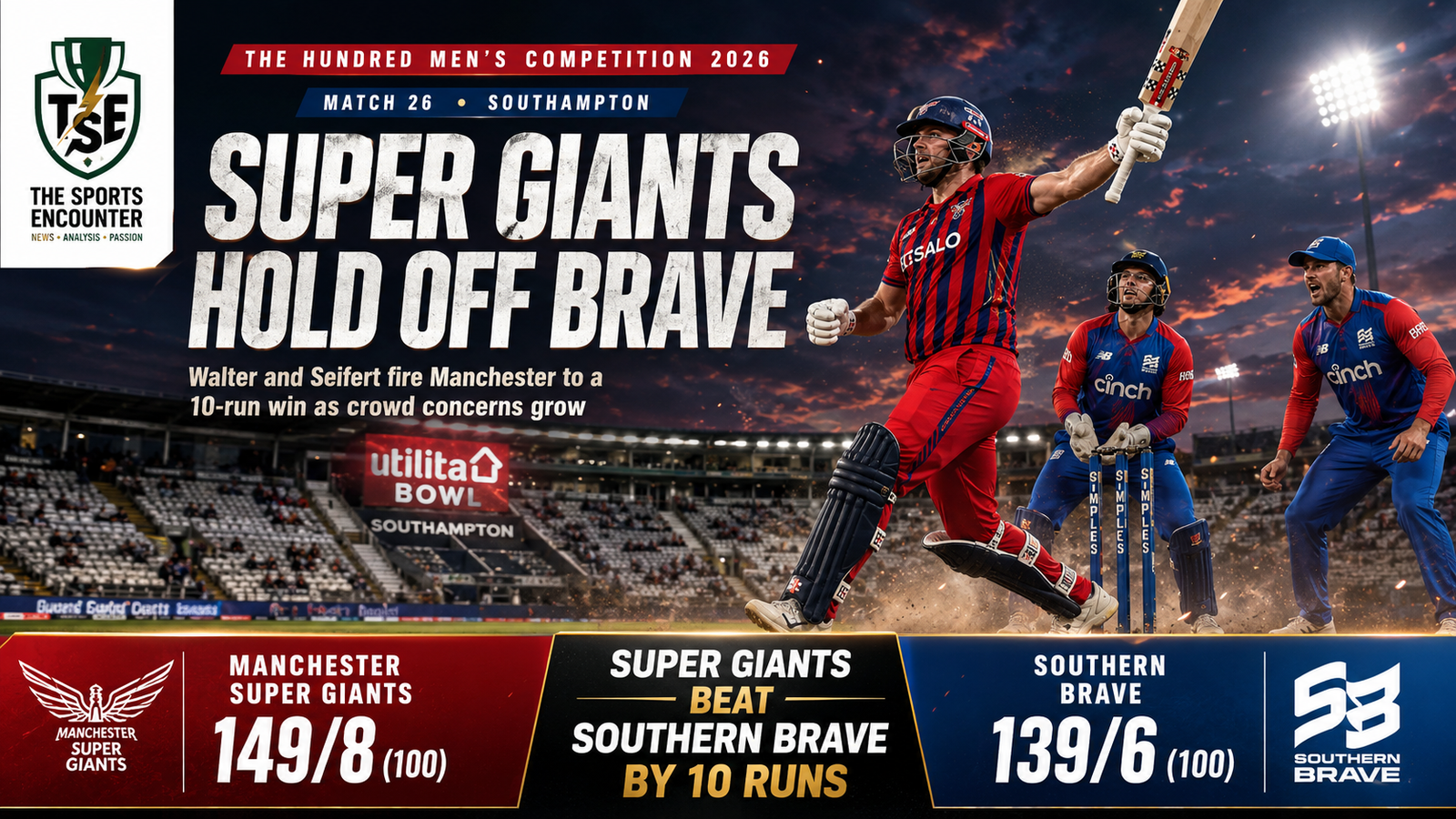
Manchester Super Giants defeated Southern Brave by 10 runs at the Utilita Bowl on Saturday, August 8, after Paul Walter and Tim Seifert built a spectacular opening partnership before their bowlers survived Tristan Stubbs’ late resistance.
The result of Match 26 of The Hundred Men’s Competition 2026 mattered considerably to Manchester’s qualification hopes. The atmosphere surrounding it may ultimately matter almost as much to the tournament itself.
Walter smashed 64 from 32 balls and Seifert made 55 from 34 as Manchester reached 149 for eight from their 100 balls. Southern Brave responded with 139 for six despite Stubbs carrying his bat for an unbeaten 53 from 38 deliveries.
Manchester therefore collected four important points and moved to 16 after seven matches, while Southern Brave remained stranded on eight points after suffering their fifth defeat in seven games.
The quality of the contest deserved attention. The apparent lack of a compelling weekend atmosphere at Southampton raised another question about whether The Hundred is losing some of its pull with English cricket supporters.
Southern Brave vs Manchester Super Giants: Match 26 Scorecard
| Competition | The Hundred Men’s Competition 2026 |
| Match | Match 26 |
| Date | August 8, 2026 |
| Venue | Utilita Bowl, Southampton |
| Toss | Manchester Super Giants elected to bat |
| Manchester Super Giants | 149/8 from 100 balls |
| Southern Brave | 139/6 from 100 balls |
| Result | Manchester Super Giants won by 10 runs |
| Manchester top scorer | Paul Walter, 64 from 32 balls |
| Southern Brave top scorer | Tristan Stubbs, 53* from 38 balls |
| Best Manchester bowling | Gus Atkinson 2/19, Liam Dawson 2/24 |
| Best Southern Brave bowling | Adil Rashid 2/17 |
| Points | Manchester Super Giants 4, Southern Brave 0 |
Walter and Seifert Build Manchester’s Innings Almost by Themselves
Manchester’s final total of 149 for eight disguises how unusual their innings became.
For 63 balls, Southern Brave could not dismiss either opener.
Walter and Seifert put together 119 runs, accounting for almost 80 percent of Manchester’s eventual total before the first wicket fell. Walter provided the greater acceleration, hitting six fours and four sixes during a 32-ball 64 at a strike rate of exactly 200.
Seifert complemented him brilliantly. His 55 came from 34 deliveries, with four fours and two sixes, giving Manchester both stability and scoring pressure from the other end.
It continued an excellent tournament for Seifert, who had already played a decisive role when Manchester demolished Welsh Fire in only 69 balls.
Southern Brave had a dangerous bowling attack containing Jofra Archer, Adil Rashid, Chris Jordan, Luke Wood and Moeen Ali. Walter and Seifert simply refused to allow that reputation to control the opening phase.
Then the entire innings changed.
From 119 Without Loss to 149 for Eight
The first breakthrough arrived when Walter was caught by Chris Jordan off Nikhil Chaudhary on ball 63.
What followed was one of the stranger collapses of The Hundred season.
Jos Buttler made only one from four balls before Jordan removed him. Seifert was run out for 55. Heinrich Klaasen faced four deliveries without scoring and fell to Rashid.
Leus du Plooy was then run out for one.
Manchester had gone from 119 without loss to 125 for five in only 13 deliveries.
The collapse carried additional significance because Buttler entered the contest shortly after becoming the highest run-scorer in men’s T20 cricket history. This time, Southern Brave prevented him from building another destructive innings.
Adil Rashid was particularly impressive. His 20 balls cost only 17 runs while producing the wickets of Klaasen and Michael Bracewell.
Jordan conceded nine from 10 balls and removed Buttler, while Chaudhary took Walter’s valuable wicket for figures of one for 14.
Those spells dragged Manchester back from the possibility of a much bigger total.
Tom Moores added 16 from 12 balls and Gus Atkinson finished unbeaten on six as Manchester scraped their way to 149.
Given what had happened after the opening partnership, Southern Brave would have considered the chase manageable.
Gus Atkinson Gives Manchester the Perfect Start
Southern Brave needed 150.
Three balls later, they were already in trouble.
Michael Pepper was bowled by Atkinson without scoring, giving Manchester exactly the type of start required when defending a competitive rather than overwhelming total.
Jamie Smith and Stubbs then attempted to rebuild.
The pair added 54 for the second wicket, but the partnership required 49 deliveries. That pace gradually pushed the required rate upward.
Smith scored 26 from 25 balls before Liam Dawson removed him.
Three deliveries later, Dawson struck again.
Moeen Ali departed without scoring.
Southern Brave had gone from 54 for one to 54 for three.
Stubbs Gives Southern Brave a Route Back Into the Match
Stubbs understood that simply surviving would no longer be enough.
Marcus Stoinis joined him and immediately changed the tempo, making 21 from 12 balls with two fours and a six.
The pair moved Southern Brave to 94 before Josh Tongue dismissed Stoinis after 76 balls.
The problem remained the number of deliveries already consumed.
Southern Brave reached 100 only after 80 balls. That left them needing 50 from the final 20.
Stubbs continued fighting.
The South African reached his half-century from 37 balls, with three sixes providing most of the acceleration. His unbeaten 53 eventually came from 38.
David Miller could not provide the finishing surge Brave needed. Michael Bracewell removed him for seven from eight balls.
Chaudhary briefly created another opening, striking four boundaries during a 10-ball 19.
Atkinson ended that threat on ball 99.
Chris Jordan hit the final delivery for four, but the outcome had already been decided.
Southern Brave finished 10 runs short.
Atkinson and Dawson Win the Middle Battle
Manchester’s bowling numbers explain why Stubbs could never completely unlock the chase.
Atkinson produced 11 dot balls among his 20 deliveries and finished with two wickets for 19 runs.
Dawson took two for 24, dismissing Smith and Moeen at precisely the stage when Brave needed to increase the pace.
Bracewell conceded only 12 from 10 deliveries and dismissed Miller.
Noor Ahmad went wicketless but allowed only 25 from his full allocation.
Tongue was more expensive at 36 from 20 balls, although Stoinis’ wicket justified his contribution in a critical phase.
Manchester effectively made Stubbs bat around a required rate that kept climbing.
The Hidden Turning Point: Southern Brave Never Recovered From Their First 55 Balls
The scorecard points toward Walter and Seifert as the headline performers, but Southern Brave probably lost the chase earlier than the final 20 balls suggest.
Their mandatory 25-ball powerplay produced only 26 runs and the wicket of Pepper.
They needed 48 deliveries to reach 50.
Smith and Stubbs produced a valuable rebuilding partnership after the early wicket, yet Manchester were comfortable allowing singles while the equation became steadily harder.
By the time Brave reached 54, more than half their innings had disappeared.
Then Dawson removed Smith and Moeen within three deliveries.
That sequence forced Stoinis, Miller, Chaudhary and Stubbs to chase an accelerating required rate against a bowling attack able to vary pace and matchups.
Stubbs’ innings kept the scoreboard respectable. Manchester had already created the conditions that made the chase increasingly improbable.
Manchester Super Giants Join the Qualification Fight on 16 Points
The victory carried major table consequences.
Manchester entered the fixture with 12 points from six games following three victories and three defeats. Their four points at Southampton lifted them to 16 from seven.
That puts them directly into a crowded qualification battle with several teams around the upper section of the standings.
The turnaround has been important because Manchester had looked vulnerable following their 45-run defeat against MI London.
The response since then has been impressive.
They crushed Welsh Fire by nine wickets before beating Southern Brave away from home.
Manchester now have a genuine pathway toward the knockout stage.
Southern Brave face the opposite reality.
They remain on eight points after seven games, having won only twice. Their problems are becoming particularly difficult to explain because the squad contains Archer, Rashid, Stoinis, Stubbs, Miller, Moeen and Jordan.
They have repeatedly produced competitive passages without controlling complete matches.
The pattern was visible earlier when Welsh Fire defeated Southern Brave despite another promising bowling effort.
The latest loss leaves their qualification prospects hanging by a thread.
A Saturday Evening at The Hundred Should Look and Feel Bigger Than This
There was another story around the cricket at Southampton.
The Hundred was playing a Saturday double-header during the English summer, at a major international venue, with some of the most recognizable names in world cricket involved.
But the broader attendance discussion surrounding the 2026 competition refuses to disappear.
No reliable official attendance number for this specific men’s match had been publicly established at the time of writing, so it would be misleading to attach an unverified figure to the contest.
The trend around the competition, however, is already documented.
Early reporting showed attendance across the opening six men’s matches of The Hundred 2026 falling by more than 18 percent compared with the corresponding fixtures in 2025. The Utilita Bowl was among the venues where crowd levels had also attracted attention.
The Sports Encounter has already examined the issue after noticeable empty seats appeared during a competitive Trent Rockets match at Trent Bridge.
That fixture officially attracted 11,988 spectators, yet significant gaps remained visible around the stadium.
The Southampton concern deserves attention because Saturday fixtures should represent one of The Hundred’s strongest opportunities to attract families and casual sports fans.
This season also has bigger salaries, increased overseas-player allowances and substantially greater private investment. The playing standard has generally risen.
The commercial challenge is turning that investment into stronger emotional attachment among local supporters.
The tournament can point toward broadcasting figures, digital engagement and the quality of its cricket. Those are valid measurements.
Fuller grounds remain one of the clearest public measures of whether people feel compelled to attend.
The Cricket Has Improved. The Event Still Needs More Oomph
That contradiction is becoming one of the defining themes of The Hundred 2026.
On the field, supporters are seeing extraordinary performances.
Sunrisers Leeds have produced record totals. Trent Rockets have become one of the tournament’s strongest teams. Manchester have Buttler, Seifert and Klaasen. MI London have assembled an intimidating group of international stars.
Only hours before this Southampton contest, Mitchell Santner powered Trent Rockets past MI London at The Oval to strengthen their position near the top of the competition.
The talent level provides plenty to sell.
The crowd conversation suggests the product still has work to do when converting sporting quality into urgency, attachment and matchday demand.
That becomes especially noticeable when a weekend fixture involving Buttler, Archer, Rashid, Klaasen, Stoinis, Miller, Stubbs and Dawson fails to generate the type of visual atmosphere such a collection of players should command.
What This Result Means for Manchester Super Giants
Manchester suddenly look dangerous again.
They have batting firepower throughout the order, while Atkinson, Dawson, Noor, Tongue and Bracewell give them several different bowling options.
Walter’s innings also matters structurally.
Manchester cannot expect Buttler and Seifert to carry every chase or powerplay. Walter scoring 64 from 32 gives the lineup another aggressive option and makes their batting less predictable.
The concern will be the collapse from 119 without loss to 149 for eight.
Against a stronger chase, that could easily have cost them the game.
What Went Wrong for Southern Brave?
Brave once again found themselves chasing the match rather than controlling it.
The bowlers recovered impressively after Walter and Seifert’s opening assault. Restricting Manchester to 149 after they had reached 119 without losing a wicket was an outstanding comeback.
The batting failed to capitalize.
A target of 150 required an average of 1.5 runs per ball.
Southern Brave scored only 26 from their first 25 and 50 from their first 48.
That forced their middle and lower order into increasingly high-risk cricket.
Stubbs played the situation intelligently and remained unbeaten, but an innings can become stranded when too much catching up is required at the other end.
Southern Brave now need more than improved individual performances. Their season also depends heavily on the wider qualification picture.
Key Takeaways From Southern Brave vs Manchester Super Giants
- Manchester Super Giants defeated Southern Brave by 10 runs.
- Manchester scored 149 for eight from their 100 balls.
- Paul Walter struck 64 from 32 balls with six fours and four sixes.
- Tim Seifert made 55 from 34 balls.
- Walter and Seifert shared a 119-run opening partnership.
- Manchester then collapsed from 119/0 to 149/8.
- Adil Rashid took two wickets for only 17 runs from 20 balls.
- Southern Brave finished on 139 for six.
- Tristan Stubbs remained unbeaten on 53 from 38 deliveries.
- Gus Atkinson took 2/19 and delivered 11 dot balls.
- Liam Dawson claimed 2/24.
- Manchester moved to 16 points from seven matches.
- Southern Brave remained on eight points after their fifth loss.
- The match also continued the wider conversation around The Hundred’s declining 2026 attendances.
Final Verdict
Manchester Super Giants won because they controlled the most important sections of the contest.
Walter and Seifert created the scoreboard advantage. Atkinson struck immediately. Dawson interrupted Southern Brave’s recovery. Manchester then kept enough pressure on Stubbs to ensure his half-century never became a winning one.
For Southern Brave, the frustrating part is that their bowlers gave them a genuine opportunity after Manchester’s dramatic collapse.
Their batting tempo gave that opportunity away.
The larger concern belongs to The Hundred.
Saturday evening cricket involving a collection of international stars should feel like a major sporting event. As the competition approaches its decisive stage, English cricket has to pay attention to whether the tournament is generating enough demand inside the grounds to match the investment, talent and spectacle being built around it.
The cricket at Southampton was competitive.
The race for qualification became more interesting.
The conversation about The Hundred’s ability to fill grounds will continue.
For official fixtures, results and competition information, visit The Hundred’s official website.
Frequently Asked Questions
Who won Southern Brave vs Manchester Super Giants in The Hundred 2026?
Manchester Super Giants defeated Southern Brave by 10 runs at the Utilita Bowl in Southampton on August 8, 2026.
What was the score in Southern Brave vs Manchester Super Giants?
Manchester Super Giants scored 149 for eight from 100 balls. Southern Brave finished on 139 for six from their 100 deliveries.
How many runs did Paul Walter score?
Paul Walter scored 64 from 32 balls, hitting six fours and four sixes at a strike rate of 200.
How many runs did Tim Seifert score?
Tim Seifert made 55 from 34 balls, including four fours and two sixes.
How big was Walter and Seifert’s opening partnership?
Walter and Seifert added 119 runs for Manchester’s first wicket before Walter was dismissed on ball 63.
How many runs did Tristan Stubbs score?
Tristan Stubbs finished unbeaten on 53 from 38 balls. He hit one four and three sixes.
Who were Manchester Super Giants’ best bowlers?
Gus Atkinson took two wickets for 19 runs from 20 balls, while Liam Dawson claimed two for 24.
How many points do Manchester Super Giants have after Match 26?
Manchester moved to 16 points from seven matches following their fourth victory of the 2026 competition.
Can Southern Brave still qualify for The Hundred playoffs?
Southern Brave remained on eight points after seven matches and have only one group-stage fixture remaining. Their position makes qualification extremely difficult and dependent on other results as well as their own final performance.
What was the attendance for Southern Brave vs Manchester Super Giants?
A reliable official attendance figure for the August 8 men’s match had not been established in the available sources at the time of publication. The game took place against the backdrop of a documented fall in The Hundred’s 2026 crowds.
Breaking News
NFL Training Camp Roundup: Lane Johnson Eyes Farewell, Bears Fear Burden Injury as Broncos and Jaguars Reshape Depth
Lane Johnson says 2026 will probably be his final NFL season, while Luther Burden III leaves Bears practice injured, Matt Henningsen suffers another Achilles tear, and the Jaguars add veteran tackle Geron Christian.


Four developments across the NFL on Saturday captured the very different pressures teams are managing as the 2026 regular season approaches: Philadelphia Eagles legend Lane Johnson acknowledged that this will probably be his final season, Chicago Bears receiver Luther Burden III left practice with a leg injury, Denver Broncos defensive lineman Matt Henningsen suffered another devastating Achilles tear, and the Jacksonville Jaguars added veteran offensive tackle Geron Christian.
The stories come from different teams and different stages of player careers, yet they connect through one central training-camp reality.
Plans can change quickly.
For Philadelphia, the question concerns succession after one of the greatest offensive linemen in franchise history.
Chicago is waiting to learn whether one of its most important young offensive weapons will miss time.
Denver has lost Henningsen for a second consecutive season in almost unimaginably cruel circumstances.
Jacksonville, meanwhile, has responded to its own roster needs by adding an experienced tackle with 25 NFL starts.
Readers can follow all of the latest roster movement, injuries and preseason developments through The Sports Encounter’s NFL coverage.
Saturday’s NFL Developments at a Glance
| Team | Player | Development | Immediate Meaning |
|---|---|---|---|
| Philadelphia Eagles | Lane Johnson | Says 2026 will “probably” be his final season | Philadelphia must prepare for life after its longtime right tackle |
| Chicago Bears | Luther Burden III | Left practice with apparent leg injury | Uncertainty around a projected major offensive role |
| Denver Broncos | Matt Henningsen | Tore Achilles for second straight year | Expected to miss a second consecutive season |
| Jacksonville Jaguars | Geron Christian | Signed as veteran offensive-line depth | Adds 63 games and 25 starts of NFL experience |
TL;DR
- Lane Johnson says the 2026 season will probably be his last with the Philadelphia Eagles.
- The 36-year-old cited changing family priorities and perspective outside football.
- Johnson has won two Super Bowls, made six Pro Bowls and started 168 regular-season games.
- Bears receiver Luther Burden III left Saturday’s practice after landing awkwardly on his leg.
- Burden is expected to play a larger role following DJ Moore’s offseason trade to Buffalo.
- Broncos defensive lineman Matt Henningsen tore an Achilles exactly one year after tearing the other Achilles.
- He is expected to miss a second consecutive season.
- Jacksonville signed veteran tackle Geron Christian, who has appeared in 63 NFL games.
- Christian has made 25 career starts, almost all at left tackle.
- The four stories illustrate the constant tension between roster planning, player health and long-term succession during NFL training camp.
Lane Johnson Says 2026 Is “Probably” His Last Season
The most significant long-term development came from Philadelphia.
Lane Johnson told reporters Saturday that the 2026 season will probably be the final year of his NFL career.
The veteran right tackle did not frame the decision around declining affection for football.
His reasoning was more personal.
“As you get older, things change in your life, priorities. Your children get older, parents get older. Just puts things into perspective.”
Johnson, who turned 36 in May, said priorities beyond football are increasingly beginning to overlap with his professional life.
“This is potentially going to be, probably, my last year.”
He added that publicly acknowledging those thoughts helped “put my mind at ease.”
This Is More Than an Ordinary Retirement Hint
Johnson has been one of the defining Eagles players of the past 13 years.
Philadelphia selected him fourth overall in the 2013 NFL Draft.
Since then, he has started 168 regular-season games and 15 playoff contests.
His résumé includes two first-team All-Pro selections, six Pro Bowl appearances and two Super Bowl championships.
That gives the potential retirement considerably greater importance than a standard veteran departure.
Johnson has been part of the structural identity of Philadelphia’s offensive line for more than a decade.
When healthy, he has consistently allowed the Eagles to treat right tackle as one of the least uncertain positions on the roster.
If 2026 truly becomes his final season, that certainty disappears next offseason.
Johnson Nearly Walked Away After 2025
The possibility has been building for months.
Johnson missed the final seven games of the 2025 regular season because of a Lisfranc injury.
He also missed Philadelphia’s NFC wild-card loss to the San Francisco 49ers.
That injury reportedly caused him to consider retirement before deciding in February to return for another season.
The NFL confirmed earlier this year that Johnson intended to return for a 14th campaign, making his Saturday comments a notable change in tone from simply focusing on rehabilitation and another run.
The Sports Encounter recently examined a very different kind of late-career decision in our feature on Trystan Colon’s retirement at age 28.
Johnson’s situation sits at the other end of the spectrum.
He has already built a decorated championship career.
The question is now how he wants it to end.
Philadelphia Must Treat 2026 as a Succession Year
The Eagles can still enter the season believing Johnson is capable of elite football.
That does not remove the need to prepare for his departure.
Offensive-line succession is particularly difficult because teams rarely replace experience with a single draft pick overnight.
A new right tackle must learn protection calls, blitz recognition, quarterback depth, guard combinations and run-blocking timing.
That transition becomes easier when a team prepares before the veteran disappears.
Johnson’s comments effectively give Philadelphia advance notice.
The Eagles now have an entire season to evaluate internal options and determine whether the eventual successor already exists on the roster.
Luther Burden Injury Creates Immediate Concern in Chicago
While Philadelphia received clarity about a possible future transition, Chicago received uncertainty about the present.
Luther Burden III left Bears practice Saturday after landing awkwardly while attempting a contested catch on a go route.
The second-year receiver appeared to place most of his weight on an extended leg during the play.
Trainer Andre Tucker accompanied Burden as he walked gingerly from the field and into Halas Hall.
The initial reports described the issue only as an apparent leg injury.
No specific diagnosis or timetable was available in the material provided.
That distinction matters.
Chicago has reason to be concerned, but any conclusion about severity would be premature until the Bears provide a medical update.
Burden Had Become One of the Biggest Stories of Bears Camp
The timing makes the injury especially frustrating.
Burden had been one of Chicago’s most impressive offensive players during training camp.
Head coach Ben Johnson had publicly praised his progress and compared the potential impact of his development to the influence Amon-Ra St. Brown had in Detroit.
Earlier in the offseason, Johnson said he was “buying Luther Burden stock right now.”
The Bears’ own recent coverage has also highlighted Burden’s rapid development and increased comfort within the offense.
That improvement matters because his role was already expected to expand significantly in 2026.
DJ Moore’s Departure Changed the Opportunity
Chicago traded DJ Moore to the Buffalo Bills during the offseason.
That move removed a major target from the receiving corps and created additional responsibility for the players remaining around quarterback Caleb Williams.
Burden appeared positioned to become one of the primary beneficiaries.
He caught 53 passes for 718 yards and two touchdowns across his rookie season, including playoff games.
Those numbers established a base.
The training-camp reports suggested the Bears expected something more explosive in Year 2.
Ben Johnson Believes Burden’s Speed Is Becoming Football Speed
Burden has always possessed athletic speed.
The development Chicago has noticed concerns how quickly that athleticism is now showing up inside actual offensive concepts.
Johnson explained that timed speed does not automatically become functional NFL speed.
Players must understand their assignments well enough to stop thinking through every movement.
According to Johnson, that process was beginning to happen with Burden.
His confidence with Williams and familiarity with the offense were allowing his natural acceleration to appear more consistently.
That is why Saturday’s injury deserves attention beyond a standard camp knock.
Chicago appeared close to unlocking a more dangerous version of Burden.
The Bears Now Have to Wait for the Medical Update
Until the club provides more information, Chicago’s best option is caution.
The regular season matters far more than an August practice.
Wide receivers place enormous stress on their lower bodies through repeated acceleration, deceleration and sharp directional changes.
A player who relies heavily on speed cannot afford to return before his leg is fully functional.
The Bears have already dealt with significant training-camp injury management elsewhere on the roster, reinforcing how quickly one practice can alter personnel plans.
The broader pattern is familiar across the league. The Sports Encounter’s previous NFL injury roundup examined similar uncertainty around Josh Jacobs, Kenyon Sadiq and Elic Ayomanor.
Matt Henningsen Suffers a Brutal Second Achilles Tear
Denver’s update is far more definitive.
Matt Henningsen reportedly tore his Achilles during Friday’s Broncos practice and had to be carted off the field.
The injury is expected to cost the defensive lineman his entire 2026 season.
The circumstances are unusually cruel.
Henningsen tore the Achilles in his other leg exactly one year earlier.
That means the 27-year-old is now facing the prospect of missing two consecutive seasons because of separate Achilles ruptures occurring one year apart.
Henningsen Had Already Lost One Season
Denver selected Henningsen in the sixth round of the 2022 NFL Draft out of Wisconsin.
He played all 17 games during each of his first two seasons.
Across those campaigns, he recorded 40 tackles and one sack.
He spent the entire 2024 season on Denver’s practice squad before the first Achilles injury derailed the following year.
Now another rehabilitation begins.
The physical challenge is obvious.
The psychological challenge may be even greater.
Back-to-Back Achilles Injuries Create a Different Career Problem
An NFL player recovering from one major injury usually works toward a clear objective.
Return to the previous physical level.
Henningsen must now attempt that process for the second straight year and with the opposite leg.
Defensive-line play demands explosive first steps, lower-body leverage and the ability to drive through contact.
Achilles rehabilitation therefore affects many of the exact movements that define his position.
His situation also illustrates how thin the margin can be for depth players.
Established stars often receive multiple opportunities to recover from major injuries.
Players fighting for rotation roles face far less certainty because teams constantly add younger and healthier alternatives.
Denver Must Replace Practice Reps as Well as Roster Depth
Training-camp injuries create two problems.
The first is the eventual 53-man roster.
The second is immediate practice structure.
Henningsen’s absence removes a defensive lineman capable of absorbing repetitions through the rest of camp and the preseason.
Other players must now take those snaps.
That increases workload across the position and can force the front office to consider another addition.
The Sports Encounter has been tracking this exact roster-building dynamic throughout August, including Friday’s NFL training-camp roundup, where teams were already balancing discipline, injuries and returning players.
Jacksonville Takes the Opposite Approach: Add Experience Before It Is Needed
The Jaguars’ move carried considerably less drama.
It may still prove useful.
Jacksonville signed veteran offensive tackle Geron Christian on Saturday, and the 29-year-old immediately participated in practice.
The Jaguars officially announced the transaction and also placed offensive lineman Garrett DiGiorgio on injured reserve.
Christian brings 63 career NFL appearances and 25 starts.
Almost all of those starts have come at left tackle.
Geron Christian Has Been Around the League
Christian entered the NFL as a third-round pick by Washington in 2018.
His career has since taken him through several organizations.
- Washington Commanders
- Houston Texans
- Kansas City Chiefs
- Cleveland Browns
- Los Angeles Rams
- Dallas Cowboys
- Denver Broncos
- Jacksonville Jaguars
He started a career-high nine games for Cleveland in 2023 and logged 604 offensive snaps that season.
Christian did not appear in a regular-season game in 2025 after spending time on the practice squads of Dallas and Denver.
Jacksonville is therefore not signing him based on recent starting production.
The Jaguars are buying experience and positional insurance.
Why Veteran Tackles Still Have Value in August
Offensive-line depth looks unimportant until a starter misses time.
Then it can become one of the most important roster issues on the team.
Tackle is particularly difficult because replacements must survive one-on-one situations against some of the NFL’s fastest and most powerful edge rushers.
A veteran who has already started 25 games understands the speed of regular-season pass protection.
That does not guarantee Christian will make the final roster.
It does give Jacksonville a more experienced option during camp.
San Francisco recently made a similar depth-focused move by signing another veteran lineman, a development examined in our report on the 49ers adding Kion Smith.
Christian Also Gives Jacksonville Left-Tackle Insurance
Christian’s starting history matters because nearly all of his 25 NFL starts have come at left tackle.
Backup offensive linemen often earn roster spots through versatility.
However, prior experience protecting a quarterback’s blind side carries additional value.
If an injury forces Jacksonville to reshuffle its line, the coaching staff now has a veteran who has already handled that assignment in regular-season games.
These Four Stories Show the Four Faces of Training Camp
Saturday’s developments could hardly be more different.
Johnson is contemplating the natural end of a decorated career.
Burden is trying to begin the breakout phase of his.
Henningsen is confronting another rehabilitation before he can restart his.
Christian is trying to extend his career by proving he can still provide value as an experienced reserve.
That range is what makes training camp more consequential than a simple preseason preparation period.
Every roster contains players living through entirely different football timelines.
Lane Johnson Represents Certainty Becoming Uncertainty
Philadelphia has spent more than a decade knowing who its right tackle is.
That luxury appears close to ending.
Johnson’s possible farewell should make the Eagles more deliberate about offensive-line planning even if he remains productive throughout 2026.
The lesson becomes clearer when compared with teams already investing heavily in line stability.
Tennessee recently made Peter Skoronski the NFL’s highest-paid guard with a four-year, $100 million extension.
The Sports Encounter’s analysis of the Skoronski deal showed how aggressively teams are paying to remove uncertainty from critical offensive-line positions.
Philadelphia may soon have to solve the opposite problem.
Burden Represents Potential That Must Be Protected
Chicago is not worrying about succession.
It is worrying about development.
Burden has already shown enough to make the Bears believe he can become a larger part of the offense.
Every missed practice now carries opportunity cost.
He loses timing with Williams.
He loses repetitions against NFL defensive backs.
He loses chances to refine route spacing and coverage recognition.
That is why the medical diagnosis will matter even if the injury proves relatively minor.
Henningsen Represents the Cruelty of Roster Competition
Henningsen’s story has a different emotional weight.
A second Achilles tear one year after the first means another season of rehabilitation instead of football.
For a player who was once building a role through availability, consecutive lost seasons change the career equation dramatically.
The Broncos must move forward with the roster.
Henningsen must begin again.
Christian Represents Why Teams Never Stop Searching for Depth
Jacksonville’s decision provides the final part of the picture.
Teams know injuries are coming.
They rarely know where or when.
That uncertainty drives constant roster churn.
A veteran with 63 games of experience can move from a practice squad season into another NFL camp because teams value players capable of stepping into an emergency.
The same pattern has appeared elsewhere this month as clubs respond rapidly to injuries and availability concerns.
Our recent NFL roster roundup detailed another wave of signings and injury-driven adjustments around the league.
The NFL’s August Paradox
Teams need physical practices to prepare for the regular season.
Those same practices can damage the roster they are trying to prepare.
Coaches want young players like Burden operating at full speed.
They want defensive linemen like Henningsen fighting through contact.
They need veterans like Johnson taking enough repetitions to regain regular-season timing.
Every additional snap also adds risk.
That tension cannot be eliminated.
It can only be managed.
Roster Depth Is Becoming a Competitive Advantage
The strongest training-camp rosters are rarely the ones with only the best starting lineups.
They are the ones capable of absorbing bad news without changing their entire season plan.
That is why teams continue signing veteran linemen, adding receivers and adjusting depth charts throughout August.
The 49ers have already added Kion Smith.
Jacksonville has now added Christian.
Other teams are making similar moves as injuries reshape camp.
The Sports Encounter also examined this larger pattern in our wider NFL 2026 roster and availability update.
Aaron Donald’s Situation Shows Another Side of Veteran Decisions
Johnson may be approaching retirement while another legendary veteran is considering returning.
Aaron Donald recently completed an official workout with the Los Angeles Rams, raising the possibility that the three-time NFL Defensive Player of the Year could return after retirement.
The contrast is fascinating.
Johnson is thinking about priorities away from football.
Donald is testing whether football still belongs inside his priorities.
The Sports Encounter explored that possibility in our analysis of Aaron Donald’s potential Rams comeback.
What Happens Next for Lane Johnson?
The answer is straightforward for now.
He plays.
Johnson said his focus is on performing as well as possible and staying healthy.
That approach makes sense after the Lisfranc injury that ended his 2025 season prematurely.
There is also no guarantee that “probably” becomes definite.
Players sometimes reassess retirement plans once a season ends.
His comments should therefore be treated as a strong indication rather than a formal retirement announcement.
What Happens Next for Luther Burden?
The Bears need a diagnosis.
Until that arrives, everything else is speculation.
If the injury is minor, Chicago can protect Burden and resume his development gradually.
If he misses significant time, the Bears will need to redistribute receiving repetitions and possibly reevaluate how quickly they planned to expand his offensive role.
What Happens Next for Matt Henningsen?
Henningsen faces another long rehabilitation.
A second consecutive missed season means his next meaningful football opportunity would come after two years without regular-season action.
The Broncos must meanwhile replace his defensive-line depth during camp.
What Happens Next for Geron Christian?
Christian now enters a roster competition.
His experience gives him credibility.
It does not guarantee a job.
Jacksonville will evaluate whether he can still provide reliable tackle play and whether his experience outweighs the developmental upside of younger linemen.
Final Analysis: Four Careers, Four Different August Realities
Lane Johnson is trying to decide how a great career should end.
Luther Burden is trying to establish how big his career can become.
Matt Henningsen is trying to recover enough to continue his.
Geron Christian is trying to prove his still has another chapter.
Those situations explain NFL training camp better than any depth chart.
August is where franchises build toward September.
It is also where careers can suddenly change direction.
Philadelphia may be watching the final camp of a franchise legend.
Chicago is waiting anxiously for information about one of its most promising young playmakers.
Denver has already lost a player for the season.
Jacksonville has added another veteran because every team knows it may be one practice away from needing him.
That is the reality beneath the optimism of training camp.
Teams are preparing to play.
At the same time, they are constantly preparing for plans to fail.
Frequently Asked Questions
Is Lane Johnson retiring after the 2026 NFL season?
Johnson said the 2026 season will “probably” be his last, but he has not formally announced his retirement.
How old is Lane Johnson?
Johnson turned 36 in May 2026.
How many Super Bowls has Lane Johnson won?
Johnson is a two-time Super Bowl champion with the Philadelphia Eagles.
How many Pro Bowls has Lane Johnson made?
He has been selected to six Pro Bowls and has twice earned first-team All-Pro honors.
What happened to Luther Burden III?
Burden left Chicago Bears practice after landing awkwardly while attempting a contested catch. He walked off gingerly with a trainer. No confirmed diagnosis was included in the initial report.
How did Luther Burden perform as a rookie?
Burden caught 53 passes for 718 yards and two touchdowns across his rookie campaign, including playoff games.
What injury did Matt Henningsen suffer?
Henningsen reportedly tore his Achilles during Denver Broncos practice and is expected to miss the 2026 season.
Why is Henningsen’s injury particularly unusual?
He tore the Achilles in his other leg exactly one year earlier, meaning he now faces missing a second consecutive season because of separate Achilles injuries.
Who is Geron Christian?
Christian is a 29-year-old veteran offensive tackle who has played 63 NFL games and made 25 starts across multiple teams.
Which team signed Geron Christian?
The Jacksonville Jaguars signed Christian on August 8, 2026.
How many NFL starts does Geron Christian have?
Christian has made 25 career starts, with all but one coming at left tackle.
Where can readers follow more NFL training-camp news?
Readers can follow injuries, signings, depth-chart developments and preseason analysis through The Sports Encounter’s NFL section.


When Will Lionel Messi Retire? Argentina President Says Only Messi Has the Answer
Lionel Messi’s retirement remains an open question after his eight-goal 2026 World Cup. Argentina president Claudio Tapia says only Messi...

English FA Turns Its Back on Gianni Infantino, Withdraws Support for Re-Election
The English FA has formally withdrawn its support for Gianni Infantino’s bid for another term as FIFA president, adding major...


FIFA President Apologizes to Member Nations After FIFA World Cup Selloff Plan Fails to Inspire
FIFA has apologized to its member associations after abandoning a controversial plan to sell a 20% stake in a new...

Infantino in Survival Mode After World Cup Stake Sale Idea Results in Global Revolt
Gianni Infantino’s abandoned World Cup commercial rights proposal has triggered an internal FIFA revolt, lost European support, and drawn a...

Crisis Plagues FIFA as Wenger, Grafstrom and Federations Break Ranks
Gianni Infantino’s grip on FIFA is under growing pressure after senior officials, European federations and former allies distanced themselves from...

Infantino Looks to Smaller Nations After UEFA, CONCACAF Snub
Gianni Infantino’s FIFA future may depend on smaller and emerging nations after UEFA and CONCACAF lost confidence in his leadership....


FIFA’s World Cup Stake Plan Failed in Three Days. The Damage to Gianni Infantino May Last Much Longer
FIFA’s attempt to sell a 20% stake in a new World Cup commercial entity collapsed within days after a global...


Cristiano Ronaldo’s World Cup Career: Goals, Records and Final Farewell
Cristiano Ronaldo became the first man to score in six FIFA World Cups, but football’s greatest tournament never gave him...


The Golden Generation Saying Goodbye After the FIFA World Cup 2026
The 2026 World Cup did more than crown a champion. It marked the emotional farewell of a generation that shaped...


Neymar’s World Cup Career: Skill, Pain, and the Rainbow Flick Legacy
Neymar carried Brazil’s World Cup hopes across four tournaments, producing unforgettable goals while enduring injuries, criticism and elimination heartbreak. His...


Is the FIFA World Cup 2030 Not for Sale Anymore?
FIFA’s proposal to sell a minority stake in a $20 billion World Cup commercial company appears to have collapsed after...


FIFA Explores 64-Nation World Cup for 2030: Is Another Expansion Worth It?
FIFA is examining whether the 2030 World Cup should expand from 48 to 64 teams. The proposal could increase global...


FIFA Revolt Moves Inside Infantino’s Office as Cordeiro Quits and Kevin Lamour Condemns World Cup Selloff
FIFA’s World Cup stake crisis has moved inside the organization. Carlos Cordeiro has resigned in protest, while chief operating officer...


Infantino’s World Cup Selloff Crisis Deepens as Adviser Quits and UEFA Backs FIFA Boycott
Gianni Infantino’s plan to bring private investors into a $20 billion FIFA commercial company has triggered a global soccer revolt....


CONCACAF Rejects FIFA’s World Cup Stake Plan as Infantino Faces a Global Governance Revolt
CONCACAF has unanimously rejected FIFA’s proposal to bring private investors into a new company controlling the commercial business of the...


Could UEFA Create Its Own World Cup? Kaveh Solhekol’s Warning Shows How Far the FIFA Crisis Could Go
UEFA’s threat to boycott FIFA competitions has opened a much bigger question for world soccer: if Europe walks away from...

UEFA Votes 55-0 for FIFA Boycott as Infantino’s World Cup Plan Sparks Open Revolt
UEFA’s 55 member associations have unanimously threatened to withdraw their national teams from FIFA competitions unless Gianni Infantino abandons plans...


Why FIFA Selling Stakes in the World Cup Isn’t a Good Idea
FIFA plans to raise up to $4.2 billion by selling minority stakes in a new commercial company valued at $20...

FIFA and UEFA at Loggerheads: Could the $20 Billion World Cup Plan Trigger a Global Soccer Revolt?
UEFA has opened a direct confrontation with FIFA over its proposed $20 billion World Cup company. The decisive battle will...

Sidny Lopes Cabral’s World Cup Wonder Goal Gave Cape Verde a Moment No One Can Take Away
Sidny Lopes Cabral’s stunning 25-yard strike against Argentina gave Cape Verde its defining World Cup 2026 moment. The 23-year-old left-back...

Pavithran Delivers Under Pressure as Malaysia End the Philippines’ Semifinal Dream
Pavithran Gunalan’s decisive header earned Malaysia a tense 1-0 victory over the Philippines, secured second place in Group B and...

Thailand Hold Their Nerve, End Myanmar’s Run and March Into the Semifinals
Worachit Kanitsribumphen and Jehhanafee Mamah converted penalties as Thailand beat Myanmar 2-0, won Group B with a perfect record and...


Ilhan Fandi Delivers the Point That Sends Singapore Through
Ilhan Fandi rescued Singapore with a decisive second-half equalizer against Indonesia, earning the Lions the point they needed to reach...

Barcelona Captain Heads to Liverpool in Surprise Loan Move
Liverpool have moved for Barcelona captain Ronald Araújo on a surprise season-long loan, giving Andoni Iraola an experienced center back...

Gerónimo Rulli Returns to Manchester City After a Decade
Gerónimo Rulli is set to return to Manchester City a decade after his first spell, with James Trafford’s £40 million...

Premier League 2026–27 Curtain Raiser: Fixtures, Teams, Title Contenders, Transfers and Season Predictions
The 2026–27 Premier League season begins with Arsenal hosting Coventry City on August 21. Explore the full opening weekend schedule,...

Vinicius Jr Signs Real Madrid Deal Until 2032 as Arsenal Transfer Hopes End
Real Madrid have secured Vinicius Jr on a long-term contract through June 2032, ending months of uncertainty and closing the...

Arsenal Secure Emirates Shirt and Stadium Sponsorship Deal Until 2033
Arsenal and Emirates have extended their landmark partnership until 2033, keeping the airline as the club’s front-of-shirt, training kit, and...

Anze Kopitar Becomes Immortal in Los Angeles as Kings Retire No. 11 and Build His Statue
The Los Angeles Kings will retire Anze Kopitar’s No. 11 and unveil a bronze statue outside Crypto.com Arena, cementing the...


Ville Koivunen’s Eight-Year, $32M Penguins Deal Is a Bet on Pittsburgh’s Next Era
The Pittsburgh Penguins have committed to their future by signing 23-year-old forward Ville Koivunen to an eight-year, $32 million contract...


Tommy Novak’s $13.95M Penguins Extension Reveals Pittsburgh’s Plan Beyond the Crosby Era
The Pittsburgh Penguins have secured versatile forward Tommy Novak on a three-year, $13.95 million extension. After recording 42 points in...

10 Highest-Paid NHL Players in History After Macklin Celebrini Takes Top Spot?
Macklin Celebrini’s record $18.8 million annual cap hit has changed the NHL salary hierarchy. We rank the 10 highest-paid NHL...


Ron Duguay Hospitalized After Collapse as Cancer Battle Takes a Dangerous Turn
Former New York Rangers star Ron Duguay remains hospitalized after collapsing at home, losing several teeth and suffering internal bleeding...
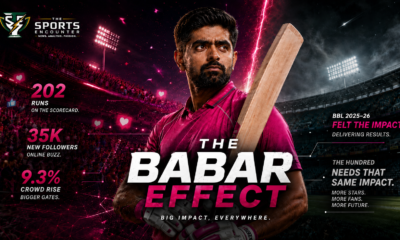

Is Babar Azam the Solution The Hundred Needs? His BBL|15 Impact Makes the Case
Babar Azam’s BBL|15 numbers were modest, but his wider impact was huge. Sydney Sixers gained followers, stronger crowds, sold-out fan...
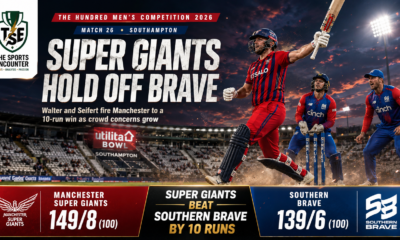

Paul Walter, Tim Seifert Power Manchester Super Giants Amid Disappointing Weekend Hundred Attendance
Paul Walter and Tim Seifert shared a 119-run opening stand as Manchester Super Giants beat Southern Brave by 10 runs...

Mitchell Santner Blasts Trent Rockets Into The Hundred Top Three With Six-Wicket Win Over MI London
Mitchell Santner blasted an unbeaten 52 from 23 balls and Tim David added 32* as Trent Rockets chased 148 in...
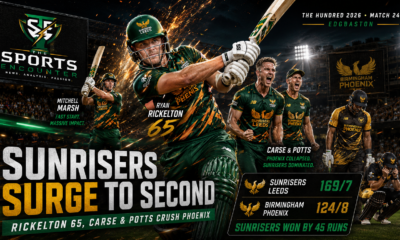

Rickelton and Carse Crush Birmingham Phoenix as SunRisers Leeds Surge to Second in The Hundred
Ryan Rickelton’s 65 set up SunRisers Leeds before Brydon Carse and Matthew Potts tore through Birmingham Phoenix, sealing a 45-run...
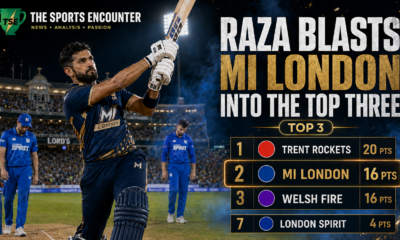

Raza’s Late Power Carries MI London Through Lord’s Chase
Sikandar Raza supplied the late power after Nicholas Pooran and Sam Curran rebuilt the chase, carrying MI London past London...


Wimbledon 2026 Withstands FIFA World Cup Clash, Breaks Attendance Record
Wimbledon attracted a record 550,151 spectators and generated 4.8 billion social media impressions in 2026. Dry weather, Arthur Fery’s semifinal...

Wimbledon Men’s Singles Champions: How Triumph on Grass Changed Their Careers
From Spencer Gore and William Renshaw to Roger Federer, Novak Djokovic, Carlos Alcaraz, and Jannik Sinner, discover how every Wimbledon...

Guo Hanyu and Kristina Mladenovic Turn Trust Into Wimbledon 2026 Glory
Guo Hanyu and Kristina Mladenovic turned a new partnership into Wimbledon glory, defeating Gabriela Dabrowski and Luisa Stefani in a...

Jannik Sinner’s Wimbledon Defense Against Novak Djokovic and Alexander Zverev
Jannik Sinner’s Wimbledon 2026 defense began with a five-set escape and ended with victories over Novak Djokovic and Alexander Zverev....

Muchova, Noskova Turn Wimbledon Women’s Singles Final Into an All-Czech Affair
Karolina Muchova saved match point to beat Coco Gauff in a Centre Court thriller, while Linda Noskova handled Marta Kostyuk...

When Paris Welcomed Two New French Open Champions
Paris, France – June 9, 2026: There are days at Roland Garros when tennis feels like a sport. Then there...


French Open 2026: Mirra Andreeva Becomes a Grand Slam Reality
Mirra Andreeva relived the memories of Monica Seles on Super Sunday at Roland Garros to lift her maiden French Open...


Alexander Zverev Beats Flavio Cobolli, Agony to Lift Maiden French Open Title
Paris, France – June 7, 2026: While some titles are won in two weeks, Alexander Zverev took years of frustration,...

Galle Gallants Are LPL 2026 Champions After 5-Wicket Revenge Win Over Jaffna Kings
Galle Gallants are the 2026 Lanka Premier League champions after defeating Jaffna Kings by five wickets, chasing 124 in 15.5...

LPL 2026 Final Preview: Galle Seek Revenge as Jaffna Chase a Fifth Crown
Galle Gallants and Jaffna Kings meet in the Lanka Premier League 2026 final after three dramatic clashes this season, with...


Harper and Asalanka Punish Colombo’s Chaos as Galle Reach LPL Final
Sam Harper’s commanding 77 and Charith Asalanka’s composed 59 carried Galle Gallants past Colombo Kaps and into the LPL 2026...

McDermott and Neesham Set the Trap Before Sahan Ends Kandy’s LPL Run
Colombo Kaps eliminated Kandy Royals by 68 runs after McDermott and Neesham powered them past 200 before Sahan and Dahani...

Mishara’s Unbeaten 108 Sends Jaffna Kings Into LPL Final After 470-Run Assault
Kamil Mishara’s unbeaten century carried Jaffna Kings into the LPL 2026 final after Galle Gallants fell 14 runs short in...

Guyana Amazon Warriors Defend 85 to Break San Francisco Hearts and Retain Global Super League Title
Guyana Amazon Warriors recovered from 29 for eight, defended a total of 85, and defeated San Francisco Unicorns by six...

Tim Robinson Explodes as Unicorns Thump Vipers to Enter the Global Super League Final
Tim Robinson struck an unbeaten 68 as San Francisco Unicorns defeated Desert Vipers by eight wickets in the Global Super...

Perth Find Their Missing Finish as Spin Silences Guyana
Brody Couch rescued Perth Scorchers XI with 43 before five spin options dismantled Guyana Amazon Warriors for 121 in a...


Akeal Hosein Nearly Steals It, but Desert Vipers Escape in Final Over
Rilee Rossouw mastered a difficult Providence pitch before Desert Vipers survived Akeal Hosein’s four-wicket fightback to beat Perth Scorchers XI...

Shadab Khan and Zachary Carter Rescue Desert Vipers’ GSL Campaign
Shadab Khan dismantled San Francisco’s middle order before 19-year-old Zachary Carter launched a fearless chase, helping Desert Vipers secure their...

LeBron James Says No to LA 2028, but Team USA Is Reportedly Saving Him a Seat
LeBron James says he plans to watch the 2028 Los Angeles Olympics, but USA Basketball is reportedly prepared to give...

A Documentary on LeBron James in the Making?
ESPN is reportedly close to securing unprecedented access to LeBron James’ final NBA chapter, combining his Philadelphia title chase with...

Do the 76ers Have the NBA’s Best Starting Five After Adding LeBron James?
Philadelphia’s projected starting five now carries 36 All-Star selections, five MVP awards, elite scoring, defensive power, and a rookie wild...

How LeBron James Turns Philadelphia 76ers Into the NBA’s Must-Watch Team
LeBron James has not played a minute for the 76ers yet, but his arrival has already transformed Philadelphia into one...

Philadelphia 76ers Officially Announce LeBron James Signing, Assign 23 Jersey
LeBron James will wear No. 23 for the Philadelphia 76ers after officially joining the franchise for what he called his...


NFL Training Camp Roundup: Lane Johnson Eyes Farewell, Bears Fear Burden Injury as Broncos and Jaguars Reshape Depth
Lane Johnson says 2026 will probably be his final NFL season, while Luther Burden III leaves Bears practice injured, Matt...

Meet NFL’s Highest-Paid Guard: Peter Skoronski
The Tennessee Titans have made Peter Skoronski the NFL’s highest-paid guard with a four-year, $100 million extension, locking in a...

NFL Training Camp Heats Up: Crosby-Cousins Clash Erupts, Colts Lose Taylor-Britt and Texans Get Noel Back
NFL training camp delivered three major developments as Maxx Crosby and Kirk Cousins clashed in Las Vegas, Cam Taylor-Britt received...


Carlos Alcaraz Skips Cincinnati Open, Casts Doubts on US Open Title Defense
Carlos Alcaraz will miss the 2026 Cincinnati Open as he continues recovering from the wrist injury that has sidelined him...

Why Novak Djokovic’s Cincinnati Return Could Decide His US Open 2026 Record Chase
Novak Djokovic will return to the Cincinnati Open for the first time since his memorable 2023 title run. At 39,...

US Open 2026 Curtain-Raiser: Players, Schedule, Title Contenders, New York Storylines and Everything Fans Need to Know
The US Open 2026 heads to New York with Jannik Sinner, Carlos Alcaraz, Novak Djokovic, Aryna Sabalenka, Coco Gauff, Iga...