National Bank Open 2026: Kayla Cross Breaks Through, Gabriel Diallo Rallies and Bianca Andreescu Falls
Kayla Cross earned her first WTA Tour main-draw win, Gabriel Diallo rallied in Montreal, Bianca Andreescu fell after leading, and Day 3 reshaped both National Bank Open draws.
Day 3 of the 2026 National Bank Open stretched deep into the night as Montreal cleared a rain-hit ATP backlog and Toronto completed a packed WTA first round. Kayla Cross earned the first tour-level win of her career, Gabriel Diallo recovered from a set down for Canada, Bianca Andreescu surrendered a commanding lead, and several long matches reshaped the second-round draws.
TL;DR: What Happened on Day 3?
- Kayla Cross defeated Katie Boulter 7-6(3), 7-5 for the first WTA Tour main-draw win of her career.
- Gabriel Diallo recovered from a difficult opening set to beat Kyrian Jacquet 6-7(1), 6-3, 6-2 in Montreal.
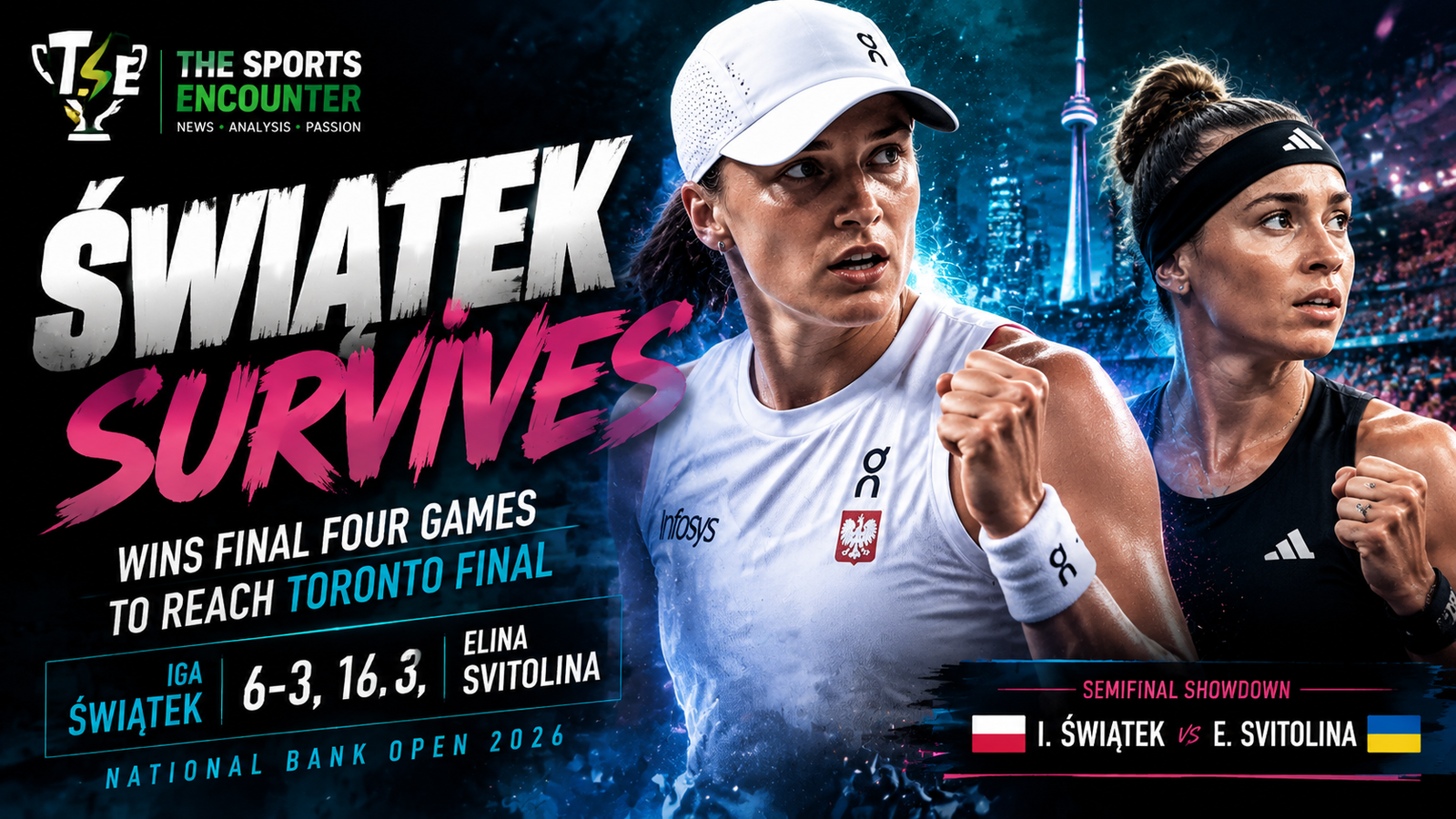
- Nikola Bartunkova eliminated 2019 champion Bianca Andreescu 7-5, 6-2 after Andreescu led 5-2 and 40-love in the opening set.
- Rebecca Marino, Cadence Brace, Carol Zhao and Alexis Galarneau were among the Canadian players eliminated.
- Gael Monfils opened his final Montreal campaign with a 6-4, 6-4 victory over Kamil Majchrzak.
- Mariano Navone defeated Matteo Berrettini in three sets, while Nicolas Mejia, Titouan Droguet and Daniel Altmaier also survived deciding sets.
- Daria Kasatkina completed one of the strongest comebacks of the day against Xinyu Wang.
- Eva Lys, Polina Kudermetova and Elisabetta Cocciaretto retired from their matches in Toronto.
- The Canadian singles record on Day 3 was two wins and five defeats.
- Several Montreal first-round matches delayed by rain were moved into the Day 4 schedule.
National Bank Open Day 3 at a Glance
| Category | Day 3 Detail |
|---|---|
| Date | Monday, August 3, 2026 |
| ATP tournament | National Bank Open, Montreal |
| WTA tournament | National Bank Open, Toronto |
| ATP venue | IGA Stadium |
| WTA venue | Sobeys Stadium |
| Surface | Outdoor hard court |
| Canadian winners | Kayla Cross and Gabriel Diallo |
| Canadian eliminations | Bianca Andreescu, Rebecca Marino, Cadence Brace, Carol Zhao and Alexis Galarneau |
| Canadian Day 3 record | 2-5 |
| Biggest Canadian breakthrough | Kayla Cross’ first WTA Tour main-draw victory |
| Major ATP comeback | Gabriel Diallo from one set down |
| Major WTA comeback | Daria Kasatkina from a set and 4-1 down |
| Retirements | Eva Lys, Polina Kudermetova and Elisabetta Cocciaretto |
| Weather impact | Rain delayed Montreal and pushed several first-round matches into Day 4 |
A Tournament Day That Refused to End Quietly
Day 3 began as a cleanup operation and developed into the first defining day of the 2026 National Bank Open.
Rain had already damaged Sunday’s schedule in Montreal and Toronto. The women managed to complete more matches on Day 2, while the men saw almost their entire program carried forward. Monday therefore arrived with two competing objectives: finish the delayed opening round and begin moving both tournaments toward their seeded second-round matchups.
Toronto eventually completed its remaining first-round program. Montreal made significant progress, although fresh rain interruptions meant several matches were officially moved into Tuesday.
The volume of tennis created a day full of different stories. Some players had spent hours waiting to compete. Others returned to matches suspended the previous evening. A few entered the tournament carrying confidence from Washington, Memphis or other recent hard-court events. Several Canadians walked onto court knowing the home crowd expected a response after an uneven opening day.
By the end of the program, Cross and Diallo had given Canadian supporters two victories worth remembering. Andreescu, Marino, Zhao, Brace and Galarneau were out. Monfils had started his Montreal farewell with a win. Berrettini had fallen in a draining three-set contest. Kasatkina had survived a match that appeared lost twice.
The wider tournament picture also became clearer. The top 32 seeds received first-round byes in the expanded 96-player draws, so the first-round winners were playing for the right to face rested and higher-ranked opponents. The Sports Encounter’s complete National Bank Open 2026 guide explains the format, leading contenders, schedule and role the Canadian events play before Cincinnati and the US Open.
Day 3 supplied the tournament’s first proper separation between players who arrived ready for the hard-court swing and those who still looked trapped between recovery, adjustment and expectation.
Kayla Cross Turns Centre Court Pressure Into a Career Breakthrough
Kayla Cross produced the clearest home success of the day by defeating Katie Boulter 7-6(3), 7-5 on Centre Court in Toronto.
The victory represented several milestones at once. It was Cross’ first main-draw win at a WTA 1000 tournament, her first WTA Tour main-draw victory at any level and the biggest result of her professional career.
The 21-year-old did not receive an easy route to the finish. Boulter brought far more tour-level experience, greater familiarity with high-pressure matches and the ability to punish short balls from inside the baseline. Cross had to manage her own nerves while also handling an opponent capable of changing the direction of a set quickly.
The opening set reached a tiebreak after both players created opportunities without fully separating. Cross then played with greater clarity. She committed to her shots, moved Boulter across the baseline and avoided allowing the occasion to dictate her decisions.
Closing the second set proved more difficult. First career wins often become emotionally heavy when the finish line comes into view. The arm tightens. The player begins thinking about the result rather than the next ball. Cross showed some signs of that tension but kept returning to the patterns that had carried her into the lead.
Her 7-5 second set confirmed more than an upset. It showed she could withstand the pressure created by a home crowd desperate to celebrate a Canadian success.
Cross’ win also continued an extraordinary period for young players on the women’s tour. Only days earlier, 16-year-old Kristina Liutova won a title during her tour-level debut, a breakthrough examined in The Sports Encounter’s report on Liutova’s historic Memphis championship.
Cross now faces a different challenge. A first major win brings attention, but it also changes expectations. Her next opponent will have a stronger scouting picture and a clearer understanding of how she responds under pressure. The Canadian’s task is to treat the victory as evidence of belonging rather than the completion of a dream week.
Gabriel Diallo Finds His Range After a Rough Opening Set
Gabriel Diallo gave Montreal its most important Canadian result, defeating qualifier Kyrian Jacquet 6-7(1), 6-3, 6-2.
The match initially looked as if it might become another frustrating home defeat. Diallo struggled to impose his size and first-strike tennis during the opening set. Jacquet stayed solid through the rallies, reached the tiebreak and then dominated it 7-1.
Diallo’s response changed the match.
Rather than rushing for immediate recovery, he began building points with more patience. His serve created shorter returns, his forehand carried greater weight and Jacquet found fewer chances to establish neutral exchanges.
The second set turned once Diallo began earning more predictable first balls after serve. The Canadian could step inside the court instead of defending from uncomfortable positions. That movement mattered because his game becomes far more dangerous when he controls court position rather than relying on emergency power.
Jacquet’s resistance weakened during the deciding set. Diallo accelerated through the final stages, winning 12 of the last 17 games after dropping the first-set tiebreak.
The 6-2 third set gave the scoreline a comfortable appearance, but the victory required a genuine reset. Diallo had to accept that his initial plan was not working, reduce the emotional cost of the first set and rebuild the match without becoming reckless.
His reward is a second-round meeting with No. 19 seed Luciano Darderi. That matchup will demand more consistent serving and cleaner control of the baseline. Darderi will punish extended lapses, yet Diallo’s ability to recover against Jacquet should give him confidence that he can solve problems during a match rather than needing perfect conditions from the first game.
The Canadian field entered Montreal with increased responsibility after Jannik Sinner, Novak Djokovic and Carlos Alcaraz were removed from the tournament picture. Their absences opened sections of the draw while also shifting more attention toward Alexander Zverev, Felix Auger-Aliassime and the home contingent. The reasons behind two of those major withdrawals are explored in The Sports Encounter’s analysis of why Sinner and Djokovic skipped Montreal.
Bianca Andreescu Lets a Winning Position Slip Away
Bianca Andreescu’s return to the National Bank Open ended in a painful 7-5, 6-2 defeat to Nikola Bartunkova.
The final score does not explain how sharply the match turned.
Andreescu led 5-2 and 40-love in the opening set. At that moment, she held three set points on her serve and appeared ready to take control of the contest. Bartunkova then won six consecutive games.
The sequence transformed the match from a promising Canadian start into a test of emotional recovery. Andreescu twice failed to serve out the set, lost confidence in the patterns that had established her lead and began giving Bartunkova more space to dictate.
Bartunkova deserves credit for refusing to accept the direction of the match. The Czech player stayed aggressive when many opponents would have shifted into survival mode. She returned with greater depth, extended rallies long enough to expose Andreescu’s uncertainty and treated each saved set point as a chance to transfer pressure back across the net.
Once Bartunkova stole the first set 7-5, Andreescu looked increasingly burdened by what had happened. The Canadian’s level dropped, her decision-making became less secure and the second set moved quickly toward the younger player.
The 6-2 score reflected more than tactical superiority. Bartunkova appeared emotionally freer after completing the comeback, while Andreescu struggled to prevent one lost opportunity from defining the rest of the afternoon.
Andreescu’s relationship with the tournament will always carry emotional weight because of her 2019 title. That history increases crowd support but also magnifies each difficult result. A player returning from repeated injury problems needs competitive stability, yet home events rarely provide a quiet environment for rebuilding.
Her defeat leaves another uncomfortable question before the US Open. Andreescu can still produce stretches of intelligent, varied and disruptive tennis. Sustaining those stretches through the most important games remains the harder problem.
Rebecca Marino and Cadence Brace Exit in Straight Sets
Rebecca Marino lost 7-5, 6-4 to Zeynep Sonmez in the Toronto night session.
Marino’s serve remains the foundation of her game, but Sonmez repeatedly found ways into the Canadian’s service games. The Turkish player created eight break points and converted three while surrendering her own serve only once.
The opening set remained close until Sonmez applied pressure late. Marino needed more free points to control the score, yet too many service games became physical baseline contests. That pattern favoured the younger and more mobile opponent.
Sonmez carried the advantage into the second set and denied Marino the sustained run needed to turn the match. The Canadian stayed close enough to create hope without establishing the return pressure required to change the direction of the contest.
Cadence Brace also exited in straight sets, losing 6-3, 6-3 to McCartney Kessler.
Kessler broke in the opening game and controlled the match from that point. She saved all three break points she faced and kept Brace under pressure across both sets.
The result exposed the gap between competing well and controlling the scoreboard. Brace produced rallies that showed she could stay with Kessler, but she struggled to convert those competitive passages into breaks or extended momentum.
Kessler’s cleaner execution during important points made the difference. The American rarely allowed one poor game to create a larger decline, while Brace spent most of the match trying to recover the early deficit.
Carol Zhao’s Final National Bank Open Ends in a Three-Set Fight
Carol Zhao’s final appearance at the National Bank Open ended with a 4-6, 6-1, 6-4 defeat to Magda Linette.
Zhao gave the crowd an encouraging opening set, using variation and intelligent court positioning to disrupt the Polish player. She broke at the right time and carried the set 6-4.
Linette responded with a dominant second set. Her depth improved, Zhao received fewer short balls and the match began moving at a pace that suited the more experienced Top 100 competitor.
The deciding set provided Zhao with another opportunity to create a memorable farewell. She recovered from a break down and forced Linette to keep earning the victory. A late break eventually separated them.
The defeat ended Zhao’s tournament, but the performance carried more meaning than a routine first-round loss. She remained competitive after a heavy second set, recovered emotionally and made Linette close the match under pressure.
Farewell appearances can become ceremonial when the score turns. Zhao refused to let that happen. Her final National Bank Open match remained a real contest until the closing games.
Alexis Galarneau Cannot Join Diallo in Round Two
Alexis Galarneau lost 6-4, 6-4 to Vit Kopriva in Montreal.
The two sets followed a similar shape. Galarneau stayed close, competed through the middle stages and gave the home crowd reason to believe he could force a shift. Kopriva, however, handled the important service and return games with greater precision.
A single break decided each set. That narrow margin can make a defeat feel especially frustrating because the player never appears overwhelmed. Galarneau remained within reach of the scoreboard while lacking the finishing quality required to turn pressure into a break of his own.
Kopriva’s consistency prevented the Canadian from finding an emotional opening. He absorbed the crowd noise, accepted the longer rallies and trusted that Galarneau would eventually need to take greater risks.
The result left Diallo as the only Canadian winner in the completed men’s Day 3 matches.
Canadian Day 3 Results Tracker
| Canadian Player | Opponent | Result | Status |
|---|---|---|---|
| Kayla Cross | Katie Boulter | Won 7-6(3), 7-5 | Advanced |
| Gabriel Diallo | Kyrian Jacquet | Won 6-7(1), 6-3, 6-2 | Advanced |
| Bianca Andreescu | Nikola Bartunkova | Lost 7-5, 6-2 | Eliminated |
| Rebecca Marino | Zeynep Sonmez | Lost 7-5, 6-4 | Eliminated |
| Cadence Brace | McCartney Kessler | Lost 6-3, 6-3 | Eliminated |
| Carol Zhao | Magda Linette | Lost 4-6, 6-1, 6-4 | Eliminated |
| Alexis Galarneau | Vit Kopriva | Lost 6-4, 6-4 | Eliminated |
Canada finished Day 3 with a 2-5 singles record. The numbers look difficult, but Cross and Diallo gave the home campaign two results with genuine future value.
Cross earned a career first. Diallo recovered from a set down and showed he could manage the extra pressure attached to playing in Montreal. Those victories offer more than temporary crowd energy because both players advanced through adversity rather than relying on comfortable scorelines.
Gael Monfils Begins His Montreal Farewell With a Win
Gael Monfils defeated Kamil Majchrzak 6-4, 6-4 in one of the most emotionally anticipated matches of the Montreal program.
The Frenchman arrived for what is expected to be his final National Bank Open appearance. That context could easily have turned the match into an occasion before it became a competition.
Monfils handled both responsibilities.
He gave the crowd the movement, energy and shot-making they came to see while maintaining enough tactical discipline to win in straight sets. One break in each set proved sufficient.
Majchrzak stayed competitive but could not force Monfils into the prolonged physical struggle that might have changed the match. The veteran protected his service games, managed his energy and chose his moments to attack.
Monfils’ second-round progress adds another chapter to a North American hard-court season carrying strong farewell emotion. He is also expected to receive another major stage in Ohio, where his entry is part of a notable group discussed in The Sports Encounter’s guide to the 2026 Cincinnati Open wild cards.
Every win now matters differently for Monfils. He is no longer building toward a long-term ranking project. Each tournament provides another chance to compete in front of supporters who have followed his career for nearly two decades.
Mariano Navone Sends Matteo Berrettini Out After Three Sets
Mariano Navone defeated Matteo Berrettini 6-3, 6-7(5), 6-3 in one of the longest and most demanding matches of the Montreal day.
Berrettini entered the tournament as a dangerous unseeded player because his serve and forehand remain capable of overwhelming opponents on hard courts. Navone prevented those weapons from deciding the match.
The Argentine took the opening set by extending enough rallies to expose Berrettini’s movement and by refusing to allow the Italian to control every short exchange.
Berrettini responded in the second-set tiebreak. He used his serve to escape pressure and level the contest, creating the possibility that experience and firepower would carry him through the decider.
Navone remained composed. He returned to the patterns that had worked in the first set, challenged Berrettini’s movement and accepted the physical cost of making the Italian hit extra balls.
The final 6-3 set completed an important hard-court result for a player more commonly associated with clay. Navone’s ability to absorb Berrettini’s pace and stay disciplined across more than three hours gave the victory broader significance.
For Berrettini, the defeat continues a difficult search for continuity. His best tennis still appears in flashes. The challenge lies in sustaining movement, serving efficiency and physical confidence over full matches against opponents willing to test his body.
Droguet Survives Van Assche in the Tightest Montreal Finish
Titouan Droguet edged Luca Van Assche 6-4, 2-6, 7-6(7) in a match that remained undecided until the final points of the third-set tiebreak.
Droguet took the first set with more assertive baseline play, but Van Assche reversed the momentum in the second. His movement improved, he redirected the ball more effectively and Droguet struggled to maintain the same control.
The deciding set became a test of nerve. Neither player could create lasting separation, and the match eventually reached a tiebreak where every loose point carried match-ending consequences.
Droguet held on 9-7.
The narrow finish captured the difficulty faced by players in the opening round of an expanded Masters event. The winner earns valuable ranking points and a meeting with a seeded opponent. The loser leaves after hours of work with almost nothing separating the two performances.

Nicolas Mejia Completes a Late Comeback Against Martin Landaluce
Qualifier Nicolas Mejia defeated Martin Landaluce 4-6, 6-4, 6-3.
Landaluce began with greater control and secured the opening set. Mejia gradually increased the pressure on return and began winning more exchanges once rallies moved beyond the first few shots.
The Colombian took the second set with a late break, then carried that emotional advantage into the decider.
Landaluce’s level did not collapse, but Mejia played the clearer tennis during the moments that decided service games. His reward is another opportunity to extend a run that began in qualifying.
Qualifiers often enter large events with stronger competitive rhythm than seeded players receiving byes. Mejia has already played several matches in Montreal, adjusted to the courts and survived elimination pressure. The question is whether that rhythm can compensate for fatigue when the draw becomes more demanding.
Daniel Altmaier Wins a Three-Hour Battle
Daniel Altmaier recovered from a set down to beat qualifier Aleksandar Vukic 6-7(2), 7-6(5), 6-4.
The match lasted almost three hours and contained two tiebreaks before a single break separated the players in the final set.
Vukic took the first tiebreak comfortably and remained within reach of victory throughout the second. Altmaier stayed composed, improved his return position and found enough depth to prevent the Australian from controlling every exchange with his serve.
The German took the second tiebreak 7-5 and used that momentum to edge the deciding set.
Long opening-round matches can become expensive later in a tournament. Altmaier earned progression, but he also spent significant physical energy before facing a rested seed.
Michelsen, Moutet, Hanfmann and Norrie Move On
Alex Michelsen defeated Jan-Lennard Struff 6-1, 3-6, 6-1 in a match built around two dramatic momentum swings.
Michelsen dominated the opening set, Struff responded in the second, and the American then re-established control in the decider. The two 6-1 sets showed how effectively Michelsen could attack Struff’s movement and take time away when his return was working.
Corentin Moutet produced the most one-sided men’s result of the completed day, beating Marton Fucsovics 6-1, 6-2.
Moutet disrupted rhythm from the opening games and never allowed Fucsovics to settle into the physical baseline patterns he prefers. The Frenchman’s variety, court awareness and ability to change pace made the match uncomfortable from start to finish.
Yannick Hanfmann defeated qualifier Benjamin Bonzi 6-1, 4-6, 6-2. Hanfmann lost control during the middle set but recovered quickly in the decider rather than allowing the match to become a prolonged struggle.
Cameron Norrie beat Camilo Ugo Carabelli 7-6(5), 6-4. The British player’s experience in tight hard-court matches helped him manage the first-set tiebreak and secure a late advantage in the second.
Marin Cilic also advanced with a 7-6(2), 6-1 win over qualifier Sho Shimabukuro. After a close first set, Cilic opened the court more effectively and controlled the second with his serve and first forehand.
Kasatkina Produces Toronto’s Great Escape
Daria Kasatkina recovered to defeat Xinyu Wang 1-6, 7-6(5), 7-5 in the most dramatic women’s comeback of Day 3.
Wang dominated the opening set and moved 4-1 ahead in the second. Her power and early ball striking left Kasatkina defending from difficult positions, while the Australian struggled to create enough depth to reset rallies.
Kasatkina began changing the match through patience rather than force. She extended exchanges, increased the number of balls Wang needed to hit and waited for the Chinese player’s level to become less precise.
The second set reached a tiebreak, which Kasatkina won 7-5.
Wang then earned another opportunity in the decider. She served for the match at 5-3 but could not close. Kasatkina won the final four games to complete a recovery that had appeared improbable twice.
The result highlighted one of Kasatkina’s greatest strengths. She does not require control of the scoreboard to believe she can still reshape a match. Her variety and defensive intelligence create time, while opponents often feel pressure to finish points too quickly once a lead begins slipping.
Difficult Retirements Change Three Toronto Matches
Three women’s matches ended in retirements.
Alina Korneeva led Polina Kudermetova 6-0, 3-0 when Kudermetova retired after receiving treatment on her knee. The match lasted less than an hour and had been controlled by Korneeva from the opening game.
Talia Gibson advanced when Elisabetta Cocciaretto retired at 6-2, 3-2. Cocciaretto received treatment on her leg after the first set. She briefly broke at the beginning of the second before Gibson responded immediately.
Panna Udvardy advanced after Eva Lys retired while trailing 2-6, 7-6(3), 2-0.
Lys had appeared close to victory when she led by a set and 5-2. Her level then dropped sharply, Udvardy recovered and the German retired after losing the second-set tiebreak and falling behind in the decider.
The three retirements carry different competitive contexts, but each removes a player from an important stage of the hard-court swing. Toronto offers ranking points and preparation before the US Open. Physical problems at this point of the calendar can affect Cincinnati participation and disrupt the training needed for New York.
Sloane Stephens Finds a Valuable Opening Win
Qualifier Sloane Stephens defeated Solana Sierra 6-3, 6-4.
Stephens fell behind early but responded by winning eight consecutive games, moving from 1-3 in the first set to 3-0 in the second.
The former US Open champion did face a late complication when she was broken while serving for the match. Her response was immediate. Stephens broke in the next game to finish the contest.
The victory matters because Stephens entered through qualifying and is trying to rebuild consistency on the surface where she has produced her greatest career moments.
Her movement and ability to redirect pace remain dangerous when confidence rises. Toronto provides an opportunity to gather matches before returning to New York, where her past success ensures every result carries additional attention.
Kayla Day and Maya Joint Complete Strong Comebacks
Qualifier Kayla Day defeated Diane Parry 3-6, 6-3, 7-5 after Parry served for the match at 5-3 in the deciding set.
Day won 16 of the final 19 points and claimed the last four games. The comeback reflected a complete change in emotional control. Parry moved close to victory, while Day began playing with greater freedom and clarity.
Maya Joint also recovered from a set down, beating Yuliia Starodubtseva 4-6, 6-1, 6-3.
Joint transformed the match by attacking the Ukrainian’s serve. She broke in six of Starodubtseva’s final seven service games, including four times during the deciding set.
The Australian qualifier entered Toronto after featuring in a remarkable run of young-player success across the tour. Her ability to adjust on return turned a difficult first set into a convincing three-set win.
Other Important Toronto Results
Karolina Pliskova defeated Oleksandra Oliynykova 6-4, 6-4. Pliskova remained composed late in both sets and broke in the final service game of each.
Magdalena Frech resumed her delayed match against Leolia Jeanjean at 4-4 in the first set and won 7-5, 6-3. The restart produced three consecutive breaks before Frech gained control.
Shuai Zhang beat Yulia Putintseva 6-4, 6-1. Zhang established an early advantage, recovered when Putintseva briefly levelled the first set and then raced to a 4-0 lead in the second.
Liudmila Samsonova defeated Janice Tjen 7-6(9), 7-5. Samsonova saved two set points during an 11-9 opening tiebreak and broke in the final game of the match.
Taylor Townsend beat Tereza Valentova 6-4, 7-5. Service breaks appeared throughout the contest, but Townsend secured the decisive break in the final game of both sets.
Elena-Gabriela Ruse defeated Peyton Stearns 6-0, 7-5. Stearns led 4-0 in the second set after losing the first without winning a game, only for Ruse to take seven of the final eight games.
Antonia Ruzic recovered from a set down to beat Lois Boisson 4-6, 6-1, 6-3. The match had been delayed from Sunday, and Ruzic established control once play resumed.
Caty McNally defeated Tatjana Maria 4-6, 7-6(4), 6-1. McNally survived a volatile second set, then moved to a 5-0 lead in the decider.
Anna Bondar beat Anna Kalinina 6-4, 7-5. Both sets ended with Bondar breaking in the final game.
Rebecca Sramkova defeated Anna Blinkova 6-3, 6-3, while Lanlana Tararudee beat Emerson Jones 7-6(2), 6-2.
Alycia Parks advanced with a 6-4, 6-4 win over Victoria Jimenez Kasintseva. Parks broke six times and recovered after nearly losing a 5-1 second-set advantage.
Renata Zarazua defeated Tamara Korpatsch 6-4, 0-6, 6-1. Zarazua responded to losing the second set without winning a game by breaking Korpatsch in all four of the German’s service games during the decider.
Biggest Day 3 Winners
Kayla Cross
No result carried greater personal significance. Cross entered without a WTA Tour main-draw victory and left Centre Court with a win over an established opponent. She also handled the pressure of closing both sets in front of a home audience.
Gabriel Diallo
Diallo’s victory became more impressive because of the way he earned it. He was outplayed in the opening-set tiebreak, changed his court position and dominated the final two sets.
Nikola Bartunkova
Bartunkova saved three set points, overturned a 5-2 deficit and defeated a former champion in straight sets. The scoreline will draw attention, but her emotional resilience created the upset.
Daria Kasatkina
Kasatkina survived a set and 4-1 deficit, then recovered again when Wang served for the match in the third set. Few first-round victories demand that level of repeated problem-solving.
Gael Monfils
Monfils entered with farewell attention surrounding every appearance. He kept the occasion from overwhelming the match and advanced in straight sets.
Mariano Navone
Navone defeated one of the most dangerous unseeded players in the draw and showed his game can survive a demanding outdoor hard-court contest.
The Toughest Day 3 Defeats
Bianca Andreescu
Andreescu held three set points at 5-2 and 40-love. Losing the next six games changed the entire match and will make this defeat particularly difficult to process.
Xinyu Wang
Wang led by a set and 4-1, then served for the match at 5-3 in the third. She created two strong opportunities to finish and could not convert either.
Diane Parry
Parry served for the match at 5-3 in the deciding set before losing the final four games and 16 of the last 19 points.
Eva Lys
Lys appeared close to victory before her physical condition deteriorated. The retirement creates immediate concern ahead of the remaining hard-court schedule.
Matteo Berrettini
Berrettini forced a deciding set but could not impose his serve and forehand for long enough to escape Navone’s physical examination.
Key Second-Round Matchups Created
The first-round results have produced several compelling second-round contests as the seeded players enter the tournament.
Gabriel Diallo vs Luciano Darderi
Diallo will face the No. 19 seed after his comeback against Jacquet. The Canadian needs a stronger opening than he produced in the first round. Darderi will bring heavier baseline pressure and greater confidence during extended rallies.
Marin Cilic vs Frances Tiafoe
Cilic’s serve against Tiafoe’s movement and return position creates one of the more recognizable early matchups in Montreal. Cilic must shorten points, while Tiafoe will look to force the veteran into repeated lateral movement.
Juncheng Shang vs Andrey Rublev
Shang completed his first-round victory on Sunday and now faces the No. 10 seed. Rublev will attempt to control the match through pace and early ball striking. Shang’s ability to redirect that power will determine whether the contest becomes competitive.
Gael Monfils’ Next Test
Monfils moves forward with confidence after a controlled opening win. His next match will place greater physical demands on him and provide a clearer indication of how much tennis he can sustain during his final Montreal run.
Kayla Cross’ Opportunity
Cross now enters a second round where the surprise factor will be reduced. Her next opponent will know she can compete under pressure and will test whether the Canadian can reproduce the same level after the emotional high of a career-first victory.
Nikola Bartunkova’s Path Opens
Defeating Andreescu gives Bartunkova more than progression. She now carries the confidence of surviving a near-certain first-set defeat and closing the match without allowing the former champion back into the contest.
What Day 3 Revealed About the National Bank Open Draws
The expanded tournament format has changed the rhythm of the opening rounds.
Seeded players receive time to arrive, recover and prepare while unseeded players and qualifiers fight through a large first-round program. That structure creates an immediate contrast in the second round. Some players enter fresh. Others arrive with competitive timing but also physical fatigue.
Altmaier, Navone, Droguet, Mejia, McNally, Kasatkina, Joint and Day all survived long matches. Their next opponents may have played no competitive tennis in Montreal or Toronto but will carry fresher legs.
There is no automatic advantage. Match rhythm can matter as much as rest, especially during the first week of the North American hard-court swing.
The tournament also remains shaped by absence. Sinner and Djokovic are missing Montreal, while other players are managing injuries and selective schedules before the US Open. Djokovic’s expected return later in the swing is covered in The Sports Encounter’s analysis of his Cincinnati plans and US Open record chase.
Toronto carries its own uncertainty. Jessica Pegula arrived after losing the delayed Washington final to Alexandra Eala, a result that added another major chapter to the Filipina’s rise. Readers can revisit that breakthrough through The Sports Encounter’s report on Eala’s victory over Pegula in Washington.
Those recent results matter because hard-court momentum moves quickly. A title run can create confidence and fatigue at the same time. An early defeat can provide rest while raising doubts about form.
Why the Rain Backlog Matters Beyond Day 3
Rain affected more than the order of play.
Players scheduled for Sunday spent much of the day waiting, warming up and receiving changing information. Many returned Monday only to face additional delays in Montreal.
That disruption creates several hidden costs:
- Repeated warmups increase physical load without producing competitive progress.
- Meal timing becomes difficult when start times change.
- Players struggle to manage energy when they do not know whether they will compete in 30 minutes or several hours.
- Late finishes reduce recovery time before the next round.
- Postponed matches create uneven preparation across the draw.
The expanded 12-day format gives organizers more room to absorb delays than a traditional one-week tournament. It also means players remain engaged with the event for longer, increasing the importance of recovery routines and mental patience.
Weather has already influenced several recent tournaments. Taylor Fritz’s Washington final was delayed before he defeated Rafael Jodar, a result covered in The Sports Encounter’s report on Fritz’s Mubadala DC Open title.
Montreal and Toronto now move into a stage where delays can have larger competitive consequences. A first-round winner may be asked to face a seeded opponent with little recovery, while another section of the draw follows the intended schedule.
What to Watch on Day 4
Day 4 will combine remaining first-round matches in Montreal with the beginning of the seeded second round.
Stefanos Tsitsipas, Denis Shapovalov, Jack Draper, Hubert Hurkacz and Liam Draxl are among the players expected to complete opening-round business after weather affected Monday’s schedule.
The evening program introduces higher-ranked opponents. Tiafoe faces Cilic, Darderi meets Diallo and Rublev begins against Shang.
Each contest carries a different question.
Can Cilic use his serve to take time away from Tiafoe? Will Diallo maintain the level he found during the final two sets against Jacquet? Can Shang absorb Rublev’s pace without being pushed too far behind the baseline?
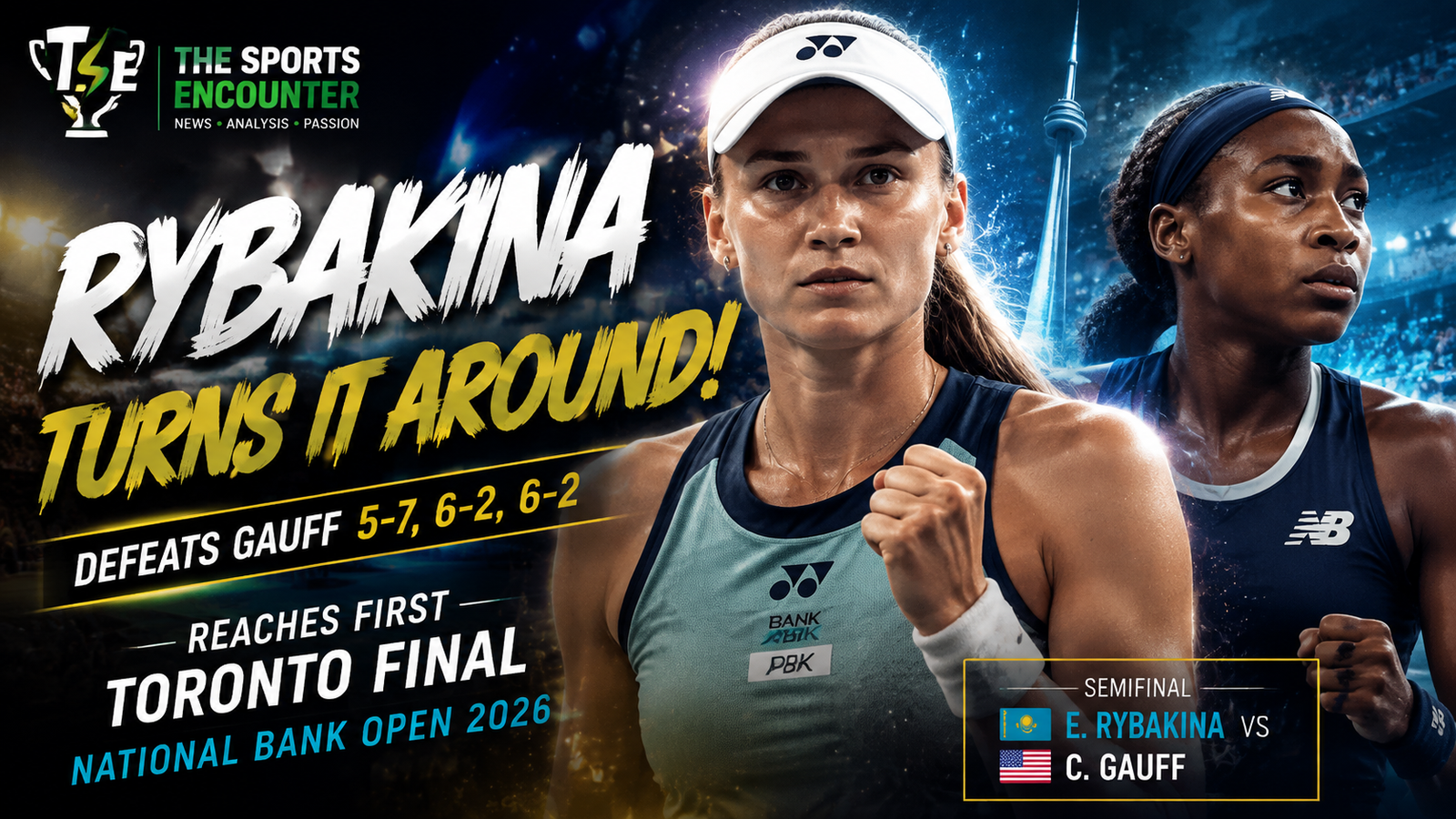
Toronto will also move deeper into the second round, where Aryna Sabalenka, Elena Rybakina, Coco Gauff, Jessica Pegula and other leading seeds begin shaping the women’s tournament.
The movement from the first round to the seeded phase changes the level of scrutiny. Early survivors must now prove that their opening victories can translate against players expected to compete for the title.
Readers can follow all tournament reports, analysis and player stories through The Sports Encounter’s Tennis Hub.
Day 3 Verdict
Day 3 did not belong to the highest-ranked players. Most of the leading seeds had yet to strike a ball.
It belonged to the competitors who survived the waiting, the weather and the emotional pressure of the first round.
Cross turned a home wildcard into the first WTA Tour victory of her career. Diallo recovered from a poor tiebreak and played his way into a far stronger level. Bartunkova refused to disappear when Andreescu held three set points. Kasatkina survived two losing positions. Monfils made sure his Montreal farewell began with another win.
The day also delivered painful exits. Andreescu’s defeat will remain difficult because the opening set was within her control. Zhao’s farewell ended after a committed three-set fight. Marino and Brace could not create enough return pressure. Galarneau stayed close without finding the break he needed.
Montreal’s rain delays prevented a perfectly clean transition into the second round, but the tournament made enough progress to establish its first real storylines.
Canada’s 2-5 record tells one part of the story. Cross and Diallo tell the more hopeful part.
Both won matches that demanded emotional control. Both now move into rounds where opponents will be stronger, preparation more detailed and margins smaller.
Day 3 finally gave the National Bank Open a competitive identity. The next stage will reveal whether its breakthrough players can stay visible once the leading seeds enter the conversation.
Frequently Asked Questions
What happened on Day 3 of the 2026 National Bank Open?
Day 3 completed the remaining WTA first-round program in Toronto and most of the rain-delayed ATP first round in Montreal. Kayla Cross and Gabriel Diallo earned Canadian victories, while Bianca Andreescu, Rebecca Marino, Cadence Brace, Carol Zhao and Alexis Galarneau were eliminated.
Who was the biggest Canadian winner on Day 3?
Kayla Cross produced the biggest Canadian breakthrough by defeating Katie Boulter 7-6(3), 7-5 for the first WTA Tour main-draw victory of her career.
Did Gabriel Diallo win in Montreal?
Yes. Diallo recovered from a set down to defeat qualifier Kyrian Jacquet 6-7(1), 6-3, 6-2.
Who will Gabriel Diallo play next?
Diallo will face No. 19 seed Luciano Darderi in the second round.
Did Bianca Andreescu win her opening match?
No. Andreescu lost 7-5, 6-2 to Nikola Bartunkova after leading 5-2 and 40-love in the opening set.
How many Canadian players won on Day 3?
Two Canadians won singles matches. Kayla Cross advanced in Toronto and Gabriel Diallo moved forward in Montreal.
What was Canada’s Day 3 singles record?
Canadian players finished with two wins and five defeats across the completed ATP and WTA matches.
Did Gael Monfils win in Montreal?
Yes. Monfils defeated Kamil Majchrzak 6-4, 6-4 in his opening match.
Who defeated Matteo Berrettini?
Mariano Navone defeated Berrettini 6-3, 6-7(5), 6-3.
What was the biggest WTA comeback of Day 3?
Daria Kasatkina produced the strongest comeback by recovering from a set and 4-1 down against Xinyu Wang. Wang also served for the match at 5-3 in the third set before Kasatkina won 1-6, 7-6(5), 7-5.
Which players retired in Toronto?
Eva Lys, Polina Kudermetova and Elisabetta Cocciaretto retired from their first-round matches.
Why were some Montreal matches moved to Day 4?
Rain repeatedly interrupted the Montreal schedule. Several first-round matches could not be completed and were officially moved into Tuesday’s program.
Which important second-round matchups were created?
Confirmed matchups include Gabriel Diallo against Luciano Darderi, Marin Cilic against Frances Tiafoe and Juncheng Shang against Andrey Rublev.
Where can fans find official National Bank Open scores and schedules?
Fans can follow confirmed results, live scores, draws and schedules through the official National Bank Open website.
Where is the ATP National Bank Open being played?
The men’s ATP Masters 1000 tournament is being played at IGA Stadium in Montreal.
Where is the WTA National Bank Open being played?
The women’s WTA 1000 tournament is being played at Sobeys Stadium in Toronto.
When will the 2026 National Bank Open finals be played?
The men’s and women’s singles finals are scheduled for August 13, 2026.
Breaking News
Nguyễn Đình Bắc Answers Cambodia’s Challenge as Vietnam Win Group A
Nguyễn Đình Bắc scored twice as Vietnam survived Cambodia’s second-half fightback, won 3-1 in Hanoi and secured first place in ASEAN Championship Group A.
Cambodia’s equalizer forced Mỹ Đình National Stadium to confront an uncomfortable possibility. Vietnam had controlled the ball, created the better chances and led for most of the evening, yet one sharp Cambodian attack had suddenly placed top spot in Group A back in jeopardy.
The defending champions responded with the composure expected from a team planning another deep tournament run.
Vakhim Im’s 84th-minute own goal restored Vietnam’s advantage before Nguyễn Đình Bắc completed his two-goal performance five minutes later, sealing a 3-1 victory in Hanoi on Friday, August 7.
Vietnam finished the group stage unbeaten with 10 points and advanced to the ASEAN Hyundai Cup 2026 semifinals as Group A winners. Cambodia ended its campaign in fourth place with three points, but Iago Bento Fernandes’ equalizer and the resistance surrounding it made Vietnam work far harder than the final score suggests.
Fans can follow The Sports Encounter’s continuing regional coverage through our soccer news and analysis hub.
TL;DR
- Vietnam defeated Cambodia 3-1 at Mỹ Đình National Stadium.
- Nguyễn Đình Bắc scored in the 18th and 89th minutes.
- Substitute Iago Bento Fernandes equalized for Cambodia in the 71st minute.
- Vakhim Im’s 84th-minute own goal became the decisive turning point.
- Vietnam won Group A with 10 points and qualified for the semifinals.
- Cambodia received one yellow card. Vietnam received none, and no red cards were shown.
Vietnam vs Cambodia Match Information
| Detail | Information |
|---|---|
| Match | Vietnam vs Cambodia |
| Competition | ASEAN Hyundai Cup 2026, Group A |
| Result | Vietnam 3-1 Cambodia |
| Venue | Mỹ Đình National Stadium, Hanoi |
| Date | Friday, August 7, 2026 |
| Vietnam goals | Nguyễn Đình Bắc 18’, 89’; Vakhim Im own goal 84’ |
| Cambodia goal | Iago Bento Fernandes 71’ |
| Top performer | Nguyễn Đình Bắc, two goals and four shots on target |
| Turning point | Vakhim Im’s own goal restored Vietnam’s lead in the 84th minute |
| Yellow cards | Vietnam 0; Cambodia 1 |
| Red cards | None |
| Group impact | Vietnam won Group A; Cambodia were eliminated |
Dình Bắc Gives Vietnam Early Control
Vietnam entered the match knowing a draw would secure qualification, but coach Kim Sang-sik had made his intention clear beforehand. He wanted victory and first place after the frustration of the team’s earlier goalless draw with Singapore.
Dình Bắc delivered the opening goal after 18 minutes. The forward received possession inside the penalty area and produced a forceful finish past Koy Salim, giving Vietnam the reward their territorial control deserved.
The hosts held 75.2 percent possession and attempted 16 shots compared with Cambodia’s six. Their passing repeatedly moved Cambodia’s compact 4-4-2 shape from side to side, while Nguyễn Quang Hải and Nguyễn Hoàng Đức helped control the central spaces.
Dình Bắc remained the most direct threat. All four of his attempts tested the goalkeeper, extending a tournament that began with his hat trick in Vietnam’s 7-0 opening victory over Timor-Leste.
Yet Vietnam failed to turn its control into a second goal before halftime. Salim made timely saves, while Cambodia protected the central route toward goal better than it had during the 5-1 defeat against Indonesia.
Cambodia’s Halftime Change Creates a Real Contest
Cambodia coach Koji Gyotoku introduced Iago Bento Fernandes for Hav Soknet at halftime, sacrificing the scorer of two goals in the 3-0 win over Timor-Leste for a quicker, more mobile attacking option.
The change paid off in the 71st minute.
Iago found the space Cambodia had spent most of the match trying to create and beat Patrik Lê Giang to make it 1-1. Vietnam had conceded for the first time in the tournament, and Cambodia suddenly had a result capable of disrupting the top of Group A.
The equalizer exposed the only serious concern in Vietnam’s performance. Heavy possession can create comfort, and comfort can reduce defensive alertness. Cambodia completed far fewer passes and produced only three shots on target, but one well-timed attack was enough to change the emotional temperature inside Mỹ Đình.
For 13 minutes, Cambodia had belief.
Two Late Goals Separate the Group Winner From the Eliminated Side
Vietnam’s winning goal arrived cruelly for the visitors. With six minutes remaining, pressure around Cambodia’s penalty area ended with Vakhim Im turning the ball into his own net.
The own goal reflected the strain Vietnam had built across the match. Cambodia spent long periods defending close to its goal, making 12 fouls and repeatedly clearing attacks before the hosts could find a clean final shot.
Dình Bắc then removed any remaining uncertainty in the 89th minute. His second goal completed Vietnam’s recovery and moved him further into the tournament’s individual scoring conversation.
The forward’s development has given Kim another reliable match-winner alongside Nguyễn Xuân Son, Đỗ Hoàng Hên and Quang Hải. Vietnam’s depth had already driven its 3-0 victory over Indonesia. Against Cambodia, Dình Bắc supplied both the early finish and the late assurance.
Updated ASEAN Championship Group A Table
Singapore’s draw with Indonesia completed the final Group A standings.
| Pos. | Team | P | W | D | L | GF | GA | GD | Pts |
|---|---|---|---|---|---|---|---|---|---|
| 1 | Vietnam | 4 | 3 | 1 | 0 | 13 | 1 | +12 | 10 |
| 2 | Singapore | 4 | 2 | 2 | 0 | 5 | 2 | +3 | 8 |
| 3 | Indonesia | 4 | 2 | 1 | 1 | 9 | 5 | +4 | 7 |
| 4 | Cambodia | 4 | 1 | 0 | 3 | 6 | 10 | -4 | 3 |
| 5 | Timor-Leste | 4 | 0 | 0 | 4 | 0 | 15 | -15 | 0 |
Vietnam and Singapore advance to the two-legged semifinals. Indonesia miss out despite collecting seven points, while Cambodia and Timor-Leste leave the competition.
The final standings confirm the possibilities outlined in The Sports Encounter’s final group-stage qualification preview. Vietnam will face the Group B runner-up, whose identity will be decided after the remaining matches.
Official tournament schedules and semifinal updates are available through the ASEAN United FC competition portal.
What Vietnam and Cambodia Take From the Group Stage
Vietnam reached the semifinals through three different types of performance. It overwhelmed Timor-Leste, endured Singapore’s defensive resistance and clinically punished Indonesia before surviving Cambodia’s late challenge.
That range matters in knockout football. Kim’s team has scored 13 goals, conceded only once and shown it can win through sustained possession, pressing and rapid transitions.
Cambodia leave with fewer rewards, but their campaign contained useful signs. Soknet’s two goals against Timor-Leste, Iago’s impact in Hanoi and the team’s willingness to keep attacking stronger opponents offer a base for future development.
Vietnam move forward as Group A’s strongest team. Cambodia head home after proving, for a tense second-half spell in Hanoi, that they could still make the defending champions feel the pressure.https://chatgpt.com/backend-api/sentinel/frame.html?sv=20260423af3c
Editor's Choice
Premier League 2026–27 Curtain Raiser: Fixtures, Teams, Title Contenders, Transfers and Season Predictions
The 2026–27 Premier League season begins with Arsenal hosting Coventry City on August 21. Explore the full opening weekend schedule, all 20 clubs, promoted teams, title contenders, major transfers, new managers, relegation battle, key dates and early predictions.
The 2026–27 Premier League season begins on Friday, August 21, when defending champions Arsenal host newly promoted Coventry City at the Emirates Stadium.
That opening match brings together two of the season’s defining stories before the first weekend has properly begun.
Arsenal enter the campaign as English champions for the first time since 2004. Coventry return to the Premier League under Frank Lampard after more than two decades outside the top flight.
The wider season promises a title race shaped by managerial change, major transfers, nine English clubs competing in Europe, three ambitious promoted teams and the physical after-effects of the expanded 2026 FIFA World Cup.
Manchester City begin a new era under Enzo Maresca. Liverpool have replaced Arne Slot with Andoni Iraola. Chelsea are rebuilding again, this time under Xabi Alonso. Michael Carrick has earned the permanent Manchester United job after guiding the club to third place, while Matthias Jaissle arrives at Newcastle United following Eddie Howe’s departure.
Every club will play 38 matches across 380 fixtures before the season concludes on Sunday, May 30, 2027.
This complete Premier League 2026–27 preview covers the full opening weekend fixture list, all 20 teams, promoted and relegated clubs, title contenders, new managers, important transfers, players to watch, relegation candidates, European qualification, Fantasy Premier League considerations and the major dates supporters need to know.
Premier League 2026–27 at a Glance
| Season Detail | Information |
|---|---|
| Competition | English Premier League |
| Season | 2026–27 |
| Opening match | Arsenal vs Coventry City |
| Start date | Friday, August 21, 2026 |
| Opening weekend | August 21–24, 2026 |
| Final match round | Sunday, May 30, 2027 |
| Number of clubs | 20 |
| Total matches | 380 |
| Defending champions | Arsenal |
| Promoted clubs | Coventry City, Ipswich Town and Hull City |
| Relegated clubs from 2025–26 | West Ham United, Burnley and Wolverhampton Wanderers |
| Transfer window closes | Tuesday, September 1, 2026, at 23:00 BST |
Why Is the 2026–27 Premier League Starting Later?
The Premier League normally begins earlier in August, but the 2026–27 campaign has been delayed by one week to accommodate player recovery after the FIFA World Cup in the United States, Canada and Mexico.
The World Cup final took place on July 19, leaving only 33 clear days before the new Premier League season begins.
That recovery period remains shorter than many managers would prefer, particularly for players who reached the later knockout rounds.
Footballers returning from the tournament have had to manage travel, reduced holidays, medical assessments and shortened preseason programs. Some may enter August without completing the same physical preparation as teammates who did not participate.
The World Cup workload could influence early team selection, injury management and Fantasy Premier League decisions. Managers may protect high-minute international players during the opening weeks instead of immediately using them for complete matches.
Readers can revisit the tournament through The Sports Encounter’s FIFA World Cup 2026 coverage hub, which includes results, tactical analysis and player performances from across the competition.
Premier League 2026–27 Opening Weekend Fixtures
The first matchweek runs from Friday evening through Monday night. All times below are British Summer Time and remain subject to broadcast or competition-related changes.
| Date | Time | Fixture |
|---|---|---|
| Friday, August 21 | 20:00 | Arsenal vs Coventry City |
| Saturday, August 22 | 12:30 | Hull City vs Manchester United |
| Saturday, August 22 | 15:00 | Everton vs Crystal Palace |
| Saturday, August 22 | 15:00 | Ipswich Town vs Sunderland |
| Saturday, August 22 | 15:00 | Nottingham Forest vs Leeds United |
| Saturday, August 22 | 17:30 | Brentford vs Tottenham Hotspur |
| Sunday, August 23 | 14:00 | Brighton & Hove Albion vs Aston Villa |
| Sunday, August 23 | 14:00 | Manchester City vs AFC Bournemouth |
| Sunday, August 23 | 16:30 | Newcastle United vs Liverpool |
| Monday, August 24 | 20:00 | Fulham vs Chelsea |
The complete schedule for all 380 matches is available through the official Premier League fixture list.
Opening Weekend Matches to Watch
Arsenal vs Coventry City
Arsenal will raise the curtain as defending champions in front of their own supporters.
Mikel Arteta’s team ended a 22-year wait for the league title in 2025–26 and also reached the Champions League final. Their opening assignment appears favorable, but Coventry will arrive without the fear normally associated with a promoted team.
Frank Lampard has already managed in the Premier League with Chelsea and Everton. His team will understand that Arsenal are expected to dominate possession, press high and attack through structured combinations.
Coventry’s first challenge will be surviving the opening emotional surge. Arsenal’s supporters will treat the evening as both a celebration and the beginning of a title defence.
Hull City vs Manchester United
Hull return to the top flight with one of the most commercially attractive home fixtures of the season.
Manchester United enter under different expectations after Carrick guided them to third place. The former midfielder now has the job permanently and begins with a squad strengthened by the arrivals of Youri Tielemans and Andrey Santos.
Hull will look to turn the atmosphere into pressure. United must show they can control the occasion rather than allow the promoted club’s energy to dictate the match.
Newcastle United vs Liverpool
The first major heavyweight match arrives on Sunday afternoon.
Both clubs begin with new head coaches. Newcastle appointed Jaissle only weeks before the campaign, while Liverpool selected Iraola after his impressive work at Bournemouth.
Iraola’s aggressive pressing and vertical football could suit Liverpool’s squad. Jaissle has had much less time to establish his own ideas.
Newcastle’s decision to appoint the former Al-Ahli coach followed a complicated recruitment process covered in The Sports Encounter’s report on Matthias Jaissle’s path to the Newcastle job.
Fulham vs Chelsea
Monday night offers a west London derby and a managerial subplot.
Fulham have appointed Alvaro Arbeloa, while Chelsea begin their first Premier League season under Xabi Alonso. The two former Real Madrid and Spain teammates now meet as opposing managers.
Chelsea have built their summer around Alonso’s preferred 3-4-2-1 structure. Morgan Rogers, Geovany Quenda, Marco Palestra, Maxence Lacroix and Emmanuel Emegha are among the players added to reshape the squad.
Which Teams Are Playing in the 2026–27 Premier League?
The 20 Premier League clubs for the new season are:
| Club | 2026–27 Manager | Season Context |
|---|---|---|
| AFC Bournemouth | Marco Rose | European qualifiers with a new coach |
| Arsenal | Mikel Arteta | Defending champions |
| Aston Villa | Unai Emery | Champions League qualifiers and Europa League holders |
| Brentford | Keith Andrews | Seeking to build on another top-half challenge |
| Brighton & Hove Albion | Fabian Hurzeler | Conference League qualifiers |
| Chelsea | Xabi Alonso | Major rebuild under a new coach |
| Coventry City | Frank Lampard | Promoted as Championship winners |
| Crystal Palace | Pierre Sage | New coach after Oliver Glasner’s departure |
| Everton | David Moyes | Seeking stability and progress |
| Fulham | Alvaro Arbeloa | Beginning a new tactical era |
| Hull City | Sergej Jakirovic | Promoted through the playoffs |
| Ipswich Town | Gary O’Neil | Promoted as Championship runners-up |
| Leeds United | Daniel Farke | Second season after surviving their return |
| Liverpool | Andoni Iraola | New manager after finishing fifth |
| Manchester City | Enzo Maresca | Runners-up entering the post-Guardiola era |
| Manchester United | Michael Carrick | Third-place finishers with renewed momentum |
| Newcastle United | Matthias Jaissle | Late managerial change before kickoff |
| Nottingham Forest | Oliver Glasner | New coach with European trophy pedigree |
| Sunderland | Regis Le Bris | Europa League qualifiers after finishing seventh |
| Tottenham Hotspur | Managerial continuity project | Escaped relegation on the final day in 2025–26 |
Who Were Promoted to the Premier League?
Coventry City, Ipswich Town and Hull City were promoted from the Championship.
Coventry City
Coventry return to the Premier League as Championship champions.
Lampard has restored his managerial reputation by building a team capable of handling the pressure of a promotion race. The club’s return carries considerable emotional importance because Coventry last played in the English top flight in 2001.
German-based center back Aurele Amenda adds Bundesliga and Champions League experience to a squad that will spend long periods defending against stronger opponents.
Survival will depend on Coventry keeping their structure when matches become difficult. Promoted teams often compete well for 60 minutes and then lose control once the physical and technical pressure accumulates.
Ipswich Town
Ipswich earned automatic promotion by finishing second.
Their return comes with another managerial change after Kieran McKenna stepped down. Gary O’Neil now inherits a team that must adapt quickly without losing the principles that earned promotion.
O’Neil has already managed Bournemouth and Wolves in the division. That survival experience could become important during difficult stretches.
Ipswich begin at home against Sunderland, giving them a realistic opportunity to collect points before the schedule becomes more demanding.
Hull City
Hull secured the final promotion place through the Championship playoffs.
Jakirovic delivered promotion in his first season and will now attempt to keep the club in the Premier League.
The opening match against Manchester United will immediately reveal whether Hull can defend their penalty area, survive transitions and maintain possession against higher-quality pressure.
Who Were Relegated From the Premier League?
West Ham United, Burnley and Wolverhampton Wanderers were relegated at the end of 2025–26.
West Ham’s fall was the most surprising. Their relegation was confirmed on the final day after Tottenham collected enough points to remain two places above the bottom.
Burnley and Wolves had already been relegated before the final match round.
Their departures remove three familiar clubs but also underline the league’s lack of patience. History, stadium size and previous European achievement offer no protection when recruitment, management and results move in the wrong direction.
Premier League Title Contenders for 2026–27
1. Arsenal
Arsenal begin as the team everyone must catch.
Arteta’s side won the title with 85 points and combined defensive control with enough attacking quality to survive the difficult periods that had cost them in previous campaigns.
The central question is whether they can defend the trophy while managing another Champions League campaign.
Christos Tzolis arrives from Club Brugge after producing 17 goals and 23 assists in Belgium. His directness gives Arsenal another left-sided threat following Leandro Trossard’s move to Besiktas.
Piero Hincapie’s permanent signing strengthens the defensive group. Arsenal have also retained the tactical familiarity, coaching stability and core players that ended their title drought.
The difficult part begins when opponents treat every meeting as a chance to defeat the champions.
2. Manchester City
City finished second and remain one of the strongest squads in England.
The greater uncertainty surrounds the transition from Pep Guardiola to Maresca.
Maresca knows the club, having coached its development team and worked within Guardiola’s staff. He also won the Conference League and Club World Cup during his time at Chelsea.
His possession principles should reduce the scale of the tactical transition. Replacing Guardiola’s authority, adaptability and emotional influence remains a much larger assignment.
City’s title chances will depend on how quickly Maresca establishes control and whether the squad responds to a different voice after years under one of the game’s most demanding coaches.
3. Manchester United
United enter with their strongest league momentum in several seasons.
Carrick took over in January and guided the team to third place, earning the position permanently.
His challenge is converting a strong recovery into a full title challenge.
Youri Tielemans adds experience, passing and long-range threat. Andrey Santos brings athleticism and ball progression after leaving Chelsea.

United must still prove they can dominate matches against compact opponents instead of depending on transitions, individual finishing or late momentum.
4. Aston Villa
Villa have qualified for the Champions League in two of the past three seasons and enter as Europa League holders.
Emery remains one of the strongest tournament and tactical coaches in Europe.
The midfield has changed significantly. Morgan Rogers has joined Chelsea, Tielemans has moved to Manchester United and Amadou Onana suffered a serious World Cup injury.
Villa responded by adding Alejandro Garnacho, Johan Manzambi and Joao Gomes.
The new midfield must develop quickly because Champions League football will stretch the squad’s physical and tactical resources.
5. Chelsea
Chelsea have enough talent to enter the conversation, although another coaching transition creates uncertainty.
Alonso’s tactical system requires precise wing-back positioning, strong buildup and two intelligent creators behind the striker.
Morgan Rogers looks suited to one of those advanced roles. Quenda and Palestra provide options at wing-back, while Lacroix strengthens the back three.
The club has also taken the unusual step of signing Danny Welbeck, introducing experienced Premier League leadership into a squad historically built around younger players.
Chelsea’s preparation arrives against the backdrop of continued scrutiny over previous ownership-era payments and transfer governance. The Sports Encounter examined that issue in its report on Chelsea’s fine and suspended transfer sanction.
6. Liverpool
Liverpool finished fifth and return to the Champions League, but they enter without Arne Slot and after a summer of significant change.
Iraola’s appointment is fascinating because his Bournemouth teams played with aggression, intensity and tactical courage.
Liverpool supporters will recognize elements of that approach. The team’s best modern periods have been built around pressing, speed and emotional momentum.
The new coach must balance those strengths with control across a 38-game season.
The departure of Mohamed Salah also removes one of the most productive players in Premier League history. Liverpool must redistribute goals rather than expecting one replacement to reproduce his output.
Premier League Top-Four and European Race
The race for Champions League qualification may be even tighter than the title contest.
Arsenal, Manchester City, Manchester United, Aston Villa and Liverpool represented England in the 2026–27 Champions League after occupying the top five positions last season.
Bournemouth and Sunderland qualified for the Europa League, while Brighton earned a Conference League place.
Nine Premier League clubs are competing in UEFA tournaments this season. That success creates scheduling problems as well as opportunity.
European matches can force domestic fixture changes, limit recovery time and make squad depth decisive from September onward.
Chelsea, Newcastle and Tottenham will attempt to move back into the leading European positions. Brighton, Bournemouth, Sunderland and Brentford will try to prove their recent progress can survive greater expectations.
Biggest Premier League Transfers to Watch
Christos Tzolis to Arsenal
Tzolis arrives as a direct left winger with outstanding production from Belgium.
Arsenal need him to stretch deep defenses, attack fullbacks and provide output beyond the established right-sided combinations.
Morgan Rogers to Chelsea
Rogers gives Alonso a powerful ball carrier who can play behind a striker or move from wider positions into central spaces.
His development at Aston Villa established him as one of the most valuable English attacking players in the league.
Youri Tielemans to Manchester United
Tielemans offers control, experience and creativity to Carrick’s midfield.
United need him to accelerate attacks without making the team vulnerable when possession is lost.
Andrey Santos to Manchester United
Santos provides a younger and more mobile midfield profile. His ability to cover ground could support Tielemans and allow United to vary their midfield structure.
Alejandro Garnacho to Aston Villa
Villa have acquired Garnacho from Chelsea on an initial loan with conditions that could turn the deal permanent.
His direct running suits Emery’s transition attacks, but he must become more consistent when Villa control possession.
Antonio Silva to Bournemouth
Bournemouth lost Marcos Senesi to Tottenham and responded by signing Portugal defender Antonio Silva.
His adaptation will matter because Marco Rose is inheriting a team balancing domestic football with its first European campaign.
The financial scale of modern Premier League recruitment was explored in The Sports Encounter’s analysis of the most expensive Premier League signings and the market behind them.
Eight New Premier League Managers
The coaching changes give the season an unusually fresh tactical identity.
- Marco Rose, Bournemouth: Replaces Iraola after spells with Salzburg, Gladbach, Dortmund and Leipzig.
- Xabi Alonso, Chelsea: Begins a high-pressure Premier League project with a squad rebuilt around his 3-4-2-1 system.
- Pierre Sage, Crystal Palace: Arrives after winning the Coupe de France with Lens.
- Alvaro Arbeloa, Fulham: Moves into English management after coaching Real Madrid’s youth, reserve and senior teams.
- Gary O’Neil, Ipswich: Returns to the Premier League with previous survival experience.
- Andoni Iraola, Liverpool: Takes his pressing and attacking principles to Anfield.
- Enzo Maresca, Manchester City: Succeeds Guardiola in one of football’s most difficult jobs.
- Matthias Jaissle, Newcastle: Joins shortly before the season following his successful spell at Al-Ahli.
- Oliver Glasner, Nottingham Forest: Moves from Palace after winning the FA Cup and Conference League in consecutive seasons.
The league’s official managerial list describes eight new appointments, although Glasner’s move between Premier League clubs contributes another major change in the technical landscape.
Players to Watch in the Premier League 2026–27
Bukayo Saka
Saka remains central to Arsenal’s attack and title defence. Opponents understand his patterns, but his timing, decision-making and relationship with Arsenal’s right-sided players continue to produce chances.
Erling Haaland
City’s transition under Maresca will be judged partly by how consistently the team supplies Haaland. Any tactical system containing one of the world’s most efficient penalty-area scorers must create enough opportunities for him.
Morgan Rogers
Rogers moves into a Chelsea team that has invested heavily in his ability. His combination of strength, carrying and final-third decision-making could make him one of the season’s most influential transfers.
Christos Tzolis
His Belgian numbers were exceptional. The Premier League will test whether he can produce the same output against faster defenders and more compact spaces.
Alejandro Garnacho
Villa could provide the structure that turns Garnacho’s flashes of brilliance into more consistent production.
Bruno Guimarães
The Brazilian midfielder’s future was one of the summer’s biggest stories after Arsenal intensified their interest. The Sports Encounter followed the situation through its coverage of Bruno Guimarães and the reported £75 million Arsenal move.
Coventry’s Promotion Core
Promoted teams often survive because several Championship players adapt together, rather than because one expensive signing transforms the squad.
Coventry’s established group must carry its confidence into the Premier League without losing the discipline that made promotion possible.
Premier League Relegation Battle
The promoted teams will naturally appear in most preseason relegation predictions.
Coventry, Ipswich and Hull face the largest financial and squad-quality gaps. Their survival chances will depend on home form, defensive organization and results against direct rivals.
Tottenham also enter under scrutiny after surviving on the final day last season. Their resources should keep them away from the bottom three, but the 2025–26 campaign showed that reputation cannot protect a dysfunctional team.
Nottingham Forest, Leeds, Fulham, Everton and Crystal Palace may also be pulled into the bottom half if managerial transitions or injuries undermine their early form.
What Usually Decides Relegation?
- Results against the bottom eight
- Home points
- Goalkeeper performance
- Set-piece defending
- Availability of the leading scorer
- January recruitment
- Response to losing runs
- Managerial stability
Promoted teams rarely survive through attacking ambition alone. They need to turn balanced matches into points and avoid allowing one difficult defeat to become a six-week collapse.
Key Premier League Fixtures and Dates
| Date | Key Fixture or Event |
|---|---|
| August 21, 2026 | Arsenal vs Coventry opens the season |
| August 24, 2026 | Fulham vs Chelsea closes Matchweek 1 |
| September 1, 2026 | Summer transfer window closes at 23:00 BST |
| September 6, 2026 | Arsenal vs Chelsea |
| September 13, 2026 | Manchester United vs Manchester City |
| October 10, 2026 | Liverpool vs Manchester City |
| October 31, 2026 | Liverpool vs Arsenal |
| November 21, 2026 | Liverpool vs Manchester United |
| November 28, 2026 | Arsenal vs Manchester City and Everton vs Liverpool |
| December 5, 2026 | Tottenham vs Arsenal |
| December 19, 2026 | Arsenal vs Manchester United |
| December 26, 2026 | Boxing Day match round |
| January 23, 2027 | Manchester United vs Liverpool |
| January 30, 2027 | Manchester City vs Arsenal and Liverpool vs Everton |
| February 6, 2027 | Arsenal vs Liverpool and Manchester United vs Chelsea |
| March 20, 2027 | Manchester City vs Manchester United |
| May 1, 2027 | Arsenal vs Tottenham |
| May 8, 2027 | Manchester City vs Liverpool |
| May 30, 2027 | Premier League final day |
Christmas and New Year Premier League Schedule
The league has committed to giving clubs at least 60 hours between matches during the Christmas and New Year period.
A full Boxing Day program will take place on December 26, including Newcastle vs Manchester City, Crystal Palace vs Arsenal and Hull City vs Liverpool.
Another full round follows on December 30 before the league resumes on January 2 and January 6.
The schedule remains demanding, but the minimum recovery commitment should reduce the most extreme examples of teams playing with inadequate rest.
How to Watch the Premier League in 2026–27
UK broadcast selections for the opening round include Sky Sports and TNT Sports.
International broadcast arrangements vary by country, while fixture dates and kickoff times may change because of television selection, European competition or domestic cup scheduling.
Supporters should check the official league website and their local rights holder before making travel arrangements.
Fans can follow wider English and European football developments through The Sports Encounter’s soccer news and analysis section.
Fantasy Premier League 2026–27: Early Strategy
The delayed start and World Cup recovery create unusual FPL risks.
Check World Cup Minutes
Players who reached the semifinals or final may receive a slower introduction to the domestic season.
Prioritize Confirmed Starters
New signings may need time to understand tactical systems. Early FPL teams should favor players with clear roles and reliable minutes.
Watch the Promoted Clubs
Low-cost Coventry, Ipswich and Hull players could provide value, particularly defenders with set-piece threat or attackers involved in penalties.
Do Not Chase Every New Transfer
A player’s reputation does not guarantee immediate Premier League production. Fixtures, role, fitness and adaptation remain more important than the announcement fee.
Plan for Fixture Changes
Nine clubs are competing in Europe. Rotation and late fixture movement will matter throughout the season.
Premier League 2026–27 Predictions
The following predictions represent editorial judgment before the transfer window closes and should be treated as an early forecast rather than certainty.
| Category | Early Prediction |
|---|---|
| Premier League champions | Arsenal |
| Strongest title challenger | Manchester City |
| Dark-horse title challenger | Manchester United |
| Champions League contenders | Arsenal, Manchester City, Manchester United, Chelsea, Aston Villa and Liverpool |
| Potential surprise team | Bournemouth |
| Promoted club with strongest survival case | Coventry City |
| Most unpredictable major club | Chelsea |
| Manager under greatest pressure | Enzo Maresca |
| Transfer to watch | Morgan Rogers to Chelsea |
Arsenal deserve to begin as favorites because their championship came from a stable structure rather than a temporary scoring run.
City possess the strongest institutional challenge but must navigate life after Guardiola. United appear closer to the title conversation after Carrick’s impact, while Chelsea’s ceiling could be extremely high if Alonso’s system settles quickly.
Liverpool may need time under Iraola, particularly after losing Salah’s goals and assists. Villa remain dangerous but face a complicated midfield rebuild and Champions League workload.
What Will Define the 2026–27 Premier League Season?
The season is likely to be shaped by five central forces.
Post-World Cup Fatigue
The strongest squads may need to protect important players during the opening month.
Managerial Change
City, Liverpool, Chelsea and Newcastle are among the clubs beginning significant new coaching projects.
Squad Depth
Nine teams have European commitments, making rotation quality more important than the strength of the preferred starting eleven.
The Promoted Teams’ Home Form
Coventry, Ipswich and Hull must make their stadiums difficult places to visit.
Arsenal’s Response to Being Champions
Winning the title required Arsenal to overcome years of pressure. Defending it requires a different mentality.
Final Verdict
The 2026–27 Premier League season begins with more structural change than the final 2025–26 table initially suggests.
Arsenal remain stable at the top, but most of their leading rivals are changing managers, reshaping midfields or redefining their attacking systems.
Manchester City must prove their dominance can survive Guardiola’s departure. Liverpool are betting that Iraola can translate Bournemouth’s intensity to a far larger stage. Chelsea have given Alonso another expensive squad to shape, while Manchester United believe Carrick’s recovery can become a title challenge.
Coventry, Ipswich and Hull bring fresh stories to the competition. Each promoted team has a credible coach, but all three must overcome the financial, physical and technical gap between the Championship and the Premier League.
The delayed start offers some protection after the World Cup, although player fatigue will remain one of the season’s most important hidden variables.
Arsenal vs Coventry will begin the campaign as a celebration of the champions and a homecoming for one of English football’s historic clubs.
By May 30, the league will have answered much larger questions about succession, survival, tactical change and whether Arsenal’s title represented the beginning of a new era or one brief interruption to the established order.
Premier League 2026–27 FAQs
When does the 2026–27 Premier League season start?
The season begins on Friday, August 21, 2026, when Arsenal host Coventry City at the Emirates Stadium.
When does the 2026–27 Premier League season end?
The final round will be played on Sunday, May 30, 2027. All 10 matches are scheduled to kick off simultaneously.
Why is the Premier League starting late in 2026?
The start was delayed by one week to provide additional recovery time following the 2026 FIFA World Cup, which ended on July 19.
Who are the defending Premier League champions?
Arsenal are the defending champions after winning the 2025–26 title and ending a 22-year wait for the trophy.
Who were promoted to the Premier League for 2026–27?
Coventry City, Ipswich Town and Hull City were promoted from the Championship.
Who were relegated from the Premier League in 2025–26?
West Ham United, Burnley and Wolverhampton Wanderers were relegated.
What is the opening Premier League fixture?
Arsenal vs Coventry City is the opening fixture. It begins at 20:00 BST on Friday, August 21.
What are the biggest fixtures on opening weekend?
Newcastle vs Liverpool is the main heavyweight contest, while Fulham vs Chelsea provides a west London derby. Arsenal begin their title defence against Coventry, and Hull host Manchester United.
Who are the Premier League title favorites?
Arsenal and Manchester City begin as the strongest candidates. Manchester United, Chelsea, Liverpool and Aston Villa form the next group of challengers.
Who is the new Manchester City manager?
Enzo Maresca has succeeded Pep Guardiola as Manchester City head coach.
Who is the new Liverpool manager?
Andoni Iraola replaced Arne Slot after leaving Bournemouth.
Who is the Chelsea manager for 2026–27?
Xabi Alonso is Chelsea’s head coach and is expected to use a 3-4-2-1 tactical system.
Who is the Manchester United manager?
Michael Carrick holds the job permanently after guiding Manchester United to third place during the second half of the 2025–26 season.
When does the 2026 Premier League transfer window close?
The summer transfer window closes at 23:00 BST on Tuesday, September 1, 2026.
How many Premier League teams qualify for the Champions League?
The standard qualification places go to the top four. England may receive an additional place depending on UEFA’s European Performance Spot and the results of English clubs in continental competitions.
How many Premier League matches are played in a season?
The 20 clubs play 380 matches in total. Every team plays 38 league fixtures, facing each opponent once at home and once away.
When is the Manchester derby?
Manchester United host Manchester City on September 13, 2026. City host the return fixture on March 20, 2027.
When is the north London derby?
Tottenham host Arsenal on December 5, 2026. Arsenal host Tottenham on May 1, 2027.
When is the Merseyside derby?
Everton host Liverpool on November 28, 2026. Liverpool host Everton on January 30, 2027.
Where can supporters find the complete Premier League fixture schedule?
The full schedule and all later broadcast amendments are available on the official Premier League website.
Breaking News
Pakistan Leave Trinidad With Relief, West Indies With Regret After a Series That Exposed Both
Pakistan needed 75 runs to prevent Babar Azam’s return as Test captain from beginning with another overseas series defeat. West Indies needed early wickets to protect a home summer that had finally restored some belief in their red-ball cricket.
By the time Babar launched Jomel Warrican for consecutive sixes at Queen’s Park Oval, the pressure had found its answer. Pakistan had won the second Test by eight wickets, ended their longest away losing streak and leveled a closely contested series 1-1.
The scoreline suited the cricket. West Indies handled the seam-friendly conditions better in Tarouba. Pakistan read the turning surface more accurately in Port of Spain. Both teams found players capable of changing Tests, yet neither produced enough consistency to claim the series.
Readers can revisit the original expectations in our West Indies vs Pakistan series preview and follow further international coverage through The Sports Encounter’s Cricket Hub.
TL;DR
- West Indies won the first Test at Tarouba by 90 runs before Pakistan answered with an eight-wicket victory in Port of Spain.
- Justin Greaves produced a historic five-wicket spell and shared Player of the Series honors with Babar Azam.
- Abdullah Shafique marked his unexpected recall with an unbeaten 160 and earned Player of the Match in the second Test.
- Babar and head coach Sarfaraz Ahmed made four changes, including the surprising omission of Mohammad Abbas.
- Roston Chase admitted West Indies underestimated how early the second-Test pitch would turn and should have selected another spinner.
- Babar sustained a bruised finger during Pakistan’s final chase, but there is currently no indication that he will miss the first Test against England.
West Indies vs Pakistan 2026 Test Series Results
| Detail | First Test | Second Test |
|---|---|---|
| Venue | Brian Lara Cricket Academy, Tarouba | Queen’s Park Oval, Port of Spain |
| Dates | July 25-28, 2026 | August 2-5, 2026 |
| West Indies totals | 311 and 181 | 344 and 117 |
| Pakistan totals | 282 and 120 | 387 and 77/2 |
| Result | West Indies won by 90 runs | Pakistan won by eight wickets |
| Player of the Match | Justin Greaves | Abdullah Shafique |
| Defining performance | Greaves took 5/27 and 2/12 | Shafique scored 160 not out |
| Series result | Drawn 1-1 | Drawn 1-1 |
| Players of the Series | Babar Azam and Justin Greaves | Babar Azam and Justin Greaves |
Tarouba: Pakistan Created Chances, West Indies Took Them
The opening Test gave Pakistan several opportunities to control the match. That made the eventual 90-run defeat more troubling than the margin alone suggested.
West Indies made 311 after Kavem Hodge scored 84 and Shai Hope contributed 92. Pakistan’s seamers kept the innings within reach, with Mohammad Ali taking 4/50 and Mohammad Abbas collecting 3/63.
Shan Masood answered with 109, the first Test century recorded at Brian Lara Cricket Academy. His 155-run partnership with Imam-ul-Haq, who made 63, brought Pakistan back into the contest after an early setback.
Masood’s innings carried added meaning because he had recently lost the captaincy. He responded as an experienced batter should, focusing on the match rather than turning his hundred into a public statement about the leadership change.
Pakistan reached a position from which they could have secured a first-innings advantage. Greaves changed the direction of the match with one of the most productive spells seen in recent Test cricket.
Justin Greaves Finds the Length That Pakistan Could Not Handle
Greaves took five wickets during five consecutive wicket-maiden overs, becoming the first bowler in Test history to achieve that sequence. His 5/27 restricted Pakistan to 282 and protected a 29-run West Indies lead.
The all-rounder later revealed that he had watched Abbas and copied the Pakistan seamer’s fuller length. That small technical adjustment delivered a historic spell.
Greaves added two wickets in the second innings to finish with match figures of 7/39. Our first-Test report from Tarouba explains how his control and Jayden Seales’ pace turned Pakistan’s promising positions into another painful defeat.
West Indies’ Tail Changes the Chase
Pakistan regained control through Abbas in West Indies’ second innings. He took 5/22, repeatedly challenging the stumps and making scoring difficult. Mohammad Ali supported him with two wickets as the hosts slipped to 93/7.
Shamar Joseph then attacked his way to 38 from 27 balls. Kemar Roach and the remaining lower order provided enough support to push West Indies to 181, leaving Pakistan 211 to win.
Those lower-order runs became one of the series’ major turning points. A chase closer to 160 would have felt manageable. Passing 200 increased the pressure on a batting side with a damaging recent record in second innings.
Seales exploited that vulnerability by taking 5/20. Pakistan collapsed for 120 while Babar remained stranded on 58 not out. The captain showed patience and resilience, but no partnership survived long enough to support him.
West Indies deserved the victory because they controlled the final exchanges of each innings. Pakistan played good cricket in long stretches, yet their inability to remove the tail and protect Babar in the chase proved decisive.
Four Changes Reveal the Intent Behind Babar 2.0
The defeat left Babar and head coach Sarfaraz Ahmed with a difficult decision. They could retain the same combination and demand better execution, or reshape the team for a Queen’s Park Oval surface expected to offer more assistance to spin.
They chose change.
Shan’s fractured left index finger ruled him out, creating an opening for Abdullah Shafique. Pakistan also brought in Awais Zafar, Sajid Khan and Ubaid Shah. Awais and Ubaid received their Test debuts.
Aamer Jamal, Khurram Shahzad, Mohammad Abbas and the injured Shan made way. Abbas’ omission attracted the most attention because he had taken eight wickets in Tarouba and almost rescued the opening match.
The selection made sense once the surface began to turn. Pakistan strengthened the batting order, added an experienced off-spinner and retained Ali Usman as the left-arm option.
Those who followed our earlier analysis of Babar Azam’s return as Test captain will recognize why the decision mattered. His second tenure needed a visible tactical identity. Port of Spain provided the first convincing evidence of one.
Sajid Khan Prevents West Indies From Escaping
West Indies still reached a respectable 344 after winning the toss. Greaves made 73, Chase scored 70 and Brandon King contributed 46.
Sajid prevented a larger total with 4/85. He bowled long spells, changed pace intelligently and gave Babar enough control to rotate Mohammad Ali, Ubaid and Ali Usman around him.
The decision to select two specialist spinners had already started working. West Indies would later regret failing to make the same adjustment.
Abdullah Shafique Turns an Unexpected Recall Into a Series-Saving Innings
Shafique had not entered the tour as an automatic selection. Shan’s injury created the opening, and the recalled batter treated it like a fresh start.
“This comeback match felt like a debut for me,” Shafique said. “I had been working hard for the last one year.”
His unbeaten 160 came from 323 balls and included 15 fours and three sixes. The innings carried patience, technical discipline and a clear understanding of the match situation. Shafique became the first Pakistan batter since 1977 to score more than 150 in a Test innings in the West Indies.
Azan Awais also justified Pakistan’s faith with 55. The young opener handled the new ball carefully and helped establish a platform before Shafique and Babar took command.
Babar’s 88 Restores Authority but Extends His Century Drought
Babar joined Shafique with Pakistan still needing a substantial stand. Their 183-run third-wicket partnership became the central passage of the match.
The captain scored 88 from 147 balls, striking 10 fours and a six. He appeared set for his first Test hundred since making 161 against New Zealand in December 2022 before a mix-up with Shafique ended in King’s direct-hit run-out.
That dismissal extended Babar’s Test century drought beyond three and a half years. His wider contribution still carried significant weight. He finished the series with 193 runs, more than any other batter, and earned a share of the Player of the Series award.
Pakistan reached 387, with Sajid’s 30 helping secure a 43-run lead. The advantage looked modest, but it forced West Indies to bat against two spinners on a deteriorating surface.
Roston Chase Admits West Indies Got Their Balance Wrong
West Indies retained an unchanged XI despite moving from a seam-dominated Tarouba pitch to a surface offering increasing turn at Queen’s Park Oval.
That decision became one of the defining mistakes of the series.
Warrican remained the only specialist spinner in the team. Chase could normally have provided another off-spin option, but his finger injury prevented him from bowling a meaningful number of overs. Greaves then sustained a leg injury and could not bowl at all.
In his post-match interview, Chase admitted that West Indies had underestimated the conditions.
“I don’t want to say we misread the pitch, but we didn’t think that it was going to spin as much from so early,” he said.
The captain also accepted that West Indies should have found room for another spinner.
“We probably would have gone with an extra spinner,” Chase said while reconsidering the team combination.
Joshua Bishop had earned his first Test call-up after taking 119 wickets in 25 first-class matches, but West Indies left him out. His inclusion would have given the team another specialist spin option as the pitch deteriorated.
Chase also felt his fast bowlers took too long to adapt. They continued searching aggressively for wickets when the surface required patience, changes of pace and control of one side of the field.
Pakistan selected for the conditions before the match. West Indies started adjusting after Shafique and Babar had already taken control.
Sajid Khan and Ali Usman Finish the Job
Pakistan’s 43-run lead became decisive when Sajid and Ali Usman attacked together in West Indies’ second innings.
Sajid varied his pace and challenged the right-handed batters around the front pad. Ali Usman created a different angle from the opposite end and kept the stumps involved.
West Indies fell to 103/6 by stumps on Day 3 and lasted less than half an hour the following morning. Sajid took 4/32, Ali Usman returned 4/39, and the hosts were dismissed for 117.
Mohammad Ali added another wicket and ended the series as its leading bowler with nine dismissals.
King could not bat after sustaining a lower-back injury while completing the run-out of Babar. His absence hurt, although the remaining batters still failed to negotiate Pakistan’s spin pair with enough clarity.
The collapse left Pakistan requiring only 75. For a complete account of the series-leveling victory, read our Pakistan vs West Indies second-Test report.
Babar’s Injury Creates a Question Before England
Pakistan’s victory came with one late concern. Babar hurt his finger during the final chase and required treatment before continuing his innings.
The injury did not prevent him from batting. He remained unbeaten on 24 and finished the match with consecutive sixes off Warrican. Babar later described the problem as soreness and bruising.
“Right now it’s a bit sore, but I think it’s fine. It’s a little bit bruised,” he said during the presentation ceremony.
Based on that assessment, the injury currently appears minor. Pakistan have not reported a fracture, announced further medical tests or listed Babar as doubtful for the opening Test against England at Headingley on August 19.
Almost two weeks separate the Trinidad Test from the start of the England series. That recovery window should be sufficient for a minor bruise, although Pakistan’s medical staff will monitor his grip, pain level and ability to train.
English conditions make complete recovery important. Movement and bounce can expose a sore bottom hand or finger, particularly when fast bowlers attack the body.
Babar’s availability appears safe at this stage. His case also looks far less serious than Shan’s fractured finger, which could affect the former captain’s participation at Headingley.
The Seven Turning Points of the Series
| Turning point | Why it mattered |
|---|---|
| Shan Masood and Imam-ul-Haq added 155 | Pakistan recovered from an early wicket and threatened to take control in Tarouba |
| Greaves took five wickets in five consecutive maidens | West Indies protected a valuable 29-run first-innings lead |
| Shamar Joseph scored 38 from 27 balls | The West Indies tail pushed Pakistan’s target to 211 |
| Seales took 5/20 | Pakistan collapsed for 120 and lost the opening Test |
| Pakistan made four changes | Babar and Sarfaraz rebuilt the team for Port of Spain’s spin-friendly conditions |
| Shafique and Babar added 183 | Pakistan moved past West Indies and created a decisive first-innings lead |
| Sajid and Ali Usman took four wickets each | West Indies fell for 117, leaving Pakistan only 75 to win |
What West Indies Learned From Their Home Summer
West Indies finished their 2026 home Test season with a 1-0 series victory over Sri Lanka and a 1-1 draw against Pakistan. After years of frequent red-ball disappointment, that represents progress.
Amir Jangoo’s 233 against Sri Lanka gave the team a potential long-term middle-order anchor. His 401-run sixth-wicket partnership with Chase set a Test record and showed that West Indies can build matches through sustained batting.
Hope supplied stability and led West Indies’ run-scoring against Pakistan with 146. Greaves established himself as a valuable all-round option. Seales reached 100 Test wickets during the Sri Lanka series before collecting eight against Pakistan. Shamar Joseph continued to provide express pace and fearless lower-order hitting.
Chase also enhanced his standing as captain. He scored important runs, communicated a clear ambition to improve West Indies at home and guided the team through an unbeaten Test summer.
His selection in Port of Spain deserves scrutiny, but his honest post-match assessment showed accountability. West Indies now need to turn those lessons into greater adaptability.
The emotional significance of the summer also connected with the passing of a Caribbean icon. Our tribute to Sir Garfield Sobers and his unmatched all-round legacy provides the wider historical context behind West Indies’ dedication in Tarouba.
What Pakistan Found and What Still Needs Repair
Pakistan leave Trinidad with several useful answers. Shafique has reopened the selection conversation. Azan showed the temperament required of a Test opener. Mohammad Ali produced nine wickets through persistence and control. Sajid and Ali Usman proved they can operate as an effective pairing when conditions suit spin.
Babar’s captaincy also gained credibility. Leaving Abbas out after an eight-wicket match carried risk, but Pakistan selected for the new surface rather than rewarding the previous scorecard.
Serious questions remain. Pakistan were bowled out for 120 while chasing 211 in Tarouba. Their management of opposition tailenders remains inconsistent. Babar’s century drought continues, while Mohammad Rizwan and Salman Agha did not make the sustained contributions expected from senior middle-order batters.
Pakistan’s broader fast-bowling direction also remains unsettled. The omission of Shaheen Afridi and the decision to rest Abbas in Port of Spain show how quickly the hierarchy has changed, an issue examined in our analysis of Shaheen Afridi’s red-ball career crossroads.
England Will Give Babar 2.0 a Harder Examination
Pakistan begin a three-Test series against England at Headingley on August 19. Lord’s hosts the second Test from August 27, with the final match scheduled at Edgbaston from September 9.
England are also entering a leadership transition. Joe Root has returned as Test captain, while Marcus Trescothick will oversee the Pakistan series before Stephen Fleming takes permanent charge. Our report on Joe Root’s captaincy return and England’s red-ball reset explains the challenge awaiting Pakistan.
English conditions will require a different balance. Abbas could return immediately, while Sajid’s place may depend on the Headingley surface. Shan’s recovery will affect whether Shafique retains his position, although dropping the Player of the Match after an unbeaten 160 would create another difficult selection debate.
The series forms part of the ICC World Test Championship 2025-27. Pakistan remain well outside the leading qualification positions, making the search for a reliable Test identity more realistic than talk of reaching the final.
Final Takeaway: A Fair Draw With Unequal Emotions
West Indies can feel encouraged by an unbeaten home Test summer, the growth of Chase’s captaincy and the emergence of several dependable performers. They can also regret allowing a 1-0 lead to disappear through an inflexible selection and a second-innings collapse.
Pakistan leave with greater relief. Their eight-match away losing streak has ended, Babar’s leadership has its first meaningful result, and Shafique has returned with an innings that could revive his career.
The 1-1 scoreline reflected an evenly fought series. It also left both teams with work ahead. West Indies need a batting order and selection strategy that adapt more quickly to changing conditions. Pakistan must prove that Port of Spain represented the beginning of better decision-making rather than another brief recovery between crises.
England will provide the next answer. Until then, Trinidad belongs equally to Greaves’ historic spell, Shan’s landmark hundred, Shafique’s comeback and Babar’s two winning sixes.
Visit The Sports Encounter for more match reports, series reviews and international cricket analysis.
West Indies vs Pakistan Test Series FAQs
Who won the West Indies vs Pakistan Test series in 2026?
The two-match series ended 1-1. West Indies won the opening Test by 90 runs, while Pakistan won the second Test by eight wickets.
Who was named Player of the Series?
Pakistan captain Babar Azam and West Indies all-rounder Justin Greaves shared the Player of the Series award.
Who scored the most runs?
Babar led the series with 193 runs. Shai Hope topped the West Indies batting list with 146.
Who took the most wickets?
Pakistan fast bowler Mohammad Ali finished with a series-high nine wickets. Jayden Seales led West Indies with eight.
Will Babar Azam play the first Test against England?
Babar described his finger injury as soreness and bruising. Pakistan have not reported a fracture or listed him as doubtful, so he is currently expected to play at Headingley.
When does the England vs Pakistan Test series begin?
The first Test begins at Headingley on August 19, 2026.