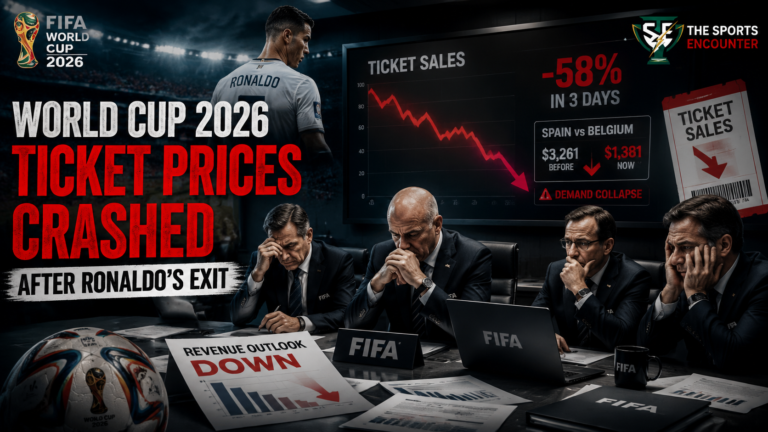
The World Cup reached its quarterfinal stage with the football growing more important and the ticket market suddenly growing less valuable.
Cristiano Ronaldo had left the tournament. Portugal had followed him out. The United States, Mexico, and Canada could no longer provide a home-country presence. Brazil and Colombia, two nations capable of filling stadiums far from home, had also disappeared.
Fans still had eight strong teams to watch. The confirmed quarterfinals offered Lionel Messi, Kylian Mbappé, Lamine Yamal, Harry Kane, Erling Haaland, and several compelling national stories.
However, the resale market had already placed its biggest bets on other possibilities.
Story at a glance
TL;DR
World Cup 2026 entered its biggest knockout matches with fewer commercial attractions than the ticket market had expected.
World Cup 2026 Ticket Market: Key Numbers
A quarterfinal in Los Angeles carried the prospect of Ronaldo facing the United States. A Miami ticket offered the possibility of Mexico or Brazil arriving with thousands of emotionally invested supporters. Kansas City buyers could imagine Argentina meeting Colombia in a high-intensity South American occasion.
Ronaldo’s exit removed the biggest individual ticket premium
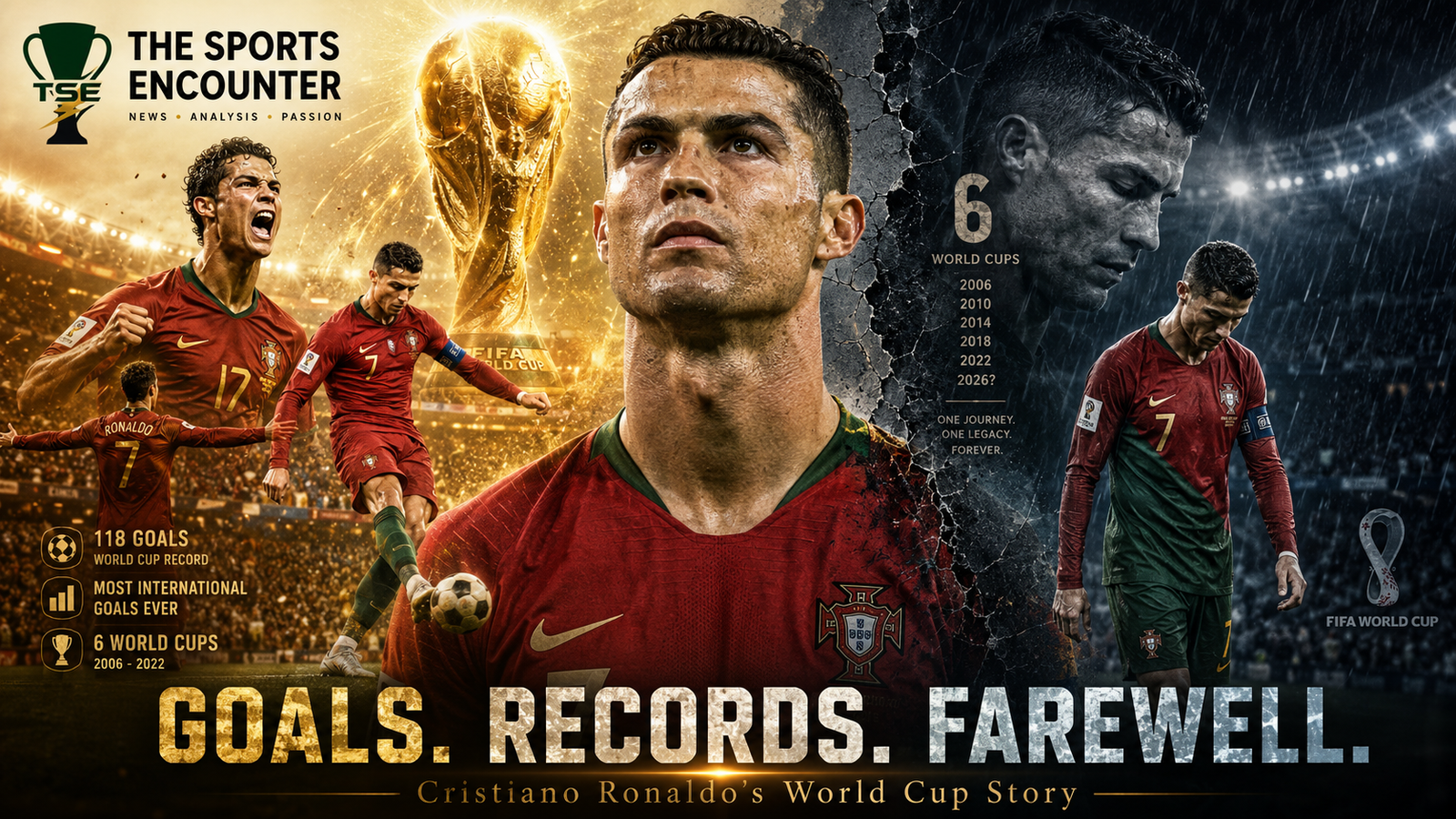
Ronaldo arrived at the 2026 World Cup at the age of 41, playing in a record sixth edition of the tournament and carrying the possibility that every match could become his final appearance on football’s largest stage. Reuters identified him as the competition’s oldest outfield player and one of the central figures in its generational story.
The United States carried a different commercial weight
Ronaldo’s exit was the largest individual blow, but the Los Angeles correction became far more severe when Belgium eliminated the United States.
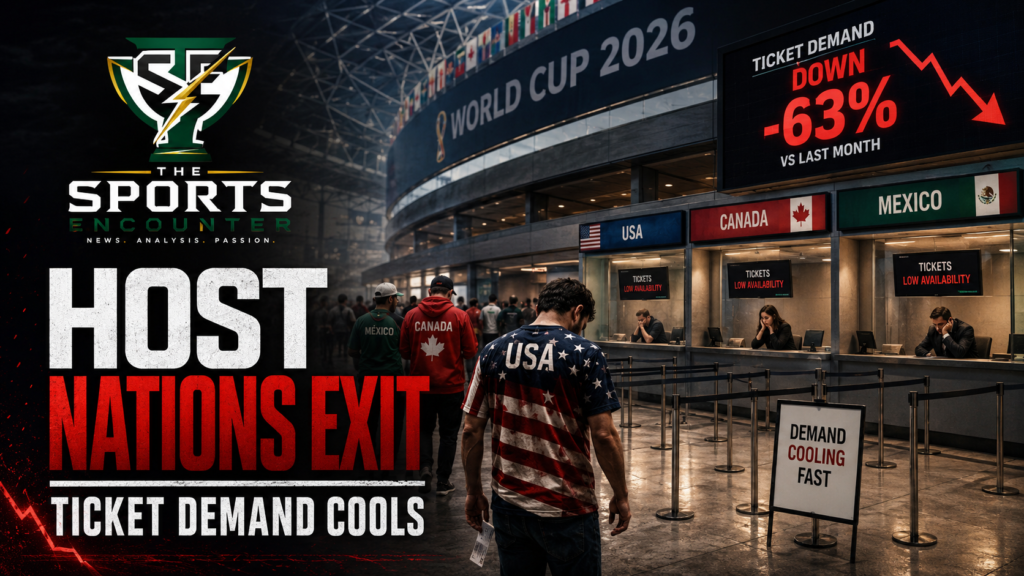
All three host nations were gone before the quarterfinals
The 2026 tournament was designed around three host countries, 16 host cities, 48 national teams, and 104 matches.
TL;DR
World Cup 2026 entered its biggest knockout matches with fewer commercial attractions than the ticket market had expected.
Cristiano Ronaldo and Portugal were eliminated by Spain. Belgium removed the United States. Mexico and Canada had already gone home. Brazil and Colombia also disappeared from the bracket.
The consequences appeared quickly:
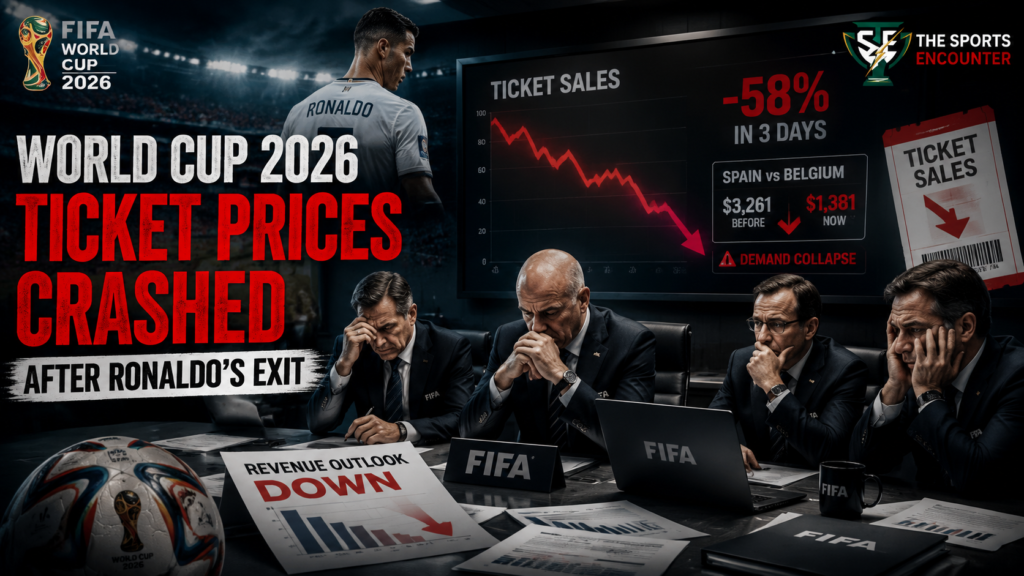
- The cheapest resale ticket for Spain vs Belgium fell from $3,261 to $1,381.
- England vs Norway dropped from $3,866 to $2,049.
- Argentina vs Switzerland fell from $2,381 to $1,142.
- Forbes reported that average quarterfinal resale prices declined 31.5% in one day and 50.4% across three days.
- The secondary market was also flooded with more inventory as supporters of eliminated teams tried to sell their seats.
These figures show a sharp decline in ticket-market value and late-stage revenue potential. They do not yet prove that FIFA’s total revenue across the 2023–2026 commercial cycle has fallen by the same degree.
World Cup 2026 Ticket Market: Key Numbers
| Ticket-market indicator | Reported figure |
|---|---|
| Spain vs Belgium lowest TickPick price before USA exit | $3,261 |
| Spain vs Belgium later price | $1,381 |
| Approximate decline | 58% |
| England vs Norway earlier price | $3,866 |
| England vs Norway later price | $2,049 |
| Argentina vs Switzerland earlier price | $2,381 |
| Argentina vs Switzerland later price | $1,142 |
| Quarterfinal average price fall in one day | 31.5% |
| Quarterfinal average price fall over three days | 50.4% |
| Secondary-market listings reported by Forbes | 49,415 |
| Listings at the start of the tournament | 28,285 |
| FIFA 2023–2026 revenue budget | $13 billion |
A quarterfinal in Los Angeles carried the prospect of Ronaldo facing the United States. A Miami ticket offered the possibility of Mexico or Brazil arriving with thousands of emotionally invested supporters. Kansas City buyers could imagine Argentina meeting Colombia in a high-intensity South American occasion.
The bracket delivered different games.
Prices corrected almost immediately.
Ronaldo’s exit removed the biggest individual ticket premium
Ronaldo arrived at the 2026 World Cup at the age of 41, playing in a record sixth edition of the tournament and carrying the possibility that every match could become his final appearance on football’s largest stage. Reuters identified him as the competition’s oldest outfield player and one of the central figures in its generational story.
That possibility carried financial value.
Before Portugal met Croatia in the Round of 32, the average price of the cheapest resale ticket reportedly reached $3,225, the highest entry price for any match in that round. Demand was driven by the chance to see Ronaldo face former Real Madrid teammate Luka Modrić in what could have been the final World Cup game for either veteran. The spike showed how strongly nostalgia, fame, and sporting mortality could influence ticket prices.
Portugal survived that occasion. The market began looking ahead.
A potential Ronaldo appearance in Los Angeles against the United States offered the kind of matchup that could reach beyond football’s regular audience. It combined one of the world’s most recognizable athletes, a host nation, a major American entertainment market, and the emotional weight of a final World Cup.
Then Spain ended Ronaldo’s World Cup dream with a stoppage-time winner.
Mikel Merino’s goal sent Portugal home and removed Ronaldo from the tournament. His exit altered the sporting bracket and the commercial expectations attached to it.
Forbes reported that the cheapest resale ticket for the Los Angeles quarterfinal fell from approximately $2,950 to nearly $1,200 after Portugal and the United States were eliminated. The publication described the decline as approaching 60%.
The Associated Press later recorded the lowest TickPick price at $1,381, down from $3,261 before the United States lost to Belgium. The difference between the Forbes and AP figures reflects a live market changing throughout the week, but both reports capture the same collapse.
The seat remained in the same stadium.
The stage remained a World Cup quarterfinal.
The possibility of seeing Ronaldo had disappeared.
The United States carried a different commercial weight
Ronaldo’s exit was the largest individual blow, but the Los Angeles correction became far more severe when Belgium eliminated the United States.
The American team had reached the Round of 16 with a chance to bring the home audience deeper into the tournament. A long U.S. run could sustain local television interest, corporate hospitality demand, merchandise sales, venue spending, and general public attention in the largest of the three host economies.
Belgium ended that possibility with a 4-1 victory.
The Sports Encounter’s report on Belgium’s elimination of the United States captured the scale of the sporting disappointment. The commercial impact became visible as American supporters and speculative ticket holders reconsidered whether they still wanted to attend the next game.
The cheapest ticket for the U.S. vs Belgium Round of 16 match had already experienced volatility before kickoff. Reuters reported that the entry price fell to $1,508 on July 6, down 27% over three days, after reaching $3,115 when the matchup was confirmed.
That movement offered an early warning.
Prices were reacting quickly to matchup certainty, inventory, and buyer confidence. When the United States lost, the market no longer needed to speculate about a possible host-nation quarterfinal in Los Angeles.
Belgium advanced to face Spain instead.
Both teams deserved their places. Spain entered with control, defensive strength, and one of the tournament’s most talented squads. Belgium had just produced one of the Round of 16’s strongest attacking performances.
The quarterfinal itself delivered drama, including two Spanish goals from rebounds and another decisive contribution from Merino. Readers can revisit how Spain defeated Belgium to reach the semifinals.
The market’s response before the game revealed that football quality alone had not created the earlier asking prices.
Those prices had included a significant premium for Ronaldo, Portugal, and the United States.
All three host nations were gone before the quarterfinals
The 2026 tournament was designed around three host countries, 16 host cities, 48 national teams, and 104 matches.
Home-country involvement was central to its commercial appeal.
Mexico brought one of the strongest football cultures in the tournament. Its supporters filled stadiums, traveled in huge numbers, and helped turn knockout possibilities into national events. Canada offered growing domestic enthusiasm and home-market demand in Toronto and Vancouver. The United States supplied the tournament’s largest collection of venues, sponsors, corporate buyers, and casual spectators.
None of the three reached the quarterfinals.
Canada’s campaign ended against Morocco. Mexico lost a dramatic Round of 16 match to England. The United States followed them out against Belgium.
That sequence removed three layers of demand at once:
- Supporters buying tickets to follow their own country
- Domestic viewers drawn into the tournament by a home-team run
- Speculative buyers expecting host-nation games to retain premium resale value
The disappearance of all three hosts also changed the atmosphere around late-stage ticketing.
Fans of eliminated teams began selling seats. Buyers who had purchased match codes before knowing the participants lost interest. Resellers faced the risk of holding expensive inventory that might become harder to move as kickoff approached.
The tournament still had global appeal, but its late-stage ticket market had lost the national foundation that hosting usually provides.
Mexico’s exit helped pull down the Miami quarterfinal
The decline spread well beyond Los Angeles.
Before England eliminated Mexico, TickPick listed the lowest resale price for the eventual Miami quarterfinal pathway at $3,866. After the Round of 16, the cheapest ticket for England vs Norway fell to $2,049. That represented a decline of roughly 47%.
England and Norway still offered substantial star appeal.
Harry Kane remained one of the world’s leading strikers. Jude Bellingham carried enormous international recognition. Norway had Erling Haaland, whose goals and personality had become central to one of the tournament’s most unexpected runs.
Yet Mexico’s departure removed a host nation and one of football’s most reliable traveling fan bases.
Brazil’s elimination created another gap. A quarterfinal featuring Brazil in Miami would have drawn enormous regional and international interest. Norway’s sporting achievement in eliminating Brazil was historic, but the commercial market judged the confirmed matchup against the most lucrative possibility available earlier in the bracket.
This is one of the central lessons from the price crash.
Knockout tickets were valued according to the dream matchup attached to their bracket position. When the bracket produced a less commercially powerful combination, prices moved toward the value of the actual game.
Colombia’s elimination weakened the Argentina quarterfinal market
The Argentina vs Switzerland quarterfinal experienced a similar correction.
According to AP, the cheapest TickPick price fell from $2,381 to $1,142 after the Round of 16, a decline of approximately 52%.
Lionel Messi remained in the tournament, which shows that Ronaldo’s exit cannot explain the entire market decline.
The other side of the matchup mattered.
Colombia had brought a large, vocal, and mobile fan base across North America. A quarterfinal against Argentina would have created a major South American occasion in Kansas City, complete with regional rivalry, cultural energy, and strong demand from supporters of both nations.
Switzerland advanced instead after a tense goalless match and penalty shootout. Gregor Kobel became the decisive figure as the Swiss goalkeeper helped remove Colombia from the competition.
The Sports Encounter covered Switzerland’s penalty-shootout victory over Colombia and the emotional weight of the result.
Switzerland’s progress was one of the tournament’s strongest underdog stories. Its commercial footprint was still smaller than Colombia’s.
The lower price did not represent a judgment on sporting legitimacy. It reflected the number of people willing to pay four figures to attend that particular matchup.
The ticket supply rose as demand cooled
Falling demand was only half of the equation.
More tickets were entering the market.
Forbes, citing SeatPick, reported that the number of secondary-market listings climbed to 49,415, compared with 28,285 at the beginning of the tournament. Average resale prices across the four quarterfinals reportedly fell 31.5% in one day and 50.4% across three days.
The rise in inventory likely came from several sources:
- Supporters whose national teams had been eliminated
- Buyers who had expected different quarterfinal matchups
- Resellers seeking to exit before prices fell further
- Travelers canceling costly cross-country plans
- Corporate or hospitality buyers releasing unused seats
- Fans who had bought several possible knockout routes
This created a classic market imbalance.
More sellers appeared at the same time that fewer buyers were willing to pay the previous prices. Sellers then lowered their asking prices to avoid being left with worthless tickets after kickoff.
The expanded World Cup geography may have increased the pressure.
Moving between host cities can require long flights, accommodation changes, and additional spending. A supporter who bought a quarterfinal ticket months earlier might accept those costs to watch Ronaldo, Mexico, Brazil, Colombia, or the United States. The calculation changes when the expected team disappears.
Did FIFA’s actual revenue drop sharply?
The wording requires a clear distinction.
The available reports verify a sharp fall in resale prices, secondary-market value, and late-stage ticket revenue potential. They do not provide audited proof that FIFA’s total revenue has fallen sharply across its entire commercial cycle.
FIFA’s revised financial plan projects $13 billion in revenue for the 2023–2026 cycle. The governing body’s official budget shows that broadcasting rights, marketing rights, hospitality, ticket sales, licensing, and other income streams contribute to that total. The 2026 revenue budget alone is listed at approximately $8.9 billion.
Much of the money from originally sold tickets may already have been collected.
When a ticket loses value on TickPick, StubHub, SeatPick, or another marketplace, the decline primarily affects the reseller or ticket holder. It does not automatically reverse FIFA’s original sale.
However, the correction can still pressure FIFA-linked revenue in several areas:
- Lower transaction values on FIFA’s resale platform
- Reduced demand for late-release tickets
- Weaker hospitality sales for less attractive matchups
- Lower merchandise spending by eliminated fan bases
- Reduced food, beverage, and venue spending
- Less demand for premium semifinal and final packages
- Lower resale commissions if transactions slow or prices fall
Reuters reported that FIFA’s official resale system charges a 15% buyer fee and a 15% seller fee, giving the organization a financial interest in both resale volume and transaction value. FIFA has also advised supporters to use the official FIFA ticketing platform because tickets purchased elsewhere may carry authenticity or transfer risks.
A lower resale market can therefore reduce certain fee opportunities even when the original ticket has already been sold.
The strongest defensible conclusion is that World Cup 2026 suffered a sharp decline in late-stage ticket-market value after its largest commercial attractions were eliminated.
The final impact on FIFA’s full tournament revenue will require official financial reporting.
Dynamic pricing made the correction more dramatic
World Cup 2026 entered the tournament with some of the most controversial ticket prices in football history.
FIFA adopted variable pricing that allowed costs to move with demand, availability, inventory, and the popularity of individual fixtures. Reuters reported that quarterfinal face values ranged from approximately $410 to $1,690, while semifinal prices reached as high as $2,780 before resale premiums.
The system allowed high-profile matches to climb far beyond their original prices.
Portugal vs Croatia became a clear example when Ronaldo and Modrić pushed the cheapest resale listings above $3,000.
The same mechanism worked in reverse after the biggest attractions disappeared.
A market built around maximum demand also becomes vulnerable when the expected demand does not survive the tournament.
Supporter groups had warned about affordability well before the quarterfinals. Football Supporters Europe described the pricing structure as “extortionate” and accused FIFA of betraying traditional fans.
The Sports Encounter also identified ticket pricing and fan access among the World Cup’s biggest organizational challenges before the tournament began.
The quarterfinal crash confirmed the risk.
When prices are pushed high enough, every ticket begins carrying assumptions about the players, countries, and storylines that will eventually reach the venue.
If those assumptions fail, the price becomes difficult to defend.
The World Cup final remains protected by the occasion
The quarterfinal market fell sharply, but the final remained in a different financial category.
Continue the FIFA World Cup 2026 Story
 FIFA World Cup 2026The World Cup Won America’s Attention. Can Soccer Keep Its 75 Million Fans?
 FIFA World Cup 2026Infantino Faces FIFA’s Reckoning as Revolt Reaches Zurich, and Now $6 Billion Reserves Enter the Fight
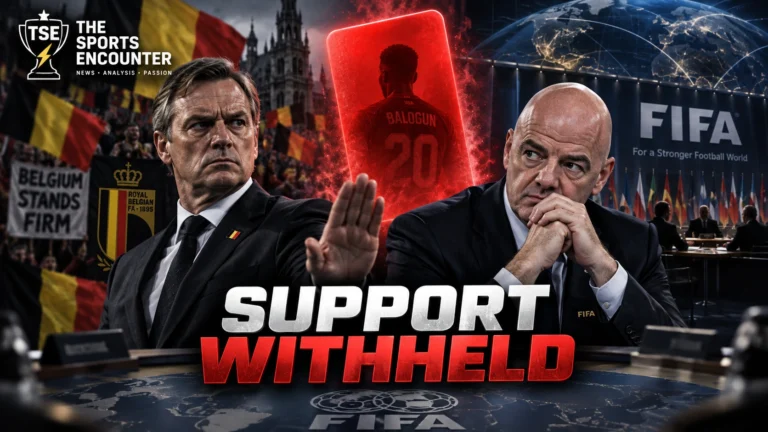 FIFA World Cup 2026Belgium Turns Balogun Red-Card Row Into Direct Challenge to Infantino’s FIFA Re-Election
AP reported that FIFA released nearly 1,200 Category 2 seats for the July 19 final at $7,380 each. Some Category 1 seats ranged from $19,995 to $32,970, while hospitality packages reached $34,500.
The final retains value regardless of the participants because buyers are purchasing access to the defining event of the tournament.
A quarterfinal depends more heavily on the matchup.
The final offers the trophy presentation, the closing ceremony, global status, and an experience that remains rare even when a buyer has no emotional connection to either finalist.
The identity of the finalists will still move prices.
A team featuring Messi, Mbappé, Kane, Haaland, Yamal, or another global figure could increase demand. An unexpected final may cause some speculative sellers to reduce prices.
The event itself provides a stronger financial floor than any earlier knockout round.
Ronaldo left a commercial measure of his World Cup influence
Ronaldo’s final appearance may be remembered through the tears after Portugal’s elimination, the late goal that ended the run, and the realization that a career stretching across six World Cups had probably reached its final chapter.
The ticket market added another measure of his influence.
Before Portugal went out, buyers valued the possibility of seeing Ronaldo in Los Angeles at several thousand dollars.
After Spain eliminated him, the price attached to that possibility vanished.
The United States’ defeat deepened the correction. Mexico and Canada had already removed the host-country element. Brazil and Colombia took two major traveling audiences with them.
The quarterfinals still contained elite football. They offered strong teams, extraordinary players, and games capable of shaping the tournament’s history.
The market had priced something larger.
It had priced Ronaldo’s farewell, American participation, Mexican passion, Brazilian identity, Colombian support, and the most glamorous version of every possible matchup.
When the tournament produced a different final eight, the commercial premium collapsed.
For some supporters, that created an unexpected opportunity. AP reported that a 65-year-old fan purchased tickets for approximately $1,000 each to attend Spain vs Belgium with his grandson after previously believing the game was unaffordable.
The price remained beyond the reach of many families.
Yet it was far below what sellers had demanded days earlier.
What the crash means for the rest of World Cup 2026
Ticket values will continue moving as the remaining matchups become clear.
The semifinal and final markets will respond to:
- Which global stars remain
- Whether Messi reaches another final
- Whether European heavyweights dominate the bracket
- How many traveling supporters can reach the host city
- How much speculative inventory remains unsold
- Whether sellers become more anxious close to kickoff
- Whether FIFA releases additional official tickets
Fans considering a purchase should treat the resale market carefully. A falling price can create an opening, but unofficial tickets also carry transfer, fraud, and access risks.
The safest route remains the official ticketing system and FIFA’s published guidance.
The larger commercial lesson is already visible.
FIFA World Cup 2026 ticket prices rose on the strength of possible moments: Ronaldo against America, Mexico in Miami, Brazil in the last eight, Colombia against Argentina, and three hosts carrying the tournament deep into July.
Football removed those possibilities.
The market followed.
The Sports Encounter’s World Cup 2026 coverage focuses on fixtures, team news, match analysis, fan stories, tournament trends, and the biggest talking points from football’s global stage.
Q1. Why did World Cup 2026 ticket prices drop?
World Cup 2026 ticket prices dropped because several high-demand teams and players were eliminated before the quarterfinals. Cristiano Ronaldo and Portugal exited the tournament, while the United States, Mexico, Canada, Brazil, and Colombia also failed to reach the last eight. These exits reduced demand for premium matchups and caused resale prices to fall sharply.
Q2. How much did World Cup 2026 ticket prices fall?
Some World Cup 2026 resale ticket prices fell by more than 50% during the knockout stage. The cheapest resale ticket for Spain vs Belgium dropped from around $3,261 to $1,381, while Argentina vs Switzerland tickets declined from approximately $2,381 to $1,142.
Q3. Did Cristiano Ronaldo’s exit affect World Cup 2026 ticket prices?
Yes. Cristiano Ronaldo’s elimination had a major impact on ticket demand because fans were willing to pay premium prices for the possibility of watching his final World Cup moments. After Portugal’s exit, the commercial value attached to potential Ronaldo appearances disappeared.
Q4. Did FIFA lose money because World Cup 2026 ticket prices crashed?
There is no confirmed evidence that FIFA suffered a major revenue loss because resale prices declined. Falling secondary-market prices mainly affect ticket resellers and holders. FIFA’s projected revenue for the 2023–2026 cycle remains around $13 billion, with the full financial impact requiring official reporting.
Q5. Are World Cup 2026 resale tickets safe to buy?
Fans should use caution when purchasing resale tickets. FIFA recommends using official ticketing channels because unofficial resale platforms may involve risks related to ticket authenticity, transfer restrictions, or invalid access.