
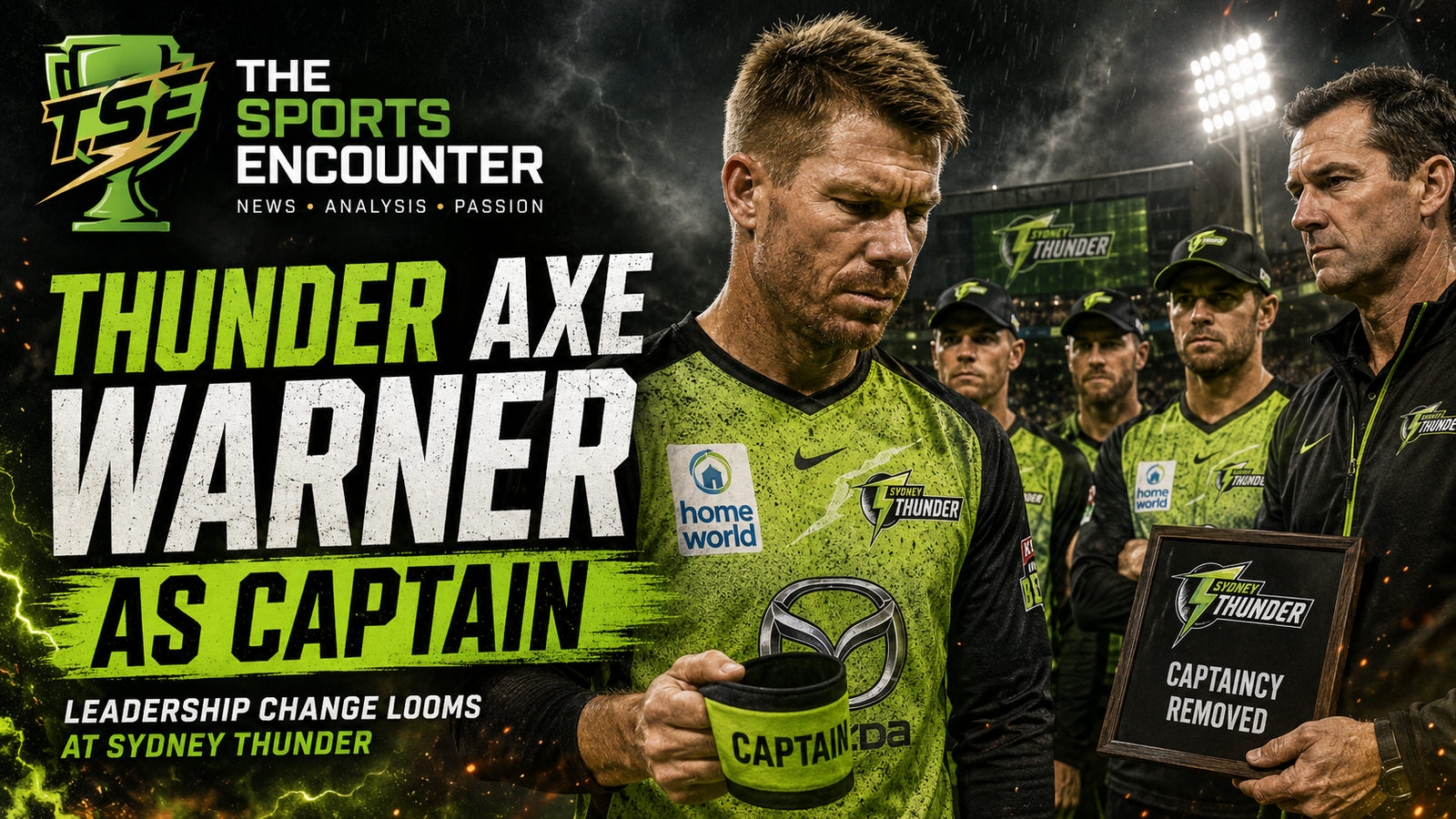
Why Sydney Thunder May Sack David Warner as Captain
David Warner’s guilty plea to mid-range drink-driving has left Sydney Thunder facing a difficult leadership decision. The club may keep him as a senior batter while appointing a new captain for BBL 2026-27.

David Warner spent years fighting for the right to captain an Australian cricket team again. His guilty plea to a mid-range drink-driving charge has now placed that hard-won second chance in serious danger ahead of the 2026-27 Big Bash League season.
Warner admitted the offence through his lawyer at Waverley Local Court after recording a blood-alcohol reading of 0.104 during the Easter break. The figure was more than twice Australia’s general legal limit of 0.05.
He is due to be sentenced on August 18, but the legal punishment will not settle the leadership question confronting Sydney Thunder and Cricket NSW.
Thunder must decide whether Warner can continue as the official leader of a team connected to public messaging against drink-driving.
The club does not need to terminate his contract or remove him from its playing plans. Warner remains an elite T20 batter, a major commercial figure and an experienced mentor.
Captaincy carries a different standard. Keeping him as skipper would leave Thunder defending an uncomfortable contradiction throughout BBL|16.
David Warner Drink-Driving Case: Key Facts
| Incident date | April 5, 2026 |
|---|---|
| Location | Maroubra, Sydney |
| Blood-alcohol reading | 0.104 |
| Charge | Mid-range prescribed concentration of alcohol driving |
| Plea | Guilty |
| Sentencing date | August 18, 2026 |
| Current club | Sydney Thunder |
| Current role | Captain and opening batter |
What Happened During Warner’s Easter Break?
Warner was home in Sydney during a break from captaining Karachi Kings in the Pakistan Super League when the incident occurred on April 5.
Police were operating a roadside breath-testing site on Malabar Road in Maroubra. Warner’s vehicle stopped and parked before reaching the testing point, prompting officers to approach the car.
A roadside test returned a positive result. Warner was taken to Maroubra Police Station, where the secondary test produced a reading of 0.104.
His lawyer, Bobby Hill, said Warner had consumed three glasses of wine at a friend’s apartment before deciding to drive. Hill acknowledged that his client should have taken an Uber and called the decision reckless and foolish.
The lawyer also said Warner’s final drink had been consumed shortly before police stopped him.
Warner was not required to attend court when the guilty plea was formally entered. His legal team indicated that discussions over the agreed facts were continuing ahead of sentencing.
Whatever sentence follows, the central fact is no longer disputed. Warner has accepted responsibility for driving after drinking.
Why This Cannot Be Treated as a Private Matter
Off-field conduct is sometimes classified as a personal matter when it does not affect a player’s availability or involve the club directly.
That distinction is difficult to maintain here.
Cricket NSW, Sydney Thunder and Sydney Sixers have supported road-safety messaging intended to discourage drink-driving. Cricket NSW chief executive Lee Germon described the allegations as concerning and said the organization strongly supported safe driving.
The club now faces a direct test of that position.
Thunder can retain Warner as a player while acknowledging that his conduct was incompatible with the responsibilities attached to captaincy.
Leaving the leadership structure untouched would send a different message. It could suggest that the standards promoted publicly carry fewer consequences when the person involved is the team’s biggest star.
Warner’s Runs Still Matter to Sydney Thunder
Removing Warner as captain should not be confused with questioning his cricketing value.
He remains a destructive opener capable of controlling an innings or overwhelming an attack during the powerplay. His experience, tactical knowledge and understanding of Australian conditions continue to make him one of Thunder’s most important players.
The club’s official David Warner player profile reflects his status as one of the most accomplished batters associated with the franchise.
Thunder can continue building their batting plans around him. They can also use his experience to help young players without requiring him to remain the formal leader.
Cricket regularly separates individual importance from captaincy. A team’s leading run-scorer does not automatically have to be its skipper.
The Sports Encounter examined a similar distinction between batting status and leadership responsibility when assessing Babar Azam’s return as Pakistan Test captain.
The circumstances are different, but the principle remains useful. Captaincy is an institutional responsibility, not a reward for scoring the most runs.
Captaincy Requires More Than Match-Day Performance
A Big Bash captain handles tactical decisions, represents the team publicly, works closely with management and helps establish standards inside the dressing room.
The captain may also appear in community programs, commercial campaigns and events aimed at younger supporters.
Those duties give the role a significance that extends beyond the boundary.
Warner’s authority would be tested whenever Thunder addressed behavior, responsibility or off-field standards. Players could reasonably ask how accountability operates when the captain has admitted making a serious and avoidable decision.
That does not mean Warner has lost the respect of every teammate. It means Thunder must consider whether retaining him weakens the credibility of the position itself.
The 2024 Leadership Review Makes the Case More Serious
Warner’s Thunder captaincy carried unusual meaning because he had previously been banned for life from holding leadership positions in Australian cricket.
The ban followed his role in the 2018 ball-tampering scandal in South Africa. Alongside a 12-month playing suspension, Warner was prevented from captaining an Australian team indefinitely.
An independent panel lifted that leadership sanction in October 2024 after accepting evidence of remorse, rehabilitation and improved conduct.
Sydney Thunder appointed him captain soon afterward.
His restoration to leadership therefore represented more than a tactical appointment. It was a public statement that Warner had rebuilt enough trust to lead again.
The drink-driving offence does not erase every positive action he has taken since 2018. It does, however, require Thunder to reassess whether he should continue holding a role restored partly because of his claimed rehabilitation.
A player returning from a lifetime leadership ban understands that later conduct will receive greater scrutiny.
A Second Chance Comes With a Higher Burden
Warner fought hard to overturn the leadership sanction and repeatedly expressed frustration over the process.
Once that effort succeeded, he received something few players obtain after a major scandal: another opportunity to lead.
That second chance came with a higher burden of judgment.
Thunder entrusted Warner with mentoring young players and representing the club’s identity. His guilty plea does not require another lifetime ban, but it makes an immediate captaincy review unavoidable.
The organization should judge the role according to its own standards rather than treating the court sentence as the only consequence that matters.
Chris Green Gives Thunder a Ready-Made Alternative
Sydney Thunder are not short of leadership options.
Chris Green has captained the side previously and understands the squad, competition and demands of franchise cricket. He offers continuity without forcing the club into a complete strategic reset.
Green can also contribute tactically across different phases of a match as a spinner and experienced domestic player.
Sam Billings has captained teams in franchise cricket, although overseas availability could complicate a full-season appointment. Daniel Sams and other senior players could form part of a broader leadership group.
The replacement does not need to match Warner’s batting record. Thunder need someone capable of representing the club consistently and supporting its standards.
Removing the Captaincy Would Be a Proportionate Response
Some supporters will argue that Warner has admitted his mistake, shown remorse and should be allowed to move forward once the court process ends.
That argument carries weight when considering his playing career.
It does not mean the captaincy must remain untouched.
Thunder could retain Warner, support him through sentencing and allow him to rebuild public trust while appointing a different skipper for BBL|16.
Such a decision would not amount to abandoning him. It would connect the consequence directly to the leadership position affected by the conduct.
Warner could remain part of the senior group, advise the captain and help younger batters. He would continue contributing without serving as the club’s formal representative.
What Cricket NSW Risks by Keeping Warner as Captain
Damage to Public Credibility
Road-safety messaging would appear inconsistent if the organization condemned drink-driving but retained a guilty player as one of its most prominent leaders.
Pressure From Sponsors and Partners
Big Bash clubs depend on commercial relationships and community credibility. A prolonged dispute over the captaincy could distract from the season and place partners in an uncomfortable position.
Questions Inside the Dressing Room
Leadership depends on the authority to enforce standards. Warner’s admitted decision could weaken that authority when future behavioral issues arise.
A Distraction Throughout BBL|16
Every media appearance, road-safety campaign and major Thunder event could return to the same unresolved question.
The Message to Young Supporters
The Big Bash attracts families and children. Captains are promoted as visible representatives of their clubs, which gives Thunder a wider responsibility when choosing who holds the title.
Warner Can Still Rebuild Trust
Losing the captaincy would not need to become a permanent ending to Warner’s leadership ambitions.
Thunder could review the position after a full season based on his conduct, legal compliance and contribution to the club.
A temporary removal would distinguish the response from the lifetime ban imposed after Cape Town.
It would also give Warner a clear path forward. He could participate in road-safety education, acknowledge the consequences of his actions and demonstrate change through behavior rather than statements.
Cricket careers frequently involve changes in responsibility. The Sports Encounter’s analysis of Ben Stokes’ leadership legacy showed how captaincy shapes a player’s wider reputation beyond statistics.
Warner’s next phase will be shaped by how he responds if that responsibility is removed.
What Sydney Thunder Should Do
- Allow the sentencing hearing to conclude on August 18.
- Complete an internal conduct review involving Thunder and Cricket NSW.
- Separate Warner’s playing contract from his captaincy status.
- Appoint Chris Green or another senior player as BBL|16 captain.
- Retain Warner as an opening batter and experienced squad member.
- Establish clear community or road-safety responsibilities.
- Review Warner’s future leadership eligibility after the season.
This response would recognize the seriousness of the offence while avoiding an excessive or permanent playing sanction.
Why the Decision Matters Beyond Warner
Cricket organizations frequently speak about culture, responsibility and accountability.
Those standards become meaningful when applying them is difficult.
Warner is commercially valuable, popular with supporters and central to Thunder’s batting. That makes the decision harder, but it also makes the response more important.
Removing a fringe player from leadership would prove little. Holding the team’s biggest star to the same principles would give Cricket NSW’s public commitments greater credibility.
The wider Big Bash League platform will carry official competition updates, schedules and club announcements ahead of BBL|16.
Readers can also follow The Sports Encounter’s cricket news and analysis, including its examination of Babar Azam’s batting and leadership legacy and its historical feature on Imran Khan’s influence as a captain and all-rounder.
Final Verdict
Sydney Thunder should not end David Warner’s playing career over the drink-driving guilty plea.
They should remove him as captain for BBL 2026-27.
Warner remains capable of winning matches, mentoring young players and contributing to the franchise. None of those qualities require him to retain the formal leadership position.
Keeping him as skipper would place Cricket NSW’s road-safety commitments under constant scrutiny and create the impression that exceptional performance can soften leadership consequences.
Thunder gave Warner a meaningful second chance when his lifetime captaincy ban was lifted. His admitted conduct now requires a meaningful response.
He can continue playing and begin rebuilding trust.
The captaincy should pass to someone else. “`

Breaking News
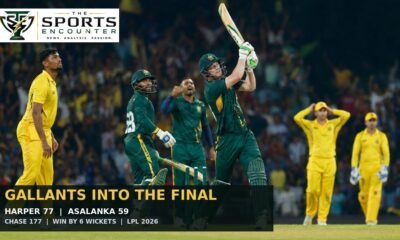
Harper and Asalanka Punish Colombo’s Chaos as Galle Reach LPL Final
Sam Harper’s commanding 77 and Charith Asalanka’s composed 59 carried Galle Gallants past Colombo Kaps and into the LPL 2026 final against Jaffna Kings.

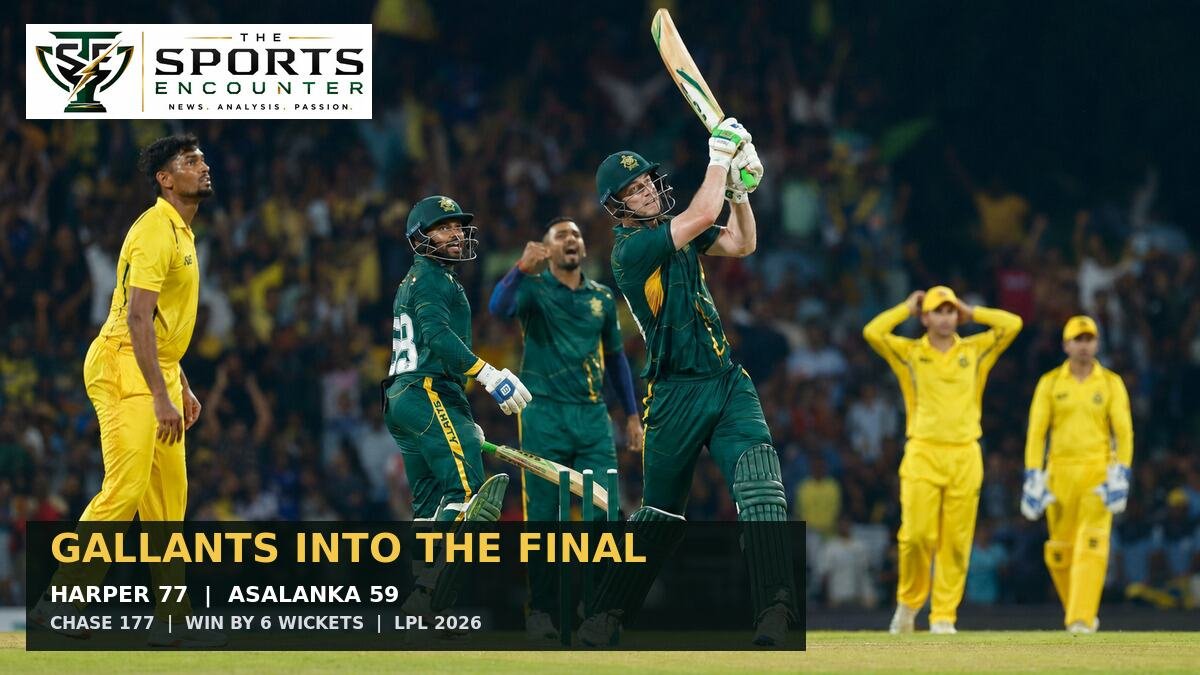
Colombo Kaps scored quickly enough to threaten Galle Gallants, but they never batted long enough to control the match.
That difference decided Qualifier 2.
Colombo lost five wickets inside seven overs, recovered through Rubin Hermann and Ravindu Fernando, and then surrendered its remaining batting resources before completing 20 overs. Galle responded with a far calmer chase, riding Sam Harper’s masterful 77 and Charith Asalanka’s 59 to reach 177 for four in 18.4 overs.
The six-wicket victory at the R. Premadasa Stadium sends Galle into Saturday’s Lanka Premier League 2026 final against Jaffna Kings. Colombo’s promising playoff run ends one victory short of the title match.
TL;DR
- Galle Gallants chased 177 in 18.4 overs to win Qualifier 2 by six wickets.
- Sam Harper led the chase with 77 from 51 balls, including four fours and four sixes.
- Charith Asalanka scored 59 from 42 and shared a match-defining 126-run partnership with Harper.
- Colombo recovered from 52 for five to reach 176, but was bowled out in 18.5 overs.
- Dasun Shanaka’s constant bowling changes prevented Colombo from controlling the innings.
- Galle will face Jaffna Kings in the LPL 2026 final on August 8.
Galle Gallants vs Colombo Kaps Scorecard
| Detail | Information |
|---|---|
| Competition | Lanka Premier League 2026, Qualifier 2 |
| Venue | R. Premadasa Stadium, Colombo |
| Date | August 7, 2026 |
| Toss | Colombo Kaps elected to bat |
| Colombo Kaps | 176 all out in 18.5 overs |
| Galle Gallants | 177/4 in 18.4 overs |
| Result | Galle Gallants won by six wickets |
| Top Galle batter | Sam Harper, 77 from 51 balls |
| Galle support | Charith Asalanka, 59 from 42 balls |
| Top Colombo batters | Ravindu Fernando 48; Rubin Hermann 45 |
| Best Galle bowling | Sachindu Colombage 2/34; Charith Asalanka 2/34 |
| Turning point | Harper and Asalanka added 126 after Galle slipped to 21/1 |
| What comes next | Galle face Jaffna Kings in the August 8 final |
Colombo’s Run Rate Hid a Deeper Batting Failure
A total of 176 from 18.5 overs suggests aggression. The scorecard tells a harsher story.
Colombo fell to 20 for three before the third over had ended. Sadeera Samarawickrama made five, Thanuka Dabare scored 11, and captain Kamindu Mendis managed one. Janith Liyanage briefly counterattacked with 23 from nine balls, but his dismissal left the Kaps at 47 for four.
James Neesham then fell for one, reducing Colombo to 52 for five in 6.1 overs.
The Kaps kept swinging when the situation called for one decisive partnership. That approach produced boundaries, but it repeatedly exposed new batters before they had understood the surface or match situation.
Hermann supplied some resistance with 45 from 33 balls. Ravindu Fernando changed the innings’ pace with five sixes in a 27-ball 48, while Malsha Tharupathi contributed a valuable 28 from 17. Their hitting dragged Colombo toward a defendable total, yet the team lost its seventh wicket at 158 in the 17th over and was dismissed with seven balls unused.
Those missing deliveries mattered. Even at a modest late-innings rate, Colombo could have added another 10 to 15 runs. Against a Galle batting lineup that eventually needed eight runs from the final eight balls, that extra cushion could have changed the pressure entirely.
Colombo had shown much better knockout control while eliminating Kandy, as detailed in The Sports Encounter’s report on McDermott, Neesham and Wanuja Sahan ending the Royals’ campaign. Qualifier 2 exposed the opposite version of their batting.
Shanaka Kept Searching Until Galle Found Control
Dasun Shanaka’s captaincy deserves as much credit as the wickets.
Colombo’s batters attacked nearly every bowling matchup, which could easily have forced a captain into defensive thinking. Shanaka continued rotating his options instead. Six bowlers entered the attack, preventing any Colombo batter from settling against one repeated pace or angle.
Charith Asalanka conceded 34 from three overs but removed Dabare and Kamindu. Mohammad Nawaz delivered the evening’s most economical spell, taking one for 12 from two overs. Akif Javed and Tharindu Ratnayake collected one wicket each, while Sachindu Colombage returned two for 34.
The changes did not stop every boundary. They kept producing questions, and Colombo’s reckless shot selection eventually supplied the answers.
Galle had already beaten the Kaps twice during the league stage, including a 13-run victory that secured a top-two finish. Shanaka again showed why his team has handled changing match situations better across the tournament.
Harper and Asalanka Remove the Panic From the Chase
Galle lost Thomas Rogers for 13 at 21 for one, giving Colombo the early opening it needed. Harper and Asalanka closed it with patience, strike rotation and controlled aggression.
Their 126-run partnership lasted 84 balls. Harper struck four fours and four sixes during his 77 from 51, while Asalanka contributed three fours and four sixes in a 42-ball 59.
Both batters understood that the required rate demanded intent without desperation. They targeted weaker deliveries, kept the scoreboard moving between boundaries and denied Colombo the clusters of wickets that had damaged the first innings.
Harper has repeatedly shaped Galle’s successful chases. His earlier 65 against the same opponent helped produce another victory, covered in The Sports Encounter’s report on Galle’s five-wicket win over Colombo.
Asalanka again provided the calm middle-overs influence that defined his 65 in Galle’s opening victory over Jaffna.
Colombo dismissed Asalanka, Harper and Chamika Karunaratne late, but the damage had already been done. Shanaka completed the chase with a six, finishing unbeaten on eight from three balls.
The Final Brings Galle Back to Jaffna
Galle’s reward is an immediate rematch with Jaffna Kings, who defeated them by 14 runs in Qualifier 1 after Kamil Mishara’s unbeaten century.
Jaffna will enter the final rested and confident after posting 242 for two in that meeting. Galle arrives with momentum, a proven chasing structure and fresh evidence that Harper and Asalanka can manage knockout pressure.
The official Lanka Premier League schedule confirms that the final will take place at the R. Premadasa Stadium on August 8. Readers can follow the buildup through The Sports Encounter’s Lanka Premier League coverage hub and wider cricket reporting and analysis.
Colombo leaves with clear evidence of its attacking ability, but also with the question that ended its season: why keep swinging when the match was asking someone to stay?
Galle found the balance Colombo could not. One more victory will make them champions.
Breaking News
Pakistan Leave Trinidad With Relief, West Indies With Regret After a Series That Exposed Both

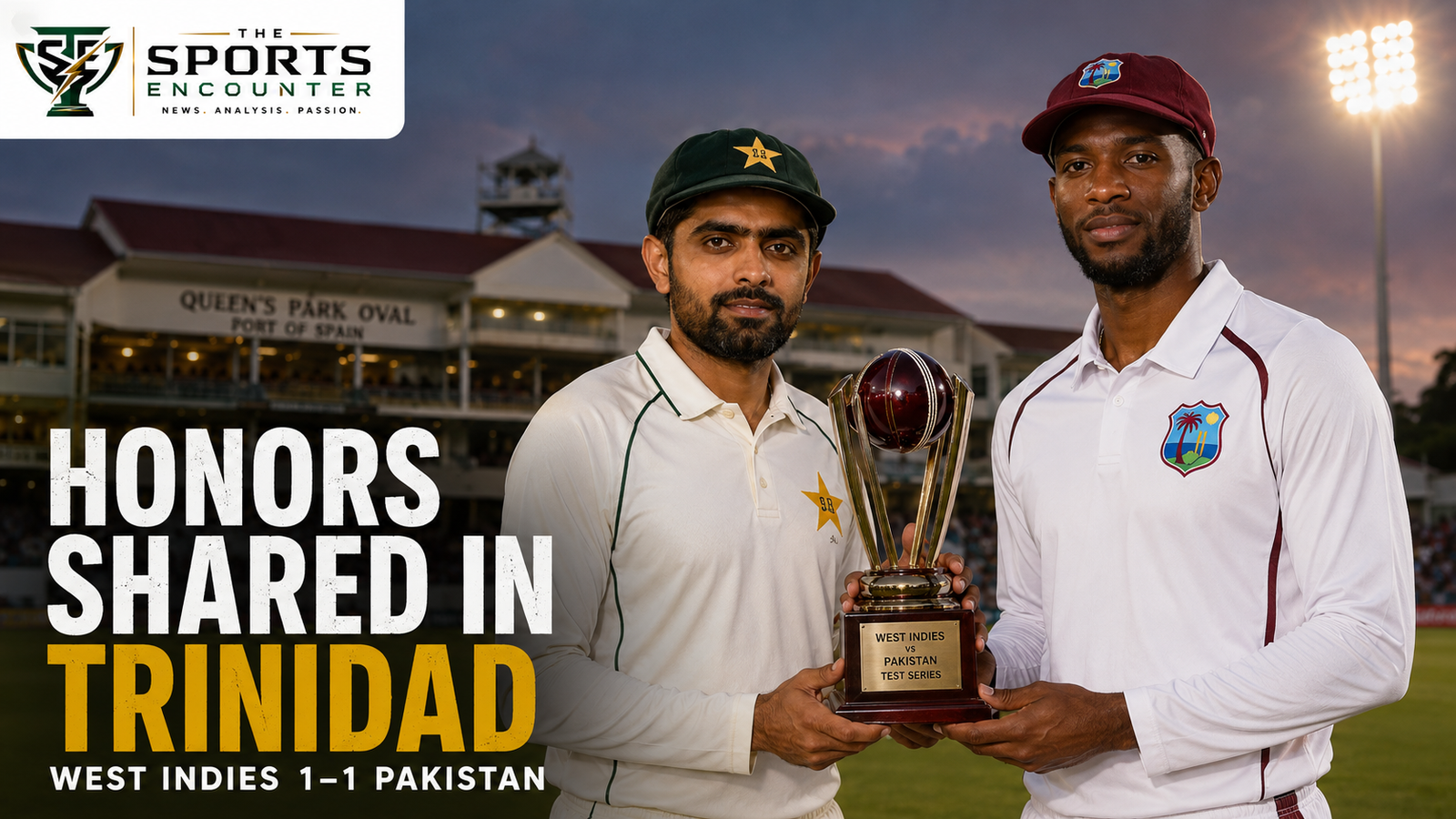
Pakistan needed 75 runs to prevent Babar Azam’s return as Test captain from beginning with another overseas series defeat. West Indies needed early wickets to protect a home summer that had finally restored some belief in their red-ball cricket.
By the time Babar launched Jomel Warrican for consecutive sixes at Queen’s Park Oval, the pressure had found its answer. Pakistan had won the second Test by eight wickets, ended their longest away losing streak and leveled a closely contested series 1-1.
The scoreline suited the cricket. West Indies handled the seam-friendly conditions better in Tarouba. Pakistan read the turning surface more accurately in Port of Spain. Both teams found players capable of changing Tests, yet neither produced enough consistency to claim the series.
Readers can revisit the original expectations in our West Indies vs Pakistan series preview and follow further international coverage through The Sports Encounter’s Cricket Hub.
TL;DR
- West Indies won the first Test at Tarouba by 90 runs before Pakistan answered with an eight-wicket victory in Port of Spain.
- Justin Greaves produced a historic five-wicket spell and shared Player of the Series honors with Babar Azam.
- Abdullah Shafique marked his unexpected recall with an unbeaten 160 and earned Player of the Match in the second Test.
- Babar and head coach Sarfaraz Ahmed made four changes, including the surprising omission of Mohammad Abbas.
- Roston Chase admitted West Indies underestimated how early the second-Test pitch would turn and should have selected another spinner.
- Babar sustained a bruised finger during Pakistan’s final chase, but there is currently no indication that he will miss the first Test against England.
West Indies vs Pakistan 2026 Test Series Results
| Detail | First Test | Second Test |
|---|---|---|
| Venue | Brian Lara Cricket Academy, Tarouba | Queen’s Park Oval, Port of Spain |
| Dates | July 25-28, 2026 | August 2-5, 2026 |
| West Indies totals | 311 and 181 | 344 and 117 |
| Pakistan totals | 282 and 120 | 387 and 77/2 |
| Result | West Indies won by 90 runs | Pakistan won by eight wickets |
| Player of the Match | Justin Greaves | Abdullah Shafique |
| Defining performance | Greaves took 5/27 and 2/12 | Shafique scored 160 not out |
| Series result | Drawn 1-1 | Drawn 1-1 |
| Players of the Series | Babar Azam and Justin Greaves | Babar Azam and Justin Greaves |
Tarouba: Pakistan Created Chances, West Indies Took Them
The opening Test gave Pakistan several opportunities to control the match. That made the eventual 90-run defeat more troubling than the margin alone suggested.
West Indies made 311 after Kavem Hodge scored 84 and Shai Hope contributed 92. Pakistan’s seamers kept the innings within reach, with Mohammad Ali taking 4/50 and Mohammad Abbas collecting 3/63.
Shan Masood answered with 109, the first Test century recorded at Brian Lara Cricket Academy. His 155-run partnership with Imam-ul-Haq, who made 63, brought Pakistan back into the contest after an early setback.
Masood’s innings carried added meaning because he had recently lost the captaincy. He responded as an experienced batter should, focusing on the match rather than turning his hundred into a public statement about the leadership change.
Pakistan reached a position from which they could have secured a first-innings advantage. Greaves changed the direction of the match with one of the most productive spells seen in recent Test cricket.
Justin Greaves Finds the Length That Pakistan Could Not Handle
Greaves took five wickets during five consecutive wicket-maiden overs, becoming the first bowler in Test history to achieve that sequence. His 5/27 restricted Pakistan to 282 and protected a 29-run West Indies lead.
The all-rounder later revealed that he had watched Abbas and copied the Pakistan seamer’s fuller length. That small technical adjustment delivered a historic spell.
Greaves added two wickets in the second innings to finish with match figures of 7/39. Our first-Test report from Tarouba explains how his control and Jayden Seales’ pace turned Pakistan’s promising positions into another painful defeat.
West Indies’ Tail Changes the Chase
Pakistan regained control through Abbas in West Indies’ second innings. He took 5/22, repeatedly challenging the stumps and making scoring difficult. Mohammad Ali supported him with two wickets as the hosts slipped to 93/7.
Shamar Joseph then attacked his way to 38 from 27 balls. Kemar Roach and the remaining lower order provided enough support to push West Indies to 181, leaving Pakistan 211 to win.
Those lower-order runs became one of the series’ major turning points. A chase closer to 160 would have felt manageable. Passing 200 increased the pressure on a batting side with a damaging recent record in second innings.
Seales exploited that vulnerability by taking 5/20. Pakistan collapsed for 120 while Babar remained stranded on 58 not out. The captain showed patience and resilience, but no partnership survived long enough to support him.
West Indies deserved the victory because they controlled the final exchanges of each innings. Pakistan played good cricket in long stretches, yet their inability to remove the tail and protect Babar in the chase proved decisive.
Four Changes Reveal the Intent Behind Babar 2.0
The defeat left Babar and head coach Sarfaraz Ahmed with a difficult decision. They could retain the same combination and demand better execution, or reshape the team for a Queen’s Park Oval surface expected to offer more assistance to spin.
They chose change.
Shan’s fractured left index finger ruled him out, creating an opening for Abdullah Shafique. Pakistan also brought in Awais Zafar, Sajid Khan and Ubaid Shah. Awais and Ubaid received their Test debuts.
Aamer Jamal, Khurram Shahzad, Mohammad Abbas and the injured Shan made way. Abbas’ omission attracted the most attention because he had taken eight wickets in Tarouba and almost rescued the opening match.
The selection made sense once the surface began to turn. Pakistan strengthened the batting order, added an experienced off-spinner and retained Ali Usman as the left-arm option.
Those who followed our earlier analysis of Babar Azam’s return as Test captain will recognize why the decision mattered. His second tenure needed a visible tactical identity. Port of Spain provided the first convincing evidence of one.
Sajid Khan Prevents West Indies From Escaping
West Indies still reached a respectable 344 after winning the toss. Greaves made 73, Chase scored 70 and Brandon King contributed 46.
Sajid prevented a larger total with 4/85. He bowled long spells, changed pace intelligently and gave Babar enough control to rotate Mohammad Ali, Ubaid and Ali Usman around him.
The decision to select two specialist spinners had already started working. West Indies would later regret failing to make the same adjustment.
Abdullah Shafique Turns an Unexpected Recall Into a Series-Saving Innings
Shafique had not entered the tour as an automatic selection. Shan’s injury created the opening, and the recalled batter treated it like a fresh start.
“This comeback match felt like a debut for me,” Shafique said. “I had been working hard for the last one year.”
His unbeaten 160 came from 323 balls and included 15 fours and three sixes. The innings carried patience, technical discipline and a clear understanding of the match situation. Shafique became the first Pakistan batter since 1977 to score more than 150 in a Test innings in the West Indies.
Azan Awais also justified Pakistan’s faith with 55. The young opener handled the new ball carefully and helped establish a platform before Shafique and Babar took command.
Babar’s 88 Restores Authority but Extends His Century Drought
Babar joined Shafique with Pakistan still needing a substantial stand. Their 183-run third-wicket partnership became the central passage of the match.
The captain scored 88 from 147 balls, striking 10 fours and a six. He appeared set for his first Test hundred since making 161 against New Zealand in December 2022 before a mix-up with Shafique ended in King’s direct-hit run-out.
That dismissal extended Babar’s Test century drought beyond three and a half years. His wider contribution still carried significant weight. He finished the series with 193 runs, more than any other batter, and earned a share of the Player of the Series award.
Pakistan reached 387, with Sajid’s 30 helping secure a 43-run lead. The advantage looked modest, but it forced West Indies to bat against two spinners on a deteriorating surface.
Roston Chase Admits West Indies Got Their Balance Wrong
West Indies retained an unchanged XI despite moving from a seam-dominated Tarouba pitch to a surface offering increasing turn at Queen’s Park Oval.
That decision became one of the defining mistakes of the series.
Warrican remained the only specialist spinner in the team. Chase could normally have provided another off-spin option, but his finger injury prevented him from bowling a meaningful number of overs. Greaves then sustained a leg injury and could not bowl at all.
In his post-match interview, Chase admitted that West Indies had underestimated the conditions.
“I don’t want to say we misread the pitch, but we didn’t think that it was going to spin as much from so early,” he said.
The captain also accepted that West Indies should have found room for another spinner.
“We probably would have gone with an extra spinner,” Chase said while reconsidering the team combination.
Joshua Bishop had earned his first Test call-up after taking 119 wickets in 25 first-class matches, but West Indies left him out. His inclusion would have given the team another specialist spin option as the pitch deteriorated.
Chase also felt his fast bowlers took too long to adapt. They continued searching aggressively for wickets when the surface required patience, changes of pace and control of one side of the field.
Pakistan selected for the conditions before the match. West Indies started adjusting after Shafique and Babar had already taken control.
Sajid Khan and Ali Usman Finish the Job
Pakistan’s 43-run lead became decisive when Sajid and Ali Usman attacked together in West Indies’ second innings.
Sajid varied his pace and challenged the right-handed batters around the front pad. Ali Usman created a different angle from the opposite end and kept the stumps involved.
West Indies fell to 103/6 by stumps on Day 3 and lasted less than half an hour the following morning. Sajid took 4/32, Ali Usman returned 4/39, and the hosts were dismissed for 117.
Mohammad Ali added another wicket and ended the series as its leading bowler with nine dismissals.
King could not bat after sustaining a lower-back injury while completing the run-out of Babar. His absence hurt, although the remaining batters still failed to negotiate Pakistan’s spin pair with enough clarity.
The collapse left Pakistan requiring only 75. For a complete account of the series-leveling victory, read our Pakistan vs West Indies second-Test report.
Babar’s Injury Creates a Question Before England
Pakistan’s victory came with one late concern. Babar hurt his finger during the final chase and required treatment before continuing his innings.
The injury did not prevent him from batting. He remained unbeaten on 24 and finished the match with consecutive sixes off Warrican. Babar later described the problem as soreness and bruising.
“Right now it’s a bit sore, but I think it’s fine. It’s a little bit bruised,” he said during the presentation ceremony.
Based on that assessment, the injury currently appears minor. Pakistan have not reported a fracture, announced further medical tests or listed Babar as doubtful for the opening Test against England at Headingley on August 19.
Almost two weeks separate the Trinidad Test from the start of the England series. That recovery window should be sufficient for a minor bruise, although Pakistan’s medical staff will monitor his grip, pain level and ability to train.
English conditions make complete recovery important. Movement and bounce can expose a sore bottom hand or finger, particularly when fast bowlers attack the body.
Babar’s availability appears safe at this stage. His case also looks far less serious than Shan’s fractured finger, which could affect the former captain’s participation at Headingley.
The Seven Turning Points of the Series
| Turning point | Why it mattered |
|---|---|
| Shan Masood and Imam-ul-Haq added 155 | Pakistan recovered from an early wicket and threatened to take control in Tarouba |
| Greaves took five wickets in five consecutive maidens | West Indies protected a valuable 29-run first-innings lead |
| Shamar Joseph scored 38 from 27 balls | The West Indies tail pushed Pakistan’s target to 211 |
| Seales took 5/20 | Pakistan collapsed for 120 and lost the opening Test |
| Pakistan made four changes | Babar and Sarfaraz rebuilt the team for Port of Spain’s spin-friendly conditions |
| Shafique and Babar added 183 | Pakistan moved past West Indies and created a decisive first-innings lead |
| Sajid and Ali Usman took four wickets each | West Indies fell for 117, leaving Pakistan only 75 to win |
What West Indies Learned From Their Home Summer
West Indies finished their 2026 home Test season with a 1-0 series victory over Sri Lanka and a 1-1 draw against Pakistan. After years of frequent red-ball disappointment, that represents progress.
Amir Jangoo’s 233 against Sri Lanka gave the team a potential long-term middle-order anchor. His 401-run sixth-wicket partnership with Chase set a Test record and showed that West Indies can build matches through sustained batting.
Hope supplied stability and led West Indies’ run-scoring against Pakistan with 146. Greaves established himself as a valuable all-round option. Seales reached 100 Test wickets during the Sri Lanka series before collecting eight against Pakistan. Shamar Joseph continued to provide express pace and fearless lower-order hitting.
Chase also enhanced his standing as captain. He scored important runs, communicated a clear ambition to improve West Indies at home and guided the team through an unbeaten Test summer.
His selection in Port of Spain deserves scrutiny, but his honest post-match assessment showed accountability. West Indies now need to turn those lessons into greater adaptability.
The emotional significance of the summer also connected with the passing of a Caribbean icon. Our tribute to Sir Garfield Sobers and his unmatched all-round legacy provides the wider historical context behind West Indies’ dedication in Tarouba.
What Pakistan Found and What Still Needs Repair
Pakistan leave Trinidad with several useful answers. Shafique has reopened the selection conversation. Azan showed the temperament required of a Test opener. Mohammad Ali produced nine wickets through persistence and control. Sajid and Ali Usman proved they can operate as an effective pairing when conditions suit spin.
Babar’s captaincy also gained credibility. Leaving Abbas out after an eight-wicket match carried risk, but Pakistan selected for the new surface rather than rewarding the previous scorecard.
Serious questions remain. Pakistan were bowled out for 120 while chasing 211 in Tarouba. Their management of opposition tailenders remains inconsistent. Babar’s century drought continues, while Mohammad Rizwan and Salman Agha did not make the sustained contributions expected from senior middle-order batters.
Pakistan’s broader fast-bowling direction also remains unsettled. The omission of Shaheen Afridi and the decision to rest Abbas in Port of Spain show how quickly the hierarchy has changed, an issue examined in our analysis of Shaheen Afridi’s red-ball career crossroads.
England Will Give Babar 2.0 a Harder Examination
Pakistan begin a three-Test series against England at Headingley on August 19. Lord’s hosts the second Test from August 27, with the final match scheduled at Edgbaston from September 9.
England are also entering a leadership transition. Joe Root has returned as Test captain, while Marcus Trescothick will oversee the Pakistan series before Stephen Fleming takes permanent charge. Our report on Joe Root’s captaincy return and England’s red-ball reset explains the challenge awaiting Pakistan.
English conditions will require a different balance. Abbas could return immediately, while Sajid’s place may depend on the Headingley surface. Shan’s recovery will affect whether Shafique retains his position, although dropping the Player of the Match after an unbeaten 160 would create another difficult selection debate.
The series forms part of the ICC World Test Championship 2025-27. Pakistan remain well outside the leading qualification positions, making the search for a reliable Test identity more realistic than talk of reaching the final.
Final Takeaway: A Fair Draw With Unequal Emotions
West Indies can feel encouraged by an unbeaten home Test summer, the growth of Chase’s captaincy and the emergence of several dependable performers. They can also regret allowing a 1-0 lead to disappear through an inflexible selection and a second-innings collapse.
Pakistan leave with greater relief. Their eight-match away losing streak has ended, Babar’s leadership has its first meaningful result, and Shafique has returned with an innings that could revive his career.
The 1-1 scoreline reflected an evenly fought series. It also left both teams with work ahead. West Indies need a batting order and selection strategy that adapt more quickly to changing conditions. Pakistan must prove that Port of Spain represented the beginning of better decision-making rather than another brief recovery between crises.
England will provide the next answer. Until then, Trinidad belongs equally to Greaves’ historic spell, Shan’s landmark hundred, Shafique’s comeback and Babar’s two winning sixes.
Visit The Sports Encounter for more match reports, series reviews and international cricket analysis.
West Indies vs Pakistan Test Series FAQs
Who won the West Indies vs Pakistan Test series in 2026?
The two-match series ended 1-1. West Indies won the opening Test by 90 runs, while Pakistan won the second Test by eight wickets.
Who was named Player of the Series?
Pakistan captain Babar Azam and West Indies all-rounder Justin Greaves shared the Player of the Series award.
Who scored the most runs?
Babar led the series with 193 runs. Shai Hope topped the West Indies batting list with 146.
Who took the most wickets?
Pakistan fast bowler Mohammad Ali finished with a series-high nine wickets. Jayden Seales led West Indies with eight.
Will Babar Azam play the first Test against England?
Babar described his finger injury as soreness and bruising. Pakistan have not reported a fracture or listed him as doubtful, so he is currently expected to play at Headingley.
When does the England vs Pakistan Test series begin?
The first Test begins at Headingley on August 19, 2026.
Breaking News
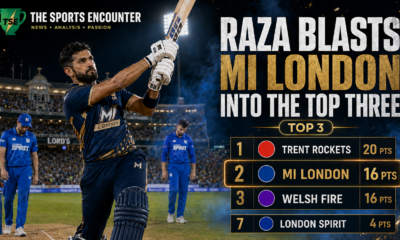
Raza’s Late Power Carries MI London Through Lord’s Chase
Sikandar Raza supplied the late power after Nicholas Pooran and Sam Curran rebuilt the chase, carrying MI London past London Spirit with six balls remaining at Lord’s.

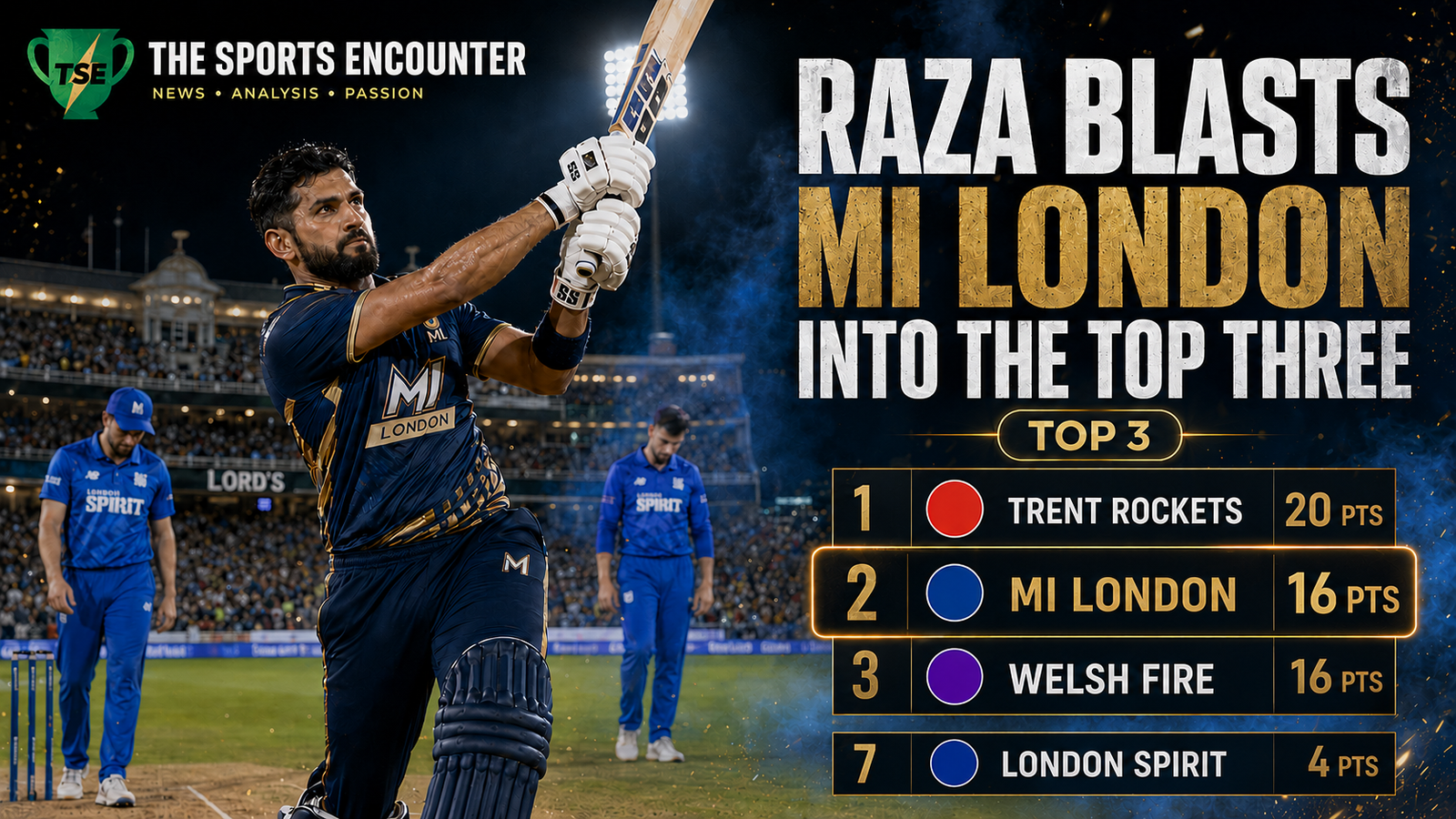
London Spirit had 160 runs to defend and the Lord’s crowd behind them, but their room for error had disappeared long before the final six balls. When Sikandar Raza began finding the boundary, a competitive contest turned into another damaging defeat for a team whose qualification hopes were already fading.
Raza struck four sixes in a rapid 32 from 16 balls after Nicholas Pooran and captain Sam Curran had repaired MI London’s chase. Their combined work carried the visitors to 164 for six from 94 balls, completing a four-wicket victory on Thursday, August 6.
The result moved MI London onto 16 points and strengthened their control of a top-three place. Spirit remained on four points and, with only two matches left, were mathematically eliminated from the knockout race.
TL;DR
- MI London chased 161 in 94 balls to win by four wickets.
- Sikandar Raza’s 32 from 16 balls, featuring four sixes, provided the decisive acceleration.
- Nicholas Pooran made 39, while Sam Curran added a measured 33.
- Lhuan-dre Pretorius led London Spirit with an explosive 52 from 28 balls.
- Nathan Sowter and Trent Boult took two wickets each to restrict Spirit to 160 for five.
- MI London strengthened their qualification position, while Spirit’s top-three hopes ended.
MI London vs London Spirit Scorecard
| Detail | Information |
|---|---|
| Match | London Spirit vs MI London |
| Competition | The Hundred Men’s Competition 2026 |
| Date | August 6, 2026 |
| Venue | Lord’s, London |
| Toss | MI London won the toss and bowled |
| London Spirit | 160/5 from 100 balls |
| MI London | 164/6 from 94 balls |
| Result | MI London won by four wickets with six balls remaining |
| Top Performer | Sikandar Raza, 32 from 16 balls |
| Leading Spirit Batter | Lhuan-dre Pretorius, 52 from 28 balls |
| Best MI London Bowlers | Trent Boult 2/35; Nathan Sowter 2/29 |
| Turning Point | Curran and Raza added 41 from 18 balls |
| Tournament Impact | MI London climbed to 16 points; Spirit were eliminated |
Pretorius Gives Spirit an Aggressive Start
MI London chose to bowl and quickly removed Jonny Bairstow, but Pretorius refused to let the early wicket dictate the innings. The South African prospect attacked pace and spin with clean swings, reaching 52 from only 28 balls with five fours and three sixes.
His willingness to hit through the line gave Spirit momentum, although the innings became increasingly dependent on him. Liam Livingstone struggled to six from nine balls, while Dewald Brevis managed four from nine.
Nathan Sowter changed the shape of the innings by removing Livingstone and Pretorius. Spirit slipped from 61 for one to 79 for three, losing their most dangerous batter before he could launch a sustained assault through the final quarter.
David Willey responded with 31 from 18 balls, but another cluster of wickets left Spirit at 118 for five after 80 balls. James Coles and Jamie Overton then rescued the finish, adding 42 from the last 20 deliveries. Coles remained unbeaten on 30 from 23, while Overton struck 13 from six.
A total of 160 offered Spirit something to defend. It also felt short of what Pretorius’ innings had briefly promised.
Boult finished with two for 35, while Sowter’s two for 29 gave MI London control during the middle phase. Their work continued a campaign in which the franchise’s power hitters have frequently received a useful platform from the bowling unit, as seen in MI London’s victory over Manchester Super Giants.
Pooran and Curran Rebuild the Chase
MI London lost Will Jacks and James Vince inside the first 31 balls, leaving the chase delicately placed at 48 for two. Spirit had created pressure, and Lord’s began to sense that 160 might be enough.
Pooran settled the situation without abandoning his natural aggression. He scored 39 from 25 balls, hitting two fours and three sixes, and shared a 43-run partnership with Curran.
Their approach mattered as much as the runs. Pooran forced Spirit to protect the boundary, while Curran worked the spaces and kept the required rate under control. Pooran’s dismissal at 91 for three gave the hosts another opening, but Raza immediately refused to let the pressure settle.
Curran and Raza added 41 from 18 balls, the partnership that decided the match. Raza targeted the short boundary and punished anything delivered in his hitting arc. His four sixes transformed a manageable chase into one MI London could finish without needing the final set.
Curran departed for 33 from 23, and Spirit removed Sherfane Rutherford before Raza fell with six runs still required. Tom Curran and Ollie Pope completed the job, with Pope’s boundary taking MI London to 164 for six.
Jamie Overton led Spirit’s attack with two for 23, but the bowlers could not contain all three of Pooran, Sam Curran and Raza. That middle-order depth also proved decisive in MI London’s earlier win over Southern Brave.
Updated Hundred 2026 Points Table
Standings immediately after this match. Net run rate is omitted because the official table had not yet refreshed it.
| Position | Team | Played | Won | Lost | Points |
|---|---|---|---|---|---|
| 1 | Trent Rockets | 6 | 5 | 1 | 20 |
| 2 | MI London | 6 | 4 | 2 | 16 |
| 3 | Welsh Fire | 6 | 4 | 2 | 16 |
| 4 | Manchester Super Giants | 6 | 3 | 3 | 12 |
| 5 | SunRisers Leeds | 5 | 3 | 2 | 12 |
| 6 | Southern Brave | 6 | 2 | 4 | 8 |
| 7 | London Spirit | 6 | 1 | 5 | 4 |
| 8 | Birmingham Phoenix | 5 | 1 | 4 | 4 |
The top team advances directly to the final, while second and third contest the Eliminator. MI London now have four wins from six and hold a strong position with two league matches remaining.
Their next game against Trent Rockets on August 8 could influence both the direct-final race and the battle for home advantage in the Eliminator. The wider qualification picture remains available through The Sports Encounter’s cricket coverage hub, including analysis of Trent Rockets’ campaign against Birmingham Phoenix.
Spirit can reach only 12 points by winning their remaining matches. With the third-placed side already on 16, their elimination is confirmed. That outcome completes a difficult stretch that included Jofra Archer’s destructive spell against Spirit and the record-breaking batting assault they suffered at Headingley.
MI London Find the Depth Spirit Lack
Pretorius gave London Spirit the most exciting individual innings of the night, but MI London produced contributions across both disciplines. Sowter and Boult controlled the first innings before Pooran, Curran and Raza divided the responsibility of the chase.
Spirit found another promising player in Pretorius, yet their inability to build around his innings exposed the problem that has followed them through the tournament. MI London, by contrast, found an answer each time the match tightened.
That difference left one side looking toward the knockout stage and the other facing two remaining fixtures with pride, development and selection planning as its principal rewards.https://chatgpt.com/backend-api/sentinel/frame.html?sv=20260423af3c


English FA Turns Its Back on Gianni Infantino, Withdraws Support for Re-Election
The English FA has formally withdrawn its support for Gianni Infantino’s bid for another term as FIFA president, adding major...


FIFA President Apologizes to Member Nations After FIFA World Cup Selloff Plan Fails to Inspire
FIFA has apologized to its member associations after abandoning a controversial plan to sell a 20% stake in a new...


Infantino in Survival Mode After World Cup Stake Sale Idea Results in Global Revolt
Gianni Infantino’s abandoned World Cup commercial rights proposal has triggered an internal FIFA revolt, lost European support, and drawn a...


Crisis Plagues FIFA as Wenger, Grafstrom and Federations Break Ranks
Gianni Infantino’s grip on FIFA is under growing pressure after senior officials, European federations and former allies distanced themselves from...


Infantino Looks to Smaller Nations After UEFA, CONCACAF Snub
Gianni Infantino’s FIFA future may depend on smaller and emerging nations after UEFA and CONCACAF lost confidence in his leadership....


FIFA’s World Cup Stake Plan Failed in Three Days. The Damage to Gianni Infantino May Last Much Longer
FIFA’s attempt to sell a 20% stake in a new World Cup commercial entity collapsed within days after a global...


Cristiano Ronaldo’s World Cup Career: Goals, Records and Final Farewell
Cristiano Ronaldo became the first man to score in six FIFA World Cups, but football’s greatest tournament never gave him...


The Golden Generation Saying Goodbye After the FIFA World Cup 2026
The 2026 World Cup did more than crown a champion. It marked the emotional farewell of a generation that shaped...


Neymar’s World Cup Career: Skill, Pain, and the Rainbow Flick Legacy
Neymar carried Brazil’s World Cup hopes across four tournaments, producing unforgettable goals while enduring injuries, criticism and elimination heartbreak. His...


Is the FIFA World Cup 2030 Not for Sale Anymore?
FIFA’s proposal to sell a minority stake in a $20 billion World Cup commercial company appears to have collapsed after...


FIFA Explores 64-Nation World Cup for 2030: Is Another Expansion Worth It?
FIFA is examining whether the 2030 World Cup should expand from 48 to 64 teams. The proposal could increase global...


FIFA Revolt Moves Inside Infantino’s Office as Cordeiro Quits and Kevin Lamour Condemns World Cup Selloff
FIFA’s World Cup stake crisis has moved inside the organization. Carlos Cordeiro has resigned in protest, while chief operating officer...


Infantino’s World Cup Selloff Crisis Deepens as Adviser Quits and UEFA Backs FIFA Boycott
Gianni Infantino’s plan to bring private investors into a $20 billion FIFA commercial company has triggered a global soccer revolt....


CONCACAF Rejects FIFA’s World Cup Stake Plan as Infantino Faces a Global Governance Revolt
CONCACAF has unanimously rejected FIFA’s proposal to bring private investors into a new company controlling the commercial business of the...


Could UEFA Create Its Own World Cup? Kaveh Solhekol’s Warning Shows How Far the FIFA Crisis Could Go
UEFA’s threat to boycott FIFA competitions has opened a much bigger question for world soccer: if Europe walks away from...


UEFA Votes 55-0 for FIFA Boycott as Infantino’s World Cup Plan Sparks Open Revolt
UEFA’s 55 member associations have unanimously threatened to withdraw their national teams from FIFA competitions unless Gianni Infantino abandons plans...


Why FIFA Selling Stakes in the World Cup Isn’t a Good Idea
FIFA plans to raise up to $4.2 billion by selling minority stakes in a new commercial company valued at $20...


FIFA and UEFA at Loggerheads: Could the $20 Billion World Cup Plan Trigger a Global Soccer Revolt?
UEFA has opened a direct confrontation with FIFA over its proposed $20 billion World Cup company. The decisive battle will...


Sidny Lopes Cabral’s World Cup Wonder Goal Gave Cape Verde a Moment No One Can Take Away
Sidny Lopes Cabral’s stunning 25-yard strike against Argentina gave Cape Verde its defining World Cup 2026 moment. The 23-year-old left-back...


Gianni Infantino Defends FIFA World Cup 2026 Decisions in an Open Letter
Gianni Infantino says critics allowed hate to obscure the joy of FIFA World Cup 2026. Fans, players, officials, and national...


Ilhan Fandi Delivers the Point That Sends Singapore Through
Ilhan Fandi rescued Singapore with a decisive second-half equalizer against Indonesia, earning the Lions the point they needed to reach...


Nguyễn Đình Bắc Answers Cambodia’s Challenge as Vietnam Win Group A
Nguyễn Đình Bắc scored twice as Vietnam survived Cambodia’s second-half fightback, won 3-1 in Hanoi and secured first place in...


ASEAN Championship 2026 Final Group Games Preview: Predictions, Qualification Scenarios and Complete Schedule
The ASEAN Championship 2026 group stage reaches its decisive final weekend with semifinal places still at stake. We preview every...


Premier League 2026–27 Curtain Raiser: Fixtures, Teams, Title Contenders, Transfers and Season Predictions
The 2026–27 Premier League season begins with Arsenal hosting Coventry City on August 21. Explore the full opening weekend schedule,...


Vinicius Jr Signs Real Madrid Deal Until 2032 as Arsenal Transfer Hopes End
Real Madrid have secured Vinicius Jr on a long-term contract through June 2032, ending months of uncertainty and closing the...


Arsenal Secure Emirates Shirt and Stadium Sponsorship Deal Until 2033
Arsenal and Emirates have extended their landmark partnership until 2033, keeping the airline as the club’s front-of-shirt, training kit, and...


Bruno Guimarães Reportedly Completes Arsenal Medical as £75m Transfer Nears Announcement
Bruno Guimarães has reportedly completed his Arsenal medical, bringing the Brazilian midfielder closer to a £75 million move from Newcastle...


Matthias Jaissle to Newcastle: Why the £9.5m Al-Ahli Deal Signals a New Direction After Eddie Howe
Newcastle United are expected to appoint Matthias Jaissle as Eddie Howe’s successor on a four-year contract after agreeing a reported...


Ville Koivunen’s Eight-Year, $32M Penguins Deal Is a Bet on Pittsburgh’s Next Era
The Pittsburgh Penguins have committed to their future by signing 23-year-old forward Ville Koivunen to an eight-year, $32 million contract...


Tommy Novak’s $13.95M Penguins Extension Reveals Pittsburgh’s Plan Beyond the Crosby Era
The Pittsburgh Penguins have secured versatile forward Tommy Novak on a three-year, $13.95 million extension. After recording 42 points in...


10 Highest-Paid NHL Players in History After Macklin Celebrini Takes Top Spot?
Macklin Celebrini’s record $18.8 million annual cap hit has changed the NHL salary hierarchy. We rank the 10 highest-paid NHL...


Ron Duguay Hospitalized After Collapse as Cancer Battle Takes a Dangerous Turn
Former New York Rangers star Ron Duguay remains hospitalized after collapsing at home, losing several teeth and suffering internal bleeding...


Who Were the 10 Best NHL Players Ever? A Ranking Built to Survive the Argument
Wayne Gretzky leads our evidence-based ranking of the 10 best NHL players ever, but Bobby Orr, Mario Lemieux, Gordie Howe,...

Raza’s Late Power Carries MI London Through Lord’s Chase
Sikandar Raza supplied the late power after Nicholas Pooran and Sam Curran rebuilt the chase, carrying MI London past London...


Jos Buttler Becomes T20 Cricket’s Highest Run-Scorer: How England’s Game-Changer Reached the Summit
Jos Buttler moved past Kieron Pollard to become the highest run-scorer in T20 cricket history after an unbeaten 51 for...


What If You Could Get Two Wickets on One Ball? Cricket’s Catch-and-Run-Out Rule Explained
A brilliant fielding moment appeared to dismiss both batters from one delivery. The laws of cricket, however, allow only one...


Lewis Gregory Leads Trent Rockets Past Birmingham Phoenix as Five-Game Surge Opens Route to The Hundred Final
Lewis Gregory led a disciplined bowling display as Trent Rockets restricted Birmingham Phoenix to 111 for six before chasing the...


The Hundred Crowds: Cameras Found the Noise; Wide Shots Found Empty Seats
The Hundred’s broadcast captured noise, energy and celebration at Trent Bridge, but the wide shots told a different story. An...


Wimbledon 2026 Withstands FIFA World Cup Clash, Breaks Attendance Record
Wimbledon attracted a record 550,151 spectators and generated 4.8 billion social media impressions in 2026. Dry weather, Arthur Fery’s semifinal...


Wimbledon Men’s Singles Champions: How Triumph on Grass Changed Their Careers
From Spencer Gore and William Renshaw to Roger Federer, Novak Djokovic, Carlos Alcaraz, and Jannik Sinner, discover how every Wimbledon...


Guo Hanyu and Kristina Mladenovic Turn Trust Into Wimbledon 2026 Glory
Guo Hanyu and Kristina Mladenovic turned a new partnership into Wimbledon glory, defeating Gabriela Dabrowski and Luisa Stefani in a...


Jannik Sinner’s Wimbledon Defense Against Novak Djokovic and Alexander Zverev
Jannik Sinner’s Wimbledon 2026 defense began with a five-set escape and ended with victories over Novak Djokovic and Alexander Zverev....


Muchova, Noskova Turn Wimbledon Women’s Singles Final Into an All-Czech Affair
Karolina Muchova saved match point to beat Coco Gauff in a Centre Court thriller, while Linda Noskova handled Marta Kostyuk...


When Paris Welcomed Two New French Open Champions
Paris, France – June 9, 2026: There are days at Roland Garros when tennis feels like a sport. Then there...


French Open 2026: Mirra Andreeva Becomes a Grand Slam Reality
Mirra Andreeva relived the memories of Monica Seles on Super Sunday at Roland Garros to lift her maiden French Open...


Alexander Zverev Beats Flavio Cobolli, Agony to Lift Maiden French Open Title
Paris, France – June 7, 2026: While some titles are won in two weeks, Alexander Zverev took years of frustration,...

Harper and Asalanka Punish Colombo’s Chaos as Galle Reach LPL Final
Sam Harper’s commanding 77 and Charith Asalanka’s composed 59 carried Galle Gallants past Colombo Kaps and into the LPL 2026...

McDermott and Neesham Set the Trap Before Sahan Ends Kandy’s LPL Run
Colombo Kaps eliminated Kandy Royals by 68 runs after McDermott and Neesham powered them past 200 before Sahan and Dahani...

Mishara’s Unbeaten 108 Sends Jaffna Kings Into LPL Final After 470-Run Assault
Kamil Mishara’s unbeaten century carried Jaffna Kings into the LPL 2026 final after Galle Gallants fell 14 runs short in...
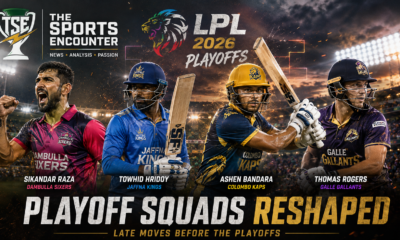

Qualified Teams Give Final Touches to Squads Ahead of LPL 2026 Playoffs
The Lanka Premier League 2026 playoff contenders have made eleventh-hour squad changes as injuries, national-team call-ups, and availability issues reshape...
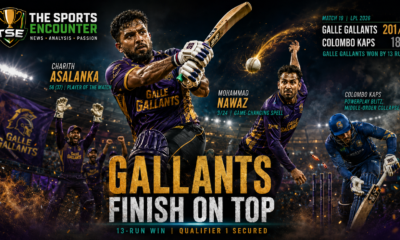

Charith Asalanka, Mohammad Nawaz Power Galle Gallants Into LPL Qualifier 1
Charith Asalanka scored 58 before Mohammad Nawaz claimed three wickets as Galle Gallants defeated Colombo Kaps by 13 runs, finished...


Guyana Amazon Warriors Defend 85 to Break San Francisco Hearts and Retain Global Super League Title
Guyana Amazon Warriors recovered from 29 for eight, defended a total of 85, and defeated San Francisco Unicorns by six...


Tim Robinson Explodes as Unicorns Thump Vipers to Enter the Global Super League Final
Tim Robinson struck an unbeaten 68 as San Francisco Unicorns defeated Desert Vipers by eight wickets in the Global Super...
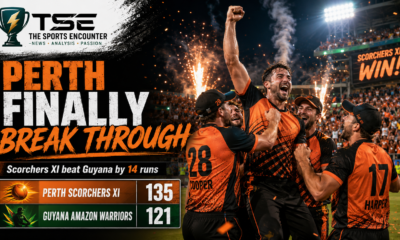

Perth Find Their Missing Finish as Spin Silences Guyana
Brody Couch rescued Perth Scorchers XI with 43 before five spin options dismantled Guyana Amazon Warriors for 121 in a...


Akeal Hosein Nearly Steals It, but Desert Vipers Escape in Final Over
Rilee Rossouw mastered a difficult Providence pitch before Desert Vipers survived Akeal Hosein’s four-wicket fightback to beat Perth Scorchers XI...
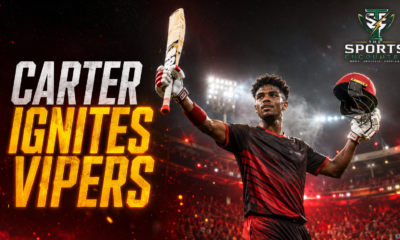

Shadab Khan and Zachary Carter Rescue Desert Vipers’ GSL Campaign
Shadab Khan dismantled San Francisco’s middle order before 19-year-old Zachary Carter launched a fearless chase, helping Desert Vipers secure their...


LeBron James Says No to LA 2028, but Team USA Is Reportedly Saving Him a Seat
LeBron James says he plans to watch the 2028 Los Angeles Olympics, but USA Basketball is reportedly prepared to give...


A Documentary on LeBron James in the Making?
ESPN is reportedly close to securing unprecedented access to LeBron James’ final NBA chapter, combining his Philadelphia title chase with...


Do the 76ers Have the NBA’s Best Starting Five After Adding LeBron James?
Philadelphia’s projected starting five now carries 36 All-Star selections, five MVP awards, elite scoring, defensive power, and a rookie wild...


How LeBron James Turns Philadelphia 76ers Into the NBA’s Must-Watch Team
LeBron James has not played a minute for the 76ers yet, but his arrival has already transformed Philadelphia into one...


Philadelphia 76ers Officially Announce LeBron James Signing, Assign 23 Jersey
LeBron James will wear No. 23 for the Philadelphia 76ers after officially joining the franchise for what he called his...


NFL Injury Roundup: Josh Jacobs Sits Out, Kenyon Sadiq Nears Return, Elic Ayomanor Hurts Shoulder
The Packers held Josh Jacobs out with a groin injury, the Jets received encouraging news on Kenyon Sadiq’s recovery, and...


49ers Sign Kion Smith to One-Year Deal as Offensive-Line Depth Becomes a Training Camp Priority
The San Francisco 49ers have added offensive-line depth by signing Kion Smith to a one-year contract. The former Miami Dolphins...


Aaron Donald’s Rams Comeback is Suddenly Real: Should NFL Be Terrified?
Aaron Donald’s return to the Los Angeles Rams suddenly feels realistic after the retired defensive legend completed an official workout...



Carlos Alcaraz Skips Cincinnati Open, Casts Doubts on US Open Title Defense
Carlos Alcaraz will miss the 2026 Cincinnati Open as he continues recovering from the wrist injury that has sidelined him...


Why Novak Djokovic’s Cincinnati Return Could Decide His US Open 2026 Record Chase
Novak Djokovic will return to the Cincinnati Open for the first time since his memorable 2023 title run. At 39,...


US Open 2026 Curtain-Raiser: Players, Schedule, Title Contenders, New York Storylines and Everything Fans Need to Know
The US Open 2026 heads to New York with Jannik Sinner, Carlos Alcaraz, Novak Djokovic, Aryna Sabalenka, Coco Gauff, Iga...
-

 Editor's Choice4 weeks ago
What Counts as a Foul in Soccer? A Simple Guide for World Cup Fans
-

 Editor's Choice4 weeks ago
Why Ticket Prices Crashed Ahead of the Biggest Matches of FIFA World Cup 2026
-

 Editor's Choice3 weeks ago
What Went Wrong for England in the World Cup 2026 Semi-Final Defeat to Argentina