Key Takeaways
- Ronaldo announced his decision through a lengthy personal message published on November 5.
- His statement looked back on a national-team journey beginning in August 2003, when he was a teenager emerging from Sporting CP.
- Ronaldo’s international career included numerous individual records, but the 2016 European Championship remains central to his legacy.
- Ronaldo’s retirement announcement comes after Lionel Messi’s departure from Argentina’s national team earlier in 2026.
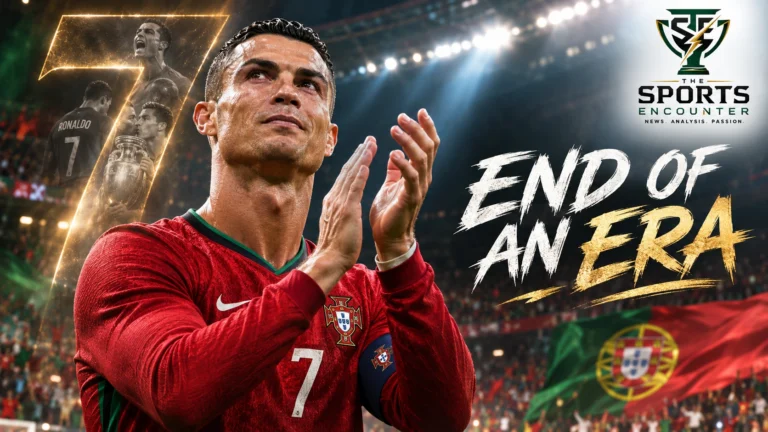
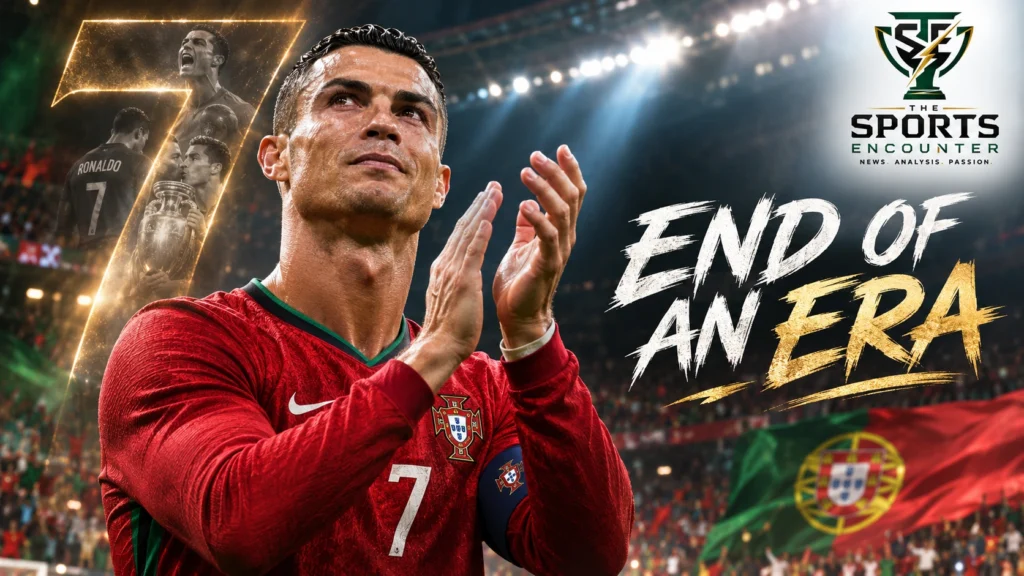
LISBON, Portugal, November 5, 2026: Cristiano Ronaldo has announced his retirement from Portugal’s national football team, bringing an extraordinary 23-year international career toward its conclusion after 234 appearances, 146 goals and three major trophies. The 41-year-old forward confirmed his decision in an emotional social media statement on Thursday, declaring that the time had come to pass on Portugal’s iconic No. 7 shirt. The announcement follows weeks of uncertainty surrounding his relationship with national-team coach Jorge Jesus, whose decision to leave Ronaldo on the bench against Norway in September triggered a public disagreement and disciplinary proceedings.
The departure marks one of the most significant transitions in Portuguese football history. Ronaldo made his senior debut in August 2003, helped Portugal win their first major international trophy at UEFA EURO 2016 and subsequently lifted the UEFA Nations League twice. He holds the men’s international records for appearances and goals, while his influence extends across six World Cups and more than two decades of national-team football. Portugal, unbeaten through their opening four matches of the 2026-27 Nations League, must now decide how to replace his leadership, penalty-area presence and extraordinary scoring record. The Portuguese Football Federation has paid tribute to Ronaldo following his announcement. His last reported international appearance was Portugal’s September 24 Nations League match against Wales; the scheduled November fixtures should not be described as confirmed farewell appearances.
What Did Cristiano Ronaldo Say About Retiring From Portugal?
Ronaldo announced his decision through a lengthy personal message published on November 5.
Story at a glance
What Did Cristiano Ronaldo Say About Retiring From Portugal?
Ronaldo announced his decision through a lengthy personal message published on November 5.
Cristiano Ronaldo’s Portugal Career: 234 Caps, 146 Goals and 23 Years of History
Ronaldo’s statistical achievements place him in a category that few international footballers have approached.
How Did Ronaldo Become the Greatest Goalscorer in Men’s International Football?
Ronaldo’s international scoring record developed over several distinct stages.
EURO 2016 Remains Ronaldo’s Defining Portugal Triumph
Ronaldo’s international career included numerous individual records, but the 2016 European Championship remains central to his legacy.
Why Did Ronaldo’s Relationship With Jorge Jesus Break Down?
The immediate background to Ronaldo’s retirement announcement is his disagreement with Portugal coach Jorge Jesus.
Read next Al-Hilal Stun Al-Qadsiah 3-2 to Reclaim Saudi Pro League Lead as Ronaldo Scores and Al-Ahli Hit Four
His statement looked back on a national-team journey beginning in August 2003, when he was a teenager emerging from Sporting CP.
He spoke about the responsibility of representing Portugal, the supporters who followed him around the world and the personal meaning of wearing the national shirt.
One of the most significant passages concerned the No. 7 jersey, which became inseparable from his identity during more than two decades of international football.
Ronaldo said he had never considered that shirt to belong exclusively to him. Instead, he regarded it as something entrusted to him and now ready to be handed to another generation.
He also reflected on the national anthem, the connection between Portuguese supporters at home and abroad, and the pride of representing his country.
Those reflections made the announcement more than a conventional retirement notice. They addressed the emotional relationship between a player and a national team that had shaped almost his entire professional career.
Reuters reported the announcement on November 5, with Ronaldo confirming his intention to retire from international football.
Reporting on the precise timing differed on November 5. Reuters said Ronaldo intended to hand back Portugal’s No. 7 shirt after the November international break, while the Associated Press reported that his September 24 appearance against Wales was his last for Portugal. The Portuguese Football Federation also paid tribute to his career.
As a result, the scheduled November Nations League fixtures should not be described as confirmed farewell appearances. His record of 234 caps and 146 international goals is the published tally at the time of the announcement.
Read the Reuters report on Ronaldo’s November 5 announcement for the original breaking-news account.
Cristiano Ronaldo’s Portugal Career: 234 Caps, 146 Goals and 23 Years of History
Ronaldo’s statistical achievements place him in a category that few international footballers have approached.
He made 234 appearances for Portugal and scored 146 goals, both men’s international world records at the time of his retirement announcement.
Those figures represent more than a period of exceptional finishing. They reflect extraordinary longevity, sustained selection across generations of national-team players and a career extending through several different tactical eras.
Ronaldo’s International Career at a Glance
| Milestone | Verified Record | Significance |
|---|---|---|
| International debut | August 20, 2003, against Kazakhstan | Beginning of his senior Portugal career |
| Age at announcement | 41 | Retirement announcement after 23 years of service |
| International appearances | 234 | Men’s world record |
| International goals | 146 | Men’s world record |
| Goals per appearance | Approximately 0.624 | 146 divided by 234 |
| UEFA European Championship titles | 1 | Portugal’s EURO 2016 triumph |
| UEFA Nations League titles | 2 | 2019 and 2025 |
| FIFA World Cup appearances | 6 tournaments | 2006 through 2026 |
| World Cup title | None | Portugal did not win the tournament during his career |
The average of approximately 0.624 goals per international appearance is calculated directly from his confirmed record. It is not an estimate based on selected competitions or friendly matches.
Ronaldo’s consistency also extended across calendar years. UEFA records that he scored for Portugal in 23 consecutive years, an extraordinary international scoring sequence.
His overall World Cup career was examined in The Sports Encounter’s retrospective on Ronaldo’s World Cup records and final tournament.
How Did Ronaldo Become the Greatest Goalscorer in Men’s International Football?
Ronaldo’s international scoring record developed over several distinct stages.
Early in his career, he played primarily as a wide attacker, using speed, dribbling and movement to create opportunities.
As his game developed, he became an increasingly central scoring presence, relying on penalty-area positioning, aerial ability and finishing.
That evolution helped him remain productive as his physical attributes changed with age.
He surpassed Ali Daei’s previous men’s international goalscoring record in September 2021, scoring twice against the Republic of Ireland.
He continued extending the record through subsequent European qualifiers, Nations League fixtures and World Cup matches.
Men’s International Goalscoring Leaders
| Player | Country | Goals | Appearances |
|---|---|---|---|
| Cristiano Ronaldo | Portugal | 146 | 234 |
| Lionel Messi | Argentina | 126 | 208 |
| Ali Daei | Iran | 108 | 148 |
| Sunil Chhetri | India | 95 | 157 |
| Romelu Lukaku | Belgium | 94 | 135 |
| Robert Lewandowski | Poland | 92 | 170 |
| Harry Kane | England | 91 | 125 |
Source: UEFA’s published international scoring records, updated during October 2026. Figures for other players are historical reference points and may change with subsequent appearances.
Ronaldo’s 146 goals placed him 20 ahead of Messi in the UEFA reference figures.
The two players have long been compared across international and club football, but their careers cannot be reduced to a single scoring table.
Portugal and Argentina have competed in different regional championships and qualification systems, and the players performed different tactical responsibilities throughout their careers.
Nevertheless, Ronaldo’s numerical lead in men’s international goals was firmly established when he announced his departure.
The official UEFA international goalscoring record documents his achievements and their historical development.
EURO 2016 Remains Ronaldo’s Defining Portugal Triumph
Ronaldo’s international career included numerous individual records, but the 2016 European Championship remains central to his legacy.
Portugal entered the tournament in France without being considered the overwhelming favorite.
The team advanced through a difficult group stage and knockout rounds before reaching the final against host nation France.
Ronaldo started the final but suffered a knee injury that forced him off during the first half.
He spent much of the remaining contest encouraging his teammates from the sidelines as Portugal attempted to withstand French pressure.
Éder eventually scored the winning goal in extra time.
The 1-0 victory delivered Portugal’s first major senior international trophy.
It also changed the context in which Ronaldo’s national-team achievements would be assessed.
He was no longer only the country’s greatest individual scorer. He was the captain of a championship-winning team.
Portugal’s Major Titles During Ronaldo’s International Career
| Year | Competition | Final Opponent | Outcome |
|---|---|---|---|
| 2016 | UEFA European Championship | France | Portugal won 1-0 after extra time |
| 2019 | UEFA Nations League | Netherlands | Portugal won 1-0 |
| 2025 | UEFA Nations League | Spain | Portugal won on penalties following a 2-2 draw |
All three trophies came during Ronaldo’s international career, but their significance extends beyond one individual.
Portugal’s success depended on different generations of players, managers and tactical systems.
The achievement also established a standard against which future Portugal teams will be judged.
Why Did Ronaldo’s Relationship With Jorge Jesus Break Down?
The immediate background to Ronaldo’s retirement announcement is his disagreement with Portugal coach Jorge Jesus.
In September, Ronaldo was named among the substitutes for Portugal’s Nations League meeting with Norway.
He warmed up but did not enter the match, which Portugal won 2-1.
The episode attracted considerable attention because Ronaldo had remained a central figure in the national team for more than two decades.
He subsequently left Portugal’s training camp ahead of the next fixture against Denmark.
Ronaldo publicly suggested that promises concerning his playing time had not been honored.
Jesus, meanwhile, maintained that responsibility for selecting the team rested with the manager.
The dispute developed into a disciplinary matter for the Portuguese Football Federation.
Timeline of Ronaldo’s Final International Dispute
| Date | Development | Significance |
|---|---|---|
| September 24, 2026 | Portugal defeat Wales 1-0 | Ronaldo makes his 234th recorded international appearance |
| September 27 | Portugal defeat Norway 2-1 | Ronaldo remains an unused substitute |
| September 30 | Ronaldo leaves the national-team camp | Public disagreement becomes a major controversy |
| October 1-4 | Portugal defeat Denmark and Norway | Team continues winning without Ronaldo |
| October 9-10 | Disciplinary proceedings and suspension are confirmed | Dispute enters formal federation process |
| October 27 | Reports indicate possible November recall | Return to national team remains possible |
| November 5 | Ronaldo announces international retirement | Uncertainty shifts from selection to departure timing |
The Sporting and disciplinary developments were significant because they involved more than a disagreement over one match.
They raised a question that national-team coaches frequently encounter when managing famous veterans: how should a manager balance a player’s historic contribution against the immediate needs of the team?
Jesus had publicly indicated that the decision over Ronaldo’s international future should ultimately belong to the player.
Ronaldo had initially maintained that he remained available after the dispute, provided he was physically fit and playing regularly for his club.
His November announcement therefore represents a clear change from his previously stated intention.
The Sports Encounter followed the developments in its report on Ronaldo’s disciplinary suspension and the dispute with Jorge Jesus.
The publication also examined Ronaldo’s earlier comments about his international future and Lionel Messi’s farewell.
Did Portugal Already Prove It Could Win Without Ronaldo?
The most interesting consequence of Ronaldo’s departure is that Portugal have already played important competitive matches without him.
After the September disagreement, the team defeated Denmark 4-2 away and Norway 2-1 at home.
Those results followed earlier victories against Wales and Norway.
Portugal therefore won all four of their opening Nations League matches, collecting 12 points.
Portugal’s 2026-27 Nations League Results Before Ronaldo’s Announcement
| Date | Fixture | Result | Portugal Points After Match |
|---|---|---|---|
| September 24 | Portugal vs Wales | 1-0 win | 3 |
| September 27 | Norway vs Portugal | 2-1 win | 6 |
| October 1 | Denmark vs Portugal | 4-2 win | 9 |
| October 4 | Portugal vs Norway | 2-1 win | 12 |
| November 14 | Portugal vs Denmark | Upcoming | To be determined |
| November 17 | Wales vs Portugal | Upcoming | To be determined |
Portugal scored nine goals and conceded four during their first four matches, producing a goal difference of plus five.
That represents an average of 2.25 goals scored per match.
However, four games are not sufficient to establish that Portugal will always perform better without Ronaldo.
Opposition quality, home advantage, team selection and match circumstances can influence any short sequence of results.
What the evidence does demonstrate is that Portugal have continued winning competitive fixtures without their most prolific scorer.
The Sports Encounter covered Portugal’s victory over Norway without Ronaldo in the starting lineup and subsequently examined their qualification for the Nations League quarterfinals.
Who Will Replace Cristiano Ronaldo in Portugal’s Attack?
Replacing Ronaldo is not simply a question of assigning his shirt number to another player.
Portugal must account for several different contributions: central attacking movement, goal production, leadership, experience and the influence of a player whose reputation demanded attention from opposing defenders.
Modern Portugal have several players capable of contributing to those responsibilities.
Gonçalo Ramos: The Most Direct Center-Forward Alternative
Ramos offers an established central-striker profile, combining penalty-area movement with pressing and off-ball runs.
He famously scored a hat trick against Switzerland at the 2022 World Cup after replacing Ronaldo in Portugal’s starting lineup.
That performance demonstrated his ability to produce in a major knockout match.
However, one successful appearance does not establish that he can reproduce Ronaldo’s scoring record across an entire international career.
João Félix: Creative Freedom and Attacking Movement
Félix offers a different attacking profile.
He can operate between midfield and the forward line, receive possession in crowded areas and combine with teammates.
He is not necessarily a direct replacement for Ronaldo’s late-career penalty-area role.
Instead, his inclusion could support a more fluid attacking structure.
Rafael Leão: Speed and One-on-One Threat
Leão brings pace, dribbling and the ability to attack defenders from wide positions.
His strengths could create space for another central forward, particularly against opponents defending with a compact block.
But Portugal would still need sufficient movement inside the penalty area to convert his attacking progress into goals.
Rodrigo Mora and the Next Generation
Portugal also have younger players developing toward more prominent senior roles.
Rodrigo Mora represents one of the prospects associated with that transition.
His emergence was examined in The Sports Encounter’s profile of Portugal’s young midfielder.
Potential Post-Ronaldo Attacking Options
| Player | Primary Strength | Potential Role | Key Question |
|---|---|---|---|
| Gonçalo Ramos | Penalty-area finishing and movement | Central striker | Can he lead the attack consistently? |
| João Félix | Creativity and combination play | Second striker or attacking midfielder | Can he turn creativity into sustained production? |
| Rafael Leão | Acceleration and dribbling | Wide forward | Can Portugal exploit his direct running? |
| Bruno Fernandes | Passing and chance creation | Midfield organizer | How will the attacking structure change around him? |
| Rodrigo Mora | Technical development and attacking creativity | Longer-term attacking option | When will he be ready for greater responsibility? |
This is a tactical assessment of available options, not a confirmed future starting lineup.
Portugal may ultimately benefit from distributing Ronaldo’s responsibilities across several players rather than expecting one individual to reproduce everything he contributed.
Will Ronaldo Play Against Denmark or Wales in November?
This is the immediate question arising from Thursday’s announcement.
Portugal are scheduled to host Denmark on November 14 before traveling to Wales on November 17.
Both matches form part of the 2026-27 UEFA Nations League group phase.
Reuters’ initial account describes Ronaldo’s intention to retire after the November international break.
Other reports describe the retirement as immediate and identify the September 24 victory over Wales as his final appearance.
The available evidence does not conclusively establish whether Ronaldo will be selected for either upcoming match.
Consequently, it would be inappropriate to advertise a confirmed farewell match or state that additional caps are guaranteed.
It would also be premature to claim his final appearance total must remain at 234 if the Portuguese Football Federation later confirms his involvement in November.
What is established is that Portugal’s next two fixtures will take place against Denmark and Wales, with the team already leading Group A4.
UEFA’s official Portugal Nations League fixture list confirms the November schedule.
What Does International Retirement Mean for Ronaldo’s Club Career?
Ronaldo’s announcement concerns Portugal’s national team. It does not automatically mean he has retired from professional club football.
He remains associated with Saudi Pro League club Al-Nassr, where his contract runs through June 2027.
In August, Ronaldo suggested that the 2026-27 season might be his final year as a professional footballer.
However, he did not announce a definitive club retirement date in the national-team statement.
His remaining club ambitions include extending his extraordinary career scoring total.
The Sports Encounter previously examined Ronaldo and Messi’s progress toward the 1,000-goal milestone.
Ronaldo’s continued scoring for Al-Nassr was also documented in the report on his 981st career goal against Neftchi Fergana.
Those figures are historical snapshots, not a newly verified total as of November 5.
The main distinction is that Ronaldo can retire from international football while continuing to play professionally in Saudi Arabia.
How Ronaldo’s Departure Compares With Lionel Messi’s International Farewell
Ronaldo’s retirement announcement comes after Lionel Messi’s departure from Argentina’s national team earlier in 2026.
For much of the past two decades, the two players defined an era of international football.
Their careers generated enormous interest because of their contrasting styles, club achievements and individual records.
Both became central figures in national teams that achieved major success.
Messi’s 2022 World Cup victory and Ronaldo’s 2016 European Championship remain defining moments in their international careers.
But their exits also create separate challenges for Argentina and Portugal.
Neither national team can simply reproduce a generation of individual excellence by selecting one new star.
The process requires younger players to accept greater responsibilities and coaches to establish systems that do not depend on the former captain.
The Sports Encounter explored these challenges in its analysis of Argentina’s transition after Messi.
Portugal now confront a comparable generational transition, although its available players, tactical structure and competitive circumstances are different.
Continue the Soccer Story
 UEFA Champions League 2026-27Champions League Chaos: Valverde Rescues Real Madrid, Liverpool Collapse at Fenerbahce as Como Hit Nine
 Premier LeagueHarry Kane Signs Bayern Munich Deal Until 2029: Why Ballon d’Or Winner Refused a Premier League Return
 La LigaTwo Horrific Collisions, One Footballer Dead: Spain’s Segunda División Faces Player-Safety Questions
What Should Portugal’s Next Generation Learn From Ronaldo?
Ronaldo’s career provides several lessons for the players who will follow him.
His longevity reflected repeated physical preparation, changes in playing style and an ability to remain productive long after most forwards reach their peak years.
He also demonstrated the importance of turning individual talent into measurable international results.
Portugal’s first major championship arrived during his captaincy, while subsequent Nations League victories further strengthened the team’s international standing.
At the same time, the circumstances surrounding his final months demonstrate that even a celebrated veteran must eventually adapt to decisions made by the national-team coach.
For the new generation, leadership will involve accepting collective responsibilities rather than relying on the reputation of one player.
Bruno Fernandes, Bernardo Silva, Rúben Dias and Portugal’s emerging attackers will need to provide that influence in different ways.
The transition will also be measured against Portugal’s recent competitive position. The Sports Encounter reported on Portugal’s rise to fifth in the FIFA rankings after four Nations League victories.
That achievement demonstrates the quality of the wider squad, but sustained success after Ronaldo will depend on maintaining those standards over several competitions.
Cristiano Ronaldo’s Legacy Is Larger Than His Goal Record
Ronaldo’s 146 international goals will remain central to the historical record.
So will the 234 appearances, six World Cups and three major trophies.
But his influence on Portugal extends beyond statistics.
He became a global symbol of Portuguese football during an era when the national team evolved from a respected European contender into a major tournament winner.
His career connected supporters across several generations, from those who first watched him at EURO 2004 to younger fans who knew him primarily as Portugal’s record-breaking captain.
His greatest international disappointment was failing to win the World Cup, with Portugal eliminated by Spain in the 2026 tournament.
The Sports Encounter documented Portugal’s elimination and Ronaldo’s final World Cup disappointment.
That defeat did not erase what he achieved in European competition or the contribution he made to Portugal’s wider football history.
His retirement also arrives with unresolved questions surrounding the precise timing of his last international appearance and his relationship with the coaching staff.
Those questions deserve accurate reporting, but they should not overshadow more than two decades of contribution.
Portugal’s Next Chapter Begins With the No. 7 Shirt
Portugal must now prepare for a future in which Ronaldo is no longer the automatic center of attention.
The team has already demonstrated that it can win Nations League matches without him.
However, replacing his international scoring record, experience and leadership will require more than a short sequence of victories.
The challenge facing Jorge Jesus is to develop an attacking structure capable of producing results against stronger opposition in major knockout matches.
That may involve a more mobile center forward, greater responsibilities for creative midfielders and a wider distribution of goals across the squad.
Ronaldo’s decision also leaves the federation with the responsibility of clarifying whether the November international window will include a farewell appearance.
Until that happens, his 234 appearances and 146 goals remain the confirmed record.
Whatever the precise timing of his final match, one fact is already clear: the national-team career that began with a teenage debut against Kazakhstan in August 2003 has reached its closing chapter.
For Portugal, the No. 7 shirt will eventually belong to another player.
For Ronaldo, the history attached to it is already secure.
Cristiano Ronaldo Portugal Retirement: Frequently Asked Questions
Has Cristiano Ronaldo retired from international football?
Yes. Ronaldo announced on November 5, 2026, that he is ending his Portugal national-team career. Reports differ on whether the retirement takes effect immediately or after the November international window.
How old is Cristiano Ronaldo?
Ronaldo is 41 years old. He was born on February 5, 1985.
How many games did Ronaldo play for Portugal?
He had made 234 senior international appearances when he announced his retirement, a record in men’s international football.
How many international goals has Cristiano Ronaldo scored?
Ronaldo has scored 146 goals for Portugal, the men’s international world record as of November 5, 2026.
When did Ronaldo make his Portugal debut?
He made his senior international debut against Kazakhstan on August 20, 2003.
What trophies did Ronaldo win with Portugal?
He won UEFA EURO 2016 and the UEFA Nations League in 2019 and 2025.
Did Cristiano Ronaldo win the FIFA World Cup?
No. Ronaldo appeared in six World Cup tournaments but did not win the competition.
Why did Ronaldo fall out with Jorge Jesus?
The dispute followed Ronaldo’s omission from Portugal’s starting lineup against Norway and disagreements over his expected playing time. Ronaldo left the national-team camp, and the Portuguese Football Federation initiated disciplinary proceedings.
Was Ronaldo suspended by Portugal?
Yes. The Portuguese Football Federation initiated disciplinary proceedings and imposed a suspension following his departure from the national-team camp in September 2026.
Who will replace Ronaldo as Portugal’s main striker?
No permanent successor has been confirmed. Gonçalo Ramos is among the direct center-forward options, while João Félix and other attackers offer different tactical possibilities.
Will Ronaldo play against Denmark or Wales in November?
Portugal are scheduled to face Denmark on November 14 and Wales on November 17. Ronaldo’s participation has not been conclusively confirmed following his retirement announcement.
Has Cristiano Ronaldo retired from Al-Nassr?
No club retirement was announced in his November 5 national-team statement. His Al-Nassr contract runs through June 2027.
Cristiano Ronaldo
- Cristiano Ronaldo Announces Portugal Retirement After 234 Caps and 146 Goals, Ending a 23-Year Era
- Al-Hilal Stun Al-Qadsiah 3-2 to Reclaim Saudi Pro League Lead as Ronaldo Scores and Al-Ahli Hit Four
- Ten Hag Accuses Ronaldo of Letting Manchester United Down, Then Turns on Club’s Broken Promises
- Ronaldo’s Backdated 30-Day Ban Costs Him No Portugal Games; Jorge Jesus to Deliver Real Verdict in November
- From Sugar Ray’s Fight Purses to Ronaldo’s $300 Million: The 46-Year Race for Sport’s Biggest Payday