
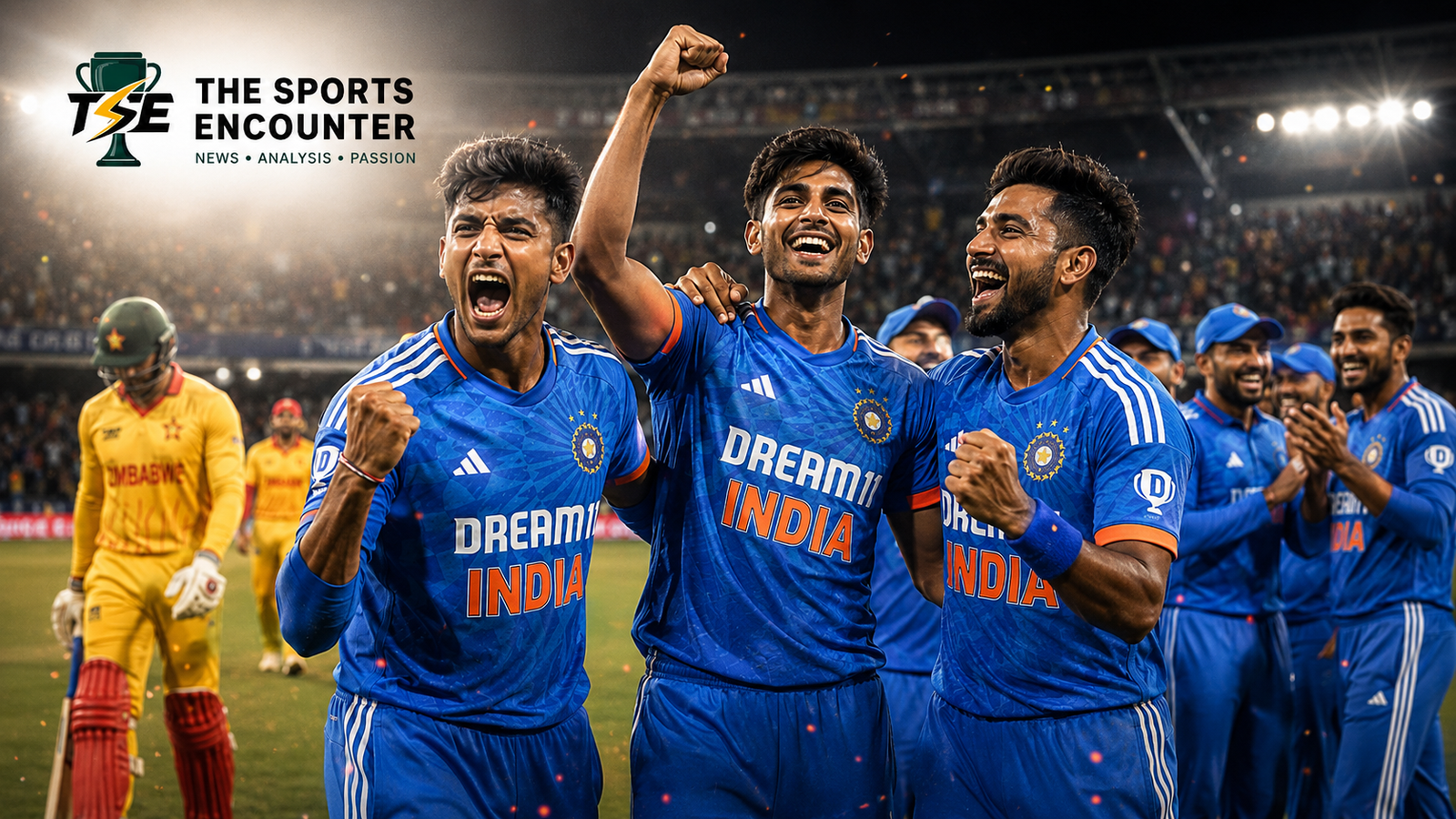
India Win 1st T20I After Young Pacers Restrict Zimbabwe to 125
Mayank Yadav led India’s young pace attack before Vaibhav Sooryavanshi smashed a 19-ball fifty in a commanding seven-wicket victory over Zimbabwe in Harare.

Zimbabwe’s hopes of testing India’s young side lasted exactly one delivery.
Mayank Yadav removed Brian Bennett with the first ball of the match, setting off a top-order collapse that left the hosts chasing stability for the rest of their innings. Ashok Sharma and Prince Yadav maintained the pressure, while India’s batters later turned a modest target into an opportunity to attack.
Vaibhav Sooryavanshi provided the most explosive part of India’s seven-wicket victory, hammering 50 from 19 balls as the visitors chased 126 in only 13.2 overs at Harare Sports Club.
The result gave India a 1-0 lead in the three-match series and ended a seven-match winless sequence in T20 internationals. It also brought Shreyas Iyer his first victory as India’s T20I captain after seven unsuccessful attempts.
TL;DR
- India defeated Zimbabwe by seven wickets with 40 balls remaining.
- Zimbabwe stumbled to 20 for three after losing Brian Bennett to the first ball.
- Mayank Yadav earned Player of the Match honors with 2 for 18.
- Prince Yadav claimed 2 for 19, while debutant Ashok Sharma supported the attack despite going wicketless.
- Vaibhav Sooryavanshi smashed 50 from 19 balls, including four fours and four sixes.
- India lead the three-match T20I series 1-0.
India vs Zimbabwe 1st T20I Scorecard
| Detail | Information |
|---|---|
| Match | Zimbabwe vs India, 1st T20I |
| Date | July 23, 2026 |
| Venue | Harare Sports Club, Harare |
| Zimbabwe | 125/7 in 20 overs |
| India | 126/3 in 13.2 overs |
| Result | India won by seven wickets |
| Top Zimbabwe Batter | Wessly Madhevere, 39 from 34 balls |
| Top India Batter | Vaibhav Sooryavanshi, 50 from 19 balls |
| Top Bowlers | Mayank Yadav 2/18, Prince Yadav 2/19 |
| Player of the Match | Mayank Yadav |
| Series Position | India lead the three-match series 1-0 |
| Turning Point | Mayank dismissed Brian Bennett with the first ball |
| What It Means | India ended a seven-match T20I winless run |
Mayank Yadav Gives Zimbabwe No Time to Settle
India won the toss and made immediate use of the early moisture and variable bounce available at Harare Sports Club.
Mayank’s opening delivery climbed enough to trouble Bennett, who edged behind without scoring. It was the perfect return for a fast bowler playing his first competitive match in 21 months.
Ben Curran attempted to counterattack with two boundaries, but Prince Yadav removed him for 10. Mayank then dismissed Dion Myers for six, leaving Zimbabwe at 20 for three in the fifth over.
The hosts finished the powerplay on 26 for three, without momentum or control. India’s pace unit had already determined the direction of the match.
Mayank consistently attacked a hard length and prevented Zimbabwe’s batters from freeing their arms. His pace mattered, but his control made the spell effective. He completed four overs with figures of 2 for 18 and deservedly received the Player of the Match award.
“It feels great to contribute to the country in a win,” Mayank said after the match. “It’s a great feeling, especially coming back after a very long interval.”
His performance offered a timely reminder of how quickly genuine pace can change a T20 innings. The demands placed on modern quicks have also shaped the wider debate over whether older fast bowlers were better suited to Test cricket.
Prince and Ashok Keep India’s Grip Tight
Prince Yadav complemented Mayank with an accurate four-over spell, taking 2 for 19. He removed Curran early and returned at the death to dismiss Brad Evans.
Ashok Sharma did not collect a wicket on his international debut, finishing with 0 for 29, but his figures did not fully reflect his contribution. He generated pace, hit the surface aggressively and ensured Zimbabwe could not release the pressure created from the other end.
The three young pacers presented different challenges. Mayank brought speed and bounce. Prince offered control and movement. Ashok tested the batters with pace and physical intensity.
That collective effort should encourage India after a difficult run of T20 results, including their historic defeat against Ireland in Belfast and the record 125-run loss against England.
Zimbabwe Recover Without Finding Acceleration
Zimbabwe slipped further when Sikandar Raza departed for four at 32 for four. Shivam Dube claimed the wicket after the captain failed to build the recovery innings his side needed.
Ryan Burl and Wessly Madhevere then added 32 runs, but their partnership focused more on survival than acceleration. Burl required 35 balls for his 26, while Madhevere gradually became Zimbabwe’s most convincing batter.
Madhevere scored 39 from 34 deliveries, with three fours and one six. Tadiwanashe Marumani added an unbeaten 27 from 20 balls as the pair produced a 57-run stand that lifted Zimbabwe beyond 120.
Their recovery carried some value after the early collapse, especially following Zimbabwe’s recent T20I series defeat against Bangladesh. However, 125 for seven remained well below a competitive total once the moisture eased and batting conditions improved.
Raza acknowledged that the surface played a major role. He felt the new ball remained difficult for much longer during Zimbabwe’s innings before the pitch became considerably truer during India’s chase.
Conditions influenced the contest, but Zimbabwe also failed to adapt. Too many batters remained rooted at the crease against India’s pace and allowed the bowlers to dictate the length.
Sooryavanshi Turns the Chase Into a Highlight Reel
Abhishek Sharma struggled for timing and departed for one from eight balls, but his slow start barely affected the required rate.
Sooryavanshi attacked from the beginning. The 15-year-old hit four fours and four sixes, racing to his maiden international half-century from only 19 deliveries.
His balance and bat speed stood out. Anything short disappeared over the leg side, while width outside off allowed him to swing freely through the line. Zimbabwe’s bowlers repeatedly missed the fuller lengths that might have tested him.
This was another destructive performance against a lower-ranked cricket nation, so stronger attacks will provide a more meaningful examination of his international development. Still, dismissing the innings because of the opposition would ignore the clarity and power he displayed.
After struggling during India’s recent tour of England, Sooryavanshi returned to a ground where he had previously scored 175 in the Under-19 World Cup final. That familiarity appeared to settle him.
His rapid rise has already generated debate about age, exposure and elite-level development, themes explored in The Sports Encounter’s analysis of whether Vaibhav Sooryavanshi is too young for the senior international environment.
Ishan Kishan and Shreyas Complete the Chase
Ishan Kishan supported Sooryavanshi with 35 from 24 balls, striking three fours and two sixes. Their 45-run partnership pushed India to 66 for one by the end of the powerplay.
Sooryavanshi departed immediately after reaching 50, top-edging Richard Ngarava to deep third. Kishan followed at 114, but the match had already lost its competitive tension.
Shreyas remained unbeaten on 28 from 24 balls, while Tilak Varma completed the chase with 40 deliveries unused.
The captain described Sooryavanshi as a “fearless youngster” and praised Mayank for setting the tone with his line, length and control.
India Find Relief, but Bigger Tests Remain
India needed this victory after a sequence of defeats that had exposed problems in both their batting structure and bowling execution. The result offered relief rather than complete reassurance.
Zimbabwe’s limited total allowed India to chase without pressure, and the hosts lacked the bowling depth to test Sooryavanshi once he began attacking. India must still show that the same young players can perform when the target rises, the pitch offers less assistance and the opposition possesses stronger plans.
For now, the first T20I delivered several positive signs. Mayank returned with pace and discipline. Prince strengthened his case for further opportunities. Ashok experienced international cricket without losing control, while Sooryavanshi reminded everyone why India continue to invest in his extraordinary talent.
The second T20I will take place at the same venue on Saturday, July 25. Zimbabwe must find a method for surviving India’s new-ball pace and creating enough early scoring pressure to prevent another one-sided chase.
Follow The Sports Encounter’s cricket coverage for more international match reports, analysis and player stories, along with the site’s latest global sports news.



Breaking News
Brandon Clarke Cause of Death Revealed as Accidental Heroin and Cocaine Overdose
The Los Angeles County medical examiner has ruled Brandon Clarke’s death accidental, citing the combined effects of heroin and cocaine, with multiple prescription medications also listed as a contributing condition.

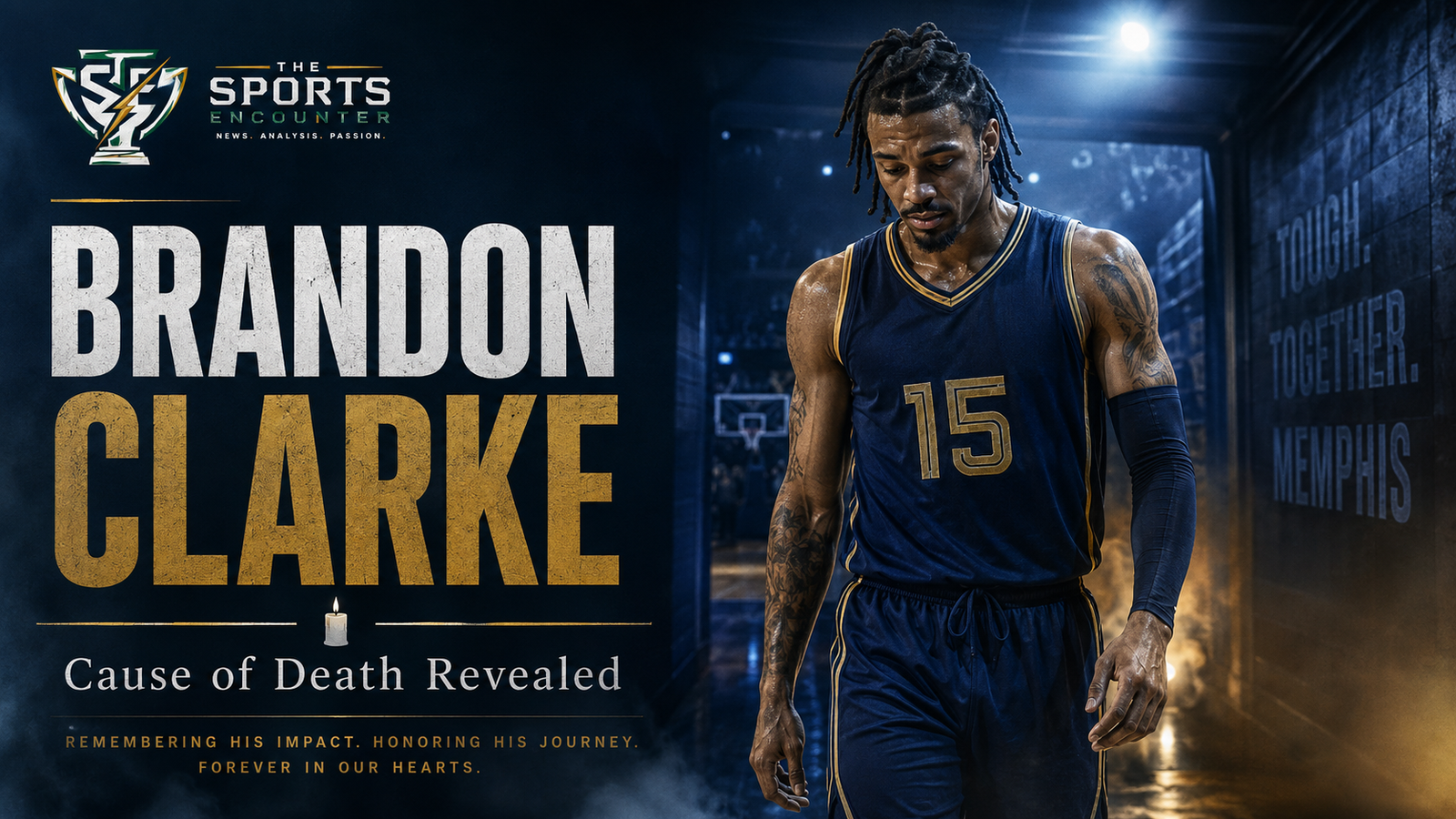
Memphis Grizzlies forward Brandon Clarke died from the combined effects of heroin and cocaine, the Los Angeles County Department of Medical Examiner has determined, nearly three months after the 29-year-old NBA player was found unresponsive at a residence in California.
The examiner ruled Clarke’s death an accident.
Multiple prescription medications were also identified as a significant contributing condition, according to information released by the medical examiner on Friday, August 7. The specific medications have not yet been publicly disclosed, and the full medical examiner’s report remains pending.
The finding provides the first official explanation for Clarke’s death after weeks in which the circumstances surrounding it remained unresolved publicly.
Clarke was found unresponsive in a bedroom at a residence in California’s San Fernando Valley on May 11. Emergency personnel pronounced him dead at the scene. He was 29 years old.
The medical examiner performed an examination the following day before formally certifying both the cause and manner of death in August.
The ruling closes one part of the uncertainty surrounding Clarke’s death, but it does not answer every question. The full toxicology findings have not been released publicly, the prescription medications cited as contributing factors have not been identified, and authorities have not detailed the sequence of events immediately preceding his death. :contentReference[oaicite:1]{index=1}
For continuing basketball coverage, player stories and league developments, visit The Sports Encounter’s NBA hub.
Brandon Clarke Cause of Death: What Has Been Confirmed?
| Detail | Confirmed Information |
|---|---|
| Player | Brandon Clarke |
| Age | 29 |
| Date of death | May 11, 2026 |
| Location | Residence in California’s San Fernando Valley |
| Official cause | Combined effects of heroin and cocaine |
| Contributing condition | Combined effects of multiple prescription medications |
| Manner of death | Accident |
| Authority | Los Angeles County Department of Medical Examiner |
| Full medical examiner report | Not yet publicly released |
| NBA team | Memphis Grizzlies |
| NBA career | Seven seasons |
| Career games | 309 |
| Career averages | 10.2 points, 5.5 rebounds |
TL;DR
- The Los Angeles County medical examiner ruled Brandon Clarke’s death accidental.
- The official cause was the combined effects of heroin and cocaine.
- Multiple prescription medications were also listed as a significant contributing condition.
- The medications have not been publicly identified.
- The full medical examiner report has not yet been released.
- Clarke was found unresponsive at a San Fernando Valley residence on May 11, 2026.
- He was pronounced dead at the scene.
- Clarke spent all seven of his NBA seasons with the Memphis Grizzlies.
- He averaged 10.2 points and 5.5 rebounds across 309 regular-season games.
- He finished fourth in NBA Rookie of the Year voting in 2019-20 and made the NBA All-Rookie First Team.
Medical Examiner Rules Clarke’s Death an Accident
The ruling from the Los Angeles County Department of Medical Examiner is important because it establishes both an official cause of death and a legal classification of the manner of death.
The cause was listed as the combined effects of heroin and cocaine.
The manner was ruled accidental.
Those are separate determinations.
A cause of death identifies the medical process or substances that led to death. The manner of death places the case into a broader classification such as natural, accidental, suicide, homicide or undetermined.
In Clarke’s case, the examiner concluded that the fatal drug effects were accidental rather than intentional.
Associated Press reporting also said drug paraphernalia had been found at the residence, although the full official report providing the detailed scene and toxicology findings has not yet been released publicly. :contentReference[oaicite:2]{index=2}
That distinction matters because several reports after Clarke’s death had discussed a possible overdose without an official ruling.
Those reports were provisional at the time.
The August finding is the first formal determination from the medical examiner.
What the Medical Examiner Has Not Yet Explained
The headline finding is clear, but several details remain unknown.
The examiner identified multiple prescription medications as a significant contributing condition but did not name them in the initial public information.
That means it would be irresponsible to speculate about what medications Clarke may have taken, why they had been prescribed or how they interacted with the other substances found in his system.
The complete medical examiner report may eventually provide concentrations, toxicology results, medical history and other details, but those findings should not be assumed before the report becomes public.
There is also no publicly established evidence at this stage showing how or when Clarke obtained the substances involved in his death.
His earlier arrest in Arkansas is part of the documented timeline, but the information currently available does not establish a direct connection between that arrest and the heroin and cocaine identified in the medical examiner’s ruling.
That distinction is essential.
Clarke Was Found Unresponsive on May 11
Clarke’s death shocked the NBA when it was announced in May.
The 29-year-old was discovered unresponsive inside a bedroom at a residence in the San Fernando Valley.
Emergency responders were called to the home, but Clarke could not be revived and was pronounced dead at the scene.
The medical examiner conducted an examination on May 12.
At the time, no official cause was released.
The Memphis Grizzlies, the NBA and Clarke’s representatives instead focused their public statements on his death, his family and the impact he had made during seven years in Memphis. :contentReference[oaicite:3]{index=3}
The Grizzlies Remembered Clarke as More Than a Basketball Player
When Clarke died, Memphis described him as an outstanding teammate and an even better person.
The organization’s response reflected how deeply he had become associated with a Grizzlies generation built around young players including Ja Morant, Jaren Jackson Jr. and, earlier in Clarke’s career, Dillon Brooks.
Clarke entered Memphis as a first-round pick in 2019 and never played an NBA game for another franchise.
Seven seasons in one organization is increasingly unusual in a league defined by trades, free agency and rapid roster turnover.
That continuity meant Clarke’s connection with the franchise extended beyond his statistics.
He became part of the identity of a young Memphis team that developed from a rebuilding roster into a Western Conference contender.
The Sports Encounter continues to follow former Grizzlies players and their careers, including our recent report on Dillon Brooks’ three-year, $73 million Phoenix Suns extension.
Brandon Clarke’s NBA Career Began With Immediate Impact
Clarke entered the NBA with questions about his age, shooting range and conventional position.
His production quickly answered many of them.
Oklahoma City selected him with the 21st overall pick in the 2019 NBA Draft before his rights were traded to Memphis.
The move became one of the Grizzlies’ more productive draft-night decisions of that rebuilding period.
Clarke immediately became an efficient interior scorer, energetic rebounder and athletic frontcourt defender.
As a rookie, he averaged 12.1 points and 5.9 rebounds and shot 61.8 percent from the field.
Gonzaga noted that his field-goal percentage set an NBA rookie record among qualifying players at the time. He also led qualified rookies in rebounds, ranked second in blocks and finished fourth in Rookie of the Year voting. :contentReference[oaicite:4]{index=4}
He earned NBA All-Rookie First Team honors.
Those accomplishments established Clarke as more than a developmental prospect.
He had immediately become a useful NBA rotation player.
Why Clarke’s Rookie Season Stood Out
Clarke was unconventional even before he entered the NBA.
He did not fit neatly into the traditional mold of a power forward or center.
He was undersized for some interior matchups, did not enter the league as a high-volume three-point shooter and was older than many first-round selections.
What he did possess was exceptional timing.
Clarke understood where to move without the ball.
He finished efficiently around the rim, attacked offensive rebounds, ran the floor, blocked shots and converted opportunities created by Memphis’ guards.
He rarely needed an offense designed around him.
That quality made him particularly useful beside ball-dominant creators.
Advanced metrics also reflected the efficiency of his rookie season. Gonzaga reported that Clarke led NBA rookies in win shares and established rookie marks for effective field-goal percentage and true shooting percentage. :contentReference[oaicite:5]{index=5}
Gonzaga Turned Clarke Into a National Star
Clarke’s rise did not begin in Memphis.
His final college season at Gonzaga transformed his professional outlook.
After beginning his college career at San Jose State, Clarke transferred to Gonzaga and developed into one of the most efficient two-way players in college basketball.
During the 2018-19 season, he averaged 16.9 points and 8.6 rebounds while shooting 68.7 percent from the field.
His 117 blocked shots led the nation, and his 3.16 blocks per game ranked among the best marks in Division I basketball.
He was named West Coast Conference Defender of the Year and Newcomer of the Year while earning First Team All-WCC recognition. :contentReference[oaicite:6]{index=6}
That season changed his career trajectory.
Clarke had gone from an under-the-radar transfer to a first-round NBA prospect.
Memphis Found a Role That Fit Him
The Grizzlies rarely asked Clarke to become something he was not.
Instead, they used his athleticism and instincts.
He became effective as a screener and roller, a lob threat, a cutter and an offensive rebounder.
Defensively, he could provide weak-side rim protection without carrying the full responsibility of a traditional center.
His partnership with Memphis’ guards was particularly productive because Clarke understood spacing and timing.
He could dive toward the rim once a defender committed to the ball handler, creating easy finishes without needing extended possessions.
That made him valuable alongside Ja Morant, whose ability to penetrate created exactly those opportunities.
Clarke’s Career Numbers Show Consistency
Across 309 NBA regular-season games, Clarke averaged 10.2 points and 5.5 rebounds.
He started only 50 of those games.
That context matters.
Clarke’s statistical value came largely from a reserve role in which he was asked to provide energy and efficiency rather than carry high usage.
His career therefore cannot be assessed simply by comparing his scoring average with starting forwards around the league.
His role was different.
At his best, Clarke could enter a game and immediately change its physical rhythm through rebounding, transition running and interior finishing.
For wider NBA player analysis and roster context, readers can also explore The Sports Encounter’s examination of how lineup construction shapes NBA contenders.
The Achilles Tear Changed the Final Phase of His Career
The defining sporting setback of Clarke’s career arrived in March 2023.
He tore his left Achilles tendon during a game against the Denver Nuggets.
The injury ended his season and began a rehabilitation process that kept him away from NBA competition for more than a year.
An Achilles rupture remains one of the most demanding injuries for an explosive basketball player because so much of the game depends on acceleration, jumping and repeated changes of direction.
Clarke’s game was particularly dependent on those physical qualities.
His vertical pop, second jump, mobility and ability to finish above defenders were central to his effectiveness.
Returning from such an injury was therefore about more than being medically cleared.
He also had to rebuild the physical tools that had made him distinctive.
The NBA documented the season-ending Achilles injury when it occurred. :contentReference[oaicite:7]{index=7}
He Returned, but Injuries Continued
Clarke eventually returned to the Grizzlies, but his later seasons became increasingly disrupted by health problems.
A knee issue affected his preparation for the 2025-26 season.
He then appeared in only two games before a calf injury interrupted his comeback again.
Memphis ultimately ruled him out for the remainder of the season in March 2026.
The recurring interruptions meant Clarke entered the final months of his life far removed from the regular role he had once occupied.
There is no evidence establishing that those injuries caused or contributed to the circumstances of his death.
They remain important only as part of the basketball timeline of his final seasons.
The Sports Encounter regularly examines how injuries alter NBA careers and roster planning, including our report on Jamir Watkins’ ACL surgery and its impact on Washington’s roster.
The Arkansas Arrest Came Six Weeks Before Clarke’s Death
Another major development occurred on April 1.
Clarke was arrested in Cross County, Arkansas.
Authorities listed charges that included possession of a controlled substance, trafficking a controlled substance, fleeing in a vehicle, speeding and improper passing.
The Cross County Sheriff’s Department booking information documented the arrest.
Contemporary reports said authorities had allegedly found more than 200 grams of kratom in Clarke’s vehicle. ESPN and other outlets reported the charges while emphasizing that they were allegations at that stage. :contentReference[oaicite:8]{index=8}
The legal principle remains important here.
An arrest is not a conviction.
Clarke died before the case could run its normal legal course.
The medical examiner’s August finding should therefore not be used to retroactively treat every allegation connected to the Arkansas arrest as established fact.
The Arrest and the Death Should Not Be Automatically Combined
Because the arrest occurred approximately six weeks before Clarke died, it is understandable that the two events will be discussed together.
They are both part of the public timeline.
They are not automatically the same case.
The Arkansas arrest reportedly involved kratom.
The Los Angeles County medical examiner identified heroin and cocaine as the substances responsible for Clarke’s death, along with unspecified prescription medications as a contributing condition.
No official source cited in the current reporting has established that the substances involved in the Arkansas arrest were connected to Clarke’s death in California.
Any claim beyond that would move from reporting into speculation.
Why the Full Medical Examiner Report Still Matters
The initial ruling answers the central question of cause and manner of death.
The full report may provide additional clarity.
Medical examiner reports can include toxicology findings, substance concentrations, known medical conditions, investigative details and other information used to support the final determination.
Until those details are available, several questions should remain unanswered rather than filled through assumption.
That includes the prescription medications involved.
The fact that prescription drugs were listed as a significant contributing condition does not by itself tell readers whether Clarke had been taking them as directed, whether they had been recently prescribed or how each medication interacted medically with the other substances.
Those details require evidence.
Clarke’s Death Became a Shock to a Grizzlies Generation
Memphis had undergone substantial change by the time Clarke died.
Players who had entered the league around him were moving into different stages of their careers.
Brooks had left Memphis years earlier and rebuilt his career elsewhere before eventually receiving a major extension in Phoenix.
Morant had become one of the league’s most recognizable guards.
The Grizzlies themselves had experienced the normal cycles of contention, injuries, coaching changes and roster turnover.
Clarke remained connected to the franchise through all of it.
That continuity helps explain why the organization’s reaction to his death focused so strongly on his personality and relationships.
NBA Commissioner Adam Silver Also Paid Tribute
The NBA published Commissioner Adam Silver’s statement after Clarke’s death alongside the Grizzlies’ tribute.
The league’s response reflected the unusual shock of losing an active NBA player at 29.
Clarke remained under contract with Memphis and had been attempting to recover from injury.
This was not the death of a player decades removed from the game.
He was still part of an NBA roster and still expected, before his health setbacks, to continue his career.
The league’s official remembrance remains available through the NBA’s Brandon Clarke tribute and announcement. :contentReference[oaicite:9]{index=9}
Clarke’s Career Was More Than His Final Months
The new cause-of-death ruling inevitably changes the public conversation around Clarke.
That should not erase the preceding seven years.
His basketball career included:
- A first-round NBA Draft selection.
- An NBA All-Rookie First Team appearance.
- A fourth-place Rookie of the Year finish.
- More than 300 regular-season NBA games.
- Multiple playoff appearances with Memphis.
- One of the most efficient rookie scoring seasons of his generation.
- A comeback attempt following a major Achilles rupture.
Those accomplishments remain part of the record.
His Rookie Efficiency Was Historically Unusual
Clarke’s early production deserves particular attention because his game was so different from the high-volume scoring archetype that usually dominates rookie conversations.
He did not lead his class in points.
He did not dominate possession.
He produced value by converting possessions efficiently.
Gonzaga reported that Clarke’s .618 field-goal percentage was the best among qualifying NBA rookies and that his .642 effective field-goal percentage and .663 true-shooting percentage established rookie records. :contentReference[oaicite:10]{index=10}
Those numbers illustrated the same qualities scouts had seen at Gonzaga.
He understood where his best shots were.
He rarely needed difficult attempts to influence a game.
Injuries Leave an Unanswered Basketball Question
Clarke’s death also leaves one sporting question that can never be resolved.
What might his career have looked like without the Achilles tear and the injuries that followed?
At 29, he was still young enough to have several productive NBA seasons remaining.
His game might have required adaptation as his athleticism changed, but players with his basketball intelligence often find ways to remain useful.
He could rebound.
He understood defensive positioning.
He could screen, cut and finish.
Those skills can survive even when explosiveness declines.
The Achilles injury interrupted that progression before anyone could see how Clarke’s game would evolve into his 30s.
Memphis’ Loss Extends Beyond the Box Score
The Grizzlies’ initial statement emphasized Clarke’s influence on teammates and the wider Memphis community.
That language is worth remembering because professional athletes often become publicly reduced to numbers at the moment something happens to them.
Clarke’s 10.2 points per game describe his NBA production.
They do not describe seven years of daily interaction with teammates, coaches, trainers, staff members and fans.
The organization’s reaction made clear that those relationships were central to how Memphis remembered him.
How Sports Journalism Should Handle Clarke’s Cause of Death
The medical examiner’s ruling is news and should be reported directly.
The substances involved should not be hidden.
At the same time, the facts do not require sensational language.
There is no editorial value in turning Clarke’s death into spectacle.
The accurate framing is straightforward:
- The medical examiner identified heroin and cocaine as the cause.
- Prescription medications contributed.
- The death was ruled accidental.
- The full report is still pending.
- An earlier drug-related arrest is part of the timeline but should not be treated as proof of how the substances involved in his death were obtained.
That is what the available evidence supports.
What Happens Next?
The next major development will likely be the release of the complete Los Angeles County medical examiner report.
That document could provide further toxicology details and identify the prescription medications referenced in Friday’s finding.
If additional information is released, it may clarify the medical sequence leading to Clarke’s death.
Until then, the official determination should be treated as the authoritative conclusion while the unanswered details remain precisely that: unanswered.
Brandon Clarke’s NBA Career at a Glance
| Category | Career Detail |
|---|---|
| NBA Draft | 2019 |
| Draft position | 21st overall |
| Drafted by | Oklahoma City Thunder, rights traded to Memphis |
| NBA franchise | Memphis Grizzlies |
| NBA seasons | Seven |
| Regular-season games | 309 |
| Starts | 50 |
| Career scoring average | 10.2 points per game |
| Career rebounding average | 5.5 rebounds per game |
| Rookie honor | NBA All-Rookie First Team |
| Rookie of the Year voting | Fourth |
| College | San Jose State, Gonzaga |
| Major injury | Left Achilles rupture in 2023 |
From Gonzaga to Memphis: A Career Built on Efficiency
If Clarke’s career has one basketball theme, it is efficiency.
At Gonzaga, he shot 68.7 percent from the field.
As an NBA rookie, he shot 61.8 percent.
Those numbers came from understanding his role rather than forcing himself into one that did not suit him.
He attacked the rim.
He cut behind defenders.
He followed missed shots.
He ran in transition.
He played above the rim.
He made himself useful without requiring the ball for long stretches.
That skill set helped him survive the transition from an unusual college prospect to a reliable NBA rotation player.
Clarke Was Part of a Distinct Memphis Era
The Grizzlies team Clarke joined in 2019 was beginning a new cycle.
Morant arrived in the same draft class.
Jaren Jackson Jr. was developing into a cornerstone.
Brooks provided the edge that would become associated with the team.
Clarke provided something quieter but equally valuable: reliable production.
Memphis became younger, faster and more aggressive.
Clarke fit naturally into that identity.
His later injury problems meant he was less visible during the closing stages of that era, but his role in its development should not be overlooked.
Readers interested in the changing careers of players from that Memphis generation can also read our analysis of how Dillon Brooks rebuilt his value after leaving the Grizzlies.
A Broader Reminder About Athlete Lives Beyond Competition
Clarke’s death is also a reminder of something sports coverage sometimes struggles to acknowledge.
Professional athletes can be simultaneously wealthy, famous, physically gifted and vulnerable.
None of those realities cancels the others.
An NBA contract does not provide immunity from physical injury, legal problems, personal difficulties or substance-related harm.
That does not mean journalists should diagnose struggles that have not been documented.
It means athletes should be covered as human beings rather than characters created entirely from highlights, contracts and standings.
The Sports Encounter has applied the same principle when covering difficult athlete-health stories outside basketball, including our report on Ahman Green’s Parkinson’s diagnosis and the questions it raised about life after professional sport.
Why Speculation Would Be Particularly Harmful Here
The time between Clarke’s death in May and the examiner’s August ruling created a vacuum.
Those gaps often attract rumors.
Now that an official cause has been established, there may be a temptation to retrospectively assign motives, patterns or explanations to every event in Clarke’s final months.
The evidence does not support that.
The medical examiner has identified the substances involved.
It has not publicly explained Clarke’s intent beyond ruling the death accidental.
It has not publicly identified the prescription medications.
It has not connected the Arkansas case to the substances involved in his death.
Those boundaries matter.
Final Perspective
The Los Angeles County Department of Medical Examiner has now answered the central medical question surrounding Brandon Clarke’s death.
The 29-year-old Memphis Grizzlies forward died from the combined effects of heroin and cocaine.
Multiple prescription medications contributed.
The death was accidental.
Those findings are difficult but clear.
They should also remain one part of Clarke’s story rather than becoming the entire story.
He was a first-round draft pick who turned an unconventional playing style into an effective NBA career.
He became one of the league’s most efficient rookies.
He played 309 games for one franchise.
He fought through a torn Achilles and attempted to rebuild his career after more than a year away.
His teammates and organization remembered him in deeply personal terms after his death.
There are still unanswered questions, and responsible coverage should allow them to remain unanswered until evidence becomes available.
The full medical examiner report may eventually provide more detail.
For now, the official finding gives the NBA community an explanation it had waited nearly three months to receive, while leaving Memphis to remember a player whose career and relationships extended far beyond the circumstances of his final day.
Frequently Asked Questions
What was Brandon Clarke’s official cause of death?
The Los Angeles County Department of Medical Examiner determined that Clarke died from the combined effects of heroin and cocaine.
Was Brandon Clarke’s death ruled an overdose?
The medical examiner attributed his death to the combined effects of heroin and cocaine and classified the manner of death as an accident. Reports have described the death as an accidental overdose. :contentReference[oaicite:11]{index=11}
Did prescription medications contribute to Brandon Clarke’s death?
Yes. The medical examiner listed the combined effects of multiple prescription medications as a significant contributing condition. The specific medications have not yet been publicly disclosed.
When did Brandon Clarke die?
Clarke died on May 11, 2026.
How old was Brandon Clarke?
He was 29 years old.
Where was Brandon Clarke found?
He was found unresponsive in a bedroom at a residence in California’s San Fernando Valley.
Was Brandon Clarke’s death ruled accidental?
Yes. The Los Angeles County medical examiner classified the manner of death as an accident.
Has the full Brandon Clarke medical examiner report been released?
No. The full report had not been publicly released when the cause and manner of death were announced.
Was Brandon Clarke arrested before his death?
Yes. Clarke was arrested in Arkansas on April 1, 2026 on allegations including possession and trafficking of a controlled substance, fleeing, speeding and improper passing. The arrest occurred approximately six weeks before his death. An arrest does not constitute a conviction. :contentReference[oaicite:12]{index=12}
Did the Arkansas arrest involve the same drugs found in Clarke’s system?
No official source currently establishes that connection. Reports surrounding the Arkansas arrest referred to kratom, while the Los Angeles medical examiner identified heroin and cocaine in Clarke’s death. The two events should not be directly linked without evidence.
How long did Brandon Clarke play in the NBA?
Clarke played seven NBA seasons, all with the Memphis Grizzlies.
What were Brandon Clarke’s career statistics?
He averaged 10.2 points and 5.5 rebounds across 309 regular-season games, including 50 starts.
Was Brandon Clarke an NBA All-Rookie player?
Yes. Clarke made the NBA All-Rookie First Team after the 2019-20 season and finished fourth in Rookie of the Year voting. :contentReference[oaicite:13]{index=13}
Where did Brandon Clarke play college basketball?
Clarke played at San Jose State before transferring to Gonzaga, where he became a First Team All-WCC selection and the conference’s Defender and Newcomer of the Year. :contentReference[oaicite:14]{index=14}
What major injury did Brandon Clarke suffer?
Clarke tore his left Achilles tendon in March 2023, an injury that kept him out for more than a year. :contentReference[oaicite:15]{index=15}
Editorial note: This article reports findings released by the Los Angeles County Department of Medical Examiner and information from established public records and official basketball sources. The full medical examiner report has not yet been released. The Sports Encounter will update this report if additional verified information becomes available.
This article is for informational and editorial purposes and should not be interpreted as medical advice.
Breaking News
Harper and Asalanka Punish Colombo’s Chaos as Galle Reach LPL Final
Sam Harper’s commanding 77 and Charith Asalanka’s composed 59 carried Galle Gallants past Colombo Kaps and into the LPL 2026 final against Jaffna Kings.

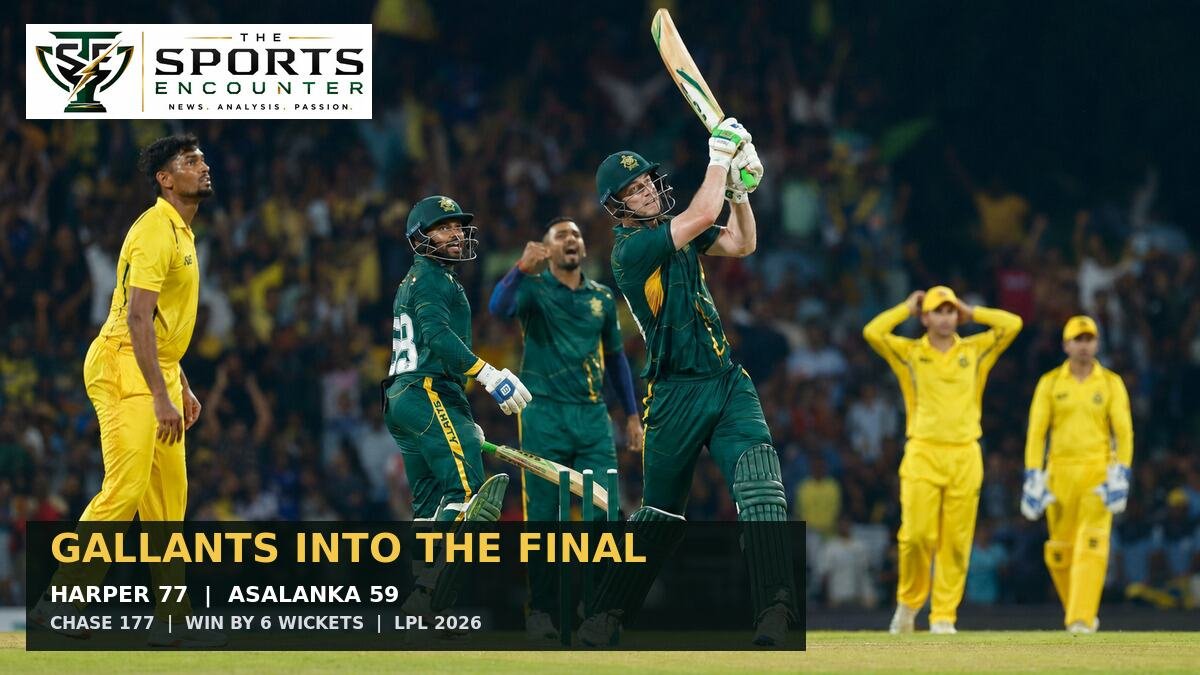
Colombo Kaps scored quickly enough to threaten Galle Gallants, but they never batted long enough to control the match.
That difference decided Qualifier 2.
Colombo lost five wickets inside seven overs, recovered through Rubin Hermann and Ravindu Fernando, and then surrendered its remaining batting resources before completing 20 overs. Galle responded with a far calmer chase, riding Sam Harper’s masterful 77 and Charith Asalanka’s 59 to reach 177 for four in 18.4 overs.
The six-wicket victory at the R. Premadasa Stadium sends Galle into Saturday’s Lanka Premier League 2026 final against Jaffna Kings. Colombo’s promising playoff run ends one victory short of the title match.
TL;DR
- Galle Gallants chased 177 in 18.4 overs to win Qualifier 2 by six wickets.
- Sam Harper led the chase with 77 from 51 balls, including four fours and four sixes.
- Charith Asalanka scored 59 from 42 and shared a match-defining 126-run partnership with Harper.
- Colombo recovered from 52 for five to reach 176, but was bowled out in 18.5 overs.
- Dasun Shanaka’s constant bowling changes prevented Colombo from controlling the innings.
- Galle will face Jaffna Kings in the LPL 2026 final on August 8.
Galle Gallants vs Colombo Kaps Scorecard
| Detail | Information |
|---|---|
| Competition | Lanka Premier League 2026, Qualifier 2 |
| Venue | R. Premadasa Stadium, Colombo |
| Date | August 7, 2026 |
| Toss | Colombo Kaps elected to bat |
| Colombo Kaps | 176 all out in 18.5 overs |
| Galle Gallants | 177/4 in 18.4 overs |
| Result | Galle Gallants won by six wickets |
| Top Galle batter | Sam Harper, 77 from 51 balls |
| Galle support | Charith Asalanka, 59 from 42 balls |
| Top Colombo batters | Ravindu Fernando 48; Rubin Hermann 45 |
| Best Galle bowling | Sachindu Colombage 2/34; Charith Asalanka 2/34 |
| Turning point | Harper and Asalanka added 126 after Galle slipped to 21/1 |
| What comes next | Galle face Jaffna Kings in the August 8 final |
Colombo’s Run Rate Hid a Deeper Batting Failure
A total of 176 from 18.5 overs suggests aggression. The scorecard tells a harsher story.
Colombo fell to 20 for three before the third over had ended. Sadeera Samarawickrama made five, Thanuka Dabare scored 11, and captain Kamindu Mendis managed one. Janith Liyanage briefly counterattacked with 23 from nine balls, but his dismissal left the Kaps at 47 for four.
James Neesham then fell for one, reducing Colombo to 52 for five in 6.1 overs.
The Kaps kept swinging when the situation called for one decisive partnership. That approach produced boundaries, but it repeatedly exposed new batters before they had understood the surface or match situation.
Hermann supplied some resistance with 45 from 33 balls. Ravindu Fernando changed the innings’ pace with five sixes in a 27-ball 48, while Malsha Tharupathi contributed a valuable 28 from 17. Their hitting dragged Colombo toward a defendable total, yet the team lost its seventh wicket at 158 in the 17th over and was dismissed with seven balls unused.
Those missing deliveries mattered. Even at a modest late-innings rate, Colombo could have added another 10 to 15 runs. Against a Galle batting lineup that eventually needed eight runs from the final eight balls, that extra cushion could have changed the pressure entirely.
Colombo had shown much better knockout control while eliminating Kandy, as detailed in The Sports Encounter’s report on McDermott, Neesham and Wanuja Sahan ending the Royals’ campaign. Qualifier 2 exposed the opposite version of their batting.
Shanaka Kept Searching Until Galle Found Control
Dasun Shanaka’s captaincy deserves as much credit as the wickets.
Colombo’s batters attacked nearly every bowling matchup, which could easily have forced a captain into defensive thinking. Shanaka continued rotating his options instead. Six bowlers entered the attack, preventing any Colombo batter from settling against one repeated pace or angle.
Charith Asalanka conceded 34 from three overs but removed Dabare and Kamindu. Mohammad Nawaz delivered the evening’s most economical spell, taking one for 12 from two overs. Akif Javed and Tharindu Ratnayake collected one wicket each, while Sachindu Colombage returned two for 34.
The changes did not stop every boundary. They kept producing questions, and Colombo’s reckless shot selection eventually supplied the answers.
Galle had already beaten the Kaps twice during the league stage, including a 13-run victory that secured a top-two finish. Shanaka again showed why his team has handled changing match situations better across the tournament.
Harper and Asalanka Remove the Panic From the Chase
Galle lost Thomas Rogers for 13 at 21 for one, giving Colombo the early opening it needed. Harper and Asalanka closed it with patience, strike rotation and controlled aggression.
Their 126-run partnership lasted 84 balls. Harper struck four fours and four sixes during his 77 from 51, while Asalanka contributed three fours and four sixes in a 42-ball 59.
Both batters understood that the required rate demanded intent without desperation. They targeted weaker deliveries, kept the scoreboard moving between boundaries and denied Colombo the clusters of wickets that had damaged the first innings.
Harper has repeatedly shaped Galle’s successful chases. His earlier 65 against the same opponent helped produce another victory, covered in The Sports Encounter’s report on Galle’s five-wicket win over Colombo.
Asalanka again provided the calm middle-overs influence that defined his 65 in Galle’s opening victory over Jaffna.
Colombo dismissed Asalanka, Harper and Chamika Karunaratne late, but the damage had already been done. Shanaka completed the chase with a six, finishing unbeaten on eight from three balls.
The Final Brings Galle Back to Jaffna
Galle’s reward is an immediate rematch with Jaffna Kings, who defeated them by 14 runs in Qualifier 1 after Kamil Mishara’s unbeaten century.
Jaffna will enter the final rested and confident after posting 242 for two in that meeting. Galle arrives with momentum, a proven chasing structure and fresh evidence that Harper and Asalanka can manage knockout pressure.
The official Lanka Premier League schedule confirms that the final will take place at the R. Premadasa Stadium on August 8. Readers can follow the buildup through The Sports Encounter’s Lanka Premier League coverage hub and wider cricket reporting and analysis.
Colombo leaves with clear evidence of its attacking ability, but also with the question that ended its season: why keep swinging when the match was asking someone to stay?
Galle found the balance Colombo could not. One more victory will make them champions.
Breaking News
Ilhan Fandi Delivers the Point That Sends Singapore Through
Ilhan Fandi rescued Singapore with a decisive second-half equalizer against Indonesia, earning the Lions the point they needed to reach the ASEAN Championship semifinals.

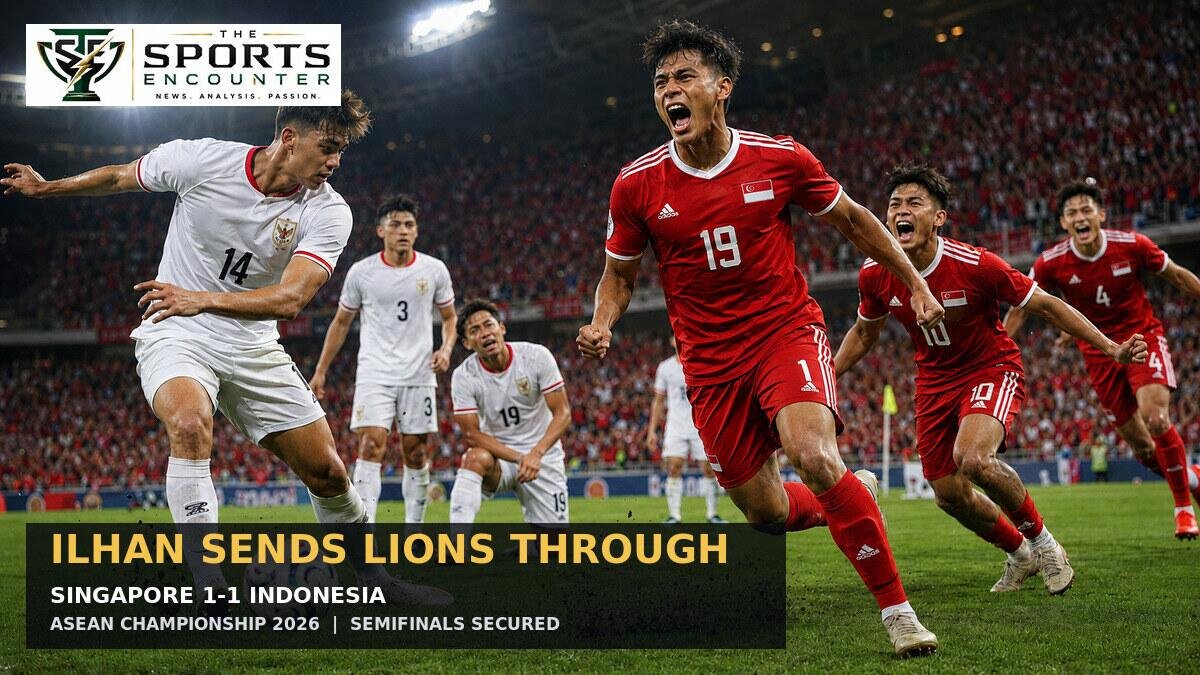
Singapore spent 19 tense second-half minutes watching its place in the ASEAN Championship semifinals slip toward Indonesia. Then Ilhan Fandi reacted first to one moment of defensive confusion and changed the direction of two campaigns.
His 66th-minute equalizer earned Singapore a 1-1 draw at Jalan Besar Stadium on Friday, August 7, giving the Lions the point they needed to finish second in Group A. Indonesia, which had to win, finished one point behind Singapore and exited the tournament despite leading through Ragnar Oratmangoen.
For Singapore, the final whistle brought relief, celebration and another place in the last four. For Indonesia, it confirmed a painful elimination after a group campaign that began with two convincing victories.
TL;DR
- Singapore drew 1-1 with Indonesia and qualified for the semifinals.
- Ragnar Oratmangoen put Indonesia ahead in the 47th minute.
- Ilhan Fandi equalized in the 66th minute after confusion inside Indonesia’s penalty area.
- Jacob Mahler earned the official Hyundai Player of the Match award.
- Song Ui-young briefly received a second yellow card, but the referee overturned it after an on-field review.
- Vietnam won Group A with 10 points, followed by Singapore with eight and Indonesia with seven.
Singapore vs Indonesia Match Information
| Detail | Information |
|---|---|
| Match | Singapore vs Indonesia |
| Competition | ASEAN Hyundai Cup 2026, Group A |
| Final score | Singapore 1-1 Indonesia |
| Goalscorers | Ragnar Oratmangoen 47’; Ilhan Fandi 66’ |
| Venue | Jalan Besar Stadium, Singapore |
| Date | Friday, August 7, 2026 |
| Top performer | Jacob Mahler, Hyundai Player of the Match |
| Turning point | Ilhan punished confusion between Rizky Ridho and Cahya Supriadi |
| Cards | Seven confirmed yellow cards; Song Ui-young’s second yellow was overturned |
| Group impact | Singapore qualified in second place; Indonesia was eliminated |
| Next match | Singapore hosts the Group B winner on August 15 |
Indonesia Struck First but Could Not Find Control
Indonesia approached the match with no room for calculation. John Herdman’s side needed all three points, while Singapore could advance with a draw.
That urgency nearly produced a goal after only two minutes. Mitch Baker found space with goalkeeper Izwan Mahbud exposed, but Shah Shahiran recovered with a perfectly timed sliding block. The intervention set the tone for a Singapore performance built on defensive concentration and collective recovery.
Indonesia carried the greater attacking obligation, yet Singapore gradually slowed the contest in midfield. Jacob Mahler helped protect the central areas, while Shah and Hariss Syahin limited the clean passing lanes Indonesia needed to dictate the tempo.
The hosts also created chances. Song Ui-young forced Cahya Supriadi into a save after meeting Lionel Tan’s low cross, while Ilhan tested the goalkeeper with an improvised effort. At the opposite end, Izwan stretched to keep out Baker’s header.
The score remained level until two minutes after halftime. Thom Haye delayed his pass just long enough to release Dony Pamungkas on the left. Dony cut the ball back, and Oratmangoen scored at the second attempt.
Indonesia had earned the lead it needed. The challenge was keeping it.
A Reversed Decision Kept Singapore Alive
The match appeared to turn decisively against Singapore in the 58th minute when Song received what initially looked like his second yellow card for a challenge on Ivar Jenner.
Referee Mohammed Khalfan Salim Al Mani reviewed the incident at the pitch-side monitor and rescinded the booking. The decision meant Singapore remained at full strength rather than facing the closing half-hour with 10 men.
Eight minutes later, the Lions equalized.
A lofted delivery created hesitation between defender Rizky Ridho and goalkeeper Cahya. Neither completed the clearance, allowing Ilhan to reach the loose ball and guide a first-time finish into an empty net.
It was a poacher’s goal shaped by anticipation rather than elaborate buildup. Ilhan understood the danger before Indonesia’s defenders resolved it. His third important goal of the tournament completed a group stage in which he repeatedly supplied Singapore’s decisive attacking moments.
Readers who followed his earlier contributions will recognize the pattern. Ilhan also delivered the dramatic winner in the tournament opener before scoring against Timor-Leste, a performance covered in The Sports Encounter’s report on Singapore’s controlled victory over Timor-Leste.
Mahler Gave Singapore Its Defensive Foundation
Ilhan scored the qualification goal, but Mahler earned the official Player of the Match award for holding Singapore together under pressure.
His positioning helped close central spaces, and his willingness to contest second balls prevented Indonesia from building sustained attacks after taking the lead. Indonesia pushed forward late, with Rizky Pratama hitting the side netting, but Singapore protected the penalty area and avoided the decisive mistake.
The defensive resilience echoed the disciplined performance that earned the Lions a goalless draw against Vietnam in Hanoi. Across those two defining matches, Singapore conceded only once and collected the two points that separated it from Indonesia.
More regional tournament reporting is available through The Sports Encounter’s soccer coverage and its ASEAN Championship 2026 coverage.
Indonesia’s Strong Start Ended in Frustration
Indonesia leaves the tournament with seven points and a positive goal difference, but its inability to recover from the 3-0 defeat against Vietnam proved costly.
Herdman’s team had looked dangerous earlier in the campaign. Baker scored a hat trick in the 5-1 victory over Cambodia, and Indonesia later defeated Timor-Leste 3-0. Those results created momentum but could not guarantee qualification.
Against Singapore, Indonesia produced several threatening moments and deserved its lead. The team’s problems arrived after Oratmangoen scored. Rather than controlling possession and forcing Singapore to chase recklessly, Indonesia allowed the hosts to remain within one incident of qualification.
That incident came in the 66th minute.
Yellow and Red Cards
| Minute | Player | Team | Card |
|---|---|---|---|
| 43’ | Song Ui-young | Singapore | Yellow |
| 58’ | Ivar Jenner | Indonesia | Yellow |
| 76’ | Mitch Baker | Indonesia | Yellow |
| 77’ | Lionel Tan | Singapore | Yellow |
| 82’ | Marc Klok | Indonesia | Yellow |
| 86’ | Timo Geypens | Indonesia | Yellow |
| 90+7’ | Jacob Mahler | Singapore | Yellow |
No player finished the match with a red card. Song’s second caution was canceled following the referee’s monitor review.
Final Group A Points Table
| Pos. | Team | P | W | D | L | GF | GA | GD | Pts |
|---|---|---|---|---|---|---|---|---|---|
| 1 | Vietnam | 4 | 3 | 1 | 0 | 13 | 1 | +12 | 10 |
| 2 | Singapore | 4 | 2 | 2 | 0 | 5 | 2 | +3 | 8 |
| 3 | Indonesia | 4 | 2 | 1 | 1 | 9 | 5 | +4 | 7 |
| 4 | Cambodia | 4 | 1 | 0 | 3 | 6 | 10 | -4 | 3 |
| 5 | Timor-Leste | 4 | 0 | 0 | 4 | 0 | 15 | -15 | 0 |
Vietnam’s 3-1 win over Cambodia secured first place. Singapore qualified as the runner-up, while Indonesia, Cambodia and Timor-Leste were eliminated.
What Comes Next for Singapore?
Singapore will host the Group B winner in the first leg of its semifinal on August 15. The Lions remain two stages away from a fifth regional title, but their group campaign has shown why they can trouble stronger opponents.
They can defend compactly, absorb pressure and find decisive contributions from Ilhan. Mahler’s influence gives the midfield stability, while Izwan’s experience provides security behind the defensive line.
Singapore did not require a victory on Friday. It needed composure when the match turned against it. The Lions found enough, and Ilhan found the goal that carried them into the semifinals.

English FA Turns Its Back on Gianni Infantino, Withdraws Support for Re-Election
The English FA has formally withdrawn its support for Gianni Infantino’s bid for another term as FIFA president, adding major...


FIFA President Apologizes to Member Nations After FIFA World Cup Selloff Plan Fails to Inspire
FIFA has apologized to its member associations after abandoning a controversial plan to sell a 20% stake in a new...


Infantino in Survival Mode After World Cup Stake Sale Idea Results in Global Revolt
Gianni Infantino’s abandoned World Cup commercial rights proposal has triggered an internal FIFA revolt, lost European support, and drawn a...

Crisis Plagues FIFA as Wenger, Grafstrom and Federations Break Ranks
Gianni Infantino’s grip on FIFA is under growing pressure after senior officials, European federations and former allies distanced themselves from...


Infantino Looks to Smaller Nations After UEFA, CONCACAF Snub
Gianni Infantino’s FIFA future may depend on smaller and emerging nations after UEFA and CONCACAF lost confidence in his leadership....


FIFA’s World Cup Stake Plan Failed in Three Days. The Damage to Gianni Infantino May Last Much Longer
FIFA’s attempt to sell a 20% stake in a new World Cup commercial entity collapsed within days after a global...

Cristiano Ronaldo’s World Cup Career: Goals, Records and Final Farewell
Cristiano Ronaldo became the first man to score in six FIFA World Cups, but football’s greatest tournament never gave him...


The Golden Generation Saying Goodbye After the FIFA World Cup 2026
The 2026 World Cup did more than crown a champion. It marked the emotional farewell of a generation that shaped...


Neymar’s World Cup Career: Skill, Pain, and the Rainbow Flick Legacy
Neymar carried Brazil’s World Cup hopes across four tournaments, producing unforgettable goals while enduring injuries, criticism and elimination heartbreak. His...


Is the FIFA World Cup 2030 Not for Sale Anymore?
FIFA’s proposal to sell a minority stake in a $20 billion World Cup commercial company appears to have collapsed after...


FIFA Explores 64-Nation World Cup for 2030: Is Another Expansion Worth It?
FIFA is examining whether the 2030 World Cup should expand from 48 to 64 teams. The proposal could increase global...


FIFA Revolt Moves Inside Infantino’s Office as Cordeiro Quits and Kevin Lamour Condemns World Cup Selloff
FIFA’s World Cup stake crisis has moved inside the organization. Carlos Cordeiro has resigned in protest, while chief operating officer...


Infantino’s World Cup Selloff Crisis Deepens as Adviser Quits and UEFA Backs FIFA Boycott
Gianni Infantino’s plan to bring private investors into a $20 billion FIFA commercial company has triggered a global soccer revolt....

CONCACAF Rejects FIFA’s World Cup Stake Plan as Infantino Faces a Global Governance Revolt
CONCACAF has unanimously rejected FIFA’s proposal to bring private investors into a new company controlling the commercial business of the...


Could UEFA Create Its Own World Cup? Kaveh Solhekol’s Warning Shows How Far the FIFA Crisis Could Go
UEFA’s threat to boycott FIFA competitions has opened a much bigger question for world soccer: if Europe walks away from...


UEFA Votes 55-0 for FIFA Boycott as Infantino’s World Cup Plan Sparks Open Revolt
UEFA’s 55 member associations have unanimously threatened to withdraw their national teams from FIFA competitions unless Gianni Infantino abandons plans...


Why FIFA Selling Stakes in the World Cup Isn’t a Good Idea
FIFA plans to raise up to $4.2 billion by selling minority stakes in a new commercial company valued at $20...


FIFA and UEFA at Loggerheads: Could the $20 Billion World Cup Plan Trigger a Global Soccer Revolt?
UEFA has opened a direct confrontation with FIFA over its proposed $20 billion World Cup company. The decisive battle will...


Sidny Lopes Cabral’s World Cup Wonder Goal Gave Cape Verde a Moment No One Can Take Away
Sidny Lopes Cabral’s stunning 25-yard strike against Argentina gave Cape Verde its defining World Cup 2026 moment. The 23-year-old left-back...

Gianni Infantino Defends FIFA World Cup 2026 Decisions in an Open Letter
Gianni Infantino says critics allowed hate to obscure the joy of FIFA World Cup 2026. Fans, players, officials, and national...


Ilhan Fandi Delivers the Point That Sends Singapore Through
Ilhan Fandi rescued Singapore with a decisive second-half equalizer against Indonesia, earning the Lions the point they needed to reach...


Nguyễn Đình Bắc Answers Cambodia’s Challenge as Vietnam Win Group A
Nguyễn Đình Bắc scored twice as Vietnam survived Cambodia’s second-half fightback, won 3-1 in Hanoi and secured first place in...


ASEAN Championship 2026 Final Group Games Preview: Predictions, Qualification Scenarios and Complete Schedule
The ASEAN Championship 2026 group stage reaches its decisive final weekend with semifinal places still at stake. We preview every...


Premier League 2026–27 Curtain Raiser: Fixtures, Teams, Title Contenders, Transfers and Season Predictions
The 2026–27 Premier League season begins with Arsenal hosting Coventry City on August 21. Explore the full opening weekend schedule,...

Vinicius Jr Signs Real Madrid Deal Until 2032 as Arsenal Transfer Hopes End
Real Madrid have secured Vinicius Jr on a long-term contract through June 2032, ending months of uncertainty and closing the...


Arsenal Secure Emirates Shirt and Stadium Sponsorship Deal Until 2033
Arsenal and Emirates have extended their landmark partnership until 2033, keeping the airline as the club’s front-of-shirt, training kit, and...

Bruno Guimarães Reportedly Completes Arsenal Medical as £75m Transfer Nears Announcement
Bruno Guimarães has reportedly completed his Arsenal medical, bringing the Brazilian midfielder closer to a £75 million move from Newcastle...


Matthias Jaissle to Newcastle: Why the £9.5m Al-Ahli Deal Signals a New Direction After Eddie Howe
Newcastle United are expected to appoint Matthias Jaissle as Eddie Howe’s successor on a four-year contract after agreeing a reported...


Ville Koivunen’s Eight-Year, $32M Penguins Deal Is a Bet on Pittsburgh’s Next Era
The Pittsburgh Penguins have committed to their future by signing 23-year-old forward Ville Koivunen to an eight-year, $32 million contract...


Tommy Novak’s $13.95M Penguins Extension Reveals Pittsburgh’s Plan Beyond the Crosby Era
The Pittsburgh Penguins have secured versatile forward Tommy Novak on a three-year, $13.95 million extension. After recording 42 points in...


10 Highest-Paid NHL Players in History After Macklin Celebrini Takes Top Spot?
Macklin Celebrini’s record $18.8 million annual cap hit has changed the NHL salary hierarchy. We rank the 10 highest-paid NHL...

Ron Duguay Hospitalized After Collapse as Cancer Battle Takes a Dangerous Turn
Former New York Rangers star Ron Duguay remains hospitalized after collapsing at home, losing several teeth and suffering internal bleeding...


Who Were the 10 Best NHL Players Ever? A Ranking Built to Survive the Argument
Wayne Gretzky leads our evidence-based ranking of the 10 best NHL players ever, but Bobby Orr, Mario Lemieux, Gordie Howe,...

Rickelton and Carse Crush Birmingham Phoenix as SunRisers Leeds Surge to Second in The Hundred
Ryan Rickelton’s 65 set up SunRisers Leeds before Brydon Carse and Matthew Potts tore through Birmingham Phoenix, sealing a 45-run...

Raza’s Late Power Carries MI London Through Lord’s Chase
Sikandar Raza supplied the late power after Nicholas Pooran and Sam Curran rebuilt the chase, carrying MI London past London...
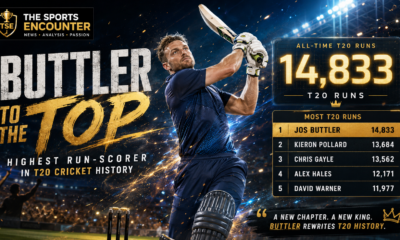

Jos Buttler Becomes T20 Cricket’s Highest Run-Scorer: How England’s Game-Changer Reached the Summit
Jos Buttler moved past Kieron Pollard to become the highest run-scorer in T20 cricket history after an unbeaten 51 for...
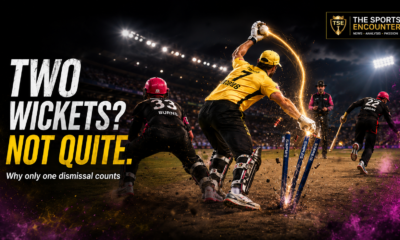

What If You Could Get Two Wickets on One Ball? Cricket’s Catch-and-Run-Out Rule Explained
A brilliant fielding moment appeared to dismiss both batters from one delivery. The laws of cricket, however, allow only one...
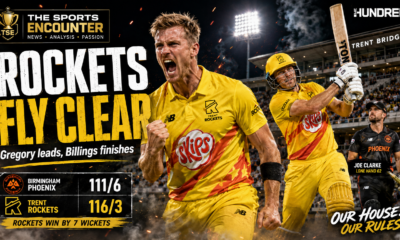

Lewis Gregory Leads Trent Rockets Past Birmingham Phoenix as Five-Game Surge Opens Route to The Hundred Final
Lewis Gregory led a disciplined bowling display as Trent Rockets restricted Birmingham Phoenix to 111 for six before chasing the...
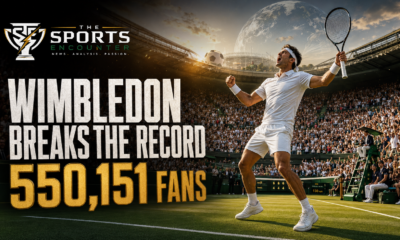

Wimbledon 2026 Withstands FIFA World Cup Clash, Breaks Attendance Record
Wimbledon attracted a record 550,151 spectators and generated 4.8 billion social media impressions in 2026. Dry weather, Arthur Fery’s semifinal...

Wimbledon Men’s Singles Champions: How Triumph on Grass Changed Their Careers
From Spencer Gore and William Renshaw to Roger Federer, Novak Djokovic, Carlos Alcaraz, and Jannik Sinner, discover how every Wimbledon...

Guo Hanyu and Kristina Mladenovic Turn Trust Into Wimbledon 2026 Glory
Guo Hanyu and Kristina Mladenovic turned a new partnership into Wimbledon glory, defeating Gabriela Dabrowski and Luisa Stefani in a...

Jannik Sinner’s Wimbledon Defense Against Novak Djokovic and Alexander Zverev
Jannik Sinner’s Wimbledon 2026 defense began with a five-set escape and ended with victories over Novak Djokovic and Alexander Zverev....

Muchova, Noskova Turn Wimbledon Women’s Singles Final Into an All-Czech Affair
Karolina Muchova saved match point to beat Coco Gauff in a Centre Court thriller, while Linda Noskova handled Marta Kostyuk...


When Paris Welcomed Two New French Open Champions
Paris, France – June 9, 2026: There are days at Roland Garros when tennis feels like a sport. Then there...


French Open 2026: Mirra Andreeva Becomes a Grand Slam Reality
Mirra Andreeva relived the memories of Monica Seles on Super Sunday at Roland Garros to lift her maiden French Open...


Alexander Zverev Beats Flavio Cobolli, Agony to Lift Maiden French Open Title
Paris, France – June 7, 2026: While some titles are won in two weeks, Alexander Zverev took years of frustration,...
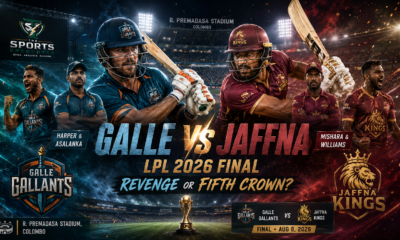

LPL 2026 Final Preview: Galle Seek Revenge as Jaffna Chase a Fifth Crown
Galle Gallants and Jaffna Kings meet in the Lanka Premier League 2026 final after three dramatic clashes this season, with...
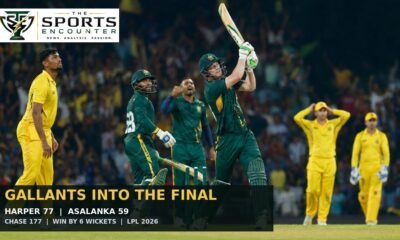

Harper and Asalanka Punish Colombo’s Chaos as Galle Reach LPL Final
Sam Harper’s commanding 77 and Charith Asalanka’s composed 59 carried Galle Gallants past Colombo Kaps and into the LPL 2026...

McDermott and Neesham Set the Trap Before Sahan Ends Kandy’s LPL Run
Colombo Kaps eliminated Kandy Royals by 68 runs after McDermott and Neesham powered them past 200 before Sahan and Dahani...

Mishara’s Unbeaten 108 Sends Jaffna Kings Into LPL Final After 470-Run Assault
Kamil Mishara’s unbeaten century carried Jaffna Kings into the LPL 2026 final after Galle Gallants fell 14 runs short in...
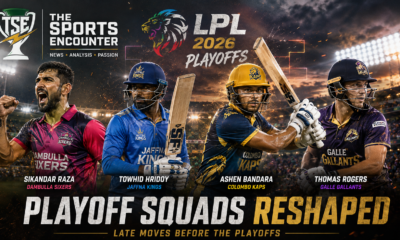

Qualified Teams Give Final Touches to Squads Ahead of LPL 2026 Playoffs
The Lanka Premier League 2026 playoff contenders have made eleventh-hour squad changes as injuries, national-team call-ups, and availability issues reshape...
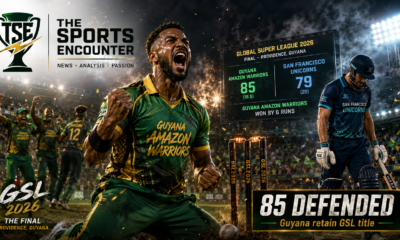

Guyana Amazon Warriors Defend 85 to Break San Francisco Hearts and Retain Global Super League Title
Guyana Amazon Warriors recovered from 29 for eight, defended a total of 85, and defeated San Francisco Unicorns by six...
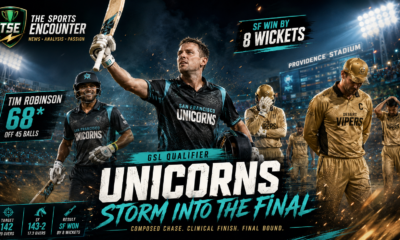

Tim Robinson Explodes as Unicorns Thump Vipers to Enter the Global Super League Final
Tim Robinson struck an unbeaten 68 as San Francisco Unicorns defeated Desert Vipers by eight wickets in the Global Super...
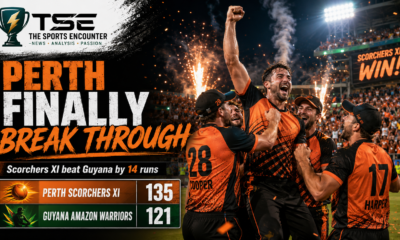

Perth Find Their Missing Finish as Spin Silences Guyana
Brody Couch rescued Perth Scorchers XI with 43 before five spin options dismantled Guyana Amazon Warriors for 121 in a...


Akeal Hosein Nearly Steals It, but Desert Vipers Escape in Final Over
Rilee Rossouw mastered a difficult Providence pitch before Desert Vipers survived Akeal Hosein’s four-wicket fightback to beat Perth Scorchers XI...

Shadab Khan and Zachary Carter Rescue Desert Vipers’ GSL Campaign
Shadab Khan dismantled San Francisco’s middle order before 19-year-old Zachary Carter launched a fearless chase, helping Desert Vipers secure their...

LeBron James Says No to LA 2028, but Team USA Is Reportedly Saving Him a Seat
LeBron James says he plans to watch the 2028 Los Angeles Olympics, but USA Basketball is reportedly prepared to give...


A Documentary on LeBron James in the Making?
ESPN is reportedly close to securing unprecedented access to LeBron James’ final NBA chapter, combining his Philadelphia title chase with...

Do the 76ers Have the NBA’s Best Starting Five After Adding LeBron James?
Philadelphia’s projected starting five now carries 36 All-Star selections, five MVP awards, elite scoring, defensive power, and a rookie wild...


How LeBron James Turns Philadelphia 76ers Into the NBA’s Must-Watch Team
LeBron James has not played a minute for the 76ers yet, but his arrival has already transformed Philadelphia into one...

Philadelphia 76ers Officially Announce LeBron James Signing, Assign 23 Jersey
LeBron James will wear No. 23 for the Philadelphia 76ers after officially joining the franchise for what he called his...


NFL Injury Roundup: Josh Jacobs Sits Out, Kenyon Sadiq Nears Return, Elic Ayomanor Hurts Shoulder
The Packers held Josh Jacobs out with a groin injury, the Jets received encouraging news on Kenyon Sadiq’s recovery, and...


49ers Sign Kion Smith to One-Year Deal as Offensive-Line Depth Becomes a Training Camp Priority
The San Francisco 49ers have added offensive-line depth by signing Kion Smith to a one-year contract. The former Miami Dolphins...
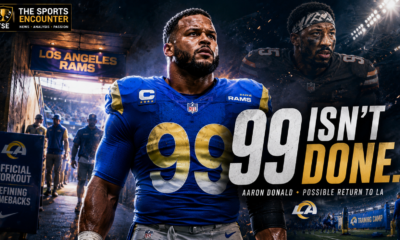

Aaron Donald’s Rams Comeback is Suddenly Real: Should NFL Be Terrified?
Aaron Donald’s return to the Los Angeles Rams suddenly feels realistic after the retired defensive legend completed an official workout...

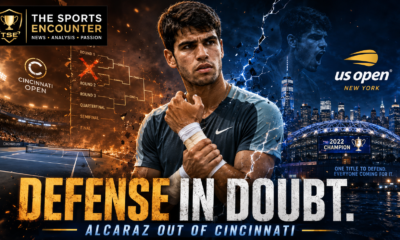

Carlos Alcaraz Skips Cincinnati Open, Casts Doubts on US Open Title Defense
Carlos Alcaraz will miss the 2026 Cincinnati Open as he continues recovering from the wrist injury that has sidelined him...


Why Novak Djokovic’s Cincinnati Return Could Decide His US Open 2026 Record Chase
Novak Djokovic will return to the Cincinnati Open for the first time since his memorable 2023 title run. At 39,...


US Open 2026 Curtain-Raiser: Players, Schedule, Title Contenders, New York Storylines and Everything Fans Need to Know
The US Open 2026 heads to New York with Jannik Sinner, Carlos Alcaraz, Novak Djokovic, Aryna Sabalenka, Coco Gauff, Iga...
-
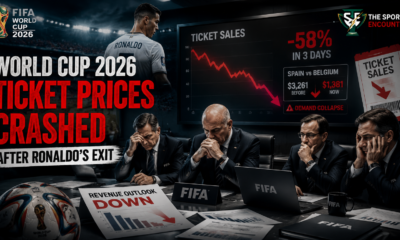
 Editor's Choice4 weeks ago
Why Ticket Prices Crashed Ahead of the Biggest Matches of FIFA World Cup 2026
-

 Editor's Choice3 weeks ago
2026 WNBA All-Star Game: Full Rosters, Schedule, Stats, Injury News and More
-
 Editor's Choice3 weeks ago
What Went Wrong for England in the World Cup 2026 Semi-Final Defeat to Argentina