How VAR Became a WAR at the FIFA World Cup 2026?
VAR was introduced to correct obvious mistakes. At World Cup 2026, sensors, expanded reviews, disputed red cards, and accusations of favoritism turned it into a battle over who controls football.
VAR was introduced to stop a FIFA World Cup from being decided by an obvious refereeing mistake.
At the 2026 tournament, it became part of the argument almost every time a major decision changed a match.
Goals disappeared because sensors detected touches few viewers could see. Officials travelled backward through long attacking moves to identify earlier fouls. Penalties were awarded after light contact in one game and rejected after apparently stronger contact in another.
Red cards were given, overturned, reinstated, or debated long after the final whistle. Coaches accused officials of inconsistency. National federations demanded explanations. Supporters created claims of favoritism, while FIFA defended its referees and warned against attacks on their integrity.
The dispute was no longer limited to whether one decision was technically correct.
Players, officials, broadcasters, federations, and fans were fighting over a bigger question: how much control should technology have over football?
VAR had become a WAR.
TL;DR | Tug of VAR
- FIFA used connected-ball technology, semi-automated offside systems, and an expanded VAR protocol at World Cup 2026.
- Croatia had a late equalizer against Portugal cancelled after a sensor detected a slight touch during the move.
- Germany had an extra-time goal ruled out against Paraguay for goalkeeper obstruction before losing on penalties.
- Egypt had a goal disallowed and a penalty appeal rejected during its dramatic defeat by Argentina.
- Switzerland’s Breel Embolo received a second yellow for simulation after an expanded VAR intervention.
- Belgium received a decisive late penalty against Senegal, while Ghana and France had major penalty appeals rejected in other matches.
- Iran lost a potential qualification-winning goal to a marginal offside call.
- Vinícius Júnior had a goal cancelled for a foul against Scotland.
- England experienced a denied Harry Kane penalty, an overturned Djed Spence penalty, and a separate camera-cable controversy against Norway.
- Folarin Balogun’s red card and suspension reversal moved the debate from video officiating into FIFA governance and political influence.
- The main problem was not accuracy alone. Fans lost trust in VAR’s scope, consistency, and transparency.
World Cup 2026 VAR Controversies at a Glance
| Match or Incident | Decision | Main Dispute | Impact |
|---|---|---|---|
| Portugal vs Croatia | Late Croatia equalizer disallowed after connected-ball technology detected a touch | Microscopic contact invisible to most viewers | Portugal advanced and Croatia were eliminated |
| Germany vs Paraguay | Jonathan Tah’s extra-time goal ruled out for goalkeeper obstruction | Whether light contact justified cancelling the goal | Paraguay survived and won on penalties |
| Argentina vs Egypt | Egypt goal cancelled for a foul earlier in the move | How far VAR should travel backward through an attack | Argentina recovered to win 3-2 |
| Argentina vs Switzerland | Breel Embolo received a second yellow for simulation | Whether VAR had moved into full re-refereeing | Switzerland played with 10 men before losing in extra time |
| Belgium vs Senegal | Belgium awarded a late extra-time penalty | Low threshold for VAR intervention | Belgium completed a 3-2 comeback |
| France vs Senegal | Mbappé penalty appeal rejected after an on-field review | Referee rejected the video official’s interpretation | Renewed debate over contact initiated by attackers |
| England vs Ghana | Ghana penalty appeal rejected | VAR did not intervene after apparent defensive contact | A possible group-changing decision went against Ghana |
| Brazil vs Scotland | Vinícius Júnior goal disallowed for a foul in the buildup | Whether slight contact materially affected the goal | The decision added to concerns over review thresholds |
| Iran vs Egypt | Stoppage-time Iran goal disallowed for marginal offside | Millimeter-level accuracy versus the spirit of the law | Iran lost its chance to reach the knockout stage |
| England penalty incidents | Kane appeal rejected and Spence penalty overturned | Inconsistent interpretation of goalkeeper and defender contact | England experienced both sides of VAR intervention |
| England vs Norway cable dispute | FIFA data rejected Norway’s claim that the ball hit a camera cable | Trust in connected-ball and stadium technology | The argument continued after FIFA’s technical explanation |
| Folarin Balogun suspension | Red card issued through VAR, but suspension later lifted | Governance, transparency, and alleged political pressure | National federations questioned FIFA’s disciplinary authority |
The incidents involved different laws and review mechanisms. Together, they explain why refereeing technology became one of the defining stories of World Cup 2026.
VAR Was Originally Meant to Correct Obvious Errors
The original case for video assistance was difficult to oppose.
A referee cannot see every incident clearly from one angle and at full speed. Video could correct a missed handball, an obvious offside, a mistaken red card, or a serious foul that escaped attention.
Football had already produced World Cup decisions that lived for decades. Diego Maradona’s “Hand of God” against England in 1986 remained the obvious example of an injustice modern technology should prevent.
VAR entered the World Cup in 2018 with four main review categories:
- Goals and offenses during the attacking phase
- Penalty decisions
- Direct red cards
- Mistaken identity
The phrase “clear and obvious error” was meant to protect the authority of the on-field referee.
By 2026, the system had become more technologically advanced and operationally ambitious.
World Cup 2026 Gave Officials More Technology and More Power
FIFA equipped match officials with an advanced semi-automated offside system, connected-ball technology, goal-line technology, multiple video angles, and new camera systems.
FIFA confirmed the tournament’s refereeing technology before the World Cup, describing the tools as support systems for match officials.
The connected ball could register touches that did not produce an obvious visual change. Semi-automated offside technology could map player positions with extraordinary precision. Video officials could review several phases of play from different angles.
Better information did not automatically create greater trust.
Supporters often learned the practical boundaries of the system only after a decision damaged their team.
The Sports Encounter explored that changing relationship in our analysis of why World Cup 2026 fans became obsessed with referees.
Portugal vs Croatia Became the Symbol of Sensor Football
Croatia thought they had forced extra time against Portugal when Joško Gvardiol scored deep into stoppage time.
The celebration ended after VAR examined an earlier touch during the move.
Connected-ball technology detected contact before the ball reached Gvardiol. The touch affected the offside calculation and caused the goal to be disallowed.
Most viewers could not identify the contact through normal replays. The ball’s movement appeared unchanged, creating speculation that the sensor had detected only the slightest brush.
Croatia described the intervention as an abuse of technology. Luka Modrić questioned whether VAR had moved beyond correcting an obvious mistake and into searching for technical reasons to erase a goal.
Portugal won 2-1, ending Croatia’s tournament and possibly Modrić’s final World Cup appearance.
The Sports Encounter documented the full drama in our report on Portugal’s victory over Croatia after four disallowed goals and a late winner.
Germany’s Disallowed Goal Saved Paraguay
Germany’s Round of 32 match against Paraguay produced another debate over how much contact VAR should punish.
Jonathan Tah appeared to score an extra-time goal that would have put Germany ahead. VAR reviewed the move and decided that Waldemar Anton had obstructed goalkeeper Orlando Gill.
The contact looked limited, and critics questioned whether Gill had a realistic chance of reaching the ball regardless of Anton’s position.
The goal was cancelled. Paraguay survived extra time and eliminated Germany on penalties.
This decision belonged in the wider VAR debate because it combined interpretation with direct tournament consequences. Technology did not identify a simple factual error. Officials had to judge whether contact was meaningful enough to invalidate a potentially match-winning goal.
Our analysis of how Paraguay progressed farther than the other Lucky 8 teams provides more context on the resilience that carried them through the knockout stage.
Argentina vs Egypt Tested How Far Back VAR Can Look
Egypt believed they had scored a second goal against Argentina during the Round of 16.
VAR reviewed the attacking possession and identified Marwan Attia stepping on Lisandro Martínez’s foot earlier in the move. The goal was disallowed.
The controversy centered on time and consequence.
The foul did not occur immediately before the finish. Egypt had continued moving the ball through several actions before scoring. Critics argued that Argentina had opportunities to reorganize, making the earlier contact too distant from the final goal.
Egypt also appealed for a penalty shortly before Argentina completed a dramatic 3-2 comeback.
The Egyptian Football Association filed a formal complaint and questioned the consistency of VAR’s application. FIFA refereeing chief Pierluigi Collina maintained that a foul remains relevant if it forms part of the attacking possession that produces a goal.
Reuters reported widespread criticism of the decisions and the EFA’s demand for greater transparency. Read Reuters’ report on Egypt’s formal VAR complaint.
The Sports Encounter also explained the Egypt coach’s protest gesture and accusations after the Argentina defeat.
Embolo’s Red Card Raised the Re-Refereeing Question
Switzerland’s Breel Embolo received a second yellow card for simulation during the quarterfinal against Argentina.
The initial incident involved a possible foul and questions over player identity. Once VAR entered the process, officials reconsidered the entire action and concluded that Embolo had simulated contact.
Swiss coach Murat Yakin called the decision unacceptable. Former FIFA referee Christina Unkel argued that the expanded protocol had opened the door to complete re-refereeing.
The distinction matters.
VAR correcting the identity of an offending player is a factual intervention. Reinterpreting the full incident and producing a new yellow card moves beyond identification into football judgment.
Switzerland had just equalized and were pushing for another goal. Embolo’s dismissal changed the balance before Argentina won 3-1 after extra time.
The decision strengthened the “VARgentina” narrative, although no evidence established deliberate favoritism. Reuters reported both the Swiss complaint and FIFA’s defense of referee independence.
Belgium’s Late Penalty Against Senegal Changed a Knockout Match
Senegal appeared close to completing an important World Cup victory before a late VAR review changed the direction of the match.
Youri Tielemans went down after contact, and Belgium received an extra-time penalty following a lengthy review.
Critics considered the contact light and questioned why the incident met the threshold for video intervention.
Belgium converted the penalty and completed a 3-2 comeback.
This controversy became more damaging when compared with penalty appeals that VAR ignored or rejected elsewhere in the tournament.
Mbappé’s Denied Penalty Showed the Referee Still Had Authority
Kylian Mbappé believed Sadio Mané had fouled him inside the penalty area during France’s meeting with Senegal.
VAR recommended an on-field review after replays showed that Mané had not clearly played the ball.
The referee watched the incident and still rejected the penalty, deciding that Mbappé had initiated or exaggerated the contact.
The decision demonstrated that the on-field official retained the power to reject a VAR recommendation.
It also created another argument over consistency. Supporters compared Mbappé’s denied appeal with softer-looking incidents that resulted in penalties elsewhere.
Ghana’s Denied Penalty Against England Became a Non-Intervention Controversy
VAR controversies are not limited to decisions the system changes.
Its silence can provoke the same level of anger.
Ghana appealed for a penalty after Ezri Konsa appeared to make contact with Prince Adu inside the area. The referee allowed play to continue, and VAR did not recommend a review.
A converted penalty could have affected the result and the final Group L standings.
The incident became an example of the central VAR contradiction. Supporters saw officials examine minor contact in some matches while stronger contact elsewhere failed to trigger visible intervention.
Vinícius Júnior’s Goal Against Scotland Was Cancelled for Earlier Contact
Vinícius Júnior thought he had scored for Brazil against Scotland before VAR identified a foul against Jack Hendry during the buildup.
The contact appeared slight, and the decision had limited effect on the final outcome because Brazil still won comfortably.
It remained important to the wider VAR debate.
Supporters again questioned whether the system was correcting a clear mistake or searching through an attacking move until it found a reason to cancel the goal.
Iran’s Marginal Offside Ended a World Cup Dream
Iran appeared to score a stoppage-time winner against Egypt that could have taken the team into the knockout stage.
Semi-automated offside technology found a marginal infringement.
The decision may have been technically accurate. Its tournament consequence was enormous.
Iran’s players and supporters moved from celebration to elimination after a margin no referee or fan could have detected naturally.
Offside technology creates a difficult philosophical question. If the system can measure the position precisely, officials must apply the law. Yet the law was created to stop attackers gaining an unfair advantage, not necessarily to punish differences too small to affect the play.
Harry Kane and Djed Spence Experienced Opposite VAR Outcomes
England’s tournament included several penalty controversies.
Harry Kane went down after contact with a goalkeeper, but the referee rejected the appeal and VAR supported the decision.
In another knockout incident, England initially received a penalty after Djed Spence went down inside the area. The decision was overturned following video review.
England therefore experienced both sides of the system: a possible penalty denied and another award removed.
The two incidents reinforced the difficulty of evaluating contact. Replays can show where bodies touched, but they cannot automatically determine whether the contact caused the fall, prevented a legal action, or justified a penalty.
Cable-Gate Showed That Fans Distrusted More Than VAR
Norway claimed that a goal kick struck an overhead camera cable before England’s equalizer in their quarterfinal.
The claim created another technology-driven controversy because it involved stadium equipment that supporters believed may have interfered with live play.
FIFA later released connected-ball data indicating that the ball had not touched the cable.
The technical explanation should have ended the issue. Many fans remained skeptical.
That reaction showed how far trust had declined. Once supporters believe the process lacks transparency, even sensor data can look like part of the dispute rather than an independent answer.
Our England vs Norway quarterfinal report explains how Jude Bellingham’s two goals eventually ended Norway’s historic run.
The Balogun Suspension Turned VAR Into a Governance Crisis
Folarin Balogun received a red card after a VAR review during the United States’ match against Bosnia and Herzegovina.
The review concluded that his boot had made dangerous contact with an opponent’s ankle.
The controversy intensified when FIFA later lifted the resulting suspension, allowing Balogun to play against Belgium.
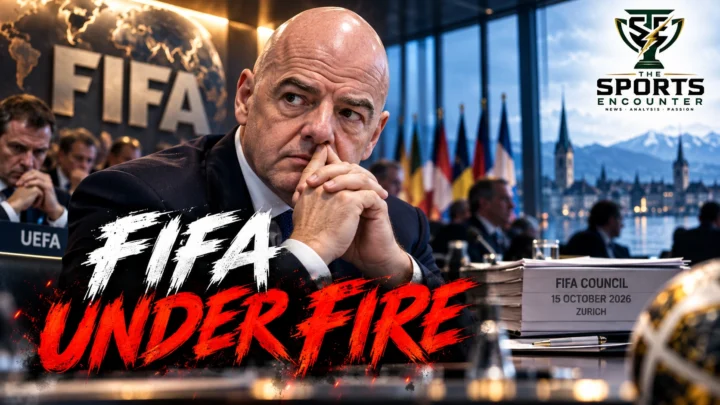
U.S. President Donald Trump publicly criticized the original decision and said he had contacted FIFA President Gianni Infantino. FIFA denied that political pressure influenced the disciplinary outcome and defended referee Raphael Claus.
Other national federations questioned the reversal and its effect on the authority of match officials.
Reuters reported that the case raised wider concerns about governance, transparency, and whether high-level access could influence disciplinary processes.
VAR did not make the later suspension decision. Fans still viewed the full episode as one chain: review, red card, political criticism, FIFA intervention, and reversal.
Argentina Became the Center of the Bias Allegations
Argentina’s progress generated several refereeing complaints.
Algeria objected after Lionel Messi avoided a possible red card during the group stage. Egypt challenged the disallowed goal and denied penalty. Switzerland protested Embolo’s dismissal.
Supporters combined the incidents into the label “VARgentina.”
FIFA rejected the accusation.
“We are not influenced by anyone,” Collina said while defending the independence of the refereeing team.
Criticism of individual decisions remains a legitimate part of football. Claims of corruption require evidence.
FIFA still faced a credibility problem. Once several controversial decisions involved the same team, each new incident strengthened the public narrative regardless of the legal explanation.
The Real Problem Was Inconsistency
Many individual World Cup decisions could be defended under the laws.
A sensor-detected touch can change offside. An earlier foul can invalidate a goal. Goalkeeper obstruction can affect a scoring opportunity. Simulation may deserve a caution.
Supporters judged the system across matches rather than one incident at a time.
Why did light contact produce Belgium’s penalty against Senegal while Ghana’s appeal against England received no intervention? Why did VAR invite a review for Mbappé but allow the referee to reject the recommendation? Why did officials travel backward through Egypt’s attack but appear more restrained elsewhere?
The Sports Encounter’s guide to what counts as a foul in soccer explains why contact alone cannot settle these decisions.
Referees must assess force, consequence, position, control, intent, and whether the challenge fits the law.
Technology provides evidence. Human judgment still determines its meaning.
Stadium Fans Paid the Emotional Price
Television viewers receive slow-motion replays, diagrams, commentary, and expert analysis.
Fans inside the stadium often receive silence and delay.
A goal goes in. Players run toward the corner. Supporters hug, scream, and believe the match has changed.
Then everyone waits.
The review may produce the legally correct outcome. The original emotional moment cannot be restored.
Celebration becomes conditional. Supporters begin watching the referee after every goal before deciding whether they can enjoy it.
That hesitation changes football’s rhythm.
What VAR Got Right at World Cup 2026
VAR also corrected genuine mistakes.
Serious fouls that escaped the referee could be identified. Semi-automated offside technology produced faster decisions than manual line drawing. Mistaken identity could be resolved. Goalkeeper obstruction and illegal movement received closer scrutiny.
FIFA’s technology was not useless. The problem came from its widening scope and inconsistent public explanation.
The debate should therefore move beyond keeping or abolishing VAR.
Football needs to decide where video review improves justice and where it damages the game without delivering enough benefit.
How FIFA Can Stop the Next VAR War
Three reforms would improve the system.
1. Set a clearer limit on attacking-phase reviews
VAR should not travel indefinitely backward unless the earlier offense directly creates the scoring opportunity.
2. Release review audio after major controversies
Supporters and federations should hear what officials saw, which law they applied, and why the review crossed the intervention threshold.
3. Apply a stricter “clear and obvious” standard
Subjective decisions should remain with the on-field referee unless video shows a significant and unmistakable error.
4. Explain connected-ball evidence visually
When a sensor decides a World Cup match, FIFA should publish a clear visual explanation rather than expect supporters to accept unseen data.
5. Separate disciplinary appeals from political access
Suspension decisions need a transparent process that protects referees and avoids any appearance that outside influence matters.
Fan Poll: Did VAR Improve or Damage World Cup 2026?
What is your verdict on VAR at the FIFA World Cup 2026?
- It improved the tournament by correcting major mistakes
- It was useful, but FIFA allowed it to intervene too often
- It damaged the tournament through inconsistency
- It should only decide factual calls such as offside and goal-line incidents
- Football should remove VAR completely
Share your vote in the comments and name the decision that most strongly shaped your opinion.
Final Verdict
VAR did not become a war because every decision was wrong.
The conflict grew because the boundaries became harder to understand.
Croatia lost a goal to a sensor-detected touch. Germany saw an extra-time winner cancelled for goalkeeper obstruction. Egypt lost a goal because of an earlier foul. Belgium received a decisive penalty while Ghana’s appeal brought no intervention.
Iran were eliminated by a marginal offside. Switzerland lost Embolo after a review expanded beyond mistaken identity. England and Norway argued over a camera cable, while the Balogun case created questions about political access and FIFA governance.
The technology became more precise. Public confidence moved in the opposite direction.
Football cannot solve a trust problem by adding more cameras, sensors, and officials without defining clear limits.
Accuracy matters. Consistency, restraint, transparency, and emotional continuity matter too.
VAR was designed to protect football from obvious injustice. At World Cup 2026, the fight over its power became one of the tournament’s defining stories.
Follow more tournament reporting through The Sports Encounter’s FIFA World Cup 2026 hub and complete soccer news and analysis.
Readers can also revisit our Round of 16 analysis of VAR drama and the Lucky 8 teams for more context on how officiating shaped the knockout stage.
The Sports Encounter covers World Cup refereeing through verified match details, official laws, tactical context, and the effects of major decisions on players and supporters.
Breaking News
Will LeBron James represent the LA Lakers in the NBA 2026-27?
LeBron James appears unlikely to return to the Los Angeles Lakers for the 2026-27 NBA season. His Fanatics Fest comments sounded like a farewell, while Cleveland, Miami, Philadelphia, and Golden State remain among the possible destinations for the final stage of his career.
LeBron James took the stage at Fanatics Fest in New York on Thursday night for a live taping of his Mind the Game podcast, and for a moment it looked like NBA fans might finally get an answer to the question dominating this year’s free agency: where will LeBron James play in 2026-27?
Instead, the four-time champion made it clear that he was not there to break news, even as he dropped fresh hints about his relationship with the Los Angeles Lakers and the list of teams still being connected with him.
The uncertainty surrounding LeBron has become the biggest story of the 2026 NBA offseason. It also comes as several older contenders explore aggressive, short-term roster moves, a trend examined in our report on the Golden State Warriors’ interest in LeBron James and Anthony Davis.
What Happened at Fanatics Fest?
James shared the stage with Indiana Pacers star Tyrese Haliburton in front of an estimated crowd of 5,000 people.
Early in the recording, Haliburton asked James a pointed question with a very specific choice of words: “Is there a decision that still has to be made?”
The phrasing was a clear nod to James’ famous 2010 television special, The Decision, when he announced that he was leaving the Cleveland Cavaliers to join the Miami Heat.
James shut the line of questioning down quickly, telling Haliburton, “We literally talked about this in the back,” prompting the Pacers guard to laugh and move on.
Haliburton later told the crowd that he had texted James about joining the Indiana Pacers, only to receive two laughing-crying emojis in response and nothing else.
The exchange was the closest thing to a major update during the appearance, and it fed directly into the ongoing social media frenzy around LeBron James’ free agency decision, one of the most closely followed NBA storylines of the summer.
LeBron James and the Lakers: What He Actually Said
Perhaps the most emotional moment of the night came when James addressed his eight seasons with the Los Angeles Lakers directly, with his former Lakers head coach and past podcast co-host JJ Redick sitting in the audience.
James did not hold back on his affection for the organization, even though he has reportedly informed the Lakers that he plans to play elsewhere.
“Shoutout my former team. I spent eight great years with the Los Angeles Lakers,” James said.
He went on to thank Lakers governor Jeanie Buss, the Buss family, general manager Rob Pelinka, his former coaches and his teammates.
“I am going to miss them all, obviously. So, that was an unbelievable ride and I’m just looking forward to what holds next as I wind down the final stages of my journey.”
That tribute has fueled a wave of “LeBron James Lakers goodbye” searches and headlines, with fans and media parsing his tone for clues about whether the farewell signals complete closure or leaves room for another reunion later.
For now, the answer to whether LeBron James will represent the Lakers in the 2026-27 NBA season appears to be no. He has informed the organization that he intends to play elsewhere for what would be a record 24th NBA season and potentially his fourth different franchise.
Which Teams Are Actually in the Mix?
While James avoided a formal announcement, two familiar franchises remain central to the speculation: the Cleveland Cavaliers, where he began his career and won the 2016 NBA championship, and the Miami Heat, where he won consecutive titles in 2012 and 2013.
A reunion with either organization would mark a third stint in Cleveland or a second spell in Miami, extending a career that has already included three franchises and 10 NBA Finals appearances.
James also had some fun with the moment, letting audience members shout out where they wanted him to sign next.
“I heard Philly, Miami,” he said, before adding with a laugh, “This guy just told me to come to the Yankees! We’ll see what happens.”
The mention of the Philadelphia 76ers aligned with reports connecting James with Eastern Conference contenders.
The Golden State Warriors have also been repeatedly linked with James. The basketball appeal is obvious: placing the league’s all-time scoring leader beside Stephen Curry would unite two defining players of their generation.
That possibility is explored in greater detail in The Sports Encounter’s analysis of whether a Warriors move for LeBron represents ambition or desperation.
The Minnesota Timberwolves, Denver Nuggets and New York Knicks have also appeared in wider speculation. For now, however, no team has been publicly confirmed as James’ preferred destination.
Why LeBron James Left the Lakers
James spent eight seasons in Los Angeles after signing as a free agent in 2018. His defining achievement came in the 2020 NBA bubble, where he won Finals MVP and led the Lakers to the franchise’s 17th championship.
Across 479 regular-season games for Los Angeles, James averaged 25.9 points, 7.9 assists and 7.7 rebounds per game.
Lakers governor Jeanie Buss described him as “one of the greatest athletes in history” after reports of his departure emerged.
Despite his continued production, James reportedly wants to finish his career playing meaningful, competitive basketball. Sources close to the situation have suggested that he believed it was time to move on from Los Angeles as the franchise reshaped its future around Luka Dončić.
James averaged 20.9 points, 7.2 assists and 6.1 rebounds during the 2025-26 season while shooting 51.5 percent from the field. Those numbers represented a decline from his peak, but they also showed that he can still influence games as a scorer, passer and organizer.
The Lakers’ transition reflects a wider NBA trend in which franchises must balance veteran star power against younger, longer-term roster construction. The same pressure appeared across the league during the 2026 NBA Draft, when teams made major decisions about timelines, salaries and future stars.
The Cleveland Homecoming Theory
Of all the rumored destinations, Cleveland has generated some of the strongest emotional interest.
James has reportedly spent time in Akron this summer and has been seen reconnecting with figures linked to the Cavaliers’ 2016 championship team. Every appearance in northeast Ohio has inevitably fueled speculation about a third stint with his hometown franchise.
The Cavaliers already have an established core led by Donovan Mitchell, Evan Mobley and Jarrett Allen. A potential LeBron return would therefore look very different from 2014, when Cleveland rebuilt its roster around him.
This time, James would be joining an existing contender rather than arriving as the unquestioned long-term centerpiece.
The basketball questions would be significant. Cleveland would need to determine how James fits beside Mitchell, how many minutes he can handle during the regular season and whether adding another high-usage veteran improves its chances against younger Eastern Conference opponents.
The Cavaliers’ decisions must also be viewed within the wider pressure facing contenders that have already invested heavily in their rosters. Oklahoma City encountered a similar issue when it moved a valuable rotation player, a decision analyzed in our report on why the Thunder traded Aaron Wiggins to Atlanta.
Would Miami Make Sense for LeBron?
A return to Miami would carry its own emotional and tactical appeal.
James won two NBA championships and two Finals MVP awards during his four seasons with the Heat. He also developed one of the most influential player-coach relationships of his career with Erik Spoelstra.
Miami’s culture, conditioning standards and playoff expectations would match James’ stated desire to remain competitive. The difficult part would be roster construction. The Heat would need enough shooting, athleticism and frontcourt support around him while preserving the defensive identity that has defined the organization.
A Miami reunion would attract enormous attention, but sentiment alone would not make it the correct basketball move. James is likely to evaluate which roster gives him the best realistic chance to remain healthy and compete deep into the postseason.
Could Philadelphia Become the Surprise Destination?
Philadelphia has received less emotional attention than Cleveland or Miami, but the basketball idea is intriguing.
The 76ers could offer James another Eastern Conference path and the opportunity to join an organization still searching for the right postseason formula.
Any move would depend on Philadelphia’s salary structure, available roster spots and willingness to alter its established hierarchy. The Sixers would also need to determine whether adding another veteran creator improves their balance or makes the lineup too dependent on older stars.
James mentioning Philadelphia at Fanatics Fest does not confirm serious negotiations. It does, however, ensure that the 76ers will remain part of the public conversation until he announces his decision.
Why the Warriors Remain the Most Fascinating Wild Card
Golden State offers the most dramatic basketball storyline.
Stephen Curry’s shooting could provide James with more operating space than almost any other star teammate. Draymond Green’s passing and defensive communication would reduce some of James’ organizational workload.
The problems are equally clear. Golden State would be building around an aging core, managing several large contracts and asking older players to survive a Western Conference filled with younger, faster opponents.
The Warriors would be betting on one high-stakes championship run rather than creating a sustainable long-term structure.
That tension between reputation and roster reality is why our earlier assessment described a possible Warriors-LeBron partnership as the ultimate test of the NBA’s old guard.
What Comes Next in LeBron James’ Free Agency?
As of this week, LeBron James remains an unrestricted free agent with no firm public timeline for his decision.
His longtime agent, Rich Paul, has downplayed the idea that an announcement must happen immediately, suggesting that the process could extend longer than many fans expect.
James has also made it clear that his decision involves more than basketball. At 41, with a family, business interests and an established life beyond the sport, his final destination will affect far more than his chances of winning another championship.
That uncertainty has kept “LeBron James next team,” “LeBron James free agency,” “LeBron James Cavaliers return” and “LeBron James Miami Heat” among the most discussed NBA search topics of July.
The situation also arrives during a period when the NBA’s biggest markets continue to shape national attention. The league’s commercial strength was evident during the Knicks-Spurs ratings boom, which showed how star power, major cities and high-stakes basketball can still command huge audiences.
Will LeBron James Play for the Lakers in 2026-27?
No, barring an unexpected reversal, LeBron James will not represent the Los Angeles Lakers during the 2026-27 NBA season.
He has reportedly informed the franchise that he plans to continue his career elsewhere. His comments at Fanatics Fest sounded warm and appreciative, but they carried the tone of a farewell rather than a suggestion that he might return.
The remaining question is where the 22-time All-Star will spend the final stage of his career.
Cleveland offers homecoming and legacy. Miami offers familiarity and organizational discipline. Philadelphia provides a new Eastern Conference possibility. Golden State offers the most spectacular partnership.
A surprise contender could still change the picture, but the Lakers chapter appears to have reached its conclusion.
Final Verdict
LeBron James’ next decision will not resemble the one he made in 2010. He is no longer choosing where to spend the peak of his career. He is deciding where to place its final competitive chapter.
The team he selects must offer more than attention or sentiment. It must provide a realistic role, a credible postseason path, financial flexibility and a roster capable of protecting a 41-year-old star through an 82-game season.
For now, Cleveland and Miami carry the strongest emotional cases, Philadelphia remains an intriguing Eastern Conference possibility, and Golden State offers the most compelling basketball spectacle.
The Lakers, meanwhile, are moving toward a new era. Their focus will increasingly shift toward Luka Dončić, younger roster construction and the decisions required to compete after LeBron.
This article will be updated when LeBron James announces his 2026 NBA free agency decision or when credible new reports materially change the list of potential destinations.
Frequently Asked Questions About LeBron James and the Lakers
Will LeBron James play for the Lakers in the 2026-27 NBA season?
Based on his comments and the reports surrounding his free agency, LeBron James appears unlikely to return to the Los Angeles Lakers for the 2026-27 season. His remarks at Fanatics Fest sounded more like a farewell than a suggestion that he plans to re-sign.
Why is LeBron James leaving the Lakers?
James reportedly wants to finish his career with a team capable of competing deep into the playoffs. After eight seasons in Los Angeles, he appears ready for a new challenge as the Lakers reshape their future around Luka Dončić and a younger roster.
Which teams could sign LeBron James?
The Cleveland Cavaliers, Miami Heat, Philadelphia 76ers, and Golden State Warriors have all been connected with James. Cleveland and Miami offer familiar environments, while Philadelphia and Golden State provide different competitive possibilities.
Could LeBron James return to the Cleveland Cavaliers?
A third stint with Cleveland remains one of the most discussed possibilities. James began his career with the Cavaliers, led them to the 2016 NBA championship, and still maintains strong personal ties to northeast Ohio.
Could LeBron James return to the Miami Heat?
Miami is another possible destination because James won two NBA championships there and has an established relationship with head coach Erik Spoelstra. The Heat would still need to find a workable financial and roster structure.
Are the Golden State Warriors interested in LeBron James?
Golden State has been linked with James because of the possibility of pairing him with Stephen Curry. The move would create enormous interest, although the Warriors would need to manage salary, age, depth, and defensive concerns.
Did LeBron James announce his next team at Fanatics Fest?
No. James avoided making a formal announcement during the live recording of his Mind the Game podcast. He acknowledged several possible destinations but did not confirm where he will play next.
What did LeBron James say about the Lakers at Fanatics Fest?
James thanked the Lakers organization, Jeanie Buss, Rob Pelinka, his coaches, teammates, and the Buss family. He described his eight seasons in Los Angeles as an unbelievable ride and said he would miss the people connected with the franchise.
How long did LeBron James play for the Lakers?
James spent eight seasons with the Lakers after joining the franchise in 2018. His biggest achievement in Los Angeles came in 2020, when he led the team to the NBA championship and won Finals MVP.
How did LeBron James perform during the 2025-26 NBA season?
James averaged 20.9 points, 7.2 assists, and 6.1 rebounds per game while shooting 51.5 percent from the field. Those numbers showed that he remained productive even in the later stage of his career.
When will LeBron James announce his free agency decision?
James has not provided a firm timeline. His agent, Rich Paul, has suggested that the decision may take time, meaning fans may have to wait until later in the offseason for an official announcement.
Would 2026-27 be LeBron James’ final NBA season?
James has not officially confirmed that the 2026-27 season will be his last. However, he has openly referred to being in the final stages of his career, making every upcoming decision especially significant.
Editor's Choice
2026 WNBA All-Star Game: Full Rosters, Schedule, Stats, Injury News and More
The 2026 WNBA All-Star Game brings Caitlin Clark and A’ja Wilson together against Paige Bueckers and Breanna Stewart in Chicago. Here is the full breakdown of the rosters, standings, injuries, stats, fan reactions, and major storylines shaping the league.
Last updated: July 17, 2026
Caitlin Clark and A’ja Wilson will share the floor for Team Spoon against a Team Coop lineup led by Paige Bueckers and Breanna Stewart when the 2026 WNBA All-Star Game takes over Chicago on Saturday, July 25. The matchup brings together the league’s most popular young guards, two of the greatest forwards of their generation, several first-time All-Stars, established champions and teammates who will spend one night trying to beat each other.
The game also carries more weight than a typical midseason exhibition. It arrives during the WNBA’s 30th season, returns the event to Chicago for the second time, revives the league’s original red-and-blue visual identity and adds a $100,000 charity competition benefiting girls’ sports programs in the city.
This guide brings together the full 2026 WNBA All-Star rosters, draft order, selection rules, schedule, broadcast information, player statistics, tactical matchups, injury questions, first-time selections, historical milestones, Chicago events and the biggest fan debates heading into the game.
2026 WNBA All-Star Game at a Glance
| Detail | Information |
|---|---|
| Event | 2026 AT&T WNBA All-Star Game |
| Date | Saturday, July 25, 2026 |
| Tipoff | 8:30 p.m. ET / 7:30 p.m. CT |
| Venue | United Center, Chicago |
| U.S. broadcast | ABC |
| Pregame show | WNBA Countdown at 8 p.m. ET on ABC |
| Postgame show | WNBA Postgame at 10:30 p.m. ET on ABC |
| Teams | Team Coop vs. Team Spoon |
| General managers | Cynthia Cooper and Teresa Weatherspoon |
| Head coaches | Becky Hammon, Team Coop; Cheryl Reeve, Team Spoon |
| Leading fan vote-getter | Paige Bueckers, 1,045,051 votes |
| Second-leading fan vote-getter | Caitlin Clark, 1,023,321 votes |
| Charity prize pool | $100,000 |
| Winning-team charity award | $70,000 |
| Runner-up charity award | $30,000 |
TL;DR: What Fans Need to Know
- Paige Bueckers led WNBA All-Star fan voting and was assigned to Team Coop after Cynthia Cooper won a coin flip.
- Caitlin Clark, the second-leading fan vote-getter, became the anchor of Team Spoon.
- Teresa Weatherspoon used the first starter selection on A’ja Wilson, while Cooper answered with Breanna Stewart.
- Team Coop will wear red and Team Spoon will wear blue, recalling the WNBA’s original 1997 colors.
- Becky Hammon will coach Team Coop, while Cheryl Reeve will lead Team Spoon.
- The weekend includes the 3-Point Contest, Kia WNBA Shooting Stars, WNBA Live and community events across Chicago.
Full 2026 WNBA All-Star Rosters
The official WNBA All-Star draft produced two balanced but very different teams. Cooper built around Bueckers, Stewart, shooting and transition play. Weatherspoon paired Clark with Wilson and surrounded them with size, rebounding and defensive flexibility.
Team Coop
General manager: Cynthia Cooper
Head coach: Becky Hammon, Las Vegas Aces
Uniform color: WNBA red
Charity: Angels Athletics
| Role | Player | Position | WNBA team |
|---|---|---|---|
| Starter | Paige Bueckers | Guard | Dallas Wings |
| Starter | Breanna Stewart | Forward | New York Liberty |
| Starter | Kelsey Mitchell | Guard | Indiana Fever |
| Starter | Natasha Howard | Forward | Minnesota Lynx |
| Starter | Gabby Williams | Forward | Golden State Valkyries |
| Reserve | Angel Reese | Forward | Chicago Sky |
| Reserve | Marina Mabrey | Guard | Toronto Tempo |
| Reserve | Dominique Malonga | Center | Seattle Storm |
| Reserve | Kelsey Plum | Guard | Los Angeles Sparks |
| Reserve | Jackie Young | Guard | Las Vegas Aces |
| Reserve | Sonia Citron | Guard | Washington Mystics |
Team Spoon
General manager: Teresa Weatherspoon
Head coach: Cheryl Reeve, Minnesota Lynx
Uniform color: WNBA blue
Charity: Girls in the Game
| Role | Player | Position | WNBA team |
|---|---|---|---|
| Starter | Caitlin Clark | Guard | Indiana Fever |
| Starter | A’ja Wilson | Forward/Center | Las Vegas Aces |
| Starter | Olivia Miles | Guard | Minnesota Lynx |
| Starter | Aliyah Boston | Center/Forward | Indiana Fever |
| Starter | Jessica Shepard | Forward | Dallas Wings |
| Reserve | Rhyne Howard | Guard | Atlanta Dream |
| Reserve | Allisha Gray | Guard | Atlanta Dream |
| Reserve | Jonquel Jones | Center | New York Liberty |
| Reserve | Courtney Williams | Guard | Minnesota Lynx |
| Reserve | Kiki Iriafen | Forward | Washington Mystics |
| Reserve | Nneka Ogwumike | Forward | Los Angeles Sparks |
How the 2026 WNBA All-Star Teams Were Selected
The selection process happened in several stages. Fans, current WNBA players and media members voted for the 10 starters. The league’s 15 head coaches then selected 12 reserves, voting for three guards, five frontcourt players and four players at either position. Coaches could not vote for players from their own teams.
Paige Bueckers finished first in fan voting with 1,045,051 votes. Caitlin Clark followed with 1,023,321. Because the league used honorary general managers instead of player captains, a coin flip decided which general manager would receive the leading vote-getter.
Cynthia Cooper won the flip and was assigned Bueckers. Teresa Weatherspoon received Clark. Weatherspoon then picked first from the remaining starters, while Cooper received the first selection from the reserve pool.
Weatherspoon chose four-time MVP A’ja Wilson with her first starter pick. Cooper responded with two-time MVP Breanna Stewart. The sequence created the headline pairing on each side before the rest of the draft filled out the tactical identities of both teams.
Complete 2026 WNBA All-Star Draft Order
| Round | Team Spoon | Team Coop |
|---|---|---|
| Assigned stars | Caitlin Clark | Paige Bueckers |
| 1 | A’ja Wilson | Breanna Stewart |
| 2 | Olivia Miles | Kelsey Mitchell |
| 3 | Aliyah Boston | Natasha Howard |
| 4 | Jessica Shepard | Gabby Williams |
| 5 | Rhyne Howard | Angel Reese |
| 6 | Allisha Gray | Marina Mabrey |
| 7 | Jonquel Jones | Dominique Malonga |
| 8 | Courtney Williams | Kelsey Plum |
| 9 | Kiki Iriafen | Jackie Young |
| 10 | Nneka Ogwumike | Sonia Citron |
Why Caitlin Clark and A’ja Wilson Could Be the Game’s Most Dangerous Pairing
Clark and Wilson create the matchup every basketball fan wants to see. Clark stretches defenses far beyond the three-point line, plays with unusual pace and can turn defensive rebounds into scoring chances with one pass. Wilson brings elite finishing, screening, rim protection and midrange scoring.
The two-player game between them could be devastating in an exhibition setting. A high screen from Wilson forces defenders to choose between meeting Clark near the logo and giving Wilson a lane to the rim. Switching the action places a guard on Wilson. Dropping the center leaves Clark room to shoot or attack the space.
Clark entered the All-Star selection period averaging a career-high 21.2 points and 8.2 assists. She had also become the fastest player in league history to reach 1,000 points, 250 rebounds and 250 assists, doing so in 54 career games. Wilson entered the event as a four-time MVP and an eight-time All-Star, giving Team Spoon the most decorated interior force in the game.
Aliyah Boston adds another familiar screening and finishing partner for Clark. Their Indiana chemistry gives Team Spoon a ready-made offensive package that requires little practice time. Jessica Shepard’s passing and rebounding provide another route into half-court offense, while Olivia Miles gives the lineup a second creative guard.
Why Paige Bueckers and Breanna Stewart Fit So Naturally
Team Coop’s leading duo has a different shape. Bueckers thrives through timing, balance and decision-making. Stewart can score over smaller defenders, pull centers away from the basket and defend across multiple positions.
Bueckers led fan voting after winning the 2025 Rookie of the Year award. At the time the starters were announced, she ranked eighth in the WNBA in scoring at 19.9 points per game and seventh in assists at 5.9. Her ability to operate efficiently without dominating every possession makes her an ideal All-Star guard.
Stewart entered her eighth All-Star selection as a two-time MVP, three-time WNBA champion and two-time Finals MVP. She was averaging 19.2 points and 8.5 rebounds when the starters were named. Her skill set allows Cooper to play almost any style, from a five-out offense to lineups built around movement, transition and switching defense.
Kelsey Mitchell supplies another elite scorer. Gabby Williams adds pace, defense and open-floor pressure, while Natasha Howard gives the starting unit a productive interior presence. Team Coop can play quickly without becoming small.
The Indiana Fever Teammate Twist
Three Indiana Fever players earned starting selections, but the draft split them. Clark and Boston landed on Team Spoon, while Kelsey Mitchell joined Team Coop.
That separation adds one of the night’s most entertaining subplots. Mitchell knows Clark’s passing tendencies, Boston’s screening angles and Indiana’s preferred actions. Clark and Boston understand how Mitchell creates space and where she wants the ball.
Mitchell was averaging 21.6 points when the starters were announced, ranking third in the league at that stage. She had already produced 11 games with at least 20 points and earned her fourth consecutive All-Star selection. Her first official starting berth gives Team Coop another player capable of taking over a short stretch.
The First-Time All-Stars Who Changed the Player Pool
Four players earned their first WNBA All-Star selections in 2026: Olivia Miles, Jessica Shepard, Marina Mabrey and Dominique Malonga.
Olivia Miles
Miles became an All-Star during her rookie season after Minnesota selected her second overall in the 2026 WNBA Draft. She was averaging 18.2 points and 5.7 assists when the starters were announced, leading all rookies in both categories. Her arrival adds another chapter to the league’s growing class of young guards, a trend also visible across the wider 2026 basketball draft conversation.
Jessica Shepard
Shepard’s selection rewarded one of the season’s biggest individual breakthroughs. The Dallas forward was averaging 14.3 points, 11.5 rebounds and 5.4 assists when the starters were selected. She also led the league with two triple-doubles and had recorded 11 double-doubles.
Marina Mabrey
Mabrey reached her first All-Star Game in her eighth season. She ranked fifth in league scoring at 21.1 points per game when reserves were announced. Her 53-point performance against Los Angeles tied the WNBA single-game scoring record, while her nine made three-pointers matched another league record.
Dominique Malonga
Malonga became a first-time All-Star in her second WNBA season. The 6-foot-6 Seattle center was leading the Storm in scoring and rebounding, averaging 15.9 points, 7.4 boards and 1.2 blocks.
Veteran Milestones: Ogwumike, Wilson and Stewart Add to Their Legacies
Nneka Ogwumike’s 11th All-Star selection ties Diana Taurasi for the second-most in WNBA history. Only Sue Bird, with 13, has more. Ogwumike also entered the season among the league’s top four in career points and rebounds, adding historical weight to Team Spoon’s reserve group.
Wilson and Stewart each reached eight All-Star selections, the most among the 2026 starters. Their presence gives the game a direct connection between the WNBA’s current era and the championship standard that has defined much of the past decade.
Jonquel Jones earned her sixth All-Star selection. Kelsey Plum and Jackie Young reached five each, while Aliyah Boston and Kelsey Mitchell were selected for the fourth time.
Angel Reese Returns to the Chicago Spotlight
Angel Reese enters the All-Star Game as one of the central figures in the Chicago crowd’s emotional landscape. The Chicago Sky forward earned her third All-Star selection in as many seasons and led the WNBA in rebounding at 11.8 per game when reserves were announced.
Reese also became the fastest player in league history to reach 1,000 career rebounds, achieving the milestone in 79 games and beating Tina Charles’ previous mark of 89.
Her role on Team Coop should suit the game’s tempo. Bueckers, Mitchell, Plum and Mabrey can create shots and draw defenders away from the paint. Reese can attack the offensive glass, run the floor and generate extra possessions without needing the offense built around her.
Team Coop vs. Team Spoon: Tactical Comparison
| Area | Team Coop | Team Spoon |
|---|---|---|
| Primary creators | Bueckers, Mitchell, Plum, Mabrey | Clark, Miles, Courtney Williams |
| Interior stars | Stewart, Howard, Reese, Malonga | Wilson, Boston, Jones, Ogwumike |
| Three-point threat | Excellent | Strong |
| Rebounding | Strong | Potentially dominant |
| Transition play | Bueckers, Gabby Williams and Plum raise the pace | Clark’s passing can create immediate scoring chances |
| Defensive flexibility | Stewart, Howard, Williams and Young | Wilson, Boston, Jones, Gray and Howard |
| Built-in chemistry | UConn connections and multiple elite guards | Indiana, Minnesota and Atlanta teammate combinations |
Team Coop appears better equipped for sustained perimeter scoring. Bueckers, Mitchell, Plum, Mabrey and Young can all handle the ball and shoot. Stewart’s spacing prevents opponents from simply loading up against the guards.
Team Spoon owns the more imposing collection of interior players. Wilson, Boston, Jones, Shepard, Ogwumike and Iriafen can control the glass and finish inside. Clark’s ability to find runners and cutters could turn that size into quick offense.
The All-Star setting usually favors shooting and pace, which gives Team Coop an obvious argument. Team Spoon can counter with efficient paint scoring and second-chance opportunities. The game could ultimately turn on which side treats defense seriously for the final five minutes.
Who Coaches Team Coop and Team Spoon?
Becky Hammon will coach Team Coop, while Cheryl Reeve will lead Team Spoon. The assignments came from the league standings after games on July 10.
Las Vegas and Minnesota both held 16-6 records at that checkpoint. Hammon secured the top coaching position because the Aces had won the head-to-head meeting with the Lynx. The coach in the top slot was assigned to the team containing the leading fan vote-getter, Paige Bueckers. Reeve therefore went to Clark’s Team Spoon.
The arrangement creates amusing cross-team dynamics. Hammon will coach Bueckers, Stewart and Jackie Young against her Las Vegas centerpiece, Wilson. Reeve will work with Clark and Wilson while coaching against Minnesota players Natasha Howard and Gabby Williams.
Caitlin Clark Injury Watch
Clark’s availability and physical condition remain among the most closely watched issues heading into All-Star weekend. Any late injury designation should be checked against the official WNBA injury report and Indiana Fever updates before publication or game day.
Her importance stretches beyond the All-Star result. Clark’s shooting range, passing and popularity influence ticket demand, television interest and the shape of Team Spoon’s offense. A healthy Clark gives the event its clearest marquee guard matchup against Bueckers.
The Fever also have larger priorities after the break. Indiana must balance the appeal of the All-Star stage against the need to protect Clark for the playoff race. If her status changes, WNBA Commissioner Cathy Engelbert has authority to name a replacement.
2026 WNBA All-Star Weekend Schedule
| Date | Event | Venue | Time and broadcast |
|---|---|---|---|
| Thursday, July 23 | WNBA Live | McCormick Place | 5 p.m. to 9 p.m. CT |
| Friday, July 24 | WNBA Live | McCormick Place | 10 a.m. to 7 p.m. CT |
| Friday, July 24 | Kia WNBA Shooting Stars and State Farm WNBA 3-Point Contest | Wintrust Arena | 8 p.m. ET on ESPN |
| Saturday, July 25 | WNBA Live | McCormick Place | 10 a.m. to 7 p.m. CT |
| Saturday, July 25 | WNBA Countdown | ABC | 8 p.m. ET |
| Saturday, July 25 | 2026 WNBA All-Star Game | United Center | 8:30 p.m. ET on ABC |
| Saturday, July 25 | WNBA Postgame | ABC | 10:30 p.m. ET |
WNBA Live and the Wider Chicago Fan Experience
WNBA Live returns for its fifth year and expands into a three-day event at McCormick Place. The league describes the festival as a meeting point for basketball, music, fashion, technology, merchandise and player access.
Fans can expect player and legend appearances, panel discussions, basketball activities, sponsor activations and exclusive products. The WNBA Events App will carry the latest schedule, interactive maps, ticket information and reminders for appearances.
Chicago’s role goes beyond the United Center and Wintrust Arena. The league has also planned media, practice, youth and community programming at the Obama Presidential Center. The broader significance of that decision is explored in The Sports Encounter’s report on the WNBA’s Obama Center All-Star initiative.
Activities include All-Star Media Day and practice, Changemaker Day and Jr. WNBA programming. Many will take place inside Home Court, the Obama Presidential Center’s 60,000-square-foot athletic building.
What the Charity Prize Pool Adds to the Game
The WNBA introduced a $100,000 charity pool for the 2026 All-Star Game. The winning team will direct $70,000 to its affiliated organization, while the runner-up will secure $30,000.
Team Coop is playing for Angels Athletics, which encourages girls to participate in sports while developing confidence and life skills. Team Spoon supports Girls in the Game, a Chicago organization offering sports, health and leadership programs through schools, parks and community centers.
The money does not turn the exhibition into a playoff game, but it gives the closing minutes a clearer purpose. Players will know that the result changes the amount delivered to organizations working directly with girls in Chicago.
Why the Red and Blue Uniforms Matter
Team Coop will wear red. Team Spoon will wear blue. The colors recall the WNBA’s original visual identity from 1997 and connect the league’s 30th season with its first generation.
Cynthia Cooper and Teresa Weatherspoon deepen that bridge. Cooper won four consecutive championships and four Finals MVP awards with the Houston Comets. Weatherspoon became one of the league’s defining early guards, earning five All-Star selections and two Defensive Player of the Year awards.
Their involvement gives the event a stronger historical frame than a standard celebrity draft. Current stars are being organized by two figures who helped establish the league’s competitive identity.
How the 2026 Game Fits Into WNBA All-Star History
The first WNBA All-Star Game was played in 1999. Since then, the league has used several formats, including Eastern Conference vs. Western Conference, Team USA exhibitions during Olympic cycles and captain-led roster drafts.
The 2026 version continues the move away from conference restrictions. Cooper and Weatherspoon could select any available player regardless of position or team. That freedom produced combinations that regular-season basketball cannot offer, including Clark with Wilson and Bueckers with Stewart.
Chicago previously hosted the event in 2022, when Kelsey Plum scored 30 points and earned All-Star MVP honors. Plum returns in 2026 as a Team Coop reserve, giving her a chance to repeat the feat in the same city.
Biggest Fan Debates Before the Game
Does Team Coop have too much shooting?
Many fans favor Team Coop because of its guard depth. Bueckers, Mitchell, Plum, Mabrey and Young can all score from the perimeter. Stewart’s ability to stretch the floor creates even more room.
Can Team Spoon dominate the paint?
Team Spoon’s frontcourt is formidable. Wilson, Boston, Jones, Ogwumike, Shepard and Iriafen give Reeve multiple combinations with size, rebounding and finishing. That advantage could matter once the pace slows late.
Will Fever teammates compete seriously against each other?
Clark and Boston facing Mitchell offers a rare look at three Indiana starters on opposite sides. All-Star games usually begin loosely, but teammate matchups often produce a little more edge.
Could Angel Reese win MVP in Chicago?
Reese has a plausible path. Rebounding translates to any style, and Team Coop’s spacing could leave her free to clean up missed shots. A high-energy performance in front of the Chicago crowd would quickly build momentum.
Will Clark and Bueckers guard each other?
The matchup is too attractive to avoid entirely. Coaches may protect both from heavy defensive work, but fans should expect at least a few direct possessions between the two leading vote-getters.
Players Who Could Decide the Game Beyond the Four Headliners
Kelsey Mitchell: Team Coop already has star power, but Mitchell may be its most natural pure scorer. She can turn a two-minute stretch into a double-digit swing.
Rhyne Howard: Howard was averaging 18.9 points and leading the league in steals at 2.5 per game when reserves were announced. Her defense and three-point shooting fit Team Spoon perfectly.
Marina Mabrey: Any player capable of scoring 53 points and making nine threes in one game must be treated as an All-Star MVP threat.
Jessica Shepard: Her rebounding and passing can organize Team Spoon when the first option breaks down.
Gabby Williams: Williams can affect the game without needing shots. She runs, defends and connects possessions, making her valuable in a roster full of scorers.
Jonquel Jones: Jones gives Team Spoon another elite interior option and could punish smaller lineups if Team Coop leans heavily on guards.
What the All-Star Game Says About the WNBA in 2026
The rosters show a league with multiple generations operating at once. Wilson, Stewart and Ogwumike remain central. Clark and Bueckers drive enormous fan interest. Miles, Malonga, Citron and Iriafen represent the next wave. Reese, Boston, Mitchell, Plum and Howard sit between those groups as established stars with years ahead of them.
Expansion has also widened the league’s map. The Toronto Tempo and Golden State Valkyries have All-Star representation, while Chicago’s weekend programming reaches beyond the game itself. The league is building an event that functions as competition, fan festival, cultural showcase and community platform.
That evolution mirrors basketball’s wider push into new markets and ownership conversations, including Las Vegas’ growing ambitions as a basketball city. Readers can follow more professional basketball coverage through The Sports Encounter’s NBA and WNBA hub.
2026 WNBA All-Star Game Prediction
Team Coop has the cleaner perimeter structure. Bueckers can manage the game, Mitchell and Plum can score in bursts, and Stewart can solve almost any matchup. Williams, Howard and Young give the roster enough defense to prevent the game from becoming a pure shooting contest.
Team Spoon has the best potential two-player combination in Clark and Wilson, plus the stronger collection of rebounders. If Clark is fully healthy and Team Spoon controls the glass, Reeve’s team can dictate the game even without matching every three.
Early prediction: Team Coop by four points. Its guard depth and spacing look slightly better suited to the All-Star format. Team Spoon has the more intimidating interior group and could easily reverse that call if Wilson controls the paint.
Frequently Asked Questions
When is the 2026 WNBA All-Star Game?
The game will be played Saturday, July 25, 2026, at 8:30 p.m. ET.
Where is the 2026 WNBA All-Star Game?
The United Center in Chicago will host the game.
What channel is the WNBA All-Star Game on?
ABC will broadcast the game in the United States. WNBA Countdown begins at 8 p.m. ET.
Who is on Team Coop?
Team Coop is led by Paige Bueckers and Breanna Stewart. Its roster also includes Kelsey Mitchell, Natasha Howard, Gabby Williams, Angel Reese, Marina Mabrey, Dominique Malonga, Kelsey Plum, Jackie Young and Sonia Citron.
Who is on Team Spoon?
Team Spoon is led by Caitlin Clark and A’ja Wilson. The roster also includes Olivia Miles, Aliyah Boston, Jessica Shepard, Rhyne Howard, Allisha Gray, Jonquel Jones, Courtney Williams, Kiki Iriafen and Nneka Ogwumike.
Who coaches Team Coop?
Las Vegas Aces head coach Becky Hammon will coach Team Coop.
Who coaches Team Spoon?
Minnesota Lynx head coach Cheryl Reeve will coach Team Spoon.
Who received the most WNBA All-Star fan votes in 2026?
Paige Bueckers led fan voting with 1,045,051 votes. Caitlin Clark finished second with 1,023,321.
Why are Caitlin Clark and Kelsey Mitchell on different teams?
The honorary general managers drafted players without regard to their regular-season teams or conferences. Clark was assigned to Team Spoon, while Cooper selected Mitchell for Team Coop.
What are the 2026 WNBA All-Star uniform colors?
Team Coop will wear red and Team Spoon will wear blue, recalling the WNBA’s original 1997 colors.
How much charity money is attached to the game?
The total charity pool is $100,000. The winning team’s organization receives $70,000, while the runner-up’s organization receives $30,000.
What other events are part of WNBA All-Star Weekend?
The weekend includes the State Farm WNBA 3-Point Contest, Kia WNBA Shooting Stars, WNBA Live, media day, practice and several youth and community programs.
Final Word
The 2026 WNBA All-Star Game has the right mix of star power, fresh combinations and genuine stakes. Clark and Wilson offer a dream partnership. Bueckers and Stewart give Team Coop a polished inside-out foundation. Mitchell faces her Indiana teammates, Reese returns to the Chicago spotlight, four first-time All-Stars arrive on the stage and two league legends shape the rosters during the WNBA’s 30th season.
The result will matter for the charities involved, but the weekend’s larger value lies in what it shows about the league. The WNBA now has enough established greatness, young talent, market reach and fan attention to make All-Star weekend feel like a major sports event rather than a pause in the schedule.
This article will be updated with official injury news, 3-Point Contest participants, Shooting Stars lineups, replacement selections, final scores, MVP results and postgame analysis as information becomes available.
Breaking News
England Punish India’s Batting Collapse as Root Finishes on 99
Joe Root’s unbeaten 99 carried England through a difficult chase after India wasted a strong position and collapsed to 233 all out in Cardiff.
Joe Root had spent almost the entire chase holding England together. When he reached 99 with victory only a stroke away, a familiar hundred appeared inevitable.
Gus Atkinson had other ideas.
A wide followed by Atkinson’s boundary completed England’s four-wicket victory, leaving Root stranded one run short of his century. The personal milestone disappeared, but Root had already secured the result that mattered most. England chased India’s 233 at Sophia Gardens and leveled the three-match ODI series at 1-1.
India’s bowlers made the pursuit uncomfortable after reducing England to 125 for five. Their batters had already surrendered the stronger position, collapsing from 178 for three to 233 all out in 44 overs.
Follow The Sports Encounter’s Cricket Hub for more international match reports, analysis, and breaking cricket news.
TL;DR
- England beat India by four wickets to level the ODI series at 1-1.
- Joe Root anchored the chase with an unbeaten 99.
- Virat Kohli and Shreyas Iyer scored 65 and 66, respectively.
- India collapsed from 178 for three to 233 all out in 44 overs.
- Jofra Archer, Gus Atkinson, and Saqib Mahmood shared eight wickets.
- India’s repeated batting failures remain a serious concern before the Lord’s decider.
England vs India Second ODI Scorecard
| Detail | Information |
|---|---|
| Match | England vs India, 2nd ODI |
| Result | England won by four wickets |
| Venue | Sophia Gardens, Cardiff |
| Date | July 16, 2026 |
| India | 233 all out in 44 overs |
| England | 234 for six |
| Top India Batters | Shreyas Iyer 66, Virat Kohli 65 |
| Top England Batter | Joe Root 99* |
| Top England Bowlers | Jofra Archer 3-47, Gus Atkinson 3-50, Saqib Mahmood 2-52 |
| Turning Point | India lost seven wickets for 55 runs |
| Series Position | Level at 1-1 |
Kohli and Shreyas Put India in Control
India’s innings contained enough stability to support a total near 280.
Shubman Gill made 31 from 30 balls before Atkinson removed him. Rohit Sharma took longer to settle, scoring 26 from 47 deliveries before Will Jacks ended his stay.
Ishan Kishan’s latest failure interrupted India’s recovery. The wicketkeeper-batter managed one from eight balls and offered Sam Curran a return catch, leaving India at 111 for three.
Virat Kohli and Shreyas Iyer then produced India’s strongest phase. Kohli scored 65 from 66 balls, while Shreyas made 66 from 71 deliveries. Their 67-run partnership carried the visitors to 178 for three and created a platform for a strong finish.
Archer’s return changed everything.
He removed Kohli before dismissing Axar Patel and Shivam Dube. Washington Sundar scored two, Axar made one, and Dube fell first ball. India suddenly found themselves 193 for seven.
The same all-rounders who had rescued India during their six-wicket victory in the first ODI at Edgbaston contributed only three runs between them in Cardiff.
England’s Fast Bowlers Take Control
Archer, Atkinson, and Saqib Mahmood refused to let India rebuild.
Archer finished with 3 for 47, while Atkinson collected 3 for 50. Mahmood added 2 for 52 as England’s three frontline fast bowlers shared eight wickets.
Jasprit Bumrah’s unbeaten 20 from 13 balls pushed India beyond 230, but Atkinson dismissed Shreyas and Prasidh Krishna to end the innings after 44 overs.
Those six unused overs mattered. Even a controlled finish could have pushed India toward 260 and placed far greater pressure on England’s unstable top order.
Bumrah Gives India Early Hope
Bumrah removed Ben Duckett with the first delivery of England’s chase. Prasidh Krishna then dismissed Jacob Bethell for four, reducing the hosts to eight for two.
Harry Brook attempted to counterattack but fell to Gurnoor Brar for 16. England reached only 53 for three before Root and Curran began repairing the innings.
Curran made 26, while Jos Buttler contributed 17 before Axar Patel bowled him. At 125 for five, India had created a genuine opening despite their modest total.
Root never allowed the required rate to become a problem. He absorbed Bumrah’s pressure, worked the ball into gaps, and built practical partnerships instead of chasing boundaries.
Will Jacks supported him with 30 from 44 deliveries before Brar removed him at 197 for six. Atkinson then joined Root and quickly closed the remaining distance.
Root reached 99, but Atkinson struck the winning boundary before his senior teammate could complete the century. The moment carried some humor, although Root’s innings had already defined the match.
India’s Bowlers Deserved More Runs
India’s attack competed well throughout the chase.
Bumrah supplied the ideal start and conceded only 38 runs from nine overs. Brar removed Brook and Jacks, while Prasidh, Dube, and Axar claimed one wicket each.
A target around 270 could have turned those breakthroughs into a series-clinching performance. Defending 233 left India with almost no room for a poor over or missed opportunity.
Root understood that equation. He could respect good bowling, accept dot balls, and wait for scoring opportunities because England never faced serious pressure from the required rate.
Ishan Kishan’s Form Demands Attention
Kishan’s one from eight balls continued a difficult tour.
He showed his quality with 56 during England’s series-clinching fifth T20I victory, but his wider body of work remains inconsistent. He also managed only four when India suffered another damaging defeat in Bristol.
His Cardiff dismissal arrived when India needed stability after losing both openers. With KL Rahul available, India must decide whether Kishan remains their best option for the series decider.
India’s Batting Problem Crosses Formats
Cardiff extended a troubling pattern across India’s recent T20I and ODI performances.
They were bowled out for 76 during their record 125-run defeat at Trent Bridge. They then reached only 158 for seven in Bristol before England completed the chase inside 14 overs.
Individual innings have repeatedly prevented worse outcomes. Shreyas carried the batting in Bristol. Kohli and Shreyas provided the substance in Cardiff. Support from the rest of the lineup remains unreliable when wickets begin falling together.
India has a proud tradition of match-changing all-rounders, explored in The Sports Encounter’s feature on Kapil Dev’s influence on Indian cricket. Yet modern balance cannot depend on Axar and Washington repairing every damaged innings.
Lord’s Decider Will Test India’s Response
The series moves to Lord’s on July 19 with both teams carrying clear concerns.
England’s top order remains vulnerable, but Root gave them the control and maturity needed to survive another difficult chase. India’s bowlers showed enough quality to challenge the hosts. Their batters must now provide a defendable total.
The official ICC series schedule confirms that the third ODI will decide the contest.
Root left Cardiff without his century. England left with the series alive. India left facing the same batting questions that have followed them for most of this tour.