Shaedon Sharpe Injury Changes Portland’s Season: Can Lillard, Ja Morant and Henderson Carry the Blazers?
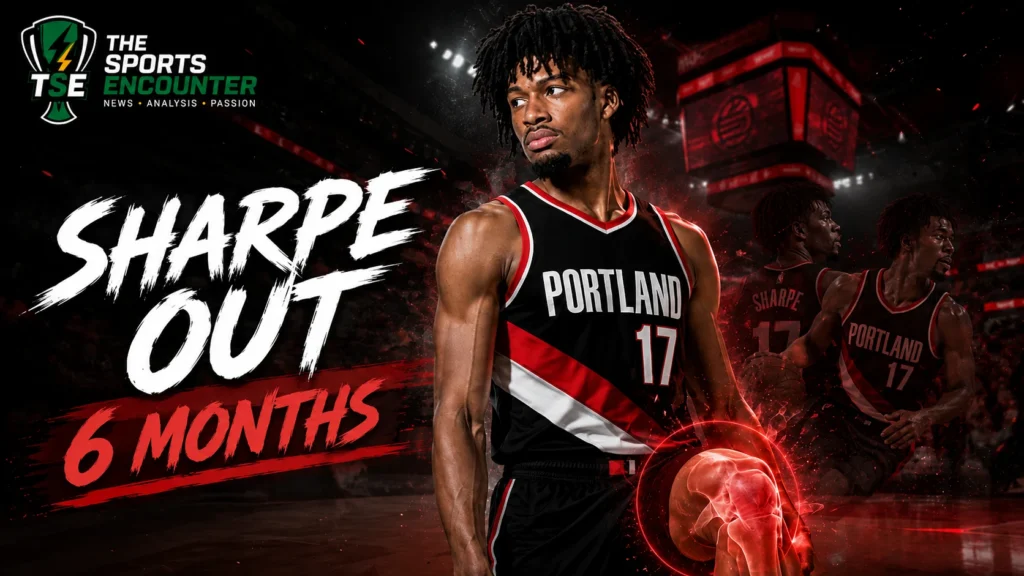
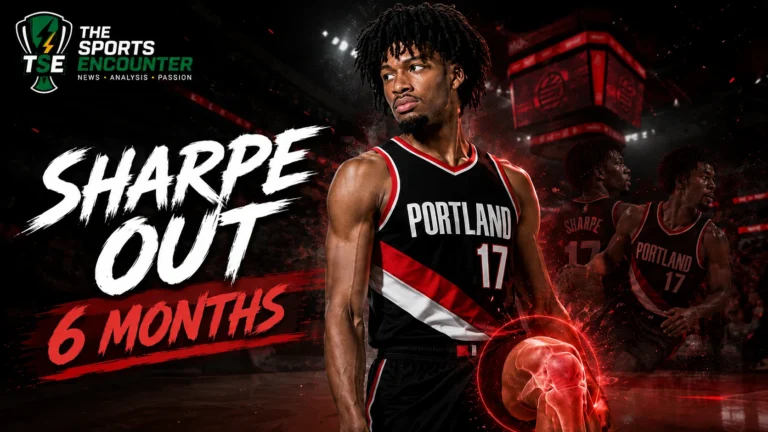
Shaedon Sharpe’s torn right meniscus could keep him out for around six months, forcing Portland to rethink a crowded backcourt built around Ja Morant, Damian Lillard, Jrue Holiday and Scoot Henderson. Can the Blazers absorb the loss of their 20.8-point scorer and still build on last season’s playoff return?
Portland spent the summer assembling one of the strangest and most intriguing guard rooms in the NBA.
Ja Morant arrived from Memphis.
Damian Lillard prepared for his long-awaited return from Achilles surgery.
Jrue Holiday remained one of the league’s most experienced two-way guards.
Scoot Henderson entered another important development season.
And Shaedon Sharpe was supposed to provide something none of the others quite replicated: explosive scoring from the wing, vertical athleticism, transition pressure and a 23-year-old body capable of carrying increasingly heavy offensive responsibility.
Now Portland may have to operate without him for roughly half a year.
Sharpe is expected to miss approximately six months after suffering a torn meniscus in his right knee during a workout, according to Reuters and Field Level Media. The timing could hardly be worse. He was coming off the best scoring season of his career and entering the first year of the four-year, $90 million extension that had established him as one of Portland’s major long-term investments.
Reuters reported the injury on August 24, noting that Sharpe averaged 20.8 points, 4.3 rebounds and 2.6 assists during the 2025-26 season despite missing 32 games because of a stress fracture in his left fibula.
Those numbers matter.
The injury history matters more.
Portland is not simply losing 20 points per game. The Blazers are losing one of the youngest offensive players in their rotation while asking an already complicated collection of veteran and developing guards to absorb his role.
The problem is solvable.
It is not simple.
For broader NBA coverage throughout the season, readers can follow The Sports Encounter’s NBA hub, including injuries, roster changes, title analysis, trades and postseason developments.
Shaedon Sharpe Injury: What We Know
| Detail | Information |
|---|---|
| Player | Shaedon Sharpe |
| Team | Portland Trail Blazers |
| Age | 23 |
| Injury | Torn meniscus, right knee |
| Reported recovery timeline | Approximately six months |
| 2025-26 scoring average | 20.8 points per game |
| 2025-26 rebounds | 4.3 per game |
| 2025-26 assists | 2.6 per game |
| Games played in 2025-26 | 50 |
| Previous major injury | Stress fracture, left fibula |
| Contract | Four years, $90 million |
The NBA’s official Shaedon Sharpe career page confirms his 2025-26 averages of 20.8 points, 4.3 rebounds and 2.6 assists in 50 games, while also showing how sharply his scoring role had grown from 9.9 points per game as a rookie to 18.5 in 2024-25 and then 20.8 last season.
Sharpe Was Finally Becoming More Than a Prospect
For much of his first three NBA seasons, discussion around Sharpe revolved around potential.
Elite athleticism.
Vertical explosion.
Highlight-reel dunks.
Shot-making flashes.
The obvious question was whether those traits would eventually become consistent production.
Last season provided the clearest answer yet.
Sharpe averaged 20.8 points while shooting 45.2 percent from the field. His three-point percentage remained inconsistent at 33.7 percent, but the scoring growth was substantial enough that Portland no longer had to talk about him primarily as a developmental piece.
He was becoming an established offensive player.
That distinction matters when assessing the injury.
Portland is not losing an uncertain prospect.
It is losing a player who had already reached the 20-points-per-game threshold at 23 years old.
The Previous Fibula Injury Makes the Timing More Concerning
Sharpe’s right knee injury follows a season in which he already missed 32 games because of a stress fracture in his left fibula.
That does not mean the injuries are medically connected.
It does mean Portland has now seen one of its most important young players lose significant time in consecutive seasons.
Availability becomes part of player value once injuries begin stacking up.
That is particularly relevant because Sharpe’s new contract begins this season.
Portland committed four years and $90 million to him because the organization believed his production and age made him part of the team’s future.
The contract still makes sense.
The health risk has clearly increased.
TSE recently examined another very different injury comeback through Ben Simmons’ attempt to return after sitting out the 2025-26 season. The situations are not directly comparable, but they illustrate the same basic reality: once a player’s career begins being interrupted by recurring physical problems, availability becomes as important as upside.
Portland’s Guard Depth Is Suddenly an Advantage
If there is a team equipped to lose a starting-level guard, Portland may be one of the few.
The current backcourt includes:
- Damian Lillard
- Ja Morant
- Jrue Holiday
- Scoot Henderson
- Shaedon Sharpe
That group looked almost overcrowded before the injury.
Now the depth suddenly has purpose.
The Trail Blazers’ official roster confirms Lillard, Morant, Holiday, Henderson and Sharpe are all part of Portland’s current guard group.
What looked like a rotation problem in July may become an insurance policy in October.
Ja Morant Now Becomes Even More Important
Portland’s biggest offseason move was the acquisition of Ja Morant from Memphis.
The Blazers sent Jerami Grant and Kris Murray to the Grizzlies in exchange for the two-time All-Star guard, giving Morant a fresh start after several turbulent seasons.
The NBA’s official report on the Morant trade confirmed the deal and immediately noted Portland’s unusual collection of guards.
Sharpe’s injury changes Morant’s role before he even plays a regular-season game for Portland.
Before the injury, Portland could afford to manage Morant carefully and distribute offensive responsibility across several creators.
Now the Blazers may need him to become a more consistent primary attacker immediately.
That carries risk.
Morant played only 20 games in 2025-26 because of injury and had appeared in only 79 games over the previous three seasons combined.
Portland therefore enters the season with one important young guard already injured and another major guard carrying his own durability concerns.
That is why the depth matters.
Damian Lillard’s Return Suddenly Carries More Pressure
Lillard was already one of the NBA’s most fascinating comeback stories.
He missed the entire 2025-26 season while recovering from a torn left Achilles suffered during the 2025 playoffs.
At 36, he is now returning to the franchise that drafted him while sharing a backcourt with Morant, Holiday and Henderson.
NBA.com recently included Lillard among the league’s major 2026-27 comeback players and noted that he averaged 24.9 points and 7.1 assists in his final healthy season before the Achilles injury.
Portland should resist the temptation to interpret Sharpe’s injury as a reason to increase Lillard’s workload too quickly.
That would solve one problem by creating another.
A 36-year-old guard returning from an Achilles tear should not be asked to compensate for the absence of a 23-year-old wing by immediately playing enormous minutes.
Portland needs Lillard in March and April more than it needs him playing 36 minutes in November.
This becomes a workload-management challenge as much as a rotation challenge.
Portland Cannot Simply Ask Lillard to Become the Old Lillard
There is also an important basketball distinction.
The Lillard who returns in 2026 does not have to become the version who once carried Portland through entire playoff series.
His value may now come through shooting, late-game creation, leadership and spacing.
Morant can apply rim pressure.
Holiday can organize and defend.
Henderson can attack second units.
Lillard can stretch defenses beyond the three-point line and control late possessions.
The Sports Encounter recently looked at another veteran guard’s late-career evolution in our Russell Westbrook retirement retrospective. Westbrook’s final seasons showed how dramatically roles can change once elite athleticism begins giving way to age and accumulated injury.
Lillard’s challenge will be different because shooting ages better than explosiveness.
Portland must still allow him to evolve.
Jrue Holiday May Become Portland’s Most Important Stabilizer
Holiday does not generate the same headlines as Morant or Lillard.
He may become the most useful guard during Sharpe’s absence.
Holiday averaged 16.3 points, 6.1 assists and 4.6 rebounds last season and remained capable of defending multiple perimeter positions.
That defensive versatility matters because Sharpe’s absence could push Portland toward smaller guard-heavy combinations.
Morant and Lillard together create obvious offensive possibilities.
They also create defensive questions.
Holiday gives Portland a way to stabilize those lineups.
He can defend the opponent’s best guard.
He can initiate offense without dominating the ball.
He can play beside either Lillard or Morant.
He can close games without requiring 20 shots.
This is exactly the kind of player a complicated roster needs.
Is This Scoot Henderson’s Biggest Opportunity Yet?
Sharpe’s injury may create the clearest opportunity of Henderson’s career.
The former No. 3 overall pick enters his fourth NBA season at 22 years old.
Portland now has several experienced guards ahead of him, which would ordinarily compress his minutes.
Sharpe’s absence opens them again.
Henderson does not need to become a 20-point scorer immediately.
He needs to become dependable.
That means:
- controlling turnovers
- defending consistently
- running second units
- attacking the rim without forcing possessions
- making open perimeter shots
- showing he can coexist with another lead guard
Portland’s roster now contains so many accomplished guards that Henderson’s development cannot be measured only through opportunity anymore.
He has competition.
Sharpe’s injury gives him minutes.
What he does with them becomes the important part.
The Injury Removes Portland’s Most Natural Scoring Wing
This may be the biggest tactical problem.
Portland has guards.
Plenty of them.
What Sharpe provides is slightly different.
At 6-foot-5 with elite vertical athleticism, he can function as a true scoring wing rather than only a ball-handler.
He cuts.
He runs the floor.
He attacks closeouts.
He finishes above the rim.
He does not require every possession to begin with the ball in his hands.
That makes him particularly valuable beside Morant and Lillard.
Replacing his minutes with another point guard does not replace his function.
This is where Portland may need greater contributions from Deni Avdija, Toumani Camara and the team’s larger wings.
Portland Already Had a Shooting Problem
The Blazers’ offensive balance was not perfect even before Sharpe’s injury.
NBA.com’s pre-draft evaluation noted that Portland finished 28th in three-point percentage last season while going 42-40 and reaching the playoffs.
Sharpe shot only 33.7 percent from three, so losing him does not remove elite shooting.
It does remove another perimeter scoring threat.
That puts more pressure on Lillard’s return.
It also makes floor spacing around Morant increasingly important.
Morant is at his most dangerous when the lane is open.
Playing him beside multiple inconsistent shooters reduces the space available for his drives.
Portland may therefore need to prioritize shooting more aggressively in its rotation than it expected before Sharpe’s injury.
The Jerami Grant Trade Looks Different Now
Portland traded Grant to acquire Morant.
The logic was obvious.
Morant’s upside is significantly higher.
But Grant also gave Portland something the roster now lacks even more clearly: forward scoring and three-point shooting.
Sharpe’s injury does not make the Morant trade a mistake.
It does make the roster thinner at the wing positions.
Portland may now have more guards than it can comfortably play and fewer scoring wings than it would ideally want.
That imbalance could become one of the defining roster-management questions of the season.
Could Portland Trade One of Its Guards?
This becomes increasingly plausible.
Before Sharpe’s injury, the backcourt already appeared crowded.
Once Sharpe returns, Portland could again have Lillard, Morant, Holiday, Henderson and Sharpe competing for overlapping minutes.
That may be manageable during the regular season.
It becomes more difficult in the playoffs, where rotations typically shrink.
Portland does not need to trade anyone immediately.
The first priority should be getting through the opening months of the season.
But if the roster remains healthy elsewhere and Sharpe’s rehabilitation progresses well, the Blazers could eventually use one guard to address wing depth, shooting or frontcourt needs.
The $90 Million Extension Raises the Stakes
Sharpe signed a four-year, $90 million extension in 2025.
That deal begins this season.
He is expected to earn roughly $20 million in 2026-27.
The extension itself remains reasonable for a 23-year-old player averaging more than 20 points per game.
The question is no longer whether Portland paid too much.
The question is how much of the contract’s value depends on Sharpe staying healthy.
TSE recently examined the opposite side of the NBA contract equation through Dillon Brooks’ $73 million Phoenix extension, where durability and role clarity were central to the Suns’ willingness to make another long-term commitment.
Sharpe’s deal is younger, more developmental and potentially more valuable.
It now carries greater medical uncertainty.
Portland’s 2025-26 Season Changed Expectations
This injury hurts more because Portland is no longer rebuilding quietly.
The Trail Blazers finished 42-40 and reached the postseason for the first time since 2021.
They lost to San Antonio in five games in the first round.
That season moved the franchise into a different phase.
Portland is no longer measuring success only through player development.
Wins matter.
Playoff position matters.
Roster balance matters.
The entire league enters the 2026-27 season under new expectations, something The Sports Encounter examined in our early NBA 2026-27 title-race analysis.
Portland was already outside the top group of championship favorites.
Losing Sharpe makes climbing toward that tier harder.
The Western Conference Will Not Wait for Portland
The Blazers’ biggest problem may simply be geography.
The Western Conference remains loaded.
San Antonio reached the NBA Finals last season.
Oklahoma City remains a major contender.
Denver still has Nikola Jokic.
Golden State still has Stephen Curry.
Minnesota remains dangerous.
Several younger teams continue improving.
Portland cannot assume it will simply repeat last season’s playoff appearance.
That is why the injury must be treated as a competitive issue, not only a rehabilitation story.
Portland’s Schedule Makes the Early Months Important
The 2026-27 NBA season begins in October, which means a six-month recovery timeline could keep Sharpe out through a significant portion of the regular season depending on surgery, rehabilitation and medical clearance.
The Sports Encounter’s complete 2026-27 NBA schedule analysis shows how quickly meaningful games arrive once the season starts.
Portland cannot spend two months waiting for the roster to settle.
Morant must integrate.
Lillard must recover.
Henderson must develop.
Holiday must adapt to a potentially different role.
And the team must establish an offensive identity without Sharpe.
Possible Portland Guard Rotation Without Sharpe
| Player | Likely Role |
|---|---|
| Ja Morant | Primary attacking guard and rim-pressure creator |
| Damian Lillard | Shooting, late-game creation, secondary playmaking |
| Jrue Holiday | Defensive stabilizer and flexible starter/closer |
| Scoot Henderson | Second-unit creator and developmental guard |
| Deni Avdija | Additional ball-handler from the wing |
| Toumani Camara | Wing defense and lineup balance |
Why Portland Should Avoid a Panic Trade
The worst response would be overreacting immediately.
Sharpe is expected to miss significant time.
He has not been ruled out for the entire season.
Portland already has enough ball-handling talent to survive the early months.
A rushed trade could create a long-term problem while solving a short-term one.
The smarter approach is to use training camp and the opening weeks to identify what the roster actually lacks without Sharpe.
Is it shooting?
Wing size?
Perimeter defense?
Secondary scoring?
Those answers should determine any roster move.
The Injury Also Changes Sharpe’s Development Timeline
This may be the most frustrating aspect from Portland’s perspective.
Sharpe had reached the stage where development needed to happen through responsibility rather than experimentation.
He needed another 70-game season.
He needed playoff possessions.
He needed late-game defensive assignments.
He needed repeated opportunities to create against set defenses.
Rehabilitation now interrupts that process.
When he returns, the first objective will be physical recovery.
Then conditioning.
Then confidence.
Only then can Portland resume asking the developmental questions it expected to answer this season.
Can Sharpe Still Become Portland’s Long-Term Star?
Yes.
Nothing about a torn meniscus at 23 automatically changes his ceiling.
The concern comes from accumulated interruption.
The fibula injury cost him 32 games last season.
The knee injury could remove another significant chunk of this season.
Young players develop through repetition.
Repeated injuries remove repetitions.
That is the challenge.
Sharpe’s athletic gifts remain extraordinary.
His scoring progression remains encouraging.
His contract still gives Portland years to evaluate him.
He simply needs a healthy stretch long enough to turn potential into something more durable.
What Happens When Sharpe Returns?
That may eventually become the harder rotation question.
If Morant plays well, Lillard returns successfully, Holiday remains productive and Henderson earns a larger role, Sharpe will return to one of the most competitive guard rotations in the NBA.
That does not have to be a problem.
Portland could use Sharpe more heavily at shooting guard and small forward rather than treating him as another primary ball-handler.
His off-ball value may actually increase beside Morant and Lillard.
If Sharpe improves his three-point shooting, the fit becomes significantly easier.
The challenge will be balancing enough touches for development with enough structure for winning.
Sharpe’s Three-Point Shooting Becomes Even More Important
Sharpe attempted more than six three-pointers per game last season and made 33.7 percent.
That number needs to improve.
Portland’s guard room contains several players who prefer creating with the ball.
A healthy Sharpe who shoots 37 or 38 percent from three becomes much easier to fit into almost any lineup.
A Sharpe who remains around 33 percent requires more careful spacing.
The injury delays the opportunity to work on that problem in live games.
Could Sharpe Return for a Playoff Push?
A six-month timeline from late August would point roughly toward late February, although rehabilitation timelines are never exact and Portland will prioritize medical clearance over calendar targets.
If recovery goes well, Sharpe could theoretically return during the second half of the season.
That creates an interesting possibility.
Portland may spend months learning to function without him and then add a 20-point scorer before the playoff race reaches its final phase.
That would be a significant reinforcement.
The danger is expecting immediate peak production after such a long absence.
Meniscus recovery is not completed the moment a player is cleared to play.
Rhythm takes time.
Portland’s Veterans Now Have to Protect the Young Core
This roster contains something unusual.
Morant is 27.
Sharpe is 23.
Henderson is 22.
Lillard and Holiday are both 36.
That creates two timelines inside one backcourt.
The veterans can help Portland win now.
The younger players still need space to become the future.
Sharpe’s injury could tempt Portland to lean too heavily toward the veteran timeline.
That would be understandable.
It would also be shortsighted if it reduced Henderson’s development or eventually limited Sharpe’s role once healthy.
Roster management has to protect both objectives.
Portland Has Become One of the NBA’s Most Unpredictable Teams
The Blazers may be harder to project than almost any team in the Western Conference.
Morant could rediscover All-Star form.
Lillard could return as an elite shooter and closer.
Holiday could keep the defense organized.
Henderson could finally make a major jump.
Sharpe could return late in the season and transform the offense.
Or injuries, overlapping roles and inconsistent shooting could keep the group from developing enough continuity.
That range of outcomes is enormous.
The NBA offseason has created several similarly difficult roster evaluations, including Philadelphia’s star-heavy construction. TSE examined that question in our analysis of whether the 76ers now own the NBA’s best starting five.
Portland’s problem is almost the opposite.
The Blazers have enough talent.
The challenge is fitting it together.
What Portland Must Do During Sharpe’s Absence
| Priority | Why It Matters |
|---|---|
| Protect Lillard’s workload | He is returning from an Achilles tear at age 36 |
| Give Morant a clear offensive role | He is now Portland’s most dynamic healthy creator |
| Keep Holiday involved | His defense balances small guard combinations |
| Develop Henderson | Sharpe’s absence creates valuable minutes |
| Find wing scoring | Another point guard cannot fully replace Sharpe’s role |
| Improve spacing | Portland already ranked near the bottom in three-point percentage |
| Avoid rushing Sharpe back | Long-term health matters more than one regular-season stretch |
TSE Analysis: Portland Has Enough Guards, but That Does Not Mean It Has Replaced Sharpe
The easiest response to this injury is to look at Portland’s roster and conclude the Blazers will be fine.
They have Morant.
They have Lillard.
They have Holiday.
They have Henderson.
That is more backcourt talent than most NBA teams can realistically deploy.
But roster depth is not the same as role replacement.
Sharpe gives Portland size, athleticism, rim pressure without dominating the ball and a young scorer capable of growing with the franchise.
Morant does not replace that.
Lillard does not replace that.
Holiday does not replace that.
Henderson does not replace that.
Together, they can replace the production.
They cannot perfectly replace the player.
The Sports Encounter Verdict
Shaedon Sharpe’s injury does not destroy Portland’s season.
It does make an already complicated team considerably harder to manage.
The Blazers have enough guard depth to survive.
Ja Morant can carry more offense.
Damian Lillard can provide shooting and late-game creation if his Achilles recovery holds.
Jrue Holiday can stabilize the defense.
Scoot Henderson now has another opportunity to prove he belongs in the long-term rotation.
The concern is that Portland loses one of the few players whose skillset did not overlap heavily with everyone else.
Sharpe was the young scoring wing inside a roster filled with point guards.
He was also entering the first season of a $90 million commitment after averaging a career-high 20.8 points.
And he had already missed 32 games last season.
That makes the right knee injury more than an unfortunate preseason setback.
It becomes another test of whether Portland can build continuity around one of its most important young players.
The Blazers still have enough talent to reach the postseason.
The Sports Encounter’s 2026-27 NBA schedule breakdown shows how quickly the season will begin testing teams with new identities.
Portland will be one of them.
The difference is that the Blazers now have to begin that process without the player who was supposed to connect their present to their future.
Frequently Asked Questions
What injury did Shaedon Sharpe suffer?
Sharpe reportedly suffered a torn meniscus in his right knee during a recent workout.
How long will Shaedon Sharpe be out?
He is expected to miss approximately six months, although his exact return date will depend on treatment, rehabilitation and medical clearance.
How many points did Shaedon Sharpe average last season?
Sharpe averaged a career-high 20.8 points per game during the 2025-26 season.
How many games did Sharpe play in 2025-26?
He played 50 regular-season games.
Did Shaedon Sharpe have another major injury last season?
Yes. He missed 32 games because of a stress fracture in his left fibula.
Who will replace Shaedon Sharpe in Portland’s rotation?
Portland has several guard options, including Ja Morant, Damian Lillard, Jrue Holiday and Scoot Henderson. Deni Avdija and Toumani Camara may also need to absorb additional wing responsibilities.
Is Damian Lillard playing for Portland again?
Yes. Lillard rejoined the Trail Blazers after leaving Milwaukee and is expected to return during the 2026-27 season after missing all of 2025-26 while recovering from a torn Achilles.
When did Portland acquire Ja Morant?
Portland acquired Morant from Memphis during the 2026 offseason in exchange for Jerami Grant and Kris Murray.
How much is Shaedon Sharpe’s contract worth?
Sharpe signed a four-year, $90 million extension in 2025.
Can Portland still make the playoffs without Sharpe?
Yes. Portland has enough veteran and young backcourt depth to remain competitive, but Sharpe’s absence reduces scoring versatility and places more pressure on Morant, Lillard, Holiday and Henderson.

Breaking News
Lions FC Destroy North Sunshine Eagles 4-0 as Australia Cup Fairytale Ends
Lions FC powered into the Hahn Australia Cup 2026 semifinals with a 4-0 win over North Sunshine Eagles, ending the tournament’s standout underdog run.
Lions FC are through to the Hahn Australia Cup 2026 semifinals after overwhelming North Sunshine Eagles 4-0 at Luxury Paints Stadium, ending one of the competition’s great underdog runs and moving the Queensland club within one victory of the final.
North Sunshine Eagles had spent the past month proving that knockout football could bend around them. They won away from home on their national-stage debut, survived 120 scoreless minutes against the previous season’s finalists and watched goalkeeper Rory Brian repeatedly rescue their campaign when elimination appeared close.
Lions FC never allowed this quarterfinal to develop into that kind of contest.
The NPL Queensland side attacked the match aggressively, converted their superiority into a commanding advantage and completed a 4-0 victory that sends them into the Australia Cup semifinals for the first time.
Football Australia’s official Australia Cup match report confirmed the comprehensive victory and Lions’ progression to the final four.
For readers who followed this matchup from the beginning, The Sports Encounter’s Lions FC vs North Sunshine Eagles quarterfinal preview identified the central danger before kickoff: if North Sunshine could survive the early pressure, the psychology of the match might begin shifting toward the underdogs.
Lions made sure that never happened.
Lions FC 4-0 North Sunshine Eagles: Match at a Glance
| Detail | Information |
|---|---|
| Competition | Hahn Australia Cup 2026 |
| Round | Quarterfinal |
| Result | Lions FC 4-0 North Sunshine Eagles |
| Venue | Luxury Paints Stadium, Queensland |
| Lions FC level | NPL Queensland |
| North Sunshine Eagles level | VPL1 |
| Outcome | Lions FC advance to Australia Cup semifinals |
| Semifinal opponent | Winner of Preston Lions vs South Melbourne |
The Cup Match North Sunshine Needed Never Developed
The most revealing part of the result is not simply that Lions scored four goals.
It is how completely they removed the conditions that had allowed North Sunshine to become one of the stories of the tournament.
The Eagles’ Round of 16 victory against Heidelberg United had been built around survival, patience and the gradual accumulation of belief.
They remained scoreless for 120 minutes against the 2025 finalists, survived an 80th-minute penalty and eventually won 4-3 in the shootout after Rory Brian produced an extraordinary goalkeeping performance.
The official Australia Cup account of the Heidelberg upset recorded Brian saving the regulation-time penalty and another two during the shootout.
That victory gave North Sunshine a psychological blueprint for the quarterfinal.
Stay alive. Absorb pressure. Let the favorite become frustrated. Give Brian opportunities to make saves. Wait for the game to become emotionally uncomfortable.
Lions destroyed that blueprint by making their superiority count early enough that North Sunshine never reached the stage where belief could begin influencing the contest.
TSE Analysis: Lions Learned the Most Important Lesson From Heidelberg
The warning signs were available before kickoff.
Heidelberg had discovered what happens when a stronger side allows North Sunshine to remain alive.
Even after the Eagles failed to create sustained attacking pressure, the longer the score remained level, the more dangerous the tie became for the favorite. By the time penalties arrived, North Sunshine were competing in precisely the environment they wanted.
Lions approached the problem differently.
They did not treat possession as control by itself. They used territorial pressure to force North Sunshine deeper and then turned that pressure into goals rather than allowing the visitors to settle into another defensive marathon.
That distinction explains why this quarterfinal became so different from the Heidelberg match.
The Eagles could survive without much of the ball.
They could not survive while conceding repeatedly.
Lions FC Are No Longer a Cute Australia Cup Story
There is another reason this 4-0 result deserves attention.
Lions FC have now eliminated Perth Glory, Melbourne City and North Sunshine Eagles during their national-round campaign.
The first victory required penalties.
The second was a 2-0 win against Melbourne City.
The third has produced four unanswered goals in an Australia Cup quarterfinal.
That progression matters.
Lions initially demonstrated that they could survive against professional opposition. They then showed they could beat an A-League side in regulation. Now they have handled the pressure of entering a national quarterfinal as favorites.
Those are three very different knockout tests.
The Sports Encounter highlighted that development in our quarterfinal analysis before the match, noting that the 2-0 victory over Melbourne City had changed the meaning of Lions’ campaign.
This result changes it again.
Being Favorites Created a Different Kind of Pressure
Against Perth Glory and Melbourne City, Lions could embrace the role normally occupied by Member Federation clubs in the Australia Cup.
The professional team carried the expectation.
Lions could attack the opportunity.
North Sunshine reversed that dynamic.
Suddenly Lions were the established NPL leaders playing at home against a club from Victoria’s second state tier. Their previous Cupsets meant very little once they became the team expected to progress.
That can be an uncomfortable transition for an underdog.
Some teams thrive when they have nothing to lose but become hesitant once they are asked to control a knockout match.
Lions showed no such hesitation.
The 4-0 scoreline is therefore evidence of more than attacking quality. It shows a team capable of changing psychological roles without losing its football identity.
North Sunshine’s Fairytale Deserves More Than the Final Score
A four-goal defeat is a brutal ending, but it should not become the defining image of North Sunshine’s tournament.
The Eagles were making their first appearance on the national stage.
They opened by traveling to South Australia and defeating FK Beograd 3-2 in a match where all five goals arrived after halftime.
Football Australia’s official Round of 32 review documented that breakthrough victory, which immediately gave North Sunshine a place in the national tournament’s wider story.
Then came Heidelberg.
The Eagles faced the 2025 finalists, survived extra time and became only the second second-tier Member Federation club in Australia Cup history to reach the final eight.
That achievement cannot be erased by what happened in Queensland.
North Sunshine arrived at the quarterfinal because they repeatedly earned the right to be there.
Rory Brian Finally Met a Problem Goalkeeping Could Not Solve
Brian entered the quarterfinal as arguably the most important individual player in North Sunshine’s run.
Against Heidelberg, he had saved a penalty during regulation and another two in the shootout.
That performance created a fascinating question before the Lions match.
Could he keep North Sunshine alive long enough for doubt to creep into the home side?
The answer was no, but that should not be interpreted as a failure of the goalkeeper.
A keeper can rescue a team from individual chances. It becomes considerably harder when the opponent establishes sustained attacking control and repeatedly reaches dangerous areas.
North Sunshine needed the entire defensive structure to survive.
Lions broke it.
The 4-0 Result Stands Apart From the Other Quarterfinals
The first three Australia Cup quarterfinals have produced three very different routes into the semifinals.
Sydney FC became the first team through after Takahiro Sekine’s goal secured a tense 1-0 victory over SD Raiders. The Sports Encounter covered how the NPL NSW side made the A-League club work for almost every minute in our Sydney FC vs SD Raiders quarterfinal report.
Melbourne Victory required even more patience.
APIA Leichhardt kept them scoreless through 90 minutes before substitute Harry Sawyer finally found the breakthrough in extra time. Our Melbourne Victory vs APIA Leichhardt report examined how Victory survived a genuine knockout test before securing their semifinal place.
Lions have taken the opposite route.
They have produced the most emphatic quarterfinal result of the tournament so far.
Australia Cup 2026 Semifinal Picture
| Quarterfinal | Result/Status | Semifinal Outcome |
|---|---|---|
| SD Raiders vs Sydney FC | Sydney FC won 1-0 | Sydney FC advanced |
| APIA Leichhardt vs Melbourne Victory | Melbourne Victory won 1-0 after extra time | Melbourne Victory advanced |
| Lions FC vs North Sunshine Eagles | Lions FC won 4-0 | Lions FC advanced |
| Preston Lions vs South Melbourne | August 26 | Winner faces Lions FC |
The semifinal bracket has therefore begun taking shape.
Sydney FC and Melbourne Victory will meet in one semifinal, creating a heavyweight A-League contest after both professional clubs survived difficult quarterfinals.
Lions FC will face the winner of Preston Lions vs South Melbourne in the other semifinal.
Lions Are Guaranteed a Member Federation Semifinal
The structure of the remaining bracket makes Lions’ achievement even more interesting.
Preston Lions and South Melbourne are both Member Federation clubs.
Whoever emerges from that final quarterfinal will meet Lions rather than an A-League opponent.
That guarantees a Member Federation club a place in the 2026 Australia Cup final.
For Lions, the opportunity is enormous.
They have already beaten two professional opponents, but their route to the final will now run through another club outside the A-League.
That does not make the semifinal easy.
It makes it historic.
Preston Lions vs South Melbourne Now Carries Another Layer
The final quarterfinal on August 26 will determine who travels into the other side of the semifinal bracket.
Preston have already produced one of the tournament’s major Cupsets by eliminating 2025 Australia Cup winners Newcastle Jets before later defeating Brunswick Juventus 4-1.
South Melbourne have their own giant-killing credentials after eliminating Adelaide United.
Either opponent will arrive against Lions with evidence that they can survive national knockout football.
That means Lions cannot interpret the 4-0 quarterfinal as proof that the semifinal will follow the same pattern.
The challenge changes again.
The Sydney FC-Melbourne Victory Semifinal Creates a Fascinating Contrast
One half of the bracket will contain two of Australia’s biggest professional clubs.
The other will guarantee a Member Federation finalist.
That is close to an ideal Australia Cup semifinal structure.
Sydney and Victory bring A-League history, professional squads and one of Australian football’s most recognizable rivalries.
The Sports Encounter’s APIA vs Melbourne Victory quarterfinal preview had already identified the possibility of a Sydney-Victory semifinal before Victory survived at Leichhardt Oval.
Now it is confirmed.
On the opposite side, Lions and either Preston or South Melbourne will carry the Member Federation game to within 90 minutes of the trophy match.
Why Lions’ Route Matters to the Australia Cup
The Australia Cup works best when the national hierarchy becomes temporarily negotiable.
That does not mean every A-League club needs to lose.
It means clubs from different levels need a credible route to competing with one another.
Lions have provided one of the clearest examples in 2026.
Perth Glory could not eliminate them.
Melbourne City could not eliminate them.
North Sunshine could not turn the quarterfinal into another underdog survival story.
Now Lions are one match away from the final.
The tournament’s official fixtures and results center will confirm the final semifinal matchup once Preston Lions and South Melbourne complete the quarterfinal stage.
The Continental Prize Is Getting Closer
The stakes also extend beyond the Australia Cup trophy.
The competition provides a pathway into Asian football, which gives the later rounds unusual significance for Member Federation clubs.
For an A-League team, continental competition is part of the professional ecosystem.
For a club such as Lions FC, the possibility of reaching that environment would carry an entirely different scale of sporting significance.
The Sports Encounter has followed Asian soccer beyond Australia throughout the season, including the growing influence of the AFC within global football’s changing power structure.
Lions are still several steps away from turning their Cup run into continental football.
After Tuesday night, however, those steps no longer feel theoretical.
TSE Verdict: Lions Solved the Problem Before It Became Dangerous
The most impressive part of Lions’ quarterfinal was their refusal to allow North Sunshine’s previous achievements to dictate the emotional shape of the match.
The Eagles had already demonstrated that they could survive pressure.
They had shown they could win away from home.
They had beaten the previous year’s finalists.
They had a goalkeeper who had already changed one knockout tie almost single-handedly.
All of that became dangerous only if Lions allowed the game to remain close.
They did not.
That is the difference between simply being the stronger team and performing like one when elimination is possible.
Lions have now survived penalties against Perth Glory, beaten Melbourne City in regulation and demolished North Sunshine while carrying the expectation of favoritism.
Three knockout rounds have asked three different questions.
So far, Lions have answered every one.
What Happens Next?
Lions FC can now watch Wednesday’s final quarterfinal knowing exactly what awaits.
Preston Lions or South Melbourne will stand between them and the Australia Cup final.
Sydney FC and Melbourne Victory occupy the other side of the semifinal bracket.
For North Sunshine Eagles, the national run ends after two victories, one unforgettable penalty shootout and a first appearance that took them further than almost anyone could reasonably have expected.
The Sports Encounter will continue following the tournament through the final quarterfinal and both semifinals as the 2026 Australia Cup moves toward its decisive stage.
Frequently Asked Questions
Who won Lions FC vs North Sunshine Eagles?
Lions FC defeated North Sunshine Eagles 4-0 in the Hahn Australia Cup 2026 quarterfinal at Luxury Paints Stadium.
Did Lions FC reach the Australia Cup semifinals?
Yes. The victory sends Lions FC into the Australia Cup semifinals for the first time.
Who will Lions FC play in the semifinal?
Lions FC will face the winner of the Preston Lions vs South Melbourne quarterfinal.
Who are the other Australia Cup semifinalists?
Sydney FC and Melbourne Victory have already qualified and will face each other in one semifinal.
How did North Sunshine Eagles reach the quarterfinal?
North Sunshine defeated FK Beograd 3-2 in the Round of 32 before eliminating 2025 finalists Heidelberg United 4-3 on penalties following a 0-0 draw after extra time.
Was this North Sunshine Eagles’ first Australia Cup national-stage campaign?
Yes. The Eagles won two matches during their first appearance on the national stage before their run ended against Lions FC.
Which A-League clubs have Lions FC beaten in the 2026 Australia Cup?
Lions eliminated Perth Glory on penalties in the Round of 32 and then defeated Melbourne City 2-0 in the Round of 16.
What was the biggest Australia Cup quarterfinal win so far in 2026?
Lions FC’s 4-0 victory over North Sunshine Eagles is the largest winning margin through the first three quarterfinals.
When is Preston Lions vs South Melbourne?
The final Australia Cup 2026 quarterfinal is scheduled for August 26, with the winner advancing to face Lions FC.
Breaking News
Kristjan Asllani Opens Door to Al-Jazira Move as UAE Club Advances Inter Talks
Al-Jazira have advanced talks with Inter for Kristjan Asllani, with the Albania midfielder reportedly open to a move to Abu Dhabi.
Al-Jazira’s pursuit of Inter Milan midfielder Kristjan Asllani has accelerated, with the Albania international reportedly open to moving to Abu Dhabi as negotiations continue over a possible transfer to the UAE Pro League.
Al-Jazira are trying to add another European-based player in his prime years to a squad carrying serious domestic and continental ambitions.
The Abu Dhabi club have moved for Kristjan Asllani, the 24-year-old Albania midfielder who remains under contract with Inter Milan after spending time away from San Siro.
Reports around the negotiations have developed quickly. Al-Jazira have progressed beyond an initial expression of interest, while Asllani is now reportedly receptive to the possibility of continuing his career in the UAE.
No completed transfer has been officially announced at the time of publication, so the current position remains clear: Al-Jazira are in advanced discussions, Asllani is reportedly open to the move, but the deal is not yet complete.
Kristjan Asllani to Al-Jazira: Transfer Status
| Detail | Current Situation |
|---|---|
| Player | Kristjan Asllani |
| Age | 24 |
| Nationality | Albania |
| Current club | Inter Milan |
| Interested club | Al-Jazira |
| League | ADNOC Pro League |
| Position | Central/deep-lying midfielder |
| Negotiations | Advanced, according to current transfer reporting |
| Player stance | Reportedly open to the move |
| Officially completed? | No |
Why Al-Jazira’s Move for Asllani Deserves Attention
Asllani is not the type of player Gulf clubs once waited until the later stages of a European career to recruit.
He is 24, has played in Serie A, has trained and competed inside Inter’s first-team environment and already carries senior international experience with Albania.
The official Lega Serie A player profile lists Asllani as an Albania international midfielder born in March 2002, underlining just how young he remains compared with the veteran-profile signings historically associated with Gulf football.
That age profile is one of the most important parts of the story.
Al-Jazira would be acquiring a player who could potentially remain central to the squad for several seasons rather than providing a short-term name-recognition boost.
Al-Jazira Are Building in a Much More Competitive UAE Market
The timing of the pursuit matters because the UAE Pro League has started the new season with several clubs showing serious ambition.
The official UAE Pro League Al-Jazira profile lists the Abu Dhabi club among the competition’s major institutions, playing at Mohammed bin Zayed Stadium.
Al-Jazira’s domestic position means they are competing in a league where Al-Ain, Shabab Al-Ahli, Al-Wasl, Al-Nasr and other clubs also expect to challenge near the top.
The Sports Encounter recently examined that competitiveness after Al-Nasr defeated Al-Wahda 1-0 in the ADNOC Pro League, a result that highlighted how quickly pressure can build during the opening weeks of the UAE season.
Al-Jazira therefore cannot treat recruitment as a branding exercise. Every major signing has to improve the team structurally.
Asllani Would Strengthen the Part of the Team That Controls Matches
Asllani’s profile is particularly useful because he operates through central midfield rather than relying on explosive attacking numbers.
He is comfortable receiving the ball in deeper areas, circulating possession and helping a team progress through the first two lines of pressure.
Those qualities matter against opponents who defend compactly and force technically stronger teams to create through patient build-up.
Al-Jazira already possess attacking talent. A midfielder capable of organizing possession could improve the relationship between the defensive line and the forwards.
What Asllani could bring
- Calm possession from deep midfield.
- Progressive passing through central areas.
- Experience against high-level European opposition.
- Positional discipline when Al-Jazira dominate the ball.
- International experience despite being only 24.
That combination makes him a more interesting target than a purely commercial marquee signing.
His Serie A Experience Gives the Deal Added Weight
Asllani emerged in Italy and built his reputation as a technically composed midfielder before joining Inter.
Official Lega Serie A match records also show his ability to influence games directly. He scored for Inter against Hellas Verona in May 2025 and completed 93 percent of his passes in that match, according to the competition’s official data.
Those numbers offer a useful glimpse of the type of midfielder Al-Jazira are pursuing.
His role is built around control and decision-making rather than constant attacking involvement.
That kind of football intelligence often translates particularly well into leagues where stronger teams spend large stretches of matches facing organized defensive blocks.
UAE Clubs Are Operating in a Much Bigger Gulf Football Market
Al-Jazira’s pursuit also sits inside a wider regional shift.
Saudi Arabia’s enormous recruitment drive has changed the transfer environment across the Gulf.
UAE clubs may not spend at the same scale, but they are increasingly competing for international talent who can improve the level of domestic football.
The Sports Encounter recently examined that regional evolution in our Gulf Champions League 2026-27 draw analysis, where UAE, Saudi and Qatari clubs were placed into direct regional competition.
The importance of those comparisons should increase as clubs from neighboring leagues meet more regularly.
Better recruitment gives UAE teams a stronger chance of holding their own against Saudi and Qatari opposition rather than relying exclusively on domestic success.
Al-Jazira Have Already Been Tested by Saudi Opposition
Al-Jazira know how demanding that regional comparison can become.
They were beaten 4-1 by Al-Ittihad in the AFC Champions League Elite preliminary stage earlier this month.
The Asian Football Confederation’s official match report confirmed that Steven Bergwijn scored twice as Al-Ittihad eliminated the Abu Dhabi club at Mohammed bin Zayed Stadium.
That defeat gave Al-Jazira a direct look at the level of individual quality Saudi clubs can now deploy.
It also creates context for the Asllani pursuit.
If Al-Jazira want to compete more effectively against the strongest regional teams, adding technically secure players with European experience is a logical response.
Saudi Recruitment Has Changed Expectations Across the Region
The strongest example remains the Saudi Pro League.
Cristiano Ronaldo’s move to Al-Nassr changed global perceptions of the league and accelerated an extraordinary recruitment cycle.
The Sports Encounter examined that influence in our detailed look at Cristiano Ronaldo’s career and Saudi chapter.
The next phase has moved beyond superstar veterans.
Saudi clubs are increasingly pursuing players with major European value still remaining.
Al-Hilal’s attempt to sign Ollie Watkins from Aston Villa provided another example of a Gulf club targeting a Premier League player who remains capable of influencing elite-level football immediately.
Al-Jazira’s interest in Asllani follows the same underlying principle at a different financial scale.
The objective is sporting value now, with enough age on the player’s side to create value over several seasons.
The Gulf Transfer Market Is Becoming More Interconnected
Movement is also happening between Gulf leagues rather than only from Europe into the region.
That gives UAE clubs access to a much broader player pool than before.
Saudi clubs continue importing elite talent, while UAE teams can recruit directly from Europe or potentially benefit from players moving within the Gulf ecosystem.
The Sports Encounter has been tracking that development through regional transfer stories including Thomas Partey’s move to Al-Shabab and other major Saudi additions.
Those deals matter to UAE football because they raise the standard of opposition the country’s clubs may eventually face in regional and Asian competitions.
Continental Football Raises the Stakes for Al-Jazira
Al-Jazira’s ambitions cannot be judged only through the domestic league.
The club remains part of a UAE football system increasingly exposed to AFC competition.
The Sports Encounter’s coverage of the AFC’s growing influence inside global football governance showed how much Asian football has evolved politically as well as competitively.
At club level, the consequences are more straightforward.
UAE teams need deeper squads, stronger midfield control and enough quality to survive matches against opponents carrying substantial international experience.
Asllani would help Al-Jazira address exactly that type of challenge.
Al-Jazira’s History Creates Expectations
Al-Jazira are not approaching this season as a club simply trying to establish itself in the top flight.
They have won major domestic honors and previously competed regularly in Asia.
The UAE Pro League has also highlighted Al-Jazira among the competition’s historically successful clubs, including their record-setting points totals from previous championship seasons.
That history creates expectations whenever the club enters the transfer market.
A move for Asllani would therefore fit a club accustomed to thinking beyond short-term survival.
The UAE Needs More Players Arriving Before Their Final Career Phase
There is a broader league-level benefit if the transfer is completed.
A 24-year-old Albania international arriving from Inter’s books would send a different message about the UAE Pro League.
The league already has international recognition, but attracting more players in their prime years would strengthen its credibility.
That is one reason Saudi Arabia’s market has changed so dramatically.
Players no longer automatically view Gulf football only as the final stop of a career.
The Sports Encounter’s analysis of Matthias Jaissle’s success at Al-Ahli and subsequent European interest showed that career movement can also work in the opposite direction.
A player or coach can succeed in the Gulf and remain relevant to European football afterward.
Asllani’s International Experience Adds Another Layer
Asllani has already represented Albania at senior international level, giving him experience in matches where tactical discipline and controlled possession are especially important.
That background should help him adapt to games where Al-Jazira are expected to dominate but cannot afford careless turnovers.
International football also exposes players to different tactical structures and match rhythms, something that can be valuable inside a squad containing several nationalities.
Al-Jazira would therefore be recruiting experience beyond the number of club appearances alone.
Al-Jazira Cannot Call the Transfer Complete Yet
The most important editorial distinction remains the status of the deal.
Asllani is not yet an Al-Jazira player.
The clubs have not officially announced a completed transfer.
Negotiations can still change because of payment structures, contract clauses, medical examinations or the player’s final agreement.
That is why the language around this story matters.
Asllani is reportedly open to the move.
Al-Jazira are actively pursuing him.
The transfer has not been completed.
What Would the Transfer Mean for Inter?
For Inter, the move would provide clarity around a player whose route to regular first-team football has remained difficult.
Asllani has been part of elite squads but has often faced heavy competition for midfield minutes.
A permanent or structured move away could give him the regular role that has been difficult to secure in Milan.
Inter, meanwhile, would gain greater certainty over the composition of their midfield group.
The Sports Encounter’s coverage of the wider FIFA and AFC power struggle has shown how interconnected global football has become off the field. Transfer movement between Italy and the UAE is another example of that interconnected market at club level.
Why Al-Jazira Must Get the Structure Right
The financial details of any eventual agreement will matter almost as much as the player himself.
Al-Jazira need to balance immediate sporting improvement with long-term squad planning.
A player of Asllani’s age offers potential resale value and several productive seasons, but only if the contract structure remains sustainable.
That is why clubs increasingly use loans, purchase options and conditional obligations to distribute financial risk.
Until Al-Jazira or Inter publish official terms, any reported figures should remain clearly identified as reported rather than confirmed.
What Happens Next?
The next step should determine whether this becomes one of the UAE Pro League’s most interesting summer additions.
Al-Jazira have demonstrated serious interest.
Asllani is reportedly willing to consider Abu Dhabi.
The clubs still need to finish the contractual and financial work required to turn that interest into a completed transfer.
If agreement is reached, Asllani would arrive at a particularly interesting moment for Gulf football.
Saudi Arabia continues to raise the regional transfer ceiling, UAE clubs are strengthening in response and cross-border competitions are creating more direct comparisons between the leagues.
The Sports Encounter’s recent Gulf Champions League preview showed how frequently those comparisons will occur during the coming season.
Final Analysis
Kristjan Asllani would be a significant signing for Al-Jazira because of what he represents rather than simply where he currently plays.
He is 24, technically developed, internationally experienced and young enough to become part of a longer-term sporting plan.
For Al-Jazira, the attraction is obvious.
They would gain a midfielder capable of helping them control possession, organize attacks and compete more effectively against stronger regional opposition.
For Asllani, Abu Dhabi could provide the regular responsibility that has been difficult to guarantee inside Inter’s midfield hierarchy.
The negotiations have moved far enough to deserve serious attention.
They have not moved far enough to call the deal complete.
Frequently Asked Questions
Is Kristjan Asllani joining Al-Jazira?
Al-Jazira are in advanced talks over Asllani and the player is reportedly open to the move, but no completed transfer has been officially announced.
How old is Kristjan Asllani?
Asllani is 24 years old and was born on March 9, 2002.
Which club does Kristjan Asllani play for?
Asllani remains contracted to Inter Milan while his future is being discussed.
What position does Kristjan Asllani play?
He primarily operates as a central or deep-lying midfielder.
Has Kristjan Asllani played in Serie A?
Yes. He has extensive Serie A experience through Inter and other Italian clubs.
Does Asllani play international football?
Yes. He represents Albania at senior international level.
Which league does Al-Jazira play in?
Al-Jazira compete in the UAE’s ADNOC Pro League.
Did Al-Jazira play in the AFC Champions League Elite this season?
Yes. Al-Jazira entered the preliminary stage but lost 4-1 to Al-Ittihad in Abu Dhabi.
Why would Asllani be an important signing for Al-Jazira?
His age, Serie A experience, international background and ability to control possession from midfield would give Al-Jazira a player capable of contributing immediately while still offering long-term value.
Breaking News
Tijjani Reijnders Scores First Saudi Pro League Goal as Al-Qadsiah Beat NEOM 2-0
Tijjani Reijnders scored on his first Saudi Pro League start as Al-Qadsiah defeated NEOM 2-0, with Mateo Retegui adding a penalty in Tabuk.
Tijjani Reijnders scored on his first Saudi Pro League start as Al-Qadsiah defeated NEOM 2-0 in Tabuk on Monday, giving Brendan Rodgers’ side an immediate response to their previous defeat against Al-Ittihad.
Al-Qadsiah’s biggest summer signing has needed very little time to make his first mark on Saudi football.
Reijnders opened the scoring in the 29th minute at King Khalid Sport City Stadium before Mateo Retegui doubled the visitors’ advantage from the penalty spot in the 56th. Al-Qadsiah protected the lead from there to secure their second victory of the 2026-27 Saudi Pro League season.
The Saudi Pro League confirmed that Reijnders was named Man of the Match after scoring on his first full league start.
The result also ended NEOM’s perfect opening after victories in their first two league matches.
NEOM 0-2 Al-Qadsiah: Key Match Facts
| Detail | Information |
|---|---|
| Competition | Saudi Pro League 2026-27 |
| Matchweek | 3 |
| Result | NEOM 0-2 Al-Qadsiah |
| Venue | King Khalid Sport City Stadium, Tabuk |
| First goal | Tijjani Reijnders, 29th minute |
| Second goal | Mateo Retegui, 56th minute, penalty |
| Man of the Match | Tijjani Reijnders |
| Reijnders milestone | First Al-Qadsiah and Saudi Pro League goal |
Reijnders Needed 29 Minutes to Make His First Saudi Start Count
Reijnders arrived from Manchester City only days before the match, but his first start offered an immediate demonstration of why Al-Qadsiah invested in him.
The Netherlands international drove forward from midfield and found the breakthrough in the 29th minute, giving Al-Qadsiah breathing room after NEOM had applied pressure during the opening phase.
That type of action has long been one of Reijnders’ strengths. He can move possession through central areas without needing to remain permanently close to the penalty box. His ability to carry the ball, accelerate through midfield and arrive at the right moment can change the shape of an attack before the opposition reorganizes.
The official Al-Qadsiah match report confirmed the 29th-minute opener and Retegui’s penalty after halftime.
Why Reijnders Gives Al-Qadsiah Something Different
The value of Reijnders goes beyond the goal itself.
He gives Rodgers a midfielder capable of receiving possession under pressure, moving beyond the first defensive line and advancing the ball without forcing Al-Qadsiah into predictable passing sequences.
That profile matters in a league where several clubs now possess enough technical quality to defend aggressively and punish slow build-up.
Saudi football’s tactical development has accelerated alongside its recruitment drive. The Sports Encounter previously examined how Matthias Jaissle turned Al-Ahli into an Asian power, showing how coaching sophistication has grown alongside investment in players.
Reijnders should help Al-Qadsiah operate with greater control through central midfield rather than relying only on transition moments.
Mateo Retegui Gives Al-Qadsiah the Cushion They Needed
Reijnders’ opener changed the match, but Al-Qadsiah still needed a second goal to establish control.
That arrived in the 56th minute when Mateo Retegui converted from the penalty spot.
The goal gave Rodgers’ side enough separation to manage the remaining half-hour while forcing NEOM to become increasingly aggressive.
Retegui’s presence is another reason Al-Qadsiah deserve serious attention this season. A team containing a proven international striker, Reijnders in midfield and experienced defenders has significantly more quality than Al-Qadsiah’s historical position in Saudi football might suggest.
NEOM’s First Defeat Is an Early Reality Check
NEOM entered Matchweek 3 with six points from six and an opportunity to extend their perfect opening.
Instead, they found themselves facing a more experienced midfield and a team that made its most important attacking moments count.
The defeat should not erase NEOM’s encouraging start, but it does demonstrate how quickly the difficulty rises against clubs carrying deeper international quality.
That wider competitive depth is becoming one of the most interesting stories in Saudi football.
The Sports Encounter’s recent Gulf Champions League 2026-27 analysis examined the same theme from a regional perspective, with NEOM preparing to represent Saudi Arabia against clubs from Qatar, Oman and Yemen.
That competition will provide another test of whether Saudi investment is strengthening the league beyond its traditional headline clubs.
Al-Qadsiah Responded Exactly as Brendan Rodgers Needed
The timing of the victory matters because Al-Qadsiah had lost 1-0 to Al-Ittihad in their previous league match.
Another defeat would have created an uncomfortable early gap in a competition where the strongest clubs are capable of producing long winning runs.
Instead, Al-Qadsiah traveled to Tabuk, kept a clean sheet and defeated a team that had opened the campaign with two victories.
That is the sort of response Rodgers will expect from a squad assembled with ambitions beyond mid-table security.
Rodgers himself arrived in Saudi Arabia with a long European coaching résumé, another example of the league attracting managers as well as players with significant experience outside the region.
The Asian Football Confederation documented Rodgers’ appointment when he took charge of Al-Qadsiah, placing the move within the wider development of Saudi club football.
The Saudi Pro League Is Becoming Much Deeper
The early weeks of the season are already showing why Saudi football can no longer be reduced to four clubs and a few superstar names.
Al-Qadsiah have invested heavily. NEOM have constructed an ambitious squad. Al-Ettifaq remain competitive. Al-Ahli, Al-Hilal, Al-Nassr and Al-Ittihad continue operating with elite domestic expectations.
At the center of the league’s global rise remains Cristiano Ronaldo. The Sports Encounter’s in-depth look at Cristiano Ronaldo’s career and Saudi chapter examined how his move to Al-Nassr helped transform international perceptions of the competition.
The league’s next phase will depend increasingly on what happens below the biggest names.
Al-Qadsiah and NEOM are important because they test whether investment is creating genuine depth rather than concentrating quality at the top.
Saudi Clubs Are Targeting Players With Prime Years Still Ahead
Reijnders also fits another changing recruitment pattern.
Saudi clubs are increasingly targeting players who still have substantial careers ahead of them rather than waiting until the final stage of elite European careers.
The Sports Encounter has seen the same pattern in Al-Hilal’s pursuit of Aston Villa striker Ollie Watkins, where the Saudi club moved aggressively for a forward still capable of producing at Premier League level.
The broader Saudi interest in elite European talent has also affected transfer markets beyond completed deals. When Saudi money became part of the uncertainty around Vinicius Jr, it helped create pressure around one of Real Madrid’s most valuable assets before he ultimately committed his future to the club.
The Sports Encounter covered that resolution in our report on Vinicius Jr signing a new Real Madrid contract through 2032.
Reijnders has already crossed the bridge from European football into the Saudi league. His first start now has a goal and a Man of the Match award attached to it.
Saudi Arabia’s Domestic Growth Is Feeding a Bigger Football Ecosystem
The Saudi Pro League’s development is also connected to the country’s wider football structure.
The Saudi Arabian Football Federation oversees a domestic system that now contains increasing investment across professional clubs, national teams, youth development and continental participation.
The competitive effect is beginning to show in different ways.
Saudi Arabia’s national team entered the 2026 World Cup with expectations shaped by the domestic league’s growth, and The Sports Encounter covered their disciplined 1-1 World Cup draw with Uruguay as an example of the country’s capacity to compete against established international opposition.
The following match against Spain exposed the gap that still exists at the highest level. Our report on Saudi Arabia’s 4-0 defeat to Spain showed how quickly elite opponents can punish structural weaknesses.
Domestic growth therefore matters because the national team ultimately benefits from a stronger competitive environment at club level.
Al-Qadsiah Need Consistency Before the Title Talk Becomes Real
One impressive away win is not enough to establish a title challenge.
Saudi Arabia’s leading clubs have enough quality and depth to produce sustained runs across several months, and Al-Qadsiah must prove they can match that consistency.
Reijnders should become increasingly influential as he adjusts to Rodgers’ tactical demands and develops relationships with the players around him.
His first start provided an encouraging beginning, but the bigger question is whether he can help Al-Qadsiah control difficult games repeatedly.
The club finished among the strongest teams in Saudi Arabia last season, and expectations have risen accordingly.
Winning in Tabuk after losing the previous round was therefore more than a routine three points.
It was an early test of how seriously Al-Qadsiah intend to be taken.
What Comes Next for NEOM?
NEOM now have to respond to their first defeat without allowing one match to disrupt what had been an encouraging start.
The challenge is especially interesting because their ambitions stretch beyond the Saudi league.
Their place in the expanded Gulf Champions League will eventually bring direct comparisons with Al-Duhail and other regional opponents.
That competition may tell us more about the depth of NEOM’s project than domestic results alone.
For now, the lesson from Al-Qadsiah is straightforward: possession and ambition mean little when the opposition controls the most decisive moments.
Final Analysis
Tijjani Reijnders could hardly have asked for a better first Saudi Pro League start.
He scored the opening goal, earned Man of the Match honors and helped Al-Qadsiah respond immediately after their previous defeat.
The performance also carried a broader significance.
Al-Qadsiah are trying to move beyond the identity of an ambitious outsider and become a club capable of consistently troubling Saudi Arabia’s strongest teams.
Reijnders was recruited to help make that possible.
His first league start offered an encouraging glimpse of what Al-Qadsiah could become when their midfield has enough mobility, control and confidence to dictate the important phases of a match.
For NEOM, the defeat provides an early reminder that building an ambitious squad does not immediately erase the competitive hierarchy.
For Al-Qadsiah, it was exactly the kind of away victory a serious challenger needs.
Frequently Asked Questions
What was the NEOM vs Al-Qadsiah score?
Al-Qadsiah defeated NEOM 2-0 in their Saudi Pro League Matchweek 3 fixture in Tabuk.
Who scored for Al-Qadsiah against NEOM?
Tijjani Reijnders scored in the 29th minute before Mateo Retegui converted a penalty in the 56th minute.
Was this Tijjani Reijnders’ first Saudi Pro League goal?
Yes. Reijnders scored his first Al-Qadsiah and Saudi Pro League goal on his first league start for the club.
Who was Man of the Match?
Reijnders received the Man of the Match award after opening the scoring and delivering an influential midfield performance.
Who coaches Al-Qadsiah?
Former Liverpool and Celtic manager Brendan Rodgers is Al-Qadsiah’s head coach.
What does the result mean for NEOM?
It was NEOM’s first Saudi Pro League defeat of the 2026-27 season after winning their opening two matches.
How many points do Al-Qadsiah have after three matches?
Al-Qadsiah have six points from their opening three Saudi Pro League matches, with two victories and one defeat.
-
Cricket4 weeks agoIs The Hundred Losing Its Oomph Among English Cricket Fans?
-
Editor's Choice3 weeks agoPremier League 2026–27 Curtain Raiser: Fixtures, Teams, Title Contenders, Transfers and Season Predictions
-
Editor's Choice4 weeks agoUS Open 2026 Curtain-Raiser: Players, Schedule, Title Contenders, New York Storylines and Everything Fans Need to Know