Editor's Choice
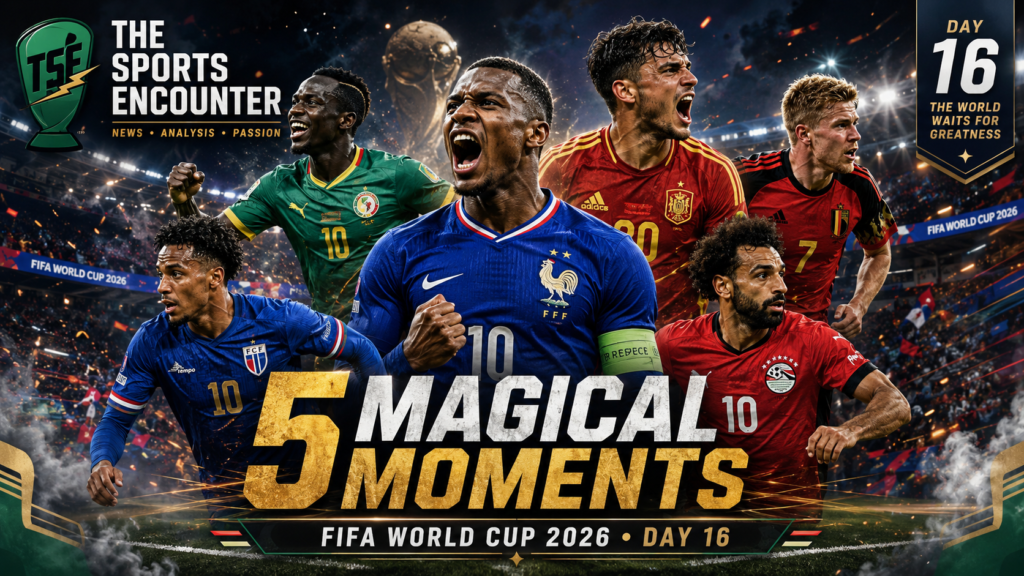
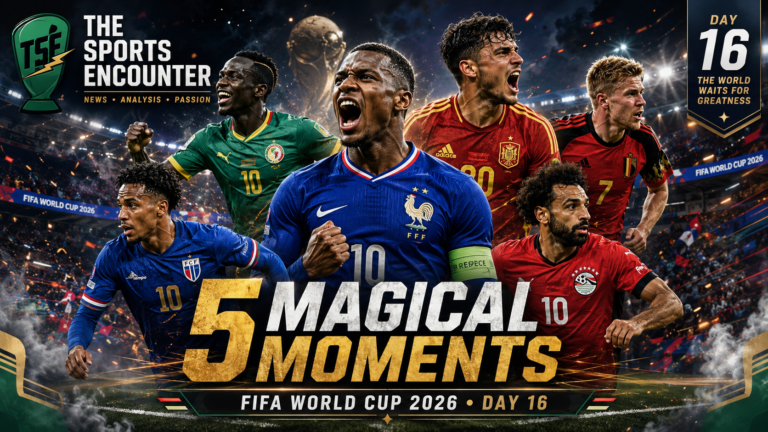
5 Magical Moments from Day 16 of the FIFA World Cup 2026
Day 16 of the FIFA World Cup 2026 delivered goals, survival stories, knockout drama, tactical decisions, and one offside controversy that had the internet arguing deep into the night.
Day 16 of the FIFA World Cup 2026 had everything a tournament day needs: a heavyweight flexing its authority, an African side producing one of the cleanest statements of the group stage, a European giant grinding through pressure, a tiny island nation stretching its dream into the knockouts, and a late offside decision that sent football fans into full courtroom mode.
This was the kind of day that reminded everyone why group-stage finales can feel more chaotic than knockout matches. Some teams needed control. Some needed goals. Some needed only a point. Some needed a miracle.
By the end of the night, France looked dangerous, Senegal looked alive, Spain looked mature, Cape Verde looked fearless, Belgium looked ruthless, Egypt survived, and Iran walked away with the kind of heartbreak that will be replayed for years.
For more tournament coverage, follow The Sports Encounter’s FIFA World Cup 2026 hub.
Day 16 Scorecard
| Match | Result | Main Story |
|---|---|---|
| Norway vs France | France won 4-1 | France punished Norway’s rotated lineup |
| Senegal vs Iraq | Senegal won 5-0 | Senegal delivered a statement performance |
| Uruguay vs Spain | Spain won 1-0 | Spain controlled a tense qualification test |
| Cape Verde vs Saudi Arabia | 0-0 draw | Cape Verde’s historic knockout dream survived |
| New Zealand vs Belgium | Belgium won 5-1 | Belgium found attacking rhythm at the right time |
| Egypt vs Iran | 1-1 draw | Iran’s late disallowed goal created huge debate |
1. France Turn Norway’s Gamble Into a Warning for Everyone Else
Norway’s decision to rest Erling Haaland and several key players against France was always going to attract attention. Once France took control, it started to look less like rotation and more like an invitation.
France Crush Norway After Haaland and Ødegaard Start on the Bench
France won 4-1 and did it with the calm authority of a side that understands tournament football. They did not need chaos. They did not need emotional surges. They simply moved the ball with purpose, attacked the spaces Norway left open, and punished defensive uncertainty whenever it appeared.
Norway still had a chance to make the game feel different, including a missed penalty that could have changed the emotional temperature of the match. Instead, that miss became part of a wider story: France were sharper in the decisive moments.
The result did more than confirm France’s quality. It reminded the rest of the field that France can win in several ways. They can play through pressure, counter with speed, attack from wide areas, and turn small mistakes into heavy punishment.
For Norway, the question will linger. Was protecting key players worth the damage to rhythm and confidence? Tournament managers often think beyond one match, but World Cup momentum has a strange way of punishing overcalculation.
France left the pitch looking like a team ready for the Round of 32. Norway left with a problem they created for themselves.
2. Senegal’s 5-0 Win Gives Africa One of Day 16’s Loudest Statements
Senegal’s 5-0 win over Iraq was the cleanest result of Day 16 and arguably the most important emotional statement.
Senegal Punish 10-Man Iraq as Round of 32 Hope Survives
This was not just about the scoreline. Senegal played like a side that knew exactly what the moment demanded. They pressed with hunger, attacked with numbers, and kept Iraq pinned into uncomfortable zones for long spells. Every goal seemed to strip away another layer of Iraqi resistance.
Iraq’s campaign had already been difficult, but this defeat gave it a painful ending. They struggled to match Senegal’s pace, physicality, and attacking variety. Once the game opened up, Iraq had no real way to slow the damage.
Senegal, on the other hand, used the match to send a message. They looked more direct, more confident, and more connected than they had earlier in the tournament. The forward movement had better timing. The midfield carried more aggression. The finishing had conviction.
This was the type of performance that can reset how a team feels about itself.
Fans often remember the teams that hit form late in the group stage because they enter the knockouts with belief rather than relief. Senegal gave themselves exactly that. They did not stumble forward. They charged into the conversation.
The Sports Encounter has been tracking how heat, rhythm, and match tempo are shaping this tournament, especially in our piece on World Cup 2026 hydration breaks. Senegal’s performance showed another side of tournament management: when the body is ready and the mind is clear, a team can turn pressure into power.
3. Spain Win Ugly, and That May Matter More Than Winning Pretty
Spain’s 1-0 win over Uruguay was not the loudest result of the day, but it may prove one of the most valuable.
Spain Edge Uruguay as Bielsa’s World Cup Ends in Frustration
World Cups rarely reward teams that only know how to dominate easy matches. The deeper rounds usually ask different questions. Can you protect a lead? Can you stay calm when the opponent turns physical? Can you survive a game that refuses to become beautiful?
Spain answered those questions against Uruguay.
Uruguay’s performance carried frustration. They fought, pressed, and tried to drag Spain into a match full of contact and emotion. But Spain kept finding ways to manage the ball, slow the pace, and keep the game within their preferred structure.
The 1-0 scoreline may look narrow, but it told a bigger story. Spain showed patience. They showed tactical discipline. They did enough in attack and stayed organized when Uruguay tried to force the match into desperation.
For Uruguay, this was a bitter exit from a campaign that never fully found its voice. They had enough talent to trouble teams, but not enough attacking fluency when the decisive moments arrived.
Spain will not frame this as a masterpiece. They should frame it as evidence. A World Cup contender needs at least one win like this before the knockouts begin.
4. Cape Verde Turn a 0-0 Draw Into a National Football Memory
A goalless draw can be forgettable. Cape Verde’s 0-0 result against Saudi Arabia was anything but.
Cabo Verde Reach Round of 32 After Holding Saudi Arabia in Tense World Cup Draw
For Cape Verde, this was about nerve, structure, and history. They did not need to light up the scoreboard. They needed to protect the work they had done across the group stage. They needed to manage the occasion without letting the size of the moment swallow them.
That is harder than it sounds.
Saudi Arabia needed a response after a disappointing tournament, but they could not find the breakthrough. Their campaign ended with more questions than answers. The attacking rhythm was too inconsistent, the final-third choices too predictable, and the urgency too late.
Cape Verde’s story is the opposite. They have become one of the tournament’s most human narratives, a team carrying far more than football tactics. Every clearance mattered. Every defensive recovery had weight. Every minute pushed them closer to a stage few expected them to reach.
There are World Cup moments built on spectacular goals. There are others built on resistance.
Cape Verde’s magic came from holding firm.
That 0-0 draw may never dominate highlight reels, but for Cape Verde fans, it will feel as bright as any five-goal thriller. Their team survived the pressure and walked into the knockout conversation with pride.
5. Group G Ends with Belgium’s Roar and Iran’s Cruelest Frame
Group G produced Day 16’s sharpest contrast in mood.
Belgium Finally Find Their Bite as New Zealand’s World Cup Ends in Vancouver
Belgium battered New Zealand 5-1 and finally looked like a team that had stopped hesitating. Their attacking play had width, speed, and purpose. New Zealand fought hard, but Belgium’s quality kept stretching the match until the scoreline became heavy.
For Belgium, this was the performance they needed before the knockouts. A team with attacking pedigree cannot spend a whole tournament searching for fluency. At some point, the rhythm has to arrive. Against New Zealand, it did.
Then came Egypt vs Iran, and the whole tone of the day changed.
The 1-1 draw carried huge stakes, but the stoppage-time controversy turned it into one of the tournament’s loudest talking points. Iran thought they had found a late winner. The celebrations started. Then the offside flag and review stopped everything.
The internet reacted immediately. Many fans blamed the referee. Others accused FIFA. But the core issue was Law 11, not emotion. Offside is judged against the second-last opponent, not simply the last visible defender. If the Iranian attacker was nearer to the goal line than both the ball and the second-last Egyptian opponent when the pass was played, the goal had to be disallowed.
That made the decision painful, but not automatically wrong.
Iran’s heartbreak was real. Egypt’s relief was real too. Their draw helped Egypt move toward a Round of 32 meeting with Australia, while Iran were left with the cruel feeling that one frame had changed everything.
For a deeper rule breakdown, read The Sports Encounter’s explainer on why Iran’s disallowed goal against Egypt was the right call.
Why Day 16 Felt Different
Day 16 had a proper tournament pulse because almost every match carried consequence.
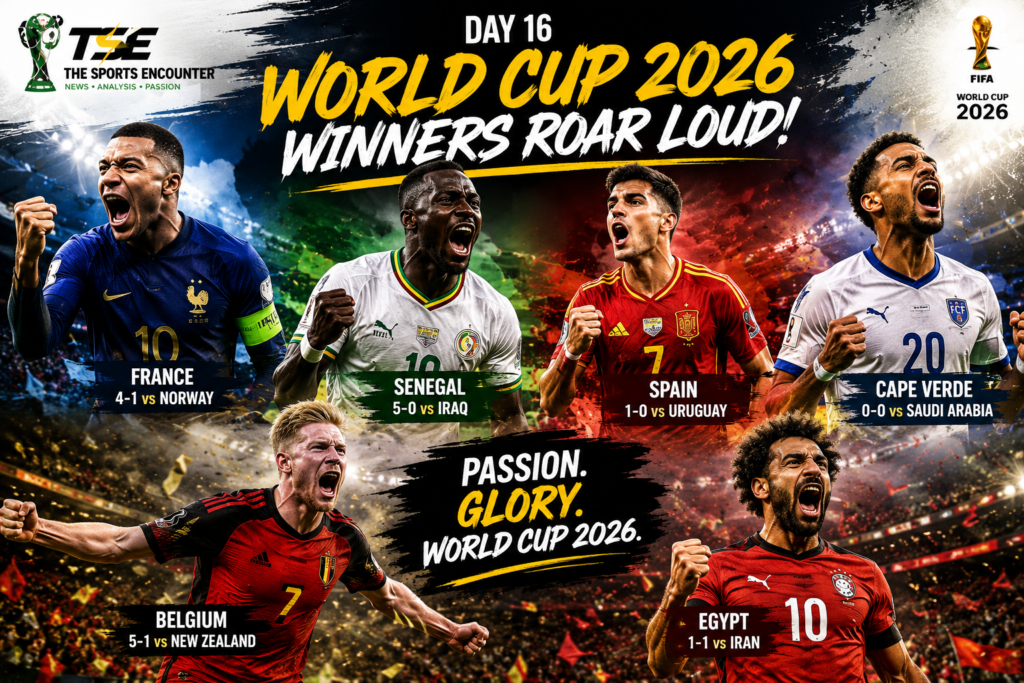
France looked like a contender. Senegal looked revived. Spain showed knockout composure. Cape Verde protected a historic dream. Belgium found its attacking voice. Egypt survived a storm. Iran became the latest team to learn that World Cup heartbreak often arrives through the smallest margins.
That is what made the day magical.
The football was not always clean. The emotions were not always fair. The arguments will not disappear quickly. But World Cups are remembered through days like this, when scores, laws, tactics, and human pain all collide at once.
Day 16 did not belong to one team.
It belonged to the pressure of the moment.
FAQ
What were the biggest results from Day 16 of the FIFA World Cup 2026?
The biggest results included France beating Norway 4-1, Senegal defeating Iraq 5-0, Spain edging Uruguay 1-0, Belgium beating New Zealand 5-1, and Egypt drawing 1-1 with Iran.
Why was Cape Verde’s draw with Saudi Arabia important?
Cape Verde’s 0-0 draw mattered because it helped extend their historic World Cup 2026 run and kept their knockout dream alive.
Why did Iran’s late goal against Egypt become controversial?
Iran’s late goal was disallowed for offside, sparking online outrage. The key rule is that an attacker must not be nearer to goal than both the ball and the second-last opponent when the ball is played.
Which team made the strongest statement on Day 16?
Senegal’s 5-0 win over Iraq was the loudest statement in terms of scoreline, while France’s 4-1 win over Norway carried major knockout-stage warning signs.
What made Day 16 magical?
Day 16 combined dominant wins, tense qualification pressure, a historic underdog story, a late VAR controversy, and major knockout implications across Groups G, H, and I.
The Sports Encounter Credibility Line
The Sports Encounter’s World Cup 2026 coverage focuses on fixtures, team news, match analysis, fan stories, tournament trends, and the biggest talking points from football’s global stage.
Breaking News
Haaland’s Late Strike Ends Côte d’Ivoire’s Passionate World Cup Run
Erling Haaland spent most of Norway’s World Cup 2026 Round of 32 clash with Côte d’Ivoire fighting for space, rhythm, and service. Then, with the match tightening and Côte d’Ivoire refusing to fade, he found the one moment Norway needed.
Antonio Nusa gave Norway the lead with an excellent first-half finish, while Amad Diallo’s second-half equalizer rewarded a passionate Ivorian response. But Haaland’s late decisive goal sealed a hard-fought 2-1 win and sent Norway into a Round of 16 meeting with Brazil.
It was not Haaland’s loudest performance, but it became another reminder of his knockout danger. Côte d’Ivoire played with heart, pace, and belief, yet Norway had more quality in the decisive moments.
Norway Find Their Knockout Nerve as Côte d’Ivoire Leave With Pride
For most of the night in Arlington, Erling Haaland looked like a giant trapped in traffic.
Côte d’Ivoire crowded him, blocked his runs, forced Norway to search for other routes, and made the World Cup 2026 Round of 32 feel much more complicated than the scoreline will remember. Yet when the moment finally arrived, Haaland still found the five yards that mattered.
Norway beat Côte d’Ivoire 2-1 at Dallas Stadium, with Antonio Nusa’s first-half strike and Haaland’s late winner carrying Ståle Solbakken’s side into the Round of 16, where Brazil now wait.
It was not a vintage Haaland performance. It was not a quiet night for Côte d’Ivoire either. The Ivorians played with pace, belief, and physical courage, especially after Amad Diallo came on and dragged them back into the match. But knockout football can turn on small windows. Norway opened two of them. Côte d’Ivoire opened one.
That was the difference.
For more World Cup knockout coverage, follow The Sports Encounter’s FIFA World Cup 2026 hub and our ongoing soccer coverage.
Match Facts Box
| Detail | Information |
|---|---|
| Match | Norway vs Côte d’Ivoire |
| Competition | FIFA World Cup 2026, Round of 32 |
| Venue | Dallas Stadium, Arlington, Texas |
| Final Score | Norway 2-1 Côte d’Ivoire |
| Norway Goals | Antonio Nusa 39’, Erling Haaland 85’/86’ |
| Côte d’Ivoire Goal | Amad Diallo 74’ |
| Next Match | Norway vs Brazil, Round of 16 |
| Red Cards | No red cards |
| Yellow Cards | Only one yellow card to Norway |
Nusa Gives Norway the Lead When Côte d’Ivoire Look Sharper
Côte d’Ivoire started with more rhythm than many expected. They pressed Norway’s right side, used Yan Diomande’s direct running to stretch the defense, and looked comfortable carrying the ball into dangerous areas.
Norway had Haaland, Martin Ødegaard, Alexander Sørloth, and enough attacking quality to scare any defense, but the early flow belonged to the African side. Nicolas Pépé kept finding useful pockets. Diomande kept forcing Norway backward. Franck Kessié and the midfield line gave Côte d’Ivoire a strong base.
Then Nusa changed the mood.
In the 39th minute, the Norway winger cut inside from the left and produced the kind of finish that bends a knockout match toward one team. His curling strike gave Norway a 1-0 lead and punished Côte d’Ivoire for failing to turn their earlier pressure into a goal.
It was a brilliant individual moment, but it also said something about Norway’s wider growth. This team no longer needs every answer to come from Haaland. Nusa provided speed, nerve, and quality at a time when Norway needed someone else to step forward.
That matters because Norway’s World Cup story has carried the Haaland headline from the start. His goals powered their group-stage rise, including the tense win over Senegal covered in our report on Norway’s 3-2 victory over Senegal. But against Côte d’Ivoire, Norway needed more than a superstar striker.
Nusa gave them exactly that.
Haaland’s Quiet Night Still Ends With the Decisive Touch
Haaland’s match looked frustrating for long stretches.
Côte d’Ivoire defended him with urgency and aggression. They denied him clean service, forced Norway wide, and made him spend much of the game waiting rather than imposing himself. For a striker who had carried so much attention into this knockout tie, the first half felt unusually still.
The warning signs still came. Haaland had moments near goal, including close-range chaos after Nusa’s opener, but Côte d’Ivoire bodies kept getting in the way.
That is the difficult thing about playing against Haaland. A defense can control him for 84 minutes and still lose the match in the 85th.
Norway’s winner came from a move that did not need poetry. Oscar Bobb helped open the space, Patrick Berg delivered low across goal, and Haaland arrived close enough to turn the ball in. The finish was not spectacular. The timing was ruthless.
That goal pushed Norway back in front and showed why Haaland remains terrifying even on an ordinary night. He does not need to dominate the match to decide it.
For background on the pre-match question around Norway’s dependence on him, read our preview: Can Haaland Carry Norway Past Côte d’Ivoire’s Power Test?
Amad Diallo Nearly Turns the Match for Côte d’Ivoire
Côte d’Ivoire deserved credit for refusing to fade after Nusa’s goal.
Their response in the second half had purpose. They stayed compact, kept attacking Norway’s defensive channels, and waited for the right spark. It arrived through Amad Diallo.
Introduced from the bench, Diallo brought a sharper rhythm to Côte d’Ivoire’s attack. His equalizer in the 74th minute came after a clever exchange with Pépé, followed by a confident run and finish past Ørjan Nyland.
It was the kind of goal that made Côte d’Ivoire believe the night could still belong to them.
Diallo also made an impact defensively, including a crucial goal-line intervention that kept Norway from stretching the lead before the late winner. His performance summed up Côte d’Ivoire’s night: brave, technically sharp, emotionally committed, but ultimately short of one final answer.
For a team playing its first World Cup knockout match, Côte d’Ivoire did not look overwhelmed. They looked ready for the stage. They just met a Norway side with a little more finishing power and a little more composure in the final moments.
Why Norway Were Too Good Today
Norway did not control every phase of the match, but they controlled the match’s most valuable moments.
That is not luck. It is knockout maturity.
Ødegaard’s influence gave Norway structure when the game became stretched. Berg’s passing and delivery added balance. Bobb’s late involvement helped create the winning move. Nusa provided the most explosive attacking quality before Haaland delivered the final blow.
Norway also recovered well after Diallo’s equalizer. Some teams panic when a late goal wipes away their lead. Norway did not. They trusted their shape, moved the ball forward quickly, and kept enough belief to push for the winner.
That response should matter as much as the result.
Norway had rested several key players in their heavy group-stage defeat to France, a decision that looked risky at the time and became a major talking point after their 4-1 loss, covered here: France Crush Norway After Haaland and Ødegaard Start on the Bench. Against Côte d’Ivoire, the restored core looked sharper, fresher, and more ready for a hard knockout fight.
What This Means Before Brazil
Norway now move into a Round of 16 clash with Brazil, who survived their own scare against Japan. That matchup will carry a different kind of pressure.
Brazil will not give Norway the same space in transition without threatening brutally at the other end. Vinícius Júnior, Brazil’s midfield runners, and their attacking depth will test Norway in wider areas where Côte d’Ivoire already found joy at times.
Still, Norway have earned the right to believe.
They have a winger in Nusa who can create something from nothing. They have Ødegaard to organize the rhythm. They have Haaland, who can spend most of the match in the shadows and still finish the night as the headline.
For more context on Brazil’s path, read our report on Brazil surviving Japan in the Round of 32.
Côte d’Ivoire leave with disappointment, but not embarrassment. Their tournament showed structure, energy, and enough attacking promise to suggest this run can become a foundation, not a one-off.
Norway leave with something more immediate.
A place in the last 16.
A date with Brazil.
And another reminder that even when Haaland has a quiet night, silence around him never feels safe for long.
Cards and Discipline: One Booking in a Physical but Controlled Match
For a knockout match built on pressure, duels, and late drama, Norway vs Côte d’Ivoire stayed relatively disciplined.
According to Google/FIFA match coverage, the referee showed only one yellow card in the match, and it went to Norway. Côte d’Ivoire played with passion and physical commitment, especially during their second-half push, but they avoided any bookings. No red cards were shown.
That detail matters because the match never lost its competitive edge. Côte d’Ivoire challenged Norway hard in midfield and wide areas, while Norway had to absorb several direct attacks after Amad Diallo’s equalizer. Still, the game remained controlled enough for football, not chaos, to decide the result.
For Norway, the single yellow card also keeps the discipline conversation manageable before the Round of 16 clash with Brazil. Against a faster, more technical Brazilian attack, they will need the same emotional control with even sharper defensive timing.
FAQs
Who won Norway vs Côte d’Ivoire in the World Cup 2026 Round of 32?
Norway beat Côte d’Ivoire 2-1 in the Round of 32 and advanced to the FIFA World Cup 2026 Round of 16.
Who scored for Norway against Côte d’Ivoire?
Antonio Nusa scored Norway’s opening goal in the 39th minute, while Erling Haaland scored the decisive late winner.
Who scored Côte d’Ivoire’s goal against Norway?
Amad Diallo scored Côte d’Ivoire’s equalizer in the 74th minute after coming on as a substitute.
Did Erling Haaland play well against Côte d’Ivoire?
Haaland had a quiet match by his standards, but he still made the decisive impact by scoring Norway’s winning goal late in the second half.
Who will Norway face in the Round of 16?
Norway will face Brazil in the FIFA World Cup 2026 Round of 16.
Breaking News
Mexico vs Ecuador: El Tri’s Clean-Sheet Run Faces Its First Real Emotional Test
Mexico have reached the part of the World Cup that has haunted them for 40 years. Three group games, three wins, six goals scored, and none conceded have given El Tri the perfect platform, but Ecuador arrive with a warning of their own after stunning Germany in the group stage. Inside the Azteca, Mexico will chase the long-awaited fifth game. Ecuador will try to turn one classic performance into another.
Mexico have reached the part of the World Cup that has haunted them for 40 years.
The shirts are green. The noise will be deafening. Estadio Azteca will feel less like a stadium and more like a national courtroom, where every pass, tackle, and missed chance will carry the weight of a country waiting to see whether this team can finally step beyond the familiar wall.
Mexico enter their FIFA World Cup 2026 Round of 32 match against Ecuador with perfect group-stage numbers. Three matches. Three wins. Six goals scored. None conceded. El Tri swept Group A and moved into the knockout stage with the kind of control host nations dream about before a tournament begins. Their 3-0 win over Czechia confirmed a clean, professional group campaign and strengthened belief that Javier Aguirre’s side may have the balance to end Mexico’s long knockout drought. Read more on Mexico’s perfect Group A campaign.
Now comes Ecuador, and that changes the emotional temperature.
Ecuador did not arrive here with Mexico’s clean record, but they arrive with something just as dangerous: proof that they can disturb elite teams when the moment heats up. Their dramatic 2-1 comeback against Germany in the final group match changed the tone around Group E and pushed Ecuador into the “Lucky 8” picture as one of the third-place teams to survive the expanded World Cup format. The Sports Encounter’s Day 15 roundup captured Ecuador’s Germany shock.
That is the warning Mexico cannot ignore.
Mexico Carry Form, Pressure, and a Nation’s Old Scar
Mexico’s group stage gave them almost everything they needed. Aguirre’s team looked organized without becoming dull, disciplined without losing ambition, and mature enough to manage games without inviting chaos.
Their defensive record matters most. In tournament football, clean sheets do not only protect scorelines. They calm crowds, build trust, and allow attacking players to take smarter risks. Mexico’s back line has so far given the team a platform strong enough to absorb pressure and still control momentum.
The attack has also done its part. Six goals across three group matches may not sound explosive in a tournament full of wild scorelines, but it reflects a side that found solutions without leaning too heavily on one player. Mexico have moved the ball with patience, attacked wide spaces, and used the home crowd as fuel rather than noise.
Aguirre knows the psychological side better than most. He played at the 1986 World Cup, the last time Mexico reached the quarterfinals, and has already managed the national team at previous World Cups. Before this Ecuador test, he said Mexico must be “near perfect” and called the home support their “number 12.” That phrase will resonate inside the Azteca, but it also raises the stakes. A crowd can lift a team. It can also make every quiet spell feel heavier.
Mexico’s biggest opponent may be the old idea of the “fifth game.” Since 1994, El Tri have repeatedly reached the knockout rounds and then failed to push into the quarterfinals. That history does not tackle, press, or shoot. Still, it sits in the mind of every fan who has seen promising Mexican teams crash into the same ceiling.
This team has a chance to change that conversation. To do it, Mexico must turn home energy into control, not urgency.
Ecuador Have Already Shown Their Knockout Temperament
Ecuador’s World Cup has not followed a straight line.
Their 0-0 draw with Curaçao exposed a familiar issue: chance creation without ruthless finishing. Curaçao goalkeeper Eloy Room produced a standout performance with 15 saves, and Ecuador walked away from that match knowing they had wasted a golden opportunity to take firmer control of their group. Read The Sports Encounter’s report on Ecuador’s draw with Curaçao.
Then came Germany.
That result gave Ecuador a different identity. They were no longer just a talented South American side looking for rhythm. They became a team with evidence. Germany still topped Group E, but Ecuador’s comeback showed their pressing, aggression, and refusal to fade could unsettle even a major European name. The Sports Encounter’s knockout picture explained how Ecuador advanced through the Lucky 8 route.
Sebastián Beccacece’s side will likely approach Mexico with that same edge. Ecuador can press high, compete physically, and attack transitions with speed. They have enough European-club experience to avoid being overwhelmed by the stage, and their final group match gave them emotional momentum at the perfect time.
The concern remains efficiency. Ecuador cannot afford another match where pressure, shots, and territorial control fail to turn into goals. Mexico’s defense has not conceded yet, and the longer the match stays level, the louder the Azteca will become.
Can Ecuador Repeat Their Germany-Level Performance?
That is the real question.
Ecuador’s performance against Germany had all the traits of a classic World Cup warning shot: intensity, timing, resilience, and a sense that the favorite had lost control of the match’s rhythm. Replicating that against Mexico will require more than emotion. Ecuador must manage the opening 20 minutes, avoid reckless fouls, and stop Mexico from feeding off second balls in dangerous areas.
They also need composure in possession. Mexico will press in waves when the crowd rises. Ecuador cannot treat every recovery as a chance to sprint forward. The smarter path may involve slowing the game, pulling Mexico out of shape, then hitting the space behind fullbacks when the hosts commit numbers.
If Ecuador score first, the match becomes deeply uncomfortable for Mexico. If Mexico score first, Ecuador will have to chase the game against a defense that has spent the tournament refusing to break.
What Gives Mexico the Edge?
Mexico’s edge comes from structure, home advantage, and momentum.
They have looked more settled across the tournament. Their group campaign did not require miracles. It required execution. That matters in knockout football because teams that rely only on emotional spikes can disappear when the match turns tense.
Mexico also have the crowd. Estadio Azteca remains one of world football’s great pressure chambers, and Ecuador will have to survive both the football and the noise. The hosts should look to use that energy early, but they must resist the temptation to force the match open too quickly.
Still, Ecuador may be the wrong kind of opponent for a team carrying historical pressure. They defend with bite, they press with conviction, and they have already shown that they can turn a difficult match into a statement.
Breaking News
France vs Sweden Preview: Can Sweden Stop Mbappé and Shake the World Cup Bracket?
France enter their FIFA World Cup 2026 Round of 32 clash against Sweden with the rhythm, firepower, and knockout pedigree of a team built for these nights. Kylian Mbappé remains the obvious danger, but Sweden’s challenge goes beyond stopping one superstar. Les Bleus have scored freely, attacked with variety, and shown enough depth to punish any defensive lapse.
France vs Sweden: Key Match Information
| Detail | Information |
|---|---|
| Match | France vs Sweden |
| Competition | FIFA World Cup 2026 |
| Round | Round of 32 |
| Date | June 30, 2026 |
| Venue | New York/New Jersey Stadium |
| Stakes | Winner advances to the Round of 16 |
| France Form | Three wins, 10 goals scored in Group I |
| Sweden Form | Four points from Group F, qualified as a third-place team |
| Key Question | Can Sweden survive France’s attacking depth, or will Mbappé take over another knockout night? |
France Arrive With Power, Rhythm, and a Familiar Knockout Standard
France enter this Round of 32 match with the look of a team that understands tournament football better than most. Les Bleus won all three group-stage matches, scored 10 goals, and moved through Group I with the kind of control expected from a side built around elite experience and frightening attacking depth. Didier Deschamps has made it clear that France will not abandon their attacking approach, even now that the knockout rounds have started.
That detail matters because France have not played like a team trying to manage its way through the tournament. They have attacked with purpose. Kylian Mbappé has again given them the sharpest edge, Ousmane Dembélé’s hat-trick against Norway showed how many different ways France can hurt opponents, and Michael Olise has added invention between the lines. France’s 3-1 win over Senegal and 3-0 win over Iraq already showed how quickly this team can turn possession into pressure. Read more on Mbappé’s impact against Senegal and his brace against Iraq.
The biggest strength of this French side is not only Mbappé. It is the fact that opponents cannot build a defensive plan around one man and feel safe. If Sweden overload toward Mbappé, France can switch the point of attack. If Sweden sit too deep, France can use runners from midfield. If Sweden try to press, France have enough technical security to play through it.
That is why this match looks so demanding for Graham Potter’s side. Sweden need discipline, courage, and almost perfect spacing for 90 minutes. France only need a few loose touches, one broken defensive line, or one transition where Mbappé receives the ball facing goal.
Sweden’s World Cup Has Been Wild, Emotional, and Hard to Read
Sweden’s tournament has already delivered three different versions of the same team. They opened with a statement 5-1 win over Tunisia, a performance powered by the attacking quality of Viktor Gyökeres and Alexander Isak. That result suggested Sweden could be one of the tournament’s most dangerous outside threats. FIFA’s report from that match highlighted the impact of both forwards as Sweden moved quickly to the top of Group F.
Then came the reality check. The Netherlands beat Sweden 5-1, exposing defensive gaps and raising questions about whether Potter’s side could handle elite movement, wide overloads, and sustained pressure. Cody Gakpo and Brian Brobbey both scored twice in that Dutch win, and Sweden looked far too open for a team with knockout ambitions.
Their final group match against Japan brought survival rather than swagger. Sweden drew 1-1, with Anthony Elanga scoring the equalizer that ultimately helped them advance as one of the best third-place teams. Potter made major changes for that match, including bringing in Jacob Widell Zetterström in goal, moving Victor Lindelöf into midfield, and starting Elanga. Those adjustments gave Sweden more stability, even if the performance still carried tension.
That journey tells the story clearly. Sweden can score. Sweden can suffer. Sweden can adjust. They can also unravel quickly if the game moves too fast.
Where Sweden Can Hurt France
Sweden’s best route into this match runs through directness, physicality, and timing. Isak and Gyökeres give Potter two forwards capable of occupying center backs, attacking space, and forcing France to defend backward. Elanga adds speed in transition, while Lindelöf’s experience gives Sweden a calmer presence in either midfield or defense.
Set pieces could also matter. Knockout matches often tighten when the favorite fails to score early, and Sweden have enough height and delivery quality to make dead-ball situations uncomfortable. Deschamps has praised Sweden’s physical and technical quality, especially in attack, so France will not walk into this match assuming control will come automatically.
Still, Sweden’s attacking threat comes with a tradeoff. If Potter commits too many bodies forward, France can punish them in open grass. If Sweden sit too low, they may invite wave after wave of French pressure. The balance has to be exact, and that is a hard ask against a team with France’s variety.
Can Mbappé Carry France Again?
Mbappé does not need to carry France in the old-fashioned sense because this squad has too many weapons around him. Yet in knockout football, the game often bends toward the player who can decide moments. That is still Mbappé.
He has the speed to attack Sweden’s back line, the confidence to take responsibility, and the tournament record to make defenders think twice before stepping high. France’s attack looks dangerous even without relying on him every possession, but Sweden’s defensive record makes his role even more important. A team that conceded five against the Netherlands cannot afford repeated one-v-one situations against Mbappé.
The question is not whether Mbappé can make the difference. The question is whether Sweden can reduce how often he gets the chance to do it.
Team News and Tactical Watch
France will miss Marcus Thuram through injury, while N’Golo Kanté has been considered doubtful and William Saliba could be available depending on final fitness calls. Sweden will be without injured defender Alexander Hien, a blow for a side already facing one of the most dangerous attacking units in the tournament.
Potter has admitted that France’s defensive weaknesses are hard to find, and that honesty reflects the size of Sweden’s challenge. His team must stay compact without becoming passive. They must counter quickly without losing shape. They must compete physically without giving France cheap free kicks near the box.
For more knockout-stage context, The Sports Encounter’s FIFA World Cup 2026 coverage has tracked how the expanded format has created new pressure points, including the “Lucky 8” third-place race and the growing list of heavyweight Round of 32 ties. Our feature on the Lucky 8 teams explains why third-place qualifiers can be dangerous, even when they enter the knockouts with uneven form.