San Francisco to Host 2027 WNBA All-Star Game as Valkyries’ Rise Reaches New Level
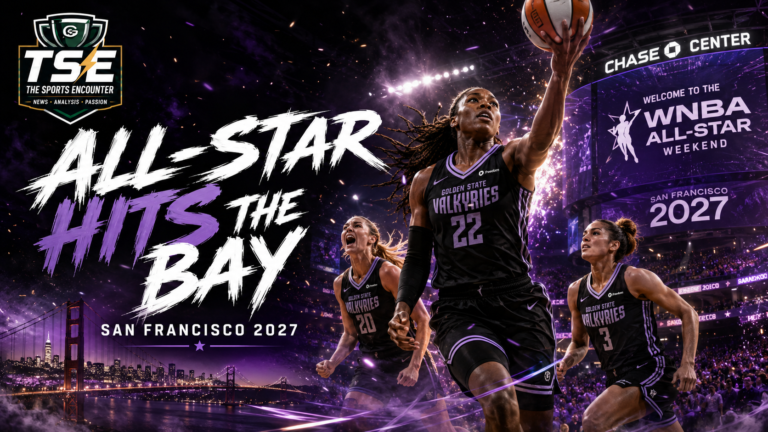
The 2027 WNBA All-Star Game is heading to San Francisco, giving the Golden State Valkyries another landmark achievement in just their third season and reinforcing the Bay Area’s growing importance to women’s basketball.
San Francisco will host the WNBA All-Star Game for the first time in 2027, giving the Golden State Valkyries another major milestone less than three years after entering the league.
The WNBA confirmed on Tuesday that the 2027 All-Star Game will take place at Chase Center on Saturday, July 31, with a full weekend of events planned across the San Francisco Bay Area.
The announcement is significant for more than geography.
The Valkyries were introduced as an expansion franchise in 2023, made the playoffs in their inaugural 2025 season, and have developed into one of the league’s strongest teams in 2026. Now, in only their third season of existence, they are being trusted to host one of the WNBA’s biggest annual showcases.
That progression says as much about the growth of women’s basketball in the Bay Area as it does about the franchise itself.
2027 WNBA All-Star Weekend: Key details
| Event | Details |
|---|---|
| Host city | San Francisco Bay Area |
| Host team | Golden State Valkyries |
| Main venue | Chase Center |
| WNBA All-Star Game | Saturday, July 31, 2027 |
| Tip-off | 8:30 p.m. ET |
| TV | ABC |
| Shooting Stars | Friday, July 30 |
| 3-Point Contest | Friday, July 30 |
| Friday broadcast | ESPN, 8 p.m. ET |
| WNBA Live | Moscone Center |
San Francisco gets its first WNBA All-Star Game
The 2027 event will mark the first time the WNBA All-Star Game has been staged in the San Francisco Bay Area.
According to the WNBA’s official announcement, Chase Center will host both the Friday skills events and Saturday’s main game.
The Kia WNBA Shooting Stars event and State Farm WNBA 3-Point Contest will take place on July 30, followed by the All-Star Game on July 31.
The weekend will extend beyond Chase Center.
The sixth annual WNBA Live presented by AWS will be held at Moscone Center, while community programs, fan events, watch parties, and additional league programming will take place throughout the region.
That broader footprint matters because modern All-Star weekends have become much more than one exhibition game.
They are league-wide showcases involving sponsors, media, fans, community programs, players, and commercial partners.
The Valkyries have reached another milestone remarkably quickly
The speed of Golden State’s rise makes the announcement particularly striking.
The Valkyries entered the WNBA as an expansion franchise in 2025.
The expectation around new teams is normally patience.
Expansion franchises often require several seasons to build competitive depth, establish supporter culture, develop commercial momentum, and create an identity strong enough to compete with established organizations.
Golden State has moved much faster.
The Valkyries finished their inaugural season 23-21 and reached the playoffs immediately.
They have improved again in 2026.
As of August 18, Golden State stood at 25-9, the second-best record in the WNBA behind the Minnesota Lynx at 29-7. The Valkyries have also already clinched a second consecutive postseason appearance.
The league therefore is not handing All-Star Weekend to a market still trying to prove itself.
It is rewarding one of the fastest-growing franchises in the league.
The timing could hardly be better
Golden State’s latest success arrived almost simultaneously with the hosting announcement.
The Valkyries defeated the Dallas Wings 78-70 on Monday night, completing a season-series sweep and clinching their place in the 2026 playoffs.
That means the All-Star announcement arrives at a moment when the franchise is already enjoying one of its strongest stretches of basketball.
Golden State has won consistently enough that the conversation around the team has shifted.
The novelty of expansion has faded.
The Valkyries now have to be evaluated as a legitimate contender.
That competitive credibility gives the 2027 All-Star Game a stronger foundation.
Bay Area fans have given the league exactly what it wanted
WNBA commissioner Cathy Engelbert directly credited the Bay Area fanbase when announcing the event.
She pointed to the energy surrounding the Valkyries since the franchise was first announced and the level of passion supporters have shown since the team began play.
That relationship between audience demand and league investment is becoming increasingly important across the WNBA.
The Sports Encounter examined that commercial shift after ticket prices for the 2026 WNBA All-Star Game surged dramatically in Chicago.
The cheapest available ticket for that event climbed above $340 on game day, demonstrating how quickly demand around major WNBA events has changed.
The Bay Area now gives the league another premium market in which to test that momentum.
Chase Center already knows how to host basketball’s biggest events
The choice of Chase Center also reduces operational uncertainty.
The arena has already hosted major basketball events, including the NBA All-Star Game in 2025.
It is home to the Golden State Warriors and has quickly established itself as one of the most recognizable modern basketball venues in the United States.
Hosting the WNBA All-Star Game therefore allows the league to place its showcase inside an arena already designed for major national broadcasts, large sponsor activations, premium hospitality, and global media attention.
For a league growing quickly, infrastructure matters.
The WNBA can focus less on whether the venue can handle the event and more on how ambitious the event itself can become.
San Francisco is building an unusual All-Star portfolio
The announcement also strengthens San Francisco’s broader position as a major American sports-event destination.
The NBA held its All-Star Game at Chase Center in 2025.
The WNBA will follow in 2027.
Major League Baseball has also awarded the 2028 MLB All-Star Game to San Francisco.
That means the city will host major All-Star events from three of America’s biggest professional sports leagues within a relatively short period.
San Francisco Mayor Daniel Lurie described the city as the center of the sports world when welcoming the WNBA announcement.
The statement carries promotional enthusiasm, but the scheduling supports the underlying point.
Sports leagues clearly view the Bay Area as a market capable of supporting major showcase events.
The 2026 WNBA All-Star Game provides the immediate comparison
Before San Francisco takes over, the WNBA’s All-Star attention has been centered on Chicago.
The Sports Encounter’s complete guide to the 2026 WNBA All-Star Game covered the rosters, schedule, injuries, player statistics, tactical matchups, and major storylines around this year’s showcase.
Chicago also demonstrated how much the league is expanding the meaning of All-Star Weekend.
Several major 2026 activities were staged at the Obama Presidential Center, making the WNBA the first professional sports league to hold official programming there.
That partnership connected All-Star Weekend with culture, leadership, youth programming, and community engagement rather than limiting the event to an arena.
San Francisco can now build on that model.
WNBA All-Star Weekend is becoming a citywide event
The use of Moscone Center for WNBA Live is another indication of how much the event has expanded.
Large league showcases increasingly function like conventions.
Fans attend interactive events.
Brands launch campaigns.
Players participate in media appearances.
Younger supporters join basketball clinics and community programs.
Merchandise, digital content, sponsorship, and entertainment all become part of the weekend.
The game remains the centerpiece, but the surrounding ecosystem creates much of the commercial value.
That model also gives host cities a stronger incentive to pursue events because visitors spend money far beyond the arena itself.
The Valkyries are becoming an expansion blueprint
Golden State’s development should interest every league considering expansion.
Expansion success depends on more than putting a team in a large metropolitan area.
The organization needs competitive credibility, local identity, attendance demand, sponsorship interest, and enough emotional connection for supporters to feel ownership of the team.
The Valkyries appear to have developed those elements unusually quickly.
Their first season produced a winning record and playoff appearance.
The second has produced another postseason berth and one of the best records in the league.
The third will include hosting the WNBA’s premier midseason event.
That is an extraordinary trajectory for a franchise that did not play its first regular-season game until 2025.
Competitive success makes the commercial story stronger
The timing of Golden State’s rise is important because market excitement alone can fade.
Winning gives supporters a reason to remain emotionally invested after the novelty of a new franchise disappears.
The Valkyries have already developed several players capable of giving the team a recognizable identity.
Recent victories have featured strong performances from players such as Veronica Burton and Gabby Williams, who combined for 41 points in Golden State’s 94-76 victory over Dallas earlier in August.
The Valkyries also set a franchise record with 27 assists in that game.
Those performances matter because successful expansion franchises need recognizable basketball as much as recognizable branding.
Hosting All-Star in year three sends a message to the rest of the league
There is a symbolic side to the WNBA’s decision.
Established franchises often wait years or decades before hosting major league events.
Golden State will do it in its third season.
The league could have selected a traditional WNBA market with a much longer history.
Instead, it chose the Bay Area.
That suggests the WNBA is willing to reward markets where current momentum is strongest rather than allowing seniority alone to determine where showcase events are held.
For other franchises, particularly future expansion teams, that provides a powerful incentive.
Build demand quickly, create a credible organization, and the league may invest major events into the market just as quickly.
The WNBA’s growth is becoming increasingly visible
The league’s current expansion cycle is taking place alongside rising television audiences, ticket demand, player recognition, and commercial attention.
The 2026 season has also produced compelling individual storylines.
A’ja Wilson led The Sports Encounter’s midseason MVP assessment, while younger players such as Olivia Miles and other emerging stars have helped broaden the league’s competitive landscape.
Caitlin Clark continues to generate enormous interest as well, including the recent disciplinary storyline in which the WNBA rescinded a technical foul that would have triggered an automatic suspension.
The combination of established superstars, young players, successful expansion teams, and increasingly expensive premium events points toward a league operating at a different commercial scale from only a few years ago.
What fans can expect in San Francisco
The complete 2027 schedule has not yet been announced, but several anchor events are confirmed.
Friday, July 30 will feature the Shooting Stars competition and 3-Point Contest at Chase Center.
Those events will air on ESPN beginning at 8 p.m. ET.
The All-Star Game follows on Saturday, July 31 at 8:30 p.m. ET on ABC.
WNBA Live will take place at Moscone Center, with community events, watch parties, and additional programming scheduled throughout the Bay Area.
Ticket details and additional events will be released later.
TSE analysis: This announcement is really about the Valkyries’ speed of growth
The easiest way to report this story is to focus on San Francisco getting its first WNBA All-Star Game.
The more revealing story is how quickly the Golden State Valkyries have made the Bay Area important to the league.
Three years is almost no time in professional sports.
Franchises normally spend that period trying to establish basic credibility.
Golden State has already reached the playoffs twice, climbed toward the top of the standings, built one of the league’s most visible fan cultures, and secured an All-Star Weekend.
The progression shows what can happen when expansion, market selection, competitive roster construction, and audience demand align at the same time.
The league is responding accordingly.
The 2027 All-Star Game could become a celebration of something much bigger
By the time July 31, 2027 arrives, the Valkyries may look very different.
Players will move.
Standings will change.
New stars will emerge.
The league itself will continue expanding.
Yet the significance of the weekend is already clear.
The WNBA is taking one of its biggest events to a market that barely existed on its map three seasons earlier.
San Francisco gets its first WNBA All-Star Game.
The Valkyries get another marker of how far they have traveled in an astonishingly short period.
And the league gets another opportunity to show just how quickly women’s professional basketball is growing.
For continuing WNBA news, player analysis, major events, standings, injuries, and league developments, follow The Sports Encounter.

Breaking News
Vietnam Break Malaysia’s Resistance as Xuân Son Double Sets Up Thailand Final Rematch
Nguyễn Xuân Son came off the bench to score twice as defending champion Vietnam completed a 4-0 aggregate semifinal victory and booked another ASEAN final against Thailand.
Malaysia survived an hour in Hanoi with their comeback hopes technically alive. Within three minutes of Nguyễn Xuân Son entering the contest, those hopes had all but disappeared.
The striker scored twice after coming off the bench as Vietnam defeated Malaysia 2-0 at a packed Mỹ Đình National Stadium on Wednesday, August 19. Combined with their two-goal first-leg victory in Kuala Lumpur, the result carried the defending champions into the ASEAN Hyundai Cup 2026 final with a convincing 4-0 aggregate win.
Vietnam will now face Thailand in a repeat of the 2024 final. Kim Sang-sik’s team enters the decider with greater momentum, while the seven-time champion has an additional recovery day and will host Saturday’s opening leg in Bangkok.
TL;DR
- Vietnam defeated Malaysia 2-0 in the semifinal second leg and advanced 4-0 on aggregate.
- Substitute Nguyễn Xuân Son scored in the 62nd and 89th minutes.
- Xuân Son earned the official Hyundai Player of the Match award.
- Malaysia goalkeeper Azri Ghani made seven saves and delayed Vietnam’s breakthrough.
- No yellow or red cards appeared in the accessible official ASEAN and Google event feeds.
- Vietnam will visit Thailand on August 22 before hosting the return leg on August 26.
Vietnam vs Malaysia Match Information
| Detail | Information |
|---|---|
| Competition | ASEAN Hyundai Cup 2026 |
| Stage | Second semifinal, second leg |
| Result | Vietnam 2-0 Malaysia |
| Aggregate Result | Vietnam won 4-0 |
| Venue | Mỹ Đình National Stadium, Hanoi |
| Date | Wednesday, August 19, 2026 |
| Goalscorer | Nguyễn Xuân Son 62’, 89’ |
| Player of the Match | Nguyễn Xuân Son |
| Turning Point | Xuân Son scored three minutes after entering as a substitute |
| Yellow Cards | None listed in the accessible official ASEAN or Google event feeds |
| Red Cards | None listed |
| Final | Thailand vs Vietnam, August 22 and 26 |
The score, goalscorer and official match award were confirmed by the ASEAN Championship’s match report. Additional national-team updates are available through the Vietnam Football Federation and the Football Association of Malaysia.
Vietnam Control the Tie Before Xuân Son Finishes It
Vietnam began with the authority expected from a team protecting a 2-0 advantage. Nguyễn Đình Bắc attacked the right channel inside the opening minute, while Đoàn Văn Hậu forced Azri into an important intervention after 10 minutes.
Pressure continued through Đình Bắc, Nguyễn Quang Hải and Văn Hậu. Malaysia’s goalkeeper repeatedly prevented an early goal, including a flying save when Đình Bắc appeared ready to find the top corner.
Vietnam recorded 26 shots, with 10 reaching the target. Their 11 corners reflected the amount of time spent around Malaysia’s penalty area. The hosts had already shown this attacking depth while winning Group A against Cambodia and during their 3-0 victory over Indonesia.
Malaysia remained level at halftime because Azri performed superbly and Vietnam missed several presentable openings. Holding out was only part of the visitors’ task, however. They still needed two goals to force extra time.
Nguyễn Xuân Son Turns Pressure Into Goals
Kim introduced Xuân Son in the 59th minute after Vietnam’s starting attack had created chances without finding the finish.
The decision produced an almost immediate return. Azri saved Xuân Son’s first close-range header, but the striker remained alert when Trương Tiến Anh’s effort was blocked in the 62nd minute. He collected the loose ball and converted from close range.
Xuân Son added his second in the 89th minute, powering down the left, cutting inside and beating Azri to complete the semifinal.
His six shots and four attempts on target made him the match’s most dangerous player despite spending only half an hour on the field. The double took his tournament total to five goals, level with Đình Bắc at the top of Vietnam’s scoring chart.
Xuân Son’s influence also strengthens Vietnam’s final prospects. Their route to the semifinals had already demonstrated that goals could come from different areas. Now the forward who scored eight times during the 2024 title campaign has found his sharpest form at the ideal moment.
Patrik Lê Giang Preserves Another Clean Sheet
Malaysia enjoyed its best spell shortly after halftime. G. Pavithran forced Patrik Lê Giang into a reaction save before Paulo Josué’s follow-up was deflected over.
Those opportunities offered Malaysia a brief route back into the semifinal. A goal would have reduced the aggregate deficit and placed pressure on a home side growing frustrated by Azri’s saves.
Lê Giang ended the match with four stops and another clean sheet. His calm handling prevented Malaysia from building momentum and allowed Vietnam to continue attacking without panic.
The goalkeeper had also played an important role in Kuala Lumpur. His consistency across both legs helped Vietnam complete a semifinal without conceding.
Malaysia Compete, but Lack the Required Cutting Edge
Malaysia held 52 percent possession and completed 363 accurate passes, yet much of that control occurred away from Vietnam’s most vulnerable areas.
Tan Cheng Hoe’s team needed an early goal but struggled to place runners behind Vietnam’s back three. Paulo Josué lacked sustained service, while Malaysia’s wide attacks rarely created clear opportunities before the interval.
Azri was Malaysia’s outstanding performer. His seven saves kept the game scoreless for 61 minutes and prevented the aggregate margin from becoming heavier.
Reaching the semifinals still represented a respectable campaign. Malaysia secured qualification by defeating the Philippines in their final group game, but losses to Thailand and Vietnam exposed the gap between a competitive semifinalist and the tournament’s two strongest teams.
Vietnam vs Thailand: Who Has the Advantage in the Final?
The ASEAN Championship semifinal history pointed toward another meeting between the region’s dominant programs. Both have arrived, although their semifinal performances created different moods.
Vietnam enters as the slight favorite. The defending champion won both semifinal legs, kept two clean sheets and produced a 4-0 aggregate victory. Kim can also introduce Xuân Son from the bench or restore him to the starting lineup.
Thailand holds the logistical advantage before the opening leg. Anthony Hudson’s players have one additional recovery day and remain in Bangkok, where Saturday’s match will take place. Thailand also won all four group matches and scored 10 unanswered goals before the semifinals.
Concern emerged during their 2-1 home defeat to Singapore. After progressing 4-3 on aggregate, Hudson admitted he was “disappointed with the performance” and said there were “a lot of things we need to fix.”
Vietnam will host the second leg in Hanoi, which gives the defending champion the more valuable structural advantage. If Kim’s team remains level or close after Bangkok, the title will be decided before its own crowd at Mỹ Đình.
Thailand brings seven titles, a record 12th final appearance and the experience of surviving uncomfortable knockout situations. Vietnam carries stronger form, a deeper range of scorers and home advantage in the decisive leg.
The 2024 final ended with Vietnam defeating Thailand 5-3 on aggregate. Two years later, the War Elephants have a chance to settle that account, while Vietnam can confirm that Southeast Asian football’s balance of power has shifted.
Follow continuing tournament analysis through The Sports Encounter’s soccer coverage, its ASEAN Championship qualification archive and the broader FIFA World Cup 2026 hub.https://chatgpt.com/backend-api/sentinel/frame.html?sv=20260810913b
Breaking News
Harry Sawyer Breaks APIA Hearts as Melbourne Victory Reach Australia Cup Semifinals
Harry Sawyer came off the bench to score the decisive extra-time goal as Melbourne Victory edged APIA Leichhardt 1-0 at Leichhardt Oval and booked a Hahn Australia Cup 2026 semifinal against Sydney FC.
SYDNEY, August 19, 2026: Melbourne Victory needed 120 minutes to end APIA Leichhardt’s latest Australia Cup challenge, with substitute Harry Sawyer scoring the decisive extra-time goal in a tense 1-0 quarterfinal victory at Leichhardt Oval.
The result makes Victory the second team through to the Hahn Australia Cup 2026 semifinals and sets up a heavyweight meeting with Sydney FC for a place in the final.
According to the official Australia Cup match report, APIA frustrated the two-time Cup winners through 90 scoreless minutes before Sawyer finally found the breakthrough in the first half of extra time.
Victory had been warned repeatedly that this would not be a routine assignment. The Sports Encounter’s quarterfinal preview highlighted APIA’s home advantage, strong NPL NSW form and history of eliminating A-League opposition.
That warning proved accurate.
Melbourne had more of the ball for long periods, but APIA stayed organized, threatened after halftime and even had the ball in the net before an offside decision preserved the deadlock.
Sawyer eventually supplied the difference, continuing an impressive personal Australia Cup run and ensuring Giovanni Savarese’s side survived another difficult knockout night in New South Wales.
APIA Leichhardt 0-1 Melbourne Victory: Match Summary
| Competition | Hahn Australia Cup 2026 |
| Round | Quarterfinal |
| Result | APIA Leichhardt 0-1 Melbourne Victory after extra time |
| Scorer | Harry Sawyer |
| Venue | Leichhardt Oval |
| Melbourne Victory coach | Giovanni Savarese |
| Full-time score | 0-0 |
| Semifinal opponent | Sydney FC |
Melbourne Victory Control the Ball but Find No Easy Route Through APIA
Victory entered the quarterfinal as favorites, but the opening half quickly demonstrated why APIA had reached the last eight.
The NPL NSW side defended with discipline and refused to allow Melbourne’s possession to translate into clear chances.
Keegan Jelacic became increasingly involved as Victory tried to build through midfield, while Louis D’Arrigo sent a left-footed effort narrowly wide during one of the visitors’ better first-half moments.
APIA were without two important attacking options from the starting lineup, with Presley Ortiz and Michael Konestabo having dealt with illness during the week. Both were available from the bench.
The absences contributed to a cautious opening, although APIA gradually grew into the contest.
Jordan Segreto tested his range from a free kick late in the first half, while Frans Deli went down seeking a penalty after contact with Jordi Valadon. The appeal did not produce a spot kick.
At halftime, the game remained 0-0.
APIA Turn Up the Pressure After the Break
The balance changed after halftime.
APIA began pushing forward with greater confidence, forcing Melbourne to defend rather than simply dictate possession.
Jack Stewart created one of the first genuine moments of danger when he drove toward goal from a tight angle. Victory goalkeeper Jack Duncan stood firm, and Jason Davidson then blocked an effort from Deli during the same attacking sequence.
Moments later, Leichhardt Oval thought the underdogs had found their breakthrough.
Sean Symons converted at the back post following a well-delivered set piece, only for the assistant referee’s flag to rule the goal out for offside.
It was the type of moment that can completely change a knockout game.
APIA had gone from believing they were ahead to watching Victory immediately attack at the other end.
Matthew Grimaldi was given an excellent opportunity at the back post but sent his attempt over the crossbar.
APIA’s Defensive Resistance Pushes Victory Toward Extra Time
Melbourne continued to have more possession, yet APIA’s defensive structure held.
Victory manager Giovanni Savarese eventually turned to his bench.
Harry Shillington entered before Sawyer was introduced to give the visitors a stronger central presence in the penalty area.
The move nearly paid off quickly when a Jason Davidson cross reached Sawyer at the far post, forcing Oliver Kalac to remain alert.
The match then moved toward the type of finish APIA wanted.
Every scoreless minute increased the pressure on the A-League side while strengthening the belief inside the home ground.
Victory almost avoided extra time entirely.
Deep in second-half stoppage time, Jelacic and Grimaldi both found shooting opportunities in dangerous positions, only for APIA defenders to block the efforts and preserve the 0-0 score.
Ninety minutes had not been enough.
Harry Sawyer Changes Another Australia Cup Tie
Sawyer had already established himself as one of Melbourne Victory’s important Cup figures before arriving at Leichhardt Oval.
He scored in extra time against Western Sydney Wanderers in the previous round before Victory eventually advanced through a penalty shootout.
The striker delivered again when another knockout match required a decisive intervention.
Victory patiently moved possession through midfield before Valadon found Jelacic in space. Jelacic spotted Sawyer’s movement inside the penalty area and threaded the ball into his path.
Sawyer finished across goal into the bottom corner.
After more than 90 minutes of frustration, Melbourne finally had the lead.
The official Melbourne Victory match report credited the move to patient buildup through Valadon and Jelacic before Sawyer supplied the finishing touch.
Sawyer Is Building an Australia Cup Reputation Quickly
There is an interesting pattern developing around the striker.
Sawyer joined Victory during the offseason and has not needed long to become influential in knockout competition.
He scored his first competitive goal for the club during the Round of 16 against Western Sydney.
Now another extra-time goal has taken Victory into the semifinals.
Those are valuable contributions from a player who does not necessarily need to dominate entire matches to change them.
In cup competition, that quality can become decisive.
The difference between elimination and progression is frequently one movement, one pass or one composed finish after more than an hour of tactical stalemate.
Sawyer has now delivered those moments twice.
Jack Duncan Makes Sure Sawyer’s Goal Is Enough
The story could easily have changed again after Melbourne went ahead.
APIA had little choice but to commit more players forward.
Presley Ortiz, introduced from the bench, provided the home side with another attacking threat and eventually forced Duncan into an important save during the second period of extra time.
Duncan moved across his goal to keep out Ortiz’s low attempt and protect Melbourne’s advantage.
His contribution continues an excellent Cup campaign.
The goalkeeper was already Victory’s hero against Western Sydney, where he saved three penalties during the Round of 16 shootout.
This time he did not need penalties.
He still produced the intervention Melbourne required.
APIA Leave the Australia Cup With Their Reputation Enhanced
The result ends APIA Leichhardt’s tournament, but the manner of the defeat deserves context.
They took an established A-League club beyond 90 minutes and were separated by a single extra-time goal.
Their quarterfinal appearance was built on substance rather than novelty.
APIA entered the match as NPL NSW leaders and had already survived a dramatic penalty shootout against Sydney United 58 in the previous round.
The Sports Encounter’s pre-match analysis also noted the club’s previous Australia Cup victories over A-League opposition, including its memorable win against Melbourne Victory in 2018.
Another upset did not arrive in 2026.
The possibility remained alive until extra time.
Victory Avoid Another Australia Cup “Cupset”
The 2026 tournament has again demonstrated why professional status provides no guarantee in one-off knockout soccer.
NPL clubs have repeatedly tested A-League opponents, and several have already eliminated professional teams.
Melbourne understood that danger better than most.
APIA had beaten them in this competition before.
The location was the same.
The home crowd understood the history.
Victory therefore deserve credit for avoiding the emotional trap that can consume favorites in cup competition.
They did not panic when APIA stayed level.
They survived the disallowed goal.
They continued building attacks even as the game moved deeper into uncomfortable territory.
Eventually, their professional depth provided the answer.
Sydney FC vs Melbourne Victory Is Now Confirmed
Victory’s reward is one of the biggest fixtures available in Australian domestic soccer.
Sydney FC will face Melbourne Victory in the semifinals, renewing the Big Blue rivalry with a place in the Australia Cup final at stake.
Sydney became the first team through after beating SD Raiders 1-0, a match covered in full in The Sports Encounter’s Sydney FC vs SD Raiders quarterfinal report.
Takahiro Sekine scored the only goal at Fairfield Showground, although the Raiders pushed Sydney much harder than the final score might suggest.
The official Sydney FC quarterfinal report confirmed the Sky Blues’ progression after their 1-0 win.
The Big Blue Adds a Different Dimension to the Semifinal
Australia Cup knockout matches involving NPL clubs often draw attention because of the possibility of an upset.
Sydney against Victory brings a different type of pressure.
Both clubs will believe they should reach the final.
Both have major domestic histories.
Neither will carry the psychological freedom APIA or SD Raiders enjoyed in the quarterfinals.
The semifinal will therefore become a more traditional battle between two professional squads with expectations attached.
Sydney are chasing another Australia Cup trophy.
Melbourne Victory are two-time winners and are now one victory away from returning to the final.
Giovanni Savarese’s Victory Keep Finding Ways to Win
The result also continues Giovanni Savarese’s encouraging start at Melbourne Victory.
His side have experienced very different tests during this Cup run.
They comfortably handled Kingborough Lions United in the Round of 32.
Western Sydney Wanderers forced them through extra time and penalties.
APIA then turned the quarterfinal into another long, tactical contest.
Victory progressed from all three.
That adaptability matters at this stage of preseason.
Savarese is still developing combinations and assessing his squad ahead of the domestic campaign, yet the Australia Cup offers no room for experimental defeats.
Every match has consequences.
Australian Soccer’s Knockout Summer Keeps Delivering Tight Margins
There has been a familiar theme running through Australian soccer in 2026: knockout matches refusing to follow simple expectations.
The Socceroos experienced exactly that at the FIFA World Cup.
Australia opened the tournament with an impressive 2-0 victory over Türkiye, before tactical questions emerged following their defeat against the United States.
They then survived a demanding 0-0 draw with Paraguay to reach the knockout stage.
Australia’s run eventually ended when Egypt eliminated the Socceroos on penalties.
The circumstances are different, but the competitive lesson travels well.
Knockout soccer rewards teams that remain emotionally stable when the match does not follow the expected script.
Melbourne Victory did that at Leichhardt.
Australia Cup 2026 Quarterfinal Picture
| Quarterfinal | Result/Status |
|---|---|
| SD Raiders vs Sydney FC | Sydney FC won 1-0 |
| APIA Leichhardt vs Melbourne Victory | Melbourne Victory won 1-0 after extra time |
| Lions FC vs North Sunshine Eagles | Upcoming |
| Preston Lions vs South Melbourne | Upcoming |
The wider tournament can be followed through The Sports Encounter’s soccer coverage, while our FIFA World Cup 2026 hub provides additional coverage of Australia’s international campaign and the major soccer stories shaping 2026.
TSE Turning Points
APIA’s disallowed goal
Sean Symons putting the ball into the net early in the second half briefly changed the atmosphere inside Leichhardt Oval. The offside flag prevented APIA from gaining the kind of lead that could have transformed the final half-hour.
Grimaldi misses at the other end
Victory immediately generated a major opportunity after APIA’s disallowed goal, but Matthew Grimaldi could not keep his attempt down. Both teams had their chance to seize control during the same frantic period.
APIA’s stoppage-time blocks
Jelacic and Grimaldi both saw late attempts blocked as APIA forced the match beyond 90 minutes.
Sawyer changes the game
Melbourne’s substitutes ultimately mattered. Sawyer found the space and finish that had been missing throughout regulation time.
Duncan denies Ortiz
APIA still created one last major opportunity, but Duncan’s late extra-time save ensured Sawyer’s goal remained enough.
TSE Verdict: Victory Were Tested, and That May Help Them Against Sydney
Melbourne Victory did not dominate APIA Leichhardt into submission.
They had to solve them.
That distinction is important.
APIA defended intelligently, grew into the match and came close enough to an upset that Victory were forced into extra time before finally finding the decisive opening.
Sawyer deserves the headline because his finish separated the teams.
Duncan deserves considerable credit because APIA still had an opportunity to take the semifinal away from Melbourne after falling behind.
Jelacic’s involvement in the winning move also reflected his growing influence throughout the contest.
For Savarese, the most encouraging part may be the variety of ways Victory have progressed through this tournament.
They have won comfortably.
They have survived penalties.
Now they have survived a difficult away quarterfinal against an NPL club that had every reason to believe another upset was possible.
Sydney FC will present a very different challenge.
The Sky Blues have professional depth, Cup pedigree and their own warning from the quarterfinal after SD Raiders pushed them hard.
The semifinal therefore arrives with both teams already reminded that reputation does not win Australia Cup matches.
Victory escaped Leichhardt.
The Big Blue now decides which A-League heavyweight reaches the final.
Frequently Asked Questions
Who won APIA Leichhardt vs Melbourne Victory?
Melbourne Victory defeated APIA Leichhardt 1-0 after extra time in the Hahn Australia Cup 2026 quarterfinal.
Who scored the winning goal for Melbourne Victory?
Harry Sawyer scored the only goal of the match during the first half of extra time.
What was the score after 90 minutes?
The match was 0-0 at the end of regulation time.
Did APIA Leichhardt score against Melbourne Victory?
APIA put the ball in the net during the second half through Sean Symons, but the goal was ruled out for offside.
Who will Melbourne Victory play in the Australia Cup semifinal?
Melbourne Victory will face Sydney FC in the semifinals.
How did Sydney FC reach the semifinal?
Sydney FC defeated SD Raiders 1-0, with Takahiro Sekine scoring the decisive first-half goal.
Did Jack Duncan make an important save in extra time?
Yes. Duncan denied substitute Presley Ortiz as APIA pushed for an equalizer after Melbourne had taken the lead.
Has Harry Sawyer scored in consecutive Australia Cup rounds?
Yes. Sawyer also scored in extra time against Western Sydney Wanderers in the Round of 16 before scoring the quarterfinal winner against APIA.
How many Australia Cup titles have Melbourne Victory won?
Melbourne Victory are two-time winners of the competition and are now chasing a third title.
Where can fans follow official Australia Cup updates?
Fixtures, results, match reports and tournament information are available through the official Australia Cup website.
Breaking News
Real Madrid Officially Unveil Bernardo Silva as Mourinho Gains His Midfield Swiss Army Knife
Bernardo Silva has been officially presented as a Real Madrid player after signing a two-year contract through June 2028. The former Manchester City midfielder will wear No. 20 and gives José Mourinho a versatile new option across midfield.
MADRID, August 19, 2026: Bernardo Silva has been officially presented as a Real Madrid player, completing the ceremonial side of a move that could become one of the most tactically important additions of the club’s summer rebuild.
According to Real Madrid’s official website, the Portuguese midfielder was welcomed at Ciudad Real Madrid on Wednesday by club president Florentino Pérez before signing the contract that will keep him at the Santiago Bernabéu until June 30, 2028.
Bernardo was then presented with a replica of the stadium, a watch and his new Real Madrid jersey carrying the No. 20. Honorary president José Martínez “Pirri” also attended the ceremony. :contentReference[oaicite:1]{index=1}
The formal presentation arrives several weeks after Madrid first announced the agreement and after Bernardo had already begun training and appearing in preseason under José Mourinho. What happened on Wednesday therefore felt less like the beginning of his Madrid career and more like confirmation that one of European soccer’s most experienced midfielders is now fully embedded in Mourinho’s new project.
The Sports Encounter has already followed that project closely, including José Mourinho’s return to Real Madrid, Yan Diomande’s major summer arrival and the resolution of Vinícius Júnior’s future.
Bernardo Silva at Real Madrid: Key Details
| Player | Bernardo Silva |
| Club | Real Madrid |
| Contract | Until June 30, 2028 |
| Shirt number | 20 |
| Position | Midfielder |
| Previous club | Manchester City |
| Real Madrid coach | José Mourinho |
| Official presentation | August 19, 2026, Ciudad Real Madrid |
Real Madrid Make the Bernardo Silva Era Official
Real Madrid had already announced in June that Bernardo would join the club for the next two seasons. Wednesday’s ceremony completed the traditional institutional welcome attached to major Madrid arrivals. :contentReference[oaicite:2]{index=2}
The symbolism was familiar.
Florentino Pérez received him inside the boardroom. The contract was signed. The shirt was presented. The new player was formally placed inside the institutional history of the club.
For Bernardo, however, the football had already started.
He joined Madrid’s preseason group following Portugal’s World Cup campaign and completed his first training sessions at Ciudad Real Madrid earlier this month. The club has already used him in friendly competition, meaning Mourinho has had several weeks to begin defining the role he wants the 32-year-old to perform. :contentReference[oaicite:3]{index=3}
Why No. 20 Fits Bernardo Better Than a Superstar Number
The No. 20 shirt may not carry the immediate glamour associated with Madrid’s historic attacking numbers, but that almost suits Bernardo.
His game has rarely depended on celebrity positioning.
He wins influence through movement, repetition, intelligence and technical reliability.
The official Real Madrid player profile lists him simply as a midfielder, but his actual role has always been more fluid. :contentReference[oaicite:4]{index=4}
He can receive deep during buildup.
He can operate between the lines.
He can move wide and create overloads.
He presses intelligently and understands how to manipulate space without needing to dominate possession individually.
That versatility is precisely why Mourinho wanted him.
Mourinho Has Gained a Midfielder Who Can Solve Several Problems
Madrid’s midfield has enough athletic power.
Jude Bellingham can drive through pressure and arrive inside the penalty area. Federico Valverde provides range and intensity. Eduardo Camavinga can carry the ball and defend large spaces. Aurélien Tchouaméni can anchor deeper positions.
Bernardo brings something slightly different.
Control.
His value appears most clearly when a match becomes slow, narrow or technically difficult.
Madrid will face plenty of opponents this season who defend in compact blocks and refuse to give Kylian Mbappé or Vinícius Júnior open grass to attack.
Those games demand players capable of changing angles, sustaining pressure and knowing when to accelerate rather than simply trying to play faster.
Bernardo has spent years doing exactly that.
The Sports Encounter’s recent report on Real Madrid’s Teresa Herrera win over Deportivo already showed how his positional intelligence can help Mourinho control tighter matches.
His First Madrid Appearances Have Already Offered Clues
Bernardo’s integration did not wait for Wednesday’s presentation.
He has already featured in preseason and spoken about his willingness to adapt to whatever the team requires.
After his Real Madrid debut, Bernardo explained that he can contribute deeper in buildup, press higher up the pitch or move into more advanced areas depending on the game. :contentReference[oaicite:5]{index=5}
That is more than convenient squad depth.
It gives Mourinho tactical freedom.
A coach can change the shape of a midfield without necessarily making a substitution if one player is capable of moving between several roles during the match.
Bernardo Arrives With Nine Years of Manchester City Habits
Madrid are also buying experience developed inside one of the most demanding positional systems in modern soccer.
Bernardo spent nine seasons at Manchester City, making 460 appearances and scoring 76 goals while winning 20 major trophies, according to Manchester City’s official farewell announcement. :contentReference[oaicite:6]{index=6}
That period placed him at the center of Pep Guardiola’s most successful era.
He won six Premier League titles, the Champions League, domestic cups and international club honors. Manchester City also identified him as the most-used player of Guardiola’s managerial career, underlining how consistently he earned trust inside a system built around positional discipline. :contentReference[oaicite:7]{index=7}
That background makes him unusually useful to Mourinho.
The two coaches approach soccer differently, but both demand intelligence without the ball and clarity inside team structures.
From Guardiola to Mourinho Is a Fascinating Tactical Shift
Bernardo spent most of the last decade playing under a coach who wants possession to control territory.
He now joins a coach whose best teams have often been more willing to change rhythm, defend deeper and attack space directly.
That does not make Bernardo a poor fit.
It may make him more valuable.
Mourinho’s Madrid already contain enormous transition threat through Mbappé, Vinícius and the club’s younger attacking options.
The missing ingredient in some matches may be the ability to slow everything down.
Bernardo can provide that.
The Manchester City Exit Also Marks the End of an Era
For City, Bernardo’s departure represents more than losing another midfielder.
He was part of the core that transformed the club from domestic powerhouse into European champion.
His movement, pressing and ability to play through pressure made him central to some of the defining matches of that era.
That history also creates an unusual Madrid connection.
Bernardo produced one of the greatest performances of his City career against Real Madrid, scoring twice in the 4-0 Champions League semifinal victory at the Etihad in 2023.
Now the player who once helped dismantle Madrid on a historic European night will wear white.
Bernardo Is Joining a Much Bigger Summer Rebuild
His arrival cannot be viewed in isolation.
Real Madrid have spent the summer restructuring the squad around Mourinho.
Marc Cucurella arrived to reshape the left side, a move The Sports Encounter examined when Mourinho made the Spanish full-back one of his first major additions.
Yan Diomande later joined in a deal reported at €125 million, bringing speed and long-term attacking upside. Our analysis of the Diomande transfer showed how aggressively Madrid have invested in immediate improvement.
At the same time, Vinícius Júnior’s future has been stabilized after months of speculation. Madrid’s refusal to sell and subsequent long-term planning removed one of the biggest distractions surrounding the attack. The earlier Vinícius transfer saga had shown how quickly uncertainty around one star could dominate the club’s summer.
Bernardo Gives Bellingham Something He Has Not Always Had
One of the most interesting tactical consequences could involve Jude Bellingham.
Bellingham is most dangerous when he is allowed to move.
His ability to arrive late in attacking areas, carry the ball and attack the penalty box becomes less useful if he must spend too much time controlling every possession from deeper positions.
Bernardo can absorb some of that responsibility.
That may allow Bellingham to operate more aggressively without making Madrid’s midfield structurally careless.
Bellingham remains one of the central players in Madrid’s next era, a status reinforced during the World Cup when his performances for England further strengthened his profile as a global star.
Where Could Bernardo Actually Play?
There are several realistic options.
As a No. 8
This may be the most natural role.
Bernardo can play on either side of midfield, receive under pressure and connect deeper players with Madrid’s forwards.
As a deeper controller
He is not a traditional holding midfielder, but against weaker opponents he can drop into buildup and help Madrid play through the first line of pressure.
As a No. 10
Mourinho can use him behind the forwards when he wants additional creativity between the lines.
From the right side
Bernardo has spent significant parts of his career starting wide before drifting inside.
That option could be especially useful when Madrid want to overload midfield without losing width elsewhere.
Bernardo May Be More Important Against Smaller Teams Than Against Giants
The obvious temptation is to imagine how he changes Champions League nights.
His biggest week-to-week impact may come somewhere less glamorous.
Real Madrid regularly face domestic opponents who defend deep, slow the tempo and ask the favorites to solve a crowded final third.
Those matches often decide league titles.
Madrid rarely lack players capable of producing moments of brilliance.
The harder task is consistently turning territorial control into clear chances.
Bernardo’s patience could become crucial there.
The Rodri Story Shows Why Madrid Wanted More Control
Madrid’s interest in central control has been visible throughout the summer.
The club had previously been linked with Rodri, another Manchester City midfielder whose positioning and game management offered an obvious solution to Madrid’s need for greater structure.
The Sports Encounter examined that possibility in our analysis of the Real Madrid-Manchester City battle for Rodri.
Rodri ultimately moved elsewhere, but Bernardo gives Madrid a different route toward the same broader objective.
He does not protect midfield in the same way.
He does help control it.
Age Is the Main Question
Bernardo turned 32 earlier this month. Real Madrid therefore have not signed him as a decade-long project. :contentReference[oaicite:8]{index=8}
The two-year contract reflects that reality.
Madrid are buying immediate intelligence, experience and technical quality rather than future resale value.
That creates a clear expectation.
Bernardo needs to matter now.
His Game Could Age Better Than Most
The encouraging part is that his greatest strengths are not built primarily on raw pace.
His game depends on awareness, touch, balance, passing angles and timing.
Those qualities generally age more gracefully than explosive acceleration.
He may lose some ability to press at the extraordinary volume associated with his prime Manchester City years.
He can compensate by reading situations earlier.
The No. 20 Shirt Arrives With a Different Kind of Expectation
Bernardo is unlikely to become the face of Real Madrid.
He does not need to.
Mbappé, Vinícius and Bellingham already carry enormous commercial and attacking attention.
Bernardo’s responsibility is more subtle.
Make the team function better.
That can be just as valuable.
TSE Verdict: Madrid Have Signed a Problem-Solver
The official presentation completes the formal story.
The football story is more interesting.
Real Madrid have not signed Bernardo Silva to become their next global superstar.
They have signed him because superstars need structure around them.
Mourinho already has pace.
He has power.
He has attackers capable of winning matches individually.
Bernardo adds control, intelligence and the ability to solve different tactical problems without changing personnel.
His Manchester City career proves he understands how elite teams manage possession and pressure.
His early Real Madrid appearances suggest he is comfortable adapting.
The contract length makes the expectation immediate.
Two seasons.
No long development period.
No need to build a future resale market.
Madrid want the version of Bernardo Silva capable of helping them win now.
Wednesday’s ceremony gave him the shirt.
The next stage is showing why No. 20 could become one of the most important numbers in Mourinho’s first season back at the Bernabéu.
For continuing Real Madrid, La Liga and European soccer coverage, follow The Sports Encounter’s soccer section.
Frequently Asked Questions
Has Bernardo Silva officially joined Real Madrid?
Yes. Real Madrid formally presented Bernardo Silva at Ciudad Real Madrid on August 19, 2026.
How long is Bernardo Silva’s Real Madrid contract?
His contract runs until June 30, 2028.
What shirt number will Bernardo Silva wear at Real Madrid?
Bernardo Silva will wear the No. 20 shirt.
Who welcomed Bernardo Silva at Real Madrid?
Club president Florentino Pérez welcomed him during the official presentation ceremony. Honorary president José Martínez “Pirri” also attended.
Where did Bernardo Silva play before Real Madrid?
He spent nine seasons with Manchester City from 2017 to 2026.
How many appearances did Bernardo Silva make for Manchester City?
Manchester City’s official records list 460 appearances and 76 goals across his nine seasons at the club.
How many trophies did Bernardo Silva win at Manchester City?
Manchester City credited him with 20 major trophies during his time at the Etihad Stadium.
What position will Bernardo Silva play for Real Madrid?
He is officially listed as a midfielder, but he can operate as a No. 8, in a deeper buildup role, as a No. 10 or from the right side.
Who is Real Madrid’s coach for the 2026-27 season?
José Mourinho is Real Madrid’s coach following his return to the club.
Has Bernardo Silva already played for Real Madrid?
Yes. He joined preseason training before his official presentation and has already featured in friendly matches.