Key Takeaways
- The official WNBA Game 7 box score confirms the final result, scoring by quarter and championship outcome.
- For the opening 20 minutes, Golden State’s offense looked nothing like that of a team preparing to win a championship.
- The Valkyries had scored only 24 points by halftime.
- The Atlanta Dream had reason to believe that Game 7 would finally deliver the franchise’s first championship.
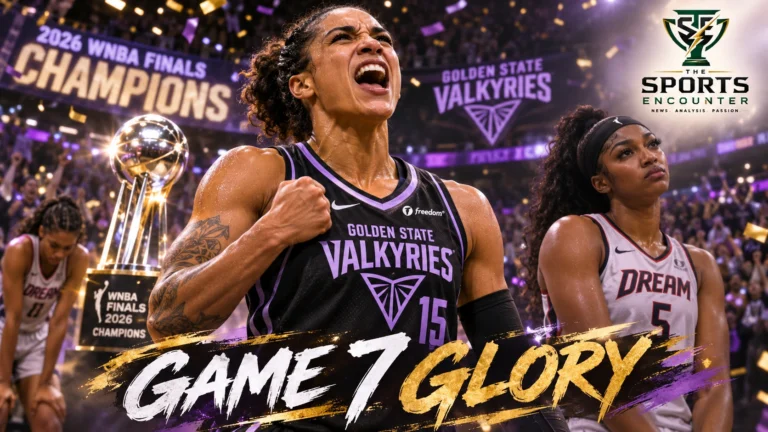
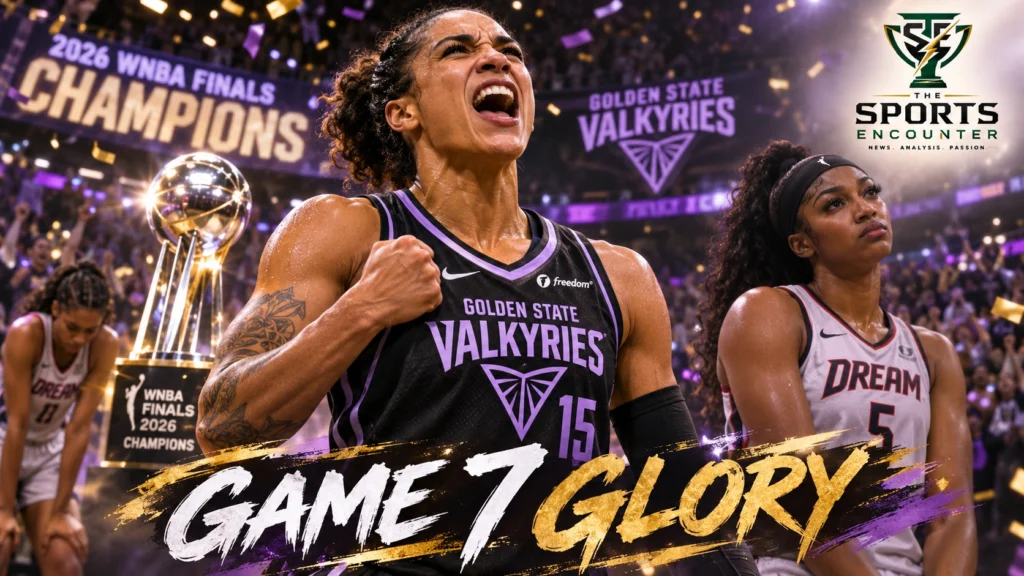
SAN FRANCISCO, United States, November 1, 2026: Gabby Williams produced the performance of her life when the Golden State Valkyries needed it most, scoring 28 of her 30 points after halftime to lead the expansion franchise to a historic 68-63 victory over the Atlanta Dream in Game 7 of the WNBA Finals at Chase Center on October 31. Trailing by six at halftime and nine during the third quarter, Golden State recovered through Williams’ extraordinary offensive explosion, relentless defense and clutch closing possessions to win the championship series 4-3. The Valkyries became the first WNBA expansion franchise to capture the title in only its second season.
Williams, who was named Finals MVP, scored Golden State’s final 11 points of the third quarter before delivering another decisive response when Rhyne Howard tied the game at 57 with 2:41 remaining. Her long three-pointer restored the lead, and Veronica Burton’s two free throws with 5.1 seconds left completed a championship that had seemed improbable when the Valkyries were established. Atlanta, seeking its first title in its fourth Finals appearance, received 18 points from Jordin Canada, 16 from Allisha Gray and 12 rebounds from Angel Reese, but the Dream’s offense faltered when the pressure was greatest. Their defeat ended a remarkable season and a Finals series in which neither team had been able to establish lasting control.
Golden State Valkyries vs Atlanta Dream: WNBA Finals Game 7 Result
| Match Detail | Confirmed Information |
|---|---|
| Competition | 2026 WNBA Finals |
| Game | Game 7, championship decider |
| Date | October 31, 2026 |
| Venue | Chase Center, San Francisco |
| Final Score | Golden State Valkyries 68-63 Atlanta Dream |
| Halftime Score | Atlanta 30-24 Golden State |
| Series Result | Golden State wins 4-3 |
| Finals MVP | Gabby Williams |
| Leading Scorer | Gabby Williams, 30 points |
| Leading Atlanta Scorer | Jordin Canada, 18 points |
| Historic Achievement | Golden State’s first championship in its second WNBA season |
The official WNBA Game 7 box score confirms the final result, scoring by quarter and championship outcome.
Story at a glance
Golden State Valkyries vs Atlanta Dream: WNBA Finals Game 7 Result
The official WNBA Game 7 box score confirms the final result, scoring by quarter and championship outcome.
Gabby Williams Turns a Six-Point Halftime Deficit Into a Championship
For the opening 20 minutes, Golden State’s offense looked nothing like that of a team preparing to win a championship.
The Final 2:41: Five Moments That Decided the WNBA Championship
The final sequence also included an important jump-ball possession involving Gray and Williams.
Kiah Stokes Finishes the Finals With a Record 18 Blocks
Williams deserved the Finals MVP award.
Atlanta Dream’s Championship Hopes Collapse Despite Canada and Gray
The Atlanta Dream had reason to believe that Game 7 would finally deliver the franchise’s first championship.
Gabby Williams Turns a Six-Point Halftime Deficit Into a Championship
For the opening 20 minutes, Golden State’s offense looked nothing like that of a team preparing to win a championship.
The Valkyries had scored only 24 points by halftime.
Williams, their most important attacking player, had contributed just two.
Atlanta led 30-24, having recovered from an extremely difficult opening quarter.
The Dream then extended their advantage to 37-28 during the third period.
That nine-point lead represented a dangerous moment for the home team.
Golden State had already lost Game 6 in Atlanta, surrendering an opportunity to close the series.
Another offensive collapse would have left the Valkyries facing consecutive defeats at the most important moment of their season.
Instead, Williams took control.
Natalie Nakase’s Halftime Message Changes Everything
Valkyries coach Natalie Nakase encouraged Williams to remain patient.
The message was straightforward: the opportunities would arrive if she continued playing within the team’s structure.
Williams responded by scoring 15 points during the third quarter.
She also contributed an assist, accounting through scoring and playmaking for most of Golden State’s third-quarter offense.
Most importantly, she scored the team’s final 11 points of the period.
That sequence transformed the emotional direction of Game 7.
Instead of chasing Atlanta with increasing desperation, Golden State entered the final quarter leading 45-44.
Williams eventually finished with 30 points, 28 of them after halftime.
According to Atlanta’s official postgame report, those 28 points established a WNBA Finals record for scoring in one half.
Why Williams’ Performance Was Historically Significant
A player scoring 30 points in a championship game is impressive.
Doing so after contributing just two points in the opening half is something considerably different.
Williams had to overcome an ineffective start, the defensive pressure of a championship opponent and the knowledge that her team was running out of time.
She did not respond by attempting to dominate every possession immediately.
Her scoring increased as Golden State found more effective attacking positions.
That distinction matters because a player can harm a struggling offense by forcing difficult shots.
Williams instead combined patience with timely aggression.
Her second-half performance was the decisive difference between a disappointing season-ending defeat and the franchise’s first championship.
How Golden State Won Game 7: Quarter-by-Quarter Breakdown
| Quarter | Golden State | Atlanta | Decisive Development |
|---|---|---|---|
| First | 14 | 12 | Valkyries establish early defensive control |
| Second | 10 | 18 | Canada leads Atlanta’s recovery |
| Third | 21 | 14 | Williams scores 15, Golden State takes lead |
| Fourth | 23 | 19 | Williams, Stokes and Burton finish the job |
| Total | 68 | 63 | Golden State wins championship 4-3 |
First Quarter: Atlanta’s Historic Scoring Drought
The Dream began the game in extraordinary fashion, failing to score during the opening 5:19.
That drought was the longest scoreless start to a WNBA Finals game in league history.
Golden State established an early advantage with aggressive defensive pressure and multiple blocked shots.
Atlanta eventually recovered, narrowing the deficit as the quarter progressed.
The Valkyries led 14-12 after ten minutes.
For Golden State, the opening offered encouragement that its defensive structure could withstand the pressure of a championship decider.
For Atlanta, recovering from the early drought demonstrated the same resilience that had brought the Dream to Game 7.
Second Quarter: Jordin Canada Puts Atlanta in Control
Atlanta’s offense improved considerably during the second period.
Jordin Canada attacked the Golden State defense and helped the Dream establish a more productive rhythm.
The visitors scored 18 points in the quarter while holding the Valkyries to ten.
Atlanta entered halftime ahead 30-24.
The scoreboard favored the Dream, and Golden State’s leading scorer had yet to establish herself.
But the six-point margin also showed that Atlanta had not fully capitalized on its opponent’s poor shooting.
Third Quarter: Williams Produces the Championship’s Defining Surge
Atlanta stretched its lead to nine points before Williams began her extraordinary response.
The Golden State forward scored 15 points in the quarter.
Her final 11 points of the period gave the Valkyries the attacking momentum they had lacked earlier.
Golden State outscored Atlanta 21-14 and entered the final quarter ahead 45-44.
The comeback did not guarantee victory.
But it completely changed the pressure facing both teams.
Fourth Quarter: Golden State Survives the Final Test
The championship remained in doubt deep into the fourth quarter.
Atlanta continued fighting, and the teams repeatedly found themselves separated by one possession.
With 2:41 remaining, Rhyne Howard converted a layup to tie the game at 57.
Golden State needed another answer.
Williams supplied it.
She connected on a long three-pointer to put the Valkyries ahead 60-57.
She subsequently added two free throws with 1:40 remaining.
Kiah Stokes contributed a late basket, and Veronica Burton eventually completed the victory from the foul line.
It was the kind of conclusion that separated a strong postseason performance from a historic championship.
The Final 2:41: Five Moments That Decided the WNBA Championship
| Moment | Player | Why It Mattered |
|---|---|---|
| 2:41 remaining | Rhyne Howard | Layup ties the game at 57 |
| 2:19 remaining | Gabby Williams | Long three-pointer restores Golden State’s lead |
| 1:40 remaining | Gabby Williams | Two free throws increase the lead |
| 11 seconds remaining | Allisha Gray | Two free throws keep Atlanta’s hopes alive |
| 5.1 seconds remaining | Veronica Burton | Two free throws seal Golden State’s championship |
The final sequence also included an important jump-ball possession involving Gray and Williams.
Burton secured the ball and converted the free throws that ended Atlanta’s championship hopes.
Her contribution underlined the value of Golden State’s supporting cast.
Williams created the opportunity to win, but her teammates still had to execute under immense pressure.
Kiah Stokes Finishes the Finals With a Record 18 Blocks
Williams deserved the Finals MVP award.
But Golden State’s championship was also built on outstanding defense.
Kiah Stokes emerged as one of the series’ most important performers.
The veteran center collected 13 rebounds and blocked two shots in Game 7.
Those blocks took her Finals total to 18, establishing a WNBA record for blocked shots in a championship series.
She had already surpassed the previous record of 12 earlier in the series.
Why Stokes’ Defensive Contribution Was Crucial
Blocked shots are only one measure of defensive influence.
A center capable of protecting the rim can change how opponents approach the basket, even when she does not record a block.
Stokes’ presence helped Golden State protect the paint and challenge Atlanta’s interior scoring options.
Her 13 rebounds in Game 7 also limited additional opportunities for the Dream.
The Valkyries held Atlanta to 63 points, a performance consistent with the defensive identity developed throughout the season.
Stokes completed the championship as a four-time WNBA winner, adding another title to her established professional résumé.
TSE examined the defensive strengths of both finalists in its report on the 2026 WNBA All-Defensive selections.
Tiffany Hayes and Veronica Burton Give Williams the Support She Needs
Hayes Completes an Extraordinary Career Story
Tiffany Hayes scored 11 points in the championship game.
At 37, the veteran guard brought experience and energy to a team playing for its first championship.
Her contribution carried particular emotional significance.
Hayes spent ten seasons with the Atlanta Dream before continuing her career elsewhere.
She returned from retirement two years before Golden State’s championship.
Now, against her former team, she became a WNBA champion.
Her performance demonstrated why the Valkyries’ success should not be attributed exclusively to the franchise’s younger players.
Golden State combined developing talent with experienced professionals who understood the demands of postseason competition.
Burton’s Composure Completes the Comeback
Veronica Burton’s late free throws supplied the final points of Golden State’s championship victory.
The guard’s career had not followed a straightforward path.
She had previously been released by Dallas and needed to rebuild her standing in the league.
Golden State provided an opportunity to establish herself in a competitive environment.
Her role in Game 7 was therefore another example of how the Valkyries developed contributors who had previously faced professional setbacks.
That combination of recruitment, coaching and player development became one of the defining features of the championship team.
Atlanta Dream’s Championship Hopes Collapse Despite Canada and Gray
The Atlanta Dream had reason to believe that Game 7 would finally deliver the franchise’s first championship.
They led at halftime.
They extended their advantage during the third quarter.
They had forced Golden State into a remarkably inefficient opening 20 minutes.
But they could not stop Williams once she found her rhythm.
Jordin Canada finished with 18 points, while Allisha Gray contributed 16.
Angel Reese collected 12 rebounds but was limited to eight points.
Atlanta’s other established scoring options struggled to provide the support required in a championship decider.
| Player | Team | Key Performance | Match Significance |
|---|---|---|---|
| Gabby Williams | Golden State | 30 points, four blocks | Finals MVP and decisive second-half scorer |
| Kiah Stokes | Golden State | 13 rebounds, two blocks | Finishes Finals with record 18 blocks |
| Tiffany Hayes | Golden State | 11 points | Veteran scoring contribution |
| Veronica Burton | Golden State | Final two free throws | Secures championship in closing seconds |
| Jordin Canada | Atlanta | 18 points | Dream’s leading scorer |
| Allisha Gray | Atlanta | 16 points | Late scoring keeps Atlanta competitive |
| Angel Reese | Atlanta | Eight points, 12 rebounds | Rebounding contribution despite offensive struggles |
Atlanta’s Three-Point Shooting Becomes a Major Problem
The Dream made only six of their 30 three-point attempts.
That is a 20 percent conversion rate.
Atlanta also shot 33.3 percent overall from the field.
Those figures explain why the visitors struggled to capitalize on their early advantages.
A team can defend effectively and create a favorable scoreboard position, but repeated missed shots eventually give opponents additional opportunities.
Atlanta’s inability to maintain efficient scoring allowed Golden State to remain within reach until Williams took control.
Why Angel Reese Could Not Repeat Her Game 2 Heroics
Reese had previously delivered one of the most impressive performances of the series.
In Game 2, she scored 30 points and collected 16 rebounds as Atlanta defeated Golden State 79-65.
That performance made her the youngest player to record at least 30 points and 15 rebounds in a WNBA Finals game.
The contrast with Game 7 was considerable.
Reese remained active on the glass but could not reproduce the same offensive production.
Golden State’s defensive approach made her scoring opportunities more difficult.
Our detailed report on Reese’s historic Game 2 performance provides the background to one of the series’ most important individual battles.
TSE Statistical Analysis: Golden State’s 44-33 Second-Half Turnaround
The strongest numerical explanation for Golden State’s victory comes from comparing the two halves.
The Valkyries scored 24 points before halftime and 44 afterward.
Atlanta scored 30 in the first half and 33 in the second.
| Measure | Golden State | Atlanta |
|---|---|---|
| First-half points | 24 | 30 |
| Second-half points | 44 | 33 |
| Second-half scoring margin | +11 | -11 |
| Final score | 68 | 63 |
| Second-half share of total points | 64.7% | 52.4% |
| Team points from Williams after halftime | 28 of 44 | Not applicable |
TSE original calculation: Williams personally scored 63.6 percent of Golden State’s second-half points, producing 28 of the team’s 44.
That is an extraordinary concentration of scoring in a championship decider.
Golden State outscored Atlanta by 11 after halftime, enough to overturn a six-point deficit and win by five.
This calculation is derived from the official quarterly scores and Williams’ reported second-half production.
It demonstrates the scale of her contribution without pretending that other players’ defense, rebounding and passing were unimportant.
Natalie Nakase’s Lineup Changes Helped Create a Championship Team
Golden State’s success also reflects significant coaching decisions during the series.
After the Valkyries fell behind 2-1, Natalie Nakase changed her starting lineup.
She introduced Kaila Charles and Tiffany Hayes into the starting group.
Kayla Thornton and Cecilia Zandalasini moved to bench roles.
The adjustments gave Golden State different combinations and helped the coaching staff address the problems Atlanta had created.
The changes did not guarantee a championship.
Golden State still lost Game 6 and needed a dramatic comeback to win Game 7.
But Nakase demonstrated a willingness to alter responsibilities rather than persist with an unsuccessful arrangement.
That adaptability proved important over a seven-game series.
Why the Valkyries’ Bench Was Important All Season
Before the Finals, Golden State led the WNBA in regular-season bench scoring at 35.9 points per game.
Atlanta’s reserves averaged 17.9.
The 18-point difference reflected the different ways the finalists distributed offensive responsibility.
TSE identified this potential advantage before the championship began in its tactical preview of the Valkyries-Dream Finals.
Game 7 ultimately required extraordinary production from Williams, but the broader series showed why a flexible roster and effective rotation decisions were central to Golden State’s success.
Golden State’s Historic Achievement: Champions in Their Second Season
The Valkyries entered the WNBA as an expansion franchise in 2025.
They immediately exceeded expectations by reaching the playoffs in their inaugural season.
One year later, they won the championship.
According to the Elias Sports Bureau record cited by the franchise, Golden State became the fastest expansion team across the major North American professional leagues to win a championship since 1967.
The achievement is remarkable because expansion organizations generally require time to establish competitive rosters, build their development programs and create a sustained identity.
Golden State accelerated that process.
The franchise reached the playoffs immediately, assembled a deeper roster and developed a defensive structure capable of defeating more established opponents.
Its championship was not the product of one fortunate game.
It required winning an entire postseason, including an elimination series against Dallas, a semifinal sweep of Las Vegas and seven demanding Finals games.
Joe Lacob’s Five-Year Promise Fulfilled in Year Two
Owner Joe Lacob had promised that the franchise would pursue a championship within its first five seasons.
The Valkyries fulfilled that ambition three years earlier than the stated deadline.
At the championship celebration, Lacob praised the players, coaching staff, basketball executives and supporters who had helped build the organization.
The result also strengthened the Bay Area’s position as one of women’s basketball’s most important emerging markets.
The region had already been selected to host the 2027 WNBA All-Star Game.
TSE explored that development in its report on San Francisco being awarded the 2027 All-Star Game.
The Complete 2026 WNBA Finals: All Seven Results
The championship series repeatedly changed direction.
Golden State won the opener.
Atlanta responded with consecutive victories.
The Valkyries recovered to win Games 4 and 5.
The Dream forced Game 7 with a convincing Game 6 performance.
Golden State then secured the deciding victory at home.
| Game | Winner | Score | Series After Game |
|---|---|---|---|
| 1 | Golden State | 68-64 | Valkyries lead 1-0 |
| 2 | Atlanta | 79-65 | Tied 1-1 |
| 3 | Atlanta | 97-71 | Dream lead 2-1 |
| 4 | Golden State | 67-62 | Tied 2-2 |
| 5 | Golden State | 64-55 | Valkyries lead 3-2 |
| 6 | Atlanta | 80-69 | Tied 3-3 |
| 7 | Golden State | 68-63 | Valkyries win 4-3 |
The official 2026 WNBA playoff bracket provides the full postseason progression and championship results.
Why the First Seven-Game WNBA Finals Matters
The WNBA introduced the best-of-seven Finals format in 2025.
The 2026 championship was the first to require all seven games.
There had been previous winner-take-all Finals contests under shorter series formats, but this was the first championship settled by Game 7 of a best-of-seven series.
That distinction is important for historical accuracy.
The longer series increases the number of tactical adjustments teams can make and reduces the likelihood that a short burst of form determines the entire championship.
Golden State and Atlanta each had opportunities to respond to defeats, change lineups and test opposing defensive schemes.
Ultimately, the Valkyries proved more effective in the decisive game.
Atlanta’s Fourth Finals Appearance Ends Without a Championship
The Dream have now appeared in four WNBA Finals without winning the title.
The franchise previously reached the championship series in 2010, 2011 and 2013.
The 2026 campaign was arguably its most compelling opportunity.
Atlanta finished the regular season 30-14 and entered the Finals after sweeping both Washington and New York.
The Dream then led the championship series 2-1 and forced Game 7 after falling behind 3-2.
Those achievements deserve recognition.
But the final defeat exposed the difference between reaching the championship stage and converting that opportunity.
Atlanta struggled to score consistently in Game 7, particularly during the second half.
The Dream will now need to evaluate whether their offensive structure can withstand the defensive pressure of elite postseason opponents.
What the Dream Must Improve
The most immediate concern is scoring efficiency.
Making six three-pointers from 30 attempts is unlikely to support a championship-winning offense when the opponent is defending effectively inside.
Atlanta also needs more reliable alternatives when Reese is contained and its principal perimeter scorers face difficult matchups.
That does not necessarily require major roster changes.
It may involve improvements in spacing, shot selection, off-ball movement and lineup combinations.
However, the franchise must also assess the composition of its roster before the next season.
Our analysis of the WNBA Executive of the Year voting previously examined how Atlanta’s Dan Padover and Golden State’s Ohemaa Nyanin had developed contrasting championship-caliber rosters.
How Much Has the WNBA Grown During the Valkyries’ Rise?
Golden State’s championship arrives during a period of substantial commercial growth for women’s professional basketball.
The WNBA reported approximately 3.8 million regular-season attendees in 2026.
Average attendance reached 11,474, with 212 sellouts across the league.
Those figures demonstrate that interest in the sport has expanded beyond one franchise or player.
TSE examined the wider trend in its detailed analysis of the WNBA’s record 2026 attendance and television audience growth.
The Finals Opened With a Record Television Audience
Game 1 between Golden State and Atlanta averaged 2.1 million viewers across NBC and Peacock.
The audience peaked at approximately three million.
Those figures established an opening-game Finals viewership record for the league.
Our report on the record-breaking Finals opener explored the significance of that audience.
The Game 7 result gives the league another compelling story, but the final game’s television audience should not be assumed before official ratings are published.
Golden State’s Sellout Streak Reflects Extraordinary Demand
The Valkyries have sold out every home game since the franchise began competing.
Game 7 represented their 53rd consecutive sellout.
The consistent demand has helped establish Chase Center as one of the most recognizable venues in women’s professional basketball.
Golden State’s success also created unusually strong interest in Finals tickets.
TSE investigated that development in its report on rising WNBA Finals ticket prices and Atlanta’s arena arrangements.
However, strong ticket demand and high resale prices should not automatically be treated as equivalent to revenue received directly by the franchise.
The wider commercial impact must be evaluated through official ticket sales, sponsorship, broadcast and merchandise figures as they become available.
What Does Golden State’s Championship Mean for the Rest of the WNBA?
The Valkyries’ success challenges the assumption that expansion franchises must spend many years building before they can compete for a title.
Golden State demonstrates that effective recruitment, coherent coaching and organizational alignment can shorten the process.
It also highlights the value of defense in playoff basketball.
Williams attracted attention through her scoring, but Golden State’s championship run depended on much more than one player.
Stokes provided rim protection.
Burton contributed ball handling and composure.
Hayes supplied experience.
Nakase adjusted the rotation when the team’s established combinations were struggling.
The front office assembled players whose roles complemented one another.
Other WNBA teams will study that model closely.
What About Las Vegas and A’ja Wilson?
Golden State’s championship also gains significance from the opponents it defeated during the postseason.
The Valkyries swept the Las Vegas Aces in the semifinals.
Las Vegas entered the playoffs with A’ja Wilson having won a historic fifth WNBA MVP award.
The elimination demonstrated that even exceptional individual performance cannot guarantee a championship when a team faces an organized, effective opponent.
The Sports Encounter explored that contrast in its report on Wilson’s fifth MVP and the Aces’ postseason challenge.
Golden State subsequently proved that it could sustain its approach through another seven demanding games against Atlanta.
The Sports Encounter’s Original Statistical Takeaway: Williams Outscored Atlanta’s Entire Fourth-Quarter Margin
Golden State entered the final period leading by one point.
The Valkyries won the fourth quarter 23-19.
That four-point advantage completed the five-point victory.
But Williams’ 28-point second half was even more striking because she personally accounted for nearly two-thirds of Golden State’s offense during that period.
Her performance is best understood through three connected figures.
| Measure | Value | Significance |
|---|---|---|
| Williams’ first-half points | 2 | Shows extent of early offensive difficulty |
| Williams’ second-half points | 28 | WNBA Finals record for one half |
| Golden State’s second-half points | 44 | Williams supplied 63.6% of team scoring |
| Golden State’s halftime deficit | 6 | Required substantial offensive recovery |
| Golden State’s final margin | 5 | Eleven-point swing in scoreboard margin |
| Stokes’ series blocks | 18 | WNBA Finals record |
TSE calculation: Golden State’s scoring margin moved from minus six at halftime to plus five at the finish, an 11-point turnaround. Williams provided 28 points during the decisive half, but the final margin also depended on team defense, rebounding and late free throws.
This is why her performance belongs among the defining moments of the 2026 postseason.
Continue the NBA Story
 NBAWembanyama’s 43, Maxey’s Rescue and Boozer’s Unbeaten Grizzlies Headline Seven-Game NBA Drama
 NBAEmirates NBA Cup 2026: Ultimate Guide to 30 Teams, Groups, Rules, Prize Money, and the Indianapolis Final
 NBAInjury-Hit Thunder Meets Rockets as Wembanyama, Unbeaten Grizzlies Headline NBA Saturday Night Action
Frequently Asked Questions About the WNBA Finals Game 7
Who Won the 2026 WNBA Championship?
The Golden State Valkyries won their first WNBA title after defeating the Atlanta Dream 68-63 in Game 7.
What Was the Final Series Score?
Golden State won the best-of-seven championship series 4-3.
Who Was Named WNBA Finals MVP?
Gabby Williams earned the award after leading Golden State throughout the series.
How Many Points Did Gabby Williams Score in Game 7?
Williams scored 30 points, including 28 in the second half.
What Was the Halftime Score?
Atlanta led Golden State 30-24.
Who Scored the Most Points for Atlanta?
Jordin Canada led the Dream with 18 points, followed by Allisha Gray with 16.
How Did Angel Reese Perform?
Reese recorded eight points and 12 rebounds.
How Many Blocks Did Kiah Stokes Record in the Finals?
Stokes finished the seven-game series with a WNBA Finals-record 18 blocks.
Who Made Golden State’s Final Points?
Veronica Burton converted two free throws with 5.1 seconds remaining.
Was This the First WNBA Finals Game 7?
Yes. It was the first Game 7 since the WNBA introduced a best-of-seven championship format in 2025.
How Quickly Did Golden State Win Its First Championship?
The Valkyries won in their second season after entering the league in 2025.
Has Atlanta Ever Won a WNBA Championship?
No. The 2026 defeat was Atlanta’s fourth unsuccessful appearance in the WNBA Finals.
The Sports Encounter Verdict: Golden State Built a Champion Faster Than Anyone Expected
The Golden State Valkyries’ championship will be remembered for its remarkable speed.
An expansion franchise reached the playoffs in its first season and won the title in its second.
But the achievement should not be reduced to a historical statistic.
It required strategic recruitment, effective coaching and exceptional performances under pressure.
Gabby Williams provided the defining individual moment.
Her 28-point second half rescued a team that had scored only 24 points before halftime.
Kiah Stokes supplied the defensive foundation.
Tiffany Hayes offered the experience of a veteran who understood the importance of the opportunity.
Veronica Burton remained composed when the championship came down to the final possessions.
And Natalie Nakase demonstrated the willingness to change a successful team’s lineup when the series demanded it.
Atlanta deserves recognition for an extraordinary season.
The Dream reached their fourth Finals, forced a deciding game and held significant advantages during the contest.
But they could not produce the scoring consistency required to complete the job.
Their 6-for-30 three-point shooting performance and difficulty containing Williams were ultimately too costly.
For Golden State, the title confirms that expansion status does not have to mean years of competitive irrelevance.
It also gives the WNBA a champion whose rapid rise, passionate supporters and strong organizational structure create a compelling story for the league’s future.
At halftime, Atlanta appeared closer to completing its own historic journey.
By the final buzzer, Williams had rewritten the match.
The Valkyries had rewritten the expansion-team timeline.
And women’s basketball had a new champion.
For further WNBA reporting, roster analysis and postseason developments, explore The Sports Encounter’s basketball coverage.
Golden State Valkyries
- Gabby Williams Delivers a Game 7 Masterclass as Golden State Valkyries Win Historic WNBA Championship
- WNBA Finals Break Game 1 TV Record With 2.1 Million Viewers as Atlanta Prepares for a Bigger Stage
- Angel Reese Turns Game 1 Frustration Into Finals History as Atlanta Dream Silence Golden State
- WNBA Finals Preview: Golden State’s Bench Puts Atlanta’s Perfect Playoff Run to the Test
- WNBA Finals Ticket Prices Soar as Golden State’s First Title Chase Meets Atlanta’s Bigger Stage