Key Takeaways
- The result was confirmed in the Pakistan Cricket Board’s official final report.
- Before Pakistan began chasing 326, there was uncertainty over whether Fakhar Zaman would even be fit to open the innings.
- Arafat Minhas entered with Pakistan five wickets down, the required rate rising and Sri Lanka sensing an opening.
- Sri Lanka added 87 runs in the final 10 overs, but lost six wickets.
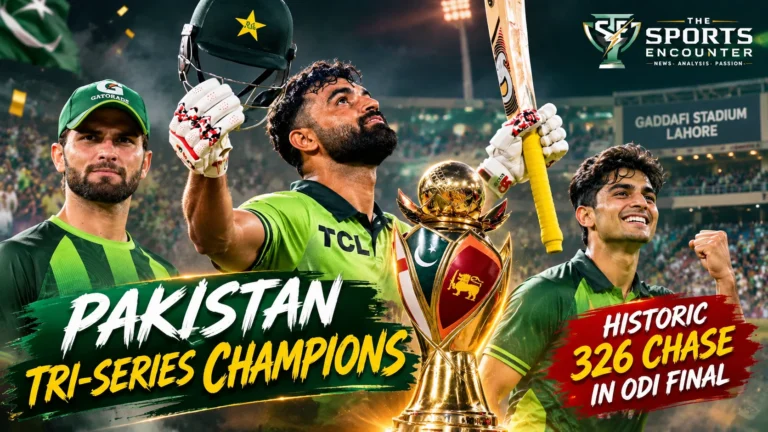
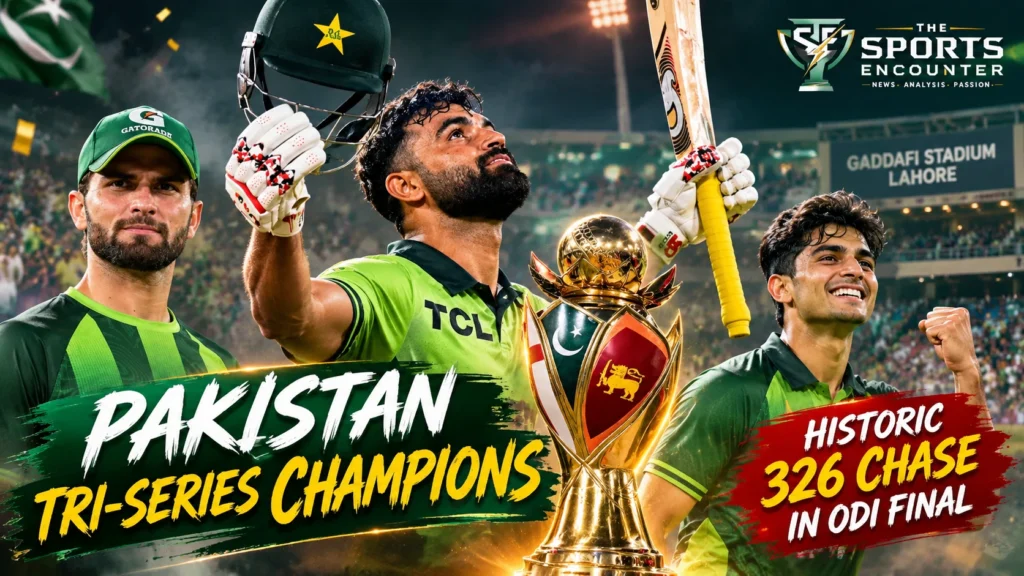
LAHORE, Pakistan, October 31, 2026: Four days after being humiliated for 110 by Sri Lanka, Pakistan produced one of the greatest run chases in ODI final history to defeat the same opponents by three wickets and lift their first multi-nation 50-over trophy on home soil. Fakhar Zaman overcame a bruised knee and an alarming early collapse to score 127 from 99 balls, while Saad Baig’s 74 and Arafat Minhas’ explosive 61 helped Pakistan overhaul Sri Lanka’s 325/8 at a packed Gaddafi Stadium. Captain Shaheen Shah Afridi finished the contest with a six off Dilshan Madushanka as Pakistan reached 331/7 in 48.3 overs, with nine balls remaining.
The victory completed a remarkable reversal for a Pakistan side that had been dismissed for just 110 by Sri Lanka on October 27. Kamindu Mendis’ maiden ODI century of 131 and Pavan Rathnayake’s 77 had threatened to put the final beyond Pakistan’s reach, especially after the hosts slipped to 14/2 in the fourth over. Instead, Fakhar and Saad rebuilt with a 149-run third-wicket partnership before Minhas and Hasan Nawaz added 94 for the sixth wicket. Fakhar was named Player of the Match, while 20-year-old Minhas earned Player of the Series honors for 149 runs and nine wickets across the competition.
Pakistan vs Sri Lanka ODI Tri-Series Final: Match at a Glance
| Match Detail | Verified Information |
|---|---|
| Competition | Pakistan ODI Tri-Series 2026/27, Final |
| Date | October 31, 2026 |
| Venue | Gaddafi Stadium, Lahore |
| Toss | Pakistan elected to field |
| Sri Lanka | 325/8 in 50 overs |
| Pakistan | 331/7 in 48.3 overs |
| Result | Pakistan won by three wickets, nine balls remaining |
| Player of the Match | Fakhar Zaman, 127 from 99 balls |
| Player of the Series | Arafat Minhas, 149 runs and nine wickets |
| Historic Achievement | Joint-highest successful target chase in a men’s ODI final |
| ODI Match Number | 5055 |
The result was confirmed in the Pakistan Cricket Board’s official final report.
Story at a glance
Pakistan vs Sri Lanka ODI Tri-Series Final: Match at a Glance
The result was confirmed in the Pakistan Cricket Board’s official final report.
Fakhar Zaman Turns Injury Uncertainty Into a Match-Winning Century
Before Pakistan began chasing 326, there was uncertainty over whether Fakhar Zaman would even be fit to open the innings.
Saad Baig’s 74 Was the Innings That Made Fakhar’s Century Possible
Fakhar received the match award, but Saad Baig’s performance deserves equal tactical attention.
Pakistan Lose Fakhar and Salman as Sri Lanka Threaten Another Collapse
Saad’s dismissal did not immediately derail the chase.
Arafat Minhas and Hasan Nawaz Produce the 94-Run Partnership That Seals the Title
Arafat Minhas entered with Pakistan five wickets down, the required rate rising and Sri Lanka sensing an opening.
Fakhar Zaman Turns Injury Uncertainty Into a Match-Winning Century
Before Pakistan began chasing 326, there was uncertainty over whether Fakhar Zaman would even be fit to open the innings.
The left-handed batter had appeared to hurt his knee while fielding during Sri Lanka’s innings. With Pakistan facing a demanding target and the pressure of a home final, any restriction on his movement could have seriously affected the chase.
He nevertheless walked out with Maaz Sadaqat.
The decision would become one of the defining moments of the tournament.
Pakistan’s chase immediately descended into trouble. Dilshan Madushanka dismissed Sadaqat for five with only eight on the board, and Babar Azam followed for a five-ball duck.
Pakistan were 14/2 after 3.3 overs.
The crowd had seen a similar collapse only four days earlier, when Sri Lanka dismissed Pakistan for 110 in 25.3 overs and won by eight wickets.
Another batting failure appeared possible.
Fakhar could have attempted to counterattack immediately, but that would have exposed Pakistan to another early dismissal. Instead, he worked with wicketkeeper Saad Baig to rebuild the innings.
Fakhar’s 12th ODI Century Changes the Final
Fakhar reached his half-century from 59 deliveries. By that stage, Saad had already played a major role in lifting the scoring rate.
With the partnership established, Fakhar accelerated.
He reached his century in 84 balls and ultimately finished with 127 from 99, striking 11 fours and six sixes.
His final strike rate was 128.28.
The innings was his 12th ODI century and another reminder of his ability to influence major limited-overs contests.
Fakhar also became only the second Pakistan batter, after Saeed Anwar, to score two centuries in ODI finals.
The importance of his contribution was not simply the number of runs.
He had entered the match with questions surrounding his recent form, then watched two teammates depart almost immediately. The innings required him to balance the demands of a historic chase with the risk of another collapse.
He succeeded because he allowed the innings to develop instead of trying to complete the chase through an uninterrupted burst of boundaries.
Why Fakhar Credited Saad Baig
After receiving the Player of the Match award, Fakhar acknowledged the difficulties he had experienced earlier in the series.
He explained that he had been searching for runs and was pleased to deliver in the final.
However, his most revealing observation concerned Saad Baig.
Fakhar said that he had initially been struggling to find his rhythm when the young wicketkeeper joined him. Saad’s early scoring helped relieve that pressure and allowed Fakhar to settle.
He described Saad’s contribution as the most important innings of the chase.
That assessment is supported by the score progression.
Pakistan were 14/2 when Saad arrived. By the time he was dismissed, the score had advanced to 163/3.
The young wicketkeeper had helped turn a potential collapse into a competitive chase.
Saad Baig’s 74 Was the Innings That Made Fakhar’s Century Possible
Fakhar received the match award, but Saad Baig’s performance deserves equal tactical attention.
The wicketkeeper scored 74 from 75 deliveries, hitting 11 fours.
He reached his maiden ODI half-century in 52 balls.
His innings provided Pakistan with a crucial scoring option at a moment when Fakhar was still working toward fluency.
At the end of the first powerplay, Pakistan had recovered only to 50/2.
That was a cautious start for a side chasing 326, but the circumstances required stability.
Saad ensured that Pakistan did not become trapped in survival mode.
He attacked loose deliveries, maintained the flow of runs and forced Sri Lanka’s bowlers to respond to two scoring threats instead of concentrating exclusively on Fakhar.
The 149-Run Partnership That Rebuilt Pakistan
Fakhar and Saad added 149 for the third wicket.
The partnership lasted 140 balls.
It transformed the chase from 14/2 into 163/3.
The most important aspect was the division of responsibility.
Saad maintained scoring opportunities while Fakhar gradually expanded his range of strokes.
Once Fakhar became established, Pakistan could accelerate without needing to take unnecessary risks against every delivery.
Maheesh Theekshana eventually dismissed Saad in the 27th over, taking a return catch.
By then, Pakistan had recovered from its initial crisis and was positioned to challenge Sri Lanka across the final 23 overs.
Saad’s innings also strengthened the argument for integrating younger players into Pakistan’s ODI side.
He did not merely score runs in a comfortable position. He delivered under pressure in a major final after two early wickets.
Pakistan Lose Fakhar and Salman as Sri Lanka Threaten Another Collapse
Saad’s dismissal did not immediately derail the chase.
Fakhar continued scoring while Salman Ali Agha provided support.
The pair added 57 for the fourth wicket, taking Pakistan to 220.
However, the contest changed again when Madushanka dismissed Fakhar for 127 in the 34th over.
Pakistan were 220/4.
The crowd had witnessed an outstanding innings, but the target remained some distance away.
When Dunith Wellalage bowled Salman for 17, Pakistan slipped to 230/5 in 36.5 overs.
They still needed 96 runs from 79 balls.
The asking rate had risen above seven runs per over, and Sri Lanka had removed both established batters.
At that moment, Pakistan were again vulnerable to the kind of collapse that had troubled them throughout the series.
The next partnership would decide the final.
Arafat Minhas and Hasan Nawaz Produce the 94-Run Partnership That Seals the Title
Arafat Minhas entered with Pakistan five wickets down, the required rate rising and Sri Lanka sensing an opening.
The left-handed all-rounder was facing a challenge that demanded both aggression and judgment.
Hasan Nawaz was already at the crease, but neither batter could afford an unnecessary dismissal.
They responded with a partnership of 94 for the sixth wicket.
It was the second great rescue of Pakistan’s innings.
Arafat’s 61 From 31 Balls Changes the Required Rate
Minhas scored 61 from 31 deliveries, hitting three fours and four sixes.
His strike rate of 196.77 was the highest among Pakistan’s major batting contributions.
He reached his half-century in just 28 balls.
His ability to clear the boundary transformed the chase.
With Hasan providing stability, Minhas could identify scoring opportunities without exposing Pakistan to uncontrolled risks.
The partnership added 94 runs and carried Pakistan from 230/5 to 324/5.
By the time Minhas was dismissed, only two runs were required to reach the target.
He had converted a demanding chase into a match Pakistan were overwhelming favorites to finish.
Why Hasan Nawaz’s 37 Not Out Was Just as Important
Hasan Nawaz finished unbeaten on 37 from 45 balls.
He struck only two fours and no sixes.
Those numbers might appear modest alongside Minhas’ spectacular hitting.
But they explain why the partnership worked.
Hasan played a controlled innings, avoided unnecessary attacking shots and provided the stability that allowed his partner to accelerate.
Pakistan did not need both batters to score at almost 200.
They needed one batter to attack while the other prevented Sri Lanka from taking another wicket.
Hasan fulfilled that role.
The contrast with his natural attacking style was noticeable, and several spectators specifically highlighted his restraint after the match.
One supporter, Bilal, questioned why Hasan was not receiving greater recognition for his sensible batting.
It was a fair observation.
His contribution was not visually spectacular, but it was essential to the outcome.
How Minhas Explained the Partnership
After receiving the Player of the Series award, Minhas credited the shared understanding between himself and Hasan.
He explained that the two had discussed believing in the chase and understood each other’s strengths.
He also identified Sri Lanka’s limited frontline bowling resources as an opportunity to take the match deep.
That tactical observation is important.
Sri Lanka relied on part-time bowling support alongside its specialist attack.
Pakistan’s batters recognized that maintaining wickets could create favorable matchups in the final overs.
Minhas’ innings was therefore more than a series of powerful shots.
It reflected an assessment of the opposition’s bowling resources and the changing requirements of the chase.
Shaheen Afridi Finishes the Final With a Six After Two Late Wickets
The final still contained one last moment of uncertainty.
Asitha Fernando dismissed Minhas for 61 at 324/6 in the 48th over.
On the next delivery, he removed Faheem Ashraf for a first-ball duck.
Pakistan had lost two wickets without adding a run.
They still needed two to win.
Shaheen Shah Afridi joined Hasan Nawaz with three wickets remaining.
After Hasan brought the scores level, Pakistan required one more run.
Madushanka began the 49th over.
At 48.3 overs, Shaheen attacked a delivery and sent the ball over midwicket for six.
The shot carried Pakistan to 331/7 and completed the three-wicket victory with nine balls unused.
It was a fitting finish for the captain.
He had helped restrict Sri Lanka with the ball and now delivered the final blow with the bat.
Yet the six should not obscure the work that made it possible.
Fakhar and Saad had rebuilt the innings. Minhas and Hasan had turned the chase in Pakistan’s favor.
Shaheen completed what those partnerships had made possible.
Kamindu Mendis’ 131 Gives Sri Lanka a Formidable Total
Sri Lanka’s defeat should not overshadow the quality of their batting.
Kamindu Mendis scored his maiden ODI century, making 131 from 128 balls.
His innings included 12 fours and two sixes.
He began with Avishka Fernando, whose 38 helped establish an 87-run opening partnership.
Pakistan struggled to make the early breakthrough.
Avishka was eventually trapped lbw by Salman Ali Agha in the 18th over.
Kusal Mendis then fell for eight, also to Salman, leaving Sri Lanka 109/2.
That brought Pavan Rathnayake to the crease.
Kamindu and Rathnayake Build a 146-Run Partnership
Kamindu and Rathnayake added 146 for the third wicket.
The partnership restored Sri Lanka’s control.
Kamindu reached his half-century from 62 balls and completed his hundred from 107.
Rathnayake reached his fifty in 47 balls and went on to score 77 from 65, hitting eight fours.
At the 40-over mark, Sri Lanka were 238/2.
The innings was positioned for an extremely strong finish.
With eight wickets in hand, the visitors had the opportunity to push beyond 340, perhaps significantly higher if the established batters remained together.
Instead, Pakistan’s bowlers produced a valuable late recovery.
Pakistan’s Bowlers Take Six Wickets in the Last 10 Overs
Sri Lanka added 87 runs in the final 10 overs, but lost six wickets.
That sequence would become critically important.
Pakistan dismissed Kamindu for 131 at 255/3 in the 42nd over.
Dasun Shanaka briefly threatened with 17 from nine balls, but Shaheen removed him.
Rathnayake was dismissed for 77 when Haris Rauf induced a catch taken by Babar Azam.
Naseem Shah then removed Janith Liyanage and Sahan Arachchige, preventing the lower middle order from producing another substantial partnership.
Haris also dismissed Dunith Wellalage.
Sri Lanka finished on 325/8.
All four of Pakistan’s principal wicket-taking bowlers claimed two wickets each.
Shaheen returned 2/50 from 10 overs, Haris took 2/60, Salman claimed 2/44 from seven and Naseem finished with 2/80.
Minhas did not take a wicket, but completed his 10 overs for 64 runs.
Why the Final 10 Overs Mattered
At 238/2 after 40 overs, Sri Lanka could reasonably target a total significantly above 325.
Pakistan’s late wickets prevented the established batters from dominating the closing phase.
The final 10 overs still produced 87 runs, so the bowling recovery should not be described as a complete shutdown.
Its value was in preventing an even larger total.
Sri Lanka captain Kusal Mendis later suggested his side had finished approximately 25 to 30 runs short of the score they wanted.
Given Pakistan eventually won with nine balls remaining, the unscored runs became a significant talking point.
However, it would be too simplistic to say another 25 runs would necessarily have changed the result. The required target influences how a chasing team manages risks throughout its innings.
The more defensible conclusion is that Pakistan’s final-over wickets kept an already difficult target within reach.
Complete Sri Lanka Batting Scorecard: 325/8 in 50 Overs
| Batter | Dismissal | R | B | 4s | 6s | SR |
|---|---|---|---|---|---|---|
| Avishka Fernando | lbw b Salman Agha | 38 | 49 | 3 | 1 | 77.55 |
| Kamindu Mendis | lbw b Shaheen Shah Afridi | 131 | 128 | 12 | 2 | 102.34 |
| Kusal Mendis (c, wk) | c & b Salman Agha | 8 | 12 | 0 | 1 | 66.66 |
| Pavan Rathnayake | c Babar Azam b Haris Rauf | 77 | 65 | 8 | 0 | 118.46 |
| Dasun Shanaka | c Maaz Sadaqat b Shaheen Shah Afridi | 17 | 9 | 2 | 1 | 188.88 |
| Janith Liyanage | c Maaz Sadaqat b Naseem Shah | 6 | 9 | 0 | 0 | 66.66 |
| Sahan Arachchige | c Faheem Ashraf b Naseem Shah | 15 | 12 | 2 | 0 | 125.00 |
| Dunith Wellalage | c Saad Baig b Haris Rauf | 3 | 4 | 0 | 0 | 75.00 |
| Maheesh Theekshana | Not out | 9 | 8 | 0 | 1 | 112.50 |
| Asitha Fernando | Not out | 6 | 5 | 1 | 0 | 120.00 |
| Extras (b 1, lb 3, nb 1, w 10) | 15 | |||||
| Total | 325/8 | 50 overs | ||||
Did not bat: Dilshan Madushanka.
Pakistan Bowling Scorecard
| Bowler | Overs | Maidens | Runs | Wickets | Economy |
|---|---|---|---|---|---|
| Shaheen Shah Afridi | 10 | 0 | 50 | 2 | 5.00 |
| Naseem Shah | 10 | 0 | 80 | 2 | 8.00 |
| Arafat Minhas | 10 | 0 | 64 | 0 | 6.40 |
| Salman Ali Agha | 7 | 0 | 44 | 2 | 6.28 |
| Haris Rauf | 10 | 1 | 60 | 2 | 6.00 |
| Faheem Ashraf | 3 | 0 | 23 | 0 | 7.66 |
Complete Pakistan Batting Scorecard: 331/7 in 48.3 Overs
| Batter | Dismissal | R | B | 4s | 6s | SR |
|---|---|---|---|---|---|---|
| Fakhar Zaman | b Madushanka | 127 | 99 | 11 | 6 | 128.28 |
| Maaz Sadaqat | c Rathnayake b Madushanka | 5 | 7 | 1 | 0 | 71.42 |
| Babar Azam | c Rathnayake b Madushanka | 0 | 5 | 0 | 0 | 0.00 |
| Saad Baig (wk) | c & b Theekshana | 74 | 75 | 11 | 0 | 98.66 |
| Salman Ali Agha | b Wellalage | 17 | 25 | 0 | 0 | 68.00 |
| Hasan Nawaz | Not out | 37 | 45 | 2 | 0 | 82.22 |
| Arafat Minhas | c & b Asitha Fernando | 61 | 31 | 3 | 4 | 196.77 |
| Faheem Ashraf | c Theekshana b Asitha Fernando | 0 | 1 | 0 | 0 | 0.00 |
| Shaheen Shah Afridi (c) | Not out | 6 | 3 | 0 | 1 | 200.00 |
| Extras (w 4) | 4 | |||||
| Total | 331/7 | 48.3 overs | ||||
Did not bat: Haris Rauf and Naseem Shah.
Sri Lanka Bowling Scorecard
| Bowler | Overs | Maidens | Runs | Wickets | Economy |
|---|---|---|---|---|---|
| Asitha Fernando | 9 | 1 | 72 | 2 | 8.00 |
| Dilshan Madushanka | 9.3 | 1 | 63 | 3 | 6.63 |
| Maheesh Theekshana | 10 | 0 | 57 | 1 | 5.70 |
| Janith Liyanage | 2 | 0 | 15 | 0 | 7.50 |
| Sahan Arachchige | 1 | 0 | 9 | 0 | 9.00 |
| Dunith Wellalage | 10 | 0 | 58 | 1 | 5.80 |
| Dasun Shanaka | 7 | 0 | 57 | 0 | 8.14 |
Pakistan’s 326-Run Target Equals the ODI Final Chase Record
The title-winning chase entered ODI history.
Pakistan’s pursuit of 326 equaled the highest successfully chased target in a men’s ODI final.
India previously achieved the feat against England in the 2002 NatWest Series final at Lord’s.
England scored 325/5 in that match, and India reached 326/8 in 49.3 overs, winning by two wickets.
Pakistan’s successful chase came 24 years later.
The target was the same, but the match situations were different.
India recovered from 146/5 during the 2002 final, with Yuvraj Singh and Mohammad Kaif combining in a decisive partnership.
Pakistan recovered from 14/2 before completing the pursuit through two major partnerships and Fakhar’s century.
The ICC’s official account of Pakistan’s historic final victory confirms the modern result and its World Cup significance.
Comparing the Two Record-Equalling ODI Final Chases
| Measure | India vs England, 2002 | Pakistan vs Sri Lanka, 2026 |
|---|---|---|
| Venue | Lord’s, London | Gaddafi Stadium, Lahore |
| Target | 326 | 326 |
| Winning Score | 326/8 | 331/7 |
| Overs Used | 49.3 | 48.3 |
| Winning Margin | 2 wickets | 3 wickets |
| Balls Remaining | 3 | 9 |
| Key Match-Winning Batter | Mohammad Kaif, 87 not out | Fakhar Zaman, 127 |
| Result | India won NatWest Series | Pakistan won ODI tri-series |
Historical clarification: Pakistan equaled the record target of 326. Its final score of 331/7 was higher because the winning runs came from a six when only one run was needed.
Pakistan Win Their First Home Multi-Nation ODI Title and End an 18-Year Wait
Pakistan’s victory also carried considerable historical significance beyond the chase.
It was the country’s first ODI tri-series title since the 2008 Kitply Cup in Bangladesh.
Pakistan defeated India in that final in Dhaka.
The 2026 triumph therefore ended an 18-year gap between ODI tri-series titles.
It also represented Pakistan’s first multi-nation ODI tournament victory on home soil.
The achievement was particularly meaningful because Pakistan had failed to win a previous home tri-series final against New Zealand in February 2025.
This time, playing in front of a home crowd, the team completed the difficult chase rather than allowing another opportunity to escape.
The final also provided a successful conclusion to a tournament that had featured dramatic reversals and several record-breaking performances.
TSE Original Analysis: The Two Partnerships That Won Pakistan the Trophy
The most revealing feature of Pakistan’s chase was the contribution of two partnerships involving different generations of players.
Fakhar and Saad rebuilt from 14/2.
Hasan and Arafat then accelerated after Pakistan slipped to 230/5.
Together, the two partnerships contributed 243 runs.
That represents approximately 73.4% of Pakistan’s final total of 331.
They played different roles in the innings.
| Partnership | Runs | Match Situation | Main Contribution |
|---|---|---|---|
| Fakhar Zaman and Saad Baig | 149 | Pakistan 14/2 | Rebuilt the chase and removed early pressure |
| Fakhar Zaman and Salman Agha | 57 | Pakistan 163/3 | Maintained scoring momentum |
| Hasan Nawaz and Arafat Minhas | 94 | Pakistan 230/5 | Controlled the required rate and brought Pakistan within two runs |
TSE statistical observation: The 149-run third-wicket and 94-run sixth-wicket partnerships contributed 243 of Pakistan’s 331 runs. This is a simple arithmetic measure of their combined contribution and should not be confused with a formal win-probability calculation.
Why the Youngsters Deserve So Much Credit
Fakhar was the most experienced principal batter in the chase.
However, the support around him came from players representing Pakistan’s future.
Saad produced his maiden ODI half-century.
Hasan adapted his batting approach to the situation.
Arafat supplied an innings that demonstrated both boundary-hitting ability and tactical awareness.
The contributions supported Pakistan captain Shaheen Afridi’s emphasis on developing younger players across formats.
For a team preparing for the 2027 Cricket World Cup, the significance of these performances extends beyond a single trophy.
Pakistan need batting depth that does not depend entirely on established stars.
The final provided evidence that younger players can contribute under pressure.
It did not, however, establish that Pakistan’s long-standing batting concerns have disappeared.
Shaheen Afridi Praises Pakistan’s Comeback and Young Players
Pakistan captain Shaheen Shah Afridi identified two aspects of the victory after the match.
The first was the bowling recovery late in Sri Lanka’s innings.
The second was the batting response after another early collapse.
He praised Fakhar’s ability to perform in major matches and highlighted the contributions of Saad Baig, Arafat Minhas and Hasan Nawaz.
Shaheen also acknowledged that the batting had suffered another collapse.
That admission was important.
Pakistan won the trophy, but the victory did not erase the concerns created by repeated top-order failures.
The captain’s optimism about the younger players was justified by their contributions in the final, although the team will need similar performances consistently.
Kusal Mendis Blames Missed Runs and Fielding Mistakes
Sri Lanka captain Kusal Mendis offered a balanced assessment of his team’s defeat.
He believed Sri Lanka had finished approximately 25 to 30 runs short of a more imposing total.
He also acknowledged the strength of the team’s early bowling.
Pakistan were 14/2, and Sri Lanka had created the opportunity to control the chase.
But the captain identified fielding errors as an important reason his side failed to finish the job.
His assessment reflected a match in which Sri Lanka played excellent cricket for extended periods without sustaining their advantage.
Kamindu’s century and Rathnayake’s innings had created a powerful batting platform.
Madushanka’s early wickets put Pakistan under pressure.
Theekshana and Wellalage later removed established batters.
Yet Sri Lanka could not prevent two major partnerships from changing the match.
Mendis also recognized the positives from the tournament and described himself as pleased with the team’s overall progress.
That response was understandable.
Sri Lanka had reached the final after a challenging beginning, including the historic chase against England.
The team’s progress was documented in TSE’s report on Sri Lanka’s remarkable 430-run chase at Rawalpindi.
Arafat Minhas Wins Player of the Series After a Breakthrough Tournament
Arafat Minhas completed the tri-series with 149 runs and nine wickets.
His all-round contribution earned him the Player of the Series award.
He had already played an important role earlier in the competition, including a six-wicket performance against England in Rawalpindi.
That display helped Pakistan strengthen their position during the group stage.
In the final, Minhas did not take a wicket but still made a decisive contribution with the bat.
His 61 from 31 balls transformed Pakistan’s pursuit.
The award therefore recognized his influence across different match situations rather than one extraordinary innings.
Read The Sports Encounter’s detailed analysis of Arafat Minhas’ six-wicket performance against England to understand how his tournament developed.
Did Pavan Rathnayake Have a Case for the Award?
Several supporters questioned whether Sri Lanka’s Pavan Rathnayake deserved the Player of the Series award.
The discussion was understandable after his major batting contributions, including a match-winning century against England and 77 in the final.
One supporter, identified as Wijerathne in the supplied match discussion, argued strongly in Rathnayake’s favor.
Others supported Minhas because of his all-round influence.
Both assessments have merit, depending on whether the award is judged primarily through batting production or combined contributions with bat and ball.
However, the official award went to Minhas, and that distinction should remain clear.
The fan debate does not alter the recorded result.
Pakistan’s Top-Order Problems Remain Despite the Historic Win
The final provided an unforgettable celebration, but it also exposed a familiar vulnerability.
Pakistan lost two wickets with only 14 runs scored.
Babar Azam was dismissed without scoring.
The team needed Fakhar and Saad to rebuild almost the entire innings.
Without that 149-run partnership, another heavy defeat would have been possible.
The concern was not new.
Four days earlier, Sri Lanka had dismissed Pakistan for 110, a performance examined in our report on Pakistan’s batting collapse and its implications for the 2027 World Cup.
Pakistan’s two innings against Sri Lanka in Lahore were dramatically different.
In the group match, the batting collapsed under pressure.
In the final, the team recovered because two major partnerships developed at critical moments.
That variation illustrates the challenge facing Pakistan’s coaching staff and selectors.
Individual brilliance can win tournaments, but dependable batting depth is needed to sustain success.
What Does Babar Azam’s Duck Mean?
Babar’s dismissal for a five-ball duck will inevitably invite criticism.
However, one innings should not determine a player’s long-term value.
The more relevant question is whether repeated starts and dismissals are affecting Pakistan’s ability to build reliable opening and middle-order platforms.
In this tournament, other batters were repeatedly required to recover difficult situations.
That increases pressure on the middle and lower order.
Pakistan’s success in the final provided welcome evidence of batting depth, but it did not remove the responsibility of established players to contribute consistently.
For a broader statistical perspective, see our research-based analysis of ODI middle-order performance across international teams.
Pakistan’s Road to the Tri-Series Trophy
The championship was won through a tournament filled with contrasting performances.
Pakistan opened by defeating Sri Lanka by 37 runs.
They followed with an 87-run win against England, highlighted by Minhas’ all-round display.
The third victory came through one of the most extraordinary tenth-wicket partnerships in ODI history.
Against England in Lahore, Pakistan recovered from 154/9 to reach 243/9, with Shadab Khan scoring an unbeaten 113 and Haris Rauf supporting him through an 89-run final-wicket partnership.
That victory secured Pakistan’s place in the final.
The Sports Encounter documented the performance in its report on Shadab Khan’s miracle century against England.
Then came the 110 all out against Sri Lanka.
The defeat raised serious questions before the final.
Yet Pakistan responded by chasing 326 against the same opponents.
| Date | Opponent | Result | Defining Contribution |
|---|---|---|---|
| October 18 | Sri Lanka | Won by 37 runs | Salman Agha century |
| October 20 | England | Won by 87 runs | Arafat Minhas six wickets |
| October 25 | England | Won by one wicket | Shadab Khan 113 not out |
| October 27 | Sri Lanka | Lost by eight wickets | Pakistan dismissed for 110 |
| October 31 | Sri Lanka, Final | Won by three wickets | Fakhar 127; Arafat 61 |
Pakistan’s journey began with Salman Ali Agha’s century in the opening match against Sri Lanka and ended with Fakhar’s remarkable innings in Lahore.
Does Pakistan’s Historic Victory Strengthen the Case for ODI Tri-Series?
The final added another compelling chapter to a competition that had already produced several memorable matches.
Sri Lanka successfully chased England’s 429/4 during the group stage.
Pakistan escaped from 154/9 against England.
Sri Lanka then dismissed Pakistan for 110.
The final concluded with another record-equalling chase.
These results demonstrated the sporting possibilities of a triangular ODI competition.
Each team faced different opponents, and qualification consequences added meaning to individual matches.
However, exceptional on-field entertainment is not proof that tri-series will automatically improve commercial performance.
Long-term audience figures, sponsorship demand, attendance and broadcasting economics would be needed to establish a wider revival.
The Sports Encounter explored that question in our investigation into whether tri-nation tournaments can revive ODI cricket.
The Lahore final provides strong evidence for the format’s sporting appeal.
Whether administrators can build on that appeal remains a separate question.
What the Historic Victory Means for Pakistan’s 2027 World Cup Preparations
Pakistan can take several positives from the series.
Fakhar demonstrated his value in major matches.
Saad showed the temperament to rebuild an innings after early wickets.
Hasan produced an unusually measured contribution in a demanding chase.
Minhas established himself as a player capable of influencing matches through both batting and bowling.
The bowling attack also demonstrated the ability to recover late in an innings when opponents appeared set for a larger total.
Those developments are valuable before the 2027 Men’s Cricket World Cup.
But Pakistan still have work to do.
Repeated top-order collapses are a major concern.
The bowling unit must also find ways to prevent established partnerships from controlling long phases of an ODI.
The final showed that Pakistan possess match-winners.
The challenge is to create a team capable of winning without requiring extraordinary recoveries every time.
Many of those concerns were raised in our pre-final tactical analysis of Pakistan and Sri Lanka.
The final answered some questions about Pakistan’s emerging talent while leaving others unresolved.
Continue the Cricket Story
 CricketPakistan vs Sri Lanka ODI Tri-Series Final: Babar Azam Faces His Biggest Test as Sri Lanka’s Fearless Batting Meets Pakistan’s Bowling Firepower
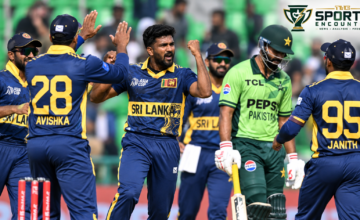
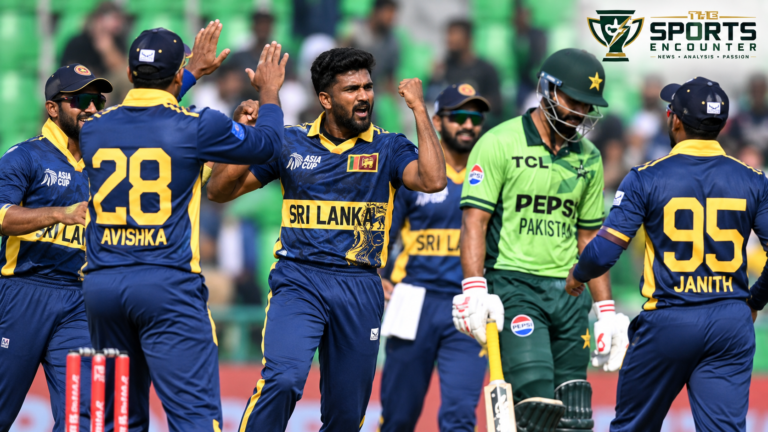 CricketSri Lanka Humiliate Pakistan for 110, Knock England Out as Babar Azam’s Familiar Failure Exposes World Cup Alarm
 CricketShadab Khan’s Miracle Century Rescues Pakistan From 154/9 as England Lose One-Wicket Thriller in Lahore
Frequently Asked Questions About the Pakistan vs Sri Lanka ODI Tri-Series Final
Who won the Pakistan ODI tri-series final on October 31, 2026?
Pakistan defeated Sri Lanka by three wickets at Gaddafi Stadium, Lahore.
What was the final score?
Sri Lanka scored 325/8 in 50 overs. Pakistan replied with 331/7 in 48.3 overs.
How many runs did Fakhar Zaman score?
Fakhar scored 127 from 99 balls, including 11 fours and six sixes.
Who was Player of the Match?
Fakhar Zaman received the award for his match-winning century.
Who won Player of the Series?
Arafat Minhas was named Player of the Series after scoring 149 runs and taking nine wickets.
How many runs did Saad Baig score?
Saad scored 74 from 75 deliveries and shared a 149-run third-wicket partnership with Fakhar.
How many runs did Arafat Minhas score in the final?
Minhas made 61 from 31 balls, including three fours and four sixes.
Who hit the winning runs?
Pakistan captain Shaheen Shah Afridi struck Dilshan Madushanka for six at 48.3 overs.
What ODI final record did Pakistan equal?
Pakistan equaled the highest successful target chase in a men’s ODI final, 326, previously achieved by India against England in 2002.
When did Pakistan last win an ODI tri-series?
Pakistan previously won the 2008 Kitply Cup in Bangladesh, defeating India in the final.
Who scored Sri Lanka’s century?
Kamindu Mendis scored 131 from 128 balls, his maiden ODI hundred.
What was the decisive partnership?
Fakhar and Saad rebuilt the innings with 149 for the third wicket, while Arafat Minhas and Hasan Nawaz added 94 for the sixth wicket to bring Pakistan within two runs of victory.
The Sports Encounter Verdict: A Historic Title, a Generational Opportunity and Familiar Questions
Pakistan’s victory belonged to several generations of players.
Fakhar Zaman delivered the experienced hand when his team was struggling.
Saad Baig showed the composure to rebuild an innings after a disastrous start.
Hasan Nawaz demonstrated that responsible batting can be as valuable as explosive stroke play.
Arafat Minhas supplied the aggression that changed the required rate and earned recognition for a breakthrough series.
Shaheen Shah Afridi completed the occasion with an emphatic six.
It was a victory of extraordinary contrasts.
Only four days earlier, Pakistan had been dismissed for 110 by the same opponents.
Now they had successfully chased 326, equaled an ODI final record and ended an 18-year wait for another tri-series championship.
The achievement deserves celebration.
Yet the strongest lesson may be that Pakistan’s emerging players have begun to provide the support required around established performers.
Fakhar’s 127 was magnificent, but Saad’s 74 created the platform. Arafat’s 61 changed the match, but Hasan’s unbeaten 37 helped make that acceleration possible.
Pakistan should not need to recover from 14/2 to win every major match.
The challenge now is to turn the character displayed in Lahore into greater consistency before the 2027 World Cup.
For one unforgettable evening, however, the questions could wait.
Pakistan were champions at home, the target of 326 had been conquered, and a new generation had played its part in creating another defining chapter of ODI cricket history.
The broader case for the value of longer limited-overs cricket is explored through The Sports Encounter’s comparison of remarkable results across cricket’s formats and the historical A Celebration of 5000 ODIs series.