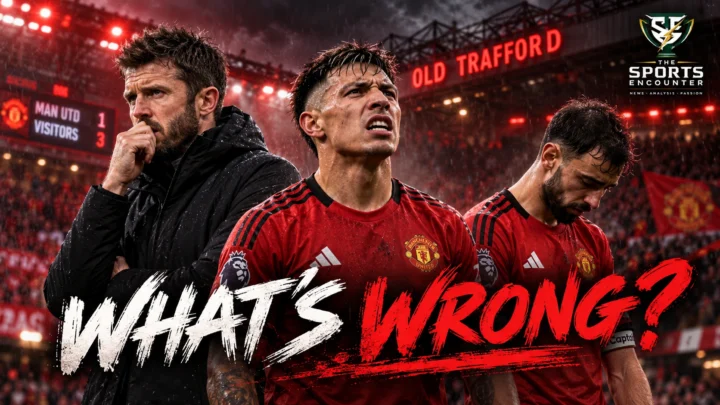
MANCHESTER, England, November 1, 2026: Manchester United and Manchester City suffered damaging Premier League defeats on Saturday, October 31, but their problems extend far beyond an unhappy Halloween. Michael Carrick’s United lost 2-0 at Chelsea, extending their winless league start to nine matches and leaving them on seven points, just above the relegation places. Across Manchester, City lost 1-0 at home to Brighton & Hove Albion, surrendering their 25-match scoring streak and suffering a second consecutive league defeat after winning their opening seven games.
Morgan Rogers and Cole Palmer punished United at Stamford Bridge, with Lisandro Martínez sent off following the penalty incident that preceded Palmer’s goal. At the Etihad Stadium, Yasin Ayari scored early and Brighton defended their lead despite facing 21 Manchester City attempts. The results raised very different questions about two clubs with vastly different immediate ambitions. United must explain why a squad that finished third last season can no longer win a league game. City must establish why Enzo Maresca’s previously dominant side has suddenly become vulnerable at both ends of the pitch.
TL;DR: Why Manchester United and Manchester City’s Defeats Matter
- Manchester United: Lost 2-0 at Chelsea, extending their Premier League winless run to nine matches.
- United’s league position: Seven points from nine matches, dangerously close to relegation.
- Key incident: Lisandro Martínez was sent off during the second-half penalty sequence, and Cole Palmer converted from the spot.
- Manchester City: Lost 1-0 at home to Brighton, their second successive Premier League defeat.
- City’s attacking concern: Twenty-one attempts produced no goals, with only six shots on target.
- Erling Haaland: His seven-match Premier League scoring streak ended.
- Title implications: City remained on 21 points, level with Arsenal, who had a game in hand.
- Brighton’s opportunity: The Seagulls moved onto 19 points and strengthened their early challenge near the top.
The Manchester Divide: Two Clubs Losing for Very Different Reasons
A glance at Saturday’s scores might suggest Manchester’s two major clubs are enduring the same kind of crisis.
Story at a glance

The Manchester Divide: Two Clubs Losing for Very Different Reasons
A glance at Saturday’s scores might suggest Manchester’s two major clubs are enduring the same kind of crisis.
Chelsea 2-0 Manchester United: The Half-Time Promise That Disappeared
Manchester United’s afternoon at Stamford Bridge initially offered something Carrick desperately needed: encouragement.
Michael Carrick Cannot Keep Calling These Defeats Isolated Mistakes
There is a point during a winless run when the explanation must move beyond individual incidents.
Is Manchester United Really Facing a Relegation Fight?
After nine matches, it would be premature to declare that Manchester United will be relegated.
Manchester City 0-1 Brighton: Twenty-One Attempts, No Goals and a Title Warning
Across Manchester, City suffered a defeat of a very different kind.
They are not.
Manchester United’s defeat exposed a problem that has developed across the opening two months of the campaign. Carrick’s side have not won any of their first nine Premier League matches, and the familiar combination of missed chances, defensive errors and second-half deterioration has become increasingly difficult to dismiss as temporary poor form.
Manchester City, by contrast, began the season with seven straight victories. Maresca’s team established an early lead at the top of the table, scored consistently and appeared to have adjusted quickly to significant changes in personnel and tactical direction.
Then Aston Villa ended the winning streak with a 2-1 victory on October 24. Brighton followed a week later.
United are attempting to rebuild a competitive identity. City are trying to prevent a short-term deterioration from becoming a title-race crisis.
| Measure | Manchester United | Manchester City |
|---|---|---|
| October 31 opponent | Chelsea, away | Brighton, home |
| Final score | Lost 2-0 | Lost 1-0 |
| League matches played | 9 | 9 |
| League points | 7 | 21 |
| Points per match | 0.78 | 2.33 |
| Recent concern | Nine-match winless run | Two consecutive defeats |
| Immediate objective | Escape relegation danger | Protect title challenge |
| Central question | Why does the team repeatedly collapse? | Why has dominance stopped producing goals? |
TSE statistical insight: City have collected exactly three times as many points as United after nine league games. The 14-point difference demonstrates why the two defeats cannot be treated as evidence of identical problems.
For the wider competitive context, explore The Sports Encounter’s Premier League coverage, which follows the title race, relegation battle and the changing fortunes of England’s leading clubs.
Chelsea 2-0 Manchester United: The Half-Time Promise That Disappeared
Manchester United’s afternoon at Stamford Bridge initially offered something Carrick desperately needed: encouragement.
United competed effectively before halftime and created opportunities against a Chelsea side that had experienced defensive inconsistency earlier in the season.
For a team struggling to find confidence, those opening 45 minutes provided a chance to change the story of its season.
Instead, United emerged after the interval and suffered another damaging defeat.
Morgan Rogers Punishes United’s Failure to Turn Pressure Into Goals
Morgan Rogers opened the scoring with an individual effort, exposing United’s inability to convert its earlier promise into a lasting advantage.
The goal shifted the pressure decisively toward Carrick’s players.
United had already demonstrated that they could compete in the contest. What they had failed to demonstrate was the ability to convert competitive spells into goals and then protect their position when the opposition responded.
That distinction has become one of the defining characteristics of United’s poor start.
A team can produce encouraging possession sequences, win midfield duels and create opportunities without establishing meaningful control over the result.
Winning football matches requires the ability to sustain those advantages throughout the contest.
Lisandro Martínez’s Red Card Makes the Collapse Worse
United’s difficulties increased when Lisandro Martínez was sent off during the second-half penalty incident.
The defender’s challenge gave Chelsea an opportunity to extend their lead from the spot. Cole Palmer converted the penalty, taking the score to 2-0.
For United, the dismissal was particularly damaging because it removed an important defensive player at a time when the team was already struggling to recover.
It also raised questions about discipline and decision-making under pressure.
Those questions cannot be separated from the team’s wider problems.
When a side is winning consistently, individual errors can sometimes be absorbed. During a prolonged winless run, the same mistakes become decisive because the team lacks the attacking efficiency and collective confidence needed to recover.
Cole Palmer’s Milestone Highlights Chelsea’s Greater Composure
Palmer’s penalty was his 50th Premier League goal, an important individual milestone in a match that also strengthened Chelsea’s league position.
For Chelsea, the victory illustrated the value of taking opportunities when they arrive.
Rogers supplied the breakthrough. Palmer completed the scoring. Chelsea protected their advantage against opponents who increasingly struggled to respond.
The result was particularly useful after Chelsea’s defeat against Tottenham the previous weekend.
Our earlier examination of Chelsea’s changing competitive position relative to Arsenal explored how the London club’s fortunes have evolved during a decade of managerial and squad changes.
Michael Carrick Cannot Keep Calling These Defeats Isolated Mistakes
There is a point during a winless run when the explanation must move beyond individual incidents.
Manchester United have reached that point.
Carrick’s team have seven points from nine Premier League matches. They have repeatedly failed to translate promising passages of football into victories.
The defeats have also arrived against opponents with different tactical approaches and competitive ambitions.
That variety matters because it challenges the argument that one particular matchup or style is responsible for the team’s difficulties.
United’s Second-Half Problem Is Becoming a Pattern
Carrick acknowledged the concern surrounding repeated second-half collapses after the defeat at Chelsea.
The problem is not necessarily that United begin matches without a plan.
Against Chelsea, they were competitive before halftime.
The deeper issue is what happens when the opposition adjusts, scores or forces United into a different tactical situation.
Do United retain enough control in midfield? Can they protect spaces around their defensive line? Are their attacking players positioned to create chances when the team begins chasing the match?
These are tactical questions, not explanations that can be answered by simply describing the players as lacking desire.
Our previous investigation, Ten Hag Accuses Ronaldo of Letting Manchester United Down, Then Turns on Club’s Broken Promises, examined the recurring tensions between managerial expectations, recruitment decisions and United’s wider football operation.
Saturday’s defeat adds another chapter to that discussion.
The Accountability Question: Carrick, the Players or the Recruitment Department?
A prolonged decline usually involves more than one cause.
Carrick is responsible for preparing the team, selecting its shape and making decisions during matches.
The players are responsible for executing those instructions, controlling emotions and responding when opponents threaten.
The football leadership is responsible for ensuring that recruitment produces a balanced squad capable of performing the manager’s preferred system.
Those responsibilities overlap, but they are not interchangeable.
Replacing a manager may create a short-term response. It does not automatically repair structural problems involving midfield balance, squad depth or inconsistent recruitment.
Equally, the existence of recruitment difficulties does not remove a manager’s responsibility for nine league games without victory.
This debate has already become a recurring theme in The Straight Re(a)d’s examination of United’s continuing managerial and organizational turmoil.
Is Manchester United Really Facing a Relegation Fight?
After nine matches, it would be premature to declare that Manchester United will be relegated.
It would be equally unreasonable to dismiss their league position as an irrelevant early-season anomaly.
Seven points from nine matches represent an average of just 0.78 points per game.
If that rate continued across a 38-match season, United would finish with approximately 30 points.
That projection is not a prediction. It demonstrates how dangerous their current pace would become if sustained.
United avoided falling into the relegation places on Saturday because Nottingham Forest and Crystal Palace also lost.
The fact that results elsewhere protected United’s position is itself significant.
A club with United’s resources and recent history should not be relying on other struggling teams to remain outside the bottom three after nine games.
| Manchester United Measure | Figure | Meaning |
|---|---|---|
| League games played | 9 | Almost one-quarter of the season |
| Points | 7 | Insufficient for a comfortable league position |
| Points per match | 0.78 | Unsustainable for the club’s stated ambitions |
| Projected points at same rate | About 30 | Illustrative calculation, not forecast |
| Latest result | Chelsea 2-0 United | Another defeat following a competitive first half |
| Disciplinary issue | Martínez sent off | Availability and defensive stability concerns |
United’s problem is therefore both immediate and structural.
The club needs points quickly. It also needs evidence that its squad can perform reliably over several matches rather than producing brief periods of encouragement followed by further setbacks.
Manchester City 0-1 Brighton: Twenty-One Attempts, No Goals and a Title Warning
Across Manchester, City suffered a defeat of a very different kind.
Enzo Maresca’s team controlled lengthy periods against Brighton, created 21 attempts and spent much of the match trying to break down a disciplined visiting defense.
But Brighton took an early opportunity and protected the advantage.
Yasin Ayari scored in the 11th minute after City failed to deal effectively with a low delivery across the penalty area.
The goal punished a defensive mistake and changed the tactical demands of the afternoon.
Brighton could defend a lead, restrict central spaces and challenge City to find a way through.
Yasin Ayari’s Goal Changes the Entire Contest
Brighton began by pressing high and attempting to prevent City from settling into their preferred passing rhythm.
Ayari’s goal rewarded that approach.
City’s defense failed to clear the danger cleanly, allowing the midfielder to finish from close range.
Once ahead, Brighton no longer needed to dominate possession to control the contest’s most important condition: the scoreline.
The Seagulls defended with numbers, protected dangerous areas and forced City to rely on repeated attacking attempts.
City eventually generated sustained pressure but could not find the equalizer.
The tactical significance is clear. Brighton did not need to outperform City in every phase. They needed to execute their own plan more effectively in the phases that determined the result.
Bart Verbruggen and Brighton’s Defensive Organization Deserve Credit
It would be inaccurate to explain City’s defeat entirely through poor finishing.
Brighton’s defensive work deserves substantial recognition.
Goalkeeper Bart Verbruggen dealt with the efforts that reached him, while the visiting defenders reduced the quality of many of City’s attacking opportunities.
Brighton’s ability to protect the penalty area meant City could accumulate attempts without creating an equivalent number of clear scoring opportunities.
That distinction matters whenever a dominant team loses.
Shot volume is evidence of attacking activity. It is not proof that a side created enough high-quality opportunities to deserve victory.
City’s 21 attempts produced only six shots on target.
For Brighton, the result offered immediate vindication after their midweek Carabao Cup defeat against the same opponent.
The broader rise of Brighton was already evident when they defeated Crystal Palace 5-0 earlier in October. TSE examined that performance in our analysis of Brighton’s five-goal victory and City’s perfect seven-match league start.
Erling Haaland’s Scoring Streak Ends: Has City’s Attack Become Too Predictable?
Erling Haaland entered Saturday’s match having scored in seven consecutive Premier League games.
Brighton prevented him from extending that streak.
It would be simplistic to blame Haaland for City’s entire attacking failure.
A striker’s scoring opportunities depend partly on the quality, timing and positioning of the passes supplied by teammates.
When opponents restrict access to central areas, even elite finishers can spend long periods without receiving the ball in dangerous positions.
The more useful question concerns City’s collective attacking structure.
Does City Create Enough Variety Around Haaland?
Haaland offers an exceptional combination of movement, strength and finishing.
But opponents know that preventing clean deliveries into the penalty area can significantly reduce his influence.
City must therefore create threats that do not rely exclusively on supplying their center forward.
That means effective runs from midfield, coordinated movement around the box, attacking width and the ability to generate chances following quick transitions.
The defeat against Brighton does not establish that City lack those qualities.
It does demonstrate that they failed to use them effectively enough on Saturday.
Earlier in the season, City’s attacking variety helped them overcome difficult situations. Their 3-2 victory over Ipswich, for example, included two Haaland goals and another from Phil Foden.
That performance featured in The Straight Re(a)d’s account of Haaland’s remarkable scoring habits and City’s early dominance.
Twenty-One Shots Tell Only Half the Story
City attempted 21 shots against Brighton but placed six on target.
That represents an on-target rate of approximately 28.6%.
The figure does not measure chance quality or expected goals. It does, however, illustrate the difference between the number of attempts and the number that directly tested the goalkeeper.
| Manchester City vs Brighton | Figure | Interpretation |
|---|---|---|
| Manchester City goals | 0 | First blank in their league scoring run |
| Manchester City attempts | 21 | Substantial attacking volume |
| Shots on target | 6 | Only 28.6% of attempts |
| Brighton goals | 1 | Ayari’s early finish decided the match |
| City’s previous league match | Lost 2-1 at Aston Villa | First defeat of the campaign |
| City’s latest two league matches | 0 points | Momentum lost after seven straight wins |
| Haaland’s scoring run | 7 league games | Ended against Brighton |
The greater concern for Maresca is not that Haaland failed to score once.
It is that City could not find an alternative route to a goal despite spending much of the match on the attack.
Enzo Maresca’s Manchester City Transition Faces Its First Serious Football Test
Maresca’s team began the season brilliantly.
Seven Premier League wins from seven matches gave City 21 points and established early confidence in a squad that had undergone significant changes.
But the transition from one dominant managerial era to another is rarely completed without setbacks.
Maresca is working with a squad that includes several relatively recent arrivals and players adapting to different responsibilities.
Those changes affect the understanding between defenders, midfielders and attacking players, particularly in moments when possession is lost.
The Brighton goal illustrated the importance of concentration and coordination in those situations.
City’s midfield and defensive structure must support their attacking ambition. Committing players forward should not repeatedly expose the team to avoidable transitions or errors near its own penalty area.
TSE explored the wider challenge of this new era in our analysis of Manchester City’s rebuilding process and the pressures surrounding their visit to Anfield.
Why Two Defeats Must Not Erase Seven Victories
There is a danger of reacting to City’s recent results as though their earlier performances never happened.
Seven consecutive Premier League victories remain substantial evidence of the squad’s quality and tactical capabilities.
The problem is that the competitive context has changed.
When City were winning every match, opponents had to chase them. After two defeats, the leading challengers have an opportunity to move ahead.
That affects the pressure surrounding subsequent fixtures.
Maresca’s task is to identify genuine tactical weaknesses without abandoning the elements that produced such a strong start.
Manchester City’s Title Lead Is Now Vulnerable to Arsenal
City remained on 21 points after nine league matches.
Arsenal also had 21 points but had played only eight games ahead of their meeting with Liverpool on Sunday, November 1.
That meant Arsenal needed only a draw at Anfield to move above City.
Brighton, meanwhile, climbed to 19 points after nine matches.
The consequences extend beyond City losing their unbeaten momentum.
The Premier League’s early title race now has a different shape.
| Club | Played | Points After October 31 | Immediate Position |
|---|---|---|---|
| Manchester City | 9 | 21 | Leaders, vulnerable to Arsenal result |
| Arsenal | 8 | 21 | Can go top by avoiding defeat at Liverpool |
| Brighton | 9 | 19 | Third, two points behind City |
| Chelsea | 9 | Not stated here | Fourth after victory over United |
TSE statistical insight: City earned 21 points from their opening seven matches and none from their next two. Their average has fallen from 3.00 points per game after Matchweek 7 to 2.33 after Matchweek 9.
That is still a strong seasonal average. But it is no longer enough to guarantee first place when Arsenal have a game in hand.
The importance of that shift becomes clearer when considering City’s early advantage. As our Matchweek 6 report documented, City had initially pulled clear while several rivals were still searching for consistency.
Brighton and Chelsea Are More Than Supporting Characters
The Manchester narrative risks obscuring the achievements of the winning teams.
Brighton defeated the league leaders at their own stadium through an early goal, structured defending and considerable composure under pressure.
The result was a response to their midweek cup defeat against City and strengthened their position near the top of the table.
Chelsea, meanwhile, recovered from defeat against Tottenham to beat a major rival and climb into fourth place.
Neither victory should be treated merely as evidence of Manchester’s failures.
The two winning clubs executed important aspects of their respective plans better than their opponents.
Brighton’s Growing Confidence
Brighton have won six of their opening nine league matches, drawn one and lost two.
That gives them 19 points, just two behind Manchester City.
The Seagulls have already demonstrated they can win through contrasting approaches.
Their five-goal destruction of Crystal Palace highlighted attacking aggression. Their victory at the Etihad showed defensive resilience and game management.
Those different methods are encouraging signs for a team seeking to maintain a challenge near the European qualification places.
Chelsea Must Turn Important Wins Into Consistency
Chelsea’s attacking talent is considerable, and Palmer remains capable of influencing matches through individual quality.
But victory over United does not automatically resolve the inconsistencies that have characterized parts of their season.
The more meaningful test is whether Chelsea can build a sustained run against different opponents.
Their development has unfolded amid changing expectations, as discussed in TSE’s examination of Chelsea’s evolving rivalry with Arsenal.
Five Structural Questions the Manchester Clubs Must Answer
| Question | Manchester United | Manchester City |
|---|---|---|
| Attacking effectiveness | Why do encouraging spells fail to produce enough goals? | Why do numerous attempts fail to become clear scoring opportunities? |
| Defensive organization | Why do matches deteriorate after setbacks? | Why are avoidable early concessions becoming costly? |
| Managerial adaptation | Can Carrick improve second-half responses? | Can Maresca adjust without abandoning his successful principles? |
| Squad construction | Are recruitment and tactical requirements aligned? | Are newer players sufficiently coordinated? |
| Psychological pressure | Can the team end a nine-match winless run? | Can City respond before rivals exploit their losses? |
The distinction is important.
United’s situation demands an urgent recovery in basic results.
City’s situation demands tactical refinement and a return to the standards demonstrated during their outstanding start.
Those are different problems requiring different responses.
What Happens Next for Manchester United and Manchester City?
Manchester United: Results Must Take Priority Over Explanations
Carrick now faces a period in which performances will be judged primarily by points.
Encouraging first halves, promising passing sequences and isolated individual contributions are insufficient when the club has not won a league match in nine attempts.
United must improve their finishing, maintain concentration after conceding and show greater discipline.
The potential suspension implications of Martínez’s red card introduce another selection concern.
At the same time, the club’s leadership must assess whether its recruitment and tactical planning provide Carrick with the necessary balance to improve results.
The larger organizational debate has become increasingly difficult to ignore, particularly after former manager Erik ten Hag’s latest allegations about promises made by United’s hierarchy.
Those claims are examined in our detailed report on Ten Hag, Cristiano Ronaldo and United’s recurring leadership disputes.
Manchester City: Restore Efficiency Before the Title Race Changes Further
Maresca’s challenge is less dramatic but no less important competitively.
City need to improve the quality of their attacking opportunities, reduce avoidable defensive mistakes and ensure Haaland receives effective service.
They must also manage the psychological pressure of seeing an apparently comfortable lead disappear.
The next league test is scheduled away to Nottingham Forest on November 7.
United’s next league fixture is also an opportunity to change the atmosphere surrounding their campaign, but the club cannot assume improvement will arrive simply because its next opponent is different.
The upcoming matches will establish whether Saturday’s defeats were isolated setbacks or further evidence of problems requiring more substantial correction.
Continue the Premier League Story
 Premier LeaguePremier League: Brighton Hit Five, Haaland Keeps City Perfect as Arsenal Survive With One Shot on Target
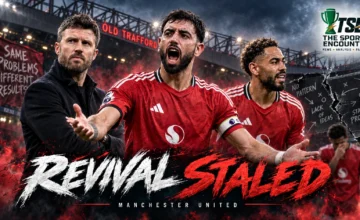
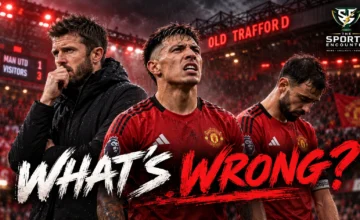
 Premier LeagueWhat’s Wrong With Manchester United? Inside the Failures Holding the Red Devils Hostage
 Premier LeagueManchester United’s Five-Game Alarm: 14 Reasons Carrick’s Revival Has Stalled
Frequently Asked Questions
What Happened to Manchester United on October 31, 2026?
Manchester United lost 2-0 away to Chelsea in the Premier League. Morgan Rogers and Cole Palmer scored for Chelsea, while United defender Lisandro Martínez was sent off.
How Many League Games Have Manchester United Gone Without Winning?
United have gone nine Premier League games without a victory in the 2026-27 season.
How Many Points Do Manchester United Have?
Manchester United have seven points after nine Premier League matches.
Why Did Manchester City Lose to Brighton?
Brighton scored early through Yasin Ayari and defended their lead. City attempted 21 shots, with only six on target, and failed to find an equalizer.
Did Erling Haaland Score Against Brighton?
No. Haaland’s streak of scoring in seven consecutive Premier League matches ended in City’s 1-0 defeat.
Are Manchester City Still Top of the Premier League?
City remained top after Saturday’s matches with 21 points, level with Arsenal. Arsenal had played one game fewer and could take the lead by avoiding defeat against Liverpool on November 1.
Who Is Manchester City’s Manager?
Enzo Maresca is Manchester City’s manager during the 2026-27 season.
Who Is Manchester United’s Manager?
Michael Carrick is Manchester United’s manager.
What Was Significant About Cole Palmer’s Goal?
Palmer’s penalty against Manchester United was his 50th Premier League goal.
When Do Manchester City Play Their Next Premier League Match?
Manchester City are scheduled to visit Nottingham Forest on November 7, 2026.
The Sports Encounter Verdict: One City, Two Warning Signs
Manchester United and Manchester City left Saturday with identical feelings of frustration, but the evidence tells two very different stories.
United are suffering a crisis of results, confidence and organizational coherence.
City are experiencing a sharp interruption to a highly successful start.
The difference matters because football analysis becomes misleading when every defeat is described as a collapse and every poor run is treated as an identical failure.
United’s problem has developed across nine league games. City’s concerns have emerged most clearly during the past two.
Carrick must find an effective method of winning matches. Maresca must rediscover the attacking efficiency and defensive control that made his side the early leader.
The consequences will be felt at opposite ends of the Premier League.
For Manchester United, the immediate danger is relegation. For Manchester City, the immediate danger is surrendering control of the title race.
Brighton and Chelsea have already demonstrated that neither Manchester club can expect opponents to wait while those problems are solved.
The Halloween results were dramatic, but the deeper story concerns what happens next.
One Manchester club must learn how to win again.
The other must remember how to protect the advantages that made it so difficult to beat.
Continue Reading on The Sports Encounter
Our ongoing soccer coverage follows the Premier League alongside major competitions around the world.
For a different editorial perspective on the latest pressure surrounding Manchester United, read The Straight Re(a)d: Stop! In the Name of Football, which examines the club’s continuing difficulties and the wider football landscape.
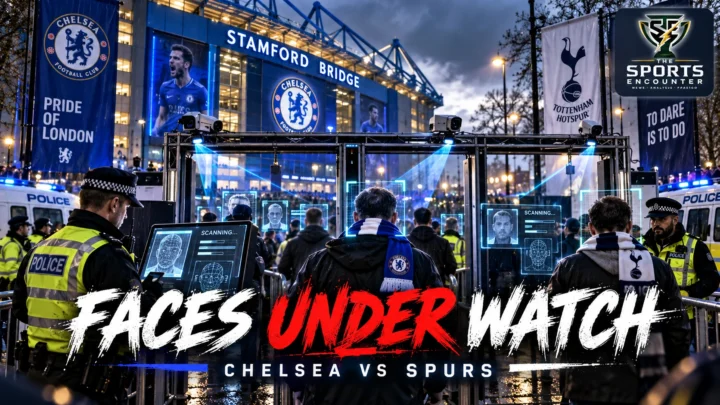
Also revisit our Chelsea-Tottenham report on stadium security and the changing matchday experience for another dimension of the pressures surrounding Premier League football.
Official match sources: The Premier League’s Chelsea-Manchester United report, Manchester United’s official results, and Manchester City’s official Brighton match report.
Manchester United
- Manchester United Face a Relegation Fight, Manchester City Lose Invincibility: One City, Two Different Crises
- The Straight Re(a)d: Roll Up, Roll Up! United’s Circus, Haaland’s Feast and Kane’s One-Man Show
- Champions League: Nico Paz Tears Manchester United Apart as Galatasaray Explode in a 4-Goal Comeback
- Ten Hag Accuses Ronaldo of Letting Manchester United Down, Then Turns on Club’s Broken Promises
- Premier League: Brighton Hit Five, Haaland Keeps City Perfect as Arsenal Survive With One Shot on Target