Key Takeaways
- One of Shnaider’s toughest obstacles came against the Philippines’ Alexandra Eala.
- Shnaider faced 18-year-old wild card Mia Pohankova in the semifinals.
- Although Fernandez finished as runner-up, her performance across the closing stages of the 2026 season remains significant.
- Elena Rybakina arrived in Tokyo as the top seed following her Ningbo title defense.
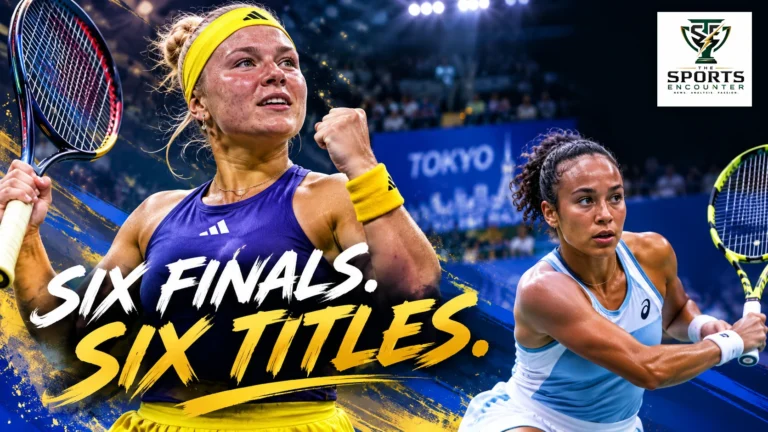
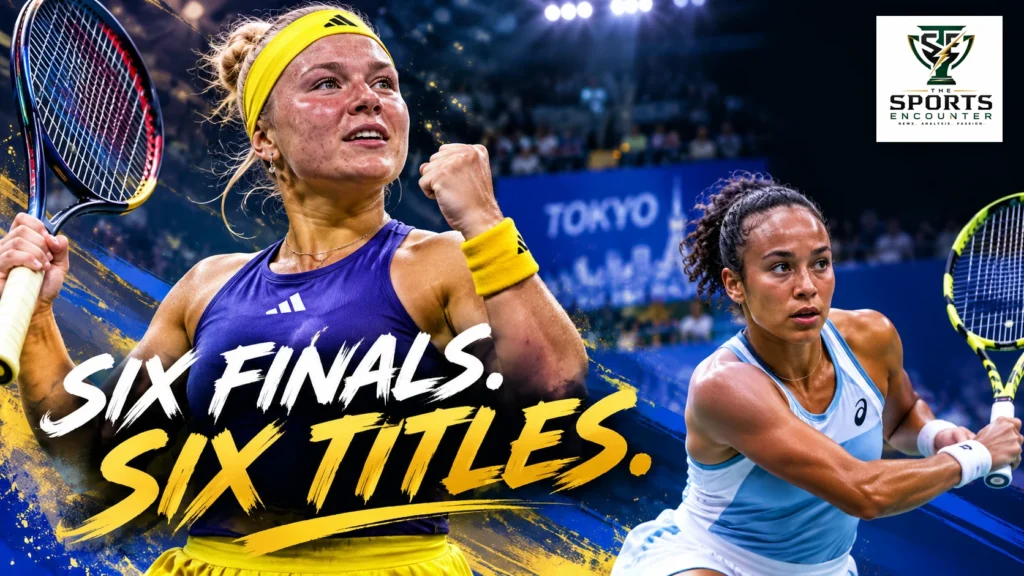
TOKYO, Japan, November 1, 2026: Diana Shnaider overcame a determined Leylah Fernandez comeback and survived three early break points in the deciding set to win the Toray Pan Pacific Open, defeating the Canadian 6-4, 5-7, 6-2 in a gripping final lasting two hours and 18 minutes. The 22-year-old Russian, seeded third in Tokyo, recovered after losing control of the second set and delivered a commanding finish to secure her sixth WTA Tour singles title, preserving an extraordinary record of winning all six championship finals she has contested.
The victory completed Shnaider’s demanding passage through the WTA 500 tournament, where she had already survived three-set encounters against Aliaksandra Sasnovich and Alexandra Eala before defeating teenage semifinalist Mia Pohankova. For Fernandez, the defeat ended another impressive Asian hard-court campaign that included a Singapore title in September, a runner-up finish against Elena Rybakina in Ningbo and a second consecutive final. But the decisive contrast in Tokyo was Shnaider’s response when the championship threatened to slip away: she absorbed pressure at the start of the third set, escaped three break opportunities and eventually pulled clear to claim the trophy.
Shnaider vs Fernandez: Tokyo Pan Pacific Open 2026 Final Result
| Match Detail | Confirmed Information |
|---|---|
| Tournament | Toray Pan Pacific Open Tennis |
| Category | WTA 500 |
| Final Date | November 1, 2026 |
| Location | Tokyo, Japan |
| Surface | Outdoor hard court |
| Champion | Diana Shnaider |
| Runner-up | Leylah Fernandez |
| Final Score | 6-4, 5-7, 6-2 |
| Duration | 2 hours, 18 minutes |
| Shnaider’s Seed | No. 3 |
| Career WTA Singles Titles | 6 |
| Record in WTA Singles Finals | 6 wins, 0 defeats |
| Ranking Points for Champion | 500 |
The official WTA tournament page provides the event classification, playing surface, draw structure and ranking-point context.
Story at a glance
Shnaider vs Fernandez: Tokyo Pan Pacific Open 2026 Final Result
The official WTA tournament page provides the event classification, playing surface, draw structure and ranking-point context.
Diana Shnaider Takes the Opening Set 6-4
The final brought together two left-handed players capable of redirecting the ball and creating difficult angles from the baseline.
Leylah Fernandez Fights Back to Win the Second Set 7-5
Fernandez responded after the opening-set defeat, finding a way back into the contest as Shnaider’s momentum weakened.
Three Saved Break Points Turn the Deciding Set
The most important confirmed sequence of the final occurred early in the third set.
Shnaider Wins Her Sixth Career Title and Remains Unbeaten in WTA Finals
The championship gives Shnaider six career singles titles on the WTA Tour.
Diana Shnaider Takes the Opening Set 6-4
The final brought together two left-handed players capable of redirecting the ball and creating difficult angles from the baseline.
Shnaider entered as the third seed, while Fernandez arrived with strong recent form and increasing confidence from her results across the Asian swing.
Both players had demonstrated an ability to recover from difficult positions during the tournament.
But their routes into the final had been different.
Shnaider had already spent considerable time battling through demanding matches.
Fernandez benefited from a quarterfinal walkover after Elena Rybakina withdrew because of injury, although she subsequently earned her place in the championship match through a competitive semifinal victory.
Against that background, the opening set carried tactical significance.
Shnaider needed to establish control without allowing Fernandez to extend every exchange into a prolonged physical battle.
She took the opening set 6-4.
The score created a potentially decisive advantage but did not resolve the contest.
Fernandez had demonstrated throughout the closing weeks of the season that losing momentum early did not necessarily mean losing the match.
Leylah Fernandez Fights Back to Win the Second Set 7-5
Fernandez responded after the opening-set defeat, finding a way back into the contest as Shnaider’s momentum weakened.
The Canadian won the second set 7-5, forcing a deciding set.
It was an important psychological recovery.
A straight-sets defeat had appeared possible after Shnaider took the opener, but Fernandez instead created a fresh opportunity to claim the title.
Her comeback reflected the resilience she had shown in previous rounds and tournaments.
In the Tokyo semifinal against Kamilla Rakhimova, Fernandez recovered from early deficits in both sets before winning 7-5, 6-3.
She had also demonstrated an ability to compete against elite opponents throughout the Asian swing.
The second set therefore reinforced a familiar quality rather than revealing an entirely new aspect of her game.
Fernandez was capable of refusing a defeat that appeared to be approaching.
However, the third set demanded that she maintain that recovery against an opponent who had already demonstrated extraordinary composure in deciding moments during the tournament.
Three Saved Break Points Turn the Deciding Set
The most important confirmed sequence of the final occurred early in the third set.
Fernandez created three break-point opportunities, putting Shnaider under immediate pressure.
Having just won the second set, the Canadian had an opportunity to carry that momentum into the deciding phase of the championship.
Shnaider saved all three break points.
That escape fundamentally changed the situation.
Instead of falling behind, the Russian remained in contention and prevented Fernandez from converting her comeback into an early third-set advantage.
Shnaider then established control and won the deciding set 6-2.
Her ability to withstand those early opportunities was the clearest identified turning point of the match.
Why Saving Break Points Matters More Than the Final Set Score Suggests
A 6-2 deciding set can appear straightforward when viewed only through the result.
But Shnaider’s victory was far less comfortable than that score might imply.
Fernandez had already recovered from losing the first set.
Three break opportunities early in the decider gave her another chance to gain control.
Had the Canadian converted one of those chances, the remaining games could have developed under different tactical and psychological conditions.
Shnaider did not allow that sequence to determine the outcome.
Her response demonstrated the difference between experiencing pressure and surrendering control because of it.
Once she had survived, the third seed became increasingly difficult to stop.
| Phase | Score or Event | Significance |
|---|---|---|
| First set | Shnaider wins 6-4 | Russian establishes an early advantage |
| Second set | Fernandez wins 7-5 | Canadian forces a deciding set |
| Early third set | Shnaider saves three break points | Prevents Fernandez from gaining an early lead |
| Remaining third set | Shnaider pulls clear | Turns defensive resistance into control |
| Final result | Shnaider wins 6-2 in the third | Sixth career singles championship |
Shnaider Wins Her Sixth Career Title and Remains Unbeaten in WTA Finals
The championship gives Shnaider six career singles titles on the WTA Tour.
Even more unusually, she has won all six finals she has reached.
A perfect record across six title matches is a meaningful achievement, although it should not be confused with winning six consecutive tournaments.
It means she has converted each opportunity when she has advanced to a tour-level singles final.
Tokyo also represented her first singles title of the 2026 season.
That fact adds another dimension to the victory.
Shnaider had experienced considerable competitive success during the year, but turning consistent appearances in the latter stages of tournaments into a championship had remained an unfinished objective.
The Pan Pacific Open finally provided that breakthrough.
Why a Perfect Finals Record Requires Context
Winning every final is an impressive achievement, but it does not mean Shnaider has been unbeatable across entire tournaments.
She has experienced difficult defeats, three-set matches and periods when opponents have controlled important passages.
The more useful interpretation is that she has repeatedly converted her chances when she reaches the final match.
The Tokyo championship strengthens that pattern.
However, future opponents will continue studying how to challenge her movement, shot selection and decision-making under pressure.
The 6-0 record is a historical accomplishment, not a guarantee of future titles.
Shnaider’s Difficult Road to the Tokyo Championship
Shnaider’s route to the final was particularly demanding.
She defeated Aliaksandra Sasnovich in three sets, then survived a dramatic quarterfinal against Alexandra Eala.
Her semifinal victory over Slovak teenager Mia Pohankova was also more competitive than the straight-sets score initially suggested.
Each match tested a different part of her game.
| Round | Opponent | Result | Key Story |
|---|---|---|---|
| Round of 16 | Aliaksandra Sasnovich | 6-3, 5-7, 6-3 | Recovered after losing the second set |
| Quarterfinal | Alexandra Eala | 2-6, 7-6(5), 6-4 | Survived a demanding comeback contest |
| Semifinal | Mia Pohankova | 6-4, 7-6(7) | Saved a second-set set point in the tiebreak |
| Final | Leylah Fernandez | 6-4, 5-7, 6-2 | Saved three early deciding-set break points |
Shnaider’s path illustrates why this title should be evaluated as more than one successful performance against Fernandez.
She needed to solve multiple challenges against opponents with different styles and competitive circumstances.
Alexandra Eala Pushes Shnaider to the Limit in the Quarterfinals
One of Shnaider’s toughest obstacles came against the Philippines’ Alexandra Eala.
It was their second meeting in consecutive weeks.
Shnaider had previously defeated Eala 7-5, 6-4 at the Ningbo Open.
Tokyo produced an even more demanding contest.
Eala took the opening set 6-2 and placed Shnaider under pressure in the second.
But the Russian recovered to win the tiebreak 7-5 before taking the deciding set 6-4.
The match lasted two hours and 52 minutes.
It was a significant test of both fitness and emotional control.
Shnaider had to respond to an opponent who was striking the ball confidently and had already established a substantial advantage.
Instead of losing control, she survived the second set and eventually prevailed.
The WTA’s official account of the Shnaider-Eala quarterfinal describes the intensity of their developing rivalry.
The Sports Encounter has also followed the matchup through its report on Eala’s earlier defeat to Shnaider at Ningbo.
What Shnaider’s Victory Over Eala Revealed
The quarterfinal demonstrated Shnaider’s willingness to remain aggressive while managing uncomfortable match situations.
It also showed that she could withstand a talented opponent who had already built a significant reputation during the season.
Eala’s rise had included notable wins and a breakthrough WTA title.
TSE examined that progress in its feature on Eala’s development and meeting with childhood idol Maria Sharapova.
The Tokyo quarterfinal added another important chapter to that story, but it also strengthened Shnaider’s case as one of the most resilient players of the late-season Asian swing.
Mia Pohankova Provides Another Tough Test in the Semifinals
Shnaider faced 18-year-old wild card Mia Pohankova in the semifinals.
The young Slovak had already produced an impressive tournament, including a victory over Naomi Osaka.
Shnaider won the opening set 6-4.
The second reached a tiebreak, where Pohankova moved to 6-5 and held a set point.
Shnaider responded by winning four of the final five points.
She claimed the tiebreak 9-7 and secured a straight-sets victory.
The escape prevented another three-set contest and sent her into the championship match.
According to the WTA’s official semifinal report, Shnaider’s performance under pressure was central to the victory.
That same ability would become decisive against Fernandez.
Leylah Fernandez’s Remarkable Asian Swing Ends With Another Final
Although Fernandez finished as runner-up, her performance across the closing stages of the 2026 season remains significant.
She won the Singapore Open in September.
She then reached the final in Ningbo, losing to Elena Rybakina.
Tokyo provided another championship opportunity.
Her progress demonstrates the value of sustained form across consecutive hard-court tournaments.
It also shows how challenging that sequence can become.
Repeated deep runs mean fewer recovery days, additional travel and more time competing under pressure.
Fernandez had to balance that physical demand with the tactical requirements of facing different opponents.
How Fernandez Reached the Tokyo Final
Fernandez defeated Himeno Sakatsume in the opening round.
She then overcame Elise Mertens in a competitive second-round encounter.
Her quarterfinal against top seed Elena Rybakina did not take place because the world No. 1 withdrew with a neck injury.
Fernandez advanced by walkover.
In the semifinals, she defeated Kamilla Rakhimova 7-5, 6-3 after recovering from early deficits in both sets.
The result sent her into her third final of the season.
| Round | Opponent | Result | Context |
|---|---|---|---|
| First round | Himeno Sakatsume | 6-2, 6-4 | Controlled opening victory |
| Round of 16 | Elise Mertens | 6-2, 7-6(8) | Won a demanding second-set tiebreak |
| Quarterfinal | Elena Rybakina | Walkover | Rybakina withdrew with a neck injury |
| Semifinal | Kamilla Rakhimova | 7-5, 6-3 | Recovered from early deficits |
| Final | Diana Shnaider | 4-6, 7-5, 2-6 | Won the second set but lost the decider |
Why Rybakina’s Withdrawal Changed the Tokyo Draw
Elena Rybakina arrived in Tokyo as the top seed following her Ningbo title defense.
She also secured the 2026 year-end WTA No. 1 ranking with a victory over Yulia Putintseva.
That achievement was historically significant for Kazakhstan.
However, a neck injury prevented Rybakina from facing Fernandez in the quarterfinals.
The withdrawal removed one of the tournament’s leading contenders.
It also gave Fernandez a less physically demanding route into the semifinals than some of her rivals.
That scheduling advantage is relevant context, although it should not be treated as proof that Fernandez was expected to win the final.
Shnaider had survived more demanding matches, but competitive rhythm and fatigue can affect different players in different ways.
The Sports Encounter covered Rybakina’s ranking achievement in its report on the historic year-end ranking milestones achieved by Rybakina and Alexander Zverev.
TSE Statistical Analysis: Shnaider Won 17 Games to Fernandez’s 13
The final score reveals an interesting contrast between the closeness of the match and the margin in individual games won.
Shnaider won 17 games across the three sets.
Fernandez won 13.
That produces a four-game difference over a match lasting two hours and 18 minutes.
The first two sets were competitive, while the deciding set created most of the final separation.
| Measure | Diana Shnaider | Leylah Fernandez |
|---|---|---|
| First-set games | 6 | 4 |
| Second-set games | 5 | 7 |
| Third-set games | 6 | 2 |
| Total games won | 17 | 13 |
| Sets won | 2 | 1 |
| Share of total games | 56.7% | 43.3% |
TSE original calculation: Shnaider won 17 of the final’s 30 games, a share of approximately 56.7 percent. Fernandez won the remaining 13, or 43.3 percent.
The calculation is based solely on the published set scores and should not be interpreted as the percentage of individual points won.
The Third Set Created the Decisive Difference
Across the first two sets, the players were level at 11 games each.
Shnaider had won the opener 6-4.
Fernandez responded 7-5.
The deciding set then gave Shnaider a four-game advantage.
That difference exactly matched her final margin in total games won.
It is therefore reasonable to identify the deciding set as the phase that created the numerical separation.
However, the real turning point occurred earlier in that set when Shnaider saved three break points.
The score and match narrative support each other: surviving pressure created the opportunity for the Russian to dominate the remaining games.
What Made the Final a Test of Mental Resilience?
Shnaider entered the match with several demanding contests behind her.
She had already lost sets against Sasnovich and Eala, and had nearly been forced into a deciding set against Pohankova.
Against Fernandez, she again faced a situation in which momentum had shifted.
Her opponent had won the second set and created early opportunities in the third.
At that point, the contest could have moved in either direction.
Shnaider’s response was important because she did not need to dominate every phase of the match to win.
She needed to survive the difficult moments and then make better use of the opportunities that followed.
This is one of the defining skills of elite tennis.
Grand Slam champions and successful tour players regularly encounter periods when their preferred patterns are ineffective.
Their ability to adapt during those passages often determines whether a difficult match becomes a defeat or an eventual victory.
Shnaider provided a convincing example in Tokyo.
How the Tokyo Title Changes Shnaider’s Late-Season Picture
Shnaider’s championship was her first of 2026 and sixth overall.
As a WTA 500 event, Tokyo awarded 500 gross ranking points to the champion.
The ranking benefit matters because Shnaider had already established herself among the leading players on the women’s tour.
But those points should be interpreted carefully.
WTA rankings are calculated from a designated set of results, and a new tournament result does not necessarily increase a player’s published total by the full headline amount if it replaces an earlier counting result.
The more defensible conclusion is that winning Tokyo strengthened Shnaider’s end-of-season competitive position and gave her a significant result to carry into the next ranking cycle.
Can Tokyo Become a Platform for Greater Success?
One title does not guarantee a breakthrough at Grand Slam level.
However, Shnaider’s performance offers evidence of several encouraging qualities.
She handled long matches.
She recovered from set deficits.
She survived difficult tiebreak situations.
And she defeated an experienced opponent in a major tour final after losing momentum.
Those qualities are valuable across different surfaces and tournament environments.
Shnaider’s next challenge is to convert them into sustained success against the highest-ranked players.
What Does Another Final Defeat Mean for Fernandez?
Fernandez will be disappointed after forcing a deciding set and creating three early break-point opportunities.
Those moments offered a path toward victory.
However, the wider picture is more encouraging than the final score alone might suggest.
She has reached consecutive finals at the end of the season and demonstrated an ability to recover from difficult positions against a range of opponents.
Her recent success in Singapore and subsequent finals in Ningbo and Tokyo underline the progress she has made.
The next step is to improve her conversion of high-pressure opportunities against opponents who defend and counterattack effectively.
That is a specific competitive challenge, not evidence that her broader game is failing.
Fernandez has shown that she belongs in the final stages of important hard-court tournaments.
The task is to turn more of those opportunities into titles.
Tokyo’s Place in the 2026 WTA Season
The Pan Pacific Open is one of the established tournaments on the Asian hard-court swing.
Its 2026 edition ran from October 26 to November 1 and featured a 28-player singles draw.
The tournament offered important ranking opportunities before the season-ending championships.
| Tournament Detail | 2026 Information |
|---|---|
| Category | WTA 500 |
| Location | Tokyo, Japan |
| Dates | October 26 to November 1 |
| Surface | Outdoor hard court |
| Singles draw | 28 players |
| Doubles draw | 16 teams |
| Champion ranking allocation | 500 points |
| Singles champion | Diana Shnaider |
| Singles runner-up | Leylah Fernandez |
The tournament also took place during an important period in the qualification race for the WTA Finals.
The Sports Encounter previously examined the available late-season ranking opportunities in its analysis of the WTA Finals qualification race.
Shnaider’s victory illustrates why those final WTA 500 events can carry considerable significance even when players are not competing for the year-end No. 1 ranking.
The Larger Story: A New Generation Is Challenging Established WTA Stars
Shnaider is 22.
Fernandez is 24.
Eala is 21.
Pohankova is only 18.
Their performances in Tokyo highlighted the increasing depth among younger players on the WTA Tour.
However, it would be premature to claim that one tournament establishes a permanent generational shift.
Established champions remain highly competitive, and younger players must demonstrate consistency across the entire season.
What Tokyo does show is that the next generation already possesses the ability to produce competitive matches under substantial pressure.
Shnaider’s title was earned through several demanding encounters against opponents with different strengths.
That makes her championship especially valuable as a measure of competitive adaptability.
What Comes Next for the WTA Tour?
Attention now turns toward the season-ending championships and the final ranking consequences of the 2026 campaign.
The WTA Finals are scheduled for November 8-15 in Indian Wells, California.
For Shnaider, the Tokyo title provides a positive conclusion to her immediate tournament campaign.
For Fernandez, the result brings disappointment but also further evidence of her strong late-season form.
The broader women’s tennis calendar remains important because the leading players are balancing competitive opportunities with physical recovery after a demanding season.
The Sports Encounter’s upcoming sports calendar tracks the next major tennis events.
For continuing coverage, readers can also visit the TSE Tennis Hub, where match analysis, rankings stories and tournament reporting are brought together.
Continue the Tennis Story
 WimbledonWimbledon Women’s Singles Champions 1884-2026: Every Winner, Every Era and the Legends Who Made Centre Court History
 TennisShnaider Turns Dubai Heartbreak Into Ningbo Revenge, Outlasts Jovic to Set Up Rybakina Semifinal
 WTA FinalsWTA Finals 2026: 8 Women, One Crown, and the Rivalries That Define Tennis’s Biggest Season Finale
Frequently Asked Questions About Shnaider vs Fernandez
Who Won the Tokyo Pan Pacific Open 2026 Women’s Singles Final?
Diana Shnaider defeated Leylah Fernandez in three sets on November 1, 2026.
What Was the Final Score?
Shnaider won 6-4, 5-7, 6-2.
How Long Did the Match Last?
The final lasted two hours and 18 minutes.
How Many Career WTA Singles Titles Has Shnaider Won?
The Tokyo championship was her sixth WTA Tour singles title.
Has Shnaider Ever Lost a WTA Singles Final?
At the conclusion of the Tokyo final, Shnaider had won all six tour-level singles finals she had contested.
What Was the Turning Point in the Deciding Set?
Shnaider saved three early break points before taking control of the third set.
Who Did Shnaider Beat in the Semifinals?
Shnaider defeated Mia Pohankova 6-4, 7-6(7).
Who Did Fernandez Beat in the Semifinals?
Fernandez defeated Kamilla Rakhimova 7-5, 6-3.
Why Did Fernandez Not Play Elena Rybakina in the Quarterfinals?
Rybakina withdrew because of a neck injury, giving Fernandez a walkover.
How Many Ranking Points Does the Tokyo Champion Receive?
The WTA 500 championship allocates 500 gross ranking points, subject to the WTA’s ranking-counting rules.
How Many Games Did Each Player Win in the Final?
Shnaider won 17 games and Fernandez won 13.
The Sports Encounter Verdict: Shnaider’s Greatest Achievement Was Surviving the Moments She Could Have Lost
Diana Shnaider’s Tokyo title will be remembered as her sixth WTA singles championship and the continuation of a perfect record in tour-level finals.
But those numbers do not fully explain the achievement.
She had to overcome demanding matches throughout the week.
She recovered from losing the opening set against Alexandra Eala.
She survived a set point against Mia Pohankova.
And in the final, she responded after Leylah Fernandez forced a deciding set and threatened to seize control.
The three saved break points early in the third set provide the clearest illustration of her competitive resilience.
Shnaider did not play a flawless final.
She experienced a significant shift in momentum and faced the possibility of falling behind after losing the second set.
But she responded when the match demanded it.
Fernandez deserves recognition for another impressive tournament and a sustained run of form across the Asian hard-court swing.
Her failure to convert the decisive opportunities will be disappointing, but reaching another final reinforces her standing as a serious contender in major WTA events.
The result also strengthens a developing theme in women’s tennis.
Young players are no longer simply challenging established champions occasionally.
They are reaching finals, recovering from adversity and winning important tournaments through increasingly sophisticated competitive performances.
For Shnaider, Tokyo offered the latest proof.
Six finals. Six titles.
And a championship secured not because the road was easy, but because she found a way through its most difficult moments.
Follow further WTA match reports and player developments in The Sports Encounter’s tennis coverage and revisit our report on Alexandra Eala’s Ningbo resurgence for more context on the emerging talent challenging the women’s game’s established order.
Diana Shnaider
- Diana Shnaider Survives Fernandez Fightback to Win Tokyo Title, Extending Perfect Record in WTA Finals
- Shnaider Turns Dubai Heartbreak Into Ningbo Revenge, Outlasts Jovic to Set Up Rybakina Semifinal
- Rybakina Survives Kawa’s Ningbo Fightback as Shnaider Awaits in a Semifinal With a Familiar Scoreline
- Eala Fights for 115 Minutes, but Shnaider’s Late Break Ends Her Ningbo Run
- Alex Eala Ends Three-Match Skid With Ruthless Ningbo Win Over Diane Parry, Setting Up Shnaider Showdown