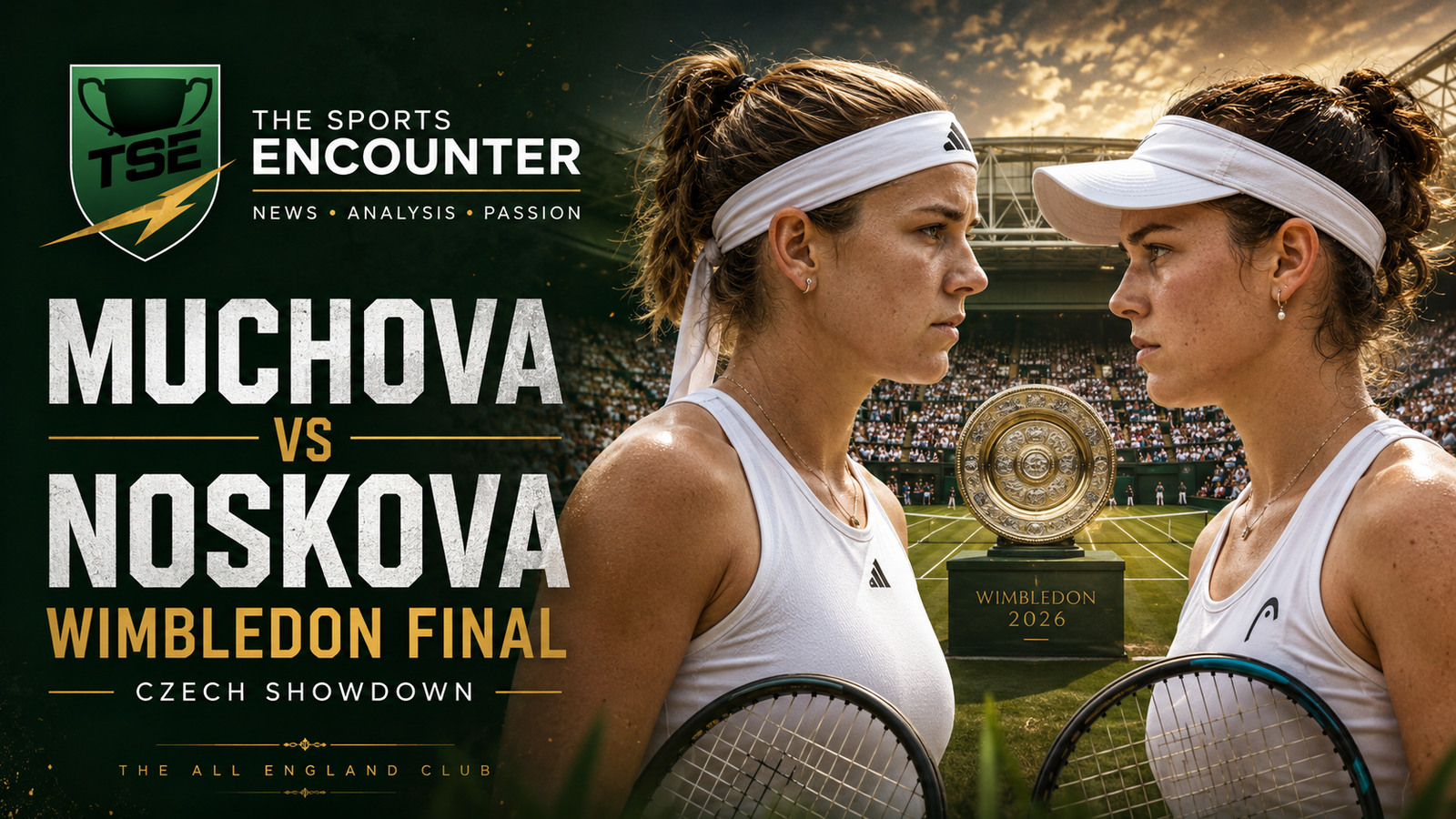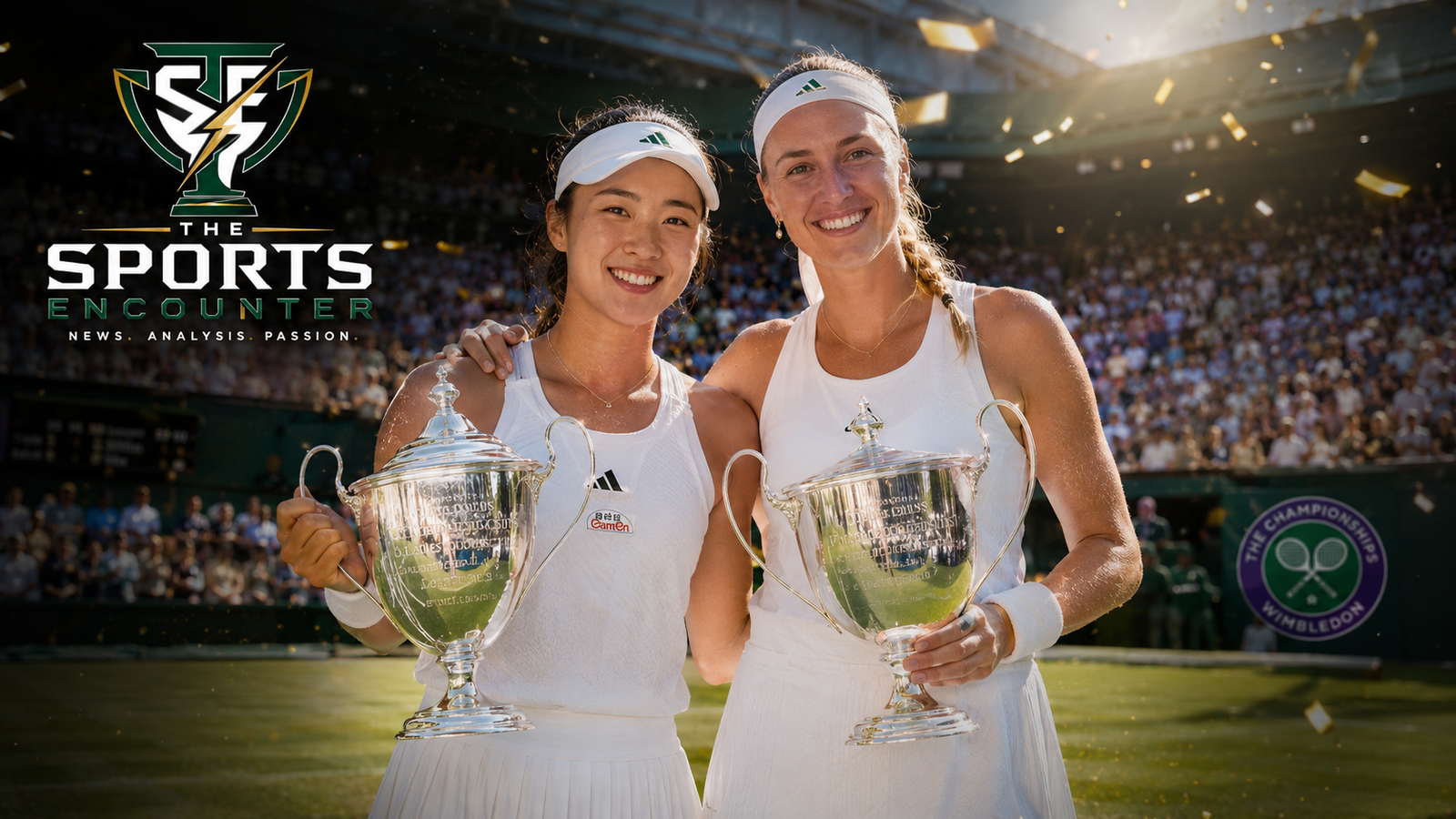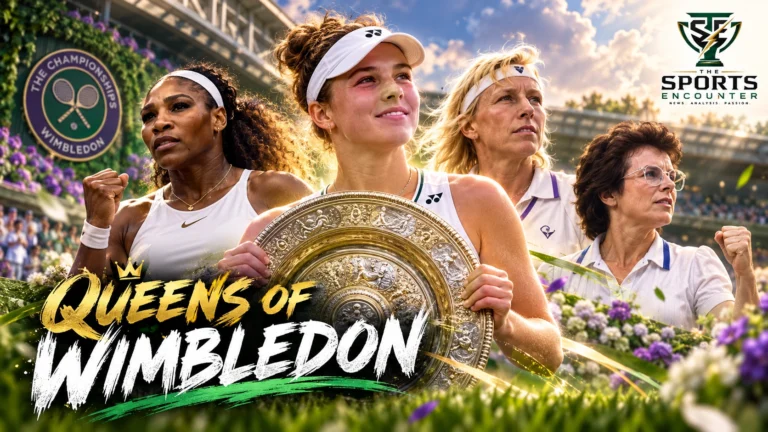
LONDON, England, October 31, 2026: Linda Nosková’s 6-2, 5-7, 6-3 victory over fellow Czech Karolína Muchová at Wimbledon on July 11, 2026, added a new name to one of tennis’s most historic championship records. The 21-year-old became the latest winner of the Venus Rosewater Dish, extending a tradition that began when Britain’s Maud Watson claimed the inaugural women’s singles title in 1884. Across the generations, Wimbledon has crowned champions from different continents, witnessed unforgettable rivalries and produced records that continue to define women’s tennis.
Martina Navratilova leads the all-time women’s singles standings with nine Wimbledon titles, followed by Helen Wills Moody with eight, while Serena Williams, Steffi Graf and Dorothea Lambert Chambers each won seven. From Suzanne Lenglen’s dominance in the 1920s to Althea Gibson’s historic breakthroughs, Billie Jean King’s transformation of women’s tennis, the Williams sisters’ extraordinary rivalry and Czechia’s latest championship surge, the tournament’s history reveals far more than a list of winners. It charts the evolution of women’s sport, professional competition, national representation and the changing qualities required to succeed on Centre Court.
TL;DR: Wimbledon Women’s Singles Champions and Records
- First women’s champion: Maud Watson of Great Britain, in 1884.
- Latest champion: Linda Nosková of Czechia, in 2026.
- Most titles: Martina Navratilova, nine championships.
- Second-most titles: Helen Wills Moody, eight.
- Seven-time champions: Serena Williams, Steffi Graf and Dorothea Lambert Chambers.
- Open Era begins: 1968, when professional players became eligible to compete.
- First Open Era champion: Billie Jean King.
- First Black women’s singles champion: Althea Gibson, in 1957.
- First unseeded Open Era champion: Markéta Vondroušová, in 2023.
- Latest ten completed editions: Ten different women’s singles winners.
- No tournament: 1915–1918, 1940–1945 and 2020.
How Wimbledon Women’s Singles Began in 1884
Wimbledon was established in 1877, but the women’s singles championship was not introduced until 1884.
Read next Wuhan Open: Chwalińska Rallies Past Kartal for Historic Maiden WTA Title in China
Story at a glance
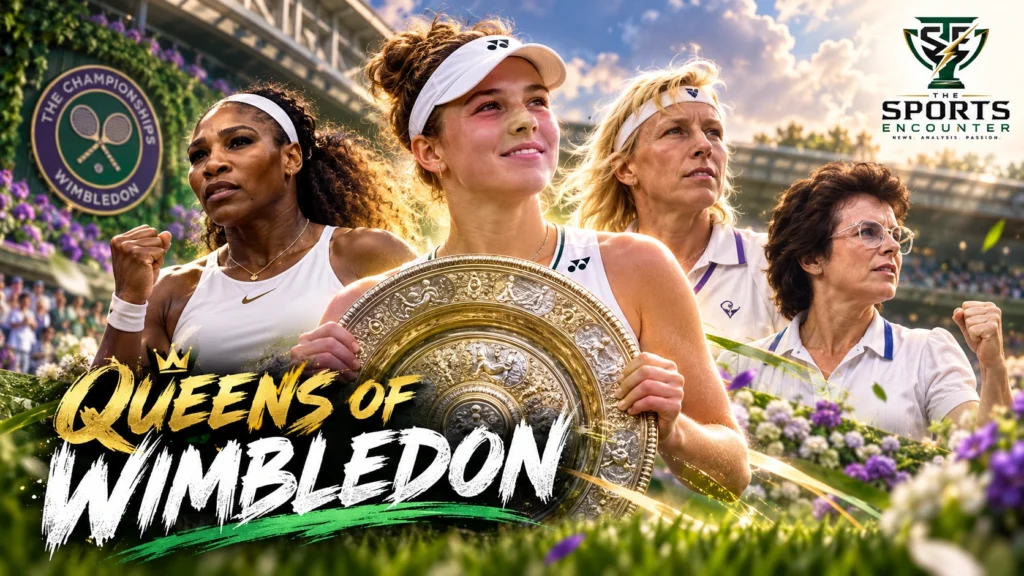
How Wimbledon Women’s Singles Began in 1884
Wimbledon was established in 1877, but the women’s singles championship was not introduced until 1884.
Wimbledon Women’s Singles Champions 2021–2026
The newest generation of champions illustrates the extraordinary international depth of modern women’s tennis.
Linda Nosková’s 2026 Wimbledon Triumph Extends Czech Tennis History
Nosková’s victory in July 2026 was one of the most compelling stories of the season.
Iga Świątek’s 2025 Double Bagel: One of Wimbledon’s Most Extraordinary Finals
In 2025, Iga Świątek defeated Amanda Anisimova 6-0, 6-0.
The Serena Williams Era: Seven Wimbledon Titles and a Family Dynasty
Serena Williams won Wimbledon seven times.
That seven-year gap reflected the sporting conventions and social attitudes of Victorian Britain, when organized competitive opportunities for women remained far more restricted than those available to men.
The introduction of women’s singles therefore represented an important development in the history of the sport.
Maud Watson won the first title, defeating her sister Lillian Watson 6-8, 6-3, 6-3.
The match established a championship tradition that would continue through the amateur era, survive two world wars and eventually become part of modern professional tennis.
Maud Watson and the First Wimbledon Final
The inaugural final was a family contest.
Maud and Lillian Watson had reached the championship match during an era when women’s tennis was still establishing itself as an organized competitive sport.
Maud recovered after losing the opening set.
She won the next two sets to become Wimbledon’s first women’s singles champion.
She successfully defended her title in 1885.
Those victories made Watson the first dominant figure in the event’s history, even though the scale and structure of the competition were very different from today’s 128-player Grand Slam draws.
Wimbledon Women’s Singles Champions 2021–2026
The newest generation of champions illustrates the extraordinary international depth of modern women’s tennis.
Since the tournament returned after the COVID-19 cancellation, six different players have won the women’s singles championship in six completed editions.
| Year | Champion | Country | Runner-Up | Final Score |
|---|---|---|---|---|
| 2026 | Linda Nosková | Czechia | Karolína Muchová | 6-2, 5-7, 6-3 |
| 2025 | Iga Świątek | Poland | Amanda Anisimova | 6-0, 6-0 |
| 2024 | Barbora Krejčíková | Czechia | Jasmine Paolini | 6-2, 2-6, 6-4 |
| 2023 | Markéta Vondroušová | Czechia | Ons Jabeur | 6-4, 6-4 |
| 2022 | Elena Rybakina | Kazakhstan | Ons Jabeur | 3-6, 6-2, 6-2 |
| 2021 | Ashleigh Barty | Australia | Karolína Plíšková | 6-3, 6-7(4), 6-3 |
Linda Nosková’s 2026 Wimbledon Triumph Extends Czech Tennis History
Nosková’s victory in July 2026 was one of the most compelling stories of the season.
She entered the final against Muchová in an unusual position.
Both players represented Czechia, making it the first all-Czech women’s singles Grand Slam final of the professional era.
Yet they arrived with different styles and career experiences.
Nosková possessed the aggressive baseline game and powerful groundstrokes of a rising champion.
Muchová brought variety, experience and the tactical intelligence that had already taken her to another major final.
The Final: Nosková Survives Muchová’s Second-Set Comeback
Nosková established control in the opening set, winning it 6-2.
Muchová responded by taking the second 7-5.
The final therefore became a deciding-set contest, increasing the pressure on a player attempting to win her first Grand Slam title.
Nosková eventually secured the third set 6-3 and became the champion.
The match took two hours and 28 minutes.
Muchová saved five championship points during the second set before eventually losing on Nosková’s sixth opportunity.
The victory gave Nosková her first Grand Slam singles trophy.
For Muchová, the defeat represented another painful near miss, but her run also confirmed her ability to compete at the highest level on grass.
The Sports Encounter documented the developing rivalry in our report on the historic all-Czech Wimbledon final.
Before that, our quarterfinal analysis examined how both players had reached the semifinals.
Why Czechia’s Latest Champion Matters
Czech women’s tennis has produced champions across several generations.
Jana Novotná won in 1998.
Petra Kvitová triumphed in 2011 and 2014.
Markéta Vondroušová claimed the title in 2023.
Barbora Krejčíková followed in 2024.
Nosková’s 2026 victory adds another name to that lineage.
It also demonstrates the depth of Czech tennis development rather than the success of one isolated superstar.
The national program’s strength became evident again later in 2026, when Nosková and Muchová helped Czechia win the Billie Jean King Cup.
Our report on Czechia’s Billie Jean King Cup triumph explored how the Wimbledon finalists became successful teammates.
Wimbledon’s official account of Muchová’s final documents the match and its emotional aftermath.
Iga Świątek’s 2025 Double Bagel: One of Wimbledon’s Most Extraordinary Finals
In 2025, Iga Świątek defeated Amanda Anisimova 6-0, 6-0.
The score is immediately recognizable because the runner-up did not win a single game.
Winning a Grand Slam championship is an extraordinary achievement.
Winning the final without surrendering a game is something far rarer.
Świątek’s performance was notable because grass had not traditionally been viewed as the surface best suited to her strongest tennis.
She had built much of her reputation through exceptional clay-court success.
Yet the Wimbledon final demonstrated how effectively she could transfer her movement, returning and baseline control to grass.
What a 6-0, 6-0 Score Really Means
The result does not mean every individual point was easy.
Games can contain lengthy rallies, deuces and break opportunities even when one player wins every game.
But the final scoreboard establishes an unmistakable fact.
Świątek won all 12 games played.
It also creates a difficult emotional story for Anisimova, who had reached one of the most important finals of her career.
A Grand Slam final appearance represents weeks of preparation, years of development and extraordinary effort.
Losing without winning a game does not erase those achievements, but it can make the immediate disappointment especially severe.
The Serena Williams Era: Seven Wimbledon Titles and a Family Dynasty
Serena Williams won Wimbledon seven times.
Her championships came in 2002, 2003, 2009, 2010, 2012, 2015 and 2016.
Those victories established her among the most successful players in the event’s history.
But Serena’s Wimbledon story cannot be separated from her sister Venus.
Between them, the Williams sisters won 12 women’s singles titles.
They also contested four Wimbledon singles finals against each other.
The Four Serena-Venus Wimbledon Finals
| Year | Champion | Runner-Up | Score |
|---|---|---|---|
| 2002 | Serena Williams | Venus Williams | 7-6(4), 6-3 |
| 2003 | Serena Williams | Venus Williams | 4-6, 6-4, 6-2 |
| 2008 | Venus Williams | Serena Williams | 7-5, 6-4 |
| 2009 | Serena Williams | Venus Williams | 7-6(3), 6-2 |
Serena won three of those four finals.
Venus won the 2008 meeting.
The rivalry is unusual because it combines elite professional competition with a lifelong family relationship.
In ordinary tennis rivalries, opponents may develop mutual respect over many years.
Serena and Venus shared a childhood, family history and professional ambitions long before they became Grand Slam champions.
Their Wimbledon finals placed that relationship under extraordinary public pressure.
Every victory for one sister meant defeat for the other.
Yet their achievements also transformed opportunities and expectations for later generations of women in tennis.
The Sports Encounter explored their later careers in our Wimbledon 2026 coverage of Serena and Venus and the changing women’s draw.
Martina Navratilova: Nine Titles and the Ultimate Wimbledon Record
Martina Navratilova remains the most successful Wimbledon women’s singles champion.
She won nine titles, beginning in 1978 and ending in 1990.
Her championships came in 1978, 1979, 1982, 1983, 1984, 1985, 1986, 1987 and 1990.
The six consecutive victories from 1982 through 1987 represent an extraordinary period of dominance.
Her attacking style, physical preparation and ability to move forward made her particularly effective on grass.
Navratilova’s Nine Wimbledon Championship Finals
| Year | Opponent | Score |
|---|---|---|
| 1978 | Chris Evert | 2-6, 6-4, 7-5 |
| 1979 | Chris Evert | 6-4, 6-4 |
| 1982 | Chris Evert | 6-1, 3-6, 6-2 |
| 1983 | Andrea Jaeger | 6-0, 6-3 |
| 1984 | Chris Evert | 7-6(5), 6-2 |
| 1985 | Chris Evert | 4-6, 6-3, 6-2 |
| 1986 | Hana Mandlíková | 7-6(1), 6-3 |
| 1987 | Steffi Graf | 7-5, 6-3 |
| 1990 | Zina Garrison | 6-4, 6-1 |
Five of Navratilova’s championship victories came against Chris Evert.
That makes their rivalry central to the history of Wimbledon women’s singles.
Why Navratilova’s Record Remains So Difficult to Match
Winning nine titles at a single Grand Slam requires much more than a period of outstanding form.
It demands sustained performance over many seasons.
Players must remain physically competitive, adapt to new opponents and manage the changing conditions of professional tennis.
Navratilova achieved that while facing several generations of leading players.
Her success combined technical excellence with an aggressive approach that repeatedly placed pressure on opponents.
The nine-title record stands as the standard against which every later Wimbledon women’s champion is measured.
Steffi Graf and the Changing Balance of Women’s Tennis
Steffi Graf won Wimbledon seven times, in 1988, 1989, 1991, 1992, 1993, 1995 and 1996.
Her rise helped end Navratilova’s long period of dominance.
Graf’s victories in the 1988 and 1989 finals came directly against Navratilova.
Those results represented more than individual championship wins.
They reflected a generational shift.
Graf’s powerful forehand, movement and attacking baseline game brought a different style of tennis to the forefront.
Her 1988 Wimbledon victory was also part of her extraordinary Golden Slam season, when she won all four major singles championships and Olympic gold.
Graf’s Seven Wimbledon Titles
| Year | Runner-Up | Score |
|---|---|---|
| 1988 | Martina Navratilova | 5-7, 6-2, 6-1 |
| 1989 | Martina Navratilova | 6-2, 6-7(1), 6-1 |
| 1991 | Gabriela Sabatini | 6-4, 3-6, 8-6 |
| 1992 | Monica Seles | 6-2, 6-1 |
| 1993 | Jana Novotná | 7-6(6), 1-6, 6-4 |
| 1995 | Arantxa Sánchez Vicario | 4-6, 6-1, 7-5 |
| 1996 | Arantxa Sánchez Vicario | 6-3, 7-5 |
Billie Jean King and the Transformation of Women’s Tennis
Billie Jean King won six Wimbledon women’s singles titles.
Her victories came in 1966, 1967, 1968, 1972, 1973 and 1975.
Three of those championships came before or at the transition into the Open Era.
King’s significance extends beyond her results.
She became one of the defining figures in the movement toward professional recognition and greater equality for women’s tennis.
Her Wimbledon career overlapped with major changes in how the sport was organized, financed and presented to the public.
King’s 1975 Final Against Evonne Goolagong Cawley
King defeated Evonne Goolagong Cawley 6-0, 6-1 in the 1975 final.
The score demonstrated her ability to produce an overwhelming performance on the sport’s most prestigious grass-court stage.
But her wider legacy cannot be measured by that result alone.
King helped establish the importance of women’s professional tennis and became a leading public advocate for equal opportunities.
Her achievements influenced generations of athletes who entered a sport with greater professional possibilities than those available to earlier champions.
Althea Gibson: The Historic Champion Who Changed Wimbledon
Althea Gibson became the first Black woman to win Wimbledon singles in 1957.
She defeated Darlene Hard 6-3, 6-2.
Gibson successfully defended the championship in 1958, defeating Angela Mortimer 8-6, 6-2.
Those victories were historically significant because they came during a period when racial discrimination continued to restrict opportunities in many areas of public life and organized sport.
Gibson’s success established her among the leading players of her era while expanding the possibilities visible to future generations.
Why Gibson’s Titles Belong Among Wimbledon’s Greatest Achievements
Records often place champions in numerical order.
Two titles appear below seven, eight or nine in an all-time ranking.
But the broader significance of an athletic achievement cannot always be reduced to the number of trophies.
Gibson’s championships challenged established barriers and demonstrated that excellence could not be confined by the racial prejudices of the time.
Her Wimbledon legacy belongs to both sporting history and the wider history of social change.
Suzanne Lenglen: The French Star Who Dominated the 1920s
Suzanne Lenglen won six Wimbledon women’s singles championships.
Her titles came in 1919, 1920, 1921, 1922, 1923 and 1925.
Lenglen became one of the first major international stars of women’s tennis.
Her athleticism, style and public presence helped transform the perception of the sport.
She played during a period when women’s athletic participation was still heavily influenced by traditional expectations about appearance and behavior.
Her success challenged those conventions.
Lenglen’s 1919 Final Against Dorothea Lambert Chambers
The 1919 final became one of the most memorable early championship matches.
Lenglen defeated Chambers 10-8, 4-6, 9-7.
The score shows the competitive demands of an era before modern final-set tiebreak procedures.
Lenglen had to win an extended deciding set against an experienced opponent.
The result launched a period of remarkable dominance.
Her six championships remain among the most significant achievements of Wimbledon’s amateur era.
Helen Wills Moody: Eight Titles Before the Professional Revolution
Helen Wills Moody won eight Wimbledon singles championships.
Her victories came in 1927, 1928, 1929, 1930, 1932, 1933, 1935 and 1938.
She became one of the dominant figures of women’s tennis during the interwar years.
Her record remained one of the greatest achievements in the championship’s history until Navratilova eventually surpassed it.
Wills Moody combined powerful groundstrokes with exceptional consistency.
Her achievements were particularly impressive because they came during a period when international travel and tournament preparation were far more difficult than in modern professional tennis.
Why Historical Comparisons Need Context
It is tempting to compare the eight championships of Wills Moody directly with Navratilova’s nine or Serena Williams’ seven.
The trophy counts can be compared.
The competitive circumstances cannot be treated as identical.
Player eligibility, equipment, training, tournament structure, travel and the depth of international participation all changed over time.
Recognizing those differences does not diminish earlier champions.
It makes the comparison more accurate.
The Open Era: Every Wimbledon Women’s Singles Champion From 1968 to 2026
The Open Era began in 1968, allowing professional players to compete alongside eligible amateurs.
Billie Jean King won the first women’s singles title of the new era.
The following table records every Open Era final through 2026.
| Year | Champion | Runner-Up | Final Score |
|---|---|---|---|
| 2026 | Linda Nosková | Karolína Muchová | 6-2, 5-7, 6-3 |
| 2025 | Iga Świątek | Amanda Anisimova | 6-0, 6-0 |
| 2024 | Barbora Krejčíková | Jasmine Paolini | 6-2, 2-6, 6-4 |
| 2023 | Markéta Vondroušová | Ons Jabeur | 6-4, 6-4 |
| 2022 | Elena Rybakina | Ons Jabeur | 3-6, 6-2, 6-2 |
| 2021 | Ashleigh Barty | Karolína Plíšková | 6-3, 6-7(4), 6-3 |
| 2020 | Canceled due to COVID-19 | ||
| 2019 | Simona Halep | Serena Williams | 6-2, 6-2 |
| 2018 | Angelique Kerber | Serena Williams | 6-3, 6-3 |
| 2017 | Garbiñe Muguruza | Venus Williams | 7-5, 6-0 |
| 2016 | Serena Williams | Angelique Kerber | 7-5, 6-3 |
| 2015 | Serena Williams | Garbiñe Muguruza | 6-4, 6-4 |
| 2014 | Petra Kvitová | Eugenie Bouchard | 6-3, 6-0 |
| 2013 | Marion Bartoli | Sabine Lisicki | 6-1, 6-4 |
| 2012 | Serena Williams | Agnieszka Radwańska | 6-1, 5-7, 6-2 |
| 2011 | Petra Kvitová | Maria Sharapova | 6-3, 6-4 |
| 2010 | Serena Williams | Vera Zvonareva | 6-3, 6-2 |
| 2009 | Serena Williams | Venus Williams | 7-6(3), 6-2 |
| 2008 | Venus Williams | Serena Williams | 7-5, 6-4 |
| 2007 | Venus Williams | Marion Bartoli | 6-4, 6-1 |
| 2006 | Amélie Mauresmo | Justine Henin | 2-6, 6-3, 6-4 |
| 2005 | Venus Williams | Lindsay Davenport | 4-6, 7-6(4), 9-7 |
| 2004 | Maria Sharapova | Serena Williams | 6-1, 6-4 |
| 2003 | Serena Williams | Venus Williams | 4-6, 6-4, 6-2 |
| 2002 | Serena Williams | Venus Williams | 7-6(4), 6-3 |
| 2001 | Venus Williams | Justine Henin | 6-1, 3-6, 6-0 |
| 2000 | Venus Williams | Lindsay Davenport | 6-3, 7-6(3) |
| 1999 | Lindsay Davenport | Steffi Graf | 6-4, 7-5 |
| 1998 | Jana Novotná | Nathalie Tauziat | 6-4, 7-6(2) |
| 1997 | Martina Hingis | Jana Novotná | 2-6, 6-3, 6-3 |
| 1996 | Steffi Graf | Arantxa Sánchez Vicario | 6-3, 7-5 |
| 1995 | Steffi Graf | Arantxa Sánchez Vicario | 4-6, 6-1, 7-5 |
| 1994 | Conchita Martínez | Martina Navratilova | 6-4, 3-6, 6-3 |
| 1993 | Steffi Graf | Jana Novotná | 7-6(6), 1-6, 6-4 |
| 1992 | Steffi Graf | Monica Seles | 6-2, 6-1 |
| 1991 | Steffi Graf | Gabriela Sabatini | 6-4, 3-6, 8-6 |
| 1990 | Martina Navratilova | Zina Garrison | 6-4, 6-1 |
| 1989 | Steffi Graf | Martina Navratilova | 6-2, 6-7(1), 6-1 |
| 1988 | Steffi Graf | Martina Navratilova | 5-7, 6-2, 6-1 |
| 1987 | Martina Navratilova | Steffi Graf | 7-5, 6-3 |
| 1986 | Martina Navratilova | Hana Mandlíková | 7-6(1), 6-3 |
| 1985 | Martina Navratilova | Chris Evert | 4-6, 6-3, 6-2 |
| 1984 | Martina Navratilova | Chris Evert | 7-6(5), 6-2 |
| 1983 | Martina Navratilova | Andrea Jaeger | 6-0, 6-3 |
| 1982 | Martina Navratilova | Chris Evert | 6-1, 3-6, 6-2 |
| 1981 | Chris Evert | Hana Mandlíková | 6-2, 6-2 |
| 1980 | Evonne Goolagong Cawley | Chris Evert | 6-1, 7-6(4) |
| 1979 | Martina Navratilova | Chris Evert | 6-4, 6-4 |
| 1978 | Martina Navratilova | Chris Evert | 2-6, 6-4, 7-5 |
| 1977 | Virginia Wade | Betty Stöve | 4-6, 6-3, 6-1 |
| 1976 | Chris Evert | Evonne Goolagong Cawley | 6-3, 4-6, 8-6 |
| 1975 | Billie Jean King | Evonne Goolagong Cawley | 6-0, 6-1 |
| 1974 | Chris Evert | Olga Morozova | 6-0, 6-4 |
| 1973 | Billie Jean King | Chris Evert | 6-0, 7-5 |
| 1972 | Billie Jean King | Evonne Goolagong Cawley | 6-3, 6-3 |
| 1971 | Evonne Goolagong Cawley | Margaret Court | 6-4, 6-1 |
| 1970 | Margaret Court | Billie Jean King | 14-12, 11-9 |
| 1969 | Ann Jones | Billie Jean King | 3-6, 6-3, 6-2 |
| 1968 | Billie Jean King | Judy Tegart | 9-7, 7-5 |
Pre-Open Era Wimbledon Women’s Champions: 1884–1967
Before 1968, Wimbledon operated within the amateur framework of tennis.
Professional players were not eligible to compete under the modern Open Era system.
Before 1922, Wimbledon also used a challenge-round format in which the defending champion could advance directly to the championship match.
These distinctions are essential when comparing early champions with later players.
Wimbledon Champions 1946–1967
| Year | Champion | Runner-Up | Final Score |
|---|---|---|---|
| 1967 | Billie Jean King | Ann Jones | 6-3, 6-4 |
| 1966 | Billie Jean King | Maria Bueno | 6-3, 3-6, 6-1 |
| 1965 | Margaret Smith | Maria Bueno | 6-4, 7-5 |
| 1964 | Maria Bueno | Margaret Smith | 6-4, 7-9, 6-3 |
| 1963 | Margaret Smith | Billie Jean Moffitt | 6-3, 6-4 |
| 1962 | Karen Susman | Vera Suková | 6-4, 6-4 |
| 1961 | Angela Mortimer | Christine Truman | 4-6, 6-4, 7-5 |
| 1960 | Maria Bueno | Sandra Reynolds | 8-6, 6-0 |
| 1959 | Maria Bueno | Darlene Hard | 6-4, 6-3 |
| 1958 | Althea Gibson | Angela Mortimer | 8-6, 6-2 |
| 1957 | Althea Gibson | Darlene Hard | 6-3, 6-2 |
| 1956 | Shirley Fry | Angela Buxton | 6-3, 6-1 |
| 1955 | Louise Brough | Beverly Fleitz | 7-5, 8-6 |
| 1954 | Maureen Connolly | Louise Brough | 6-2, 7-5 |
| 1953 | Maureen Connolly | Doris Hart | 8-6, 7-5 |
| 1952 | Maureen Connolly | Louise Brough | 7-5, 6-3 |
| 1951 | Doris Hart | Shirley Fry | 6-1, 6-0 |
| 1950 | Louise Brough | Margaret Osborne duPont | 6-1, 3-6, 6-1 |
| 1949 | Louise Brough | Margaret Osborne duPont | 10-8, 1-6, 10-8 |
| 1948 | Louise Brough | Doris Hart | 6-3, 8-6 |
| 1947 | Margaret Osborne | Doris Hart | 6-2, 6-4 |
| 1946 | Pauline Betz | Louise Brough | 6-2, 6-4 |
Wimbledon Champions 1919–1939
| Year | Champion | Runner-Up | Final Score |
|---|---|---|---|
| 1939 | Alice Marble | Kay Stammers | 6-2, 6-0 |
| 1938 | Helen Wills Moody | Helen Jacobs | 6-4, 6-0 |
| 1937 | Dorothy Round | Jadwiga Jędrzejowska | 6-2, 2-6, 7-5 |
| 1936 | Helen Jacobs | Hilde Sperling | 6-2, 4-6, 7-5 |
| 1935 | Helen Wills Moody | Helen Jacobs | 6-3, 3-6, 7-5 |
| 1934 | Dorothy Round | Helen Jacobs | 6-2, 5-7, 6-3 |
| 1933 | Helen Wills Moody | Dorothy Round | 6-4, 6-8, 6-3 |
| 1932 | Helen Wills Moody | Helen Jacobs | 6-3, 6-1 |
| 1931 | Cilly Aussem | Hilde Krahwinkel | 6-2, 7-5 |
| 1930 | Helen Wills Moody | Elizabeth Ryan | 6-2, 6-2 |
| 1929 | Helen Wills Moody | Helen Jacobs | 6-1, 6-2 |
| 1928 | Helen Wills | Lili de Álvarez | 6-2, 6-3 |
| 1927 | Helen Wills | Lili de Álvarez | 6-2, 6-4 |
| 1926 | Kathleen Godfree | Lili de Álvarez | 6-2, 4-6, 6-3 |
| 1925 | Suzanne Lenglen | Joan Fry | 6-2, 6-0 |
| 1924 | Kathleen McKane | Helen Wills | 4-6, 6-4, 6-4 |
| 1923 | Suzanne Lenglen | Kathleen McKane | 6-2, 6-2 |
| 1922 | Suzanne Lenglen | Molla Mallory | 6-2, 6-0 |
| 1921 | Suzanne Lenglen | Elizabeth Ryan | 6-2, 6-0 |
| 1920 | Suzanne Lenglen | Dorothea Lambert Chambers | 6-3, 6-0 |
| 1919 | Suzanne Lenglen | Dorothea Lambert Chambers | 10-8, 4-6, 9-7 |
Wimbledon Champions 1884–1914
| Year | Champion | Runner-Up | Final Score |
|---|---|---|---|
| 1914 | Dorothea Lambert Chambers | Ethel Larcombe | 7-5, 6-4 |
| 1913 | Dorothea Lambert Chambers | Winifred McNair | 6-0, 6-4 |
| 1912 | Ethel Larcombe | Charlotte Sterry | 6-3, 6-1 |
| 1911 | Dorothea Lambert Chambers | Dora Boothby | 6-0, 6-0 |
| 1910 | Dorothea Lambert Chambers | Dora Boothby | 6-2, 6-2 |
| 1909 | Dora Boothby | Agnes Morton | 6-4, 4-6, 8-6 |
| 1908 | Charlotte Sterry | Agnes Morton | 6-4, 6-4 |
| 1907 | May Sutton | Dorothea Lambert Chambers | 6-1, 6-4 |
| 1906 | Dorothea Douglass | May Sutton | 6-3, 9-7 |
| 1905 | May Sutton | Dorothea Douglass | 6-3, 6-4 |
| 1904 | Dorothea Douglass | Charlotte Sterry | 6-0, 6-3 |
| 1903 | Dorothea Douglass | Ethel Thomson | 4-6, 6-4, 6-2 |
| 1902 | Muriel Robb | Charlotte Sterry | 7-5, 6-1 |
| 1901 | Charlotte Sterry | Blanche Hillyard | 6-2, 6-2 |
| 1900 | Blanche Hillyard | Charlotte Cooper | 4-6, 6-4, 6-4 |
| 1899 | Blanche Hillyard | Charlotte Cooper | 6-2, 6-3 |
| 1898 | Charlotte Cooper | Louisa Martin | 6-4, 6-4 |
| 1897 | Blanche Hillyard | Charlotte Cooper | 5-7, 7-5, 6-2 |
| 1896 | Charlotte Cooper | Alice Pickering | 6-2, 6-3 |
| 1895 | Charlotte Cooper | Helen Jackson | 7-5, 8-6 |
| 1894 | Blanche Hillyard | Edith Austin | 6-1, 6-1 |
| 1893 | Lottie Dod | Blanche Hillyard | 6-8, 6-1, 6-4 |
| 1892 | Lottie Dod | Blanche Hillyard | 6-1, 6-1 |
| 1891 | Lottie Dod | Blanche Hillyard | 6-2, 6-1 |
| 1890 | Lena Rice | May Jacks | 6-4, 6-1 |
| 1889 | Blanche Hillyard | Lena Rice | 4-6, 8-6, 6-4 |
| 1888 | Lottie Dod | Blanche Hillyard | 6-3, 6-3 |
| 1887 | Lottie Dod | Blanche Hillyard | 6-2, 6-0 |
| 1886 | Blanche Bingley | Maud Watson | 6-3, 6-3 |
| 1885 | Maud Watson | Blanche Bingley | 6-1, 7-5 |
| 1884 | Maud Watson | Lillian Watson | 6-8, 6-3, 6-3 |
Historical note: Wimbledon was not held from 1915 through 1918 because of World War I, from 1940 through 1945 because of World War II, or in 2020 because of the COVID-19 pandemic. Before 1922, the challenge-round format applied, subject to historical exceptions.
The Greatest Wimbledon Women’s Singles Champions Ranked by Titles
| Player | Titles | Championship Years |
|---|---|---|
| Martina Navratilova | 9 | 1978, 1979, 1982–1987, 1990 |
| Helen Wills Moody | 8 | 1927–1930, 1932, 1933, 1935, 1938 |
| Dorothea Lambert Chambers | 7 | 1903, 1904, 1906, 1910, 1911, 1913, 1914 |
| Steffi Graf | 7 | 1988, 1989, 1991–1993, 1995, 1996 |
| Serena Williams | 7 | 2002, 2003, 2009, 2010, 2012, 2015, 2016 |
| Blanche Hillyard | 6 | 1886, 1889, 1894, 1897, 1899, 1900 |
| Suzanne Lenglen | 6 | 1919–1923, 1925 |
| Billie Jean King | 6 | 1966–1968, 1972, 1973, 1975 |
| Lottie Dod | 5 | 1887, 1888, 1891–1893 |
| Charlotte Cooper | 5 | 1895, 1896, 1898, 1901, 1908* |
| Venus Williams | 5 | 2000, 2001, 2005, 2007, 2008 |
*Historical naming clarification: Charlotte Cooper and Charlotte Sterry are the same player. Her fifth Wimbledon title came in 1908. The championship history also records several married-name changes among earlier players.
How Grass-Court Tennis Has Changed Across the Generations
Wimbledon has always been associated with grass.
But the way champions succeed on that surface has changed considerably.
Earlier generations frequently relied on attacking approaches that emphasized moving forward and finishing points at the net.
Grass rewarded low bounces, efficient serving and quick reactions.
Modern players still require those qualities, but changes in equipment, athletic preparation and playing conditions have expanded the tactical possibilities.
From Serve-and-Volley to Modern Baseline Tennis
Navratilova’s success illustrates the effectiveness of aggressive net play.
Her ability to move forward and finish points rapidly gave opponents limited time to organize their defense.
Graf combined a powerful baseline game with exceptional movement.
The Williams sisters introduced enormous serving power and explosive athleticism.
Recent champions have demonstrated a wider variety of approaches.
Barty used slice, placement and tactical intelligence.
Rybakina relied heavily on powerful serving and groundstrokes.
Vondroušová mixed pace and spin to unsettle opponents.
Świątek demonstrated disciplined baseline control.
Nosková combined aggressive hitting with the composure required to survive a three-set Grand Slam final.
Continue the Wimbledon Story


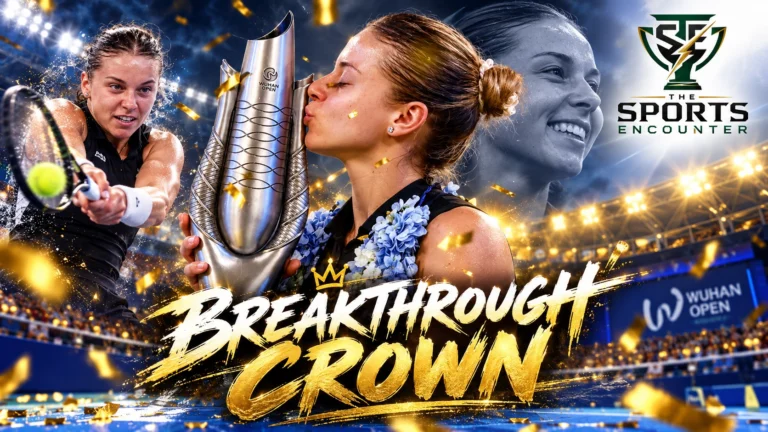
Why Wimbledon Has Produced Ten Different Champions in Ten Editions
The most recent ten completed editions have been won by ten different players.
The sequence begins with Serena Williams in 2016 and continues through Muguruza, Kerber, Halep, Barty, Rybakina, Vondroušová, Krejčíková, Świątek and Nosková.
This pattern differs sharply from periods dominated by Navratilova, Graf or the Williams sisters.
It suggests a more distributed competitive landscape.
However, the pattern does not prove that modern players are less talented or that sustained dominance is impossible.
It reflects the results of a particular period.
Injuries, player development, scheduling, tactical variation and changing competitive depth can all influence which players reach the final stages.
The Sports Encounter examined the volatility of the 2026 draw in our Wimbledon quarterfinal roundup.
That tournament demonstrated how rapidly the competitive picture can change when leading contenders are eliminated.
The Emotional Significance of Wimbledon Women’s Championship History
A historical winners list can appear impersonal.
It contains years, names, nationalities and scores.
But every entry represents a player who reached the most important moment of a tournament and succeeded under extraordinary pressure.
For some, the championship was the beginning of a dynasty.
For others, it was a single unforgettable achievement.
Novotná’s 1998 victory, for example, carried particular emotional weight after earlier disappointment in Wimbledon finals.
Gibson’s championships represented a historic breakthrough.
King’s success became part of a much wider struggle for equality.
Venus and Serena transformed the sport while repeatedly facing each other in its biggest matches.
Nosková’s latest victory created a new chapter for a country that continues producing outstanding women’s tennis players.
The trophy remains the same symbol of achievement, but the stories behind it are never identical.
Wimbledon Women’s Champions: Frequently Asked Questions
Who Won Wimbledon Women’s Singles in 2026?
Linda Nosková defeated Karolína Muchová 6-2, 5-7, 6-3.
Who Has Won the Most Wimbledon Women’s Singles Titles?
Martina Navratilova holds the record with nine championships.
How Many Wimbledon Titles Did Serena Williams Win?
Seven, in 2002, 2003, 2009, 2010, 2012, 2015 and 2016.
How Many Wimbledon Titles Did Venus Williams Win?
Five, in 2000, 2001, 2005, 2007 and 2008.
Who Was the First Women’s Wimbledon Champion?
Maud Watson, who won the inaugural championship in 1884.
Who Was the First Black Woman to Win Wimbledon?
Althea Gibson, in 1957. She successfully defended the title in 1958.
Who Won Wimbledon in 2025?
Iga Świątek defeated Amanda Anisimova 6-0, 6-0.
Which Women’s Player Won Wimbledon Six Consecutive Times?
Martina Navratilova won six consecutive championships from 1982 through 1987.
Who Was the First Unseeded Wimbledon Women’s Singles Champion in the Open Era?
Markéta Vondroušová, in 2023.
When Did the Wimbledon Open Era Begin?
In 1968, when professional players became eligible to compete.
Why Was Wimbledon Not Held in 2020?
The tournament was canceled because of the COVID-19 pandemic.
What Is the Wimbledon Women’s Singles Trophy Called?
The Venus Rosewater Dish.
Final Analysis: Wimbledon’s Greatest Women’s Champions Have Defined More Than Tennis
From Maud Watson’s victory over her sister in 1884 to Linda Nosková’s triumph over Karolína Muchová in 2026, Wimbledon women’s singles has evolved through generations of sporting and social change.
The championship began during an era when opportunities for women in organized sport were limited.
It survived global conflict and became part of professional tennis’s modern era.
It witnessed the rise of international stars whose performances helped expand the popularity of women’s sport.
Some champions became famous for their records.
Others became significant for the barriers they broke or the extraordinary circumstances surrounding their victories.
Navratilova’s nine titles remain the numerical standard.
Wills Moody’s eight championships symbolize the greatness of an earlier generation.
King helped transform the professional opportunities available to women.
Gibson changed what representation in elite tennis could look like.
The Williams sisters created one of the most successful and emotionally compelling family stories in sporting history.
And Czechia’s recent champions have demonstrated that extraordinary tennis development can continue across several generations.
Nosková’s victory in 2026 represents the latest chapter.
It will not be the last.
Future champions will introduce different playing styles, personalities and national stories.
Some records may eventually be broken.
Others may endure for decades.
But the value of Wimbledon’s women’s singles championship does not depend entirely on the number of titles any one player collects.
Its significance comes from the accumulation of individual achievements, generations of rivalry and the continuing evolution of women’s tennis.
The champions change. The history they create remains.
Explore more historical tennis features, Grand Slam analysis and player stories through The Sports Encounter’s Tennis Hub, our tennis news section and our Wimbledon 2026 historical and competitive preview.
For further context on the financial development of the tournament, read The Sports Encounter’s analysis of Wimbledon’s 2026 prize-money increase.
The official Wimbledon 2026 championship review confirms Nosková’s title and provides additional records from the tournament.
Wimbledon’s official Nosková championship gallery documents the most recent addition to the women’s singles roll of honor.