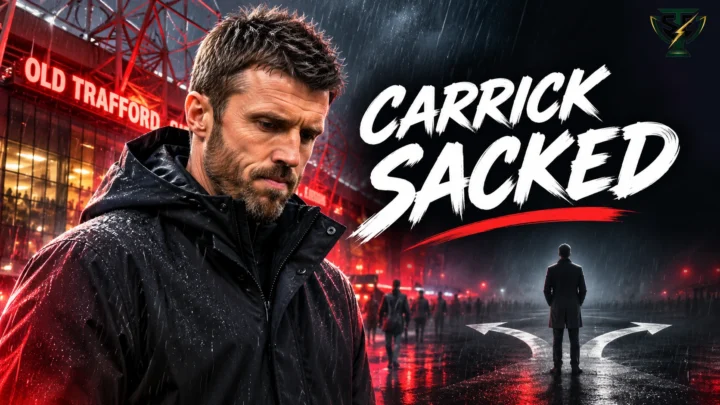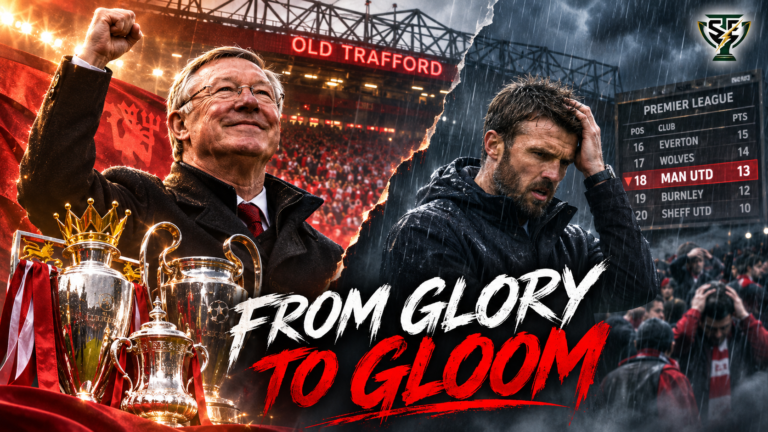
MANCHESTER, England, November 12, 2026: When Sir Alex Ferguson walked away from Manchester United in May 2013, he left behind the reigning Premier League champions, 38 trophies, a record 20 English league titles and an institution that had dominated English soccer for more than two decades. Thirteen years later, the club he transformed into a global powerhouse occupies 18th place in the Premier League, with eight points from 10 matches, one victory and another dismissed manager. Michael Carrick, once a symbol of Ferguson’s winning culture, has become the latest casualty of a decline that no successor has managed to reverse.
Seven permanent managers, five caretaker or interim appointments across separate spells, and billions in commercial revenue have not restored United’s dominance. Since Ferguson retired, the club has won just seven trophies, including two Community Shields, and not a single Premier League title. José Mourinho remains the most decorated successor with three honors, while Louis van Gaal and Erik ten Hag delivered domestic cups before being dismissed. Carrick briefly restored hope by taking United to third place and Champions League qualification, only to oversee a collapse that has left the club confronting the possibility of relegation. The evidence suggests a problem extending far beyond one manager, one formation or one disappointing season.
Key Takeaways
- The comparison between Ferguson’s reign and everything that followed captures the magnitude of Manchester United’s problems.
- Ferguson managed the club from November 1986 until May 2013, transforming an inconsistent English giant into a team capable of winning domestic championships repeatedly and competing for Europe’s most prestigious honors.
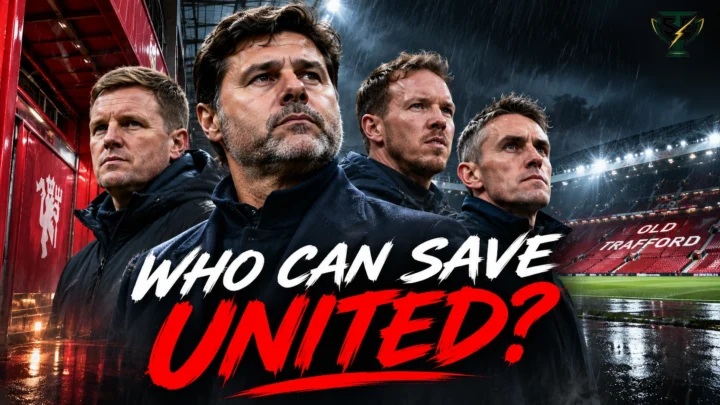
- Former Tottenham Hotspur and Chelsea coach Mauricio Pochettino has emerged as the leading candidate to succeed Carrick.
- Sir Alex Ferguson did not merely win trophies at Manchester United.
Manchester United From Ferguson to Carrick: The Scale of the Decline
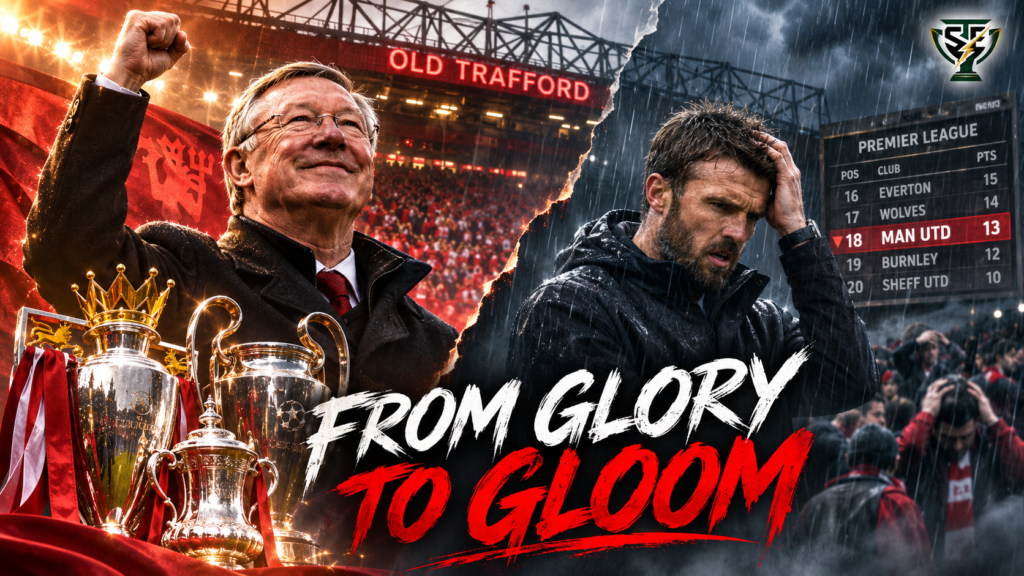
The comparison between Ferguson’s reign and everything that followed captures the magnitude of Manchester United’s problems.
Story at a glance
Manchester United From Ferguson to Carrick: The Scale of the Decline
The comparison between Ferguson’s reign and everything that followed captures the magnitude of Manchester United’s problems.
Every Manchester United Manager and Every Trophy Since Ferguson
The complete managerial timeline shows how little silverware followed repeated changes in leadership.
Where Manchester United Stand Now: Eighteenth and Facing Relegation
United’s current Premier League position represents the most troubling measure of the club’s decline.
The Manchester United Supporters’ Trust Blames More Than Carrick
The reaction to Carrick’s dismissal illustrates how supporters increasingly distinguish the immediate manager from the institution responsible for appointing him.
Could Mauricio Pochettino Reverse Manchester United’s Decline?
Former Tottenham Hotspur and Chelsea coach Mauricio Pochettino has emerged as the leading candidate to succeed Carrick.
Ferguson managed the club from November 1986 until May 2013, transforming an inconsistent English giant into a team capable of winning domestic championships repeatedly and competing for Europe’s most prestigious honors.
His successors inherited the stadium, international reputation, enormous supporter base and commercial strength established during that era.
What they did not inherit was the stable football structure that had made those advantages so effective.
| Measure | Under Ferguson | After Ferguson |
|---|---|---|
| Period | 1986–2013 | 2013–November 2026 |
| Total trophies | 38 | 7 |
| English league titles | 13 | 0 |
| Champions League titles | 2 | 0 |
| FA Cups | 5 | 2 |
| League Cups | 4 | 2 |
| Europa League titles | 0 | 1 |
| Community Shields | 10 | 2 |
| Permanent managers | 1 | 7 |
| Latest Premier League position | 1st in final season | 18th |
Historical note: Ferguson’s 38 honors also include the European Cup Winners’ Cup, UEFA Super Cup, Intercontinental Cup and FIFA Club World Cup. The post-Ferguson total includes the Community Shield, which is conventionally distinguished from major competitive trophies.
United have won five major trophies since Ferguson retired: two FA Cups, two League Cups and one Europa League.
That is a respectable return for many clubs. For an institution that won 13 league championships under one manager, however, it illustrates an extraordinary change in competitive expectations.
Sir Alex Ferguson: The Manager Who Built Manchester United’s Modern Dynasty
1986–1990: Building a Club Before Building a Champion
Ferguson’s appointment in November 1986 was not immediately followed by success.
He inherited a team struggling with inconsistency and problems involving discipline, fitness and professional standards.
His early work involved rebuilding the organization around the first team, strengthening the scouting network and improving youth development.
Those changes did not deliver instant trophies.
By the end of 1989, supporters were questioning whether Ferguson deserved more time. United’s eventual decision to persist became one of the most consequential managerial decisions in English soccer history.
The breakthrough arrived with the 1990 FA Cup, secured after a replay victory against Crystal Palace.
Within the following three years, United had won the European Cup Winners’ Cup, UEFA Super Cup and the inaugural Premier League title.
1993–2001: The Premier League Becomes Ferguson’s Competition
Ferguson’s first league championship ended a 26-year wait for England’s top-flight title.
It also established the platform for an unprecedented era of domestic dominance.
United won consecutive championships in 1993 and 1994, repeated the feat in 1996 and 1997 and developed squads capable of competing across several competitions.
The emergence of Ryan Giggs, Paul Scholes, David Beckham, Gary Neville and other homegrown players gave Ferguson a core that understood both the club’s expectations and his tactical demands.
Eric Cantona provided inspiration and technical authority, while later additions such as Roy Keane, Andy Cole and Dwight Yorke strengthened the team’s competitive balance.
Ferguson also demonstrated an ability to replace successful players without allowing the entire team to decline.
That ability to rebuild while continuing to win became one of his most important achievements.
1999: The Treble That Defined a Generation
United’s 1998-99 season remains the clearest expression of Ferguson’s philosophy.
The club won the Premier League, FA Cup and Champions League in a single campaign, completing the treble with a dramatic European final against Bayern Munich.
Trailing 1-0 as the match entered stoppage time, United equalized through Teddy Sheringham before Ole Gunnar Solskjaer scored the winner.
Ferguson’s famous reaction captured the disbelief of the occasion:
“Football. Bloody hell.”
The moment became part of European soccer history, but the achievement was built on far more than dramatic finishing.
United possessed depth, tactical flexibility, strong internal leadership and a manager capable of making decisive changes under pressure.
2006–2013: Ferguson Builds Another Championship Team
After changes involving Beckham, Keane and other established players, Ferguson assembled another formidable side around Cristiano Ronaldo, Wayne Rooney, Rio Ferdinand, Nemanja Vidić and a midfield featuring Michael Carrick.
United won three consecutive Premier League titles between 2007 and 2009 and defeated Chelsea in the 2008 Champions League final.
The 2012-13 championship completed Ferguson’s 13-title Premier League record and gave Manchester United its 20th English league crown.
Robin van Persie’s arrival had provided the finishing quality required to reclaim the title from Manchester City.
United secured the championship with four games remaining.
Every Trophy Sir Alex Ferguson Won With Manchester United
| Competition | Total | Winning Seasons or Years |
|---|---|---|
| Premier League | 13 | 1993, 1994, 1996, 1997, 1999, 2000, 2001, 2003, 2007, 2008, 2009, 2011, 2013 |
| FA Cup | 5 | 1990, 1994, 1996, 1999, 2004 |
| League Cup | 4 | 1992, 2006, 2009, 2010 |
| Champions League | 2 | 1999, 2008 |
| Community Shield | 10 | 1990, 1993, 1994, 1996, 1997, 2003, 2007, 2008, 2010, 2011 |
| European Cup Winners’ Cup | 1 | 1991 |
| UEFA Super Cup | 1 | 1991 |
| Intercontinental Cup | 1 | 1999 |
| FIFA Club World Cup | 1 | 2008 |
| Total | 38 | 1986–2013 managerial tenure |
The full historical record is available in Manchester United’s official trophy archive.
Ferguson finished with 895 victories from 1,500 competitive matches, an overall win percentage of approximately 59.7%.
More important than the numerical record was the organizational consistency behind it.
Recruitment, coaching, youth development and managerial authority operated around a long-term competitive identity.
When Ferguson retired, United lost not only a successful coach but also the central figure coordinating that structure.
David Moyes: The Six-Year Plan That Lasted 10 Months
2013–2014: Ferguson’s Chosen Successor Inherits an Impossible Comparison
David Moyes arrived from Everton in July 2013 with Ferguson’s endorsement and a six-year contract.
The appointment suggested that United intended to preserve the long-term managerial approach that had served the club so successfully.
Instead, the transition exposed weaknesses in succession planning and recruitment.
United struggled to replace aging players, failed to maintain the intensity that had defined Ferguson’s final championship team and endured a series of damaging domestic defeats.
The club slipped out of contention for a Champions League place.
Moyes was dismissed in April 2014, less than one year after his appointment. United ultimately finished seventh, their lowest Premier League position at that stage.
David Moyes’ Manchester United Trophies
2013 FA Community Shield: Manchester United 2-0 Wigan Athletic.
Robin van Persie scored both goals as Moyes collected his only trophy with United.
The distinction matters historically. Moyes did win silverware, but the Community Shield could not compensate for the collapse in league performance.
His dismissal established an uncomfortable precedent: United’s board had promised long-term continuity but abandoned its first succession plan within 10 months.
Ryan Giggs: Four Games as Caretaker, No Trophies
2014: A Club Legend Takes Temporary Control
Ryan Giggs replaced Moyes for the final four matches of the campaign.
The club’s appearance-record holder was an important figure in Ferguson’s dynasty, but his temporary appointment was not a permanent rebuilding strategy.
Giggs recorded two wins, one draw and one defeat.
Trophies won: None.
His caretaker period provided emotional continuity while the club prepared to appoint an experienced successor.
Louis van Gaal: An FA Cup Victory Could Not Save His Job
2014–2016: Tactical Control Returns, but Attacking Freedom Disappears
Louis van Gaal arrived after guiding the Netherlands to third place at the World Cup.
His experience at Ajax, Barcelona and Bayern Munich gave United a coach with an established philosophy and major European honors.
He introduced a highly structured approach built around positional discipline, possession and controlled buildup play.
United finished fourth in his first season, returning to Champions League qualification.
But the style attracted criticism as supporters grew frustrated with slow possession and limited attacking invention.
The club subsequently failed to maintain the necessary league results.
Louis van Gaal’s Manchester United Trophy
2016 FA Cup: Manchester United 2-1 Crystal Palace, after extra time.
Jesse Lingard scored the winner at Wembley after United had been reduced to 10 men.
The victory secured the club’s first FA Cup since 2004.
Nevertheless, Van Gaal was dismissed shortly afterward.
His departure reinforced the growing contradiction between short-term expectations and long-term rebuilding. Winning a major trophy had not been enough to preserve the manager’s position.
José Mourinho: Three Trophies, a Second-Place Finish and Another Breakdown
2016–2017: United Return to European Silverware
José Mourinho arrived in 2016 with a reputation built on winning championships at Porto, Chelsea, Inter Milan and Real Madrid.
His first campaign delivered the most successful trophy return of any post-Ferguson manager.
United won the Community Shield, League Cup and Europa League.
The European victory against Ajax was particularly important because it secured qualification for the Champions League.
Mourinho prioritized defensive organization, physical strength and tactical discipline.
His approach produced results, although criticism of United’s attacking play continued.
Every Trophy Mourinho Won at Manchester United
| Competition | Season | Final Result |
|---|---|---|
| Community Shield | 2016 | Manchester United 2-1 Leicester City |
| League Cup | 2016-17 | Manchester United 3-2 Southampton |
| UEFA Europa League | 2016-17 | Manchester United 2-0 Ajax |
2017–2018: Second Place Was Not Enough
United finished second in the Premier League with 81 points during Mourinho’s second full campaign.
It was their strongest league finish since Ferguson retired.
However, Manchester City won the championship with 100 points, leaving United 19 points behind their local rivals.
The gap showed how far the competitive benchmark had moved.
Even the club’s most successful league performance after Ferguson was insufficient to challenge for the title.
Mourinho’s relationship with key players and the board deteriorated as recruitment disagreements intensified.
United dismissed him in December 2018 after another poor start.
His tenure ended with three trophies, 84 wins in 144 matches and an important historical question: had the club rejected progress because it did not resemble the Ferguson era closely enough?
Mourinho’s own assessment was that United could no longer expect to dominate simply because they had done so before.
His argument reflected the changed competitive environment, particularly Manchester City’s rise and the improvement of Liverpool and other Premier League rivals.
Ole Gunnar Solskjaer: Emotional Revival Without Silverware
2018–2021: The Return of United’s Attacking Identity
Solskjaer replaced Mourinho initially as an interim appointment.
The former striker’s connection with Ferguson’s dynasty, particularly his winning goal in the 1999 Champions League final, immediately resonated with supporters.
United won 14 of his first 19 matches, prompting the club to appoint him permanently in March 2019.
His team often played direct, counterattacking soccer built around the pace and individual quality of players such as Marcus Rashford, Anthony Martial and later Bruno Fernandes.
United finished third in 2019-20 and second in 2020-21.
Those finishes suggested meaningful progress, but the team remained inconsistent against opponents that defended deeply.
Solskjaer’s Near Misses and Trophy Record
Trophies won: None.
United reached the 2021 Europa League final but lost to Villarreal after an extended penalty shootout.
The failure to convert improvement into silverware intensified pressure on Solskjaer.
The following season brought damaging defeats against Liverpool, Manchester City and Watford.
He was dismissed in November 2021.
Solskjaer’s tenure illustrated another recurring United problem: a manager could improve the team’s league position without establishing the consistent tactical control required to win major trophies.
Michael Carrick’s First Spell: Three Matches, No Trophies
2021: A Brief Caretaker Appointment
Carrick stepped in after Solskjaer’s departure.
He oversaw three unbeaten matches, recording two victories and one draw.
The spell offered an early indication of his managerial potential, but its limited duration made it impossible to assess a long-term approach.
Trophies won: None.
Carrick departed the coaching staff when United appointed Ralf Rangnick as interim manager.
Ralf Rangnick: The Warning About United’s Broken Football Structure
2021–2022: Interim Management Exposes Deeper Problems
Rangnick arrived with a reputation for developing clubs through structured recruitment, pressing systems and organizational planning.
His appointment was intended to provide immediate coaching leadership followed by a broader advisory role.
Instead, United continued struggling for consistency.
The team finished sixth in the Premier League and exited the Champions League in the Round of 16.
Rangnick’s most significant contribution may have been his public assessment that United required structural transformation rather than minor adjustments.
He described the need for what he called:
“Open heart surgery.”
The phrase became a defining description of the post-Ferguson era.
Rangnick believed that recruitment, squad construction and the wider football operation needed substantial change.
Trophies won: None.
His planned advisory relationship did not continue as initially envisaged.
Four years later, United’s position near the bottom of the league has renewed questions about whether the underlying structural problems were ever adequately resolved.
Erik ten Hag: Two Domestic Cups Cannot Conceal a Failing League Project
2022–2023: Early Progress and the End of a Trophy Drought
Erik ten Hag arrived from Ajax in May 2022 with a reputation for developing technically proficient teams and implementing disciplined attacking systems.
His first season delivered a third-place Premier League finish and the League Cup.
United defeated Newcastle United 2-0 at Wembley, ending a trophy drought that had extended from Mourinho’s 2017 Europa League triumph.
The result suggested that Ten Hag had established foundations for a sustainable rebuild.
2023–2024: An FA Cup Triumph Masks League Decline
United’s league performances deteriorated during Ten Hag’s second season.
The team finished eighth, its lowest Premier League position at that point.
Injuries, defensive instability and inconsistent attacking performances contributed to the decline.
However, United defeated Manchester City 2-1 in the FA Cup final, securing another major trophy.
The victory persuaded the club to retain Ten Hag despite poor league results.
Every Trophy Erik ten Hag Won at Manchester United
| Competition | Season | Final Result |
|---|---|---|
| League Cup | 2022-23 | Manchester United 2-0 Newcastle United |
| FA Cup | 2023-24 | Manchester United 2-1 Manchester City |
Ten Hag was dismissed in October 2024, with United sitting 14th in the league.
His tenure demonstrated the limitations of evaluating progress through isolated cup victories.
The team could defeat strong opponents in knockout matches but repeatedly struggled to sustain effective league performances.
Ruud van Nistelrooy: A Four-Match Unbeaten Spell
2024: Short-Term Improvement Without a Permanent Appointment
Former United striker Ruud van Nistelrooy took temporary charge after Ten Hag’s dismissal.
He oversaw four matches, winning three and drawing one.
Trophies won: None.
His unbeaten spell provided an immediate improvement in results, but United had already committed to appointing Ruben Amorim.
Van Nistelrooy’s departure added another example of a familiar pattern: short-term improvement following a managerial change without a settled long-term football structure.
Ruben Amorim: The Tactical Gamble That Failed
2024–2026: United Invest in Another Complete Rebuild
Amorim joined Manchester United in November 2024 after an impressive period with Sporting CP.
His appointment reflected the club’s willingness to pursue another major tactical transformation.
The Portuguese coach favored a 3-4-3 system built around pressing, positional structure and wing-back contributions.
However, United’s squad did not consistently demonstrate the qualities required to execute the system.
Defensive problems persisted, attacking combinations remained unreliable and results failed to improve sufficiently.
Amorim’s reluctance to abandon his preferred approach became a growing point of criticism.
After 63 competitive matches, he had recorded just 24 victories, according to the Press Association’s all-competition record.
His winning percentage of approximately 38.1% was the lowest among United’s permanent post-Ferguson appointments.
Amorim’s Trophy Record and Departure
Trophies won: None.
Amorim’s tenure ended in January 2026 following disappointing results and increasingly public disagreements.
Another manager had been appointed to restore United’s identity, only to depart without delivering either silverware or a sustainable playing system.
Darren Fletcher: Another Emergency Appointment
2026: Two Matches Between Amorim and Carrick
Darren Fletcher temporarily took charge following Amorim’s dismissal.
The former United midfielder oversaw a Premier League draw against Burnley and an FA Cup defeat against Brighton.
His record was one draw and one defeat.
Trophies won: None.
The appointment lasted only long enough for United to establish another temporary managerial arrangement.
Michael Carrick: From Champions League Qualification to the Relegation Zone
January–May 2026: Carrick Restores Hope at Old Trafford
Carrick returned as interim head coach following Fletcher’s brief spell.
His arrival produced an immediate improvement.
United won 12 of their final 17 Premier League matches, collecting more points than any other team during that period.
The team climbed to third place and secured Champions League qualification.
Results against major domestic opponents helped restore confidence among supporters who had endured another disappointing managerial experiment.
Carrick appeared to understand the strengths and limitations of the squad he inherited.
Rather than demanding an immediate tactical revolution, he emphasized organization, player confidence and more effective use of established personnel.
That approach was central to the rebuilding project examined in The Sports Encounter’s analysis of Carrick’s Manchester United rebuild.
The club rewarded him with a permanent contract running until 2028.
For the first time in several months, there was a reasonable argument that United had found a manager capable of stabilizing the team.
The New Season: Defensive Failure Replaces Early Optimism
The improvement did not survive the beginning of the new campaign.
United won only three of their first 15 competitive matches and just one of their first 10 Premier League fixtures.
Their attacking players produced occasional moments of quality, but defensive organization became an increasingly serious problem.
Opponents repeatedly found space during transitions, while United struggled to retain control after conceding goals.
The Sports Encounter had previously identified several of those weaknesses in its investigation into United’s tactical and recruitment problems under Carrick.
The warning signs subsequently became more difficult to ignore.
Bournemouth, Chelsea and Aston Villa: The Final Collapse
United suffered a damaging 3-0 home defeat against Bournemouth, followed by a 2-0 loss to Chelsea.
The performances reinforced concerns about defensive vulnerabilities and the team’s inability to generate reliable attacking opportunities against organized opponents.
A dramatic Champions League comeback against Roma demonstrated that Carrick’s players retained considerable individual ability.
However, occasional European success could not compensate for repeated domestic failures.
The final warning came against Aston Villa at Old Trafford.
United conceded four goals before rescuing a 4-4 draw through late strikes.
The comeback demonstrated resilience, but the defensive performance offered little evidence of improvement.
The result extended United’s Premier League winless sequence to eight matches.
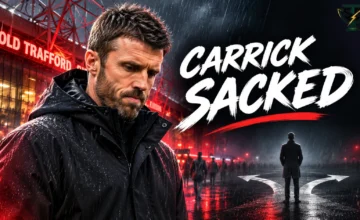
United dismissed Carrick on November 12.
In its official departure statement, the club acknowledged his contribution to the previous season while concluding that managerial change had become necessary.
Carrick’s Two Contrasting Periods in Charge
| Measure | Successful Rescue | Following Campaign |
|---|---|---|
| Matches | 17 | 15 |
| Wins | 12 | 3 |
| Draws | 3 | 5 |
| Defeats | 2 | 7 |
| Win percentage | 70.6% | 20.0% |
| League outcome | Third place | 18th after 10 league matches |
Statistical note: The 17-match rescue record refers to the remaining league fixtures of the previous campaign. The 15-match record covers all competitions in the following season. Their different competition scopes are identified deliberately.
The contrast is extraordinary.
Carrick moved from winning more than seven out of every 10 matches in his successful rescue period to winning just one in five across the following campaign.
The collapse also exposed the danger of interpreting a short period of strong results as definitive proof that deeper structural problems had been solved.
Michael Carrick’s Managerial Trophy Record
Trophies won as Manchester United manager: None.
Carrick’s playing career included five Premier League titles, a Champions League triumph and other major honors.
Those achievements remain part of his personal legacy, but they must not be confused with his managerial record.
His strongest coaching achievement at United was rescuing a troubled campaign and returning the club to Champions League qualification.
His greatest managerial failure was the subsequent inability to sustain that improvement.
Every Manchester United Manager and Every Trophy Since Ferguson
The complete managerial timeline shows how little silverware followed repeated changes in leadership.
| Manager | Tenure | Honors Won | Total |
|---|---|---|---|
| David Moyes | 2013–2014 | Community Shield 2013 | 1 |
| Ryan Giggs, caretaker | 2014 | None | 0 |
| Louis van Gaal | 2014–2016 | FA Cup 2016 | 1 |
| José Mourinho | 2016–2018 | Community Shield 2016; League Cup 2017; Europa League 2017 | 3 |
| Ole Gunnar Solskjaer | 2018–2021 | None | 0 |
| Michael Carrick, caretaker | 2021 | None | 0 |
| Ralf Rangnick, interim | 2021–2022 | None | 0 |
| Erik ten Hag | 2022–2024 | League Cup 2023; FA Cup 2024 | 2 |
| Ruud van Nistelrooy, caretaker | 2024 | None | 0 |
| Ruben Amorim | 2024–2026 | None | 0 |
| Darren Fletcher, interim | 2026 | None | 0 |
| Michael Carrick | 2026 | None | 0 |
| Combined total | 2013–2026 | Five major honors and two Community Shields | 7 |
The timeline follows the appointments documented in Reuters’ historical list of United managers since Ferguson, with trophy classifications checked against Manchester United’s official record.
Where Manchester United Stand Now: Eighteenth and Facing Relegation
United’s current Premier League position represents the most troubling measure of the club’s decline.
After 10 matches, the team sits 18th with eight points.
Its record of one victory, five draws and four defeats is not simply disappointing compared with Ferguson’s era. It places United inside the relegation zone.
| Premier League Measure | Manchester United |
|---|---|
| Position | 18th of 20 |
| Matches played | 10 |
| Wins | 1 |
| Draws | 5 |
| Defeats | 4 |
| Goals scored | 14 |
| Goals conceded | 19 |
| Goal difference | -5 |
| Points | 8 |
| Points per match | 0.80 |
| Percentage of available points | 26.7% |
The defensive figures are particularly concerning.
United have conceded 19 league goals in 10 games, an average of 1.9 per match.
At that rate, they would concede approximately 72 goals across a 38-match season.
That is a mathematical projection, not a forecast of their final defensive record.
The same qualification applies to their points return. Eight points from 10 games corresponds to approximately 30 points over a full season, but the arrival of a new coach, changes in personnel and future performances could alter that trajectory substantially.
The immediate situation nevertheless demands attention.
United’s next Premier League fixture is away to Liverpool on November 22.
It will provide an early indication of whether another managerial change can improve performances quickly enough to move the club away from the bottom three.
Why Manchester United Kept Changing Managers but Never Fixed the Problems
Recruitment Without a Consistent Football Identity
United have repeatedly changed tactical philosophies without maintaining a sufficiently coherent recruitment strategy.
Moyes inherited Ferguson’s squad and struggled to strengthen it.
Van Gaal pursued possession-oriented structures. Mourinho emphasized defensive discipline and direct attacking transitions. Solskjaer prioritized pace and counterattacking. Ten Hag sought positional control, while Amorim introduced his preferred back-three system.
Carrick then attempted to stabilize a squad assembled across those changing approaches.
Each transition created uncertainty over which players best suited the next manager.
Expensive signings could become less influential after a tactical change, while squad weaknesses remained unresolved.
Continue the Premier League Story
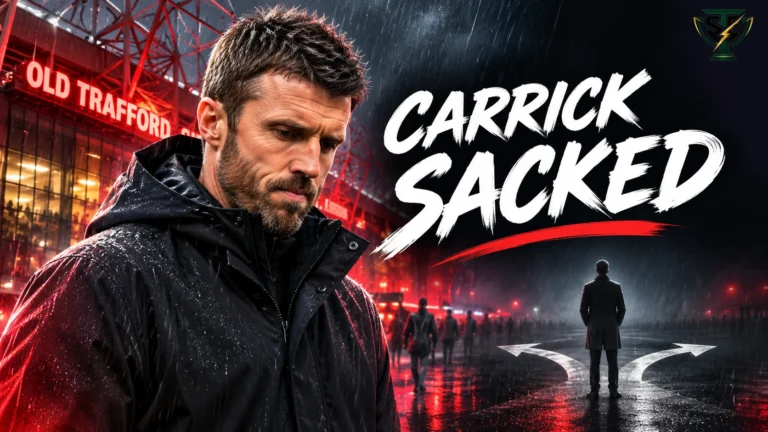
The Sports Encounter previously examined these recurring problems in its analysis of the underlying causes of United’s prolonged Premier League struggles.
Managerial Authority Without Long-Term Protection
Ferguson had the authority to shape United over multiple cycles.
He survived poor early results, developed young players and gradually changed his squad when necessary.
His successors operated in a different environment.
Short-term pressure increased whenever Champions League qualification became uncertain.
That created an incentive to prioritize immediate results, sometimes at the expense of longer-term development.
Van Gaal’s dismissal after winning the FA Cup and Ten Hag’s departure months after another FA Cup victory demonstrate how quickly managerial evaluations could change.
The Glazer Ownership Model and INEOS’s Sporting Responsibilities
United’s ownership structure has become a central part of the debate surrounding the club’s decline.
The Glazer family’s leveraged acquisition created a financial structure that supporters have criticized for years.
Sir Jim Ratcliffe’s investment brought significant changes to the club’s football operations, including restructuring and attempts to modernize decision-making.
However, those changes have not yet translated into a sustained improvement in league performance.
Following Carrick’s dismissal, the Manchester United Supporters’ Trust criticized the owners and argued that another managerial change could not resolve the underlying issues.
The supporters’ organization called for greater accountability, stronger engagement with fans and a more coherent approach to football leadership.
Its criticism reflects a growing concern that United’s problems persist regardless of who occupies the dugout.
The Cost of Continual Rebuilding
Managerial instability has financial consequences as well as competitive ones.
United have spent substantial sums on recruitment, managerial appointments and compensation packages.
The departures of Ten Hag and Amorim alone reportedly involved more than £30 million in compensation.
Repeatedly changing coaching structures can also create additional costs when new managers request different types of players or support staff.
Commercial strength has therefore not guaranteed efficient sporting investment.
For United, the challenge is not simply finding the resources to compete. It is using those resources within a stable and accountable sporting strategy.
The Manchester United Supporters’ Trust Blames More Than Carrick
The reaction to Carrick’s dismissal illustrates how supporters increasingly distinguish the immediate manager from the institution responsible for appointing him.
The trust acknowledged Carrick’s contribution during the previous season and argued that responsibility for United’s problems extended beyond the individuals who had coached the first team.
Its statement called on the owners to demonstrate accountability and rebuild trust.
Those concerns include the club’s football strategy, its relationship with supporters and the long-term direction of Old Trafford.
The club’s proposed 100,000-seat stadium development has added another dimension to the debate.
While a modern stadium could generate future revenue and improve facilities, supporters have questioned whether infrastructure ambitions are being adequately balanced with football priorities and ticket affordability.
The issue is not whether Manchester United should invest in its stadium.
It is whether the club can demonstrate a coherent strategy that connects commercial investment, sporting performance and the interests of supporters.
Could Mauricio Pochettino Reverse Manchester United’s Decline?
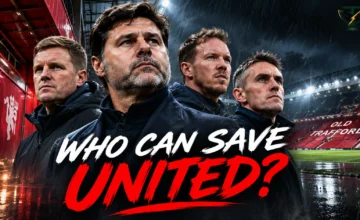
Former Tottenham Hotspur and Chelsea coach Mauricio Pochettino has emerged as the leading candidate to succeed Carrick.
British media reports indicate that an agreement may be close, although United have not formally confirmed his appointment.
Pochettino is currently responsible for the United States men’s national team and is under contract with U.S. Soccer.
Any appointment would require resolving those existing obligations.
His Premier League experience and reputation for developing players make him an understandable candidate.
However, the history of United’s recent appointments provides an important warning.
Van Gaal, Mourinho, Ten Hag and Amorim all arrived with considerable reputations and well-established coaching philosophies.
None restored United to sustained Premier League title contention.
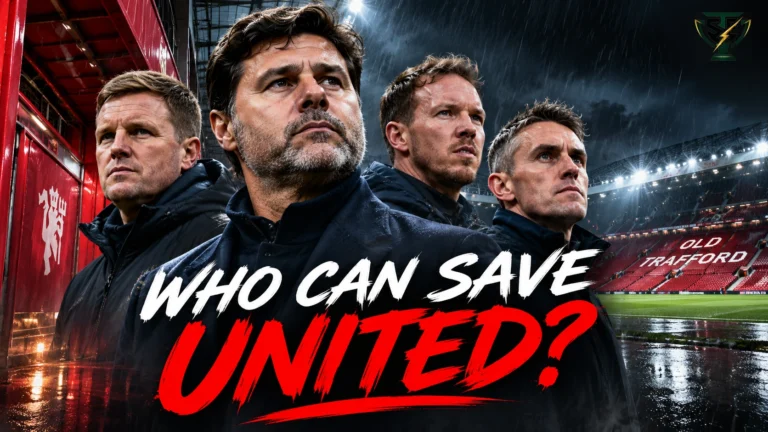
The Sports Encounter has already examined Pochettino and the other leading candidates for the Manchester United job.
The next manager will need authority, time and an effective recruitment structure, not merely an impressive professional résumé.
What Manchester United Must Change to Avoid Another Failed Era
United’s immediate objective is escaping the relegation zone.
That requires greater defensive reliability, clearer responsibilities without possession and improved consistency in converting attacking opportunities.
Beyond the current campaign, the club must resolve the issues that have repeatedly undermined managerial projects.
Recruitment should follow a coherent football strategy rather than changing substantially with every appointment.
The football department must establish clear accountability for decisions involving personnel, coaching and player development.
Young players need a stable pathway into the senior team, while established professionals must be evaluated against consistent performance standards.
United also need to improve how they assess managerial progress.
A strong run of matches should not automatically justify a long-term appointment if deeper weaknesses remain.
Equally, a disappointing period should be assessed within the context of recruitment, injuries, squad construction and the performance of the wider football organization.
The club’s recent history demonstrates the cost of judging each manager in isolation.
From Ferguson’s 38 Trophies to Carrick’s Relegation Zone: The Final Verdict
Sir Alex Ferguson did not merely win trophies at Manchester United.
He built an institution capable of competing, adapting and winning across generations.
His successors inherited one of the most commercially powerful clubs in world soccer, but none succeeded in recreating the competitive structure behind that dominance.
Moyes won the Community Shield but could not preserve league performance.
Van Gaal won the FA Cup but struggled to deliver attractive and effective attacking soccer.
Mourinho won three trophies but departed amid deteriorating relationships and results.
Solskjaer restored belief without winning silverware.
Rangnick identified systemic weaknesses but could not resolve them during his interim spell.
Ten Hag won two domestic cups, but United’s league performances deteriorated.
Amorim’s tactical revolution failed to produce sustained improvement.
Carrick briefly restored Champions League qualification before suffering a collapse that left United in the relegation zone.
The recurring pattern is difficult to ignore.
United have changed managers, playing styles, recruitment priorities and senior football personnel. Yet the institution has repeatedly returned to the same uncertainty.
There is no credible argument that every manager was equally successful, or equally responsible for the club’s decline.
Mourinho delivered more trophies than any other post-Ferguson appointment. Ten Hag won two significant domestic finals. Solskjaer improved league finishes, and Carrick achieved a remarkable short-term recovery.
But those achievements never developed into sustained championship contention.
Thirteen years after Ferguson retired as a Premier League champion, Manchester United are fighting to escape the bottom three.
The next manager may improve results. A better defensive system and renewed confidence could transform the immediate campaign.
But restoring Manchester United’s position among England’s elite will require something more durable: an organization capable of making sound football decisions regardless of who happens to be standing on the touchline.
Until that changes, Ferguson’s legacy will remain both the greatest reminder of what Manchester United achieved and the most uncomfortable measure of how far the club has fallen.
Manchester United
- How Carrick’s Tactics, Injuries, and Fixture Congestion Trapped Manchester United
- Manchester United’s Decline: From Ferguson’s 38 Trophies to the Relegation Zone
- Manchester United Sack Michael Carrick as Relegation Crisis Deepens
- The Hunt for the Next Manchester United Manager: Who Can Halt the Shambolic Slide?
- Champions League: PSG Rewrite the Record Books, Bayern Silence Atlético, and Cunha’s Wild Double Rescues Manchester United