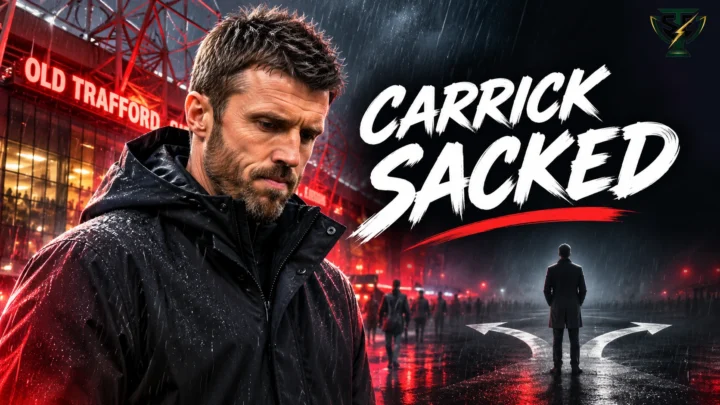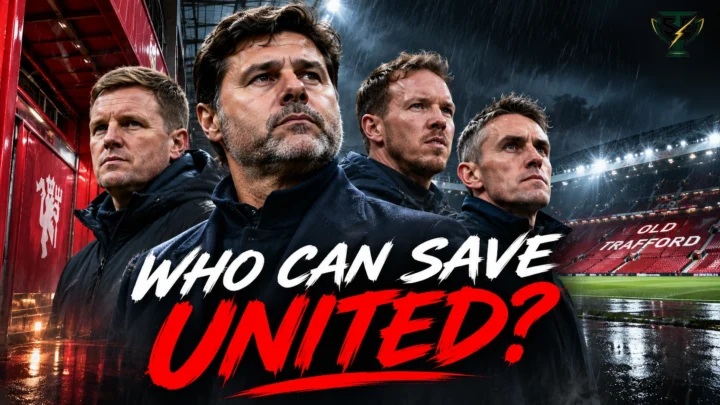
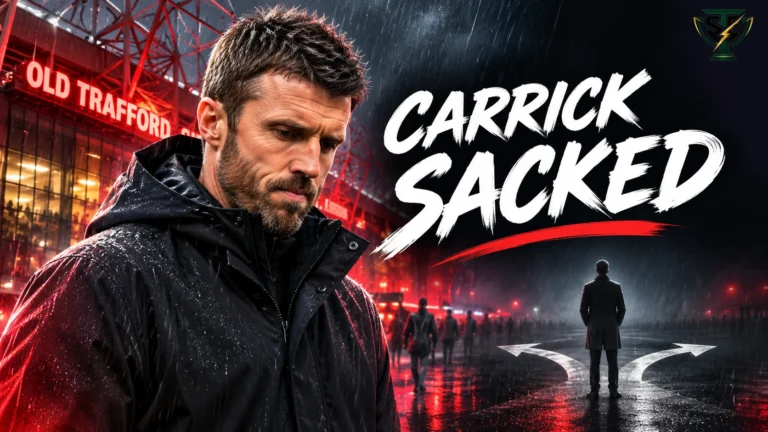
MANCHESTER, England, November 12, 2026: Manchester United’s 4-4 draw with Aston Villa exposed the contradictions that defined Michael Carrick’s final weeks as head coach. United conceded twice in the opening four minutes, fought back to level, fell two goals behind again and scored twice in stoppage time. Four days later, Carrick was dismissed, with the club sitting 18th in the Premier League after collecting eight points from 10 matches.
The problems extended beyond defensive errors. Carrick’s tactics had evolved from the counterattacking approach that helped United win 12 of their final 17 league matches last season. His team pressed higher, kept more possession and faced a demanding Champions League schedule while dealing with injuries. These pressures may have reinforced one another, but the available evidence does not establish that the tactical changes caused United’s injuries or independently explain the decline.
Key Takeaways
- Manchester United’s 4-4 draw with Aston Villa exposed the contradictions that defined Michael Carrick’s final weeks as head coach.
- Villa scored through Alysson and Nicolas Jackson inside four minutes, exploiting space as United attempted to engage their opponents high up the pitch.
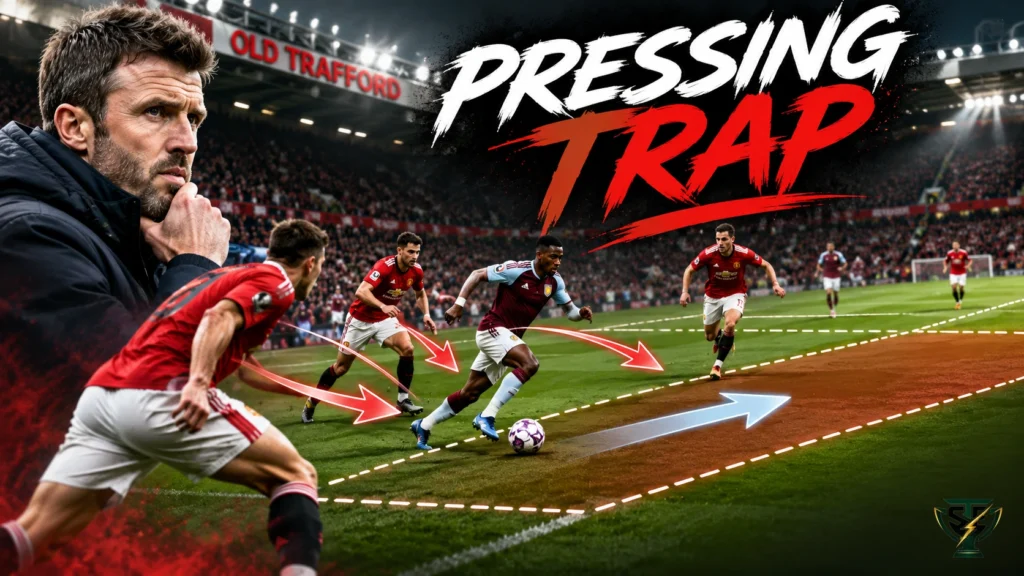
- According to Coaches’ Voice’s tactical examination, Villa repeatedly attracted United’s press before playing direct passes toward Jackson.
- John McGinn and Johan Manzambi positioned themselves close enough to support the striker, allowing Villa to compete for second balls and attack the spaces created when United’s players advanced.
How Carrick’s Tactics Left Manchester United Exposed
Aston Villa’s opening goals illustrated how quickly United’s defensive structure could be disrupted.
Story at a glance
How Carrick’s Tactics Left Manchester United Exposed
Aston Villa’s opening goals illustrated how quickly United’s defensive structure could be disrupted.
Opta Identified United’s Pressing Problem Before the Results Collapsed
The warning signs had appeared earlier in the season.
More Possession Did Not Automatically Produce Better Chances
United’s change in playing style was also visible when they had the ball.
Injuries Made Tactical Changes Harder to Implement
Injuries and player absences added another challenge to United’s tactical development.
Champions League Fixtures Reduced Training and Recovery Time
United’s schedule was another important difference between Carrick’s successful rescue period and the following campaign.
Villa scored through Alysson and Nicolas Jackson inside four minutes, exploiting space as United attempted to engage their opponents high up the pitch.
According to Coaches’ Voice’s tactical examination, Villa repeatedly attracted United’s press before playing direct passes toward Jackson.
John McGinn and Johan Manzambi positioned themselves close enough to support the striker, allowing Villa to compete for second balls and attack the spaces created when United’s players advanced.
The approach exposed a central problem: United’s pressing players and defensive line did not always move as a coordinated unit.
When the front players pressed but the midfield and defensive line remained deeper, Villa could bypass the first challenge and move into dangerous areas.
That created a difficult decision for United’s midfielders. They could advance to engage the ball and risk exposing the defense, or retreat and allow the opposition additional space.
Why Carrick’s Tactics Also Created Attacking Opportunities
The Villa game showed that United’s press was not entirely ineffective.
After conceding twice, the home side regained control through more aggressive pressure and greater success in recovering possession.
Bruno Fernandes converted a penalty before Youri Tielemans equalized shortly before halftime.
United finished with 25 shots to Villa’s 10, held 53% possession and registered an expected goals total of 3.26 against Villa’s 2.85.
Those figures show that United created opportunities and sustained attacking pressure. They also illustrate why simply abandoning the high press would be an incomplete solution.
The central issue was coordination. A successful press could produce dangerous attacks, but an unsuccessful one could leave large spaces between United’s midfield and defense.
For the next coaching staff, improving the timing of the press may matter more than increasing the number of pressing actions.
Players need clear triggers for advancing, reliable support from nearby teammates and a compact structure when opponents escape the initial pressure.
Opta Identified United’s Pressing Problem Before the Results Collapsed
The warning signs had appeared earlier in the season.
In an October 8 analysis, Opta Analyst reported that United were defending in a high block 42% of the time across their first five Premier League matches.
That compared with 26% during Carrick’s spell in charge the previous season.
The change represented a substantial shift in how United positioned themselves without possession.
A high defensive block can help a team recover the ball closer to the opposition’s goal. However, it also requires players behind the press to cover considerable space if opponents escape.
Opta identified concerns about the mobility of United’s midfield and back line, particularly their ability to protect the spaces opened by an aggressive pressing structure.
The same analysis recorded 89 out-of-possession sprints per 90 minutes, compared with 86 under Carrick the previous season.
That relatively small increase does not demonstrate a dramatic rise in team-wide sprinting.
The evidence points more directly toward the organization and effectiveness of those movements.
United could work hard without applying pressure at the right time or in the right positions.
This distinction also helps explain the wider tactical problems examined in The Sports Encounter’s investigation into Manchester United’s recruitment and tactical difficulties.
More Possession Did Not Automatically Produce Better Chances
United’s change in playing style was also visible when they had the ball.
During Carrick’s successful spell last season, the team averaged 49.1% possession in the Premier League.
Across the first five league matches of the new campaign, that figure increased to 59.9%.
The difference is substantial, but it needs context.
Opponents, match circumstances and numerical advantages influence possession statistics. Opta specifically noted that the early sample included promoted opposition and an extended period against 10-man Manchester City.
Therefore, increased possession alone cannot establish that Carrick’s tactics had deliberately abandoned his previous approach.
Nevertheless, the change raised a question about the suitability of United’s attacking personnel.
Players who excel when attacking open space face different challenges against opponents defending deep in their own half.
United were taking plenty of shots, but their average attempt came from 17.9 meters, the second-longest average shooting distance in the league during Opta’s early-season sample.
That suggested their territorial advantage was not consistently producing high-value scoring opportunities.
The challenge for United was to combine possession with effective movement, penetration and better shot selection.
Quick transitions remained useful whenever opponents left space behind their defense. Against compact opponents, however, United needed greater patience and coordinated movement to create opportunities closer to goal.
The next coach should judge attacking progress through chance quality as well as shot volume.
Injuries Made Tactical Changes Harder to Implement
Injuries and player absences added another challenge to United’s tactical development.
Against Como on October 21, Carrick was without several members of his first-team squad.
The reasons varied. Ayden Heaven was unavailable through illness, Leny Yoro was suspended and other players were managing physical problems.
Those distinctions matter. Suspensions, illness and injuries are separate availability issues and should not be combined into a single injury total.
Another setback followed during United’s Champions League victory over Roma on November 3.
Carlos Baleba suffered a hamstring injury and was withdrawn shortly after halftime.
On November 6, Carrick confirmed that the midfielder would be unavailable for several weeks, as detailed in Manchester United’s official injury update.
The injury removed a player capable of contributing energy and mobility in the middle of the pitch.
However, the circumstances of Baleba’s injury do not establish that United’s pressing approach caused it.
That conclusion would require information about his individual workload, medical history, recovery and training exposure that is not publicly available.
What Injury Research Actually Tells Us
A study published in the British Journal of Sports Medicine examined 24 professional European clubs across 11 seasons.
Researchers found that lower injury burden and greater player availability were associated with stronger league performance.
The study included 155 team-seasons and analyzed 7,792 injuries.
Its findings support the importance of maintaining squad availability, but they do not establish how many points Manchester United lost because of injuries.
Nor can the research show whether United’s injury rate increased under Carrick without comparable club-specific data.
From a coaching perspective, the practical issue is continuity.
Pressing structures require players to recognize triggers, communicate and understand their teammates’ positioning.
When regular starters become unavailable, replacement players must quickly establish those relationships.
Even individually capable defenders and midfielders can struggle when their collective timing is inconsistent.
That makes availability a squad-management problem as well as a medical concern.
Champions League Fixtures Reduced Training and Recovery Time
United’s schedule was another important difference between Carrick’s successful rescue period and the following campaign.
Last spring, United were not competing in Europe and had already exited both domestic cup competitions.
That frequently gave Carrick several days between Premier League matches to prepare his team.
The situation changed when Champions League fixtures returned.
In October, United faced Tottenham on the 10th, Atlético Madrid on the 13th, Leeds on the 18th and Como on the 21st.
Four competitive matches across 12 calendar days reduced the opportunity for extended tactical training and recovery.
A separate British Journal of Sports Medicine study of 27 European clubs found that muscle injury rates in league matches were 32% higher when recovery time was four days or fewer compared with six days or more.
The finding was an association across the clubs studied, not proof that shortened recovery caused a particular injury at Manchester United.
Importantly, the research also found little or no general association between fixture congestion and team performance.
It would therefore be misleading to claim that the additional matches alone explain United’s poor results.
The scheduling problem is more specific.
A manager changing a team’s tactical approach needs time to rehearse coordinated movements, review match footage and correct mistakes.
When matches arrive frequently, preparation must compete with recovery and injury-management requirements.
That can slow the development of collective habits, particularly when different players are required to fill key positions.
High-Speed Running Research Does Not Establish That Carrick Caused the Injuries
A further question is whether more demanding tactical movements could have increased injury risk.
A 2026 systematic review by Yongli Xie and Xiaofei Cai, published in Frontiers in Public Health, examined 22 studies on high-speed running and injury occurrence in soccer.
The researchers found that sudden increases in high-speed running and sprint exposure may be associated with increased injury risk.
However, 20 of the 22 studies had a high risk of bias.
The review also found no consistent injury-risk threshold that could be applied universally.
Continue the Premier League Story

Those limitations are crucial when applying the research to United.
Opta’s early-season figures showed that United’s out-of-possession sprint count increased from 86 to 89 per 90 minutes.
That comparison does not demonstrate a substantial team-wide rise in sprint exposure, nor does it reveal the training loads of individual players.
Match sprint counts alone are insufficient to establish injury causation.
Any credible assessment would require player-specific exposure information, including training, matches, recent workload changes and recovery histories.
It would also need consistent medical definitions and injury records across the periods being compared.
Without those records, the relationship between United’s tactical demands and injuries remains a plausible question rather than a demonstrated explanation.
The Same Problems Could Follow Manchester United’s Next Manager
United’s difficulties can be understood as a possible reinforcing cycle.
An aggressive press creates attacking opportunities but also exposes defensive space when coordination fails.
Poor results increase pressure to adjust the tactical plan.
Injuries and other absences force changes in personnel.
A congested fixture list leaves less time to develop relationships and rehearse revised movements.
The next match then tests a team still adjusting to those demands.
This interpretation connects several verified developments, but it remains an analytical model. It has not been demonstrated as a causal sequence through United’s internal performance data.
That distinction should influence the next coaching appointment.
The club must decide whether another substantial tactical reset is practical with its existing squad or whether improving the execution of familiar roles offers a more reliable immediate route forward.
The problems outlined here also connect with TSE’s earlier assessment of Carrick’s rebuilding project, particularly the challenge of maintaining tactical progress over a full competitive season.
Four Measures That Could Show Whether United Are Improving
The next coaching staff would benefit from evaluating progress against a small group of consistent performance measures.
Press resistance: Track how frequently opponents bypass United’s first line of pressure and enter dangerous midfield spaces. The purpose is to assess coordination rather than simply count pressing attempts.
Chance quality: Monitor where United take their shots and the quality of opportunities created. A high shot count is less useful if most attempts come from difficult positions.
Player availability: Record injury days lost, repeat injuries and match availability using consistent definitions. Any comparison should account for changes in training and match exposure.
Defensive partnerships: Evaluate the continuity of key midfield and defensive combinations, alongside the team’s ability to maintain spacing when players are replaced.
These measures would allow United to determine whether tactical adjustments are producing improvements in execution, player availability and competitive performance.
They would not prove that one coaching decision caused every positive or negative outcome.
United’s comeback against Aston Villa demonstrated the attacking quality and determination still present in the squad. Carrick’s departure showed how little those qualities achieved without reliable collective organization.
The challenge for the next manager is to resolve the recurring weaknesses without creating another disruptive transition. Carrick’s tactics exposed problems involving spacing, possession and player suitability, but the broader evidence suggests that injuries, squad continuity and preparation time must also be considered.
Unless Manchester United improve how those elements work together, the next manager could inherit much the same problems.
About the Author
Waydell D. Carvalho is a football performance analyst with Cwmbran Celtic. He is the author of Unified Marginal Gains Reference, available for preorder, and the creator of the Steam game DOMFC: Run a Complete Football Empire.
Author disclosure: The analysis, arguments and conclusions are the author’s own. Artificial intelligence tools were used during the writing and editing process.
Manchester United
- How Carrick’s Tactics, Injuries, and Fixture Congestion Trapped Manchester United
- Manchester United’s Decline: From Ferguson’s 38 Trophies to the Relegation Zone
- Manchester United Sack Michael Carrick as Relegation Crisis Deepens
- The Hunt for the Next Manchester United Manager: Who Can Halt the Shambolic Slide?
- Champions League: PSG Rewrite the Record Books, Bayern Silence Atlético, and Cunha’s Wild Double Rescues Manchester United