BROOKLYN, New York, November 10, 2026: LeBron James and Kevin Durant are backing a new Under-18 basketball league that plans to pay elite high school players for their name, image and likeness while offering professional coaching, education and national exposure before they reach college. The Futures Basketball League announced Tuesday that it will launch in April 2027 with 120 leading boys’ prospects from the high school graduating classes of 2028 through 2031, divided among 12 regional teams. Derrick Rose and Paolo Banchero have also joined as founding team owners in an ambitious attempt to reshape a youth basketball system currently dominated by separate grassroots circuits and tournaments.
The league will run across ten competition weekends between April and August, ending with a national championship, and will allow eligible athletes to receive NIL compensation in cash, equity subject to administrative approval, or a combination. Its organizers promise individualized training, sports science, mentorship and academic support while preserving room for school basketball and recruiting commitments. The model raises questions extending far beyond the involvement of famous investors: how much teenagers will earn, whether their college eligibility can be protected, how regional teams will select players and whether a new national competition can provide better development without adding another layer of commercial pressure to young athletes.
What Is the Futures Basketball League?
The Futures Basketball League, abbreviated FBL, is a proposed national competition for elite American boys’ basketball prospects under the age of 18.
Its inaugural season will feature 120 players organized into 12 regional teams, meaning each team would have an average roster of ten players if the announced field is divided equally.
Story at a glance

What Is the Futures Basketball League?
The Futures Basketball League, abbreviated FBL, is a proposed national competition for elite American boys’ basketball prospects under the age of 18.
Why LeBron James and Kevin Durant Are Investing in Youth Basketball
James and Durant are entering the league through established business partnerships rather than acting simply as celebrity endorsers.
Who Owns and Operates the New Basketball League?
The founding group extends beyond James and Durant.
How Will Under-18 Players Earn Money?
The compensation structure is among the most significant parts of the announcement.
Will Joining the Futures Basketball League Affect NCAA Eligibility?
FBL says its model is designed to preserve players’ opportunities to pursue college basketball.
Unlike a conventional collection of independent grassroots tournaments, the new competition intends to operate through a common league structure with centralized player development, commercial partnerships and media distribution.
The organizers also want to create more regular meetings between top prospects who currently compete in different circuits.
The league’s official launch announcement identifies coaching, training, NIL earnings, mentorship and education as core parts of the project.
Futures Basketball League: Confirmed Structure
| Feature | Announced Plan | What Remains Unconfirmed |
|---|---|---|
| Launch | April 2027 | Exact opening fixture |
| Season | April through August | Complete dates and venues |
| Players | 120 elite U18 boys | Full roster and individual selections |
| Teams | 12 regional teams | All markets, names and assignments |
| Eligible graduating classes | 2028 through 2031 | Individual player eligibility decisions |
| Competition weekends | 10 | Games per team and final format |
| Championship | National championship weekend | Qualification and playoff structure |
| Player compensation | NIL agreements, with cash and potential equity options | Individual payments and contract terms |
| Media distribution | Streaming or national television planned | Confirmed network and platform partners |
| Player services | Coaching, development, mentorship and educational support | Individual program delivery and measured outcomes |
The figures are substantial for a new venture, but several operational details remain outstanding.
The league has not publicly provided a complete player list, its entire competition calendar or signed media-rights agreements.
Consequently, the announcement establishes a proposed structure rather than a completed sporting competition with confirmed results or demonstrated development outcomes.
Why LeBron James and Kevin Durant Are Investing in Youth Basketball
James and Durant are entering the league through established business partnerships rather than acting simply as celebrity endorsers.
James and longtime associate Maverick Carter are involved through LRMR Ventures.
Durant and business partner Rich Kleiman are participating through Boardroom Sports Holdings.
Both groups are among the founding investment partners, giving the project a connection to individuals experienced in professional basketball, athlete branding and sports businesses.
The decision also reflects how dramatically the economics of elite basketball have changed since James entered the NBA in 2003.
At that time, a celebrated high school player could command significant national attention but had far fewer legitimate opportunities to earn money from personal commercial rights while pursuing college eligibility.
Today, NIL agreements have introduced a market for endorsements, appearances and other promotional activity by prospective college athletes.
The Futures Basketball League is attempting to organize part of that market around a recurring competition.
Why LeBron’s Own Career Makes the Project Significant
James was already nationally recognized before entering the NBA directly from St. Vincent-St. Mary High School in Akron, Ohio.
His extraordinary high school visibility demonstrated that teenage basketball prospects could attract national audiences long before signing professional contracts.
His subsequent NBA career established him as one of basketball’s most recognizable players and business figures.
He is now playing his record-extending 24th NBA season after joining Philadelphia.
The Sports Encounter’s report on James joining the 76ers examined his longevity and decision to continue pursuing another championship.
The new youth league addresses a different stage of that same talent pathway.
Instead of concentrating on established NBA stars, James’ investment supports a business that intends to recognize commercial value while prospects are still developing.
That ambition carries an obligation to ensure young athletes are protected as well as promoted.
Who Owns and Operates the New Basketball League?
The founding group extends beyond James and Durant.
Former NBA Most Valuable Player Derrick Rose and Orlando Magic forward Paolo Banchero are participating as founding team owners.
Entrepreneur Gary Vaynerchuk, Ryan Harwood, Ezra Kucharz and investment executives associated with SC Holdings are also involved.
Jason Stein serves as league chairman and co-founder, while former NBA executive Samin Odhwani leads operations as president.
Chris Rivers, previously involved in NIL recruiting and grassroots basketball, is vice president of basketball operations.
Those distinctions matter because investment, team ownership and daily management are different responsibilities.
Key Figures Behind the Futures Basketball League
| Person or Organization | Announced Involvement | Relevant Expertise |
|---|---|---|
| LeBron James and Maverick Carter | Founding investment partners through LRMR Ventures | Professional basketball, commercial partnerships and athlete branding |
| Kevin Durant and Rich Kleiman | Founding investment partners through Boardroom Sports Holdings | Basketball businesses, investment and media |
| Derrick Rose | Founding team owner | Elite playing experience and grassroots basketball background |
| Paolo Banchero | Founding team owner | Recent transition from high-level youth basketball to the NBA |
| Gary Vaynerchuk and other investors | Founding ownership group | Brand development, business and media |
| Jason Stein | Chairman and co-founder | Sports investment through SC Holdings |
| Samin Odhwani | President | Sports operations and league business development |
| Chris Rivers | Vice president, basketball operations | Grassroots basketball and NIL recruiting |
| MADE Hoops | Operations partner | Youth basketball events and player networks |
| HMBL Development | Training partner | Individualized basketball development |
Banchero’s involvement is particularly notable because his transition from elite youth basketball to college and then the NBA remains relatively recent.
He offers a different perspective from retired players or executives whose youth development experiences took place under earlier systems.
TSE’s NBA coverage of Orlando’s early-season contests documents the competitive environment in which Banchero and the Magic are operating.
The founders’ collective experience could give FBL access to useful expertise. However, famous investors do not automatically guarantee that a new league will deliver superior coaching, sustainable finances or improved player outcomes.
How Will Under-18 Players Earn Money?
The compensation structure is among the most significant parts of the announcement.
FBL says eligible athletes will be able to enter NIL agreements connected to the use of their names, images and likenesses.
They may elect to receive compensation in cash, league equity subject to administrative approvals, or a combination of the two.
The league also intends to allow athletes to pursue separate commercial agreements, including sponsorships with footwear and other brands.
This is different from announcing a fixed salary for every player.
No standardized minimum payment, salary scale or individual compensation package has been publicly established.
The league says it has already begun signing top prospects from the targeted graduating classes, but their identities and contract terms have not yet been fully released.
Cash, Equity and Sponsorships: What Is Actually Confirmed?
| Compensation Route | Announced Availability | Important Consideration |
|---|---|---|
| Cash NIL compensation | Available to eligible participating players | Specific amounts and deliverables have not been disclosed |
| League equity | Potential option subject to administrative approvals | Valuation, liquidity, ownership rights and transfer conditions remain unknown |
| Combination of cash and equity | Permitted in the announced model | Individual terms must be evaluated |
| Independent endorsements | Players may pursue additional qualifying brand agreements | Contracts must respect applicable eligibility and legal requirements |
| Professional development | Coaching, training, mentorship and education promised | These are services, not a publicly established cash salary |
The option to receive equity deserves particular scrutiny.
A small ownership interest in a startup could eventually become valuable, but it might also be difficult to sell or produce little financial return.
Without published valuations and contract terms, it would be misleading to describe potential equity compensation as equivalent to cash.
For teenage participants, parents and advisers will need to understand exactly what rights an agreement transfers, how compensation is earned and whether payment depends on future commercial activity.
Will Joining the Futures Basketball League Affect NCAA Eligibility?
FBL says its model is designed to preserve players’ opportunities to pursue college basketball.
That is an important intention, but it should not be presented as automatic NCAA approval of every future agreement.
The NCAA distinguishes compensation for genuine NIL activity from payments made simply for athletic participation or achievement.
Its official NIL guidance identifies promotional services, endorsements and appearances as examples of NIL activity.
It also identifies pay-for-play arrangements and payments without real promotional deliverables as potential compliance problems.
High school prospects who subsequently enroll at Division I institutions may also have obligations to disclose qualifying NIL deals.
Under the NCAA’s published guidance, applicable third-party agreements worth $600 or more must be reported according to the relevant timing and eligibility rules.
The details matter because a teenager entering a commercial arrangement in high school may still be subject to compliance review upon reaching college.
Five Questions Families Should Ask Before Signing
| Question | Why It Matters | Current Position |
|---|---|---|
| What promotional services justify the NIL payment? | Distinguishes legitimate commercial activity from prohibited pay-for-play | Individual agreements not published |
| How is compensation calculated? | Determines whether the agreement offers a predictable financial benefit | Individual terms undisclosed |
| Who owns and controls commercial image rights? | Protects an athlete’s ability to make future endorsement decisions | Standard contract terms not public |
| Does the agreement affect school or NCAA eligibility? | Prevents future recruiting or participation problems | Depends on applicable rules and individual terms |
| What happens if a player is injured, released or withdraws? | Clarifies termination rights, medical support and compensation | League-wide provisions not publicly detailed |
Parents should also consider state high school athletic-association rules, which can differ from NCAA requirements.
NCAA eligibility does not by itself settle whether a particular agreement is permissible under a player’s school, state or other governing regulations.
The importance of verifying eligibility before promising a sporting opportunity has recently been illustrated elsewhere in college basketball.
TSE’s report on Stephanie Okechukwu’s long wait for NCAA eligibility clearance explored how administrative uncertainty complicated an international player’s transition to college competition.
Okechukwu’s case involves a different set of circumstances, but the broader lesson is relevant: eligibility should be established through the governing rules, not assumed from a promoter’s expectations.
Why Youth Basketball’s Existing Tournament System Is Being Challenged
FBL’s organizers argue that the current American youth basketball landscape is fragmented.
Top prospects often compete in different regional and commercial circuits, including events associated with major footwear brands.
As a result, highly ranked players do not always face one another regularly.
Scouts, coaches and recruiters may need to evaluate performances across different opponents, competitions and schedules.
League chairman Stein has described a landscape in which roughly 150 leading prospects appear across more than 200 teams in seven different leagues.
Those figures are an explanation advanced by the league’s leadership, rather than an independently completed census of every American youth basketball organization.
FBL proposes placing a selected group of elite players into one identifiable competition.
That could make direct player comparisons easier if team assignments, playing time and competition standards are sufficiently consistent.
However, it will also concentrate attention on a relatively small group of athletes.
With 120 announced places, many capable prospects will necessarily remain outside the league.
What Would Change From Conventional Grassroots Basketball?
| Area | Existing Grassroots Landscape | FBL’s Proposed Approach |
|---|---|---|
| Competition | Multiple independent circuits and events | One 12-team national competition |
| Player comparisons | Opponents and schedules vary across events | More regular meetings among selected elite prospects |
| Development | Depends heavily on individual teams and programs | Centralized development support and personalized training plans |
| Compensation | NIL arrangements vary by athlete and opportunity | League-linked NIL agreements plus outside endorsement opportunities |
| Media exposure | Distributed across tournaments and platforms | Proposed national television and streaming distribution |
| Education | Support varies by school, team and organization | Mentorship, education and life-skills programs promised |
| Accessibility | Many competitions and routes to visibility | Only 120 places in the initial league |
The comparison identifies the project’s intended differences. It does not establish that the new model has already delivered better results.
That will require evidence once athletes begin competing.
Why Coaching and Long-Term Player Development Matter More Than the Investors
The most defensible argument for FBL is not that NBA stars are investing in it.
It is that talented young players could receive a more consistent development program alongside meaningful competition.
The league says it will combine basketball coaching with strength training, recovery work, sports science, mentorship and education.
MADE Hoops will handle operational responsibilities, while Brooklyn-based HMBL Development will oversee individualized training programs.
That structure could address an existing problem in youth sports: the tendency to prioritize the next showcase performance over a player’s development across multiple seasons.
But the benefits will depend on implementation.
A serious evaluation should examine whether players receive individual training plans, appropriate workloads, regular feedback and educational support.
It should also measure whether those services lead to improvements rather than accepting the announcement of a training partnership as evidence of success.
What Should a Development-First League Measure?
Basketball development is not adequately represented by points scored or social-media popularity alone.
For elite teenagers, the quality of decision-making, defensive positioning, shooting mechanics, movement and adaptation to stronger competition also matters.
One example of the difference between youth reputation and sustained professional performance can be found in the development of Cooper Flagg and Kon Knueppel.
TSE’s analysis of Knueppel’s record-breaking rookie shooting and his comparison with Flagg demonstrates that players from similar development backgrounds can establish value through different skills.
Flagg developed into an outstanding all-around player, while Knueppel distinguished himself through exceptional three-point production.
The lesson for FBL is that producing successful professionals requires more than identifying talented scorers at 15 or 16.
It requires helping athletes develop skills that can transfer to college and professional competition.
Can a Ten-Weekend League Protect Athletes From Overplaying?
The schedule is another important feature.
FBL says its competition calendar will accommodate high school seasons, NCAA recruiting periods, USA Basketball commitments and established development events.
That suggests an effort to avoid replacing one problem with another: adding demanding travel and competition obligations to an already crowded youth schedule.
Nevertheless, the full fixture list and number of games per athlete have not been announced.
Ten competition weekends do not necessarily mean ten games per player.
Each weekend could include different numbers of fixtures, and participation may vary according to the final format.
It would therefore be premature to calculate annual workloads or claim the new league will definitively reduce overuse injuries.
The practical test will be how FBL coordinates club, school and international responsibilities while providing appropriate recovery time.
What Happens to Players Who Do Not Make the 120-Player Roster?
One significant unanswered question concerns access.
The league aims to recruit 120 of the nation’s leading Under-18 boys’ players.
That is a highly selective group, and selection methods have not yet been explained in sufficient detail to evaluate fairness or geographic representation.
The founding announcement says teams will represent different regions, but their markets and complete recruitment structures remain outstanding.
The league has also announced a $1 million pledge to the MADE For All Foundation, which supports scholarships and youth basketball development initiatives.
That commitment could extend benefits beyond the league’s initial roster, provided the funding reaches the intended programs.
However, a pledge should not be described as money already disbursed.
The actual number of beneficiaries, program locations, distribution dates and educational outcomes will need to be verified later.
The access question is especially relevant because a national league built around elite prospects can improve opportunities for selected athletes while simultaneously increasing the gap in visibility between them and equally ambitious players outside the competition.
Could the Futures Basketball League Become a Major Media Business?
The business model extends beyond selling tickets to basketball games.
FBL wants to turn the development of elite prospects into a continuing sports and entertainment property.
Instead of presenting isolated tournament highlights, the league could document player development across a full season, including recruitment interest, training progress and competition results.
Former ESPN executive Connor Schell has joined as a special adviser on content, production and distribution.
His involvement indicates that media storytelling is a central part of the strategy rather than an afterthought.
National streaming and television distribution could introduce young players to audiences before their college careers begin.
It could also create a potentially attractive platform for sponsors interested in supporting emerging basketball talent.
There is already clear evidence that basketball star power can influence media attention.
When LeBron James joined the Philadelphia 76ers, his presence substantially increased expectations for the team’s national television exposure.
TSE’s investigation into the commercial and broadcast impact of James’ Philadelphia move examined how an established athlete can change a team’s visibility before new games have even been played.
However, FBL cannot assume that the same commercial response will automatically follow teenage prospects.
Media audiences, sponsorship revenue and viewership will need to be demonstrated through actual agreements and measurable results.
How Much Money Could the League Generate?
The announcement does not provide sufficient financial information for a defensible revenue projection.
Potential sources of income include sponsorships, media rights, commercial partnerships, ticketing and the value of participating team investments.
However, the organizers have not publicly disclosed guaranteed revenues, annual operating costs or player compensation totals.
Any financial forecast presented as a confirmed business outcome would therefore be speculative.
The league’s investment model belongs to a broader trend in which athletes and investors increasingly see sports businesses as valuable long-term assets.
That trend has become visible across established professional basketball franchises.
TSE’s analysis of the NBA’s major offseason changes examined how financial resources and roster decisions can reshape competitive expectations.
The Futures project applies business investment at a much earlier stage of the sporting pathway.
But attracting investors and creating a sustainable league are separate achievements.
The latter will depend on revenue, costs, athlete retention, audience development and the quality of the product actually delivered.
What Could This Mean for Future NBA Draft Prospects?
For basketball scouts, the most interesting potential change is the opportunity to compare highly rated players in more consistent competition.
High school recruiting evaluations often draw on performances in different tournaments, leagues and environments.
A common structure could provide more direct comparisons, especially if players face strong opposition regularly and receive substantial playing time.
That would not eliminate scouting uncertainty.
Teenagers develop at different rates, and early physical advantages do not guarantee lasting success at college or professional level.
The NBA already contains examples of highly rated young players whose careers developed differently after they entered the league.
Evaluating the next generation requires looking beyond offensive highlights to understand defensive judgment, work habits, improvement and adaptability.
Professional competition also provides an important reminder that even exceptionally talented players must continue developing.
TSE’s analysis of Kevin Durant and Houston’s changing offensive matchups illustrates how established NBA stars are evaluated through tactical decisions and team responsibilities, not merely individual scoring reputations.
FBL will have an opportunity to introduce young players to more demanding basketball situations, but no pathway guarantees an NBA career.
Why Paolo Banchero and Derrick Rose Matter to the Development Model
Rose and Banchero represent different generations of NBA talent.
Rose emerged from Chicago’s basketball environment, developed into an elite college prospect and became the youngest Most Valuable Player in NBA history.
Banchero followed a more recent pathway through elite youth basketball and Duke before entering the NBA as the first overall draft pick.
Their experience may help the league understand challenges that are not always visible to business executives.
Young prospects must manage expectations, travel, training, education, competing interests and rapidly growing public attention.
They also need support when circumstances change through injury or declining performance.
Those concerns remain relevant even after players reach the NBA.
TSE’s report on Orlando’s injury-affected matchup with Boston provides an example of how the absence of an established young star such as Banchero can change a team’s competitive responsibilities.
FBL’s development program should therefore be judged partly on how well it prepares athletes to handle setbacks, not merely on how effectively it promotes their successes.
What the League Could Learn From College Basketball
The college game remains an important stage between elite high school basketball and professional competition.
It provides structured team competition, academic responsibilities and exposure to demanding opponents.
FBL does not claim to replace college basketball.
Instead, its proposal is to create a compensated development and competition system before players reach that stage.
The distinction is important because the league’s value will depend partly on whether its participants enter college better prepared, not simply better known.
College basketball results also demonstrate the uncertainty that makes sport compelling.
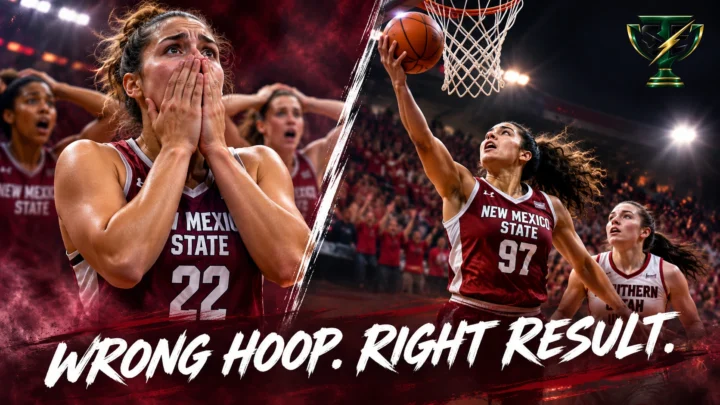
TSE’s account of New Mexico State’s extraordinary comeback against Southern Utah showed how composure, execution and team response can determine a contest even after an individual mistake.
Those qualities are learned through meaningful competition and coaching.
They cannot be established by NIL valuations or social-media followings alone.
Continue the NBA Story
 NBAWarriors Crush Pelicans by 51 as Wembanyama Dominates, Flagg Hits 43 and Lakers Win Sixth Straight
 NBAKawhi Leonard’s Toronto Reunion Hits Another Roadblock as Raptors Face a Critical Stretch Without Him
 NBAWhen You Don’t Need Enemies: New Mexico State Scores Into Its Own Basket, Then Wins With Two Seconds Left
Frequently Asked Questions About the Futures Basketball League
What is the Futures Basketball League?
FBL is a new national Under-18 boys’ basketball competition planned to launch in 2027, combining elite competition with NIL earning opportunities and player development support.
Who is backing the Futures Basketball League?
Founding partners include investment businesses associated with LeBron James, Kevin Durant and their business partners, alongside Derrick Rose, Paolo Banchero and other investors.
When will the league begin?
The inaugural season is scheduled to start in April 2027 and run through August, ending with a national championship.
How many teams and players will participate?
The announced structure contains 12 regional teams and 120 Under-18 players, averaging ten players per team.
Will Futures Basketball League players be paid?
The league plans to provide eligible players with NIL compensation, potentially through cash, equity subject to approval, or both. Individual amounts have not been publicly announced.
Can players still compete in college basketball?
The league says it intends to preserve college eligibility, but each player must comply with applicable NCAA, school and state rules. The league announcement is not a blanket NCAA eligibility determination.
Which high school graduating classes can participate?
The inaugural league is targeting prospects from the graduating classes of 2028, 2029, 2030 and 2031.
Where will games be played?
The competition will use regional teams and events in major U.S. markets. The complete team locations and venue schedule remain unannounced.
Will the games be televised?
The organizers intend to distribute games through streaming or national television, but confirmed broadcast partners have not yet been publicly identified.
What Happens Next for the Futures Basketball League?
The league’s first major test will come before its opening game.
Organizers must announce credible player selections, confirm regional teams, establish clear contract terms and finalize the competition schedule.
They must also demonstrate how their announced player-development services will work in practice.
For families, transparency around compensation, education, workload and eligibility will be particularly important.
For fans, the primary attraction will be the quality of competition and the chance to follow emerging players before they reach college.
For investors, the challenge will be building a durable business that can support athletes while attracting commercial interest.
The names behind the project guarantee attention, but they do not guarantee sporting success.
LeBron James and Kevin Durant have helped establish an ambitious new platform for teenage basketball talent. Its most important achievement will not be how many famous people attend the opening game.
It will be whether the 120 young athletes leave the competition better prepared, better protected and better equipped to pursue their futures in basketball.
LeBron James
- LeBron James and Kevin Durant Back New U18 Basketball League to Nurture Future US NBA Stars
- Trump Demands LeBron James Apology Over Anthem Video as NBA Conduct Rules Come Into Focus
- LeBron James Tells Knicks Fan ‘I’m From Ohio’ as MSG Chants ‘We Don’t Want You’
- Luka Dončić Promises Lakers Fans ‘No Nights Off’ as LeBron’s Departure Puts an Entire NBA Era on His Shoulders
- Knicks Raise First NBA Championship Banner in 53 Years as LeBron and Jaylen Brown Launch Philadelphia’s Title Challenge