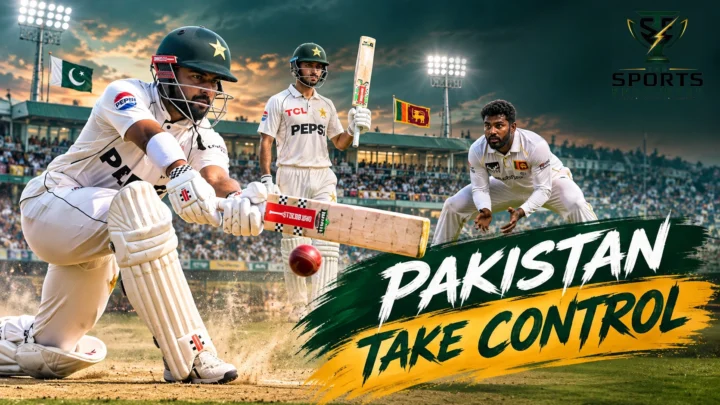
AL AMERAT, Oman, November 10, 2026: India and Pakistan marched into the ACC Men’s Under-19 Asia Cup semifinals with commanding victories on Tuesday, but their contrasting methods revealed two very different strengths. Aaryavir Sehwag struck a career-defining 160 from 168 balls to help India defeat the United Arab Emirates by 70 runs at Ministry Turf 2, while Ahmed Hussain produced a remarkable all-round performance of 89 runs and four wickets as defending champions Pakistan dismantled Nepal by 101 runs at Ministry Turf 1. The results completed Group A, sending unbeaten Pakistan into a semifinal against Bangladesh and India into a potentially explosive encounter with unbeaten Afghanistan.
India’s victory was constructed around Sehwag’s 193-run second-wicket partnership with VK Vineeth, whose 67 helped lift the total to 309/7 before Ishan Sood took 4/37 to dismiss UAE for 239. Pakistan had a more difficult beginning, slipping to 64/3 before captain Farhan Yousaf and Ahmed Hussain added 135 for the fourth wicket. Ahmed’s 89 from 73 balls helped establish a total of 275/7, and his 4/35 subsequently broke Nepal’s resistance as they folded for 174 in 43.4 overs. Pakistan finished with six points from three wins, while India’s four points secured second place. Both now enter the knockout stage knowing a single defeat will end their title ambitions.
U19 Asia Cup: India and Pakistan Complete Their Group Campaigns
The two matches took place simultaneously at the Al Amerat Cricket Ground complex, with India playing on Ministry Turf 2 and Pakistan on Ministry Turf 1.
Both opponents won the toss and elected to field, giving India and Pakistan the opportunity to establish targets.
Story at a glance

U19 Asia Cup: India and Pakistan Complete Their Group Campaigns
The two matches took place simultaneously at the Al Amerat Cricket Ground complex, with India playing on Ministry Turf 2 and Pakistan on Ministry Turf 1.
Aaryavir Sehwag’s 160 Gives India the Innings It Needed
Aaryavir Sehwag’s biggest contribution came at a particularly important moment.
VK Vineeth’s 67 Was the Partnership India Could Not Afford to Lose Early
Sehwag’s 160 dominated the scorecard, but Vineeth’s contribution deserves considerable attention.
India Under-19 vs UAE Under-19: Complete Batting Scorecard
India were asked to bat and completed their 50 overs at 309/7. The official BCCI match record confirms the result and Sehwag’s Player of the Match award.
UAE’s Ahmed Khudadad and Noorullah Ayobi Refuse to Surrender
UAE faced a target of 310, requiring 6.20 runs per over from the start.
The eventual winning margins suggest comfortable afternoons, but the scorecards tell more complicated stories. India benefited from missed chances offered to Sehwag, while Pakistan required substantial middle-order repair after Nepal’s early wickets.
| Match Detail | India vs UAE | Pakistan vs Nepal |
|---|---|---|
| Venue | Al Amerat, Turf 2 | Al Amerat, Turf 1 |
| Toss | UAE elected to field | Nepal elected to field |
| First innings | India 309/7 (50 overs) | Pakistan 275/7 (50 overs) |
| Second innings | UAE 239 all out (50 overs) | Nepal 174 all out (43.4 overs) |
| Winning margin | India by 70 runs | Pakistan by 101 runs |
| Leading batter | Aaryavir Sehwag, 160 (168) | Ahmed Hussain, 89 (73) |
| Leading bowler | Ishan Sood, 4/37 | Ahmed Hussain, 4/35 |
| Player of the Match | Aaryavir Sehwag | Ahmed Hussain |
| Next opponent | Afghanistan | Bangladesh |
India scored 34 more runs than Pakistan, but Pakistan won by 31 more runs. That difference demonstrates why the quality of the bowling response matters just as much as the first-innings total.
The victories followed contrasting opening-round successes. Pakistan began by beating UAE by nine wickets, while India demolished Nepal by ten wickets. Those performances, including Usman Khan’s unbeaten 139 and India’s rapid chase of 129, are documented in TSE’s report on the opening Group A matches.
Pakistan subsequently defeated India by three wickets on November 8, ensuring that their head-to-head result would separate the two teams if they completed the group stage with the same points.
Tuesday’s results made that calculation unnecessary. Pakistan won all three matches, while India finished with two victories and one defeat.
Aaryavir Sehwag’s 160 Gives India the Innings It Needed
Aaryavir Sehwag’s biggest contribution came at a particularly important moment.
India had already lost to Pakistan and needed to defeat UAE to secure a semifinal place without relying on other outcomes.
Sehwag approached the innings with unusual patience for a batter associated with aggressive stroke-making.
The 18-year-old opener, son of former India captain Virender Sehwag, scored his first 50 from 69 deliveries before reaching his century from 131.
He finished with 160 from 168 balls, striking 17 fours and seven sixes.
The innings was therefore not an uninterrupted assault. It involved a lengthy period of accumulation followed by considerable acceleration.
The Missed Chances That Changed India’s Innings
UAE had opportunities to dismiss Sehwag before his innings became decisive.
He was on 41 when wicketkeeper Saad Sheikh dropped him twice in consecutive deliveries during the 16th over off Noorullah Ayobi.
Another missed opportunity arrived when Sehwag was on 136.
Those mistakes proved expensive because India were able to build their innings around a batter who remained at the crease until the 45th over.
Sehwag also received sustained support from VK Vineeth, who made 67 from 69 deliveries.
The pair added 193 runs for the second wicket after captain Lakshya Raichandani had fallen for 17 at 62/1.
The partnership carried India to 255 before Sehwag was dismissed in the 45th over.
The second-wicket stand alone accounted for 62.5% of India’s eventual 309 runs. It was the foundation that prevented UAE from restricting the innings to a substantially smaller total.
How Sehwag Changed His Scoring Rate After Reaching Three Figures
Sehwag’s century came from 131 balls. He then moved from 100 to 150 in just 29 more deliveries, an acceleration that transformed India’s scoring potential.
In the 37th over, he attacked left-arm wrist-spinner Uddish Suri for two fours and two sixes as the over cost 21 runs.
That phase gave India the boundary-scoring momentum it had struggled to establish earlier.
His eventual dismissal came when Naseem Khan used a slower, short-of-length delivery and Sehwag mistimed a pull shot to midwicket.
By then, India were 255/2 with almost six overs remaining.
Sehwag had supplied 51.8% of India’s total runs. His boundaries alone produced 110 runs, leaving 50 scored through running between the wickets.
The innings also demonstrated a different approach from his unbeaten 70 against Nepal in India’s tournament opener.
His development has been followed since India’s youth series against Australia, when he contributed to a narrow seven-run victory in Rajkot. TSE’s report on that India-Australia Under-19 encounter also examined the contributions of Yashbardhan Chauhan and Anvay Dravid, both involved in the current Asia Cup squad.
VK Vineeth’s 67 Was the Partnership India Could Not Afford to Lose Early
Sehwag’s 160 dominated the scorecard, but Vineeth’s contribution deserves considerable attention.
He struck three fours and three sixes in his 69-ball 67, scoring at 97.10.
His innings allowed Sehwag to maintain a measured approach while India rebuilt after the captain’s dismissal.
The two batters adapted to a surface that did not always reward aggressive stroke-making.
Through the middle overs, they relied on singles, twos and selective attacking shots before accelerating later.
Vineeth was dismissed in the 47th over with India on 276, but his role had already helped establish a total beyond 300.
India then lost several quick wickets, slipping from 276/4 to 299/7, before finishing on 309.
Yashbardhan Chauhan contributed 17 from ten balls, while wicketkeeper Anvay Dravid made 12 from nine. Mohit Ulva remained unbeaten on seven from two deliveries.
Those late contributions prevented the innings from losing all momentum following the dismissals of its principal batters.
India Under-19 vs UAE Under-19: Complete Batting Scorecard
India were asked to bat and completed their 50 overs at 309/7. The official BCCI match record confirms the result and Sehwag’s Player of the Match award.
India Under-19 Batting
| Batter | Dismissal | R | B | 4s | 6s | SR |
|---|---|---|---|---|---|---|
| Lakshya Raichandani (c) | c Hadayat Ullah b Noorullah Ayobi | 17 | 32 | 2 | 0 | 53.12 |
| Aaryavir Sehwag | c Uddish Suri b Naseem Khan | 160 | 168 | 17 | 7 | 95.23 |
| VK Vineeth | c Uddish Suri b Naseem Khan | 67 | 69 | 3 | 3 | 97.10 |
| Arjun Rajput | c Bilal Khan b Hadayat Ullah | 4 | 5 | 0 | 0 | 80.00 |
| Yashbardhan Chauhan | c Mohamed Nafees b Ayaan Misbah | 17 | 10 | 2 | 0 | 170.00 |
| Anvay Dravid (wk) | c Hadayat Ullah b Naseem Khan | 12 | 9 | 0 | 1 | 133.33 |
| Manal Chauhan | b Naseem Khan | 1 | 3 | 0 | 0 | 33.33 |
| Mohit Ulva | Not out | 7 | 2 | 0 | 1 | 350.00 |
| Aryan Savsani | Not out | 2 | 3 | 0 | 0 | 66.66 |
| Extras | 2 byes, 4 leg byes, 1 no-ball, 15 wides | 22 | ||||
| Total | 50 overs | 309/7 | Run rate: 6.18 | |||
Did not bat: Kavya Paresh Patel, Ishan Sood.
Fall of wickets: 62/1 (Raichandani, 13.5), 255/2 (Sehwag, 44.2), 261/3 (Rajput, 45.2), 276/4 (Vineeth, 46.1), 294/5 (Dravid, 48.2), 299/6 (Manal Chauhan, 48.6), 299/7 (Yashbardhan Chauhan, 49.1).
UAE Under-19 Bowling
| Bowler | O | M | R | W | Econ |
|---|---|---|---|---|---|
| Naseem Khan | 10 | 1 | 48 | 4 | 4.80 |
| Hadayat Ullah | 4 | 0 | 40 | 1 | 10.00 |
| Noorullah Ayobi | 10 | 2 | 59 | 1 | 5.90 |
| Zainullah Rehmani | 4 | 0 | 21 | 0 | 5.25 |
| Bilal Khan | 10 | 0 | 40 | 0 | 4.00 |
| Ayaan Misbah | 7 | 0 | 49 | 1 | 7.00 |
| Uddish Suri | 5 | 0 | 46 | 0 | 9.20 |
Naseem Khan’s four wickets for 48 runs represented an excellent effort despite the result. He dismissed Sehwag, Vineeth, Dravid and Manal Chauhan, and his economy rate was below five despite India’s substantial total.
Bilal Khan was similarly economical, conceding just 40 runs from ten overs without taking a wicket.
Those performances highlight that UAE were not uniformly ineffective with the ball. Their missed catching opportunities and inability to break the principal partnership proved more damaging.
UAE’s Ahmed Khudadad and Noorullah Ayobi Refuse to Surrender
UAE faced a target of 310, requiring 6.20 runs per over from the start.
Their openers could not provide the acceleration needed for a successful chase.
Captain Ayaan Misbah made 27 from 53 deliveries, while Zainullah Rehmani contributed 16 from 28.
Yayin Kiran Rai scored 29 from 44 balls before Yashbardhan Chauhan removed him with UAE on 86.
Ahmed Khudadad then produced the innings that kept his team competitive.
He made 74 from 74 deliveries, striking six fours and three sixes.
His greatest support came from Noorullah Ayobi, who smashed 39 from 25 balls with four sixes.
The pair added 90 runs for the seventh wicket, taking UAE from 141/6 to 231/7.
That stand forced India to continue working for wickets deep into the innings, even though the required scoring rate and the number of wickets already lost had made victory highly unlikely.
Ayobi had also contributed a valuable 70 against Pakistan earlier in the tournament, a performance documented in TSE’s earlier Group A coverage.
His second substantial lower-order contribution against a major opponent is an encouraging sign of UAE’s batting resilience.
Ishan Sood’s Four Wickets Complete India’s Victory
India’s bowlers shared the workload, with seven different players taking at least one wicket.
Ishan Sood finished with the outstanding figures of 4/37 from seven overs.
He removed Khudadad, Ayobi, Saad Sheikh and Hadayat Ullah to end the innings.
That final spell was particularly important because UAE’s seventh-wicket partnership had carried the score to 231.
Sood’s intervention prevented the remaining batters from extending the chase into a more competitive finish.
Manal Chauhan also played an important role, conceding only 32 runs from ten overs and taking one wicket.
Aryan Savsani was even more economical, returning 1/21 from seven overs.
Arjun Rajput contributed 1/23 from six overs, including two maidens.
India’s bowlers did not require one performer to dominate every phase. Their collective control ensured UAE never maintained the scoring rate needed to threaten 310.
UAE Under-19 Innings: Complete Batting Scorecard
| Batter | Dismissal | R | B | 4s | 6s | SR |
|---|---|---|---|---|---|---|
| Ayaan Misbah (c) | b Kavya Paresh Patel | 27 | 53 | 4 | 0 | 50.94 |
| Zainullah Rehmani | c Arjun Rajput b Mohit Ulva | 16 | 28 | 2 | 0 | 57.14 |
| Yayin Kiran Rai | c VK Vineeth b Yashbardhan Chauhan | 29 | 44 | 1 | 3 | 65.90 |
| Ahmed Khudadad | b Ishan Sood | 74 | 74 | 6 | 3 | 100.00 |
| Mohamed Nafees | c and b Arjun Rajput | 14 | 32 | 2 | 0 | 43.75 |
| Bilal Khan | c Manal Chauhan b Aryan Savsani | 0 | 4 | 0 | 0 | 0.00 |
| Uddish Suri | c Yashbardhan Chauhan b Manal Chauhan | 13 | 25 | 1 | 0 | 52.00 |
| Noorullah Ayobi | c and b Ishan Sood | 39 | 25 | 1 | 4 | 156.00 |
| Saad Sheikh (wk) | c Arjun Rajput b Ishan Sood | 3 | 5 | 0 | 0 | 60.00 |
| Naseem Khan | Not out | 3 | 8 | 0 | 0 | 37.50 |
| Hadayat Ullah | b Ishan Sood | 0 | 3 | 0 | 0 | 0.00 |
| Extras | 10 leg byes, 1 no-ball, 10 wides | 21 | ||||
| Total | All out, 50 overs | 239 | Run rate: 4.78 | |||
Fall of wickets: 36/1 (Rehmani, 7.6), 61/2 (Misbah, 17.4), 86/3 (Rai, 23.3), 116/4 (Nafees, 31.3), 117/5 (Bilal Khan, 32.2), 141/6 (Suri, 38.4), 231/7 (Ayobi, 47.2), 232/8 (Khudadad, 47.4), 239/9 (Sheikh, 49.3), 239/10 (Hadayat Ullah, 49.6).
India Under-19 Bowling
| Bowler | O | M | R | W | Econ |
|---|---|---|---|---|---|
| Ishan Sood | 7 | 0 | 37 | 4 | 5.29 |
| Mohit Ulva | 7 | 0 | 56 | 1 | 8.00 |
| Manal Chauhan | 10 | 1 | 32 | 1 | 3.20 |
| Kavya Paresh Patel | 9 | 1 | 37 | 1 | 4.11 |
| Yashbardhan Chauhan | 4 | 0 | 23 | 1 | 5.75 |
| Aryan Savsani | 7 | 0 | 21 | 1 | 3.00 |
| Arjun Rajput | 6 | 2 | 23 | 1 | 3.83 |
Result: India Under-19 won by 70 runs.
Player of the Match: Aaryavir Sehwag.
Pakistan Recover From 64/3 as Farhan Yousaf and Ahmed Hussain Take Control
Pakistan entered their final group match with semifinal qualification already secured, but the defending champions had more than an unbeaten record to protect.
Finishing first in Group A would give them a semifinal against Bangladesh rather than Afghanistan, who had won every match in Group B.
Nepal created an early opportunity to disrupt that plan.
Pakistan’s openers Usman Khan and Jahangir Bilal provided a 45-run start, but both were dismissed before the end of the 16th over.
Abdul Qadir then fell for six, leaving Pakistan at 64/3 after 18.1 overs.
Captain Farhan Yousaf and Ahmed Hussain were forced to rebuild the innings under considerable pressure.
Rather than trying to recover the scoring rate through immediate boundary hitting, the pair established a partnership that combined Farhan’s patience with Ahmed’s more aggressive stroke-making.
They added 135 runs for the fourth wicket, taking Pakistan to 199 before Farhan was dismissed at the end of the 41st over.
The partnership accounted for 49.1% of Pakistan’s total.
Farhan Yousaf’s 74 Provides the Foundation
Farhan made 74 from 95 balls, striking six fours and three sixes.
His innings lasted until the 41st over and ensured Pakistan still had wickets available for a late acceleration.
The innings was also another example of the captain’s ability to perform when his team requires rebuilding.
Farhan had previously scored 115 during Pakistan’s 177-run victory over England Under-19 at Arundel, where he shared a 268-run partnership with Usman Khan.
That performance is documented in TSE’s report on Pakistan’s dominant opening Youth ODI against England.
The latest partnership differed in scale but demanded a similar understanding of the innings situation.
Pakistan needed to recover from three wickets down while preserving enough time for the middle order to attack.
Farhan provided that stability.
Ahmed Hussain’s 89 Transforms the Finish
Ahmed Hussain supplied the acceleration Pakistan needed.
The left-handed batter struck 89 from 73 balls, with seven fours and two sixes, at a strike rate of 121.91.
His innings helped Pakistan recover from a difficult position and finish on 275/7.
Ahmed’s contribution was particularly valuable because the top three had combined for only 47 runs.
Farhan and Ahmed together scored 163, accounting for 59.3% of Pakistan’s final total.
Once Farhan departed, Ahmed continued attacking while Hasnain Abbas Dar contributed 25 from 23 deliveries.
Pakistan scored 84 runs in the final ten overs, losing four wickets during the period.
That late acceleration made the difference between an innings that might have finished below 250 and a competitive target of 276.
Nepal’s Bipin Sharma Keeps Pakistan Under Pressure
Nepal’s bowling performance deserves recognition despite the eventual margin.
Captain Bipin Sharma took three wickets for 58 runs from ten overs.
He removed Usman Khan, Abdul Qadir and Hasnain Abbas Dar, helping prevent Pakistan from building an uninterrupted innings.
Sushil Rawal took 2/52, dismissing both Farhan and Ahmed after their substantial contributions.
Sachin Bhatt conceded just 33 runs from eight overs and removed Jahangir Bilal.
The problem for Nepal was the 135-run partnership between Farhan and Ahmed.
That stand occupied the middle phase when another wicket could have exposed Pakistan’s lower-order batters much earlier.
Nepal won important individual contests with the ball, but Pakistan controlled the most productive partnership of the match.
Pakistan Under-19 Innings: Complete Batting Scorecard
The official Pakistan Cricket Board match scorecard confirms Pakistan’s 275/7 and the subsequent 101-run victory.
Pakistan Under-19 Batting
| Batter | Dismissal | R | B | 4s | 6s | SR |
|---|---|---|---|---|---|---|
| Usman Khan | c Rohit Chand b Bipin Sharma | 19 | 34 | 1 | 0 | 55.88 |
| Jahangir Bilal | c Rohit Chand b Sachin Bhatt | 22 | 49 | 3 | 0 | 44.89 |
| Abdul Qadir | b Bipin Sharma | 6 | 15 | 0 | 0 | 40.00 |
| Farhan Yousaf (c) | c Bipin Sharma b Sushil Rawal | 74 | 95 | 6 | 3 | 77.89 |
| Ahmed Hussain | c Bipin Sharma b Sushil Rawal | 89 | 73 | 7 | 2 | 121.91 |
| Hasnain Abbas Dar | b Bipin Sharma | 25 | 23 | 1 | 1 | 108.69 |
| Hamza Zahoor (wk) | b Abhay Yadav | 11 | 7 | 1 | 0 | 157.14 |
| Mohammad Sayyam | Not out | 2 | 1 | 0 | 0 | 200.00 |
| Rizwanullah | Not out | 5 | 3 | 0 | 0 | 166.66 |
| Extras | 4 byes, 7 leg byes, 11 wides | 22 | ||||
| Total | 50 overs | 275/7 | Run rate: 5.50 | |||
Did not bat: Niqab Shafiq, Mohammad Huzaifa.
Fall of wickets: 45/1 (Usman Khan, 12.4), 57/2 (Jahangir Bilal, 15.4), 64/3 (Abdul Qadir, 18.1), 199/4 (Farhan Yousaf, 40.6), 256/5 (Ahmed Hussain, 47.5), 264/6 (Hasnain Abbas Dar, 48.5), 270/7 (Hamza Zahoor, 49.3).
Nepal Under-19 Bowling
| Bowler | O | M | R | W | Econ |
|---|---|---|---|---|---|
| Sushil Rawal | 10 | 0 | 52 | 2 | 5.20 |
| Abhay Yadav | 10 | 0 | 56 | 1 | 5.60 |
| Bipin Sharma | 10 | 0 | 58 | 3 | 5.80 |
| Sachin Bhatt | 8 | 1 | 33 | 1 | 4.12 |
| Darsh Sonar | 7 | 0 | 34 | 0 | 4.86 |
| Rohit Chand | 4 | 0 | 23 | 0 | 5.75 |
| Suryanshu Koirala | 1 | 0 | 8 | 0 | 8.00 |
Pakistan’s total represented an effective recovery after losing three wickets before reaching 65.
The innings was also supported by batting depth developed during the team’s earlier international assignments.
Abdul Qadir, who managed six against Nepal, had previously struck 146 from 100 balls against England in Guildford. TSE’s report on that 122-run victory highlights how different Pakistani batters have been capable of leading substantial totals.
Jahangir Bilal also played a central role in Pakistan’s 200-run victory that completed a 3-1 Youth ODI series win in England. That series-clinching performance provides further evidence of the batting depth behind the defending Asian champions.
Ahmed Hussain Takes Four Wickets as Nepal’s Chase Unravels
Ahmed’s contribution was only half complete when Pakistan began defending 275.
Nepal approached the chase cautiously, reaching 48 before losing their first wicket.
Ahmed trapped Sohail Kunwar lbw for 14 before removing Niraj Kumar Yadav, who had made 29 from 59 balls.
The second dismissal came through wicketkeeper Hamza Zahoor, who completed a stumping.
Nepal reached 104/3 in the 27th over, but the run rate remained below four per over.
That created growing pressure on the middle order.
Rohit Chand made 37 from 54 balls, while Darsh Sonar contributed 20 from 30.
Neither could produce the acceleration needed to challenge a target of 276.
Pakistan continued taking wickets, and Nepal’s innings fell from 137/4 to 156/8.
Ahmed removed Darsh Sonar and Roshan Shahi during the collapse.
Mohammad Huzaifa dismissed Aashish Luhar and Sachin Bhatt, while Rizwanullah accounted for Rohit Chand.
Abhay Yadav briefly counterattacked with 23 from 16 balls, but Mohammad Sayyam dismissed him and Sushil Rawal in successive deliveries to finish the match.
Nepal were all out for 174 in 43.4 overs.
Why Ahmed’s All-Round Performance Was So Valuable
Ahmed scored 89 of Pakistan’s 275 runs, contributing 32.4% of the team’s total.
He then claimed four of Nepal’s ten wickets while conceding only 35 runs from his full ten-over allocation.
Pakistan’s winning margin of 101 runs should not obscure the significance of those contributions.
His batting repaired the innings when Pakistan were under pressure, while his bowling prevented Nepal from building a meaningful chase.
The performance was sufficiently complete to earn him the official Player of the Match award, as confirmed in the PCB’s match report.
Pakistan’s Bowling Depth Supports Ahmed’s Four-Wicket Haul
While Ahmed took the most wickets, his teammates controlled several important phases of the chase.
Niqab Shafiq delivered seven overs for only 19 runs, including two maidens.
His economy rate of 2.71 was the best among Pakistan’s bowlers completing more than two overs.
Rizwanullah conceded 23 runs from six overs and took one wicket.
Jahangir Bilal contributed 1/22, while Mohammad Sayyam completed the innings with 2/27.
Mohammad Huzaifa took 2/40.
This collective effort meant Nepal could not focus solely on surviving Ahmed’s overs and attacking the remaining bowlers.
The wider squad had already demonstrated similar discipline during its England tour.
Pakistan eventually won that four-match Youth ODI series 3-1, although England exposed its vulnerability in a narrow two-run victory at Wormsley. TSE’s account of that defeat showed how a major partnership between Hamza Zahoor and Hasnain Abbas Dar almost overturned the result.
The experience is relevant to the present knockout stage. Pakistan have produced commanding victories in Oman, but the semifinal against Bangladesh may present a substantially tighter contest.
Nepal Under-19 Innings: Complete Batting Scorecard
| Batter | Dismissal | R | B | 4s | 6s | SR |
|---|---|---|---|---|---|---|
| Niraj Kumar Yadav | st Hamza Zahoor b Ahmed Hussain | 29 | 59 | 5 | 0 | 49.15 |
| Sohail Kunwar | lbw b Ahmed Hussain | 14 | 19 | 2 | 0 | 73.68 |
| Suryanshu Koirala | c Usman Khan b Jahangir Bilal | 22 | 50 | 1 | 0 | 44.00 |
| Rohit Chand | c Hamza Zahoor b Rizwanullah | 37 | 54 | 3 | 0 | 68.51 |
| Darsh Sonar | c Hasnain Abbas Dar b Ahmed Hussain | 20 | 30 | 2 | 0 | 66.66 |
| Aashish Luhar | lbw b Mohammad Huzaifa | 6 | 9 | 1 | 0 | 66.66 |
| Roshan Shahi | lbw b Ahmed Hussain | 7 | 14 | 1 | 0 | 50.00 |
| Sachin Bhatt | c Hasnain Abbas Dar b Mohammad Huzaifa | 0 | 2 | 0 | 0 | 0.00 |
| Abhay Yadav | c Usman Khan b Mohammad Sayyam | 23 | 16 | 3 | 1 | 143.75 |
| Bipin Sharma (c, wk) | Not out | 1 | 8 | 0 | 0 | 12.50 |
| Sushil Rawal | b Mohammad Sayyam | 0 | 1 | 0 | 0 | 0.00 |
| Extras | 15 wides | 15 | ||||
| Total | All out, 43.4 overs | 174 | Run rate: 3.98 | |||
Fall of wickets: 48/1 (Kunwar, 10.2), 60/2 (Yadav, 16.2), 104/3 (Koirala, 26.4), 137/4 (Sonar, 34.5), 141/5 (Chand, 35.3), 146/6 (Luhar, 37.5), 150/7 (Bhatt, 39.1), 156/8 (Shahi, 40.3), 174/9 (Abhay Yadav, 43.3), 174/10 (Rawal, 43.4).
Pakistan Under-19 Bowling
| Bowler | O | M | R | W | Econ |
|---|---|---|---|---|---|
| Mohammad Sayyam | 5.4 | 0 | 27 | 2 | 4.76 |
| Hasnain Abbas Dar | 2 | 0 | 8 | 0 | 4.00 |
| Rizwanullah | 6 | 0 | 23 | 1 | 3.83 |
| Niqab Shafiq | 7 | 2 | 19 | 0 | 2.71 |
| Ahmed Hussain | 10 | 1 | 35 | 4 | 3.50 |
| Mohammad Huzaifa | 7 | 0 | 40 | 2 | 5.71 |
| Jahangir Bilal | 6 | 0 | 22 | 1 | 3.66 |
Result: Pakistan Under-19 won by 101 runs.
Player of the Match: Ahmed Hussain.
The Numbers Behind Two Very Different Victories
India and Pakistan both won convincingly, but their strongest statistical advantages came from different parts of the game.
| Measure | India vs UAE | Pakistan vs Nepal |
|---|---|---|
| First-innings score | 309/7 | 275/7 |
| Largest partnership | 193, Sehwag and Vineeth | 135, Farhan and Ahmed |
| Largest partnership as share of team total | 62.5% | 49.1% |
| Top batter’s runs | 160 | 89 |
| Top batter’s share of total | 51.8% | 32.4% |
| Opponent’s total | 239 | 174 |
| Leading bowling figures | Ishan Sood 4/37 | Ahmed Hussain 4/35 |
| Winning margin | 70 runs | 101 runs |
| Final Group A position | Second | First |
TSE original calculation: Sehwag’s 160 accounted for 51.8% of India’s runs, compared with Ahmed’s 32.4% of Pakistan’s total. However, Ahmed also claimed 40% of Nepal’s wickets. The comparison demonstrates why an individual batting score cannot fully capture the value of an all-round performance.
India’s 193-run partnership represented a larger share of their total than Pakistan’s 135-run stand.
Pakistan, however, produced the more restrictive bowling performance. Nepal scored 174 at 3.98 runs per over, while UAE reached 239 at 4.78.
Neither comparison establishes which team is stronger ahead of the semifinals. Their opponents, match conditions and game situations differed.
The figures do provide evidence of the particular strengths each team demonstrated.
Pakistan Finish First, India Second: Final Group A Standings
Pakistan completed the group stage with three wins from three matches.
India won twice, losing only to Pakistan.
UAE finished third after defeating Nepal, while Nepal lost all three matches.
| Team | P | W | L | Pts | NRR |
|---|---|---|---|---|---|
| Pakistan U19 | 3 | 3 | 0 | 6 | +1.186 |
| India U19 | 3 | 2 | 1 | 4 | +1.533 |
| UAE U19 | 3 | 1 | 2 | 2 | -0.385 |
| Nepal U19 | 3 | 0 | 3 | 0 | -2.379 |
India’s net run rate finished higher than Pakistan’s, but Pakistan topped the group because they collected more points.
This distinction is important for understanding the semifinal draw. Net run rate did not overturn Pakistan’s perfect record.
Who Will India and Pakistan Face in the Semifinals?
The Group A results set up two significant knockout matches.
Pakistan will face Bangladesh, who finished second in Group B.
India will play Afghanistan, the unbeaten Group B winners.
Both semifinals are scheduled for Thursday, November 12, with the final following on November 14.
| Stage | Fixture | Date | Qualification Status |
|---|---|---|---|
| Semifinal | Pakistan U19 vs Bangladesh U19 | November 12 | Confirmed |
| Semifinal | India U19 vs Afghanistan U19 | November 12 | Confirmed |
| Final | Winner of Pakistan/Bangladesh vs winner of India/Afghanistan | November 14 | Conditional on semifinal results |
Why Pakistan Cannot Underestimate Bangladesh
Bangladesh recovered from an opening defeat against Afghanistan to secure qualification from Group B.
The team defeated Sri Lanka and Malaysia, demonstrating resilience after its initial setback.
Pakistan’s preparation will therefore need to account for an opponent whose form improved during the group stage.
As defending champions, Pakistan carry the expectation of another final appearance. The Pakistan Cricket Board’s pre-tournament announcement confirmed the squad’s determination to defend the title it won by defeating India in the previous final.
The current team has also benefited from substantial international preparation, including the England tour.
That tour demanded adaptation to foreign conditions and competition schedules, as well as careful attention to player welfare after an unusual security incident involving the team’s hotel. TSE documented that incident and the response from English cricket authorities.
Those experiences do not guarantee a result against Bangladesh, but they form part of the preparation history of several players now contributing in Oman.
Why Afghanistan Could Be India’s Most Difficult Test
Afghanistan won all three Group B matches, defeating Bangladesh, Malaysia and Sri Lanka.
The team demonstrated the ability to recover from a batting collapse against Bangladesh before defending its total successfully.
In that opening encounter, Afghanistan recovered from 58/4 to reach 231, with Shah Faisal Rahimi contributing 83. Bangladesh were then dismissed for 118.
TSE’s detailed Group B opening-day report examined that recovery and Afghanistan’s bowling response.
Afghanistan subsequently defeated Malaysia by ten wickets and Sri Lanka by 106 runs.
For India, the principal challenge is to avoid becoming overly dependent on another major innings from Sehwag.
His 160 carried the batting against UAE, but Afghanistan’s attack has already shown it can exploit early weaknesses.
Vineeth, Lakshya Raichandani, Yashbardhan Chauhan and Anvay Dravid may need to contribute more substantially if the semifinal develops into a tighter contest.
India have demonstrated that they can survive pressure through collective performances. The earlier victory against Australia in Rajkot, when Yashbardhan Chauhan contributed with bat and ball, offered an example of that ability.
The emergence of younger Indian players has also created broader discussion about development pathways and the demands placed on teenage cricketers. TSE’s examination of Vaibhav Sooryavanshi and age-related safeguarding rules explored an important dimension of India’s rapidly developing youth talent.
Could India and Pakistan Meet Again in the Final?
Yes, but both teams must win their semifinals first.
Pakistan’s victory over India in the group stage does not create another automatic meeting.
The knockout structure places them on opposite sides of the semifinal draw, meaning a rematch is possible only in the final.
The two teams have already produced one of the tournament’s most competitive contests.
India made 208 in their November 8 encounter, with Arjun Rajput scoring 107 from 85 deliveries.
Pakistan chased the target with three wickets remaining, led by Hamza Zahoor’s unbeaten 100 from 108 balls.
The result gave Pakistan a significant psychological and competitive boost, but the final would be a separate contest with different conditions and no carryover points.
India’s response against UAE demonstrated that the defeat did not derail their campaign.
Pakistan’s victory over Nepal showed that they can recover from early batting trouble even when the top order does not dominate.
If both sides win their semifinals, another final between the traditional rivals would provide an opportunity to compare their development under the greatest pressure of the tournament.
Pakistan’s Development Beyond the Under-19 Level
The defending champions’ success also sits within Pakistan’s wider effort to develop a competitive pathway toward higher levels of cricket.
Several players in the current squad have already produced substantial performances in overseas youth competition, including Farhan Yousaf, Usman Khan, Abdul Qadir and Jahangir Bilal.
Pakistan Shaheens are also preparing for the separate ACC Men’s Asia Cup Rising Stars competition, with another meeting against India A scheduled later in November.
TSE’s preview of the Pakistan Shaheens squad and their Rising Stars Asia Cup campaign explains the next level of regional competition for emerging players.
The tournaments involve different squads and age requirements, so their results should not be treated as directly interchangeable.
They do, however, illustrate the competitive opportunities available between youth and senior international cricket.
Continue the Cricket Story
 CricketU19 Asia Cup Semifinals: Pakistan’s Perfect Run Meets Bangladesh Bowlers as India Face Unbeaten Afghanistan
 U19 Asia CupU19 Asia Cup 2026: Pakistan, India Totally Annihilate the UAE and Nepal in Opening Encounters
 CricketWhy IPL Owners Want a January Start and How It Could Disrupt World Cricket
Frequently Asked Questions
Who won the India vs UAE Under-19 Asia Cup match?
India Under-19 defeated UAE Under-19 by 70 runs after scoring 309/7 and dismissing UAE for 239.
How many runs did Aaryavir Sehwag score?
Aaryavir Sehwag scored 160 from 168 balls, hitting 17 fours and seven sixes. He received the Player of the Match award.
Who won Pakistan vs Nepal Under-19?
Pakistan Under-19 defeated Nepal Under-19 by 101 runs. Pakistan scored 275/7 before dismissing Nepal for 174 in 43.4 overs.
What were Ahmed Hussain’s figures against Nepal?
Ahmed Hussain scored 89 from 73 balls and took four wickets for 35 runs in ten overs, earning the Player of the Match award.
Who took the most wickets for India against UAE?
Ishan Sood took four wickets for 37 runs in seven overs, including the dismissals of Ahmed Khudadad and Noorullah Ayobi.
Who topped Group A?
Pakistan finished first with six points from three victories. India finished second with four points from two wins and one defeat.
Who will Pakistan face in the semifinal?
Pakistan will face Bangladesh Under-19 on November 12.
Who will India face in the semifinal?
India will face Afghanistan Under-19 on November 12. Afghanistan won all three Group B matches.
Can India and Pakistan meet in the final?
Yes. Both teams must win their respective semifinals for a rematch in the final on November 14.
Pakistan and India Have Momentum, but the Knockouts Demand More
Pakistan and India completed Group A with performances that revealed both their strengths and areas requiring attention.
India produced the larger first-innings total through Sehwag’s 160 and Vineeth’s support, while Ishan Sood finished the job with four wickets.
Pakistan showed greater all-round balance in their victory, recovering from 64/3 through Farhan and Ahmed before dismissing Nepal with more than six overs unused.
The contrasting performances are encouraging, but neither guarantees a place in the final.
Afghanistan enter the semifinals unbeaten, with an attack capable of exposing top-order weaknesses. Bangladesh have recovered from an opening defeat and possess their own match-winning options.
Pakistan’s unbeaten record gives them confidence. India’s recovery after losing to Pakistan demonstrates resilience.
The most important question now is whether both teams can reproduce their strongest performances when another opportunity to recover from defeat will no longer exist.
Sehwag and Ahmed supplied the defining individual performances of the final Group A matches. The semifinals will determine whether their teams can turn that momentum into a place in the championship decider.