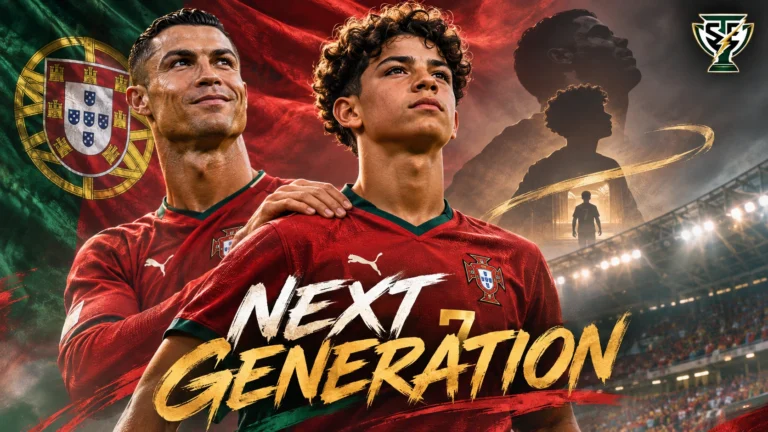
OEIRAS, Portugal, November 10, 2026: Cristiano Ronaldo Jr. has entered a new chapter of one of football’s most famous family stories. The 16-year-old Al Nassr academy forward has earned his first call-up to Portugal’s Under-17 national team, joining Filipe Ramos’ squad for European Championship qualifiers against Andorra, Bulgaria and Serbia. His promotion comes just days after Cristiano Ronaldo ended his 23-year senior international career with 234 appearances and 146 goals, creating a remarkable generational transition for Portuguese football. The teenager’s immediate challenge is considerably smaller than his father’s legacy: earn playing time and help Portugal progress from their qualifying group.
Ronaldo Jr. arrives with five goals in 13 appearances across Portugal’s Under-15 and Under-16 teams, having developed through the youth academies of clubs associated with his father’s career. His rise places him alongside the Maldinis, Cruyffs, Haalands, Schmeichels, Weahs, Simeones and Thurams, families whose names have crossed generations of elite football. Their histories offer an important lesson. Some children have surpassed their famous parents, others have built successful but different careers, and a few have struggled under the weight of comparison. For Ronaldo Jr., the meaningful test begins with his own performances, long before any discussion of inheriting the No. 7 shirt at senior level.
Cristiano Ronaldo Jr.’s First Under-17 Call-Up: What Has He Already Achieved?
The first important distinction is that Ronaldo Jr. is progressing through Portugal’s youth international system, rather than joining the senior national team.
He previously represented Portugal at Under-15 and Under-16 levels, scoring five goals across 13 appearances.
Story at a glance
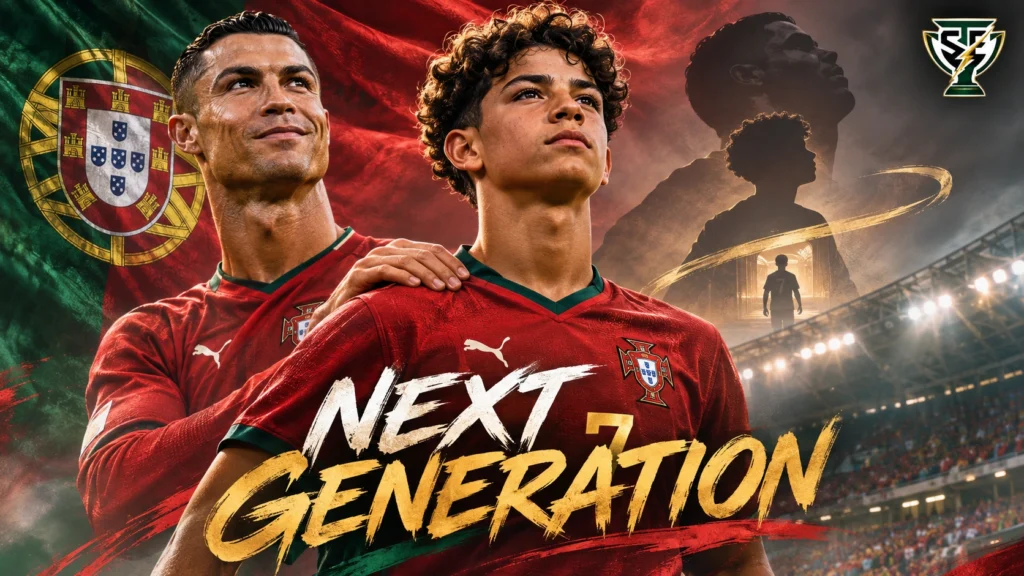
Cristiano Ronaldo Jr.’s First Under-17 Call-Up: What Has He Already Achieved?
The first important distinction is that Ronaldo Jr. is progressing through Portugal’s youth international system, rather than joining the senior national team.
Why His Father’s International Retirement Makes This Moment Different
The timing gives Ronaldo Jr.’s selection an emotional significance that an ordinary youth call-up would not carry.
Who Will Ronaldo Jr. Face in Portugal’s European Under-17 Qualifiers?
Portugal have been drawn in Group 6 of the first qualifying round for the European Under-17 Championship.
What Does Portugal Need to Reach the European Under-17 Championship?
The competition’s structure creates two separate qualification hurdles.
The Maldinis: Three Generations, Three International Careers
Of the families now being compared with Ronaldo’s, the Maldinis provide one of football’s clearest examples of a surname surviving across generations.
His Under-15 debut came against Japan in May 2025. Portugal won 4-1, with Ronaldo Jr. entering as a substitute during the second half.
Later that year, he advanced to the Under-16 squad. His latest selection puts him in a stronger competitive age category, where the physical demands, tactical responsibilities and quality of opposition will continue increasing.
The forward has spent his recent club development at Al Nassr’s academy in Saudi Arabia, where his father continues playing professionally despite retiring from international football.
The younger Ronaldo has also been associated with youth setups at Manchester United and Juventus, reflecting the family’s movements during his father’s career.
Those experiences provide opportunities to develop, but academy affiliations alone do not establish a player’s future professional level.
Ronaldo Jr.’s International Development So Far
| Stage | Appearances | Goals | Significance |
|---|---|---|---|
| Portugal Under-15 | 4 | 2 | First youth international selection and goals |
| Portugal Under-16 | 9 | 3 | Continued involvement at the next age level |
| Combined U15/U16 | 13 | 5 | Early international scoring rate of approximately 0.38 goals per appearance |
| Portugal Under-17 | First call-up | No U17 appearances established at announcement | Opportunity to compete in European Championship qualifying |
TSE statistical analysis: Ronaldo Jr.’s five goals in 13 youth international appearances produce an average of 0.385 goals per appearance, rounded to 0.38. His Under-15 rate was 0.50, compared with 0.33 at Under-16 level.
Those figures describe his early record but are not sufficient to predict senior international success. The sample is small, playing time is not accounted for, and opposition quality differs between tournaments.
More importantly, selection for the Under-17s confirms another opportunity to compete. It does not establish that he will start every match or automatically advance to higher international levels.
Why His Father’s International Retirement Makes This Moment Different
The timing gives Ronaldo Jr.’s selection an emotional significance that an ordinary youth call-up would not carry.
Cristiano Ronaldo announced his retirement from Portugal’s senior national team on November 5, bringing an international career that began in 2003 to an end.
The five-time Ballon d’Or winner leaves with 146 goals and 234 senior appearances, both extraordinary men’s international records.
He helped Portugal win the European Championship in 2016 and the UEFA Nations League in 2019 and 2025.
His six World Cup appearances, including scoring at the 2026 tournament, extended a record of international longevity that will be exceptionally difficult to reproduce.
The Sports Encounter’s report on Ronaldo’s retirement and international records examines the achievements that now frame the country’s transition.
His final months with Portugal were also affected by disagreements with national-team coach Jorge Jesus.
That dispute and the circumstances of his departure are examined separately in TSE’s investigation into the breakdown of Ronaldo’s relationship with the Portugal setup.
Those events belong to Ronaldo’s senior career. They should not be used to judge his son’s progress or speculate about his relationship with national-team coaches.
The teenager enters a youth structure with different staff, players and objectives.
Portugal’s senior team is simultaneously preparing for life without its longtime captain, with seven new players included in its latest squad.
TSE’s analysis of Portugal’s post-Ronaldo squad explains how the senior side is redistributing attacking and leadership responsibilities.
The father and son now represent different points in Portuguese football’s development: one has completed his international journey, while the other is still working toward a first appearance at his new youth level.
Who Will Ronaldo Jr. Face in Portugal’s European Under-17 Qualifiers?
Portugal have been drawn in Group 6 of the first qualifying round for the European Under-17 Championship.
They will host a four-team mini-tournament involving Andorra, Bulgaria and Serbia.
All three fixtures are scheduled in Portugal, giving the team a consistent venue environment during a short, demanding competitive window.
Portugal Under-17 Qualifying Fixtures
| Date | Fixture | Competition | What Is at Stake? |
|---|---|---|---|
| November 11 | Portugal vs Andorra | Under-17 EURO qualifying, Group 6 | Opening opportunity to earn three points |
| November 14 | Portugal vs Bulgaria | Under-17 EURO qualifying, Group 6 | Second group match; standings implications depend on opening results |
| November 17 | Serbia vs Portugal | Under-17 EURO qualifying, Group 6 | Final group match; qualification positions may be determined |
The fixtures are confirmed on UEFA’s official Portugal Under-17 match schedule.
The top two teams in each first-round group advance to League A of the second qualifying round.
Finishing third or fourth would instead send Portugal into second-round League B.
This distinction is important because reaching League A does not itself mean qualifying for the final tournament.
What Does Portugal Need to Reach the European Under-17 Championship?
The competition’s structure creates two separate qualification hurdles.
First, Portugal must finish among the top two teams in Group 6 to reach second-round League A.
Then the team must compete in another group during the spring of 2027. The seven League A group winners qualify for the eight-team European Championship finals alongside host Latvia, subject to UEFA’s applicable vacancy provisions.
The finals are scheduled from May 24 to June 6, 2027.
UEFA also uses the second qualifying round as part of the qualification pathway for the FIFA Under-17 World Cup.
Portugal’s Verified Qualification Pathway
| Stage | Requirement | Outcome |
|---|---|---|
| First round, Group 6 | Finish first or second | Advance to second-round League A |
| First round, Group 6 | Finish third or fourth | Enter second-round League B |
| Second-round League A | Win the four-team group | Qualify for the European Under-17 Championship finals |
| Second-round League A | Finish second | Qualification normally not secured; a vacancy provision may apply |
| Final tournament | Qualify through UEFA’s approved pathway | Compete in the eight-team championship in Latvia |
The progression rules are set out in the official UEFA Under-17 Championship regulations.
The first test for Ronaldo Jr. is therefore tangible and immediate: contribute to a team seeking a top-two finish against three opponents.
Whether his role involves starting, coming off the bench or remaining an unused squad member will depend on Filipe Ramos’ selection decisions.
The Maldinis: Three Generations, Three International Careers
Of the families now being compared with Ronaldo’s, the Maldinis provide one of football’s clearest examples of a surname surviving across generations.
Cesare Maldini was an accomplished defender who played for AC Milan and represented Italy.
His son Paolo became one of football’s most respected defenders, winning five European Cups or Champions League titles with Milan and earning 126 senior international caps according to FIFA’s historical records.
Paolo’s son Daniel chose a different position, developing as an attacking midfielder and establishing his own professional career.
Daniel has also represented Italy internationally and has continued playing in Serie A.
His contribution at Cagliari has already featured in TSE’s report on his decisive goal against Lecce.
The Maldinis demonstrate that continuity does not require identical playing styles.
Cesare and Paolo were defenders; Daniel built his career in an attacking role.
Paolo’s achievements were exceptional even by the standards of the family’s history, yet Daniel does not need to replicate them for his professional accomplishments to have value.
That is a useful comparison for Ronaldo Jr., whose father reached an extraordinary level across more than two decades.
The Cruyffs: Can a Famous Name Become Its Own Identity?
Johan Cruyff transformed how football was played, understood and coached.
His influence at Ajax, Barcelona and the Netherlands reached far beyond individual trophies.
His son Jordi followed him into professional football, playing for Barcelona, Manchester United and other clubs before establishing a career in coaching and football administration.
Jordi did not achieve the same playing status as his father.
However, his career illustrates another form of success: remaining relevant in elite football despite being constantly compared with an exceptionally influential parent.
The comparison is important because the public often judges famous sporting children against an unreasonable benchmark.
A player can develop a substantial professional career without matching an icon whose achievements changed the sport.
For Ronaldo Jr., that distinction may become particularly important as he moves toward senior football.
The Haalands: When the Son Surpasses the Father
Alf-Inge Haaland played professionally in England for Nottingham Forest, Leeds United and Manchester City.
His son Erling developed into one of Europe’s most prolific strikers, with a career that has already surpassed his father’s individual scoring achievements.
Erling’s success demonstrates that a famous family background does not necessarily establish the limit of the next generation’s ambitions.
He developed a distinctive playing identity built around movement, physical presence and finishing.
The younger Haaland also became one of Norway’s most important attacking players.
His international influence has featured in TSE’s analysis of Norway’s Nations League encounter with Portugal, when João Félix and Gonçalo Ramos helped Portugal overcome the Norwegian challenge.
Erling provides an example of a second-generation footballer whose own career became the main reference point.
However, treating his development as a formula for Ronaldo Jr. would overlook the differences between individual players, coaching environments and competitive pathways.
The Schmeichels, Weahs, Simeones and Thurams: Four Different Paths
Other football families show that there is no single route to building an independent identity.
Peter Schmeichel became one of Manchester United’s most celebrated goalkeepers and won the European Championship with Denmark.
His son Kasper achieved his own distinction by helping Leicester City win the Premier League and establishing a long international career with Denmark.
George Weah became a global superstar and won the Ballon d’Or in 1995. His son Timothy developed into an international player for the United States, rather than representing his father’s Liberia.
Diego Simeone was a combative Argentina midfielder before becoming one of Atlético Madrid’s defining managers. His son Giuliano developed as an attacking player and became part of Atlético’s senior team.
Lilian Thuram was central to France’s World Cup-winning generation. His son Marcus built a career as an attacker with Borussia Mönchengladbach and Inter Milan.
The distinction between Lilian’s defensive role and Marcus’ attacking responsibilities illustrates how family connections can coexist with markedly different sporting identities.
Football’s Famous Father-Son Dynasties Compared
| Family | Earlier Generation | Following Generation | Distinctive Achievement or Difference |
|---|---|---|---|
| Maldini | Cesare and Paolo | Daniel | Three generations representing Italy; Daniel plays farther forward |
| Cruyff | Johan | Jordi | Jordi established a professional career without matching his father’s transformative influence |
| Haaland | Alf-Inge | Erling | Erling developed into an elite goalscorer and exceeded his father’s individual attacking achievements |
| Schmeichel | Peter | Kasper | Both won Premier League titles as goalkeepers at different clubs |
| Weah | George | Timothy | Father represented Liberia; son represents the United States |
| Simeone | Diego | Giuliano | Giuliano plays for the Atlético Madrid team coached by his father |
| Thuram | Lilian | Marcus | World Cup-winning defender followed by an established international forward |
| Ronaldo | Cristiano | Cristiano Jr. | Senior international legend followed by a teenage Portugal youth international |
FIFA’s historical feature on footballers following their fathers documents numerous families who have competed at the game’s highest international level.
The comparison reveals two useful patterns.
First, professional success can take very different forms within the same family. Some sons play different positions or represent different national teams.
Second, the strongest evidence of an independent career comes through actual competitive achievements, rather than predictions made during youth development.
What Separates a Family Legacy From an Individual Football Career?
The famous surname attracts attention before the player has established a senior record.
That visibility can provide opportunities, but it also creates expectations that ordinary academy prospects rarely experience.
A coach evaluating a young player must judge technical performance, tactical understanding, physical development and consistency against the demands of the relevant age group.
For Ronaldo Jr., his father’s goals and trophies are historical facts. They do not establish how effectively the teenager will play against Andorra, Bulgaria or Serbia.
His five goals across the Under-15 and Under-16 categories are a useful beginning, but evaluating his development properly will require more than goalscoring totals.
His movement without the ball, decision-making, teamwork and ability to adapt to stronger opposition will become increasingly important.
Those qualities cannot be inferred accurately from a surname or a handful of short highlight clips.
What Should Ronaldo Jr. Be Judged On?
| Development Area | Relevant Evidence | Why It Matters |
|---|---|---|
| Playing opportunities | Confirmed appearances, starts and minutes | Shows the level of responsibility coaches give him |
| Attacking contribution | Goals, assists and involvement in chances | Measures useful attacking output beyond reputation |
| Tactical adaptation | Role within the team and performance against different opponents | Shows whether he can meet changing match demands |
| Competitive progression | Movement through academy and international age categories | Provides evidence of development over time |
| Team contribution | Portugal’s qualifying results and his documented involvement | Connects individual performance with the team’s objectives |
These are appropriate areas for future assessment, rather than claims that Ronaldo Jr. has already demonstrated senior-level excellence.
He is 16, and the evidence needed to judge his eventual professional ceiling does not yet exist.
Could Cristiano Ronaldo Jr. Eventually Play Alongside His Father?
The possibility of Ronaldo and his son appearing together has attracted attention for several years.
However, no competitive senior appearance together has been established, and Ronaldo Jr. has not yet made the transition from youth academy football to a confirmed senior career.
His father’s international retirement also means their current football pathways are separate.
Ronaldo remains a professional player at Al Nassr, where he continues pursuing the extraordinary milestone of 1,000 senior career goals.
TSE’s comparison of Ronaldo and Lionel Messi’s pursuit of 1,000 goals explores the veteran forward’s career longevity and changing attacking style.
That analysis reflects the scoring totals available when it was published, rather than a continuously updated present-day count.
Ronaldo’s later goal against Abha, examined in TSE’s match report, also provides an example of how his positioning and finishing have evolved during his Saudi Pro League career.
The father remains focused on professional football, but there is no official timetable establishing that Ronaldo Jr. will join him in a senior match.
Nor should that speculative possibility overshadow the younger player’s immediate youth international commitments.
What Does Ronaldo Jr.’s Progress Mean for Portugal’s Future?
The symbolism of the timing is powerful, but Portugal’s senior and youth development programs have different immediate responsibilities.
The senior team must establish a competitive identity after Ronaldo’s departure.
The Under-17 team is working toward European Championship qualification, with Ronaldo Jr. among the players seeking opportunities within Filipe Ramos’ squad.
The older generation has already demonstrated the country’s capacity to succeed without Ronaldo in the starting lineup.
Portugal’s Nations League performances helped lift the team to fifth in the FIFA rankings, a development examined in TSE’s analysis of Portugal’s rise in the international rankings.
The youth system’s task is to continue producing players capable of competing at higher levels, rather than identifying one teenager as an automatic replacement for an international record holder.
Ronaldo Jr.’s selection adds another recognizable name to that process.
It is an individual opportunity, not evidence that Portugal has already found the next Cristiano Ronaldo.
Why the Al Nassr Connection Matters
Ronaldo Jr.’s development at Al Nassr also places his progress within a football environment shaped by the Saudi Pro League’s international growth.
His father remains one of the competition’s most prominent players.
That association provides a familiar club environment while the teenager advances through international youth football.
However, youth-team development and senior professional competition must be evaluated separately.
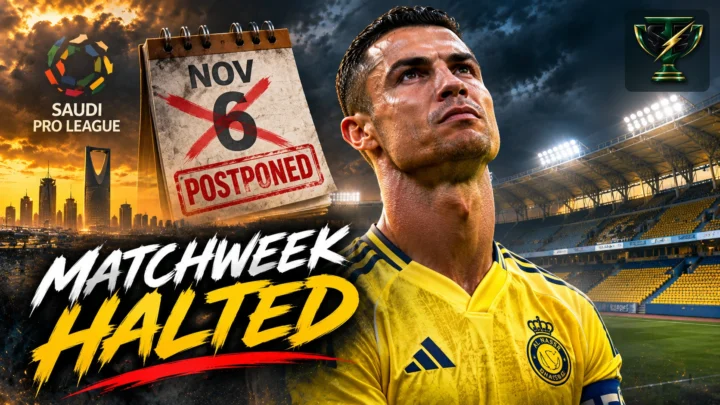
Al Nassr’s first-team schedule has also experienced disruption following changes to the regional football calendar.
TSE’s report on the postponement of Saudi Pro League Matchweek 13 explains how the revised Asian Cup timetable affected Ronaldo’s club commitments.
Those scheduling issues do not directly establish changes to Ronaldo Jr.’s Under-17 preparations, which follow Portugal’s separate international calendar.
Continue the Soccer Story
 Saudi Pro LeagueSaudi Pro League Postpones Matchweek 13: Ronaldo’s 1,000-Goal Chase Paused as Asian Cup Delay Forces Calendar Overhaul
 SoccerFrom Number 7 to Forgotten: How a Rift and a Retirement Closed Cristiano Ronaldo’s Portugal Chapter
 UEFA Nations LeagueLife After Legend: Jorge Jesus Begins Portugal’s Post-Cristiano Ronaldo Era as Federation Promises Tribute
Frequently Asked Questions About Cristiano Ronaldo Jr.
How old is Cristiano Ronaldo Jr.?
Cristiano Ronaldo Jr. is 16 years old and has been selected for Portugal’s Under-17 squad.
Which club does Ronaldo Jr. play for?
He has been developing in the youth academy at Al Nassr in Saudi Arabia, where his father plays for the senior team.
Has Cristiano Ronaldo Jr. played for Portugal?
Yes. He previously represented Portugal at Under-15 and Under-16 levels, making 13 appearances and scoring five goals across those categories.
Has Ronaldo Jr. made his Portugal Under-17 debut?
As of his November 10 selection update, he has received his first call-up. His involvement in the upcoming qualifying matches remains subject to team selection.
Who are Portugal Under-17’s next opponents?
Portugal face Andorra on November 11, Bulgaria on November 14 and Serbia on November 17.
What do Portugal need to qualify for the next round?
They must finish first or second in their four-team group to progress to second-round League A. Another qualification stage then determines places at the European Championship finals.
Has Cristiano Ronaldo retired from football?
No. Ronaldo retired from Portugal’s senior national team in November 2026 but continues his professional club career with Al Nassr.
Which famous football families have produced multiple generations of internationals?
Examples include the Maldinis, Schmeichels, Thurams, Weahs, Simeones and Haalands. Their careers illustrate different ways for children of prominent footballers to establish their own achievements.
Ronaldo Jr.’s Challenge Is to Create His Own Story
Cristiano Ronaldo Jr. cannot escape the comparisons that accompany his surname, particularly so soon after his father’s international retirement.
The footballing history is extraordinary. Ronaldo Sr. leaves Portugal with records, major trophies and achievements that defined an era.
Yet the experiences of the Maldinis, Haalands, Cruyffs, Schmeichels, Weahs, Simeones and Thurams show that sporting inheritance produces no guaranteed outcome.
Some sons have surpassed their fathers in particular areas. Others have succeeded through different positions, teams and careers. Their achievements belong to the individuals who earned them.
Ronaldo Jr.’s first Under-17 assignment offers a much more useful starting point than comparisons with 146 international goals.
Portugal must navigate a short qualifying group against Andorra, Bulgaria and Serbia. The teenager must demonstrate that he can contribute at this level and continue developing within the national-team structure.
His father has completed an extraordinary international career. Ronaldo Jr. is only beginning to discover what his own might become.
Cristiano Ronaldo
- Cristiano Ronaldo Jr. Enters Famous Family Dynasties: Can He Build a Legacy of His Own?
- Saudi Pro League Postpones Matchweek 13: Ronaldo’s 1,000-Goal Chase Paused as Asian Cup Delay Forces Calendar Overhaul
- From Number 7 to Forgotten: How a Rift and a Retirement Closed Cristiano Ronaldo’s Portugal Chapter
- Life After Legend: Jorge Jesus Begins Portugal’s Post-Cristiano Ronaldo Era as Federation Promises Tribute
- Sorry Seems to Be the Smartest Word