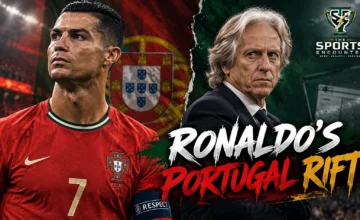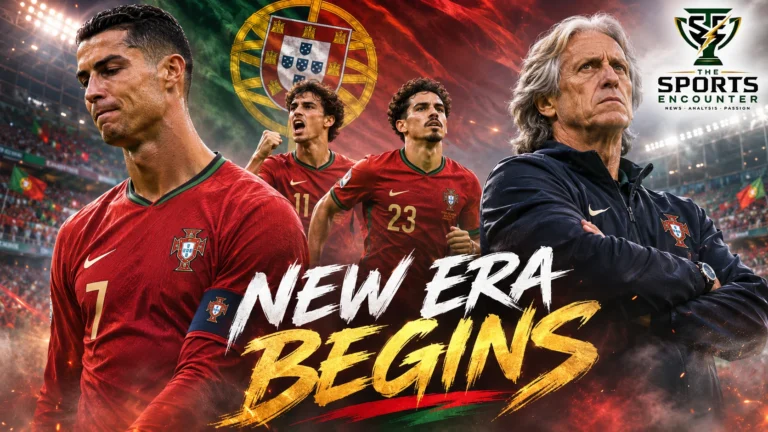
LISBON, Portugal, November 6, 2026: Portugal’s next generation received its first major invitation on Friday, but Cristiano Ronaldo still dominated the conversation. National-team coach Jorge Jesus named a 28-player squad featuring seven new faces for November’s UEFA Nations League matches against Denmark and Wales, just one day after the 41-year-old captain announced his international retirement. Portuguese Football Federation president Pedro Proença promised to celebrate Ronaldo’s remarkable career, which ended after 234 appearances, 146 goals and 23 years representing his country, although no farewell match has been confirmed.
The announcement creates an unusual situation for the defending Nations League champions. Portugal have won all four of their opening group matches, qualified for the March 2027 quarterfinals and climbed to fifth in the FIFA rankings. Yet their most decorated player has left following a public disagreement with the coach, and Jesus must now establish a new leadership structure while incorporating younger players. The two November fixtures will determine Portugal’s final group position, but their greater significance lies in what the team reveals about life after Ronaldo.
Portugal’s First Post-Ronaldo Squad: Seven New Faces and a Different Challenge
Jorge Jesus selected seven players who were not part of his previous squad: Alberto Costa, António Silva, Mateus Fernandes, Carlos Forbs, Geovany Quenda, Rodrigo Mora and Gustavo Varela.
Alberto Costa and Varela have received their first senior national-team call-ups. Mora and Quenda have previously been involved with senior Portugal camps but are still seeking their international debuts.
Story at a glance
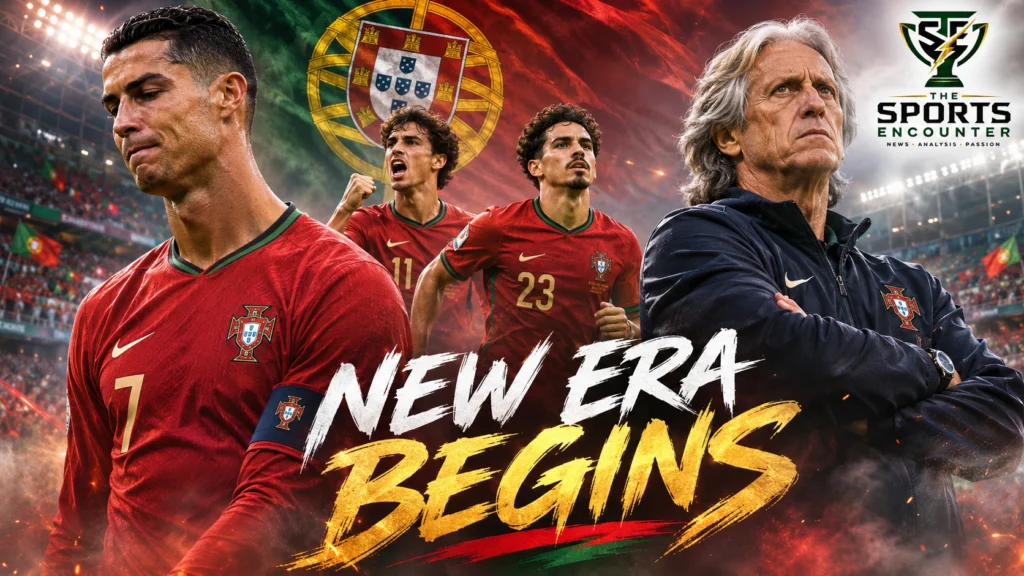
Portugal’s First Post-Ronaldo Squad: Seven New Faces and a Different Challenge
Jorge Jesus selected seven players who were not part of his previous squad: Alberto Costa, António Silva, Mateus Fernandes, Carlos Forbs, Geovany Quenda, Rodrigo Mora and Gustavo Varela.
Portugal’s Full 28-Man Squad for November 2026
Jesus has chosen three goalkeepers, eight defenders, seven midfielders and ten players listed in the attacking group. Positional classifications reflect the announced squad structure; several footballers can operate in more than one role.
Why Did Cristiano Ronaldo Retire From Portugal After 234 Appearances?
Ronaldo announced his international retirement on Thursday, November 5, bringing an end to a national-team career that began in August 2003.
What Really Happened Between Ronaldo and Jorge Jesus?
The public disagreement developed during Portugal’s September and October Nations League fixtures.
Will Portugal Give Ronaldo a Farewell Match?
Portuguese Football Federation president Pedro Proença has promised to honor Ronaldo’s contribution, but the form of the tribute remains undecided.
Five of the seven additions have come through Portugal’s Under-21 setup. The selections demonstrate an effort to give younger players opportunities while maintaining a substantial group of established internationals.
Jesus has retained experienced figures including Bernardo Silva, Bruno Fernandes, Rúben Dias, João Cancelo, Vitinha and João Neves. Gonçalo Ramos and João Félix provide attacking options as Portugal prepares for its first international matches since Ronaldo’s announcement.
Who Are Portugal’s Seven New Squad Additions?
| Player | Position | Selection Context |
|---|---|---|
| Alberto Costa | Defender | First senior call-up |
| António Silva | Defender | Returns to the squad |
| Mateus Fernandes | Midfielder | Added to the midfield group |
| Carlos Forbs | Forward | Added to the attacking options |
| Geovany Quenda | Forward | Previous senior-camp involvement, awaiting international debut |
| Rodrigo Mora | Attacking midfielder/forward | Previous senior-camp involvement, awaiting international debut |
| Gustavo Varela | Forward | First senior call-up |
The selection of seven additions is significant because Portugal have already secured a place in the knockout stage. Jesus can assess players who may become important over the next several international windows without placing the team’s quarterfinal qualification at immediate risk.
The squad also includes experienced players whose performances have helped Portugal maintain its strong competitive position. As The Sports Encounter reported after Portugal climbed to fifth in the FIFA rankings, the team’s recovery from its World Cup exit has been built on collective results rather than dependence on one star.
Portugal’s Full 28-Man Squad for November 2026
Jesus has chosen three goalkeepers, eight defenders, seven midfielders and ten players listed in the attacking group. Positional classifications reflect the announced squad structure; several footballers can operate in more than one role.
| Position | Players | Total |
|---|---|---|
| Goalkeepers | Diogo Costa, Rui Silva, Samuel Soares | 3 |
| Defenders | João Cancelo, Diogo Dalot, Alberto Costa, Rúben Dias, Renato Veiga, Tomás Araújo, António Silva, Nuno Tavares | 8 |
| Midfielders | Rúben Neves, João Palhinha, Mateus Fernandes, João Neves, Vitinha, Bruno Fernandes, Bernardo Silva | 7 |
| Attackers | Pedro Neto, Rodrigo Mora, Francisco Trincão, Rafael Leão, Geovany Quenda, Carlos Forbs, João Félix, Gonçalo Ramos, Fábio Silva, Gustavo Varela | 10 |
| Total | Portugal’s November 2026 national-team selection | 28 |
Three other selection developments deserve attention. Nuno Mendes is unavailable because of injury, Francisco Conceição is absent through suspension, and Gonçalo Inácio has been omitted on a technical decision, according to reporting surrounding the announcement.
Conceição’s absence follows his dismissal against Norway in October, an incident covered in TSE’s report on Portugal’s Nations League quarterfinal qualification.
Those changes mean the squad is being reshaped for several reasons, although Ronaldo’s retirement naturally attracts the greatest attention.
Why Did Cristiano Ronaldo Retire From Portugal After 234 Appearances?
Ronaldo announced his international retirement on Thursday, November 5, bringing an end to a national-team career that began in August 2003.
He leaves with 234 appearances and 146 goals, both men’s international records, alongside the UEFA European Championship title won in 2016 and Nations League titles in 2019 and 2025.
His announcement came after weeks of uncertainty surrounding his relationship with Jorge Jesus, who took charge following Portugal’s elimination from the 2026 FIFA World Cup.
The Sports Encounter examined the announcement and Ronaldo’s achievements in its November 5 report on Ronaldo’s retirement after 234 caps and 146 goals.
Friday’s developments added another layer. Jesus said he had expected Ronaldo to remain available and had included the forward among his potential selections until the retirement announcement.
He said he learned about the decision when it became public and had not subsequently contacted Ronaldo.
That account makes the timing especially notable. A coach preparing to name his next international squad was confronted with the retirement of his most famous player less than a day before revealing the selections.
What Really Happened Between Ronaldo and Jorge Jesus?
The public disagreement developed during Portugal’s September and October Nations League fixtures.
Ronaldo played in the September 24 home victory over Wales but remained on the bench throughout the September 27 win against Norway.
He subsequently left Portugal’s national-team camp ahead of the October 1 match in Denmark without authorization.
Ronaldo later accused Jesus of breaking promises regarding his playing time and the handling of their discussions. Jesus disputed that account, maintaining that he had acted in Portugal’s sporting interests.
The Portuguese Football Federation opened disciplinary proceedings and imposed a 30-day suspension and a €255 fine. The suspension was counted from Ronaldo’s departure and expired before the November international window.
TSE previously analyzed the chronology and unusual practical effect of the punishment in its investigation into Ronaldo’s backdated 30-day suspension.
From the Norway Bench to International Retirement
| Date | Development | What Changed |
|---|---|---|
| September 24 | Portugal beat Wales 1-0 | Ronaldo made what became his final recorded international appearance |
| September 27 | Portugal beat Norway 2-1 | Ronaldo remained an unused substitute |
| September 30 | Ronaldo left the Portugal camp | The selection disagreement became a disciplinary matter |
| October 1 | Portugal beat Denmark 4-2 away | Jesus’s team won an important match without Ronaldo |
| October 4 | Portugal beat Norway 2-1 | Portugal secured Nations League quarterfinal qualification |
| October 19 | Federation announced its disciplinary ruling | Ronaldo received a backdated suspension and fine |
| November 5 | Ronaldo announced international retirement | His national-team career formally ended |
| November 6 | Jesus named a 28-player squad | Seven new additions entered the immediate national-team picture |
At Friday’s press conference, Jesus rejected suggestions that he harbored resentment toward Ronaldo.
The coach maintained that his decisions were taken in the interests of the national team. That is his stated justification, not independent proof that every disagreement between the two men has been resolved.
Ronaldo’s account of broken promises and Jesus’s denial remain competing accounts of private conversations. Neither should be presented as conclusively established beyond the publicly documented disciplinary decision.
Will Portugal Give Ronaldo a Farewell Match?
Portuguese Football Federation president Pedro Proença has promised to honor Ronaldo’s contribution, but the form of the tribute remains undecided.
Proença praised the former captain’s leadership, influence and lasting importance to Portuguese football. His comments emphasized the need to recognize Ronaldo’s achievements while respecting his decision to retire.
However, there has been no confirmed farewell appearance, no published match arrangement and no indication that Ronaldo has agreed to return to the national team for a ceremonial fixture.
A tribute ceremony and an additional international appearance are separate possibilities. The federation can publicly celebrate Ronaldo without requiring him to play again.
That question is important because Ronaldo’s reported final appearance came in the September 24 victory over Wales. Without another competitive or officially recognized international appearance, his record would remain at 234 caps.
The emotional significance is considerable. Ronaldo’s international career included six World Cups and the extraordinary goalscoring record explored in TSE’s retrospective on his World Cup career and final tournament.
His final World Cup ended in July when Spain defeated Portugal 1-0 in the Round of 16, with Mikel Merino scoring the decisive late goal. The elimination and its consequences were examined in TSE’s Portugal vs. Spain World Cup match analysis.
What happens next with Ronaldo’s farewell will depend on the federation and the former captain, rather than a sporting requirement to field him again.
Who Will Captain Portugal After Cristiano Ronaldo?
Jesus has identified a group of five experienced internationals who will form the leadership structure following Ronaldo’s departure.
Bernardo Silva, Rúben Dias, João Cancelo, Rúben Neves and Bruno Fernandes are the players identified by the coach.
Jesus explained that international appearances help determine captaincy precedence. The exact match-by-match armband assignment will depend on which of those players are selected and available.
Bernardo Silva is especially prominent in the succession discussion because of his senior international experience and established role in Portugal’s midfield.
The leadership change could also affect how the national team operates on the field. Ronaldo was the central figure for much of his international career, both as captain and as its leading scorer.
Portugal now have an opportunity to distribute those responsibilities more broadly.
Rúben Dias can provide defensive organization, Bernardo Silva can influence possession and tempo, and Bruno Fernandes can help direct the attacking structure.
These are assessments of their established playing roles, rather than proof that Jesus has assigned each player a specific new responsibility.
Can Gonçalo Ramos Replace Ronaldo as Portugal’s Main Striker?
Gonçalo Ramos is one of the strongest candidates to lead Portugal’s attack, having already shown his value during the current Nations League campaign.
Against Norway on September 27, Ramos scored the decisive goal after Erling Haaland equalized for the hosts. João Félix had earlier given Portugal the lead.
The performance demonstrated that Portugal could succeed in an important away match without Ronaldo starting, as detailed in TSE’s analysis of Félix and Ramos in the Norway victory.
Ramos subsequently scored another decisive goal in Portugal’s October 4 victory over Norway, which confirmed their place in the quarterfinals.
His movement inside the penalty area, willingness to press and ability to attack space offer Jesus a different attacking profile.
However, it would be premature to declare him Ronaldo’s permanent replacement. João Félix, Rafael Leão, Pedro Neto and other forwards provide alternative tactical possibilities.
Portugal’s Attacking Options Without Ronaldo
| Player | Possible Role | Main Tactical Question |
|---|---|---|
| Gonçalo Ramos | Central striker | Can he maintain consistent penalty-area production? |
| João Félix | Supporting forward or attacking midfielder | Can his movement and link play improve chance creation? |
| Rafael Leão | Wide forward | Can Portugal exploit his direct running more consistently? |
| Pedro Neto | Wide attacker | How effectively can he stretch opposing defenses? |
| Rodrigo Mora | Creative attacking option | How quickly can he adapt to senior international competition? |
| Geovany Quenda | Young wide attacking option | Will he receive meaningful competitive minutes? |
| Fábio Silva | Central attacking alternative | Can he offer a different option against compact defenses? |
The table describes potential tactical functions, not a confirmed lineup or a prediction of individual performances.
What Portugal have already demonstrated is that they can create and finish chances through different combinations. Jesus now has to establish which arrangements can remain effective against stronger knockout opponents.
How Strong Are Portugal Without Ronaldo? The Nations League Evidence
Portugal’s first four Nations League results provide useful evidence, although the sample remains small.
The team defeated Wales 1-0, Norway 2-1 away, Denmark 4-2 away and Norway 2-1 at home.
Those results produced 12 points, nine goals scored and four conceded, with a goal difference of plus five.
Importantly, Portugal won the October fixtures against Denmark and Norway without Ronaldo after his departure from the national-team camp.
Portugal’s 2026-27 Nations League Campaign So Far
| Date | Fixture | Result | Points After Match |
|---|---|---|---|
| September 24 | Portugal vs. Wales | 1-0 win | 3 |
| September 27 | Norway vs. Portugal | 2-1 win | 6 |
| October 1 | Denmark vs. Portugal | 4-2 win | 9 |
| October 4 | Portugal vs. Norway | 2-1 win | 12 |
| November 14 | Portugal vs. Denmark | Scheduled | To be determined |
| November 17 | Wales vs. Portugal | Scheduled | To be determined |
TSE statistical finding: Portugal have scored six goals and conceded three in the two Nations League games played after Ronaldo left the camp, producing an average of three goals scored per game.
Across all four group matches, Portugal’s average is 2.25 goals per game.
That is an interesting short-term difference, but it does not prove that the team are inherently more effective without Ronaldo. Two matches cannot account for opposition tactics, playing conditions, individual performances or changes in team selection.
The stronger conclusion is that Portugal have already demonstrated competitive alternatives to an attack centered on their former captain.
These results also contributed to Portugal’s return to the world’s top five, reinforcing the broader progress documented in TSE’s previous ranking coverage.
What Do Portugal Need Against Denmark and Wales to Finish First?
Portugal have already qualified for the Nations League quarterfinals. Their remaining group-stage objective is to secure first place in League A Group 4.
After four matches, Portugal lead with 12 points. Denmark have six, while Wales and Norway have three each.
Only Denmark can still match Portugal’s existing 12-point total. Wales and Norway can reach no more than nine points.
That makes Portugal’s November 14 home match against Denmark particularly important.
A draw would give Portugal 13 points and guarantee first place, regardless of the final match in Wales.
A win would achieve the same outcome. If Portugal lose, the margin of defeat and the remaining results become relevant to the group tiebreaking calculations.
Portugal’s Route to First Place in Group A4
| November 14 Result | Portugal’s Points | Implication | Status |
|---|---|---|---|
| Portugal beat Denmark | 15 | First place secured | Confirmed mathematical outcome |
| Portugal draw with Denmark | 13 | First place secured | Confirmed mathematical outcome |
| Portugal lose by one goal | 12 | Portugal retain the head-to-head advantage over Denmark | First place remains secured under the current head-to-head results |
| Portugal lose by two goals | 12 | Head-to-head goal difference becomes level | Additional UEFA tiebreaking criteria can become relevant |
| Portugal lose by three or more goals | 12 | Denmark gain the head-to-head advantage | First place could depend on November 17 results |
The scenario is based on UEFA’s published results through November 6 and Portugal’s 4-2 victory in Denmark on October 1. The official competition regulations determine the order of tiebreakers when teams finish level on points.
A narrow defeat would leave Portugal with the advantage in their direct encounters. A two-goal defeat would require closer examination of the applicable tiebreakers. A heavier defeat could allow Denmark to overtake Portugal if the Danes also win their final match and Portugal fail to collect additional points.
Readers can check the complete 2026-27 UEFA Nations League fixtures and results on UEFA’s official website.
The official Portugal Nations League match page also confirms the remaining fixtures.
When and Where Will Portugal Play Their November Matches?
Portugal host Denmark on Saturday, November 14, at the Estádio Municipal de Braga. They then travel to Cardiff to face Wales on Tuesday, November 17.
Both matches are scheduled for 20:45 Central European Time, according to UEFA’s competition schedule.
The Portuguese Football Federation’s official upcoming-match guide also identifies the venues.
For Jesus, the fixtures provide two different tests. Denmark offer the opportunity to secure first place against the only remaining rival capable of matching Portugal’s current points total. Wales offer a second opportunity to assess the new squad away from home.
Those matches will also provide the first competitive evidence of how Portugal’s redistributed leadership and expanded attacking options function following Ronaldo’s retirement.
Why Portugal’s New Generation Has a Bigger Opportunity Than the Headlines Suggest
It would be easy to treat the November announcement entirely as a consequence of Ronaldo’s departure. That would overlook the sporting opportunity available to several younger players.
Portugal are already through to the quarterfinals, and Jesus has added seven players to a team that has won every Nations League match so far.
The challenge is to determine how many of those players are ready for meaningful senior international responsibilities.
Rodrigo Mora and Geovany Quenda are particularly interesting because they have previously experienced senior national-team camps but have yet to make their international debuts.
Alberto Costa and Gustavo Varela face a different challenge as first-time senior selections.
A call-up does not guarantee competitive playing time. Their development will depend on training performances, tactical requirements and the selection decisions made before and during matches.
However, the timing offers Portugal an opportunity to test emerging players while maintaining the experienced core that delivered the recent victories.
There is a longer-term question too. Portugal’s attack will eventually be judged against the standards set during Ronaldo’s career, including his ability to deliver in major tournaments.
His scoring contribution was evident even during the 2026 World Cup, when he struck twice in the 5-0 victory over Uzbekistan to become the first man to score at six different World Cups.
That historical contribution remains relevant, but the responsibility for Portugal’s next major tournament will belong to the players Jesus selects.
What Does Ronaldo’s Retirement Mean for His Club Career?
Ronaldo’s announcement concerns international football. He has not announced that he is immediately retiring from his club career.
The forward continues to play for Al-Nassr in Saudi Arabia, where his contract runs through June 2027.
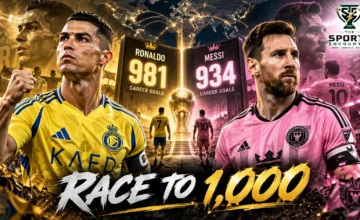
His pursuit of the 1,000-goal career milestone remains another prominent aspect of his professional career.
TSE previously examined that pursuit in its comparison of Ronaldo and Lionel Messi’s race toward 1,000 career goals.
Those earlier totals reflect the publication date of that analysis and should not be treated as live November 6 statistics.
Separating international retirement from club retirement is important. Ronaldo’s departure from Portugal does not automatically determine how much longer he will continue representing Al-Nassr.
How Will Portugal Remember Cristiano Ronaldo?
Ronaldo’s legacy is already substantial enough to stand independently of the disagreement that preceded his departure.
He helped Portugal win the 2016 European Championship and two UEFA Nations League titles, establishing a generation of national-team success that would have been difficult to imagine when he debuted in 2003.
He also became Portugal’s defining international goalscorer and one of the most recognizable athletes in world sport.
His retirement follows another major international transition in 2026: Lionel Messi’s departure from Argentina’s national team, examined in TSE’s report on Messi’s international retirement.
The two careers followed different paths and achieved different successes, but their departures leave their national teams facing similar questions about leadership, attacking identity and the next generation.
Portugal’s federation has promised Ronaldo a tribute. The details remain unconfirmed, and no ceremonial appearance should be assumed.
For now, the most meaningful way Portugal can build on his contribution is to preserve the competitive ambition that helped turn the country into a major international champion.
Continue the UEFA Nations League Story
 SoccerCristiano Ronaldo Announces Portugal Retirement After 234 Caps and 146 Goals, Ending a 23-Year Era
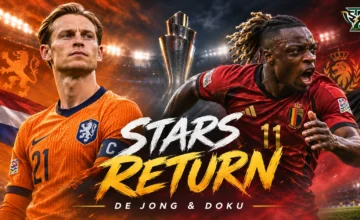
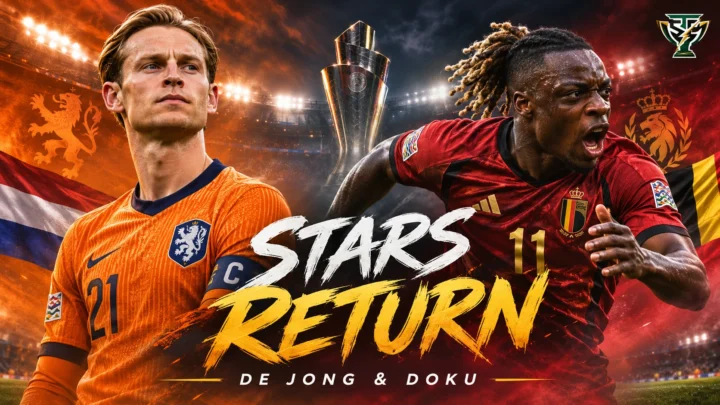
 UEFA Nations LeagueFrenkie de Jong and Jérémy Doku Return as Netherlands and Belgium Face Nations League Qualification Tests
 UEFA Nations LeagueNot One But Two Bellinghams: England Ready to Take On Spain and Croatia in UEFA Nations League
Frequently Asked Questions
Who is Portugal’s coach after Cristiano Ronaldo’s retirement?
Jorge Jesus remains Portugal’s national-team coach. He was appointed following the country’s elimination from the 2026 FIFA World Cup.
How many new players did Jorge Jesus select?
Jesus included seven new faces in the November 2026 squad, five of whom came through Portugal’s Under-21 setup.
Who are the seven new Portugal squad additions?
Alberto Costa, António Silva, Mateus Fernandes, Carlos Forbs, Geovany Quenda, Rodrigo Mora and Gustavo Varela.
Who will captain Portugal after Ronaldo?
Jesus identified Bernardo Silva, Rúben Dias, João Cancelo, Rúben Neves and Bruno Fernandes as the leadership group. The captain for each match will depend on selection and availability.
Will Cristiano Ronaldo play against Denmark or Wales?
Ronaldo is not included in the November squad following his international retirement. No farewell appearance has been confirmed.
When does Portugal play Denmark?
Portugal host Denmark on November 14, 2026, in Braga in the UEFA Nations League.
When does Portugal play Wales?
Portugal visit Wales on November 17, 2026, in Cardiff for their final Nations League group fixture.
Have Portugal qualified for the Nations League quarterfinals?
Yes. Portugal secured qualification on October 4 after winning their first four group matches. First place remains the immediate objective.
Has Cristiano Ronaldo retired from Al-Nassr?
No. His November 5 announcement concerned Portugal’s national team, not his club career.
Portugal’s Future Is Already Taking Shape, With or Without a Farewell
Jorge Jesus has been presented with two responsibilities at an unusually sensitive moment.
He must guide Portugal through the final stages of a successful Nations League group campaign while overseeing the national team’s transition away from the player who defined much of its modern history.
The squad announcement suggests that Jesus intends to protect the team’s competitive standards while introducing younger players.
Seven additions create opportunities, although their impact will depend on actual performances rather than the excitement surrounding their selection.
Meanwhile, the federation’s promise to honor Ronaldo leaves a separate question about how Portugal will publicly celebrate its former captain.
The answer may take time. The sporting timetable offers no such luxury.
Denmark arrive in Braga on November 14, and Portugal must demonstrate that the structure which carried them through four victories can continue without the country’s greatest international goalscorer.
Ronaldo’s place in Portugal’s history is secure. The next two matches will begin showing which players are ready to shape what comes after him.
Cristiano Ronaldo
- Life After Legend: Jorge Jesus Begins Portugal’s Post-Cristiano Ronaldo Era as Federation Promises Tribute
- Sorry Seems to Be the Smartest Word
- Cristiano Ronaldo Announces Portugal Retirement After 234 Caps and 146 Goals, Ending a 23-Year Era
- Al-Hilal Stun Al-Qadsiah 3-2 to Reclaim Saudi Pro League Lead as Ronaldo Scores and Al-Ahli Hit Four
- Ten Hag Accuses Ronaldo of Letting Manchester United Down, Then Turns on Club’s Broken Promises