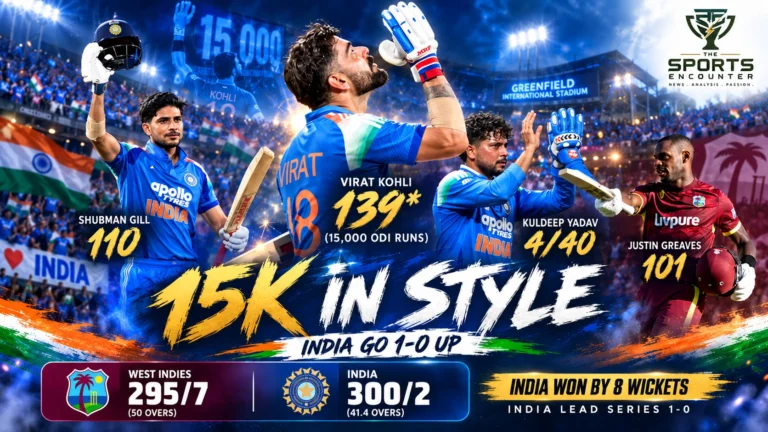
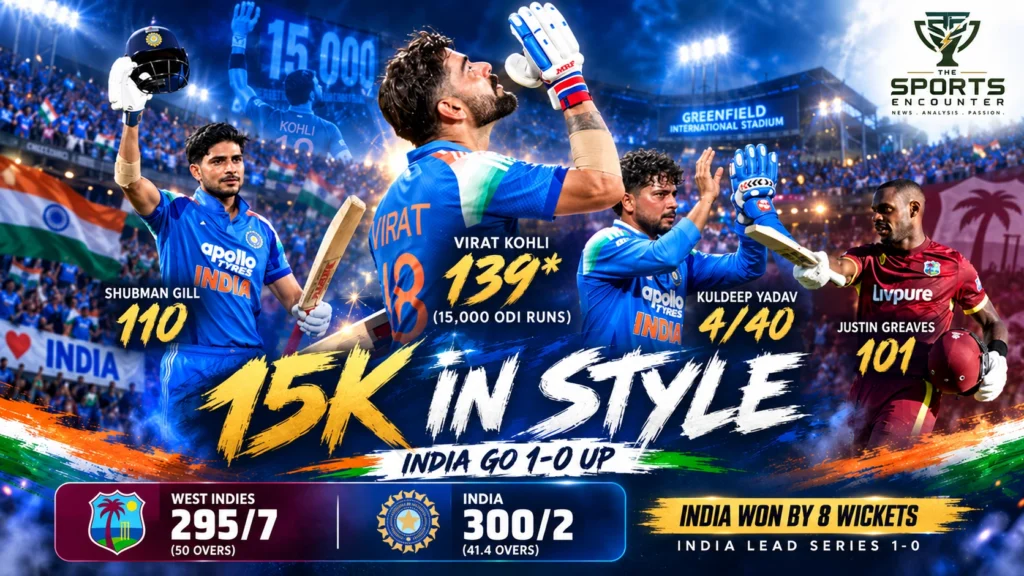
THIRUVANANTHAPURAM, India, September 27, 2026: West Indies were 135 without loss and threatening to turn India’s decision to bowl first into a long evening. A few hours later, Virat Kohli was launching the winning six, celebrating an unbeaten 139 and another landmark in one of ODI cricket’s greatest careers.
India beat West Indies by eight wickets with 50 balls remaining in the opening ODI at Thiruvananthapuram, reaching 300/2 after restricting the visitors to 295/7.
Kuldeep Yadav changed the first innings with 4/40 after West Indies’ opening pair had controlled the first 19 overs. Shubman Gill then made 110, Kohli accelerated to 139 from only 88 balls, and their 151-run partnership removed almost every realistic route West Indies had back into the match.
Kohli also crossed 15,000 ODI runs during the chase, becoming only the second men’s batter after Sachin Tendulkar to reach the landmark. He got there in his 303rd innings, 74 innings quicker than Tendulkar, before continuing to his record-extending 55th ODI century. The BCCI’s official footage of Kohli reaching 15,000 ODI runs captured the moment in front of a standing Thiruvananthapuram crowd.
Story at a glance
How Did West Indies Lose Control After Reaching 135/0?
For almost 20 overs, West Indies played the innings they needed.
Why Kuldeep Yadav Was the Real Turning Point
Kuldeep’s 4/40 mattered because he took the wickets West Indies could least afford to lose.
Justin Greaves Gave West Indies a Platform They Failed to Fully Use
Greaves deserved better support from the middle order.
How Shubman Gill Rediscovered His ODI Rhythm
India’s chase needed only one period of genuine caution.
Virat Kohli Turns a Landmark Into a Statement
Kohli entered the match needing 59 runs to reach 15,000 in ODIs.
India vs West Indies 1st ODI: Match at a Glance
| Match Detail | Information |
|---|---|
| Match | India vs West Indies, 1st ODI |
| Date | September 27, 2026 |
| Venue | Greenfield International Stadium / Sports Hub International Cricket Stadium, Thiruvananthapuram |
| Toss | India won the toss and fielded |
| West Indies | 295/7 in 50 overs |
| India | 300/2 in 41.4 overs |
| Result | India won by eight wickets with 50 balls remaining |
| Series | India lead 1-0 |
| Player of the Match | Kuldeep Yadav, 4/40 |
| Top Batter | Virat Kohli, 139* from 88 balls |
| Match Number | ODI No. 5020 |
How Did West Indies Lose Control After Reaching 135/0?
For almost 20 overs, West Indies played the innings they needed.
Justin Greaves and John Campbell attacked India’s seamers early and took the visitors to 85 without loss in the first powerplay. Greaves reached fifty from only 42 balls, while Campbell followed with his own half-century from 49.
The pair added 135, giving West Indies the type of opening platform from which 330 or more should have been realistic.
Kuldeep changed the calculation.
He removed Campbell for 62 in the 20th over, breaking a partnership that had forced Gill to search for answers. Prasidh Krishna then dismissed Keacy Carty for a slow 13, leaving West Indies at 176/2.
The decisive passage came soon afterward.
Shai Hope fell to Kuldeep for 12. Greaves completed a deserved century but was trapped lbw by the same bowler for 101. Jewel Andrew departed first ball.
West Indies had gone from a position of complete control at 135/0 to 198/5.
The pattern carried an uncomfortable familiarity. Earlier this season, New Zealand’s spinners also exposed West Indies during their ODI series in the Caribbean, with Jayden Lennox, Mitchell Santner and Michael Bracewell taking eight wickets in one match at Providence.
Different conditions produced a similar challenge in India. Once the ball stopped arriving at pace, West Indies struggled to maintain the scoring rhythm created by their openers.
Why Kuldeep Yadav Was the Real Turning Point
Kuldeep’s 4/40 mattered because he took the wickets West Indies could least afford to lose.
Campbell was set. Hope was the captain and one of the innings’ best players of spin. Greaves had already reached three figures. Andrew arrived when West Indies desperately needed someone to rebuild momentum.
Kuldeep removed all four.
| Kuldeep Yadav’s Wicket | Score | Match Impact |
|---|---|---|
| John Campbell, 62 | 135/1 | Ended the 135-run opening stand |
| Shai Hope, 12 | 195/3 | Removed the captain during the middle-overs squeeze |
| Justin Greaves, 101 | 198/4 | Dismissed the centurion before the final 15 overs |
| Jewel Andrew, 0 | 198/5 | Completed back-to-back wickets and exposed the lower order |
His 10 overs included a maiden, 34 dot balls and an economy rate of 4.00 on a day when West Indies still scored at 5.90 overall.
Kuldeep later described rhythm rather than experimentation as the key to the spell.
“I was calm in my rhythm.”
That calmness gave India the wicket-taking threat they needed after the new-ball attack had been unable to separate Greaves and Campbell.
There is an interesting historical parallel in the way spin changed a West Indian innings after a position of strength. TSE’s look back at the 1996 World Cup semifinal revisits another famous West Indies collapse once a wrist-spinner took control, although the circumstances and stakes were obviously very different.
Justin Greaves Gave West Indies a Platform They Failed to Fully Use
Greaves deserved better support from the middle order.
His 101 from 108 balls contained 12 fours and was built in two distinct phases. Early, he attacked freely alongside Campbell. Later, he tried to keep the innings intact as India began taking wickets around him.
Campbell’s 62 from 60 gave the partnership aggression, while Greaves supplied continuity.
The problem came after the partnership ended.
Carty used 31 balls for 13. Hope lasted only 11 deliveries. Andrew was out first ball. By the time Greaves departed, West Indies had lost the batter most capable of turning the foundation into a 330-plus score.
Amir Jangoo salvaged the final phase with an unbeaten 58 from 43 balls, while Roston Chase made 24. Their recovery carried West Indies from 198/5 to 295/7.
Hope’s post-match assessment was revealing. He believed West Indies were approximately 60 to 80 runs short, an admission that reflected how much value had disappeared during the middle overs.
How Shubman Gill Rediscovered His ODI Rhythm
India’s chase needed only one period of genuine caution.
Rohit Sharma and Gill put on 74 for the first wicket. Rohit struck three sixes in his 32 from 35 balls before Alzarri Joseph removed him at the end of the 12th over.
That brought Kohli to the crease with India needing another 222.
Gill never allowed West Indies to use Rohit’s wicket as a reset.
The India captain reached fifty from 49 balls and gradually increased his scoring rate without abandoning control. He brought up his hundred from 96 deliveries and finished with 110 from 108, including 13 fours and a six.
The innings was particularly significant after India’s uneven ODI series in England. Gill had made 80 before retiring hurt when India won the first ODI at Edgbaston, but he scored only 31 when England exploited another Indian collapse in Cardiff.
He then made 77 in the Lord’s decider, where India’s top three kept a huge chase alive before the middle order fell short.
Against West Indies, Gill converted.
That was the difference.
Virat Kohli Turns a Landmark Into a Statement
Kohli entered the match needing 59 runs to reach 15,000 in ODIs.
He reached the landmark during an innings that increasingly resembled his current approach to the format: absorb enough information early, then attack much sooner than the Kohli of a decade ago might have done.
His fifty arrived from 40 balls.
His century required 74.
He finished unbeaten on 139 from 88 balls with 10 fours and nine sixes, striking at 157.95.
The hundred was the 55th of his ODI career and his 10th against West Indies. More importantly for the immediate match, it ensured Gill’s dismissal at 225/2 did not open even a narrow door.
Kohli and Gill had added 151 from 132 balls. Ruturaj Gaikwad then joined Kohli and watched the senior batter finish the chase with the required rate completely broken.
The official BCCI highlights list the partnership as 151 from 132 balls, while Kohli’s nine sixes underline how aggressively his ODI game continues to evolve.
What Does 15,000 ODI Runs Mean for Kohli’s Career?
The historical number is straightforward.
Only Sachin Tendulkar had previously reached 15,000 men’s ODI runs. Tendulkar required 377 innings. Kohli reached the mark in 303.
Kohli had started the game on 14,941. His unbeaten 139 took him to 15,080.
The milestone also arrives with a clear end point in sight. Kohli has confirmed that the 2027 Men’s Cricket World Cup will be his final World Cup for India.
That changes the meaning of performances such as this one. India are no longer trying to discover whether Kohli can still dominate ODI cricket. They are trying to maximize the final stage of a career that remains central to their World Cup plans.
His own post-match comments reflected that mindset.
“My focus has never been on these milestones.”
He spoke instead about increasing his scoring gears, maintaining fitness and arriving at the World Cup ready to play with freedom.
Why West Indies’ 295 Was Never Enough Once India Settled
West Indies’ score was competitive on paper.
The chase showed why it was not enough.
Jayden Seales provided control, conceding only 32 from seven overs, but West Indies lacked wickets. Alzarri Joseph dismissed Rohit but conceded 81 from nine overs. Gudakesh Motie went wicketless. Matthew Forde also failed to break through.
Roston Chase eventually dismissed Gill for 110, but India were already 225/2 and required only 71 more runs.
Once Gill and Kohli survived the first few overs together, West Indies never created a sustained sequence of pressure.
That stands in contrast to some of the great India-West Indies ODI battles. TSE’s reconstruction of the 1983 World Cup final shows what West Indies once did when a low-scoring match became a contest of pressure and wickets.
This match offered no comparable squeeze.
India’s ODI Strength Is Becoming Easier to Define
India’s recent ODI results have exposed weaknesses in the middle order, particularly during the England series. They have also made the core strengths increasingly clear.
Gill can control the first 35 overs.
Kohli remains capable of turning control into destruction.
Rohit can still accelerate a chase before the middle overs.
Kuldeep gives the attack a genuine wicket-taking option when pace stops working.
India have seen similar value from spin under pressure before. In TSE’s revisit of India’s tense 2019 World Cup escape against Afghanistan, the match turned on India finding different bowling solutions when conventional control was not enough.
Gill acknowledged after this match that India would still prefer an eighth batting option capable of contributing 20 or 30 runs. That selection issue has not disappeared because the top order dominated one chase.
Continue the Cricket Story
 CricketIndia-Afghanistan Rematch, Pakistan’s First Test and Nepal’s Upset Run Highlight Asian Games QFs
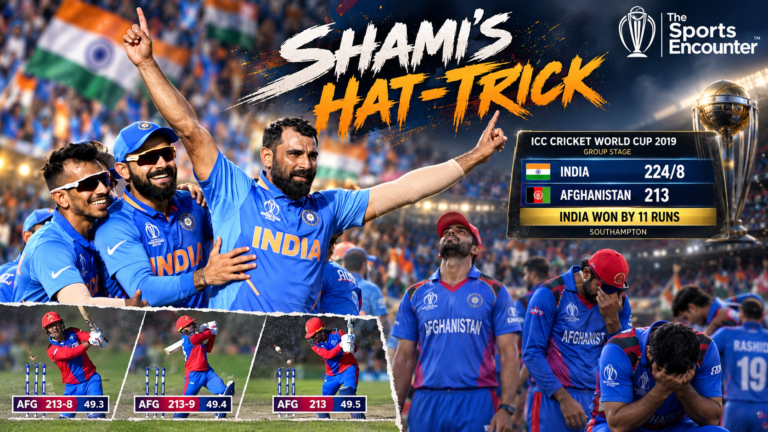 A Celebration of 5000 ODIsA Celebration of 5000 ODIs Match 34: Shami’s Hat-Trick Saves India After Afghanistan Drag 224 to the Final Over
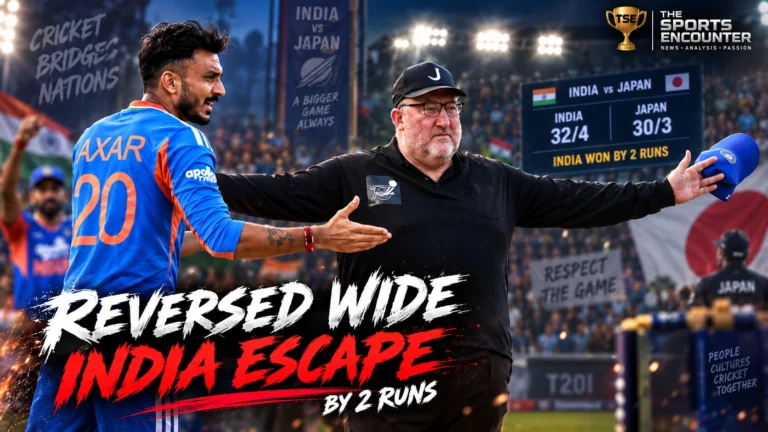 CricketIndia Escape Japan by Two Runs as Reversed Wide Overshadows Historic T20I
The difference on Sunday was that India never needed the extra insurance.
India vs West Indies 1st ODI Full Scorecard
West Indies Batting: 295/7 in 50 Overs
| Batter | Dismissal | R | B | 4s | 6s | SR |
|---|---|---|---|---|---|---|
| John Campbell | c Prasidh Krishna b Kuldeep Yadav | 62 | 60 | 6 | 3 | 103.33 |
| Justin Greaves | lbw b Kuldeep Yadav | 101 | 108 | 12 | 0 | 93.51 |
| Keacy Carty | c Shubman Gill b Prasidh Krishna | 13 | 31 | 0 | 0 | 41.93 |
| Shai Hope (c, wk) | c Jadeja b Kuldeep Yadav | 12 | 11 | 1 | 0 | 109.09 |
| Amir Jangoo | not out | 58 | 43 | 7 | 1 | 134.88 |
| Jewel Andrew | c Sharma b Kuldeep Yadav | 0 | 1 | 0 | 0 | 0.00 |
| Roston Chase | b Prasidh Krishna | 24 | 32 | 3 | 0 | 75.00 |
| Matthew Forde | c Naman Dhir b Nitish Kumar Reddy | 7 | 12 | 0 | 0 | 58.33 |
| Gudakesh Motie | not out | 4 | 4 | 0 | 0 | 100.00 |
| Extras | 3 lb, 2 nb, 9 w | 14 | ||||
| Total | 50 overs | 295/7 | Run rate: 5.90 | |||
Did not bat: Alzarri Joseph, Jayden Seales.
Fall of wickets: 135/1 Campbell (19.2), 176/2 Carty (30.1), 195/3 Hope (33.5), 198/4 Greaves (35.3), 198/5 Andrew (35.4), 250/6 Chase (44.6), 288/7 Forde (49.1).
India Bowling
| Bowler | O | M | R | W | Econ |
|---|---|---|---|---|---|
| Prasidh Krishna | 10 | 0 | 60 | 2 | 6.00 |
| Nitish Kumar Reddy | 5 | 0 | 45 | 1 | 9.00 |
| Gurnoor Brar | 10 | 0 | 60 | 0 | 6.00 |
| Ravindra Jadeja | 10 | 0 | 54 | 0 | 5.40 |
| Naman Dhir | 5 | 0 | 33 | 0 | 6.60 |
| Kuldeep Yadav | 10 | 1 | 40 | 4 | 4.00 |
India Batting: 300/2 in 41.4 Overs
| Batter | Dismissal | R | B | 4s | 6s | SR |
|---|---|---|---|---|---|---|
| Rohit Sharma | c Andrew b Joseph | 32 | 35 | 2 | 3 | 91.42 |
| Shubman Gill (c) | c Andrew b Chase | 110 | 108 | 13 | 1 | 101.85 |
| Virat Kohli | not out | 139 | 88 | 10 | 9 | 157.95 |
| Ruturaj Gaikwad | not out | 13 | 19 | 0 | 0 | 68.42 |
| Extras | 1 lb, 5 w | 6 | ||||
| Total | 41.4 overs | 300/2 | Run rate: 7.20 | |||
Did not bat: Ravindra Jadeja, KL Rahul, Naman Dhir, Nitish Kumar Reddy, Kuldeep Yadav, Gurnoor Brar, Prasidh Krishna.
Fall of wickets: 74/1 Rohit Sharma (11.6), 225/2 Shubman Gill (33.6).
West Indies Bowling
| Bowler | O | M | R | W | Econ |
|---|---|---|---|---|---|
| Jayden Seales | 7 | 0 | 32 | 0 | 4.57 |
| Matthew Forde | 5 | 0 | 39 | 0 | 7.80 |
| Alzarri Joseph | 9 | 1 | 81 | 1 | 9.00 |
| Gudakesh Motie | 10 | 0 | 66 | 0 | 6.60 |
| Roston Chase | 10 | 0 | 64 | 1 | 6.40 |
| Keacy Carty | 0.4 | 0 | 17 | 0 | 25.50 |
What Did the Captains Say After the Match?
Gill admitted he would have preferred to finish the chase himself but was satisfied with his century. His most important observation concerned Kuldeep, whom he described as a middle-overs wicket-taker capable of reversing games when India are under pressure.
The captain also praised Kohli’s increasingly free approach, saying the veteran should be allowed to play naturally because of his history of winning matches for India.
Hope’s assessment focused on the runs West Indies left behind after their opening partnership.
“Maybe 60-80 runs short, to be fair.”
That figure matches the shape of the match. West Indies created a platform for considerably more than 295 but did not convert enough of their middle-over opportunities.
What Happens Next in the India vs West Indies ODI Series?
India lead the three-match series 1-0.
The second ODI will be played in Guwahati on Wednesday, September 30, before the final match in New Chandigarh on October 3. The full dates are listed on Cricket West Indies’ official tour schedule.
West Indies have less to fix than the margin might suggest. Their openers proved India can be attacked. Jangoo showed the lower middle order can finish. The missing section was everything between those two phases.
India leave Thiruvananthapuram with a clearer picture.
Gill is back among the hundreds. Kuldeep is taking wickets through the middle. Kohli has crossed 15,000 ODI runs and appears increasingly willing to attack before a chase reaches its closing overs.
A year out from the World Cup, that combination is considerably more important than a 1-0 series lead.
India vs West Indies 1st ODI FAQs
Who Won the First ODI Between India and West Indies?
India won by eight wickets, chasing 296 in 41.4 overs with 50 balls remaining.
Who Was Player of the Match?
Kuldeep Yadav was named Player of the Match after taking 4/40 from 10 overs.
How Many Runs Did Virat Kohli Score?
Kohli finished unbeaten on 139 from 88 balls, hitting 10 fours and nine sixes.
Did Virat Kohli Reach 15,000 ODI Runs?
Yes. Kohli became only the second men’s batter after Sachin Tendulkar to reach 15,000 ODI runs. He achieved the landmark in his 303rd innings.
How Many ODI Centuries Does Virat Kohli Have?
Kohli’s 139 not out was his record-extending 55th ODI century.
How Many Runs Did Shubman Gill Score?
Gill scored 110 from 108 balls, including 13 fours and one six.
How Big Was the Gill-Kohli Partnership?
Gill and Kohli added 151 runs for the second wicket from 132 balls.
Who Scored a Century for West Indies?
Justin Greaves scored 101 from 108 balls after sharing a 135-run opening partnership with John Campbell.
When Is the Second India vs West Indies ODI?
The second ODI is scheduled for September 30, 2026 in Guwahati.
West Indies
- Virat Kohli Becomes Fastest to 15,000 Runs as Kuldeep Yadav Pegs Back West Indies in the First ODI
- A Celebration of 5000 ODIs Match 26: England Escape Elimination as West Indies Lose Four Wickets for Three Runs
- A Celebration of 5000 ODIs Match 3: Clive Lloyd and Viv Richards Drag West Indies Through a Chaotic World Cup Final
- Pakistan Leave Trinidad With Relief, West Indies With Regret After a Series That Exposed Both
- Sir Garfield Sobers Dies at 89: Cricket Mourns the Greatest All-Rounder of All Time