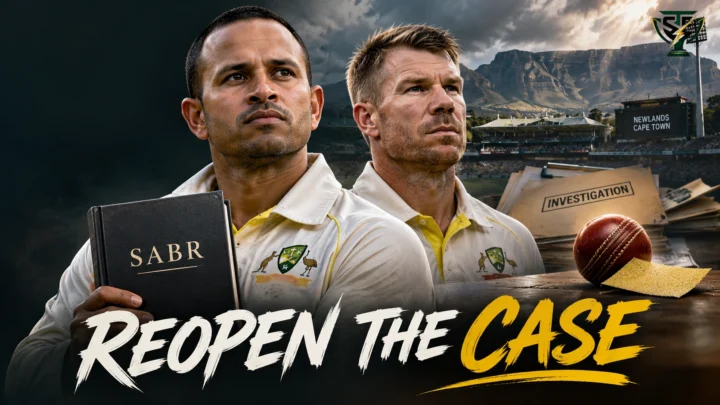
SYDNEY, Australia, November 13, 2026: Australian cricket’s Sandpapergate crisis has turned into an extraordinary confrontation between former teammates, with David Warner accusing Test captain Pat Cummins of abandoning Usman Khawaja after Cummins rejected allegations that the wider Australian team knew about the 2018 ball-tampering plot. What began as a dispute over an eight-year-old scandal has now exposed competing loyalties, damaged friendships and a profound disagreement over whether Australian cricket ever established the full truth about its most notorious modern controversy.
The public breakdown has attracted criticism beyond Australia. Former England captain Nasser Hussain has described the controversy as a “complete mess” on the Sky Sports Cricket Podcast, while Michael Atherton has questioned how a team celebrated for its solidarity could leave some former players feeling abandoned. The argument is no longer confined to who possessed the sandpaper at Newlands. It concerns whether Australia’s celebrated dressing-room culture of mateship has become a casualty of the scandal, whether Cricket Australia’s original investigation was sufficiently thorough and how much reputational damage the continuing hostility could inflict on one of international cricket’s most successful teams.
Key Takeaways
- Cummins addressed reporters in Sydney for more than an hour on Friday, seeking to clarify his understanding of events in South Africa.
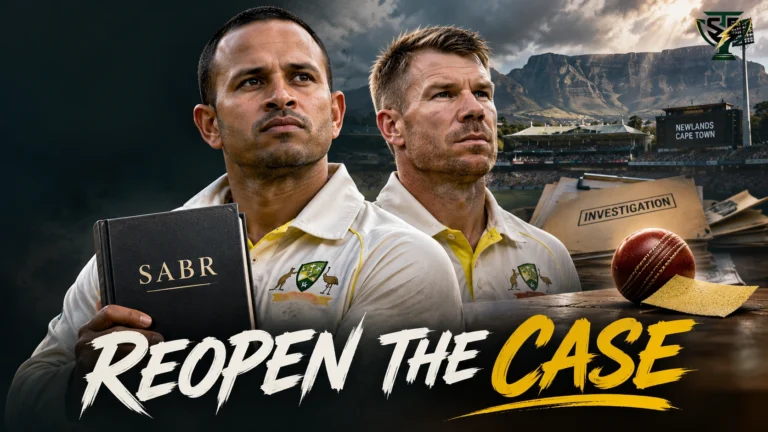
- The controversy returned to the headlines following publication of Khawaja’s autobiography, Sabr: Finding My Way in Cricket and Life.
- The controversy has attracted a particularly pointed assessment from former England captain Nasser Hussain.
- Cricket Australia’s 2018 investigation identified Smith, Warner and Bancroft as the three players responsible for the Cape Town plot.
Sandpapergate Crisis: Key Takeaways
- David Warner has publicly supported Usman Khawaja’s account of the 2018 scandal and criticized Pat Cummins’ response.
- Cummins denies knowing that sandpaper would be used and rejects allegations that he helped design or approve an illegal scheme.
- Khawaja’s autobiography, Sabr, challenges the finding that knowledge of the Cape Town plan was confined to Steve Smith, Warner and Cameron Bancroft.
- Warner says the original investigation was poorly handled and believes the three sanctioned players have continued to bear a disproportionate personal cost.
- Nasser Hussain and Michael Atherton have criticized the unresolved questions and the breakdown of solidarity between former teammates.
- Cricket Australia chief executive Todd Greenberg has refused to reopen the investigation.
- The new allegations remain contested. No independent finding establishes that Cummins or other previously cleared players participated in the sandpaper plot.
Sandpapergate Crisis: The Central Figures and Their Positions
| Person | Position or Response | Why It Matters |
|---|---|---|
| Usman Khawaja | Claims knowledge of the illegal scheme extended beyond the three sanctioned players and alleges sandpaper use before Cape Town. | Challenges the completeness of the accepted 2018 account. |
| David Warner | Supports Khawaja, disputes the handling of the original investigation and criticizes Cummins’ response. | One of the three sanctioned players now openly questions how responsibility was allocated. |
| Pat Cummins | Denies advance knowledge of the sandpaper and rejects suggestions that he helped devise the scheme. | The current Test captain is defending his integrity and that of other players. |
| Mitchell Starc | Maintains the position that the bowlers did not know sandpaper had been taken onto the field. | His account conflicts with broad interpretations of Khawaja’s allegations. |
| Steve Smith and Cameron Bancroft | Both served suspensions in 2018; neither had provided a substantive new public account of the latest dispute at the time of reporting. | They remain central witnesses to what happened. |
| Cricket Australia | Refuses to reopen the investigation. | Its institutional credibility is being tested alongside players’ reputations. |
| Nasser Hussain and Michael Atherton | Question the investigation and the treatment of players after the scandal. | Show how the controversy is being assessed outside Australia. |
How Australia’s Cricket Teammates Became Opponents in a Public Fight
Australian cricket has spent decades projecting an image of a fiercely competitive national team whose players protect one another through difficult contests.
Story at a glance

How Australia’s Cricket Teammates Became Opponents in a Public Fight
Australian cricket has spent decades projecting an image of a fiercely competitive national team whose players protect one another through difficult contests.
Warner Accuses Cummins of Abandoning Khawaja
Warner’s intervention on Friday intensified the dispute at a moment when Cummins appeared determined to answer the allegations and move forward.
Pat Cummins Rejects Khawaja’s Allegations and Defends His Reputation
Cummins addressed reporters in Sydney for more than an hour on Friday, seeking to clarify his understanding of events in South Africa.
What Khawaja’s Book Actually Alleges
The controversy returned to the headlines following publication of Khawaja’s autobiography, Sabr: Finding My Way in Cricket and Life.
Nasser Hussain: The Damage Goes Beyond the Sandpaper
The controversy has attracted a particularly pointed assessment from former England captain Nasser Hussain.
That image rests partly on the significance of the Baggy Green cap, the expectations placed on those selected to wear it and the idea that representing Australia creates a bond extending beyond individual careers.
The latest Sandpapergate dispute has exposed an uncomfortable contradiction.
The men involved are not rival captains from opposing countries. They are former colleagues who shared dressing rooms, celebrated international victories and spent years defending Australian cricket against criticism from outside.
Yet they are now publicly disputing one another’s honesty, judgment and loyalty.
Warner believes Khawaja has been treated unfairly for disclosing his version of events.
Cummins believes Khawaja’s account has unfairly implicated players who deny involvement.
Both positions involve a claim to defend teammates.
But those claims are directed toward different people, creating a division in which supporting one former colleague can appear to mean rejecting another.
That is why the controversy has evolved beyond the facts of ball tampering.
It has become a conflict over whose experience deserves recognition, whose reputation should be protected and whether loyalty to teammates requires silence, disclosure or accountability.
The players have not literally become enemies in any established sense. But the public hostility and incompatible accounts have created the appearance of factions inside a generation that once represented Australia together.
Warner Accuses Cummins of Abandoning Khawaja
Warner’s intervention on Friday intensified the dispute at a moment when Cummins appeared determined to answer the allegations and move forward.
Speaking during Fox Cricket’s coverage of Australia’s opening ODI against England, Warner strongly defended Khawaja and expressed disappointment with the Test captain.
He accused Cummins of having thrown Khawaja “under the bus.”
That criticism followed a lengthy media conference in Sydney during which Cummins rejected significant allegations in Khawaja’s autobiography.
Warner also challenged the process used by Cricket Australia in 2018.
He argued that investigators moved too quickly and that the players who received suspensions had limited opportunities to revisit their accounts.
He described the investigation as botched, suggesting that the final disciplinary outcome did not settle all the questions surrounding the dressing room.
Those complaints are important because Warner was not a peripheral participant.
He was Australia’s vice-captain during the 2018 tour and received a 12-month suspension after Cricket Australia’s investigation identified him as a central figure in the plan.
His current criticism does not erase the responsibility he accepted for his own conduct.
Nor does his endorsement independently establish that every other player knew about the plot.
However, a sanctioned participant alleging weaknesses in the process creates a legitimate question about the investigation’s scope.
If potentially relevant witnesses were not questioned, or if important accounts were omitted, Cricket Australia should be able to explain why those decisions were made.
The Sports Encounter examined those concerns before Friday’s confrontation in its earlier investigation into why Sandpapergate warrants independent review.
The latest confrontation adds a significant development to that analysis.
The disagreement is no longer simply between former players and administrators. It now directly involves the current Australian Test captain.
Pat Cummins Rejects Khawaja’s Allegations and Defends His Reputation
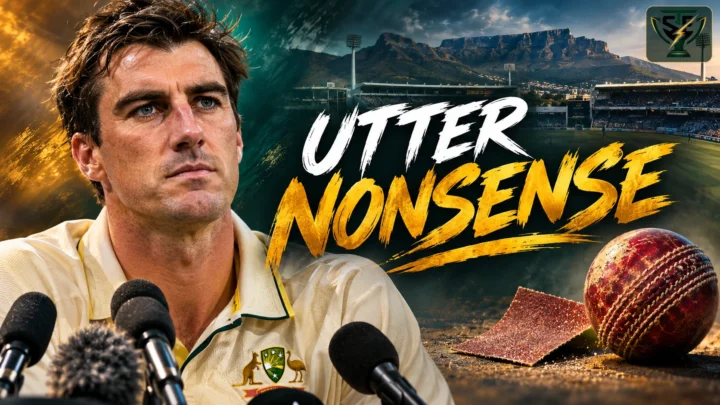
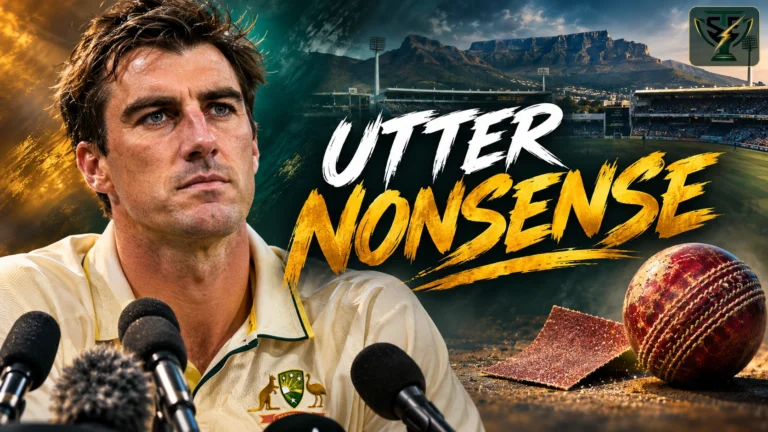
Cummins addressed reporters in Sydney for more than an hour on Friday, seeking to clarify his understanding of events in South Africa.
He firmly denied knowing that Bancroft would take sandpaper onto the field.
He also rejected any suggestion that he was among those responsible for developing the plan.
Cummins called the allegation “complete and utter nonsense.”
His argument rests on an important distinction.
Cricketers regularly discuss the condition of the ball, methods of obtaining conventional swing and the development of reverse swing.
Those conversations do not necessarily establish awareness that an illegal abrasive substance will be used during a match.
Equally, knowledge of general ball-management discussions is not the same as knowing about, approving or participating in a specific act of tampering.
Cummins says he had no advance knowledge of the particular sandpaper scheme.
His denial is consistent with the position expressed in a 2021 statement by Cummins, Mitchell Starc, Josh Hazlewood and Nathan Lyon.
The four bowlers said they had not known a foreign substance was being used to alter the ball.
Those denials must be taken seriously.
They cannot be discarded simply because Khawaja has published a conflicting account.
But the same principle applies to Khawaja’s evidence: it should be tested against the relevant records rather than dismissed solely because it challenges established reputations.
Cummins also questioned why Khawaja, who says he knew enough to warn Bancroft, did not intervene more decisively before the incident.
That introduces another difficult issue.
How should responsibility be assessed when a person claims to have known about misconduct but says he was not directly involved in organizing it?
The answer depends on precisely what the person knew, when that knowledge was acquired and what opportunities existed to prevent the offense.
No responsible assessment should assume that these questions have already been answered.
In the ABC’s detailed report on Cummins’ press conference, the captain explains why he believes the renewed allegations have serious consequences for individuals and their families.
Why Cummins’ Defense Has Not Ended the Dispute
Cummins’ media conference provided a direct response from one of the most prominent players named in the wider debate.
It did not establish an agreed account of what happened in 2018.
That distinction matters.
A press conference allows a player to explain his recollection and respond to public criticism.
It does not provide the evidentiary testing available through a properly structured independent investigation.
Warner’s subsequent response demonstrates the limitation.
Rather than accepting Cummins’ explanation, he reaffirmed his support for Khawaja and renewed his criticism of the earlier process.
The result is a conflict in which more public statements may generate more disagreement without resolving the underlying evidence.
What Khawaja’s Book Actually Alleges
The controversy returned to the headlines following publication of Khawaja’s autobiography, Sabr: Finding My Way in Cricket and Life.
Khawaja alleges that knowledge of ball tampering extended beyond the three players punished in 2018.
He also describes an alleged earlier use of sandpaper during Australia’s preceding Test against South Africa in Gqeberha, then commonly known as Port Elizabeth.
That allegation would be significant if corroborated.
It could indicate that the Cape Town incident was not the first occasion on which an illegal abrasive substance had been used.
However, the claim remains disputed.
Cricket Australia’s original findings did not establish the wider involvement Khawaja now describes.
The central interpretive problem is that different forms of knowledge and responsibility are being discussed as though they necessarily mean the same thing.
| Possible Level of Knowledge | What It Would Establish | What It Would Not Automatically Prove |
|---|---|---|
| Knowing reverse swing was being discussed | Awareness of a normal cricketing objective | Knowledge of an illegal substance |
| Suspecting improper treatment of the ball | Potential grounds to question or intervene | Participation in a specific plan |
| Knowing in advance that sandpaper would be used | Knowledge of the prohibited method | That the person organized or performed the act |
| Planning or directing the use of sandpaper | Direct involvement in developing misconduct | Responsibility of unrelated teammates |
| Using sandpaper on the ball | Direct participation in tampering | Automatic proof that every teammate knew |
These distinctions are not merely legal technicalities.
They determine whether the allegations concern team culture, failure to intervene, active conspiracy or direct execution.
Collapsing all those categories into one accusation would be unfair to players whose involvement has not been established.
Ignoring the distinctions would also make it harder to determine whether the original disciplinary process reached defensible conclusions.
Nasser Hussain: The Damage Goes Beyond the Sandpaper
The controversy has attracted a particularly pointed assessment from former England captain Nasser Hussain.
Speaking with Michael Atherton on the Sky Sports Cricket Podcast on November 11, Hussain questioned both the original misconduct and the handling of the aftermath.
He described the entire episode as a “complete mess.”
Hussain’s criticism contained several elements.
First, he questioned how professional cricketers could believe that using sandpaper was acceptable in an international match.
Second, he challenged the failure to stop the conduct before it occurred.
Third, he questioned the subsequent explanations and the thoroughness of the investigation.
His assessment is especially relevant because it came from someone who captained England against Australian teams renowned for their aggressive competitiveness and strong internal solidarity.
Hussain understands the difference between trying to gain a legitimate tactical advantage and deliberately crossing the rules.
That distinction is central to the controversy.
Cricket has a long history of debate over ball maintenance, shining methods and reverse swing.
But sandpaper is not a permissible ball-management technique.
Its deliberate use represents a specific violation, not simply an unusually aggressive interpretation of accepted practice.
Hussain’s concerns therefore extend beyond whether a player committed an offense.
They address the environment in which the offense became possible, the failure to prevent it and the questions left unresolved afterward.
Michael Atherton Identifies the Breakdown of Team Solidarity
Atherton’s contribution adds another dimension to the debate.
He argued that the handling of the original scandal created an outcome in which three players received severe punishments while important questions remained unanswered.
He also suggested that public unease now centers significantly on the apparent breakdown of support between former teammates.
That concern goes directly to Australia’s celebrated culture.
If the team promotes loyalty as a defining value, what happens when some players believe they were abandoned and others believe their reputations have been unfairly attacked?
Neither side can simply invoke mateship as proof that its version is correct.
Solidarity cannot excuse misconduct.
But accountability should not become an exercise in isolating convenient individuals while ignoring relevant evidence.
The Sky Sports account of Hussain and Atherton’s podcast discussion provides their detailed criticisms and the wider implications for Australian cricket.
Why the 2018 Investigation Remains the Central Institutional Question
Cricket Australia’s 2018 investigation identified Smith, Warner and Bancroft as the three players responsible for the Cape Town plot.
Smith and Warner received 12-month suspensions.
Bancroft received a nine-month suspension.
The governing body concluded that no other player, member of the coaching staff or head coach had prior knowledge of the specific plan.
Those findings formed the basis for the official resolution of Sandpapergate.
They also helped determine how the scandal would be remembered internationally.
The underlying problem today is not that those sanctions never occurred or that the three players were necessarily innocent.
The problem is that firsthand accounts now challenge whether the investigation established the full extent of relevant knowledge.
Warner has questioned the speed and scope of the process.
Khawaja has published allegations that differ from the accepted account.
Other players have maintained denials.
Cricket Australia has decided not to reopen the case.
That leaves the institution defending its conclusion while the participants publicly dispute key elements of the narrative.
Sandpapergate: Eight Years of Findings, Challenges and Fallout
| Date | Development | Consequence |
|---|---|---|
| March 2018 | Bancroft is filmed attempting to alter the ball in Cape Town. | International scandal and disciplinary investigation. |
| March 2018 | Smith and Warner receive 12-month bans; Bancroft receives nine months. | Three players carry formal responsibility under Cricket Australia’s findings. |
| 2021 | Cummins, Starc, Hazlewood and Lyon deny knowledge of the sandpaper. | Bowlers’ account reinforces the existing official position. |
| November 2026 | Khawaja publishes new allegations in Sabr. | Questions about prior knowledge and alleged earlier tampering return. |
| November 10, 2026 | Cricket Australia rejects a renewed investigation. | Disputed accounts remain unresolved institutionally. |
| November 11, 2026 | Hussain and Atherton examine the controversy. | International criticism focuses on investigative failures and team trust. |
| November 13, 2026 | Cummins publicly rejects Khawaja’s allegations. | The current captain directly challenges a former teammate’s account. |
| November 13, 2026 | Warner criticizes Cummins and defends Khawaja. | The dispute becomes a public confrontation between former colleagues. |
Cricket Australia’s Refusal to Reinvestigate Creates a Credibility Problem
Cricket Australia chief executive Todd Greenberg has rejected calls to reopen the original investigation.
The governing body’s position is that revisiting the events eight years later would be unlikely to produce a universally accepted account.
That concern is understandable.
Witness memories change, participants may disagree honestly and historic records may be incomplete.
But an investigation does not need unanimous agreement to reach evidence-based conclusions.
Its purpose is to examine the available material, assess credibility and identify what can and cannot reasonably be established.
The governing body should also distinguish between reopening every disciplinary sanction and reviewing the adequacy of its original findings.
A limited independent assessment could establish whether additional credible evidence exists without automatically subjecting players to new punishments.
It could also provide protections for individuals who believe they have been unfairly implicated.
Such an approach would be more proportionate than either dismissing every new claim or presuming the entire former team was responsible.
The original findings and subsequent institutional decisions can be examined through Cricket Australia’s published account of its 2018 investigation.
Warner’s Personal Pain Adds Another Dimension to the Dispute
Warner’s Friday comments also revealed the deeply personal significance the controversy continues to hold for him.
He described the enduring reputational consequences of Sandpapergate and the abuse he says the sanctioned players still encounter.
Most painfully, Warner spoke about the loss of a baby during the period surrounding the scandal.
He said the experience had affected him and his wife, Candice, profoundly.
That loss should be treated with sensitivity and reported as part of Warner’s account of the personal toll, not presented as evidence about who knew of the ball-tampering plot.
Family suffering does not determine historical responsibility.
But it helps explain why Warner regards the dispute as unresolved despite having completed his suspension and returned to international cricket for several successful years.
For him, the issue involves more than sporting punishment.
It concerns the permanent association between his name and a scandal, the perception that responsibility was not allocated fairly and the absence of conversations he believes should have taken place among former teammates.
He has said that the three sanctioned players continued to carry the burden while many others moved on.
Again, that is Warner’s perspective, not an independent finding about the conduct of those other players.
But it demonstrates why calls to forget the incident have failed.
Has Australian Cricket’s Culture of Mateship Become a Liability?
There is a distinction between genuine team loyalty and protecting a collective image at the expense of uncomfortable facts.
Good teams need trust.
Players must believe teammates will support them during defeats, injuries, poor form and difficult personal circumstances.
But trust also depends on knowing that individuals will not be pressured to conceal wrongdoing or accept responsibility for actions they did not commit.
The renewed Sandpapergate controversy exposes tension between those two principles.
Khawaja presents disclosure as an attempt to establish wider accountability.
Warner presents support for Khawaja as an act of loyalty toward someone he believes is telling the truth.
Cummins presents his denial as a defense of his integrity and the reputations of other players.
Each position makes a claim about what responsible conduct between teammates should look like.
But the claims cannot all resolve the factual dispute.
That makes the situation particularly difficult for younger Australian cricketers.
They are inheriting a national cricket culture whose most influential senior figures are publicly divided over the meaning of honesty and accountability.
The Sports Encounter has already examined the challenges of Australia’s transition from its aging Test generation.
The Sandpapergate confrontation introduces a different kind of succession problem.
Australia must pass on not only cricketing expertise but also a credible understanding of what the national team’s values require in practice.
How the Dispute Is Tarnishing Australian Cricket’s Image Worldwide
There is clear evidence that the controversy has renewed international scrutiny.
Sky Sports has devoted podcast discussion and detailed reporting to the competing claims.
The Australian Broadcasting Corporation and other major news organizations have followed the dispute as a major national sporting controversy.
The allegations have also become prominent during Australia’s white-ball series against England.
Those developments establish renewed international attention.
They do not, by themselves, establish a measurable decline in worldwide support for Australian cricket or prove that sponsors, broadcasters and supporters have withdrawn their confidence.
Such claims would require independent audience, commercial or reputation data.
Nevertheless, the ways in which the dispute could damage Australia’s international standing are identifiable.
| Area of Concern | Verified Development | Potential Reputational Consequence |
|---|---|---|
| Sporting integrity | The original ball-tampering violation and renewed allegations. | Questions about whether all relevant misconduct was identified. |
| Team solidarity | Public disagreement involving Warner, Khawaja and Cummins. | Reduced confidence in the national team’s culture of trust. |
| Institutional accountability | Cricket Australia’s refusal to review the case. | Perception that protecting established findings takes priority over testing new evidence. |
| International media coverage | Renewed analysis by broadcasters and former international captains. | The scandal remains attached to Australia’s global cricket identity. |
| Leadership succession | Current and former senior players defend conflicting accounts. | Uncertainty about the values younger players are being asked to inherit. |
| Public confidence | Unresolved claims about knowledge and responsibility. | Continued division among supporters over who should be believed. |
Australian cricket has earned enormous international respect through its records, championships and ability to compete under pressure.
Those achievements remain real.
But sporting excellence does not remove the obligation to answer credible questions about misconduct.
Indeed, higher expectations of national representation can make an unresolved integrity dispute more damaging.
Australia’s standing is affected not because every player is now suspected of wrongdoing, but because the institution has not yet provided an explanation capable of reconciling the new disclosures with the original investigation.
Why England’s Response Matters Beyond Traditional Rivalry
Hussain and Atherton’s observations have particular weight because both experienced Australian cricket from the perspective of an opposing captain.
For generations, the Australia-England rivalry has featured intense competition, psychological pressure and competing interpretations of sporting conduct.
Criticism from former England players is therefore not automatically impartial evidence about what occurred inside Australia’s dressing room.
But their observations provide an external perspective on how the controversy appears to people familiar with elite international cricket.
Hussain’s concern centers on how the misconduct was allowed to happen and how the fallout was handled.
Atherton’s concern extends to the perception that the original disciplinary response left individuals isolated and questions unanswered.
Neither former captain’s commentary establishes who else knew about the sandpaper.
Its significance lies in identifying why the story continues to resonate outside Australia.
It challenges the discrepancy between the national team’s public identity and the apparent fractures among those who once represented it.
The dispute has also overshadowed preparations for the Australia-England ODI series, a development anticipated in TSE’s detailed preview of Australia’s home white-ball contest against England.
With Mitchell Marsh leading the ODI side and several veteran bowlers rested, the team should otherwise be focused on preparations for the 2027 World Cup.
Instead, a scandal from 2018 has become one of the dominant subjects surrounding the national setup.
The Hidden Cost: Australia Is Fighting Two Different Battles
The original Sandpapergate dispute concerns misconduct.
The newer dispute concerns relationships.
Those questions overlap but require different responses.
Determining who knew about the illegal act requires evidence.
Rebuilding trust between players requires communication, acknowledgment and a willingness to distinguish disagreement from personal betrayal.
A renewed investigation could help establish facts.
It would not automatically repair years of resentment.
Conversely, private reconciliation between former teammates would not establish that the original investigation was complete.
| The Two Battles | Central Question | What Would Help Resolve It |
|---|---|---|
| Historical accountability | Who knew what, when, and who participated? | Independent review of records and credible witness accounts. |
| Player relationships | Why do former teammates feel betrayed or unfairly accused? | Direct discussions, fair representation and acknowledgment of personal harm. |
| Institutional confidence | Was the original process sufficiently complete? | Transparent explanation of investigative scope and evidentiary decisions. |
| Future team culture | What conduct should Australian players expect from one another? | Clear standards for reporting misconduct, responsibility and protection against unsupported allegations. |
This separation offers an original way to understand the controversy.
Australia cannot solve a trust problem by announcing that disciplinary sanctions have already been served.
It cannot solve an evidentiary problem by urging former teammates to reconcile privately.
Both issues require attention on their own terms.
Why the Next Generation Should Not Inherit an Unresolved Scandal
Australia is already preparing for a significant generational transition.
Senior players including Smith, Starc, Hazlewood and Lyon are approaching the later stages of their international careers.
Cummins remains a central figure in Australia’s Test leadership, while younger players are being asked to assume greater responsibility in limited-overs cricket.
The selectors’ plans have been evident in the squad changes examined in TSE’s analysis of Australia’s emerging ODI and T20I players.
But sporting succession is not solely about replacing runs and wickets.
A strong national program must also teach players how to respond when competitive ambition conflicts with sporting integrity.
The lesson from 2018 should not be that a team can move past misconduct as long as a small number of individuals accept punishment.
Nor should it be that every teammate becomes responsible for an offense merely because the incident happened inside the same dressing room.
The lesson should be that misconduct is investigated thoroughly, individual responsibility is established fairly and players are protected against both concealment and unsupported accusations.
Australia has already sought technical improvements ahead of its next cycle of international assignments, including the appointment of Mike Hussey to support its batting development.
TSE’s analysis of Hussey’s appointment and Australia’s preparations for the 2027 Ashes shows how carefully the national setup is planning its cricketing future.
The same seriousness should apply to its institutional culture.
Technical improvement is important. So is an accountable environment in which younger players understand that reputation cannot substitute for evidence.
What Should Cricket Australia Do Now?
Cricket Australia faces a difficult choice.
Reopening Sandpapergate could revive painful memories, expose players to further accusations and produce no definitive new conclusion.
Refusing to reconsider the investigation also carries a cost when material new allegations are being made publicly.
A proportionate response would be a limited independent review rather than an immediate presumption that further disciplinary action is necessary.
Such a review could examine the original interview process, establish which witnesses were questioned and assess whether the new accounts raise matters that were not adequately considered.
It should also give players whose conduct is questioned an opportunity to respond fully.
Five Questions an Independent Review Should Test
| Question | Evidence Needed | Purpose |
|---|---|---|
| Was sandpaper used before Cape Town? | Contemporaneous accounts, records and independently corroborated testimony. | Determine whether the conduct extended beyond the documented incident. |
| Who knew about the specific plan? | Consistent witness interviews and available communications. | Separate prior knowledge from speculation and general discussions. |
| Why were some potential witnesses not interviewed? | Original investigative records and interview-selection decisions. | Assess the completeness of the inquiry. |
| Were any material facts omitted or misrepresented? | Comparison of 2018 evidence with new accounts. | Identify whether the findings require clarification. |
| What can responsibly be published now? | Independent findings and legal review. | Provide public accountability without unfairly damaging individuals. |
The outcome should not be predetermined.
An independent reviewer could find that the new claims do not materially alter the original conclusions.
Alternatively, the reviewer could identify omissions sufficient to justify a more comprehensive investigation.
Either outcome would be more credible if supported by a clear explanation of the evidence considered.
The goal should be factual accountability, not another round of punishment driven by public pressure.
Continue the Cricket Story

Frequently Asked Questions About the Sandpapergate Crisis
Why are David Warner and Pat Cummins publicly disagreeing?
Warner supports Usman Khawaja’s allegations about wider knowledge of the 2018 ball-tampering plot. Cummins has rejected those allegations and denied advance knowledge of, or involvement in planning, the use of sandpaper.
What did Usman Khawaja reveal in his autobiography?
In Sabr, Khawaja alleges that knowledge of the ball-tampering scheme extended beyond the three sanctioned players and that sandpaper had been used earlier in the South Africa series. These allegations remain contested.
What did Pat Cummins say about the accusations?
Cummins denied knowing sandpaper would be taken onto the field and rejected suggestions that he helped devise the scheme. He also criticized the effect of the allegations on players’ reputations.
What did David Warner say about Cummins?
Warner accused Cummins of publicly undermining Khawaja and expressed disappointment with his former teammate’s response.
What did Nasser Hussain say about Sandpapergate?
On the Sky Sports Cricket Podcast, Hussain criticized the original conduct, the failure to prevent it and the unanswered questions surrounding the subsequent investigation.
Why did Michael Atherton criticize the handling of the scandal?
Atherton questioned why severe punishments were imposed on three players while significant questions remained unanswered, and he expressed concern about the apparent breakdown of support between teammates.
Who was punished after Sandpapergate in 2018?
Steve Smith and David Warner received 12-month Cricket Australia suspensions, while Cameron Bancroft received a nine-month suspension.
Has Cricket Australia reopened the investigation?
No. Cricket Australia chief executive Todd Greenberg has declined to reopen the case despite the renewed allegations.
Has anyone proved that Cummins helped organize the scheme?
No. The allegation remains disputed, Cummins has categorically denied it, and no new independent finding establishes his participation.
How is Sandpapergate affecting Australia’s international reputation?
The controversy has renewed international scrutiny of the team’s integrity, internal solidarity and Cricket Australia’s investigative process. The extent of any measurable long-term reputational or commercial damage remains unverified.
What It Means: Australian Cricket Must Confront the Conflict Within
Australia’s greatest problem is no longer simply that sandpaper was used during a Test match eight years ago.
It is that the episode has become a lasting argument about truth, responsibility and loyalty among players who once represented the same country.
Khawaja believes the accepted account is incomplete.
Warner believes the three sanctioned players continue to carry a burden that the original investigation did not allocate fairly.
Cummins insists he has been wrongly implicated and has defended the integrity of his recollection.
Cricket Australia believes the matter does not warrant another investigation.
Those positions cannot be reconciled through media conferences alone.
Nor should a responsible analysis conclude that the entire Australian team was complicit without independent evidence.
The present damage lies in the contradiction between Australia’s projected culture of unity and the public accusations now coming from within its own cricketing generation.
Hussain and Atherton have identified why that contradiction matters beyond Australia’s borders.
The Baggy Green has long represented competitive excellence, team loyalty and national pride. Those ideals become harder to defend when former teammates no longer appear to agree about what happened or how responsibility was handled.
Cricket Australia’s opportunity is to demonstrate that accountability does not depend on protecting an established narrative or accepting every new allegation.
It depends on testing evidence fairly, explaining decisions openly and protecting individuals from both concealment and unfounded blame.
The Sandpapergate crisis will not necessarily destroy Australian cricket’s international standing. Its achievements remain substantial, and one unresolved controversy does not define every player who wears the national colors.
But the continuing hostility threatens to leave a stain on the team’s legacy that lasts longer than the original suspensions.
Australia once confronted the embarrassment of being caught with sandpaper.
Eight years later, it is confronting something potentially more enduring: a generation of teammates divided over whether they ever told the whole story.
Australian cricket
- Sandpapergate Tears Australian Cricket Apart as Warner and Cummins Turn on Each Other After Khawaja Unveils ‘Sabr’
- Sandpapergate: Why Cricket Australia Must Reopen the Investigation
- Tributes to the Heroes: Glenn Maxwell, the Man Who Made Cricket Believe the Impossible Could Happen
- David Warner Convicted of Drink-Driving as Career Consequences Begin to Mount