Key Takeaways
- San Francisco and Minnesota reportedly established the framework for a trade that would have returned Jennings to the franchise that selected him in the seventh round of the 2020 NFL Draft.
- Glazer reported that the arrangement depended on Jennings speaking with Shanahan and Lynch to indicate he wanted to return.
- No completed transfer of Jennings to San Francisco has been announced.
- The 49ers opened the season strongly, including a 27-7 victory over the Los Angeles Rams in Melbourne.
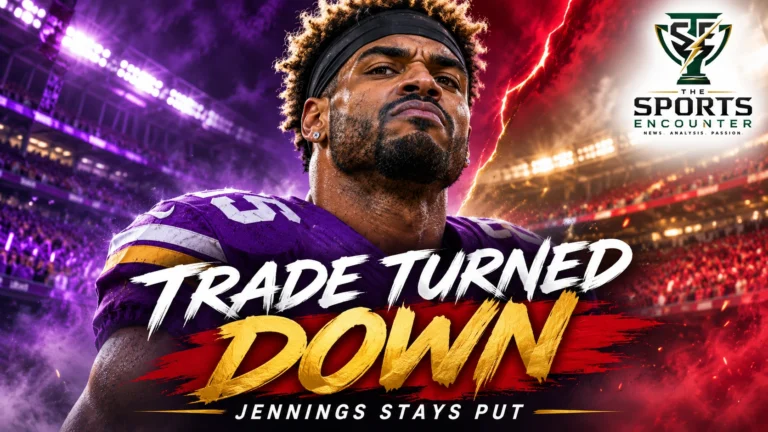
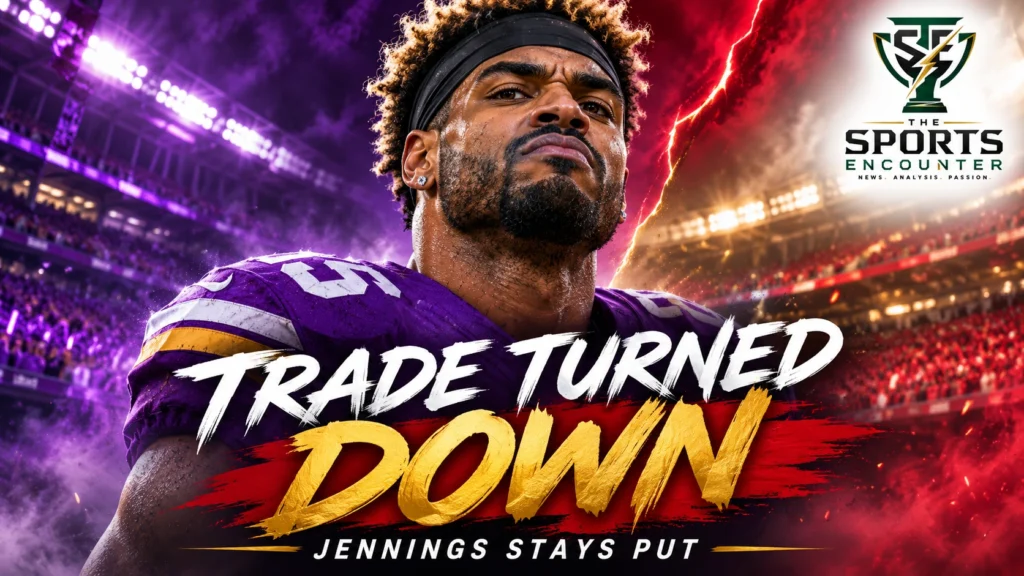
MINNEAPOLIS, United States, November 2, 2026: Minnesota Vikings wide receiver Jauan Jennings reportedly rejected a proposed trade to the San Francisco 49ers after the two NFL franchises had agreed on terms for his return to California. According to FOX Sports insider Jay Glazer, the proposed deal required Jennings to confirm his willingness to reunite with head coach Kyle Shanahan and general manager John Lynch, but the 29-year-old chose to remain with Minnesota. The decision leaves San Francisco searching for receiving help ahead of the November 10 trade deadline while raising questions about Jennings’ long-term role in the Vikings’ offense.
The former 49ers receiver has just six catches for 54 yards through six appearances with Minnesota after adding two receptions for 11 yards during Sunday’s 19-15 defeat against the Detroit Lions. The Vikings have nevertheless compiled a 6-1 record, while San Francisco entered its Week 8 bye at 6-1 despite significant injuries at wide receiver. Jennings’ decision is particularly striking because he previously flourished in Shanahan’s system, led the 49ers with 643 receiving yards in 2025 and signed only a one-year contract with Minnesota. The proposed reunion was reportedly close enough to have agreed terms, but never became a completed NFL transaction.
What Happened to the Reported Jauan Jennings Trade Between the Vikings and 49ers?
San Francisco and Minnesota reportedly established the framework for a trade that would have returned Jennings to the franchise that selected him in the seventh round of the 2020 NFL Draft.
Story at a glance
What Happened to the Reported Jauan Jennings Trade Between the Vikings and 49ers?
San Francisco and Minnesota reportedly established the framework for a trade that would have returned Jennings to the franchise that selected him in the seventh round of the 2020 NFL Draft.
Why Would Jennings Reject a Return to Kyle Shanahan’s 49ers?
At first glance, the reported rejection appears surprising.
Jauan Jennings’ 2026 Statistics: High Snap Share, Almost No Receiving Production
Jennings’ statistical position is one of the most revealing features of this story.
What Did Jennings Achieve During Five Seasons With the 49ers?
San Francisco’s interest is easier to understand when considering Jennings’ previous performances.
Why Are the 49ers Searching for Wide Receivers Before the Trade Deadline?
San Francisco’s receiving group has been disrupted by injuries throughout the season.
Glazer reported that the arrangement depended on Jennings speaking with Shanahan and Lynch to indicate he wanted to return.
Jennings declined that opportunity, according to the report, choosing instead to stay with his current team.
Additional reporting indicated that the Vikings allowed Jennings to have a say in the proposed transaction and that he believes in the organization’s direction.
The critical distinction is between an agreement in principle and a completed trade.
No completed transfer of Jennings to San Francisco has been announced.
Nor has either club publicly disclosed the reported compensation package, including any draft picks or other players that might have changed hands.
| Trade Question | Current Information | Verification Status |
|---|---|---|
| Which teams were involved? | Minnesota Vikings and San Francisco 49ers | Reported by FOX Sports |
| Which player was involved? | Wide receiver Jauan Jennings | Confirmed identity |
| Were trade terms reportedly arranged? | Yes | Reported, not independently published by teams |
| Did Jennings approve the move? | No, according to Glazer | Reported |
| Was the trade completed? | No | No completed transaction reported |
| What was the compensation? | Not publicly established | Unverified |
| Is Jennings remaining with Minnesota? | Yes, as of November 2 | Current reported status |
| When is the deadline? | November 10, 2026 | Reported NFL deadline |
The original account was published by FOX Sports following Jay Glazer’s report.
Why Would Jennings Reject a Return to Kyle Shanahan’s 49ers?
At first glance, the reported rejection appears surprising.
Jennings had established himself as a dependable receiver in San Francisco, particularly when the offense needed a conversion on third down or a contested catch in a difficult situation.
He was familiar with Shanahan’s playbook, had a working relationship with quarterback Brock Purdy and had produced his strongest seasons with the franchise.
Meanwhile, his receiving opportunities in Minnesota have been limited.
However, several competing considerations could explain why a player might prefer remaining with his current team.
Jennings May Value Minnesota’s Direction More Than His Current Statistics Suggest
The Vikings began the season with six consecutive victories before losing to Detroit on November 1.
For a veteran player, joining a successful organization and maintaining continuity can matter even when individual statistics are below expectations.
FOX Sports reported that Jennings liked the direction of the Vikings.
That is the clearest publicly reported explanation for his decision.
It would be speculative to claim that he rejected the trade because of a personal dispute with Shanahan or Lynch.
Jennings previously had contractual disagreements with San Francisco, but those disagreements do not establish his present motivation.
Does the Decision Suggest Lingering Tension With San Francisco?
The possibility cannot be dismissed entirely.
Jennings had sought improved contractual terms during his final period with the 49ers and subsequently left in free agency.
Yet a difficult negotiation does not necessarily prevent a player from returning to a former club.
Without a direct explanation from Jennings, assigning his refusal to unresolved personal tension would go beyond the available evidence.
The more defensible conclusion is that he preferred Minnesota when presented with the reported choice.
Jauan Jennings’ 2026 Statistics: High Snap Share, Almost No Receiving Production
Jennings’ statistical position is one of the most revealing features of this story.
Before Sunday’s game in Detroit, he had four receptions on eight targets for 43 yards across five appearances.
He had nevertheless played 234 offensive snaps, approximately 71% of Minnesota’s offensive plays across those appearances.
That suggests the coaching staff was using him regularly despite the limited number of passes directed toward him.
Against Detroit, he added two catches for 11 yards.
| Measure | Before Detroit | After Detroit |
|---|---|---|
| Games played | 5 | 6 |
| Receptions | 4 | 6 |
| Receiving yards | 43 | 54 |
| Targets | 8 | 10 |
| Receiving touchdowns | 0 | 0 |
| Receptions per game | 0.8 | 1.0 |
| Receiving yards per game | 8.6 | 9.0 |
| Catch rate | 50% | 60% |
| Documented offensive snaps | 234 | Full six-game total not established |
TSE statistical analysis: Before the Detroit game, Jennings had one reception for every 58.5 offensive snaps.
That calculation comes from dividing 234 snaps by four receptions.
It reveals a wide gap between his time on the field and his production as a receiver.
However, receptions per snap should not be mistaken for a complete performance grade.
Wide receivers also contribute through blocking, route execution, spacing and drawing defensive attention.
Those contributions require separate film analysis and cannot be fully measured by receiving totals.
Is Minnesota Underusing Jennings?
The evidence shows low receiving volume. It does not independently establish why that volume is low.
Justin Jefferson and Jordan Addison occupy prominent positions in the Vikings’ receiving hierarchy.
Quarterback decisions, game plans, route assignments and the distribution of targets among other skill-position players also influence a receiver’s opportunities.
Jennings’ limited receiving production therefore raises a legitimate tactical question without proving that Minnesota has mismanaged him.
His decision to stay suggests he sees value in his current situation beyond his first six games of statistics.
What Did Jennings Achieve During Five Seasons With the 49ers?
San Francisco’s interest is easier to understand when considering Jennings’ previous performances.
From 2021 through 2025, he caught 210 passes for 2,581 yards and 22 touchdowns in 75 regular-season appearances.
He developed from a seventh-round selection into a reliable contributor.
His most productive yardage season came in 2024, when he recorded 975 receiving yards.
In 2025, Jennings led San Francisco with 643 receiving yards and scored nine touchdowns, a career high.
| Performance Measure | 49ers Record | Why It Matters |
|---|---|---|
| Regular-season appearances, 2021-25 | 75 | Established experience in Shanahan’s system |
| Regular-season receptions | 210 | Consistent offensive contribution |
| Receiving yards | 2,581 | Career production with San Francisco |
| Receiving touchdowns | 22 | Scoring contribution |
| 2024 receiving yards | 975 | Career-high yardage season |
| 2025 receptions | 55 | Regular role in passing offense |
| 2025 receiving yards | 643 | Team-leading total |
| 2025 receiving touchdowns | 9 | Career high |
| Playoff receiving yards | 289 | Experience in postseason competition |
Jennings also became particularly valuable during high-pressure offensive situations.
His familiarity with Purdy, Shanahan and San Francisco’s route concepts would have reduced some of the preparation required when adding a receiver during the season.
That is a substantial advantage over acquiring a player who must learn the offense from the beginning.
Why Are the 49ers Searching for Wide Receivers Before the Trade Deadline?
San Francisco’s receiving group has been disrupted by injuries throughout the season.
Ricky Pearsall, De’Zhaun Stribling and Demarcus Robinson have been placed on injured reserve.
Deebo Samuel Sr. has dealt with a hamstring injury, while Mike Evans has been managing Achilles problems.
These absences affect different parts of the offense.
They reduce the available rotation, limit personnel combinations and place greater pressure on healthy receivers to absorb additional snaps.
San Francisco had already experienced the consequences during its narrow victory over Washington.
In TSE’s analysis of the 49ers’ 23-17 victory against the Commanders, San Francisco gained 303 offensive yards in the first half but only 72 after halftime.
Evans left that game after aggravating his Achilles problem.
Washington also improved defensively, so the entire decline cannot be attributed solely to one injury.
Still, the matchup demonstrated how quickly San Francisco’s passing flexibility can change when an important receiver becomes unavailable.
How Did Atlanta Expose San Francisco’s Offensive Problems?
The 49ers entered Week 7 unbeaten.
Atlanta ended that run with a 29-20 victory, forcing four turnovers despite being outgained in total offensive yardage.
The defeat raised questions about whether San Francisco could maintain its early-season efficiency with an increasingly depleted receiving group.
TSE’s Week 7 report examined how Atlanta disrupted the previously unbeaten 49ers and why turnover management proved more important than total yards.
The loss did not eliminate San Francisco from contention.
It did highlight the importance of acquiring reliable support before the schedule becomes more demanding.
Would Jennings Have Solved Every Injury Problem?
No.
His familiarity with the offense and previous production made him a logical target.
But one receiver cannot automatically replace the different skills, roles and availability of several injured teammates.
Nor does a player’s historical production guarantee immediate success following a midseason move.
San Francisco must also account for Jennings’ recent limited output, physical readiness and whether his previous role would still be available within the current offense.
Why Jennings’ Rejection Matters to the Vikings’ NFC North Ambitions
Minnesota entered Week 8 as the NFL’s last undefeated team.
The Vikings had compiled six victories, including a 16-10 win against Indianapolis in Week 7.
Detroit ended the unbeaten start on Sunday, defeating Minnesota 19-15.
Jahmyr Gibbs rushed for 153 yards and a touchdown as the Lions improved to 5-2.
The Vikings fell to 6-1, leaving the NFC North race more competitive.
The Sports Encounter’s complete NFL Week 8 report analyzes the Lions’ victory, Minnesota’s first defeat and the consequences across the league.
The result makes Jennings’ decision more interesting.
He has chosen to remain with a team that is still strongly positioned in its division, but the loss has demonstrated that Minnesota’s winning formula is not invulnerable.
Does Minnesota Need More From Its Passing Offense?
The Vikings’ passing production has been a recurring concern despite their successful start.
The offense has often depended on defensive performances and game management to secure victories.
Earlier in the season, Minnesota reached 4-0 despite failing to score an offensive touchdown in two of its opening four wins.
TSE’s Week 4 analysis examined the unusual contrast between the Vikings’ unbeaten record and their offensive limitations.
The problem remained visible in our Week 5 power rankings, which questioned whether Minnesota’s low-touchdown approach could remain effective against stronger opponents.
Jennings is not solely responsible for that issue.
Nevertheless, his low target volume represents an obvious area where the Vikings could explore additional production.
Jennings’ Contract: What Are the Financial Stakes?
Jennings signed a one-year agreement with Minnesota during the 2026 offseason.
The reported base value is $8 million, with incentives potentially increasing the total to $13 million.
The NFL’s own free-agency tracker confirms those terms.
Because the agreement covers only one season, Jennings’ long-term future requires another decision after 2026 unless he signs a new contract.
His current receiving numbers may also influence future negotiations, although playing time, blocking responsibilities and other contributions could affect how teams value him.
| Contract or Decision Factor | Current Position | Possible Consequence |
|---|---|---|
| Contract length | One year | Future arrangement required after 2026 |
| Reported base value | $8 million | Established contractual commitment |
| Maximum reported value | $13 million | Depends on incentives |
| Current receiving output | 6 catches, 54 yards | Limited statistical production to date |
| Proposed 49ers trade | Not completed | No reported change of team |
| Trade compensation | Not disclosed | Cannot assess trade value from a known offer |
| Next contract | Not announced | Potential offseason uncertainty |
The NFL’s 2026 free-agency tracker confirms the announced contract framework.
The reported $13 million maximum should not be described as guaranteed salary.
The Bigger NFL Trade Question: Could Minnesota Strengthen an NFC Rival?
One overlooked aspect of the proposed deal is the competitive relationship between the teams.
Both Minnesota and San Francisco entered Sunday with 6-1 records.
Both compete in the NFC, meaning their regular-season results can influence conference seeding and their potential postseason paths.
A trade that strengthens another NFC contender could therefore create competitive consequences for Minnesota.
However, that does not automatically mean trading Jennings would have been a mistake.
The Vikings might have viewed the reported compensation as worthwhile given his limited receiving production.
They might also have believed their existing receiving group was strong enough to absorb his departure.
The actual compensation has not been disclosed, so the deal cannot be judged as favorable or unfavorable to either club on financial or draft value alone.
Why Is San Francisco Willing to Make Aggressive Roster Moves?
San Francisco has already demonstrated a willingness to address perceived weaknesses during the season.
The franchise acquired defensive lineman DeForest Buckner from Indianapolis, adding another experienced contributor.
That move reinforced the idea that the 49ers are prioritizing immediate competitiveness.
The NFL’s reporting on San Francisco’s roster strategy following the Buckner acquisition discusses why the organization could remain active before the deadline.
Jennings would have represented a different type of addition: a receiver whose familiarity with the offense could make his integration comparatively straightforward.
His refusal means the 49ers must consider other options.
What Options Do the 49ers Have After Jennings Turned Down the Deal?
The approaching deadline creates several possible responses.
San Francisco can pursue another trade, assess whether injured receivers are close to returning, or rely on its existing offensive players until more options become available.
Each approach involves different risks.
| Option | Potential Advantage | Main Risk | Evidence Needed |
|---|---|---|---|
| Trade for another receiver | Immediate additional depth | Draft or financial cost | Availability, compensation and roster fit |
| Wait for injured receivers | Preserves draft assets | Recovery delays or further injuries | Official medical and practice updates |
| Expand existing players’ roles | No new acquisition required | Greater workload and reduced flexibility | Coaches’ trust and on-field performance |
| Modify offensive formations | Reduces dependence on wide-receiver depth | Could limit passing variety | Matchup-specific tactical effectiveness |
| Revisit Jennings discussions | Known offensive fit | Player has reportedly declined | Clear change in player preference |
These are potential approaches, not announced team decisions.
No other receiver should be described as an agreed acquisition without a verified report or completed NFL transaction.
What Makes the Jennings Situation Different From an Ordinary Trade Rumor?
Most NFL trade speculation focuses on negotiations between clubs.
In this case, reports indicate that the teams had already reached terms.
The remaining obstacle was the player’s willingness to join his former organization.
That gives the story a different emphasis.
Jennings was not simply a name mentioned in hypothetical discussions.
According to Glazer, he had a direct opportunity to approve a return to San Francisco and declined it.
It does not follow that every player possesses an unrestricted right to refuse any trade.
The reported Jennings arrangement was specifically contingent on his approval.
That distinction prevents the episode from being misinterpreted as evidence of a general NFL rule allowing every player to veto a transfer.
How San Francisco’s 2026 Season Reached This Point
The 49ers opened the season strongly, including a 27-7 victory over the Los Angeles Rams in Melbourne.
Continue the NFL Story
 NFLLamar Jackson’s Return Lasts One Play as Ravens Lose Three Quarterbacks to Injury and Face a Thursday Night Crisis
 NFLNFL Week 8: Broncos Seize AFC West Lead, Lions Stop Vikings, Bills Rout Ravens as Eagles’ Crisis Deepens
 NFLPackers’ Defense Is Carrying a Broken Running Game, but How Long Can Green Bay Keep Winning This Way?
That performance highlighted the range of offensive weapons available to Purdy and Shanahan early in the campaign.
TSE’s report on the historic Melbourne game explains how San Francisco turned a competitive contest into a comfortable win.
By Week 4, the 49ers remained unbeaten alongside Kansas City and Minnesota.
They also led TSE’s Week 5 power rankings on the strength of their early offensive and defensive performances.
But injuries began affecting roster availability.
Our Week 7 injury report assessed the uncertainty surrounding Evans and other offensive contributors.
The same pattern continued into the next week.
TSE’s latest league-wide injury coverage illustrates how availability problems are influencing personnel decisions across playoff contenders.
The failed Jennings deal should be understood within that wider context of roster management under pressure.
What Should Vikings Fans Expect From Jennings After He Chose to Stay?
The clearest immediate question is whether his role will expand.
Minnesota does not need Jennings to reproduce his career-high numbers overnight.
But additional reliable receiving production would improve the team’s offensive options as opponents study its tendencies.
Jennings has previously demonstrated an ability to contribute in difficult situations.
More opportunities on third down, in condensed formations or near the red zone could allow Minnesota to test whether those strengths remain valuable within its current system.
That is a tactical possibility, not a confirmed coaching plan.
Importantly, the Vikings’ strong record does not mean every part of their offense is performing efficiently.
The Detroit defeat provides another reason to review how targets are allocated.
TSE’s Week 8 preview had identified the Lions game as a major test of Minnesota’s unbeaten record and its offensive sustainability.
That examination remains relevant now that the Vikings have suffered their first defeat.
Jauan Jennings Trade FAQs
Did Jauan Jennings Reject a Trade to the 49ers?
According to FOX Sports’ Jay Glazer, Jennings declined a proposed trade that would have returned him from Minnesota to San Francisco. The clubs reportedly had agreed on terms contingent on his approval.
Why Did Jennings Want to Stay With the Vikings?
Reporting indicates that Jennings likes Minnesota’s direction. He has not publicly provided a detailed explanation establishing every factor behind his decision.
Was the Trade Officially Completed?
No. Jennings remained a Minnesota Vikings player as of November 2, 2026.
How Many Receiving Yards Does Jennings Have in 2026?
He has six receptions for 54 yards through six appearances, including two catches for 11 yards against Detroit on November 1.
How Much Is Jennings’ Vikings Contract Worth?
He signed a one-year contract reportedly worth $8 million, with incentives potentially raising the total value to $13 million.
How Many Touchdowns Did Jennings Score for San Francisco in 2025?
He recorded a career-high nine receiving touchdowns during the 2025 regular season.
Why Did San Francisco Want Jennings Back?
The 49ers have suffered multiple injuries at wide receiver, and Jennings already understands Shanahan’s offensive system.
What Is the Vikings’ Record After Losing to Detroit?
Minnesota is 6-1 following its 19-15 loss to the Lions on November 1.
What Is San Francisco’s Record?
The 49ers entered their Week 8 bye at 6-1 after losing to Atlanta in Week 7.
When Is the 2026 NFL Trade Deadline?
The deadline is November 10, 2026.
Jennings’ Choice Leaves Both NFC Contenders With Unanswered Questions
The proposed return of Jauan Jennings to San Francisco made considerable football sense.
The 49ers needed receiving depth, while Jennings had already shown he could succeed in Shanahan’s offense.
His familiarity with the scheme could have shortened the adjustment period during an important stretch of the season.
Yet a football fit is not necessarily the same as a player’s preferred destination.
Jennings has reportedly chosen to stay in Minnesota despite receiving fewer opportunities than he enjoyed during his best seasons with San Francisco.
That leaves the Vikings with a veteran receiver whose potential has not yet translated into substantial receiving numbers.
It leaves the 49ers searching for another solution before the deadline.
For both teams, the stakes are heightened by their positions in the NFC standings.
Neither franchise is rebuilding. Both have realistic postseason ambitions and need dependable offensive contributions.
The immediate outcome is straightforward: Jennings remains in Minnesota, and San Francisco has not completed the proposed reunion.
The lasting significance will depend on what happens next.
If Jennings becomes a larger part of the Vikings’ passing attack, his decision may prove valuable for both player and team.
If San Francisco struggles to replace injured receivers, the failed agreement could become an important missed opportunity.
Neither outcome is certain.
But with the November 10 deadline approaching, Jennings’ refusal has already changed the roster decisions confronting two NFC contenders.