Editor's Choice
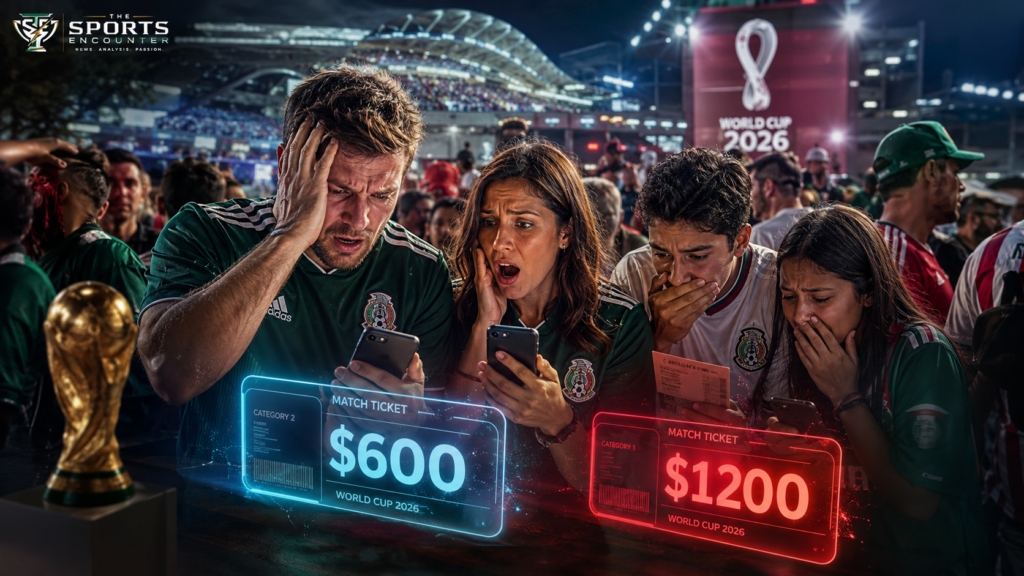
How Affordability Became the Biggest Challenge of FIFA World Cup 2026
FIFA World Cup 2026 has already delivered the kind of image the sport’s governing body wanted from a North American tournament.
The United States opened its campaign with a 4-1 win over Paraguay in Los Angeles. Folarin Balogun scored twice. Gio Reyna added a late goal. The crowd gave the match the feel of a major American sports event with a global football pulse.
Then came the number that mattered almost as much as the result.
The USMNT opener reportedly drew nearly 16 million viewers and became the most-watched United States men’s national team broadcast in history, according to New York Post reporting. That is a serious marker for soccer in America. For years, the old question followed every major tournament in the United States: would Americans really watch?
This time, the answer appears clear.
They are watching.
The harder question is whether enough fans can afford to attend.
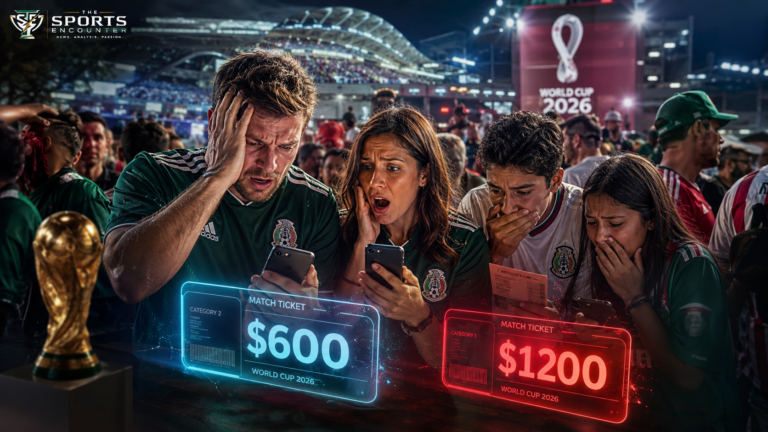
As the tournament moves through its opening stages, ticket pricing has become one of the biggest off-field stories of World Cup 2026. Supporters have raised concerns over group-stage prices, dynamic pricing, hospitality packages, travel costs, hotel rates, visa requirements, and the sheer difficulty of moving across a three-country tournament.
That combination has created an awkward contrast.
The World Cup is reaching more screens than ever. At the same time, the live experience is feeling more distant for many ordinary fans.
For more coverage from the tournament, visit The Sports Encounter’s FIFA World Cup 2026 hub.
FIFA World Cup 2026: Ticket Prices Are Now Part of the Tournament Story
The football has given fans plenty to talk about. Ticket prices have kept forcing their way into the conversation.
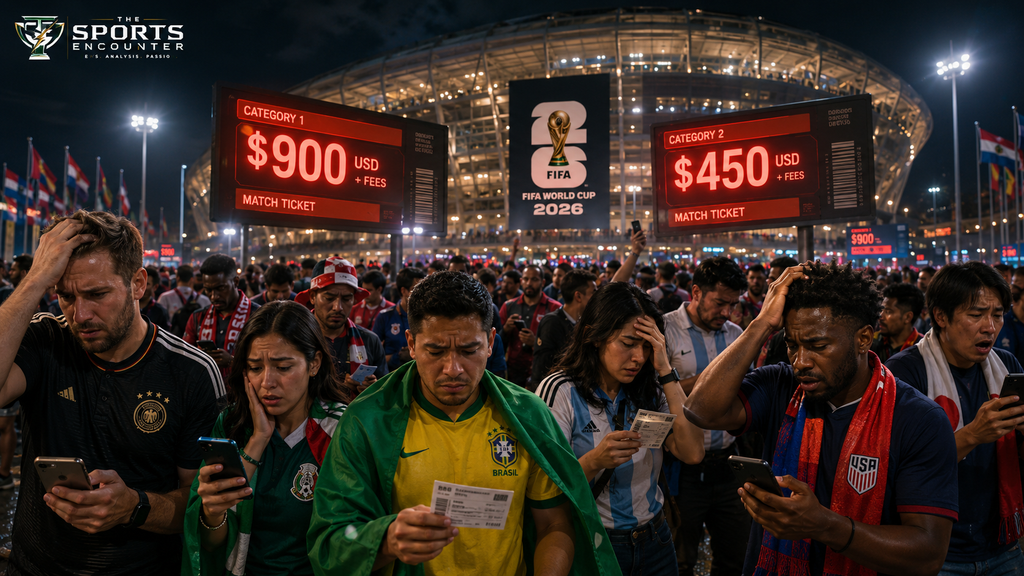
TalkSPORT reported criticism around prices for the United States’ match against Paraguay at SoFi Stadium, with fans and commentators questioning whether costs had moved beyond what many supporters could reasonably afford. FIFA’s official hospitality platform also shows how premium match access has become a major part of the modern World Cup economy.
This is where the issue gets complicated.
Demand is real. World Cup matches carry emotional value that ordinary sporting events do not. Fans will stretch budgets to see their country play, especially when the tournament arrives close to home after decades of waiting.
Reuters reporting from Toronto showed that some supporters accepted significant costs to witness Canada’s first men’s World Cup match on home soil. That kind of decision makes sense emotionally. For many fans, this is not just a ticket. It is a memory they may never get again.
Yet high emotional value also gives organizers more pricing power.
Dynamic pricing has sharpened the debate because it allows ticket costs to move with demand. In business terms, it helps maximize revenue. In football terms, it risks creating a matchday culture where traditional supporters feel priced out by systems designed around scarcity and willingness to pay.
That is the heart of the backlash.
Fans understand that a World Cup is expensive to stage. They know global events come with huge operating costs. What many supporters reject is the feeling that access to football’s biggest tournament increasingly depends on income rather than loyalty, passion, or connection to the game.
Empty Seats Hurt the Product FIFA Is Selling
High prices create another risk for FIFA: the television image.
A stadium can be officially strong on ticket sales and still show visible empty seats if buyers do not attend, resale prices remain too high, corporate allocations go unused, or travel costs prevent people from making the trip.
That matters because World Cup atmosphere is part of the product.
A packed stadium changes the match. It affects the players, television viewers, sponsors, broadcasters, and the emotional memory of the tournament. Empty sections tell a different story, especially when millions are watching at home.
For FIFA, this is not only an optics issue. It is a strategic issue.
The 2026 tournament is designed to be the biggest World Cup ever, with 48 teams, 104 matches, and host cities across the United States, Canada, and Mexico. Bigger tournaments need bigger audiences. But a larger match inventory also means not every game carries the same demand profile.
A marquee match involving the United States, Mexico, Argentina, Brazil, England, France, or Portugal can sell itself. A midweek group-stage match in a large NFL stadium requires more careful pricing, strong local promotion, accessible transport, and realistic assumptions about fan budgets.
That is where pricing can backfire.
A high-demand model works best when demand is deep enough to absorb rising prices. In a tournament with 104 matches, that equation changes by city, matchup, kickoff time, travel route, and local market.
World Cup 2026 is testing that balance in real time.

America Is Watching, and That Changes the Stakes
The USMNT’s opening win over Paraguay gave the tournament a powerful early boost.
The performance had everything American soccer needed: goals, a confident home team, recognizable stars, a vibrant crowd, and a result that made casual viewers feel they had watched something important.
Balogun’s brace gave the match a clear football headline. Gio Reyna’s goal added polish. The 4-1 scoreline gave broadcasters and sponsors the clean story they wanted.
The television audience may prove even more important.
A reported audience of nearly 16 million viewers for a USMNT match shows that soccer in America has moved beyond curiosity. Major tournament soccer now has the ability to command mainstream attention, especially when the national team performs well on home soil.
That has huge implications.
Broadcasters can sell the sport more aggressively. Sponsors can justify larger investments. MLS clubs can use the tournament as a recruitment tool for future fans. Youth soccer programs can point to visible heroes. FIFA can argue that the United States is no longer just a commercial host, but a real football audience.
Still, television growth does not solve the access problem. In some ways, it makes the tension more visible.
If millions of Americans are watching, more people will naturally want to experience the tournament live. When those fans check prices and realize the matchday cost sits far above their comfort zone, frustration grows.
A sport can gain viewers while losing affordability.
That is the line World Cup 2026 must avoid crossing.
For match context from the USMNT opener, read USA Crush Paraguay 4-1 to Launch World Cup 2026 Campaign in Style.
The FIFA World Cup 2026 Is Now a Travel Puzzle
Tickets are only one part of the cost.
For visiting fans, World Cup 2026 may be one of the most complex tournaments ever staged. The event stretches across three countries. Supporters following their teams may need to move between the United States, Canada, and Mexico. That means different border rules, visa requirements, travel documents, hotel markets, airport routes, and domestic transport systems.
Government and football bodies have already started reminding fans to prepare carefully.
The UK Government’s World Cup 2026 travel guidance advises supporters to check entry requirements, plan ahead, and understand local rules. The Scottish FA has also issued ticket guidance for Scotland supporters, reflecting how national associations are helping fans navigate FIFA’s systems and tournament travel.
This matters because football fans often plan emotionally before they plan logistically.
They see the draw. They look for tickets. They dream about the trip. Then reality arrives: visa eligibility, passport validity, accommodation prices, airport transfers, matchday transport, and possible border crossings.
A three-country World Cup creates opportunities for more fans to experience the tournament, but it also creates layers of complexity.
For supporters from Europe, South America, Africa, and Asia, travel to North America is already expensive. Moving between host cities can add significant cost. Unlike smaller football nations where train travel may connect major venues, North America often requires flights between distant cities.
That makes planning harder and less forgiving.
A fan following Scotland, Argentina, Japan, or Ghana may need to think like a tour manager rather than a casual traveler.
Matchday Access Will Shape Fan Experience
The best World Cups feel smooth to the people attending them.
That does not happen by accident.
Transport networks, shuttle routes, stadium entry points, crowd control plans, airport staffing, public signage, police coordination, and fan-zone locations all shape whether supporters remember the trip as magical or exhausting.
For World Cup 2026, logistics are part of the sporting story because the tournament is so spread out.
A fan attending a match in Los Angeles faces a completely different travel environment from someone attending in Toronto, Mexico City, Kansas City, Vancouver, or New York/New Jersey. Local transport habits vary. Stadium locations differ. Traffic pressure changes by city. Public transit access will matter more in some host markets than others.
This is why official guidance matters.
Fans should confirm visa requirements early, use official FIFA apps and ticketing channels, book accommodation through reliable platforms, and allow extra time on matchdays. That advice sounds basic, but it becomes critical when millions of people are moving through unfamiliar cities under tournament pressure.
The fan who leaves late, trusts unofficial ticket sellers, ignores local transport advice, or assumes every host city works the same way may face serious problems.
World Cup 2026 will reward prepared fans.
It may punish casual planning.
For broader tournament updates and fan-focused coverage, follow The Sports Encounter’s football coverage.
The Commercial Success Is Obvious. The Cultural Test Is Harder.
FIFA can already point to strong signs.
The tournament is massive. Broadcasters are invested. Sponsors are active. The United States is watching. Host cities are building fan programs. Soccer’s profile in North America has grown significantly in recent years, helped by MLS expansion, Lionel Messi’s arrival at Inter Miami, youth participation, international club tours, and stronger national-team visibility.
Commercially, World Cup 2026 looks powerful.
Culturally, the tournament faces a different test.
Can it feel accessible?
That is the question behind the ticket debate, travel guidance, and fan frustration.
Football’s greatest strength has always been its emotional reach. It belongs to children kicking balls in narrow streets, families watching together, supporters saving for years, immigrants carrying national colors across continents, and local communities turning a match into a shared ritual.
When a World Cup becomes too expensive, that emotional reach narrows.
The danger is not that rich fans attend matches. Premium access has always existed. The danger is that ordinary supporters begin to feel the live World Cup has become a luxury event wearing the language of a people’s game.
That perception can damage trust.
A tournament does not need every ticket to be cheap. It does need enough accessible pathways for real supporters to feel included.
Why the USMNT Ratings Make the Pricing Debate Bigger
The record USMNT audience should be great news for FIFA, Fox, sponsors, and American soccer.
It also raises expectations.
When more people care, more people notice what feels unfair. The television audience is no longer made up only of casual observers. Many viewers are engaged fans who understand ticket culture, compare prices, follow supporter groups, and react quickly on social media.
That means pricing decisions now face public scrutiny at scale.
In past decades, American soccer may have been too niche for ticket backlash to become a mainstream sports story. World Cup 2026 is different. The sport has a louder audience, a stronger digital presence, and a growing fan base that expects to be heard.
The USMNT’s success makes that audience even more energized.
A strong home campaign could turn every American match into a national event. It could also push ticket demand and resale pressure even higher.
That is the strange cycle FIFA now faces.
Better football creates more demand. More demand supports higher prices. Higher prices create backlash. Backlash can hurt the inclusive image the World Cup wants to project.
The Fan Economy Around the FIFA World Cup 2026 Is Changing
The modern World Cup is no longer just a match ticket and a stadium seat.
It is a full fan economy.
Supporters pay for flights, hotels, short-term rentals, ride shares, food, merchandise, mobile data, travel insurance, stadium transfers, fan events, and sometimes multiple-country entry costs. Some buy hospitality. Others try to follow their country across the group stage. Many build trips around family, friends, and once-in-a-lifetime timing.
That economy benefits host cities and commercial partners, but it also stretches supporters.
A fan may accept a high ticket price once. The real pain comes when every part of the trip feels inflated.
That is why some early reports of weaker-than-expected hotel or airline demand matter. They suggest the market may have limits, even for a World Cup. Passion is powerful. Household budgets still matter.
Football executives sometimes talk about fans as demand. Real fans live with tradeoffs.
A father taking his son to a match may skip a vacation. A supporter flying from Scotland or South America may spend savings built over years. A student may watch from a fan zone because the stadium is out of reach.
Those stories matter because they shape how the tournament is remembered.
What FIFA and Host Cities Should Watch Next
Ticket pricing will remain a major topic as the group stage continues.
Several factors will determine whether criticism grows or fades.
First, stadium attendance must look strong on television. Empty patches at high-profile matches will keep the debate alive.
Second, resale markets need monitoring. If official prices are already high and resale prices jump further, fans will direct anger at the wider system.
Third, host cities must deliver smooth matchday movement. Fans may tolerate high costs more easily if the experience feels organized, safe, and memorable.
Fourth, national teams can change demand overnight. A strong USMNT run would likely intensify interest across American host cities. A surprise team with traveling support could transform a lower-profile fixture into a hot ticket.
Finally, FIFA’s communication will matter. Fans react badly when they feel ignored. Clear information, official guidance, transparent ticketing processes, and practical fan support can reduce frustration even when prices remain high.
Final Verdict: FIFA World Cup 2026 Is Winning Attention, but Access Is the Real Test
World Cup 2026 is already proving one thing: soccer has a serious audience in North America.
The USMNT’s record television numbers show that the game can command mainstream American attention when the moment is big enough. The win over Paraguay gave the tournament a strong sporting launch in the United States and gave fans a reason to believe this home World Cup can become more than a hosting exercise.
Yet the tournament’s biggest challenge may sit outside the lines.
Ticket prices, travel demands, visa rules, accommodation costs, and matchday logistics are shaping who gets to experience the World Cup in person. That matters because the World Cup’s power has always come from its mix of global spectacle and ordinary human emotion.
Fans will watch from home. Millions already are.
The real question is how many can still afford to be there when history happens.
For more fan-first tournament coverage, visit The Sports Encounter’s FIFA World Cup 2026 hub and follow our latest match reports, analysis, and off-field stories from across North America.
Editor's Choice
53 Years Coming: New York Knicks Parade Set to Turn Manhattan Orange
New York is preparing for a Knicks championship parade after a 53-year title drought ended with joy, chaos, confetti, and a city ready to turn Manhattan orange.
New York waited 53 years for this. Now the city gets four days to catch its breath before Manhattan turns orange. The New York Knicks are NBA champions again after beating the San Antonio Spurs 94-90 in Game 5 of the NBA Finals.
Because of that win, a generation of fans who had only heard stories about 1973 finally has its own championship memory.
For New York, this was not just a basketball result.
It was a city-wide release.
Fans spilled into the streets. Bryant Park shook with celebration. Madison Square Garden opened its doors for championship merchandise. Meanwhile, billboards in Midtown turned Jalen Brunson into the face of a moment the city had chased for more than half a century.
Still, the joy came with chaos.
A shuttle bus was set on fire after World Cup fans were dropped off in Times Square. Thousands of people flooded the streets, and a teenager suffered a gunshot wound during the disorder. By Sunday morning, however, Midtown looked calmer. The noise had turned into anticipation.
The parade is coming Thursday.
For full Finals context, read The Sports Encounter’s report on the Knicks ending their 53-year title wait.
Knicks End 53 Years of Pain With One More Comeback
The Knicks did not win this championship quietly.
They did it the hard way again.
New York mounted another double-digit comeback in Game 5, beat the Spurs on the road, and closed a Finals series that had already turned into a test of nerve. As a result, the longest-running ache in New York basketball finally ended.
Mike Brown could barely believe it afterward.
The Knicks coach spoke like a man still trying to understand what had just happened. He called the feeling surreal and admitted he was still pinching himself after the final buzzer.
That reaction made sense.
New York had spent decades waiting for a night like this. The Knicks had given their fans heartbreak, false dawns, rebuilds, injuries, frustration, and endless jokes from rival fan bases. Yet this team finally gave the city something stronger.
It gave New York a parade.
Jalen Brunson Becomes the Face of the Moment
Every title needs a heartbeat.
For the 2026 Knicks, that heartbeat was Jalen Brunson.
Brunson won Finals MVP after delivering the kind of performance that will live forever in New York sports memory. His 45 points in Game 5 became more than a stat line. They became the final push that carried the Knicks across 53 years of pain.
Because of that, his name now belongs in a different part of franchise history.
New York has had stars before. It has had scorers, talkers, cult heroes, and almost-saviors. Brunson did what so many others could not do.
He finished the job.
Why Brunson’s Title Changes Everything
Brunson’s championship does more than crown one season.
It changes how the city tells his story.
Before this run, he was already loved. Now he becomes part of the Knicks’ permanent language. Whenever fans talk about 2026, they will talk about his control, his scoring, his calm, and his refusal to let the moment swallow him.
For more postseason context, revisit our Game 3 report on the Spurs keeping the Finals alive.
Manhattan Gets Ready for the Parade New York Dreamed About
Mayor Zohran Mamdani needed only three words after the title was sealed.
“PARADE THURSDAY MANHATTAN.”
That was enough.
New York understood the assignment immediately.
By Sunday morning, fans had already lined up outside Madison Square Garden to buy championship merchandise. Some came in jerseys. Others came in disbelief. After all, this was not a routine title celebration for a city spoiled by winning.
This was different.
The Knicks had not won the NBA title since 1973. Many fans had never seen the team reach this height. Others had waited through decades of disappointment with family members who never got to see this ending.
Therefore, Thursday will carry more than confetti.
It will carry memory.
Why This Parade Will Feel Bigger Than Basketball
New York celebrates loudly when it wins.
However, this Knicks parade may feel different because the team belongs to the full city in a rare way. Baseball loyalties split New York. Football loyalties divide households. Even hockey has competing identities.

The Knicks, though, can still pull the five boroughs into one emotional lane.
That is why fans in Queens, Brooklyn, Manhattan, the Bronx, Staten Island, and beyond felt the same release when the final buzzer sounded. For one night, the city had one team, one story, and one long wait finally ending.
Mia Smith, a playwright and actress from Queens, described the title as hope, joy, and community.
That may be the best summary of the moment.
From Bryant Park to Madison Square Garden, the City Let Go
The scenes across New York captured the scale of the moment.
Fans packed Bryant Park on Saturday night as the Knicks finished the job in San Antonio. Meanwhile, others poured into streets, bars, subway stations, and public spaces across the city.
For some, the championship was personal.
Amy Loria, a registered nurse from the Philippines who lives in Brooklyn, adopted the Knicks after moving to New York a decade ago. Her reaction spoke for many fans who came to the city from somewhere else and still found their way into its basketball pain.
“If you can do anything, it’s always in New York,” she said.
That line fits the Knicks right now.
For 53 years, winning it all looked impossible. Then it happened anyway.
The Garden Becomes a Shrine Again
Madison Square Garden was quiet compared with Saturday night’s street scenes, but Sunday morning gave it a different kind of energy.
Fans lined up for championship gear. They wanted proof. Shirts, hats, and banners became souvenirs of a night they had waited too long to touch.
In a city that moves fast, championship merchandise can feel small.
This time, it did not.
For Knicks fans, every item said the same thing: it really happened.
Celebration Turns Chaotic After World Cup Crossover
New York’s championship night did not unfold in isolation.
At the same time, the city region was handling another global sports event. MetLife Stadium had hosted Morocco and Brazil in a FIFA World Cup match that ended 1-1. Around the time World Cup fans were returning to Manhattan, the Knicks and Spurs were deep into Game 5.
Then the city’s sports fever boiled over.
Hundreds swarmed a convoy of shuttle buses in Times Square after fans returned from the World Cup match. One bus was set on fire. Thousands filled the streets during chaotic post-game celebrations, and a teenager suffered a gunshot wound.
That part cannot be brushed aside.
The title brought joy, but the city also saw danger, disorder, and property damage. Because of that, Thursday’s parade will test New York’s ability to celebrate at massive scale while keeping people safe.
A City Must Balance Joy and Control
New York knows how to host enormous events.
Still, this week creates unusual pressure.
The Knicks parade will bring huge crowds into Manhattan. World Cup activity has already added international foot traffic, shuttle movement, and security pressure. In addition, the U.S. Open golf championship begins Thursday in Southampton, with Long Island Rail Road planning a temporary platform near the course to move large numbers of fans.
As a result, the region is not preparing for one celebration.
It is managing a sports traffic storm.
New York Becomes the Center of the Sports World
The timing makes the Knicks title even bigger.
New York is already hosting World Cup soccer. The U.S. Open golf championship is arriving on Long Island. Meanwhile, the Knicks have turned Manhattan into the emotional center of American basketball.
That collision gives the city a rare spotlight.
For sports fans, it is thrilling. For city officials, it is a logistical headache. For local businesses, it could be a historic week.
Hotels, bars, transit routes, merchandise stores, restaurants, and public spaces will all feel the surge. However, the city will also have to manage crowd control, security, traffic, and the emotional intensity that comes with a half-century wait.
New York loves big moments.
This one may test how much big-moment energy even New York can absorb at once.
The World Cup Adds Another Layer
The Morocco-Brazil match at MetLife Stadium showed how different this summer already feels.
Football fans from around the world are moving through the same city now celebrating an NBA title. That mix gives New York a global sports festival atmosphere, even though it also adds pressure on transport and policing.
For more tournament coverage, visit The Sports Encounter’s FIFA World Cup 2026 hub.
Why This Knicks Title Hit the City So Hard
Some championships feel expected.
This one did not.
The Knicks had not lifted the trophy since 1973. That means fans lived through entire eras without seeing the team finish a season on top. Parents passed the frustration to children. Older fans carried memories that younger fans could only borrow.
Because of that, the 2026 title did not feel like a normal sports win.
It felt like a debt being paid.
Every New Yorker who stayed loyal through bad seasons had a reason to celebrate. Every fan who wore the jersey when it invited jokes had a reason to feel vindicated. Every kid who grew up hearing about Willis Reed, Walt Frazier, and 1973 now has Brunson, Brown, and 2026.
That is how sports memory renews itself.
The Spurs Played Their Part in the Drama
San Antonio did not hand the title over.
The Spurs forced New York to earn it. Their young core pushed the Knicks into uncomfortable places, and Game 5 again demanded resilience from Brown’s team.
That made the ending sweeter for New York.
A comfortable title can be celebrated. A title won through pressure becomes part of a city’s identity.
The Knicks did not stroll into history. They clawed into it.
What Thursday’s Parade Means for the Knicks
Thursday will not decide the championship.
That part is done.
However, the parade will decide how New York remembers the first public chapter after the drought ended. It will turn private joy into civic theatre. It will give fans a place to gather, scream, cry, laugh, and finally stop waiting.
For the players, it may be the first moment when the achievement fully lands.
Game 5 ended in San Antonio. The trophy came on the road. The parade brings the championship home.
That matters.
Madison Square Garden may be the Knicks’ house, but Manhattan will become their stage.
The Emotional Weight of 53 Years
A 53-year drought is not just a number.
It is generations of almosts.
It is playoff pain, draft hope, tabloid pressure, fan arguments, broken seasons, and one question repeated year after year: when will the Knicks finally do it?
Now the answer has arrived.
Thursday, Manhattan.
Final Verdict
The Knicks did more than win the NBA Finals.
They gave New York back one of its oldest sports dreams.
The 94-90 win over the Spurs ended a 53-year wait and made Jalen Brunson a Finals MVP for the ages. It sent fans into the streets, filled Madison Square Garden’s merchandise lines, lit up Midtown billboards, and turned Thursday’s parade into one of the biggest civic celebrations the city has seen in years.
Still, the chaos after the win adds a serious note.
New York must celebrate with the passion this title deserves, but it must also protect the city carrying that joy. With World Cup matches, a Knicks parade, and U.S. Open golf all colliding in the same regional sports window, the week ahead will ask a lot of fans, police, transit workers, and city officials.
Even so, nothing changes the heart of the story.
The Knicks waited 53 years.
New York waited with them.
Now the confetti is coming to Manhattan.
For more basketball stories, Finals coverage, and long-form analysis, follow The Sports Encounter’s NBA coverage.
FAQs
When is the Knicks championship parade?
New York City is preparing a Knicks championship parade for Thursday in Manhattan after the team ended its 53-year NBA title drought.
Who did the Knicks beat to win the 2026 NBA Finals?
The Knicks beat the San Antonio Spurs 94-90 in Game 5 of the NBA Finals to clinch the championship.
How long had the Knicks waited for an NBA title?
The Knicks had waited 53 years. Their previous NBA championship came in 1973.
Who won NBA Finals MVP for the Knicks?
Jalen Brunson won NBA Finals MVP after leading the Knicks through the series and scoring 45 points in the title-clinching Game 5.
Why were there chaotic scenes in New York after the Knicks won?
Thousands of fans celebrated across the city after the win. However, some celebrations turned chaotic, including a shuttle bus fire in Times Square and reports of a teenager suffering a gunshot wound.
Why is New York’s sports week so crowded?
The Knicks parade comes during a major regional sports stretch. New York/New Jersey is hosting FIFA World Cup activity, while the U.S. Open golf championship begins in Southampton on Long Island.
The Sports Encounter’s NBA coverage focuses on match reports, player stories, tactical analysis, fan impact, team trends, and the biggest talking points from basketball’s biggest stage.
Cricket
New Zealand Says Goodbye to Its Quietest Giant: Kane Williamson
Kane Williamson retires from international cricket after 16 years, leaving behind records, heartbreak, World Test Championship glory, and a legacy built on calm greatness.
Kane Williamson did not leave international cricket with noise. That was never his way.
He walked away in the middle of a Test series in England, after scores of 0 and 18 at Lord’s. For most great players, that would feel like an awkward ending. But for Williamson, it somehow felt true to the man. No grand farewell tour, no demand for attention, no attempt to control the emotion of the room.
Instead, he simply knew. The time had come.
After 16 years, more than 19,000 international runs, 33 Test hundreds, a World Test Championship title, a World Cup final heartbreak, and a generation of quiet leadership, New Zealand cricket now has to say goodbye to its most complete modern batter.
For readers following The Sports Encounter’s wider cricket coverage, Williamson’s retirement belongs beside the biggest turning points in the game because this is about more than one player leaving. It is about the end of a New Zealand era, the fading of cricket’s famous Fab Four generation, and the departure of a man who made greatness feel calm.
Kane Williamson Leaves as New Zealand’s Greatest Run-Maker
Kane Williamson retires as New Zealand’s most prolific international run-scorer.
That sentence alone explains his scale.
He finished with more than 19,000 runs across formats. In Test cricket, he made 9,515 runs from 110 matches, including 33 centuries. He also played 175 ODIs and 93 T20Is, giving New Zealand stability in every format during its most successful modern period.
However, numbers only tell part of his story.
Williamson’s true value was how he made New Zealand feel bigger than its size. The Black Caps have never had the player pool of India, Australia, or England. Yet under Williamson’s influence, they played with clarity, courage, and self-belief.
That is why his retirement hurts.
New Zealand are not only losing runs. They are losing rhythm, calm, identity, and one of the safest minds the game has seen.
The Boy From Tauranga Who Became New Zealand’s Standard
Williamson’s rise never felt loud.
He made his Test debut against India in Ahmedabad in 2010 and immediately showed the patience that would define him. Over time, he became the batter New Zealand trusted when conditions were hard, totals were uncertain, or pressure began to close in.
His technique was never built for theatre. It was built for answers.
The bat came down straight. The head stayed still. The hands worked late. Because of that, he could score in England, survive in India, resist in Australia, and control tempo at home.
More importantly, he rarely looked rushed.
Even when bowlers attacked him, Williamson seemed to move at his own speed. That made him different from many modern greats. Virat Kohli brought fire. Steve Smith brought eccentric genius. Joe Root brought movement and elegance. Williamson brought stillness.
That stillness became New Zealand’s greatest weapon.
The Best Point: World Test Championship Glory in 2021
Every great career needs one golden frame.
For Kane Williamson, that frame came in Southampton in 2021.
New Zealand beat India in the inaugural World Test Championship final, and Williamson stood at the center of the achievement. As captain, he had guided a small cricket nation to the top of the Test world.
It was not a lucky title. It was the result of years of method, selection clarity, seam-bowling depth, and a dressing-room culture that never looked consumed by ego.
For New Zealand fans, that victory meant everything.
They had suffered World Cup heartbreaks. They had often been admired without being crowned. However, the World Test Championship final gave them a global trophy in the purest format of the game.
Williamson did not celebrate like a man trying to own the moment.
Instead, he looked relieved, proud, and quietly satisfied. That reaction made the victory feel even more powerful. It was not only New Zealand’s win. It was a reward for the way they had played the game.
Why the WTC Title Defines Captaincy of Kane Williamson
Kane Williamson captained New Zealand to 22 wins in 40 Tests.
That record matters. Still, the deeper achievement was cultural.
Under him, New Zealand played tough cricket without losing their dignity. They fought hard without becoming unpleasant. They chased excellence without copying louder teams. As a result, they built one of the most respected dressing rooms in world cricket.
The WTC title was the proof.
New Zealand could be calm and ruthless at the same time.
The Worst Point: The 2019 World Cup Final That Refused to Make Sense
If 2021 was the summit, 2019 was the wound.
The ODI World Cup final at Lord’s remains one of cricket’s most painful endings. New Zealand tied England in the match. Then they tied the Super Over. Yet England lifted the trophy because of the boundary countback rule, a rule that was scrapped soon afterward.
For New Zealand, it was brutal.
For Williamson, it was almost impossible to explain.
He had led his team to the edge of immortality. New Zealand had matched England ball for ball, nerve for nerve, moment for moment. Still, they did not get the trophy.
Many players would have been angry. Many captains would have questioned the system openly. Williamson did something harder.
He accepted the pain with grace.
That response turned defeat into part of his legacy. In one of cricket’s cruelest moments, Williamson showed the world what sportsmanship looks like when it costs something.
Why That Defeat Still Hurts Kane Williamson Fans
The 2019 final was not a normal loss.
New Zealand were not outplayed in the usual sense. They were separated by a rule most fans now remember with discomfort. Because of that, the defeat still feels unfinished.
For Williamson, it became the moment that showed his character more clearly than any century could.
His calm did not mean he hurt less.
It meant he carried the hurt without making the game smaller.
That is why fans still respect him so deeply.
The Highest Batting Peaks of Kane Williamson’s Career
Williamson’s best batting years put him among the finest players of his generation.

He scored heavily in Test cricket, built long innings, and gave New Zealand the rare luxury of a No. 3 who could both save and shape matches. When he was at his best, he did not overpower bowling attacks. He dissolved them.
That made his batting beautiful in a different way.
He was not a destroyer like some modern white-ball stars. Instead, he was a problem-solver. He read length early, found gaps, and absorbed spells. Then, slowly, he changed the match.
Kane Williamson’s 33 Test centuries show his consistency. His double hundreds show his appetite. His ability to perform across formats shows his range.
However, his greatest batting gift was trust.
New Zealand trusted him to stay.
The Art of Looking Unmoved
Williamson rarely gave bowlers emotional rewards.
A good ball was met with respect. A bad ball was punished. A dropped chance did not create drama. A milestone did not create theatre.
Because of that, he made batting look like a private conversation between ball, bat, and mind.
That style may not dominate highlight reels in the same way as power-hitting. Even so, it built something more lasting.
It built belief.
The Lowest Point: A Quiet Exit After Lord’s Struggles
There is also sadness in how Williamson’s international career ended.
He stepped away during the England series after scores of 0 and 18 in the opening Test at Lord’s. For a player of his class, that was a painful final snapshot.
Yet it also made the decision feel honest.
Williamson was not chasing one more applause line. He was looking at the team around him and the journey ahead. He saw younger players ready to grow. Then he decided the right thing was to move aside.
That is rare.
Many legends stay until the game pushes them out. Williamson chose to leave before the story became too heavy.
Even so, the timing will hurt New Zealand fans. They would have wanted one last century, one final long innings; they would have wanted him to walk off with the crowd standing and the scoreboard glowing.
Instead, they got something more Williamson-like.
A quiet goodbye.
The Fab Four Era Begins to Fade
Williamson’s retirement also changes the mood of world cricket.
For more than a decade, fans debated the Fab Four: Williamson, Virat Kohli, Joe Root, and Steve Smith. Each represented a different version of batting greatness.
Kohli brought intensity and chase-master hunger. Root brought balance and fluency. Smith brought strange angles and relentless production. Williamson brought calm control and classical judgment.
Together, they gave Test cricket a modern golden thread.
Now, that thread is thinning.
Kohli has already scaled back his international commitments and is active only in ODIs. Root and Smith remain important, but they are also deep into the later chapters of their careers. Williamson’s exit makes the generational shift feel real.
Cricket is moving on.
However, it may not easily replace what this group gave the game.
Williamson’s Captaincy Was Built on Trust
Williamson never looked like a captain who needed to dominate every room.
That was part of his strength.
He led through tone, consistency, and trust. Players seemed to understand where they stood. The team seemed to know what it valued. Even in defeat, New Zealand did not often look broken under him.
That matters because cricket leadership is not only about field placements.
It is about emotional temperature, about how a team reacts after losing a session. It is about whether players feel safe enough to perform under pressure. Williamson gave New Zealand that kind of environment.
As a result, the Black Caps punched above their weight for years.
They reached major finals, they won the WTC, and they competed across formats. Most importantly, they became a team the wider cricket world admired.
The Gentleman Label Was Earned, Not Given
Cricket often uses the word “gentleman” too easily.
With Williamson, it felt earned.
He was competitive, but never theatrical about it. He wanted to win, but he rarely made victory look like ego. Even when New Zealand suffered the worst kind of sporting heartbreak in 2019, he did not turn bitterness into a public performance.
That does not mean he lacked edge.
In fact, his quietness sometimes hid how fierce he was. A player does not score more than 19,000 international runs without deep ambition. A captain does not lead New Zealand to a world title without steel.
Williamson simply carried that steel differently.
He showed that calm can be competitive.
He proved that humility does not weaken greatness.
What New Zealand Lose Now
New Zealand lose their greatest run-maker.
They also lose the player who made difficult moments feel manageable.
That second loss may be harder to replace.
Young batters can make runs. Some may even become stars. However, replacing Williamson’s presence will take years. He gave the dressing room balance, gave fans confidence, gave opponents a problem that rarely solved itself quickly.
New Zealand now enter a transition phase.
The batting order must find a new center. The leadership group must protect the standards he helped set. Younger players must learn that calmness is not passive. It is a discipline.
That will be Williamson’s invisible challenge to the next generation.
His Best Career Points
Williamson leaves behind many great moments, but a few stand above the rest.
The 2021 World Test Championship title will sit at the top. It gave New Zealand a world crown in Test cricket and confirmed Williamson’s captaincy legacy.
His 33 Test hundreds also define his greatness. They show he was not only admired for character. He was elite by any statistical measure.
The 2019 World Cup campaign remains another high point, even though it ended in pain. Williamson’s leadership and batting carried New Zealand to the final and won global respect.
His rise to become New Zealand’s all-time leading international run-scorer may be the broadest achievement of all. It shows longevity, excellence, and rare consistency across formats.
Finally, his reputation for sportsmanship became a career achievement in itself. Few modern cricketers have been admired so widely by rival fans.
His Worst Career Points
Williamson’s career had pain too.
The 2019 World Cup final was the deepest sporting wound. New Zealand came as close as a team could come without lifting the trophy.
Injuries also interrupted his later years. They affected rhythm, availability, and the natural flow of his final stretch.
His first-innings duck and second-innings 18 at Lord’s in his final Test appearance created a quiet, painful ending. For a batter of his class, that was far from the farewell fans imagined.
New Zealand’s failure to turn more white-ball excellence into trophies will also remain part of the story. The Black Caps reached great heights, but some of their biggest white-ball campaigns ended in heartbreak.
Even so, those lows make Williamson’s legacy stronger, not weaker.
They show how much he carried. They also show how gracefully he absorbed the weight.
Why Kane Williamson Will Be Remembered Differently
Some players are remembered for shots.
Some are remembered for trophies.
A few are remembered for changing how people feel about the sport.
Williamson belongs in that last group.
Kane Williamson made cricket feel calmer without making it dull. He made leadership feel gentle without making it soft. He made New Zealand feel powerful without making them arrogant.
That combination is rare.
For fans, he gave memories. For teammates, he gave standards. But for opponents, he gave respect. For young cricketers, he gave a model of greatness that did not require noise.
That may be his greatest legacy.
Final Verdict
Kane Williamson’s retirement closes one of cricket’s most graceful modern careers.
He leaves as New Zealand’s top international run-scorer. Kane Williamson leaves as a World Test Championship-winning captain. He leaves as a central figure in the Fab Four generation. He leaves with centuries, records, memories, and respect from every corner of the cricket world.
However, he also leaves with heartbreak attached to his name.
The 2019 World Cup final will always hurt. The Lord’s ending will feel too quiet. The missed chance to reach 10,000 Test runs may stay as a small statistical ache. Yet none of that reduces him.
In many ways, it makes him more human.
Williamson was never cricket’s loudest genius but its calmest one.
He did not need rage to show greatness. He did not need theatre to show leadership. Neither did he need bitterness to prove pain. Instead, he gave New Zealand cricket something far more valuable.
He gave it belief.
Then, when the time felt right, he stepped away the same way he played.
Softly.
Clearly.
And with the game still standing to applaud.
For more cricket stories, match reports, and long-form analysis, follow The Sports Encounter’s cricket coverage.
FAQs
When did Kane Williamson retire from international cricket?
Kane Williamson retired from international cricket on June 12, 2026, ending a 16-year career with New Zealand.
How many international runs did Kane Williamson score?
Kane Williamson finished with more than 19,000 international runs, making him New Zealand’s most prolific run-scorer across formats.
How many Test runs and centuries did Kane Williamson score?
Williamson scored 9,515 runs in 110 Tests, including 33 Test centuries.
What was Kane Williamson’s greatest achievement as captain?
His greatest achievement as captain was leading New Zealand to victory over India in the inaugural World Test Championship final in 2021.
Why is the 2019 World Cup final important to Williamson’s legacy?
The 2019 World Cup final showed Williamson’s sportsmanship under extreme heartbreak. New Zealand tied the match and the Super Over, but England won the trophy on boundary countback. Williamson’s calm response became one of the defining moments of his career.
Was Kane Williamson part of cricket’s Fab Four?
Yes. Williamson was widely considered part of the modern Fab Four alongside Virat Kohli, Joe Root, and Steve Smith.
What will New Zealand miss most after Williamson’s retirement?
New Zealand will miss his runs, but they may miss his calm presence even more. Williamson gave the Black Caps stability, leadership, and belief across formats.
The Sports Encounter’s cricket coverage focuses on match reports, player stories, tactical analysis, team trends, fan impact, and the biggest talking points from the global game.
Editor's Choice
Mourinho’s First Real Madrid Move Is a Warning: Cucurella Arrives to Fix the Left Side
Real Madrid’s signing of Marc Cucurella from Chelsea gives Jose Mourinho his first major transfer since returning to the club. It also says plenty about Madrid’s defensive reset.
Real Madrid have made Jose Mourinho’s first transfer move, and it already feels like a message.
Marc Cucurella is leaving Chelsea for the Bernabéu on a six-year deal. For Madrid, this is a defensive signing with a very Mourinho shape. It brings experience, edge, intensity, and tactical flexibility to a left side that needed stronger identity after a frustrating 2025-26 season.
The clubs did not disclose the fee. However, British media reports put the deal at up to £51.8 million, or about $69.5 million.
Cucurella’s contract runs until June 30, 2032. That means Madrid are not treating him as a short-term patch. Instead, they are giving Mourinho a left-back who can defend aggressively, step inside midfield, support buildup, and survive the pressure that comes with playing for one of football’s most demanding clubs.
For Chelsea, the deal feels very different.
They are losing a player who recovered from a rough first season, became useful under Enzo Maresca, won major silverware in 2025, and brought senior character to a squad often accused of leaning too young. His exit will raise fresh questions about Chelsea’s balance, recruitment model, and ability to keep experienced players inside a rebuild that still looks unfinished.
For more football coverage beyond the transfer market, follow The Sports Encounter’s soccer section.
Real Madrid Make Cucurella Mourinho’s First Signing
Real Madrid confirmed the agreement with Chelsea on Monday, making Cucurella the first signing of Mourinho’s new spell in charge.
That timing matters.
Mourinho has returned to a club that expects trophies, control, and immediate improvement. Real Madrid missed out on LaLiga last season and exited the Champions League in the quarter-finals. As a result, defensive reinforcement became one of the first priorities of the new project.
Florentino Perez also promised to strengthen Madrid’s defensive options during his re-election campaign. Cucurella now becomes the first visible answer to that promise.
Why This Transfer Feels Like a Mourinho Move
Cucurella is not a luxury full-back signed only for attacking width.
He is intense, combative, mobile, and tactically flexible. He can play as a traditional left-back. He can tuck inside as an inverted full-back. In certain systems, he can also operate higher up the flank or help compress midfield spaces.
That matters under Mourinho.
Mourinho’s best teams often need defenders who understand danger early. They must close space quickly, win duels, and carry enough tactical discipline to protect the team when games become tense.
Cucurella fits that profile better than many flashier options.
What Mourinho Gets Immediately
Madrid are getting a defender who brings Premier League experience, Spain national-team pedigree, and enough tactical range to serve different match plans.
More importantly, Cucurella gives Mourinho a player who plays with visible emotion. That can matter at Real Madrid, where quiet technical ability alone is rarely enough.
Why Real Madrid Needed a Left-Back Reset
Real Madrid’s problem last season was not only about results.
The team lost some of its defensive authority. At times, opponents found too much space in wide areas. In other matches, Madrid lacked the balance needed to attack with confidence without leaving gaps behind.
Because of that, signing a left-back was always likely to be one of the first moves of the summer.
Cucurella gives Madrid a more aggressive defensive personality on that side. He presses with energy, competes hard in one-on-one situations, and can help Madrid defend higher up the pitch.
At the same time, he gives Mourinho tactical cover.
If Madrid want control, Cucurella can move inside and help overload midfield. If they need width, he can stay wider and support attacks down the flank. When the match becomes physical, he is comfortable turning it into a fight.
That range explains why this signing matters.
A Six-Year Deal Shows Real Madrid’s Real Intent
A six-year contract is a strong statement.
Madrid are not simply buying cover. They are investing in a player they believe can become part of the next cycle.
Cucurella is 27, which places him in a useful window. He is experienced enough for immediate pressure. However, he should still have several strong seasons ahead.
For Mourinho, that matters because Madrid need players who can perform now. For Perez, it matters because the squad still needs long-term structure.
This deal tries to serve both needs.
Mark Cucurella’s Chelsea Story Ends With Mixed Emotions
Cucurella’s Chelsea spell was never simple.
He joined from Brighton & Hove Albion in 2022 in a deal reportedly worth up to £63 million. That fee created pressure from the start. His first season was difficult, and critics questioned whether Chelsea had overpaid.
However, Cucurella slowly rebuilt his reputation.
Under Enzo Maresca, he became a more reliable part of the team. His role as an inverted full-back gave Chelsea more control in certain phases. He also helped the club win the Conference League and the Club World Cup in 2025.
Because of that, his exit will divide opinion.
Some Chelsea fans may see the fee as good business. Others will wonder why the club allowed an experienced international defender to leave after finally turning him into a useful senior figure.

Chelsea’s Youth-Heavy Project Faces Another Test
Cucurella’s departure lands in a bigger Chelsea conversation.
In March, he publicly questioned the club’s youth-heavy recruitment strategy and said Chelsea needed a better balance between young players and experienced ones. That comment now looks even more relevant.
Chelsea finished 10th in the Premier League in 2025-26 and missed out on European qualification. Therefore, losing a senior player with title-level international experience creates another pressure point.
A rebuild can survive player sales. Still, it needs leadership inside the dressing room.
Cucurella was not Chelsea’s biggest star. Even so, he had become one of the players who understood pressure, criticism, and recovery.
That kind of profile is not easy to replace.
What Cucurella Gives Real Madrid Tactically
Cucurella’s value is tied to how many jobs he can do.
At Chelsea, he often moved inside during possession. That allowed midfielders to push higher and helped the team build attacks with more control. For Spain, he has also shown that he can play with discipline in a possession-heavy side.
At Madrid, Mourinho could use him in several ways.
He can serve as a hard-running left-back in a back four. He can become a narrower defensive player when Madrid need more midfield protection. In certain matches, he could help Madrid press aggressively on one side while the opposite flank stays more conservative.
That gives Mourinho options.
The Inverted Full-Back Question
Modern football has changed what full-backs do.
They are no longer judged only by crosses, tackles, and overlaps. Many top teams now ask full-backs to step inside, help midfield, and give the team better rest defense when possession breaks down.
Cucurella understands that role.
That does not mean he is only an inverted full-back. His biggest value comes from being able to switch between roles inside the same match.
For Mourinho, that flexibility could be vital. Madrid will need different solutions in LaLiga, the Champions League, and domestic cup matches.
Why the World Cup Timing Makes This Move Bigger
Cucurella is currently part of Spain’s squad for the 2026 World Cup.
That adds another layer to the transfer.
A strong tournament could make the deal look even smarter for Madrid. It could also increase expectations before he even arrives for club duty. Meanwhile, any injury or poor form during the World Cup would quickly become a talking point in Spain.
Madrid fans will watch him closely.
Spain’s campaign will also give Mourinho a chance to study how Cucurella handles pressure on a global stage. With Spain carrying serious expectations, every performance will be judged through a club lens as well as an international one.
For broader tournament context, fans can follow The Sports Encounter’s FIFA World Cup 2026 hub.
Spain Gain, Madrid Watch
Cucurella has become an important player for Spain since making his international debut in 2021.
He was part of the team that won Euro 2024, and he now enters the 2026 World Cup as a player with club uncertainty resolved. That can help him focus.
At the same time, his Real Madrid move will follow him throughout the tournament. Every tackle, overlap, mistake, and strong defensive action may now be viewed through a Bernabéu lens.
That is the price of signing for Madrid.
What This Says About Mourinho’s Second Real Madrid Era
Mourinho’s return was always going to bring questions.
Would Madrid chase another star-heavy rebuild? Would Mourinho demand immediate defensive control? Would Perez give him the type of players who fit his structure?
Cucurella offers the first clue.
This is not a signing built only for shirt sales. It is a functional move. It solves a clear squad issue and gives the manager a player with bite.
That does not make the transfer risk-free. Cucurella still has to prove he can handle the emotional weight of Madrid every week. Chelsea pressure is heavy, but Real Madrid pressure is different.
However, the logic behind the signing is clear.
Madrid want to become harder to play through. Mourinho wants trusted defenders. Cucurella gives both sides a starting point.
The Message to the Dressing Room
This signing also sends a message to the current squad.
Mourinho is not waiting to be comfortable. He is already shaping the team in his image.
For existing defenders, that raises competition. For younger players, it raises the standard. For opponents, it suggests Madrid want more defensive bite immediately.
Every new manager talks about intensity. Mourinho usually tries to buy it.
Cucurella is the first example.
Chelsea Must Explain the Bigger Plan
Chelsea may argue that selling Cucurella for a major fee makes sense.
That argument has some logic. The club can use the money to reshape the squad, reduce pressure around past spending, and create room for new signings.
Still, the football question remains.
Who replaces his experience?
Chelsea’s recent years have been shaped by heavy recruitment, young talent, and constant adjustment. At some point, the squad needs stability. Cucurella’s own criticism of the youth-heavy approach made that point publicly.
Now, his exit leaves Chelsea with one fewer senior voice.
A Sale That Could Age Poorly
This transfer could look smart if Chelsea reinvest well.
However, it could age badly if Cucurella becomes a regular starter for Madrid while Chelsea continue to struggle for balance.
That is the danger with selling players who finally found their rhythm.
Cucurella was not universally loved at Stamford Bridge. Yet he fought through the hardest part of his Chelsea spell and became useful. Those players often matter more than fans realize.
Real Madrid Have Started With Defense, Not Drama
Real Madrid’s first move under Mourinho tells fans where the rebuild begins.
It begins with control.
Cucurella is not the biggest name Madrid could have chased. Even so, he may be one of the clearest tactical fits available. He gives Mourinho a left-back with intensity, experience, and positional intelligence.
That makes this transfer more interesting than the fee alone.
Madrid needed more defensive reliability. Mourinho needed a player who could understand his demands quickly. Cucurella needed a fresh stage after four years at Chelsea.
Now all three have what they wanted.
Final Verdict
Marc Cucurella’s move to Real Madrid is more than a transfer headline.
It is the first sign of Mourinho’s new Madrid blueprint.
The club had to respond after a disappointing season. Perez promised defensive reinforcement. Mourinho needed a left side he could trust. Cucurella, after rebuilding his career at Chelsea, now gets the biggest club challenge of his life.
For Madrid, this is a signing built on function, pressure, and tactical need.
For Chelsea, it is another reminder that squad building cannot rely on youth alone.
For Cucurella, the message is simple.
He survived Chelsea criticism. He became a Spain international. He won trophies. Now he walks into the Bernabéu with a six-year contract, a World Cup on his immediate horizon, and Mourinho waiting to turn him into the first piece of a defensive reset.
For more major football stories, transfer analysis, and tournament coverage, follow The Sports Encounter’s soccer coverage.
FAQs
How long is Marc Cucurella’s Real Madrid contract?
Marc Cucurella has signed a six-year contract with Real Madrid. The deal runs until June 30, 2032.
How much did Real Madrid pay Chelsea for Marc Cucurella?
The clubs did not disclose the official fee. However, British media reports have valued the deal at up to £51.8 million, or about $69.5 million.
Why did Real Madrid sign Marc Cucurella?
Real Madrid signed Cucurella to strengthen the left side of defense after a disappointing 2025-26 season. His intensity, experience, and ability to play as an inverted full-back make him a strong tactical fit for Jose Mourinho.
Why is this transfer important for Jose Mourinho?
Cucurella is Mourinho’s first signing since returning to Real Madrid. That makes the deal an early signal of how Mourinho wants to reshape the squad, especially defensively.
What does Cucurella’s exit mean for Chelsea?
Chelsea are losing an experienced senior defender who had become more reliable under Enzo Maresca. His exit raises fresh questions about the club’s youth-heavy recruitment strategy and squad balance.
Is Marc Cucurella playing at the 2026 World Cup?
Yes. Cucurella is part of Spain’s squad for the 2026 World Cup. His performances will now attract even more attention after his move to Real Madrid.
The Sports Encounter’s soccer coverage focuses on match reports, transfer analysis, tactical trends, fan impact, tournament stories, and the biggest talking points from the global game.