


FIFA World Cup 2026 has already delivered the kind of image the sport’s governing body wanted from a North American tournament.
The United States opened its campaign with a 4-1 win over Paraguay in Los Angeles. Folarin Balogun scored twice. Gio Reyna added a late goal. The crowd gave the match the feel of a major American sports event with a global football pulse.
Then came the number that mattered almost as much as the result.
The USMNT opener reportedly drew nearly 16 million viewers and became the most-watched United States men’s national team broadcast in history, according to New York Post reporting. That is a serious marker for soccer in America. For years, the old question followed every major tournament in the United States: would Americans really watch?
This time, the answer appears clear.
They are watching.
The harder question is whether enough fans can afford to attend.
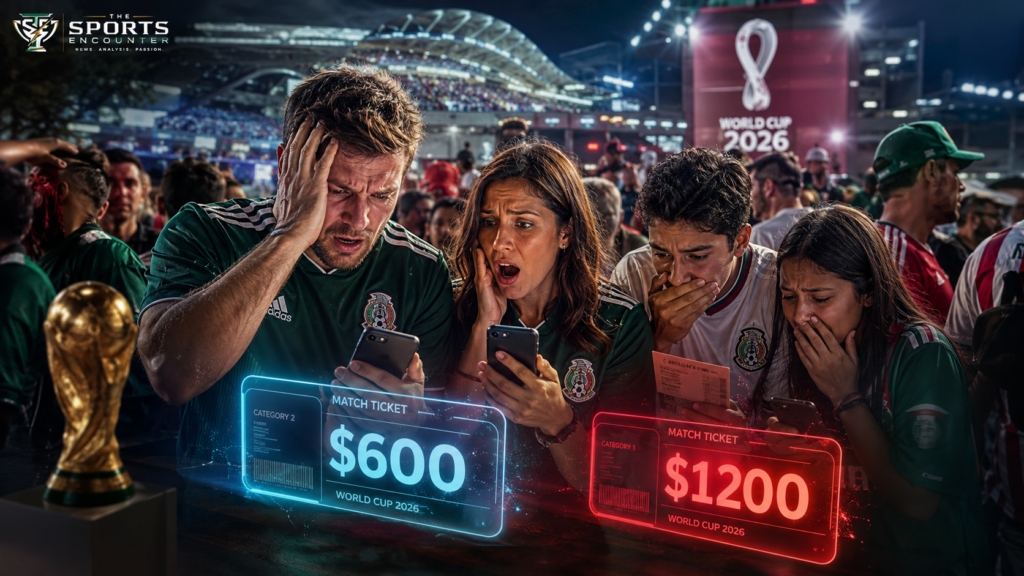
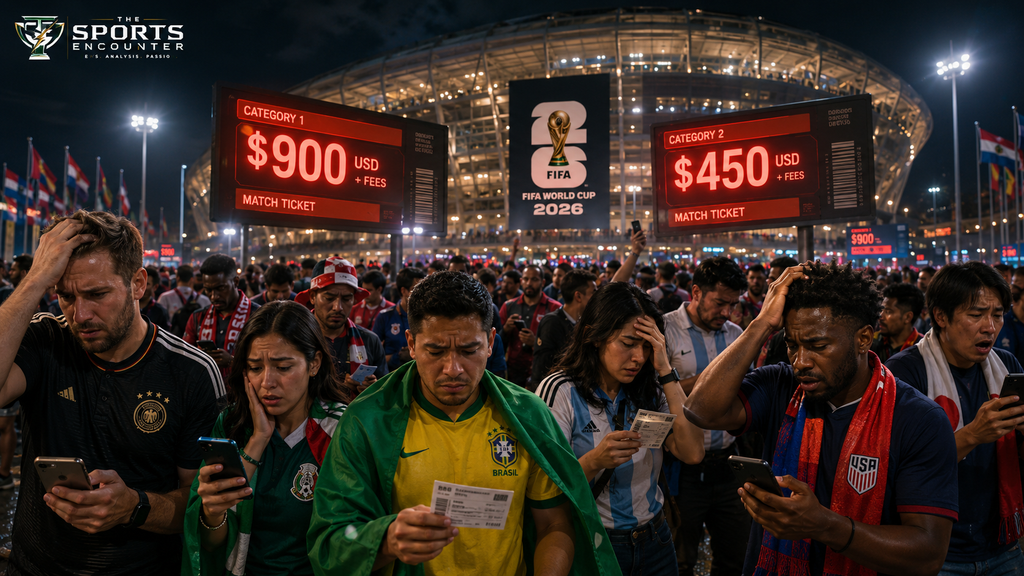
As the tournament moves through its opening stages, ticket pricing has become one of the biggest off-field stories of World Cup 2026. Supporters have raised concerns over group-stage prices, dynamic pricing, hospitality packages, travel costs, hotel rates, visa requirements, and the sheer difficulty of moving across a three-country tournament.
That combination has created an awkward contrast.
The World Cup is reaching more screens than ever. At the same time, the live experience is feeling more distant for many ordinary fans.
For more coverage from the tournament, visit The Sports Encounter’s FIFA World Cup 2026 hub.
FIFA World Cup 2026: Ticket Prices Are Now Part of the Tournament Story
The football has given fans plenty to talk about. Ticket prices have kept forcing their way into the conversation.
TalkSPORT reported criticism around prices for the United States’ match against Paraguay at SoFi Stadium, with fans and commentators questioning whether costs had moved beyond what many supporters could reasonably afford. FIFA’s official hospitality platform also shows how premium match access has become a major part of the modern World Cup economy.
This is where the issue gets complicated.
Demand is real. World Cup matches carry emotional value that ordinary sporting events do not. Fans will stretch budgets to see their country play, especially when the tournament arrives close to home after decades of waiting.
Reuters reporting from Toronto showed that some supporters accepted significant costs to witness Canada’s first men’s World Cup match on home soil. That kind of decision makes sense emotionally. For many fans, this is not just a ticket. It is a memory they may never get again.
Yet high emotional value also gives organizers more pricing power.
Dynamic pricing has sharpened the debate because it allows ticket costs to move with demand. In business terms, it helps maximize revenue. In football terms, it risks creating a matchday culture where traditional supporters feel priced out by systems designed around scarcity and willingness to pay.
That is the heart of the backlash.
Fans understand that a World Cup is expensive to stage. They know global events come with huge operating costs. What many supporters reject is the feeling that access to football’s biggest tournament increasingly depends on income rather than loyalty, passion, or connection to the game.
Empty Seats Hurt the Product FIFA Is Selling
High prices create another risk for FIFA: the television image.
A stadium can be officially strong on ticket sales and still show visible empty seats if buyers do not attend, resale prices remain too high, corporate allocations go unused, or travel costs prevent people from making the trip.
That matters because World Cup atmosphere is part of the product.
A packed stadium changes the match. It affects the players, television viewers, sponsors, broadcasters, and the emotional memory of the tournament. Empty sections tell a different story, especially when millions are watching at home.
For FIFA, this is not only an optics issue. It is a strategic issue.
The 2026 tournament is designed to be the biggest World Cup ever, with 48 teams, 104 matches, and host cities across the United States, Canada, and Mexico. Bigger tournaments need bigger audiences. But a larger match inventory also means not every game carries the same demand profile.
A marquee match involving the United States, Mexico, Argentina, Brazil, England, France, or Portugal can sell itself. A midweek group-stage match in a large NFL stadium requires more careful pricing, strong local promotion, accessible transport, and realistic assumptions about fan budgets.
That is where pricing can backfire.
A high-demand model works best when demand is deep enough to absorb rising prices. In a tournament with 104 matches, that equation changes by city, matchup, kickoff time, travel route, and local market.
World Cup 2026 is testing that balance in real time.
America Is Watching, and That Changes the Stakes
The USMNT’s opening win over Paraguay gave the tournament a powerful early boost.
The performance had everything American soccer needed: goals, a confident home team, recognizable stars, a vibrant crowd, and a result that made casual viewers feel they had watched something important.
Balogun’s brace gave the match a clear football headline. Gio Reyna’s goal added polish. The 4-1 scoreline gave broadcasters and sponsors the clean story they wanted.
The television audience may prove even more important.
A reported audience of nearly 16 million viewers for a USMNT match shows that soccer in America has moved beyond curiosity. Major tournament soccer now has the ability to command mainstream attention, especially when the national team performs well on home soil.
That has huge implications.
Broadcasters can sell the sport more aggressively. Sponsors can justify larger investments. MLS clubs can use the tournament as a recruitment tool for future fans. Youth soccer programs can point to visible heroes. FIFA can argue that the United States is no longer just a commercial host, but a real football audience.
Still, television growth does not solve the access problem. In some ways, it makes the tension more visible.
If millions of Americans are watching, more people will naturally want to experience the tournament live. When those fans check prices and realize the matchday cost sits far above their comfort zone, frustration grows.
A sport can gain viewers while losing affordability.
That is the line World Cup 2026 must avoid crossing.
For match context from the USMNT opener, read USA Crush Paraguay 4-1 to Launch World Cup 2026 Campaign in Style.
The FIFA World Cup 2026 Is Now a Travel Puzzle
Tickets are only one part of the cost.
For visiting fans, World Cup 2026 may be one of the most complex tournaments ever staged. The event stretches across three countries. Supporters following their teams may need to move between the United States, Canada, and Mexico. That means different border rules, visa requirements, travel documents, hotel markets, airport routes, and domestic transport systems.
Government and football bodies have already started reminding fans to prepare carefully.
The UK Government’s World Cup 2026 travel guidance advises supporters to check entry requirements, plan ahead, and understand local rules. The Scottish FA has also issued ticket guidance for Scotland supporters, reflecting how national associations are helping fans navigate FIFA’s systems and tournament travel.
This matters because football fans often plan emotionally before they plan logistically.
They see the draw. They look for tickets. They dream about the trip. Then reality arrives: visa eligibility, passport validity, accommodation prices, airport transfers, matchday transport, and possible border crossings.
A three-country World Cup creates opportunities for more fans to experience the tournament, but it also creates layers of complexity.
For supporters from Europe, South America, Africa, and Asia, travel to North America is already expensive. Moving between host cities can add significant cost. Unlike smaller football nations where train travel may connect major venues, North America often requires flights between distant cities.
That makes planning harder and less forgiving.
A fan following Scotland, Argentina, Japan, or Ghana may need to think like a tour manager rather than a casual traveler.
Matchday Access Will Shape Fan Experience
The best World Cups feel smooth to the people attending them.
That does not happen by accident.
Transport networks, shuttle routes, stadium entry points, crowd control plans, airport staffing, public signage, police coordination, and fan-zone locations all shape whether supporters remember the trip as magical or exhausting.
For World Cup 2026, logistics are part of the sporting story because the tournament is so spread out.
A fan attending a match in Los Angeles faces a completely different travel environment from someone attending in Toronto, Mexico City, Kansas City, Vancouver, or New York/New Jersey. Local transport habits vary. Stadium locations differ. Traffic pressure changes by city. Public transit access will matter more in some host markets than others.
This is why official guidance matters.
Fans should confirm visa requirements early, use official FIFA apps and ticketing channels, book accommodation through reliable platforms, and allow extra time on matchdays. That advice sounds basic, but it becomes critical when millions of people are moving through unfamiliar cities under tournament pressure.
The fan who leaves late, trusts unofficial ticket sellers, ignores local transport advice, or assumes every host city works the same way may face serious problems.
World Cup 2026 will reward prepared fans.
It may punish casual planning.
For broader tournament updates and fan-focused coverage, follow The Sports Encounter’s football coverage.
The Commercial Success Is Obvious. The Cultural Test Is Harder.
FIFA can already point to strong signs.
The tournament is massive. Broadcasters are invested. Sponsors are active. The United States is watching. Host cities are building fan programs. Soccer’s profile in North America has grown significantly in recent years, helped by MLS expansion, Lionel Messi’s arrival at Inter Miami, youth participation, international club tours, and stronger national-team visibility.
Commercially, World Cup 2026 looks powerful.
Culturally, the tournament faces a different test.
Can it feel accessible?
That is the question behind the ticket debate, travel guidance, and fan frustration.
Football’s greatest strength has always been its emotional reach. It belongs to children kicking balls in narrow streets, families watching together, supporters saving for years, immigrants carrying national colors across continents, and local communities turning a match into a shared ritual.
When a World Cup becomes too expensive, that emotional reach narrows.
The danger is not that rich fans attend matches. Premium access has always existed. The danger is that ordinary supporters begin to feel the live World Cup has become a luxury event wearing the language of a people’s game.
That perception can damage trust.
A tournament does not need every ticket to be cheap. It does need enough accessible pathways for real supporters to feel included.
Why the USMNT Ratings Make the Pricing Debate Bigger
The record USMNT audience should be great news for FIFA, Fox, sponsors, and American soccer.
It also raises expectations.
When more people care, more people notice what feels unfair. The television audience is no longer made up only of casual observers. Many viewers are engaged fans who understand ticket culture, compare prices, follow supporter groups, and react quickly on social media.
That means pricing decisions now face public scrutiny at scale.
In past decades, American soccer may have been too niche for ticket backlash to become a mainstream sports story. World Cup 2026 is different. The sport has a louder audience, a stronger digital presence, and a growing fan base that expects to be heard.
The USMNT’s success makes that audience even more energized.
A strong home campaign could turn every American match into a national event. It could also push ticket demand and resale pressure even higher.
That is the strange cycle FIFA now faces.
Better football creates more demand. More demand supports higher prices. Higher prices create backlash. Backlash can hurt the inclusive image the World Cup wants to project.
The Fan Economy Around the FIFA World Cup 2026 Is Changing
The modern World Cup is no longer just a match ticket and a stadium seat.
It is a full fan economy.
Supporters pay for flights, hotels, short-term rentals, ride shares, food, merchandise, mobile data, travel insurance, stadium transfers, fan events, and sometimes multiple-country entry costs. Some buy hospitality. Others try to follow their country across the group stage. Many build trips around family, friends, and once-in-a-lifetime timing.
That economy benefits host cities and commercial partners, but it also stretches supporters.
A fan may accept a high ticket price once. The real pain comes when every part of the trip feels inflated.
That is why some early reports of weaker-than-expected hotel or airline demand matter. They suggest the market may have limits, even for a World Cup. Passion is powerful. Household budgets still matter.
Football executives sometimes talk about fans as demand. Real fans live with tradeoffs.
A father taking his son to a match may skip a vacation. A supporter flying from Scotland or South America may spend savings built over years. A student may watch from a fan zone because the stadium is out of reach.
Those stories matter because they shape how the tournament is remembered.
What FIFA and Host Cities Should Watch Next
Ticket pricing will remain a major topic as the group stage continues.
Several factors will determine whether criticism grows or fades.
First, stadium attendance must look strong on television. Empty patches at high-profile matches will keep the debate alive.
Second, resale markets need monitoring. If official prices are already high and resale prices jump further, fans will direct anger at the wider system.
Third, host cities must deliver smooth matchday movement. Fans may tolerate high costs more easily if the experience feels organized, safe, and memorable.
Fourth, national teams can change demand overnight. A strong USMNT run would likely intensify interest across American host cities. A surprise team with traveling support could transform a lower-profile fixture into a hot ticket.
Finally, FIFA’s communication will matter. Fans react badly when they feel ignored. Clear information, official guidance, transparent ticketing processes, and practical fan support can reduce frustration even when prices remain high.
Final Verdict: FIFA World Cup 2026 Is Winning Attention, but Access Is the Real Test
World Cup 2026 is already proving one thing: soccer has a serious audience in North America.
The USMNT’s record television numbers show that the game can command mainstream American attention when the moment is big enough. The win over Paraguay gave the tournament a strong sporting launch in the United States and gave fans a reason to believe this home World Cup can become more than a hosting exercise.
Yet the tournament’s biggest challenge may sit outside the lines.
Ticket prices, travel demands, visa rules, accommodation costs, and matchday logistics are shaping who gets to experience the World Cup in person. That matters because the World Cup’s power has always come from its mix of global spectacle and ordinary human emotion.
Fans will watch from home. Millions already are.
The real question is how many can still afford to be there when history happens.
For more fan-first tournament coverage, visit The Sports Encounter’s FIFA World Cup 2026 hub and follow our latest match reports, analysis, and off-field stories from across North America.