


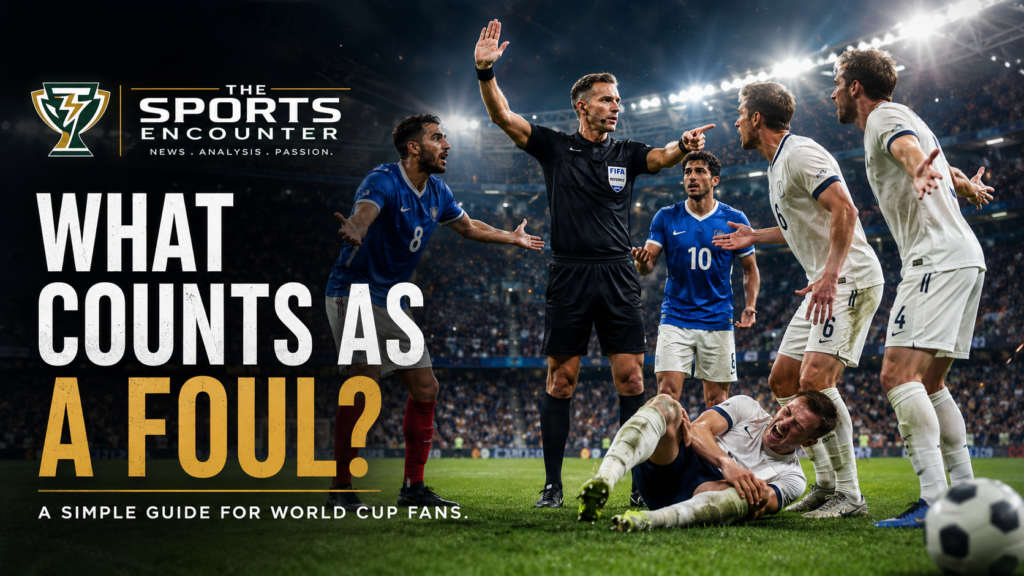
A soccer foul can look obvious in real time and still become a debate five seconds later.
One fan sees a clean tackle. Another sees a dangerous challenge. A defender thinks he used his shoulder fairly. The forward wants a penalty. VAR slows everything down, and suddenly the same contact looks different from every camera angle.
That is why “what counts as a foul in soccer” has become one of the most searched questions around major tournaments. The FIFA World Cup 2026 has only made the debate louder, especially with penalty controversies, disallowed goals, VAR checks, shirt pulling, late tackles, stutter-step penalties, and arguments over whether similar contact gets judged the same way across different matches.
The official answer starts with IFAB Law 12 on fouls and misconduct. IFAB, the body that maintains the Laws of the Game, says direct free kicks are awarded when a player commits certain offenses against an opponent in a manner the referee considers careless, reckless, or using excessive force.
That sounds simple. In a live match, it becomes complicated because referees must judge speed, force, intent, ball position, body position, advantage, and danger almost instantly.
This guide explains the basics clearly, then connects them to the World Cup controversies fans are already arguing about. For more tournament coverage, visit The Sports Encounter’s FIFA World Cup 2026 section.
Quick Answer: What Counts as a Foul in Soccer?
A foul in soccer usually happens when a player unfairly stops, trips, pushes, holds, kicks, charges, jumps into, strikes, or tackles an opponent. The referee judges whether the action was careless, reckless, or used excessive force. Common fouls include shirt pulling, body pushing, tripping, dangerous tackles, handball, holding, and charging unfairly. A foul can lead to a direct free kick, indirect free kick, penalty kick, yellow card, or red card depending on where it happened and how serious it was.
Who Decides What Counts as a Foul?
The referee makes the final decision on the field. Assistant referees, the fourth official, and VAR can help in specific situations, but the main referee remains the central authority during the match.
IFAB’s Laws of the Game provide the official framework. FIFA competitions, including the World Cup, use those laws along with competition-specific procedures and disciplinary rules. For most fans, the most important rule is Law 12 because it explains fouls, misconduct, free kicks, cards, and disciplinary action.
Law 12 separates many decisions into three levels of seriousness:
| Referee judgment | Simple meaning | Likely punishment |
|---|---|---|
| Careless | The player showed a lack of attention or caution while challenging | Free kick or penalty if inside the box |
| Reckless | The player acted with disregard for the danger or consequences to an opponent | Free kick or penalty plus yellow card |
| Excessive force | The player endangered an opponent’s safety or used more force than needed | Free kick or penalty plus red card |
This is the heart of most foul debates. The same tackle can look careless to one viewer, reckless to another, and dangerous enough for a red card to someone else. Referees have to apply the law, not the crowd reaction.
Most Common Fouls in Soccer Fans Should Know
Fans often focus on spectacular tackles, but many fouls come from small physical actions that interrupt movement. Shirt pulling, body pushing, holding, and late contact can decide matches, especially inside the penalty area.
| Common foul | What it means | Usual restart or punishment |
|---|---|---|
| Body pushing | Using the body or arms to shove an opponent unfairly off the ball | Direct free kick or penalty if inside the box |
| Shirt pulling | Grabbing or tugging a player’s shirt to slow, stop, or unbalance them | Direct free kick, possible yellow card |
| Holding | Using hands or arms to stop an opponent’s movement | Direct free kick, often yellow if it stops a promising attack |
| Tripping | Using the foot or leg to make an opponent fall or lose balance | Direct free kick or penalty |
| Kicking or attempting to kick | Striking or trying to strike an opponent with the foot | Direct free kick, yellow or red depending on force |
| Dangerous tackle | A challenge that risks hurting an opponent, especially with high studs or late contact | Free kick, yellow card, or red card |
| Charging unfairly | Crashing into an opponent without a fair shoulder-to-shoulder challenge | Direct free kick |
| Jumping into an opponent | Leaping into a player instead of fairly contesting the ball | Direct free kick |
| Striking or elbowing | Hitting or attempting to hit an opponent with the arm, elbow, hand, or head | Yellow or red card depending on severity |
| Handball | Illegal contact between the hand or arm and the ball under the Laws of the Game | Direct free kick or penalty |
| Impeding or obstruction | Blocking an opponent’s path without playing the ball | Usually indirect free kick |
| Goalkeeper interference | Blocking, charging, or challenging the goalkeeper unfairly | Free kick to the defending team |
| Simulation or diving | Pretending to be fouled or exaggerating contact to deceive the referee | Yellow card for unsporting behavior |
| Dissent | Arguing aggressively or showing disrespect toward the referee | Yellow card |
| Delaying the restart | Wasting time before a free kick, throw-in, corner, or goal kick | Yellow card |
Simple Visual Guide: Common Soccer Fouls by Match Impact
Some fouls stop play. Others change the whole match. This simple guide shows how common fouls usually affect a game.
Common Fouls and Their Typical Match Impact
Higher impact means the foul is more likely to lead to a card, penalty, or major VAR debate.
Dangerous tackleVery high
Shirt pulling inside the boxHigh
Handball in penalty areaHigh
Body pushingMedium
Impeding without contactLower
Editorial guide based on IFAB foul categories. Actual punishment depends on the referee’s judgment, location, severity, and match context.
Direct Free Kick, Indirect Free Kick, or Penalty?
Many fans know when a foul has happened, but they are less sure about what happens next. The restart depends on the type of offense and where it occurred.
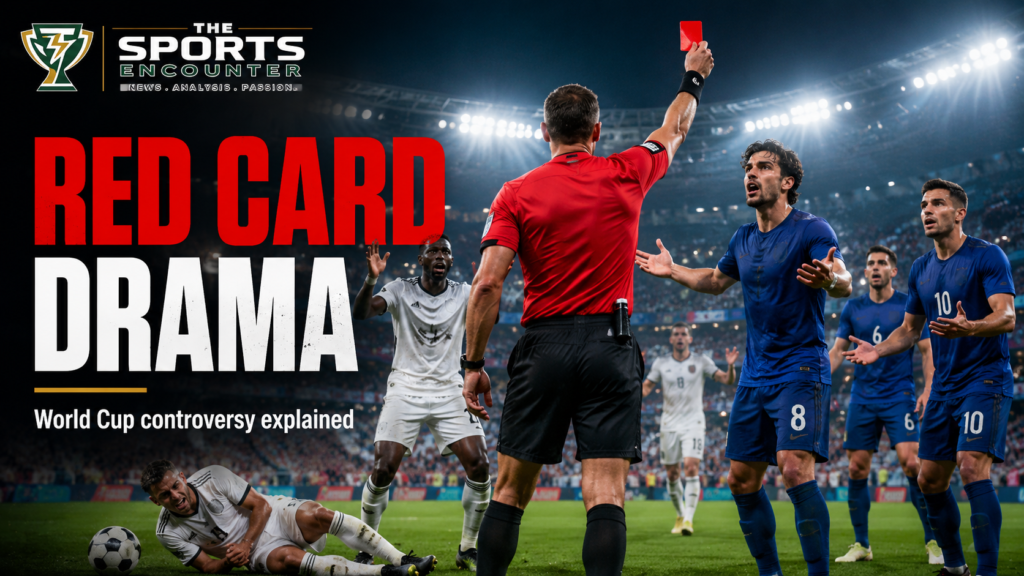
IFAB Law 12 lists several offenses that lead to a direct free kick when committed against an opponent, including charging, jumping at, kicking, pushing, striking, tackling, tripping, holding, and handball. If a direct free kick offense happens inside the offending player’s own penalty area, IFAB Law 14 explains that a penalty kick is awarded.
| Decision | When it usually happens | Can a goal be scored directly? |
|---|---|---|
| Direct free kick | A player commits a physical foul such as tripping, pushing, holding, kicking, or handball outside the box | Yes |
| Penalty kick | A defending player commits a direct free kick offense inside their own penalty area | Yes |
| Indirect free kick | Certain technical or non-contact offenses, including some goalkeeper violations, impeding without contact, or verbal offenses | No, another player must touch the ball first |
This is why shirt pulling inside the box creates so much anger. A small tug can become a penalty if it stops a player from moving freely while the ball is in play.
Why Body Pushing Causes So Much Confusion
Body contact is legal in soccer when it is fair, controlled, and part of a genuine challenge for the ball. A shoulder-to-shoulder contest can be allowed if both players have a realistic chance to play the ball.
Pushing becomes a foul when a player uses the arms, hands, hip, or body to unfairly move an opponent away from the ball. Referees also look at whether the challenge comes from the side, from behind, or with too much force.
That difference frustrates fans because two incidents can look similar on television. One may be a fair physical challenge. Another may be a clear push because the player never had a realistic chance to play the ball.
Why Shirt Pulling Is a Foul Even When It Looks Small
Shirt pulling often looks minor, but it directly affects movement. A small tug can slow a striker, stop a defender from jumping, or prevent a player from reaching a cross.
Inside the penalty area, shirt pulling can become one of the most expensive fouls in soccer. Referees do not need to see a player thrown to the ground. If the holding clearly affects movement or prevents a fair challenge, the referee can award a penalty.
This is also why set pieces create so many arguments. Defenders and attackers often grab, block, and wrestle before corners and free kicks. VAR may check clear penalty incidents, but it will not re-referee every bit of contact.
What Makes a Tackle Legal or Illegal?
A legal tackle usually wins the ball without unfairly taking the opponent, using dangerous force, or endangering safety. An illegal tackle may come late, hit the opponent first, use studs, make high contact, or arrive with uncontrolled speed.
The referee asks several questions:
- Did the player have a realistic chance to play the ball?
- Did the player make contact with the opponent before or after the ball?
- Was the challenge careless, reckless, or excessive?
- Did the tackle endanger the opponent’s safety?
- Did the contact stop a promising attack or deny a clear goal-scoring opportunity?
Those details decide whether the outcome is play-on, free kick, yellow card, or red card.
Yellow Card vs Red Card: What Is the Difference?
A yellow card is a caution. The player stays on the field but risks being sent off if they receive a second yellow card.
A red card removes the player from the match. The team must continue with fewer players, and the player may face suspension.
| Card | Common reasons | Match impact |
|---|---|---|
| Yellow card | Reckless foul, tactical foul, dissent, delaying restart, simulation, repeated fouls | Player stays on but is one caution away from dismissal |
| Second yellow card | A player already booked commits another cautionable offense | Player is sent off |
| Red card | Serious foul play, violent conduct, excessive force, denying an obvious goal-scoring opportunity, offensive or abusive behavior | Player leaves the match and team plays short-handed |
The hardest debate usually comes between yellow and red. A slow-motion replay can make contact look worse, but referees must still judge the action in full speed and match context.
How VAR Checks Fouls and Penalty Decisions
VAR does not check every foul. The IFAB VAR protocol limits reviews to major match-changing situations: goals, penalty decisions, direct red-card incidents, and mistaken identity.
That means VAR can recommend a review for a possible penalty, a possible red card, or a foul in the attacking phase before a goal. It generally does not intervene for ordinary free kicks, minor contact, or routine yellow-card decisions.
| VAR can review | VAR usually cannot review |
|---|---|
| Possible penalty | Normal midfield fouls |
| Possible direct red card | Most yellow-card decisions |
| Possible foul before a goal | Every small shirt pull or push |
| Mistaken identity | General complaints from players or coaches |
This is where many fans get frustrated. VAR can fix obvious match-changing errors, but it cannot make every referee call feel consistent. Soccer still depends on human judgment.
Why World Cup Foul Controversies Keep Exploding
World Cup foul debates grow quickly because every incident carries national emotion. A normal league foul becomes a global argument when a team’s tournament future is involved.
The Sports Encounter has already covered several connected flashpoints. The debate around stutter-step penalties at the World Cup showed how fans can disagree even when players stay within the laws. Our explainer on Hossam Hassan’s X sign after Argentina vs Egypt connected referee frustration, VAR controversy, and FIFA’s anti-racism gesture framework. The earlier analysis of Egypt’s disallowed goal and offside law controversy showed how one technical call can dominate the story of a match.
Penalty decisions create the loudest arguments because the punishment is so large. A push, pull, trip, or handball inside the box can decide a knockout match. Red cards create similar anger because they change the number of players on the field and often affect the next match through suspension.
That is why fans keep asking the same question after every major decision: was that really a foul?
Careless, Reckless, or Excessive: The Fan Checklist
When judging a foul at home, fans can use the same basic ladder referees use under Law 12.
| Question | What to look for |
|---|---|
| Was there contact? | Some fouls involve contact, but impeding and dangerous play can also matter without heavy contact |
| Was the player challenging for the ball? | A genuine challenge is judged differently from grabbing, blocking, or striking away from the ball |
| Was the contact careless? | The player lacked caution but did not show serious disregard for safety |
| Was it reckless? | The player acted with disregard for danger or consequences |
| Was excessive force used? | The player endangered an opponent’s safety |
| Where did it happen? | The same foul inside the penalty area can become a penalty |
| Did it stop an attack? | Tactical fouls and denial of goal-scoring chances can bring cards |
This checklist does not remove debate. It makes the debate smarter.
What Counts as Hurting a Player?
Soccer is a contact sport, so getting hurt does not automatically mean a foul happened. A player can be injured in a fair collision, an accidental landing, or a clean challenge.
The referee looks at the action that caused the injury. A late tackle, high boot, elbow, reckless jump, or excessive-force challenge can become a serious foul even if the player was trying to play the ball.
Intent also matters, but it is not the only factor. A player can receive a red card for endangering an opponent even without trying to injure them. Safety remains central to the referee’s decision.
What Counts as Handball?
Handball remains one of soccer’s most confusing rules because fans often expect every arm contact to be punished. The law is more detailed than that.
A handball offense can involve deliberate contact, a player making the body unnaturally bigger, or an arm position that creates an unfair barrier. Referees also consider body movement, distance, reaction time, and whether the arm position was justifiable for the player’s action.
Inside the box, a handball decision can become a penalty, which is why VAR checks often focus on arm position and whether contact clearly affected play.
Why Similar Fouls Get Different Decisions
Fans often ask why one shirt pull leads to a penalty while another goes unpunished. The answer usually sits in the details.
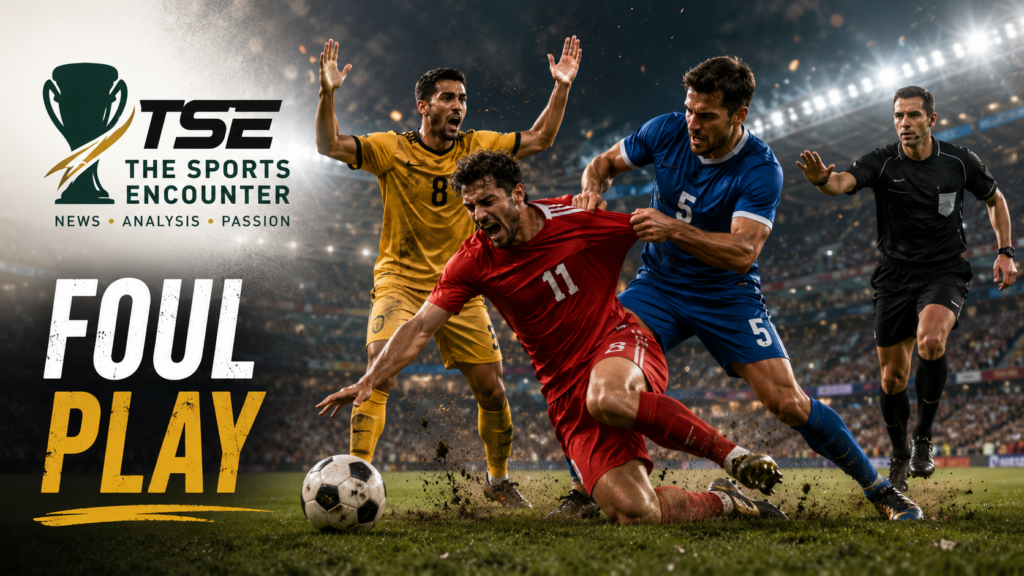
Referees consider force, impact, angle, ball distance, player movement, and whether the foul clearly affected the opponent’s ability to play. VAR adds another layer because it only intervenes when the incident falls into a reviewable category and reaches the “clear and obvious error” threshold.
That does not mean fans must agree with every decision. It does explain why soccer’s laws produce debates even when everyone is watching the same replay.
Why This Matters for World Cup Fans
Understanding fouls makes World Cup viewing better.
A penalty appeal becomes easier to judge. A red-card review makes more sense. A shirt pull inside the box looks less harmless. A dangerous tackle feels different from a strong but fair challenge. VAR frustration becomes easier to separate from the actual laws.
World Cup matches often turn on tiny physical actions. A defender grabs a shirt for half a second. A striker leans into contact. A midfielder trips someone to stop a counterattack. A goalkeeper gets blocked at a corner. Each moment can change a tournament.
For more explainers around rules, penalties, VAR, and referee debates, follow The Sports Encounter’s World Cup 2026 coverage.
Final Take
A foul in soccer is not only about contact. It is about fairness, danger, force, position, and impact.
Body pushing, shirt pulling, holding, tripping, dangerous tackles, handball, elbowing, and unfair charging are all common fouls. The punishment depends on severity and location. A small foul near midfield may only stop play. The same type of foul inside the penalty area can decide a World Cup knockout match.
That is why soccer refereeing creates so much emotion.
The laws give the framework. The referee applies the judgment. VAR checks only the biggest moments. Fans then debate everything else.
Once you understand Law 12, the game becomes easier to read. It also becomes clearer why one whistle can change a World Cup.
FAQs About Fouls in Soccer
What counts as a foul in soccer?
A foul in soccer happens when a player unfairly trips, pushes, holds, kicks, charges, jumps into, strikes, tackles, or blocks an opponent. Handball and dangerous play can also count as fouls depending on the situation.
Is body pushing a foul in soccer?
Body pushing is a foul when a player uses the body, hands, arms, or hips to unfairly shove an opponent away from the ball. Fair shoulder-to-shoulder contact can be allowed when both players are challenging for the ball.
Is shirt pulling a foul?
Yes. Shirt pulling is a foul because it unfairly restricts an opponent’s movement. If it happens inside the penalty area and affects play, it can lead to a penalty kick.
Is hurting a player always a foul?
No. A player can get hurt in a fair challenge or accidental collision. The referee judges whether the action was careless, reckless, or used excessive force.
What is a dangerous tackle?
A dangerous tackle is a challenge that risks an opponent’s safety. Late tackles, high studs, uncontrolled speed, or forceful contact can lead to a yellow or red card.
What is the difference between a yellow card and red card?
A yellow card is a caution, while a red card sends the player off. Reckless fouls often bring yellow cards. Serious foul play, violent conduct, or excessive force can bring a red card.
When does a foul become a penalty?
A foul becomes a penalty when a defending player commits a direct free kick offense inside their own penalty area while the ball is in play.
Can VAR review every foul?
No. VAR can review major match-changing incidents, including goals, penalty decisions, direct red-card incidents, and mistaken identity. It does not review every normal foul.
Is handball always a foul?
No. Handball depends on factors such as deliberate movement, arm position, body shape, distance, and whether the player made the body unnaturally bigger.
Why do referees allow some contact?
Soccer is a contact sport. Referees allow fair challenges when players compete for the ball without careless, reckless, or excessive force.
What is obstruction in soccer?
Obstruction, often called impeding, happens when a player blocks an opponent’s path without playing the ball. It usually leads to an indirect free kick.
Can arguing with the referee be a foul?
Arguing itself is misconduct rather than a normal playing foul. Dissent can lead to a yellow card if the player shows disrespect or protests aggressively.