


NEW YORK, United States – June 9, 2026: The FIFA World Cup 2026 will bring the best footballers on earth to North America, but the success of the tournament will not depend only on goals, saves, red cards and knockout drama.
It will also depend on whether fans can get into stadiums safely, reach venues without losing half a day in traffic, trust the ticketing system, move through host cities with confidence and feel protected without feeling trapped inside an overmanaged event.
That is the real test facing FIFA, local organizers, law enforcement agencies, transport operators and host-city officials.
The FIFA World Cup 2026 is not just bigger than previous editions. It is structurally different. It features 48 teams, 104 matches and 16 host cities across the United States, Canada and Mexico. It stretches across three countries, multiple jurisdictions, four time zones and several different transportation cultures. It will draw local fans, international travelers, corporate guests, casual viewers and supporters who have waited their entire lives to watch their country play on this stage.
That makes the 2026 edition a football tournament, a tourism event, a security operation, a transport challenge, a digital-ticketing stress test and a global broadcast product at the same time.
For American soccer fans, this is the most important football summer ever staged on home soil. For fans traveling to the United States, it may become the trip of a lifetime. For viewers watching around the world, the tournament will shape how they see North America as a football host.
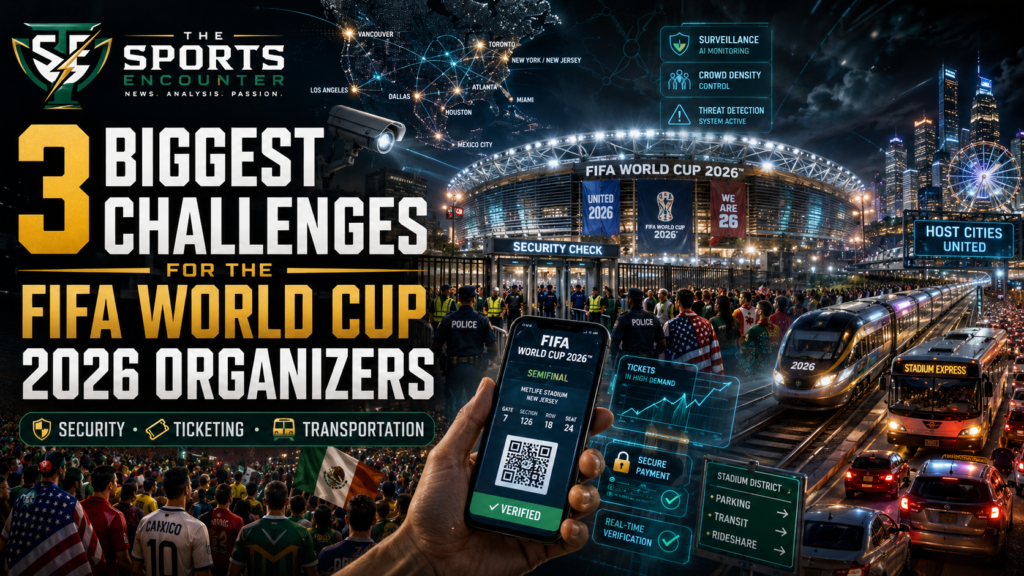
But the organizers of the FIFA World Cup 2026 now face three challenges that could define the entire event before a champion is crowned.
Security. Ticketing. Transportation.
Get those right, and the football can shine. Get them wrong, and the tournament risks becoming remembered as much for frustration as spectacle.
Challenge 1: Building a Security Operation That Works Without Killing the Fan Experience
The first major challenge is the most serious one.
FIFA World Cup 2026 requires a security system large enough to protect millions of fans, players, team staff, officials, media crews and local communities across three countries. Yet that same system must stay smooth enough that supporters still feel like they are attending a football celebration, not moving through an airport lockdown.
That balance is not easy.
Security planners are dealing with stadium perimeters, training sites, hotels, airports, fan festivals, public transit hubs, downtown gathering zones and high-profile team movements. The scale is enormous. Reports indicate that hundreds of law enforcement agencies are working with federal authorities, private security firms and local partners across the tournament footprint.
ALSO READ: Will the FIFA World Cup 2026 Be Live on YouTube? What Global Soccer Fans Need to Know
For organizers, the threat picture is broad. It includes crowd-control problems, drone incidents, cyberattacks, medical emergencies, political protests, disorder around high-tension matches, ticket fraud, weather-related incidents and ordinary criminal activity that tends to rise around large tourist events.
Fans often think of security as something that begins at the stadium gate. In 2026, that view is too narrow.

Security will begin when a fan opens the mobile ticket app, checks an official route, enters a fan zone, approaches a transit hub, walks through a downtown crowd or tries to bring restricted items into a venue. A supporter may never see the full operation, but the full operation will shape almost every step of the matchday journey.
FIFA’s official fan-safety guidance already makes clear that prohibited items will be a major matchday issue. Fans can be refused entry if they bring banned objects into the stadium area. That means match-going supporters need to think before they pack. Weapons, explosives, fireworks, smoke devices, tools and other dangerous items are obvious problems. But everyday objects can also create delays if they violate local stadium rules or FIFA’s event regulations.
This is where communication matters.
A great security plan can still fail in public perception if fans do not understand it. A supporter who waits 45 minutes at an entry point because of a prohibited bag will not blame himself first. He will blame the venue. A family forced to throw away expensive items at the gate may remember the inconvenience more than the match. A fan traveling from abroad may not know how strict U.S. venue policies can be compared with stadium habits in Europe, South America, Africa or Asia.
Organizers must therefore treat security communication as part of security itself.
That means clear instructions before matchday, simple language in multiple languages, consistent rules across platforms, and visible support staff who can guide people before they reach the final checkpoint. It also means avoiding last-minute policy confusion where possible.
The hydration debate already showed how quickly operational choices can become fan-experience stories. FIFA faced criticism after updating rules around water bottles and stadium access, with supporters raising concerns about heat, comfort and affordability. In a North American summer, especially in cities where temperatures can climb sharply, fans will care about shade, water access, waiting times and medical response.
This is not a side issue. It is central to safety.
The 2026 World Cup will take place during summer conditions that vary widely by host city. A matchday in Seattle will feel different from one in Houston, Miami, Kansas City, Dallas or Mexico City. Even within the United States, climate conditions will demand different operational choices.
The best organizers will not treat security as a single national template. They will adjust by city, venue, weather, crowd profile and match risk.
A group-stage match involving two lower-profile teams may not need the same outer-perimeter intensity as a knockout match involving fierce rivals. A daytime match in extreme heat needs different crowd-support planning than an evening match in milder weather. A fan festival screening a major rivalry game may require as much situational awareness as the stadium itself.
For fans, the practical advice is simple.
Arrive early. Travel light. Check the official stadium guide before leaving your hotel. Keep your phone charged. Download the mobile ticket app before matchday. Do not assume rules from your home stadium will apply. Follow official host-city and FIFA communication rather than social media rumors.
For global viewers, security will matter in a different way. A smooth event allows television coverage to focus on football. A messy one pushes logistics into the broadcast narrative.
That is why security is the first and biggest challenge. It does not need to dominate headlines to define the tournament. In fact, if it works perfectly, most fans will barely talk about it.
That is the goal.
Challenge 2: Restoring Trust in a Ticketing System Under Heavy Pressure
The second challenge is ticketing, and this one already carries tension.
The FIFA World Cup 2026 is expected to attract extraordinary demand. That demand gives FIFA enormous commercial opportunity, but it also creates one of the most sensitive fan issues in modern sport: access.
Tickets are more than digital passes. They represent emotional investment. Fans build trips around them. Families spend savings on them. Supporters cross continents for them. When anything goes wrong, frustration hits hard.
FIFA recently had to cancel around 60 ticket reservations after a website checkout error allowed some fans to secure tickets at no charge. The governing body contacted affected buyers and asked them to complete payment at the correct price if they wanted to keep the tickets.
On its own, that incident affected a small number of people. In a tournament of this size, 60 transactions are barely a statistical ripple.
But the symbolism matters.
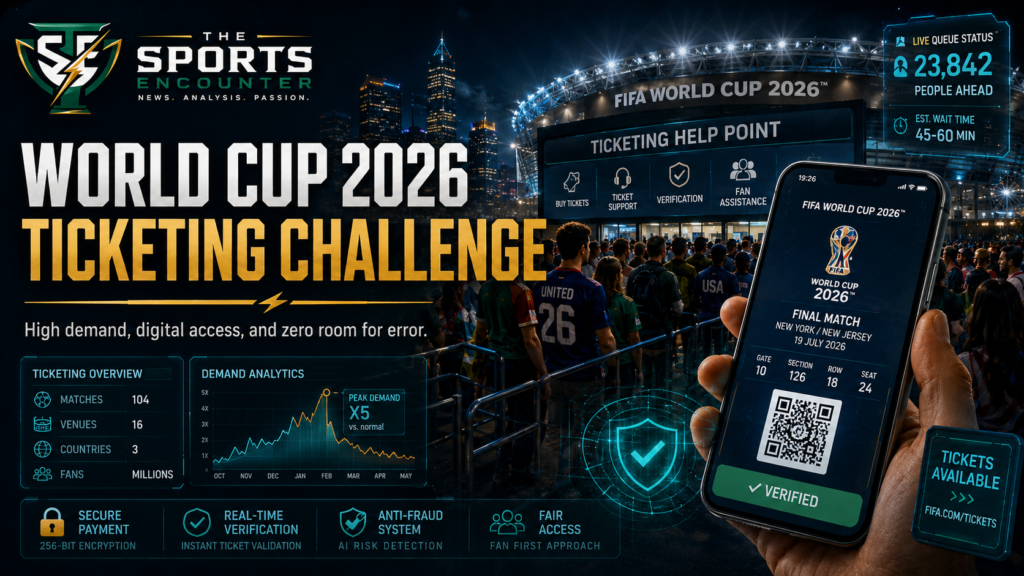
Ticketing has already become one of the most scrutinized parts of this World Cup. Fans have raised concerns about prices, seat locations, dynamic pricing and availability. New York and New Jersey officials have also examined ticketing practices connected to matches at MetLife Stadium, including the final.
That puts FIFA in a delicate position.
The organization must manage huge demand while convincing fans that the process is fair, transparent and reliable. It must also protect buyers from scams, keep tickets inside official channels, prevent fraud, handle resale pressure, and make mobile ticketing work across millions of users.
This is not just a technology challenge. It is a trust challenge.
Modern fans know that major events use dynamic pricing, but they do not always accept it. Football supporters often view the World Cup differently from concerts or private entertainment events. To them, this tournament belongs to the public imagination. They understand that prices will be high, but they expect the process to feel honest.
When ticket prices rise quickly or seat categories create confusion, fans feel locked out of something they helped build through decades of loyalty to the sport.
That feeling becomes even stronger in North America. Many local fans may never again get a chance to attend a men’s World Cup match in their own region. International fans may have already paid for flights, hotels and visas before securing final ticket clarity. Families may be choosing between one match and an entire vacation budget.
For American soccer fans, the ticketing issue also cuts across the growth of the sport. The tournament has a chance to bring new supporters into the game. But if entry feels too expensive, too confusing or too corporate, the World Cup may reinforce the idea that elite football is becoming unreachable for ordinary fans.
FIFA and local organizers cannot control every resale conversation or every complaint about price. But they can control clarity.
Fans need to know where to buy official tickets, how mobile tickets work, what app they need, when tickets appear, what documents they must carry, how transfers work and what happens if a phone fails at the gate.
FIFA’s ticketing support has emphasized that fans need a valid digital ticket available through the official mobile tickets app for stadium entry. That point cannot be repeated enough. In a tournament of this size, unofficial screenshots, resale scams and fake PDFs will create real problems if fans rely on unsafe channels.
This is where organizers must communicate like public-service agencies, not only like event marketers.
They should push clear reminders in simple language:
Use official channels. Download the correct app early. Do not buy from unknown sellers. Do not rely on screenshots. Keep payment confirmation. Charge your phone. Know the stadium entry policy. Check your ticket before leaving for the venue.
The ticketing system also affects security and transportation. If thousands of fans face app issues near kickoff, entry lines grow. If entry lines grow, crowd pressure builds. If crowd pressure builds, transport departure windows collapse. A digital problem can quickly become a stadium-management problem.
That is why ticketing cannot be treated as an isolated back-end function. It sits at the center of the fan journey.
For global viewers, ticketing matters because full stadiums shape the atmosphere. A World Cup match without noise loses something essential on television. FIFA does not simply need buyers. It needs the right mix of fans inside stadiums: locals, traveling supporters, families, neutrals, diehards and national-team communities.
The best World Cups feel alive because the stands tell their own story.
If 2026 wants that atmosphere across 104 matches, ticketing must do more than generate revenue. It must support access, trust and movement.
Challenge 3: Moving Millions of Fans Across a Continent-Sized FIFA World Cup 2026 Tournament
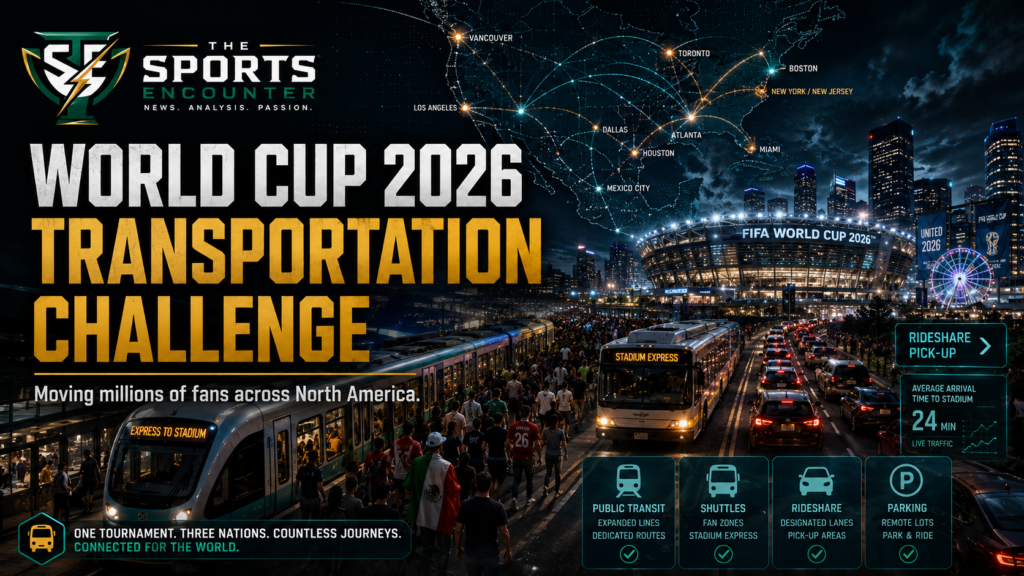
The third challenge may become the one fans feel most often: transportation.
FIFA World Cup 2026 is not a compact tournament. It is not Qatar, where fans could attend multiple matches in one day. It is not a single-country European tournament where rail networks connect many host cities easily. This tournament stretches across North America, and that means the geography itself becomes part of the competition.
Fans will move between airports, hotels, stadiums, training bases, fan festivals, downtown areas and sometimes entirely different cities. Some will try to follow one national team across the group stage. Others will attend multiple matches in different regions. Many international visitors will experience American car-dependent urban design for the first time.
That is where reality hits.
Some host cities have strong public transit systems. Others depend heavily on rideshare, buses, shuttles, parking systems and temporary event routes. Stadiums vary widely. Some sit close to downtown. Others sit in suburban areas. Some are easier to reach by train. Others may require careful last-mile planning.
ALSO READ: FIFA World Cup 2026 Giants Are Ready
Reuters has reported that rail and bus operators see the World Cup as a chance to prove that North American ground transportation can handle major international demand. That ambition is important, but ambition alone will not move fans after a 10 p.m. kickoff.
The fan experience will depend on execution.
Can host cities provide clear routes from airports to hotels? Can they move crowds from fan festivals to stadiums? Can they support late-night departures after extra time and penalties? Can they manage rideshare congestion? Can they help visitors who do not speak English? Can they accommodate disabled fans and families with children? Can they prevent gridlock around stadiums when private cars, buses, police routes and emergency vehicles all compete for space?
New York City’s World Cup travel guidance already points to the scale of planning required, including temporary dedicated corridors for World Cup-related transportation and matchday traffic management. That kind of planning will matter across the country, especially in cities where stadium access depends on regional coordination.
For fans, the transport challenge begins before booking a hotel.
A cheap hotel far from the stadium may become expensive if rideshare prices surge. A flight arriving on matchday may be risky if airport queues, traffic or security delays build up. A group planning to drive may discover that parking is limited, costly or far from the venue. A fan relying on public transit may need to check service hours after night matches.
This is where The Sports Encounter’s advice is blunt: do not plan a World Cup match like a regular league game.
Plan it like an international travel day.
Leave earlier than you think you need to. Know your return route before kickoff. Save offline maps. Identify official shuttle points. Keep backup payment options. Check whether your stadium has specific drop-off zones. Avoid bringing luggage near stadium areas. Build in time for security screening. Confirm the last train or bus before the match starts.
For American fans, this may feel excessive. For international fans, it may feel normal. Either way, it will reduce stress.
Transportation also affects the tournament’s environmental and legacy goals. A World Cup that pushes everyone into private cars will create congestion, emissions and frustration. A tournament that demonstrates reliable transit can leave a lasting benefit for host cities.
That legacy question matters. The United States, Canada and Mexico are not building this event only for six weeks of football. They are presenting North America as a long-term football market. Smooth transport strengthens that argument. Chaotic movement weakens it.
The best host cities will use the World Cup to teach visitors how to move through them. That means clear signage, multilingual updates, real-time service alerts, visible volunteers, accessible transportation and honest communication when delays happen.
Fans can forgive crowds. They struggle to forgive confusion.
FIFA World Cup 2026: Why These Three Challenges Are Connected
Security, ticketing and transportation may look like separate problems. They are not.
They form one chain.
A fan buys a ticket, receives it digitally, travels to the stadium, passes through security, watches the match, exits with thousands of others and returns safely. If one part of that chain breaks, the whole experience suffers.
A ticket-app delay can create gate congestion. Gate congestion can create security pressure. Security delays can cause fans to miss kickoff. Missed kickoff can lead to anger. Anger can create crowd-management problems. Transport delays after the match can turn a good night into a bad memory.
Organizers understand this. The challenge is making fans understand it too.
The World Cup does not work when information sits in separate silos. FIFA may control tickets. Stadiums may control entry points. Cities may control roads. Transit agencies may control trains and buses. Police may control security zones. But fans experience all of it as one event.
That is why messaging must feel unified.
A supporter should not need to visit five websites to understand one matchday. The ideal fan journey should answer five basic questions clearly:
- Where is my ticket?
- How do I get there?
- What can I bring?
- When should I arrive?
- How do I get home?
If organizers answer those questions better than anyone expects, the tournament will feel smoother than its size suggests.
What American Fans Need to Know Ahead of the FIFA World Cup 2026
For American fans, FIFA World Cup 2026 is a chance to experience football in its most global form without leaving the country.
But attending a World Cup match is different from attending an NFL, NBA, MLB, NHL or MLS game.
The crowd will be more international. The rules may feel stricter. The security perimeter may start farther from the stadium. Ticketing will be digital. Bag rules may be less forgiving. Travel demand may overwhelm normal routines. Hotels and rideshares may cost more. Restaurants and downtown areas near fan zones may fill quickly.
That does not mean fans should worry. It means they should prepare.
The smartest fans will treat matchday as a full-day event. They will not arrive at the last minute. They will not bring unnecessary bags. They will not rely on unofficial ticket sellers. They will not assume parking will be easy. They will not wait until they reach the stadium to open the ticket app.
That preparation can make the difference between a stressful day and an unforgettable one.
What International Fans Need to Know
For fans traveling to the United States, the biggest adjustment may be distance.
American cities are spread out. Airports can be far from downtown. Stadiums are not always located near tourist districts. Public transport quality varies sharply by city. Rideshare pickup zones can be confusing after major events. Tipping, taxes and service charges can also surprise visitors who are budgeting closely.
International fans should also follow official travel and entry guidance for the United States, Canada and Mexico. A World Cup ticket does not replace immigration requirements. FIFA’s Fan ID is not a visa and is not required for stadium entry, according to FIFA guidance.
That matters because misinformation spreads quickly before major tournaments. Fans should rely on official government, FIFA and host-city sources for travel documents, entry rules and safety updates.
The best advice for traveling fans is simple: separate football planning from travel planning.
Your match ticket gets you into the stadium. It does not solve your transport, accommodation, immigration, insurance, phone connectivity or health needs.
Plan all of those before you fly.
What Global Viewers Should Watch
Most fans around the world will experience the FIFA World Cup 2026 on television, mobile screens or streaming platforms.
For them, these challenges still matter.
Security shapes crowd energy. Ticketing shapes who gets into the stadium. Transportation shapes whether seats are full at kickoff. Fan movement shapes the atmosphere outside venues. Host-city organization shapes the tone of global coverage.
A smooth tournament looks effortless on screen. That effortlessness is built by thousands of decisions viewers never see.
If stadiums are full, fan zones are vibrant and matches start with strong atmosphere, viewers will feel the scale of the event. If delays, empty seats, entry problems or crowd issues appear repeatedly, the broadcast narrative will shift.
That is why organizers must win the invisible game.
Final Whistle: The Football Will Be Global, but the Test Is Local
The FIFA World Cup 2026 will bring football’s biggest stars to North America. But the tournament’s reputation will be built city by city, gate by gate, train by train and ticket scan by ticket scan.
Security must protect without overwhelming.
Ticketing must generate revenue without damaging trust.
Transportation must move millions without turning matchday into a logistical maze.
These are not background issues. They are the foundation of the tournament.
For FIFA, the United States, Canada, Mexico and every host city, the assignment is clear. Make the biggest World Cup ever feel manageable for the people who matter most.
The fans.
If organizers achieve that, the football will do the rest.
Fan Checklist for the FIFA World Cup 2026 Matchday
- Check your official digital ticket before leaving your hotel.
- Download and test the FWC2026 Mobile Tickets app in advance.
- Use official FIFA, stadium and host-city sources for entry rules.
- Travel light and avoid bringing bags unless clearly permitted.
- Arrive early, especially for high-demand matches.
- Confirm your return route before kickoff.
- Keep your phone charged and carry a backup battery where allowed.
- Use official transport routes, shuttle points and fan guidance.
- Avoid unofficial ticket sellers and screenshot-based ticket claims.
- Check weather, hydration options and stadium policies before matchday.
FAQs
What are the biggest challenges for FIFA World Cup 2026 organizers?
The three biggest challenges for the FIFA World Cup 2026 organizers are security, ticketing and transportation. Each one directly affects fan safety, stadium access, matchday experience and the global image of the tournament.
Why is security such a major issue for World Cup 2026?
The FIFA World Cup 2026 spans three countries, 16 host cities and 104 matches. Organizers must protect stadiums, fan zones, transport hubs, hotels, teams and public areas while keeping the experience welcoming for supporters.
Why is ticketing under scrutiny?
FIFA World Cup 2026 tickets are in huge demand, and fans have raised concerns about pricing, seat allocation, digital access and reliability. A recent FIFA website error that briefly allocated some tickets at no charge added more attention to the issue.
Should fans buy World Cup tickets from unofficial sellers?
No. Fans should use official FIFA ticketing channels. Unofficial sellers increase the risk of scams, invalid tickets and denied stadium entry.
What do fans need to enter a FIFA World Cup 2026 stadium?
Fans need a valid official digital ticket available through the FWC2026 Mobile Tickets app. They should also check stadium-specific entry rules before matchday.
Is FIFA Fan ID required for stadium entry?
FIFA says the Fan ID is not a visa, not a match ticket and not required for stadium entry. Fans should still follow official FIFA and host-country travel guidance.
Why is transportation a major concern?
The FIFA World Cup 2026 is spread across North America, with major distances between host cities. Fans will need to plan airports, hotels, public transit, rideshare zones, shuttle routes and post-match departures carefully.
Can fans rely on public transportation?
It depends on the host city. Some cities have strong transit options, while others may require shuttles, rideshare planning or longer travel windows. Fans should check official host-city transport guidance before matchday.
How early should fans arrive at stadiums?
Fans should arrive early enough to handle transport delays, security screening, ticket scanning and crowd movement. High-demand matches may require extra time.
What should international fans prepare before traveling?
International fans should confirm visa or entry requirements, travel insurance, accommodation, transport routes, mobile data access, official ticket access and local stadium rules before departure.
Will these challenges affect viewers watching from home?
Yes. Security, ticketing and transportation affect crowd atmosphere, stadium fullness, kickoff experience and broadcast quality. A well-run event looks better on screen.
What is the safest way to follow FIFA World Cup 2026 matchday updates?
Fans should rely on FIFA, official host-city websites, stadium channels, transit agencies and verified tournament communication rather than rumors on social media.