Connect with us

Editor's Choice

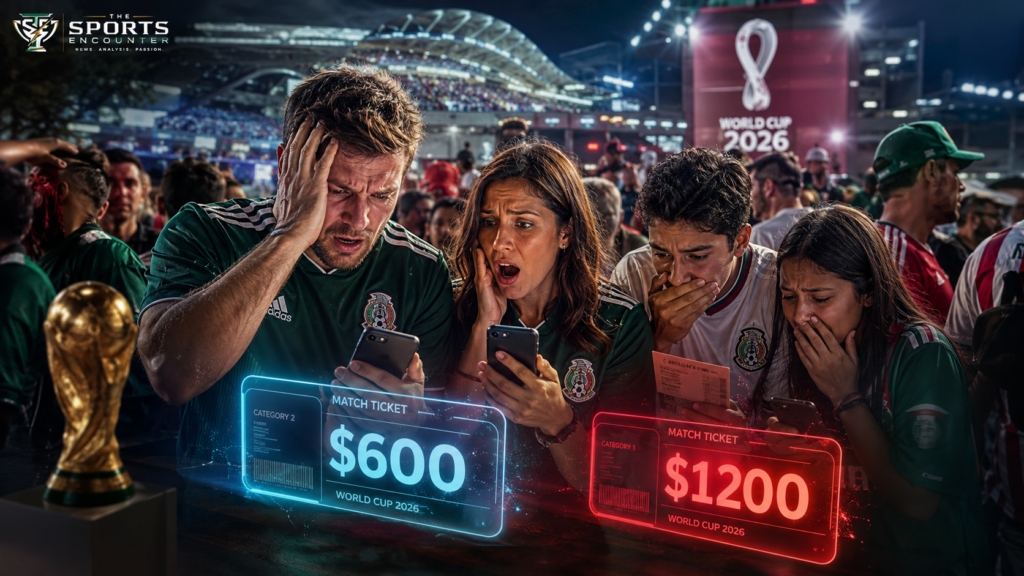
How Affordability Became the Biggest Challenge of FIFA World Cup 2026

Ruben Santos | The Sports Encounter

Published

on

How Affordability Became the Biggest Challenge of FIFA World Cup 2026

FIFA World Cup 2026 has already delivered the kind of image the sport’s governing body wanted from a North American tournament.

The United States opened its campaign with a 4-1 win over Paraguay in Los Angeles. Folarin Balogun scored twice. Gio Reyna added a late goal. The crowd gave the match the feel of a major American sports event with a global football pulse.

Then came the number that mattered almost as much as the result.

The USMNT opener reportedly drew nearly 16 million viewers and became the most-watched United States men’s national team broadcast in history, according to New York Post reporting. That is a serious marker for soccer in America. For years, the old question followed every major tournament in the United States: would Americans really watch?

This time, the answer appears clear.

They are watching.

The harder question is whether enough fans can afford to attend.

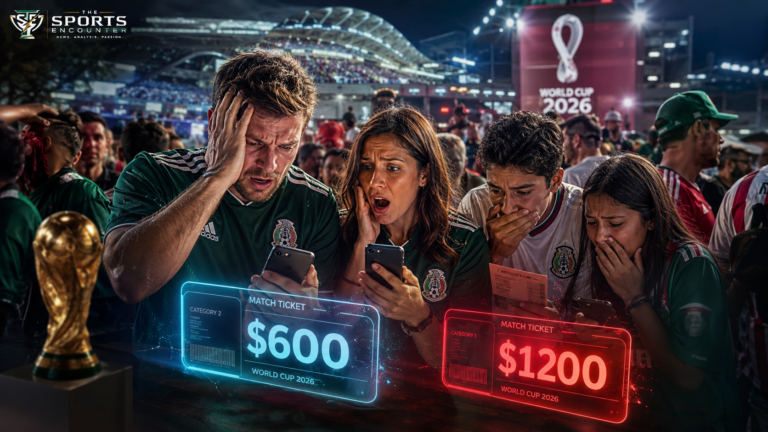
As the tournament moves through its opening stages, ticket pricing has become one of the biggest off-field stories of World Cup 2026. Supporters have raised concerns over group-stage prices, dynamic pricing, hospitality packages, travel costs, hotel rates, visa requirements, and the sheer difficulty of moving across a three-country tournament.

That combination has created an awkward contrast.

The World Cup is reaching more screens than ever. At the same time, the live experience is feeling more distant for many ordinary fans.

For more coverage from the tournament, visit The Sports Encounter’s FIFA World Cup 2026 hub.

FIFA World Cup 2026: Ticket Prices Are Now Part of the Tournament Story

The football has given fans plenty to talk about. Ticket prices have kept forcing their way into the conversation.
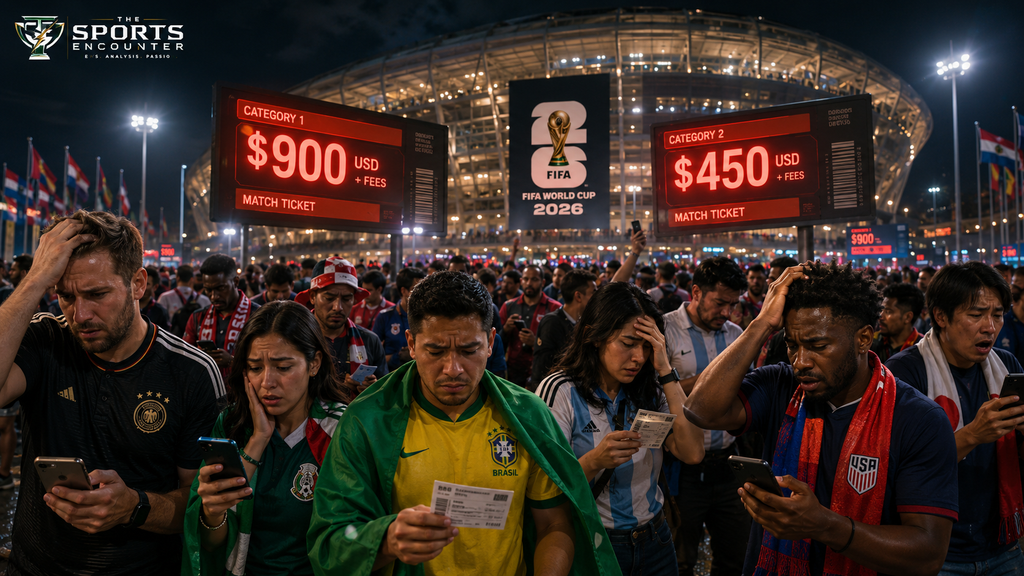
TalkSPORT reported criticism around prices for the United States’ match against Paraguay at SoFi Stadium, with fans and commentators questioning whether costs had moved beyond what many supporters could reasonably afford. FIFA’s official hospitality platform also shows how premium match access has become a major part of the modern World Cup economy.

This is where the issue gets complicated.

Demand is real. World Cup matches carry emotional value that ordinary sporting events do not. Fans will stretch budgets to see their country play, especially when the tournament arrives close to home after decades of waiting.

Reuters reporting from Toronto showed that some supporters accepted significant costs to witness Canada’s first men’s World Cup match on home soil. That kind of decision makes sense emotionally. For many fans, this is not just a ticket. It is a memory they may never get again.

Yet high emotional value also gives organizers more pricing power.

Dynamic pricing has sharpened the debate because it allows ticket costs to move with demand. In business terms, it helps maximize revenue. In football terms, it risks creating a matchday culture where traditional supporters feel priced out by systems designed around scarcity and willingness to pay.

That is the heart of the backlash.

Fans understand that a World Cup is expensive to stage. They know global events come with huge operating costs. What many supporters reject is the feeling that access to football’s biggest tournament increasingly depends on income rather than loyalty, passion, or connection to the game.

Empty Seats Hurt the Product FIFA Is Selling

High prices create another risk for FIFA: the television image.

A stadium can be officially strong on ticket sales and still show visible empty seats if buyers do not attend, resale prices remain too high, corporate allocations go unused, or travel costs prevent people from making the trip.

That matters because World Cup atmosphere is part of the product.

A packed stadium changes the match. It affects the players, television viewers, sponsors, broadcasters, and the emotional memory of the tournament. Empty sections tell a different story, especially when millions are watching at home.

For FIFA, this is not only an optics issue. It is a strategic issue.

The 2026 tournament is designed to be the biggest World Cup ever, with 48 teams, 104 matches, and host cities across the United States, Canada, and Mexico. Bigger tournaments need bigger audiences. But a larger match inventory also means not every game carries the same demand profile.

A marquee match involving the United States, Mexico, Argentina, Brazil, England, France, or Portugal can sell itself. A midweek group-stage match in a large NFL stadium requires more careful pricing, strong local promotion, accessible transport, and realistic assumptions about fan budgets.

That is where pricing can backfire.

A high-demand model works best when demand is deep enough to absorb rising prices. In a tournament with 104 matches, that equation changes by city, matchup, kickoff time, travel route, and local market.

World Cup 2026 is testing that balance in real time.

Empty Seats Hurt the Product FIFA Is Selling at the FIFA World Cup 2026

America Is Watching, and That Changes the Stakes

The USMNT’s opening win over Paraguay gave the tournament a powerful early boost.

The performance had everything American soccer needed: goals, a confident home team, recognizable stars, a vibrant crowd, and a result that made casual viewers feel they had watched something important.

Balogun’s brace gave the match a clear football headline. Gio Reyna’s goal added polish. The 4-1 scoreline gave broadcasters and sponsors the clean story they wanted.

The television audience may prove even more important.

A reported audience of nearly 16 million viewers for a USMNT match shows that soccer in America has moved beyond curiosity. Major tournament soccer now has the ability to command mainstream attention, especially when the national team performs well on home soil.

That has huge implications.

Broadcasters can sell the sport more aggressively. Sponsors can justify larger investments. MLS clubs can use the tournament as a recruitment tool for future fans. Youth soccer programs can point to visible heroes. FIFA can argue that the United States is no longer just a commercial host, but a real football audience.

Still, television growth does not solve the access problem. In some ways, it makes the tension more visible.

If millions of Americans are watching, more people will naturally want to experience the tournament live. When those fans check prices and realize the matchday cost sits far above their comfort zone, frustration grows.

A sport can gain viewers while losing affordability.

That is the line World Cup 2026 must avoid crossing.

For match context from the USMNT opener, read USA Crush Paraguay 4-1 to Launch World Cup 2026 Campaign in Style.

The FIFA World Cup 2026 Is Now a Travel Puzzle

Tickets are only one part of the cost.

For visiting fans, World Cup 2026 may be one of the most complex tournaments ever staged. The event stretches across three countries. Supporters following their teams may need to move between the United States, Canada, and Mexico. That means different border rules, visa requirements, travel documents, hotel markets, airport routes, and domestic transport systems.

Government and football bodies have already started reminding fans to prepare carefully.

The UK Government’s World Cup 2026 travel guidance advises supporters to check entry requirements, plan ahead, and understand local rules. The Scottish FA has also issued ticket guidance for Scotland supporters, reflecting how national associations are helping fans navigate FIFA’s systems and tournament travel.

This matters because football fans often plan emotionally before they plan logistically.

They see the draw. They look for tickets. They dream about the trip. Then reality arrives: visa eligibility, passport validity, accommodation prices, airport transfers, matchday transport, and possible border crossings.

A three-country World Cup creates opportunities for more fans to experience the tournament, but it also creates layers of complexity.

For supporters from Europe, South America, Africa, and Asia, travel to North America is already expensive. Moving between host cities can add significant cost. Unlike smaller football nations where train travel may connect major venues, North America often requires flights between distant cities.

That makes planning harder and less forgiving.

A fan following Scotland, Argentina, Japan, or Ghana may need to think like a tour manager rather than a casual traveler.

Matchday Access Will Shape Fan Experience

The best World Cups feel smooth to the people attending them.

That does not happen by accident.

Transport networks, shuttle routes, stadium entry points, crowd control plans, airport staffing, public signage, police coordination, and fan-zone locations all shape whether supporters remember the trip as magical or exhausting.

For World Cup 2026, logistics are part of the sporting story because the tournament is so spread out.

A fan attending a match in Los Angeles faces a completely different travel environment from someone attending in Toronto, Mexico City, Kansas City, Vancouver, or New York/New Jersey. Local transport habits vary. Stadium locations differ. Traffic pressure changes by city. Public transit access will matter more in some host markets than others.

This is why official guidance matters.

Fans should confirm visa requirements early, use official FIFA apps and ticketing channels, book accommodation through reliable platforms, and allow extra time on matchdays. That advice sounds basic, but it becomes critical when millions of people are moving through unfamiliar cities under tournament pressure.

The fan who leaves late, trusts unofficial ticket sellers, ignores local transport advice, or assumes every host city works the same way may face serious problems.

World Cup 2026 will reward prepared fans.

It may punish casual planning.

For broader tournament updates and fan-focused coverage, follow The Sports Encounter’s football coverage.

The Commercial Success Is Obvious. The Cultural Test Is Harder.

FIFA can already point to strong signs.

The tournament is massive. Broadcasters are invested. Sponsors are active. The United States is watching. Host cities are building fan programs. Soccer’s profile in North America has grown significantly in recent years, helped by MLS expansion, Lionel Messi’s arrival at Inter Miami, youth participation, international club tours, and stronger national-team visibility.

Commercially, World Cup 2026 looks powerful.

Culturally, the tournament faces a different test.

Can it feel accessible?

That is the question behind the ticket debate, travel guidance, and fan frustration.

Football’s greatest strength has always been its emotional reach. It belongs to children kicking balls in narrow streets, families watching together, supporters saving for years, immigrants carrying national colors across continents, and local communities turning a match into a shared ritual.

When a World Cup becomes too expensive, that emotional reach narrows.

The danger is not that rich fans attend matches. Premium access has always existed. The danger is that ordinary supporters begin to feel the live World Cup has become a luxury event wearing the language of a people’s game.

That perception can damage trust.

A tournament does not need every ticket to be cheap. It does need enough accessible pathways for real supporters to feel included.

Why the USMNT Ratings Make the Pricing Debate Bigger

The record USMNT audience should be great news for FIFA, Fox, sponsors, and American soccer.

It also raises expectations.

When more people care, more people notice what feels unfair. The television audience is no longer made up only of casual observers. Many viewers are engaged fans who understand ticket culture, compare prices, follow supporter groups, and react quickly on social media.

That means pricing decisions now face public scrutiny at scale.

In past decades, American soccer may have been too niche for ticket backlash to become a mainstream sports story. World Cup 2026 is different. The sport has a louder audience, a stronger digital presence, and a growing fan base that expects to be heard.

The USMNT’s success makes that audience even more energized.

A strong home campaign could turn every American match into a national event. It could also push ticket demand and resale pressure even higher.

That is the strange cycle FIFA now faces.

Better football creates more demand. More demand supports higher prices. Higher prices create backlash. Backlash can hurt the inclusive image the World Cup wants to project.

The Fan Economy Around the FIFA World Cup 2026 Is Changing

The modern World Cup is no longer just a match ticket and a stadium seat.

It is a full fan economy.

Supporters pay for flights, hotels, short-term rentals, ride shares, food, merchandise, mobile data, travel insurance, stadium transfers, fan events, and sometimes multiple-country entry costs. Some buy hospitality. Others try to follow their country across the group stage. Many build trips around family, friends, and once-in-a-lifetime timing.

That economy benefits host cities and commercial partners, but it also stretches supporters.

A fan may accept a high ticket price once. The real pain comes when every part of the trip feels inflated.

That is why some early reports of weaker-than-expected hotel or airline demand matter. They suggest the market may have limits, even for a World Cup. Passion is powerful. Household budgets still matter.

Football executives sometimes talk about fans as demand. Real fans live with tradeoffs.

A father taking his son to a match may skip a vacation. A supporter flying from Scotland or South America may spend savings built over years. A student may watch from a fan zone because the stadium is out of reach.

Those stories matter because they shape how the tournament is remembered.

What FIFA and Host Cities Should Watch Next

Ticket pricing will remain a major topic as the group stage continues.

Several factors will determine whether criticism grows or fades.

First, stadium attendance must look strong on television. Empty patches at high-profile matches will keep the debate alive.

Second, resale markets need monitoring. If official prices are already high and resale prices jump further, fans will direct anger at the wider system.

Third, host cities must deliver smooth matchday movement. Fans may tolerate high costs more easily if the experience feels organized, safe, and memorable.

Fourth, national teams can change demand overnight. A strong USMNT run would likely intensify interest across American host cities. A surprise team with traveling support could transform a lower-profile fixture into a hot ticket.

Finally, FIFA’s communication will matter. Fans react badly when they feel ignored. Clear information, official guidance, transparent ticketing processes, and practical fan support can reduce frustration even when prices remain high.

Final Verdict: FIFA World Cup 2026 Is Winning Attention, but Access Is the Real Test

World Cup 2026 is already proving one thing: soccer has a serious audience in North America.

The USMNT’s record television numbers show that the game can command mainstream American attention when the moment is big enough. The win over Paraguay gave the tournament a strong sporting launch in the United States and gave fans a reason to believe this home World Cup can become more than a hosting exercise.

Yet the tournament’s biggest challenge may sit outside the lines.

Ticket prices, travel demands, visa rules, accommodation costs, and matchday logistics are shaping who gets to experience the World Cup in person. That matters because the World Cup’s power has always come from its mix of global spectacle and ordinary human emotion.

Fans will watch from home. Millions already are.

The real question is how many can still afford to be there when history happens.

For more fan-first tournament coverage, visit The Sports Encounter’s FIFA World Cup 2026 hub and follow our latest match reports, analysis, and off-field stories from across North America.

Sports Writer, North America. Ruben Santos covers North American sports for The Sports Encounter, including the NBA, NHL, MLS, MLB, and major international events across the United States, Canada, and Mexico. His work focuses on game stories, league developments, fan experience, tournament logistics, American sports culture, and the major storylines shaping the region. Coverage areas: NBA, NHL, MLS, MLB, North American sports, FIFA World Cup 2026, league analysis.

Editor's Choice

Carolina Hurricanes Shut Out Vegas Golden Knights in Game 6, Lift Stanley Cup After 20 Years

Miley Rumer | The Sports Encounter

Published

on

Carolina Hurricanes Shut Out Vegas Golden Knights in Game 6, Lift Stanley Cup After 20 Years

The Carolina Hurricanes waited 20 years for another night like this. Then they made it look calm, cold, and almost inevitable.

Carolina defeated the Vegas Golden Knights 3-0 in Game 6 of the Stanley Cup Final at T-Mobile Arena, closing the series 4-2 and lifting the Stanley Cup for the second time in franchise history. The Hurricanes’ first title came in 2006. Their second arrived with the same man still tied to the emotional center of the franchise, only from a different place behind the glass.

Rod Brind’Amour captained Carolina to its first Stanley Cup. Two decades later, he coached the Hurricanes to their second.

That alone would have been enough to frame the night. But this was more than a nostalgic circle closing. This was a championship won through defensive discipline, goaltending nerve, veteran leadership, and a team identity that never looked rushed once the series turned in Carolina’s favor.

For more playoff coverage, follow The Sports Encounter’s NHL Hub.

Carolina Hurricanes Close the Door in Vegas

Vegas needed one more home-ice stand to force Game 7.

Carolina never let the Golden Knights get there.

Taylor Hall gave the Hurricanes the early lead in the first period, beating Carter Hart after Jaccob Slavin opened the ice with a long stretch pass. That goal changed the entire feel of the night. Vegas had the crowd, the desperation, and the stage. Carolina had the first clean punch.

From there, the Hurricanes played like a team that understood exactly what was in front of it. They did not chase chaos. They did not open the game unnecessarily. They absorbed Vegas pressure when required, protected the middle of the ice, and waited for the next mistake.

Jackson Blake made it 2-0 in the second period, finishing from the right circle after Logan Stankoven found him in space. That goal hurt Vegas badly because the Golden Knights had already failed to convert several dangerous looks in the first period. Once Carolina had a two-goal cushion, the game moved toward the Hurricanes’ preferred rhythm.

Nikolaj Ehlers finished it late with an empty-net goal, sealing the 3-0 win and starting the long Carolina celebration.

It was the kind of clinching game that does not need noise to feel powerful. Carolina did the work shift by shift, and Vegas slowly ran out of answers.

Brandon Bussi Delivers a Shutout for the Ages

Every championship usually has one unexpected figure who becomes impossible to ignore.

For Carolina, that player was Brandon Bussi.

The rookie goaltender made 22 saves in Game 6 and recorded his first career playoff shutout on the biggest possible night. That sentence alone tells the story of pressure. It also says plenty about how Carolina’s postseason changed once Bussi took control of the crease.

Vegas had chances. Brett Howden broke in alone in the first period. Mark Stone had close-range looks. Pavel Dorofeyev forced Bussi into a diving stop near the end of the opening period. Jack Eichel had perhaps the Golden Knights’ best chance in the third when he had a wide-open look against a stickless Bussi, only to hit the crossbar.

Those are the moments that decide championships.

Bussi survived all of them.

The box score will say 22 saves. The memory of the night will remember the timing. Each stop seemed to land at the exact moment Vegas needed belief. Each save pulled more air out of T-Mobile Arena. By the final minutes, the Golden Knights were no longer pushing against only Carolina’s defense. They were pushing against the feeling that the night had already slipped away.

This was not just a shutout. It was a championship shutout, delivered by a goalie who had no reason to look this comfortable under that kind of weight.

Jordan Staal Gets the Conn Smythe Moment

Jordan Staal did not need a goal in Game 6 to own the story of the series.

He had already done enough.

Carolina Carolina Hurricanes captain won the Conn Smythe Trophy as playoff MVP after a Stanley Cup Final defined by his goals, leadership, and refusal to let the moment pass him by. Staal scored in five straight games during the Final and turned a veteran presence into a championship engine.

At 37, Staal became the emotional face of the Hurricanes’ title run. He was more than the older captain holding the room together. He produced, set the tone, drove momentum, and gave Carolina the kind of hardened playoff edge that cannot be manufactured in a video session.

There is something fitting about Staal standing beside Brind’Amour in this story.

Both men represent Carolina’s long memory. Both carry the weight of previous eras. Both understand what it means when a franchise waits years to get back to this stage and then refuses to blink.

For Staal, this was another Stanley Cup after his 2009 title with Pittsburgh. For Carolina, it was confirmation that his leadership still had one more giant chapter left.

How Carolina Hurricanes Turned the Series

The Hurricanes did not stumble into this championship. They took control of the Final piece by piece.

How Carolina Hurricanes Turned the Series

The series had already shifted before Game 6. Carolina’s Game 5 win had pushed the Hurricanes within one victory of the Cup and forced Vegas into chase mode. You can read The Sports Encounter’s Game 5 report here.

Before that, the Hurricanes’ response in Game 4 had changed the emotional balance of the Final. That win brought the series level and proved Carolina could absorb Vegas’ pressure without losing its structure. You can revisit that Game 4 turning point here.

By the time Game 6 arrived, Carolina looked like the steadier team. Vegas still had enough talent to make the night dangerous, but the Hurricanes had the better rhythm, the cleaner defensive shape, and the goalie who seemed to grow larger every time the Golden Knights found a shooting lane.

That is how championships are often won. One night gets remembered, but the title is usually built across several moments that slowly bend the series.

Rod Brind’Amour Completes a Rare Carolina Hurricanes Circle

Rod Brind’Amour’s place in Hurricanes history was already secure before this series.

Now it feels almost untouchable.

He captained Carolina to the 2006 Stanley Cup. In 2026, he coached the Hurricanes to another one. That is the kind of full-circle achievement sports rarely gives back so neatly.

This title also validates the hard-edged identity Brind’Amour has built behind the bench. Carolina has been a strong team for years, often respected, often feared, but frequently questioned when the postseason got tight. The Hurricanes were good enough to threaten. This year, they were strong enough to finish.

That difference matters.

The Game 6 performance captured the Brind’Amour blueprint almost perfectly: structure first, work through every shift, protect the puck, defend honestly, and trust that pressure eventually breaks the other side.

Carolina did not win the Stanley Cup because of one explosive night. It won because its habits held under the heaviest pressure of the season.

Vegas Runs Into Carolina’s Wall

The Golden Knights did not lose this series because they lacked fight.

They pushed hard in Game 6, especially early. They created enough looks to make the night uncomfortable. Their problem was that Carolina kept answering every dangerous moment before it became a turning point.

Carter Hart made 20 saves, but Vegas could not find the goal that might have shaken the Hurricanes. Eichel’s third-period crossbar became the perfect image of the Golden Knights’ night. The opening was there. The finish was not.

Vegas has been one of the NHL’s most aggressive modern franchises, built to win quickly and compete loudly. The Golden Knights already have a Stanley Cup from 2023, and this run proved again that they remain one of the league’s heavyweight organizations.

Still, this Final will sting.

They had home ice in Game 6. They had the chance to drag the series back to a winner-take-all finish. Instead, they were shut out in the game that handed Carolina the trophy.

Why This Title Feels Different for Carolina

Carolina Hurricanes’ 2006 title announced the franchise on a national stage.

This one feels like a statement of permanence.

The Hurricanes have grown into one of the NHL’s strongest identity teams. Their fan base is louder. Their expectations are higher. Their roster is deeper. Their coach is a franchise symbol. Their captain just won the Conn Smythe. Their rookie goaltender delivered a shutout in a Cup-clinching game.

That is not a fluke title. That is a completed project.

Carolina Hurricanes spent recent years knocking on the door. They finally kicked it open in a series where every layer of the team contributed. Hall scored the opener in Game 6. Blake produced a huge second-period finish. Ehlers closed the night. Slavin helped tilt the ice from the back end. Bussi gave them calm in goal. Staal gave them leadership and goals. Brind’Amour gave them the structure.

That is how championship teams usually look in hindsight.

Many names. One identity.

A Night Raleigh Will Remember

The game was played in Las Vegas, but the emotional center of the night stretched all the way back to North Carolina.

For Carolina Hurricanes fans, this was more than another championship result on a screen. It was the end of a 20-year wait. It was the reward for years of near-misses, playoff frustration, hard lessons, and growing belief.

Carolina did not win the Cup with a lucky bounce or a chaotic overtime finish. It won it with control. That may make the victory feel even sweeter.

The Hurricanes looked like champions before the final horn. When the clock finally ran down, the celebration simply confirmed what the game had been saying for three periods.

Final Verdict

The Carolina Hurricanes are Stanley Cup champions again.

Twenty years after their first title, they returned to the top of the NHL with a Game 6 shutout that said everything about their season. They were disciplined, physical, composed, and ruthless when the moment demanded it.

Vegas came looking for Game 7.

Carolina came looking for history.

Only one team got what it wanted.

For more coverage from across the sports world, visit The Sports Encounter.

The Sports Encounter’s NHL coverage focuses on match reports, series analysis, player performances, tactical trends, fan impact, and the biggest talking points from hockey’s biggest stage.

Continue Reading

Breaking News

Andrés Escobar: The Own Goal That Broke Colombia’s Heart

Hamad Hussain | The Sports Encounter

Published

on

The mistake that should have stayed on the field

A defender stretches his leg.

A cross comes in.

The ball takes the wrong touch, rolls past his goalkeeper, and lands in the net.

In football, that moment usually becomes pain, regret, replay, debate, and then history. For Andrés Escobar, it became something far darker.

On June 22, 1994, Colombia faced the United States at the Rose Bowl in Pasadena. Colombia had arrived at the World Cup with huge expectations. This was a golden generation, filled with flair, confidence, and names that carried real weight across South America: Carlos Valderrama, Faustino Asprilla, Freddy Rincón, and Andrés Escobar.

They were expected to do something special.

Instead, Colombia walked into one of the most painful chapters in World Cup history.

For readers following The Sports Encounter’s wider tournament storytelling, this tragedy belongs beside the emotional highs and lows covered in our FIFA World Cup 2026 coverage hub, where the game is treated as more than scores, fixtures, and tables.

In the first half, John Harkes sent a dangerous ball across the Colombian box. Escobar tried to cut it out, the kind of defensive action he had made hundreds of times before. This time, the ball came off him and went into his own net.

The United States took the lead.

They later won 2-1.

Colombia’s World Cup dream was almost finished.

A few days later, Andrés Escobar was dead.

Colombia carried more than football into that World Cup

To understand why this story still hurts, we have to understand the weight Colombia carried in 1994.

This was more than a football team losing a group-stage match. Colombia had qualified in style, including a famous 5-0 win over Argentina in Buenos Aires. That result changed expectations overnight. People started seeing Colombia as a serious World Cup contender.

But pressure does strange things to sport.

The national team was not only carrying hope. It was carrying a country’s image, its pride, its fear, and its wounds. Colombia was still living through violence, drug trafficking, and deep social instability. Football had become a place where joy, money, identity, and danger mixed together in ways no player could fully control.

That is what makes Escobar’s story so painful.

He made a football mistake inside a world that had already lost its sense of proportion.

The 2-1 defeat that changed everything

The match itself was already difficult for Colombia before the own goal.

They had lost their opening game to Romania, which meant the United States match had become a must-win situation. Colombia needed control, composure, and a response.

Instead, the own goal gave the hosts a lead and changed the emotional temperature of the game.

Escobar did what defenders do. He reacted. He tried to stop danger. He put his body between the ball and the goal. On another day, the same movement would have been called brave defending.

On this day, it became the touch that followed him forever.

Earnie Stewart later scored the second goal for the United States. Colombia pulled one back through Adolfo Valencia, but it was not enough. The United States won 2-1, and Colombia’s tournament was effectively broken.

Colombia did beat Switzerland 2-0 in their final group match, but Romania’s result against the United States meant Colombia still went out.

A team that had arrived with dreams of glory left the tournament early, stunned and humiliated.

And Escobar, the quiet defender known as “The Gentleman of Football,” became the face of a national heartbreak he never deserved to carry alone.

Football has seen other great players carry one unbearable World Cup moment. That is why Escobar’s story naturally sits beside Roberto Baggio: The Man Who Died Standing, another 1994 World Cup story about a player remembered through pain instead of the full beauty of his career.

“Life does not end here”

What happened next says everything about Andrés Escobar’s character.

He did not hide behind excuses. He did not disappear from responsibility. He returned to Colombia and, according to several accounts, wanted to face the public with dignity.

He also wrote a column after the World Cup, accepting the pain of Colombia’s failure while trying to offer perspective. The message remembered most from that piece was simple and heartbreaking:

Life does not end here.

Those words became almost unbearable after what followed.

Because for Andrés Escobar, life did end there.

Not because of football.

Because violence invaded football’s grief.

Medellín, July 2, 1994

On July 2, 1994, while the World Cup was still going on in the United States, Escobar went out with friends in Medellín.

He was 27 years old.

He should have been entering the prime of his career. He should have had more tournaments, more club seasons, more mornings at training, more ordinary days with family and friends. He should have had the chance to be remembered first as a defender, not as a tragedy.

Instead, outside a nightclub parking area, he was confronted.

The argument reportedly turned around the own goal. Witness accounts later said the word “goal” was shouted during the shooting. Humberto Castro Muñoz, linked to drug-trafficking circles, confessed to the killing and was later convicted.

Football had lost a player.

Colombia had lost a son.

The world had lost a man for a mistake that belonged only to the game.

120,000 mourners and a country walking through grief

The scale of the mourning showed who Andrés Escobar really was to Colombia.

More than 120,000 people reportedly attended his funeral in Medellín. Some accounts describe Colombians walking for miles to say goodbye. Whether every detail of those retellings can be verified or not, the emotional truth is clear: his death moved a country.

This was not only the funeral of a footballer.

It was a public apology.

It was a nation trying to bury its shame with its grief.

It was Colombia saying, too late, that Andrés Escobar had deserved protection, not blame.

Imagine that scene.

Thousands upon thousands of people moving through Medellín, not for a trophy parade, not for a title celebration, but to honor a man whose final days were consumed by a football mistake. Parents came. Children came. Football fans came. Ordinary Colombians came because they understood something had gone terribly wrong.

They were not burying an own goal.

They were burying a gentleman.

The statue in Medellín

Years later, Medellín honored Andrés Escobar with a statue.

That statue matters.

It stands as a correction to the way the world too often remembers him. Escobar should never be reduced to one deflection at the Rose Bowl. He was a defender of intelligence and calm. He was respected by teammates and loved by fans. He represented a version of Colombian football built on elegance, discipline, and dignity.

A statue cannot bring back a life.

But it can challenge memory.

It can tell people passing by that this man was more than the worst moment attached to his name. It can remind a football culture that players are human beings before they are symbols, headlines, scapegoats, or targets.

In Medellín, his memory remains alive because people know the truth.

Andrés Escobar did not shame Colombia.

His murder did.

Why this story still hurts after three decades

Every World Cup creates heroes and villains. That is the language fans use. One player scores. One player misses. One goalkeeper saves. One defender slips. One referee changes the mood of a match.

But the story of Andrés Escobar shows the danger of turning sporting mistakes into moral crimes.

The modern World Cup remains a pressure chamber, with players carrying national hopes in front of global audiences. The same emotional pressure now surrounds every major tournament storyline, from opening-match drama to tactical collapses and refereeing debates, which The Sports Encounter continues to track through its soccer news and analysis coverage.

An own goal is painful. It can change a match. It can end a campaign. It can haunt a player for years.

But it should never make a man unsafe in his own country.

That is why Escobar’s story still belongs in every serious conversation about football pressure, fan culture, gambling, crime, and media responsibility. The game is emotional, but emotion without restraint becomes cruelty. National pride can inspire players, but when pride turns into rage, it stops being love.

Escobar paid the ultimate price for a moment that should have remained inside the white lines.

The man behind the tragedy

The cruelest part of this story is that Andrés Escobar was exactly the kind of player football should protect.

He was not reckless. He was not arrogant. He was not a symbol of selfishness or indiscipline. He was widely remembered as calm, professional, elegant, and respectful.

That is why his nickname carries so much weight.

The Gentleman of Football.

There is something devastating about that phrase now. It sounds like praise, but it also sounds like loss. Football had a gentleman, and the world around football failed him.

His own goal became famous because of what happened after it. But his life deserves a better frame.

He was a defender who tried to do his job.

He was a Colombian who came home when hiding might have been easier.

He was a man who believed life could continue after defeat.

And then it did not.

For more long-form football storytelling, historical context, and tournament coverage, readers can follow The Sports Encounter’s FIFA World Cup archive.

Final whistle

The 1994 World Cup continued after Andrés Escobar’s death. Matches were played. Goals were scored. Brazil eventually won the tournament. The global football machine moved on, as it always does.

But one story refused to disappear.

A defender stretched for a cross.

A ball went into the wrong net.

A country crashed out.

A young man returned home.

And 120,000 mourners later showed the world that Colombia’s grief was bigger than its anger had ever been.

Andrés Escobar’s story is remembered as one of football’s darkest tragedies, but it should also be remembered as a warning.

No match is worth a life.

No mistake should erase a man.

No player should ever walk off a football pitch carrying the fear that the final whistle may follow him home.

Andrés Escobar died at 27, but his memory still stands in Medellín, in Colombian football, and in every World Cup conversation about pressure, humanity, and the cost of forgetting that players are people first.

Continue Reading

Breaking News

West Indies Win Final T20I After Sri Lanka Drop the Match and the Series

Hamad Hussain | The Sports Encounter

Published

on

West Indies turned a difficult chase into a series-clinching win as Sri Lanka paid the full price for dropped catches, poor death bowling, and one disastrous spell from Dushmantha Chameera in the final T20I at Sabina Park, Kingston.

Sri Lanka had enough runs on the board. They had West Indies under pressure. They had the spinners controlling the game. Then the match slipped away through their own hands.

Chasing 170, West Indies reached 170/5 in 19.4 overs to win by five wickets and take the T20I series. Sherfane Rutherford held the chase together with an unbeaten 54 from 40 balls, while Jason Holder produced the late explosion, smashing 21 not out from only five deliveries.

For more cricket coverage, visit our Cricket Hub.

Sri Lanka Build a Competitive Total but Lose Momentum Late

Sri Lanka were bowled out for 169 in 20 overs after West Indies chose to field first. It was a decent score on a surface where the ball did not always come on cleanly, but it also felt like Sri Lanka left runs behind.

Pathum Nissanka gave Sri Lanka early momentum with 26 from 17 balls, while Kamil Mishara added 28 from 23. Kamindu Mendis scored 20, and Dasun Shanaka made 16, but the innings needed a stronger middle-order push.

That came from Dunith Wellalage, who played one of the most important Sri Lankan innings of the match. His 43 from 28 balls gave Sri Lanka a fighting total when the innings could have fallen apart earlier. Wanindu Hasaranga also added a useful 21 from 13 balls.

Still, Sri Lanka lost too many wickets at the wrong moments. From 160/6 in 18.4 overs, they collapsed to 169 all out. That final-over damage mattered badly by the end of the night.

Shamar Joseph was the standout bowler for West Indies. He took 5/33 in four overs and was later named both Player of the Match and Player of the Series.

West Indies Stumble Early Before Hetmyer Opens the Chase

Sri Lanka could hardly have asked for a better start with the ball. Shai Hope fell for a duck in the first over, and West Indies were soon in trouble.

The scoreboard read 53/4 after 8.2 overs. At that point, Sri Lanka had control of the match. Hasaranga and Maheesh Theekshana were bowling with control, variation, and pressure. Theekshana removed Ackeem Auguste, while Hasaranga dismissed Brandon King and Shimron Hetmyer.

Hetmyer’s 32 from 19 balls had kept West Indies alive, but his wicket should have opened the door for Sri Lanka to finish the job.

Instead, Sri Lanka let the game breathe again.

Dropped Catches Cost Sri Lanka the Match and the Series

The biggest turning point was Sri Lanka’s fielding.

Rutherford was the batter Sri Lanka needed to remove. He was not racing away at the start, but he was staying long enough to become dangerous at the back end. Sri Lanka gave him chances, and West Indies made them pay.

Dropped catches in a T20 chase are rarely isolated mistakes. They change bowling plans. They force captains to move fielders. They give batters emotional oxygen. They make bowlers chase wickets instead of executing plans.

That is exactly what happened here.

Sri Lanka had West Indies at 53/4. From there, Rovman Powell and Rutherford added 81 for the fifth wicket. That stand did not just rebuild the innings. It changed the emotional balance of the match.

West Indies started believing. Sri Lanka started tightening up.

A related Sri Lanka match report can be added here: Read more Sri Lanka cricket coverage.

Chameera’s Spell Turns Into a Disaster

Dushmantha Chameera’s spell became the defining Sri Lankan failure of the night.

His final figures told the story: 4 overs, 64 runs, 1 wicket, economy rate 16.00.

In a match decided with only two balls to spare, that spell was brutal.

Chameera had pace, but he did not have control. His yorker plan failed repeatedly. Instead of hitting the base of the stumps, he missed his length and offered balls that West Indies could swing through the line.

Powell punished him first. Then Holder finished the job.

The 19th over was the killer. With West Indies still needing 30 from 12 balls, Sri Lanka had a path back into the match. Chameera then conceded 23 runs in the over as Holder struck three sixes.

That over did more than damage the scoreboard. It broke Sri Lanka’s defense.

Holder’s cameo was short, violent, and decisive. His 21 from five balls came at a strike rate of 420.00. For West Indies, it was perfect finishing. For Sri Lanka, it was a collapse in execution under pressure.

Hasaranga and Theekshana Deserved Better

Sri Lanka’s spinners had done enough to keep the team in the match.

Hasaranga bowled a brilliant spell, taking 2/17 from four overs. Theekshana was also excellent with 1/26 from four overs. Together, they created the squeeze Sri Lanka needed in the middle overs.

The problem was that Sri Lanka could not support that control with clean catching and disciplined pace bowling.

T20 cricket is unforgiving that way. One good phase rarely wins a match if the fielding drops chances and the death bowling falls apart. Sri Lanka had the tactical foundation. They failed in the finishing details.

For broader tournament and cricket coverage, follow The Sports Encounter’s latest cricket updates.

Rutherford Shows Composure, Holder Supplies the Violence

Rutherford’s innings was not just about big hitting. It was about survival, timing, and reading the chase.

He absorbed pressure when West Indies were four wickets down. He allowed Powell to rebuild with him. Then, when Sri Lanka’s seamers missed their lengths, Rutherford stayed composed enough to guide the chase deep.

His unbeaten 54 from 40 balls included three fours and four sixes. He did not finish the match with one wild burst. He finished it by staying there.

Holder then gave the chase its knockout punch. His three sixes in the 19th over turned a tense finish into a West Indies advantage.

By the final over, West Indies needed only six. Rutherford completed his half-century and guided the hosts home with two balls remaining.

Final Verdict

Sri Lanka did plenty right in this match, but the mistakes they made were too costly to survive.

They posted 169. They reduced West Indies to 53/4. Their spinners controlled the middle overs. On paper, that should have been enough to win a series decider.

But dropped catches kept Rutherford alive. Chameera’s death bowling gave West Indies the release they were looking for. Holder’s five-ball assault turned pressure into celebration.

West Indies deserved credit for staying calm after a poor start. Rutherford gave them control. Holder gave them the finish. Shamar Joseph gave them the earlier bowling performance that kept Sri Lanka within reach.

Sri Lanka will look back at this match as one they should have won. In truth, they lost it twice: once in the field, and then again in Chameera’s nightmare spell.

West Indies took the match, took the series, and reminded Sri Lanka of cricket’s oldest lesson.

You cannot drop chances in a decider and expect the game to forgive you.

Continue Reading

Breaking News