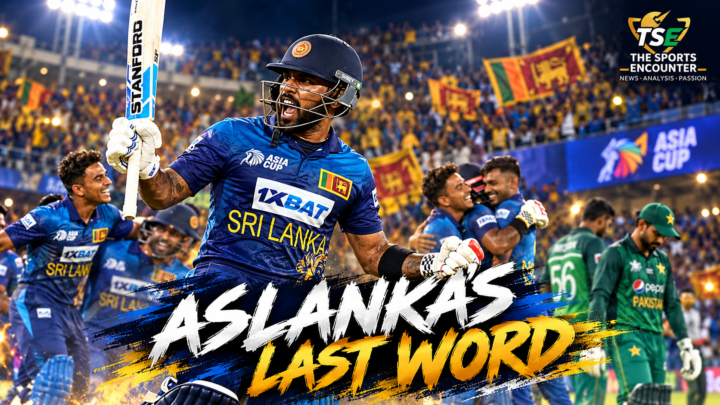
CARDIFF, Wales, June 12, 2017: Pakistan needed 75 runs with only three wickets remaining, and their ICC Champions Trophy campaign appeared to be slipping away. Sri Lanka had recovered from their own batting collapse to post 236, then dismantled Pakistan’s middle order after an opening partnership of 74. At 162/7, captain Sarfaraz Ahmed faced an almost impossible assignment alongside Mohammad Amir. What followed was an extraordinary unbeaten eighth-wicket partnership that carried Pakistan to 237/7 in 44.5 overs, securing a three-wicket victory and a place in the semifinals.
Sarfaraz finished unbeaten on 61 from 79 balls, while Amir contributed a career-important 28 not out from 43 deliveries. Their 75-run partnership established a Champions Trophy record for the eighth wicket, but Sri Lanka had opportunities to prevent the escape. Lasith Malinga created two catching chances off Sarfaraz, both of which were dropped. Earlier, Niroshan Dickwella’s 73 had anchored Sri Lanka’s innings before Junaid Khan and Hasan Ali claimed three wickets apiece. Sarfaraz’s captaincy, batting composure and vital wicketkeeping catch ultimately earned him the Player of the Match award.
Key Takeaways
- Pakistan needed 75 runs with only three wickets remaining, and their ICC Champions Trophy campaign appeared to be slipping away.
- Sarfaraz finished unbeaten on 61 from 79 balls, while Amir contributed a career-important 28 not out from 43 deliveries.
- Faheem Ashraf attempted to counterattack after Pakistan slipped to 137/6.
- Few ODI matches illustrate the importance of pressure and execution more clearly than the Pakistan vs Sri Lanka 2017 Champions Trophy encounter.
The encounter is Match 70 in The Sports Encounter’s A Celebration of 5000 ODIs, our collection revisiting 100 unforgettable One-Day Internationals.
Story at a glance

Pakistan vs Sri Lanka 2017: Champions Trophy Match Summary
The match was effectively a knockout contest. Both teams had one victory from their first two group fixtures, and the winner would advance alongside India from Group B.
Niroshan Dickwella’s 73 Gives Sri Lanka a Platform Before the Collapse
Niroshan Dickwella was Sri Lanka’s most important batter.
Angelo Mathews’ 39 Gives Sri Lanka Stability Until Amir Strikes
Angelo Mathews played an important supporting innings.
Junaid Khan’s 3/40 Turns Sri Lanka’s Strong Position Into a Crisis
Junaid Khan delivered one of Pakistan’s most influential bowling performances.
Hasan Ali’s 3/43 Exposes Sri Lanka’s Middle and Lower Order
Hasan Ali produced another decisive spell.
The match earned its place because both teams experienced substantial collapses, the result changed repeatedly, and two dropped catches ultimately helped determine which side would qualify for the semifinals. Pakistan’s victory also became an essential chapter in their journey toward winning the 2017 Champions Trophy.
Pakistan vs Sri Lanka 2017: Champions Trophy Match Summary
| Match detail | Information |
|---|---|
| Tournament | ICC Champions Trophy 2017 |
| Match | Group B, Match 12 |
| Date | June 12, 2017 |
| Venue | Sophia Gardens, Cardiff |
| Toss | Pakistan won and elected to field |
| Sri Lanka | 236 all out, 49.2 overs |
| Pakistan | 237/7, 44.5 overs |
| Result | Pakistan won by 3 wickets |
| Balls remaining | 31 |
| Player of the Match | Sarfaraz Ahmed |
| Pakistan’s leading batter | Sarfaraz Ahmed, 61* |
| Sri Lanka’s leading batter | Niroshan Dickwella, 73 |
| Pakistan’s leading bowlers | Junaid Khan and Hasan Ali, 3 wickets each |
| Sri Lanka’s leading bowler | Nuwan Pradeep, 3/60 |
| Decisive partnership | Sarfaraz and Amir, 75* |
| Tournament consequence | Pakistan qualified for the semifinals |
The match was effectively a knockout contest. Both teams had one victory from their first two group fixtures, and the winner would advance alongside India from Group B.
Pakistan entered the encounter under pressure after a heavy defeat to India in their opening match, followed by an improved bowling performance against South Africa.
Sri Lanka had produced one of the tournament’s major surprises by defeating India in a high-scoring chase. Their batting lineup therefore represented a serious threat, particularly with Angelo Mathews returning to strengthen the middle order.
Niroshan Dickwella’s 73 Gives Sri Lanka a Platform Before the Collapse
Niroshan Dickwella was Sri Lanka’s most important batter.
He scored 73 from 86 deliveries, including four boundaries, and helped his side recover after Danushka Gunathilaka fell for 13.
Dickwella initially combined with Kusal Mendis in a 56-run second-wicket partnership.
Mendis contributed 27 from 29 deliveries before Hasan Ali bowled him with an outstanding delivery that moved away late and struck the stumps.
Dinesh Chandimal then fell for a duck, leaving Sri Lanka at 83/3.
Dickwella responded by building a substantial fourth-wicket partnership with captain Angelo Mathews.
Their 78-run stand took Sri Lanka to 161/3 after 31 overs.
At that point, the innings appeared well positioned to produce a total beyond 260, especially with Dickwella established and Mathews becoming increasingly comfortable.
Pakistan needed wickets to reverse the momentum.
Mohammad Amir provided the first breakthrough, bowling Mathews for 39.
Junaid Khan subsequently removed Dhananjaya de Silva for one.
Amir then dismissed Dickwella for 73, with Sarfaraz completing a sharp one-handed catch behind the stumps.
Sri Lanka had lost three wickets for one run, collapsing from 161/3 to 162/6.
Junaid dismissed Thisara Perera for one shortly afterward.
Sri Lanka were 167/7.
The collapse had transformed a promising innings into a desperate attempt to survive the remaining overs.
Dickwella and Mathews’ Partnership
| Statistic | Performance |
|---|---|
| Dickwella’s runs | 73 |
| Balls faced | 86 |
| Mathews’ runs | 39 |
| Balls faced | 54 |
| Fourth-wicket partnership | 78 |
| Sri Lanka before the collapse | 161/3 |
| Sri Lanka after losing four wickets | 167/7 |
| Runs added while losing four wickets | 6 |
Sri Lanka’s collapse was particularly damaging because the team had reached 161 with 19 overs remaining.
A substantial total was still possible, but the sudden loss of established batters forced the lower order into survival mode.
Angelo Mathews’ 39 Gives Sri Lanka Stability Until Amir Strikes
Angelo Mathews played an important supporting innings.
His 39 came from 54 deliveries and included two fours and one six.
Mathews arrived with Sri Lanka 83/3 and recognized the need to rebuild alongside Dickwella.
The pair maintained a steady scoring rate while limiting further risks.
However, Mathews’ dismissal in the 32nd over initiated Sri Lanka’s decisive batting collapse.
Amir bowled him with a delivery that defeated his attempted shot and disturbed the stumps.
The wicket exposed the lower order earlier than Sri Lanka had expected.
Mathews had performed much of the rebuilding work, but Sri Lanka could not convert that platform into a substantial finish.
Junaid Khan’s 3/40 Turns Sri Lanka’s Strong Position Into a Crisis
Junaid Khan delivered one of Pakistan’s most influential bowling performances.
He claimed 3/40 from ten overs, including three maidens.
His economy rate of four runs per over was the best among Pakistan’s specialist fast bowlers.
Junaid dismissed Gunathilaka early before returning during Sri Lanka’s middle-order collapse.
His dismissal of Dhananjaya de Silva was particularly important because it prevented Sri Lanka from rebuilding after Mathews departed.
He subsequently removed Thisara Perera for one.
Those wickets ensured Sri Lanka could not stabilize immediately after losing Dickwella and Mathews.
Junaid’s three maidens were also significant.
They reduced scoring opportunities and forced Sri Lanka to take additional risks against other members of Pakistan’s attack.
His combination of control and wickets helped Pakistan regain command.
Hasan Ali’s 3/43 Exposes Sri Lanka’s Middle and Lower Order
Hasan Ali produced another decisive spell.
He finished with 3/43 from ten overs, removing Kusal Mendis, Suranga Lakmal and Asela Gunaratne.
His dismissal of Mendis was one of the match’s most impressive deliveries.
Hasan created an angle from wide on the crease before achieving late movement that struck the stumps.
The wicket disrupted Sri Lanka’s second-wicket partnership and prevented Mendis from developing into another substantial scorer.
Later, Hasan dismissed Lakmal for 26 and Gunaratne for 27.
Those wickets prevented Sri Lanka’s lower order from extending the innings toward 250.
Hasan’s contribution was particularly important because Sri Lanka had briefly recovered through Gunaratne and Lakmal after falling to 167/7.
Pakistan’s Bowling Performance
| Bowler | Overs | Maidens | Runs | Wickets | Economy |
|---|---|---|---|---|---|
| Mohammad Amir | 10 | 0 | 53 | 2 | 5.30 |
| Junaid Khan | 10 | 3 | 40 | 3 | 4.00 |
| Imad Wasim | 8 | 1 | 33 | 0 | 4.13 |
| Faheem Ashraf | 6.2 | 0 | 37 | 2 | 5.84 |
| Hasan Ali | 10 | 0 | 43 | 3 | 4.30 |
| Mohammad Hafeez | 5 | 0 | 24 | 0 | 4.80 |
Pakistan’s bowlers combined to dismiss Sri Lanka for 236 with four deliveries remaining.
The most important passage was the collapse from 161/3 to 167/7.
Without that burst of wickets, Pakistan’s target could have been substantially higher.
Fakhar Zaman’s 50 Gives Pakistan a Commanding Start
Pakistan’s chase began positively.
Fakhar Zaman attacked Sri Lanka’s bowlers from the outset, scoring 50 from 36 deliveries.
His innings included eight fours and one six, producing a strike rate of 138.89.
Azhar Ali offered stability at the other end.
The pair added 74 runs for the opening wicket, placing Pakistan in an excellent position to chase 237.
Fakhar reached his half-century from only 34 balls.
However, Nuwan Pradeep dismissed him shortly afterward, with Asela Gunaratne taking the catch.
Pakistan were 74/1.
At that stage, the required scoring rate remained comfortable.
Pakistan had nine wickets available and more than 38 overs remaining.
Sri Lanka needed several breakthroughs to revive the contest.
They achieved them.
Nuwan Pradeep’s 3/60 Dismantles Pakistan’s Middle Order
Nuwan Pradeep was Sri Lanka’s most successful bowler.
He claimed 3/60 from ten overs, dismissing Fakhar Zaman, Babar Azam and Imad Wasim.
Pradeep’s wickets arrived at moments when Pakistan needed to build partnerships.
Babar scored ten from 18 deliveries before falling to Pradeep.
Pakistan were 92/2.
Mohammad Hafeez then fell for one to Thisara Perera, leaving Pakistan at 95/3.
Azhar Ali contributed 34 but was dismissed by Suranga Lakmal with the score at 110/4.
Shoaib Malik made 11 before Lasith Malinga removed him.
Pakistan slipped to 131/5.
Pradeep then dismissed Imad Wasim for four.
Pakistan were 137/6.
The chase had changed dramatically.
Pakistan had lost five wickets for 63 runs after the opening partnership.
Pradeep’s pace, bounce and movement helped Sri Lanka regain control.
Pakistan’s Chase: How Sri Lanka Took Control
| Match situation | Pakistan score | Runs still required |
|---|---|---|
| Fakhar dismissed | 74/1 | 163 |
| Babar dismissed | 92/2 | 145 |
| Hafeez dismissed | 95/3 | 142 |
| Azhar dismissed | 110/4 | 127 |
| Malik dismissed | 131/5 | 106 |
| Imad dismissed | 137/6 | 100 |
| Faheem dismissed | 162/7 | 75 |
| Pakistan reached the target | 237/7 | 0 |
The collapse illustrated a critical weakness in Pakistan’s batting.
Several established batters failed to remain at the crease long enough to complete the chase after Fakhar and Azhar had provided a substantial platform.
Faheem Ashraf’s 15 Gives Pakistan Brief Hope Before Another Setback
Faheem Ashraf attempted to counterattack after Pakistan slipped to 137/6.
He scored 15 from 15 deliveries, including a four and a six.
His approach helped Pakistan move toward 160 while Sarfaraz attempted to stabilize the innings.
However, Faheem was run out by Thisara Perera for 15.
Pakistan were 162/7 after 29.5 overs.
The equation was still achievable in terms of runs and deliveries.
Pakistan required 75 from 121 balls.
However, only three wickets remained, and two specialist bowlers were among the remaining batters.
Sri Lanka now appeared to have the stronger position.
Mohammad Amir joined Sarfaraz.
Sarfaraz Ahmed’s Unbeaten 61 Saves Pakistan’s Champions Trophy Campaign
Sarfaraz Ahmed produced the decisive innings of the match.
His unbeaten 61 came from 79 deliveries and included five boundaries.
The Pakistan captain had already contributed significantly behind the stumps, including the outstanding one-handed catch that dismissed Dickwella.
Now his team needed him to complete an increasingly difficult chase.
Sarfaraz initially concentrated on rebuilding after Pakistan lost several wickets.
Once Amir arrived, the captain had to manage the scoring rate while protecting the remaining wickets.
The challenge required patience.
Pakistan did not need reckless hitting.
They needed a partnership capable of reducing the target gradually without another dismissal.
Sarfaraz responded by rotating the strike and punishing loose deliveries.
However, his innings was not without mistakes.
Sri Lanka missed two important catching opportunities.
The first came when Pakistan still required 43 runs.
Sarfaraz mistimed a slower delivery from Lasith Malinga toward mid-on.
Thisara Perera failed to hold the catch.
Malinga had created precisely the opportunity Sri Lanka needed.
The dismissal would have left Pakistan eight wickets down, with Junaid Khan and Hasan Ali still to bat.
Instead, Sarfaraz survived.
Another opportunity followed when substitute fielder Seekuge Prasanna dropped a more difficult chance at deep square leg.
Both catches came off Malinga’s bowling.
Sarfaraz capitalized on the reprieves and continued guiding Pakistan toward victory.
His unbeaten 61 earned him the official Player of the Match award.
Mohammad Amir’s Unbeaten 28 Gives Sarfaraz the Partner Pakistan Desperately Need
Mohammad Amir’s contribution deserves recognition beyond the modest individual score.
He made 28 not out from 43 deliveries, striking one four.
More importantly, he remained with Sarfaraz throughout the final partnership.
The pair added an unbeaten 75 runs for the eighth wicket.
The partnership lasted exactly 15 overs, from Pakistan’s seventh wicket at 29.5 overs until victory at 44.5.
That meant the pair scored five runs per over while avoiding further wickets.
The target did not require extraordinary acceleration.
It required disciplined batting and intelligent risk management.
Amir provided both.
The Sarfaraz-Amir Partnership
| Statistic | Performance |
|---|---|
| Pakistan when partnership began | 162/7 |
| Target | 237 |
| Runs required | 75 |
| Partnership | 75 not out |
| Overs together | 15 |
| Partnership scoring rate | 5.00 per over |
| Sarfaraz’s final score | 61* |
| Amir’s final score | 28* |
| Final team score | 237/7 |
| Balls remaining | 31 |
The stand became the highest eighth-wicket partnership in Champions Trophy history at the time.
It surpassed the 70-run partnership between Australia’s Mitchell Johnson and Brett Lee against the West Indies in Johannesburg in 2009.
That historical record reinforces the importance of Amir’s resistance.
Pakistan’s captain could not have completed the chase without a dependable partner.
Amir’s willingness to defend, rotate the strike and resist Sri Lanka’s attack made the recovery possible.
Sri Lanka’s Dropped Catches Decide a Match Their Bowlers Had Nearly Won
Sri Lanka’s bowling performance deserved a better outcome.
Pradeep had claimed three important wickets.
Malinga had removed Shoaib Malik and repeatedly threatened Sarfaraz.
Lakmal and Thisara Perera had also contributed breakthroughs.
By reducing Pakistan to 162/7, Sri Lanka had created a genuine opportunity to reach the semifinals.
However, fielding errors proved decisive.
Thisara’s missed catch when Pakistan still needed 43 was especially damaging.
Malinga had successfully deceived Sarfaraz with a slower delivery.
The captain mistimed the shot.
The catch offered Sri Lanka an opportunity to expose Pakistan’s final two batters.
Instead, Sarfaraz remained.
Prasanna’s subsequent dropped catch compounded the problem.
Sri Lanka captain Angelo Mathews acknowledged the importance of the missed opportunities after the match, telling the ICC that taking those catches could have produced a different outcome.
The distinction is important.
Pakistan’s batting partnership deserves credit for completing the chase.
Sri Lanka’s inability to convert its opportunities also contributed materially to the result.
Five Turning Points That Defined the Cardiff Thriller
1. Sri Lanka Collapse From 161/3 to 167/7
Dickwella and Mathews had placed Sri Lanka in a promising position.
Amir, Junaid and Hasan triggered a collapse that prevented a substantially larger total.
2. Fakhar Zaman Scores 50 From 36 Balls
Pakistan’s aggressive opener helped establish a 74-run opening partnership.
Continue A Celebration of 5000 ODIs
 A Celebration of 5000 ODIsA Celebration of 5000 ODIs Match 69: Praveen Kumar’s Four Wickets, Tendulkar’s 91 Break Australia in Brisbane Thriller
 A Celebration of 5000 ODIsA Celebration of 5000 ODIs Match 68: Aaqib Javed Takes 7/37, Three Indian Stars Fall in Three Balls as Pakistan Rule Sharjah
 A Celebration of 5000 ODIsA Celebration of 5000 ODIs Match 66: Imran Khan Takes 6/14, Pakistan Collapse for 87 as India Defend the Impossible
The start made the target appear manageable.
3. Pakistan Lose Six Wickets for 88 Runs
After reaching 74 without loss, Pakistan slipped to 162/7.
Sri Lanka had removed the established batters and appeared close to victory.
4. Thisara Perera Drops Sarfaraz
Pakistan still needed 43 runs when Sarfaraz offered a catch from Malinga’s slower ball.
The missed opportunity became one of the match’s defining moments.
5. Sarfaraz and Amir Complete an Unbeaten 75-Run Partnership
The eighth-wicket pair took Pakistan home with 31 deliveries remaining.
The victory secured a semifinal against England.
Why Match 70 Belongs in A Celebration of 5000 ODIs
Few ODI matches illustrate the importance of pressure and execution more clearly than the Pakistan vs Sri Lanka 2017 Champions Trophy encounter.
Sri Lanka had recovered from 83/3 to 161/3.
Pakistan then took four wickets for six runs.
Pakistan started its chase with a 74-run opening partnership.
Sri Lanka responded by reducing the visitors to 162/7.
Sarfaraz and Amir then produced the partnership that decided qualification.
Both teams had opportunities to win.
Both experienced damaging collapses.
Ultimately, Pakistan completed the chase because its final established batter remained unbeaten and found a partner capable of surviving the pressure.
The missed catches made the contest even more remarkable.
Sri Lanka’s bowlers had created the decisive opportunities, but the fielders failed to complete the dismissals.
The encounter therefore belongs in this collection for the quality of its reversals, the record partnership and the direct consequences for the Champions Trophy.
What Happened After Pakistan’s Victory?
Pakistan advanced to face tournament hosts England in the semifinals.
England entered that match unbeaten in the group stage and were widely regarded as strong title contenders.
Pakistan responded with an exceptional bowling performance.
England were dismissed for 211, and Pakistan completed an eight-wicket victory to reach the final.
India awaited them at The Oval.
Pakistan then produced one of the defining performances in their ODI history.
Fakhar Zaman scored 114 as Pakistan posted 338/4.
Mohammad Amir dismissed Rohit Sharma, Virat Kohli and Shikhar Dhawan.
Hasan Ali continued his outstanding tournament.
India were dismissed for 158, giving Pakistan a 180-run victory and their first Champions Trophy title.
The triumph was subsequently recognized through the ICC Fans’ Moment of the Year award, as documented in The Sports Encounter’s historical ICC awards review.
Those achievements might never have happened without the recovery against Sri Lanka in Cardiff.
Pakistan had been seven wickets down for 162.
Their tournament survival depended on Sarfaraz and Amir.
The pair provided the 75 runs that kept the campaign alive.
Pakistan vs Sri Lanka 2017 Champions Trophy: Complete Match Scorecard
Sri Lanka Innings: 236 All Out in 49.2 Overs
| Batter | Dismissal | R | B | 4s | 6s | SR |
|---|---|---|---|---|---|---|
| Niroshan Dickwella (wk) | c Sarfaraz b Amir | 73 | 86 | 4 | 0 | 84.88 |
| Danushka Gunathilaka | c Malik b Junaid | 13 | 20 | 2 | 0 | 65.00 |
| Kusal Mendis | b Hasan Ali | 27 | 29 | 4 | 0 | 93.10 |
| Dinesh Chandimal | b Faheem Ashraf | 0 | 2 | 0 | 0 | 0.00 |
| Angelo Mathews (c) | b Amir | 39 | 54 | 2 | 1 | 72.22 |
| Dhananjaya de Silva | c Sarfaraz b Junaid | 1 | 6 | 0 | 0 | 16.67 |
| Asela Gunaratne | c Fakhar b Hasan Ali | 27 | 44 | 1 | 0 | 61.36 |
| Thisara Perera | c Babar b Junaid | 1 | 5 | 0 | 0 | 20.00 |
| Suranga Lakmal | b Hasan Ali | 26 | 34 | 3 | 0 | 76.47 |
| Lasith Malinga | Not out | 9 | 14 | 0 | 0 | 64.29 |
| Nuwan Pradeep | c & b Faheem Ashraf | 1 | 3 | 0 | 0 | 33.33 |
| Extras | 1 bye, 5 leg-byes, 12 wides, 1 no-ball | 19 | ||||
| Total | All out, 49.2 overs | 236 |
Fall of wickets: 1-26 (Gunathilaka, 5.1), 2-82 (Mendis, 14.5), 3-83 (Chandimal, 15.1), 4-161 (Mathews, 31.2), 5-162 (Dhananjaya, 32.3), 6-162 (Dickwella, 33.1), 7-167 (Thisara, 35.0), 8-213 (Lakmal, 44.3), 9-232 (Gunaratne, 48.1), 10-236 (Pradeep, 49.2).
Pakistan Bowling
| Bowler | Overs | Maidens | Runs | Wickets | Economy |
|---|---|---|---|---|---|
| Mohammad Amir | 10 | 0 | 53 | 2 | 5.30 |
| Junaid Khan | 10 | 3 | 40 | 3 | 4.00 |
| Imad Wasim | 8 | 1 | 33 | 0 | 4.13 |
| Faheem Ashraf | 6.2 | 0 | 37 | 2 | 5.84 |
| Hasan Ali | 10 | 0 | 43 | 3 | 4.30 |
| Mohammad Hafeez | 5 | 0 | 24 | 0 | 4.80 |
Pakistan Innings: 237/7 in 44.5 Overs
| Batter | Dismissal | R | B | 4s | 6s | SR |
|---|---|---|---|---|---|---|
| Azhar Ali | c Kusal Mendis b Lakmal | 34 | 50 | 2 | 1 | 68.00 |
| Fakhar Zaman | c Gunaratne b Pradeep | 50 | 36 | 8 | 1 | 138.89 |
| Babar Azam | c Dhananjaya b Pradeep | 10 | 18 | 1 | 0 | 55.56 |
| Mohammad Hafeez | c Pradeep b Thisara | 1 | 5 | 0 | 0 | 20.00 |
| Shoaib Malik | c Dickwella b Malinga | 11 | 20 | 1 | 0 | 55.00 |
| Sarfaraz Ahmed (c, wk) | Not out | 61 | 79 | 5 | 0 | 77.22 |
| Imad Wasim | c Dickwella b Pradeep | 4 | 3 | 1 | 0 | 133.33 |
| Faheem Ashraf | run out (Thisara Perera) | 15 | 15 | 1 | 1 | 100.00 |
| Mohammad Amir | Not out | 28 | 43 | 1 | 0 | 65.12 |
| Junaid Khan | Did not bat | |||||
| Hasan Ali | Did not bat | |||||
| Extras | 4 byes, 6 leg-byes, 13 wides | 23 | ||||
| Total | 7 wickets, 44.5 overs | 237 |
Fall of wickets: 1-74 (Fakhar, 11.2), 2-92 (Babar, 15.4), 3-95 (Hafeez, 16.5), 4-110 (Azhar, 19.2), 5-131 (Malik, 24.5), 6-137 (Imad, 25.4), 7-162 (Faheem, 29.5).
Sri Lanka Bowling
| Bowler | Overs | Maidens | Runs | Wickets | Economy |
|---|---|---|---|---|---|
| Lasith Malinga | 9.5 | 2 | 52 | 1 | 5.29 |
| Suranga Lakmal | 10 | 0 | 48 | 1 | 4.80 |
| Nuwan Pradeep | 10 | 0 | 60 | 3 | 6.00 |
| Thisara Perera | 8 | 0 | 43 | 1 | 5.38 |
| Asela Gunaratne | 5 | 0 | 19 | 0 | 3.80 |
| Danushka Gunathilaka | 1 | 0 | 2 | 0 | 2.00 |
| Dhananjaya de Silva | 1 | 0 | 3 | 0 | 3.00 |
Result: Pakistan won by three wickets with 31 balls remaining.
Player of the Match: Sarfaraz Ahmed, 61 not out from 79 balls.
Tournament consequence: Pakistan qualified for the semifinals and Sri Lanka were eliminated.
How One Partnership Changed Pakistan’s Champions Trophy History
The lasting significance of this match extends beyond the three-wicket result.
Pakistan had reached a point where one further dismissal might have ended their tournament.
Sarfaraz was the last established batter.
Amir was primarily selected for his bowling.
Sri Lanka had a wicket-taking attack capable of finishing the contest.
Yet Pakistan’s eighth-wicket pair survived 15 overs, scored 75 runs and turned an apparently lost match into a victory.
Sarfaraz deserved his Player of the Match award.
Amir deserved considerable recognition for the patience and discipline required to remain unbeaten.
Sri Lanka’s bowlers also deserve credit for creating a match-winning position, even though the fielding mistakes ultimately proved costly.
The Pakistan vs Sri Lanka 2017 encounter remains an unforgettable example of how one partnership can change an entire tournament.
Pakistan survived Cardiff, defeated England in the semifinals and went on to beat India in the final.
Had Sri Lanka held either of the catches offered by Sarfaraz, the subsequent history of the 2017 Champions Trophy might have unfolded very differently.
That possibility, supported by the pressure and opportunities visible in the historical record, is why Match 70 belongs in The Sports Encounter’s A Celebration of 5000 ODIs.
A Celebration of 5000 ODIs
- A Celebration of 5000 ODIs Match 70: Pakistan vs Sri Lanka 2017, Sarfaraz and Amir Rescue a Lost Champions Trophy Chase
- A Celebration of 5000 ODIs Match 69: Praveen Kumar’s Four Wickets, Tendulkar’s 91 Break Australia in Brisbane Thriller
- A Celebration of 5000 ODIs Match 68: Aaqib Javed Takes 7/37, Three Indian Stars Fall in Three Balls as Pakistan Rule Sharjah
- A Celebration of 5000 ODIs Match 66: Imran Khan Takes 6/14, Pakistan Collapse for 87 as India Defend the Impossible
- A Celebration of 5000 ODIs Match 65: South Africa Need Six, Tendulkar Concedes Three as India Steal the 1993 Hero Cup Semifinal