
MANCHESTER, England, September 16, 2020: Australia were 73/5, chasing 303 against the reigning world champions, and England appeared to have one hand on the series trophy. Five established batters had disappeared inside 17 overs. Glenn Maxwell walked in at No. 7 to join Alex Carey, with Australia still needing 230 runs and only four recognized batting positions, including their own, remaining.
What followed was one of the finest rescue acts in modern One-Day International cricket. Glenn Maxwell struck 108 from 90 balls, Carey contributed 106 from 114, and their astonishing 212-run sixth-wicket partnership took Australia to within 18 runs of victory. Both centurions eventually fell, forcing Mitchell Starc and Pat Cummins to finish the job. Australia reached 305/7 in 49.4 overs, winning by three wickets with two deliveries remaining and claiming the series 2-1.
Key Takeaways
- Australia were 73/5, chasing 303 against the reigning world champions, and England appeared to have one hand on the series trophy.
- Glenn Maxwell arrived with Australia 73/5 and faced the challenge of rebuilding an innings in which another early wicket might have effectively ended the chase.
- The sixth-wicket partnership between Maxwell and Carey added 212 runs from 185 balls.
- Maxwell received the official Player of the Match award for his 108 from 90 balls.
The Manchester encounter is Match 81 in The Sports Encounter’s A Celebration of 5000 ODIs, our collection revisiting 100 extraordinary men’s One-Day Internationals.
Story at a glance

England vs Australia 2020: Match Summary
England entered the deciding match having recovered from defeat in the opening ODI to level the series in the second.
Mitchell Starc’s Two-Ball Double Strike Leaves England 0/2
England captain Eoin Morgan won the toss and chose to bat, expecting his side to establish a demanding target on a surface favorable for scoring.
Jonny Bairstow’s 112 Rescues England From Disaster
Bairstow scored 112 from 126 deliveries, striking 12 fours and two sixes.
Chris Woakes’ Unbeaten 53 Lifts England Above 300
Chris Woakes supplied the acceleration England needed during the final ten overs.
Adam Zampa’s 3/51 Gives Australia Middle-Overs Control
Adam Zampa was Australia’s most effective bowler in terms of controlling England’s recovery.
Its inclusion reflects an exceptional combination of a record-breaking partnership, individual brilliance under severe pressure and a finish that almost slipped away despite two centuries. It was also a particularly significant result: Australia ended England’s five-year unbeaten run in home ODI bilateral series.
England vs Australia 2020: Match Summary
| Match detail | Information |
|---|---|
| Match | England vs Australia, third ODI |
| Date | September 16, 2020 |
| Venue | Emirates Old Trafford, Manchester |
| Series | Australia tour of England, 2020 |
| Toss | England elected to bat |
| England | 302/7 in 50 overs |
| Australia | 305/7 in 49.4 overs |
| Result | Australia won by three wickets |
| Balls remaining | 2 |
| Player of the Match | Glenn Maxwell |
| England’s leading batter | Jonny Bairstow, 112 |
| Australia’s leading batter | Glenn Maxwell, 108 |
| Australia’s other centurion | Alex Carey, 106 |
| Best Australia bowling | Mitchell Starc, 3/74; Adam Zampa, 3/51 |
| Best England bowling figures | Chris Woakes, 2/46; Joe Root, 2/46 |
| Decisive partnership | Maxwell and Carey, 212 for the sixth wicket |
| Series result | Australia won 2-1 |
England entered the deciding match having recovered from defeat in the opening ODI to level the series in the second.
That previous match had exposed Australia’s inability to finish a chase from a strong position. Australia were 144/2 pursuing 232 but lost their final eight wickets for 63 runs, handing England a 24-run victory.
The third ODI appeared to be following an even more damaging pattern.
Yet the circumstances also created an opportunity for Australia’s middle order to demonstrate the resilience that had been missing two days earlier.
Mitchell Starc’s Two-Ball Double Strike Leaves England 0/2
England captain Eoin Morgan won the toss and chose to bat, expecting his side to establish a demanding target on a surface favorable for scoring.
Mitchell Starc immediately disrupted those plans.
He dismissed Jason Roy with the first delivery of the match, with Maxwell completing the catch.
Joe Root arrived at No. 3.
Starc trapped him lbw with the next ball.
England were 0/2 after two deliveries.
The start was extraordinary for a series decider. Australia had removed two established top-order batters before England had scored a run.
Starc’s opening burst also forced Jonny Bairstow to abandon any expectation of a comfortable start.
Bairstow now needed to rebuild while protecting his wicket against an experienced Australian seam attack.
He would eventually produce the innings that made England competitive.
Jonny Bairstow’s 112 Rescues England From Disaster
Bairstow scored 112 from 126 deliveries, striking 12 fours and two sixes.
His innings combined controlled accumulation with the ability to capitalize on Australia’s occasional loose deliveries.
After the first-over collapse, Bairstow formed a useful partnership with Morgan.
The pair added 67 runs for the third wicket, stabilizing England’s innings.
Morgan made 23 from 28 balls before Adam Zampa dismissed him.
Jos Buttler then contributed eight from 20 deliveries, but Zampa removed him as well.
England slipped to 96/4 after 18.1 overs.
Australia had once again created an opportunity to dismiss the hosts cheaply.
Bairstow’s next partnership changed that possibility.
Bairstow and Sam Billings Add 114 Runs
Sam Billings joined Bairstow with England under considerable pressure.
Rather than immediately attacking, Billings concentrated on building a partnership.
He gradually increased his scoring rate and finished with 57 from 58 deliveries, striking four fours and two sixes.
The pair added 114 runs for the fifth wicket.
Their partnership carried England from 96/4 to 210/5.
It was the most substantial recovery of England’s innings.
Bairstow remained the central figure, guiding the innings through the middle overs while Billings supplied valuable support.
Zampa eventually removed Billings in the 38th over, ending a partnership that had effectively rescued England from its second major collapse.
Bairstow departed shortly afterward.
Pat Cummins bowled him for 112, leaving England 220/6 after 40.1 overs.
The opening batter had done his job.
England still required a powerful finish, but it now possessed the platform for one.
Chris Woakes’ Unbeaten 53 Lifts England Above 300
Chris Woakes supplied the acceleration England needed during the final ten overs.
He scored 53 not out from 39 deliveries, striking six boundaries.
His contribution was particularly important because the hosts had lost both Bairstow and Billings during the closing stages.
Woakes added 46 runs with Tom Curran for the seventh wicket.
Curran contributed 19 from 19 balls.
Adil Rashid then joined Woakes after Curran was bowled by Starc.
The pair added an unbeaten 36 runs from just 22 deliveries.
Rashid finished with 11 from nine balls.
England reached 302/7.
The final total represented an impressive recovery from 0/2 and 96/4.
It also established a meaningful challenge for Australia, whose batting lineup had struggled to close out the previous ODI.
England’s Three Partnerships That Changed the Innings
| Partnership | Runs | Match situation |
|---|---|---|
| Bairstow and Morgan | 67 | Rebuilt after 0/2 |
| Bairstow and Billings | 114 | Recovered from 96/4 |
| Woakes and Curran | 46 | Accelerated after 220/6 |
| Woakes and Rashid | 36* | Added late runs in 22 balls |
Woakes’ contribution deserves attention because he provided 53 runs while also preparing to play a major role with the ball.
In a match ultimately decided with only two deliveries remaining, those late runs significantly increased the pressure Australia faced.
Adam Zampa’s 3/51 Gives Australia Middle-Overs Control
Adam Zampa was Australia’s most effective bowler in terms of controlling England’s recovery.
The leg-spinner claimed 3/51 from ten overs.
His wickets included Morgan, Buttler and Billings.
Each dismissal interrupted an important phase.
Morgan had been rebuilding alongside Bairstow.
Buttler was capable of accelerating once established.
Billings had formed England’s biggest partnership.
Zampa removed all three.
His economy rate of 5.10 was particularly valuable considering England’s final total of 302.
Starc also claimed three wickets, finishing with 3/74.
His double strike from the first two balls was the defining opening passage, while his later dismissal of Curran interrupted England’s finishing phase.
Cummins claimed 1/53, removing Bairstow.
Australia’s bowling was effective enough to create repeated opportunities, but England’s middle and lower orders still constructed a demanding total.
Chris Woakes Reduces Australia’s Chase to 31/2
Australia’s pursuit began positively, with David Warner and captain Aaron Finch attempting to establish early momentum.
Woakes changed that.
He trapped Finch lbw for 12 with Australia at 21/1.
Marcus Stoinis followed for four, caught by Morgan.
Australia were 31/2 after five overs.
The early wickets placed immediate pressure on Warner and Marnus Labuschagne.
England’s bowlers recognized an opportunity to attack the middle order before the required scoring rate became manageable.
Warner scored 24 from 32 balls, but Joe Root produced an important breakthrough when introduced into the attack.
Root bowled the left-hander for 24.
Australia were 51/3.
The chase was already becoming difficult.
England then struck twice more.
Joe Root’s Double Strike and Labuschagne’s Run Out Leave Australia 73/5
Root’s contribution with the ball was an unexpected but decisive feature of England’s early dominance.
After dismissing Warner, the part-time off-spinner removed Mitchell Marsh for two.
Australia were 55/4.
Alex Carey had arrived at the crease and was attempting to rebuild alongside Labuschagne.
However, a risky attempt at a run ended their partnership.
Sam Billings’ fielding contributed to Labuschagne being run out for 20.
Australia were 73/5 after 16.5 overs.
Another 230 runs were required.
The required scoring rate was still manageable in purely mathematical terms, but the wicket situation was severe.
England had dismissed five batters, including Finch, Warner and Labuschagne.
Australia now depended on its lower middle order to produce a substantial partnership.
Maxwell joined Carey.
The contest was about to change completely.
Glenn Maxwell’s 108 From 90 Balls Turns the Chase Around
Glenn Maxwell arrived with Australia 73/5 and faced the challenge of rebuilding an innings in which another early wicket might have effectively ended the chase.
He responded with a combination of aggressive stroke play and intelligent partnership building.
Maxwell scored 108 from 90 deliveries, striking four fours and seven sixes.
His strike rate of 120.00 was exceptional given the circumstances.
The all-rounder began attacking quickly, targeting the boundaries when England’s bowlers missed their lengths.
He was particularly effective against leg-spinner Rashid.
The shorter boundary on one side of the ground provided an opportunity, and Maxwell repeatedly exploited it.
However, the innings was not an uninterrupted display of clean hitting.
He survived an opportunity in the 32nd over when Buttler failed to complete a difficult catch off Rashid.
That moment mattered enormously.
England had already allowed Australia’s sixth-wicket partnership to develop, but another dismissal would have exposed Cummins and Starc much earlier.
Maxwell survived and continued attacking.
His century arrived from 84 deliveries.
He eventually fell for 108 in the 48th over, caught by Curran off Rashid.
Australia were 285/6.
Only 18 runs remained, but Maxwell’s dismissal created another tense moment.
Glenn Maxwell’s Innings in Numbers
| Measure | Performance |
|---|---|
| Runs | 108 |
| Balls faced | 90 |
| Fours | 4 |
| Sixes | 7 |
| Strike rate | 120.00 |
| Runs from boundaries | 58 |
| Partnership with Carey | 212 |
| Australia at his arrival | 73/5 |
| Australia at his dismissal | 285/6 |
| Player of the Match | Yes |
Maxwell scored 58 runs through boundaries, representing approximately 53.7% of his innings.
That figure helps explain the combination of power and accumulation required to complete the recovery.
His seven sixes accelerated the chase, but the remaining 50 runs came through fours, running between the wickets and careful placement.
The innings also gave Maxwell a significant personal milestone.
He became the fastest player at the time to reach 3,000 ODI runs when measured by balls faced, a reflection of the aggressive scoring role he had performed throughout his career.
Alex Carey’s 106 Provides the Composure Behind the Counterattack
Carey’s contribution was just as important as Maxwell’s, although his batting style was noticeably different.
The wicketkeeper scored 106 from 114 deliveries, striking seven fours and two sixes.
He arrived with Australia already in trouble and remained through the period when England threatened to take complete control.
Carey initially concentrated on stabilizing the innings.
He rotated the strike, protected his wicket and allowed Maxwell to attack more freely.
However, he also punished poor deliveries and maintained the required scoring rate.
The partnership would not have succeeded if Carey had merely occupied the crease.
He needed to contribute substantially.
His 106 was his maiden international century.
It also came under circumstances where an ordinary half-century would almost certainly have been insufficient.
The No-Ball That Saved Carey’s Innings
One moment in Carey’s innings proved particularly consequential.
When he was on nine, Carey edged Jofra Archer toward third man, where the catch was completed.
Australia appeared to have lost its sixth wicket.
But the replay showed Archer had overstepped.
The delivery was a no-ball, and Carey survived.
The significance of that reprieve became clearer as the chase developed.
Carey eventually scored another 97 runs and helped establish the partnership that transformed Australia’s position.
The no-ball did not itself win the match.
Carey still had to survive the remaining deliveries and build a century under pressure.
Nevertheless, it was one of the critical moments that allowed the comeback to happen.
Without that reprieve, Australia would have been six wickets down long before the target came within reach.
Maxwell and Carey Add 212: The Partnership That Rewrote Australia’s Chances
The sixth-wicket partnership between Maxwell and Carey added 212 runs from 185 balls.
It took Australia from 73/5 to 285/6.
The partnership was an Australian ODI record for the sixth wicket.
It also became Australia’s highest partnership for any wicket against England in England at the time.
The statistical significance was considerable, but the match situation made the achievement even more impressive.
Australia needed 230 runs when Maxwell joined Carey.
By the time Maxwell departed, only 18 remained.
Comparing the Two Centurions
| Measure | Glenn Maxwell | Alex Carey |
|---|---|---|
| Runs | 108 | 106 |
| Balls | 90 | 114 |
| Fours | 4 | 7 |
| Sixes | 7 | 2 |
| Strike rate | 120.00 | 92.98 |
| Main contribution | Acceleration and boundary hitting | Stability and sustained scoring |
| Partnership | 212 | 212 |
The contrasting strike rates explain how the partnership worked.
Maxwell attacked the bowling, particularly when field placements offered scoring opportunities.
Carey maintained continuity, ensuring that the innings did not suffer another collapse.
Together, the pair maintained the balance between risk and stability.
Their partnership also exposed a tactical difficulty for England.
Aggressive field placements created boundary opportunities.
Defensive fields allowed the batters to rotate the strike.
England needed a wicket to break the partnership, but its bowlers struggled to find one until the 48th over.
By then, Australia had moved within striking distance.
Jofra Archer’s No-Ball and Adil Rashid’s Late Wickets Almost Change Everything
England had opportunities to stop the recovery.
Archer’s no-ball while Carey was on nine was the most consequential.
Buttler’s missed catching opportunity off Maxwell was another.
Both moments offered England a realistic chance to expose Australia’s lower order.
Instead, the partnership continued.
Rashid eventually dismissed Maxwell for 108 in the 48th over.
The wicket arrived with Australia at 285/6.
Archer then removed Carey for 106 in the final delivery of the 49th over.
Australia were 293/7.
Suddenly, the visitors had lost both centurions.
They needed ten runs from six balls.
Cummins and Starc were at the crease.
England had recovered enough momentum to believe it could produce another extraordinary escape.
Two days earlier, Australia had lost from 144/2 while chasing 232.
Manchester appeared capable of delivering another collapse.
Mitchell Starc’s Final-Over Six and Four Secure the Series
England captain Morgan entrusted the final over to Rashid.
Australia needed ten runs.
Starc took strike.
The left-arm fast bowler responded immediately, launching the first delivery down the ground for six.
The equation became four runs from five balls.
The pressure shifted sharply back toward England.
Rashid continued searching for a breakthrough, but Starc maintained his composure.
On the fourth delivery, he found the boundary again, completing Australia’s chase.
Australia reached 305/7 after 49.4 overs.
Starc finished unbeaten on 11 from just three balls.
Cummins remained unbeaten on four.
The chase ended with two balls remaining.
The lower-order finish added another remarkable layer to the match.
Maxwell and Carey had produced the partnership that made victory possible.
But their dismissals meant Australia still needed someone to complete the job.
Starc supplied the decisive blows.
Five Turning Points That Defined the Manchester ODI
1. Starc Removes Roy and Root With the First Two Balls
England were 0/2 after two deliveries, but Bairstow’s century prevented Australia from taking full advantage.
2. Bairstow and Billings Add 114
Their fifth-wicket partnership rescued England from 96/4 and established the platform for 302/7.
Continue A Celebration of 5000 ODIs
 A Celebration of 5000 ODIsA Celebration of 5000 ODIs Match 80: Mark Wood Defends Seven in the Final Over as England Break South Africa’s Hearts
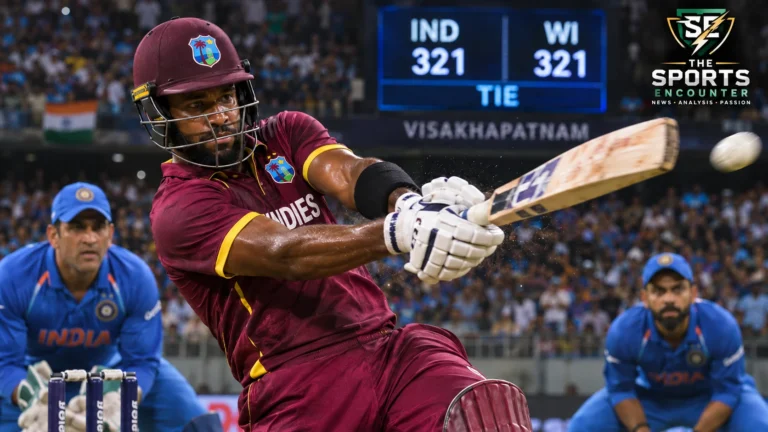 A Celebration of 5000 ODIsA Celebration of 5000 ODIs Match 79: Shai Hope’s Last-Ball Four Denies Virat Kohli Victory After Historic 10,000-Run Milestone
 A Celebration of 5000 ODIsA Celebration of 5000 ODIs Match 78: Dwayne Bravo’s Slower Ball Breaks India’s 17-Match Chasing Streak
3. Australia Collapse to 73/5
Woakes, Root and England’s fielders removed five established batters inside 17 overs.
The chase appeared almost lost.
4. Maxwell and Carey Build a Record 212-Run Partnership
Their sixth-wicket stand brought Australia from 73/5 to 285/6.
Carey’s survival following Archer’s no-ball was a crucial moment.
5. Starc Hits Six and Four in the Final Over
After both centurions departed, Australia still required ten runs.
Starc completed the chase with two balls remaining.
Why Glenn Maxwell Was Player of the Match
Maxwell received the official Player of the Match award for his 108 from 90 balls.
The decision reflected the extraordinary impact of his innings.
Australia were 73/5 when he arrived.
His attacking stroke play transformed the chase and prevented England from controlling the required scoring rate.
However, Carey’s 106 deserves almost equal recognition.
The wicketkeeper supplied the stability that allowed Maxwell to attack.
Their partnership was the central reason Australia won.
Starc’s final-over contribution was decisive, while Zampa’s three wickets had helped restrict England during the first innings.
The collective nature of the victory should not be overlooked.
Maxwell provided the acceleration, Carey the endurance and Starc the finish.
Each contribution was necessary.
What the Result Changed for England and Australia
The three-wicket victory completed a 2-1 series win for Australia.
It ended England’s five-year unbeaten run in home ODI bilateral series, dating back to Australia’s previous series victory in England in 2015.
The result also strengthened Australia’s position in the ICC Men’s Cricket World Cup Super League, bringing the visitors closer to England in the standings at that stage.
For Australia, the victory offered evidence that the side could defeat the reigning world champions away from home despite significant pressure.
The win was particularly satisfying after the previous ODI, when Australia had failed to complete a much smaller chase from a strong position.
For England, the defeat raised questions about the team’s ability to break an established lower-middle-order partnership.
The hosts had created an excellent opportunity at 73/5.
They also possessed chances to dismiss Carey and Maxwell much earlier.
Those opportunities disappeared, and Australia punished the mistakes.
Why Match 81 Belongs in A Celebration of 5000 ODIs
This Manchester thriller meets several of the standards established for A Celebration of 5000 ODIs.
The first is improbability.
Australia were five wickets down with 230 runs still required.
Few ODI chases have been rescued from such a severe position.
The second is individual brilliance.
Maxwell and Carey both scored centuries, combining for a partnership that broke Australian records.
The third is the number of turning points.
England began at 0/2, recovered to 302/7, reduced Australia to 73/5 and then almost recovered again after dismissing the two centurions.
The fourth is the final-over finish.
Starc still had to score ten runs with Cummins at the other end.
The fifth is historical consequence.
Australia secured a rare bilateral ODI series victory in England and ended a lengthy unbeaten home run.
The encounter also offers a compelling comparison with Match 80, when Mark Wood defended seven runs in the final over against South Africa.
In Southampton, England’s bowler executed an outstanding final over to preserve a narrow victory.
In Manchester, Australia’s tailender attacked the final over immediately and completed the chase.
The results illustrate how dramatically different final-over decisions can shape an ODI.
Maxwell’s innings also belongs within the wider story of his remarkable international career, explored in The Sports Encounter’s tribute to Glenn Maxwell.
His unbeaten 201 against Afghanistan at the 2023 World Cup later became the most famous example of his ability to rescue Australia from a seemingly hopeless position.
The Manchester century demonstrated the same quality three years earlier.
Complete Match Scorecard: England vs Australia, September 16, 2020
England Innings: 302/7 in 50 Overs
| Batter | Dismissal | Runs | Balls | 4s | 6s |
|---|---|---|---|---|---|
| Jason Roy | c Maxwell b Starc | 0 | 1 | 0 | 0 |
| Jonny Bairstow | b Cummins | 112 | 126 | 12 | 2 |
| Joe Root | lbw b Starc | 0 | 1 | 0 | 0 |
| Eoin Morgan (c) | c Starc b Zampa | 23 | 28 | 4 | 0 |
| Jos Buttler (wk) | c Finch b Zampa | 8 | 20 | 0 | 0 |
| Sam Billings | c Mitchell Marsh b Zampa | 57 | 58 | 4 | 2 |
| Chris Woakes | Not out | 53 | 39 | 6 | 0 |
| Tom Curran | b Starc | 19 | 19 | 0 | 1 |
| Adil Rashid | Not out | 11 | 9 | 0 | 1 |
| Extras | 8 leg-byes, 10 wides, 1 no-ball | 19 | |||
| Total | 7 wickets, 50 overs | 302 |
Did not bat: Jofra Archer, Mark Wood.
Fall of wickets: 0/1 (Roy, 0.1), 0/2 (Root, 0.2), 67/3 (Morgan, 10.2), 96/4 (Buttler, 18.1), 210/5 (Billings, 37.3), 220/6 (Bairstow, 40.1), 266/7 (Curran, 46.2).
Australia Bowling
| Bowler | Overs | Maidens | Runs | Wickets | Economy |
|---|---|---|---|---|---|
| Mitchell Starc | 10 | 0 | 74 | 3 | 7.40 |
| Josh Hazlewood | 10 | 0 | 68 | 0 | 6.80 |
| Pat Cummins | 10 | 0 | 53 | 1 | 5.30 |
| Adam Zampa | 10 | 0 | 51 | 3 | 5.10 |
| Mitchell Marsh | 6 | 0 | 25 | 0 | 4.17 |
| Glenn Maxwell | 4 | 0 | 23 | 0 | 5.75 |
Australia Innings: 305/7 in 49.4 Overs
| Batter | Dismissal | Runs | Balls | 4s | 6s |
|---|---|---|---|---|---|
| David Warner | b Root | 24 | 32 | 3 | 0 |
| Aaron Finch (c) | lbw b Woakes | 12 | 9 | 2 | 0 |
| Marcus Stoinis | c Morgan b Woakes | 4 | 7 | 1 | 0 |
| Marnus Labuschagne | run out (Billings/Buttler) | 20 | 31 | 1 | 0 |
| Mitchell Marsh | c Buttler b Root | 2 | 8 | 0 | 0 |
| Alex Carey (wk) | c Wood b Archer | 106 | 114 | 7 | 2 |
| Glenn Maxwell | c Tom Curran b Rashid | 108 | 90 | 4 | 7 |
| Pat Cummins | Not out | 4 | 5 | 0 | 0 |
| Mitchell Starc | Not out | 11 | 3 | 1 | 1 |
| Extras | 5 leg-byes, 8 wides, 1 no-ball | 14 | |||
| Total | 7 wickets, 49.4 overs | 305 |
Did not bat: Josh Hazlewood, Adam Zampa.
Fall of wickets: 21/1 (Finch, 2.5), 31/2 (Stoinis, 4.6), 51/3 (Warner, 10.5), 55/4 (Marsh, 12.4), 73/5 (Labuschagne, 16.5), 285/6 (Maxwell, 47.3), 293/7 (Carey, 48.6).
England Bowling
| Bowler | Overs | Maidens | Runs | Wickets | Economy |
|---|---|---|---|---|---|
| Chris Woakes | 10 | 0 | 46 | 2 | 4.60 |
| Jofra Archer | 9 | 0 | 60 | 1 | 6.67 |
| Mark Wood | 9 | 1 | 40 | 0 | 4.44 |
| Joe Root | 8 | 0 | 46 | 2 | 5.75 |
| Tom Curran | 6 | 1 | 40 | 0 | 6.67 |
| Adil Rashid | 7.4 | 0 | 68 | 1 | 8.87 |
Result: Australia won by three wickets with two balls remaining.
Player of the Match: Glenn Maxwell, 108 from 90 balls.
Series result: Australia won the three-match ODI series 2-1.
The Manchester Miracle That Changed the Series
England had Australia in serious trouble at 73/5.
The defending world champions possessed the wickets, bowling options and match situation needed to complete another victory.
But Glenn Maxwell and Alex Carey transformed the chase.
Their 212-run partnership rescued Australia and created an opportunity that had barely existed when they came together.
Even then, the victory was not guaranteed.
England removed both centurions before the final over, leaving Australia’s tailenders to score ten runs.
Mitchell Starc responded with the decisive six and four, completing a remarkable three-wicket victory.
The Manchester encounter belongs among the unforgettable matches in A Celebration of 5000 ODIs because it combined an extraordinary recovery with a record partnership, two outstanding centuries and a finish that remained uncertain until the penultimate over’s aftermath.
For Australia, it was a memorable series triumph on English soil.
For Maxwell and Carey, it was a performance that demonstrated how even a catastrophic top-order collapse could be overturned through intelligent partnership building, controlled risk and the courage to keep attacking.
A Celebration of 5000 ODIs
- A Celebration of 5000 ODIs Match 81: Maxwell and Carey’s 212-Run Rescue Stuns England in Manchester
- A Celebration of 5000 ODIs Match 80: Mark Wood Defends Seven in the Final Over as England Break South Africa’s Hearts
- A Celebration of 5000 ODIs Match 79: Shai Hope’s Last-Ball Four Denies Virat Kohli Victory After Historic 10,000-Run Milestone
- A Celebration of 5000 ODIs Match 78: Dwayne Bravo’s Slower Ball Breaks India’s 17-Match Chasing Streak
- A Celebration of 5000 ODIs Match 77: Zimbabwe vs New Zealand 2011, Malcolm Waller’s Unbeaten 99 Completes a Record Chase