
SOUTHAMPTON, England, May 27, 2017: South Africa needed seven runs from six balls. David Miller was unbeaten on 69, Chris Morris had struck two sixes during a furious late assault, and England’s 330/6 suddenly looked vulnerable. The visitors had five wickets remaining, two powerful finishers at the crease and a genuine opportunity to level the series. Captain Eoin Morgan turned to Mark Wood for the final over.
Wood conceded only four runs. Miller finished unbeaten on 71, Morris remained on 36, and South Africa closed at 328/5, two runs short. England escaped with victory and secured the three-match ODI series with a game remaining. Ben Stokes‘ century had given the hosts their imposing total, but the outcome ultimately depended on six deliveries of remarkable precision under pressure.
Key Takeaways
- England entered the contest having won the opening match at Headingley by 72 runs.
- England’s innings began cautiously against Kagiso Rabada and Chris Morris.
- South Africa’s bowling performance included an important contribution from Rabada.
- De Villiers scored 52 from 50 deliveries, striking six boundaries.
The Southampton thriller is Match 80 in The Sports Encounter’s A Celebration of 5000 ODIs, our historical collection revisiting 100 extraordinary men’s One-Day Internationals.
Story at a glance

England vs South Africa 2017: Complete Match Summary
England entered the contest having won the opening match at Headingley by 72 runs. South Africa needed victory to keep the three-match series alive.
Ben Stokes’ 101 Gives England the Total It Needs
England’s innings began cautiously against Kagiso Rabada and Chris Morris.
Jos Buttler’s Unbeaten 65 and Moeen Ali’s 33 Transform the Final Overs
England’s acceleration continued after Stokes departed.
Kagiso Rabada’s 2/50 Keeps South Africa Competitive
South Africa’s bowling performance included an important contribution from Rabada.
Quinton de Kock’s 98 Builds a Strong Chase
South Africa began its reply confidently.
Its inclusion reflects the combination of individual brilliance, a substantial chase, tactical pressure and a final-over defense in which the bowler did not need a wicket to decide the match. England had appeared in control when South Africa slipped to 211/4, but Miller and Morris almost reversed the result with a devastating late partnership.
England vs South Africa 2017: Complete Match Summary
| Match detail | Information |
|---|---|
| Match | England vs South Africa, second ODI |
| Date | May 27, 2017 |
| Venue | The Rose Bowl, Southampton |
| Toss | South Africa elected to field |
| England | 330/6 in 50 overs |
| South Africa | 328/5 in 50 overs |
| Result | England won by two runs |
| Player of the Match | Ben Stokes |
| England’s leading batter | Ben Stokes, 101 |
| South Africa’s leading batter | Quinton de Kock, 98 |
| Best England bowling | Liam Plunkett, 3/64 |
| Best South Africa bowling | Kagiso Rabada, 2/50 |
| Decisive contribution | Mark Wood’s final over |
| Series position afterward | England led 2-0, series secured |
England entered the contest having won the opening match at Headingley by 72 runs. South Africa needed victory to keep the three-match series alive.
The visitors chose to field under overcast conditions, expecting the new ball to offer assistance.
That decision initially appeared justified, but England’s middle order turned a difficult beginning into 330 runs.
The chase then produced several important changes in momentum before Wood settled the contest.
Ben Stokes’ 101 Gives England the Total It Needs
England’s innings began cautiously against Kagiso Rabada and Chris Morris.
Jason Roy managed eight from 16 balls before Rabada bowled him.
England were 12/1 after 4.1 overs.
Alex Hales and Joe Root rebuilt, adding 58 for the second wicket.
Hales made 24 before Dwaine Pretorius dismissed him, with Quinton de Kock completing the catch.
Root contributed 39 from 41 balls but was run out following a deflection involving Pretorius.
At 80/3 after 15.5 overs, England needed a substantial partnership.
Stokes joined captain Morgan and initially played with restraint.
The left-handers rebuilt through controlled accumulation, gradually moving the innings toward a position from which they could attack.
Their fourth-wicket partnership added 95 runs.
Morgan made 45 from 64 deliveries before Rabada dismissed him.
England were 175/4 in the 33rd over.
Stokes then accelerated.
He struck 11 fours and three sixes, reaching his century from 77 deliveries before eventually falling for 101 from 79.
The innings had particular significance because he had survived an early opportunity when South Africa failed to hold a catch.
That missed chance proved expensive.
Stokes transformed a vulnerable batting position into the foundation for a total above 300.
His century also ensured England could recover from a relatively modest 120/3 at the halfway point.
Why Stokes’ Innings Was So Important
| Measure | Ben Stokes |
|---|---|
| Runs | 101 |
| Balls faced | 79 |
| Fours | 11 |
| Sixes | 3 |
| Strike rate | 127.85 |
| Partnership with Morgan | 95 |
| Partnership with Buttler | 77 |
| Player of the Match | Yes |
Stokes’ innings supplied the most significant individual batting contribution for England.
His ability to rebuild and then accelerate gave the remaining batters enough time and wickets to attack the closing overs.
The final margin of two runs underlined the value of every boundary he scored.
Jos Buttler’s Unbeaten 65 and Moeen Ali’s 33 Transform the Final Overs
England’s acceleration continued after Stokes departed.
Jos Buttler finished unbeaten on 65 from 53 balls, striking seven fours.
His innings became increasingly important as England approached the final ten overs.
Buttler initially supported Stokes during their fifth-wicket partnership of 77.
He then combined with Moeen Ali in a destructive closing stand.
Moeen scored 33 from just 19 deliveries, striking five fours.
Their sixth-wicket partnership added 78 runs from only 40 balls.
The scoring rate during that partnership was 11.70 runs per over.
That calculation highlights how effectively England converted its middle-order recovery into a formidable total.
Moeen fell from the last delivery of the innings, but England had already reached 330.
The stand would prove decisive.
South Africa eventually finished only two runs short, meaning the aggressive batting of Buttler and Moeen provided more than a useful late flourish.
It supplied the margin England ultimately defended.
Kagiso Rabada’s 2/50 Keeps South Africa Competitive
South Africa’s bowling performance included an important contribution from Rabada.
The fast bowler claimed 2/50 from ten overs.
His first wicket was Roy, who fell for eight during the fifth over.
Rabada later removed Morgan for 45, ending England’s substantial fourth-wicket partnership.
His economy rate of 5.00 was impressive given England’s final total.
No other South African bowler who completed ten overs conceded fewer runs.
Pretorius claimed 1/61.
Keshav Maharaj took 1/72, removing Stokes after his century.
Andile Phehlukwayo finished with 1/74, while Morris conceded 66 without taking a wicket.
Rabada’s spell offered South Africa control during periods when England’s other batters were accelerating.
However, the expensive final overs prevented the visitors from restricting the target to a more manageable figure.
South Africa required 331 to win.
Quinton de Kock’s 98 Builds a Strong Chase
South Africa began its reply confidently.
Hashim Amla and Quinton de Kock added 56 for the opening wicket.
Amla scored 24 before Stokes dismissed him, with Morgan completing the catch.
Faf du Plessis made 16 but fell to Plunkett.
South Africa were 93/2 after 16.1 overs.
De Kock then established a substantial partnership with captain AB de Villiers.
The pair added 96 runs for the third wicket.
Their contrasting approaches helped South Africa maintain momentum.
De Kock scored through the off side with increasing confidence, while de Villiers worked the gaps and punished deliveries that offered width.
De Kock eventually made 98 from 103 balls, including 11 boundaries.
His innings was especially valuable because it occupied a substantial portion of the chase.
He provided stability while several teammates attempted to accelerate.
However, his dismissal became one of the match’s defining moments.
Moeen induced a faint edge, and Buttler completed the catch.
South Africa were 211/4 at the end of the 36th over.
Another 120 runs were required from 14 overs.
The chase was still possible, but England appeared to hold the advantage.
De Kock’s 98 and Its Importance
| Measure | Performance |
|---|---|
| Runs | 98 |
| Balls | 103 |
| Fours | 11 |
| Strike rate | 95.15 |
| Partnership with Amla | 56 |
| Partnership with de Villiers | 96 |
| Score at dismissal | 211/4 |
| Runs still required | 120 |
De Kock fell two runs short of a century, but the importance of his innings extended beyond that missed milestone.
He gave South Africa a realistic chance of chasing a target above 330.
Without his contribution, the late assault from Miller and Morris would have needed to begin from a significantly weaker position.
AB de Villiers’ 52 Almost Puts South Africa in Control
De Villiers scored 52 from 50 deliveries, striking six boundaries.
His innings provided South Africa with an effective middle-order contribution after the loss of Amla and du Plessis.
The 96-run partnership with de Kock carried the visitors to 189/3.
At that stage, the required scoring rate remained manageable.
However, Plunkett produced an important breakthrough.
De Villiers attempted to attack a delivery and gloved it through to Buttler.
The dismissal interrupted South Africa’s strongest middle-order partnership.
More importantly, it removed the captain just as the chase was approaching its decisive phase.
The wicket created an opportunity for England to attack the remaining batters before they could establish themselves.
De Kock departed soon afterward.
Those two wickets changed the balance.
South Africa went from 189/2 to 211/4, losing its two most established batters for only 22 additional runs.
Liam Plunkett’s 3/64 Creates England’s Best Chance of Victory
Plunkett finished with 3/64 from ten overs.
His wickets were du Plessis, de Villiers and Farhaan Behardien.
The dismissal of de Villiers was particularly valuable because South Africa’s captain had already settled into the chase.
Plunkett’s next important intervention came when he removed Behardien for 17.
South Africa were 266/5 after 43.3 overs.
That left the visitors needing 65 runs from 39 deliveries.
England had reasons to believe the match was approaching a comfortable conclusion.
However, Plunkett’s wicket also brought Morris to the crease.
The all-rounder immediately began attacking.
The decision to use Plunkett through the middle and late stages had successfully created pressure, but England still needed to close out the innings.
That task became increasingly difficult as Miller and Morris accelerated.
David Miller’s Unbeaten 71 Turns the Chase Into a Thriller
Miller produced South Africa’s most important late-order innings.
He finished unbeaten on 71 from 51 deliveries, striking five fours and two sixes.
The left-hander initially joined de Kock after the dismissal of de Villiers.
He then continued building partnerships despite the loss of established batters.
His scoring rate increased substantially during the final ten overs.
Miller reached his half-century from 34 balls.
The innings combined powerful hitting with the ability to manipulate the strike.
He also recognized when England’s bowlers were struggling to maintain their lengths.
With 20 runs required from the final two overs, Miller attacked Jake Ball.
The penultimate over brought South Africa back into a position where victory appeared likely.
By its conclusion, South Africa required only seven runs from six balls.
Miller had transformed a difficult chase into an opportunity to level the series.
Yet one bowler still had to complete his final over.
Mark Wood was waiting.
Chris Morris’ 36 From 22 Balls Almost Finishes the Job
Morris provided the most destructive supporting contribution during South Africa’s closing assault.
He scored 36 not out from 22 deliveries, striking three fours and two sixes.
His partnership with Miller added an unbeaten 62 runs from only 39 deliveries.
The stand began when South Africa were 266/5.
At that stage, England had regained control through Plunkett’s wickets.
Morris immediately changed the scoring tempo.
He attacked deliveries that offered width or length, forcing England to reconsider its bowling plans.
His strike rate of 163.64 helped reduce the required runs rapidly.
The partnership’s scoring rate was approximately 9.54 runs per over.
However, it is worth noting that South Africa still finished two runs short.
The partnership restored hope, but the final over exposed the difficulty of finishing a chase under intense pressure.
Morris and Miller were both capable hitters.
Neither could find the boundary England’s defense required them to prevent.
Mark Wood’s Final Over: Seven Needed, Only Four Scored
South Africa entered the final over at 324/5.
The visitors needed seven runs to win.
Miller and Morris were established, and both had already demonstrated their ability to clear the boundary.
Morgan handed the ball to Wood.
The fast bowler had operated with control throughout the innings, using pace and variations in length to make scoring difficult.
His final over became a lesson in defensive death bowling.
Wood mixed his deliveries, denying the batters the freedom to attack on their preferred terms.
Miller and Morris were unable to strike the boundary that would have changed the result.
Only four runs came from the over.
South Africa finished at 328/5.
England won by two runs.
Why Wood’s Final Over Was Exceptional
| Measure | Figure |
|---|---|
| South Africa after 49 overs | 324/5 |
| Target | 331 |
| Runs needed | 7 |
| Wickets remaining | 5 |
| Batters | Miller and Morris |
| Final-over bowler | Mark Wood |
| Runs conceded | 4 |
| South Africa’s final score | 328/5 |
| Result | England won by 2 runs |
Wood did not take a wicket.
His effectiveness came from preventing boundaries and forcing the batters to settle for limited scoring opportunities.
That distinction is central to understanding why this match belongs among ODI cricket’s most memorable finishes.
A bowler can dominate the final over without dismissing anyone.
In Southampton, control mattered more than wickets.
Why Mark Wood Succeeded When the Chase Appeared Lost
Wood’s performance becomes more impressive when considered against the circumstances.
South Africa had just attacked the penultimate over.
Miller was unbeaten on 69 before the final six deliveries.
Morris had already demonstrated his power.
The visitors needed fewer runs than the number of balls remaining would ordinarily suggest as difficult.
However, the required rate was not the only important factor.
Wood recognized that Miller and Morris were searching for a boundary to remove the pressure.
He denied them that opportunity.
His changes in pace and length prevented the batters from generating clean contact.
Morgan also remained actively involved in field placement and tactical discussions.
England’s defensive strategy therefore combined accurate execution with intelligent captaincy.
Wood finished with 0/48 from ten overs.
The figures do not reflect the full value of his contribution.
His economy rate of 4.80 was the best among England’s bowlers who completed ten overs.
More importantly, he delivered his most disciplined over when the match depended on it.
Five Turning Points That Decided the Match
1. England Recover From 80/3
Rabada and South Africa’s bowlers reduced England to 80/3.
Stokes and Morgan then added 95, preventing an early collapse.
2. Stokes Scores 101 From 79 Balls
His century transformed England’s innings and created the platform for a total above 300.
3. Buttler and Moeen Add 78 From 40 Balls
England’s closing partnership dramatically increased the target.
The additional runs proved invaluable in a two-run victory.
4. De Kock Falls for 98
South Africa lost its leading batter at 211/4.
The dismissal forced the visitors to rebuild while the required rate increased.
5. Wood Defends Seven in the Final Over
Miller and Morris appeared capable of finishing the chase.
Wood conceded only four runs, securing England’s victory and the series.
Why Ben Stokes Was Player of the Match
Stokes received the official Player of the Match award.
His century was the highest individual score of England’s innings.
He struck 101 from 79 balls and helped the hosts recover from 80/3.
The innings also included substantial partnerships with Morgan and Buttler.
Stokes contributed with the ball, taking 1/12 from three overs.
His wicket was Hashim Amla.
The combination of a century, a wicket and important partnerships made his contribution central to England’s victory.
Wood’s final over was the decisive bowling moment.
Plunkett’s three wickets repeatedly interrupted South Africa’s chase.
But Stokes had helped construct the total that England eventually defended.
Continue A Celebration of 5000 ODIs
 A Celebration of 5000 ODIsA Celebration of 5000 ODIs – Match 76: When Abdul Razzaq’s Century Stunned South Africans
 A Celebration of 5000 ODIsA Celebration of 5000 ODIs Match 79: Shai Hope’s Last-Ball Four Denies Virat Kohli Victory After Historic 10,000-Run Milestone
 A Celebration of 5000 ODIsA Celebration of 5000 ODIs Match 78: Dwayne Bravo’s Slower Ball Breaks India’s 17-Match Chasing Streak
The Player of the Match award therefore reflected the full contribution rather than only the final six deliveries.
South Africa’s Batting Was Strong, but the Finish Exposed Its Weakness
South Africa produced a substantial chase against a competitive England attack.
De Kock made 98.
De Villiers contributed 52.
Miller finished unbeaten on 71.
Morris supplied an unbeaten 36.
The team reached 328/5, losing by only two runs.
Those figures demonstrate that South Africa’s batting performance was strong overall.
However, the final over exposed a weakness in its finishing strategy.
The batters had reduced the equation to seven runs from six deliveries.
Yet they could not access the boundary when the match demanded it.
The failure was not the result of an early collapse or an inability to score quickly throughout the innings.
It arose from the difficulty of responding to precise bowling at the most demanding moment.
Wood executed his plans more effectively than Miller and Morris could counter them.
That was the decisive difference.
England’s Bowling and Captaincy Prevent a Series Decider
England had conceded 328 runs.
Jake Ball went for 81 from ten overs.
Moeen conceded 59 from eight.
Rashid took no wickets and gave away 41 from six.
Those figures show that the hosts struggled to contain South Africa during several phases.
However, England still found ways to create breakthroughs.
Stokes removed Amla.
Plunkett claimed three important wickets.
Moeen dismissed de Kock.
Wood then completed the defense.
Morgan’s captaincy deserves recognition because England had several options available during the final overs.
His decision to trust Wood was vindicated.
The victory gave England an unassailable 2-0 lead in the three-match series.
South Africa subsequently won the third ODI at Lord’s, but England took the series 2-1.
Why Match 80 Belongs in A Celebration of 5000 ODIs
This Southampton encounter deserves inclusion in our historical series for four principal reasons.
First, the match involved a substantial total and a chase that remained competitive until the final delivery.
Second, Stokes produced a century that combined recovery with acceleration.
Third, South Africa’s response included important contributions from de Kock, de Villiers, Miller and Morris.
Fourth, the final result depended on a disciplined bowling performance when the batting side needed only seven runs.
The match also connects naturally with Match 71, South Africa’s extraordinary pursuit of Australia’s 434 at Johannesburg in 2006.
In Johannesburg, South Africa completed an almost unimaginable chase of 435.
In Southampton, the visitors fell two runs short of a much smaller target.
The contrast illustrates how the final overs can produce dramatically different outcomes regardless of a team’s earlier scoring success.
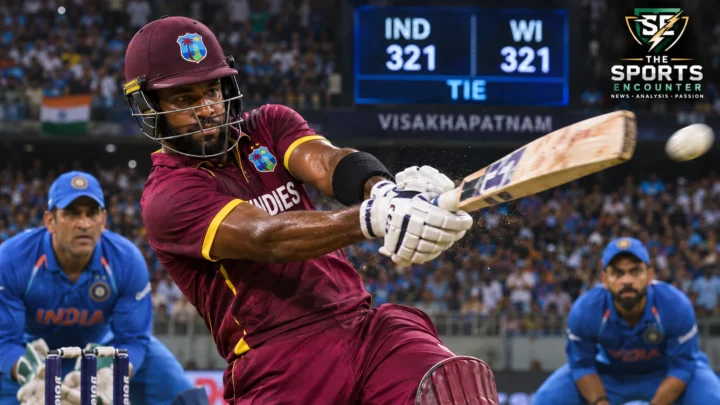
Another useful comparison is Match 79, when Shai Hope’s last-ball boundary denied India victory in a tied ODI.
In Visakhapatnam, the batting side found the boundary required to avoid defeat.
In Southampton, Wood prevented that outcome.
Both matches show how closely balanced decisions in the final over can transform the result.
Complete Match Scorecard: England vs South Africa, May 27, 2017
England Innings: 330/6 in 50 Overs
| Batter | Dismissal | R | B | 4s | 6s |
|---|---|---|---|---|---|
| Jason Roy | b Rabada | 8 | 16 | 1 | 0 |
| Alex Hales | c de Kock b Pretorius | 24 | 28 | 2 | 1 |
| Joe Root | run out (Pretorius) | 39 | 41 | 6 | 0 |
| Eoin Morgan (c) | c de Kock b Rabada | 45 | 64 | 4 | 0 |
| Ben Stokes | c Miller b Maharaj | 101 | 79 | 11 | 3 |
| Jos Buttler (wk) | Not out | 65 | 53 | 7 | 0 |
| Moeen Ali | c de Kock b Phehlukwayo | 33 | 19 | 5 | 0 |
| Extras | 1 bye, 6 leg-byes, 8 wides | 15 | |||
| Total | 6 wickets, 50 overs | 330 |
Did not bat: Adil Rashid, Liam Plunkett, Mark Wood, Jake Ball.
Fall of wickets: 12/1 (Roy, 4.1), 70/2 (Hales, 13.2), 80/3 (Root, 15.5), 175/4 (Morgan, 32.5), 252/5 (Stokes, 43.2), 330/6 (Moeen, 49.6).
South Africa Bowling
| Bowler | Overs | Maidens | Runs | Wickets |
|---|---|---|---|---|
| Kagiso Rabada | 10 | 0 | 50 | 2 |
| Chris Morris | 10 | 0 | 66 | 0 |
| Dwaine Pretorius | 10 | 0 | 61 | 1 |
| Keshav Maharaj | 10 | 0 | 72 | 1 |
| Andile Phehlukwayo | 10 | 1 | 74 | 1 |
South Africa Innings: 328/5 in 50 Overs
| Batter | Dismissal | R | B | 4s | 6s |
|---|---|---|---|---|---|
| Quinton de Kock (wk) | c Buttler b Moeen | 98 | 103 | 11 | 0 |
| Hashim Amla | c Morgan b Stokes | 24 | 29 | 3 | 0 |
| Faf du Plessis | c Buttler b Plunkett | 16 | 20 | 2 | 0 |
| AB de Villiers (c) | c Buttler b Plunkett | 52 | 50 | 6 | 0 |
| David Miller | Not out | 71 | 51 | 5 | 2 |
| Farhaan Behardien | c Moeen b Plunkett | 17 | 25 | 0 | 0 |
| Chris Morris | Not out | 36 | 22 | 3 | 2 |
| Extras | 5 leg-byes, 9 wides | 14 | |||
| Total | 5 wickets, 50 overs | 328 |
Did not bat: Dwaine Pretorius, Andile Phehlukwayo, Keshav Maharaj, Kagiso Rabada.
Fall of wickets: 56/1 (Amla, 9.5), 93/2 (du Plessis, 16.1), 189/3 (de Villiers, 32.3), 211/4 (de Kock, 35.6), 266/5 (Behardien, 43.3).
England Bowling
| Bowler | Overs | Maidens | Runs | Wickets |
|---|---|---|---|---|
| Mark Wood | 10 | 0 | 48 | 0 |
| Jake Ball | 10 | 0 | 81 | 0 |
| Ben Stokes | 3 | 0 | 12 | 1 |
| Liam Plunkett | 10 | 0 | 64 | 3 |
| Adil Rashid | 6 | 0 | 41 | 0 |
| Moeen Ali | 8 | 0 | 59 | 1 |
| Joe Root | 3 | 0 | 18 | 0 |
Result: England won by two runs.
Player of the Match: Ben Stokes, 101 from 79 balls.
Series position after Match 2: England led 2-0 and had secured the three-match series.
Six Deliveries That Defined the Result
England had scored 330.
South Africa had nearly completed the chase.
Miller and Morris were established, with five wickets still available.
Only seven runs separated the visitors from victory.
Mark Wood then delivered an over that demonstrated the value of accuracy, composure and intelligent variation.
He conceded four runs.
South Africa finished at 328/5.
The margin was just two.
The Southampton thriller remains a compelling entry in A Celebration of 5000 ODIs because it shows that even a powerful batting lineup can struggle to complete a seemingly modest requirement when the bowler executes his plans under maximum pressure.
For England, Stokes’ century and Wood’s final over secured the series.
For South Africa, the defeat demonstrated how quickly a chase can change when the last six deliveries become the most important of the day.
A Celebration of 5000 ODIs
- A Celebration of 5000 ODIs Match 80: Mark Wood Defends Seven in the Final Over as England Break South Africa’s Hearts
- A Celebration of 5000 ODIs Match 79: Shai Hope’s Last-Ball Four Denies Virat Kohli Victory After Historic 10,000-Run Milestone
- A Celebration of 5000 ODIs Match 78: Dwayne Bravo’s Slower Ball Breaks India’s 17-Match Chasing Streak
- A Celebration of 5000 ODIs Match 77: Zimbabwe vs New Zealand 2011, Malcolm Waller’s Unbeaten 99 Completes a Record Chase
- A Celebration of 5000 ODIs – Match 76: When Abdul Razzaq’s Century Stunned South Africans