DOHA, Qatar, November 18, 2026: Pakistan Shaheens will attempt to defend their continental crown against seven challengers when the ACC Men’s Asia Cup Rising Stars begins in Doha on November 19. India A arrive with a formidable combination of established international players and emerging talent, while Sri Lanka A, Bangladesh A and Afghanistan A have ambitions of their own. Nepal, the United Arab Emirates and Hong Kong complete an eight-team field that promises more than another India-Pakistan showdown.
The Asia Cup Rising Stars returns to the 50-over format after Pakistan’s dramatic Super Over victory over Bangladesh A in last year’s Twenty20 final. That change introduces a different test of batting endurance, bowling resources and tactical judgment. With only three group matches available to each team, the competition offers little protection against an early defeat, particularly for Pakistan and India, who meet on November 22 in a potentially decisive Group B contest.
Key Takeaways
- Pakistan Shaheens will attempt to defend their continental crown against seven challengers when the ACC Men’s Asia Cup Rising Stars begins in Doha on November 19.
- The Asia Cup Rising Stars returns to the 50-over format after Pakistan’s dramatic Super Over victory over Bangladesh A in last year’s Twenty20 final.
- The most anticipated group-stage fixture takes place on November 22, when India A meet Pakistan Shaheens at West End Park International Cricket Stadium in Doha.
- The group stage begins with Bangladesh A facing Hong Kong and Sri Lanka A meeting Afghanistan A on November 19.
For Pakistan, the objective extends beyond retaining a trophy. The Shaheens have established an impressive record in this competition, winning the previous 50-over edition in 2023 and the T20 championship in 2025. India A, meanwhile, have named a squad containing players with considerable senior-level exposure, led by Tilak Varma and supported by Abhishek Sharma, Rinku Singh and teenage batting sensation Vaibhav Sooryavanshi.
Story at a glance

Asia Cup Rising Stars: Tournament Format, Groups and Venues
The tournament runs from November 19 to 29, with 15 matches scheduled across two venues in Doha. Teams are divided into two groups of four, and the top two sides from each group advance to the semifinals.
All Eight Teams and Their Group-Stage Opponents
India A and Pakistan Shaheens headline Group B alongside Nepal and UAE. Group A brings together Afghanistan A, Bangladesh A, Hong Kong and Sri Lanka A.
Pakistan Shaheens: Can Abdul Samad Deliver Another Title?
Pakistan enter the tournament with the strongest recent championship record. The Shaheens defeated India A by 128 runs in the final of the 2023 Emerging Teams Asia Cup in Sri Lanka before winning the 2025 Rising Stars title against Bangladesh A in a Super Over.
India A: Tilak Varma Leads a Strong Batting Lineup
India A have assembled one of the competition’s most recognizable batting groups. Tilak Varma captains a squad featuring Abhishek Sharma, Rinku Singh, Vaibhav Sooryavanshi, Prabhsimran Singh and Kumar Kushagra.
India A vs Pakistan Shaheens: The Group B Match That Could Shape the Semifinals
The most anticipated group-stage fixture takes place on November 22, when India A meet Pakistan Shaheens at West End Park International Cricket Stadium in Doha.
Yet the tournament’s significance is not limited to its highest-profile players. For the five A teams, it provides a competitive bridge between domestic cricket and senior international selection. For Nepal, UAE and Hong Kong, it offers an opportunity to test established national-team talent against the development systems of Asia’s leading cricket nations.
Asia Cup Rising Stars: Tournament Format, Groups and Venues
The tournament runs from November 19 to 29, with 15 matches scheduled across two venues in Doha. Teams are divided into two groups of four, and the top two sides from each group advance to the semifinals.
| Tournament Detail | Confirmed Information |
|---|---|
| Competition | ACC Men’s Asia Cup Rising Stars |
| Host country | Qatar |
| Dates | November 19-29, 2026 |
| Format | 50 overs per side |
| Participating teams | 8 |
| Groups | 2 groups of 4 teams |
| Group-stage matches | 12 |
| Knockout matches | 2 semifinals and a final |
| Venues | West End Park International Cricket Stadium and University of Doha for Science and Technology |
| Defending champions | Pakistan Shaheens |
| Final | November 29 |
The structure rewards teams that establish momentum quickly. Each side plays its three group opponents once, so two victories can put a team in a strong position to qualify, although the precise requirements depend on other results and applicable tiebreak rules.
A defeat in the opening game does not automatically eliminate a team, but it makes subsequent fixtures more important. Net run rate could also become decisive if teams finish level on points.
Why the Asia Cup Rising Stars Format Changes the Competition
The switch from T20 to one-day cricket alters the tactical demands considerably. A powerful opening partnership can dominate a 20-over match, but a 50-over innings requires batters to handle different phases, rebuild after setbacks and judge when to accelerate.
Bowlers face a similar adjustment. Maintaining pressure across ten-over spells, rotating seamers effectively and choosing the correct moments for spin become central to team strategy.
The longer format also tests lower-middle-order batting depth. Teams must be capable of recovering from early wickets rather than depending entirely on an aggressive top order.
Pakistan’s previous success in both formats makes this change particularly interesting. Their title defense will reveal whether the current squad can reproduce the controlled batting and sustained bowling pressure that distinguished the Shaheens’ earlier 50-over championship campaign.
All Eight Teams and Their Group-Stage Opponents
India A and Pakistan Shaheens headline Group B alongside Nepal and UAE. Group A brings together Afghanistan A, Bangladesh A, Hong Kong and Sri Lanka A.
| Group A | Group B |
|---|---|
| Afghanistan A | India A |
| Bangladesh A | Pakistan Shaheens |
| Hong Kong | Nepal |
| Sri Lanka A | United Arab Emirates |
The distinction between the participating sides matters. India, Pakistan, Afghanistan, Bangladesh and Sri Lanka are represented by A teams, while Nepal, UAE and Hong Kong participate as national sides.
That creates an unusual competitive environment. Some teams have more extensive senior international experience, while others can select from considerably deeper domestic and professional cricket systems.
The A-team designation should not be confused with an exclusively Under-19 tournament. Several participating players have already represented their countries at senior level, and selection is not restricted to teenage cricketers.
Pakistan Shaheens: Can Abdul Samad Deliver Another Title?
Pakistan enter the tournament with the strongest recent championship record. The Shaheens defeated India A by 128 runs in the final of the 2023 Emerging Teams Asia Cup in Sri Lanka before winning the 2025 Rising Stars title against Bangladesh A in a Super Over.
Abdul Samad will lead a squad combining experienced white-ball players with younger prospects. His batting resources include Haider Ali, Hasan Nawaz, Maaz Sadaqat, Shahzaib Khan, Shamyl Hussain and Farhan Yousuf.
Mohammad Hasnain supplies international pace experience, while Sufyan Moqim, Danish Aziz and Saad Masood give Pakistan different spin-bowling options.
The Sports Encounter previously examined Abdul Samad’s appointment and Pakistan’s initial squad balance. Since that announcement, the Pakistan Cricket Board has made an important bowling change.
Ali Raza Replaces Injured Akif Javed
Left-arm fast bowler Akif Javed withdrew after the PCB reported a knee injury requiring rehabilitation. Young pacer Ali Raza was named as his replacement.
The change adds another emerging fast bowler to Pakistan’s attack. Raza recently represented Pakistan at the Under-19 Asia Cup in Oman, making the Doha tournament an immediate opportunity to compete at the next development level.
His progression is particularly relevant because he has already handled demanding tournament cricket against regional opposition. During Pakistan’s Under-19 campaign, Raza contributed to an attack that combined early wickets with disciplined spells, as documented in TSE’s report on Pakistan and India’s opening victories.
Farhan Yousuf also joins the Shaheens following his involvement in the Under-19 competition.
These additions strengthen Pakistan’s connection between youth cricket and its senior development program, although neither player’s selection guarantees a place in the starting XI.
Pakistan Shaheens Updated Squad
Abdul Samad (captain), Ahmed Daniyal, Ali Raza, Danish Aziz, Farhan Yousuf, Haider Ali, Hasan Nawaz, Maaz Sadaqat, Mohammad Hasnain, Muhammad Imran Randhawa, Rohail Nazir (wicketkeeper), Saad Masood, Shahzaib Khan, Shamyl Hussain and Sufyan Moqim.
The updated squad and travel arrangements were confirmed by the Pakistan Cricket Board ahead of the team’s departure for Qatar.
India A: Tilak Varma Leads a Strong Batting Lineup
India A have assembled one of the competition’s most recognizable batting groups. Tilak Varma captains a squad featuring Abhishek Sharma, Rinku Singh, Vaibhav Sooryavanshi, Prabhsimran Singh and Kumar Kushagra.
These players offer different strengths. Tilak brings international experience and middle-order control, Abhishek provides aggressive left-handed batting, and Rinku offers finishing ability under pressure.
Sooryavanshi represents a different attraction. His rapid emergence has made him one of India’s most closely watched young batters, but the 50-over format will test whether his aggressive instincts can be adapted to longer innings and changing match situations.
His unusually rapid development has already prompted wider questions about the transition from youth cricket to elite competition. TSE explored that issue in its feature on Sooryavanshi’s early progression and the demands of senior-level cricket.
Rinku Singh Replaces Patidar as Vice-Captain
India’s leadership structure changed after Rajat Patidar withdrew from the squad.
The Board of Control for Cricket in India confirmed that Patidar had asked not to be considered for the 50-over competition while managing existing injuries. Ayush Badoni replaced him in the squad, and Rinku Singh was appointed vice-captain.
The change affects India’s middle-order options but does not remove the team’s considerable batting depth.
Badoni provides another adaptable batting option, while Rinku’s leadership appointment places additional responsibility on one of India’s established white-ball performers.
The updated selection was confirmed in the BCCI’s official squad revision.
India A Updated Squad
Tilak Varma (captain), Rinku Singh (vice-captain), Abhishek Sharma, Vaibhav Sooryavanshi, Prabhsimran Singh (wicketkeeper), Kumar Kushagra (wicketkeeper), Suryansh Shedge, Shahbaz Ahmed, Vipraj Nigam, Harsh Dubey, Tanush Kotian, Harshit Rana, Prince Yadav, Arshad Khan and Ayush Badoni.
India’s combination of experienced batters, attacking options and varied spin bowling makes them a strong contender. Their challenge will be converting those individual resources into a balanced 50-over side capable of defending totals as effectively as chasing them.
India A vs Pakistan Shaheens: The Group B Match That Could Shape the Semifinals
The most anticipated group-stage fixture takes place on November 22, when India A meet Pakistan Shaheens at West End Park International Cricket Stadium in Doha.
The contest carries recent competitive history. Pakistan beat India A convincingly in the 2023 50-over final and again in the group stage of the 2025 T20 tournament.
Those results give Pakistan a psychological reference point, but the current squads and playing conditions make direct historical comparisons imperfect.
India’s batting strength suggests that Pakistan’s powerplay bowling could be a central factor. Early wickets would expose the Indian middle order before it can establish a platform for the final 20 overs.
Conversely, if India’s top order survives the new ball, Pakistan may have to manage a sustained period of aggressive scoring against its seam and spin attacks.
For India, containing Pakistan’s middle overs could be equally important. Haider Ali, Hasan Nawaz and Maaz Sadaqat offer enough attacking ability to change the pace of an innings quickly.
The match could influence group qualification, but it will not necessarily decide the final standings by itself. Both teams must also negotiate fixtures against Nepal and UAE.
Maaz Sadaqat Faces a Different Test After His T20 Breakthrough
Maaz Sadaqat is among Pakistan’s most interesting players heading into the tournament.
The left-handed all-rounder was named Player of the Tournament in the 2025 Rising Stars competition after scoring 258 runs in five innings and contributing seven wickets.
His attacking batting and ability to provide additional overs made him a valuable component of Pakistan’s championship-winning side.
That performance followed a development path involving both progress and setbacks, examined in The Sports Encounter’s detailed profile of Maaz Sadaqat.
The new challenge is sustaining that influence across 50 overs.
In the longer format, Sadaqat may have to rebuild an innings after early wickets, manage his scoring tempo against spin and preserve enough energy to contribute with the ball.
His ability to adapt will offer a useful indication of whether his T20 success can translate into broader one-day effectiveness.
Group A: Sri Lanka, Bangladesh and Afghanistan Face a Competitive Qualification Race
While India and Pakistan attract much of the attention in Group B, Group A presents a different kind of challenge.
Sri Lanka A, Bangladesh A and Afghanistan A have all developed competitive cricket pathways capable of producing players for senior international sides. Hong Kong adds a national-team element that could disrupt expectations.
Sri Lanka A will be led by Pavan Rathnayake and should benefit from its established domestic cricket structure.
Bangladesh A return with the experience of having reached the previous Rising Stars final. Their narrow defeat to Pakistan in 2025 provides useful competitive context, although the longer format presents substantially different tactical demands.
Afghanistan A possess the potential to challenge the more established development teams, particularly if their spin bowlers can maintain control during the middle overs.
Hong Kong enter as outsiders, but the short group phase creates opportunities for a team capable of producing one exceptional performance.
The first match between Bangladesh A and Hong Kong is therefore more important than it might initially appear. An opening victory would immediately strengthen either side’s qualification position before tougher fixtures arrive.
Nepal, UAE and Hong Kong Have an Opportunity to Challenge the A Teams
For the three national sides, the competition offers a valuable opportunity to compete against emerging players from countries with considerably larger cricketing systems.
Nepal and UAE will face India A and Pakistan Shaheens in Group B, giving both teams an unusually demanding sequence of 50-over matches.
The UAE will begin against Pakistan, while Nepal open their campaign against India.
These fixtures create opportunities to measure batting depth, bowling effectiveness and performance under pressure against strong opposition.
The most obvious route to a surprise result is disciplined new-ball bowling followed by controlled batting through the middle overs. Teams that allow established opponents to build substantial totals may struggle to recover.
Continue the Cricket Story



For the UAE and Nepal, their direct meeting on November 22 could become particularly important if either loses its opening match.
Hong Kong face a similar challenge in Group A. They must negotiate an opening contest against Bangladesh before meeting Sri Lanka and Afghanistan.
None of the three national teams should be dismissed solely because their opponents come from Full Member development programs. A teams can possess exceptional individual talent without necessarily having the cohesion of a settled national side.
Complete Asia Cup Rising Stars Schedule
The group stage begins with Bangladesh A facing Hong Kong and Sri Lanka A meeting Afghanistan A on November 19. Pakistan and India open their campaigns the following day.
All times below are Pakistan Standard Time (PKT), five hours ahead of UTC. The schedule includes the 12 group matches, two semifinals and the championship final.
| Date | Fixture | Time (PKT) | Venue |
|---|---|---|---|
| Nov 19 | Bangladesh A vs Hong Kong | 11:00 AM | UDST |
| Nov 19 | Sri Lanka A vs Afghanistan A | 3:00 PM | West End Park |
| Nov 20 | Pakistan Shaheens vs UAE | 11:00 AM | UDST |
| Nov 20 | India A vs Nepal | 3:00 PM | West End Park |
| Nov 21 | Sri Lanka A vs Hong Kong | 11:00 AM | UDST |
| Nov 21 | Bangladesh A vs Afghanistan A | 3:00 PM | West End Park |
| Nov 22 | UAE vs Nepal | 11:00 AM | UDST |
| Nov 22 | India A vs Pakistan Shaheens | 3:00 PM | West End Park |
| Nov 23 | Afghanistan A vs Hong Kong | 11:00 AM | UDST |
| Nov 23 | Sri Lanka A vs Bangladesh A | 3:00 PM | West End Park |
| Nov 24 | India A vs UAE | 11:00 AM | UDST |
| Nov 24 | Pakistan Shaheens vs Nepal | 3:00 PM | West End Park |
| Nov 26 | Semifinal 1 | 3:00 PM | West End Park |
| Nov 27 | Semifinal 2 | 3:00 PM | West End Park |
| Nov 29 | Final | 3:00 PM | West End Park |
UDST refers to the University of Doha for Science and Technology cricket ground. Times are based on the announced 06:00 and 10:00 UTC starts and the PCB’s published Pakistan fixtures. Match scheduling remains subject to official tournament updates.
Five Players Who Could Shape the Tournament
The competition contains a mixture of established performers and younger cricketers seeking more demanding opportunities. Five players stand out for the distinct questions their performances could answer.
| Player | Team | Why He Matters |
|---|---|---|
| Tilak Varma | India A | Leadership, middle-order control and experience against senior international attacks |
| Maaz Sadaqat | Pakistan Shaheens | Can the previous tournament’s leading performer transfer his T20 impact into 50-over cricket? |
| Vaibhav Sooryavanshi | India A | Tests his attacking batting against demanding regional opposition in a longer format |
| Mohammad Hasnain | Pakistan Shaheens | Provides pace experience and a potentially important new-ball threat |
| Pavan Rathnayake | Sri Lanka A | Captains a side seeking to challenge the strongest development programs |
The list is a scouting-focused selection rather than a ranking of the tournament’s five best players. Each represents a different competitive question that can be assessed as the event unfolds.
Why This Tournament Matters Beyond the Trophy
The ACC’s development competitions occupy an important position between youth tournaments, domestic cricket and senior international selection.
The pathway is particularly visible in Pakistan’s current squad. Ali Raza and Farhan Yousuf have progressed directly from the recent Under-19 Asia Cup to the Shaheens’ next assignment.
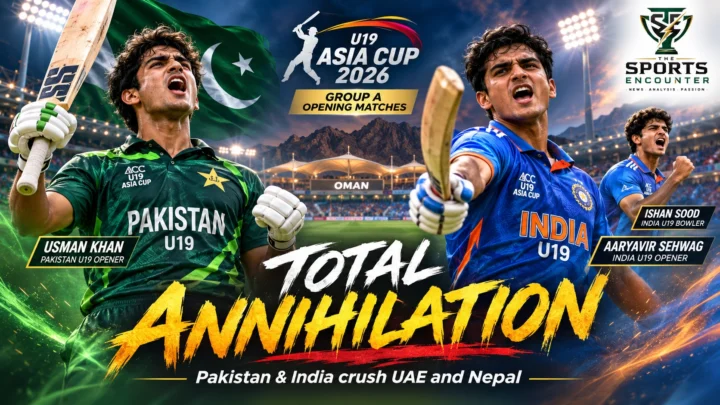
That transition followed a successful youth campaign in Oman, where Pakistan reached the final against India. TSE’s coverage of the Under-19 finalists and their semifinal performances provides a useful comparison with the demands now awaiting players entering A-team cricket.
The difference is significant. Youth cricket is structured around age eligibility, while A-team tournaments can expose emerging players to professionals with substantially greater first-class, franchise and international experience.
The competition also gives selectors an opportunity to assess performances across consecutive matches rather than isolated domestic innings or bowling spells.
For the national sides, the benefits are different but equally important. Nepal, UAE and Hong Kong can measure their players against stronger development systems without needing a full senior bilateral series.
A successful performance against India A or Pakistan Shaheens would not automatically establish superiority over those countries’ senior teams. It would, however, provide meaningful evidence about the competitiveness of players facing a higher standard of opposition.
Who Has the Strongest Chance of Winning?
Pakistan Shaheens and India A appear to be the leading contenders on available squad evidence and recent tournament history.
Pakistan’s advantage lies in continuity, recent championship experience and the presence of players who understand the demands of continental competition.
India’s strength is its batting depth. Tilak Varma, Abhishek Sharma, Rinku Singh and Vaibhav Sooryavanshi give the team several ways to score quickly, while its spin options could prove valuable through the middle overs.
However, neither side has yet demonstrated how its final playing XI will perform in Doha’s 50-over conditions.
Bangladesh A, Afghanistan A and Sri Lanka A all have credible paths to the semifinals from Group A. Their direct meetings will determine which combinations of batting control and bowling depth are most effective.
The short format of the group stage also leaves open the possibility of an upset by Nepal, UAE or Hong Kong.
For Pakistan and India, winning their opening fixtures is especially important. Their much-anticipated meeting arrives before the final round of Group B matches, meaning a defeat in either opening contest could add substantial pressure to the rivalry game.
The defining question of the Asia Cup Rising Stars is whether Pakistan can turn its championship pedigree into another 50-over title or whether India’s powerful squad can finally reverse the recent results between the two rivals. Yet the eight-team competition offers plenty of opportunities for another contender to change that narrative. From November 19, performances across 100 overs will provide the evidence that squad reputations and previous trophies cannot settle in advance.