MUMBAI, India, November 7, 2023: Australia were 91/7.
The target was 292.
Three wickets remained.
Afghanistan were almost there.
Story at a glance

Why Match 42 Belongs in A Celebration of 5000 ODIs
The simplest answer is 91/7.
Ibrahim Zadran Gives Afghanistan the Innings of Their World Cup
Afghanistan’s performance deserves to be understood before Maxwell enters the story.
Ibrahim Zadran Makes Afghan World Cup History
Ibrahim’s innings carried historical weight.
Rashid Khan Turns 250 Into 291
Afghanistan’s innings changed late.
Josh Hazlewood Gives Australia Their Best Bowling Figures
Hazlewood finished with 2/39 from nine overs.
Then Glenn Maxwell stopped running.
And somehow started winning.
By the time his body began to betray him, the match should already have belonged to Afghanistan. Australia’s top order had been shredded. Travis Head was gone for zero. David Warner, Marnus Labuschagne, Josh Inglis, Marcus Stoinis and Mitchell Starc had all disappeared.
Only Maxwell remained.
He began cramping badly.
He struggled to move between the wickets.
He leaned on the bat between deliveries.
Pat Cummins stood at the other end and played a very different innings.
Cummins blocked.
Maxwell attacked.
Then Maxwell attacked again.
The pair added 202 without losing another wicket.
Maxwell finished on 201 not out from 128 balls.
Cummins made 12 not out from 68.
Australia reached 293/7 in 46.5 overs.
Victory by three wickets.
A semifinal place secured.
Afghanistan had produced one of their finest World Cup performances and reduced a five-time champion to the edge of defeat.
Then one batter created an innings that did not make logical sense.
That is why this match is No. 42 in A Celebration of 5000 ODIs.
The original series roadmap describes Maxwell’s 201* as one of the most improbable ODI innings ever played.
That still feels conservative.
TL;DR
- Afghanistan won the toss and batted first.
- Afghanistan scored 291/5 in 50 overs.
- Ibrahim Zadran made an unbeaten 129 from 143 balls.
- Rashid Khan smashed 35 not out from 18 balls.
- Josh Hazlewood took 2/39.
- Australia collapsed to 91/7 while chasing 292.
- Travis Head and Josh Inglis were dismissed for ducks.
- Glenn Maxwell survived a major dropped chance.
- Maxwell battled severe cramps and limited mobility.
- Maxwell scored 201 not out from 128 balls.
- He hit 21 fours and 10 sixes.
- Pat Cummins made 12 not out from 68 balls.
- Maxwell and Cummins added 202 for the eighth wicket.
- Australia reached 293/7 in 46.5 overs.
- Australia won by three wickets.
- Maxwell became the first Australian man to score an ODI double century.
- His 201* was the first double hundred in a men’s ODI chase.
- It was the highest men’s ODI score by a batter at No. 6 or lower.
- Maxwell was named Player of the Match.
- The victory secured Australia’s place in the World Cup semifinals.
Australia vs Afghanistan 2023 World Cup: Match at a Glance
| Detail | Information |
|---|---|
| Competition | ICC Men’s Cricket World Cup 2023 |
| Match | 39th Match |
| Date | November 7, 2023 |
| Venue | Wankhede Stadium, Mumbai |
| Toss | Afghanistan won and batted |
| Afghanistan | 291/5 in 50 overs |
| Australia | 293/7 in 46.5 overs |
| Result | Australia won by three wickets |
| Balls remaining | 19 |
| Player of the Match | Glenn Maxwell |
| Afghanistan top scorer | Ibrahim Zadran, 129* |
| Australia top scorer | Glenn Maxwell, 201* |
| Best Australia bowling | Josh Hazlewood, 2/39 |
| Best Afghanistan bowling | Naveen-ul-Haq 2/47, Azmatullah Omarzai 2/52, Rashid Khan 2/44 |
| Australia’s lowest point | 91/7 |
| Decisive partnership | Maxwell and Cummins, 202* |
| Tournament consequence | Australia qualified for semifinals |
Why Match 42 Belongs in A Celebration of 5000 ODIs
The simplest answer is 91/7.
Australia needed another 201 runs.
Afghanistan needed three wickets.
The match looked over.
The deeper answer is what followed.
Maxwell did not merely score a double century.
He did it while batting at No. 6.
He did it in a chase.
He did it after Australia had lost seven wickets.
He did it while physically compromised.
He did it without a conventional batting partner contributing runs at the other end.
Cummins’ 12 from 68 became one of the most valuable low scores in World Cup history because his job was survival.
Maxwell’s job became everything else.
That combination turned a lost match into victory.
It also turned an extraordinary Afghanistan performance into one of the most painful near-misses of the tournament.
This match belongs in A Celebration of 5000 ODIs because it shows how far one innings can stretch the limits of what an ODI chase is supposed to look like.
Ibrahim Zadran Gives Afghanistan the Innings of Their World Cup
Afghanistan’s performance deserves to be understood before Maxwell enters the story.
Ibrahim Zadran made:
129 not out
143 balls
8 fours
3 sixes
Strike rate: 90.21
It was a controlled innings built around patience rather than aggression.
Afghanistan did not need Ibrahim to attack from ball one.
They needed somebody to bat through the innings.
He did.
Rahmanullah Gurbaz gave Afghanistan an early 21.
Rahmat Shah added 30.
Hashmatullah Shahidi made 26.
Azmatullah Omarzai contributed 22.
Mohammad Nabi made 12.
Ibrahim remained.
That continuity allowed Afghanistan to keep building rather than repeatedly rebuilding.
Ibrahim Zadran Makes Afghan World Cup History
Ibrahim’s innings carried historical weight.
His 129* became the first century by an Afghanistan batter at a men’s Cricket World Cup.
The achievement mattered beyond the landmark.
Afghanistan had already shown during the tournament that they were no longer merely competitive underdogs.
They had beaten England.
They had beaten Pakistan.
They had beaten Sri Lanka.
Against Australia, Ibrahim gave them a total capable of defeating another former world champion.
That broader rise is one reason Match 44 in the series later revisits Afghanistan’s historic victory over England.
This match belongs to the same transformation.
Rashid Khan Turns 250 Into 291
Afghanistan’s innings changed late.
Rashid Khan walked in and attacked immediately.
He made 35 not out from 18 balls.
Two fours.
Three sixes.
Strike rate: 194.44.
His cameo was critical because Australia had contained the middle overs reasonably well.
Afghanistan were heading toward a competitive total.
Rashid pushed them toward a dangerous one.
The final 10 overs produced 96 runs.
Australia were suddenly chasing 292 under lights at Wankhede.
That target looked even larger within minutes.
Josh Hazlewood Gives Australia Their Best Bowling Figures
Hazlewood finished with 2/39 from nine overs.
He removed Gurbaz.
Later, he bowled Nabi.
His economy rate of 4.33 was comfortably among Australia’s strongest figures.
The rest of the attack found wickets but struggled to dominate.
Starc conceded 70.
Maxwell gave away 55.
Zampa conceded 58.
Cummins went wicketless.
Australia had prevented Afghanistan from reaching 310.
They had not stopped them from setting a serious target.
Australia Lose Travis Head Before the Chase Begins
Naveen-ul-Haq struck almost immediately.
Head faced two deliveries.
Zero.
Caught behind.
Australia were 4/1.
Mitchell Marsh briefly counterattacked.
He made 24 from 11, including two fours and two sixes.
Then Naveen trapped him lbw.
Australia 43/2.
The chase had already lost structure.
Azmatullah Omarzai Produces the Over That Nearly Wins Afghanistan the Match
Azmatullah then created the collapse.
David Warner was bowled for 18.
Next ball, Josh Inglis edged his first delivery to Ibrahim Zadran.
Australia were 49/4.
Two wickets in two balls.
One of the tournament favorites suddenly looked vulnerable.
Marnus Labuschagne tried to repair the innings.
That effort ended through a run-out.
Australia were 49/4, then 69/5.
The pressure kept growing.
Rashid Khan Pushes Australia to 91/7
Marcus Stoinis was trapped lbw by Rashid for six.
Mitchell Starc then edged Rashid behind for three.
Australia were 91/7.
The scoreboard should have ended the debate.
Afghanistan had Naveen.
Rashid.
Azmatullah.
Noor Ahmad.
Mujeeb.
Australia had one established batter and a captain better known for fast bowling than rescue batting.
Afghanistan were three wickets away from one of the biggest wins in their history.
Player of the Match Glenn Maxwell Begins Before the Miracle Becomes Obvious
Maxwell had arrived much earlier, with Australia already in trouble.
At first, the innings looked like resistance.
Then it became counterattack.
Then survival.
Then something else entirely.
Maxwell hit Afghanistan’s spinners down the ground.
He swept.
He reverse-swept.
He pulled pace.
He created scoring options from balls that seemed to offer none.
The required rate never became impossible because Maxwell refused to allow it.
Afghanistan kept waiting for the wicket.
It never came.
The Dropped Chance That Afghanistan Will Never Forget
Afghanistan had their opportunity.
Maxwell miscued a shot.
Mujeeb Ur Rahman moved toward the chance.
The catch went down.
At the time, Maxwell had not yet reached his century.
The mistake became increasingly painful with every boundary that followed.
Cricket matches rarely turn on one incident alone.
Afghanistan still had chances after the drop.
But against a batter capable of what Maxwell produced, one missed opportunity became enormous.
The game had offered Afghanistan the wicket they needed.
They did not take it.
Maxwell’s Body Begins to Fail
Then came the physical problem.
Maxwell began suffering severe cramps.
His movement deteriorated dramatically.
He could barely run.
Stretching between deliveries became difficult.
At times he appeared unable to bend normally.
Australia’s medical staff came onto the field.
Retiring hurt was discussed.
Maxwell stayed.
That decision changed the tactical nature of the chase.
Running between wickets was no longer reliable.
So Maxwell increasingly had to score in boundaries.
For most batters, losing the ability to run would reduce scoring options.
For Maxwell, it concentrated them.
Pat Cummins Plays 68 Balls for 12 and Becomes Essential
Cummins’ innings looks almost absurd in isolation:
12 not out
68 balls
1 four
Strike rate: 17.65
In another match, those numbers would attract criticism.
Here, they were exactly what Australia needed.
Cummins understood that he did not need to score.
He needed to stay.
Every ball he survived preserved Maxwell’s chance to attack.
Every defensive stroke denied Afghanistan the eighth wicket.
Every single that returned Maxwell to strike became valuable.
It was an innings of almost total self-denial.
That is why the partnership worked.
Maxwell and Cummins Add 202 for the Eighth Wicket
Australia were 91/7.
They finished at 293/7.
No further wickets fell.
The partnership:
202 unbeaten runs
Maxwell: the overwhelming majority.
Cummins: 12.
Yet the partnership belongs to both.
Maxwell could not have completed the chase alone if wickets disappeared at the other end.
Cummins could not have completed the chase through conventional batting.
Their roles were radically different.
Their value was connected.
The stand became the highest eighth-wicket partnership in men’s ODI history at the time.
Maxwell Reaches 100 and Refuses to Slow Down
Maxwell’s century did not end the assault.
It accelerated it.
Afghanistan were still ahead.
Australia still needed more than 100.
Maxwell kept finding boundaries despite limited movement.
He reached 150.
Then 180.
The improbable began becoming plausible.
Afghanistan’s fielders began looking less certain.
Australia’s dressing room began believing.
Wankhede understood it was watching something rare.
Maxwell’s 201* Becomes an ODI Record Collection
The final innings produced several historic achievements.
Maxwell became:
- the first Australian man to score an ODI double century
- the first batter to score a men’s ODI double hundred while chasing
- the first non-opener to score a men’s ODI double century
- the highest-scoring batter from No. 6 or lower in men’s ODI history
- the scorer of the highest individual World Cup innings in a chase at the time
He finished with:
201 not out
128 balls
21 fours
10 sixes
Strike rate: 157.03
The numbers sound like the innings belonged on a flat pitch with wickets in hand.
Instead, it began inside a collapse.
Maxwell Ends the Match With Three Blows
Australia entered the 47th over needing 21.
Mujeeb had the ball.
Maxwell could barely run.
The equation became simple.
Boundary cricket.
After one dot ball:
Six.
Six.
Six.
Four.
Six.
The final six completed the chase.
It also took Maxwell past 200.
Australia had won by three wickets.
The celebration was not explosive at first.
Maxwell looked exhausted.
He had reached the end of both the match and his body’s tolerance.
Complete Match Scorecard
Afghanistan Batting: 291/5 in 50 Overs
| Batter | Dismissal | R | B | 4s | 6s | SR |
|---|---|---|---|---|---|---|
| Rahmanullah Gurbaz | c Mitchell Starc b Josh Hazlewood | 21 | 25 | 2 | 0 | 84.00 |
| Ibrahim Zadran | not out | 129 | 143 | 8 | 3 | 90.21 |
| Rahmat Shah | c Josh Hazlewood b Glenn Maxwell | 30 | 44 | 4 | 0 | 68.18 |
| Hashmatullah Shahidi (c) | b Mitchell Starc | 26 | 43 | 2 | 0 | 60.47 |
| Azmatullah Omarzai | c Glenn Maxwell b Adam Zampa | 22 | 18 | 1 | 2 | 122.22 |
| Mohammad Nabi | b Josh Hazlewood | 12 | 10 | 0 | 1 | 120.00 |
| Rashid Khan | not out | 35 | 18 | 2 | 3 | 194.44 |
Did not bat: Ikram Alikhil, Mujeeb Ur Rahman, Noor Ahmad, Naveen-ul-Haq
Extras: 16
Total: 291/5 in 50 overs
Run rate: 5.82
Fall of wickets: 38/1 Gurbaz, 121/2 Rahmat, 173/3 Shahidi, 210/4 Azmatullah, 233/5 Nabi.
Australia Bowling
| Bowler | O | M | R | W | Econ |
|---|---|---|---|---|---|
| Mitchell Starc | 9 | 0 | 70 | 1 | 7.78 |
| Josh Hazlewood | 9 | 0 | 39 | 2 | 4.33 |
| Glenn Maxwell | 10 | 0 | 55 | 1 | 5.50 |
| Pat Cummins | 8 | 0 | 47 | 0 | 5.88 |
| Adam Zampa | 10 | 0 | 58 | 1 | 5.80 |
| Travis Head | 3 | 0 | 15 | 0 | 5.00 |
| Marcus Stoinis | 1 | 0 | 2 | 0 | 2.00 |
Australia Batting: 293/7 in 46.5 Overs
| Batter | Dismissal | R | B | 4s | 6s | SR |
|---|---|---|---|---|---|---|
| David Warner | b Azmatullah Omarzai | 18 | 29 | 3 | 0 | 62.07 |
| Travis Head | c Ikram Alikhil b Naveen-ul-Haq | 0 | 2 | 0 | 0 | 0.00 |
| Mitchell Marsh | lbw b Naveen-ul-Haq | 24 | 11 | 2 | 2 | 218.18 |
| Marnus Labuschagne | run out (Rahmat Shah) | 14 | 28 | 2 | 0 | 50.00 |
| Josh Inglis | c Ibrahim Zadran b Azmatullah Omarzai | 0 | 1 | 0 | 0 | 0.00 |
| Glenn Maxwell | not out | 201 | 128 | 21 | 10 | 157.03 |
| Marcus Stoinis | lbw b Rashid Khan | 6 | 7 | 1 | 0 | 85.71 |
| Mitchell Starc | c Ikram Alikhil b Rashid Khan | 3 | 7 | 0 | 0 | 42.86 |
| Pat Cummins | not out | 12 | 68 | 1 | 0 | 17.65 |
Did not bat: Adam Zampa, Josh Hazlewood
Extras: 15
Total: 293/7 in 46.5 overs
Run rate: 6.26
Fall of wickets: 4/1 Head, 43/2 Marsh, 49/3 Warner, 49/4 Inglis, 69/5 Labuschagne, 87/6 Stoinis, 91/7 Starc.
Afghanistan Bowling
| Bowler | O | M | R | W | Econ |
|---|---|---|---|---|---|
| Mujeeb Ur Rahman | 8.5 | 1 | 72 | 0 | 8.15 |
| Naveen-ul-Haq | 9 | 0 | 47 | 2 | 5.22 |
| Azmatullah Omarzai | 7 | 1 | 52 | 2 | 7.43 |
| Rashid Khan | 10 | 0 | 44 | 2 | 4.40 |
| Noor Ahmad | 10 | 1 | 53 | 0 | 5.30 |
| Mohammad Nabi | 2 | 0 | 20 | 0 | 10.00 |
Eight Turning Points That Decided the Match
1. Ibrahim Zadran Bats Through the Innings
Afghanistan finally had an anchor capable of giving their hitters a platform.
His 129* built the total.
2. Rashid Khan Adds 35 From 18
Afghanistan’s late acceleration changed a competitive 260-type total into 291.
3. Naveen Removes Head and Marsh
Australia’s chase immediately lost stability.
4. Azmatullah Makes It 49/4
Warner and Inglis fell in the same over.
Afghanistan could suddenly attack rather than defend.
5. Rashid Pushes Australia to 91/7
Stoinis and Starc disappeared.
The match appeared finished.
6. Mujeeb Drops Maxwell
Afghanistan missed their clearest opportunity to remove the only batter capable of pulling off the chase.
7. Maxwell Refuses to Retire Hurt
Once the cramp became severe, leaving the field was a realistic possibility.
He stayed.
8. Cummins Survives 68 Balls
Australia never lost the eighth wicket.
That allowed Maxwell to finish everything else.
Why Afghanistan Lost After Having Australia 91/7
The dropped Maxwell chance will always dominate the postmortem.
It should.
But Afghanistan’s defeat had several layers.
They could not remove Cummins.
They began missing their lengths as Maxwell increasingly attacked without running.
Mujeeb’s final spell became expensive.
The field gradually became defensive.
The psychological pressure shifted.
Most importantly, Afghanistan did not find the eighth wicket.
That is the central fact.
At 91/7, the job was almost complete.
At 293/7, the same two batters were still there.
Why Afghanistan Still Deserve Enormous Credit
The ending can make it easy to forget how good Afghanistan were.
They scored 291/5 against Australia.
Ibrahim made a historic hundred.
Rashid produced a superb finishing cameo.
Naveen and Azmatullah wrecked Australia’s top order.
Rashid then removed two more.
At 91/7, Afghanistan were not benefiting from luck.
They had earned the position.
The collapse was created through disciplined bowling, movement and pressure.
What Maxwell did afterward should not erase the quality that came before it.
Afghanistan played well enough to beat Australia.
They simply encountered an innings almost nobody could have planned for.
Maxwell’s Innings Changes the Definition of a Chase
The most remarkable feature was not simply the double century.
It was the physical limitation.
ODI chasing traditionally depends on running hard, manipulating gaps and using the entire field.
Maxwell lost much of that ability.
He responded by reducing the chase to strike rotation when possible and boundary hitting whenever necessary.
That is what makes the innings tactically fascinating.
Afghanistan could see the problem.
They still could not exploit it.
They knew Maxwell could barely move.
They also knew anything in his hitting arc could disappear.
That contradiction trapped them.
Pat Cummins’ 12 Is One of the Most Valuable 12s in World Cup History
Numbers usually reward production.
Cummins’ innings rewards context.
Twelve runs from 68 balls would ordinarily be a failure.
Here, it became perfect support.
He absorbed 68 deliveries.
He protected the tail.
He gave Maxwell time.
He refused to attempt unnecessary strokes.
The value of his innings cannot be measured by 12.
It is measured by the fact that Australia never became 91/8.
The Victory Sends Australia Into the Semifinals
The result mattered immediately.
Australia secured their semifinal place.
That gave the comeback tournament consequence beyond spectacle.
Australia had started the 2023 World Cup with two defeats.
By Mumbai, they had recovered into a qualification position.
The dramatic five-run win over New Zealand in Match 41 had already strengthened their position.
Maxwell’s miracle confirmed it.
Australia were going to the semifinals.
They would eventually meet South Africa in Match 43 of this series.
Afghanistan’s Semifinal Dream Takes a Brutal Hit
For Afghanistan, the defeat was emotionally devastating.
They had entered the match with genuine semifinal hopes.
A victory over Australia would have transformed that race.
Instead, they left Mumbai with no points after coming within three wickets of one of the biggest wins in their history.
That is what makes the result so cruel.
Afghanistan had moved beyond the stage where a competitive performance alone was enough.
They were playing for qualification.
They almost achieved it.
Afghanistan’s 2023 World Cup Growth Was Already Historic
The tournament had changed how Afghanistan were viewed.
Their 69-run victory over defending champion England, which appears as Match 44 in the main series, was a historic breakthrough.
They then beat Pakistan.
They beat Sri Lanka.
By the time they met Australia, a victory no longer felt impossible.
That shift matters.
Afghanistan were not merely trying to upset Australia.
They were trying to qualify for a World Cup semifinal.
That context makes the 91/7 position even more significant.
Australia Had Already Survived Another 2023 World Cup Thriller
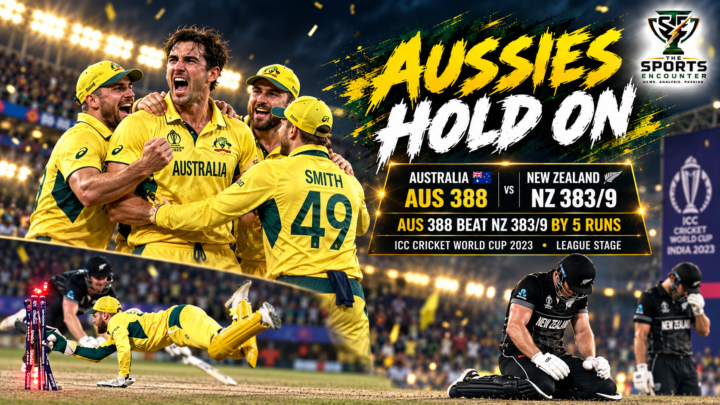
Only days earlier, Australia had beaten New Zealand by five runs after scoring 388 and conceding 383/9.
That match is revisited in Match 41: Head’s Return Ignites 771-Run Epic Before Australia Survive Ravindra and Neesham by Five Runs.
Dharamsala required defending pressure.
Mumbai required escaping collapse.
Australia survived both.
That resilience became increasingly important as the tournament moved toward the knockout stage.
Maxwell’s 201* Belongs With ODI Cricket’s Greatest Rescue Innings
The series already contains several innings built around impossible pressure.
Kapil Dev’s 175* rescued India from 17/5 against Zimbabwe in 1983.
Steve Waugh’s unbeaten 120 kept Australia alive at the 1999 World Cup.
Maxwell belongs in that company.
The situation may have been even more extreme.
Australia were seven wickets down.
The target was still more than 200 runs away from the point of collapse.
Maxwell was physically compromised.
And yet the innings did not simply rescue Australia.
It finished the chase.
Maxwell’s World Cup Had Already Been Extraordinary
This was not his first record-breaking innings of the tournament.
Earlier, Maxwell had smashed a century from only 40 balls against the Netherlands, setting a new record for the fastest men’s World Cup hundred.
The 201* was different.
The Netherlands innings demonstrated destruction.
The Afghanistan innings demonstrated survival, improvisation, pain tolerance and tactical intelligence.
Together, they explained why Maxwell remained one of the most dangerous ODI players of his generation.
The Match Also Shows Why ODI Cricket Still Produces Unique Drama
A T20 match probably ends before a 202-run eighth-wicket partnership can develop.
A Test match offers more time and a completely different risk structure.
The ODI format created the exact conditions for this story.
Afghanistan had time to build 291.
Australia had time to collapse.
Maxwell had time to rebuild.
Then the required rate forced acceleration.
The match contained patience, collapse, recovery, physical exhaustion and boundary hitting inside one innings.
That range is part of what this series is celebrating.
Continue A Celebration of 5000 ODIs
 A Celebration of 5000 ODIsA Celebration of 5000 ODIs Match 41: Head’s Return Ignites 771-Run Epic Before Australia Survive Ravindra and Neesham by Five Runs
 A Celebration of 5000 ODIsA Celebration of 5000 ODIs Match 37: Coulter-Nile Rises From No. 8 as Australia Escape 38/4 and Starc Breaks West Indies Late
 A Celebration of 5000 ODIsA Celebration of 5000 ODIs Match 28: Williamson’s Six Saves New Zealand From Starc’s Stunning Fightback
Frequently Asked Questions
Who Won Australia vs Afghanistan in the 2023 World Cup?
Australia won by three wickets, reaching 293/7 in 46.5 overs after Afghanistan scored 291/5.
Who Was Player of the Match?
Glenn Maxwell was named Player of the Match after scoring 201 not out from 128 balls.
What Was Australia’s Score at Their Lowest Point?
Australia were 91/7.
How Many Runs Did Maxwell Score?
Maxwell made an unbeaten 201 with 21 fours and 10 sixes.
How Many Runs Did Pat Cummins Score?
Cummins made 12 not out from 68 balls.
What Was the Maxwell-Cummins Partnership?
They added an unbeaten 202 runs for the eighth wicket.
Who Scored Afghanistan’s Century?
Ibrahim Zadran made 129 not out from 143 balls.
What Did Rashid Khan Score?
Rashid made 35 not out from 18 balls.
What Records Did Maxwell Break?
His 201* was the first men’s ODI double century by an Australian, the first men’s ODI double hundred in a chase, and the first by a non-opener.
Why Is This Match Included in A Celebration of 5000 ODIs?
Australia were 91/7 chasing 292 and appeared beaten. Maxwell then produced an unbeaten 201 while severely hampered by cramp, added 202 with Cummins and completed one of the most improbable chases in ODI history.
Australia
- A Celebration of 5000 ODIs Match 42: Maxwell Rises From 91/7 to Drag Australia Past Afghanistan With an Unbelievable 201*
- A Celebration of 5000 ODIs Match 41: Head’s Return Ignites 771-Run Epic Before Australia Survive Ravindra and Neesham by Five Runs
- Australia Cup Final: South Melbourne’s Historic Run Meets Melbourne Victory’s Cup Pedigree at AAMI Park
- Carey and Marsh Put Australia Ahead of the Rain as South Africa’s Sweep Bid Ends on a Soggy Night
- Endrick Changes the Game as Brazil Recover From 2-1 Down to Beat Australia 4-2