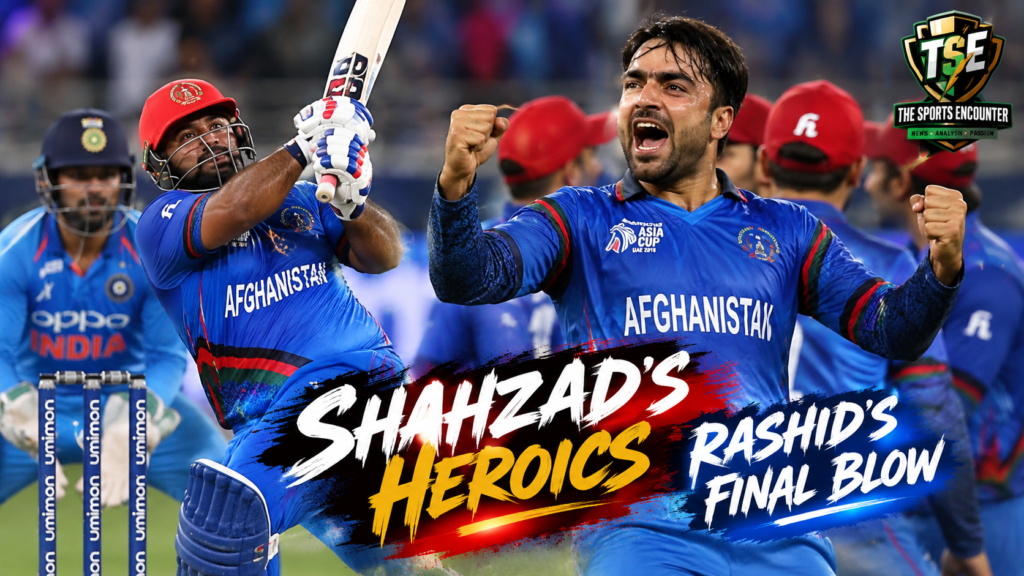
DUBAI, United Arab Emirates, September 25, 2018: India needed one run from two balls to defeat Afghanistan in the 2018 Asia Cup. Ravindra Jadeja had just helped level the scores, and an Indian victory appeared almost certain. But Rashid Khan had one final opportunity to change the outcome. He delivered a short ball, Jadeja mistimed his pull, and Najibullah Zadran completed the catch at midwicket. India were all out for 252 in 49.5 overs, exactly matching Afghanistan’s 252/8. What appeared to be India’s match had ended in an extraordinary tie.
Earlier, Mohammad Shahzad had produced a magnificent 124 from 116 deliveries to rescue Afghanistan from repeated batting collapses. Mohammad Nabi contributed 64 from 56 balls before returning with two crucial wickets. India, despite a 110-run opening partnership between KL Rahul and Ambati Rayudu, lost ten wickets for 142 runs as Afghanistan’s bowlers relentlessly attacked the middle order. The contest became one of the most memorable matches of the 2018 Asia Cup, demonstrating how quickly a seemingly comfortable ODI chase can unravel under sustained pressure.
This match forms the 62nd installment of The Sports Encounter’s A Celebration of 5000 ODIs, a special series revisiting 100 remarkable One-Day Internationals.
The inclusion recognizes an outstanding individual century, an unexpected Indian batting collapse, Afghanistan’s determined bowling response and a remarkable finish. There was no winner on the scoreboard, but Afghanistan had delivered one of its defining early performances against an established ODI powerhouse.
Story at a glance
India vs Afghanistan, 2018 Asia Cup: Match Summary
The match carried limited tournament consequences because India had already qualified for the final and Afghanistan were already eliminated.
Mohammad Shahzad’s 124 Turns Afghanistan’s Batting Collapse Into an Unlikely Opportunity
Mohammad Shahzad delivered one of the finest ODI innings of his international career.
Mohammad Nabi’s 64 Rescues Afghanistan From 180/6
While Shahzad provided the innings’ defining performance, Mohammad Nabi made an equally important contribution to Afghanistan’s eventual total.
Ravindra Jadeja and Kuldeep Yadav Prevent Afghanistan From Scoring 280
India’s bowling performance contained several strong spells, particularly from its spin department.
KL Rahul and Ambati Rayudu Put India in Complete Control at 110/0
India’s chase began almost perfectly.
India vs Afghanistan, 2018 Asia Cup: Match Summary
| Match Detail | Information |
|---|---|
| Tournament | Asia Cup 2018 |
| Match | Fifth Super Four match |
| Date | September 25, 2018 |
| Venue | Dubai International Cricket Stadium |
| Toss | Afghanistan won and elected to bat |
| Afghanistan | 252/8 in 50 overs |
| India | 252 all out in 49.5 overs |
| Result | Match tied |
| Afghanistan’s top scorer | Mohammad Shahzad, 124 |
| India’s top scorer | KL Rahul, 60 |
| Afghanistan’s best bowling figures | Aftab Alam, 2/53; Mohammad Nabi, 2/40; Rashid Khan, 2/41 |
| India’s best bowling figures | Ravindra Jadeja, 3/46 |
| Player of the Match | Mohammad Shahzad |
| Decisive dismissal | Ravindra Jadeja, 49.5 overs |
The match carried limited tournament consequences because India had already qualified for the final and Afghanistan were already eliminated.
However, the competitive stakes were considerably greater for Afghanistan’s reputation.
Facing a strong Indian side, even one featuring several changes, Afghanistan had another opportunity to demonstrate that its rapid development as an international cricketing nation extended beyond occasional individual performances.
Mohammad Shahzad’s 124 Turns Afghanistan’s Batting Collapse Into an Unlikely Opportunity
Mohammad Shahzad delivered one of the finest ODI innings of his international career.
The wicketkeeper-batter scored 124 from 116 deliveries, striking 11 fours and seven sixes. His aggression gave Afghanistan a fighting chance despite limited support from the top order.
The remarkable feature of Shahzad’s innings was the extent to which he dominated the scoring.
Afghanistan lost its first wicket at 65, although opening partner Javed Ahmadi had contributed only five runs from 30 deliveries.
The situation deteriorated rapidly.
Rahmat Shah fell for three, Hashmatullah Shahidi departed without scoring, and captain Asghar Afghan followed for a first-ball duck.
Afghanistan had collapsed to 82/4.
Shahzad remained undeterred.
When Afghanistan reached 100, Shahzad had scored 86 of those runs.
His aggressive approach was particularly important because India’s spinners had started taking wickets regularly at the other end.
He eventually completed his century while Afghanistan’s total stood at just 131.
According to the ICC, this equaled the lowest team score at which an individual batter had reached an ODI century, matching the mark associated with Shahid Afridi.
Shahzad’s performance was impressive for several reasons.
First, he maintained an attacking approach despite wickets falling around him.
Second, he forced India to defend boundaries rather than completely dominate through spin.
Third, he ensured Afghanistan retained a chance of producing a competitive total.
When Kedar Jadhav dismissed him for 124 in the 38th over, Afghanistan were 180/6.
The innings was far from secure, but Shahzad had given the middle and lower order something meaningful to defend.
How Much Did Shahzad Contribute to Afghanistan’s 252?
| Statistic | Figure |
|---|---|
| Shahzad’s runs | 124 |
| Balls faced | 116 |
| Fours | 11 |
| Sixes | 7 |
| Strike rate | 106.90 |
| Percentage of Afghanistan’s total | 49.21% |
| Afghanistan’s total | 252 |
Shahzad contributed almost half his team’s runs, an extraordinary share in a 50-over international.
This also explains why his innings deserves attention beyond the century itself.
Without his contribution, Afghanistan’s early collapse might have prevented the match from becoming competitive.
Mohammad Nabi’s 64 Rescues Afghanistan From 180/6
While Shahzad provided the innings’ defining performance, Mohammad Nabi made an equally important contribution to Afghanistan’s eventual total.
Nabi scored 64 from 56 deliveries, including three fours and four sixes.
His innings arrived at a stage when Afghanistan were in danger of wasting Shahzad’s remarkable start.
At 180/6, India had regained a degree of control.
Afghanistan needed the remaining batters to build partnerships, preserve wickets and push the total beyond 230.
Nabi responded with attacking intent.
He added 46 runs with Najibullah Zadran, who contributed a useful 20 from 20 balls.
The partnership helped Afghanistan move from 180/6 to 226 before Najibullah departed.
Nabi continued to attack and ensured Afghanistan reached 252/8.
His innings provided the second substantial contribution Afghanistan desperately needed.
There was also a tactical difference between the two major Afghan innings.
Shahzad dominated the early and middle stages despite frequent wickets.
Nabi accelerated later, when India were attempting to limit the damage.
The combination gave Afghanistan a total that appeared competitive, although not necessarily sufficient against India’s batting depth.
Ravindra Jadeja and Kuldeep Yadav Prevent Afghanistan From Scoring 280
India’s bowling performance contained several strong spells, particularly from its spin department.
Ravindra Jadeja finished with 3/46 from ten overs, while Kuldeep Yadav claimed 2/38.
Jadeja dismissed Javed Ahmadi and Rahmat Shah before returning to remove Najibullah Zadran.
Kuldeep contributed two rapid wickets in the middle order.
He dismissed Hashmatullah Shahidi and Asghar Afghan from successive deliveries, leaving Afghanistan in considerable difficulty.
Those breakthroughs prevented Shahzad from establishing the large partnerships that could have transformed his century into an even greater team total.
Kedar Jadhav also delivered an economical seven-over spell, taking 1/27.
India’s spinners collectively maintained enough control to limit Afghanistan to 252.
However, the fast bowlers experienced mixed fortunes.
Deepak Chahar, making his ODI debut, conceded 37 runs from four overs. Siddarth Kaul finished with 0/58 from nine.
Afghanistan exploited the opportunities provided by the seamers, particularly during Shahzad’s aggressive innings.
India could reasonably have expected to chase 253 successfully after restricting Afghanistan to a manageable total.
Its batting response initially supported that expectation.
KL Rahul and Ambati Rayudu Put India in Complete Control at 110/0
India’s chase began almost perfectly.
With regular openers Rohit Sharma and Shikhar Dhawan rested, KL Rahul and Ambati Rayudu formed a new opening partnership.
The pair added 110 runs in 17 overs.
Rahul scored 60 from 66 balls, striking five fours and one six.
Rayudu contributed 57 from 49 deliveries, including four fours and four sixes.
Their partnership took India well ahead of the required scoring rate.
At 110 without loss, India needed another 143 runs from 33 overs with all ten wickets intact.
The equation appeared comfortable.
Afghanistan needed to create wickets immediately because simply restricting the scoring rate would probably not have been enough.
Ambati Rayudu’s 57 Forces Afghanistan to Change Its Approach
Rayudu was particularly aggressive.
His 57 came at a strike rate of 116.33, forcing Afghanistan’s bowlers to search for breakthroughs instead of simply containing the scoring.
However, Mohammad Nabi eventually dismissed Rayudu in the 18th over.
The opener attempted another attacking stroke but was caught by Najibullah Zadran.
India were 110/1.
The wicket did not immediately make Afghanistan favorites, but it provided the first opening.
KL Rahul’s 60 Ends as Rashid Khan Strikes
Rashid Khan delivered Afghanistan’s next major breakthrough.
Rahul had looked comfortable during his half-century, but Rashid trapped him lbw for 60.
India slipped to 127/2.
The loss of both openers within four overs completely changed the character of the chase.
Afghanistan now had the opportunity to attack India’s middle order.
That was precisely what happened.
India’s Chase: How Afghanistan Turned a Comfortable Target Into a Crisis
| Match Situation | India Score | Runs Still Required | Wickets Remaining |
|---|---|---|---|
| Opening partnership ends | 110/1 | 143 | 9 |
| Rahul dismissed | 127/2 | 126 | 8 |
| Dhoni dismissed | 142/3 | 111 | 7 |
| Pandey dismissed | 166/4 | 87 | 6 |
| Jadhav dismissed | 204/5 | 49 | 5 |
| Karthik dismissed | 205/6 | 48 | 4 |
| Chahar dismissed | 226/7 | 27 | 3 |
| Kuldeep run out | 242/8 | 11 | 2 |
| Kaul run out | 245/9 | 8 | 1 |
| Jadeja dismissed | 252 all out | Scores level | 0 |
The numbers reveal how effectively Afghanistan used wickets to counter India’s strong start.
India reached 110 without loss before losing ten wickets for another 142 runs.
More importantly, Afghanistan managed to keep the target within reach while steadily reducing the number of recognized batters available to finish the chase.
Mohammad Nabi’s 2/40 Breaks India’s Middle-Order Resistance
Nabi’s contribution extended well beyond his half-century.
He returned with the ball to claim two crucial wickets while conceding only 40 runs from ten overs.
His dismissal of Rayudu ended India’s opening partnership.
Later, he removed Dinesh Karthik, who had attempted to stabilize the chase with 44 from 66 balls.
Karthik’s innings had briefly restored order after India’s middle-order losses.
However, the dismissal left India at 205/6 in the 40th over.
The chase remained achievable, but the margin for error had narrowed considerably.
Nabi’s bowling figures were particularly valuable because he combined wicket-taking effectiveness with an economy rate of four runs per over.
In a match where India required 253, every economical over increased pressure on the remaining batters.
His all-round performance was one of Afghanistan’s strongest contributions.
Rashid Khan’s 2/41 Provides the Decisive Moments
Rashid Khan produced two wickets that changed the match at completely different stages.
His first major contribution was the dismissal of KL Rahul.
India were still in a commanding position, but Rahul’s wicket exposed the middle order and allowed Afghanistan to maintain pressure.
Rashid’s second decisive moment came in the final over.
At that point, India’s lower order had taken the chase within touching distance of victory.
Rashid had to defend seven runs with only one wicket remaining.
He conceded five runs from the first three deliveries, including a boundary from Jadeja.
Khaleel Ahmed then managed a single to level the scores.
India needed just one run from two deliveries.
Rashid now faced Jadeja with the match balanced between India’s victory and Afghanistan’s escape.
His fifth delivery produced the final wicket.
Jadeja mistimed his attempted pull, and Najibullah Zadran completed the catch.
India were dismissed for 252.
Rashid finished with 2/41 from 9.5 overs.
His performance illustrated his value beyond his economy rate.
He removed a set opening batter when Afghanistan desperately needed a breakthrough and then delivered the decisive ball with the match almost lost.
Ravindra Jadeja Nearly Finishes India’s Chase
Jadeja had already distinguished himself with the ball.
His three wickets restricted Afghanistan during the first innings.
When India began losing wickets, he became increasingly important with the bat.
Jadeja scored 25 from 34 deliveries and carried the chase into its final stages.
He received some support from Deepak Chahar, who contributed 12, and Kuldeep Yadav, who added nine.
However, India continued losing wickets.
The dismissals of Kuldeep and Siddarth Kaul through run-outs left India nine wickets down before the final over.
Jadeja still appeared capable of finishing the contest.
His boundary against Rashid Khan brought India closer, and the scores eventually became level.
At that moment, a single would have completed the chase.
Instead, Jadeja’s attempted pull ended in Najibullah’s hands.
His dismissal transformed an apparent Indian victory into a tie.
It also ensured that a match India had controlled for long periods would be remembered primarily for Afghanistan’s resistance.
Five Turning Points That Defined the Dubai Thriller
1. Shahzad Keeps Afghanistan Alive Despite Four Early Wickets
Afghanistan’s collapse to 82/4 should have placed India firmly in control.
Shahzad’s aggressive batting prevented that situation from becoming terminal.
His century gave Afghanistan a realistic chance of establishing a competitive total.
2. Nabi’s Late Acceleration Pushes Afghanistan to 252
At 180/6, Afghanistan still risked finishing substantially below 250.
Nabi’s 64 transformed the innings.
His partnership with Najibullah Zadran added crucial late runs and gave Afghanistan a total worth defending.
3. Rayudu and Rahul Depart After a 110-Run Opening Stand
India appeared to have established complete control before Rayudu’s dismissal.
Rahul followed shortly afterward.
Those two wickets shifted the match from a comfortable chase toward a contest in which Afghanistan could attack India’s middle order.
4. India Lose Kedar Jadhav and Dinesh Karthik in Quick Succession
India were 204/4 before Jadhav’s run-out.
Karthik departed with the score at 205.
Suddenly, India had lost six wickets and still required 48 runs.
The lower order faced increasing pressure against Afghanistan’s spinners.
5. Rashid Khan Dismisses Jadeja With Scores Level
The final wicket became the defining moment.
With India needing one run from two deliveries, Rashid removed Jadeja and prevented the winning run.
Afghanistan had secured a tie that seemed highly unlikely when India were 110 without loss.
Was India’s Collapse Self-Inflicted or the Result of Afghanistan’s Spin Attack?
Both explanations deserve consideration.
India had enough batting talent and a sufficiently strong opening partnership to complete the chase.
The dismissal of both openers created opportunities for Afghanistan, but India still possessed experienced players capable of finishing the match.
The middle order failed to establish the kind of partnership needed to remove Afghanistan’s hopes.
Karthik’s 44 provided temporary stability, but wickets continued to fall.
Three run-outs also damaged India’s chances.
However, reducing the result entirely to India’s mistakes would overlook Afghanistan’s bowling discipline.
Nabi, Rashid, Mujeeb Ur Rahman and Javed Ahmadi ensured that India repeatedly had to rebuild.
Continue A Celebration of 5000 ODIs
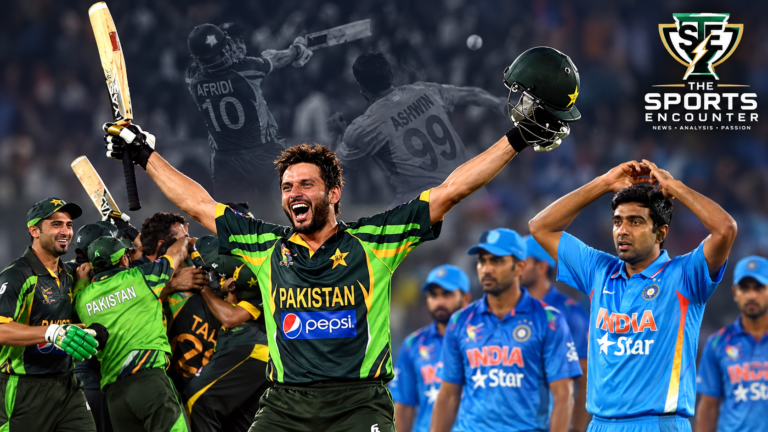 A Celebration of 5000 ODIsA Celebration of 5000 ODIs Match 61: Pakistan Need 10 With One Wicket Left, Afridi Smashes Ashwin for Two Sixes to Break India’s Heart
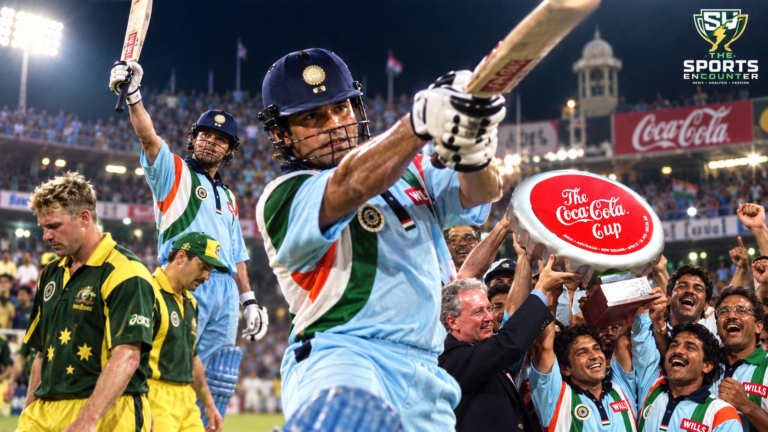 A Celebration of 5000 ODIsA Celebration of 5000 ODIs Match 49: Tendulkar Turns the Desert Storm Into a Birthday Title Against Australia
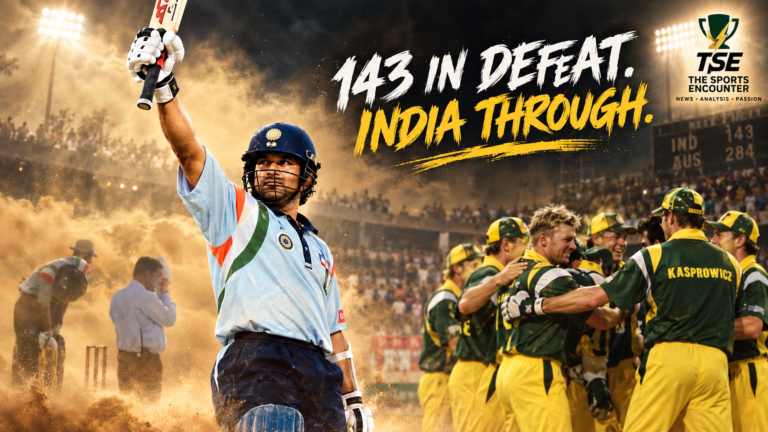 A Celebration of 5000 ODIsA Celebration of 5000 ODIs Match 48: Tendulkar Loses the Match but Wins India a Final in the Desert Storm
Mujeeb conceded only 43 runs from ten overs despite going wicketless.
Nabi and Rashid combined for four wickets.
Javed Ahmadi’s dismissal of MS Dhoni added another important breakthrough.
Aftab Alam provided valuable seam support with 2/53.
The evidence suggests that Afghanistan’s sustained pressure and India’s inability to preserve partnerships combined to produce the tie.
India had several opportunities to complete the chase.
Afghanistan kept creating new opportunities to stop them.
Why Mohammad Shahzad Was Named Player of the Match
Mohammad Shahzad received the official Player of the Match award for his magnificent 124.
His innings was the foundation of Afghanistan’s total.
Without it, Afghanistan would have struggled to recover from 82/4.
Shahzad also achieved a remarkable statistical distinction by completing his century when the team total stood at just 131.
His innings featured seven sixes and 11 fours, showing how effectively he attacked India’s bowling.
Although Nabi contributed significantly with bat and ball, Shahzad’s century remained the match’s outstanding individual performance.
Rashid Khan supplied the unforgettable finish.
Shahzad had created the opportunity for that finish several hours earlier.
The award was therefore thoroughly justified.
Why Match 62 Belongs in A Celebration of 5000 ODIs
This match deserves its inclusion because it challenges the assumption that a dead rubber cannot produce unforgettable cricket.
India had already qualified for the Asia Cup final.
Afghanistan had already been eliminated.
There was no immediate qualification prize awaiting the winner.
Yet both teams produced a contest that continued to shift until the penultimate delivery.
The match featured several characteristics that define memorable ODI cricket.
Shahzad played an extraordinary innings under pressure.
Nabi contributed in both departments.
India’s openers established a position from which victory should have been achievable.
Afghanistan’s spinners then gradually destroyed that advantage.
Finally, Rashid Khan delivered the wicket that prevented India from scoring the winning run.
The result also carried broader significance for Afghanistan cricket.
Competing against an established international powerhouse, Afghanistan showed that its bowling attack could defend a competitive total even after conceding a century opening partnership.
Its batters had already demonstrated individual talent.
Now its bowlers had shown the temperament to sustain pressure throughout a difficult chase.
The final wicket provided an unforgettable conclusion to that effort.
India vs Afghanistan 2018 Asia Cup: Complete Match Scorecard
Afghanistan Innings: 252/8 in 50 Overs
| Batter | Dismissal | R | B | 4s | 6s | SR |
|---|---|---|---|---|---|---|
| Mohammad Shahzad (wk) | c Karthik b Jadhav | 124 | 116 | 11 | 7 | 106.90 |
| Javed Ahmadi | st Dhoni b Jadeja | 5 | 30 | 0 | 0 | 16.67 |
| Rahmat Shah | b Jadeja | 3 | 4 | 0 | 0 | 75.00 |
| Hashmatullah Shahidi | st Dhoni b Kuldeep | 0 | 3 | 0 | 0 | 0.00 |
| Asghar Afghan (c) | b Kuldeep | 0 | 1 | 0 | 0 | 0.00 |
| Gulbadin Naib | c Jadhav b Chahar | 15 | 46 | 1 | 0 | 32.61 |
| Mohammad Nabi | c Kuldeep b Khaleel | 64 | 56 | 3 | 4 | 114.29 |
| Najibullah Zadran | lbw b Jadeja | 20 | 20 | 2 | 0 | 100.00 |
| Rashid Khan | Not out | 12 | 19 | 0 | 0 | 63.16 |
| Aftab Alam | Not out | 2 | 6 | 0 | 0 | 33.33 |
| Mujeeb Ur Rahman | Did not bat | |||||
| Extras | 1 bye, 1 no-ball, 5 wides | 7 | ||||
| Total | 8 wickets, 50 overs | 252 |
Fall of Wickets: 1-65 (Ahmadi, 12.4), 2-81 (Rahmat, 14.4), 3-82 (Shahidi, 15.2), 4-82 (Asghar, 15.3), 5-132 (Naib, 28.4), 6-180 (Shahzad, 37.5), 7-226 (Najibullah, 44.1), 8-244 (Nabi, 47.3).
India Bowling
| Bowler | Overs | Maidens | Runs | Wickets | Economy |
|---|---|---|---|---|---|
| Khaleel Ahmed | 10 | 1 | 45 | 1 | 4.50 |
| Deepak Chahar | 4 | 0 | 37 | 1 | 9.25 |
| Siddarth Kaul | 9 | 0 | 58 | 0 | 6.44 |
| Ravindra Jadeja | 10 | 1 | 46 | 3 | 4.60 |
| Kuldeep Yadav | 10 | 0 | 38 | 2 | 3.80 |
| Kedar Jadhav | 7 | 0 | 27 | 1 | 3.85 |
India Innings: 252 All Out in 49.5 Overs
| Batter | Dismissal | R | B | 4s | 6s | SR |
|---|---|---|---|---|---|---|
| KL Rahul | lbw b Rashid | 60 | 66 | 5 | 1 | 90.91 |
| Ambati Rayudu | c Najibullah b Nabi | 57 | 49 | 4 | 4 | 116.33 |
| Dinesh Karthik | lbw b Nabi | 44 | 66 | 4 | 0 | 66.67 |
| MS Dhoni (c, wk) | lbw b Ahmadi | 8 | 17 | 0 | 0 | 47.06 |
| Manish Pandey | c Shahzad b Aftab | 8 | 15 | 0 | 0 | 53.33 |
| Kedar Jadhav | run out (Mujeeb) | 19 | 26 | 2 | 0 | 73.08 |
| Ravindra Jadeja | c Najibullah b Rashid | 25 | 34 | 1 | 0 | 73.53 |
| Deepak Chahar | b Aftab | 12 | 14 | 1 | 0 | 85.71 |
| Kuldeep Yadav | run out | 9 | 11 | 0 | 0 | 81.82 |
| Siddarth Kaul | run out (Shahidi) | 0 | 1 | 0 | 0 | 0.00 |
| Khaleel Ahmed | Not out | 1 | 1 | 0 | 0 | 100.00 |
| Extras | 5 leg-byes, 3 wides, 1 no-ball | 9 | ||||
| Total | All out, 49.5 overs | 252 |
Fall of Wickets: 1-110 (Rayudu, 17.1), 2-127 (Rahul, 20.3), 3-142 (Dhoni, 25.5), 4-166 (Pandey, 30.3), 5-204 (Jadhav, 38.5), 6-205 (Karthik, 39.4), 7-226 (Chahar, 44.5), 8-242 (Kuldeep, 48.1), 9-245 (Kaul, 48.5), 10-252 (Jadeja, 49.5).
Afghanistan Bowling
| Bowler | Overs | Maidens | Runs | Wickets | Economy |
|---|---|---|---|---|---|
| Aftab Alam | 10 | 0 | 53 | 2 | 5.30 |
| Mujeeb Ur Rahman | 10 | 1 | 43 | 0 | 4.30 |
| Gulbadin Naib | 4 | 0 | 41 | 0 | 10.25 |
| Mohammad Nabi | 10 | 0 | 40 | 2 | 4.00 |
| Rashid Khan | 9.5 | 0 | 41 | 2 | 4.17 |
| Javed Ahmadi | 4 | 0 | 19 | 1 | 4.75 |
| Rahmat Shah | 2 | 0 | 10 | 0 | 5.00 |
Result: India and Afghanistan tied, both scoring 252 runs.
Player of the Match: Mohammad Shahzad, Afghanistan, 124 from 116 deliveries.
Official historical review: ICC’s account of the 2018 Asia Cup tie.
What Made the 2018 Asia Cup Tie So Unforgettable?
A tie usually suggests two evenly matched performances.
This contest was far more complicated.
Afghanistan relied heavily on Shahzad’s century and Nabi’s late acceleration.
India began its chase with a dominant opening partnership.
The momentum subsequently changed through a succession of wickets, missed opportunities and pressure-filled overs.
By the time Rashid Khan prepared to bowl the penultimate delivery, the match had reached its simplest possible equation.
India needed one run.
Afghanistan needed one wicket.
Rashid won that final individual contest.
The scoreboard recorded a tie, but Afghanistan’s players celebrated a performance that had demonstrated their growing competitiveness against one of cricket’s leading nations.
That is why this remarkable encounter belongs in The Sports Encounter’s 100 greatest ODI thrillers.
For another memorable Asia Cup encounter, revisit Match 61, when Shahid Afridi struck consecutive sixes to rescue Pakistan against India.
Both matches demonstrate how rapidly control can disappear when an ODI reaches its final overs.
A Celebration of 5000 ODIs
- A Celebration of 5000 ODIs Match 62: Afghanistan Deny India Victory With Rashid Khan’s Last-Over Drama
- A Celebration of 5000 ODIs Match 49: Tendulkar Turns the Desert Storm Into a Birthday Title Against Australia
- A Celebration of 5000 ODIs Match 48: Tendulkar Loses the Match but Wins India a Final in the Desert Storm
- A Celebration of 5000 ODIs Match 47: Ganguly Carries 315 Into Reach Before Kanitkar Finds Four in the Dhaka Darkness
- A Celebration of 5000 ODIs Match 46: Miandad Turns Four From One Ball Into the Six That Changed India-Pakistan Cricket