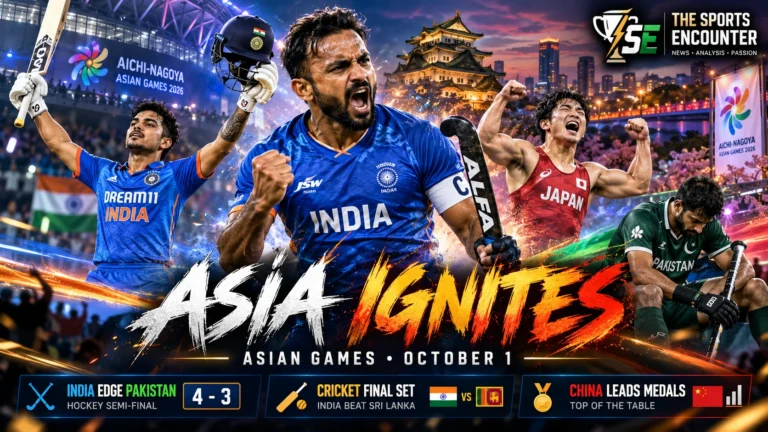
NAGOYA, Japan, October 1, 2026: China moved deeper into territory no other nation can realistically reach, Japan turned wrestling into another home source of gold, India and Pakistan produced one of the most dramatic hockey matches of the Asian Games, and the same two rivals booked a second meeting for the men’s cricket title.
October 1 at Aichi-Nagoya 2026 did not belong to one sport.
It belonged to consequence.
India survived Pakistan 4-3 in a men’s hockey semifinal after surrendering a 3-0 lead. Malaysia then eliminated South Korea 2-1 to create an India-Malaysia gold-medal match.
Story at a glance
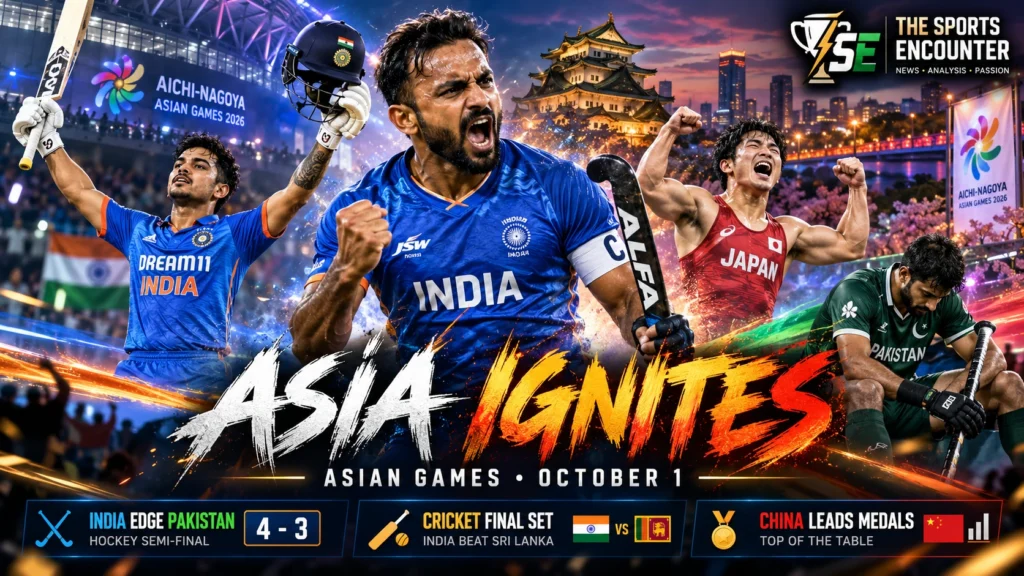
Asian Games 2026 October 1: The Biggest Results
The day followed an extraordinary September 30 in which China reached 100 consecutive Asian Games diving gold medals and India swept the compound archery team events.
India and Pakistan Turn a Hockey Semifinal Into the Match of the Day
India appeared to have the semifinal under control almost immediately.
Malaysia End South Korea’s Hockey Gold Bid
India’s opponent will be Malaysia.
Pakistan Survive Bangladesh to Reach the Cricket Final
Pakistan’s cricket semifinal contained much more pressure than India’s.
Ishan Kishan and India’s Bowlers Crush Sri Lanka
If Pakistan’s semifinal created tension, India’s removed it.
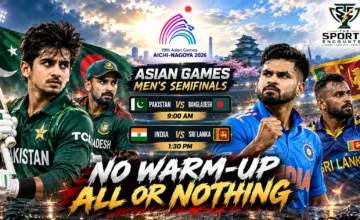
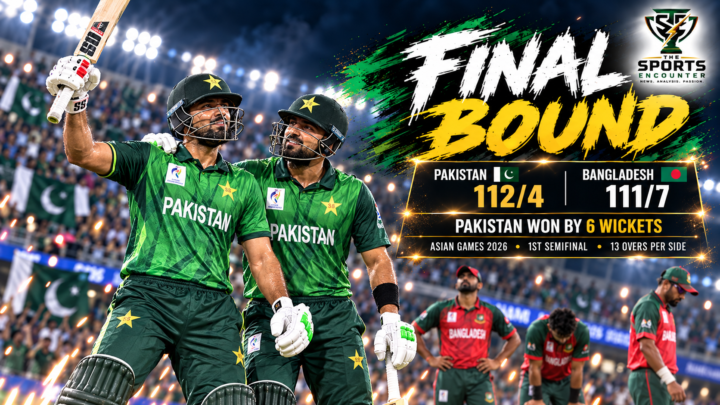
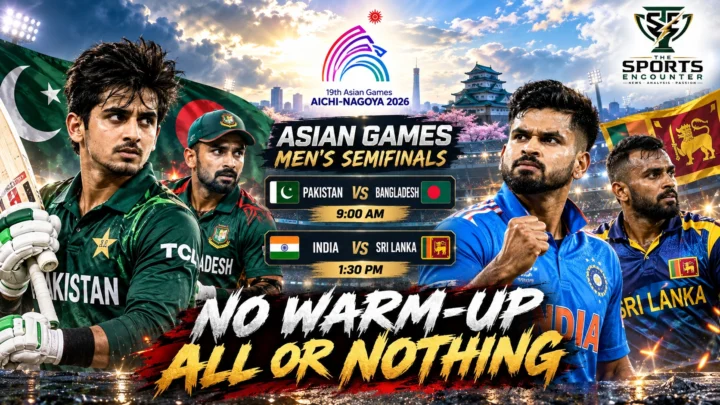
In cricket, Pakistan defeated Bangladesh by six wickets before India destroyed Sri Lanka by 124 runs, creating an India-Pakistan gold-medal final on October 3.
Japan collected two wrestling titles through Yuri Nakazato and Nonoka Ozaki, although Olympic champion Nao Kusaka was denied gold by Iran’s Alireza Abdevali.
And over all of it sat the biggest number of the Games.
China remained first in the medal table with more than 150 gold medals, maintaining an advantage so large that host Japan and South Korea are now effectively competing for the positions behind them.
Asian Games 2026 October 1: The Biggest Results
| Sport | Key Result | Why It Mattered |
|---|---|---|
| Men’s Hockey | India 4-3 Pakistan | Abhishek scored in the final minute after Pakistan recovered from 3-0 down |
| Men’s Hockey | Malaysia 2-1 South Korea | Malaysia reached the gold-medal match against India |
| Men’s Cricket | Pakistan 112/4 beat Bangladesh 111/7 | Pakistan reached the gold-medal match |
| Men’s Cricket | India 169/7 beat Sri Lanka 45 | India won by 124 runs and set up an India-Pakistan final |
| Wrestling | Alireza Abdevali beat Nao Kusaka 5-2 | Iran denied Japan’s Olympic champion the Greco-Roman 77kg gold |
| Wrestling | Yuri Nakazato beat Nitesh Siwach 4-0 | Japan won Greco-Roman 97kg gold |
| Wrestling | Nonoka Ozaki beat Kim Ok Ju 3-0 | Japan added women’s freestyle 62kg gold |
| Sailing | Liu Tian/Wen Zaiding won men’s skiff gold | China added another title while India took silver |
The day followed an extraordinary September 30 in which China reached 100 consecutive Asian Games diving gold medals and India swept the compound archery team events.
India and Pakistan Turn a Hockey Semifinal Into the Match of the Day
India appeared to have the semifinal under control almost immediately.
Captain Harmanpreet Singh scored twice in the opening 13 minutes and Sukhjeet Singh made it 3-0 in the second quarter.
Against a Pakistan side that had already demonstrated its attacking potential during the tournament, the lead looked decisive.
It was not.
Abu Mahmood pulled one back before halftime. Hannan Shahid reduced the deficit again in the third quarter. Waheed Rana then equalized in the 49th minute.
Three goals had disappeared.
The semifinal had become 3-3.
A shootout looked increasingly likely until Abhishek scored in the final minute, with roughly 45 seconds remaining, to give India a 4-3 victory.
The significance extended beyond another India-Pakistan rivalry result.
India had won all five of their pool matches and entered the semifinal as defending champions. Pakistan forced them closer to elimination than any opponent had managed during the competition.
That makes the result both a victory and a warning.
India are in the gold-medal match. Their second-half defensive collapse showed they are not untouchable.
Pakistan Lost but Restored Tension to the Rivalry
Pakistan’s defeat will hurt because of how close the comeback came to changing the entire tournament.
The team recovered from 3-0 down against the defending champions and reached 3-3 with more than 10 minutes remaining.
That response matters even though the scoreboard ultimately records a loss.
TSE had already followed India’s rise through the tournament, including the women’s team reaching the medal phase in our September 25 Asian Games report.
October 1 produced a men’s semifinal with far more danger.
Malaysia End South Korea’s Hockey Gold Bid
India’s opponent will be Malaysia.
Malaysia defeated South Korea 2-1 in the second men’s semifinal, removing one of Asian hockey’s most established powers and creating a gold-medal matchup with a very different tactical profile.
South Korea had reached the knockout stage with championship ambitions but will now play for bronze.
Malaysia, meanwhile, move into the final carrying one of the most important results of their Games.
The men’s hockey medal matches are scheduled after a tournament that has already produced several large scorelines and sharp swings between the established Asian powers.
Pakistan Survive Bangladesh to Reach the Cricket Final
Pakistan’s cricket semifinal contained much more pressure than India’s.
Rain reduced the Pakistan-Bangladesh match to 13 overs per side.
Bangladesh recovered from 21/3 through Towhid Hridoy’s 42 from 25 balls and reached 111/7.
Sufyan Moqim was Pakistan’s most important bowler, taking three wickets for 26 runs and preventing Bangladesh from turning Hridoy’s recovery into a larger total.
Pakistan’s chase then threatened to unravel.
They slipped to 53/4 early in the seventh over as Bangladesh continued to find wickets.
Abdul Samad changed the equation.
His unbeaten 30 from 15 balls helped Pakistan reach 112/4 in 11.3 overs and complete a six-wicket victory.
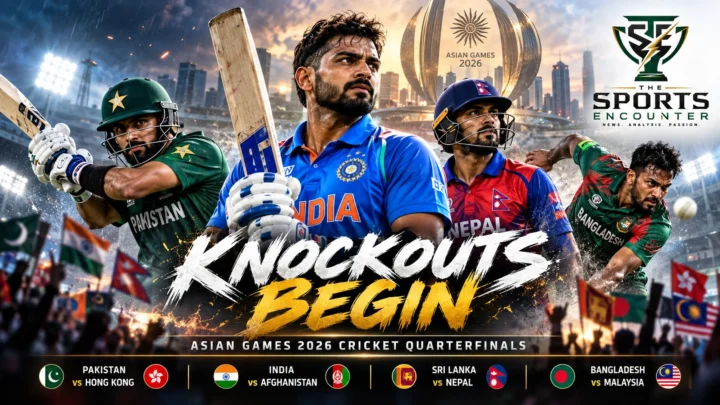
The semifinal finally gave Pakistan a full knockout match after their quarterfinal against Hong Kong, China had been abandoned because of rain.
TSE had examined the uncertainty surrounding the knockout bracket before the quarterfinals in our Asian Games men’s cricket quarterfinal preview.
The rain eventually sent the seeded teams through without a ball being bowled.
Pakistan’s semifinal had to be won on the field.
Ishan Kishan and India’s Bowlers Crush Sri Lanka
If Pakistan’s semifinal created tension, India’s removed it.
Ishan Kishan scored an unbeaten 80 from 46 balls as India posted 169/7 against Sri Lanka.
Fifteen-year-old Vaibhav Sooryavanshi added 38 in his first appearance at this level, giving India early acceleration before Kishan carried the innings deeper.
Sri Lanka’s reply collapsed almost immediately.
Jasprit Bumrah struck twice in the opening over, and India never allowed the chase to recover.
Axar Patel and Abhishek Sharma also took two wickets each as Sri Lanka were dismissed for 45 in only 9.5 overs.
The margin was 124 runs.
India’s women had already retained the Asian Games cricket title when Smriti Mandhana’s historic innings helped them crush Sri Lanka in the final, a performance covered in TSE’s women’s cricket gold-medal report.
The men’s team now has the opportunity to complete an Indian cricket double.
India vs Pakistan for Asian Games Cricket Gold
The October 3 final brings the tournament’s two seeded regional giants together at exactly the stage organizers and supporters would have imagined when the bracket was released.
Pakistan have already shown they can recover inside a shortened chase.
India have just produced the tournament’s most emphatic knockout victory.
The contrast is clear.
Pakistan arrive battle-tested.
India arrive having overwhelmed Sri Lanka.
Only one leaves with gold.
Japan Win Two Wrestling Golds but Kusaka’s Night Ends in Frustration
Nao Kusaka produced one of the day’s most dramatic individual victories before suffering one of its most painful defeats.
The Paris Olympic champion met Kazakhstan’s Demeu Zhadrayev in a rematch of their Olympic final in the men’s Greco-Roman 77kg quarterfinal.
Kusaka fell behind 9-4.
He then overturned the deficit to win 11-9 in front of the home crowd.
The comeback looked like the emotional turning point of his tournament.
Iran’s Alireza Abdevali changed the ending.
Abdevali beat Kusaka 5-2 in the final after gaining the early advantage and refusing to give the Japanese favorite the same recovery route he had found earlier in the day.
Kusaka therefore finished with silver.
Japan still had an excellent wrestling session.
Yuri Nakazato defeated India’s Nitesh Siwach 4-0 to win the men’s Greco-Roman 97kg title.
Nonoka Ozaki then beat North Korea’s Kim Ok Ju 3-0 for women’s freestyle 62kg gold.
The two victories added to a Japanese medal campaign that had already found success in judo, swimming, canoe sprint and several other sports.
China Keep Adding Gold Even When the Headlines Belong Elsewhere
The most important medal-table story of October 1 was also the least surprising.
China remained miles ahead.
By late Thursday, China had 153 gold medals, 71 silver and 63 bronze for 287 total medals, according to the late-evening standings published by Yonhap.
Japan were second with 59 gold and 216 total medals.
South Korea held third with 30 gold and 112 overall.
China’s position has been built across almost every major section of the program.
The delegation had already established extraordinary dominance in diving and shooting. On September 30, Lian Junjie delivered China’s 100th consecutive Asian Games diving gold, a streak examined in depth in TSE’s September 30 daily report.
The scale of that advantage becomes clearer when compared with the first medal day.
China ended September 20 with 11 gold medals and 20 total, already leading the medal table. TSE documented that early surge in our first full medal-day report.
Eleven days later, the gold count had moved beyond 150.
Asian Games 2026 Medal Table After October 1
| Rank | Nation | Gold | Silver | Bronze | Total |
|---|---|---|---|---|---|
| 1 | China | 153 | 71 | 63 | 287 |
| 2 | Japan | 59 | 78 | 79 | 216 |
| 3 | South Korea | 30 | 30 | 52 | 112 |
| 4 | Uzbekistan | 16 | 21 | 19 | 56 |
| 5 | Iran | 12 | 17 | 13 | 42 |
| 6 | Thailand | 12 | 11 | 15 | 38 |
| 7 | Bahrain | 11 | 5 | 5 | 21 |
| 8 | India | 10 | 22 | 32 | 64 |
| 9 | Kazakhstan | 9 | 19 | 36 | 64 |
| 10 | North Korea | 7 | 8 | 9 | 24 |
Medal standings are a late-October 1 snapshot and may change as final results are formally processed.
Why China Cannot Realistically Be Caught
China’s advantage over Japan is not a small buffer.
It is 94 gold medals.
Even before the final weekend, that makes the overall title effectively secure barring an unprecedented change in results or official classifications.
The more realistic competition is behind China.
Japan have established a clear hold on second place through 59 golds, while South Korea’s 30 golds keep them comfortably ahead of Uzbekistan.
The top three are therefore increasingly defined.
Iran’s Abdevali Makes Wrestling Matter to the Medal Race
Iran entered October 1 fighting with Thailand for position immediately below Uzbekistan.
Abdevali’s victory over Kusaka delivered more than an individual title.
It added another gold to Iran’s count at a moment when every first-place finish matters in the middle of the top 10.
Iran finished the day fifth on the table with 12 gold medals, level with Thailand on golds but ahead on silver medals.
That is precisely why wrestling remains so valuable to Iran’s overall Asian Games strategy.
Each combat-sport final has the potential to change national ranking position even when China, Japan and South Korea are already too far ahead.
Sailing Adds Another Gold to China’s Total
China also collected the men’s skiff title through Liu Tian and Wen Zaiding.
India’s Manu Francis and Prince Kurisinkal Noble finished with silver, while Hong Kong, China took bronze.
The sailing medal added another layer to China’s extraordinarily broad medal spread.
The hosts also found success on the water. Japan’s sailing program remained competitive across several classes, complementing a Games in which the home delegation has repeatedly converted finals into medals even when China has remained beyond reach.
Malaysia and Hong Kong Advance in Squash Team Events
Malaysia defeated India 2-1 in the men’s team squash semifinal.
The result came after individual champion Ng Eain Yow again proved influential for Malaysia, while Ameeshenraj Chandaran completed the decisive work in the third rubber.
Continue the Asian Games 2026 Story
 Asian Games 2026China Reaches 100 Straight Diving Golds as India Sweeps Archery and Korea-Japan Final Takes Shape
 Asian Games 2026Indians Revel in a Three-Sport Statement at Asian Games 2026
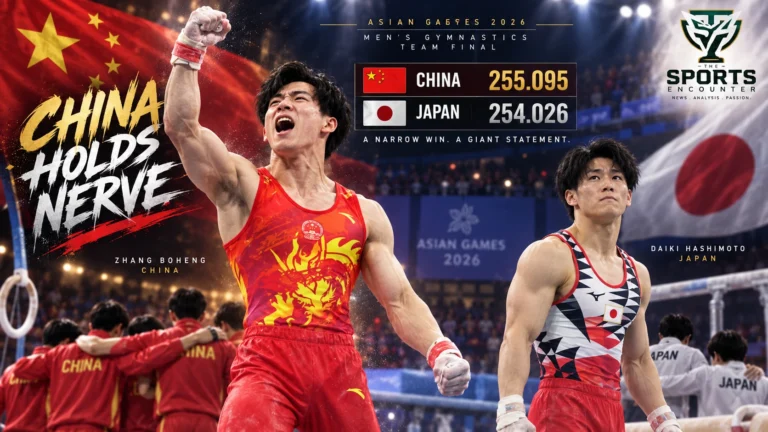 Asian Games 2026Zhang Boheng Holds His Nerve as China Edge Japan for Third Straight Asian Games Gymnastics Team Gold
India’s defending men’s team champions therefore settled for bronze.
Hong Kong, China defeated India 2-1 in the women’s semifinal, sending the Hong Kong team forward while India collected another bronze.
The Indian women’s campaign had already been driven by Anahat Singh, whose rapid progress through the individual tournament had been one of India’s earlier stories. TSE followed that rise in our September 25 multi-sport report.
India Add Archery Bronze After Their Golden September 30
Ganesh Mani Ratnam Thirumuru won bronze in the men’s individual compound event.
The medal came one day after India dominated the compound team program.
On September 30, the Indian women, mixed team and men’s team all won gold.
The women’s team equaled the world record with 238 points, while the mixed victory also secured an Olympic quota.
Thursday’s individual bronze therefore extended a compound archery campaign that has become one of India’s strongest areas at these Games.
What October 1 Changed Across the Asian Games
The medal table itself did not change direction.
China are still dominating.
What changed were the medal matches waiting ahead.
India and Malaysia will play for men’s hockey gold.
India and Pakistan will play for men’s cricket gold.
South Korea have been pushed out of the hockey final.
Pakistan lost the hockey rivalry but gained another route to gold through cricket.
Japan added two wrestling champions but watched its Olympic 77kg hero lose a final at home.
Iran strengthened its top-five medal-table position.
That mixture of national consequence and individual drama is exactly what the Asian Games becomes in its closing days.
The tournament began with 469 medal events across 43 sports, a scale explained in TSE’s full Aichi-Nagoya 2026 preview.
With the Closing Ceremony scheduled for October 4, the remaining opportunities are narrowing quickly.
What Should Fans Watch Next?
The October 2 program will push several tournaments into medal-deciding territory before the final weekend.
The women’s hockey medals are among the most important, with China and India set to contest gold after Wednesday’s semifinals.
India reached that final by beating South Korea 2-0, while China defeated Japan in a shootout.
That development formed one of the major sections of TSE’s September 30 wrap.
October 3 then brings the men’s cricket gold-medal match between India and Pakistan.
The final days also carry significance for nations outside the top three. Uzbekistan, Iran, Thailand and India are separated by medal counts that remain fluid enough for individual golds to change ranking position.
Asian Games 2026 October 1 FAQs
Who Leads the Asian Games 2026 Medal Table?
China lead by a huge margin. Late on October 1, China had 153 gold medals and 287 total medals.
Who Is Second in the Asian Games Medal Table?
Host Japan are second with 59 gold medals and 216 total medals in the late-October 1 standings.
Who Is Third in the Asian Games Medal Table?
South Korea are third with 30 gold medals and 112 total medals.
Who Won the India vs Pakistan Asian Games Hockey Semifinal?
India won 4-3 after Abhishek scored in the final minute. Pakistan had recovered from a 3-0 deficit to make the score 3-3.
Who Will India Play in the Men’s Hockey Final?
India will face Malaysia, who defeated South Korea 2-1 in the other semifinal.
Who Reached the Asian Games Men’s Cricket Final?
Pakistan beat Bangladesh by six wickets and India beat Sri Lanka by 124 runs, creating an India-Pakistan gold-medal final.
Who Was India’s Best Batter Against Sri Lanka?
Ishan Kishan scored an unbeaten 80 from 46 balls in India’s 169/7.
Who Starred for Pakistan Against Bangladesh?
Sufyan Moqim took three wickets for 26 runs, while Abdul Samad scored an unbeaten 30 from 15 balls during the chase.
Who Beat Nao Kusaka in the Wrestling Final?
Iran’s Alireza Abdevali defeated the Olympic champion 5-2 in the men’s Greco-Roman 77kg final.
Which Japanese Wrestlers Won Gold on October 1?
Yuri Nakazato won the men’s Greco-Roman 97kg title and Nonoka Ozaki won the women’s freestyle 62kg title.
Japan
- India-Pakistan Drama, Japan’s Wrestling Golds and China’s Medal Surge Define Asian Games Action
- China Reaches 100 Straight Diving Golds as India Sweeps Archery and Korea-Japan Final Takes Shape
- Indians Revel in a Three-Sport Statement at Asian Games 2026
- 0.317 Seconds to History: Cho Gwang-hee and Kim Hyo-bin Become Korea’s First Double Gold Medalists
- Ohashi Smashes World Record as Yulo, Japan and Indonesia End Long Asian Games Waits