NISSHIN, Japan, October 3, 2026: Hasan Nawaz kept swinging.
Pakistan kept hoping.
India kept finding answers.
For almost an hour, Hasan carried a chase that should have collapsed much earlier. He walked in with Pakistan in trouble, watched wickets disappear around him, absorbed a rising required rate and still dragged the gold-medal final into the closing overs with a magnificent 96 from 51 balls.
Story at a glance
Abhishek Sharma Turns Pakistan’s Early Gamble Into an Assault
India made their intentions clear immediately.
Vaibhav Sooryavanshi Provides the First Punch
Sooryavanshi made only 15 from nine balls.
Player of the Match Abhishek Sharma Gives India the Final They Wanted
Abhishek’s numbers were brutal:
Saim Ayub’s Send-Off Is Followed by a Brutal Reality Check
Saim dismissed Sooryavanshi and celebrated aggressively.
Pakistan Briefly Fight Back Through Spin
The innings was not a complete tactical failure.
He needed help.
Very little arrived.
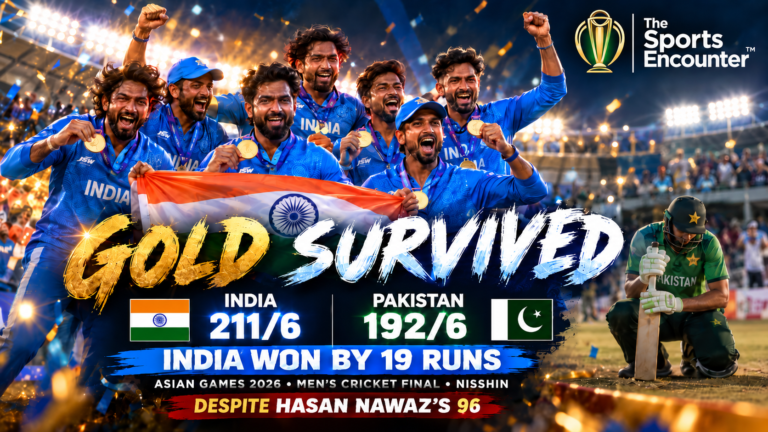
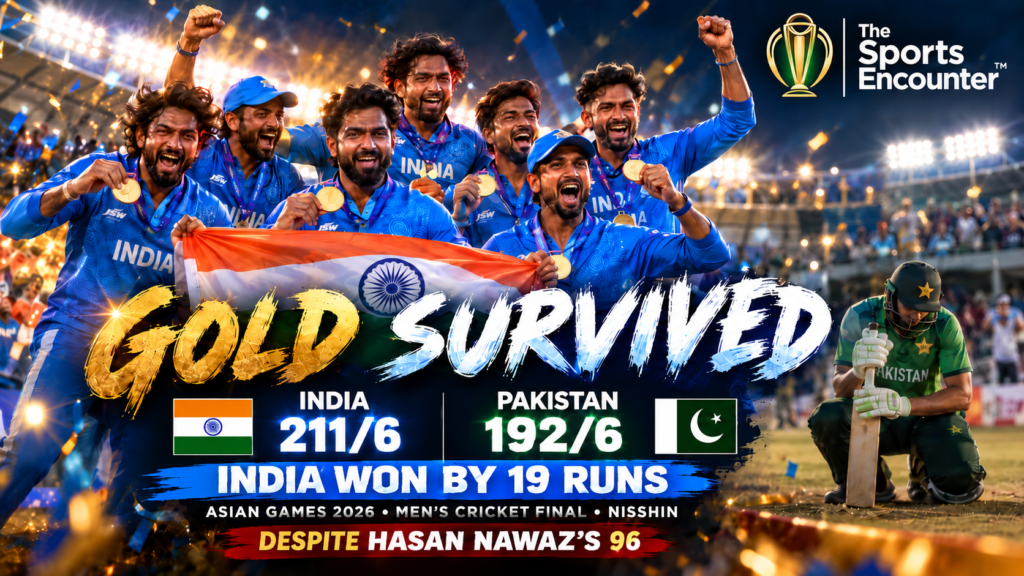
India had earlier made 211/6 through two very different bursts of authority. Abhishek Sharma ripped Pakistan apart at the top with 61 from 28 balls. Pakistan then briefly regained control before Tilak Varma’s unbeaten 51 from 22 and Shivam Dube’s 27 from 15 exploded through the final overs.
Pakistan replied with 192/6.
India won by 19 runs.
Gold to India.
Silver to Pakistan.
The final will understandably be remembered for Hasan’s lone resistance.
Pakistan should remember something else as well.
They lost tactical control long before Hasan began trying to rescue the chase.
An inexperienced Saad Masood was thrown into the powerplay against Abhishek Sharma and Vaibhav Sooryavanshi. His second over disappeared for 24.
Pakistan then dropped chances.
Saim Ayub celebrated Sooryavanshi’s wicket extravagantly, only to endure a miserable sequence immediately afterward in the field and later with the ball.
India were briefly slowed through the middle overs, but Pakistan could not recognize the moment or finish the squeeze.
Farhan returned to spin late.
Ayub’s final over cost 23.
Tilak and Dube turned 133/5 into 195/6 before the final over.
India played like a team trying to win a gold medal.
Pakistan too often looked like a team reacting to the previous ball.
That difference decided the final.
Readers who followed TSE’s Asian Games men’s cricket quarterfinal preview will remember the central question around Pakistan entering the knockout phase: could a talented but younger T20 group translate franchise experience into defined international roles?
Against India, the answer was uncomfortable.
The talent was visible.
The structure was not.
TL;DR
- India beat Pakistan by 19 runs in the Asian Games 2026 men’s cricket gold-medal final.
- India scored 211/6 in 20 overs.
- Pakistan replied with 192/6.
- Abhishek Sharma scored 61 from 28 balls.
- Tilak Varma remained unbeaten on 51 from 22.
- Shivam Dube made 27 from 15.
- Hasan Nawaz produced Pakistan’s standout innings with 96 from 51 balls.
- Hasan struck five fours and seven sixes.
- Saim Ayub made 29 from 22.
- Pakistan fell to 39/3 before Hasan and Saim added 87.
- Axar Patel took 2/29.
- Washington Sundar took 2/29.
- Shivam Dube took 2/33.
- Arafat Minhas was Pakistan’s most effective bowler with 2/25.
- Ahmed Daniyal took 2/43.
- India retained the men’s Asian Games cricket gold medal.
- Pakistan finished with silver.
- Abhishek Sharma was named Player of the Match.
India vs Pakistan Asian Games 2026 Final: Match at a Glance
| Detail | Information |
|---|---|
| Competition | Asian Games Men’s Cricket Competition 2026 |
| Stage | Gold-Medal Final |
| Date | October 3, 2026 |
| Venue | Korogi Sports Park, Nisshin |
| Toss | India won and chose to bat |
| India | 211/6 in 20 overs |
| Pakistan | 192/6 in 20 overs |
| Result | India won by 19 runs |
| Gold medal | India |
| Silver medal | Pakistan |
| India top scorer | Abhishek Sharma, 61 |
| Pakistan top scorer | Hasan Nawaz, 96 |
| Best Pakistan bowling | Arafat Minhas, 2/25 |
| Best India bowling | Axar Patel 2/29, Washington Sundar 2/29 |
| Player of the Match | Abhishek Sharma |
Abhishek Sharma Turns Pakistan’s Early Gamble Into an Assault
India made their intentions clear immediately.
Vaibhav Sooryavanshi and Abhishek attacked from the opening overs.
Farhan responded by giving Saad Masood an early opportunity.
Masood was making his international debut.
He was facing two of the most aggressive young hitters in India’s setup.
His second over went for 24 runs.
Sooryavanshi struck twice over the ropes.
Abhishek joined the attack.
India were suddenly moving at a rate Pakistan could not control.
The decision itself deserves scrutiny.
Using an inexperienced all-rounder early is not automatically poor captaincy. Matchups sometimes justify unconventional choices.
This one did not work, and there was little evidence Pakistan had a contingency once India attacked him.
The over gave India exactly what a final demands early: momentum without risk.
Vaibhav Sooryavanshi Provides the First Punch
Sooryavanshi made only 15 from nine balls.
His innings was still influential.
He hit two sixes.
Those strikes helped turn the second over into the most expensive over of the early phase.
Saim Ayub eventually removed him.
Pakistan celebrated.
That should have been the moment to reset.
Instead, Abhishek simply took over.
Player of the Match Abhishek Sharma Gives India the Final They Wanted
Abhishek’s numbers were brutal:
61 runs
28 balls
3 fours
7 sixes
Strike rate: 217.86
He reached fifty from only 20 deliveries.
The innings gave India enormous freedom.
Even when Pakistan took wickets later, India were recovering from 93/3 rather than trying to build from 70/3.
That difference mattered.
Abhishek also survived opportunities Pakistan should have taken.
In a medal match, elite teams punish dropped chances.
He did.
India’s batting depth was one of the major reasons TSE identified them as the benchmark side when the Asian Games cricket knockout stage began.
The final confirmed it.
Saim Ayub’s Send-Off Is Followed by a Brutal Reality Check
Saim dismissed Sooryavanshi and celebrated aggressively.
Emotion in an India-Pakistan final is hardly unusual.
The problem was what followed.
Soon afterward, Saim dropped two catches in quick succession as Pakistan failed to capitalize on the breakthrough.
The contrast was difficult to ignore.
He had just made a point of sending Sooryavanshi off.
Pakistan then stopped doing the basic things needed to win a final.
Catch the ball.
Hold pressure.
Make India earn every run.
The dropped chances allowed India to keep attacking.
Saim’s afternoon became worse later.
His four overs cost 47 runs.
He still took the wicket of Sooryavanshi, but his economy rate of 11.75 reflected the cost.
Farhan then returned to him in the 19th over.
Tilak and Dube took 23 runs from it.
That decision deserves as much scrutiny as Saim’s execution.
Pakistan Briefly Fight Back Through Spin
The innings was not a complete tactical failure.
Arafat Minhas bowled intelligently.
He dismissed Abhishek and Ishan Kishan.
His figures were:
3 overs
25 runs
2 wickets
Abrar Ahmed also controlled the tempo.
He conceded only 29 from four overs and removed Shreyas Iyer.
India had been 81/2 after six overs.
By 14.1 overs, they were 133/5.
That was Pakistan’s opportunity.
India’s middle order had slowed.
The surface was helping bowlers willing to vary pace.
Pakistan had dragged themselves back into the final.
They then gave the match away again.
Tilak Varma Recognizes the Moment Better Than Pakistan
Tilak walked into a very different game from the one Abhishek had played.
India had lost momentum.
Shreyas Iyer and Ishan Kishan had gone.
Pakistan’s spinners were controlling the scoring rate.
Tilak did not panic.
He waited.
Then he attacked.
His final numbers:
51 not out
22 balls
3 fours
4 sixes
Strike rate: 231.82
He reached his fifty from 21 deliveries.
That was championship batting.
He understood when the final had changed and adjusted with it.
Shivam Dube Gives Tilak the Support Hasan Later Never Receives
This became one of the biggest differences between the teams.
Tilak did not have to rescue India alone.
Dube made 27 from 15 balls.
Two fours.
Two sixes.
Together, Tilak and Dube added 62 from 30 balls.
That partnership turned 133/5 into 195/6.
India had two players attacking together.
Pakistan later had Hasan attacking almost alone.
That difference between support systems became decisive.
Farhan’s Death-Overs Bowling Plan Falls Apart
This is the phase Pakistan will need to examine most seriously.
India were 133/5 after 14.1 overs.
Pakistan had created pressure.
A disciplined final six overs could have kept India somewhere around 180.
Instead, Tilak and Dube were allowed to dictate the terms.
Sufyan Moqim bowled the 18th over and was attacked.
Saim Ayub bowled the 19th.
That over cost 23.
Ahmed Daniyal handled the 20th and conceded more damage despite removing Dube with the first ball.
Pakistan finished the innings with several overs from established spin options already consumed and without a convincing death plan.
The issue was not simply that spinners bowled late.
Quality spinners can defend at the death.
The problem was matchup, execution and sequencing.
Pakistan appeared to be choosing overs rather than managing an innings.
India Finish Like a Team That Understands Finals
India scored 78 runs after falling to 133/5.
That statistic summarizes the contrast.
A team can lose momentum in a final.
The better teams recognize that the game has not disappeared with it.
Tilak remained calm.
Dube attacked.
India rebuilt the innings without allowing Pakistan’s middle-over recovery to become control.
By the time the innings ended at 211/6, Pakistan needed their highest level of batting execution just to stay competitive.
Pakistan’s Chase Starts With the Exact Failure They Could Not Afford
A chase of 212 requires either a strong powerplay or wickets in hand.
Pakistan got neither.
Farhan made 10 from 11.
Usman Khan made 3 from six.
Maaz Sadaqat scored 23 from 18 but fell early in the seventh over.
Pakistan were 39/3.
The final was already moving away.
The contrast with India’s 81-run powerplay was enormous.
India had attacked from ball one.
Pakistan spent the first six overs losing wickets and absorbing pressure.
Then Hasan Nawaz walked into the wreckage.
Hasan Nawaz Produces the Innings Pakistan Needed From Several Batters
Hasan scored:
96 runs
51 balls
5 fours
7 sixes
Strike rate: 188.24
He reached fifty in 28 balls.
He continued attacking after that.
He punished Ravi Bishnoi.
He hit down the ground.
He targeted anything overpitched.
He refused to let the required rate end the contest.
Pakistan had no business still being alive late in the chase after falling to 39/3.
Hasan kept them alive.
His innings belongs among the strongest individual performances Pakistan produced at these Games.
It also reinforces something TSE identified before the tournament in its analysis of Pakistan’s emerging T20 specialists: Hasan possesses genuine middle-order power when given a defined attacking role.
He proved it on the biggest night of Pakistan’s tournament.
Hasan Needed a Partner and Pakistan Could Not Find One
This is where the chase was really lost.
Saim made 29 from 22.
That was useful.
It was not enough.
Farhan made 10.
Maaz made 23.
Usman made three.
Abdul Samad, who had played the decisive innings against Bangladesh in the semifinal, managed only nine.
Hasan contributed half of Pakistan’s total by himself.
One batter scored 96.
The other six who batted contributed 86 combined, excluding extras.
That imbalance made 212 almost impossible.
Pakistan did not need a second Hasan.
They needed one batter to make 45 from 30 or 35 from 20 and stay with him.
Nobody did.
Hasan and Saim Add 87 and Briefly Change the Final
Pakistan’s best period came through Hasan and Saim.
They added 87 runs.
The partnership moved Pakistan from 39/3 to 126/3.
For the first time, India had something to think about.
Hasan had found his range.
Saim was rotating and finding boundaries.
The required rate was still demanding, but India were no longer cruising.
Shreyas Iyer responded by turning to Shivam Dube.
The move worked immediately.
Shivam Dube Breaks the Partnership With His First Ball
Saim attempted a scoop.
Dube went across him.
The shot was miscued.
Washington Sundar completed the catch.
Pakistan 126/4.
The 87-run stand was over.
That was one of the clearest captaincy wins of the match.
India had a problem.
Iyer changed the bowling.
The bowler took a wicket immediately.
Pakistan’s bowling changes had too often produced the opposite effect.
Axar Patel and Washington Sundar Show the Value of Experienced Control
Pakistan had attacked Ravi Bishnoi successfully.
India did not panic.
Axar Patel finished with:
4 overs, 29 runs, 2 wickets
Washington Sundar returned:
4 overs, 29 runs, 2 wickets
Neither needed extraordinary figures.
They denied Pakistan the sustained boundary flow necessary in a chase of 212.
They also took wickets at exactly the moments Pakistan needed partnerships.
Farhan fell to Washington.
Maaz and Usman fell to Axar.
Samad later fell to Washington.
That is professional T20 bowling.
A final does not always require magic.
Sometimes it requires putting the ball in the right place repeatedly while the batting side becomes increasingly desperate.
Jasprit Bumrah’s Figures Hide His Impact
Bumrah went wicketless.
His figures:
4 overs, 33 runs, 0 wickets
The zero does not tell the story.
India trusted him during the most difficult phase.
His penultimate over went for only 11 when Pakistan needed a huge finish.
That left 33 required from the final over.
The gold medal was effectively safe.
Experienced bowlers often win finals without taking wickets.
Bumrah’s job was to deny Hasan the over Pakistan desperately needed.
He did exactly that.
Pakistan’s Captain Fails With the Bat and With the Tactical Battle
Farhan’s final was disappointing in two distinct ways.
He made only 10 from 11 balls.
More significantly, his management of the bowling attack never established control.
The decision to expose debutant Saad Masood so early backfired.
Pakistan did recover through Arafat and Abrar.
But once India reached the death overs, the bowling sequence again lacked clarity.
Saim went for 23 in the 19th.
Pakistan had already seen that India were attacking his off-spin aggressively.
The decision to return to him under maximum pressure gave Tilak and Dube exactly the matchup they wanted.
Captaincy cannot guarantee execution.
It should improve the odds.
Pakistan’s plans repeatedly did the opposite.
Pakistan’s Fielding Makes the Tactical Problems Worse
Poor captaincy can sometimes be rescued by outstanding execution.
Pakistan’s fielding offered no rescue.
The dropped chances were particularly damaging because India were already scoring quickly.
Giving Abhishek additional opportunities meant Pakistan had to dismiss him twice.
They did not have that margin.
Saim’s two dropped chances after the Sooryavanshi dismissal became symbolic of the wider problem.
Pakistan were emotionally engaged.
They were not consistently composed.
There is a difference.
India showed it.
India Play the Medal Situation Better
India made mistakes.
Bishnoi was expensive.
Hasan attacked their field.
There were moments when Pakistan threatened.
The difference was how India responded.
When the top order slowed, Tilak and Dube rebuilt the momentum.
When Hasan and Saim began changing the chase, Iyer turned to Dube.
When Pakistan entered the closing overs with Hasan still dangerous, Washington and Bumrah tightened the game.
Their responses were deliberate.
Pakistan’s often felt improvised.
That is why India leave with gold.
India Complete Another Asian Games Cricket Double
India’s men retained the title they won at Hangzhou 2023.
Their women had already won gold at these Games, producing a commanding 147-run victory over Sri Lanka.
TSE covered that performance in Smriti Mandhana Hits 11,000 Runs as India Win Asian Games Gold.
The men’s final completed another Indian cricket gold double.
This one carried additional weight because the medal was won by beating Pakistan on the field rather than through tournament seeding or a washout.
Pakistan Leave With Silver but More Questions Than Answers
Silver is still a medal.
Pakistan reached the gold-medal match.
They defeated Bangladesh in a pressure semifinal.
Hasan produced a superb final.
Arafat Minhas bowled well.
Abrar Ahmed showed control.
Those positives should remain visible.
So should the weaknesses.
The larger issue is exactly what TSE raised in its earlier examination of Pakistan’s expanding pool of T20 talent.
Pakistan do not lack players with specialist skills.
They continue to struggle to organize those skills into a coherent system under pressure.
The final became another example.
Complete Match Scorecard
India Batting: 211/6 in 20 Overs
| Batter | Dismissal | R | B | 4s | 6s | SR |
|---|---|---|---|---|---|---|
| Vaibhav Sooryavanshi | c Usman Khan b Saim Ayub | 15 | 9 | 0 | 2 | 166.67 |
| Abhishek Sharma | st Usman Khan b Arafat Minhas | 61 | 28 | 3 | 7 | 217.86 |
| Sanju Samson | c Arafat Minhas b Ahmed Daniyal | 2 | 4 | 0 | 0 | 50.00 |
| Shreyas Iyer (c) | c Sahibzada Farhan b Abrar Ahmed | 21 | 24 | 2 | 0 | 87.50 |
| Ishan Kishan | b Arafat Minhas | 20 | 18 | 3 | 0 | 111.11 |
| Tilak Varma | not out | 51 | 22 | 3 | 4 | 231.82 |
| Shivam Dube | c Maaz Sadaqat b Ahmed Daniyal | 27 | 15 | 2 | 2 | 180.00 |
| Axar Patel | not out | 1 | 1 | 0 | 0 | 100.00 |
Did not bat: Washington Sundar, Ravi Bishnoi, Jasprit Bumrah
Extras: 13
Total: 211/6 in 20 overs
Run rate: 10.55
Fall of wickets: 28/1 Sooryavanshi, 51/2 Samson, 93/3 Abhishek, 128/4 Kishan, 133/5 Iyer, 195/6 Dube.
Pakistan Bowling
| Bowler | O | M | R | W | Econ |
|---|---|---|---|---|---|
| Saim Ayub | 4 | 0 | 47 | 1 | 11.75 |
| Saad Masood | 3 | 0 | 33 | 0 | 11.00 |
| Ahmed Daniyal | 3 | 0 | 43 | 2 | 14.33 |
| Arafat Minhas | 3 | 0 | 25 | 2 | 8.33 |
| Abrar Ahmed | 4 | 0 | 29 | 1 | 7.25 |
| Sufyan Moqim | 3 | 0 | 33 | 0 | 11.00 |
Pakistan Batting: 192/6 in 20 Overs
| Batter | Dismissal | R | B | 4s | 6s | SR |
|---|---|---|---|---|---|---|
| Sahibzada Farhan (c) | c Axar Patel b Washington Sundar | 10 | 11 | 1 | 0 | 90.91 |
| Maaz Sadaqat | c Washington Sundar b Axar Patel | 23 | 18 | 3 | 0 | 127.78 |
| Usman Khan | c Shivam Dube b Axar Patel | 3 | 6 | 0 | 0 | 50.00 |
| Hasan Nawaz | c Sanju Samson b Shivam Dube | 96 | 51 | 5 | 7 | 188.24 |
| Saim Ayub | c Washington Sundar b Shivam Dube | 29 | 22 | 2 | 1 | 131.82 |
| Abdul Samad | c Tilak Varma b Washington Sundar | 9 | 9 | 1 | 0 | 100.00 |
| Saad Masood | not out | 12 | 5 | 0 | 2 | 240.00 |
Did not bat: Arafat Minhas, Ahmed Daniyal, Abrar Ahmed, Sufyan Moqim
Extras: 10
Total: 192/6 in 20 overs
Run rate: 9.60
Fall of wickets: 33/1 Farhan, 36/2 Usman, 39/3 Maaz, 126/4 Saim, 162/5 Samad, 192/6 Hasan.
India Bowling
| Bowler | O | M | R | W | Econ |
|---|---|---|---|---|---|
| Jasprit Bumrah | 4 | 0 | 33 | 0 | 8.25 |
| Axar Patel | 4 | 0 | 29 | 2 | 7.25 |
| Washington Sundar | 4 | 0 | 29 | 2 | 7.25 |
| Ravi Bishnoi | 3 | 0 | 44 | 0 | 14.67 |
| Abhishek Sharma | 2 | 0 | 23 | 0 | 11.50 |
| Shivam Dube | 3 | 0 | 33 | 2 | 11.00 |
Seven Turning Points That Decided the Gold-Medal Final
1. Saad Masood’s Powerplay Over Goes for 24
Pakistan gambled on an inexperienced bowling option.
India immediately punished it.
2. Pakistan Fail to Hold Their Chances
Abhishek survived fielding errors and converted them into 61 from 28.
3. Arafat and Abrar Drag India Back to 133/5
Pakistan created their strongest position of the innings.
They failed to capitalize on it.
4. Tilak and Dube Add 62
India converted a middle-over slowdown into a 211 total.
5. Pakistan Collapse to 39/3
Hasan was forced to begin his rescue far too early.
6. Dube Removes Saim on His First Ball
The 87-run partnership ended just as Pakistan were beginning to believe.
7. Washington and Bumrah Shut the Door
Pakistan still had Hasan.
India denied him the decisive late over.
What India Got Right
India’s victory came from four things:
Intent: Abhishek and Sooryavanshi attacked immediately.
Depth: Tilak and Dube rescued the finish after the middle order slowed.
Captaincy: Iyer changed the bowling when Pakistan built momentum.
Experience: Axar, Washington and Bumrah handled pressure without losing their roles.
That structure is why India survived Hasan’s challenge.
What Pakistan Got Wrong
Pakistan’s defeat was shaped by five problems:
Unclear bowling roles: Saad Masood was exposed too early.
Poor fielding: Dropped chances gave India additional lives.
Death-over planning: Pakistan returned to expensive spin at the wrong time.
Captain’s batting failure: Farhan contributed only 10 in a 212-run chase.
Lack of support for Hasan: No second batter produced the innings required beside him.
The individual errors were damaging.
The larger concern is that they connected.
Poor planning created pressure.
Poor fielding increased it.
Poor execution turned that pressure into 211.
Then the top order left Hasan trying to repair everything.
Hasan Nawaz Deserved Better Than 96 in a Losing Final
The final score will eventually become a line in Pakistan’s Asian Games record.
Hasan’s innings deserves to be remembered separately.
He made 96 in a chase of 212 after walking in during a top-order collapse.
He struck seven sixes.
He took the game deep.
He finished four runs short of a century.
He was dismissed from the final ball.
Pakistan lost.
That does not diminish the innings.
It explains how good it was.
What Pakistan Should Learn From the Asian Games
Pakistan’s route through the tournament showed both sides of this squad.
There was enough talent to reach a medal match.
TSE’s pre-knockout Asian Games analysis identified that depth through Hasan, Saim, Sufyan Moqim, Abdul Samad and Maaz Sadaqat.
Pakistan also arrived with players carrying recent franchise success, something explored in TSE’s analysis of Pakistan’s T20 specialist pool.
The final exposed the next challenge.
Talent does not organize itself.
Someone has to define the roles.
Someone has to read the match.
Someone has to decide who bowls when.
India did that better.
That is why India won gold.
India’s Gold Fits a Larger Asian Games Pattern
India arrived at Aichi-Nagoya as defending men’s champions.
They also entered after their women had already successfully defended the cricket title.
TSE’s broader Asian Games 2026 preview identified cricket as one of the competition’s strategically important sports ahead of its Olympic return at Los Angeles 2028.
India have treated that opportunity seriously.
Two cricket gold medals reinforce the point.
Continue the Cricket Story
 CricketShubman Gill’s 223 Turns 406 Into a Cruise as Five Centuries Expose Guwahati’s Batting ‘Road’
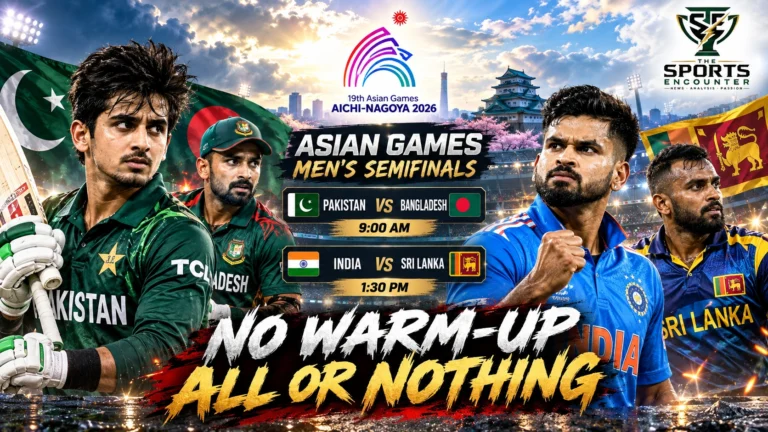 CricketAsian Games Cricket Semifinals: Pakistan-Bangladesh, India-Sri Lanka, Weather, Squads, and Washout Rules
 A Celebration of 5000 ODIsA Celebration of 5000 ODIs Match 38: India Rise From 5/3, but Guptill’s Direct Hit Sends New Zealand Back to the World Cup Final
Frequently Asked Questions
Who Won the India vs Pakistan Asian Games 2026 Cricket Final?
India won by 19 runs.
What Did India Score?
India made 211/6 from 20 overs.
What Did Pakistan Score?
Pakistan finished on 192/6.
Who Was Player of the Match?
Abhishek Sharma was named Player of the Match after scoring 61 from 28 balls.
How Many Runs Did Hasan Nawaz Score?
Hasan made 96 from 51 deliveries with five fours and seven sixes.
Who Were India’s Best Bowlers?
Axar Patel and Washington Sundar each took 2/29, while Shivam Dube took 2/33.
Who Was Pakistan’s Best Bowler?
Arafat Minhas took 2/25 from three overs.
How Many Runs Did Tilak Varma Score?
Tilak remained unbeaten on 51 from only 22 balls.
Which Medal Did Pakistan Win?
Pakistan won silver.
Did India Retain the Asian Games Men’s Cricket Gold?
Yes. India successfully defended the title they won at Hangzhou 2023.
India
- Hasan Nawaz Fights Alone as India Punish Pakistan’s Chaos to Win Asian Games Cricket Gold
- India-Pakistan Drama, Japan’s Wrestling Golds and China’s Medal Surge Define Asian Games Action
- Pakistan Erase 3-0 Deficit, but Abhishek’s Last-Minute Strike Sends India Into Asian Games Final
- China Reaches 100 Straight Diving Golds as India Sweeps Archery and Korea-Japan Final Takes Shape
- Shubman Gill’s 223 Turns 406 Into a Cruise as Five Centuries Expose Guwahati’s Batting ‘Road’