The Story That Refused to End · Episode 10 of 10
The Sports Encounter returned in 2026 on a new domain. Its revival carries forward an editorial ambition while acknowledging the interruption, the contributors, and the unfinished work of preserving its past.
The address has changed. The publication now appears at thesportsencounter.com, carrying new sports reports, analysis, and historical features. For a first-time reader, it is a current sports website. For Jawad Hussain, its 2026 revival resumes an editorial project whose beginnings survive in pages from 2010.
The distinction is central to this history. Today’s Sports Encounter is a new technical and editorial operation carrying forward the founder’s original ambition. It does not claim an uninterrupted sixteen-year publishing run, ownership of every later version of the old domain, or the recovery of a complete historical archive.
A Return With a Different Starting Point
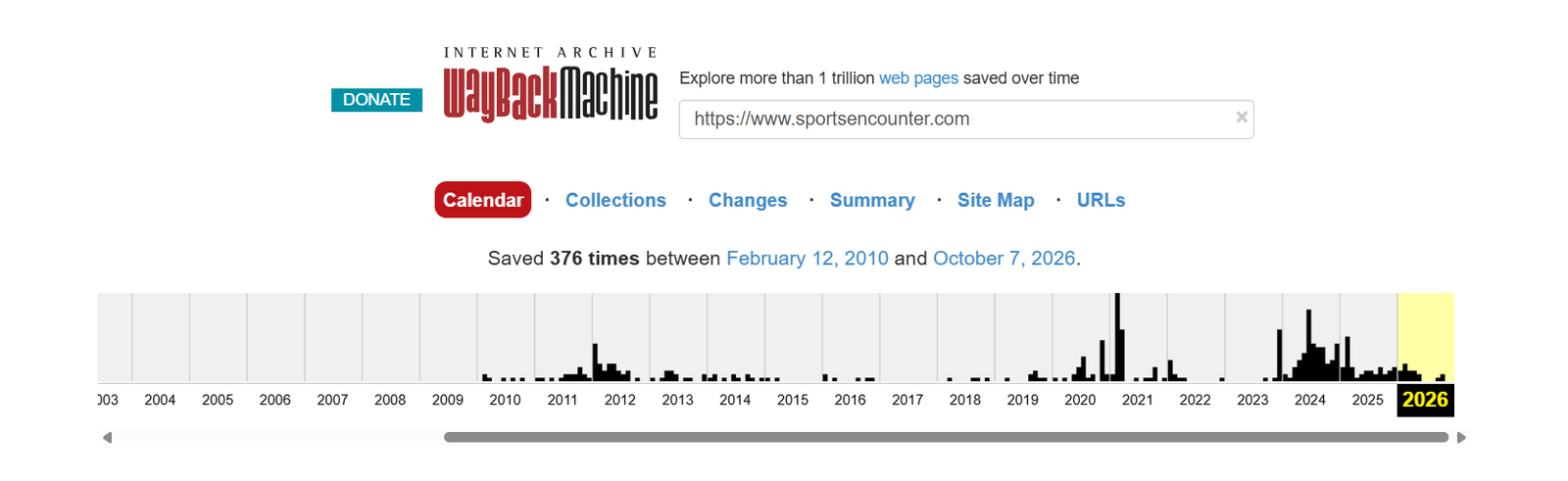
The original publication developed through a small founding team and a much wider contributor network. It eventually became unsustainable amid technical, advertising, and visibility problems as Hussain remembers them. The intervening years separated the original newsroom from the website now being built.
Revival does not reverse that interruption. The current site has its own publishing systems, editorial work, and people. The historical connection rests in the founder’s involvement and the ambition he has chosen to continue.
Reporting Beyond the Immediate Result
The current website includes a substantial cricket-history project, A Celebration of 5000 ODIs. Its central feature, dated August 10, 2026, introduces a series revisiting memorable one-day internationals. The history project and its continuing articles provide a visible example of the revived publication’s interest in sporting memory.
The connection with this documentary is practical. A result becomes more useful when readers can understand its setting and the people who shaped it. A publication’s own past deserves the same attention to chronology, attribution, and the distinction between a remembered moment and a verified record.
Hussain also identifies Tributes to the Heroes among the revived project’s initiatives. That title belongs to his account of the current editorial direction; this edition has not independently inventoried the complete series. It is not assigned an invented launch date, article total, or audience figure.
The People Who Make the Return Possible
The founder’s account of the present project again includes voluntary contributors. He names Peebles, Hagan, Jaye, and Shima as examples of the collaborative spirit he associates with the original newsroom. Their participation should be credited accurately within the current publication, separately from the historical Workforce list.
The old roster reminds the revived newsroom that institutional history can become incomplete surprisingly quickly. Names printed on a page can grow difficult to read; articles can lose their original addresses; the circumstances of a contribution can be forgotten.
Preserving source files and clear credits now makes future reconstruction easier. The archive being assembled for this series is part of that work, including the uncertainties that further evidence may resolve.
Learning to Keep the Publication Working
Hussain’s experience of the original operation has made technical control a concern in the revival. A publication needs a way to recover its content, review changes, and understand the systems through which readers find its work. Those are operational responsibilities as well as technical ones.
The revived newsroom’s technical ambitions will be judged through the systems it implements and maintains. Preserving evidence and making changes reversible are practical parts of that work.
Editorial independence also requires more than a declaration. Accurate reporting, transparent corrections, and clearly explained commercial relationships must be visible in the work. The current Editorial Policy provides a public statement against which the publication’s practice can be judged.
Established 2010, Reborn 2026
The phrase is useful because it names both the origin and the interruption. It honors the original work while allowing the new publication to stand on its own record. It also leaves the old domain’s subsequent history separate from the founder’s claim.
This series ends with a working publication and an archive that remains open to correction. Contributors’ names can be recovered more clearly. Missing capture addresses may be found. A dated record may refine the timeline. Those additions should improve the history rather than require the newsroom to defend an earlier guess.
The original pages are worth keeping because people put time and reporting into them. The revived Sports Encounter has given that work a place in its institutional memory, while the next articles will give readers something new to judge.
Sources and Evidence
This episode distinguishes screenshot observations, public self-descriptions, founder testimony, and interpretation. Exact archive capture addresses have not been authenticated.
- F01: Founder account supplied October 16 and 17, 2026
- C01: Current Sports Encounter homepage
- C02: A Celebration of 5000 ODIs central feature
- C03: Current Editorial Policy
- P01: Original Sports Encounter LinkedIn company profile