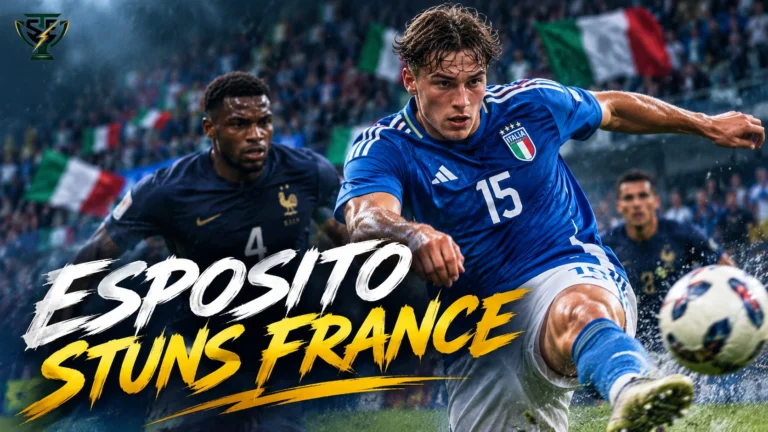
MILAN, Italy, November 12, 2026: Francesco Pio Esposito scored twice as Italy overturned an early deficit to defeat France 3-1 at San Siro, handing Zinedine Zidane his first defeat as France coach and transforming the UEFA Nations League Group A1 qualification race. The Italy vs France showdown began with Michael Olise punishing a costly error by Gianluigi Donnarumma, but Roberto Mancini’s side recovered through Esposito’s equalizer, Davide Frattesi’s second-half winner and a late penalty that completed the young striker’s double.
The result moved Italy level with France on ten points and left Belgium just one behind after its 2-1 victory over Türkiye. Elsewhere, Harry Kane became England’s most-capped men’s player and scored the winner against Croatia, while Spain maintained its perfect Group A3 record with a 2-0 victory over Czechia. With one round of group matches remaining, Thursday’s results have turned several qualification scenarios into decisive final-day contests.
Key Takeaways
- Francesco Pio Esposito scored twice as Italy overturned an early deficit to defeat France 3-1 at San Siro, handing Zinedine Zidane his first defeat as France coach and transforming the UEFA Nations League Group A1 qualification race.
- The result moved Italy level with France on ten points and left Belgium just one behind after its 2-1 victory over Türkiye.
- France entered San Siro unbeaten in the Nations League and with an opportunity to secure first place in Group A1.
- World champions Spain continued their unbeaten Nations League campaign with a 2-0 victory away to Czechia.
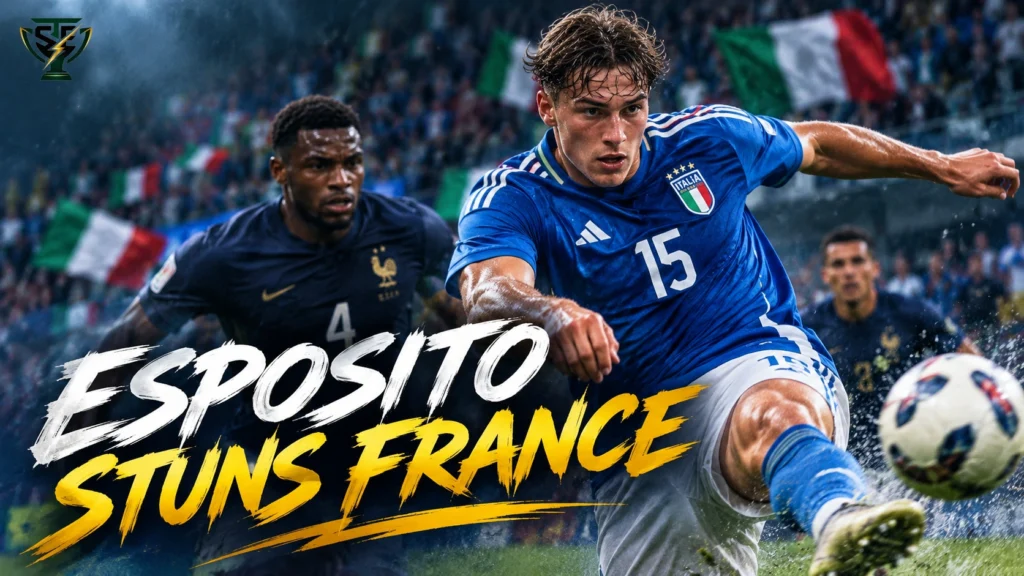
Italy vs France: How Esposito Turned the Match Around
France entered San Siro unbeaten in the Nations League and with an opportunity to secure first place in Group A1.
Story at a glance
Italy vs France: How Esposito Turned the Match Around
France entered San Siro unbeaten in the Nations League and with an opportunity to secure first place in Group A1.
Missed Penalty, Frattesi Winner and Another Esposito Goal
The second half produced one of the match’s most unusual passages.
Francesco Pio Esposito Is Becoming Central to Italy’s Attack
Esposito’s performance was especially important because Italy have been searching for reliable attacking production during Mancini’s second spell as national coach.
France Suffer First Defeat Under Zidane Without Mbappé
Zinedine Zidane’s unbeaten start as France coach ended in Milan.
Belgium’s Victory Creates a Three-Team Qualification Battle
Belgium’s 2-1 victory over Türkiye made Italy’s win even more consequential.
Italy faced a more complicated challenge. A defeat would leave Mancini’s team vulnerable to Belgium, while victory would bring the Azzurri level with the group leaders.
The evening began disastrously for the hosts.
In the tenth minute, Donnarumma made a costly mistake while attempting to play out from the back. His misplaced distribution presented possession to Michael Olise, who capitalized to give France the lead.
The goal rewarded the visitors’ willingness to pressure Italy’s buildup, but it also exposed the risk of playing short passes near the penalty area without sufficiently secure passing options.
France appeared to have established control earlier than expected.
Yet Italy responded by committing more players to attacking positions and using deliveries from wide areas to challenge France’s defensive organization.
The equalizer came in the 26th minute.
Nicolò Cambiaghi delivered into the area, where Francesco Pio Esposito found the space and timing to finish past Mike Maignan.
It was an important response from a striker who had already demonstrated his international potential during October’s victory over Türkiye.
Rather than allowing Donnarumma’s mistake to define the half, Italy restored parity through a forward capable of converting opportunities inside a crowded penalty area.
The teams reached halftime at 1-1, but the second period brought a sequence of events that decisively favored Mancini’s side.
Missed Penalty, Frattesi Winner and Another Esposito Goal
The second half produced one of the match’s most unusual passages.
Italy earned a penalty, presenting Sebastiano Esposito with the opportunity to put his country ahead.
He failed to convert, leaving France with a chance to preserve the draw or recover momentum.
Instead, Italy scored shortly afterward.
In the 63rd minute, Davide Frattesi finished to give the hosts a 2-1 advantage. Federico Dimarco, introduced during the second half, contributed to the attacking move.
The quick response after the missed penalty was significant because it showed Italy’s ability to remain aggressive rather than allow the failed opportunity to interrupt its rhythm.
France now had to chase the match, creating a different tactical problem for Zidane.
His team had begun with the benefit of an early lead and could initially choose when to press and when to defend more conservatively.
Once Frattesi scored, France needed to take greater risks to restore parity.
Italy exploited that situation again in the 75th minute.
Dayot Upamecano fouled substitute Antonio Vergara, giving the hosts another penalty. This time Francesco Pio Esposito took responsibility and converted to make it 3-1.
His second goal settled the contest and completed the standout individual performance of the night.
| Minute | Event | Score |
|---|---|---|
| 10′ | Michael Olise scores after Donnarumma’s distribution error | Italy 0-1 France |
| 26′ | Francesco Pio Esposito equalizes | Italy 1-1 France |
| Second half | Sebastiano Esposito misses an Italy penalty | Italy 1-1 France |
| 63′ | Davide Frattesi puts Italy ahead | Italy 2-1 France |
| 75′ | Francesco Pio Esposito converts a penalty | Italy 3-1 France |
The decisive difference was Italy’s response to adversity. The hosts recovered from an individual mistake, overcame a missed penalty and maintained enough attacking pressure to score twice during the second half.
That sequence provides a more useful explanation of the result than the final two-goal margin alone.
Francesco Pio Esposito Is Becoming Central to Italy’s Attack
Esposito’s performance was especially important because Italy have been searching for reliable attacking production during Mancini’s second spell as national coach.
The Inter Milan striker had scored seven goals in his first 13 Italy appearances before the November international window, including a goal during the 3-1 victory over Türkiye.
His double against France added another major performance against high-level opposition.
What makes his emergence particularly valuable is his ability to provide a focal point for Italy’s attack without requiring every opportunity to be created through prolonged possession.
His equalizer demonstrated the importance of movement and finishing inside the penalty area.
The second goal required composure after his older brother Sebastiano had missed an earlier penalty.
Those two contributions came in different circumstances and tested different aspects of his game.
Italy’s attacking development has also depended on contributions from midfielders such as Frattesi and wide players including Cambiaghi and Dimarco.
That distribution is encouraging because the national team does not need to rely exclusively on one scorer.
Esposito nevertheless supplied the decisive individual contribution against France, turning a promising international record into a performance with immediate tournament consequences.
What the Italy vs France Result Reveals About Mancini’s Rebuild
Italy began its Nations League campaign with a 2-0 home defeat to Belgium.
That result raised questions about Mancini’s return and whether his team could compete consistently against the strongest opponents in Group A1.
Since then, Italy have beaten Türkiye twice, drawn away to France and now defeated Zidane’s side at San Siro.
The progression is significant.
The Azzurri have not simply accumulated points against the group’s weakest team. They have also earned four points from two meetings with France.
The two matches offer contrasting evidence of their development.
In October, Alessandro Bastoni’s equalizer helped Italy secure a 1-1 draw in Saint-Denis after Olise had put France ahead.
In November, Italy again conceded first to Olise but recovered more convincingly, scoring three times to secure the victory.
The recurring need to recover from an early deficit remains a concern. However, Italy’s ability to respond through different players and attacking situations suggests meaningful progress.
The Sports Encounter’s Nations League Matchday 5 preview identified the meeting in Milan as one of the most consequential fixtures of the international window.
The result has justified that assessment by changing the qualification position of three countries, not merely the fortunes of Italy and France.
France Suffer First Defeat Under Zidane Without Mbappé
Zinedine Zidane’s unbeaten start as France coach ended in Milan.
His team had entered the match with three wins and a draw from four Nations League fixtures, including a 4-1 comeback victory over Belgium.
France’s early advantage suggested that its attacking quality could again overcome the absence of Kylian Mbappé.
Olise remained a major threat and continued his productive international campaign by scoring against Italy for the second time in this group stage.
However, France could not convert its early lead into sustained control.
The second-half defensive breakdowns exposed problems when Italy committed players forward and forced the French defense to respond to repeated attacking movements.
Mbappé’s absence is relevant context, but it would be too simplistic to attribute the defeat solely to his unavailability.
France also missed opportunities to protect its advantage and conceded from situations that required better collective defending.
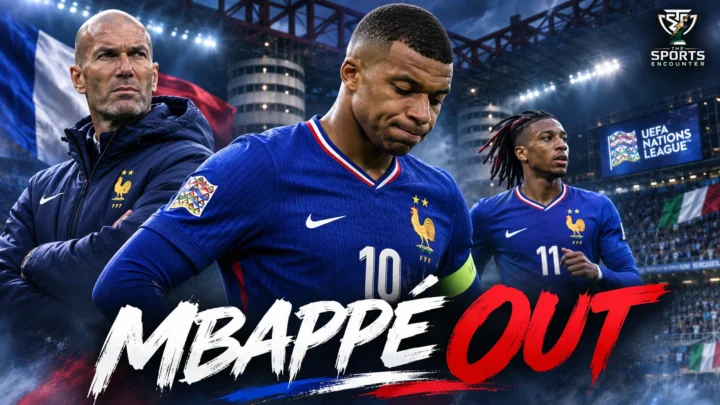
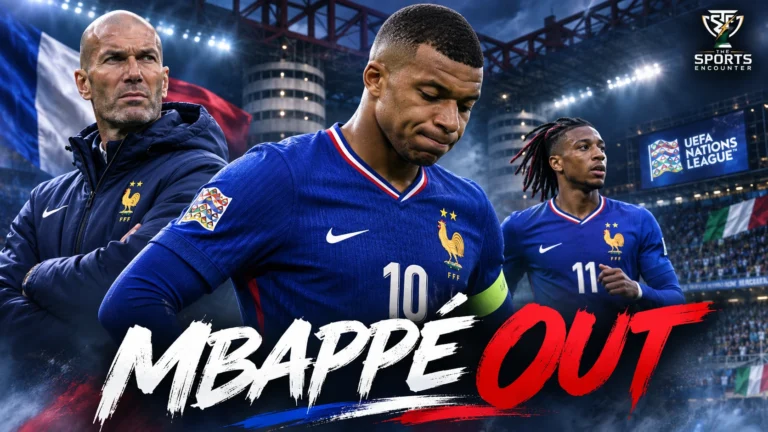
Zidane had already decided against risking his captain because of fitness concerns, a decision explained in TSE’s report on Mbappé’s withdrawal and France’s attacking alternatives.
That decision remains defensible on medical grounds. The loss does not establish that Mbappé would have prevented the defensive mistakes or changed the outcome.
Instead, it exposes how much work remains for France to produce consistent attacking and defensive performances when several established players are unavailable.
Zidane will now have to assess whether his side requires changes to its midfield protection, defensive positioning or attacking combinations before the final group fixture.
Belgium’s Victory Creates a Three-Team Qualification Battle
Belgium’s 2-1 victory over Türkiye made Italy’s win even more consequential.
Arda Güler gave Türkiye an early lead, but Kevin De Bruyne and Charles De Ketelaere scored to turn the match around.
Belgium moved to nine points, one behind both Italy and France.
The final matchday therefore begins with all three countries competing for the two available quarterfinal places.
| Team | Played | Wins | Draws | Losses | Goal Difference | Points |
|---|---|---|---|---|---|---|
| Italy | 5 | 3 | 1 | 1 | +5 | 10 |
| France | 5 | 3 | 1 | 1 | +3 | 10 |
| Belgium | 5 | 3 | 0 | 2 | +2 | 9 |
| Türkiye | 5 | 0 | 0 | 5 | -10 | 0 |
Standings calculated from the five confirmed results per team, including Italy’s 3-1 win and Belgium’s 2-1 victory. The final official ordering of any points tie remains subject to UEFA’s applicable tiebreaking criteria.
The immediate scenarios are straightforward.
Italy will qualify by defeating Belgium in Brussels. France will qualify by defeating Türkiye in Bordeaux.
Belgium can also secure a quarterfinal berth by defeating Italy, moving above the Azzurri regardless of France’s result.
A draw between Italy and Belgium would leave Italy on 11 points and Belgium on ten. France’s result against Türkiye would then determine how the final standings develop.
Other combinations could require UEFA’s head-to-head tiebreaking procedures.
Those rules matter because the three teams are separated by only one point, and the final fixtures could produce equal points totals.
The official UEFA qualification guide provides the competition framework and the qualification position entering this matchday.
Belgium’s recovery also reinforces why its squad selection was important before the international window.
TSE’s analysis of Belgium’s squad and qualification challenge examined the importance of De Bruyne’s return and the opportunities for Jérémy Doku and other attacking players.
Belgium’s victory has now transformed its final meeting with Italy into a direct qualification contest.
Harry Kane Makes History as England Beat Croatia
England’s 2-1 victory over Croatia at Wembley featured another major development.
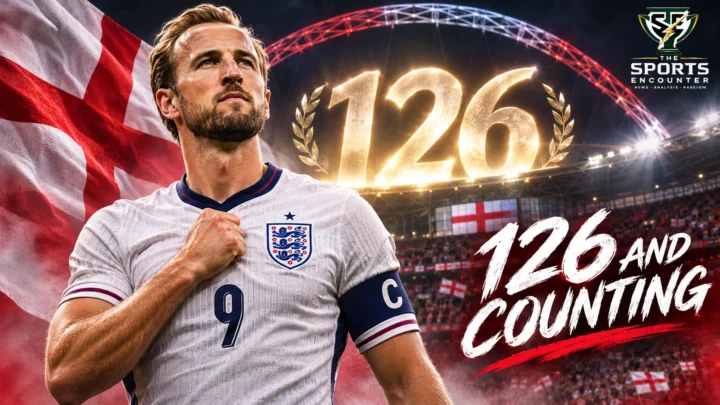
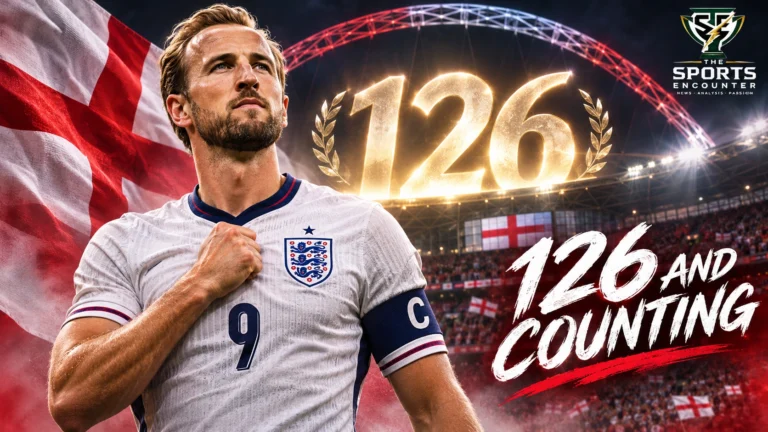
Harry Kane became England’s most-capped men’s player with his 126th international appearance, surpassing Peter Shilton’s previous record of 125.
Before kickoff, Kane received recognition from Shilton, Prince William and Croatian captain Luka Modrić.
The England captain then made the evening even more significant by scoring the winning penalty during the second half.
Continue the UEFA Nations League Story

Morgan Rogers had given England the lead in the 24th minute after an attacking move involving Kane and Jude Bellingham.
Croatia equalized through Luka Sučić in the 59th minute, capitalizing on an unsuccessful headed clearance by Jarell Quansah.
England regained the lead five minutes later when Kane converted from the penalty spot after a VAR review identified a foul on Quansah.
The goal was Kane’s 92nd for England, extending his national men’s scoring record.
The victory also confirmed England’s place in the Nations League quarterfinals.
It was a more competitive meeting than England’s 7-0 victory over Croatia in the previous international window, but Tuchel’s team found the decisive goal when required.
TSE’s analysis of England’s November squad explored the challenge facing Thomas Tuchel as he balanced Kane’s experience with the introduction of younger players, including Jobe Bellingham.
The historic appearance and winning goal reinforce Kane’s value within that evolving team.
Spain Keep Their Perfect Record and Set Up England Decider
World champions Spain continued their unbeaten Nations League campaign with a 2-0 victory away to Czechia.
Álex Baena opened the scoring from the penalty spot during the first half.
Czechia remained competitive despite Spain controlling much of the possession, but its challenge became more difficult when Ladislav Krejčí was sent off following a VAR review.
Substitute Marc Pubill added Spain’s second goal during the closing stages.
The victory maintained Spain’s three-point advantage over England in Group A3, leaving the final meeting between the countries to determine the group winner.
Spain have collected 15 points from five matches, while England have 12.
Although England can draw level on points by winning in Madrid, finishing first would also depend on the relevant tiebreaking rules.
The Spanish team’s ability to win without several established players remains a significant development.
Luis de la Fuente has used the November window to assess additional squad options while protecting the team’s competitive position.
The Sports Encounter’s analysis of Spain’s new call-ups examined the selection of Jacobo Ramón, Marc Roca and Álvaro Valles and the squad’s preparation for the England rematch.
The results against Czechia and Croatia have shown that Spain can preserve its tactical discipline while making adjustments to personnel.
England’s visit will provide a more demanding test of those changes.
What the Final Nations League Group Fixtures Mean
Thursday’s results have created two contrasting situations across League A.
Group A1 remains unsettled, with Italy, France and Belgium separated by a single point.
Group A3 has already produced its two quarterfinalists, Spain and England, but the battle for first place continues.
| Final Fixture | Date | Main Significance |
|---|---|---|
| Belgium vs Italy | November 15 | Direct contest with Group A1 qualification at stake |
| France vs Türkiye | November 15 | France can secure qualification with victory |
| Spain vs England | November 15 | Group A3 first place remains undecided |
All three fixtures are scheduled for 8:45 p.m. Central European Time.
UEFA’s official Nations League fixtures and results page provides the complete final-round schedule.
For Italy, the victory over France has created an opportunity to secure qualification through its own performance against Belgium.
France must recover from its first defeat under Zidane and avoid allowing the result in Milan to undermine its final match.
Belgium enter the decisive weekend with renewed confidence after overcoming Türkiye, while Spain and England prepare to settle a different question: which of the two will finish first in their group?
The Italy vs France result is therefore significant beyond Esposito’s two goals. It has changed the standings, ended France’s unbeaten start under Zidane and ensured that Group A1’s quarterfinal places cannot be treated as settled before the final round. Mancini’s rebuilding side has earned a major victory, but the outcome that matters next is whether Italy can complete the job in Brussels.