NEW YORK, United States, November 25, 2026: Major League Baseball took its labor dispute to federal court on Wednesday, seeking a ruling that a prospective MLB lockout would comply with antitrust law. The league filed the lawsuit six days before its collective bargaining agreement expires on December 1, adding a legal confrontation to negotiations over the sport’s economic future.
Baseball now faces two separate deadlines. The first concerns the expiration of the labor contract. The second concerns the preservation of the 2027 season. In 2022, the owners and players needed 99 days to resolve their differences but still managed to play a complete regular season. The published 2027 calendar leaves little room for a repeat of that timetable.
Why the MLB lockout dispute has reached federal court
The league and entities representing all 30 clubs filed suit in the Southern District of New York against the Major League Baseball Players Association (MLBPA) and eight members of its executive subcommittee, including pitchers Tarik Skubal and Paul Skenes.
The league’s account of the filing explains that it seeks declaratory relief rather than financial compensation. MLB anticipates that the union could relinquish its role as bargaining representative and that players could subsequently challenge the exclusion from work under antitrust law.
The players’ association described the lawsuit as frivolous. Its response reflects a disagreement over the league’s approach as well as the economic proposals already under negotiation. No court ruling establishing the legality of the contemplated MLB lockout has been identified, and the union has not been shown to have abandoned collective bargaining.
How the MLB lockout differs from a players’ strike
A lockout is initiated by employers withholding work from employees during a labor dispute. A strike originates with employees withholding their labor. The distinction matters because it identifies which party initiates the stoppage, although both can disrupt the same games and livelihoods.
The lawsuit also raises the question of the nonstatutory labor exemption, which can shield certain collectively bargained employment restraints from antitrust liability. Whether that protection applies after a union relinquishes its bargaining role is a legal question that depends on the circumstances. A court declaration would not itself establish a replacement labor agreement.
The salary cap remains the central economic dispute
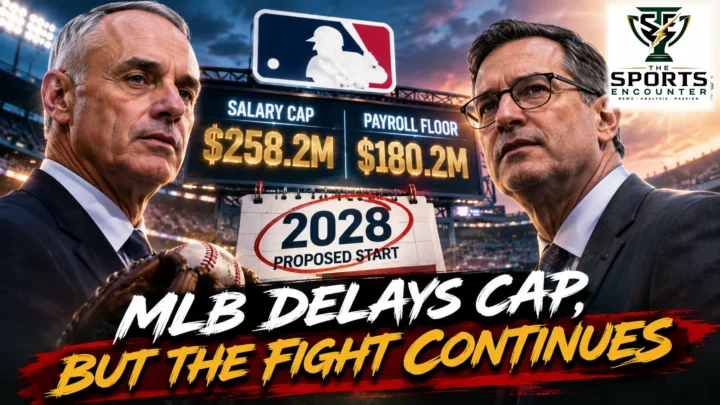
Earlier this month, management proposed a 2028 payroll ceiling of $258.2 million and a minimum of $180.2 million, using the payroll accounting framework discussed in TSE’s analysis of the proposed salary cap and floor. The difference between the two thresholds is $78 million per club.
Owners argue that spending limits and a minimum payroll could improve competitive balance. The players’ association maintains that a hard cap would restrict compensation and prefers changes that address disparities in club resources without limiting the market for players. In its November 23 bargaining statement, the union accused management of prioritizing profits over player earnings.
On November 24, MLB withdrew the escrow provision from its proposal, addressing one objection concerning guaranteed contracts. The salary cap itself remains contested. That sequence suggests there is scope for agreement on individual provisions without resolution of the underlying economic disagreement.
What an MLB lockout would mean for the offseason
An MLB lockout would interrupt a busy recruitment market. Toronto’s reported $80 million agreement with Kaima Taira and the Cubs’ reported $120 million deal with Trevor Rogers illustrate the scale of commitments clubs have been pursuing before the deadline.
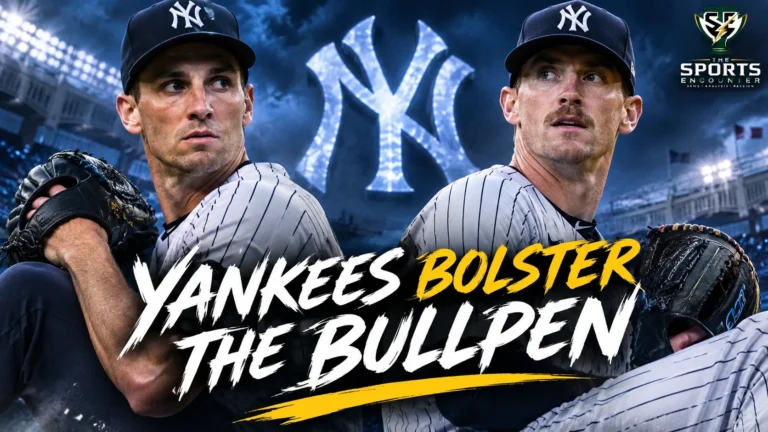
Teams that have completed recruitment would enter a freeze with more roster certainty than clubs still negotiating. The stakes extend beyond high-value contracts: the Yankees’ moves for Brent Suter and Tim Hill illustrate the importance of filling specialist roles, while TSE’s qualifying-offer coverage highlights the decisions facing individual free agents.
Continue the MLB Story


How much time does baseball have to save its season?
MLB’s published 2027 calendar provides three useful markers. The following intervals are measured in calendar days from December 2, the first full day after the agreement expires.
| Milestone | Scheduled date | Days from December 2 |
|---|---|---|
| First spring training games | February 19, 2027 | 79 |
| Opening Night | March 24, 2027 | 112 |
| Traditional Opening Day | March 25, 2027 | 113 |
If negotiations lasted another 99 calendar days counting December 2 as day one, a settlement would arrive on March 10, just 14 days before the scheduled opening game. Players would still need preparation time, and clubs would need to finish roster construction.
| Period | Type | Duration | Season consequence |
|---|---|---|---|
| 1990 | Lockout | 32 days | Delayed opener; full schedule played |
| 1994-95 | Strike | 232 days | 1994 World Series canceled; shortened 1995 season |
| 2021-22 | Lockout | 99 days | Delayed opener; full schedule played |
The previous settlements demonstrate that a delayed opening does not necessarily mean lost regular-season games. They also show why the duration of a stoppage cannot determine its consequences without considering when it occurs.
For fans, stadium workers and businesses that depend on baseball, the immediate concern is when normal preparations can resume. The MLB lockout remains prospective, and the lawsuit may clarify the parties’ legal positions. Whether baseball can deliver a full 2027 season still depends on a timely agreement over the terms under which its players and clubs will compete.