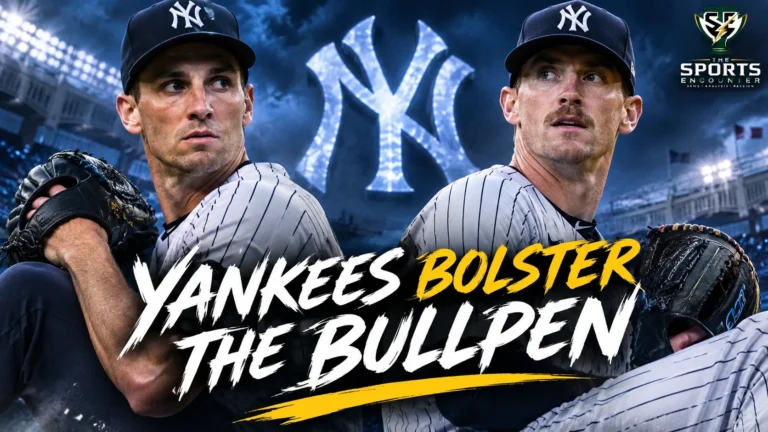
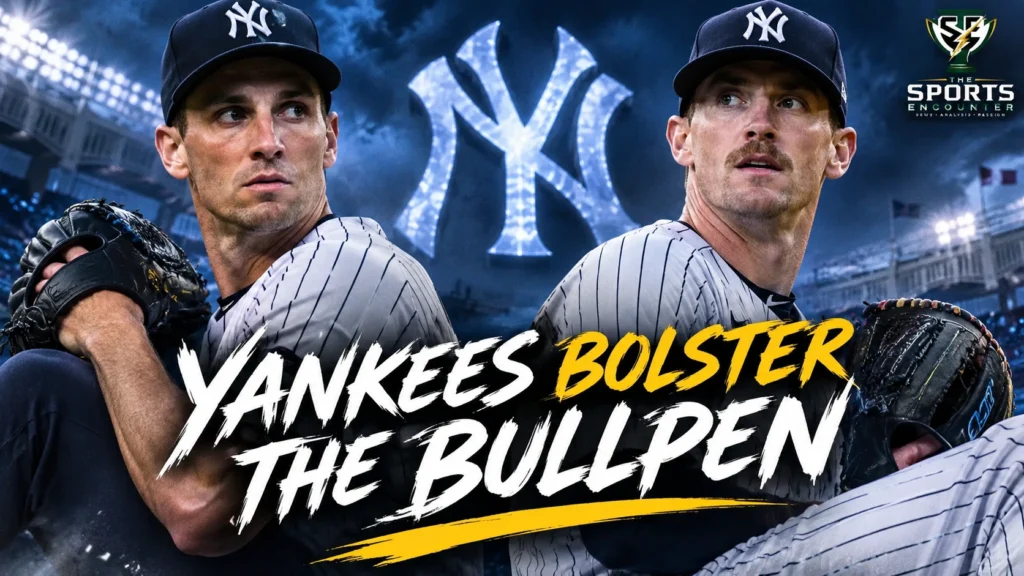
NEW YORK, United States, November 24, 2026: The New York Yankees have signed veteran left-hander Brent Suter and re-signed fellow reliever Tim Hill to one-year contracts, giving general manager Brian Cashman two experienced ground-ball specialists as he rebuilds the bullpen for the 2027 Major League Baseball season.
Suter, 37, joins on a $4 million agreement, while Hill, 36, returns on a $2.25 million contract. Both deals contain club options for 2028. Their combined $6.25 million commitment represents a relatively modest investment in a pitching staff that New York hopes can support another postseason challenge.
Key Takeaways
- Suter, 37, joins on a $4 million agreement, while Hill, 36, returns on a $2.25 million contract.
- The Yankees’ latest additions suggest that Cashman values pitchers who can limit damaging contact and work through difficult innings without depending exclusively on strikeouts.
- The following comparison highlights the differences between New York’s two veteran left-handers during the 2026 season.
- The Yankees do not need Suter and Hill to become elite strikeout pitchers for these agreements to prove useful.
The more revealing detail is how differently the two pitchers performed last season. Suter recorded a 3.36 ERA across 91 innings for the Los Angeles Angels and Atlanta Braves. Hill produced an outstanding 68.8% ground-ball rate but also surrendered 12 home runs and finished with a 4.60 ERA.
Story at a glance
Why the Yankees Are Building Around Ground-Ball Pitching
The Yankees’ latest additions suggest that Cashman values pitchers who can limit damaging contact and work through difficult innings without depending exclusively on strikeouts.
Brent Suter Brings Something the Yankees Need: Reliable Innings
Suter’s value extends beyond his 3.36 ERA.
Tim Hill’s Return Is the More Complicated Decision
Hill’s re-signing presents a different analytical challenge.
Suter vs. Hill: What the Numbers Actually Show
The following comparison highlights the differences between New York’s two veteran left-handers during the 2026 season.
How Suter and Hill Fit Alongside David Bednar and Brent Headrick
The Yankees’ bullpen construction extends beyond these two contracts.
Those numbers create an interesting question for the Yankees: can two pitchers who specialize in keeping the ball on the ground provide enough reliability to justify their places in a championship-minded bullpen?
Why the Yankees Are Building Around Ground-Ball Pitching
The Yankees’ latest additions suggest that Cashman values pitchers who can limit damaging contact and work through difficult innings without depending exclusively on strikeouts.
Ground-ball pitchers attempt to keep hitters from elevating the baseball. Their approach can produce double plays, reduce certain types of extra-base contact and help a defense escape situations with runners aboard.
However, ground-ball percentage measures the trajectory of balls put into play. It does not guarantee that a pitcher will prevent runs, avoid home runs or consistently retire opposing hitters.
This distinction matters when comparing Suter and Hill.
Suter’s 2026 performance offers evidence of sustained effectiveness across multiple roles. Hill’s season demonstrates that a pitcher can lead baseball in ground-ball percentage while still experiencing significant problems with run prevention.
New York is effectively investing in two variations of the same pitching philosophy, with different workloads, risk profiles and tactical applications.
Brent Suter Brings Something the Yankees Need: Reliable Innings
Suter’s value extends beyond his 3.36 ERA.
According to the Yankees’ official announcement, the left-hander pitched 91 innings across 54 appearances in 2026, including four starts. He struck out 78 batters, walked 25 and recorded a 49.8% ground-ball rate.
He also completed at least two innings in 27 appearances, including 24 relief outings. That ability to cover multiple innings distinguishes him from pitchers whose responsibilities are concentrated almost entirely in one-inning assignments.
Why Suter’s Workload Could Matter More Than His ERA
A bullpen’s effectiveness depends partly on how often its most trusted pitchers are available.
When a starting pitcher exits early, a manager may need several relievers to complete the game. That can create additional workload for the following day and reduce flexibility during a demanding stretch of the schedule.
Suter gives New York another option for covering those innings.
His experience starting games also provides flexibility if the Yankees need a longer relief appearance or an emergency pitching arrangement.
The importance of protecting pitching depth became evident during New York’s previous campaign. As The Sports Encounter’s analysis of Cam Schlittler’s Cy Young-winning season explained, injuries and reduced availability among established starters increased the responsibility placed on the Yankees’ pitching staff.
Suter’s arrival does not eliminate those risks. It gives the team another experienced pitcher capable of absorbing innings when circumstances demand it.
His Atlanta Performance Provides a More Encouraging Signal
Suter began 2026 with the Angels, posting a 4.12 ERA across 63⅓ innings.
Following his August move to Atlanta, he recorded a 1.63 ERA in 27⅔ innings, allowing five earned runs in 13 appearances.
He also delivered three scoreless postseason innings for the Braves.
The improvement is encouraging, although 27⅔ innings represent a limited sample. It would be premature to assume that his Atlanta ERA establishes his expected performance level for 2027.
Nevertheless, the difference between his two stops gives the Yankees a useful starting point for evaluating his pitch selection, usage patterns and effectiveness against different lineups.
Tim Hill’s Return Is the More Complicated Decision
Hill’s re-signing presents a different analytical challenge.
The veteran left-hander finished 2026 with a 5-2 record, two saves and a 4.60 ERA in 67 appearances covering 58⅔ innings.
His 68.8% ground-ball rate led the majors among pitchers who threw at least 50 innings, according to the Associated Press report on the completed agreements.
That figure indicates an exceptional ability to induce contact along the ground.
Yet Hill also surrendered a career-high 12 home runs.
The combination illustrates why relying on a single pitching statistic can produce an incomplete assessment.
How Can a Ground-Ball Specialist Allow So Many Home Runs?
Ground-ball percentage describes the share of batted balls hit along the ground. It does not mean that every pitch produces a grounder.
A pitcher can generate ground balls on most balls in play while still allowing damaging contact when hitters elevate pitches.
Hill’s 2026 results show exactly why that distinction matters.
He allowed approximately 1.84 home runs per nine innings, calculated from his 12 home runs conceded across 58⅔ innings.
For a pitcher expected to handle important relief situations, that level of home run exposure can undermine otherwise impressive contact-management numbers.
Hill also displayed a pronounced platoon difference. Left-handed hitters batted .213 against him, compared with .293 for right-handed hitters.
That split suggests a potentially useful role against left-handed batters, while also identifying a matchup concern that the Yankees must consider when planning his appearances.
Suter vs. Hill: What the Numbers Actually Show
The following comparison highlights the differences between New York’s two veteran left-handers during the 2026 season.
| 2026 statistic | Brent Suter | Tim Hill |
|---|---|---|
| Age in November 2026 | 37 | 36 |
| Appearances | 54 | 67 |
| Starts | 4 | 0 |
| Innings pitched | 91 | 58⅔ |
| Win-loss record | 3-2 | 5-2 |
| ERA | 3.36 | 4.60 |
| Ground-ball rate | 49.8% | 68.8% |
| Home runs allowed | 9 | 12 |
| Home runs per nine innings | 0.89 | 1.84 |
| Reported contract value | $4 million | $2.25 million |
| 2028 club option | Yes | Yes |
Source: Yankees official release and Associated Press reporting. Home runs per nine innings calculated from the published innings and home run totals. Figures are rounded to two decimal places.
Three conclusions emerge from the comparison.
First, Suter provided considerably more innings and recorded a substantially lower ERA.
Second, Hill generated ground balls at an extraordinary rate but was more vulnerable to home runs.
Third, the two pitchers could serve different purposes despite sharing a broadly similar approach to contact management.
Neither pitcher should automatically be evaluated as a direct replacement for the other.
How Suter and Hill Fit Alongside David Bednar and Brent Headrick
The Yankees’ bullpen construction extends beyond these two contracts.
Closer David Bednar accepted a $23.15 million qualifying offer, while New York has also pursued a reunion with right-hander Jonathan Loáisiga.
Left-hander Brent Headrick remains another important part of the bullpen picture after recording a 2.18 ERA across 78⅓ innings in 2026.
Headrick appeared in 81 games, a workload that helps explain why adding another experienced left-hander could be valuable.
Suter’s ability to pitch multiple innings could reduce the need to use Headrick repeatedly in extended relief assignments.
Hill, meanwhile, offers an alternative for selected left-handed matchups, particularly if his home run rate improves.
Potential Bullpen Responsibilities
| Pitcher | Potential responsibility | Main consideration |
|---|---|---|
| David Bednar | Primary closer | Late-inning stability |
| Brent Headrick | High-leverage left-handed relief | Managing workload |
| Brent Suter | Multi-inning relief and flexible assignments | Maintaining contact quality and run prevention |
| Tim Hill | Ground-ball situations and selected left-handed matchups | Reducing home run exposure |
| Jonathan Loáisiga | Potential right-handed bullpen depth | Finalized availability and role |
These are analytical projections based on pitching profiles and reported roster developments, not confirmed assignments from the Yankees’ coaching staff.
New York could also continue exploring additional relief options before the 2027 season.
The Bigger Yankees Problem: Pitching Strength Cannot Fix Every Weakness
Cashman’s bullpen investments must be viewed alongside the organization’s wider roster problems.
The Yankees won 93 regular-season games in 2026 but suffered another disappointing postseason exit.
As detailed in our examination of Brian Cashman’s 30th season in charge, New York’s offensive production fell from 849 runs in 2025 to 739 in 2026.
That represented a decline of 110 runs, approximately 13%.
Home runs also dropped from 274 to 223, while the team’s batting average declined from .251 to .235.
Those figures highlight the limits of improving the bullpen alone.
A stronger relief corps can help protect leads, reduce pressure on starters and improve pitching availability across a long season.
It cannot directly restore lost offensive production or resolve weaknesses in lineup depth.
The distinction matters because the Yankees already possess significant pitching talent. Their challenge is turning regular-season competitiveness into a more effective postseason team.
Cashman’s ability to address both sides of the roster will be central to that effort.
Why Short-Term Contracts Matter Before Baseball’s Labor Deadline
The structure of the Suter and Hill agreements also deserves attention.
Both players received one-year contracts with club options for 2028, allowing New York to retain flexibility beyond the coming season.
That approach limits the length of the guaranteed commitment to two pitchers who will be 37 and 36 years old, respectively, when the 2027 season begins.
The timing is significant because Major League Baseball is approaching another important labor deadline.
The current collective bargaining agreement expires in December 2026, with uncertainty surrounding negotiations over payroll rules and competitive balance.
The Sports Encounter’s analysis of the proposed MLB salary cap and payroll floor examined how potential changes could affect high-spending organizations, including the Yankees.
Suter’s position adds another dimension to the story. He serves on the MLB Players Association’s eight-member executive subcommittee and therefore has a role in the union’s leadership during an important period for labor negotiations.
There is no evidence that his union responsibilities influenced the Yankees’ decision to sign him. His pitching workload and performance provide clear sporting reasons for the agreement.
However, his dual position as an active player and union representative makes his arrival noteworthy beyond the field.
What Must Happen for These Contracts to Succeed?
The Yankees do not need Suter and Hill to become elite strikeout pitchers for these agreements to prove useful.
They need the two veterans to perform the responsibilities for which their pitching profiles are best suited.
For Suter, the main measures will include maintaining a competitive ERA, limiting damaging contact and continuing to provide multiple innings when necessary.
For Hill, the most important improvement would be reducing home runs while preserving his ability to generate ground balls.
New York’s coaching staff will also need to evaluate when each pitcher should face right-handed hitters, particularly given Hill’s significant platoon split in 2026.
The broader bullpen must remain effective without overworking its most dependable arms.
Those are measurable objectives, and they offer a clearer basis for judging these contracts than the pitchers’ reputations or the relatively modest financial commitments.
What the Yankees’ Bullpen Moves Mean for 2027
The Yankees have added experience and flexibility without making a long-term commitment to either left-hander.
Suter arrives after a productive season that demonstrated his ability to handle substantial innings. Hill returns with an elite ground-ball profile but clear areas requiring improvement.
Together, they give New York more options for managing pitching workloads and tailoring relief assignments to specific situations.
The decisive question is whether those options translate into better run prevention when games are close.
For a franchise still seeking its first World Series championship since 2009, the success of this bullpen strategy will ultimately be measured in October rather than November.
Readers can follow the wider offseason through The Sports Encounter’s MLB coverage, revisit our analysis of the Yankees’ starting pitching strength, and consult the official New York Yankees website for further team announcements.
Continue the MLB Story



Frequently Asked Questions
Who did the New York Yankees sign?
The Yankees signed left-handed pitcher Brent Suter and re-signed fellow left-hander Tim Hill to one-year contracts for the 2027 season.
How much is Brent Suter’s Yankees contract worth?
Suter’s agreement is worth $4 million, including a $3.75 million salary for 2027 and a $250,000 buyout attached to the 2028 club option.
How much will Tim Hill earn?
Hill agreed to a one-year contract worth $2.25 million, with a club option for 2028.
How did Brent Suter perform in 2026?
Suter finished 3-2 with a 3.36 ERA across 91 innings and 54 appearances for the Angels and Braves.
What was Tim Hill’s ERA in 2026?
Hill recorded a 4.60 ERA in 67 relief appearances, pitching 58⅔ innings for New York.
Why are Suter and Hill considered ground-ball pitchers?
Both pitchers frequently induce hitters to put the ball on the ground. Suter recorded a 49.8% ground-ball rate in 2026, while Hill led qualified pitchers with a 68.8% rate.
Will Brent Suter replace Tim Hill?
There is no confirmed plan for Suter to replace Hill. Both are under contract, and their different pitching profiles could allow them to fill complementary bullpen roles.
Who is expected to close games for the Yankees in 2027?
David Bednar is the established closer after accepting a $23.15 million qualifying offer, although individual bullpen assignments remain subject to the team’s decisions.
Why does Suter’s contract matter beyond baseball?
Suter serves on the MLB Players Association’s executive subcommittee during a period of significant labor negotiations. His union position is separate from his pitching responsibilities with New York.