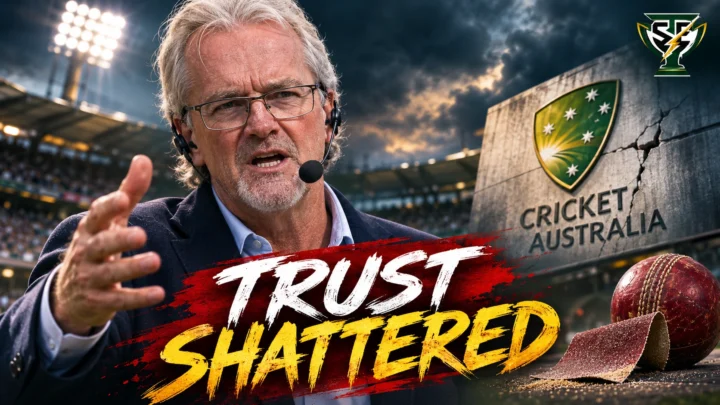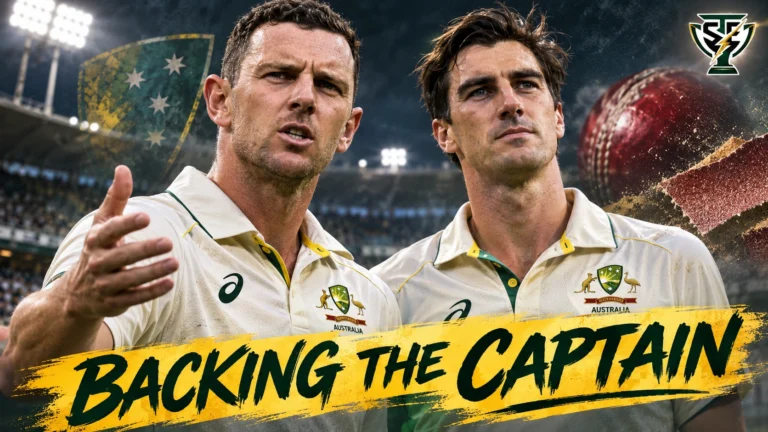
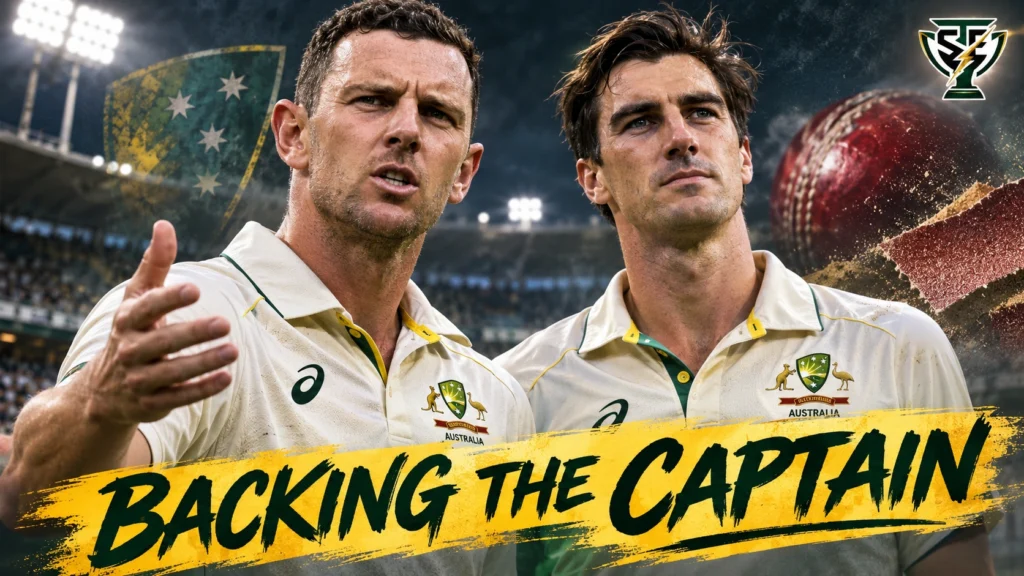
SYDNEY, Australia, November 21, 2026: Josh Hazlewood has strongly defended Pat Cummins against renewed allegations stemming from Australian cricket’s 2018 ball-tampering scandal, while acknowledging that he would have to reconsider his own Test future if the Australian captain were forced out. His intervention introduces a new complication for Cricket Australia: a decision intended to resolve questions about leadership could also unsettle one of the most experienced bowling attacks in international cricket.
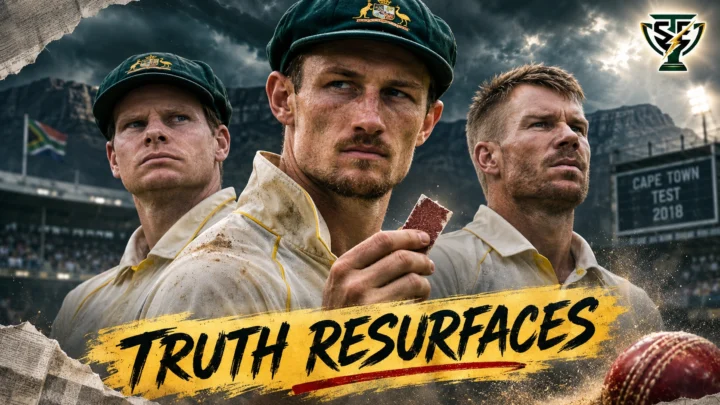
The Australian fast bowler has maintained that he did not know sandpaper had been taken onto the field during the Cape Town Test against South Africa. He has also challenged the interpretation of Cameron Bancroft‘s latest account, which alleges that members of the bowling group discussed the condition and effectiveness of the ball while it was being illegally altered. Hazlewood’s response creates an important distinction between knowing that a cricket ball was being worked on and knowing that a prohibited abrasive material was being used. That distinction is now central to the dispute surrounding Cummins and the future of Australia’s Test team.
Key Takeaways
- Usman Khawaja, David Warner and Cameron Bancroft have challenged the original understanding of who knew about the use of sandpaper during Australia’s 2018 tour of South Africa.
- Hazlewood, Cummins, Mitchell Starc and Nathan Lyon issued a joint statement in 2021 after questions about the bowling group’s knowledge resurfaced.
- The present controversy intensified after Bancroft published a detailed account of the 2018 South Africa tour.
- Australia will host New Zealand in a four-match Test series beginning at Perth Stadium on December 9.
Josh Hazlewood’s Defense of Pat Cummins Changes the Leadership Debate
Until this weekend, much of the renewed Sandpapergate controversy had focused on opposing accounts of an event eight years ago.
Story at a glance
Josh Hazlewood’s Defense of Pat Cummins Changes the Leadership Debate
Until this weekend, much of the renewed Sandpapergate controversy had focused on opposing accounts of an event eight years ago.
Why Hazlewood’s Account of the 2018 Investigation Matters
One of the most revealing elements of Hazlewood’s interview concerns his recollection of Cricket Australia’s original investigation.
The Crucial Distinction Between Ball Maintenance and Knowing About Sandpaper
Hazlewood’s most substantive response concerns the meaning of Bancroft’s allegations.
Why the 2021 Bowlers’ Statement Is Under Renewed Scrutiny
Hazlewood, Cummins, Mitchell Starc and Nathan Lyon issued a joint statement in 2021 after questions about the bowling group’s knowledge resurfaced.
Hazlewood’s Defense of Cummins Creates a New Risk for Australia’s Selectors
The most immediate sporting consequence concerns the stability of Australia’s Test attack.
Usman Khawaja, David Warner and Cameron Bancroft have challenged the original understanding of who knew about the use of sandpaper during Australia’s 2018 tour of South Africa. Cummins, Mitchell Starc and other members of the bowling group have maintained that they did not know a foreign substance was being used.
Hazlewood has now made the issue more immediate.
Speaking in an interview published by News Corp, he defended Cummins’ record as captain and questioned what the consequences would be if the Australian team lost its leader because of allegations that have not resulted in new disciplinary findings.
When asked about his own future if Cummins were removed, Hazlewood did not announce his retirement or issue an unconditional ultimatum. He indicated that he would need to consider his position if such a situation arose.
That qualification matters.
There is an important difference between a cricketer saying he will resign and a player admitting that a particular leadership decision could influence whether he continues. Hazlewood made the latter point.
According to Reuters’ reporting on Hazlewood’s interview, the fast bowler backed Cummins and denied knowing sandpaper had been carried onto the field.
For Cricket Australia, his comments raise the possibility that any captaincy change could have repercussions extending beyond the man occupying the position.
Why Hazlewood’s Account of the 2018 Investigation Matters
One of the most revealing elements of Hazlewood’s interview concerns his recollection of Cricket Australia’s original investigation.
He said investigators questioned him soon after the Cape Town incident and argued that an account given within a day or two of the events should carry substantial weight.
His reference to a lengthy interview is important because the existence and scope of the 2018 investigative interviews have themselves become disputed subjects.
Warner previously questioned whether several Australian bowlers, including Hazlewood, Starc and Nathan Lyon, had been interviewed during the original investigation. Subsequent reporting contradicted that assertion, with sources familiar with the inquiry stating that the bowlers had been questioned.
Hazlewood’s account provides further support for the position that he was interviewed.
However, confirmation that someone was interviewed does not automatically settle whether an investigation was comprehensive.
The questions asked, the answers recorded, the available evidence and the opportunity to test contradictory testimony are separate considerations.
That is why the distinction between the existence of an interview and the adequacy of the investigation matters.
The Sports Encounter previously examined the unresolved questions surrounding Cricket Australia’s original Sandpapergate inquiry, including whether renewed allegations justify independent scrutiny.
Five Questions Raised by Hazlewood’s Account
| Question | What is established | What remains unresolved |
|---|---|---|
| Was Hazlewood questioned in 2018? | He says investigators interviewed him shortly after Cape Town | Whether the complete interview record will ever be available for independent assessment |
| Did the bowlers discuss the ball? | Bancroft alleges discussions about its reverse-swing performance | The exact wording, timing and context of those conversations |
| Did Hazlewood know sandpaper was involved? | He has denied knowing a foreign substance was being used | The competing accounts have not produced new independent findings |
| Was the original investigation adequate? | Cricket Australia sanctioned three players in 2018 | Whether investigators fully tested the extent of other players’ knowledge |
| Should Cummins’ captaincy be affected? | He remains Australia’s Test captain in the verified reporting | Whether Cricket Australia will take any leadership action |
This framework illustrates why Hazlewood’s statement cannot simply be categorized as proof that Bancroft is wrong or that the original investigation was flawless.
It is important testimony from a player directly involved in the matches under scrutiny. Its implications still depend on how it is evaluated against the other available accounts.
The Crucial Distinction Between Ball Maintenance and Knowing About Sandpaper
Hazlewood’s most substantive response concerns the meaning of Bancroft’s allegations.
Bancroft has described conversations with bowlers about whether the ball was reverse-swinging sufficiently. Hazlewood acknowledges the importance of looking after a cricket ball, particularly when a bowling attack is attempting to generate reverse swing.
However, he maintains that discussions about the condition of a ball do not establish that the bowlers knew sandpaper was being used to alter it illegally.
That is a defensible distinction in principle, but its application to the 2018 incident remains contested.
During a Test match, bowlers routinely discuss the condition of the ball, its movement and whether one side remains sufficiently polished. Players can evaluate swing performance without necessarily knowing every action a teammate has taken while handling the ball.
Yet the context becomes different when a player alleges that deliberate illegal alteration was openly discussed and that members of the group provided feedback during the process.
The central question is therefore not simply whether the bowlers discussed the ball.
It is what they understood about the methods allegedly being used to change its condition.
What Different Levels of Knowledge Would Mean
| Level | Possible awareness | Evidentiary significance |
|---|---|---|
| 1 | A player knows teammates are maintaining the cricket ball | Normal cricket activity; does not establish misconduct |
| 2 | A player notices unusual movement or a change in the ball’s surface | May raise questions but does not establish knowledge of its cause |
| 3 | A player knows someone is deliberately altering the ball outside permitted methods | Potentially relevant knowledge of misconduct |
| 4 | A player knows sandpaper specifically is being used | Directly relevant to the disputed allegations |
| 5 | A player authorizes, organizes, participates in or conceals the prohibited activity | Raises further questions of individual responsibility |
Editorial analysis: These categories distinguish types of possible knowledge. They are not findings about any named player’s conduct.
Hazlewood is rejecting the proposition that he possessed knowledge at the levels concerning the prohibited material and its use.
Bancroft’s allegations suggest that awareness extended further across the Australian team than the original disciplinary findings established.
Resolving the difference requires examining specific testimony rather than assuming that normal conversations about reverse swing either prove or disprove knowledge of illegal ball tampering.
Why the 2021 Bowlers’ Statement Is Under Renewed Scrutiny
Hazlewood, Cummins, Mitchell Starc and Nathan Lyon issued a joint statement in 2021 after questions about the bowling group’s knowledge resurfaced.
The players maintained that they had not known a foreign substance was being taken onto the field to alter the ball.
That statement has become central to the current dispute because it contains a specific denial.
It does not necessarily deny that the players discussed reverse swing, observed the condition of the ball or expected teammates to maintain it within the rules.
Instead, it addresses prior knowledge of the prohibited substance being used.
Bancroft’s latest account challenges the credibility of the broader narrative defended by the bowlers, but whether it directly contradicts every element of their carefully worded statement depends on the precise details of his allegations.
The distinction helps explain why the controversy has persisted despite repeated public denials.
In an earlier report, The Sports Encounter examined Cummins’ categorical rejection of Khawaja’s accusations and the importance of identifying exactly which claims the Australian captain disputed.
Hazlewood’s intervention reinforces the bowlers’ established position, while adding his own testimony about the investigation and the practical responsibilities involved in maintaining a cricket ball.
Hazlewood’s Defense of Cummins Creates a New Risk for Australia’s Selectors
The most immediate sporting consequence concerns the stability of Australia’s Test attack.
Cummins and Hazlewood have been central figures in the national team’s bowling plans for years. Mitchell Starc and Nathan Lyon have also contributed to an experienced group that has played major roles in Australia’s international success.
Replacing a captain requires a leadership decision.
Replacing a captain while another senior fast bowler considers his future creates a potentially more complicated selection problem.
That does not mean either player is about to leave the team.
Hazlewood has not announced that he is retiring, and Cricket Australia has not confirmed Cummins’ removal.
Nevertheless, the comments establish that Hazlewood views the captaincy question as sufficiently serious to influence his own calculations about continuing to play.
Potential Consequences of Cricket Australia’s Captaincy Decision
| Scenario | Possible immediate consequence | What must be confirmed |
|---|---|---|
| Cummins remains captain | Leadership continuity before the New Zealand Tests | Official captaincy and squad announcements |
| Cummins voluntarily steps down | A leadership vacancy creates a selection decision | His own decision and Cricket Australia’s response |
| Cricket Australia removes Cummins | The governing body must explain its decision and identify a successor | Formal action and its stated basis |
| Hazlewood also becomes unavailable | Australia may need to reorganize its pace attack | A confirmed decision from Hazlewood, not speculation |
| Independent evidence changes the historical record | Further review of the original findings may become necessary | New evidence, proper scrutiny and procedural fairness |
These are conditional scenarios, not predictions or announced decisions.
The risk is especially relevant because Australia’s upcoming series against New Zealand consists of four Tests rather than a short, isolated engagement.
Bowling workloads, recovery periods, pitch conditions and tactical combinations will all require planning.
Australia can rotate bowlers when necessary, but the possible loss of two experienced performers would involve more than simply replacing their names on a team sheet.
It could change the balance of the attack, the distribution of leadership responsibilities and the experience available to younger players.
Cameron Bancroft’s New Account Has Created a Difficult Test of Credibility
The present controversy intensified after Bancroft published a detailed account of the 2018 South Africa tour.
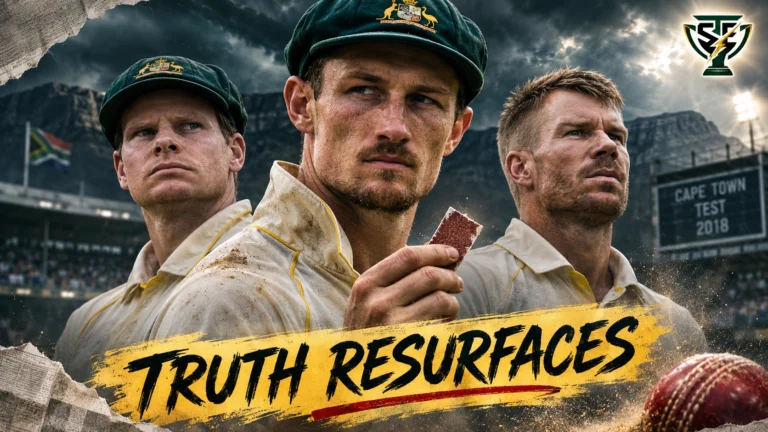
Bancroft was filmed using sandpaper on the ball during the third Test at Newlands. The incident resulted in Cricket Australia’s investigation and suspensions for Bancroft, captain Steve Smith and vice-captain David Warner.
Smith and Warner received 12-month bans, while Bancroft received a nine-month suspension.
The original disciplinary outcome established wrongdoing by those three players.
Bancroft’s latest allegations raise a separate question: whether the investigation identified everyone who knew about the prohibited scheme.
His account followed Khawaja’s disclosures in the autobiography Sabr, which questioned the narrow account of responsibility accepted after Cape Town.
Bancroft also indicated that Cummins’ public response to Khawaja influenced his decision to speak in greater detail.
The sequence has created an increasingly public disagreement among former teammates.
The Sports Encounter explored the significance of Bancroft’s testimony and the competing accounts in its investigation into the renewed crisis of trust surrounding Australian cricket.
Hazlewood’s comments introduce an important counterpoint to that analysis: a player named in Bancroft’s account has now responded with his own recollection of the original investigation and a specific explanation of why discussions about the cricket ball do not necessarily establish knowledge of sandpaper.
How Australia’s Sandpapergate Dispute Reached This Point
| Date | Development | Significance |
|---|---|---|
| March 2018 | Bancroft is caught using sandpaper during the Cape Town Test | Australia’s ball-tampering scandal becomes public |
| 2018 | Smith, Warner and Bancroft receive suspensions | The original disciplinary outcome is established |
| May 2021 | Cummins, Starc, Hazlewood and Lyon issue a joint denial | The bowlers reject claims of prior knowledge of the prohibited substance |
| November 2026 | Khawaja’s autobiography renews allegations of wider knowledge | The original account comes under fresh scrutiny |
| November 13, 2026 | Cummins publicly rejects the allegations | The dispute increasingly focuses on the Test captain’s credibility |
| November 18, 2026 | Cricket Australia announces a forum; Bancroft publishes his account | Conflicting testimony becomes more detailed and public |
| November 20–21, 2026 | Hazlewood defends Cummins and addresses his own future | The dispute acquires an immediate team-selection dimension |
| December 9, 2026 | Australia are scheduled to begin a four-Test series against New Zealand | The leadership question intersects with competitive preparation |
The chronology highlights why the current development differs from the initial round of accusations.
In 2018, Cricket Australia was responding to proven ball tampering. In 2021, the bowlers were defending themselves against renewed speculation. In 2026, former teammates have offered conflicting detailed accounts while questions about the captain’s future increasingly affect discussion of the current team.
Cricket Australia’s Forum Cannot Decide the Captaincy Question by Itself
Cricket Australia has declined to reopen its original Sandpapergate investigation.
Chief executive Todd Greenberg has argued that the governing body does not have sufficient reason to restart the inquiry, although it has subsequently proposed an independent forum through which players and staff can discuss their experiences.
That forum is intended to provide an opportunity for discussion and reconciliation rather than operate as a renewed disciplinary investigation.
This difference matters because a forum designed to address relationships may not have the authority or procedures needed to determine individual responsibility.
If Cricket Australia were to make a captaincy decision based on the renewed controversy, it would need to distinguish between established findings, unresolved allegations, the captain’s current performance and the requirements of the team.
The governing body’s position is described in Cricket Australia’s published explanation for not reopening the investigation.
Hazlewood’s defense of Cummins does not remove the need for a credible response to the conflicting accounts.
Equally, the existence of accusations against the captain does not establish guilt or justify treating a possible change in leadership as a foregone conclusion.
The Sports Encounter previously examined the divide between former teammates in its report on Warner and Cummins’ escalating disagreement following Khawaja’s disclosures.
That disagreement now has a second dimension because Hazlewood’s comments suggest some current players believe the public scrutiny has reached a point where it could damage team continuity.
Australia’s New Zealand Series Gives the Leadership Debate a Deadline
Australia will host New Zealand in a four-match Test series beginning at Perth Stadium on December 9.
It will be the first four-Test Trans-Tasman series, making the contest an unusually demanding assignment for both teams.
The schedule includes Perth, Adelaide, Melbourne and Sydney, with the Boxing Day Test taking place at the MCG.
Australia vs New Zealand: Confirmed 2026–27 Test Schedule
| Test | Dates | Venue | Location |
|---|---|---|---|
| First Test | December 9–13, 2026 | Perth Stadium | Perth |
| Second Test | December 17–21, 2026 | Adelaide Oval | Adelaide |
| Third Test | December 26–30, 2026 | Melbourne Cricket Ground | Melbourne |
| Fourth Test | January 4–8, 2027 | Sydney Cricket Ground | Sydney |
The official Cricket Australia international schedule confirms these fixtures.
Four Tests across approximately one month create substantial demands on a fast-bowling group, especially when conditions and workloads vary between venues.
Hazlewood’s future therefore matters for practical cricket reasons, quite apart from his public support for Cummins.
Australia need to know which bowlers will be available, who will lead them and whether the team can focus on preparing for New Zealand without further disruption.
The country’s recent return to South Africa also provided an opportunity to revisit the historical significance of the scandal. That background was examined in TSE’s analysis of Australia’s first Test tour of South Africa since Sandpapergate.
The Original Insight: Two Separate Tests of Australian Cricket’s Credibility
Hazlewood’s intervention highlights two problems that are frequently treated as one.
The first is historical accountability.
Cricket Australia must decide whether its original investigation remains sufficiently reliable in light of the newer accounts supplied by people associated with the 2018 touring party.
The second is present-day team management.
The governing body must decide how to protect the stability and credibility of its current Test team while a controversy involving its captain continues.
Those responsibilities overlap, but they should not be confused.
A governing body cannot resolve historical allegations merely by retaining a successful captain.
Nor should it remove a captain simply because public debate has become intense.
Hazlewood’s loyalty to Cummins is a relevant consideration when understanding the current team’s relationships and internal confidence. It is not independent proof concerning events at Cape Town.
Similarly, Bancroft’s direct involvement makes his account particularly important, but it does not automatically establish every allegation he makes about other individuals.
The strongest response would distinguish the available evidence from interpretations and then make leadership decisions through clear, defensible procedures.
Accountability and Team Stability Require Different Evidence
| Decision | Evidence or assessment required | Risk of confusing the issues |
|---|---|---|
| Reassessing the 2018 findings | Original records, witness accounts and independently tested new evidence | Accepting allegations or denials without scrutiny |
| Retaining Cummins as captain | Leadership suitability, team performance and any established relevant findings | Treating sporting success as proof about historical conduct |
| Changing the captain | A clear rationale, succession plan and appropriate procedure | Reacting to speculation without verified findings |
| Planning the New Zealand series | Fitness, availability, balance and workload management | Allowing unconfirmed retirement scenarios to determine selection |
| Restoring confidence | Transparent procedures and fair treatment of everyone involved | Confusing reconciliation with investigative resolution |
These distinctions may become increasingly important if Cricket Australia maintains its refusal to conduct another investigation while public pressure for a leadership decision continues.
Hazlewood’s Support Offers Cummins Breathing Space, but It Does Not End the Controversy
The latest statement provides Cummins with visible support from a senior colleague whose own account has been questioned.
That matters inside a national team, where the captain’s authority depends partly on the confidence of his players.
Yet it should not be overstated as evidence that the entire Australian dressing room has reached a unified position.
No comprehensive survey of current players has been established, and the accounts of former teammates remain divided.
The Sports Encounter examined the broader dispute over responsibility, transparency and team culture in its report on Nasser Hussain’s questions about Australian cricket’s unresolved Sandpapergate divisions.
Hazlewood has now provided another perspective: the controversy is affecting not only how the 2018 team is remembered, but also how one of Australia’s most experienced current players thinks about his future.
That is a serious warning for selectors and administrators, even though no retirement decision has been made.
Continue the Cricket Story
 CricketMike Haysman Questions Cricket Australia’s Sandpapergate Forum as Cummins Faces Fresh Pressure
 CricketSandpapergate 2026: Cameron Bancroft’s Revelations Reopen Australian Cricket’s Deepest Trust Crisis
 CricketSandpapergate Scandal Puts Pat Cummins’ Captaincy and Cricket Australia’s Credibility on Trial
Frequently Asked Questions
What did Josh Hazlewood say about Pat Cummins and Sandpapergate?
Hazlewood supported Cummins’ leadership and maintained that he did not know sandpaper had been brought onto the field during the 2018 Cape Town Test against South Africa.
Did Josh Hazlewood threaten to retire from Test cricket?
He raised the possibility of reconsidering his future if Cummins lost the captaincy. He did not announce his retirement or make an unconditional commitment to leave.
Did Hazlewood admit knowing about the use of sandpaper?
No. He distinguished discussions about maintaining the cricket ball from knowledge that a prohibited substance was being used to alter it.
Was Josh Hazlewood interviewed during the 2018 Sandpapergate investigation?
Hazlewood says he was questioned shortly after the Cape Town Test and has emphasized the importance of his original account.
What did Cameron Bancroft allege about Australia’s bowlers?
Bancroft alleged that conversations about reverse swing and the condition of the cricket ball involved members of the bowling group. Those allegations remain disputed.
What did Australia’s bowlers say in 2021?
Cummins, Hazlewood, Mitchell Starc and Nathan Lyon jointly denied prior knowledge that a foreign substance was being taken onto the field to alter the ball.
Has Pat Cummins been removed as Australia Test captain?
No confirmed announcement removing Cummins as captain was established in the sources reviewed for this article.
Will Cricket Australia reopen the Sandpapergate investigation?
Cricket Australia has said it will not reopen the original investigation. It has instead proposed a forum for participants to discuss their recollections.
When does Australia play New Zealand in the next Test series?
The four-Test series begins in Perth on December 9, 2026, followed by matches in Adelaide, Melbourne and Sydney.
Why could Hazlewood’s comments affect Australia before the New Zealand series?
If Cummins’ leadership changed and Hazlewood subsequently reconsidered his own availability, Australia could face additional challenges involving captaincy succession, bowling depth and team preparation. Both outcomes remain hypothetical.
Final Assessment: Cricket Australia Must Separate Loyalty From Evidence
Hazlewood’s comments have shifted the consequences of Sandpapergate from the historical record toward the immediate future of Australia’s Test team.
He has defended Cummins, reiterated his denial of knowledge about sandpaper and explained why his account of the original investigation deserves consideration.
He has also made clear that the treatment of the Australian captain could influence his own thinking about continuing at the highest level.
Those developments make the controversy more complicated, but they do not resolve the competing allegations.
Cricket Australia must evaluate historical claims on their evidence and make leadership decisions according to clearly established principles. The loyalty of senior players is relevant to team stability, but it cannot replace an independent assessment of disputed facts.
With New Zealand’s four-Test tour approaching, the governing body now faces a question extending beyond whether Cummins remains captain.
It must determine whether Australian cricket can address a deeply contested chapter of its past without allowing the process to destabilize the team responsible for its immediate future.
Pat Cummins
- Josh Hazlewood Backs Pat Cummins’s Fight to Keep Sandpapergate From Splitting the Test Team
- Mike Haysman Questions Cricket Australia’s Sandpapergate Forum as Cummins Faces Fresh Pressure
- Sandpapergate Scandal Puts Pat Cummins’ Captaincy and Cricket Australia’s Credibility on Trial
- Sandpapergate 2026: Cameron Bancroft’s Revelations Reopen Australian Cricket’s Deepest Trust Crisis
- Sandpapergate Tears Australian Cricket Apart as Warner and Cummins Turn on Each Other After Khawaja Unveils ‘Sabr’