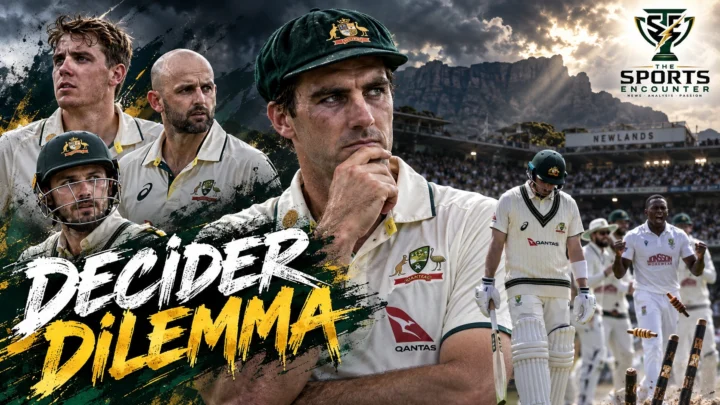
SYDNEY, Australia, November 19, 2026: Eight years after Cameron Bancroft was caught concealing sandpaper during a Test match against South Africa, the Australian batter has delivered an extraordinary account that challenges the official version of cricket’s most damaging modern cheating scandal. Bancroft now admits he withheld important information during Cricket Australia’s 2018 investigation and alleges that knowledge of the ball-tampering operation extended beyond the three players who were punished. His revelations have reopened questions about Australia’s current captain Pat Cummins, the team’s fast bowlers, its former coaching staff and the integrity of the original inquiry.
The Sandpapergate 2026 controversy has moved beyond the question of who physically altered the cricket ball at Newlands on March 24, 2018. Bancroft alleges that discussions about manipulating reverse swing began earlier in the South African tour and involved conversations across the playing and coaching groups. His account conflicts with previous denials, particularly Cummins’ recent rejection of allegations that the wider team knew about sandpaper. Cricket Australia has announced an independent forum for those involved in the 2018 tour, but the governing body has not committed to reopening its original disciplinary investigation.
TL;DR: What Cameron Bancroft Revealed About Sandpapergate
- New admission: Bancroft acknowledges that he did not provide investigators with a complete and truthful account in 2018.
- Wider awareness alleged: He claims the use of sandpaper was known more broadly within Australia’s touring party than the original investigation established.
- Earlier planning: His account places conversations about altering the ball during the second Test at Port Elizabeth, before the televised incident in Cape Town.
- Bowlers named: Bancroft describes conversations involving Pat Cummins, Mitchell Starc, Josh Hazlewood and Mitchell Marsh about the ball’s movement.
- Coaching questions: His account raises fresh questions about former bowling coach David Saker and head coach Darren Lehmann.
- Captain’s denial: Cummins publicly rejected claims of wider involvement on November 13. Bancroft’s subsequent statement challenges that position.
- Original sanctions: Steve Smith and David Warner received 12-month bans, while Bancroft was suspended for nine months.
- Cricket Australia’s response: The governing body has announced an independent forum and says it will consider Bancroft’s comments.
- Unresolved issue: Bancroft’s allegations have not been established as new disciplinary findings. The competing accounts require independent examination.
Sandpapergate 2026: What Has Changed Since the Original Investigation?
The central development is not the discovery that sandpaper was used. Cricket Australia established that fact in March 2018, after television cameras captured Bancroft attempting to alter the condition of the ball during the third Test against South Africa.
The new controversy concerns how many people knew, when they knew and whether the original investigation obtained an accurate account from everyone involved.
Story at a glance

Sandpapergate 2026: What Has Changed Since the Original Investigation?
The central development is not the discovery that sandpaper was used. Cricket Australia established that fact in March 2018, after television cameras captured Bancroft attempting to alter the condition of the ball during the third Test against South Africa.
How Sandpapergate Began: From Port Elizabeth to Cape Town in 2018
The original scandal erupted during the third Test between South Africa and Australia at Newlands in Cape Town on March 24, 2018.
Did Australia’s Ball-Tampering Discussions Begin in the Second Test?
Bancroft’s new account places important conversations during the second Test at Port Elizabeth, now known as Gqeberha.
Why Cameron Bancroft’s New Account Challenges Pat Cummins
Pat Cummins has become one of the central figures in the renewed controversy because he was part of Australia’s bowling attack in South Africa in 2018 and is now the national Test captain.
Mitchell Starc, Josh Hazlewood and Nathan Lyon Face Renewed Questions
Cummins is not the only current or former Australian player whose previous statements face renewed scrutiny.
In his detailed statement published on November 18, Bancroft acknowledged that his previous explanations had been incomplete.
He also said his decision to remain silent had carried a substantial personal and professional cost, while alleging that the original public account did not accurately represent everything he experienced during the tour.
Those admissions matter because the 2018 investigation formed the foundation for Cricket Australia’s disciplinary response. Its findings placed responsibility on three players while clearing other members of the touring party of involvement in the plan.
Bancroft now disputes the completeness of that narrative.
Cricket Australia’s November 18 report on Bancroft’s statement describes the allegations and confirms that the organization is considering his account.
What Is Established, Alleged and Still Disputed?
| Issue | 2018 official position | November 2026 development | Editorial status |
|---|---|---|---|
| Sandpaper used in Cape Town | Confirmed through footage and investigation | Bancroft acknowledges his involvement | Established |
| Warner’s role | Identified as responsible for devising and instructing the plan | Bancroft’s account describes wider discussions | Original finding established; wider context disputed |
| Smith’s responsibility | Knew of the plan but failed to prevent it | Bancroft describes Smith distancing himself from discussions | Full extent of knowledge disputed |
| Knowledge among bowlers | Not established as part of the punished trio’s conduct | Bancroft alleges wider awareness and relevant conversations | Disputed |
| Coaching staff awareness | Lehmann was cleared of involvement | Bancroft raises questions involving coaches and their responses | Disputed |
| Completeness of Bancroft’s evidence | Original disciplinary process accepted the account then provided | Bancroft admits withholding important information | Admission established |
| Fresh disciplinary investigation | Original investigation concluded in 2018 | Independent forum announced, not a reopened investigation | Current organizational position |
The distinction is essential. Bancroft’s personal account is significant evidence from a direct participant, but it does not independently establish that every individual he names knew specifically about sandpaper or participated in the unlawful alteration of the ball.
How Sandpapergate Began: From Port Elizabeth to Cape Town in 2018
The original scandal erupted during the third Test between South Africa and Australia at Newlands in Cape Town on March 24, 2018.
Television cameras captured Bancroft using a small foreign object to roughen one side of the cricket ball, then attempting to conceal the material when attention turned toward him.
The intention was to influence the ball’s aerodynamic behavior and produce more effective reverse swing.
Reverse swing itself is a legitimate part of fast bowling. The violation occurs when players artificially change the ball’s condition using prohibited methods or substances.
Following the incident, Bancroft and then-captain Steve Smith initially told reporters that the object was adhesive tape covered with loose material from the playing surface.
Cricket Australia’s subsequent investigation identified the material as sandpaper.
The governing body found that then vice-captain David Warner had devised the plan and instructed Bancroft to carry it out.
Smith was found to have known about the proposal without intervening to stop it.
Bancroft carried out the tampering and subsequently provided misleading explanations.
Those findings became the basis for the unprecedented sanctions imposed on the three players.
The latest controversy is particularly damaging because Bancroft now describes discussions that, according to his account, occurred before the incident was exposed.
Did Australia’s Ball-Tampering Discussions Begin in the Second Test?
Bancroft’s new account places important conversations during the second Test at Port Elizabeth, now known as Gqeberha.
He alleges that players and coaching staff discussed ways to generate additional reverse swing and that sandpaper was introduced as a potential method of changing the ball’s condition.
This expands the chronology beyond the narrow sequence that became public after the Cape Town incident.
It also raises a critical investigative question: Was the Newlands incident an isolated, improvised act, or the visible consequence of discussions and behavior that had developed earlier?
Bancroft’s account supports the latter interpretation, but that remains an allegation requiring corroboration.
The distinction matters because an established pattern of improper ball management would alter how responsibility is assessed.
It would also require investigators to determine whether knowledge, agreement, encouragement and active participation were shared equally among the individuals involved.
Those are not interchangeable forms of responsibility.
Why Cameron Bancroft’s New Account Challenges Pat Cummins
Pat Cummins has become one of the central figures in the renewed controversy because he was part of Australia’s bowling attack in South Africa in 2018 and is now the national Test captain.
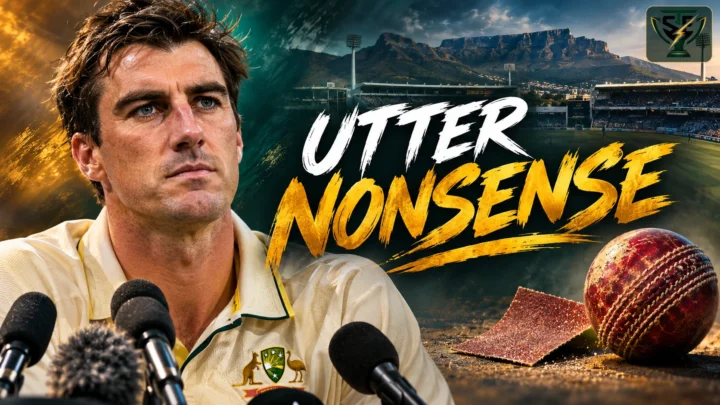
On November 13, 2026, Cummins publicly rejected Usman Khawaja’s claims that awareness of Sandpapergate extended across the Australian team.
He said he had not known that Bancroft was using sandpaper to alter the ball.
Cummins also disputed the suggestion that the wider playing group had participated in planning the activity.
Bancroft’s November 18 statement challenged that position.
He described discussions involving Cummins, Mitchell Starc, Josh Hazlewood and Mitchell Marsh about whether the ball was producing sufficient reverse swing.
He also suggested that the original account of the team’s awareness did not match what he experienced during the tour.
Importantly, discussing reverse swing does not automatically prove knowledge of a prohibited method.
The central question is whether those conversations referred specifically to artificial alteration using sandpaper or simply to the ball’s behavior.
That distinction is likely to become decisive in evaluating the conflicting accounts.
TSE reported Cummins’ earlier denial in its November 13 investigation into the Australian captain’s response to Khawaja.
What Would Need to Be Established About the Bowlers?
| Question | Why it matters | Evidence required |
|---|---|---|
| Did players know the ball was reversing unusually? | Awareness of unusual movement is not proof of cheating | Contemporaneous accounts and testimony |
| Did players suspect artificial alteration? | Would raise questions about failure to intervene | Specific conversations and corroboration |
| Did anyone know sandpaper was being used? | Directly challenges the scope of original findings | Firsthand and independently supported evidence |
| Did anyone approve or encourage the method? | Could establish a greater degree of responsibility | Evidence of instructions or explicit agreement |
| Did anyone knowingly mislead investigators? | Would raise separate questions about the investigation’s integrity | Comparison with original recorded statements |
Without those distinctions, the debate risks reducing a complicated evidentiary dispute to competing accusations.
Mitchell Starc, Josh Hazlewood and Nathan Lyon Face Renewed Questions
Cummins is not the only current or former Australian player whose previous statements face renewed scrutiny.
In 2021, Cummins, Mitchell Starc, Josh Hazlewood and Nathan Lyon jointly rejected suggestions that Australia’s bowling group knew about the sandpaper operation.
The statement followed earlier comments by Bancroft that had raised questions about whether bowlers could have been unaware of changes to the ball’s condition.
Bancroft’s latest account provides a more detailed explanation of the conversations he says occurred during the 2018 tour.
However, the named bowlers have previously denied involvement, and their denials must be distinguished from Bancroft’s present allegations.
The available evidence does not justify declaring that any particular bowler knowingly participated in the use of sandpaper.
What it does establish is that conflicting accounts now exist from individuals who were present during the same series.
The contradiction is significant for Australian cricket because several of those individuals have subsequently held prominent leadership positions or remained central to the national team’s identity.
David Saker and Darren Lehmann: Fresh Questions About the Coaching Staff
Bancroft’s allegations also extend beyond the playing group.
His account raises questions about the roles of former bowling coach David Saker and head coach Darren Lehmann during the South African tour.
Bancroft describes receiving encouragement concerning the condition and movement of the ball, and he alleges that coaching staff had knowledge relevant to the discussions surrounding its alteration.
He also revisits the events following the televised incident in Cape Town, including conversations about what should be disclosed publicly.
Lehmann’s position is particularly sensitive because Cricket Australia’s original investigation cleared him of involvement in the ball-tampering plan.
At the time, considerable attention focused on television footage showing Lehmann communicating with reserve player Peter Handscomb through a radio.
Handscomb subsequently went onto the field and spoke with Bancroft.
Cricket Australia’s original explanation was that Lehmann was seeking to understand what had happened, rather than directing the concealment of evidence.
The new allegations now invite renewed scrutiny of that explanation.
However, Bancroft’s account does not itself overturn the original finding concerning Lehmann.
A credible reconsideration would need to examine the original evidence, interview the individuals involved and determine precisely what each person knew.
The Original Punishments: Three Players, Different Responsibilities
Cricket Australia’s 2018 investigation resulted in sanctions against three players.
| Player | Role in 2018 | Official finding | Original sanction |
|---|---|---|---|
| Steve Smith | Test captain | Knew of the plan and failed to prevent it | 12-month suspension and leadership restrictions |
| David Warner | Vice-captain | Developed the plan and instructed Bancroft | 12-month suspension and an indefinite leadership ban, subsequently lifted in 2024 |
| Cameron Bancroft | Opening batter | Attempted to alter the ball and gave misleading accounts | Nine-month suspension and leadership restrictions |
The sanctions were announced on March 28, 2018.
The three players accepted their punishments.
Warner’s leadership ban was subsequently lifted in October 2024 following a formal review, but that decision did not reverse the finding that he was responsible for his original misconduct.
Cricket Australia’s original 2018 investigation summary documents the roles attributed to Warner, Smith and Bancroft.
The central fairness question in November 2026 is whether the investigation identified the full extent of responsibility or established only the involvement of those who were ultimately punished.
Bancroft’s latest admission makes that question more difficult to dismiss because he acknowledges withholding information himself.
Usman Khawaja’s Book Reopened Sandpapergate Before Bancroft Spoke
The current controversy did not begin with Bancroft’s statement.
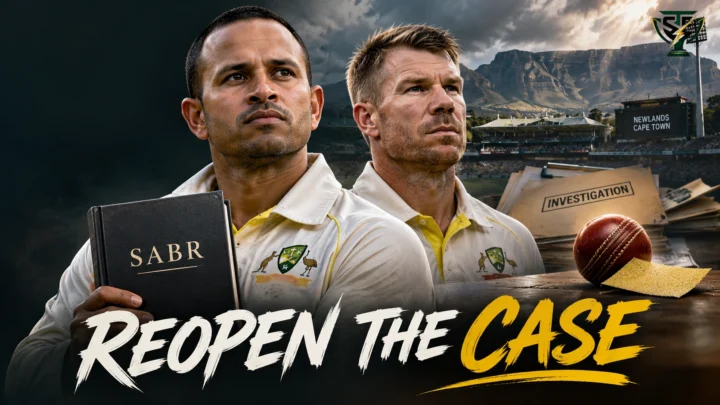
It gained renewed momentum following revelations in former Australian batter Usman Khawaja’s autobiography, Sabr: Finding My Way in Cricket and Life.
Khawaja alleged that knowledge of the ball-tampering operation extended beyond the three players punished in 2018.
He also challenged the suggestion that the Cape Town incident could be understood without examining earlier discussions and practices during the South African series.
The disclosures prompted renewed questions about the original Cricket Australia inquiry and the extent to which teammates had protected one another.
David Warner subsequently supported Khawaja’s right to give his account, while Cummins rejected the wider allegations.
TSE examined those developments in its November 12 investigation into Khawaja’s revelations and the case for reopening Sandpapergate.
The dispute intensified the following day when Warner criticized Cummins’ response.
That confrontation was covered in TSE’s analysis of the growing dispute between Warner, Cummins and Khawaja.
Bancroft’s intervention now adds the testimony of the player who physically carried out the act that exposed the scandal.
That gives the latest account particular significance, even though its disputed claims still require independent corroboration.
November 2026 Sandpapergate Timeline: How the Crisis Escalated
| Date | Development | Consequence |
|---|---|---|
| March 24, 2018 | Bancroft caught using sandpaper at Newlands | Ball-tampering scandal becomes public |
| March 28, 2018 | Cricket Australia announces sanctions | Smith, Warner and Bancroft suspended |
| 2021 | Australian bowlers issue joint denial of wider knowledge | Dispute over collective awareness persists |
| October 2024 | Warner’s leadership ban lifted after review | Long-term sanction ends, original responsibility remains |
| November 2026 | Khawaja’s autobiography challenges the established account | Debate over teamwide awareness returns |
| November 10, 2026 | Cricket Australia rules out a fresh investigation | Governing body’s response attracts criticism |
| November 13, 2026 | Cummins strongly denies wider involvement | Dispute escalates between former teammates |
| November 18, 2026 | Cricket Australia announces an independent forum | Players and staff offered an opportunity to give accounts |
| November 18, 2026 | Bancroft publishes detailed first-person account | New allegations challenge the completeness of the original investigation |
The timing of the latest development is especially significant.
Only hours before Bancroft’s statement became public, Cricket Australia had announced an initiative intended to provide those involved in the 2018 tour with a forum to discuss their experiences.
The subsequent allegations immediately raised questions about whether that response would be sufficient.
Cricket Australia’s Independent Forum: Accountability or Damage Control?
Cricket Australia chief executive Todd Greenberg and interim chair David Boon announced an independent forum for individuals connected with the 2018 tour.
The organization said the initiative would allow players and support staff to share their experiences and perspectives.
It also acknowledged the continuing harm caused by the scandal and the conflicting accounts that had emerged.
However, the proposed forum was not presented as a reopened disciplinary investigation.
That distinction has become central to the debate.
A confidential forum may provide individuals with an opportunity to speak without the pressure of a public hearing.
It may also help resolve personal grievances that have persisted since 2018.
But a forum designed primarily to hear experiences may not resolve disputed facts unless it has a clear evidentiary process, access to original documents and a mechanism for reconciling contradictory statements.
The official Cricket Australia statement announcing the forum sets out the organization’s position.
The challenge facing Cricket Australia is therefore not simply whether everyone gets an opportunity to speak.
It is whether the process can establish a reliable account of what happened and communicate meaningful findings without unfairly prejudging individuals.
Five Questions Cricket Australia Must Answer Before Sandpapergate Can Be Resolved
The latest disclosures create a practical opportunity to assess whether the original investigative process was sufficiently complete.
| Unanswered question | Why it matters | Necessary evidence |
|---|---|---|
| When did discussions about sandpaper begin? | Determines whether Cape Town was an isolated act or part of an earlier pattern | Direct testimony and contemporaneous communications |
| Who knew the method being used? | Distinguishes awareness of reverse swing from knowledge of prohibited conduct | Individual accounts tested against other evidence |
| What did coaches know? | Examines whether supervision and reporting failed | Original interviews, staff testimony and relevant records |
| Why did Bancroft withhold information? | Raises questions about pressure, loyalty and investigative completeness | Bancroft’s full evidence and the original interview record |
| Can the forum establish findings? | Determines whether the process can resolve factual disputes | Published terms of reference and an independent assessment framework |
TSE’s central analytical finding: The crisis now concerns two different forms of accountability.
The first is responsibility for the original ball-tampering offense.
The second is responsibility for accurately reporting, investigating and communicating what happened afterward.
Even if the original disciplinary findings remain unchanged, Bancroft’s admission that he withheld information makes the reliability of the historical record a legitimate issue for Cricket Australia to address.
Does Bancroft’s Admission Mean the Original Investigation Was Wrong?
Not necessarily in every respect.
The original investigation established that Warner instructed Bancroft to alter the ball and that Smith knew about the plan but failed to stop it.
Bancroft’s new account does not erase those findings or his own responsibility.
However, his admission means that at least one participant now acknowledges the evidence he supplied was incomplete.
That creates reasonable grounds to examine whether the investigation could have reached different conclusions about other individuals if additional information had been available.
The answer cannot be established by allegation alone.
Any credible review would need to compare the new testimony with the original investigation records, previous statements and independently available evidence.
It would also need to give those named an opportunity to respond.
That is particularly important when allegations concern professional misconduct that could affect leadership positions, employment and public reputation.
Why the Sandpapergate Crisis Matters Beyond Three Formerly Banned Players
Sandpapergate became a defining moment in Australian cricket because the country had long celebrated aggressive competitiveness alongside a strong public commitment to sporting integrity.
The events in Cape Town exposed a contradiction between those values and the conduct of some of the national team’s most prominent players.
The repercussions extended beyond the original suspensions.
Australia’s leadership structure changed, senior players lost substantial time from international cricket and the organization was forced to review elements of its culture.
Eight years later, the latest disclosures threaten to reopen questions that many within the game believed had been settled.
The controversy has particular relevance because Australia’s current leadership still includes individuals who were present during the 2018 tour.
However, that continuing association is not proof of wrongdoing.
The responsibility of a national governing body is to establish facts through a fair process, rather than allowing either public outrage or institutional loyalty to determine the outcome.
Earlier in 2026, Australia’s return to South Africa had already revived discussion of the scandal and the changes in relationships between the two teams.
TSE explored that history in its preview of Australia’s first Test tour of South Africa since Sandpapergate.
A subsequent TSE analysis of Australia’s competitive aggression after the Durban Test considered how the scandal continued to influence perceptions of the team’s behavior.
Bancroft’s latest statement has shifted the discussion from reputational legacy back to unresolved questions about the underlying events.
Could Sandpapergate Affect Pat Cummins’ Captaincy?
Bancroft’s account has intensified scrutiny of Cummins because Australia’s current Test captain has publicly rejected claims that he knew about sandpaper being used.
That creates a direct conflict between the recollections now available.
However, scrutiny is not equivalent to an adverse finding.
There has been no established new disciplinary ruling against Cummins arising from Bancroft’s November 18 statement.
The immediate consequences for his leadership will depend on whether additional credible evidence emerges, how Cricket Australia responds and whether the conflicting accounts can be reconciled.
Calls for Cummins to resign or be removed reflect the reactions of commentators and critics. They do not represent an official disciplinary decision.
For Australian cricket, the larger issue is maintaining confidence in national leadership while ensuring that serious allegations receive a fair assessment.
Why Bancroft’s Personal Cost Is Part of the Story
Bancroft was 25 when the Cape Town scandal erupted.
His nine-month suspension disrupted a developing international career, and his attempts to establish a permanent place in the Australian team afterward were unsuccessful.
The contrast between his career trajectory and those of Smith and Warner has remained part of the public discussion.
Both senior players returned to significant international roles after serving their suspensions, while Bancroft struggled to regain a regular place.
His account describes the psychological and professional burden he says he has carried since 2018.
That personal context helps explain why the dispute has resurfaced with such intensity.
It does not absolve Bancroft of participating in ball-tampering or misleading investigators.
But it does raise a broader question about how organizations distribute responsibility when a junior employee or player carries out conduct connected to decisions made within a larger group.
Determining whether Bancroft was disproportionately blamed requires evidence about the actual responsibilities of others, rather than simply comparing the consequences faced by each player.
Sandpapergate 2026: What Happens Next?
Cricket Australia now faces pressure to clarify the purpose and scope of its announced forum.
The governing body has said it will consider Bancroft’s comments, but has not announced a fresh disciplinary investigation.
Several possible developments could alter that position.
| Possible development | Potential consequence | Current status |
|---|---|---|
| Additional firsthand statements | Could corroborate or challenge Bancroft’s account | Not yet established |
| Review of original investigative records | Could identify contradictions or gaps | No reopened formal investigation announced |
| Independent forum proceedings | May allow participants to explain their experiences | Announced by Cricket Australia |
| New disciplinary evidence | Could prompt further organizational decisions | No new finding announced |
| Published factual conclusions | Could help resolve public uncertainty | Not guaranteed by the current forum announcement |
The organization’s response will be judged partly by whether it can separate personal reconciliation from factual accountability.
A private process may help participants discuss events they have been reluctant to revisit publicly.
But the public controversy will remain unresolved if the process cannot explain why the accounts differ and what evidence supports the final position.
Continue the Cricket Story



Frequently Asked Questions About Sandpapergate 2026
What has Cameron Bancroft revealed about Sandpapergate in 2026?
Bancroft has admitted withholding important information from Cricket Australia’s 2018 investigation and alleged that knowledge of the ball-tampering operation extended more broadly through the Australian team than the original findings established.
What happened during the original Sandpapergate scandal?
On March 24, 2018, Bancroft was caught on camera attempting to alter the cricket ball with sandpaper during Australia’s third Test against South Africa at Newlands in Cape Town.
Who was banned after Sandpapergate?
Steve Smith and David Warner received 12-month suspensions from Cricket Australia, while Cameron Bancroft received a nine-month suspension.
Did Pat Cummins know about the sandpaper?
Cummins has denied knowing that sandpaper was being used. Bancroft’s latest account challenges the broader narrative of team awareness, but the competing claims have not been resolved by a new independent disciplinary finding.
What did Usman Khawaja say about Sandpapergate?
In his autobiography, Khawaja alleged that knowledge of the ball-tampering operation was more widespread than the original investigation established. His comments helped reignite the controversy in November 2026.
Was Darren Lehmann involved in Sandpapergate?
Cricket Australia’s original investigation cleared Lehmann of involvement in the plan. Bancroft’s new account raises questions about coaching staff knowledge, but those allegations have not overturned the original finding.
Has Cricket Australia reopened the Sandpapergate investigation?
No formal reopening had been announced following Bancroft’s November 18 statement. Cricket Australia announced an independent forum and said it would consider his account.
Why is Bancroft’s new statement so important?
He was the player caught carrying out the tampering and now acknowledges that his original evidence was incomplete. That raises significant questions about whether Cricket Australia’s investigation established the full extent of involvement.
Could Sandpapergate threaten Australia’s cricket leadership?
The latest allegations have increased scrutiny of current and former leaders. However, any formal consequences would depend on new evidence, Cricket Australia’s decisions and a fair assessment of the disputed accounts.
Final Verdict: Australian Cricket Must Now Confront the Truth Behind Sandpapergate
The Sandpapergate 2026 controversy has become something more serious than another disagreement between former Australian teammates. Cameron Bancroft, the player caught with sandpaper in 2018, has acknowledged that he did not provide investigators with a complete account and has challenged the understanding of how widely the operation was known.
His statement does not establish every allegation as fact, nor does it erase the responsibility that Cricket Australia’s original investigation assigned to Warner, Smith and Bancroft.
What it does establish is that the historical record is being challenged from within by a direct participant who admits withholding information.
Cricket Australia must now decide whether its independent forum can meaningfully address the contradictions or whether a more formal evidentiary process is necessary.
The governing body’s responsibility extends beyond protecting reputations or revisiting sanctions. It must preserve public confidence in the fairness, consistency and credibility of Australian cricket.
Eight years after the cameras exposed a piece of sandpaper in Cape Town, the most difficult questions are no longer about the object itself. They concern what the people around it knew, what they told investigators and whether Australian cricket has ever received the complete account of its most damaging modern scandal.
Australian cricket
- Sandpapergate 2026: Cameron Bancroft’s Revelations Reopen Australian Cricket’s Deepest Trust Crisis
- Sandpapergate Tears Australian Cricket Apart as Warner and Cummins Turn on Each Other After Khawaja Unveils ‘Sabr’
- Sandpapergate: Why Cricket Australia Must Reopen the Investigation
- Tributes to the Heroes: Glenn Maxwell, the Man Who Made Cricket Believe the Impossible Could Happen
- David Warner Convicted of Drink-Driving as Career Consequences Begin to Mount