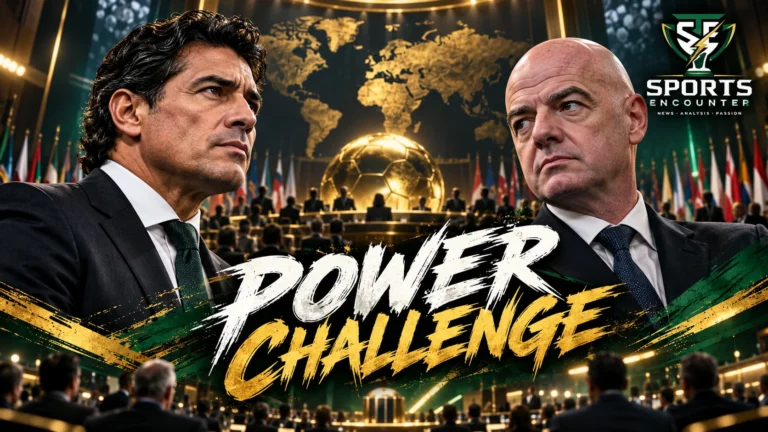
ZURICH, Switzerland, October 8, 2026: For months, Gianni Infantino’s opponents had one obvious problem.
They had anger. They had national associations withdrawing support. They had UEFA, Concacaf and the Asian Football Confederation challenging FIFA’s governance. They had an abandoned commercial project, legal disputes and growing questions over how much authority should sit with one president.
What they did not have was a person willing to put a name on the ballot.
Ramon Vega has now volunteered.
Story at a glance
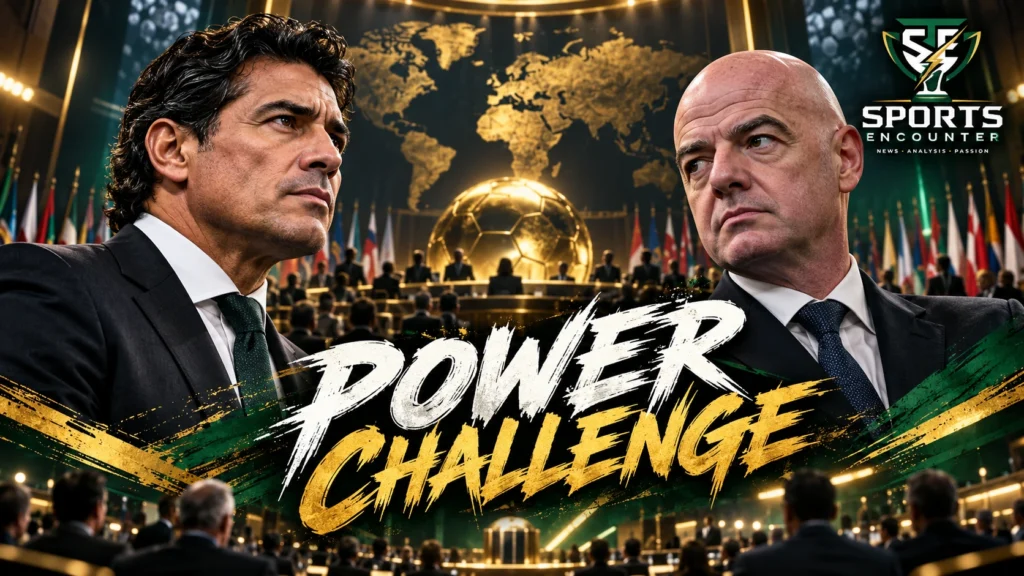
Who Is Ramon Vega?
Vega, 55, is a former Switzerland international center-back who won 23 senior caps between 1993 and 2001.
What Is Vega Promising to Change at FIFA?
His campaign is built around reform rather than one isolated policy.
Why Is Infantino More Vulnerable Than He Looked After the World Cup?
Because the political environment changed rapidly after July.
Is Ramon Vega Already an Official FIFA Presidential Candidate?
No.
Why Do Five Federation Backers Matter So Much?
Because FIFA presidential elections are not direct public elections.
The former Tottenham Hotspur, Celtic and Switzerland defender says he intends to challenge Infantino at the 2027 FIFA presidential election, becoming the first person to publicly declare that ambition.
“Football does not belong to presidents, confederations or administrators,” Vega said while announcing his campaign.
The line gives his candidacy an obvious theme: institutional reform, broader representation and a direct argument that FIFA’s leadership has become too concentrated.
Yet declaring an intention to run and actually appearing on a FIFA presidential ballot are not the same thing.
Vega must now prove that his reform message can survive FIFA’s formal eligibility process, attract backing from national associations and travel beyond the European federations already dissatisfied with Infantino.
That is where this contest becomes more complicated.
Who Is Ramon Vega?
Vega, 55, is a former Switzerland international center-back who won 23 senior caps between 1993 and 2001.
His club career included Grasshoppers, Cagliari, Tottenham Hotspur, Celtic and Watford.
He won the League Cup with Tottenham in 1999 and later helped Celtic complete a domestic treble during the 2000-01 season.
After retiring from football, Vega moved into finance and investment management, giving him a professional background very different from the conventional federation administrator.
That combination is central to how he is positioning himself.
He can present himself as a former player who understands the game from inside dressing rooms and stadiums, while also claiming financial experience relevant to an organization whose revenue, investment strategy and commercial structures have become major election issues.
That second part matters particularly after FIFA Forward Enterprise.
What Is Vega Promising to Change at FIFA?
His campaign is built around reform rather than one isolated policy.
Vega says he wants to reunite what he describes as the global football family, modernize FIFA, restore institutional credibility and rebuild trust.
His criticism is aimed directly at the current leadership model.
He argues that weak governance has damaged FIFA’s standing and that the game requires more than procedural adjustments.
That language places him directly inside a debate TSE has been following since the collapse of FIFA Forward Enterprise.
TSE’s analysis of the failed World Cup commercial stake proposal explained why the controversy became much larger than a dispute over private investment.
The proposed structure could have sold roughly 20 percent of a commercial company linked to FIFA competitions to outside investors, potentially raising billions of dollars.
The project eventually collapsed after opposition spread through UEFA, Concacaf, the AFC, national associations and senior figures inside FIFA.
Its withdrawal ended the transaction.
It did not end the argument over how FIFA is governed.
Why Is Infantino More Vulnerable Than He Looked After the World Cup?
Because the political environment changed rapidly after July.
The 2026 World Cup had strengthened Infantino commercially. FIFA had staged an expanded 48-team tournament across the United States, Canada and Mexico, generated enormous global attention and entered the next cycle from a position of financial strength.
Only days later, the commercial rights proposal triggered one of the most serious institutional confrontations of his presidency.
Concacaf’s rejection of the plan was particularly damaging because it prevented FIFA from presenting the dispute as another familiar conflict with Europe.
Opposition then widened internally.
The political consequences eventually reached the election itself.
Greece joined the associations withdrawing support for Infantino, while UEFA continued searching for an alternative candidate.
Vega now gives that discontent a possible name.
That does not mean he automatically becomes the opposition’s consensus candidate.
Is Ramon Vega Already an Official FIFA Presidential Candidate?
No.
This distinction is essential.
Vega has announced his intention to stand. He must still satisfy FIFA’s formal nomination and eligibility requirements before his name can appear on the ballot.
FIFA’s electoral framework requires presidential candidates to be proposed and supported through member associations rather than simply registering personally.
The nomination deadline is November 18, four months before the March Congress.
Vega’s immediate challenge is therefore organizational rather than rhetorical.
He needs national football associations prepared to formally attach their names to his bid.
This is not a theoretical obstacle.
Vega previously explored a challenge to FIFA’s leadership and failed to secure enough association backing to reach the ballot.
Until the formal nomination process is completed, the most accurate description is that he intends to run.
Why Do Five Federation Backers Matter So Much?
Because FIFA presidential elections are not direct public elections.
Supporters, players, clubs, leagues and governments do not cast the decisive ballots.
FIFA’s 211 member associations do.
Each association has one vote at Congress.
That makes coalition-building fundamentally different from winning a public argument.
England has one vote.
Brazil has one vote.
Germany has one vote.
A small island federation also has one vote.
This is the structural reason Infantino can remain electorally strong even while facing intense criticism from some of football’s richest and most visible markets.
TSE’s examination of Infantino’s re-election strategy showed why development funding and long-term relationships with smaller associations remain central to his coalition.
For Vega, winning endorsements in Europe would only be the first stage.
A credible challenge must travel into Africa, Asia, the Caribbean, the Pacific, the Middle East and South America.
Is Vega UEFA’s Candidate Against Infantino?
Not at this stage.
UEFA has made clear that it wants competition in the presidential election and has said it expects an alternative candidate to emerge.
That does not automatically mean UEFA has selected Vega.
The distinction matters because Vega’s independent declaration arrives while European associations are still coordinating their strategy.
Former players, federation executives and football administrators can all criticize FIFA.
The harder question is finding someone who can unite enough national associations to win.
Vega has now offered himself as one answer.
UEFA and its members must decide whether he is their answer.
How Strong Is Infantino’s Support Outside Europe?
Still significant.
The crisis has cost Infantino support, particularly among European associations, but it has not left him politically isolated.
Arab football organizations have recently reiterated their backing, while support remains substantial across parts of Africa and South America.
This was always the weakness in the assumption that European opposition alone could remove him.
TSE’s analysis of the attempted no-confidence strategy showed that even a large coalition of critical confederations still has to translate institutional pressure into individual federation votes.
That is much harder.
National associations do not always vote exactly as their confederations prefer.
Development priorities, regional alliances, personal relationships and financial interests all influence FIFA elections.
Vega therefore cannot run only against Infantino.
He must run against the political architecture Infantino has spent a decade building.
Why FIFA Forward Enterprise Is Still Central to the Election
Because the proposal is gone but its consequences have become the organizing issue of the campaign.
FIFA Forward Enterprise was supposed to create a commercial vehicle capable of generating more capital from FIFA’s competitions and returning more money to football development.
Infantino argued that outside investment could help smaller associations improve pitches, youth systems, national teams and women’s football.
Critics focused on process, consultation and the risks of allowing private investors to own an economic interest connected to FIFA’s competitions.
The argument escalated until FIFA withdrew the plan.
The dispute then spread inside FIFA itself, with senior figures questioning how the proposal had developed.
By September, the argument had entered the legal arena.
That matters to Vega because his strongest message is governance.
Without the Forward Enterprise crisis, a reform candidacy would have been far harder to turn into an urgent electoral argument.
Has Infantino Responded to the Governance Criticism?
Yes.
He has proposed an independent external review of FIFA’s decision-making structures and a more formal consultation process for major strategic initiatives.
TSE’s detailed review of the proposal examined what an independent process would need to establish credibility.
The FIFA Council is due to consider the issue on October 15.
That creates an unusual political sequence.
Infantino is proposing institutional reform while campaigning for re-election.
Vega is arguing that meaningful reform requires a change of leadership.
The election may therefore become a referendum on whether FIFA’s current structure can correct itself or needs a different president to change direction.
What Is Vega’s Biggest Strength?
He is an outsider at precisely the moment when opposition groups are criticizing FIFA’s internal culture.
He also has a profile that crosses football and finance.
As a former international player, he can argue that FIFA’s decisions should be closer to the people who participate in the sport.
As someone who built a post-playing career in finance, he can challenge FIFA on commercial strategy without presenting himself as hostile to business itself.
That distinction could matter.
The Forward Enterprise debate was never simply about whether FIFA should make money.
Every major football institution is commercial.
The argument concerned ownership, accountability, consultation and where financial decision-making authority should sit.
What Is Vega’s Biggest Weakness?
He does not yet possess the visible federation network of a sitting confederation president or major national association leader.
That matters more in a FIFA election than media recognition.
Infantino has spent years building relationships with national associations and presenting FIFA development spending as evidence that the organization serves countries outside football’s richest markets.
Vega must offer those associations something more persuasive than criticism of the incumbent.
He will need a credible development policy.
He will need to explain FIFA’s future revenue model.
He will need to address women’s football, youth development, infrastructure, competition expansion, player welfare and calendar congestion.
And he will need national associations to believe that changing presidents will not reduce their access to development resources.
That is a far more difficult campaign than winning applause for governance reform in Europe.
What Happens Between Now and the FIFA Election?
| Date | Event | Why It Matters |
|---|---|---|
| October 15, 2026 | FIFA Council meeting | Expected discussion of Infantino’s proposed independent governance review |
| November 18, 2026 | Presidential nomination deadline | Vega must convert his intention into a valid candidacy |
| November 23, 2026 | Extraordinary FIFA Congress | Another major gathering of member associations before the election |
| March 18, 2027 | 77th FIFA Congress in Rabat | FIFA presidential election |
FIFA has officially confirmed that the election will take place at the 77th Congress in Rabat.
The governing body’s own announcement confirms Infantino intends to seek re-election.
FIFA has also emphasized that the election must follow its statutes and established democratic procedures.
The 2026 FIFA Legal Handbook provides the current regulatory framework governing FIFA’s legal and governance system.
Can Ramon Vega Actually Beat Gianni Infantino?
It is much too early to answer yes.
It is equally wrong to dismiss the declaration as irrelevant.
Before Wednesday, the campaign against Infantino had institutions without a candidate.
Now it has at least one person willing to test whether that dissatisfaction can become votes.
Vega’s first target is not Infantino.
It is the ballot.
If he cannot secure the formal backing required under FIFA’s rules, the challenge ends before March.
If he does, the conversation changes immediately.
An official challenger would force national associations to make a choice rather than simply express dissatisfaction.
It would also require Infantino to defend his record against a named alternative rather than against a dispersed collection of critics.
That is why Vega’s announcement matters even before anyone knows whether he can win.
For the first time in this election cycle, opposition to Infantino has a face.
What Should Football Fans Watch Next?
- Vega’s federation endorsements: Public support from member associations will determine whether his declaration becomes a formal candidacy.
- UEFA’s response: Europe must decide whether to back Vega, support another candidate or allow multiple challengers to divide opposition votes.
- The October 15 FIFA Council meeting: The design and independence of Infantino’s proposed governance review could influence undecided associations.
- Support outside Europe: Vega will need meaningful backing from other confederations to become a serious electoral threat.
- Infantino’s development pitch: Funding for smaller associations remains one of the incumbent’s strongest political arguments.
- The November deadline: Until the formal process closes, more challengers could still emerge.
Continue the Soccer Story
 Soccer100 Things to Know About Lionel Messi: The Complete Tribute to Football’s GOAT
 UEFA Nations LeaguePortugal Climb to FIFA No. 5 as Four Wins Push World Cup Exit Into the Past
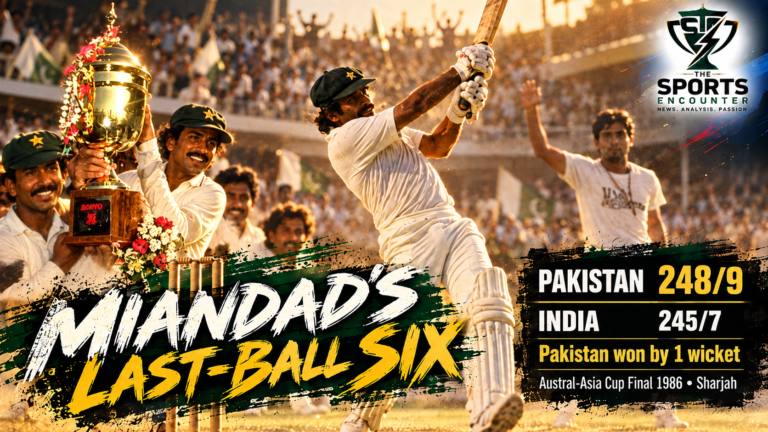 A Celebration of 5000 ODIsA Celebration of 5000 ODIs Match 46: Miandad Turns Four From One Ball Into the Six That Changed India-Pakistan Cricket
Frequently Asked Questions
Who Is Ramon Vega?
Ramon Vega is a former Switzerland international defender who played for clubs including Tottenham Hotspur, Celtic, Cagliari and Watford before moving into finance after retirement.
Is Ramon Vega Running for FIFA President?
Vega has publicly declared his intention to stand in the 2027 FIFA presidential election. He must still complete the formal nomination and eligibility process before becoming an official ballot candidate.
Who Is Vega Challenging?
He intends to challenge current FIFA President Gianni Infantino, who has confirmed that he will seek re-election.
When Is the FIFA Presidential Election?
The election is scheduled for March 18, 2027 at the 77th FIFA Congress in Rabat, Morocco.
When Is the Candidate Deadline?
Prospective candidates face a November 18, 2026 nomination deadline.
How Many FIFA Member Associations Are There?
FIFA has 211 member associations, each with one Congress vote.
Why Is Gianni Infantino Facing Opposition?
Opposition intensified after the collapse of FIFA Forward Enterprise, a proposal involving private investment in a commercial entity linked to FIFA competitions. Critics have focused heavily on governance, consultation and institutional oversight.
Is Ramon Vega UEFA’s Official Candidate?
No formal announcement currently establishes Vega as UEFA’s official candidate. He has declared his own intention to run while European associations continue discussing their election strategy.
Has Vega Tried to Run for FIFA President Before?
Yes. Vega has previously explored presidential bids, including an effort that failed to secure enough federation backing to reach the ballot.
What Is Infantino Proposing to Address FIFA Governance Concerns?
Infantino has proposed an independent external review of FIFA’s decision-making structures and more formal consultation with associations, confederations and other stakeholders.
FIFA
- Ramon Vega Steps Forward Against Infantino, but the Hard Part Starts Before the FIFA Ballot
- Hong Kong Stay Perfect as Cambodia Survive Timor-Leste Scare to Set Up FIFA ASEAN Challenge Cup Final
- Thailand Take Revenge on Vietnam as Sarach and Otton Seize Control of FIFA ASEAN Cup Group B
- Pakistan Roar Back From 2-0 Down to Hold Philippines in FIFA ASEAN Cup Thriller
- Harhys Stewart Keeps Singapore Alive as Bangladesh’s 1-0 Defeat Ends Their FIFA ASEAN Cup Final Hopes